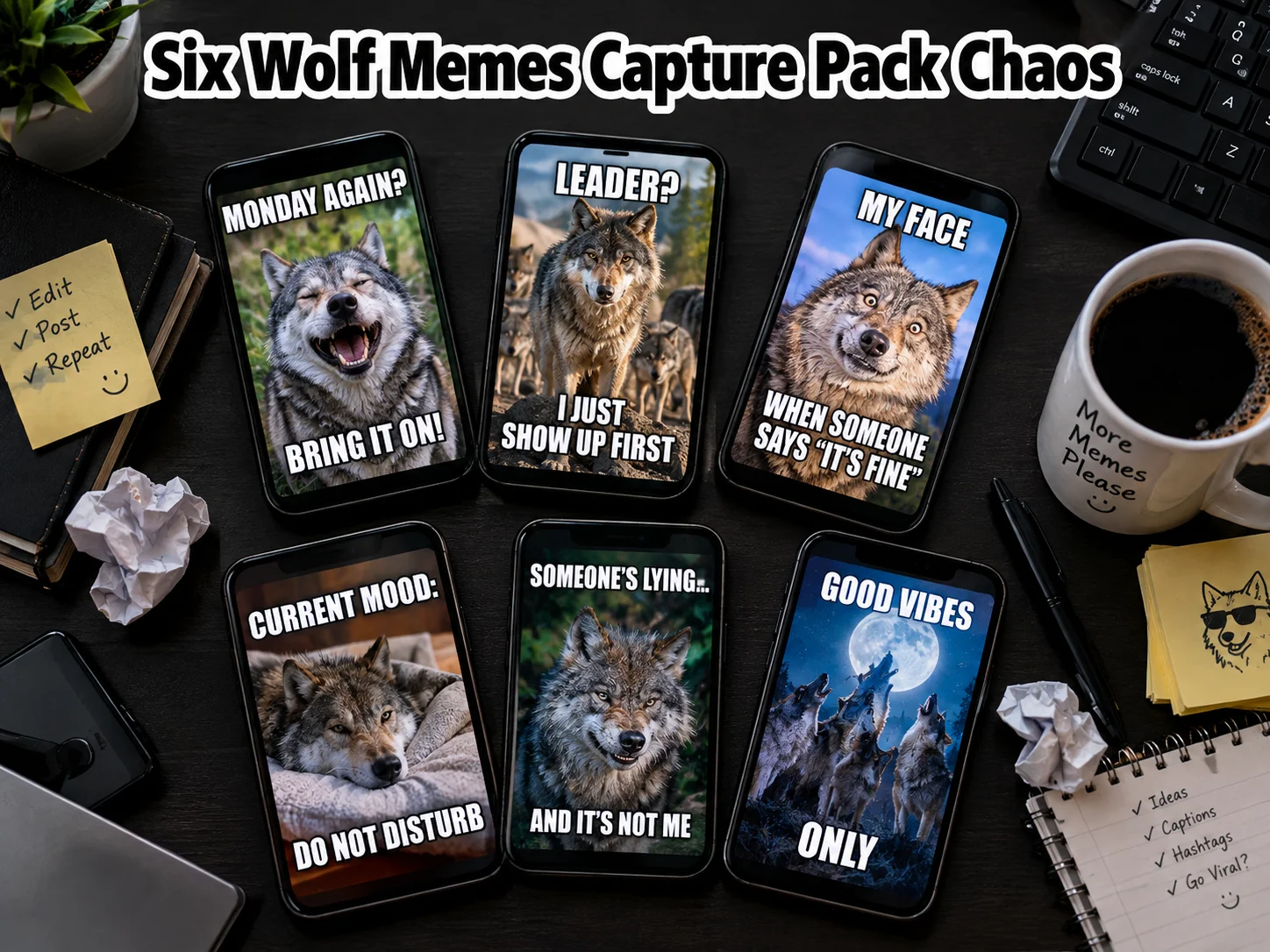
Funny Wolf Memes That Perfectly Capture The Pack’s Chaos
A single photograph of wolves walking in a line through snow has been reshared with an inspirational leadership caption so many times that wildlife biologists eventually had to step in and publicly correct it. That tension between what people want wolves to represent and what wolves actually do is exactly why internet humor about these animals refuses to die. It is also the reason a roundup of 6 Funny Wolf Memes That Perfectly Capture The Pack’s Chaos feels less like a novelty list and more like a snapshot of how online culture processes group dynamics, bad leadership myths, and collective burnout.
Disclosure: This post contains affiliate links. As an Amazon Associate, we earn from qualifying purchases, and at no extra cost to you.
Wolf memes have never been the biggest meme category on the internet, but they have proven unusually durable. Templates born in forums nearly two decades ago still get referenced today, new variants keep appearing in meme GIF libraries, and fresh cultural commentary keeps circling back to what wolves symbolize. This article breaks down six of the most recognizable wolf-based memes, explains where they came from, and shows why “pack chaos” has become such a reliable comedic shorthand for modern life.
Key Takeaways
- The 6 Funny Wolf Memes That Perfectly Capture The Pack’s Chaos trace back to early “advice animal” formats like Insanity Wolf and Courage Wolf, which date to around 2007-2008.
- Modern variants such as Corporate Wolf, Sad Wolf, and the Angry Wolf archetype reframe pack chaos around workplace stress and collective venting rather than raw aggression.
- The viral “wolves walking in a line” photo is widely misused as a leadership parable; wildlife experts have repeatedly debunked the romanticized version of this story.
- Cultural and academic commentary links wolf meme popularity to a deeper tension between individual freedom and group belonging, which explains their lasting appeal.
- Wolf meme content is still actively curated in 2026 across meme tag pages, GIF libraries, and pun collections, even though the format has declined from its early-2010s peak.
The 6 Funny Wolf Memes That Perfectly Capture The Pack’s Chaos
Pack behavior in real wolves is organized and purposeful. Pack behavior in meme culture is almost the opposite: loud, contradictory, and gloriously unhinged. That contrast is the engine behind every entry on this list. Below are the six formats that best represent how the internet has turned wolf symbolism into shorthand for chaotic group energy, ranked by cultural staying power and how directly they tie into the “pack” theme rather than the lone-wolf trope.
1. Insanity Wolf
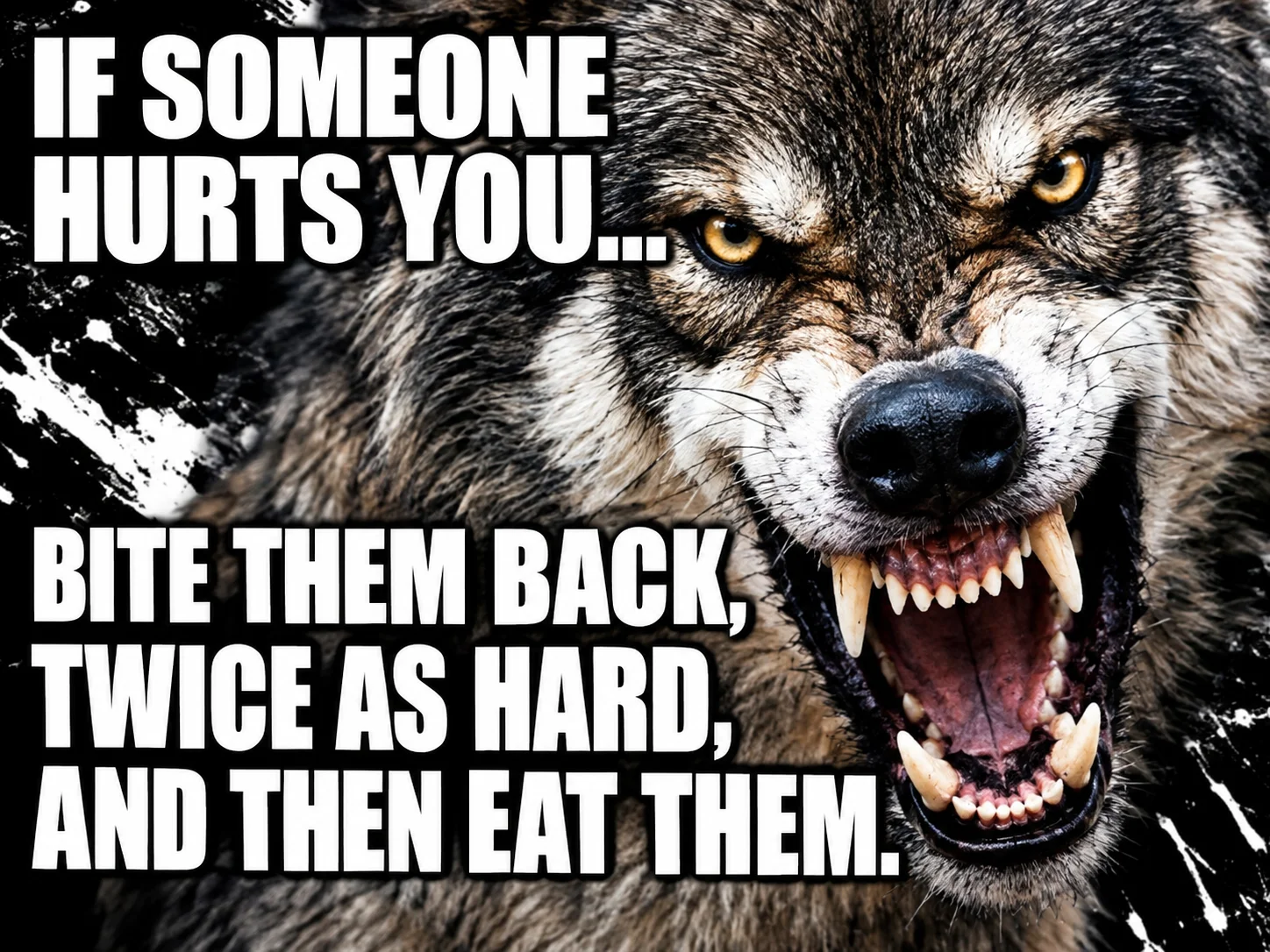
Insanity Wolf is the original chaos agent of wolf meme culture. Emerging from 4chan and Reddit around 2007 and 2008, the format pairs a snarling wolf photo with bold white Impact-font text offering absurd, often violently exaggerated “advice.” The joke works because the suggestions escalate far past anything reasonable, turning ordinary frustrations into cartoonish overreactions. It became one of the defining “advice animal” templates of that era, and it still gets referenced today whenever someone wants to describe an unhinged overreaction to a minor inconvenience.
What makes Insanity Wolf relevant to a pack-chaos conversation is simple: it set the tone. Before Insanity Wolf, wolves in meme culture were mostly decorative. After it, wolves became stand-ins for unfiltered impulse and barely controlled chaos, a reputation the species has not shaken off since.
2. Courage Wolf
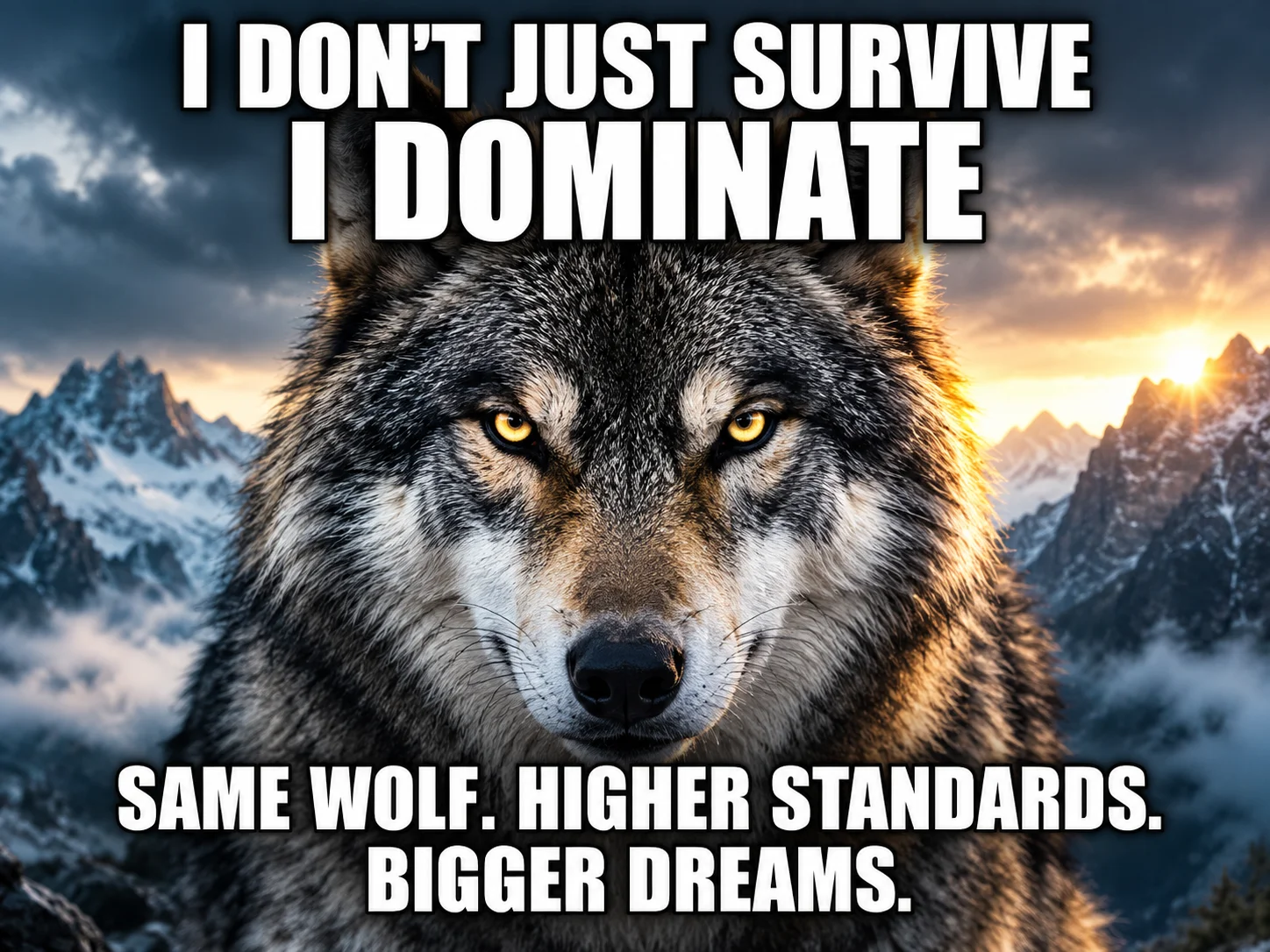
Courage Wolf arrived as the more motivational sibling to Insanity Wolf, using the same bold-text format but swapping aggression for over-the-top encouragement. Instead of threatening disproportionate revenge, Courage Wolf tells users to seize opportunities, push through fear, or act boldly in situations most people would avoid. The humor comes from the same escalation technique, just aimed at empowerment instead of destruction.
Paired together, Insanity Wolf and Courage Wolf created a template duo that still anchors most explainer content about wolf memes. Academic commentary on internet humor has pointed out that both formats expose something relatable: everyday anxiety dressed up as extreme confidence or extreme rage. That emotional honesty, wrapped in absurd packaging, is part of why these two templates outlasted dozens of other advice-animal formats from the same period.
3. Alpha Wolf in the Office
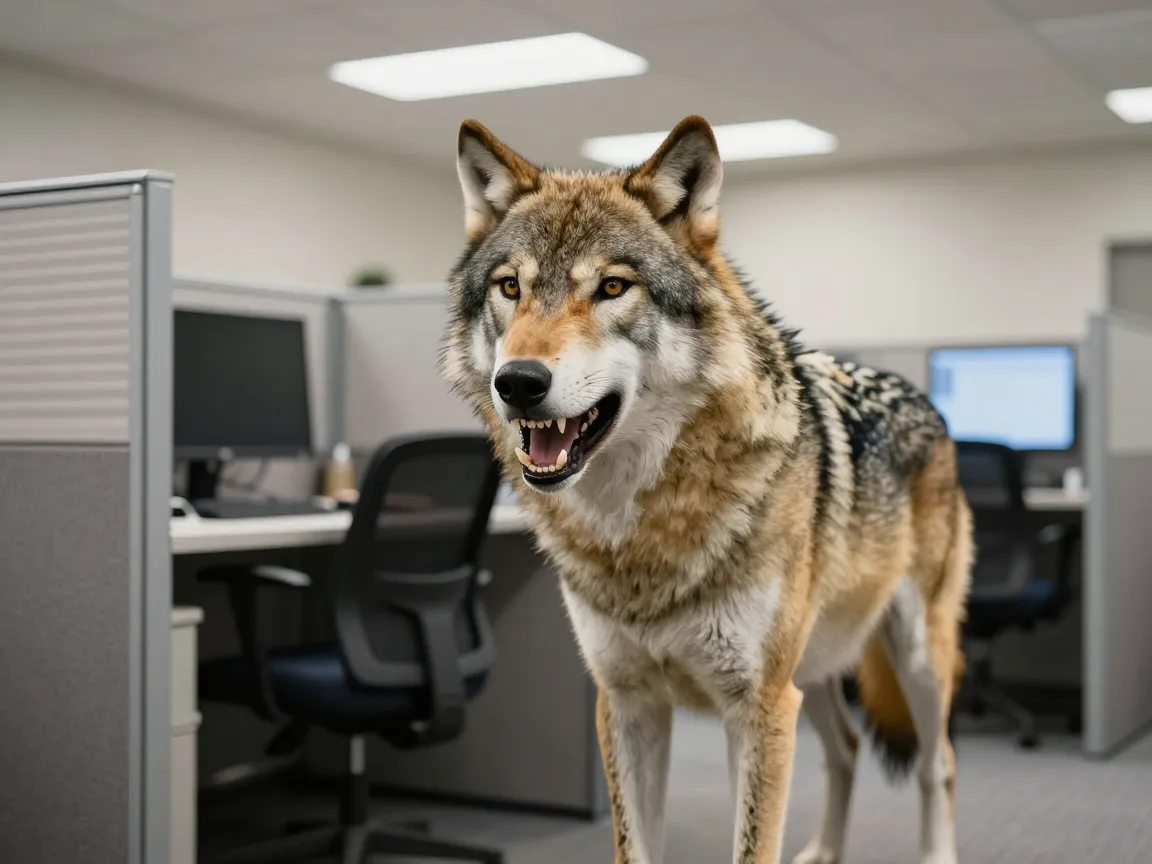
This more recent entry reframes wolf pack dynamics inside a cubicle. The “Alpha Wolf in the Office” format typically shows a wolf posturing, baring teeth, or asserting dominance in a scenario clearly meant to mirror workplace politics, like a manager micromanaging a meeting or a coworker taking credit for someone else’s work. It leans on the popular but scientifically shaky idea of a dominant “alpha” controlling the pack through force, a concept most wolf biologists have since challenged.
The meme’s chaos comes from the mismatch between the serious, snarling wolf imagery and the mundane office drama it is describing. Few things capture collective frustration better than comparing a passive-aggressive email thread to a wolf baring its fangs over territory.
4. Corporate Wolf
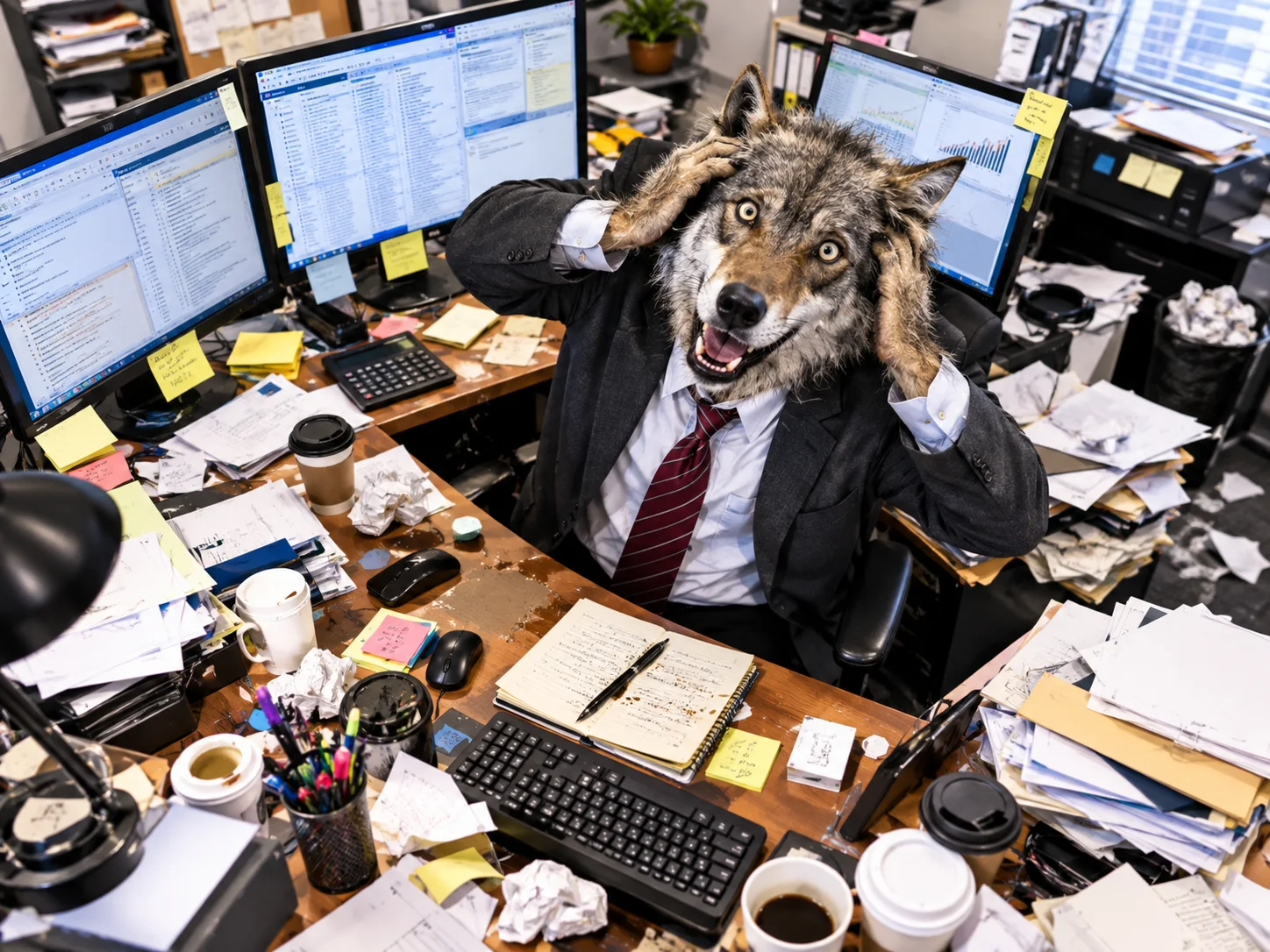
Corporate Wolf pushes the office angle even further, often depicting a wolf in business attire, mid-meeting chaos, or drowning in visual clutter meant to represent email overload and deadline stress. This variant belongs to a newer wave of wolf-based archetypes identified in cultural commentary during early 2026, alongside related characters sometimes labeled Sad Wolf and Y’all Wolf. Together these formats have been described as symbols of collective frustration and frenzy rather than individual rebellion.
Corporate Wolf resonates because it takes the pack concept and applies it to something almost everyone recognizes: the shared exhaustion of a team under pressure. Instead of one wolf acting out, the humor implies an entire office “pack” is one notification away from howling in unison.
5. Full Moon Friday Night Wolf
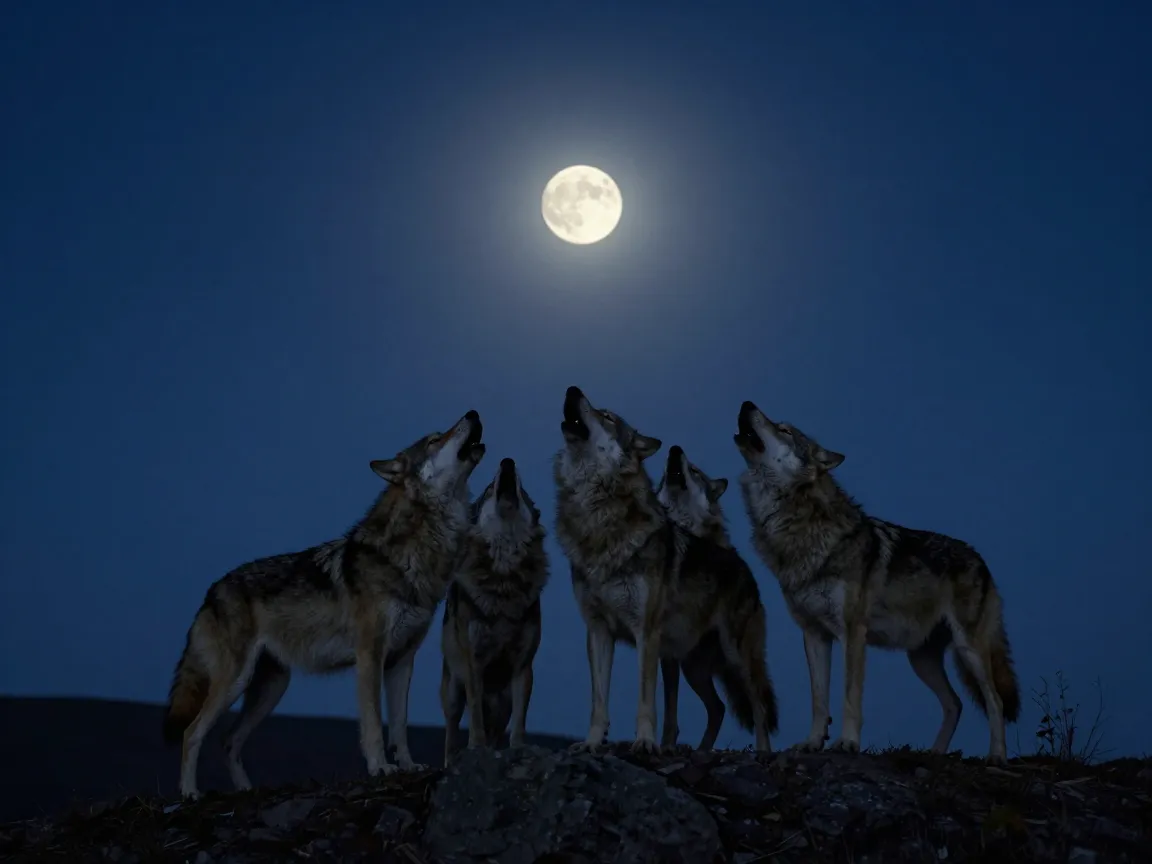
Shifting from stress to celebration, the Full Moon Friday Night Wolf format depicts a group of wolves howling together, usually captioned to represent a group chat hyping itself up for a weekend plan, a party, or a spontaneous night out. This format leans directly into literal pack behavior, since wolves howling together is one of the most recognizable real-world pack activities, and repurposes it as a stand-in for friend group chaos.
Humor sites built around wolf content have used almost identical framing, describing scenarios where a wolf and its pack treat Friday night like an event worth howling about. The joke lands because it takes something wolves actually do, communal vocalizing, and maps it onto something humans do constantly: hype each other up before plans inevitably go sideways.
6. The Single-File Snow Walk “Leadership” Meme
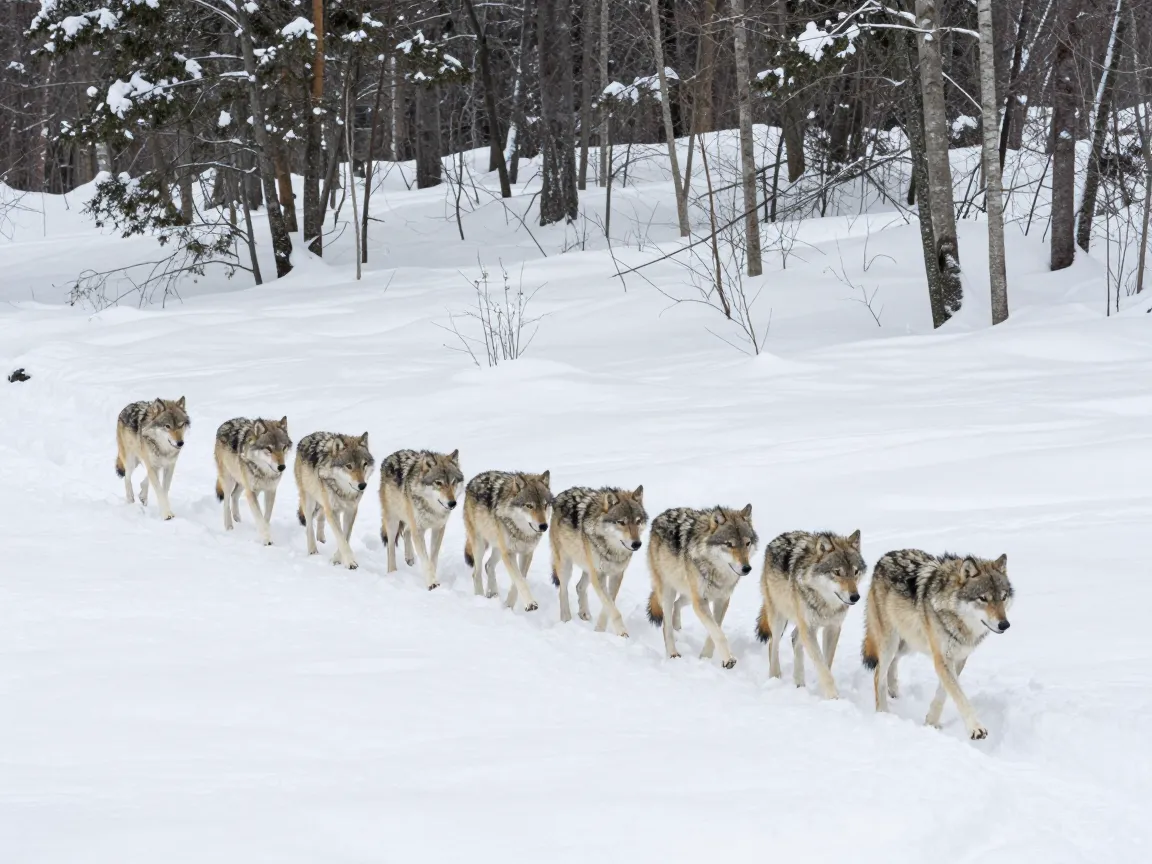
No wolf meme list about chaos would be complete without addressing the most widely circulated, and most widely misunderstood, wolf image on the internet: wolves walking in a single line through snow. The common caption claims the formation shows an elderly or weaker wolf leading at the front to set a manageable pace, with stronger wolves protecting the rear, framed as a parable about compassionate leadership.
Wildlife commentary published in mid-2026 has pushed back hard on this interpretation. Single-file travel in snow is primarily about energy conservation, since each wolf benefits from stepping in the tracks left by the one ahead. The romanticized idea that injured or weaker wolves are automatically protected by the group does not hold up to real pack behavior, where survival pressures can be harsh rather than sentimental.
The meme belongs on this list precisely because of that gap between fiction and fact. It has been used in motivational posters, corporate slideshows, and inspirational social posts for years, all while nature writers quietly correct the record. That ongoing tug-of-war between myth and biology is its own form of pack chaos, just playing out in comment sections instead of snowy forests.
| Meme | Core Theme | Origin Era |
|---|---|---|
| Insanity Wolf | Extreme overreaction | 2007-2008 |
| Courage Wolf | Over-the-top encouragement | 2007-2008 |
| Alpha Wolf in the Office | Workplace dominance humor | 2020s |
| Corporate Wolf | Collective work stress | 2026 |
| Full Moon Friday Night Wolf | Group celebration energy | 2024-2026 |
| Single-File Snow Walk | Myth versus real biology | 2010s-ongoing |
Why These Wolf Memes Work So Well
Understanding why 6 Funny Wolf Memes That Perfectly Capture The Pack’s Chaos continue to circulate requires looking past the jokes themselves and into what wolves represent psychologically. Cultural analysis from early 2026 frames wolves as symbols of freedom, loyalty, survival, and group identity, all at once. That combination is unusual. Most animals used in meme culture represent one simple trait, cats as chaos agents, dogs as loyal goofballs, but wolves carry a built-in contradiction between independence and belonging. A wolf can be a lone wanderer in one meme and a devoted pack member in the next, and both feel believable.
That contradiction maps directly onto how people experience modern life. Most adults juggle a desire for independence with constant pressure to perform as part of a team, a family, or an online community. Research published in the Journal of English Development in 2025 noted that wolf memes, particularly Courage Wolf and Insanity Wolf, function as devices for exposing personal vulnerability and social awkwardness. Newer variants push this further, leaning into humor about internal conflict and chaotic emotion rather than pure strength or aggression. Corporate Wolf and Sad Wolf fit neatly into that shift, since they are less about a single dominant animal and more about shared, collective overwhelm.
This also explains why pack-focused formats have outlasted purely “lone wolf” imagery in recent years. Humor collections built around wolf content, including puns-focused pages updated through mid-2026, consistently foreground group language like “chillin’ with my pack” rather than solitary wandering. The social unit, not the solitary hunter, has become the dominant comedic frame.
A Format That Peaked, But Did Not Disappear
It is worth being direct about one thing: wolf memes are not currently at their cultural peak. Detailed format trackers note that wolf-based advice animal memes peaked in popularity in the early 2010s and have since declined relative to newer, more flexible meme formats that adapt faster to current events. That decline is real, but it has not meant extinction. Historic templates like Courage Wolf and Insanity Wolf are still referenced as archetypes in contemporary commentary, acting almost like foundational vocabulary that newer formats build on.
Evidence of this continued, if quieter, relevance shows up across several corners of the internet simultaneously:
Active tag pages. Meme curation sites maintained dedicated wolf meme tag pages with updates as recent as late September 2026, specifically organized around themes of internal screaming and daily chaos, language that mirrors exactly what a pack-chaos headline is trying to capture.
GIF libraries. Platforms hosting short looping animations have continued adding wolf-themed clips through late September 2026, including dancing wolf packs and anthropomorphic wolf characters, showing that visual, shareable wolf humor remains an active production category even outside static meme templates.
Pun and joke collections. Humor sites built entirely around wolf-themed wordplay have been updated as recently as June 2026, consistently framing wolves in communal, pack-oriented language rather than isolated imagery.
Decentralized fan communities. Platforms like image-sharing networks and social bookmarking sites continue hosting user-tagged wolf meme content into 2026, contributing to a scattered but steady ecosystem of pack-themed humor that exists outside any single definitive collection.
The Leadership Myth Problem
No discussion of wolf meme culture is complete without addressing how often these jokes get tangled up with misinformation. The single-file snow walk example covered earlier is the clearest case, but it is not isolated. Many inspirational wolf graphics borrow real pack behaviors, like coordinated hunting or group howling, and then layer invented meaning on top of them to produce a tidy leadership lesson.
Wildlife commentary from mid-2026 has been particularly blunt about this pattern, noting that older or weaker wolves are not automatically protected by their pack, and that formation choices during travel are driven by energy efficiency rather than social compassion. This matters for anyone sharing wolf content, because the line between a funny, self-aware meme and a misleading motivational graphic is often just the caption. A meme that pokes fun at the leadership myth, rather than reinforcing it earnestly, tends to age better and spreads with more credibility over time.
The Individual Versus Group Tension
Pulling these threads together, the lasting appeal of pack-chaos humor comes down to one core tension: wolves are used to represent both fierce individuality and inseparable group loyalty, often within the same meme format. That duality gives creators enormous flexibility. A single wolf image can anchor a joke about personal burnout, team dysfunction, or group celebration depending entirely on the caption. Few animals offer that same range, which is likely why wolf memes have persisted for nearly two decades despite never becoming the internet’s single biggest meme category.
Frequently Asked Questions
What is the most well-known wolf meme format?
Insanity Wolf and Courage Wolf remain the most historically significant wolf meme templates, both originating around 2007 and 2008 as part of the early “advice animal” wave. They established the bold-text, high-contrast style that later wolf memes, including Corporate Wolf and Alpha Wolf in the Office, continue to borrow from.
Is the “wolves walking in a line” leadership story actually true?
Mostly no. Wildlife commentary has explained that single-file travel through snow is primarily about conserving energy, since each wolf steps into the tracks left by the one ahead. The popular claim that the formation shows weaker wolves being deliberately protected by the group does not reflect documented pack behavior accurately.
Why do so many wolf memes focus on workplace stress?
Newer variants like Corporate Wolf and Alpha Wolf in the Office map pack dynamics onto office politics because the comparison is instantly relatable. A dominant, snarling wolf is an exaggerated but recognizable stand-in for overbearing managers, toxic competition, or collective team burnout.
Are wolf memes still popular in 2026?
They are less dominant than during their early-2010s peak, but they are far from inactive. Meme tag pages, GIF libraries, and pun collections have all received updates throughout 2026, and historic formats like Courage Wolf continue to be referenced in cultural commentary.
What makes the number six relevant to wolf pack humor?
There is no single definitive “top six” wolf meme list circulating across major meme databases. This roundup selects six widely recognized formats, spanning historic advice-animal templates, modern workplace variants, and the frequently debunked leadership photo, to represent the range of pack-chaos humor currently active online.
Conclusion
The six formats covered here, Insanity Wolf, Courage Wolf, Alpha Wolf in the Office, Corporate Wolf, the Full Moon Friday Night howl, and the endlessly misquoted single-file snow walk, together map out nearly two decades of how the internet has used wolves to talk about chaos, teamwork, and burnout. None of them exist in isolation. Each one builds on the tension between individual impulse and group belonging that makes wolves such a flexible meme subject in the first place.
For anyone creating or sharing wolf content going forward, the most useful takeaway is simple: lean into the self-aware chaos rather than the manufactured leadership lessons. The jokes that age well, and keep getting reshared years later, are the ones that admit wolves are messy, loud, and occasionally exhausting, just like most real teams and friend groups. The next time a tidy wolf-pack leadership graphic shows up in a feed, it is worth checking whether it is winking at its own absurdity or trying to pass off a debunked nature myth as serious advice. That distinction is really what separates a genuinely funny wolf meme from a misleading one.