Labrador Retriever Puppy Training Tips For Your New Best Friend
A Labrador puppy will chew through a pair of leather boots in under ten minutes, yet the same dog can learn to sit, stay, and walk politely on a leash within a few weeks if training starts the right way. That contrast is the whole story of raising a Lab. These dogs are brilliant, food-motivated, and desperate to please, but their energy and mouthiness can overwhelm an unprepared new owner. This guide breaks down 6 Labrador Retriever Puppy Training Tips For Your New Best Friend, drawing on current breed-specific best practices so the first months with a new puppy build good habits instead of bad ones.
Disclosure: This post contains affiliate links. As an Amazon Associate, we earn from qualifying purchases, and at no extra cost to you.
Labrador Retrievers have topped popularity charts for decades because of their friendly nature and trainability, but that trainability only shows up when owners understand what makes this breed tick. The tips below cover everything from the first day home to the leash-manners milestones that matter most between three and six months of age.
Key Takeaways
- Training should begin the day a Labrador puppy arrives home, using short, positive sessions rather than long formal lessons.
- Socialization before 12 to 16 weeks of age is considered essential, not optional, for a breed this people-focused.
- Housetraining works best on a strict schedule tied to wake-up times, meals, and play breaks every 30 to 60 minutes.
- Crate training must stay positive; the crate is a rest space, never a punishment tool.
- Impulse-control cues such as wait, leave it, and stay are now viewed as core skills for Labs, alongside recall and leash manners.
Why Labrador Puppies Need a Specialized Training Approach
Not every training plan works equally well for every breed. Labrador Retrievers were bred for generations to work closely with people, retrieve objects gently, and stay motivated by food and praise. That history shapes everything about how they learn today.
A Lab puppy’s brain is wired for two things above almost everything else: connection with people and the reward of finding or carrying something. Trainers who ignore those drives often struggle with a bored, mouthy, or overly excitable dog. Trainers who work with those drives usually end up with a calm, responsive companion by the time the puppy reaches adolescence.
Modern guidance from veterinary behaviorists and breed clubs has shifted noticeably in recent years. Older methods that relied on correction or dominance-based handling have been replaced by science-backed approaches built around positive reinforcement, precise timing, and structured routines. This shift matters because Labs are sensitive to their owner’s tone and body language. A puppy that feels safe learns faster than one that feels anxious or confused.
The six tips below reflect this current thinking. Each one addresses a specific challenge that new Lab owners commonly face, from the chaos of the first week home to the strength and stamina of a half-grown adolescent dog.
The 6 Labrador Retriever Puppy Training Tips For Your New Best Friend
These 6 Labrador Retriever Puppy Training Tips For Your New Best Friend are ordered roughly by when they matter most, starting with the day a puppy comes home and moving through the skills needed by six months of age. Each tip works best when combined with the others rather than tackled in isolation.
1. Start Training The Day The Puppy Comes Home
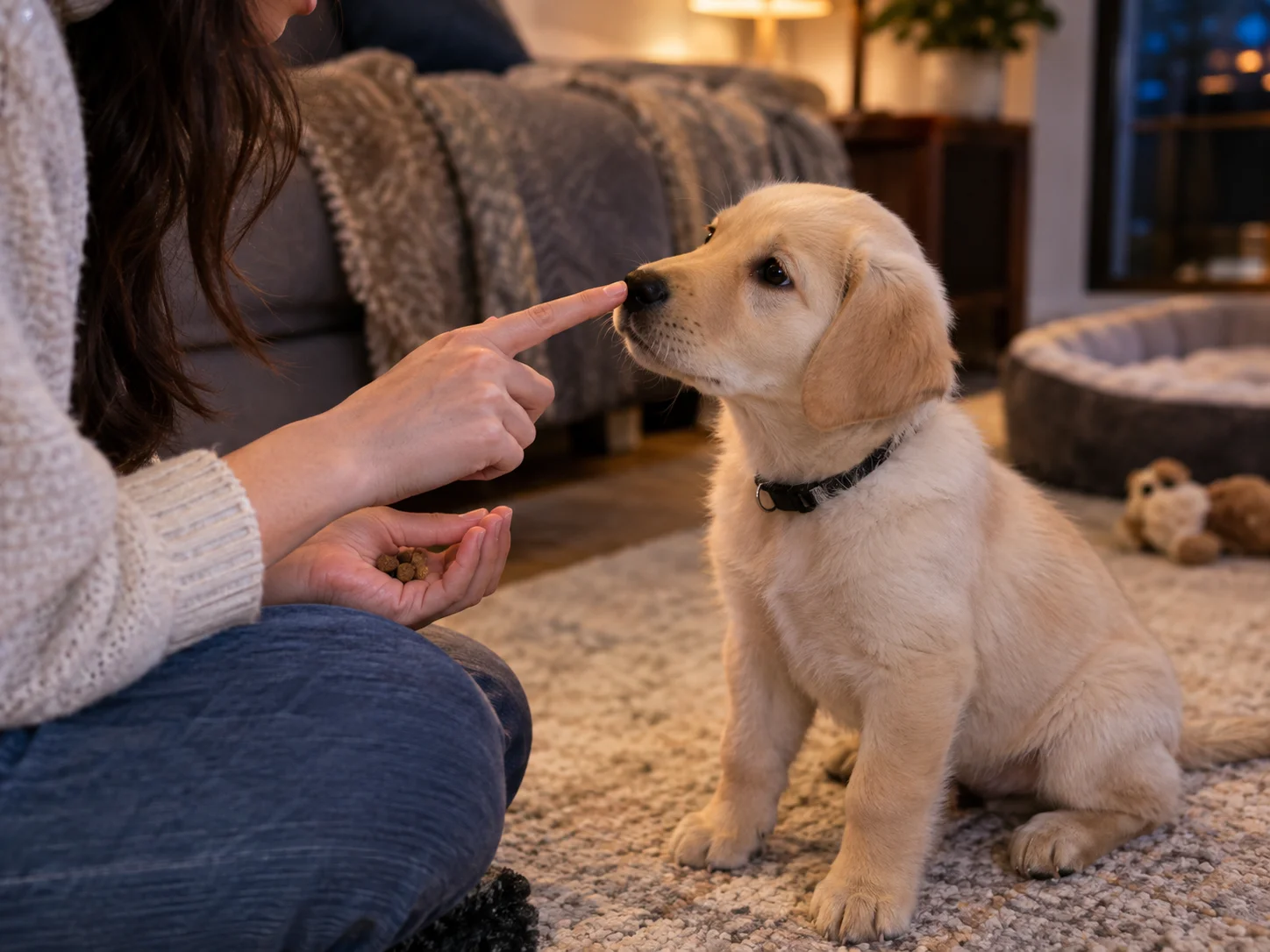
Waiting a few weeks to “let the puppy settle in” before starting any training is one of the most common mistakes new owners make. A Labrador puppy is already learning from the moment it walks through the door, whether or not anyone is deliberately teaching it. If jumping on the couch gets attention and treats fall from the counter, the puppy learns those lessons just as fast as it would learn “sit.”
The better approach is to begin gentle, structured learning on day one, using sessions that last only one to three minutes. A young puppy has a short attention span, and long lessons usually backfire by causing frustration or disengagement. Instead of one 20-minute training block, plan for six or seven tiny sessions spread across the day.
Early lessons should stay simple. Teaching a puppy to make eye contact for a treat, come to a clicking sound, or follow a hand target builds the foundation for everything that comes later. These first sessions also teach the puppy that training itself is a fun, safe activity rather than a stressful chore.
2. Use Food And Toy Drive As A Training Tool Rather Than Suppressing It
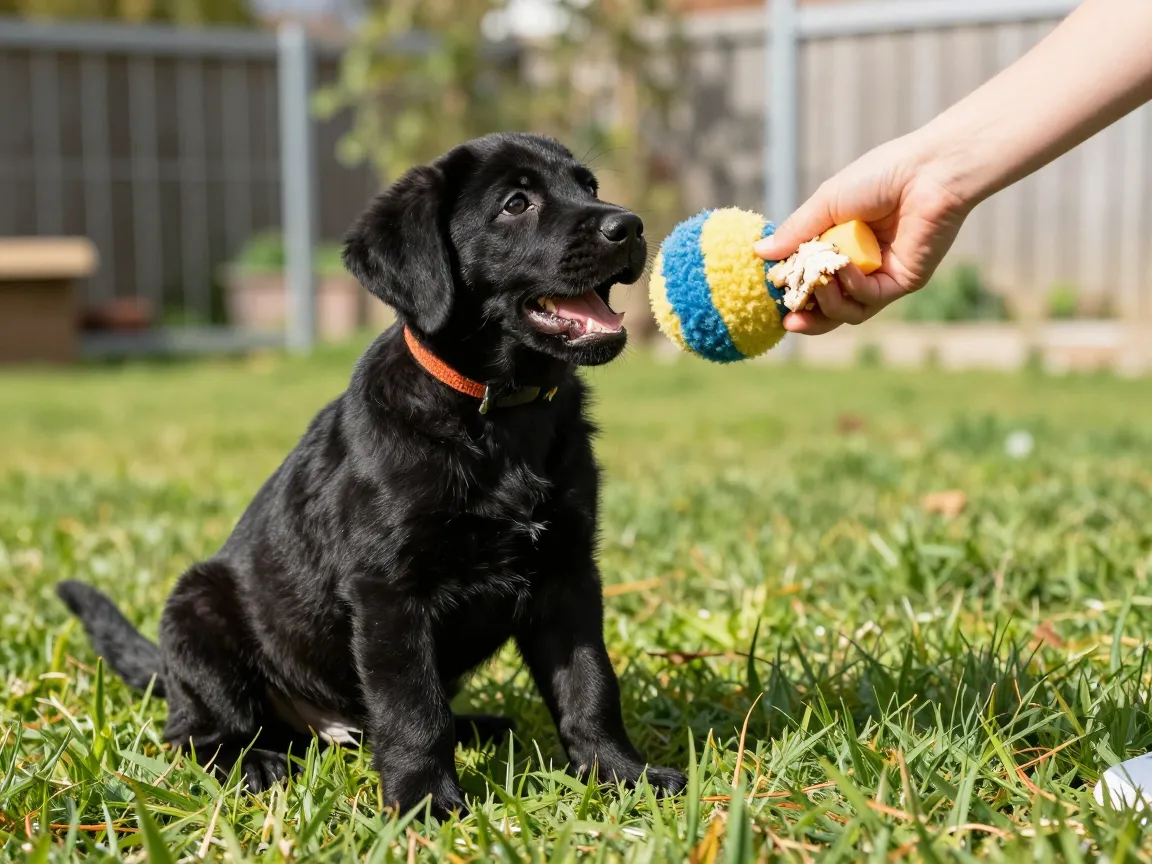
Labrador Retrievers are famous for their appetite, and that trait is not a flaw to correct. It is one of the most useful training tools an owner has. The same goes for their instinct to grab, carry, and retrieve objects. Rather than punishing a puppy for grabbing things off the floor, smart owners redirect that drive toward appropriate outlets.
Strategic use of food means keeping treats small, varied, and reserved mostly for training rather than free feeding. High-value rewards like small pieces of cooked chicken or cheese should be saved for harder skills, while lower-value kibble works fine for easy repetitions. This keeps the puppy motivated without overfeeding.
Toy drive works the same way. A puppy that loves to fetch or tug can be taught impulse control games using that exact motivation. Asking for a “drop it” before continuing a game of fetch, for example, teaches the release cue using something the puppy already wants, which is far more effective than trying to pry a toy from a puppy’s mouth.
A Labrador’s love of food and objects is not a problem to fix. It is the engine that powers every lesson that follows.
3. Socialize Before The Window Closes At 12 To 16 Weeks
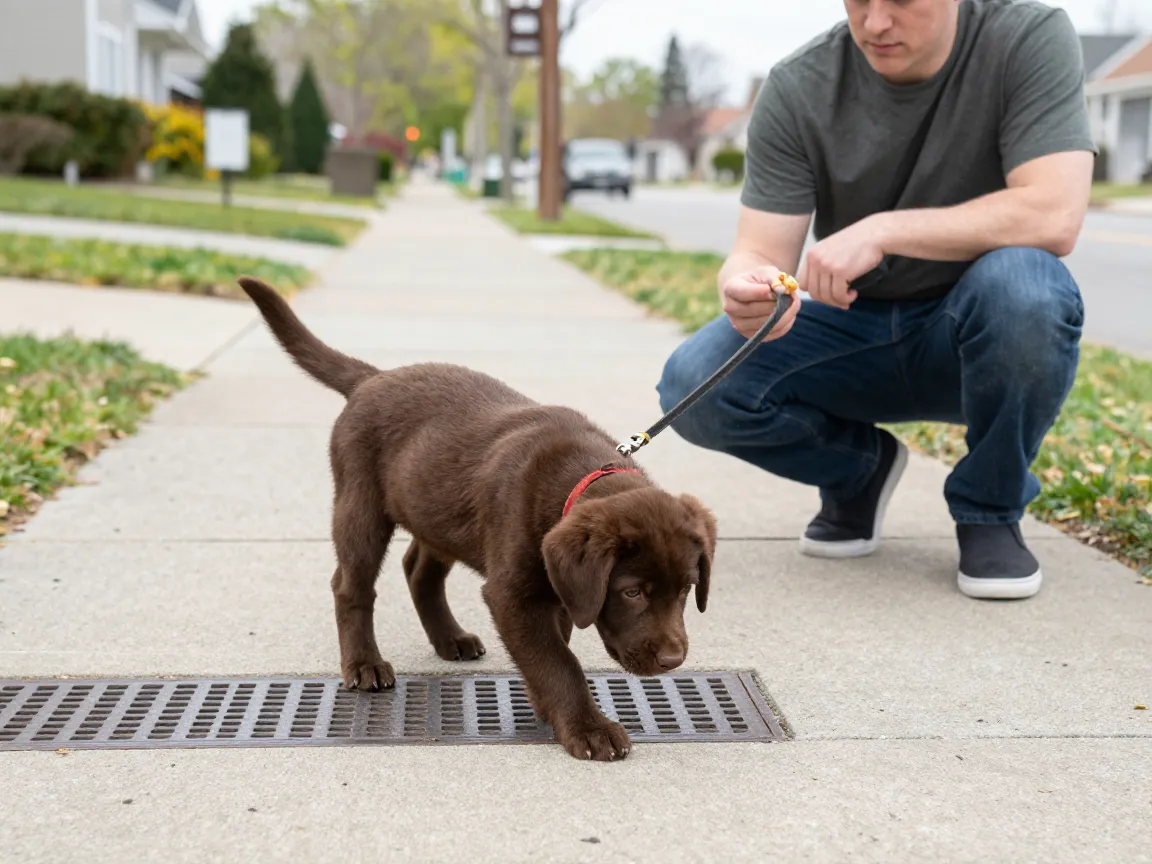
Veterinary behavior experts describe the period before 12 to 16 weeks of age as a critical socialization window, and for a breed as people-oriented as the Labrador, skipping this stage often causes lasting problems. Puppies that miss out on varied, positive early experiences can grow into adult dogs that are fearful of new people, surfaces, sounds, or other animals.
Socialization does not mean overwhelming a puppy with chaotic dog parks or crowded events. It means controlled, positive exposure to a wide range of experiences: different flooring types, car rides, gentle handling of paws and ears, meeting calm dogs and friendly strangers, and hearing everyday sounds like vacuum cleaners or doorbells. Each new experience should end on a good note, paired with treats or praise.
Because full vaccination schedules are often not complete until around 16 weeks, many veterinarians recommend a balanced approach: avoid high-risk areas like public dog parks, but still get the puppy out into safe, controlled settings such as a friend’s yard, a quiet sidewalk, or a puppy socialization class run by a veterinary clinic. The goal is broad, gentle exposure rather than isolation until vaccines are finished.
The table below outlines a general timeline for socialization priorities during this window.
| Age Range | Socialization Focus | Example Activities |
|---|---|---|
| 8 to 10 weeks | Home environment, family bonding | Gentle handling, quiet household sounds, short car rides |
| 10 to 12 weeks | New people and calm animals | Visits from friends, controlled meetings with vaccinated dogs |
| 12 to 14 weeks | Novel environments | Different surfaces, quiet outdoor spaces, pet-friendly stores |
| 14 to 16 weeks | Confidence building | Puppy classes, mild noise exposure, brief separations |
4. Build A Strict Housetraining Schedule From Day One
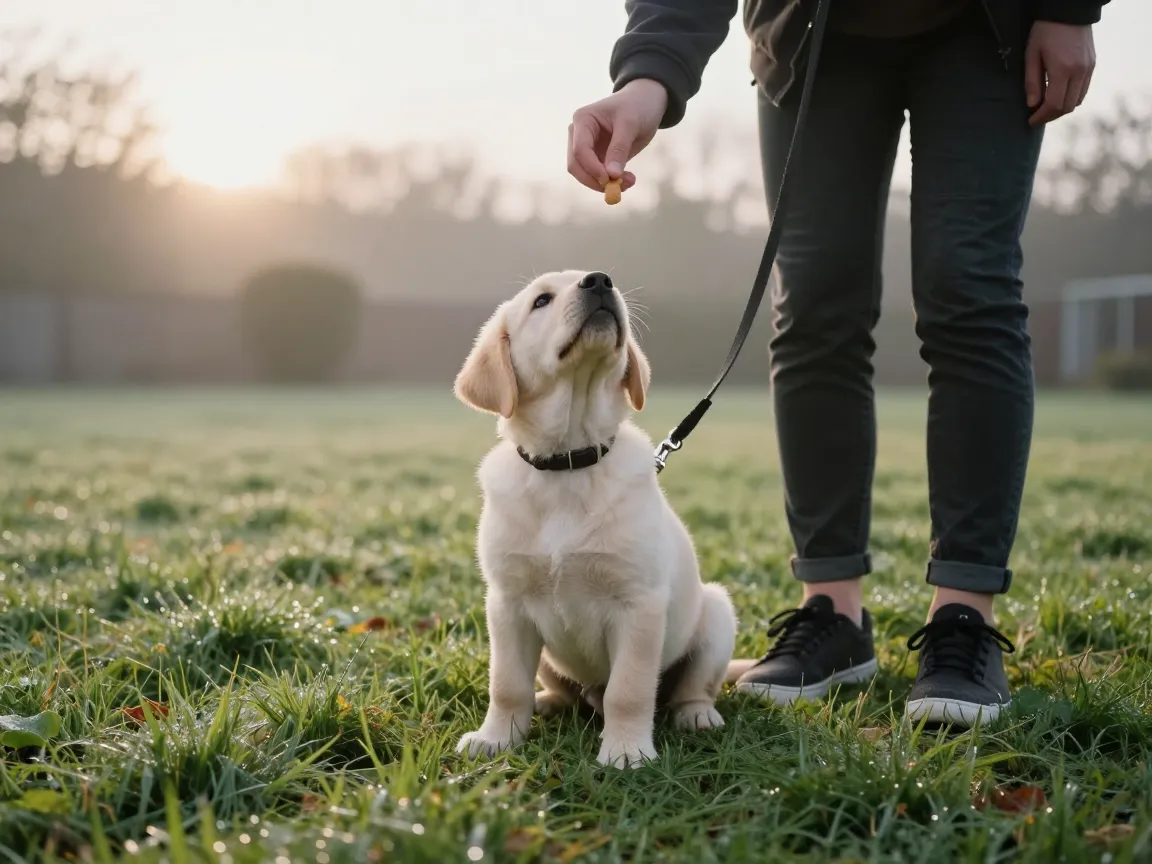
Housetraining a Labrador puppy is largely a matter of managing timing rather than teaching a complicated skill. Puppies have small bladders and limited control, so success depends on getting them outside before accidents happen rather than reacting after the fact.
A reliable schedule includes a trip outside immediately after waking up, since puppies almost always need to relieve themselves the moment they open their eyes. Beyond that, plan for a bathroom break every 30 to 60 minutes during active periods, along with trips outside after every meal, after play sessions, and after naps. These moments are considered key trigger times because digestion, excitement, and rest all stimulate the need to go.
Consistency matters more than any specific product or method. Taking the puppy to the same spot each time, using a simple cue word like “outside” or “go potty,” and rewarding immediately after the puppy finishes helps the behavior click faster. Punishing accidents after the fact accomplishes nothing useful, since puppies cannot connect a scolding minutes later to something they did earlier. The most effective response to an indoor accident is simply cleaning it up calmly and tightening the supervision schedule.
5. Use Crate Training As A Safe Space, Never A Punishment
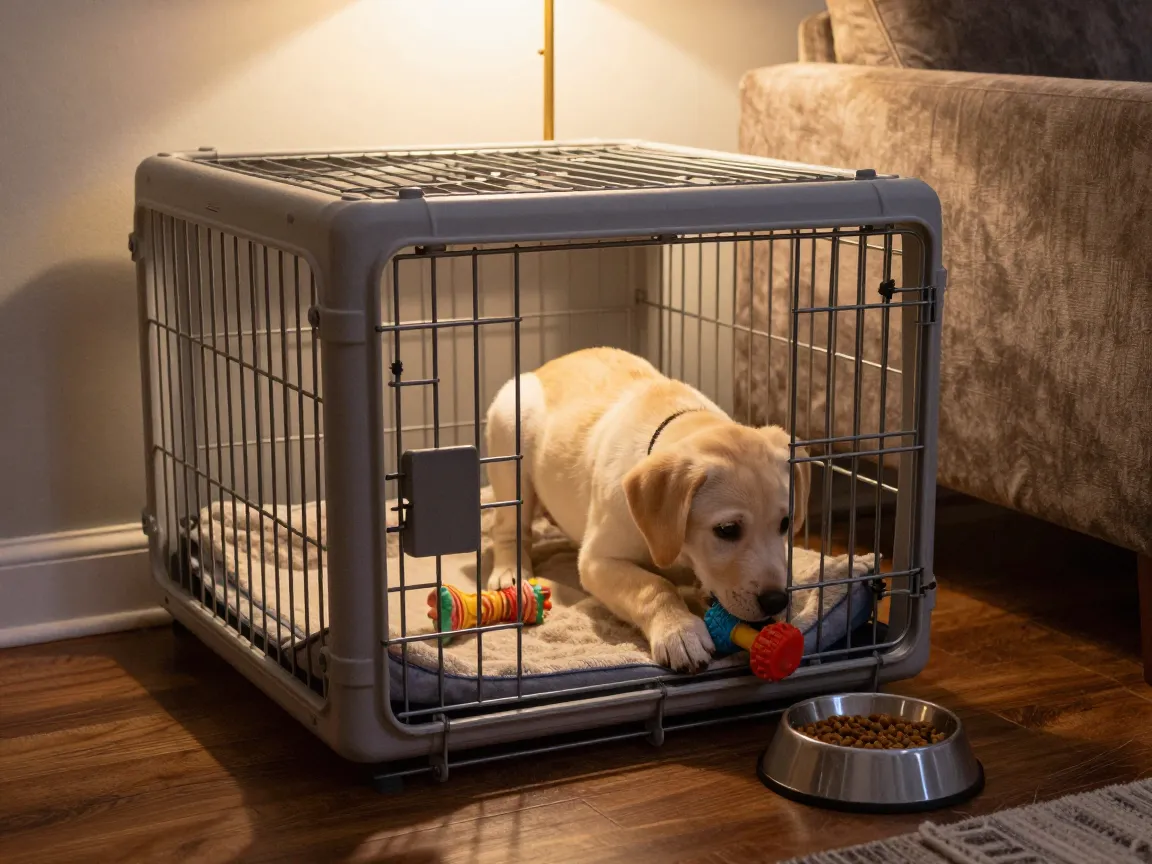
A crate should feel like a den, not a jail cell. When introduced correctly, most Labrador puppies come to see their crate as the most comfortable, secure spot in the house. This matters both for housetraining and for the puppy’s overall sense of security.
Crate training works best when it is tightly linked to the potty schedule described above. A puppy that sleeps in the crate overnight and during unsupervised moments during the day is far less likely to have accidents, since dogs naturally avoid soiling their sleeping area once they gain a little bladder control.
Introducing the crate gradually, using treats, meals, and short positive stretches before working up to overnight use, prevents the crate from becoming a source of anxiety. The crate should never be used to punish barking, chewing, or other unwanted behavior. Doing so teaches the puppy to associate the crate with stress, which can undo months of progress and lead to resistance at bedtime.
A well-managed crate routine also supports puppy-proofing efforts. Structured indoor supervision, meaning either active watching or safe confinement, prevents a Labrador puppy from getting into cleaning supplies, electrical cords, or small objects that pose a choking risk during the highly exploratory chewing phase.
6. Prioritize Impulse Control, Recall, And Leash Manners By Six Months
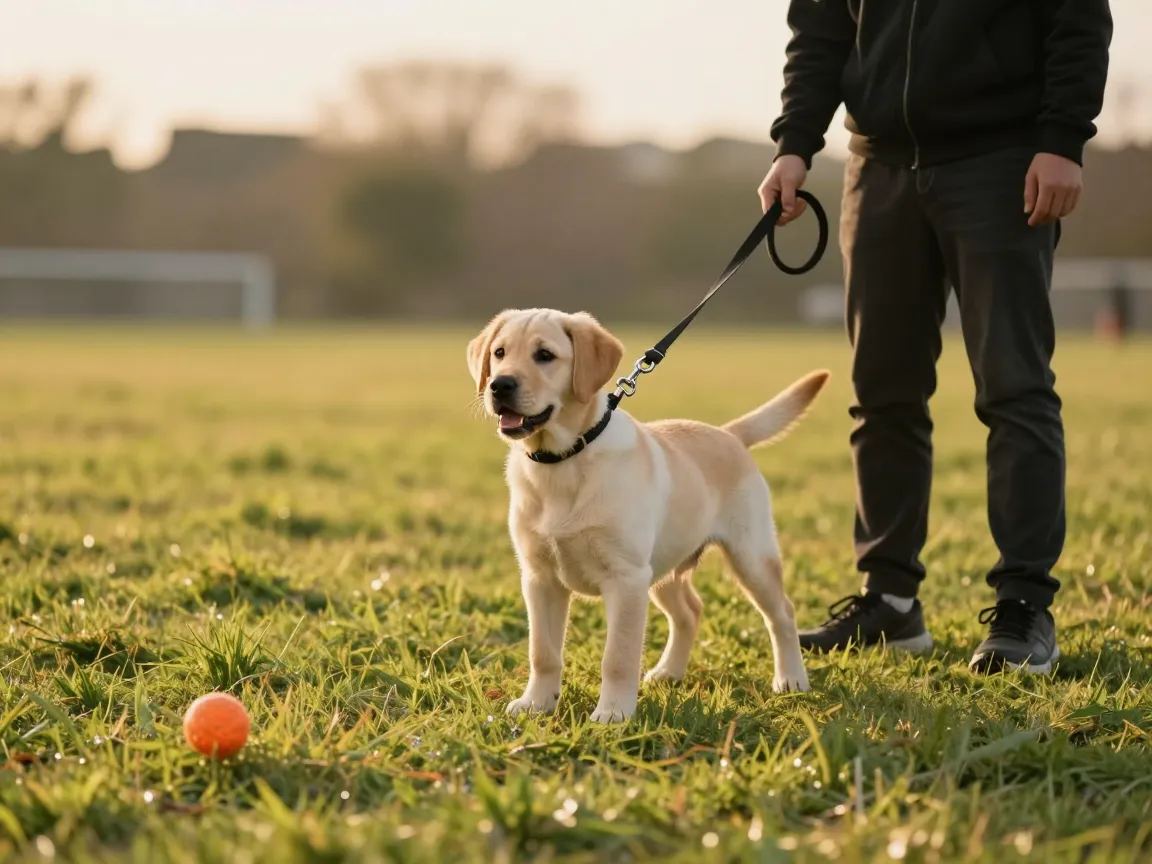
As a Labrador puppy grows past three months of age, its physical strength starts to outpace basic training if impulse control is not addressed early. A 40-pound adolescent Lab pulling toward a squirrel is a very different challenge than a 10-pound puppy doing the same thing.
Three cues deserve priority during this stage. “Wait” teaches the puppy to pause before doing something, such as exiting a door or jumping out of a car. “Leave it” teaches the puppy to disengage from something tempting on the ground or nearby. “Stay” builds on both by asking the puppy to hold a position for a period of time. These are not optional extras anymore in current breed-specific training guidance; they are considered core skills because Labs are strong, fast, and driven enough to get into trouble without them.
Recall, meaning a reliable response to “come,” deserves special attention between three and six months. This is the age when many Labs start testing boundaries and exploring independence, so building a rock-solid recall now prevents dangerous situations later, such as a dog bolting toward a road or another animal.
Leash manners follow the same timeline. Teaching a puppy to walk without pulling becomes far easier before the dog reaches full adult strength, which for many Labs arrives faster than owners expect. Short, frequent leash practice sessions around the yard or a quiet street, rewarding the puppy for staying near the handler’s side, build the habit before it becomes a physical struggle to manage on a full-grown dog.
Common Mistakes That Undermine These Training Tips
Even well-intentioned owners can slow down progress by falling into a few predictable traps. Recognizing these early prevents wasted weeks of frustration.
Training sessions that run too long often cause more harm than good. A tired or bored puppy stops learning and may start associating training with stress. Keeping sessions short and frequent, sometimes called micro-sessions, tends to produce faster, more durable results than occasional long lessons.
Punishment-based corrections, including yelling, physical corrections, or using the crate as a timeout space, tend to backfire with a breed this sensitive to its owner’s mood. Current expert consensus leans firmly toward marker-based positive reinforcement, where a consistent sound or word marks the exact moment of correct behavior, followed quickly by a reward. Precise timing matters more than the size of the reward.
Underestimating exercise needs is another frequent issue. Labs require both physical activity and mental stimulation. A dog that only gets a short walk but no puzzle toys, training games, or scent work often channels excess energy into digging, chewing, or excessive barking. Mental outlets are just as important as physical ones for preventing these problem behaviors.
Skipping structured supervision during the young puppy phase also causes setbacks. Giving a puppy free run of the house before it has learned basic house manners almost guarantees chewed furniture or missed potty signals. Puppy-proofing a designated area and using baby gates or a leash indoors, sometimes called “umbilical cord training,” keeps the puppy close enough to redirect before problems start.
A Simple Age-Based Milestone Timeline
Breed organizations and veterinary behavior experts now publish detailed, age-based milestone charts specifically for Labrador puppies, since this breed’s physical and mental development happens on a fairly predictable curve. The table below offers a simplified version to help new owners track progress.
| Age | Primary Training Focus |
|---|---|
| 8 to 10 weeks | Name recognition, gentle handling, potty schedule basics |
| 10 to 12 weeks | Socialization outings, crate comfort, sit and eye contact |
| 3 to 4 months | Wait, leave it, loose-leash introduction |
| 4 to 5 months | Recall practice, stay duration building |
| 5 to 6 months | Leash manners around distractions, impulse control under mild excitement |
| 6 months and beyond | Reinforcing all cues in real-world settings, longer training walks |
This timeline is a general guide rather than a rigid rulebook. Individual puppies vary, and a slower pace on any single skill is completely normal.
Frequently Asked Questions
How long should a training session be for a Labrador puppy?
Most experts recommend one to five minutes per session for young puppies, repeated several times throughout the day rather than one long lesson. This matches the puppy’s natural attention span and keeps motivation high.
When should socialization start for a Labrador puppy?
Socialization should begin as soon as the puppy arrives home, ideally by eight weeks of age, and continue steadily through the critical window that closes around 12 to 16 weeks.
Is crate training necessary for every Labrador puppy?
While not strictly mandatory, crate training is widely recommended because it supports housetraining, provides a safe rest space, and helps prevent destructive behavior when the puppy cannot be actively supervised.
What is the biggest training mistake new Labrador owners make?
Many new owners either skip early socialization or rely on punishment when the puppy makes mistakes. Both approaches tend to slow progress compared to structured, positive, and consistent training routines.
Do Labrador puppies need more mental stimulation than physical exercise?
They need both in balance. Physical exercise burns energy, but mental stimulation through training games, puzzle toys, and scent work prevents boredom-driven behaviors like chewing or excessive barking.
Conclusion
Raising a well-mannered Labrador starts long before formal obedience classes. The 6 Labrador Retriever Puppy Training Tips For Your New Best Friend covered here, starting training immediately, harnessing food and toy drive, prioritizing early socialization, building a strict housetraining schedule, using the crate as a safe space, and mastering impulse control alongside recall and leash manners, work together as a complete system rather than a checklist to rush through.
New owners who commit to short, positive sessions from day one, stay consistent with schedules, and avoid punishment-based corrections typically see a confident, responsive puppy emerge within the first several months. The next step is simple: pick one tip to start today, whether that means setting a potty schedule or introducing the crate this evening, and build from there one small, positive session at a time.