Stunning Ways To Capture The Russian Blue Cat Aesthetic In Your Home
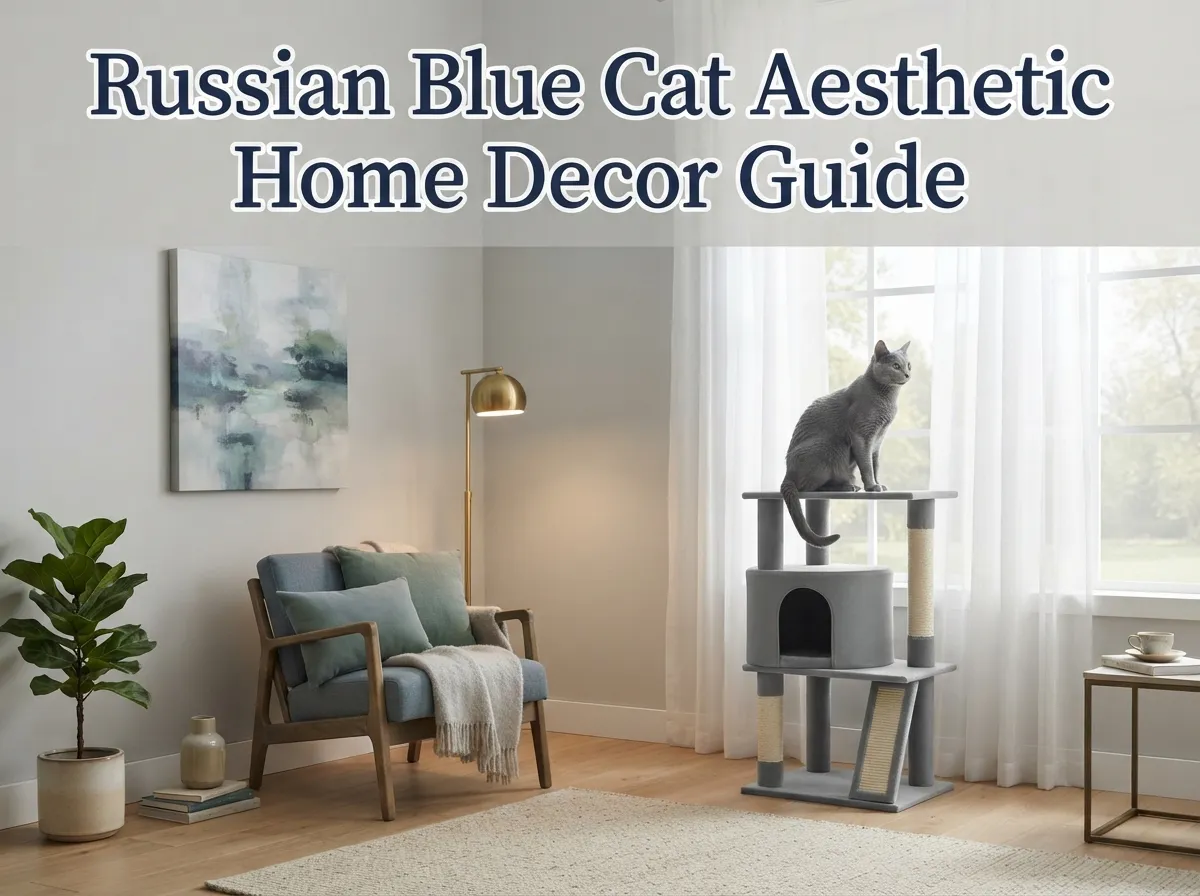
A Shutterstock search for “Russian Blue cat” returns more than 19,000 royalty-free images, nearly all sharing the same visual formula: sleek silver-blue fur, piercing green eyes, and a clean, uncluttered background. That pattern is not an accident. It reflects a design language that photographers, illustrators, and cat owners have quietly agreed on for decades, and it is one that translates surprisingly well into interior decor.
Disclosure: This post contains affiliate links. As an Amazon Associate, we earn from qualifying purchases, and at no extra cost to you.
If you share your home with a Russian Blue, or simply love the breed’s quiet elegance, you already have a built-in design consultant. This guide breaks down 6 Stunning Ways To Capture The Russian Blue Cat Aesthetic In Your Home, drawing on housing research, breed-specific art collections, and textile trends to help you build rooms that feel calm, cohesive, and unmistakably feline-inspired. Each method below is practical, budget-flexible, and grounded in how these cats actually live and behave.
Key Takeaways
- Vertical space matters most. Cat trees, wall shelves, and window perches mimic the elevated, secure vantage points Russian Blues naturally seek out.
- Cool, neutral color palettes (silver-grey, soft blue, muted green) echo the breed’s coat and create a calming visual foundation for any room.
- Soft, heat-retentive textiles like fleece and sherpa align decor with the cat’s dense double coat while giving you cozy accent pieces.
- Breed-specific art and textiles, from canvas prints to wallpaper, let you build a cohesive theme without redesigning an entire room.
- Consistent, uncluttered layouts for litter, food, and rest areas support both design harmony and the cat’s psychological well-being.
1. Build Vertical Territory That Doubles As Design Statement
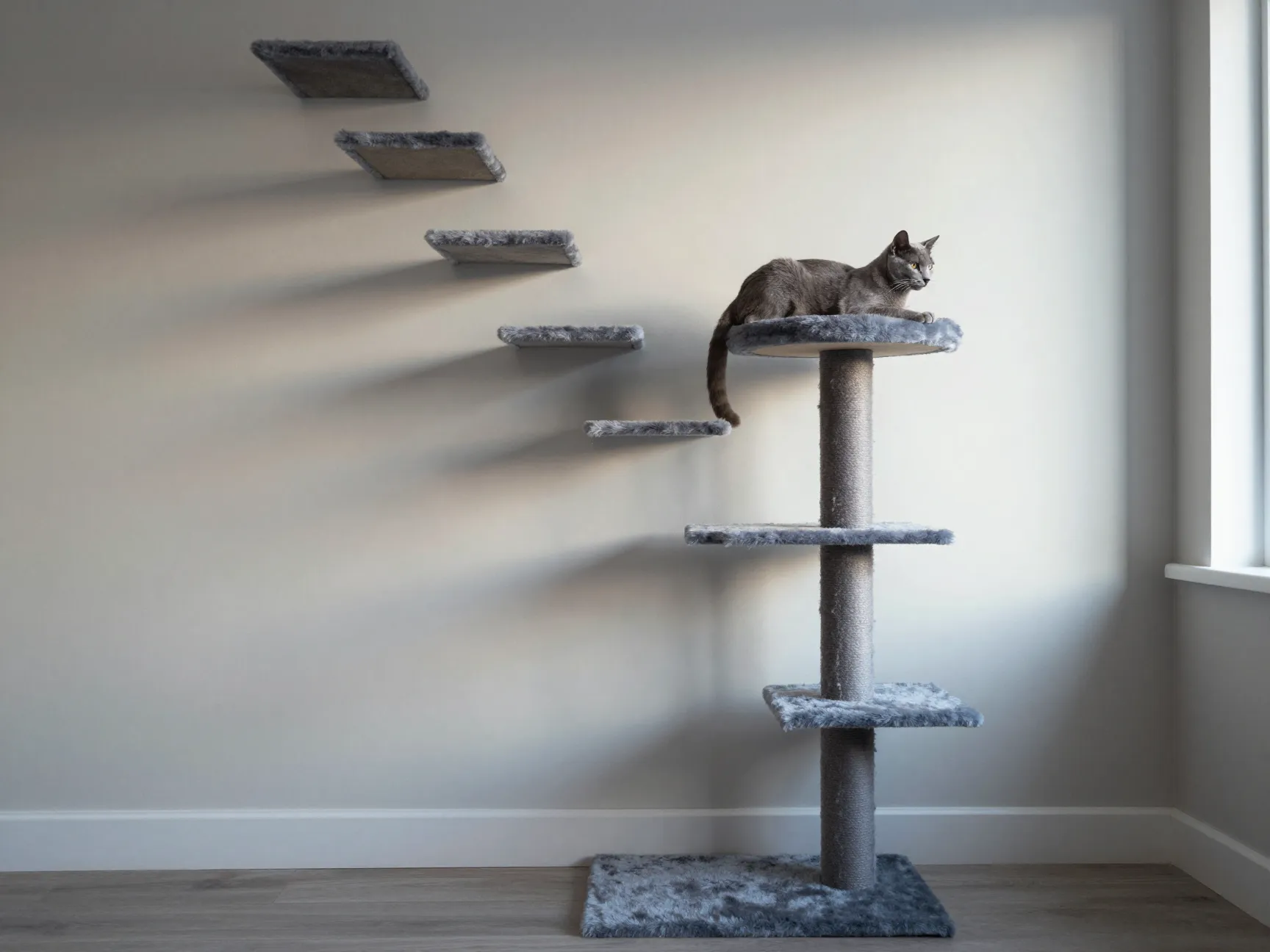
Russian Blues are natural observers. They prefer to watch a room from above rather than navigate it at ground level, which makes height the single most important design variable in any space they share. Recent housing guidance for the breed recommends cat trees standing 5 to 6 feet tall, paired with wall-mounted shelves that create a staircase effect toward windows. This is not just about giving the cat somewhere to climb. It is about turning functional cat furniture into an architectural feature.
Think of vertical territory as gallery-style shelving with a purpose. Instead of hiding a scratching post in a corner, position it where afternoon light hits a neutral wall, then layer in floating shelves at staggered heights leading up to a windowsill. The visual rhythm mimics a designed feature wall, while the cat gets a genuine survey point over the room. Choose materials in cool greys or muted blues to blend the structure into the palette rather than making it look like an add-on.
A few practical notes worth following:
- Platform01. Use platforms at least 14×14 inches so the cat can lounge comfortably rather than perch awkwardly.
- Base02. Choose trees with wide, weighted bases; top-heavy towers near windows are a safety risk and a design liability if they tip.
- Placement03. Position at least one tall piece within view of a window so the cat can watch outdoor activity, which reduces boredom-driven anxiety.
This approach solves two problems simultaneously. It satisfies the Russian Blue’s instinct for elevated safety, and it gives you a sculptural, intentional-looking piece of furniture instead of a purely utilitarian one.
2. Layer In Cool, Coat-Inspired Color Palettes
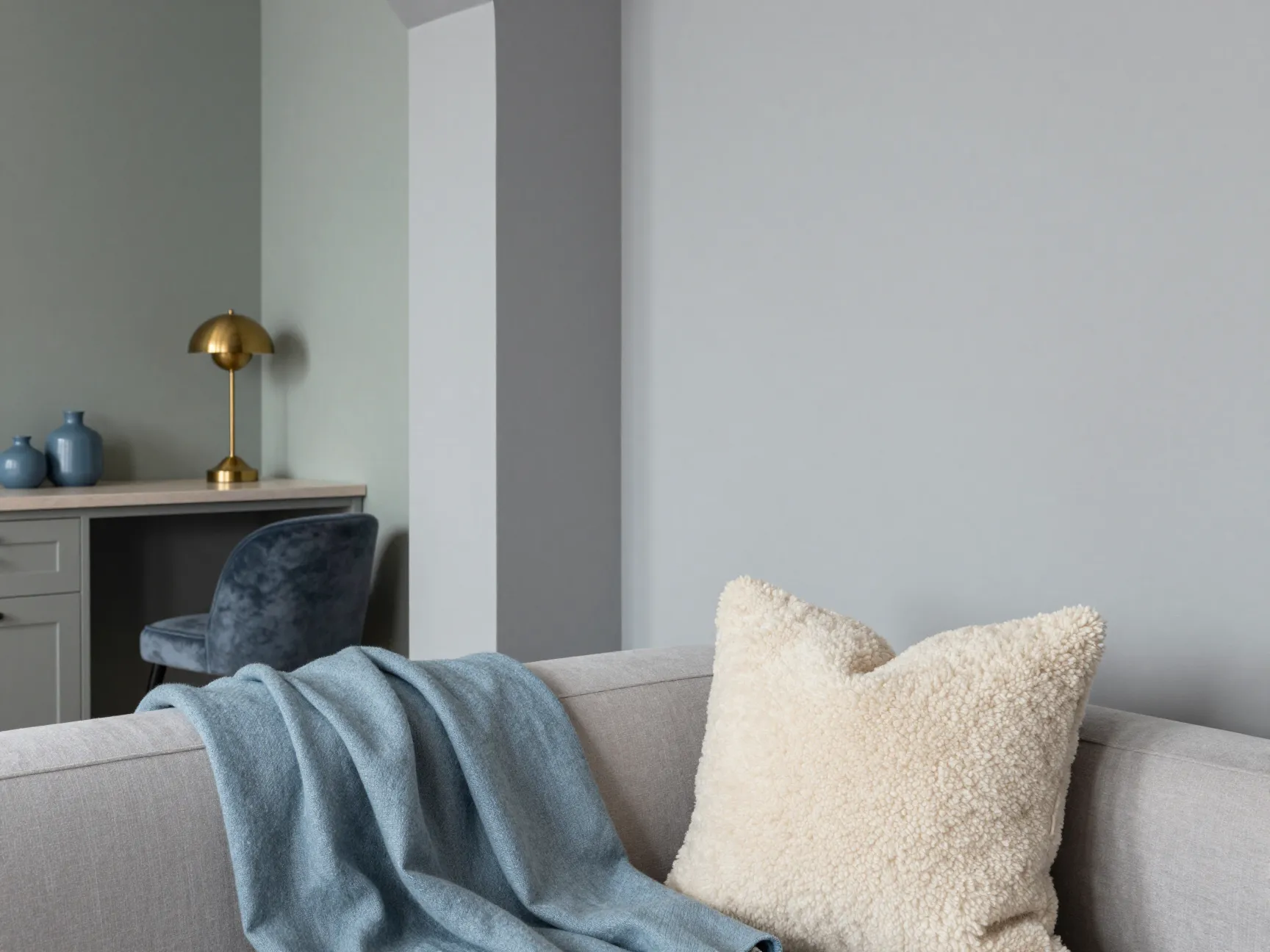
The Russian Blue’s coat is famously described in product listings and breed profiles as a symbol of elegance and grace, a glossy, silvery-blue coat set against pale green or blue eyes. That description is a decor cheat sheet in disguise. Pull the same tones into your walls, textiles, and accent pieces, and you get an interior that feels intentionally styled around the cat rather than incidentally sharing space with it.
Start with a base palette of soft greys, dusty blues, and muted greens. These are forgiving colors that work in living rooms, bedrooms, and even kitchens without feeling cold or clinical when balanced with warm lighting. Consider this simple palette breakdown for different rooms:
| Room | Wall/Base Tone | Accent Tone | Texture Suggestion |
|---|---|---|---|
| Living Room | Soft dove grey | Slate blue | Boucle or linen throw |
| Bedroom | Pale blue-grey | Warm cream | Sherpa cushion |
| Reading Nook | Muted sage green | Amber brass | Velvet armchair |
| Kitchen/Dining | Cool white | Steel blue | Matte ceramic |
Pairing these cool bases with a warm accent, brass fixtures, amber lighting, or a cream throw, keeps the room from feeling flat. This mirrors how many Russian Blue portrait and interior artworks are composed: silver-grey fur contrasted against warm browns or soft ambient light to create depth rather than a monochrome wash.
3. Use Sheer Curtains And Natural Light As A Design Tool
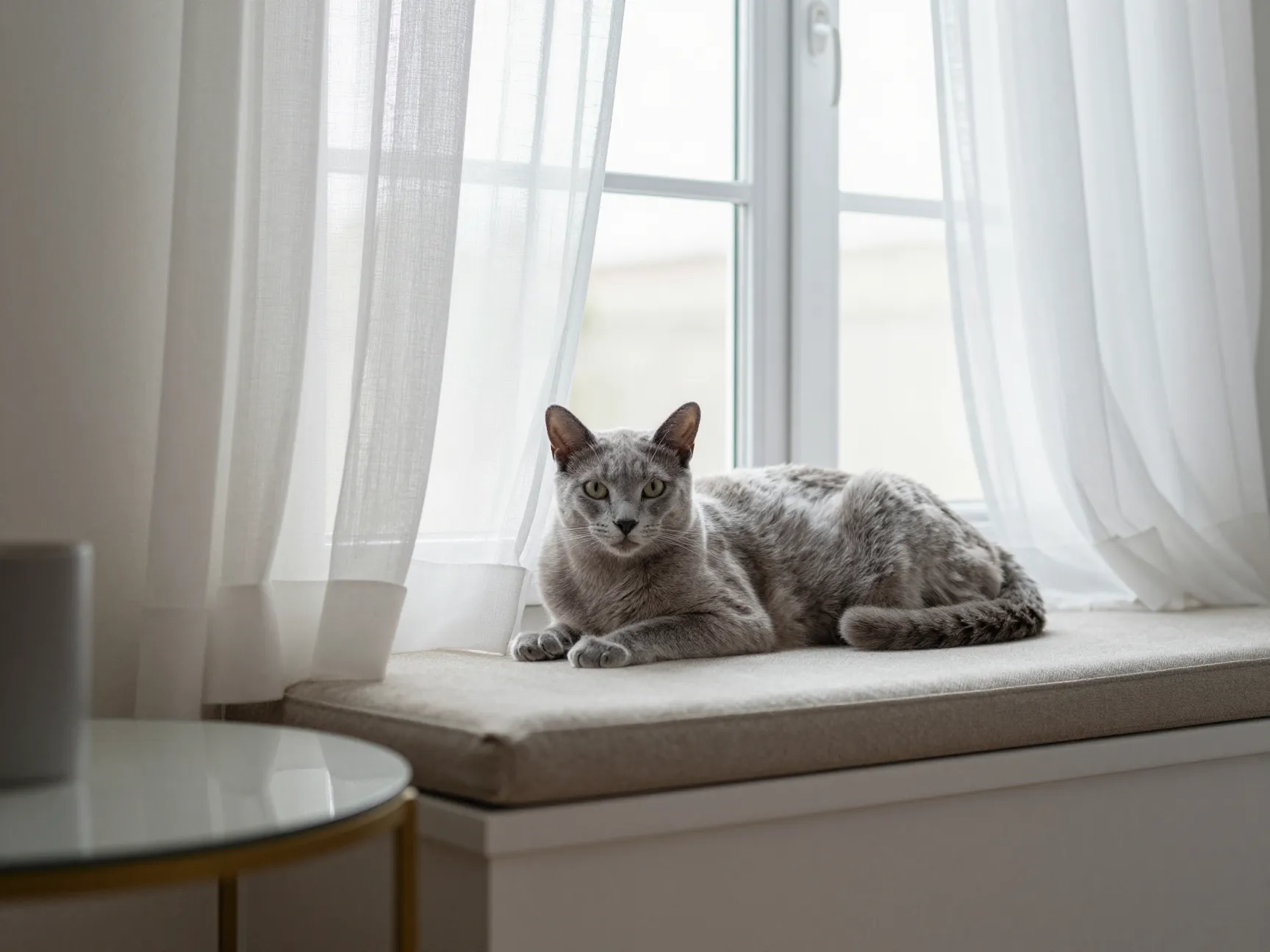
Professional pet photographers have a specific trick for capturing the Russian Blue’s coat at its most luminous: position the cat near a window with sheer white curtains on an overcast day. The diffused light brings out the subtle blue undertones in the fur without harsh shadows or glare. This same principle applies directly to home design.
Sheer curtains do more than filter light for photography. They soften a room’s entire mood, reduce visual clutter from outside views, and create a gentle, even glow that makes cool color palettes feel warm rather than sterile. Combine sheer window treatments with a few deliberate choices:
- Layering01. Pair sheer curtains with a heavier blackout panel that can be drawn at night, keeping daytime light soft and diffused.
- Window Seating02. Add a low bench or cushioned ledge under the window so the cat has a dedicated light-filled resting spot.
- Reflective Surfaces03. Use a mirror or glass-top table nearby to bounce the soft light further into the room.
This is one of the simplest, lowest-cost items on this list, yet it has an outsized effect. A single window treated this way often becomes the most photographed corner of the house, both for the cat and for the room itself.
4. Bring In Breed-Specific Art And Textiles
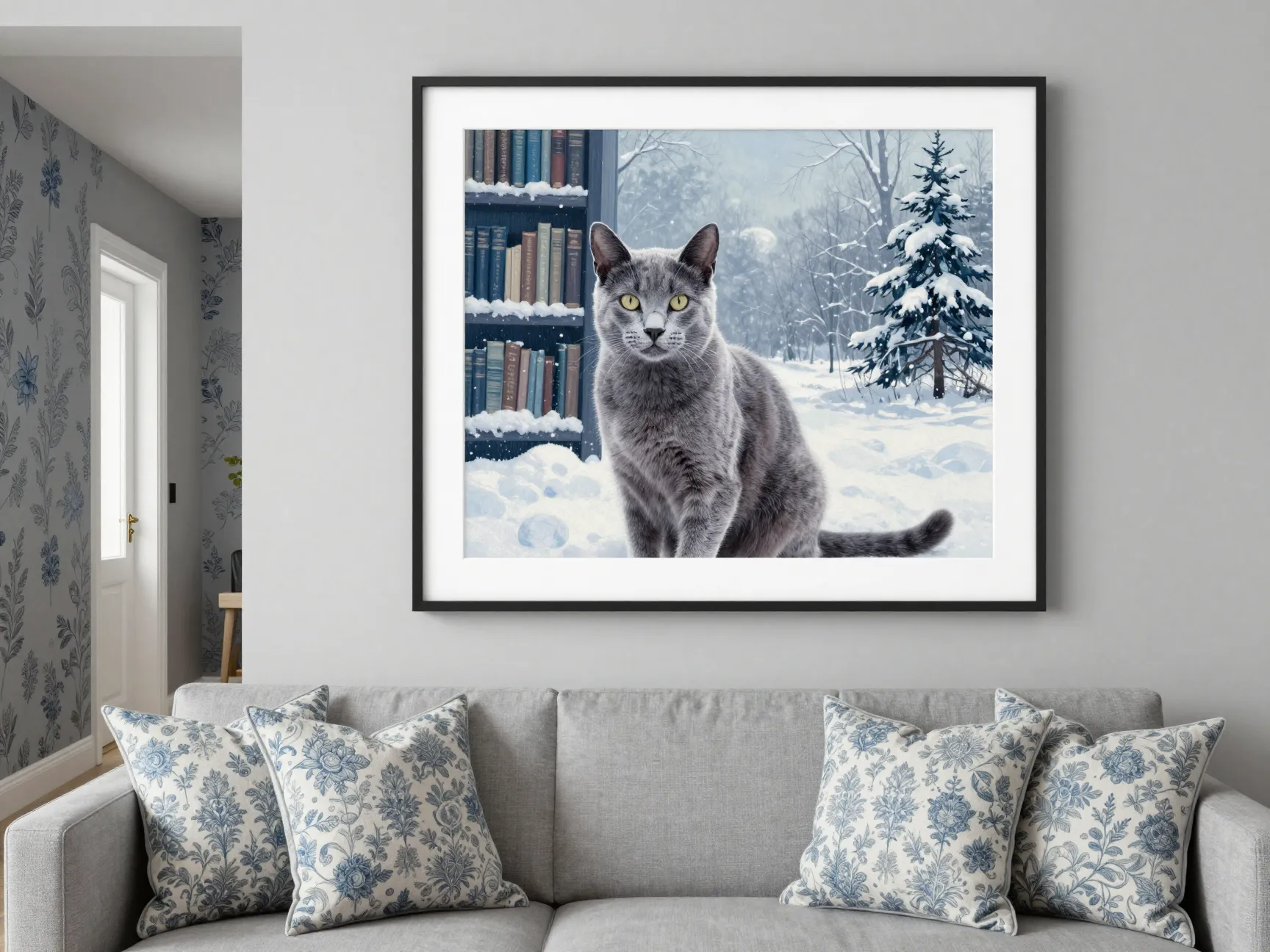
There is now a genuinely large marketplace built around Russian Blue imagery. Print-on-demand fabric platforms offer hundreds of breed-specific patterns as wallpaper, curtains, cushions, and table linens, all designed by independent artists. Wall art catalogs have expanded to include Russian Blue-themed scenes set in music studios, yoga spaces, snowy winter landscapes, cherry blossom hot springs, and cozy libraries. Handmade marketplaces add plushies, custom portraits, and figurines into the mix.
This abundance means you can build the aesthetic in layers rather than committing to one big renovation. An accent wall of Russian Blue-patterned wallpaper in a hallway, a set of matching throw pillows in the living room, and a single statement canvas above a reading chair can all coexist without looking themed or novelty-driven, as long as the color story stays consistent.
A practical way to approach this:
- Anchor Piece01. Choose one large canvas or framed print as the room’s focal point, ideally one with a cool-toned background that matches your wall color.
- Textile Echo02. Add two or three smaller textile touches, cushions, a table runner, a curtain trim, that repeat the same color family.
- Rotate Seasonally03. Swap out smaller art pieces for seasonal themes, snow scenes in winter, botanical or hot-spring imagery in spring, without disturbing the anchor piece.
This layered method keeps the aesthetic feeling curated rather than commercial, and it scales easily whether you are decorating a studio apartment or a full house.
5. Design A Cozy Library Or Reading Corner
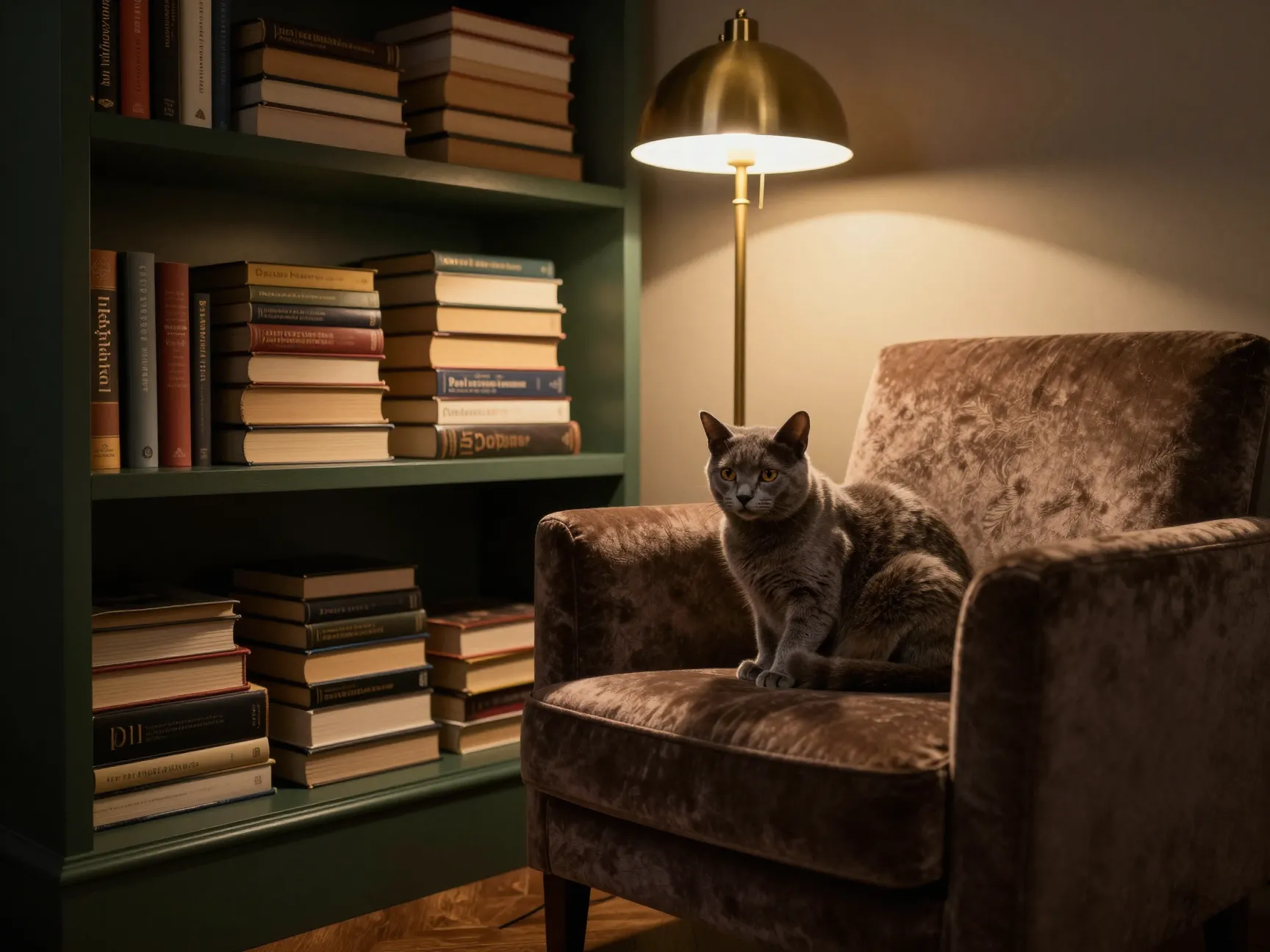
Among the more distinctive interior styles associated with this breed is the “cozy library” look: deep green bookshelves, stacked hardcovers, warm lamplight, and a Russian Blue cat settled among the books like a quiet co-reader. This aesthetic pairs naturally with the breed’s reputation for being reserved, intelligent, and fond of calm environments.
Recreating this does not require a full library. A single armchair, a compact bookcase, and the right lighting can achieve the same feeling in a corner of a bedroom or living room.
Key elements to combine:
- Deep Tones01. Use dark green, navy, or espresso brown shelving to contrast with the cat’s silver coat and create visual depth.
- Warm Lamplight02. Choose a brass or amber-toned lamp instead of overhead lighting to keep the corner soft and inviting.
- Textured Seating03. A velvet or boucle armchair adds tactile warmth against the cooler color palette elsewhere in the room.
- A Perch Within Reach04. Place a small cushioned shelf or ottoman near the chair so the cat can settle nearby without needing to compete for the seat.
This corner works especially well in homes that already lean toward a traditional or transitional style, since the warm woods and greens integrate easily with existing furniture rather than requiring a full color overhaul.
6. Structure The Layout Around Calm, Predictable Zones
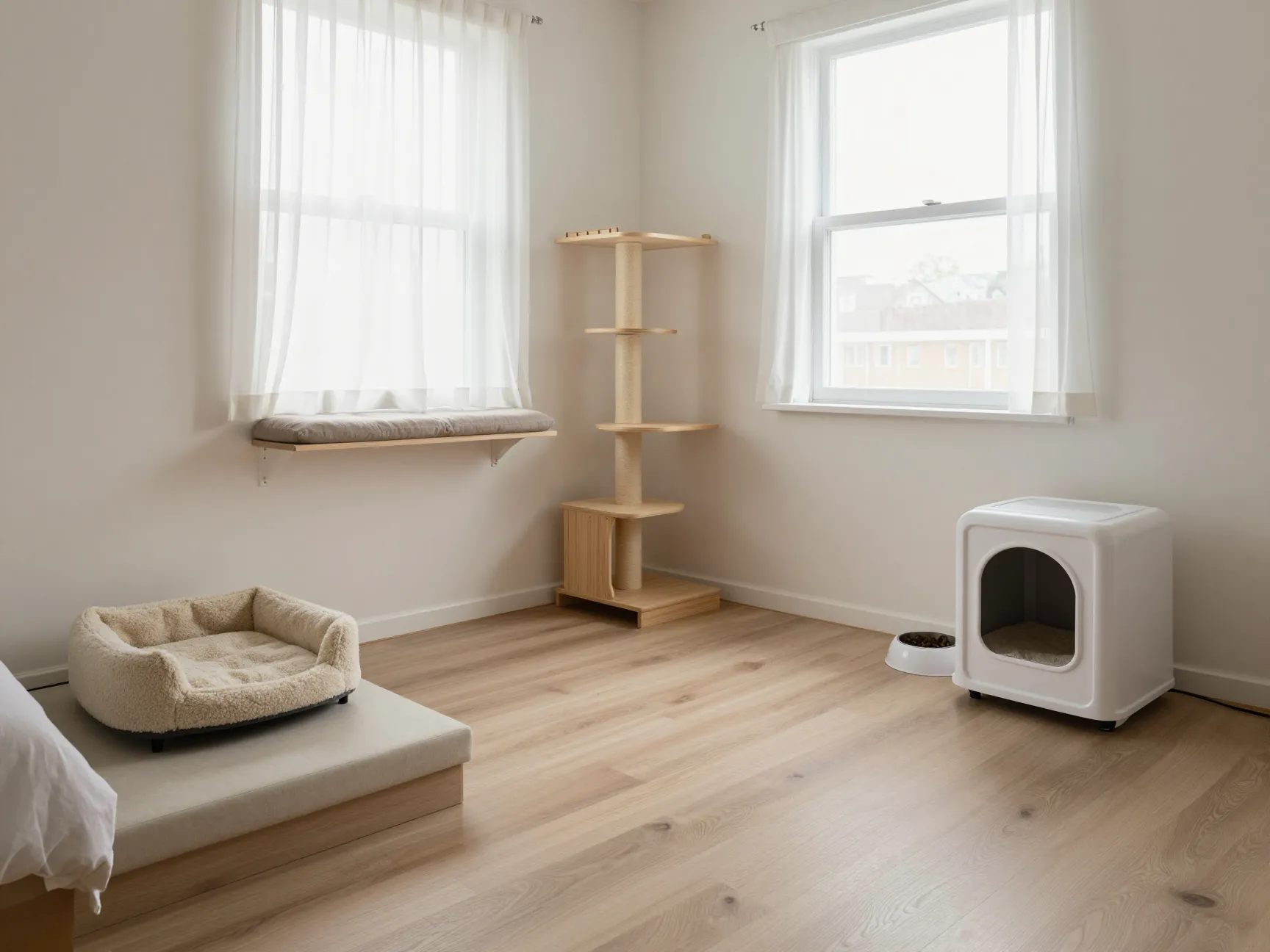
The final, and arguably most foundational, piece of the 6 Stunning Ways To Capture The Russian Blue Cat Aesthetic In Your Home is not about color or art at all. It is about layout logic. Housing guidance for this breed consistently emphasizes keeping resting spots, feeding stations, and litter areas in consistent locations, changing rooms gradually rather than abruptly, and giving each cat enough resources to avoid competition, generally one litter box per cat plus one extra, and multiple beds spread across quiet and social zones.
This structural approach doubles as a design principle. A home where every functional element has a clear, deliberate place tends to look more intentional than one where cat gear is scattered wherever it fits. Consider organizing your space into distinct zones:
| Zone | Purpose | Design Tip |
|---|---|---|
| Quiet Bedroom Corner | Deep rest, low stimulation | Soft sherpa bed, blackout curtain nearby |
| Sunny Window Ledge | Daytime lounging, light exposure | Cushioned platform under sheer curtains |
| Living Room Perch | Social observation | Tall shelf or tree near main seating area |
| Feeding Station | Consistent meals | Placed away from litter, visual barrier if multiple cats |
| Litter Area | Privacy and hygiene | Enclosed or screened, away from food and rest zones |
Because Russian Blues are sensitive to disruption, this zoning also protects the aesthetic you build in the other five steps. A cat that feels secure in a stable layout is far more likely to actually use the beautiful tree, the cozy reading corner, or the sunlit window bench you designed, rather than avoiding it out of stress. In that sense, calm structure is what makes every other design choice on this list actually work in practice.
Bringing The Six Elements Together
None of these six approaches needs to be executed all at once. Most owners find success by starting with layout and vertical territory first, since those directly affect the cat’s comfort and behavior, then layering in color, textiles, and art over subsequent weeks or months. A useful sequence:
- Assess Current Layout01. Map where beds, litter, and feeding stations already sit, and identify gaps in vertical access.
- Add One Tall Piece02. Introduce a single cat tree or shelf system near a window before adding decorative elements.
- Set The Palette03. Choose two or three cool base tones and one warm accent before buying any art or textiles.
- Layer Textiles And Art04. Add breed-specific patterns or canvases gradually, starting with one anchor piece per room.
- Build The Reading Corner05. Once the main living space feels settled, add a smaller cozy nook if space allows.
- Reassess Quarterly06. Rotate seasonal art and check that resource zones still meet the “one plus one” litter box rule and multiple bed guideline as household routines change.
“A home designed around a Russian Blue’s instincts, height, light, consistency, ends up looking more intentional than a home decorated around the cat’s image alone.”
This sequencing keeps the process manageable and prevents the common mistake of over-decorating before the functional basics, height, consistency, and resource spacing, are in place.
Frequently Asked Questions
Does the Russian Blue aesthetic only work with grey or blue color schemes?
No. While cool tones echo the coat most directly, warm accents like brass, amber, and cream are frequently used to balance the palette, especially in reading corners and library-style spaces.
How tall should a cat tree be for this breed specifically?
Guidance generally points to 5 to 6 feet, giving the cat enough elevation to survey a room while still fitting comfortably in most standard ceiling heights.
Can this aesthetic work in a small apartment?
Yes. Vertical solutions like wall-mounted shelves take up minimal floor space, and a single sheer-curtained window plus one anchor art piece can establish the look without needing a large footprint.
Is a catio necessary to achieve this look?
Not necessary, but a catio with shaded perches and secure mesh (no gaps larger than one inch) adds an outdoor extension of the same aesthetic for owners with yard or balcony access.
Conclusion
Capturing the Russian Blue cat aesthetic in your home is less about buying novelty decor and more about understanding how this breed actually experiences a room, through height, light, consistency, and calm structure, and letting those instincts guide your design choices. The six approaches covered here, vertical territory, coat-inspired color, natural light through sheer curtains, breed-specific art and textiles, a cozy reading corner, and predictable resource zones, work best as a connected system rather than isolated purchases.
Start small. Pick one wall, one window, or one tall piece of furniture and apply a single method this week. As each element settles into place, the room will begin to feel less like a house with a cat in it and more like a space genuinely designed around one of the more elegant, quietly observant breeds in the feline world.