Fluffy Cat Breeds For The Ultimate Snuggle Buddy
A Ragdoll cat will go completely limp when you scoop it into your arms, a trait breeders nicknamed “flopping” decades ago and one that still makes this breed the most-searched cuddle cat online in 2026. That single behavior explains why fluffy, affectionate cats dominate pet adoption searches every autumn as families look for a warm, low-drama companion for the colder months. This guide breaks down the 6 Fluffy Cat Breeds For The Ultimate Snuggle Buddy, drawing on veterinary temperament data, grooming research, and the latest breed rankings published by major pet-care platforms through September 2026.
Disclosure: This post contains affiliate links. As an Amazon Associate, we earn from qualifying purchases, and at no extra cost to you.
Not every long-haired cat is a lap cat, and not every lap cat has thick fur. The six breeds featured here were chosen because they combine both traits: a dense, touchable coat and a personality that genuinely seeks out physical closeness with people. Whether the goal is a full-time couch companion or a low-maintenance fluffball that still loves affection, this list covers the practical differences in grooming, size, and temperament that matter most before bringing one home.
Key Takeaways
- The 6 Fluffy Cat Breeds For The Ultimate Snuggle Buddy include Ragdoll, Persian, Birman, Ragamuffin, Norwegian Forest Cat, and Siberian, each offering a distinct coat type and cuddle style.
- Ragdolls and Ragamuffins are consistently ranked the most physically affectionate, often described as “ultimate cuddle companions” by veterinary behaviorists.
- Birmans and Persians top most 2026 lap-cat rankings, though Persians require significantly more daily grooming due to their dense double coat.
- Norwegian Forest Cats and Siberians are large, fluffy, and loyal, but they tend to be independent snugglers rather than constant lap sitters.
- Coat type, not breed rarity, should drive the decision: single-layer coats mat less than dense double coats, which matters more for daily care than looks.
Why the 6 Fluffy Cat Breeds For The Ultimate Snuggle Buddy Stand Out
Fluffiness alone does not make a cat cuddly. Some long-haired breeds are famously independent, while a handful of short-haired cats are surprisingly clingy. What sets the 6 Fluffy Cat Breeds For The Ultimate Snuggle Buddy apart is the combination of a soft, insulating coat with a temperament bred or naturally selected for closeness to humans. Ragdolls, for example, were originally developed specifically for docility and physical affection, while Norwegian Forest Cats evolved in cold climates where a thick double coat was a survival necessity rather than a personality trait.
Grooming demands vary enormously across these breeds, and that difference matters as much as temperament when choosing a snuggle companion. A Persian’s dense double coat mats quickly without daily brushing, while a Birman’s single-layer coat resists matting almost entirely despite looking just as luxurious. Veterinary groomers note that coat structure, not overall fur length, is the biggest predictor of how much upkeep a fluffy cat will actually need.
“The softest, most huggable cats are rarely the rarest ones. They are the breeds whose coats and temperaments were shaped for closeness, not for show,” notes a common theme echoed across 2026 pet-care breed guides.
Temperament testing and long-term adopter surveys consistently place the same handful of breeds at the top of cuddle rankings. That consensus, repeated across independent 2026 updates from major pet platforms, forms the backbone of the list below.
The 6 Fluffy Cat Breeds For The Ultimate Snuggle Buddy Ranked
The following breeds appear repeatedly across current expert rankings, adoption platforms, and veterinary behavior guides published through 2026. Each entry includes practical grooming and temperament notes to help match the right cat to the right household.
1. Ragdoll
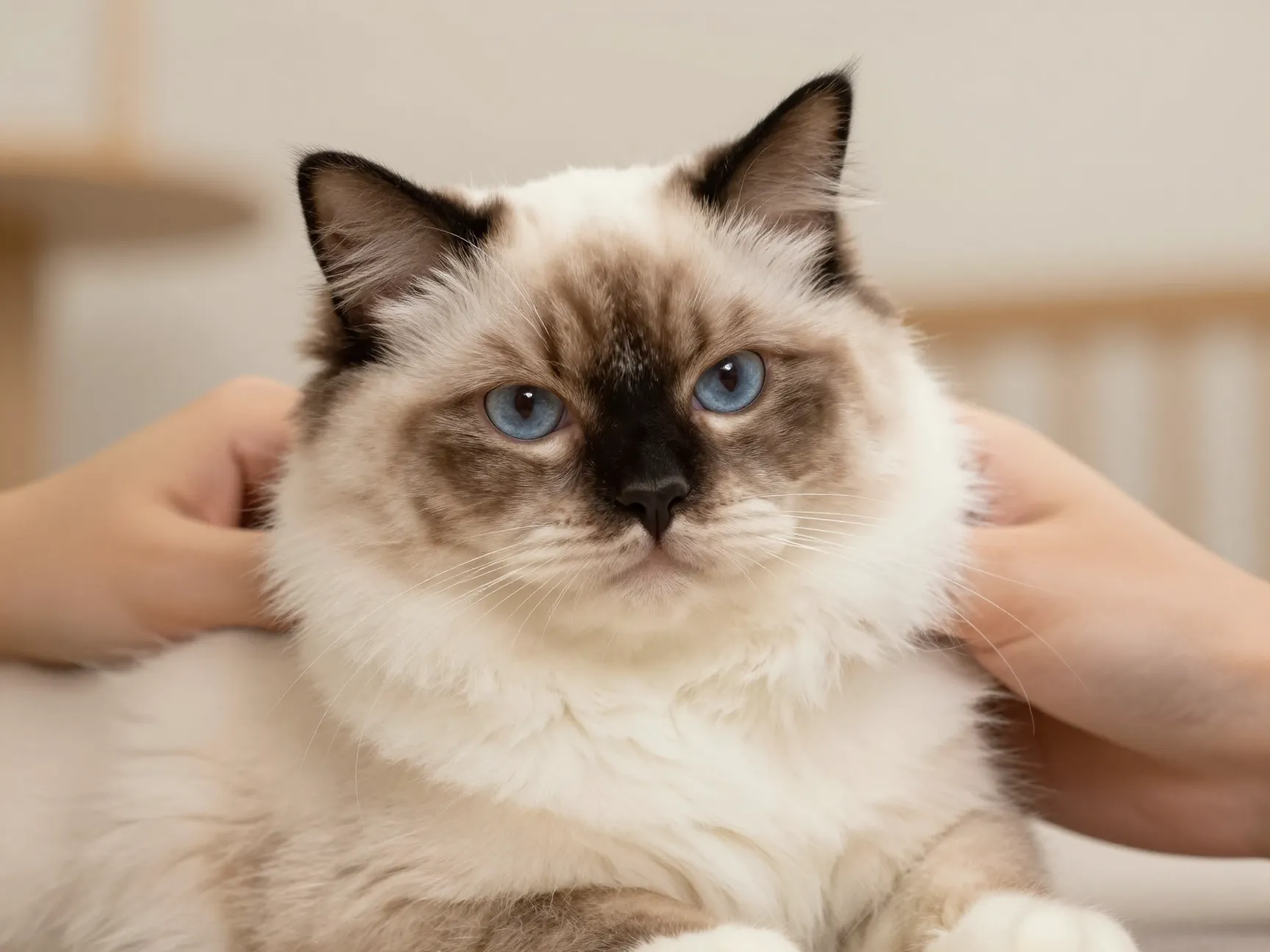
Ragdolls are the breed most frequently labeled the “ultimate cuddle companion” in expert roundups, and for good reason. They were selectively bred for a calm, floppy, affectionate disposition, and most individuals will happily be carried around like a plush toy for extended periods. Their semi-long coat is silky rather than woolly, which means it resists matting far better than a Persian’s dense double coat.
Ragdolls tend to follow their favorite person from room to room, a trait sometimes called “puppy-like” in cat behavior literature. They generally weigh between 10 and 20 pounds, making them one of the larger lap cats on this list. Weekly brushing is usually enough to keep the coat smooth, though shedding increases during seasonal coat changes.
2. Persian
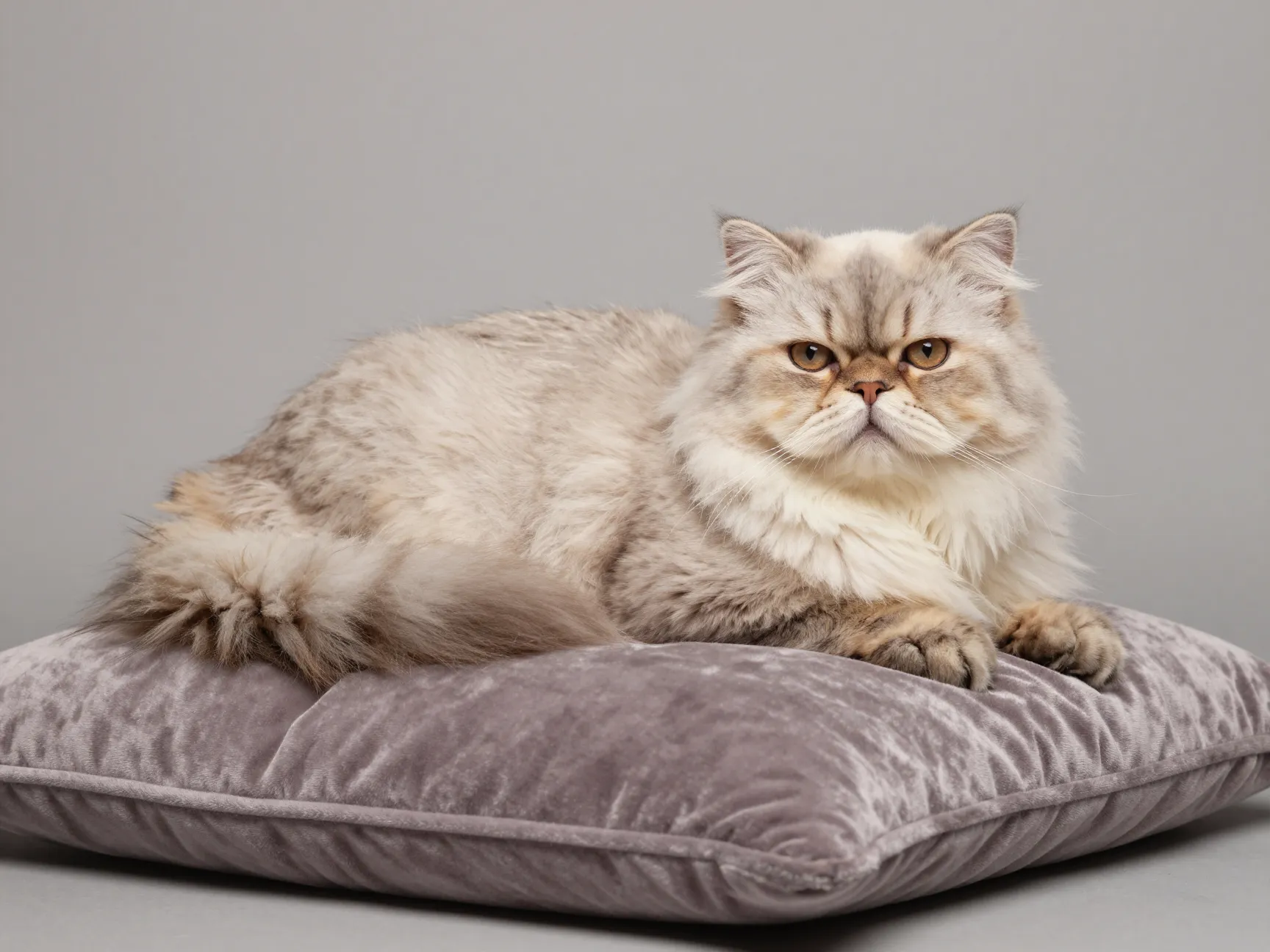
Persians remain a premier lap-cat choice, according to major 2026 breed updates from pet-care platforms. Their flat-faced, round-eyed appearance pairs with a famously placid, homebody temperament that thrives on quiet affection rather than active play. Persians are content to spend hours curled up in one spot, making them ideal for owners who want a low-energy, high-affection companion.
The tradeoff is grooming intensity. A Persian’s coat is dense, long, and prone to matting within days if left unbrushed, so daily combing is considered non-negotiable by most veterinary groomers. Owners who can commit to that routine gain one of the most consistently cuddly breeds available, but those seeking a lower-maintenance fluffy cat may want to look elsewhere on this list.
3. Birman
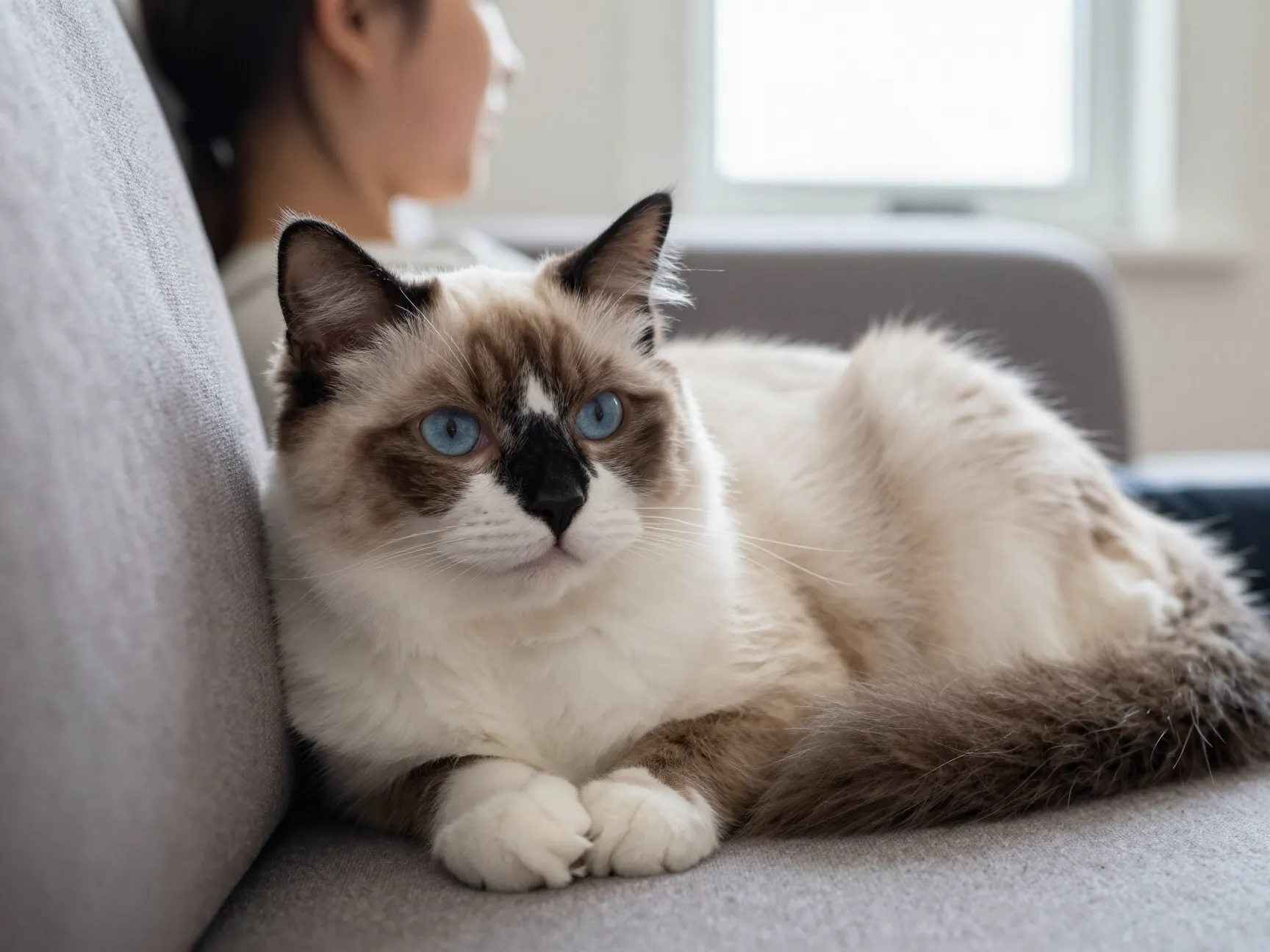
Birmans have gained renewed attention in 2026 updates specifically because their single-layer coat mats far less than other long-haired breeds while still looking and feeling exceptionally plush. Care platforms now regularly highlight Birmans alongside Persians as premier lap cats, but with a fraction of the grooming burden.
Temperamentally, Birmans are gentle, quiet, and deeply attached to their households. They rarely demand attention loudly, preferring instead to settle near or on a favorite person without fuss. This understated affection, combined with manageable grooming, has pushed Birmans up nearly every recent fluffy-breed ranking, including the most current list updates published in September 2026.
4. Ragamuffin
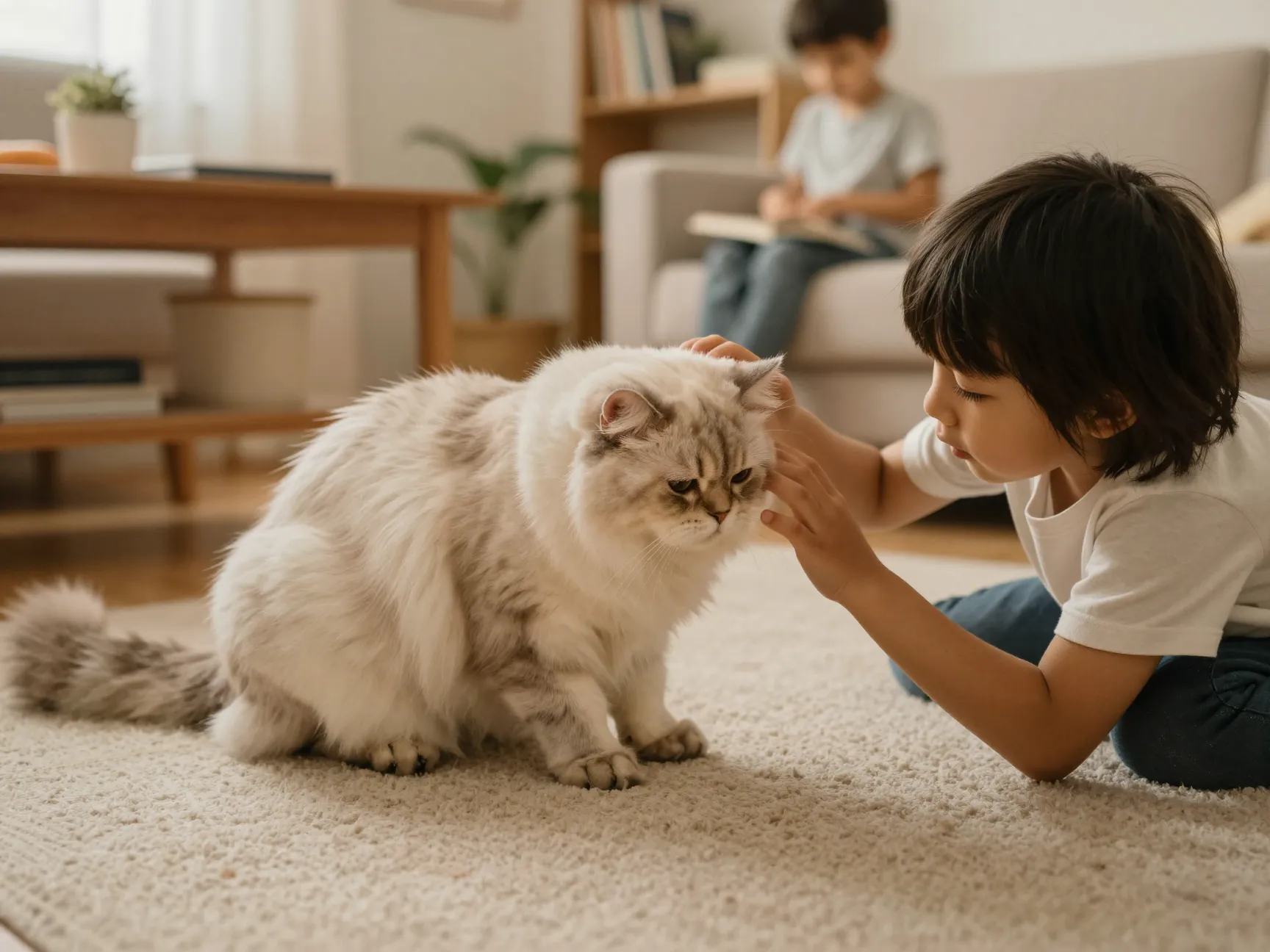
Often mistaken for a Ragdoll due to a similar name and appearance, the Ragamuffin is a distinct breed with an even more relaxed temperament in many cases. Ragamuffins are large, soft-coated cats that adapt easily to children, other pets, and busy households. Behaviorists repeatedly describe them as some of the most emotionally intuitive cats, often gravitating toward whoever in the room seems to need comfort most.
Their coat is dense but silky, requiring roughly two to three brushing sessions per week to stay tangle-free. Ragamuffins mature slowly, often not reaching full size and temperament stability until age three or four, but the payoff is a famously mellow, cuddle-forward adult cat.
5. Norwegian Forest Cat
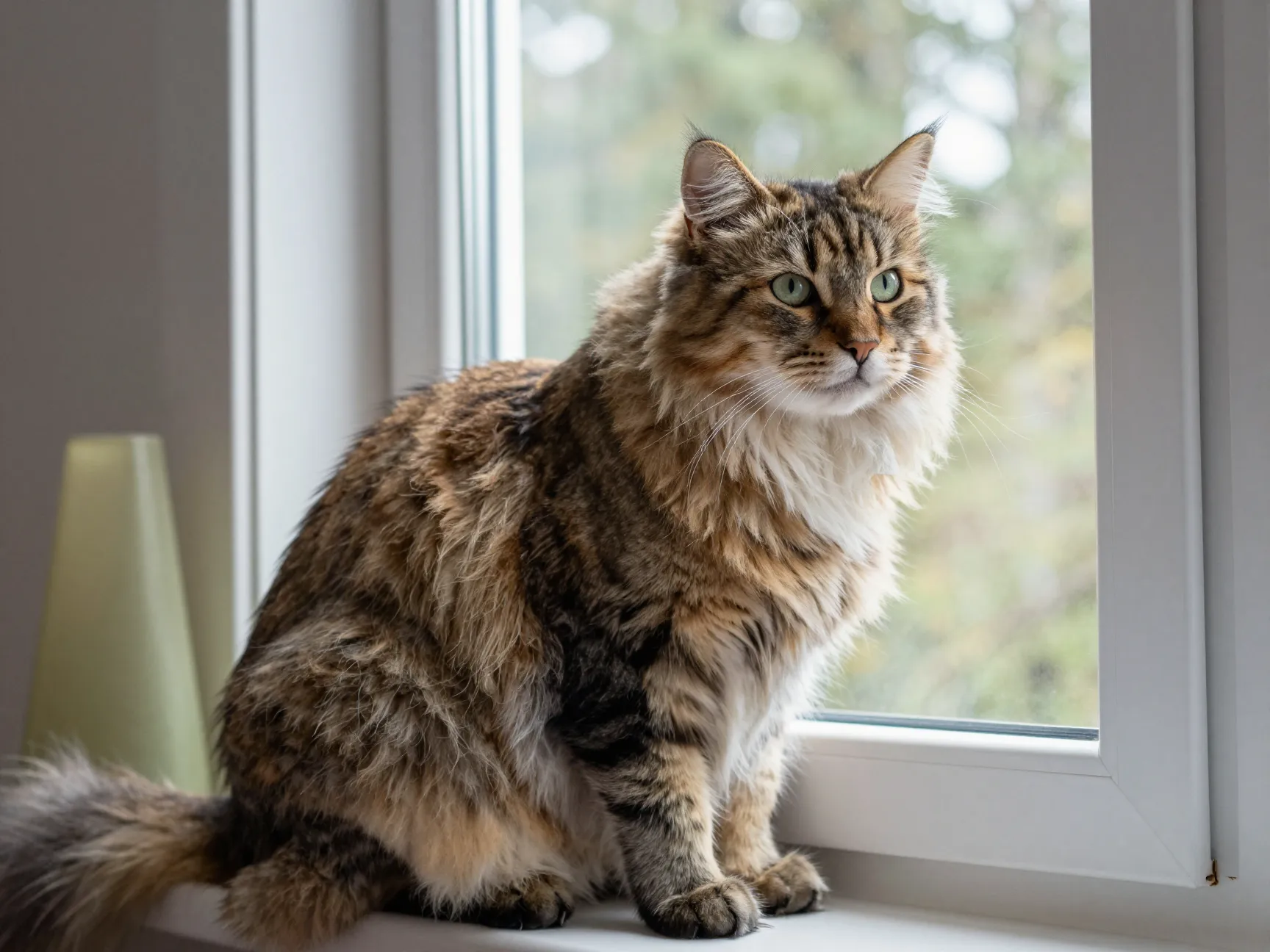
Norwegian Forest Cats bring a different kind of snuggle experience. These large, sturdy cats developed a thick, water-resistant double coat to survive harsh Scandinavian winters, and that same coat now gives them an irresistibly plush appearance. However, expert guides are careful to note that this breed is affectionate on its own terms rather than a constant lap sitter.
Norwegian Forest Cats tend to show loyalty through proximity, sleeping nearby or following an owner between rooms, rather than demanding to be held. Their coat sheds heavily during seasonal changes and benefits from weekly brushing, with extra attention needed around the neck ruff and britches where mats form most easily.
6. Siberian
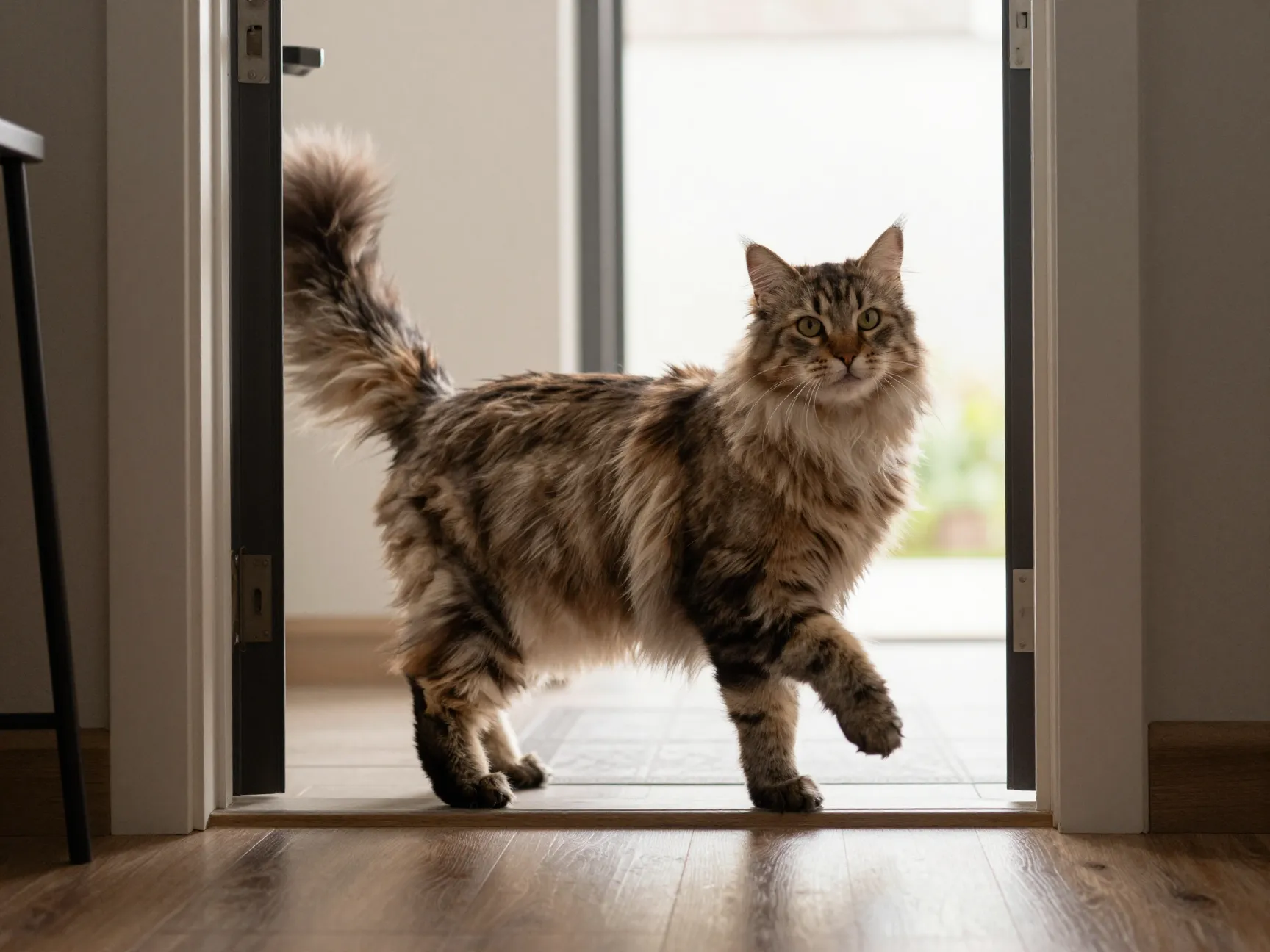
Siberians round out this list as another large, cold-climate breed with a triple-layer coat that feels remarkably soft despite its density. Like Norwegian Forest Cats, Siberians are affectionate but somewhat independent, often choosing to snuggle on their own schedule rather than on command. Many owners describe them as “dog-like” in loyalty, greeting people at the door and following them around the house.
Siberians are also frequently recommended to allergy-sensitive households, since they tend to produce lower levels of the Fel d1 protein compared to other breeds, though no cat is fully hypoallergenic. Grooming needs sit between the low-maintenance Birman and the high-maintenance Persian, with two weekly brushing sessions generally sufficient.
Comparing the 6 Fluffy Cat Breeds For The Ultimate Snuggle Buddy
The table below summarizes the practical differences between these six breeds, making it easier to match temperament and grooming tolerance to lifestyle.
| Breed | Coat Type | Grooming Needs | Cuddle Style | Typical Weight |
|---|---|---|---|---|
| Ragdoll | Semi-long, silky | Weekly brushing | Constant, floppy affection | 10-20 lbs |
| Persian | Long, dense double | Daily brushing | Homebody, quiet lap sitter | 7-12 lbs |
| Birman | Semi-long, single layer | Twice weekly | Gentle, low-fuss closeness | 8-12 lbs |
| Ragamuffin | Long, silky | 2-3 times weekly | Intuitive, emotionally attuned | 10-20 lbs |
| Norwegian Forest Cat | Thick double coat | Weekly, more in shedding season | Loyal but independent | 12-16 lbs |
| Siberian | Triple layer, soft | Twice weekly | Dog-like loyalty, own schedule | 12-17 lbs |
Grooming and Health Needs for Fluffy Snuggle Cats
Coat maintenance is the single biggest ongoing responsibility that comes with any of the 6 Fluffy Cat Breeds For The Ultimate Snuggle Buddy. Long and dense fur traps loose hair that would otherwise fall away naturally, which increases both matting risk and hairball frequency. Veterinary sources consistently point to three coat-related issues that owners should plan for: matting around the armpits and britches, seasonal shedding surges in double-coated breeds, and elevated hairball incidents compared to short-haired cats.
Matting develops fastest in dense double coats like the Persian’s, somewhat less in silky semi-long coats like the Ragdoll’s and Ragamuffin’s, and least of all in Birmans, whose single-layer structure resists tangling almost entirely. A simple weekly routine of combing from skin outward, paying special attention to the neck, belly, and hind legs, prevents most mats from forming in the first place.
Hairballs are a near-universal concern across fluffy breeds, since more fur ingested during self-grooming means more hair passing through the digestive tract. Regular brushing reduces the amount of loose fur a cat swallows, and many veterinarians recommend hairball-control diets or supplements for heavy shedders like the Norwegian Forest Cat and Siberian during seasonal coat blowouts.
A few practical grooming habits make a noticeable difference:
- Brush before bathing, since wet mats are far harder to remove than dry ones.
- Use a metal comb for double coats and a soft slicker brush for silky single layers.
- Trim excess fur between paw pads to reduce tracked litter and reduce matting.
- Schedule a professional groom twice a year for heavy-coated breeds like Persians.
- Watch for excessive scratching or skin odor, both early signs of hidden mats or skin irritation.
Beyond coat care, fluffy breeds carry a few breed-specific health considerations worth discussing with a veterinarian. Persians are prone to polycystic kidney disease and breathing difficulties linked to their flat facial structure. Ragdolls have a documented predisposition to hypertrophic cardiomyopathy, a heart condition that responsible breeders now screen for regularly. Routine veterinary checkups, paired with consistent grooming, address most of these risks before they become serious.
Choosing the Right Fluffy Cat Breed for a Snuggle-Focused Home
Matching a breed to a household comes down to three honest questions: how much grooming time is realistically available each week, how much lap time is actually desired versus simple companionship, and how much space and activity level the home can offer.
Households wanting maximum physical affection with minimal grooming effort tend to do best with a Birman or a Ragdoll, both of which combine plush coats with genuinely tactile personalities. Families comfortable with daily brushing in exchange for an especially serene, homebody companion often find Persians deeply rewarding. Larger, more active households, or those wanting a loyal but slightly more independent companion, frequently gravitate toward Norwegian Forest Cats or Siberians, both of which thrive with more space to roam.
Adoption-first platforms consistently encourage prospective owners to consider rescue organizations before purebred breeders, noting that mixed-breed fluffy cats often display the same affectionate traits without the higher costs or health risks associated with pedigree lines. Local shelters and breed-specific rescues frequently have Ragdoll mixes, Persian mixes, and other fluffy cats waiting for homes, offering a practical and compassionate alternative to breeder purchases.
Frequently Asked Questions
Which of the 6 Fluffy Cat Breeds For The Ultimate Snuggle Buddy is best for allergy sufferers?
Siberians are often recommended first, since they tend to produce lower levels of the Fel d1 allergen than most other breeds, though sensitivity varies by individual and no cat breed is completely allergen-free.
Do fluffy cats need more baths than short-haired cats?
Not necessarily. Most fluffy breeds groom themselves effectively and only need occasional baths, though regular brushing matters far more than bathing frequency for preventing mats and reducing shedding.
Are Ragdolls and Ragamuffins the same breed?
No. They share ancestry and a similar relaxed temperament, but Ragamuffins are recognized as a separate breed with slightly different body structure and coat texture standards.
Which breed on this list requires the least grooming?
Birmans generally need the least maintenance thanks to their single-layer coat, which resists matting far better than the double coats found on Persians, Norwegian Forest Cats, and Siberians.
Can large fluffy breeds like Norwegian Forest Cats live comfortably in apartments?
Yes, though they benefit from vertical space such as cat trees and window perches to satisfy their climbing instincts, since they were originally bred for outdoor forest environments.
Conclusion
The 6 Fluffy Cat Breeds For The Ultimate Snuggle Buddy each bring something different to the table, from the Ragdoll’s famous flop to the Birman’s low-maintenance plush coat and the Siberian’s dog-like loyalty. What ties them together is a proven combination of soft, insulating fur and a temperament genuinely oriented toward human closeness, not simply an appealing look.
Before choosing one, take an honest inventory of available grooming time, desired activity level, and how much physical affection is truly wanted versus quiet companionship. Reaching out to local shelters or breed-specific rescues is a strong next step, since many fluffy mixed-breed cats display the same cuddly traits highlighted here without the higher costs tied to purebred lines. Whichever breed or mix ends up on the couch, consistent brushing and routine veterinary care will keep that soft, snuggly coat healthy for years to come.