Alien Cat Drawing Concepts For Out-Of-This-World Feline Art
A single Shutterstock search for “alien cat” pulls up nearly 5,000 royalty-free illustrations. That number alone says something most hobby artists miss: alien cats are not a fringe doodle trend. They are a working visual category, used everywhere from Pinterest mood boards to professional character-design portfolios on Dribbble. Somewhere between a house pet and a science-fiction creature, the alien cat has become one of the most requested crossover subjects in digital art communities.
Disclosure: This post contains affiliate links. As an Amazon Associate, we earn from qualifying purchases, and at no extra cost to you.
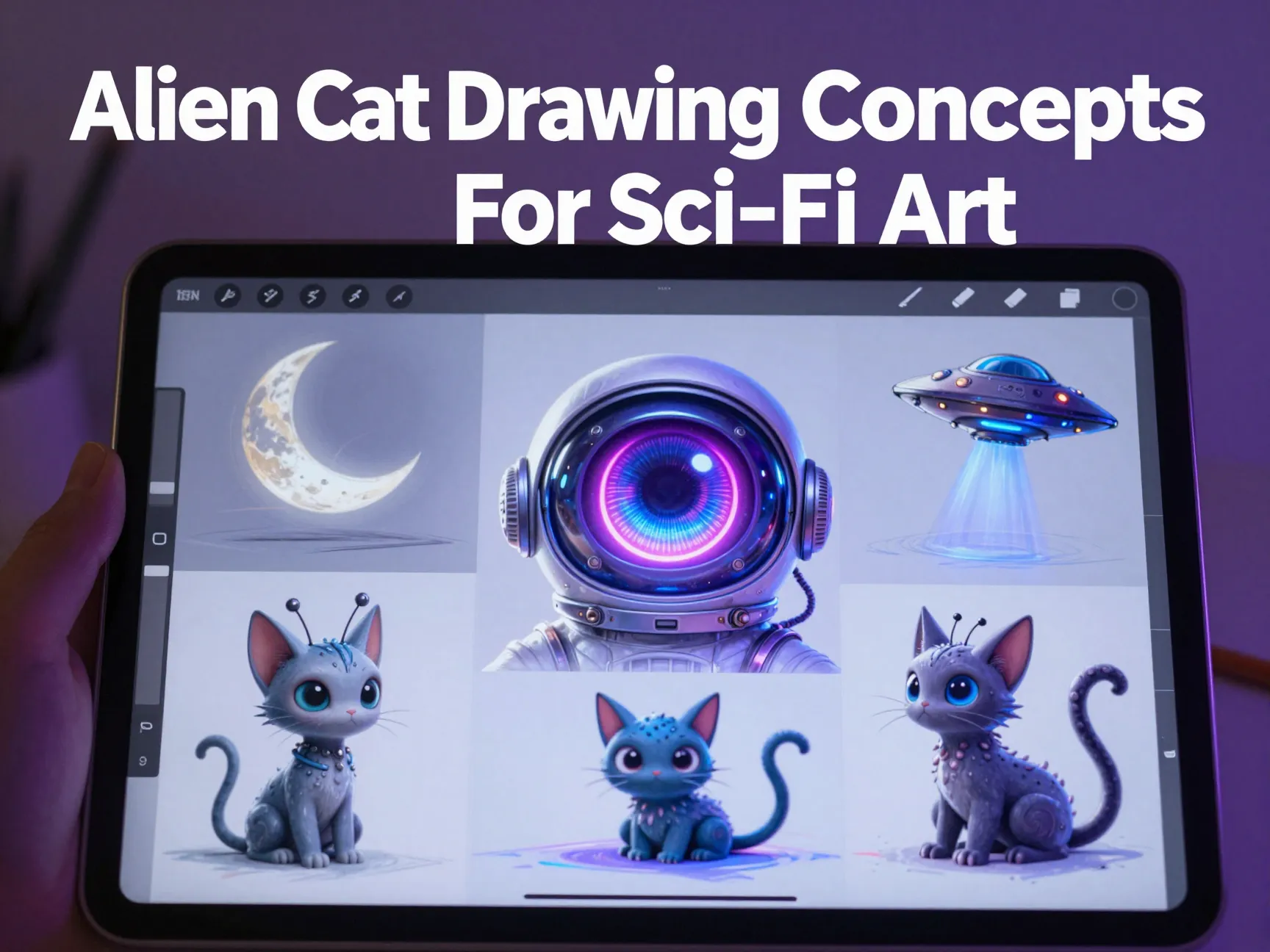
This guide breaks down 6 Alien Cat Drawing Concepts For Out-Of-This-World Feline Art that artists at every skill level can use right now, whether the goal is a quick social post, a stock illustration set, or a fully rendered character sheet. Each concept below draws on patterns seen across drawing tutorials, stock catalogs, and fan art communities that consistently return to the same core alien traits: giant tilted eyes, exaggerated ears, glowing colors, and unmistakable sci-fi props like moons and spaceships.
Key Takeaways
- The alien cat niche is large and commercially active, with thousands of stock illustrations and multiple professional design studios producing UFO-cat and alien-cat character work.
- Strong alien cat designs rely on a short list of repeatable visual cues: oversized eyes, pointed or antenna-topped ears, neon color palettes, and recognizable sci-fi props like moons, stars, and spaceships.
- The 6 Alien Cat Drawing Concepts For Out-Of-This-World Feline Art featured here range from beginner-friendly (Chibi Alien Cat) to more advanced (Tentacled Hybrid Cat), giving artists a clear skill progression.
- Recent 2026 social content, including short-form drawing reels, confirms that step-by-step, moon-and-stars alien cat tutorials remain some of the most engaging formats for teaching this style.
- A clean, simple silhouette matters more than fine detail. Industry and hobbyist sources agree that readability from a distance is what makes an alien cat design marketable.
Why Alien Cat Art Keeps Growing In 2026
Alien cat illustration sits at an unusual intersection of two extremely popular art categories: cute animal art and space-themed sci-fi design. Cats already dominate internet visual culture, and space imagery has enjoyed a steady resurgence thanks to renewed public interest in astronomy, UFO culture, and retro-futurist aesthetics. Combine the two, and the result is a subject that appeals to casual doodlers, professional character designers, and stock illustration buyers alike.
Social platforms reinforce this. A May 2026 Instagram reel titled “How to Draw a Cute Alien Cat” walked viewers through building a cat perched on a crescent moon, piece by piece: head shape first, then paws, tail, and finally the expressive facial features that sell the alien identity. Reels like this consistently outperform generic cat-drawing content because they combine a familiar subject (a cat) with an unexpected twist (an alien).
On the professional side, design platforms such as Dribbble host character sheets and UI mascot concepts built entirely around alien cat personas, sometimes labeled as “UFO Cat Cartoon Character” projects. This signals that alien cats are not just a hobbyist fascination. They are a legitimate asset class in commercial illustration, used for branding, mobile app icons, and merchandise lines.
Across nearly every source, from YouTube tutorials uploaded in 2023 and 2024 that are still widely viewed in 2026, to microstock vector sets sold on marketplaces, the same design language repeats: big tilted eyes, oversized pointed ears, antennae, and saturated or neon coloring. That consistency is useful. It means new artists do not need to invent an alien cat style from scratch. They can build on a proven visual vocabulary while adding their own creative spin.
The 6 Alien Cat Drawing Concepts For Out-Of-This-World Feline Art
The following six concepts represent the strongest, most reusable ideas found across drawing tutorials, stock illustration libraries, and fan art platforms. Each one includes the core visual elements, a suggested difficulty level, and practical tips for execution.
1. Moonlit Cosmic Cat
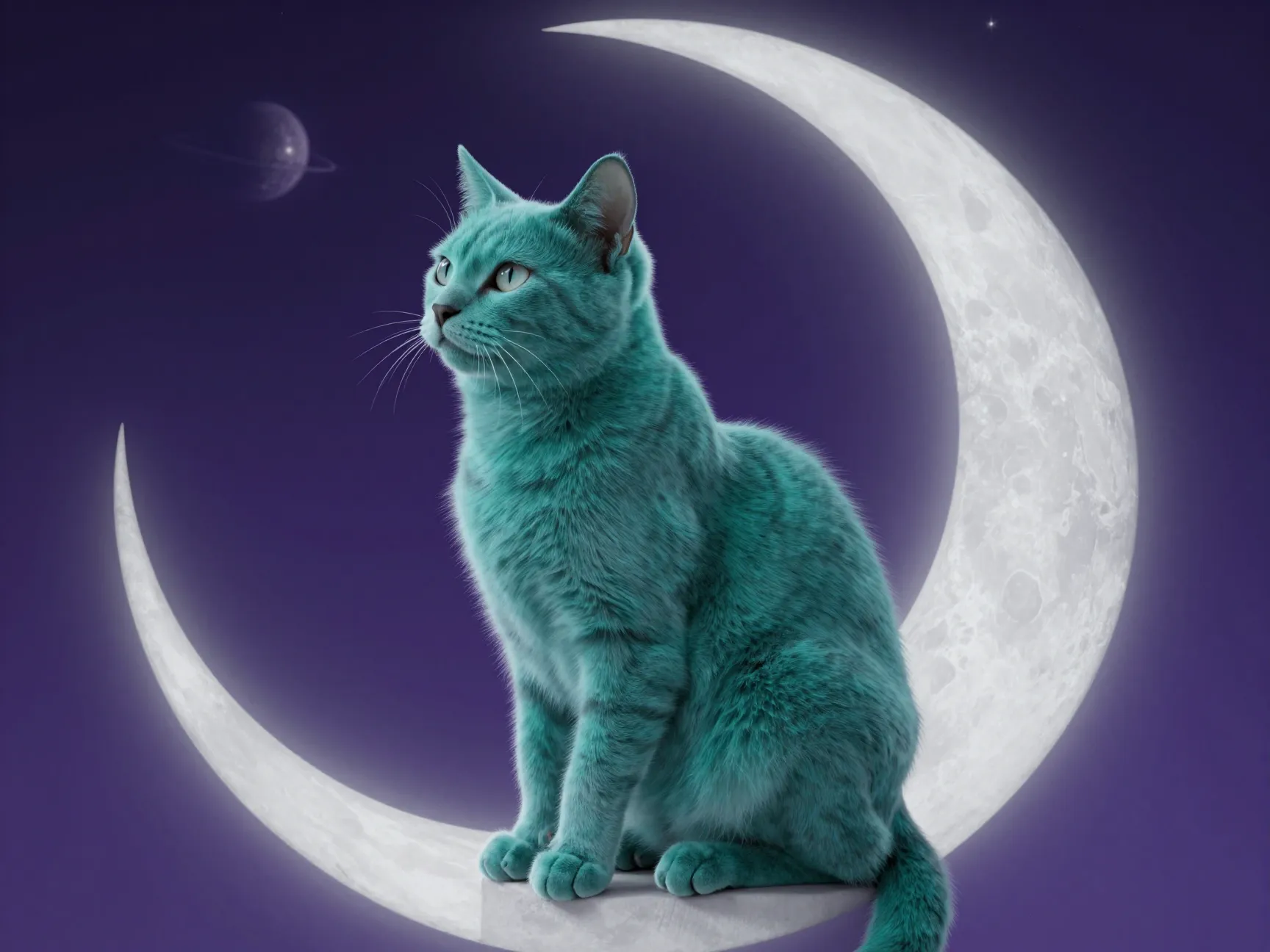
The Moonlit Cosmic Cat is one of the most recognizable entries among the 6 Alien Cat Drawing Concepts For Out-Of-This-World Feline Art, and for good reason. This concept shows up constantly across stock illustration catalogs and short-form drawing tutorials: a green or teal-toned alien cat sitting quietly on a crescent moon, surrounded by a deep purple or navy starry sky.
The appeal here is compositional simplicity paired with strong mood. The moon acts as an instant sci-fi signal, so the cat itself does not need heavy alien modifications. A slightly oversized head, tilted almond-shaped eyes, and two or three glowing stars in the background are often enough to sell the whole scene.
Key elements to include:
- A crescent or full moon large enough to act as a seating platform.
- Deep space background with scattered stars, sometimes a distant planet.
- Cool-toned cat coloring such as green, teal, or soft lavender.
- A calm, seated pose that contrasts with the dramatic backdrop.
This concept works well for beginners because the moon shape is forgiving to draw, and the starry background hides small linework imperfections. It is also one of the most common formats used in printable wall art and social media profile graphics.
2. UFO Cat Abduction Or Encounter
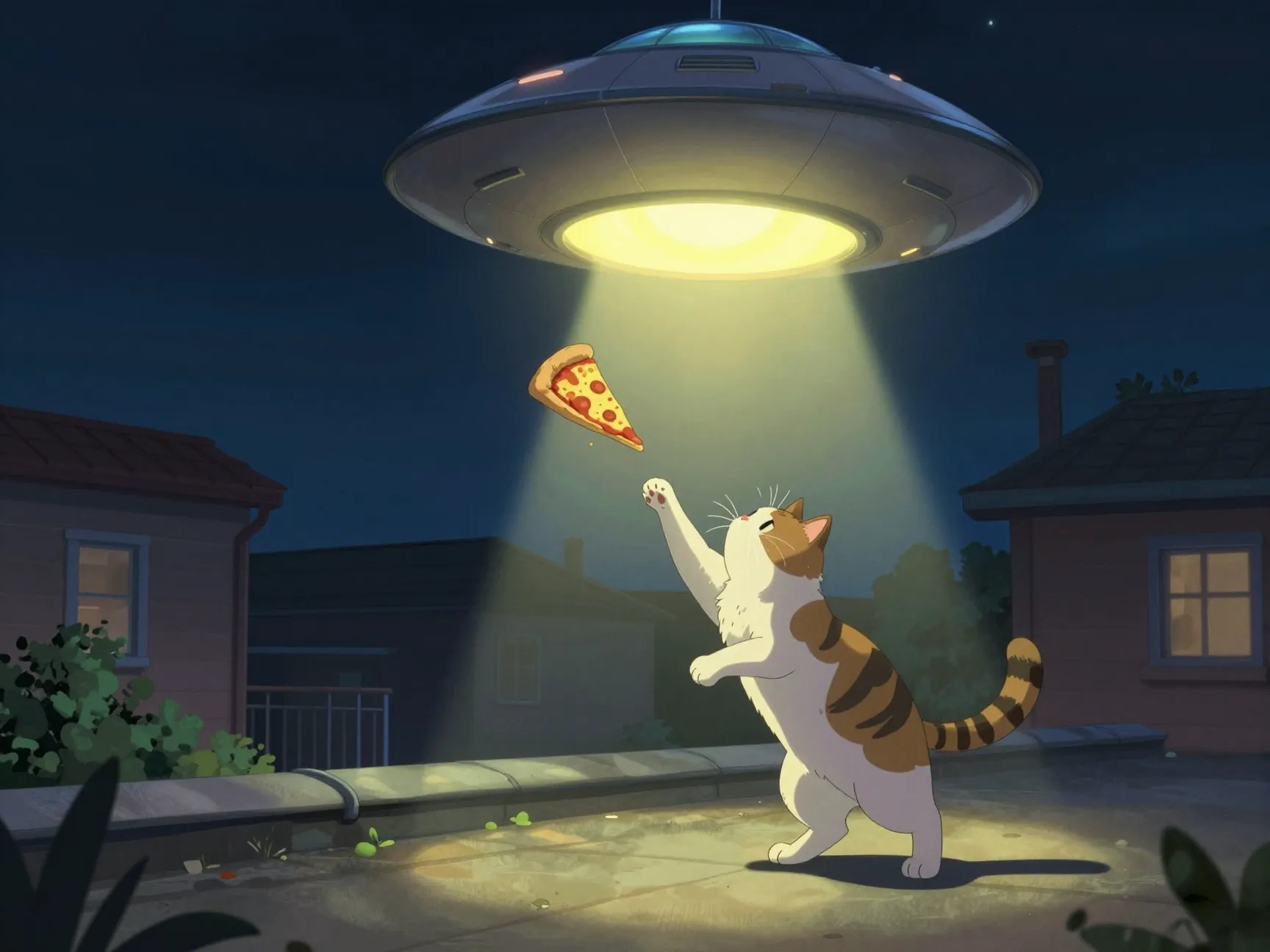
The second of the 6 Alien Cat Drawing Concepts For Out-Of-This-World Feline Art introduces motion and narrative tension. Rather than a calm portrait, this concept tells a tiny story: a cat is being lured, startled, or lifted by a UFO. One widely referenced version of this idea, sometimes called “UFO Catch,” shows kittens being tempted toward a spaceship using a slice of pizza dangling from a tractor beam.
This concept is popular because it adds humor without losing the sci-fi framing. The contrast between an ordinary household object, like food, and an extraordinary sci-fi vehicle creates instant visual interest.
To build this scene effectively:
- Draw the UFO first as a simple saucer shape with a glowing underside beam.
- Position the cat mid-reaction, either reaching upward or recoiling in surprise.
- Use bright beam lighting (yellow, green, or blue) to anchor the light source.
- Add small environmental details like a nighttime rooftop or backyard to ground the scene in something relatable.
Because this concept relies on implied movement and emotion, it is a strong choice for artists who want to practice dynamic poses rather than static portraits.
3. Astronaut Or Space-Suit Cat
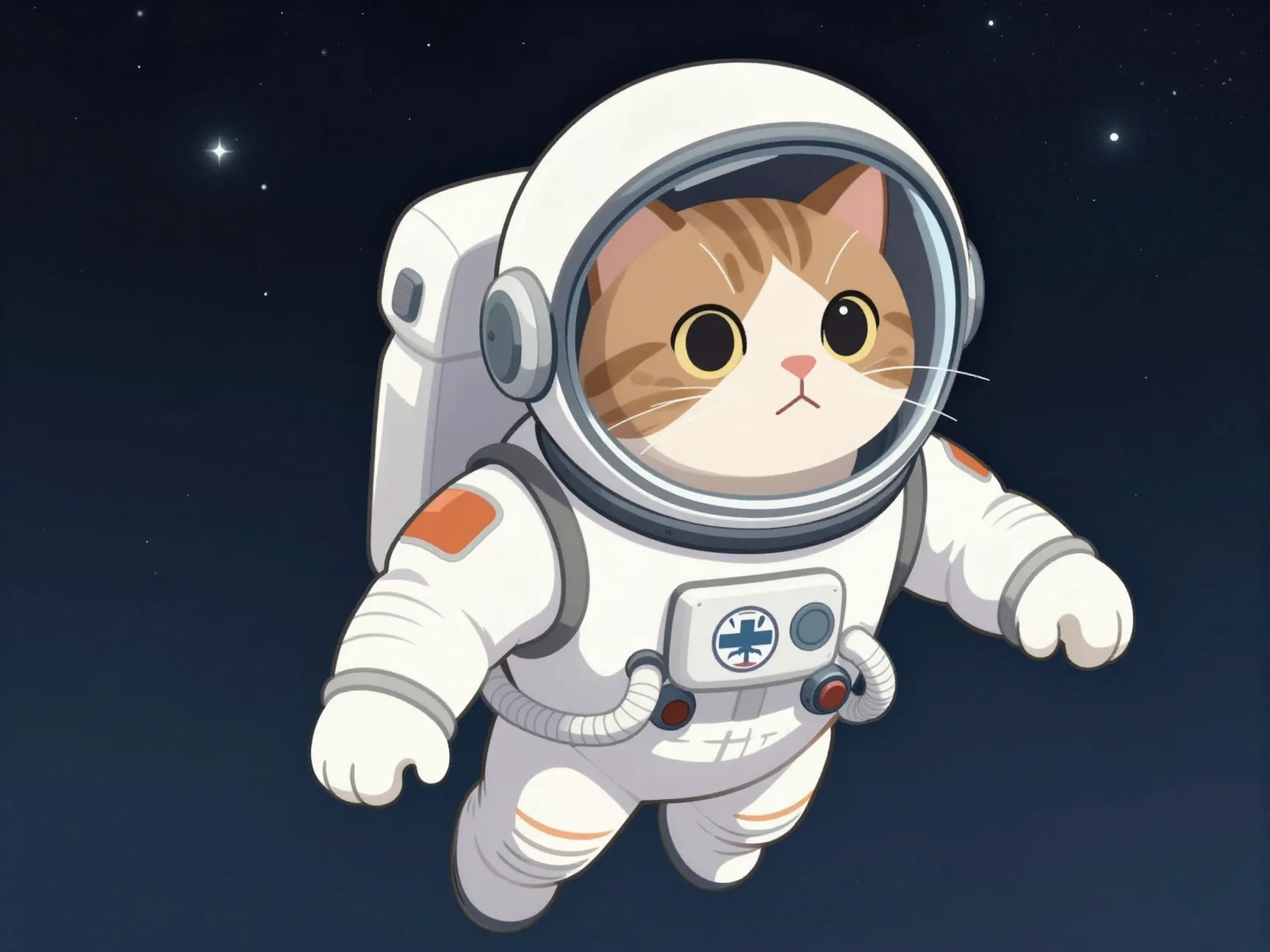
The third concept flips the alien relationship. Instead of the cat being alien, the cat becomes the space traveler. Astronaut cat designs, sometimes given character names like “Rocket” in fan art communities, show a feline wearing a rounded space helmet and a suit with mission patches, often walking or floating through a star-filled sky.
This is one of the more versatile entries among the 6 Alien Cat Drawing Concepts For Out-Of-This-World Feline Art because it can be styled as either heroic or comedic. A determined expression paired with a flag or planet in the background reads as adventurous. A confused or wide-eyed expression paired with a tangled oxygen hose reads as comedic.
Design tips for this concept:
- Keep the helmet glass rounded and slightly oversized so the cat’s face remains visible and expressive.
- Add mission patches or a small logo on the suit chest for extra character detail.
- Use a visible oxygen tube or backpack to reinforce the space-suit realism.
- Place the cat against a simplified starfield or a distant planet to maintain focus on the character.
This concept also translates well into branding and mascot work, since astronaut cats have a friendly, universally likable quality that works across age groups.
4. Mutant-Eyed Neon Alien Cat
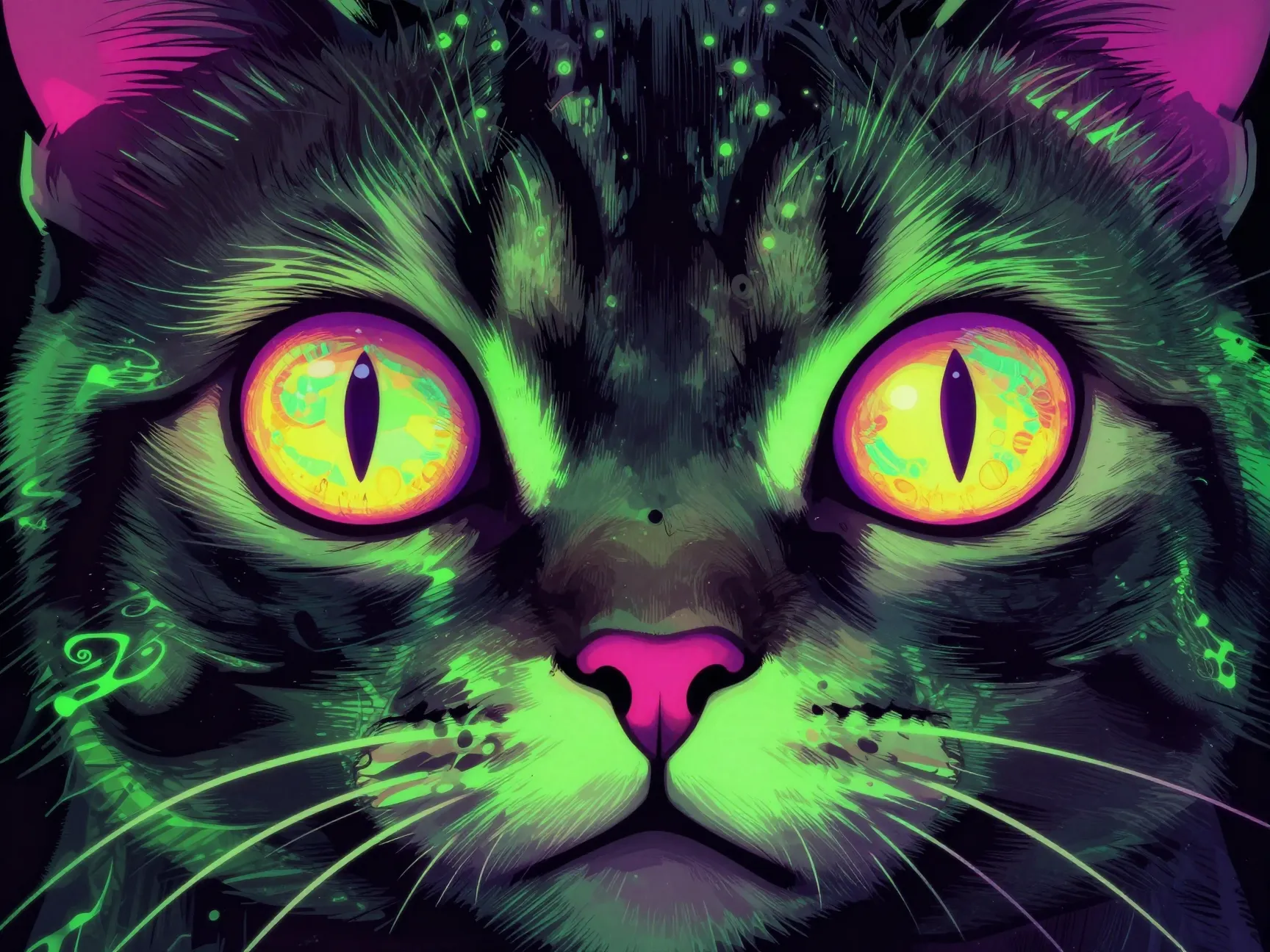
The fourth concept leans fully into classic “alien” visual language rather than cute sci-fi framing. Mutant-Eyed Neon Alien Cats are frequently seen in microstock vector sets, often labeled with descriptions like “unusual alien cat that arrived from outer space” or marketed as “scary cat” character variants for Halloween or sci-fi themed graphics.
This concept is built around exaggeration. The eyes are the focal point, often enlarged to take up nearly half the face, with slit or multiple pupils, and colored in bright neon tones like acid green, electric pink, or glowing violet. Skin or fur may include unusual textures such as faint scales, glowing veins, or bioluminescent patches.
Core building blocks:
- Oversized eyes with unconventional pupil shapes, such as vertical slits or multiple iris rings.
- Neon or fluorescent color choices that contrast sharply with darker fur tones.
- Slightly elongated or angular facial structure to move away from a purely “cute” look.
- Optional glowing accents, such as faint light lines along the ears or tail tip.
This concept suits artists who enjoy stronger contrast and more graphic, poster-style work. It is also a strong candidate for stock illustration submissions, since buyers searching for “scary” or “creature” themed cat art tend to gravitate toward bold, high-contrast designs.
5. Cute Chibi Alien Cat
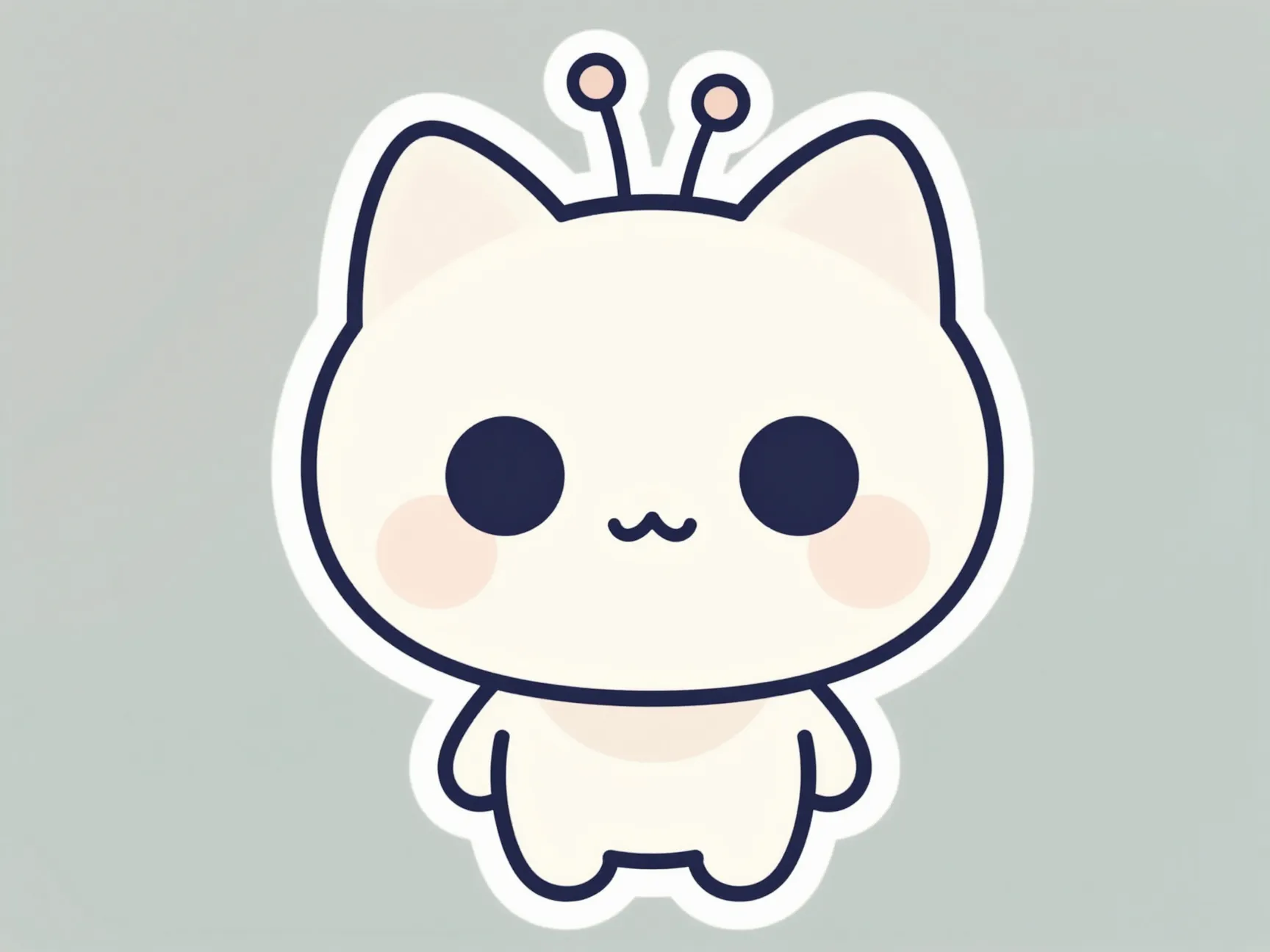
The fifth entry among the 6 Alien Cat Drawing Concepts For Out-Of-This-World Feline Art strips away detail in favor of maximum charm. Chibi Alien Cats use rounded, simplified shapes: a large circular head, tiny body, stubby limbs, and minimal facial linework. This style is heavily featured in Pinterest idea collections focused specifically on cute alien cat art for profile pictures, wallpapers, and sticker packs.
The chibi approach is ideal for small-format use. Because detail is minimal, the design still reads clearly even when shrunk down to an app icon or a messaging sticker size.
Suggested construction steps:
- Start with a circle or rounded square for the head, taking up sixty to seventy percent of the total figure height.
- Add two small, simple antennae topped with tiny circles or stars.
- Keep the eyes large but simplified, often just two dots or small ovals with a single highlight.
- Use a soft, pastel or muted neon color palette to reinforce the friendly, non-threatening tone.
This concept is frequently recommended for beginners and for artists building merchandise lines, since the low detail count keeps production and printing costs manageable while remaining highly shareable on social platforms.
6. Tentacled Or Antennae Hybrid Cat
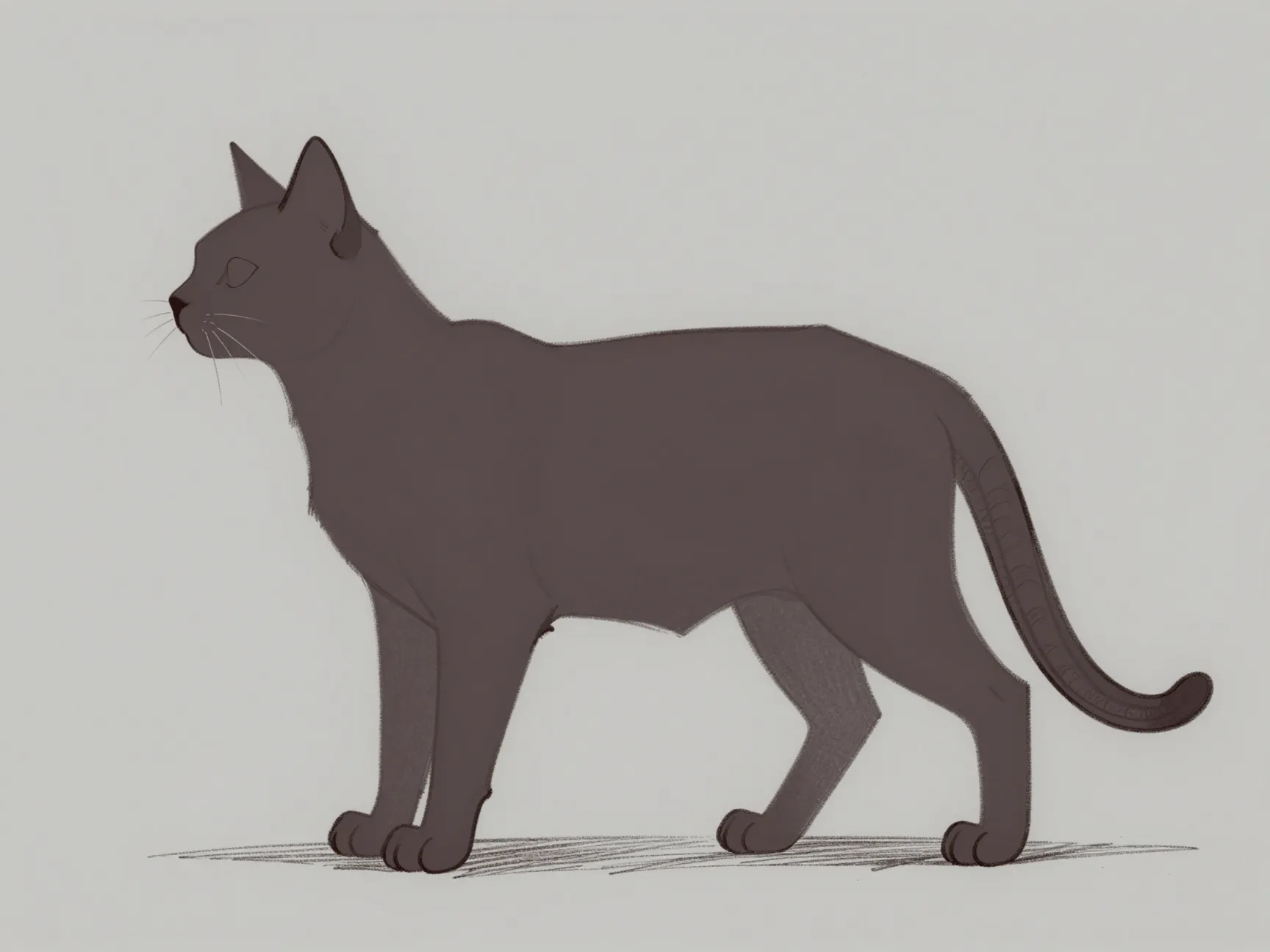
The sixth and most advanced concept pushes the feline silhouette furthest from a typical house cat while still keeping it recognizable as a cat. This hybrid approach is common across DeviantArt’s alien cat tag, where artists experiment with additional limbs, unusual tail structures, tentacle-like appendages, or extra antennae, all while preserving core cat proportions like the head shape, whiskers, and pointed ears.
This concept requires more planning than the others because adding extra anatomy can easily break the silhouette and make the creature unreadable as a cat. Successful versions keep at least sixty to seventy percent of the design instantly recognizable as feline, then layer alien traits on top.
Practical approach:
- Sketch a standard cat pose first, then decide which single feature will become the “hybrid” element, such as a tentacle tail or extra antenna set.
- Limit hybrid additions to one or two features rather than overloading the design.
- Use color to unify the hybrid parts with the rest of the body, avoiding jarring texture changes.
- Keep the face largely cat-like, since facial recognition is what keeps the design emotionally accessible despite the unusual anatomy.
This concept works well for artists building a personal portfolio piece or exploring more experimental character design, since it demonstrates both anatomical understanding and creative risk-taking.
Comparing The Six Concepts At A Glance
The table below summarizes the six concepts side by side, making it easier to choose a starting point based on skill level and intended use.
| Concept | Difficulty | Best Use Case | Signature Visual Cue |
|---|---|---|---|
| 1. Moonlit Cosmic Cat | Beginner | Wall art, social posts | Crescent moon, starry sky |
| 2. UFO Cat Abduction | Intermediate | Story-driven illustration | Tractor beam, dynamic pose |
| 3. Astronaut Space-Suit Cat | Intermediate | Mascots, branding | Rounded helmet, mission patch |
| 4. Mutant-Eyed Neon Alien Cat | Intermediate | Stock illustration, horror themes | Oversized glowing eyes |
| 5. Cute Chibi Alien Cat | Beginner | Stickers, profile pictures | Rounded shapes, antennae |
| 6. Tentacled Hybrid Cat | Advanced | Portfolio, concept art | Extra limbs, altered tail |
Essential Techniques For Alien Cat Illustration Success
Regardless of which of the 6 Alien Cat Drawing Concepts For Out-Of-This-World Feline Art an artist chooses, a handful of technical habits separate strong designs from forgettable ones. These principles come up repeatedly across tutorials, stock illustration guidelines, and professional character design commentary.
Prioritize silhouette clarity. Before adding any color or fine detail, the basic shape of the cat should read clearly even as a solid black outline. If the silhouette is confusing, no amount of color or shading will fix it.
Exaggerate the eyes deliberately. Nearly every successful alien cat design, from cute chibi versions to the mutant-eyed neon style, relies on eyes that are noticeably larger than a realistic cat’s eyes. This is the single fastest way to signal “alien” without changing the rest of the anatomy.
Choose a limited, intentional color palette. Vibrant, often neon colors such as green, purple, teal, and pink dominate the alien cat genre. Limiting a design to two or three main colors, plus one accent, keeps the piece visually clean and easier to reproduce across formats.
Anchor the scene with one strong sci-fi prop. A moon, a UFO, a starfield, or a space helmet does more work than dozens of small details. One clear prop tells the viewer instantly that this is a space-themed cat, freeing up the rest of the design to focus on personality and expression.
Keep linework simple for stock and branding use. If the goal is stock illustration submission or merchandise printing, simpler line art with fewer tiny details scales better across sizes, from a phone wallpaper to a large printed poster.
Tools And Materials Worth Considering
Most of the 6 Alien Cat Drawing Concepts For Out-Of-This-World Feline Art can be executed in either traditional or digital media, but certain tools make the process smoother.
For digital work, layer-based software such as Procreate, Adobe Illustrator, or Clip Studio Paint allows artists to separate line art, base color, and glow effects onto different layers. This is especially useful for the Mutant-Eyed Neon Alien Cat concept, where glowing highlights often need their own blending layer set to an additive or screen mode.
For traditional media, colored markers or gouache paint handle flat, saturated colors well, which suits the Chibi and Moonlit Cosmic Cat concepts. Fine-tip pens are useful for the more detailed Tentacled Hybrid Cat concept, where precise linework helps keep extra limbs and appendages readable.
A basic reference folder is also worth building. Saving a handful of real cat photos alongside space imagery, such as moon phases or nebula colors, gives a quick visual anchor when proportions or lighting choices feel uncertain mid-drawing.
Frequently Asked Questions
What makes a cat drawing look “alien” rather than just cartoonish?
The clearest signals are oversized or unusually shaped eyes, exaggerated ear shapes or antennae, and a color palette that moves away from natural cat fur tones into greens, purples, or neon shades. Adding a sci-fi prop, such as a moon or spaceship, reinforces the theme even further.
Which of the 6 Alien Cat Drawing Concepts For Out-Of-This-World Feline Art is best for absolute beginners?
The Moonlit Cosmic Cat and Cute Chibi Alien Cat concepts are the most forgiving starting points. Both rely on simple, rounded shapes and a limited color palette, which makes early attempts more likely to succeed.
Can alien cat designs be used commercially?
Yes. Alien cat illustrations are actively sold on major stock platforms and used in professional character design and branding projects. Artists planning commercial use should still confirm licensing terms if referencing or adapting existing published designs.
How important is color choice in alien cat art?
Very important. Across tutorials and stock catalogs, vibrant and often neon colors are the dominant convention for signaling “alien” traits. Sticking to two or three main colors keeps the design cohesive and easier to reproduce.
Do alien cat drawings need to include a spaceship or planet?
Not always, but a clear sci-fi prop makes the theme instantly recognizable. Simpler concepts like the Chibi Alien Cat can rely on antennae and eye shape alone, while narrative concepts like the UFO Abduction scene benefit strongly from an included prop.
Conclusion
Alien cat art has moved well beyond a niche doodle trend. It is a documented, actively growing category supported by thousands of stock illustrations, dedicated fan art tags, and recurring tutorial content across major platforms. The 6 Alien Cat Drawing Concepts For Out-Of-This-World Feline Art covered here, from the calm Moonlit Cosmic Cat to the ambitious Tentacled Hybrid Cat, give artists a clear path to experiment with this style at any skill level.
The most reliable next step is simple: pick one concept, sketch three quick thumbnail variations in under ten minutes each, and choose the strongest silhouette before adding any color or detail. Building the habit of testing multiple rough versions first, rather than committing to a single detailed drawing immediately, consistently produces stronger final artwork across every concept on this list.