
9 Unique Characteristics of the Chocolate Brown Lab Puppy
Have you ever looked into the warm, soulful eyes of a chocolate brown Lab puppy and felt completely disarmed? 🍫 If you have, you already know there’s something truly special about this breed. The 9 Unique Characteristics of the Chocolate Brown Lab Puppy go far beyond their gorgeous coat — from their rare genetics to their boundless energy, these pups are in a class of their own. Whether you’re a first-time dog owner or a seasoned Lab lover, understanding what makes the chocolate Lab tick will help you give your puppy the best possible life in 2026 and beyond.

Key Takeaways 📌
- Chocolate Labs get their color from a recessive gene combination (bb), making them rarer than black or yellow Labs [2]
- Their coat can range from medium to dark brown, and some even show white markings [2]
- Chocolate Labs share the same loyal, intelligent, and trainable temperament as other Labrador colors [2]
- They typically require 1.5–2 hours of daily exercise to stay healthy and happy [1]
- Chocolate Labs may have a slightly shorter average lifespan than their black or yellow counterparts [1]
What Makes the Chocolate Brown Lab Puppy So Special?
Before we dive into the full list of the 9 Unique Characteristics of the Chocolate Brown Lab Puppy, let’s set the stage. Labrador Retrievers have been one of the most popular dog breeds in the United States for decades — and the chocolate variety holds a particularly devoted fan base. Their rich, warm coat color is just the beginning. These puppies carry a fascinating genetic story, a personality that wins hearts instantly, and physical traits that set them apart even within their own breed.
Let’s explore each characteristic in detail.
The 9 Unique Characteristics of the Chocolate Brown Lab Puppy, Explained
1. A Rare Recessive Genetic Blueprint 🧬
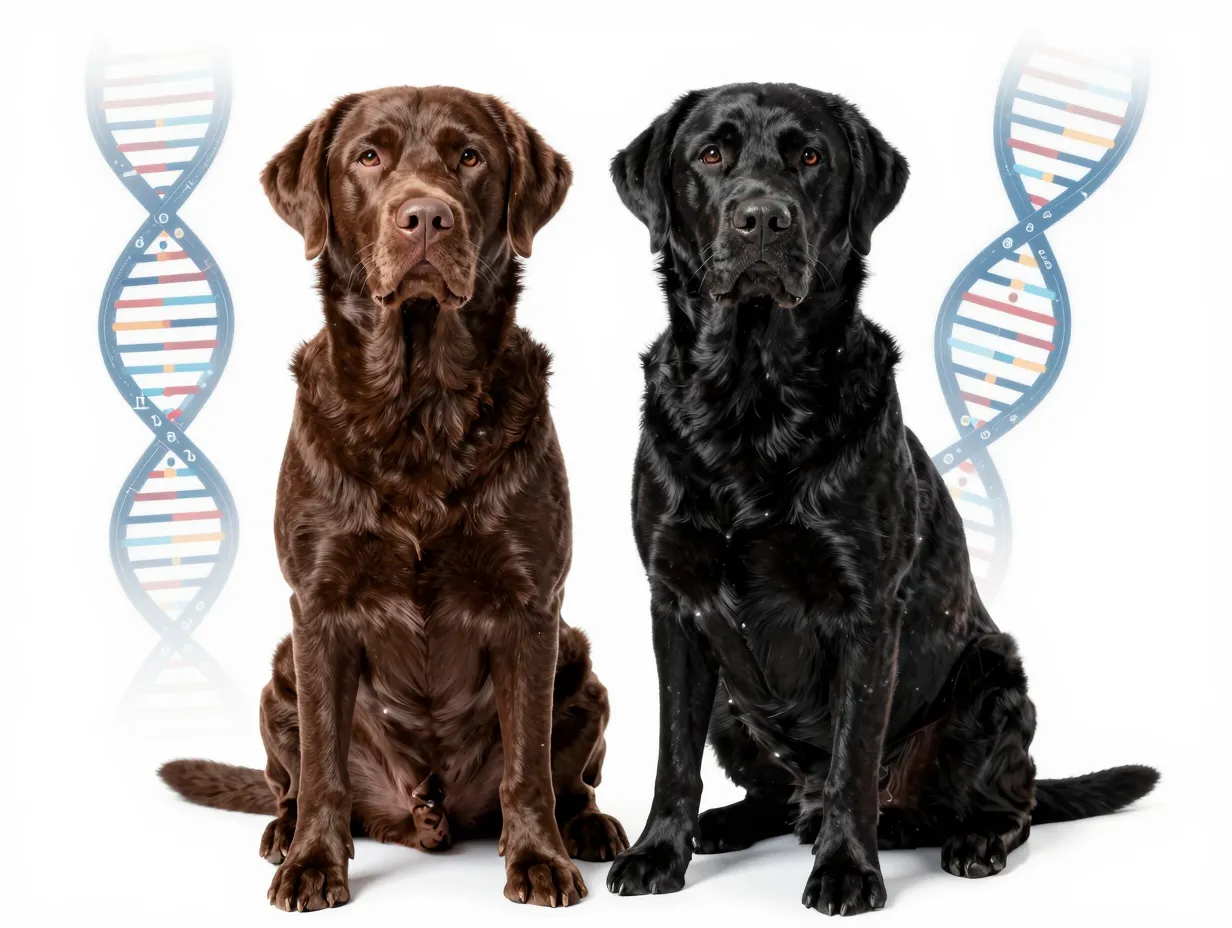
One of the most fascinating things about the chocolate brown Lab puppy is how it gets its color in the first place. Unlike black Labs, which carry a dominant gene, chocolate Labs owe their rich coat to a recessive gene combination known as “bb” [2]. This means both parents must carry and pass on the recessive “b” gene for a chocolate puppy to be born.
Here’s a simple breakdown:
| Gene Combination | Resulting Color |
|---|---|
| BB or Bb | Black |
| bb | Chocolate |
| ee (regardless of B) | Yellow |
Because both parents must contribute the recessive gene, chocolate Labs are less commonly produced than black Labs [2]. This genetic rarity makes each chocolate puppy something of a special outcome — a small genetic lottery win for breeders and owners alike.
💬 “The chocolate Lab’s color isn’t just beautiful — it’s a genetic story written in DNA, requiring exactly the right combination from both parents.”
2. A Stunning Spectrum of Brown Shades 🎨

Not all chocolate Labs look the same, and that’s part of their charm. The 9 Unique Characteristics of the Chocolate Brown Lab Puppy include a coat color that isn’t one-size-fits-all. Chocolate Labs can range from a light, milk-chocolate tone all the way to a deep, dark espresso brown [2].
Some puppies even display white markings on their chest or paws, adding another layer of individuality to their appearance [2]. As puppies grow, their coat color can shift slightly — many chocolate Labs deepen in shade during their first year of life.
What to look for in coat shades:
- Light chocolate: warm, caramel-like tones
- Medium chocolate: the classic rich brown most people picture
- Dark chocolate: deep, almost mahogany hues
- White markings: small patches, usually on the chest
This variety means that no two chocolate Lab puppies are exactly alike — even from the same litter.
3. Distinctive Eye and Nose Pigmentation 👁️

Here’s something many people don’t realize: a chocolate Lab’s coloring doesn’t stop at the coat. These puppies have hazel or brown eyes (rather than the dark brown eyes typical of black Labs) and a brown or liver-colored nose that matches their coat.
This pigmentation is also tied to the same “bb” gene responsible for their coat color. The result is a fully coordinated color palette — brown coat, brown nose, brown eyes — that gives the chocolate Lab a warm, cohesive look that’s immediately recognizable.
As puppies, their eyes may appear lighter and gradually darken as they mature. This makes watching a chocolate Lab puppy grow up a genuinely beautiful experience.
4. The Same Legendary Lab Temperament 🐾

One of the most reassuring things for new owners to know is that the chocolate Lab’s personality is just as wonderful as any other Labrador color. Despite some popular myths, coat color does not determine temperament in a meaningful, breed-wide way [2].
Chocolate Labs are:
- Loyal — deeply bonded to their families
- Intelligent — quick learners who thrive on mental stimulation
- Friendly — welcoming to strangers, children, and other pets
- Playful — energetic and fun-loving well into adulthood
- Easy to train — responsive to positive reinforcement methods [2]
💬 “A chocolate Lab’s heart is just as golden as a yellow Lab’s coat — the color on the outside doesn’t change what’s on the inside.”
That said, individual temperament does vary based on genetics and breeding lines — specifically, whether the puppy comes from an English (show) line or an American (field/working) line [2]. English Labs tend to be calmer and stockier, while American Labs are leaner and higher-energy.
5. High Intelligence and Trainability 🎓
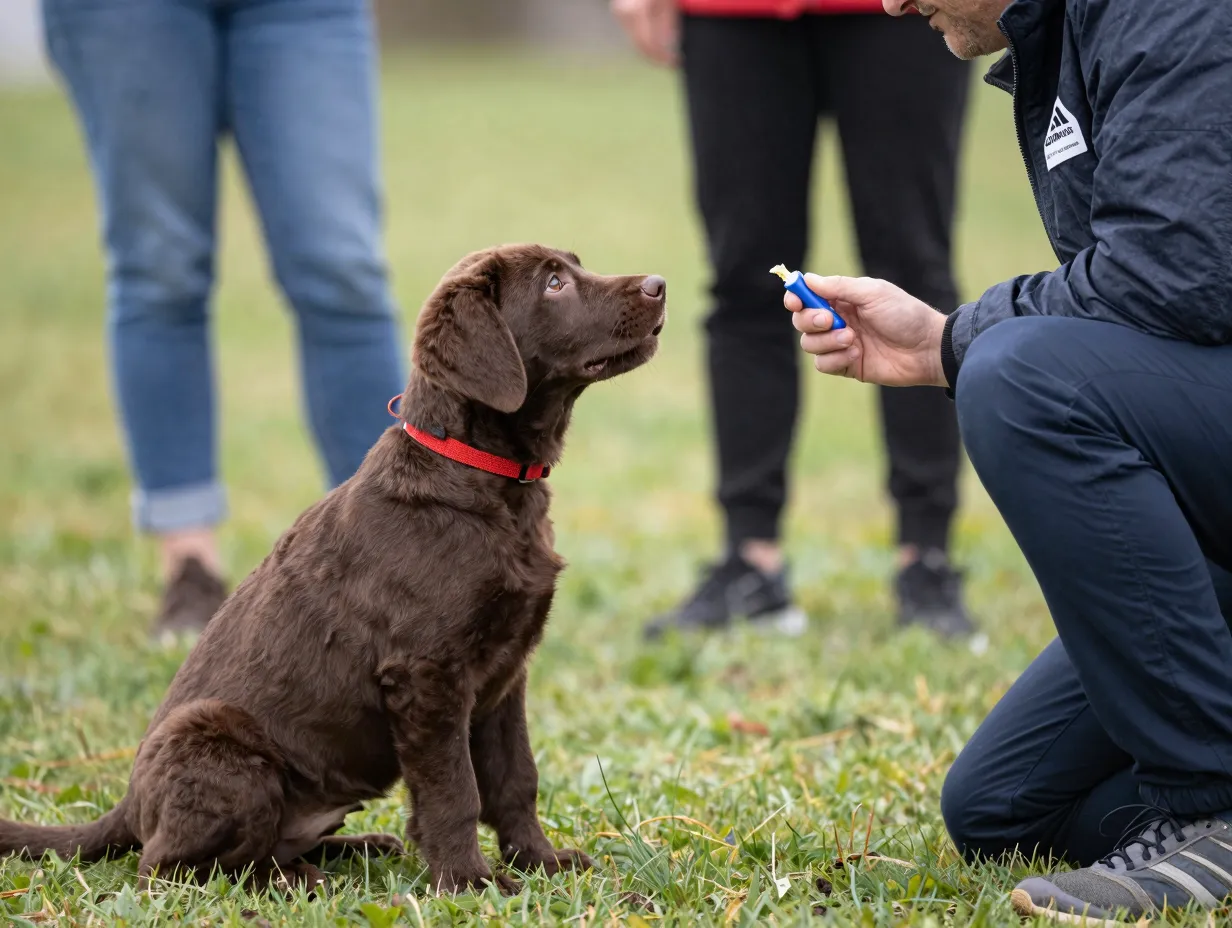
Chocolate Labs are genuinely smart dogs, and this intelligence is one of the most celebrated of the 9 Unique Characteristics of the Chocolate Brown Lab Puppy. Labrador Retrievers as a breed consistently rank among the top 10 most intelligent dog breeds, and chocolate Labs are no exception [2].
Training tips that work especially well for chocolate Lab puppies:
- Start training early — as young as 8 weeks old
- Use positive reinforcement (treats, praise, play)
- Keep sessions short (5–10 minutes) to match their puppy attention span
- Be consistent with commands and boundaries
- Socialize early with people, other dogs, and new environments
Because of their intelligence and eagerness to please, chocolate Labs excel in:
- Obedience training
- Agility sports
- Therapy dog work
- Search and rescue
- Service dog roles
6. Boundless Energy and Exercise Needs 🏃

If you’re considering bringing a chocolate brown Lab puppy home, prepare yourself for an energetic companion. These dogs require a minimum of 1.5 to 2 hours of daily exercise to stay physically and mentally healthy [1]. That’s not a suggestion — it’s a genuine need.
Without enough exercise, chocolate Lab puppies can become:
- Destructive (chewing furniture, shoes, anything they can find)
- Hyperactive indoors
- Anxious or restless
- Prone to weight gain
Great exercise options for chocolate Lab puppies:
| Activity | Benefit |
|---|---|
| Swimming | Low-impact, great for joints |
| Fetch | Burns energy fast, reinforces recall |
| Trail hiking | Mental and physical stimulation |
| Agility training | Builds focus and coordination |
| Off-leash play | Socialization and freedom |
⚠️ Important note for puppies: Until growth plates close (around 12–18 months), avoid high-impact activities like long runs or jumping. Stick to shorter, gentler play sessions for very young pups.
7. A Thick, Water-Resistant Double Coat 🌊

The chocolate Lab’s coat is a true engineering marvel. Like all Labradors, chocolate Labs have a dense double coat — a soft, insulating undercoat beneath a harder, water-resistant outer coat. This coat was originally designed to help Labradors work in cold water retrieving game for hunters.
What this means for owners:
- Shedding: Chocolate Labs shed — a lot. Expect year-round shedding with heavier “blowouts” in spring and fall.
- Grooming: Weekly brushing is the minimum; daily brushing during shedding season keeps things manageable.
- Bathing: Every 4–6 weeks is usually sufficient. Over-bathing strips natural oils.
- Water love: Most chocolate Labs are natural swimmers and will seek out any water source they can find 🐶💦
The rich brown color of the coat can also make dirt and mud more visible than on a black Lab — something to keep in mind if you have light-colored furniture!
8. Specific Health Considerations and Lifespan ❤️🩹

This is an important characteristic that every prospective chocolate Lab owner should understand. Research suggests that chocolate Labs have a slightly shorter average lifespan compared to black and yellow Labs [1]. While all Labradors typically live 10–12 years, chocolate Labs may trend toward the lower end of that range.
Why might this be?
- The chocolate gene (bb) has historically been associated with certain breeding practices that may have introduced health vulnerabilities
- Some studies suggest a higher incidence of ear infections and skin conditions in chocolate Labs
- The gene pool for chocolate Labs has sometimes been smaller, which can affect overall health diversity
Common health concerns to monitor in chocolate Lab puppies:
- Hip and elbow dysplasia — a structural issue common in larger breeds
- Obesity — Labs are famously food-motivated and prone to overeating
- Ear infections — especially in dogs that swim frequently
- Exercise-induced collapse (EIC) — a genetic condition some Labs carry
- Progressive retinal atrophy (PRA) — an inherited eye condition
💬 “Choosing a reputable breeder who health-tests their dogs is the single most important step you can take to give your chocolate Lab puppy a long, healthy life.”
Always ask breeders for OFA (Orthopedic Foundation for Animals) certifications for hips, elbows, and eyes before purchasing a puppy [1].
9. An Unmatched Bond with Their Human Family 💕

Perhaps the most enduring of all the 9 Unique Characteristics of the Chocolate Brown Lab Puppy is their extraordinary capacity for human connection. Chocolate Labs don’t just like their families — they need them. These are not dogs that do well left alone for long hours. They thrive on companionship, interaction, and being involved in family life.
Signs of a well-bonded chocolate Lab:
- Follows you from room to room (the classic “velcro dog” behavior)
- Makes eye contact frequently and holds your gaze
- Brings you toys as gifts
- Leans against you for physical contact
- Greets you with full-body enthusiasm every single time
This deep social bond also means chocolate Labs can develop separation anxiety if not properly trained to be alone. Crate training, gradual alone-time practice, and enrichment toys can all help manage this.
The flip side of this intense loyalty? A chocolate Lab will be your most devoted companion, your children’s best friend, and your family’s emotional anchor for the entirety of their life.
A Quick Reference: The 9 Unique Characteristics at a Glance
| # | Characteristic | Key Detail |
|---|---|---|
| 1 | Rare recessive genetics | Requires “bb” gene from both parents [2] |
| 2 | Spectrum of brown shades | Light to dark; some with white markings [2] |
| 3 | Distinctive pigmentation | Brown/hazel eyes, liver-colored nose |
| 4 | Legendary Lab temperament | Loyal, friendly, family-oriented [2] |
| 5 | High intelligence | Top-tier trainability for many roles [2] |
| 6 | High exercise needs | 1.5–2 hours daily minimum [1] |
| 7 | Double water-resistant coat | Heavy shedder; natural swimmer |
| 8 | Specific health considerations | Slightly shorter lifespan; monitor key conditions [1] |
| 9 | Deep human bond | Velcro dog; needs family connection |
Conclusion: Is a Chocolate Brown Lab Puppy Right for You?
The 9 Unique Characteristics of the Chocolate Brown Lab Puppy paint a picture of a dog that is genetically fascinating, visually stunning, and emotionally rewarding — but also genuinely demanding. These puppies need active owners, consistent training, regular vet care, and above all, a family that will include them in daily life.
Here’s what I recommend as your actionable next steps:
- Take the readiness quiz above to honestly assess your lifestyle
- Research reputable breeders who health-test for hips, elbows, and eyes [1]
- Puppy-proof your home and set up a safe, comfortable space before bringing your pup home
- Schedule a vet appointment for your puppy’s first week home
- Enroll in puppy training classes as early as possible — their intelligence makes early training especially effective [2]
- Build a daily exercise routine that meets the 1.5–2 hour minimum [1]
A chocolate Lab puppy will reward every ounce of effort you put in with a lifetime of loyalty, laughter, and love. 🍫🐾
References
[1] 7 Things To Know About Labradors Fun Facts True Tails And Key Health Concerns – https://www.joiipetcare.com/blogs/advice/7-things-to-know-about-labradors-fun-facts-true-tails-and-key-health-concerns
[2] Watch – https://www.youtube.com/watch?v=iwigc37hhR8