9 Steps to Finding Your Perfect Russian Blue Cat Kittens
Only about 1 in 5 cat buyers thoroughly vets a breeder before bringing a kitten home — and that oversight costs thousands of dollars in unexpected vet bills and heartbreak every year. If you are serious about welcoming a Russian Blue into your life, the process deserves far more than a quick online search. This guide walks you through the 9 Steps to Finding Your Perfect Russian Blue Cat Kittens so you can make a confident, informed decision that sets both you and your new companion up for a lifetime of success.
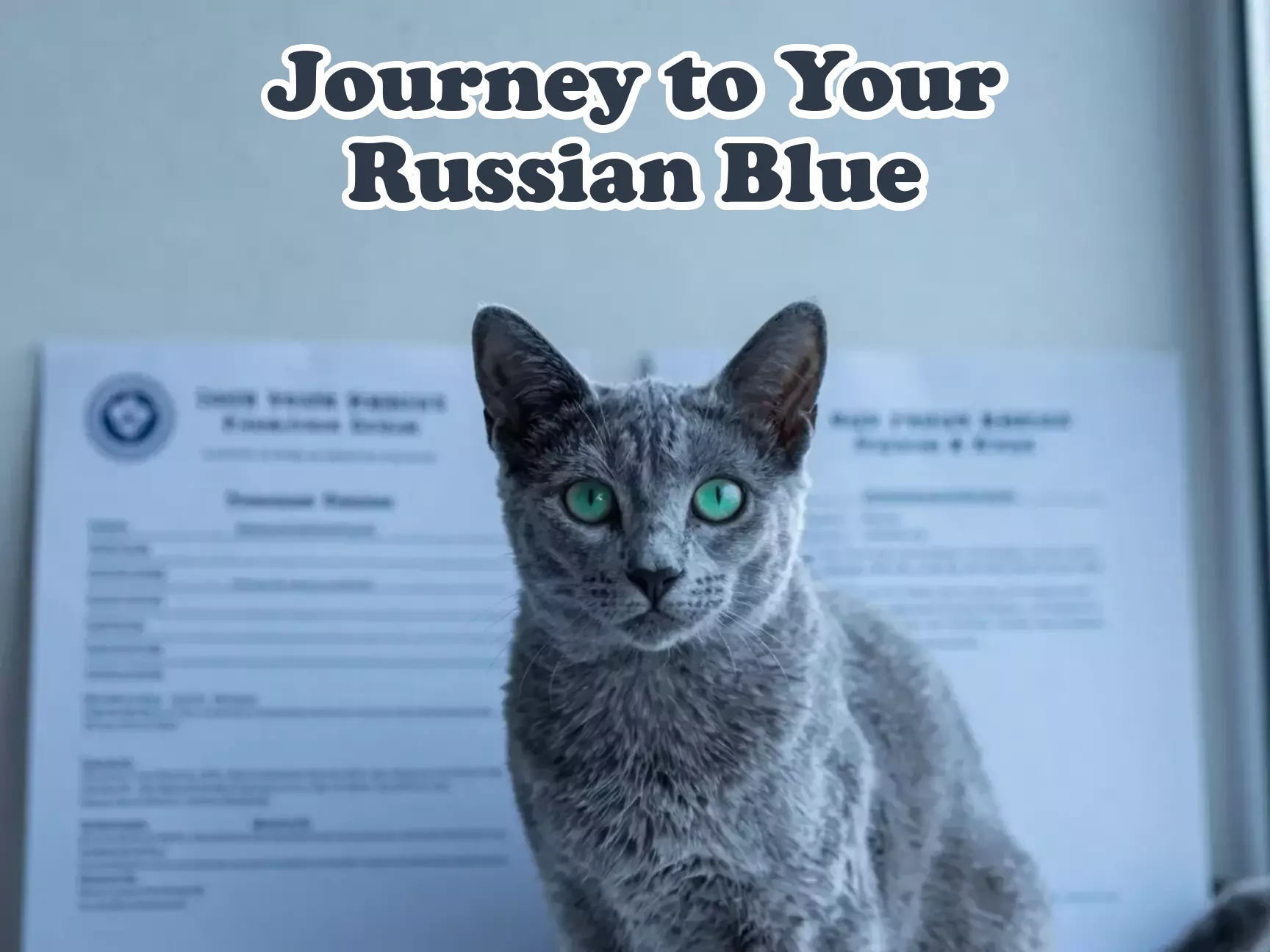
Key Takeaways
- 🐱 Research is everything — reputable breeders affiliated with recognized associations produce healthier, better-socialized kittens.
- 🏥 Health screening matters — always confirm both parent cats have been tested for hereditary conditions like hypertrophic cardiomyopathy (HCM).
- 📋 Documentation protects you — vaccination records, microchipping, and desexing paperwork are non-negotiable before adoption.
- ⏳ Age matters — never take a kitten home before 13 weeks; early separation causes lasting behavioral and health problems.
- 🚩 Red flags are real — pet shops, classified ads, and unverified online sellers are common sources of scams and unhealthy kittens.
Why the Russian Blue Is Worth the Extra Effort
Before diving into the 9 steps to finding your perfect Russian Blue cat kittens, it helps to understand exactly what makes this breed so special — and why cutting corners during your search is a mistake.
Russian Blues are celebrated for their dense, plush double coat in a distinctive blue-gray hue, paired with vivid emerald-green eyes that deepen in color as the cat matures [5]. Beyond their striking looks, they are known for being gentle, loyal, and quietly affectionate. They tend to bond deeply with one or two people in the household and can be initially reserved around strangers [8].
💬 “The Russian Blue is not just a beautiful cat — it is a deeply loyal companion that rewards patient, attentive ownership.”
They are also considered one of the lower-shedding breeds, making them a popular choice for people with mild cat allergies [6]. However, their intelligence and sensitivity mean they thrive only when properly socialized from kittenhood — which is precisely why finding the right breeder is so critical [4].
| Feature | Russian Blue |
|---|---|
| Coat Type | Dense double coat, blue-gray |
| Eye Color | Vivid green (deepens with age) |
| Temperament | Gentle, loyal, reserved with strangers |
| Shedding Level | Low to moderate |
| Lifespan | 15–20 years |
| Allergy Friendliness | Relatively low allergen production |
The 9 Steps to Finding Your Perfect Russian Blue Cat Kittens
1. Educate Yourself on the Breed Standard
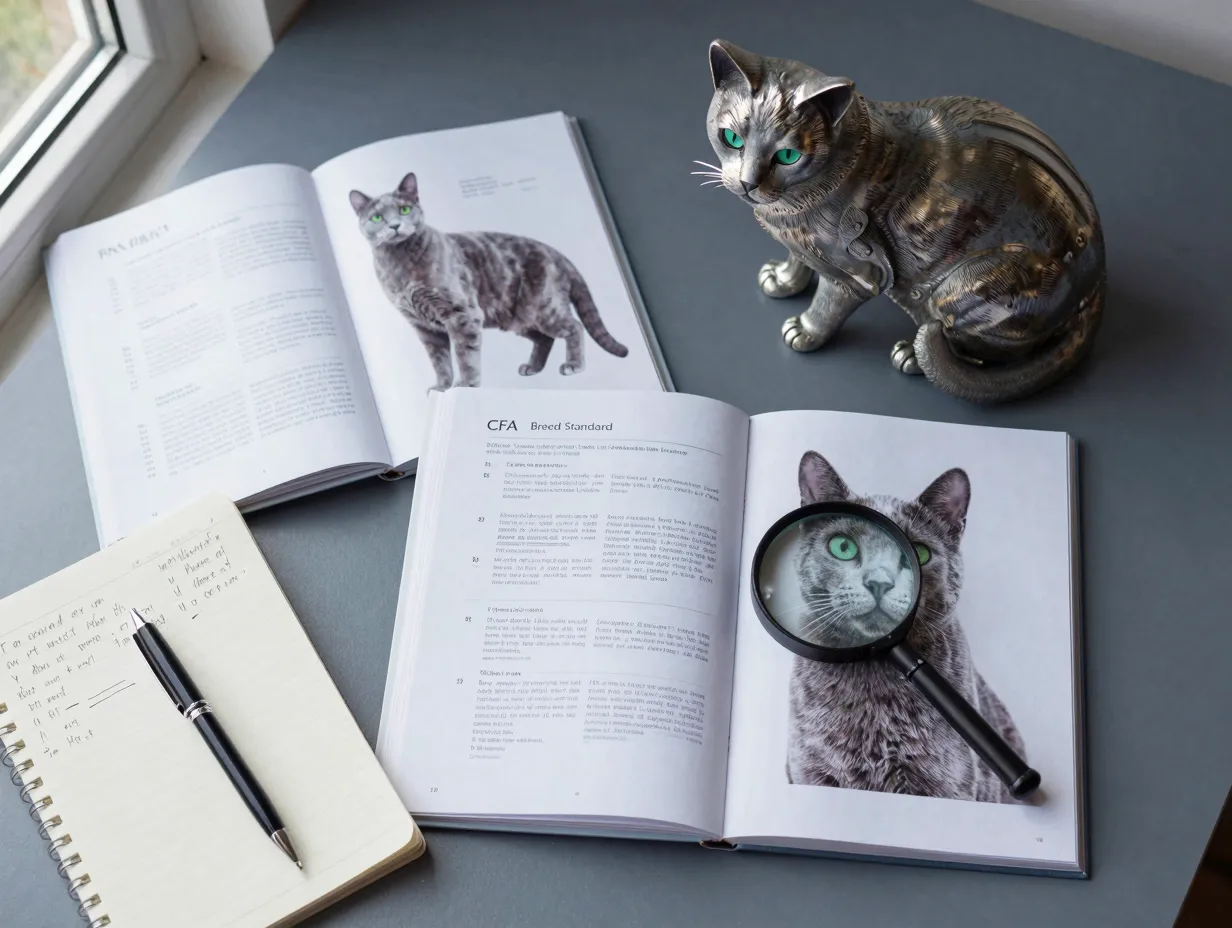
The very first step in the 9 steps to finding your perfect Russian Blue cat kittens is knowing what a genuine Russian Blue looks like and behaves like — before you ever contact a single breeder.
The Cat Fanciers’ Association (CFA) describes the Russian Blue as a medium-sized cat with a long, graceful body, fine-boned structure, and a coat that stands out from the body due to its density [5]. The double coat has a distinctive blue-silver sheen caused by silver-tipped guard hairs. Eyes should be vivid green — not yellow, not hazel.
Why this matters: Knowing the breed standard protects you from purchasing a mixed-breed or misrepresented kitten at a purebred price. Some sellers pass off domestic shorthairs with gray coats as Russian Blues.
Key breed characteristics to remember:
- Coat: Blue-gray, dense, plush double coat
- Eyes: Vivid green (kittens may have yellow-green eyes that transition)
- Body: Medium, fine-boned, graceful
- Temperament: Quiet, gentle, loyal, somewhat reserved
2. Identify Reputable Breeders Through Recognized Associations

Once you know what you are looking for, the next step is finding breeders who meet professional standards. The most reliable way to do this is by contacting recognized cat breeding associations directly [1].
Look for breeders affiliated with organizations such as:
- The Cat Fanciers’ Association (CFA)
- The International Cat Association (TICA)
- The Russian Blue Breeders Association (RBBA)
- The Governing Council of the Cat Fancy (GCCF) (UK-based)
These associations maintain breeder directories, enforce codes of ethics, and often provide referral services for people seeking available kittens [2]. Breeders who show their cats at recognized cat shows are also a strong indicator of quality — show participation demonstrates a commitment to breed standards and transparency [1].
💡 Pro Tip: Contact the association directly rather than relying solely on a breeder’s claim of membership. Verify their standing independently.
3. Avoid Unreliable Sources
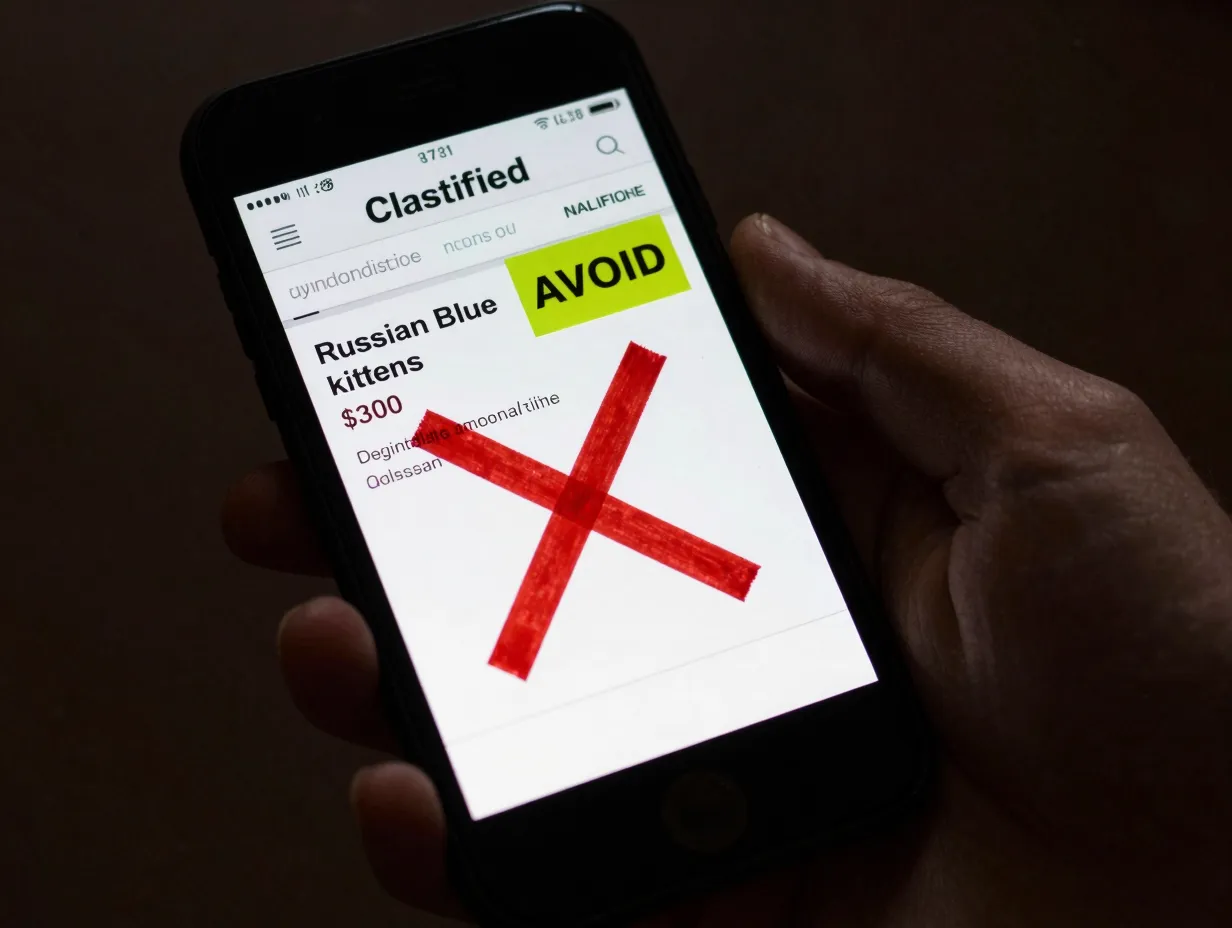
This step is as important as any other on this list. Where you do NOT look for a kitten matters just as much as where you do.
Avoid these sources entirely [1]:
- Pet shops and chain pet stores
- Backyard breeders with no association affiliations
- General classified ad websites (e.g., Craigslist, Gumtree)
- Social media marketplace listings from unverified sellers
- Online scam operations that request deposits before any in-person visit
Pet shops typically source kittens from high-volume breeding operations where health and socialization are secondary concerns. Classified ads and social media listings are hotbeds for scams — a common tactic involves requesting a wire transfer deposit for a kitten that does not exist [1].
🚩 Red Flags to Watch For:
- Prices that seem too good to be true
- Seller refuses to allow a cattery visit
- No health documentation available
- Kittens available at younger than 13 weeks
- Multiple breeds available simultaneously from one seller
4. Contact Breed Associations for Direct Referrals

Rather than searching the open internet, go straight to the source. Breed associations often maintain waiting lists and can connect you with breeders who have kittens available now or coming soon [2].
This approach has several advantages:
- Breeders in association networks are held to ethical standards
- You get a warm referral rather than a cold search result
- Associations can flag breeders who have had complaints or been removed
When you reach out to an association, be prepared to share:
- Your living situation (house, apartment, other pets, children)
- Why you want a Russian Blue specifically
- Whether you want a companion pet or a show-quality cat
- Your timeline for adoption
Reputable breeders often have waiting lists for their kittens, especially for high-demand color or gender combinations. Being on a waiting list from a trusted breeder is far better than rushing into a purchase from an unreliable source [2].
5. Ask the Right Questions Before Committing

Once you have identified a potential breeder, it is time to ask detailed questions. A reputable breeder will welcome your questions — in fact, they will likely have plenty of their own questions for you.
Questions to ask the breeder:
- How long have you been breeding Russian Blues?
- Are you affiliated with any recognized cat associations?
- Can I visit your cattery in person?
- Have both parent cats been health screened?
- What vaccinations have the kittens received?
- Are the kittens microchipped?
- Have the kittens been desexed, or will that be required before pickup?
- What socialization have the kittens received?
- What is your policy if I can no longer care for the cat?
A breeder who hesitates, becomes defensive, or cannot answer these questions clearly is a breeder you should walk away from.
6. Verify Health Screening for Hereditary Conditions

This step could save you thousands of dollars and enormous heartache.
Russian Blues, like many pedigree cats, can be predisposed to certain hereditary health conditions. The most significant is hypertrophic cardiomyopathy (HCM) — a thickening of the heart muscle that is the leading cause of heart disease in cats [3].
Ask the breeder directly:
- Have both parent cats been screened for HCM?
- Can you provide documentation of those screenings?
- Are there any other hereditary conditions in the bloodline?
Responsible breeders screen their breeding cats regularly and will have written documentation from a veterinary cardiologist to back up their claims [3]. Do not accept verbal assurances alone.
💬 “A health-tested kitten is not just a healthier cat — it is a breeder’s promise that they care about the breed’s future, not just the sale.”
Other health considerations for Russian Blues include:
- Bladder stones — monitor diet and hydration
- Obesity — this breed can be prone to weight gain if overfed [6]
- Dental disease — regular dental care is important
7. Visit the Cattery in Person
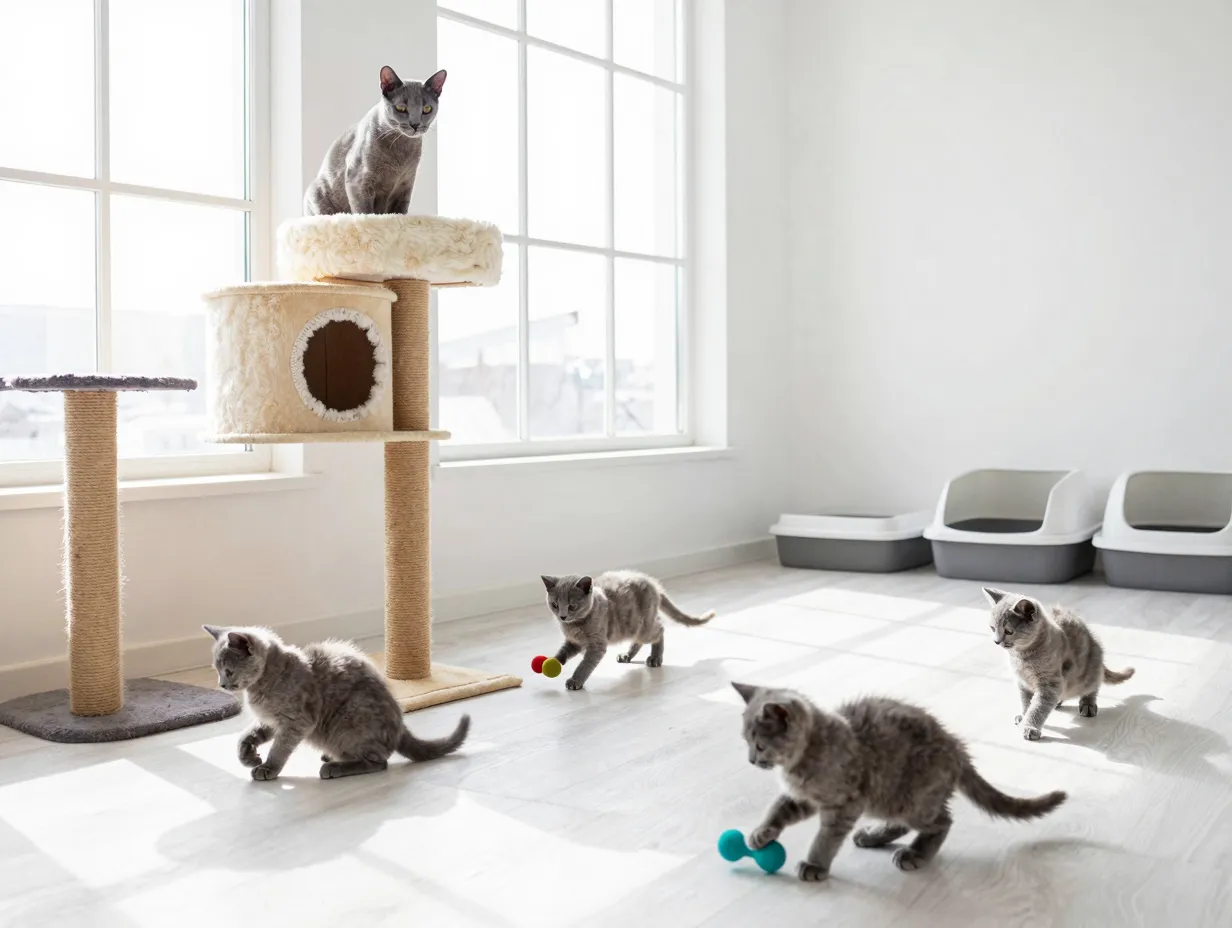
No amount of online research or phone calls replaces an in-person visit to the breeder’s home or cattery [4]. This step is non-negotiable for any serious buyer.
During your visit, observe the following:
Environment:
- Is the space clean, well-lit, and free of strong odors?
- Do the cats have adequate space to move, play, and rest?
- Are enrichment items (toys, scratching posts, climbing structures) available?
The Kittens:
- Are they alert, curious, and playful?
- Do they appear well-fed with clean coats and clear eyes?
- Are they comfortable being handled by people?
The Parent Cats:
- Can you meet at least the mother (queen)?
- Is she friendly and in good health?
- Does she show the temperament typical of the breed?
The Breeder:
- Are they knowledgeable and passionate about Russian Blues?
- Do they ask you questions about your lifestyle and home?
- Do they seem invested in where their kittens are going?
A breeder who refuses or discourages a visit is a serious red flag [4]. Legitimate breeders are proud of their catteries and welcome transparency.
8. Confirm All Documentation Before Adoption
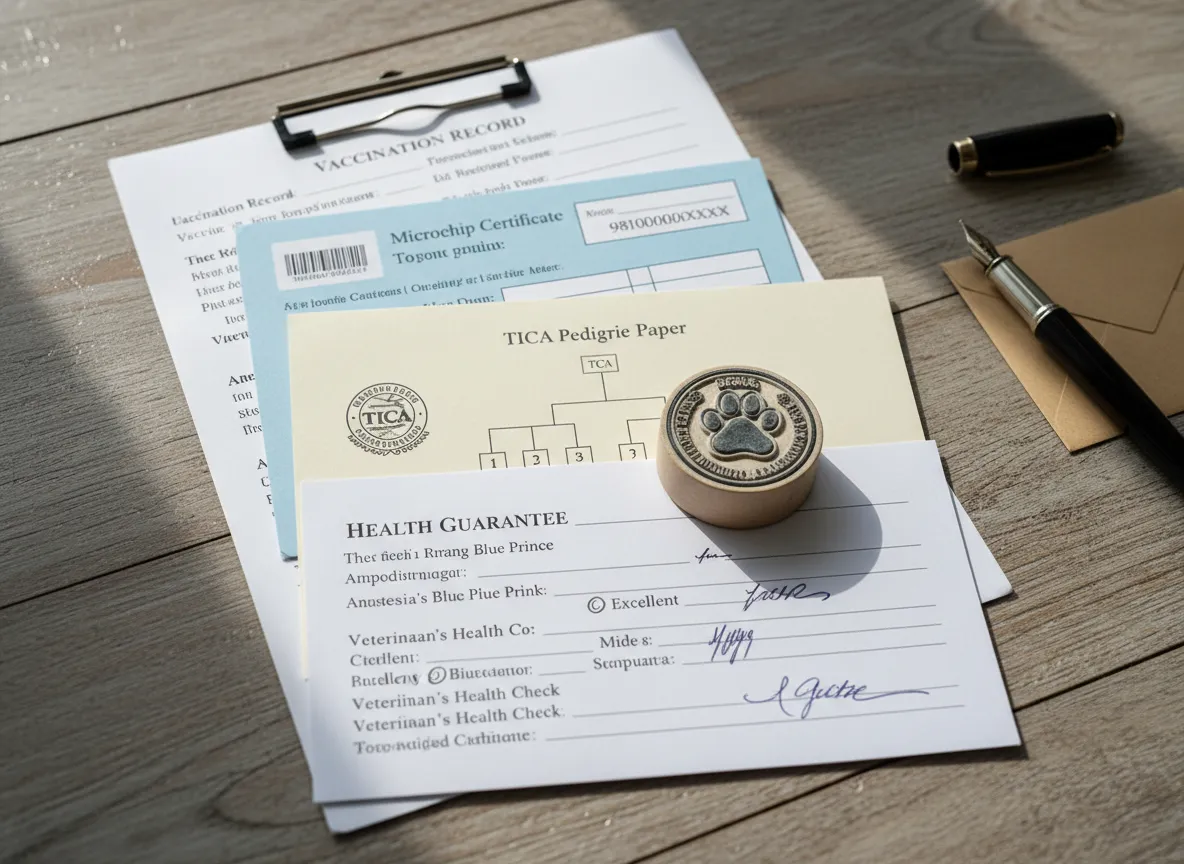
Before you sign anything or hand over any money, make sure all required documentation is in order [3]. This paperwork protects both you and the kitten.
Essential documents to request:
| Document | What to Check |
|---|---|
| Vaccination records | Age-appropriate vaccines completed |
| Microchip certificate | Chip number registered in your name |
| Desexing certificate | Completed or scheduled with clear timeline |
| Health guarantee | Written policy from the breeder |
| Pedigree papers | Registered lineage through a recognized association |
| Vet health check | Recent examination by a licensed veterinarian |
Some breeders include a written contract that outlines your responsibilities as an owner, return policies if circumstances change, and the breeder’s obligations if health issues arise within a specified period [3]. Read this contract carefully before signing.
🐾 Important: Ensure the microchip is transferred into your name at the time of adoption, not left in the breeder’s name.
9. Ensure the Kitten Is the Right Age Before Taking Them Home
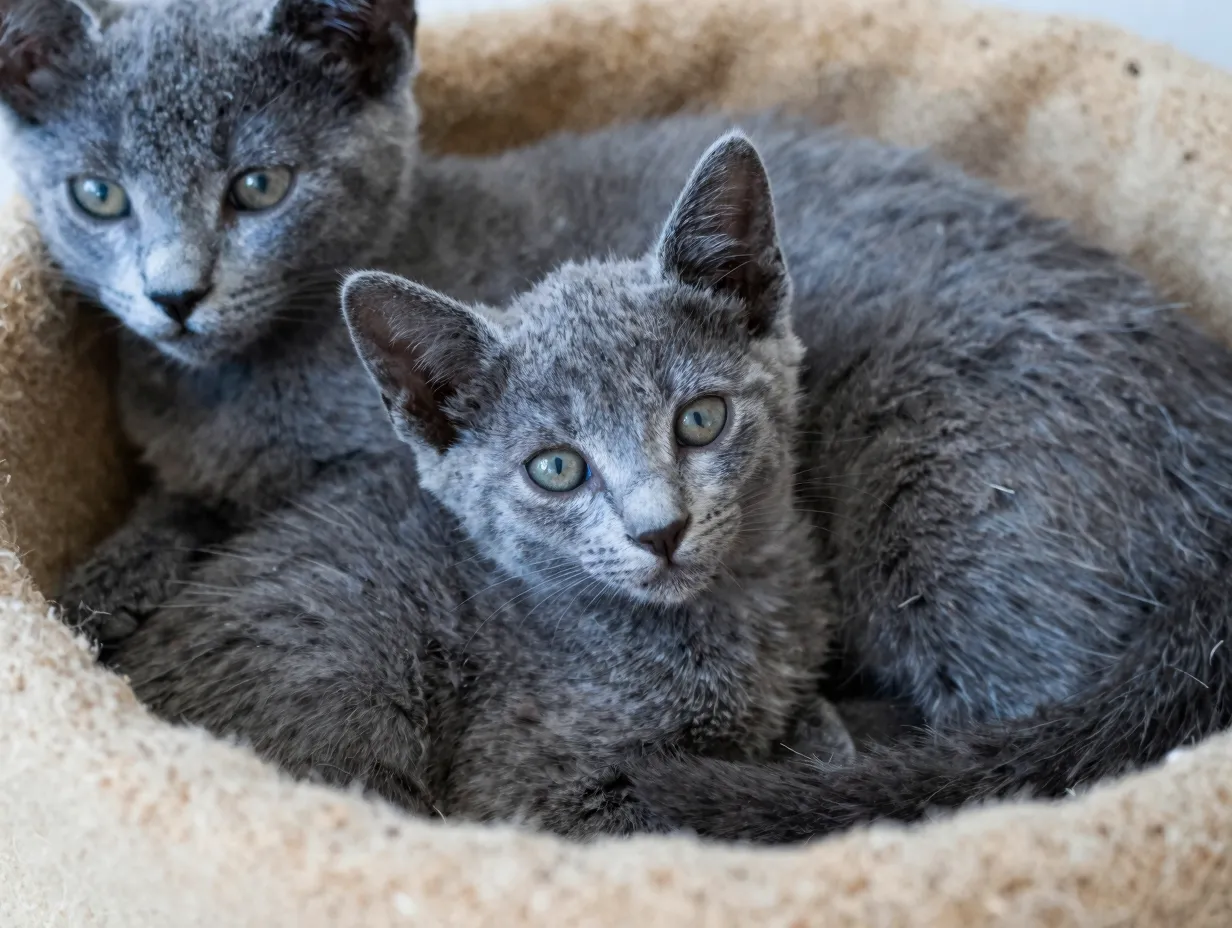
The final step in the 9 steps to finding your perfect Russian Blue cat kittens is one that many eager buyers overlook: wait until the kitten is at least 13 weeks old before bringing them home [2].
This minimum age requirement exists for important developmental reasons:
- Immune system development: Kittens receive crucial antibodies through their mother’s milk. Early weaning compromises their immune protection.
- Social learning: Kittens learn critical social behaviors from their mother and siblings during weeks 8–13. Removing them too early leads to behavioral problems including aggression, anxiety, and litter box issues.
- Emotional readiness: Russian Blues in particular are known to be sensitive cats. Premature separation can result in lasting stress and attachment difficulties [8].
A breeder who offers kittens younger than 13 weeks is prioritizing profit over the kitten’s welfare — and that tells you everything you need to know about the quality of their operation [2].
What to do while you wait:
- Kitten-proof your home
- Purchase essential supplies (litter box, food, carrier, scratching post)
- Schedule a vet appointment for shortly after pickup
- Read up on Russian Blue-specific care and training needs [8]
Bonus: Understanding the Cost of a Russian Blue Kitten
Knowing what to expect financially helps you avoid being lured by suspiciously cheap offers. In 2026, a well-bred Russian Blue kitten from a reputable breeder typically costs between $800 and $2,500 USD, depending on pedigree, location, and whether the kitten is pet-quality or show-quality [6].
What drives the price:
- Pedigree and show lineage
- Health testing of parent cats
- Geographic location and breeder reputation
- Included documentation (vaccines, microchip, desexing)
- Demand and availability
A kitten priced at $200–$400 from an unverified online seller should raise immediate suspicion. Either the kitten is not a purebred Russian Blue, or the breeding conditions are substandard — or both.
Common Mistakes to Avoid When Finding Russian Blue Kittens
Even well-intentioned buyers make avoidable mistakes. Here are the most common ones:
- Skipping the cattery visit — always visit in person before committing.
- Paying a deposit without documentation — never send money without a written agreement.
- Choosing based on price alone — the cheapest option is rarely the best one.
- Ignoring health screening questions — HCM and other conditions are serious.
- Taking a kitten home too early — 13 weeks is the minimum, not a suggestion [2].
- Not verifying breeder credentials — always cross-check association membership independently [1].
Conclusion: Your Path to the Perfect Russian Blue Companion
Following the 9 steps to finding your perfect Russian Blue cat kittens is not about being overly cautious — it is about being a responsible, informed buyer who gives a kitten the best possible start in life.
Let me summarize your action plan:
- Learn the breed standard so you know exactly what you are looking for.
- Identify breeders through recognized associations like the CFA, TICA, or RBBA.
- Avoid pet shops, classified ads, and unverified online sellers.
- Contact breed associations directly for referrals.
- Ask detailed questions and evaluate the breeder’s responses.
- Verify health screening for HCM and other hereditary conditions.
- Visit the cattery in person and meet the parent cats.
- Confirm all documentation before signing or paying.
- Wait until the kitten is at least 13 weeks old before bringing them home.
The Russian Blue is a remarkable breed — intelligent, loyal, and deeply rewarding to live with. They deserve an owner who took the time to find them through the right channels. And you deserve a healthy, well-socialized companion who will share your home for the next 15 to 20 years.
Start your search today by contacting a recognized cat association in your country and requesting a breeder referral. The wait will be worth it. 🐱
References
[1] Russian Blue Kittens Your Complete Guide – https://www.rover.com/blog/russian-blue-kittens-your-complete-guide/
[2] Kitten Notes – https://www.russianblue.org.uk/kitten-notes
[3] Russian Blue Breed Guide – https://vetslovepets.com.au/blogs/cat/russian-blue-breed-guide
[4] Top Ten Things To Know About Russian Blue Cat – https://russischeblauwe.com/blog/top-ten-things-to-know-about-russian-blue-cat/
[5] Russian Blue – https://cfa.org/breed/russian-blue/
[6] Everything You Need To Know About Russian Blue Kittens – https://wagwalking.com/daily/everything-you-need-to-know-about-russian-blue-kittens
[8] Russian Blue Cat Training Behavior Guide – https://www.pawvortex.com/blogs/cat-breeds/russian-blue-cat-training-behavior-guide