9 Miniature Australian Shepherd Puppies for Sale: What Breeders Won’t Always Tell You
Only 38% of first-time dog buyers research breed-specific health risks before purchasing a puppy — and that gap in knowledge costs families thousands of dollars and heartbreak every year. If you’re searching for miniature Australian Shepherd puppies for sale, this guide on 9 Miniature Australian Shepherd Puppies for Sale: What Breeders Won’t Always Tell You is exactly what you need before you hand over a deposit.
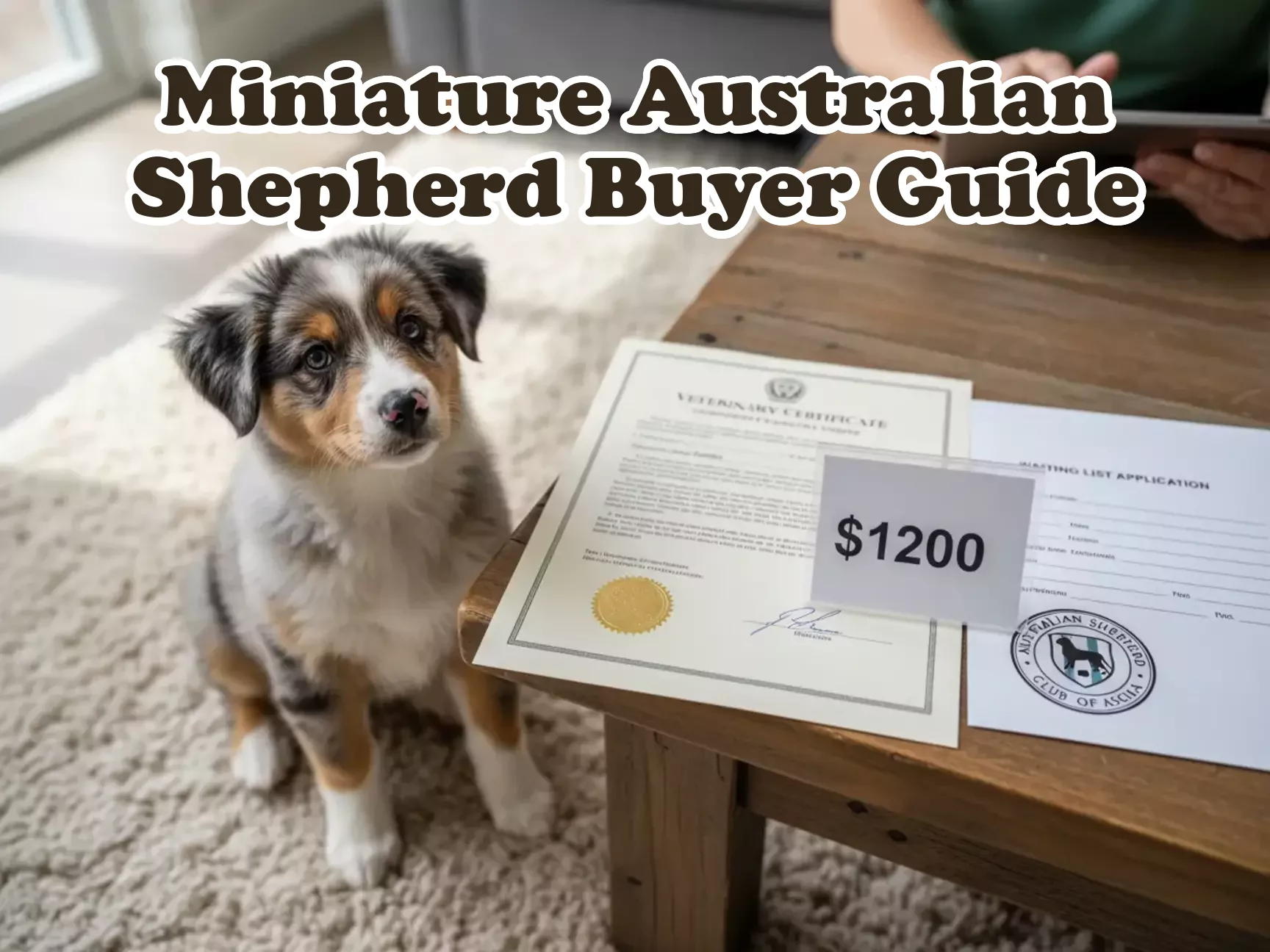
Mini Aussies are magnetic dogs — athletic, loyal, brilliantly smart, and compact enough for smaller homes. But the buying process hides more complexity than most breeders will volunteer upfront. From pricing surprises to genetic risks, understanding what’s really going on behind the scenes protects your wallet and your heart. Let’s dig into the nine things every buyer should know.
Key Takeaways 📌
- Mini Aussie puppies typically cost $1,000–$2,100, but hidden fees can push that number much higher [2]
- The breed was developed in the 1960s on the U.S. rodeo circuit and wasn’t AKC-recognized until 2015 [1]
- Genetic health testing is non-negotiable — reputable breeders will always provide documentation
- High energy and intelligence mean this breed demands significant daily mental and physical stimulation
- Always verify breeders through trusted directories like the Australian Shepherd Club of America [7]
What Is a Miniature Australian Shepherd, Really?
Before jumping into the nine things breeders won’t always tell you, it helps to understand what you’re actually buying.
The Miniature Australian Shepherd — now officially called the Miniature American Shepherd by the AKC — was originally developed in the 1960s on the U.S. rodeo circuit [1]. Breeders selectively bred smaller Australian Shepherds to create a compact herding dog that could travel easily with rodeo performers. Despite the name change, many breeders and owners still use “Mini Aussie” as the common term.
The AKC officially recognized the breed in 2015 under the Miniature American Shepherd name [1]. They typically stand 13–18 inches tall and weigh 20–40 pounds — noticeably smaller than a standard Aussie but carrying all the same intelligence and drive.
💡 Pull Quote: “A Mini Aussie is not a lapdog in a small package. It’s a working dog in a compact frame — and that distinction changes everything about ownership.”
9 Miniature Australian Shepherd Puppies for Sale: What Breeders Won’t Always Tell You
1. The Advertised Price Is Rarely the Final Price
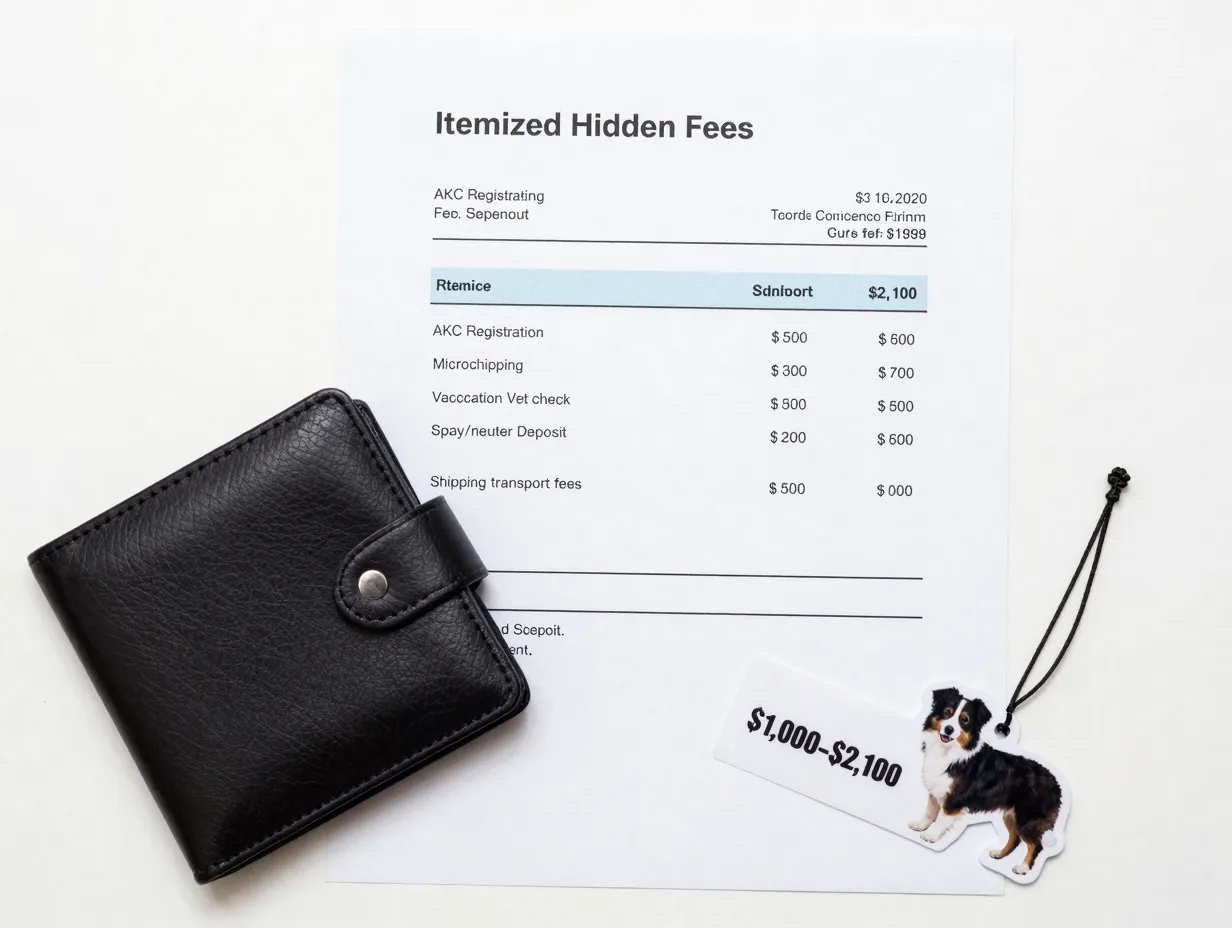
When you see miniature Australian Shepherd puppies for sale listed at $1,000–$2,100 [2], that’s often just the starting point. Reputable breeders may add costs for:
- AKC registration fees
- Microchipping
- First vaccinations and vet checks
- Spay/neuter agreements or deposits
- Shipping or transport fees (which can run $300–$600 for air transport)
Always ask for a complete itemized cost breakdown before signing anything. Some breeders bundle these into the puppy price; others add them on top. There’s no universal standard.
Pro tip: Budget at least $1,500–$2,500 total even if the listed price is on the lower end of the scale.
2. “Mini” Doesn’t Always Mean Mini
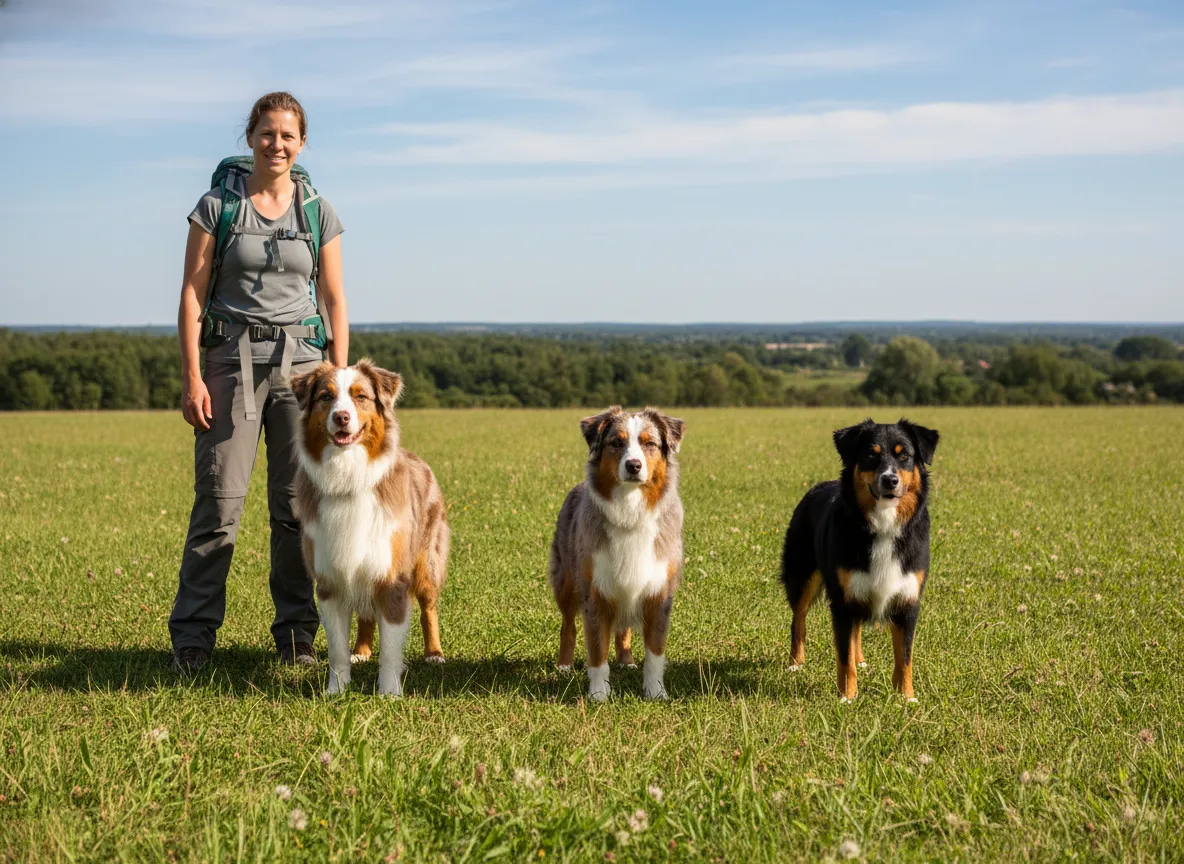
This surprises a lot of buyers. Mini Aussie litters can produce puppies that grow larger than expected — sometimes approaching standard Aussie size. Why? Because the miniaturization process is not perfectly predictable, especially when breeders don’t maintain strict size standards across generations.
Some breeders advertise “toy” or “teacup” Mini Aussies, which are even smaller. These ultra-small dogs often carry higher health risks, including:
| Size Label | Typical Weight | Risk Level |
|---|---|---|
| Standard Aussie | 40–65 lbs | Low (breed standard) |
| Mini Aussie | 20–40 lbs | Low to moderate |
| Toy Aussie | Under 20 lbs | Moderate to high |
| Teacup Aussie | Under 12 lbs | High |
Always ask the breeder for the average adult weights of both parents — that’s your best predictor of your puppy’s adult size.
3. The Merle Gene Is Beautiful but Carries Real Risk
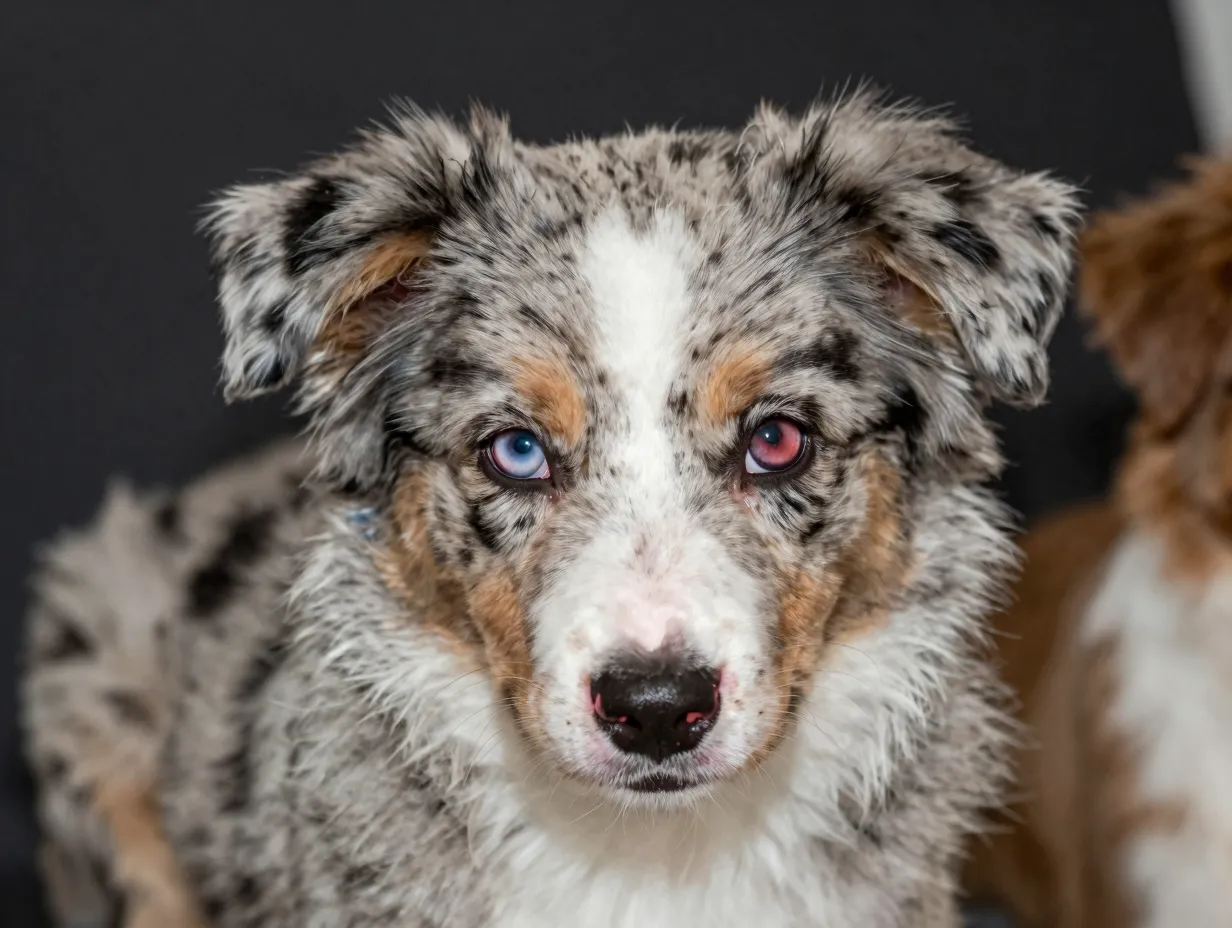
Mini Aussies are famous for their stunning merle coats — swirling patches of gray, black, blue, and red. But here’s what some breeders downplay: breeding two merle dogs together is dangerous.
Double merle puppies (those who inherit the merle gene from both parents) face a significantly elevated risk of:
- Blindness (including microphthalmia — abnormally small eyes)
- Deafness
- Neurological issues
A responsible breeder will never breed merle to merle. Always ask about the coat genetics of both parents. If a breeder can’t or won’t answer this question clearly, walk away.
⚠️ Warning: If a breeder is advertising “double merle” puppies as a premium product, that is a serious red flag — not a selling point.
4. Health Testing Is Non-Negotiable — But Not All Breeders Do It
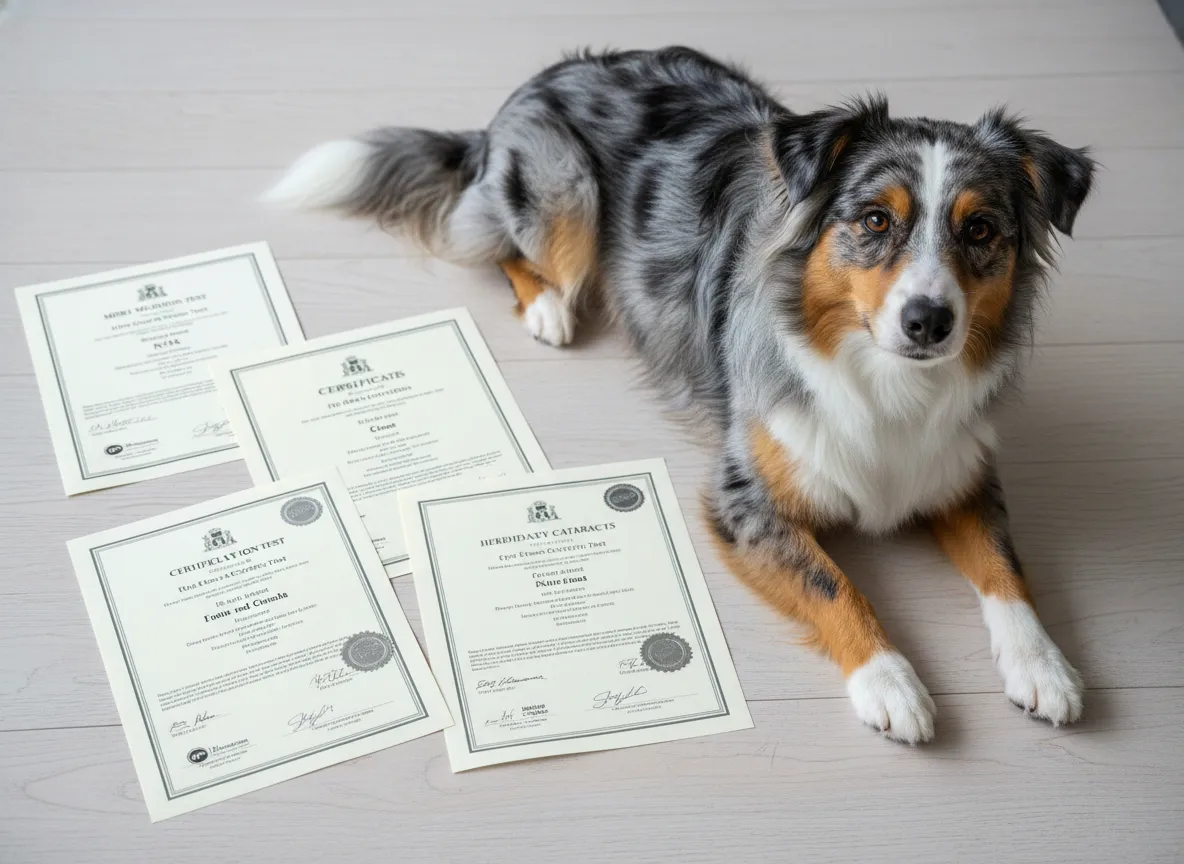
Reputable Mini Aussie breeders test their breeding dogs for a range of hereditary conditions. The key tests to ask about include:
- MDR1 (Multi-Drug Resistance 1) gene mutation — Mini Aussies can be highly sensitive to certain common medications, including some antiparasitics and anesthetics
- Hip and elbow dysplasia (OFA or PennHIP certification)
- Eye exams (CAER certification through the Canine Eye Registry Foundation)
- Progressive Retinal Atrophy (PRA) — a degenerative eye condition
- Hereditary Cataracts
Breeders like those listed through established directories [7] typically provide health testing documentation as part of their standard practice. Ask to see actual certificates, not just verbal assurances. Legitimate breeders are proud to share this paperwork.
5. Socialization Windows Are Short — and Some Breeders Miss Them
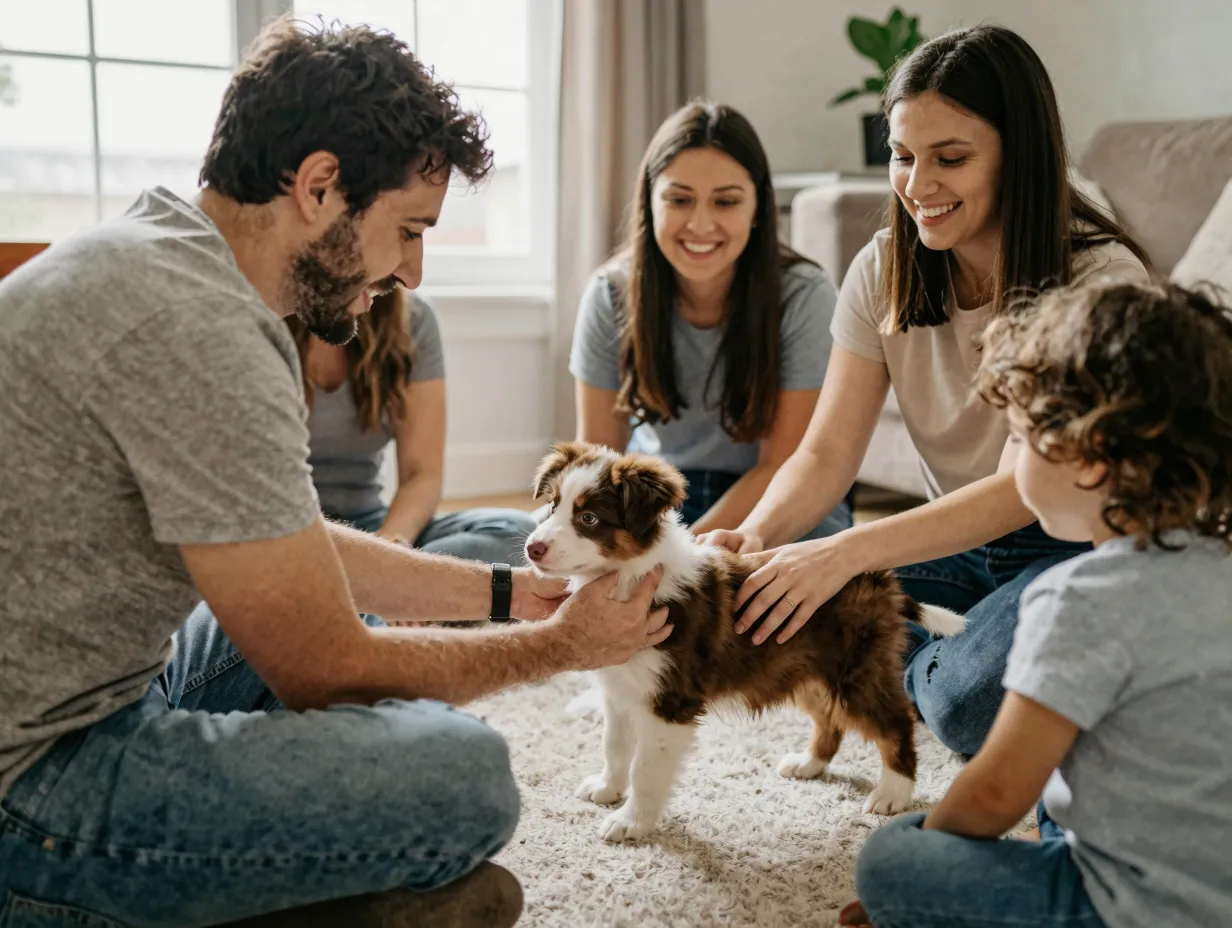
The critical socialization window for puppies is 3 to 14 weeks of age. During this period, puppies need exposure to:
- Different people (men, women, children, people with hats/glasses)
- Other animals
- Various sounds, surfaces, and environments
- Gentle handling and basic routines
Some breeders — particularly high-volume operations — don’t prioritize this. They may keep puppies in kennels with minimal human interaction, producing dogs that are fearful, reactive, or difficult to train despite the breed’s natural intelligence.
When evaluating breeders, ask:
- Where do the puppies live? (In the home is better than in an outdoor kennel)
- What socialization activities do you do with the litter?
- Can I visit before the puppy goes home?
Breeders like those at established operations [3][5] who raise puppies in home environments tend to produce better-adjusted dogs.
6. This Breed’s Energy Level Is Frequently Underestimated
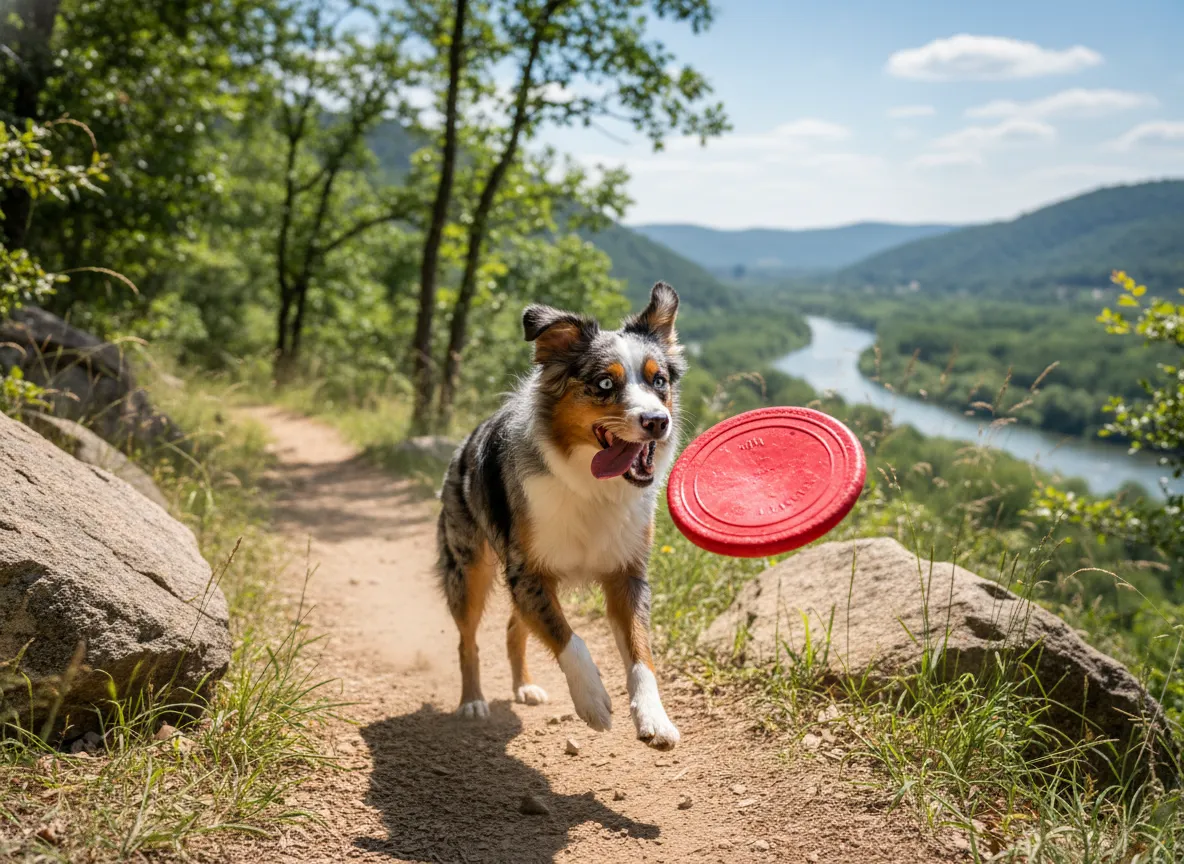
Mini Aussies are not apartment dogs by nature — at least not without serious commitment. They are working dogs bred for herding livestock all day. Without adequate exercise and mental stimulation, they will:
- Destroy furniture and belongings
- Bark excessively
- Develop anxiety and compulsive behaviors
- Herd children or other pets (sometimes using nipping)
Daily needs for an adult Mini Aussie typically include:
| Activity Type | Minimum Daily Time |
|---|---|
| Physical exercise (running, fetch, hiking) | 60–90 minutes |
| Mental stimulation (puzzles, training) | 30–45 minutes |
| Structured play or dog sport | 2–3 sessions/week |
Breeders should be asking you questions about your lifestyle — not just selling you on how cute the puppies are. If a breeder doesn’t ask about your activity level, yard size, or experience with high-drive dogs, that’s a concern.
7. Waiting Lists Are Normal — and Rushing Is a Red Flag
Good breeders plan litters carefully. They health-test their dogs, choose pairings thoughtfully, and often have waiting lists of 3–12 months before a puppy is available [4][6]. This is completely normal and actually a positive sign.
What should concern you:
- Puppies always available with no wait time
- Multiple litters running simultaneously with no clear focus
- Pressure to decide quickly or “this puppy won’t last long” urgency tactics
- No application or screening process for buyers
Reputable breeders screen buyers just as carefully as buyers screen breeders. They want to know their puppies are going to the right homes. If a breeder seems to care only about the transaction, not the placement, trust your instincts.
8. “AKC Registered” Does Not Mean “Quality Bred”
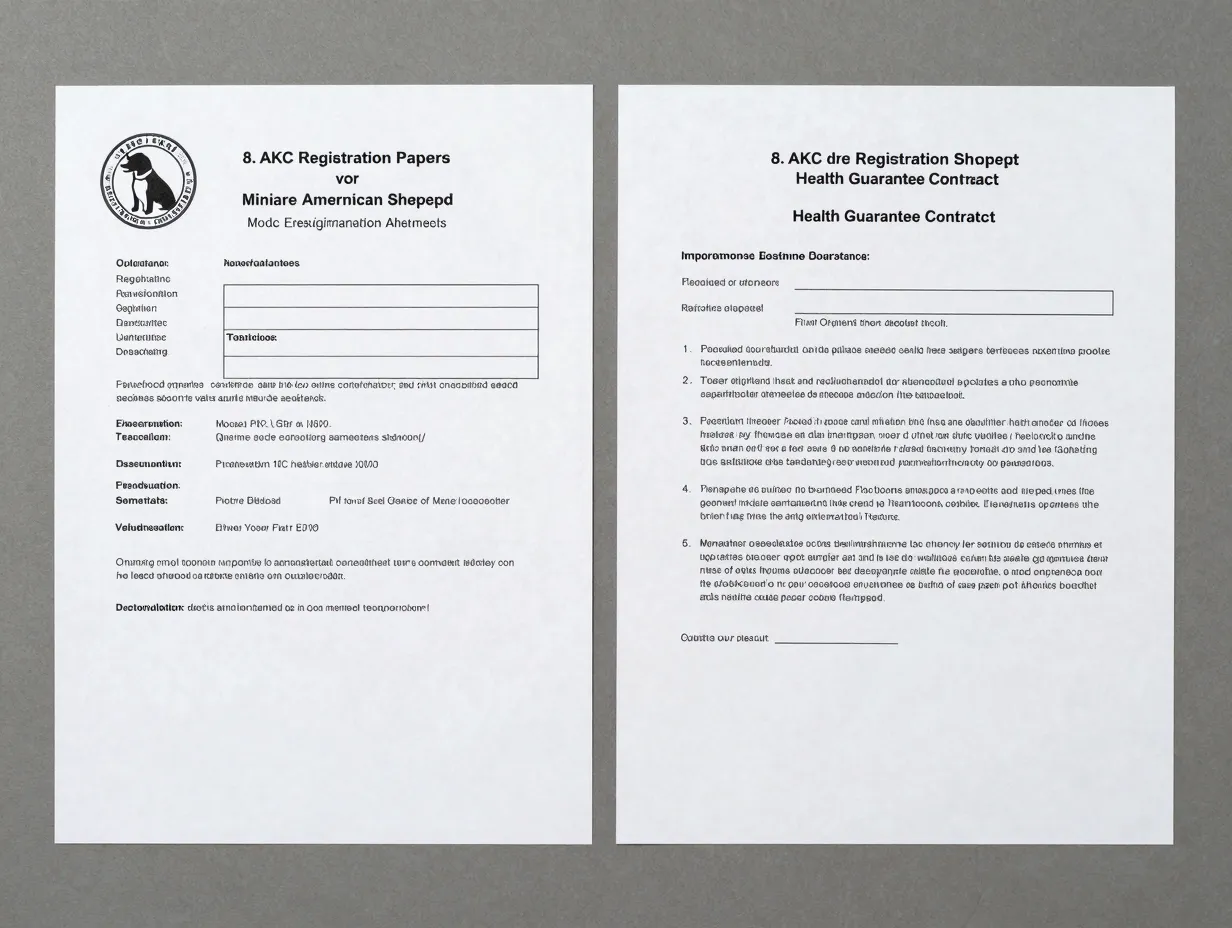
This is one of the most common misconceptions in the puppy-buying world. AKC registration simply means the puppy’s parents were registered — it says nothing about health testing, breeding ethics, or quality of care.
The AKC officially recognized the Miniature American Shepherd in 2015 [1], which means breeders can now register puppies with the AKC. But registration is a paperwork process, not a quality stamp.
What actually matters more than registration:
✅ Health testing certificates from OFA, CAER, and genetic labs
✅ Membership in breed clubs with ethical codes of conduct
✅ References from previous puppy buyers
✅ Transparency about the puppy’s parents and lineage
✅ A health guarantee in writing
Use the Australian Shepherd Club of America’s breeder directory [7] as a starting point for finding breeders who operate under ethical guidelines — not just those who can produce AKC papers.
9. The True Cost of Ownership Goes Far Beyond the Purchase Price
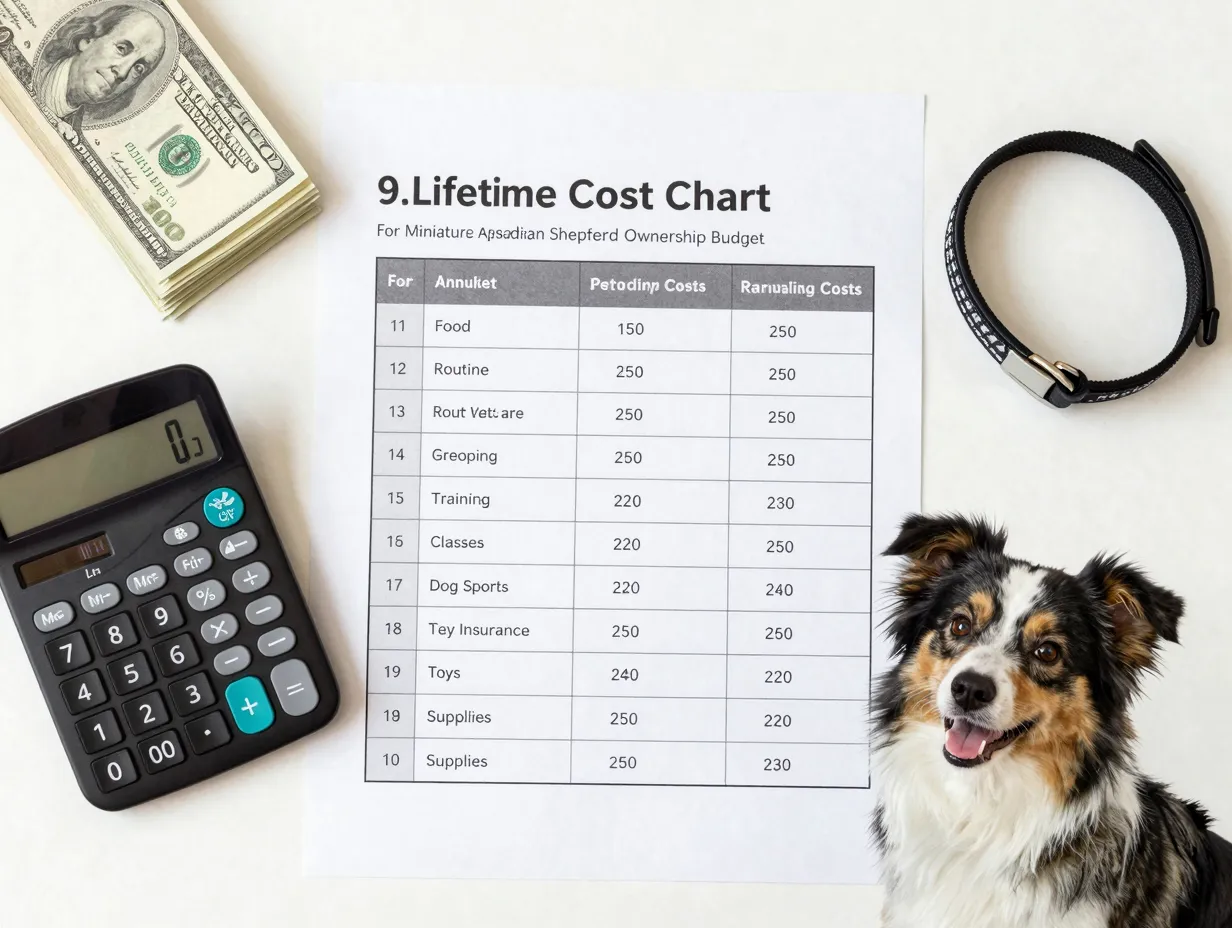
The sticker price of $1,000–$2,100 [2] is just the beginning. Over the lifetime of a Mini Aussie (typically 12–15 years), owners should budget for:
| Expense Category | Estimated Annual Cost |
|---|---|
| Food (quality dry food) | $600–$1,200 |
| Routine vet care | $500–$800 |
| Grooming (coat maintenance) | $400–$800 |
| Training classes | $200–$500 (especially year 1) |
| Dog sports/activities | $300–$1,000 |
| Pet insurance | $400–$700 |
| Toys, enrichment, supplies | $200–$400 |
Estimated lifetime cost: $30,000–$60,000+
This isn’t meant to discourage you — Mini Aussies are extraordinary companions worth every penny for the right owner. But going in with clear financial expectations prevents the heartbreak of surrendering a dog you can’t afford to care for properly.
How to Find a Reputable Miniature Australian Shepherd Breeder in 2026
Now that you know what to watch for, here’s a practical roadmap for finding the right breeder:
Step 1: Start with the Australian Shepherd Club of America’s breeder directory [7]. This lists breeders who have agreed to follow ethical breeding standards.
Step 2: Research individual breeders thoroughly. Look for established websites, transparent health testing records, and active social media showing puppies in home environments [3][5][6].
Step 3: Ask for references from previous buyers and actually call them. Ask about the puppy’s temperament, health, and whether the breeder stayed in contact after the sale.
Step 4: Visit the facility if at all possible. Seeing where the puppies are raised tells you more than any website ever will.
Step 5: Review the purchase contract carefully. A good contract includes a health guarantee, a return policy (reputable breeders want their dogs back if you can’t keep them), and clear terms about spay/neuter requirements.
Step 6: Be patient. The right puppy from the right breeder is worth waiting for.
Quick Reference: Green Flags vs. Red Flags 🚦
| ✅ Green Flags | 🚩 Red Flags |
|---|---|
| Health testing certificates available | “Parents are healthy” with no documentation |
| Waiting list in place | Puppies always available |
| Asks you questions about your lifestyle | Only interested in payment |
| Puppies raised in the home | Outdoor kennel-only environment |
| Transparent about breed challenges | Only talks about positives |
| References from past buyers | No references available |
| Written health guarantee | Verbal-only guarantees |
| Merle × non-merle pairings only | Double merle breeding |
Conclusion: Make an Informed Choice Before You Buy
The search for miniature Australian Shepherd puppies for sale is exciting — and it should be. These dogs are remarkable: intelligent, loyal, athletic, and deeply bonded to their families. But the nine points covered in this guide on 9 Miniature Australian Shepherd Puppies for Sale: What Breeders Won’t Always Tell You exist precisely because the buying process has real pitfalls that can be avoided with the right knowledge.
Your actionable next steps:
- Set a realistic total budget — not just the purchase price, but first-year costs and lifetime expenses
- Research health testing requirements for the breed and refuse to skip this step
- Start your breeder search through the ASCA directory [7] and established breeders [3][4][5][6]
- Prepare your home and lifestyle for a high-energy, highly intelligent working dog
- Be patient — the best breeders have waiting lists, and that’s a feature, not a bug
A Mini Aussie from a responsible breeder, placed in the right home, is one of the most rewarding relationships a dog owner can experience. Do your homework now, and you’ll spend the next 12–15 years grateful you did.
References
[1] Miniature Australian Shepherd – https://www.lancasterpuppies.com/sale/puppies/miniature-australian-shepherd/
[2] Miniature Australian Shepherd – https://www.gooddog.com/miniature-australian-shepherd
[3] starcksminiatureamericanshepherds – https://starcksminiatureamericanshepherds.com
[4] New And Planned Litters – https://www.bestlittleaussies.com/new-and-planned-litters/
[5] somersetmas – https://somersetmas.com
[6] canyoncreekaussies – https://canyoncreekaussies.com
[7] Finding A Breeder – https://asca.org/finding-an-aussie/finding-a-breeder/
[8] Watch – https://www.youtube.com/watch?v=3oZzzGbw66w