
9 Grooming Secrets for a Happy Long Hair Domestic Cat
Long-haired domestic cats shed roughly three times more loose fur than their short-haired counterparts — and without consistent grooming, that beautiful coat can mat within days. If you share your home with a Maine Coon, Persian, Ragdoll, or any other fluffy companion, you already know the struggle. The good news? Applying the 9 grooming secrets for a happy long hair domestic cat outlined in this guide can transform a stressful, tangled ordeal into a calm, bonding ritual that keeps your cat healthy and your furniture fur-free.
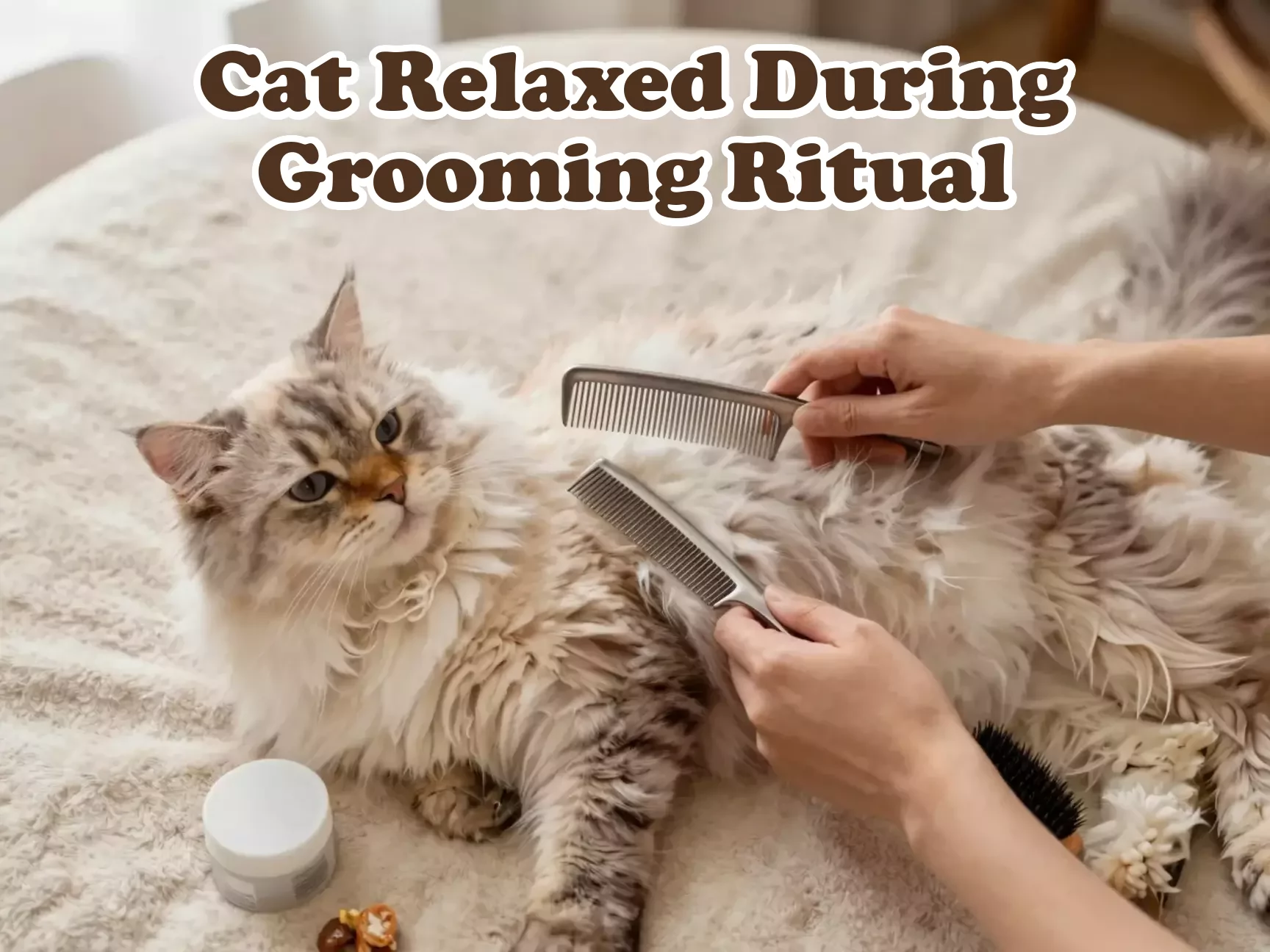
Whether you are a first-time long-haired cat owner or a seasoned pro looking to refine your technique, these research-backed strategies will give you everything you need to maintain a coat that is as healthy as it is gorgeous.
Key Takeaways
- 🐱 Long-haired cats need grooming every 1–2 days at home, plus professional sessions every 4–8 weeks.
- 🪮 Metal combs with wide, blunted tines are the gold-standard tool — plastic brushes can damage delicate fur.
- ⚠️ Never comb the tail — always brush it gently to avoid pulling out hair.
- 🧴 Defelting sprays and powders are your best friends for stubborn mats in sensitive areas.
- 🎁 Pairing grooming with treats and calm timing turns a chore into a positive experience for your cat.
Why Grooming Is Non-Negotiable for Long-Haired Cats
Before diving into the secrets themselves, it helps to understand why grooming is so critical for this specific type of cat. Unlike short-haired breeds, long-haired domestic cats cannot effectively self-groom their entire coat. Their fur is prone to tangles, mats, and the accumulation of dirt, dander, and debris. Left unattended, mats can pull painfully on the skin, restrict movement, and even harbor parasites or cause skin infections.
Beyond health, regular grooming reduces hairballs, minimizes shedding around the home, and — perhaps most importantly — strengthens the bond between you and your cat. A well-groomed cat is a more comfortable, happier cat.
“A well-maintained coat is one of the clearest indicators of a cat’s overall health and wellbeing.”
Now, let’s get into the 9 grooming secrets for a happy long hair domestic cat.
The 9 Grooming Secrets for a Happy Long Hair Domestic Cat
1. Establish a Consistent Grooming Schedule
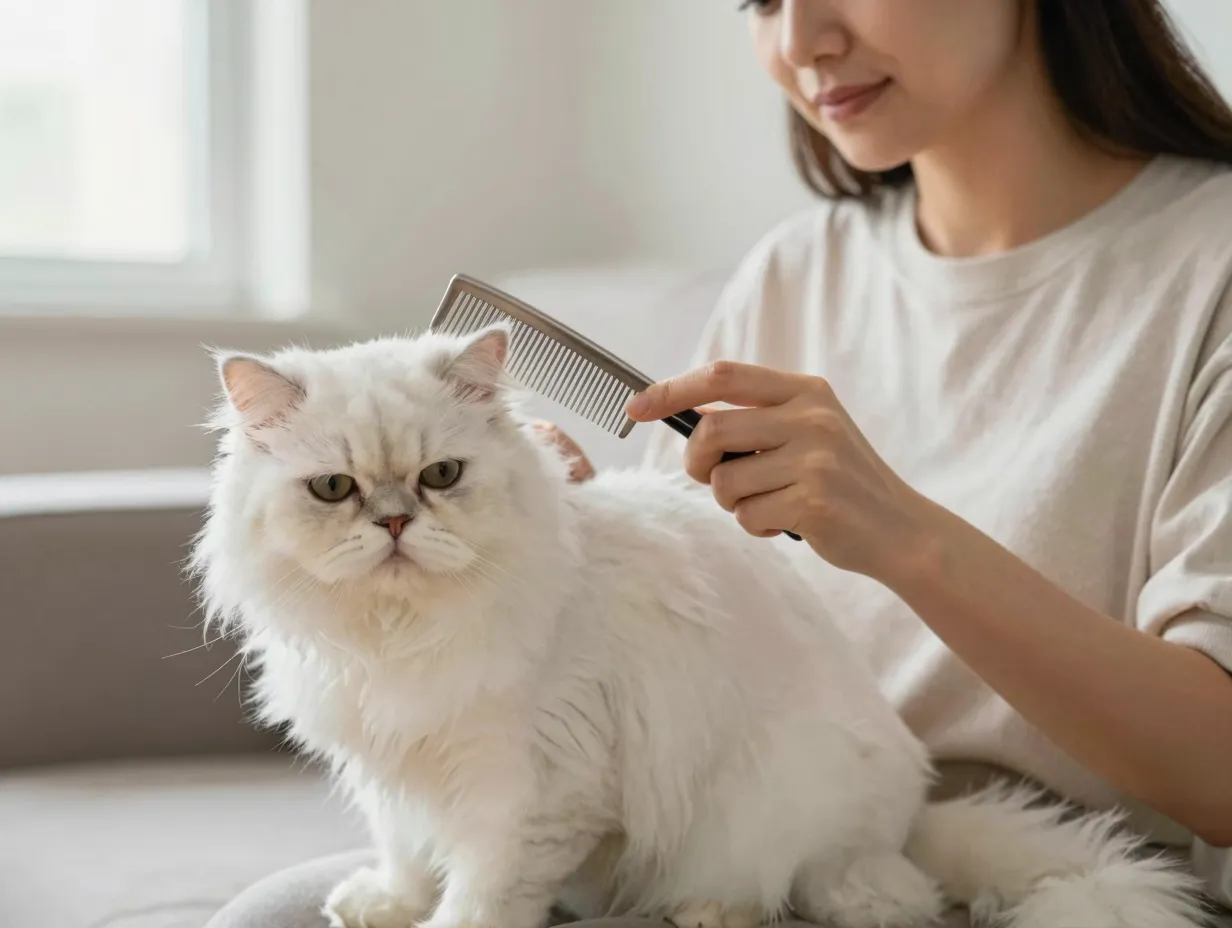
The single most impactful thing you can do for your long-haired cat is show up regularly. Long-haired cats living indoors need grooming sessions every few days — ideally every other day — to remove dead hair and prevent tangles from forming into mats [1][3].
Here is a simple schedule to follow:
| Grooming Task | Frequency |
|---|---|
| Home brushing/combing | Every 1–2 days |
| Full coat inspection | Weekly |
| Professional grooming | Every 4–8 weeks [4] |
| Nail trimming | Every 2–3 weeks |
| Ear check | Weekly |
Consistency is the key word here. Sporadic grooming sessions allow mats to form between visits, making each session longer and more stressful for your cat. A brief 10-minute daily comb-through is far more effective — and far less traumatic — than a 45-minute detangling marathon once a month.
Pro tip: Set a phone reminder for grooming sessions at the same time each day. Cats thrive on routine, and your cat will begin to anticipate and accept grooming more readily when it happens predictably.
2. Invest in the Right Tools — Starting With a Metal Comb
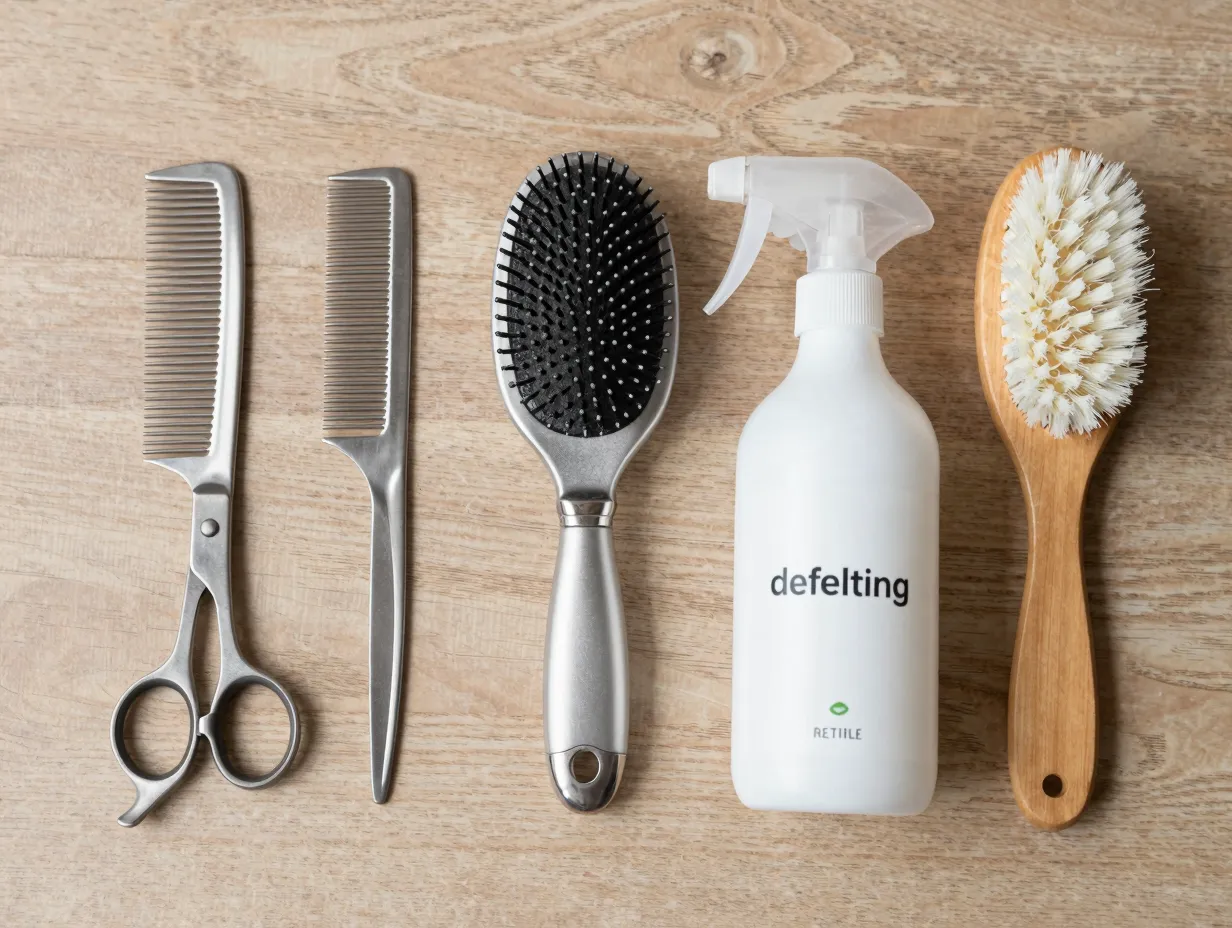
Not all grooming tools are created equal, and this is where many cat owners go wrong from the very start. Plastic brushes can damage hair and create static, which makes tangling worse [1][6]. Instead, start with a metal comb that has wide, rounded or blunted tines.
The wide-toothed metal comb is your primary weapon against tangles. It allows you to tease out small knots carefully, especially around sensitive areas like the ears and neck, without causing pain or breakage [1].
Essential grooming toolkit for long-haired cats:
- Wide-toothed metal comb (primary detangling tool)
- Fine-toothed metal comb (finishing and flea checks)
- Slicker brush (for surface smoothing after combing)
- Blunt-tipped scissors (for trimming problem areas)
- Defelting spray or powder (for stubborn mats)
- Soft bristle brush (for sensitive areas)
Avoid cheap plastic combs, bristle brushes with ball-tipped plastic ends, and any tool that snags rather than glides through the coat. Quality tools are a one-time investment that pays dividends for years.
3. Master the Correct Grooming Sequence
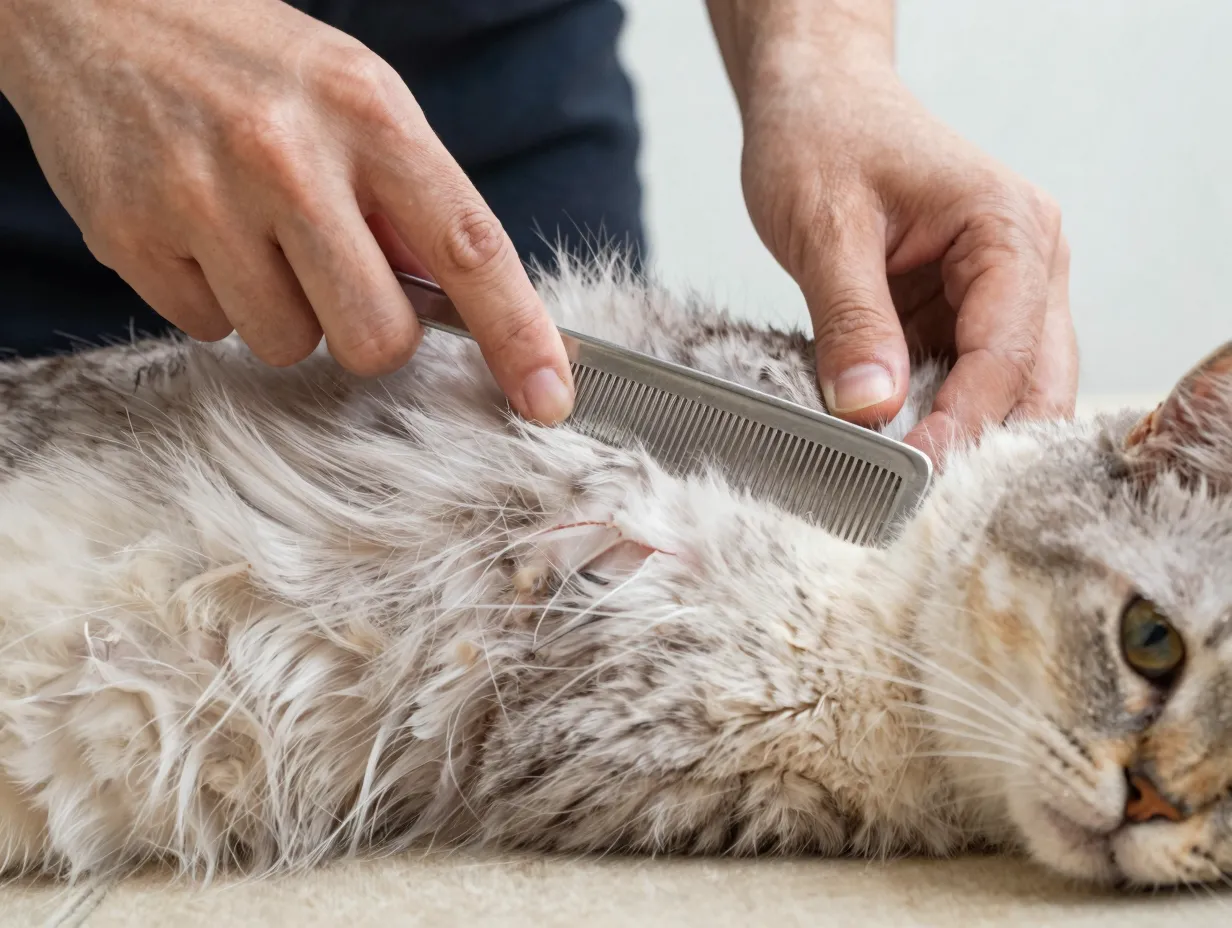
Where you start matters just as much as how you groom. Many owners make the mistake of starting at the back or the top of the coat — but the correct technique begins at the abdomen and legs [3].
Follow this grooming sequence:
- Start at the abdomen, gently combing the fur upward toward the head.
- Move to the legs, combing upward and outward.
- Work up to the chest and neck, combing the fur upward toward the chin [3].
- Address the back with long, smooth strokes following the direction of hair growth.
- Finish with the tail (see Secret 4 for special tail instructions).
This bottom-up approach ensures you address the areas most prone to matting first — the armpits, belly, and inner legs — before moving to the more visible (and usually less tangled) areas of the back and sides.
“Starting from the belly and working upward is the professional groomer’s approach — it catches the worst mats before the cat gets tired of the session.”
4. Never Comb the Tail — Brush It Instead
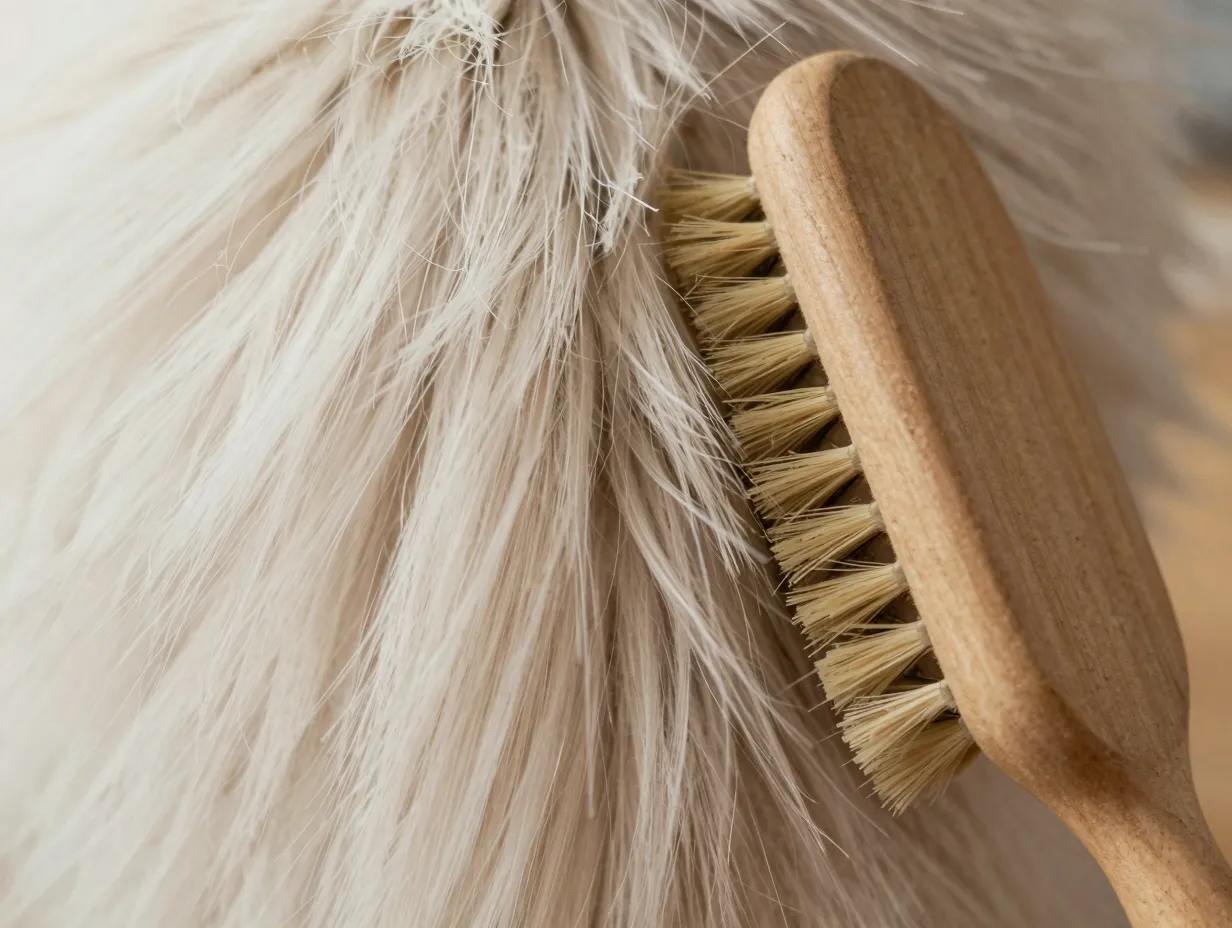
Here is one of the most surprising of the 9 grooming secrets for a happy long hair domestic cat: the tail should never be combed [1]. The fur on a cat’s tail is structured differently from the rest of the coat, and running a comb through it risks pulling out significant amounts of hair, leaving the tail looking sparse and uneven.
Instead, use a soft-bristle brush and apply gentle, careful strokes. Before brushing, make a part down the middle of the tail, then brush each side separately [3]. This technique distributes the fur evenly and removes loose hair without the aggressive pulling that a comb can cause.
🐾 Quick tail-grooming checklist:
- ✅ Use a soft-bristle brush only
- ✅ Part the tail fur down the center
- ✅ Brush each side with gentle strokes
- ❌ Never use a metal comb on the tail
- ❌ Never tug or force through tangles
If you find a mat on the tail, apply a small amount of defelting spray (covered in Secret 5), allow it to penetrate, and then gently work the mat apart with your fingers before using the brush.
5. Use Defelting Products for Stubborn Mats
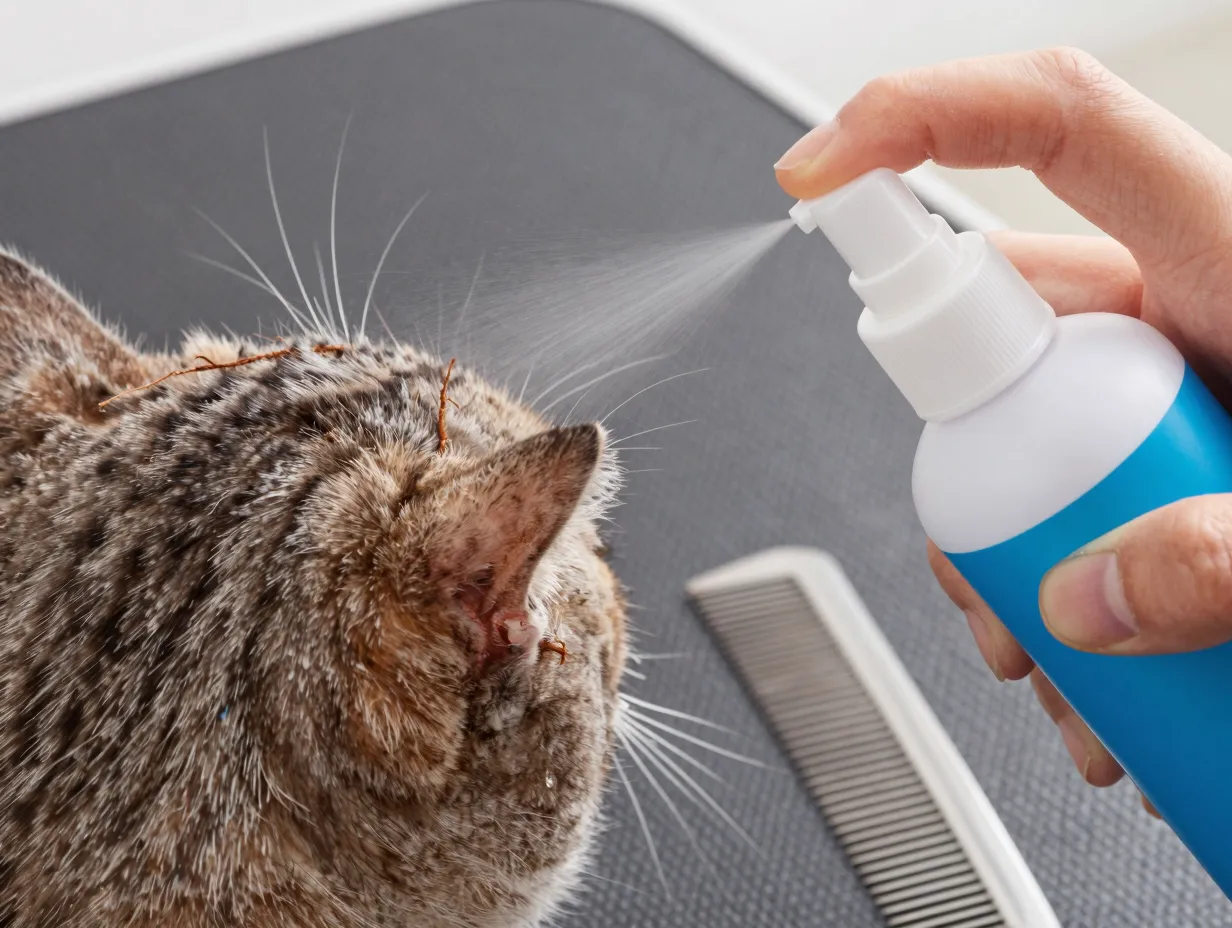
Even with the best grooming routine, mats happen — especially in the high-friction zones of your cat’s body. Defelting sprays, powders, and care foams are specialized products designed to break down the structure of mats, making them easier to comb out without pain [1].
Common problem areas for matting:
- Behind the ears 👂
- Armpits and chest
- Inside the legs (groin area)
- Base of the tail
- Collar area (if your cat wears one)
How to use defelting products:
- Apply the spray, powder, or foam directly to the mat.
- Allow it to penetrate for the recommended time (check product instructions).
- Gently dab off any excess product.
- Use your fingers to carefully begin separating the mat from the outside edges inward.
- Follow up with the wide-toothed metal comb, working slowly [1].
Never try to rip a mat out or cut through it without preparation. This causes pain, damages the skin, and makes your cat associate grooming with a negative experience — which creates problems for every future session.
6. Make Every Grooming Session a Positive Experience

This secret is arguably the most important one on the entire list, because a cat that tolerates — or even enjoys — grooming is infinitely easier to care for than one that runs and hides at the sight of a comb [2][5].
The foundation of positive grooming is timing. Conduct sessions during relaxed, happy moments — when your cat is purring, just waking from a nap, or sitting contentedly in your lap [2]. Never attempt grooming when your cat is agitated, playful, or hungry.
Positive reinforcement strategies:
- Offer a high-value treat immediately before and after each session.
- Start with just 2–3 minutes of grooming and gradually extend the time.
- Use a calm, quiet voice throughout the session.
- Stop immediately if your cat shows signs of distress — flattened ears, twitching tail, growling, or attempts to bite [2].
- End every session on a positive note, even if it was brief.
“The goal is not to finish grooming the entire cat in one session — the goal is to make your cat comfortable enough that tomorrow’s session is easier than today’s.”
Over time, cats that are consistently groomed with patience and positive reinforcement often begin to actively seek out grooming sessions as a form of attention and bonding.
7. Trim Sensitive Areas With the Right Technique
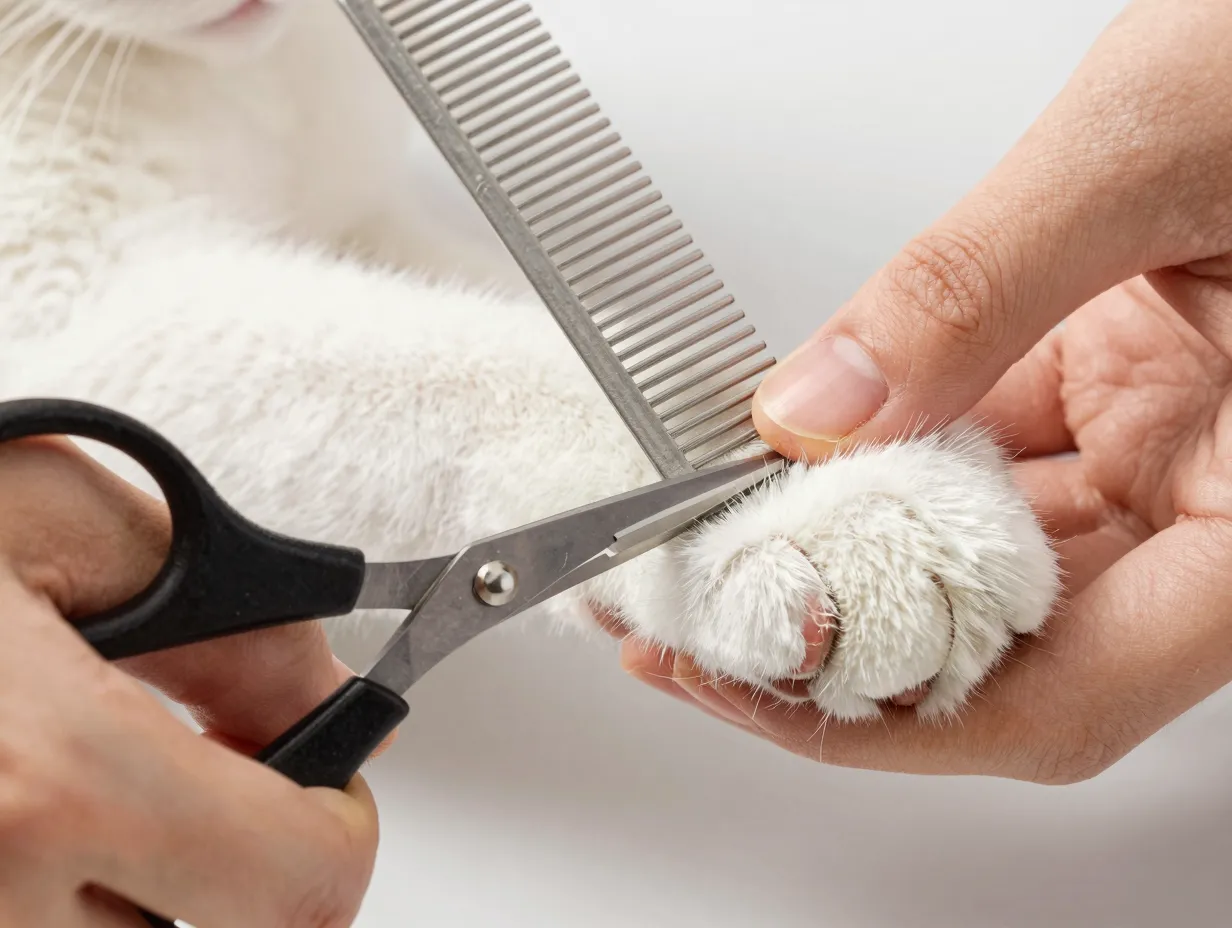
Sometimes combing and detangling are not enough, and trimming becomes necessary — particularly around areas where mats form repeatedly or where fur causes hygiene issues. However, trimming a cat’s fur incorrectly can lead to accidental cuts, uneven patches, and a very unhappy feline.
The golden rule of cat fur trimming: Always insert a metal comb between the skin and the mat before cutting [1][2]. This creates a physical barrier that protects the skin from the scissors. Never cut directly toward the skin.
Tools for safe trimming:
- Blunt-tipped scissors: Reduce the risk of puncture wounds if the cat moves suddenly [1].
- Defelting knife or mat splitter: Designed specifically to split mats without cutting the skin.
- Thinning shears: Useful for blending trimmed areas into the surrounding coat.
Areas that commonly require trimming:
| Area | Reason for Trimming |
|---|---|
| Behind ears | Chronic mat formation |
| Armpits | Friction causes persistent mats |
| Inner thighs | Friction and moisture |
| Paw pads | Fur between pads collects debris |
| Rear end | Hygiene (see Secret 8) |
If you are not confident trimming sensitive areas yourself, this is one task worth delegating to a professional groomer — especially for the first time.
8. Keep the Rear End Trimmed for Hygiene
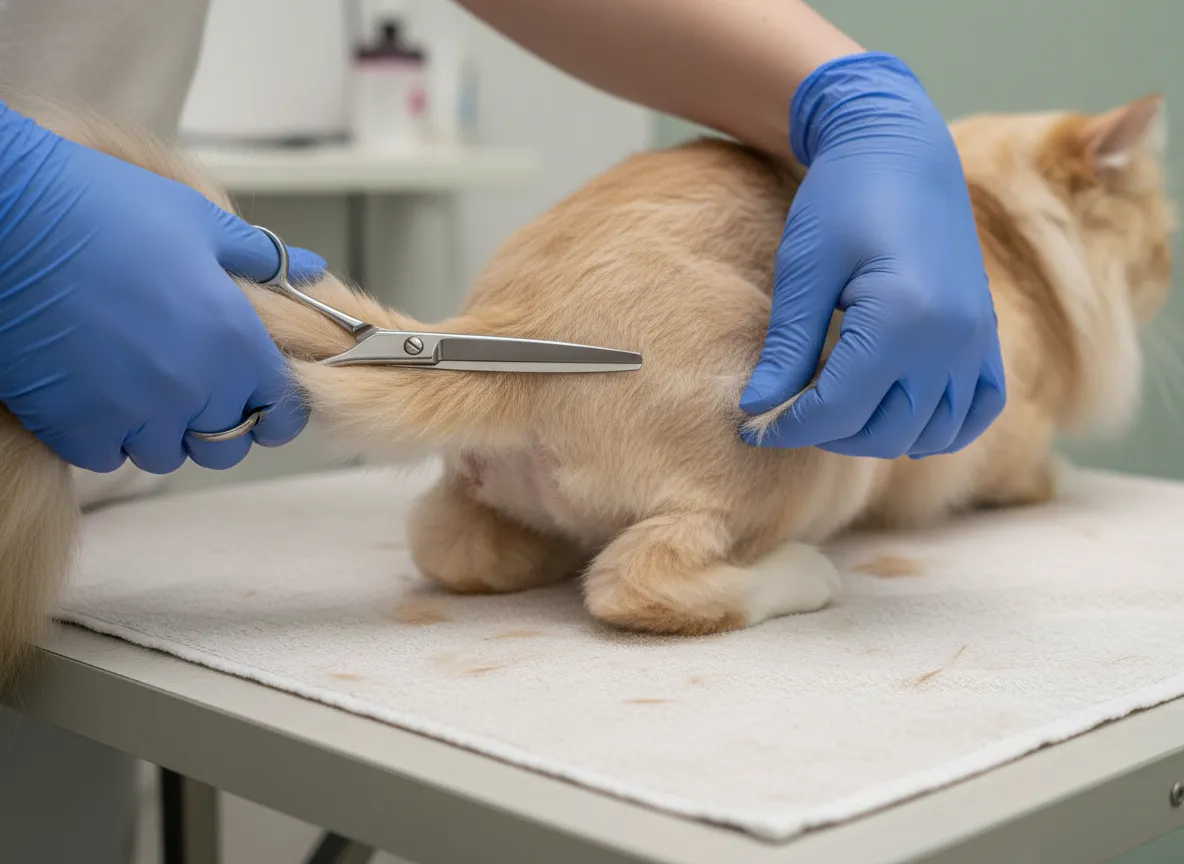
This is the grooming secret that nobody likes to talk about — but it is absolutely essential. Long-haired cats are highly susceptible to fecal matter adhering to the fur around their rear end, a condition sometimes called “dirty bottom” or, more clinically, fecal soiling [1].
Regularly trimming the long hairs around your cat’s bottom — often called the “sanitary trim” — prevents this issue entirely [1]. Without this trim, fecal matter can mat the fur, cause skin irritation, attract flies, and create a serious hygiene and health problem.
How to perform a sanitary trim:
- Use blunt-tipped scissors and work slowly.
- Always insert a comb between the skin and fur before cutting.
- Trim the fur around the anus to approximately 1–2 cm in length.
- Also trim the fur along the inner thighs and lower belly if it is long enough to be soiled.
- Check this area every 1–2 weeks and trim as needed.
🧼 Bonus hygiene tip: If soiling has already occurred, use a warm, damp cloth or unscented pet-safe wipes to gently clean the area before trimming. Never use human baby wipes, as some contain ingredients that are toxic to cats.
9. Know When to Call a Professional Groomer
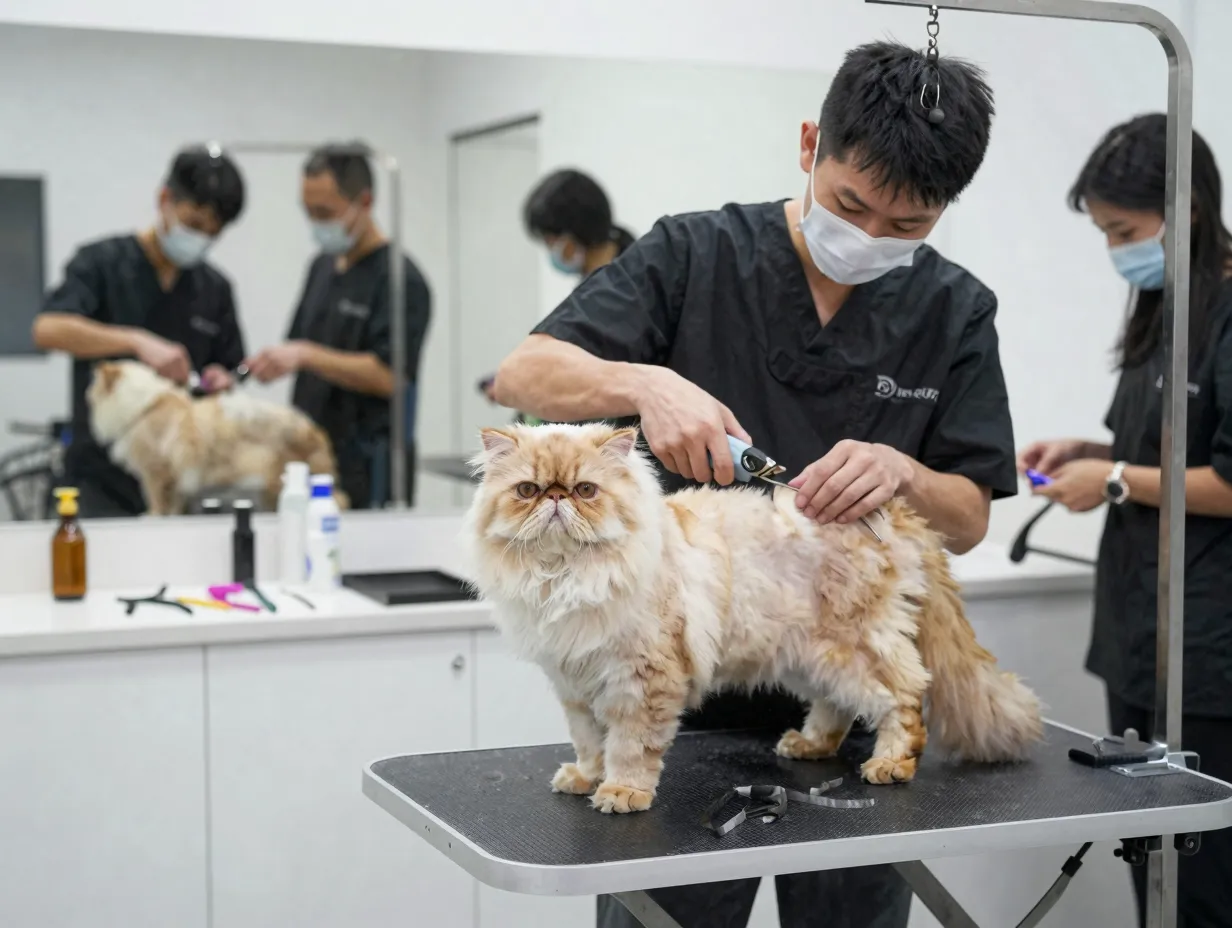
Even with the best home grooming routine, there are times when professional help is the right call. Professional groomers have specialized tools, training, and experience that allow them to handle severe mats, full-body trims, and anxious cats far more efficiently than most owners can at home [4].
Signs it’s time to see a professional:
- Mats that cover a large portion of the body
- Your cat becomes aggressive or extremely stressed during home grooming
- The coat has become severely neglected (e.g., after illness or a period of owner absence)
- You want a breed-specific cut (like a “lion cut” for Persians)
- You notice skin issues, parasites, or unusual lumps under the fur
A good rule of thumb: professional grooming every 4–8 weeks, combined with weekly home brushing, significantly reduces the overall maintenance burden and keeps the coat in top condition [4].
Questions to ask a potential groomer:
- Do you have experience with long-haired breeds?
- How do you handle anxious or reactive cats?
- What tools and products do you use?
- Do you offer a “comb-out” service separate from a full groom?
“Think of a professional groomer as a partner in your cat’s health — not a replacement for home care, but a powerful complement to it.”
Putting It All Together: A Weekly Grooming Checklist
Here is a practical weekly checklist that incorporates all 9 grooming secrets for a happy long hair domestic cat into a manageable routine:
Daily (5–10 minutes):
- Quick comb-through with wide-toothed metal comb
- Check high-mat-risk areas (belly, armpits, behind ears)
- Reward with treats
Weekly:
- Full grooming sequence (abdomen → legs → chest → back → tail)
- Inspect and trim rear end if needed
- Check ears, eyes, and paw pads
- Apply defelting product to any developing mats
Monthly:
- Nail trim
- Full coat inspection for skin issues, parasites, or unusual changes
- Schedule professional grooming appointment if due
Common Grooming Mistakes to Avoid
Even well-intentioned owners make these errors. Knowing them in advance can save you — and your cat — a lot of frustration.
| ❌ Mistake | ✅ Correct Approach |
|---|---|
| Using plastic brushes | Use metal combs with blunted tines [1][6] |
| Combing the tail | Brush the tail gently only [1] |
| Grooming an agitated cat | Wait for calm, relaxed moments [2] |
| Cutting mats without a comb barrier | Always place comb between skin and scissors [1] |
| Skipping the belly and armpits | Start grooming from the abdomen [3] |
| Waiting too long between sessions | Groom every 1–2 days [1][3] |
| Ignoring the rear end | Perform regular sanitary trims [1] |
Conclusion
Caring for a long-haired domestic cat is a genuine commitment — but it is one that pays off in a healthier, happier, more comfortable companion. The 9 grooming secrets for a happy long hair domestic cat covered in this guide are not complicated, but they do require consistency, the right tools, and a patient, positive approach.
Your actionable next steps:
- Audit your current toolkit — replace plastic brushes with a quality wide-toothed metal comb.
- Schedule your first consistent grooming session this week, even if it is only 5 minutes.
- Stock up on defelting spray or powder before you need it — not after a mat has already formed.
- Book a professional grooming appointment if your cat’s coat is currently overdue.
- Commit to the routine — remember, 10 minutes every other day beats an hour of painful detangling every month.
Your long-haired cat’s coat is one of the most visible signs of their overall health and your care as an owner. With these nine secrets in your arsenal, you are fully equipped to keep that coat — and your cat — in the best possible condition in 2026 and beyond. 🐾
References
[1] Long Haired Cats Fur Care – https://www.catsbest.eu/long-haired-cats-fur-care/
[2] Grooming Cats – https://happycatshaven.org/resource/grooming-cats/
[3] Cat Grooming Tips – https://www.aspca.org/pet-care/cat-care/cat-grooming-tips
[4] Care Long Haired Cat – https://www.chewy.com/education/cat/grooming/care-long-haired-cat
[5] Watch – https://www.youtube.com/watch?v=ET-2cc9aKB4
[6] forum.chronofhorse – https://forum.chronofhorse.com/t/first-long-haired-cat-grooming-tips/386439