8 Questions to Ask Before Adopting Russian Blue Cats Kittens
Only about 35% of first-time cat owners research breed-specific needs before bringing a kitten home — and that gap often leads to mismatched expectations, stress for both owner and pet, and, sadly, returns to shelters. If you’re drawn to the elegant, silver-blue coat and luminous green eyes of the Russian Blue, you’re not alone. But this breed is far more nuanced than its stunning looks suggest. Working through the 8 questions to ask before adopting Russian Blue cats kittens is one of the smartest things you can do before signing any adoption paperwork. This guide walks you through every essential question, so you can make a confident, informed decision in 2026.
Key Takeaways
- 🐾 Russian Blues have a distinctive temperament — intelligent and affectionate, but also reserved and independent — that requires lifestyle alignment before adoption.
- 🏥 Always request health clearances, vaccination records, and breeder documentation before committing to a kitten.
- 🤧 Russian Blues produce lower levels of the Fel d 1 allergen but are not fully hypoallergenic — spend time with the breed first.
- 🏠 This breed needs adequate space and mental stimulation; very small apartments without enrichment are not ideal.
- 🤝 Meeting the breeder and parent cats in person is a non-negotiable step for ethical, responsible adoption.
Why Asking the Right Questions Before Adopting Russian Blue Cats Kittens Matters
Bringing any cat home is a 12–20 year commitment. With a Russian Blue specifically, the stakes are higher because this breed has traits that can surprise unprepared owners. They bond deeply with their families but can be standoffish with strangers [3]. They thrive on routine and can become anxious in chaotic households. They are playful and intelligent, meaning a bored Russian Blue is a destructive one.
“The right questions before adoption aren’t just formalities — they’re the foundation of a lifelong, happy relationship between you and your cat.”
Skipping this step doesn’t just risk your comfort. It risks the wellbeing of the animal. Below, I’ve broken down the 8 most critical questions — each one grounded in breed-specific research and real adoption best practices.
The Complete Guide: 8 Questions to Ask Before Adopting Russian Blue Cats Kittens
1. Does This Breed’s Personality Match My Lifestyle?
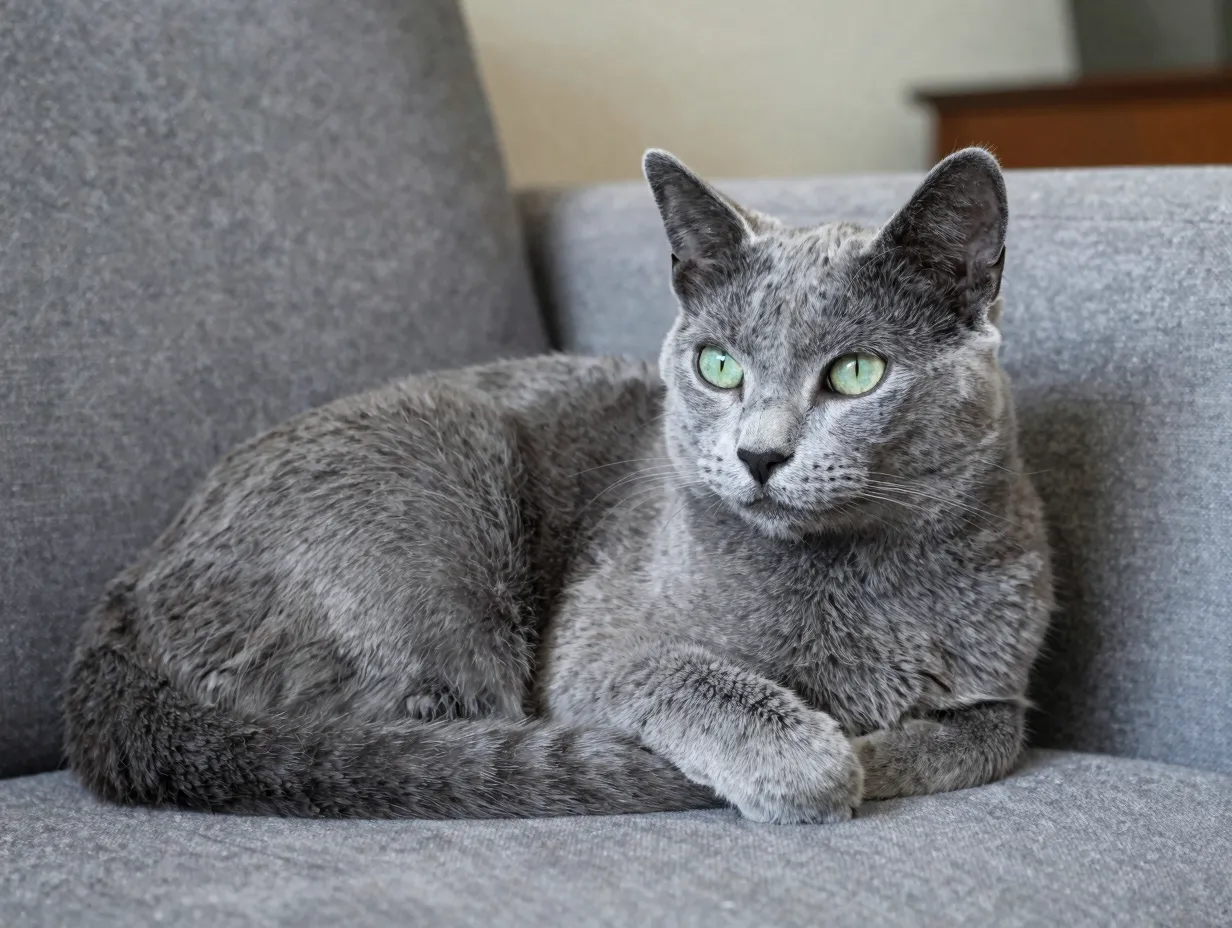
Before anything else, ask yourself — and the breeder or rescue — whether the Russian Blue’s personality is genuinely compatible with how you live.
Russian Blues are known for being intelligent, playful, and deeply affectionate with their core family members. However, they are also reserved and independent, particularly around strangers or in new environments [3]. Unlike more extroverted breeds, they may take weeks or even months to fully warm up to new people.
Key personality traits to understand:
- They form strong bonds with one or two primary people
- They enjoy interactive play but also value quiet alone time
- They are sensitive to changes in routine and environment
- They can be vocal but are generally not as demanding as Siamese cats
- They are highly intelligent and need mental stimulation daily [2]
Ask the breeder or rescue:
- How does this kitten behave around strangers?
- Is it more independent or more people-oriented?
- Has it shown any signs of anxiety or stress?
If you have a busy, loud household with frequent guests, a Russian Blue may need extra time and patience to settle in. If you live alone or with a small, calm family, this breed could be an ideal match.
2. Can I Verify Health Clearances and Vaccination Records?
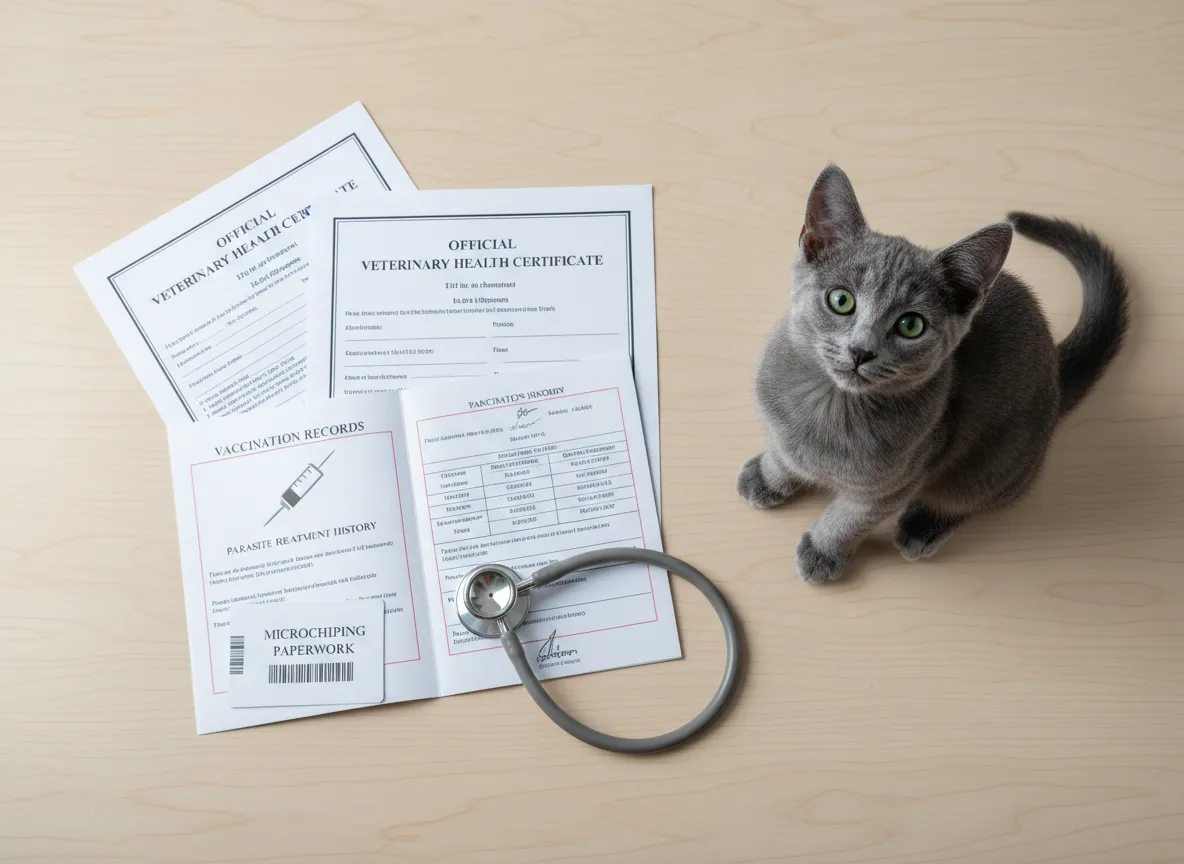
This is a non-negotiable question. Any responsible breeder or rescue organization should be able to provide complete documentation of health clearances, vaccinations, and any known breed-specific health considerations [2].
What to ask for:
| Document | Why It Matters |
|---|---|
| Vaccination records | Confirms protection against common feline diseases |
| Parasite treatment history | Ensures the kitten is free of fleas, worms, and mites |
| Genetic health screening | Rules out hereditary conditions |
| Veterinary health certificate | Confirms the kitten has been examined by a licensed vet |
| Microchipping documentation | Provides permanent identification [2] |
Russian Blues are generally a healthy breed with no widely documented breed-specific genetic disorders, but that doesn’t mean every kitten is automatically healthy. Always insist on seeing paperwork — not just verbal assurances.
🚩 Red flag: Any breeder who hesitates to provide health documentation or discourages a vet check before purchase should be avoided immediately.
3. Am I or Anyone in My Household Allergic to Cats?
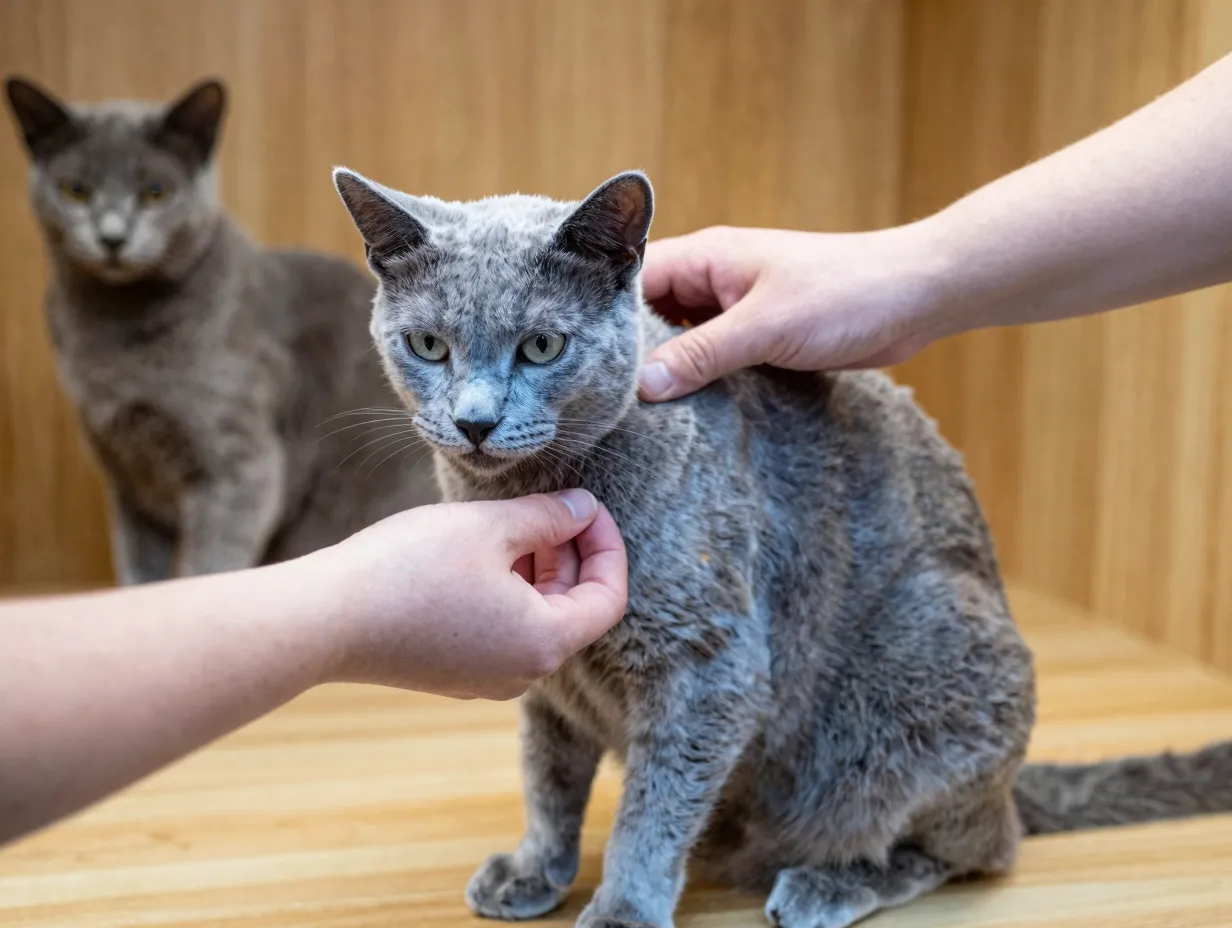
This question surprises many people, but it’s one of the most important in the 8 questions to ask before adopting Russian Blue cats kittens.
Russian Blues have a reputation for being a “hypoallergenic” breed. The reality is more nuanced. They produce lower levels of the Fel d 1 protein — the primary allergen responsible for cat allergies in humans — compared to many other breeds [3]. However, they are not completely hypoallergenic, and no cat breed truly is.
What this means practically:
- Some allergy sufferers report fewer reactions around Russian Blues
- Others still experience full allergic responses
- Individual cats vary in how much Fel d 1 they produce
- Factors like gender, neutering status, and diet can influence allergen levels
✅ Best practice: Spend at least 30–60 minutes with a Russian Blue before committing to adoption. Visit the breeder’s home or the rescue facility and observe your body’s reaction. Consult an allergist if you have a history of moderate to severe cat allergies [3].
4. Do I Have Enough Space and Enrichment for This Breed?
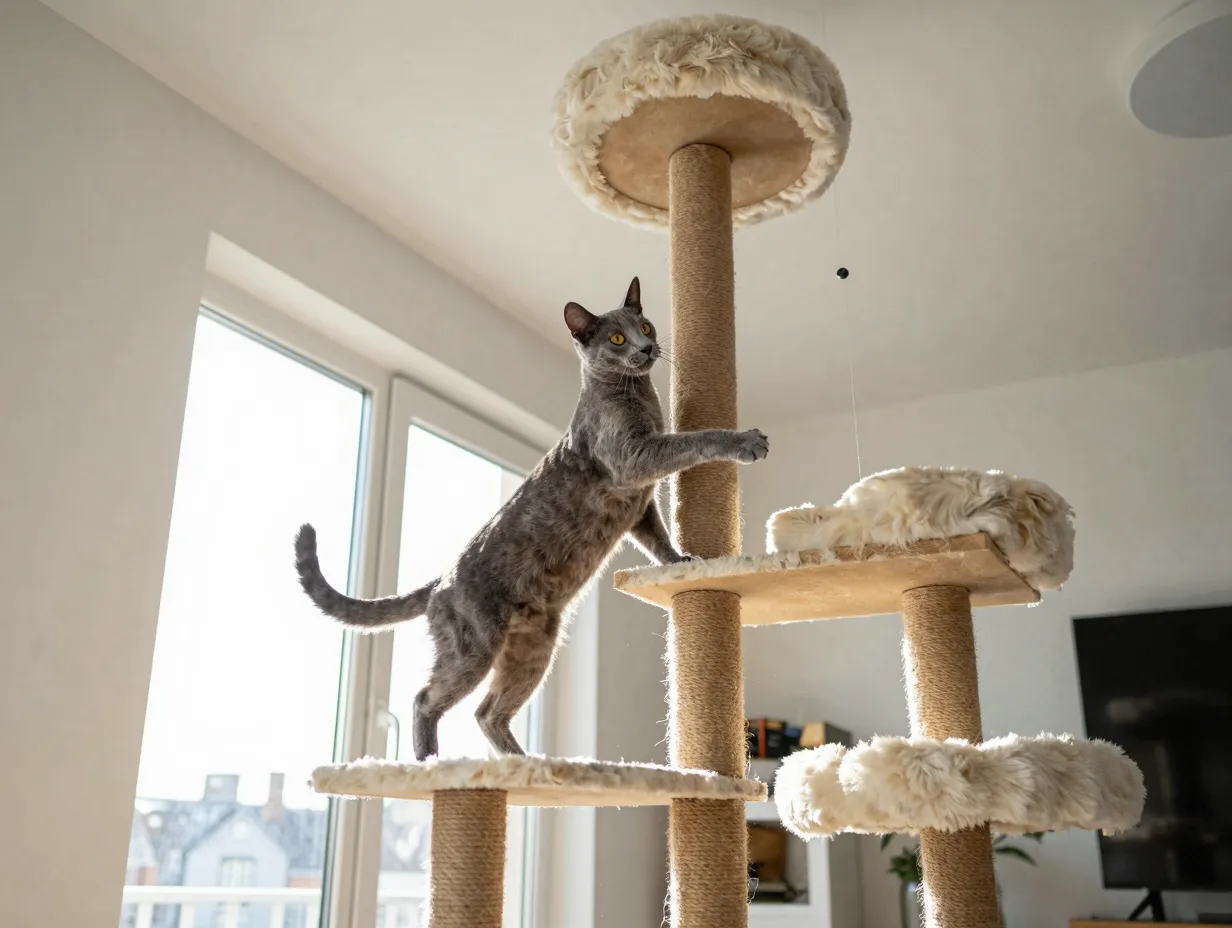
Russian Blues are active, curious, and athletic cats. They need room to run, jump, climb, and explore [3]. While they can adapt to apartment living, a very small, unstimulating space without enrichment is not suitable for this breed.
Space and enrichment checklist:
- Vertical space — Cat trees, wall shelves, or window perches allow Russian Blues to climb and observe their environment
- Interactive toys — Puzzle feeders, wand toys, and laser pointers keep their sharp minds engaged
- Safe outdoor access — A catio or enclosed balcony can be a significant quality-of-life upgrade
- Hiding spots — Tunnels, boxes, and covered beds give them a sense of security
- Consistent territory — Russian Blues are territorial and benefit from having defined “their” spaces
“A bored Russian Blue will find its own entertainment — and you may not like the results.”
If you live in a studio apartment, this doesn’t automatically disqualify you. But you must commit to active daily play sessions of at least 15–20 minutes and provide vertical enrichment to compensate for limited floor space [3].
5. What Is the Kitten’s Background and Origin Story?
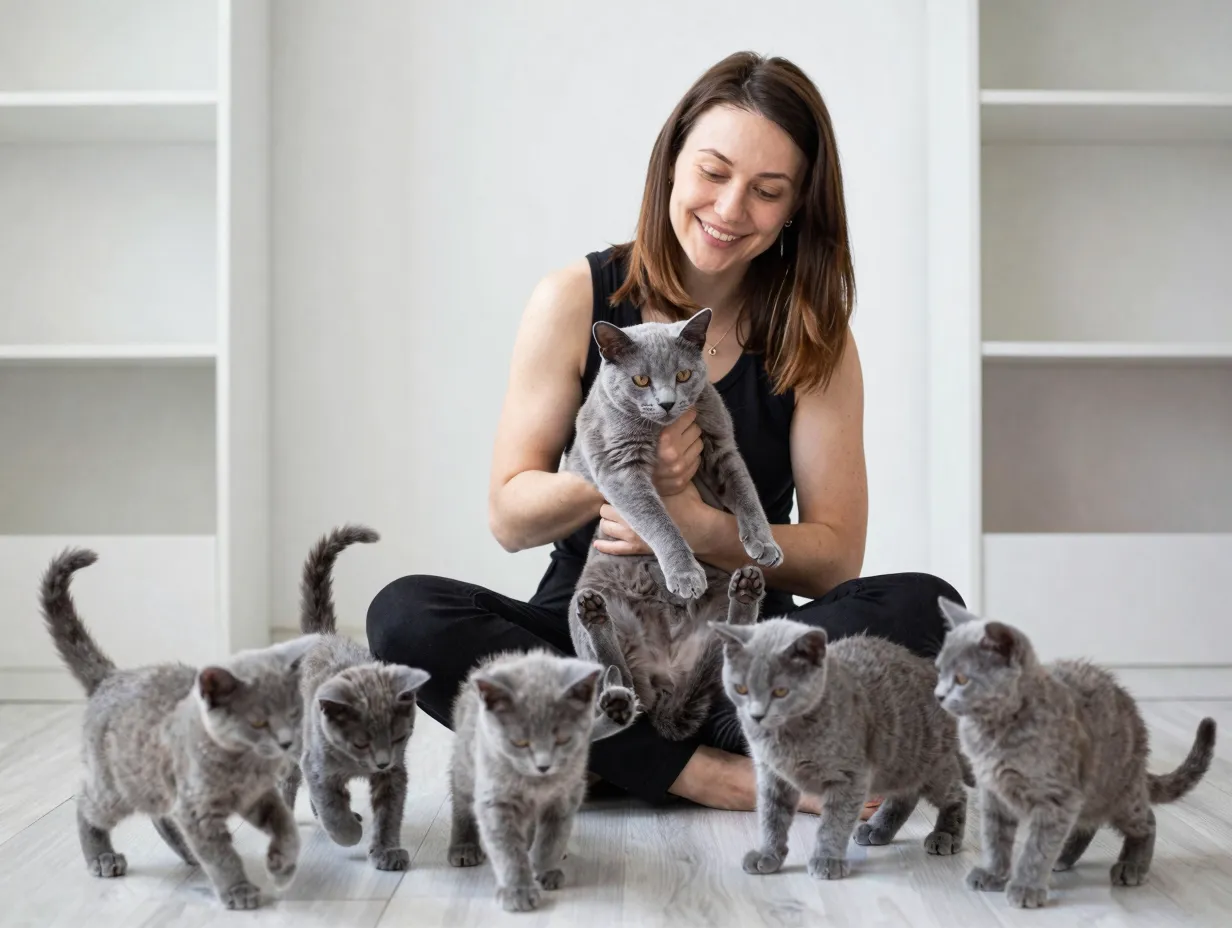
Whether you’re adopting from a breeder or a rescue shelter, understanding how the cat came to be available is essential [4].
Questions to ask a breeder:
- Why are you selling/rehoming this kitten?
- Are the parents registered with a recognized cat association?
- How many litters does the mother have per year?
- What is the kitten’s daily routine and diet?
Questions to ask a rescue shelter:
- Why was this cat surrendered or found?
- Does it have any known medical conditions or special dietary needs?
- Has it lived with other pets or children before?
- What is its behavioral history? [4]
Understanding the background helps you anticipate potential challenges. A kitten raised in a chaotic or neglectful environment may need more patience and behavioral support. A kitten from a well-run cattery with socialized parents is more likely to transition smoothly into your home.
🐱 Pro tip: Ask specifically about the mother cat’s temperament. Kittens often inherit behavioral tendencies from their mothers, so a calm, sociable mother is a good sign.
6. Have I Met the Breeder and Seen the Parent Cats?
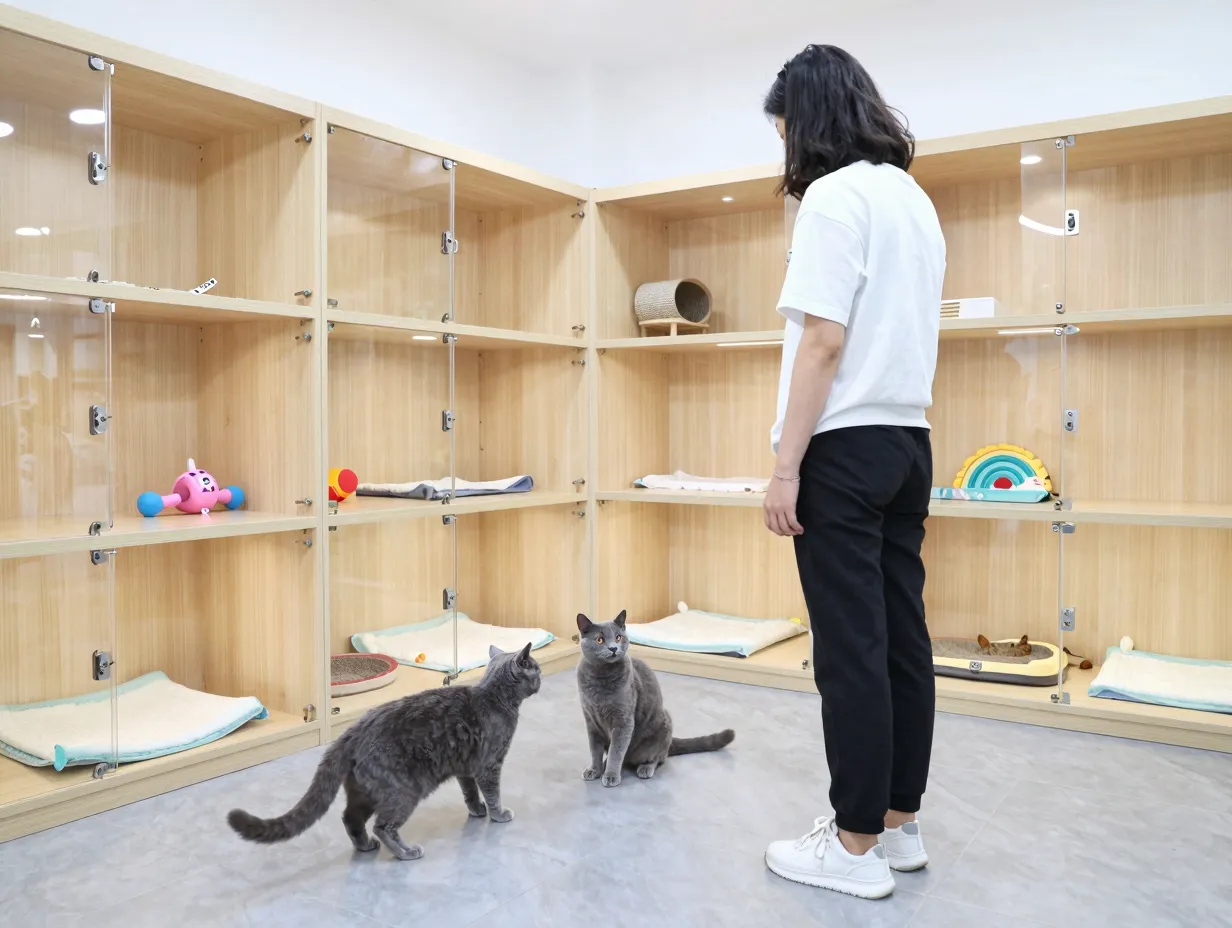
This question is about ethics and transparency as much as it is about the kitten itself [1].
Responsible breeders welcome visits. They are proud of their facilities, their breeding cats, and their practices. Meeting in person allows you to:
- Assess the living conditions of the cats
- Observe the health and temperament of the parent cats
- Verify that the breeder genuinely cares about the breed’s welfare
- Ask follow-up questions in a real conversation
- Build a relationship with someone who can support you post-adoption [1]
Warning signs of an irresponsible breeder:
| Red Flag | What It Suggests |
|---|---|
| Refuses in-person visits | May be running a kitten mill |
| Cannot show parent cats | May not own the parents or they may be unhealthy |
| Offers to “ship” kittens without a meeting | Prioritizes profit over welfare |
| Kittens available under 12 weeks old | Early separation harms socialization |
| No contract or health guarantee | No accountability post-sale |
If you’re adopting from a rescue, ask for a facility tour or at minimum a video call showing the kitten’s living environment. Reputable rescues are transparent about their operations [1].
7. How Well Has the Kitten Been Socialized?
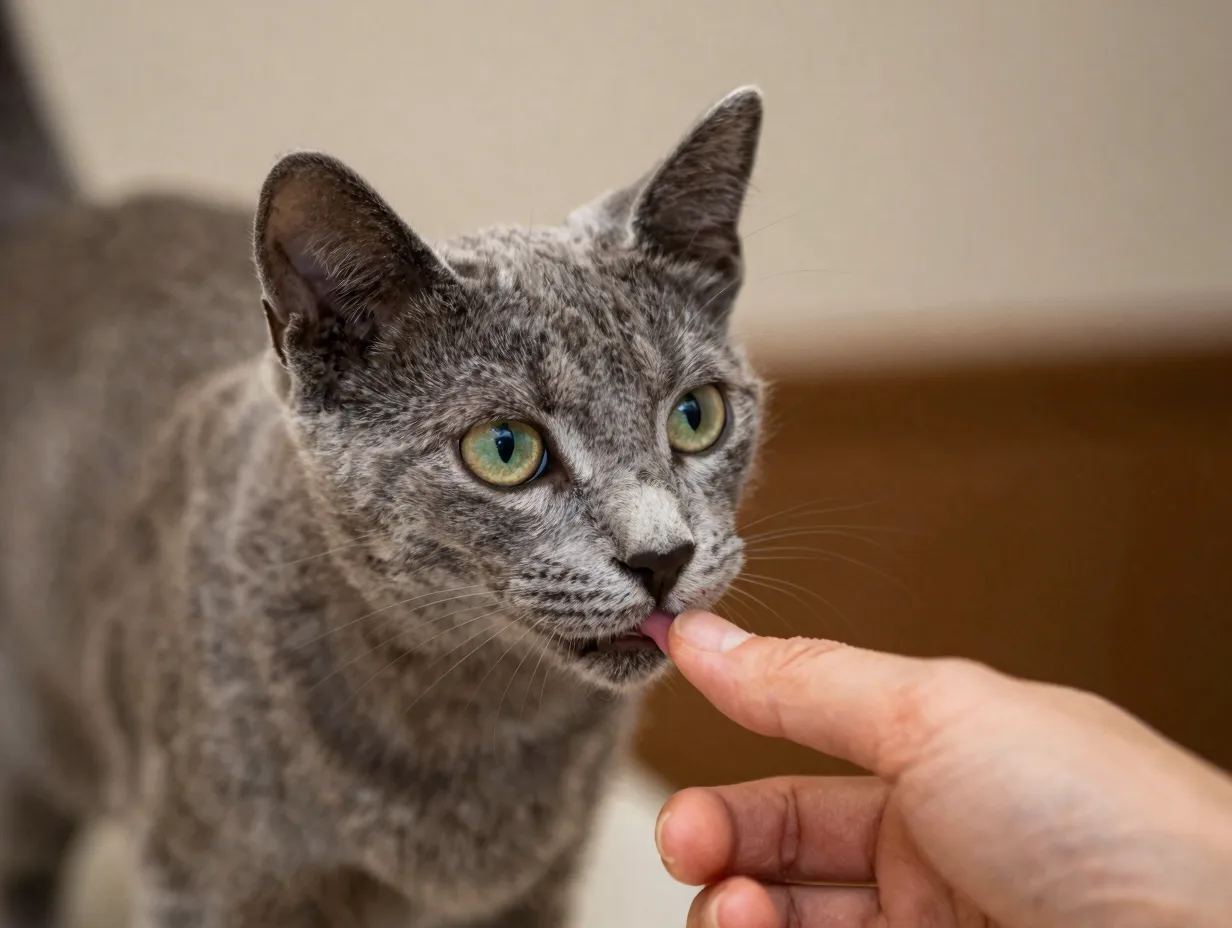
Socialization during the first 2–7 weeks of a kitten’s life is critical to its long-term behavioral health. Russian Blues, given their naturally reserved temperament, are especially dependent on early positive experiences [2].
Ask specifically:
- Has the kitten been handled regularly from birth?
- Has it been exposed to different sounds, people, and environments?
- Has it interacted with other animals?
- Has it experienced car rides, grooming, or nail trims?
A well-socialized Russian Blue kitten will be curious rather than terrified in new situations. It may still be cautious — that’s normal for the breed — but it should not be paralyzed by fear or aggressive when approached.
Signs of good socialization:
- Approaches people willingly (even if slowly)
- Tolerates gentle handling without hissing or biting
- Plays actively and shows curiosity about objects
- Recovers quickly from startling sounds or events [2]
Signs of poor socialization:
- Hides constantly and refuses to come out
- Hisses or scratches when touched
- Shows signs of fear-based aggression
- Appears lethargic or overly withdrawn
Poor socialization doesn’t mean a kitten is beyond help, but it does mean you’ll need to invest significantly more time, patience, and possibly professional behavioral support.
8. Am I Truly Ready for the Long-Term Commitment?

The final — and perhaps most honest — question in the 8 questions to ask before adopting Russian Blue cats kittens is about you.
Russian Blues live, on average, 15–20 years. They require:
- Regular veterinary care — annual check-ups, dental care, and vaccinations [2]
- Mental stimulation — daily interactive play and environmental enrichment [3]
- Consistent routine — this breed is sensitive to change and thrives on predictability
- Financial investment — food, litter, vet bills, grooming, and emergency care
- Emotional availability — Russian Blues bond deeply and can suffer from separation anxiety if left alone for extended periods
Estimated annual cost of owning a Russian Blue (2026):
| Expense Category | Estimated Annual Cost (USD) |
|---|---|
| Quality cat food | $400–$700 |
| Veterinary care (routine) | $300–$600 |
| Litter and supplies | $150–$300 |
| Toys and enrichment | $100–$200 |
| Pet insurance | $200–$500 |
| Total estimate | $1,150–$2,300 |
Beyond finances, ask yourself:
- What happens to the cat if I travel frequently?
- Do I have a plan for veterinary emergencies?
- Is everyone in my household on board with this adoption?
- Am I prepared for the emotional weight of a long-term pet relationship? [4]
“Adopting a Russian Blue is not a short-term decision. It’s a commitment that will shape your daily life for the next two decades.”
Additional Considerations Before You Adopt
Beyond the 8 core questions, a few additional factors are worth addressing:
🐾 Multi-pet households: Russian Blues can coexist with other cats and calm dogs, but introductions must be slow and carefully managed. They do not respond well to being rushed [3].
🧒 Families with children: Russian Blues can be wonderful family cats, but they prefer gentle, respectful interaction. Young children should be taught how to handle cats properly before adoption [2].
🏡 Indoor vs. outdoor: Most experts recommend keeping Russian Blues as indoor-only cats due to their value, sensitivity, and risk of theft or injury outdoors. Enriched indoor environments meet their needs effectively [3].
📋 Adoption contracts: Reputable breeders provide a written contract outlining health guarantees, return policies, and spay/neuter requirements. Always read this carefully before signing [5].
Conclusion: Make Your Russian Blue Adoption Decision With Confidence
Working through the 8 questions to ask before adopting Russian Blue cats kittens isn’t about creating barriers to adoption — it’s about setting you and your future cat up for the best possible outcome. Russian Blues are extraordinary companions: loyal, intelligent, gentle, and breathtakingly beautiful. But they thrive only when their specific needs are understood and met.
Your actionable next steps:
- Research reputable breeders or rescues in your area and schedule in-person visits
- Prepare your home with vertical space, enrichment toys, and a quiet safe zone before the kitten arrives
- Consult your doctor or allergist if anyone in your household has cat allergies
- Budget carefully for the first year of ownership, including a veterinary emergency fund
- Ask every question on this list — and don’t adopt from anyone who makes you feel uncomfortable for asking
- Connect with Russian Blue owner communities online for ongoing support and advice
The right Russian Blue kitten, matched with the right home, will reward you with decades of quiet devotion, playful energy, and a bond unlike any other. Take the time to ask the right questions — your future cat is counting on it. 🐱💙
References
[1] Russian Bue Kitten – https://www.rover.com/uk/blog/russian-bue-kitten/
[2] Ten Things You Need To Know About The Russian Blue Cat Before You Buy One – https://www.pets4homes.co.uk/pet-advice/ten-things-you-need-to-know-about-the-russian-blue-cat-before-you-buy-one.html
[3] What Do I Need To Know Before Getting A Russian Blue – https://russischeblauwe.com/blog/what-do-i-need-to-know-before-getting-a-russian-blue/
[4] What To Know Before Adopting A Cat – https://yourpetandyou.elanco.com/us/new-pets/what-to-know-before-adopting-a-cat
[5] Top 11 Questions To Ask Before Getting A Kitten – https://www.everypaw.com/all-things-pet/top-11-questions-to-ask-before-getting-a-kitten