
8 Must-Know Facts About The English Bulldog Dog Breed
Picture a dog breed so beloved that it ranks as the 5th most popular in the United States, yet faces such serious health challenges that scientists question its long-term survival [4][10]. The English Bulldog embodies this fascinating contradiction—a gentle giant with a wrinkled face that has captured hearts worldwide while simultaneously raising important questions about responsible breeding practices. These 8 Must-Know Facts About The English Bulldog Dog Breed will help you understand everything from their surprising origins as fierce bull-baiting dogs to their modern role as devoted family companions.

Key Takeaways
- Size & Appearance: English Bulldogs are medium-sized dogs (40-55 pounds) with distinctive wrinkled faces, short coats, and stocky builds
- Personality: Known for their calm, loyal, and gentle temperament, making them excellent family pets with low exercise requirements
- Health Concerns: The breed faces significant health challenges including breathing difficulties and genetic diversity issues
- Historical Transformation: Originally bred for bull-baiting, they’ve evolved into peaceful companion dogs after the sport was banned in 1835
- Care Requirements: Low-maintenance grooming but require special attention to breathing, skin folds, and temperature regulation
Understanding the English Bulldog’s Physical Characteristics
1. Size and Build Specifications
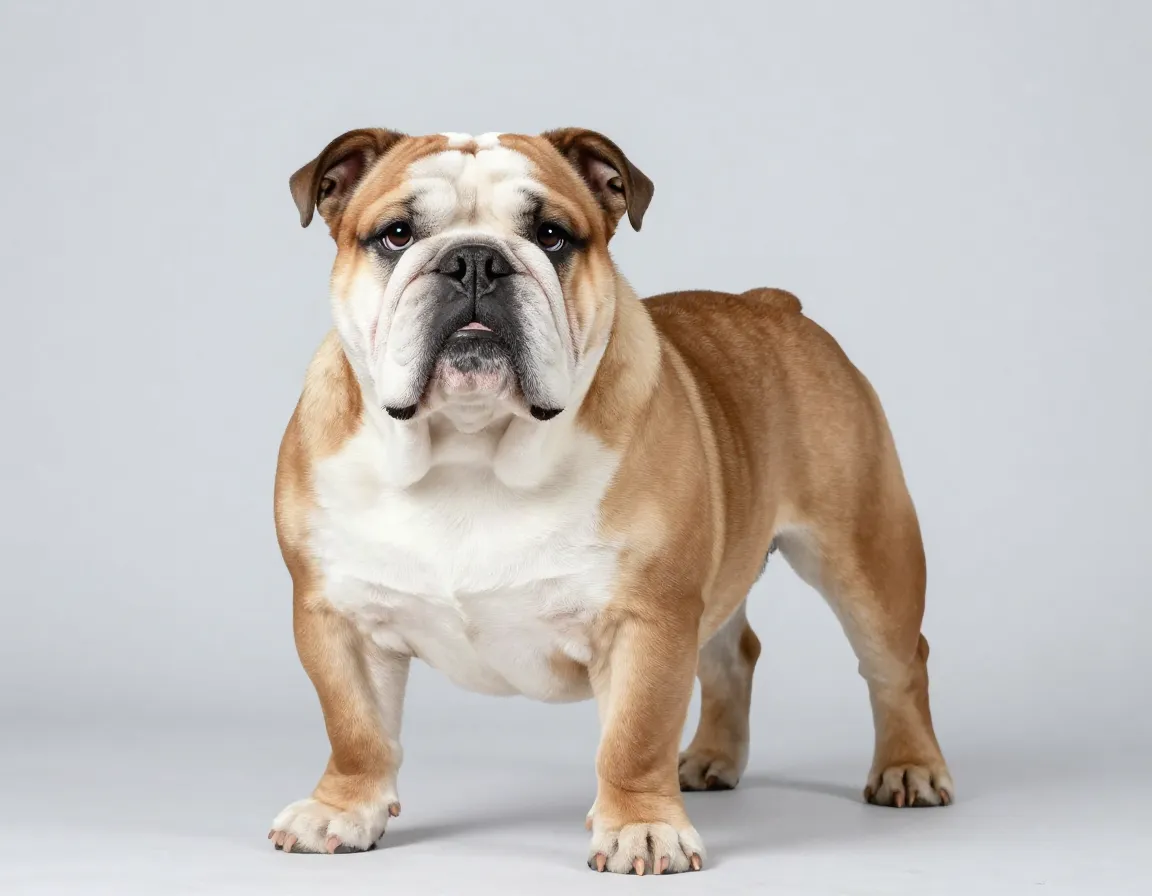
English Bulldogs possess a distinctive compact build that sets them apart from other breeds. These medium-sized dogs typically stand 12-16 inches tall at the shoulders and weigh between 40-55 pounds [1][2][3]. Males generally average around 50 pounds, while females tend to be lighter at approximately 40 pounds.
The breed’s most striking feature is their proportionally large head, with a circumference that generally equals their height at the shoulders [3][4]. This unique proportion, combined with their wide shoulders and short, sturdy legs, creates the bulldog’s characteristic appearance that has remained largely unchanged for generations.
Key Physical Measurements:
- Height: 12-16 inches at shoulders
- Weight: Males ~50 lbs, Females ~40 lbs
- Head circumference: Equal to shoulder height
- Build: Stocky, muscular, low-slung
2. Distinctive Facial Features and Coat Varieties

The English Bulldog’s brachycephalic (short, flat) face is perhaps their most recognizable trait [3][4]. Their deep facial wrinkles and prominent jowls were originally developed for the breed’s historical purpose in bull-baiting, allowing them to breathe while maintaining a grip.
Their coat is refreshingly low-maintenance, featuring a short, smooth texture that comes in numerous attractive color combinations [1][3][4]:
Popular Coat Colors:
- 🎨 Red and Fawn
- 🎨 Brindle patterns
- 🎨 White and Yellow
- 🎨 Piebald combinations
- 🎨 Many feature white markings or black masks
This coat variety allows potential owners to find an English Bulldog that matches their aesthetic preferences while enjoying the breed’s consistent temperament across all color variations.
Personality and Behavioral Traits
3. Temperament and Family Compatibility

When exploring these 8 Must-Know Facts About The English Bulldog Dog Breed, their exceptional temperament stands out as a defining characteristic. English Bulldogs are renowned for being calm, loyal, gentle, sweet, and affectionate [1][2][3][4]. These dogs are intensely people-oriented and thrive on human attention, forming incredibly strong bonds with their family members.
Personality Highlights:
- ❤️ Gentle with children – excellent family dogs
- 🤝 Good with other pets when properly socialized
- 🏠 Calm indoor companions – minimal barking
- 👥 Social but can be stubborn – consistent training needed
- ⚠️ May show aggression toward unfamiliar dogs without socialization [2][4][5]
“English Bulldogs are known for their sweet, gentle disposition and their ability to form deep emotional connections with their human families, making them ideal companions for households seeking a loyal, low-energy pet.”
4. Exercise Requirements and Activity Levels

English Bulldogs are characterized as low-energy dogs with moderate exercise needs [1][4][5]. Unlike high-energy breeds that require extensive daily workouts, bulldogs prefer short outings followed by plenty of couch time with their families.
Ideal Exercise Routine:
- 🚶♀️ Short daily walks (15-20 minutes)
- 🏠 Indoor play sessions
- 🛋️ Lots of relaxation time
- ❌ Avoid intense physical activity
- 🌡️ Exercise during cooler parts of the day
This makes them perfect for apartment living or for families who prefer a more relaxed lifestyle. However, regular gentle exercise remains important for maintaining healthy weight and preventing obesity-related complications.
Health Considerations and Genetic Concerns
5. Common Health Issues and Breathing Difficulties

Understanding the health challenges represents one of the most critical 8 Must-Know Facts About The English Bulldog Dog Breed. Due to their brachycephalic structure, English Bulldogs are prone to several serious health conditions [5][6]:
Primary Health Concerns:
- 🫁 Brachycephalic Obstructive Airway Syndrome (BOAS)
- 🫁 Tracheal hypoplasia (narrowed windpipe)
- 🦴 Vertebral anomalies
- 👶 High caesarean section rates due to large head size
- 🦠 Skin diseases from facial fold care requirements
Their breathing difficulties are particularly concerning, as their shortened airways can lead to overheating, exercise intolerance, and sleep disruption. Owners must be vigilant about temperature regulation and recognize signs of respiratory distress.
6. Genetic Diversity and Breed Sustainability

Perhaps the most sobering fact about English Bulldogs involves their genetic sustainability. A significant 2016 psychology study revealed that “the gene pool for the English bulldog is too small to maintain a healthy population,” raising serious questions about the breed’s long-term viability [10].
Genetic Challenges:
- 📉 Limited gene pool affecting overall health
- 🧬 Increased risk of inherited disorders
- ⏰ Life expectancy of approximately 8-12 years [1]
- 🏥 Higher veterinary costs due to health issues
- 🔬 Ongoing research into breeding practices
This genetic bottleneck means potential owners should work exclusively with responsible breeders who prioritize health testing and genetic diversity over appearance alone.
Historical Origins and Modern Evolution
7. From Bull-Baiting to Family Companion
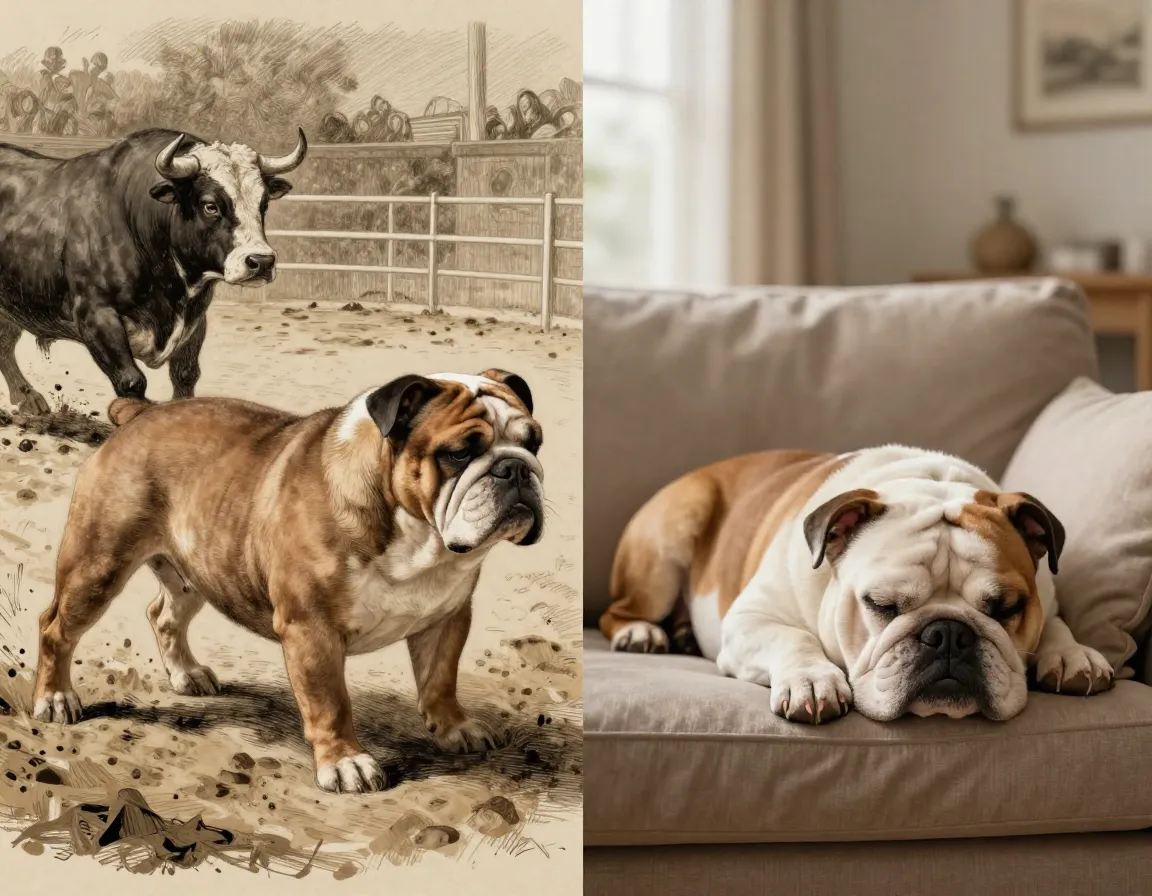
The transformation story behind these 8 Must-Know Facts About The English Bulldog Dog Breed reveals a remarkable evolution. English Bulldogs were originally bred for bull-baiting in England, with references appearing in literature since the 1500s [3][5]. Their stocky build, large head, and powerful jowls were specifically developed for this brutal sport.
Historical Timeline:
- 📚 1500s: First literary references to bulldogs
- ⚔️ Pre-1835: Bull-baiting era – aggressive, athletic dogs
- 🏛️ 1835: Cruelty to Animals Act outlaws bull-baiting
- 🏠 Post-1835: Breeders focus on friendly temperament
- 👨👩👧👦 Modern era: Beloved family companions
After the Cruelty to Animals Act of 1835 outlawed bull-baiting, dedicated breeders completely shifted their focus toward developing a friendly temperament and companion dog role [1][5]. This dramatic transformation from fighting dog to gentle family pet represents one of the most successful breed rehabilitations in canine history.
8. Modern Popularity and Care Requirements

Today’s English Bulldogs have achieved remarkable popularity, ranking as the 5th most popular dog breed in the United States [4]. This success stems from their adaptation to modern lifestyles and their minimal grooming requirements.
Modern Care Essentials:
- 🛁 Low-maintenance grooming due to short coat
- 🧼 Regular wrinkle cleaning to prevent skin infections
- 🌡️ Climate control – sensitive to heat and cold
- 🏥 Regular veterinary monitoring for health issues
- 🍽️ Weight management to reduce breathing strain
Their quiet nature with minimal barking makes them excellent apartment dogs, while their gentle disposition ensures they integrate well into families with children and other pets when properly socialized.
Conclusion
These 8 Must-Know Facts About The English Bulldog Dog Breed reveal a complex and fascinating companion that has captured hearts worldwide despite significant challenges. From their impressive transformation from bull-baiting fighters to gentle family pets, to their current status as America’s 5th most popular breed, English Bulldogs represent both the best and most concerning aspects of modern dog breeding.
Key considerations for potential owners include:
✅ Embrace their low-energy lifestyle – perfect for relaxed households
✅ Budget for higher veterinary costs due to breed-specific health issues
✅ Research responsible breeders who prioritize health over appearance
✅ Prepare for special care needs including temperature regulation and wrinkle maintenance
✅ Understand their 8-12 year lifespan and genetic limitations
Next Steps:
- Consult with veterinarians experienced in brachycephalic breeds
- Connect with reputable breeders who conduct health testing
- Join English Bulldog communities for ongoing support and advice
- Prepare your home environment for their specific needs
- Consider pet insurance to help manage potential health costs
While English Bulldogs face genuine health and genetic challenges, their unwavering loyalty, gentle nature, and adaptability to modern living continue to make them beloved family members. The key lies in responsible ownership, informed decision-making, and commitment to their unique care requirements. For families prepared to meet these needs, English Bulldogs offer incomparable companionship and devotion that has endured for centuries.
References
[1] Dog Breeds English Bulldog – https://siliena.com/blogs/magazine/dog-breeds-english-bulldog
[2] English Bulldog – https://shop.bullymax.com/blogs/news/english-bulldog
[3] English Bulldog Breed Information – https://www.aspcapetinsurance.com/resources/english-bulldog-breed-information/
[4] English Bulldog Breed – https://www.pawlicy.com/blog/english-bulldog-breed/
[5] English Bulldog – https://www.poochandmutt.co.uk/blogs/by-breed/english-bulldog
[6] Fact Sheet Dog Breed English Bulldog – https://qualzucht-datenbank.eu/fact-sheet-dog-breed-english-bulldog/
[7] Bulldog – https://www.akc.org/dog-breeds/bulldog/
[8] Bulldog – https://www.petmd.com/dog/breeds/bulldog
[9] Explore The Bulldog Genuine Tips From 9000 Owners – https://www.sniffspot.com/blog/dog-breeds/explore-the-bulldog-genuine-tips-from-9000-owners
[10] Is The English Bulldog Doomed Breed – https://www.psychologytoday.com/us/blog/canine-corner/201608/is-the-english-bulldog-doomed-breed