8 Must-Have Traits of a Top Labrador Retriever Hunting Dog
Have you ever watched a Labrador Retriever work a field and thought, “That dog is something special”? Not every Lab is built for the hunt — but the ones that are? They’re nothing short of extraordinary. Understanding the 8 Must-Have Traits of a Top Labrador Retriever Hunting Dog can mean the difference between a dog that tags along and one that transforms your entire hunting experience.
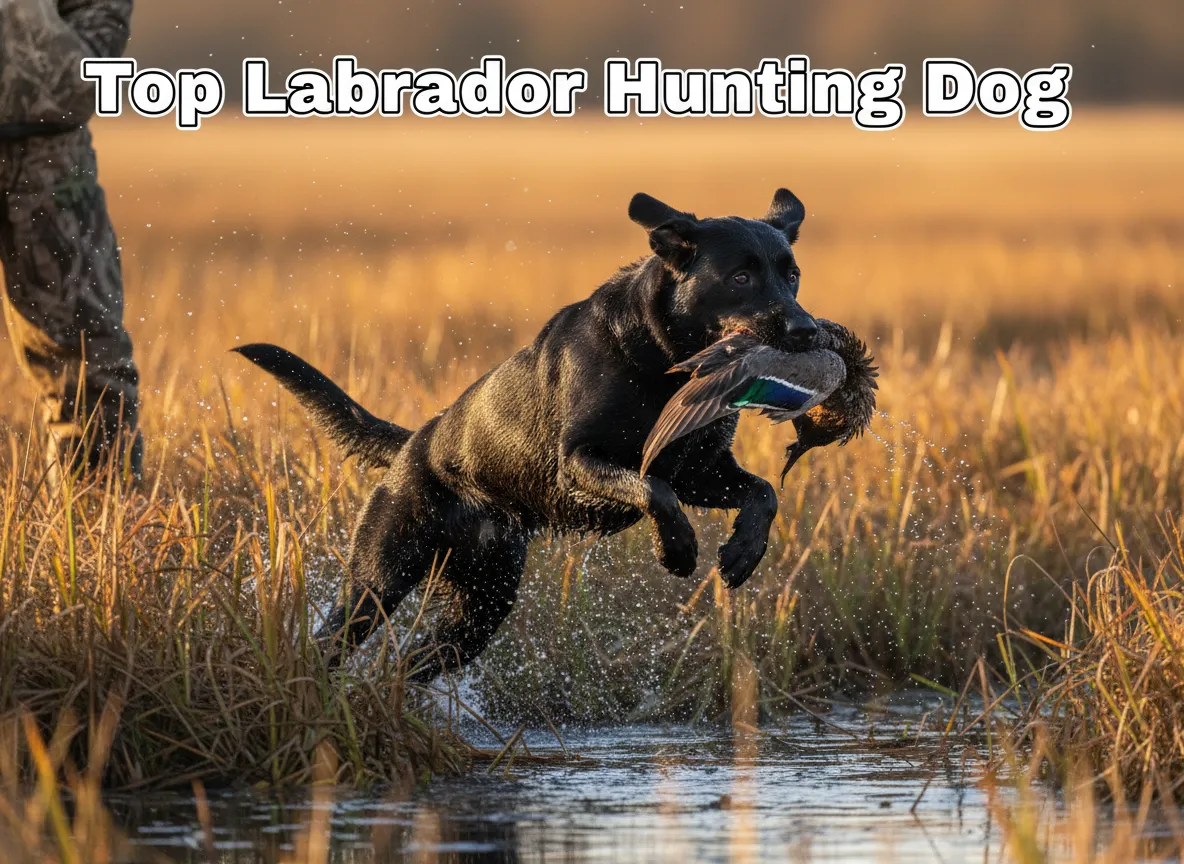
In 2026, Labrador Retrievers remain the most popular hunting breed in North America — and for good reason. Whether you’re a waterfowl hunter waiting in a blind or a upland bird hunter working open fields, a top-quality hunting Lab brings a unique combination of instinct, intelligence, and heart that no other breed can match. In this guide, I’ll break down each of the 8 Must-Have Traits of a Top Labrador Retriever Hunting Dog so you know exactly what to look for — whether you’re selecting a puppy, evaluating a started dog, or fine-tuning your current partner’s training.
Key Takeaways
- 🐾 Instinct matters from day one — the best hunting Labs show natural drive and scenting ability as puppies, long before formal training begins.
- 🧠 Intelligence and trainability go hand in hand — a smart Lab that wants to please its handler is far easier to develop into a top hunting partner.
- 💪 Physical structure and health are non-negotiable — a dog with a poor build or unscreened health history won’t hold up in the field long-term.
- 🌊 Water confidence is a core trait — natural swimming ability, backed by webbed paws and a water-resistant coat, is essential for waterfowl hunting.
- ⚖️ Balance is the secret ingredient — the best hunting Labs work hard in the field and settle calmly at home, making them ideal hunting and family dogs.
Why These Traits Define a Great Hunting Lab
Before we dive into the full list, it’s worth understanding why these specific traits matter. Labrador Retrievers were originally bred as working dogs — helping fishermen haul nets and retrieve fish in the cold waters of Newfoundland. That heritage built a dog with a unique combination of physical ability, mental sharpness, and cooperative spirit.
But not every Lab carries those traits at the same level. Genetics, early socialization, and training all play a role. When you know the 8 Must-Have Traits of a Top Labrador Retriever Hunting Dog, you can evaluate any dog — puppy or adult — with confidence and clarity.
Here’s a quick overview before we go deep:
| # | Trait | Why It Matters |
|---|---|---|
| 1 | Natural Hunting Instinct | Drives the dog to seek and locate game |
| 2 | Exceptional Intelligence | Enables complex field decision-making |
| 3 | Strong Desire and Drive | Powers through fatigue and tough conditions |
| 4 | Trainability and Eagerness to Please | Makes handler communication smooth and effective |
| 5 | Balanced Energy Levels | Sustains performance without burning out |
| 6 | Superior Retrieving Ability | Ensures game is recovered cleanly and reliably |
| 7 | Natural Swimming Excellence | Critical for waterfowl and wet terrain hunting |
| 8 | Acute Sensory Abilities | Locates game other dogs simply can’t detect |
The 8 Must-Have Traits of a Top Labrador Retriever Hunting Dog — Explored in Depth
1. Natural Hunting Instinct 🐕
“The difference between a dog that hunts and one that helps you hunt better starts with instinct.”
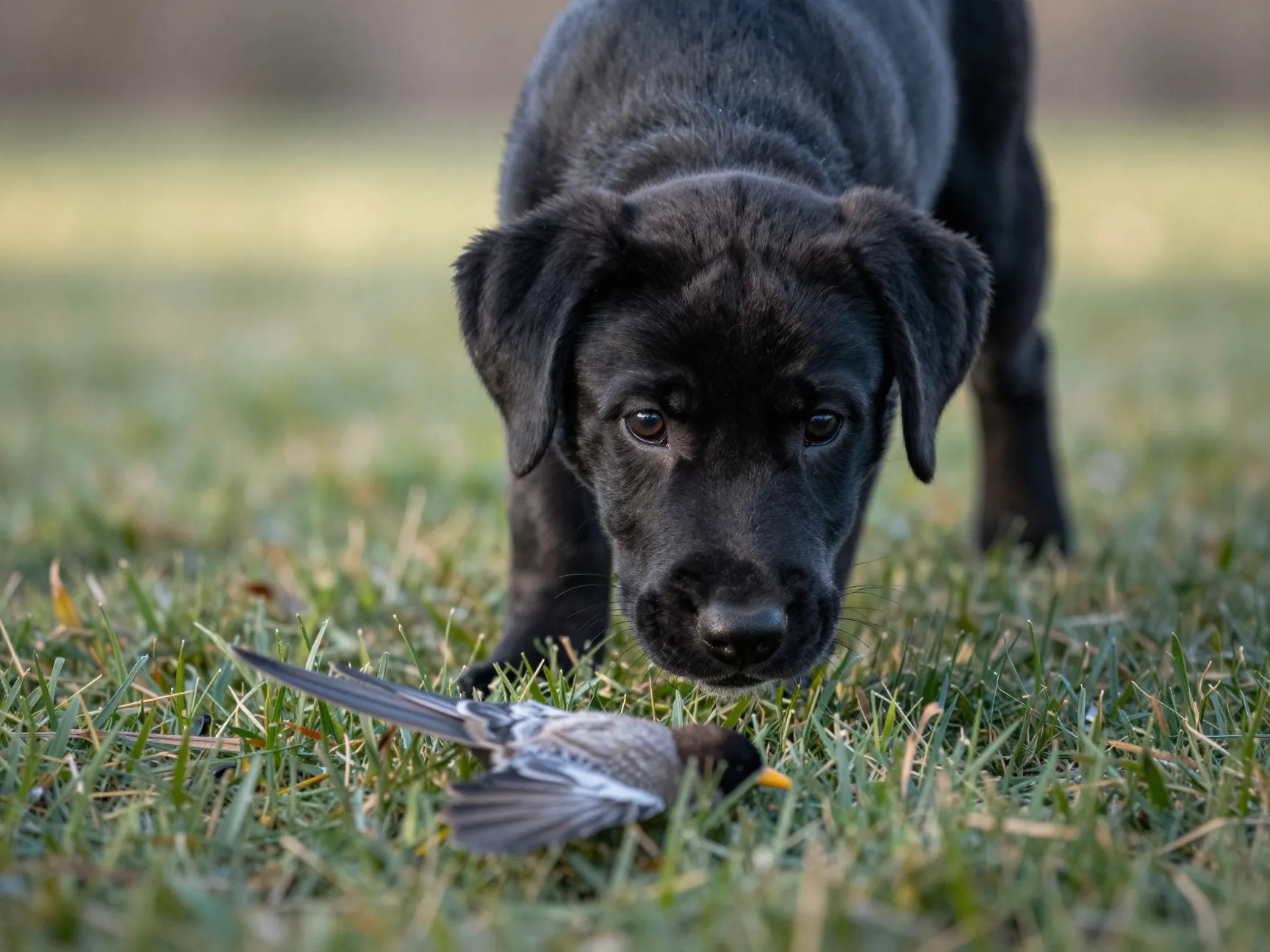
A top hunting Lab doesn’t wait to be taught to care about game — that drive is already there. Natural hunting instinct is the spark that makes everything else possible. You’ll see it in a puppy that freezes and locks in when it catches a new scent, or one that obsessively tracks movement across a yard [1].
This instinct shows up as an intense focus — what pointing Lab breeders call “locking in on scent.” Even before formal training begins, a quality hunting Lab will demonstrate a natural desire to locate, track, and indicate game. This is a genetic trait that no amount of training can fully manufacture if it isn’t already present.
What to look for:
- Intense interest in bird wings or scented dummies as a young puppy
- Natural pausing or freezing behavior when scenting something interesting
- Persistent tracking behavior rather than distraction
When evaluating puppies, watch how they respond to a dragged bird wing. A pup with strong instinct will lock in, follow the trail, and show clear excitement. That’s your future hunting partner [1].
2. Exceptional Intelligence 🧠
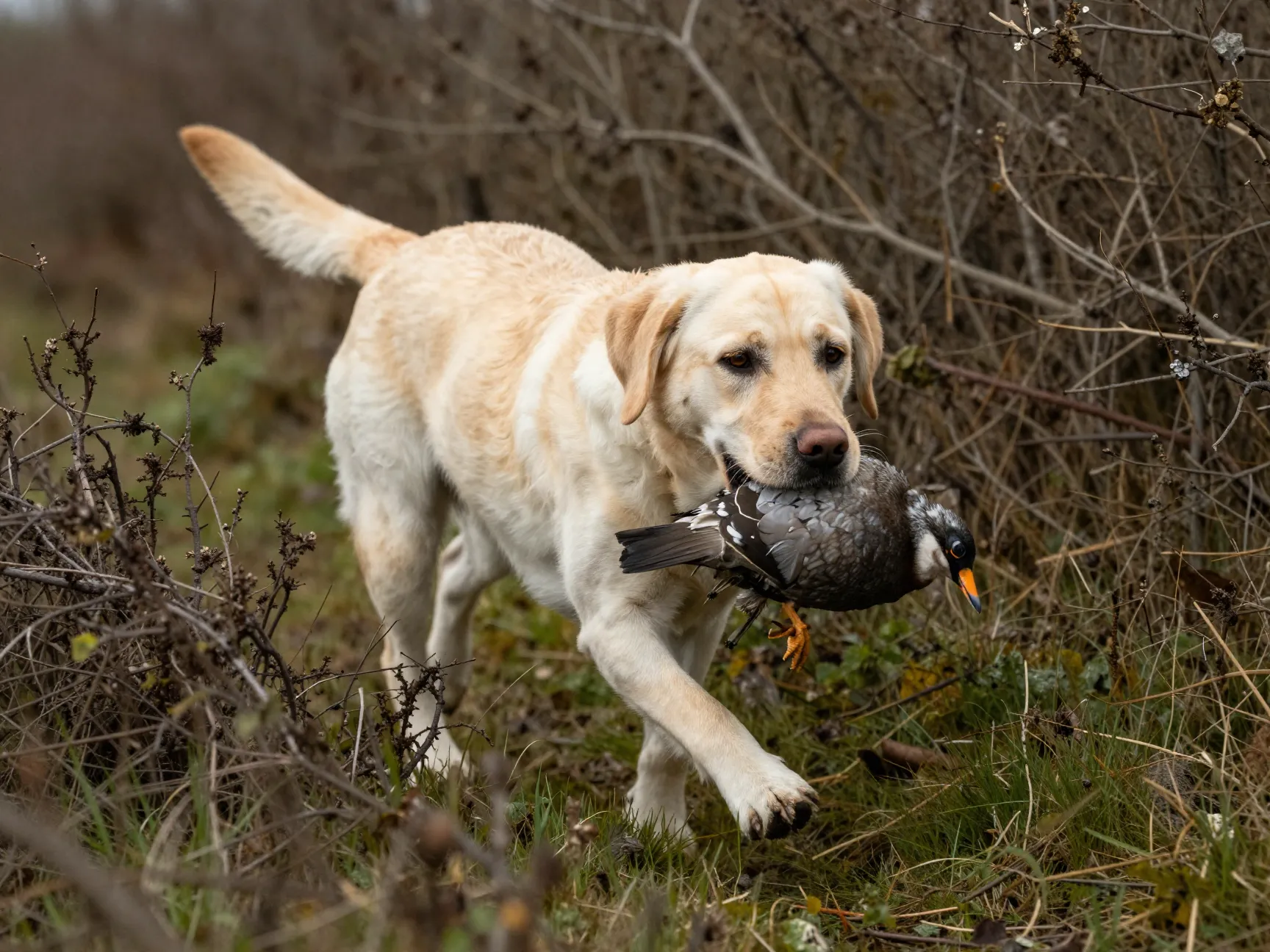
A hunting dog faces complex, fast-changing situations in the field. Blinds shift. Birds fall in unexpected places. Conditions change. A top Labrador Retriever hunting dog needs the brainpower to adapt — and Labs are among the most intelligent breeds in the world [4].
Intelligence in a hunting Lab means more than just learning commands quickly. It means the dog understands context — knowing when to hold steady, when to push through cover, and when to check back with the handler for direction [3]. A smart Lab reads the field as much as it reads its handler.
Signs of high hunting intelligence:
- Quickly learns and retains new commands
- Solves problems independently in the field (e.g., working around obstacles to retrieve)
- Responds to subtle handler cues without needing repeated commands
- Adjusts behavior based on changing field conditions
Intelligence also means the dog listens — even under the excitement of a flush or a shot. A dog that can maintain focus and respond to commands in high-stimulation environments is worth its weight in gold [4].
3. Strong Desire and Drive 🔥
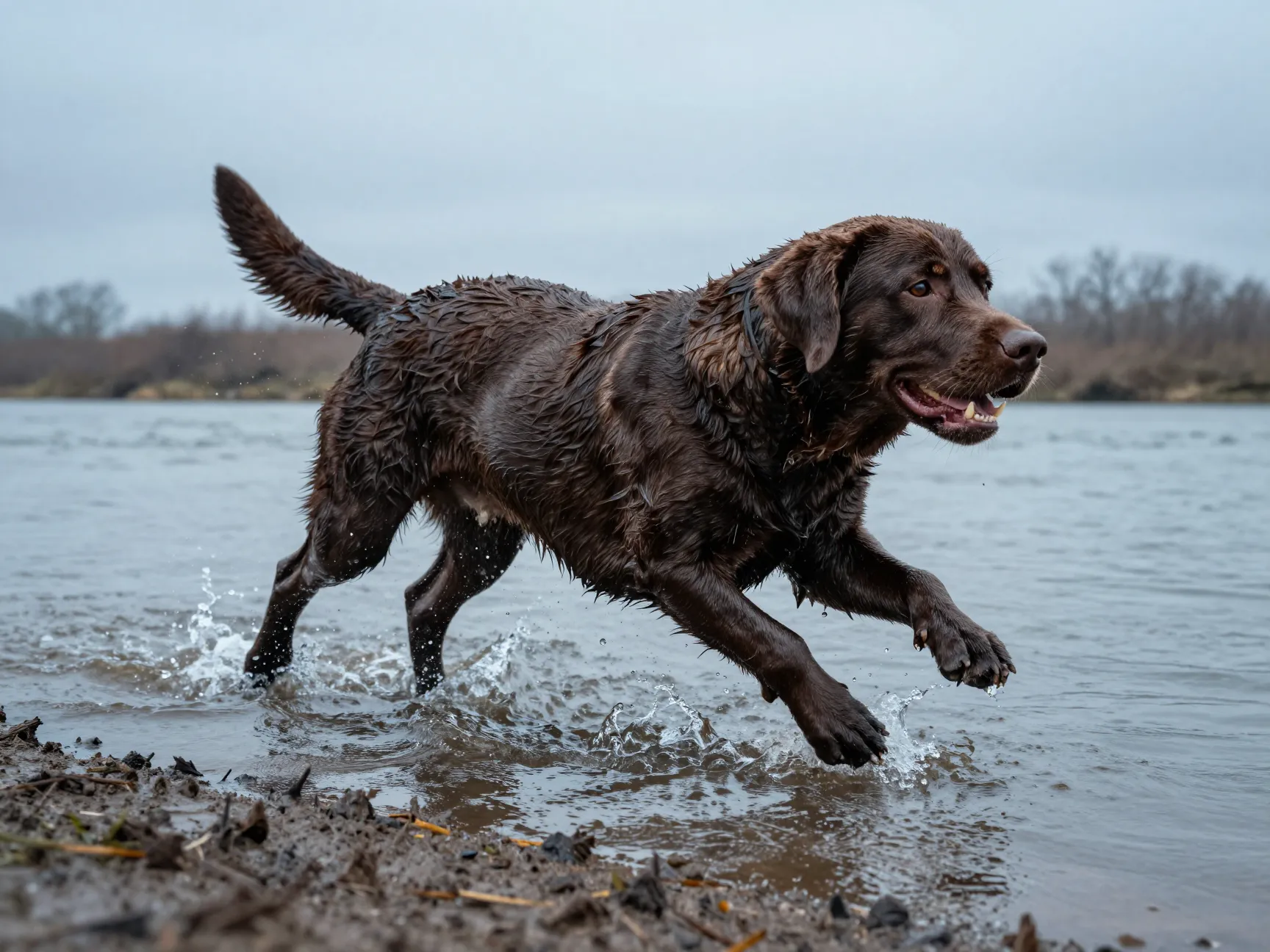
Desire is what gets a Lab into cold water at 6 AM in November. It’s what pushes a dog through thick brush, across difficult terrain, and back to the handler with a bird — again and again, all day long. Drive is the engine behind every great hunting performance [4].
This trait goes beyond simple energy. A high-drive Lab has:
- Courage to enter cold, rough, or unfamiliar water without hesitation
- Persistence to work through fatigue on long hunting days
- Motivation to perform even when conditions are miserable
“Drive is what separates a good day in the field from a great one.”
It’s important to note that drive must be channeled, not just present. A dog with raw drive but no control is difficult to hunt with. The best hunting Labs have strong desire paired with the discipline to direct that energy productively [4].
4. Trainability and Eagerness to Please 🎓
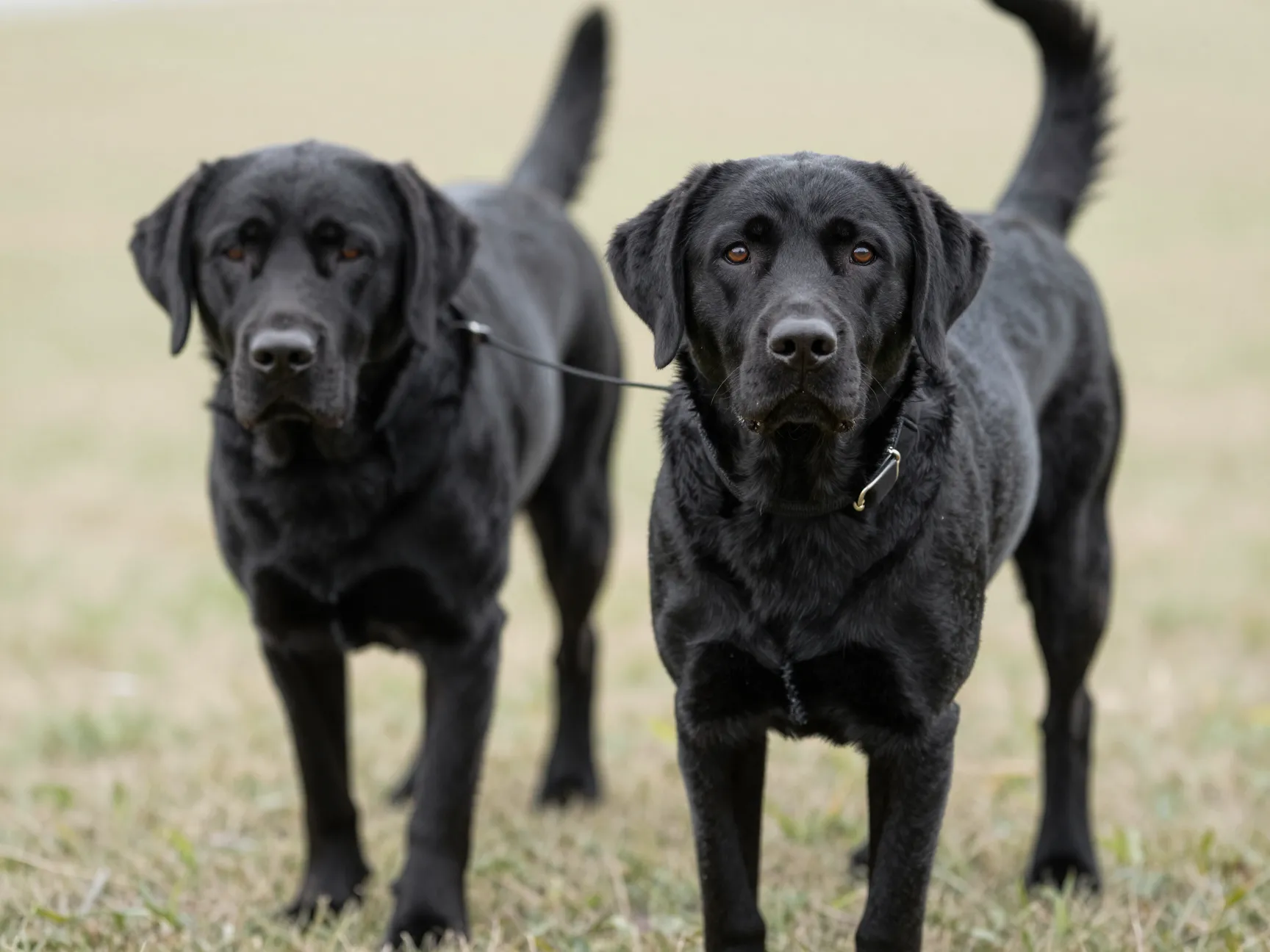
One of the most beloved traits of the Labrador Retriever is its eagerness to please. This quality makes Labs not just trainable, but a genuine joy to train. When a dog wants to make its handler happy, the entire training process becomes more efficient and more rewarding for both parties [1] [2].
Trainability in a hunting Lab means:
- Responding quickly to obedience commands in and out of the field
- Retaining lessons across sessions without constant repetition
- Accepting correction without shutting down or becoming fearful
- Generalizing skills — applying what’s learned in training to real hunting scenarios
The best hunting Labs pair a strong work ethic with a soft, cooperative temperament. They push hard when asked, but they’re also sensitive enough to respond to subtle corrections [1]. This balance makes fine-tuning field commands much smoother over time.
Pro tip: Look for puppies that make eye contact with their handler frequently. This is a strong indicator of the social bonding instinct that drives eagerness to please.
5. Balanced Energy Levels ⚖️
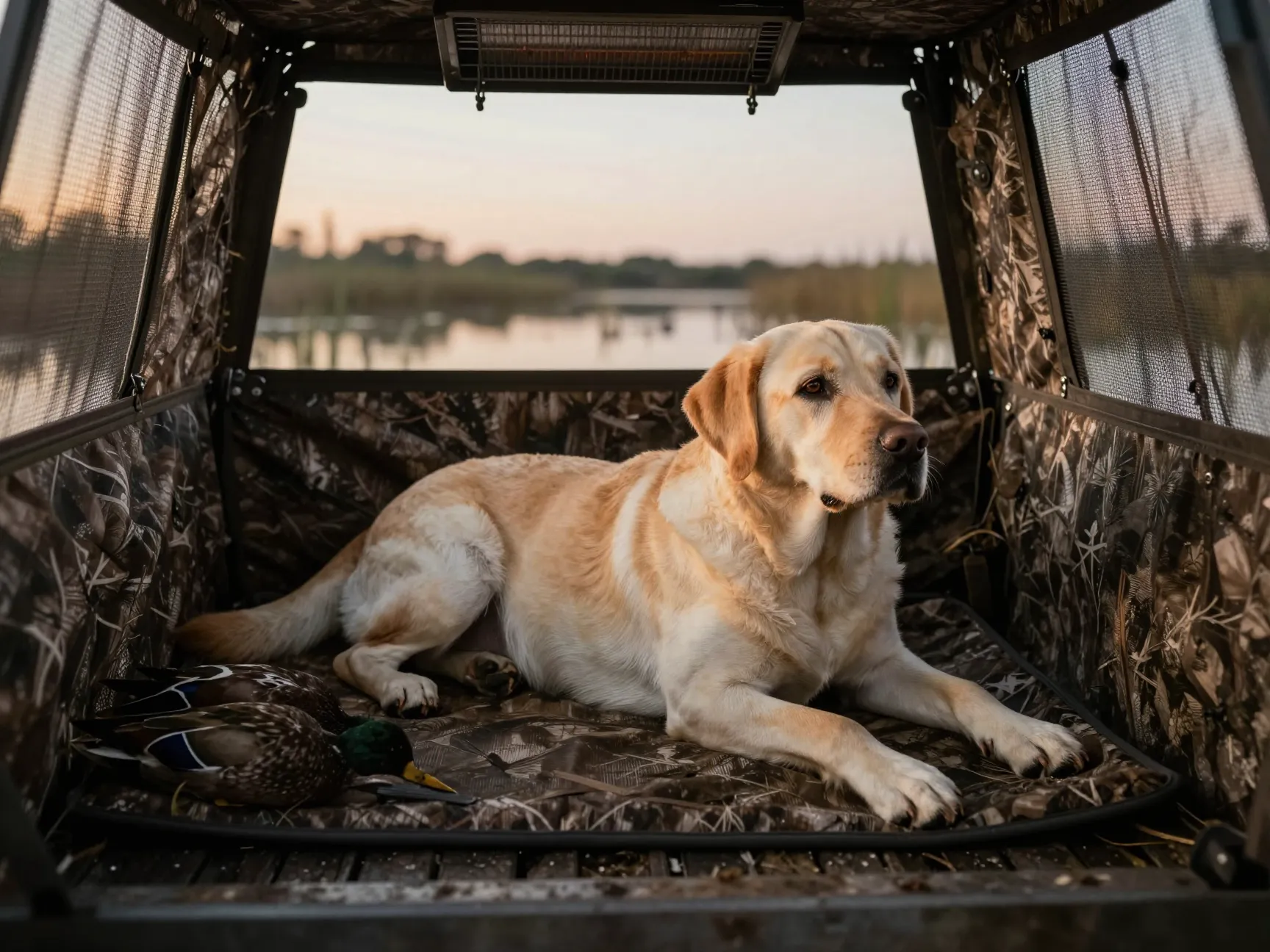
Here’s a trait that surprises some new hunters: the best hunting Labs aren’t always running at full throttle. Balanced energy means the dog knows when to work and when to rest — and that balance is critical for both field performance and family living [1].
A Lab with unbalanced energy (too high) may be difficult to manage in the blind, in the truck, or at home. A Lab with too little energy won’t have the stamina for a full day in the field. The sweet spot? A dog that is focused and driven during the hunt but calm and settled when the work is done.
| Energy State | Ideal Behavior |
|---|---|
| In the field | Alert, responsive, high-drive, persistent |
| In the blind/boat | Calm, patient, steady to shot |
| At home/in the kennel | Relaxed, settled, not destructive |
| During training | Engaged, eager, focused |
This balance also makes hunting Labs excellent family dogs — a major reason why they’ve topped the AKC’s most popular breed list for decades running [2].
6. Superior Retrieving Ability 🦆
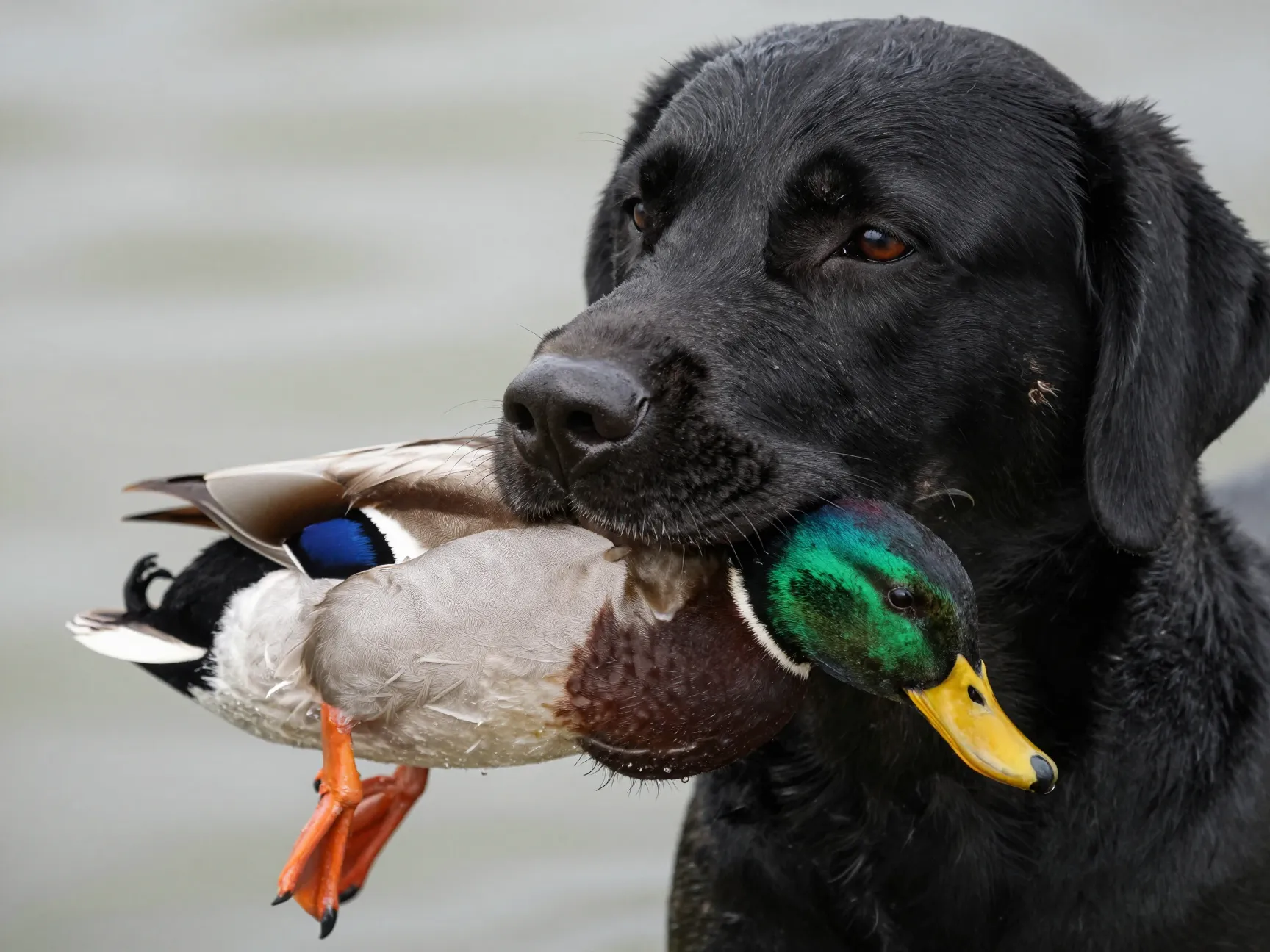
Retrieving isn’t just a fun game for Labs — it’s in their DNA. Labrador Retrievers have inherited superior retrieving instincts from generations of working alongside hunters and fishermen. That love for carrying objects, fetching thrown items, and bringing things back to their handler translates directly into hunting effectiveness [2].
A top hunting Lab’s retrieving ability includes:
- Marking — the ability to watch a bird fall and remember exactly where it landed
- Memory — holding multiple marks in mind for blind retrieves
- Soft mouth — delivering game without damage, preserving the quality of the harvest
- Drive to complete — finishing the retrieve even when the bird is running or the cover is thick
“A Lab that marks well and delivers cleanly is worth more in the field than any piece of hunting gear you’ll ever buy.”
Retrieving instinct can be seen very early. Puppies that naturally pick up objects and bring them back — even without encouragement — are showing the raw material that makes a great hunting retriever [2].
7. Natural Swimming Excellence 🌊
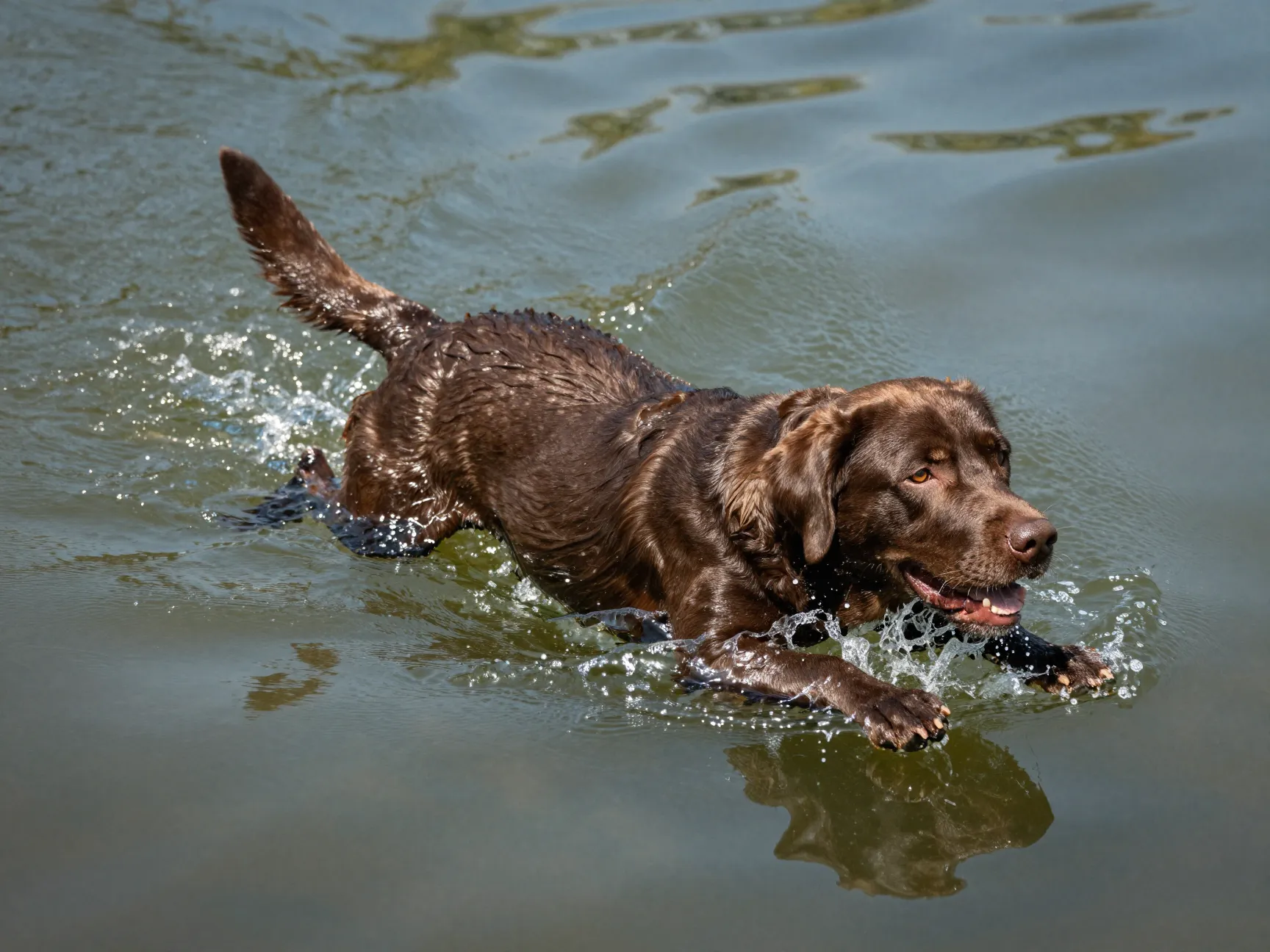
Water is where many hunting Labs earn their reputation. Whether it’s a flooded timber, a tidal marsh, or an icy river, a top hunting Lab hits the water without hesitation — and swims with power and efficiency [2] [3].
This ability isn’t accidental. Labs are physically built for water:
- Webbed paws act like natural paddles, increasing propulsion and efficiency
- Water-resistant double coat provides insulation in cold water and repels moisture
- Otter-like tail acts as a rudder for steering in current
- Dense, muscular body provides the power needed for strong swimming
This heritage traces back to their origins in Newfoundland, where Labs worked alongside fishermen in cold North Atlantic waters [2]. That history produced a dog that doesn’t just tolerate water — it actively seeks it out.
Key water traits to evaluate:
- Enters water confidently without hesitation or coaxing
- Swims with a strong, efficient stroke
- Maintains drive and focus while swimming (doesn’t turn back early)
- Handles cold water without shutting down
For waterfowl hunters especially, swimming excellence isn’t optional — it’s the foundation of a productive hunting partnership [3].
8. Acute Sensory Abilities 👃
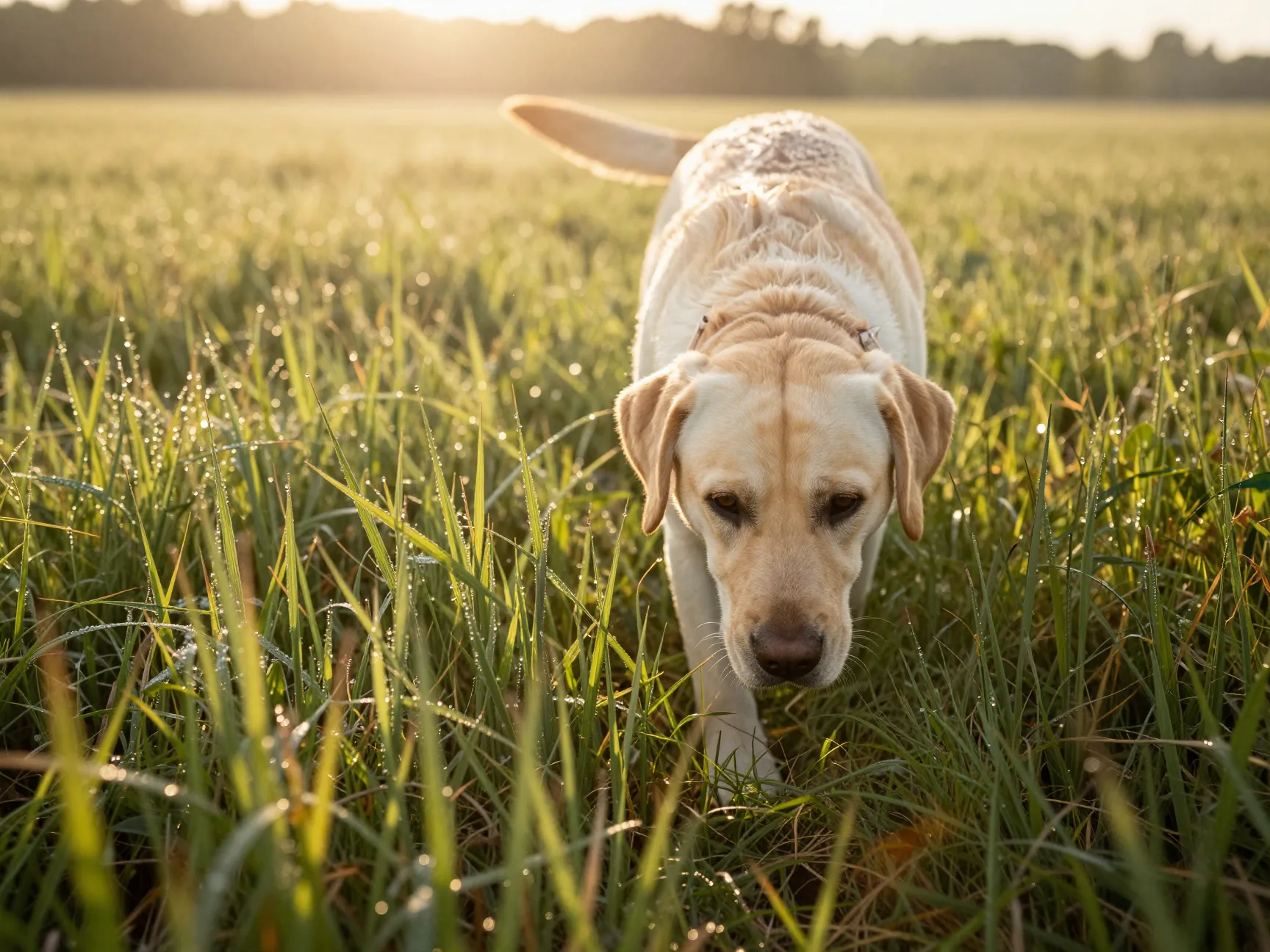
The final trait in the 8 Must-Have Traits of a Top Labrador Retriever Hunting Dog is one that operates largely invisibly — but it makes all the difference. Acute sensory ability, particularly an exceptional sense of smell, is the primary tool a hunting dog uses to locate game [3].
A top hunting Lab uses its nose to:
- Air scent — detect game from significant distances downwind
- Track — follow ground scent trails left by running or fallen birds
- Locate — find birds hidden in thick cover that the hunter’s eyes simply can’t penetrate
Beyond smell, hunting Labs also need:
- Sharp vision — especially for marking falling birds at distance
- Acute hearing — detecting flushing birds or distant shots
- Quick reflexes — rapidly changing direction when a new scent is detected [3]
“A dog with a great nose doesn’t just find more birds — it finds birds that would otherwise be lost forever.”
Sensory ability is largely genetic, but it can be developed through regular field work, scent training, and exposure to real game. The best hunting Labs combine natural sensory gifts with the drive and intelligence to use them effectively.
Bonus Consideration: Solid Physical Structure and Health 💪
While our core list covers eight essential traits, no discussion of top hunting Labs would be complete without addressing physical structure and health. A dog with all the right instincts and intelligence is only as good as its body allows it to be [1].
A quality hunting Lab should have:
- Strong, athletic build — capable of handling rough terrain, long days, and physical demands
- Clear, bright eyes — free from discharge or cloudiness
- Healthy, dense coat — providing weather protection in the field
- Sound joints — especially hips and elbows, which are common problem areas in Labs
- Verified health screenings — parents tested for hip dysplasia, elbow dysplasia, and eye conditions
When selecting a hunting Lab, always ask for OFA (Orthopedic Foundation for Animals) certifications on the parents. A dog from health-tested lines is far more likely to hold up through years of hard hunting [1].
How to Evaluate a Hunting Lab Puppy: A Quick Checklist
Use this checklist when evaluating a potential hunting Lab puppy:
- [ ] Shows strong interest in scented objects or bird wings
- [ ] Naturally retrieves and returns objects to handler
- [ ] Makes frequent eye contact with people (social bonding)
- [ ] Demonstrates alertness and quick response to movement
- [ ] Enters new environments with confidence, not fear
- [ ] Parents have verified OFA health certifications
- [ ] Breeder has documented hunting or field trial lineage
- [ ] Puppy shows appropriate energy — active but not frantic
Common Mistakes When Selecting a Hunting Lab
Even experienced hunters make mistakes when choosing a hunting partner. Here are the most common ones to avoid:
- Choosing based on color alone — Coat color (black, yellow, or chocolate) has no bearing on hunting ability. Focus on lineage and temperament, not appearance.
- Skipping health screenings — A dog with unscreened hips or elbows may break down before its hunting career really begins. Always verify OFA certifications [1].
- Ignoring drive in favor of temperament — A sweet, gentle Lab may be a wonderful pet but lack the drive needed for serious hunting work. Both matter, but drive must be present [4].
- Buying from pet-line breeders — Pet-line Labs are bred for temperament and appearance, not hunting. Always seek breeders with documented field trial or hunting lineage.
- Skipping early socialization — Even the most talented hunting puppy needs proper early exposure to water, birds, gunfire, and varied environments to reach its potential.
Conclusion: Building Your Ideal Hunting Partnership
Understanding the 8 Must-Have Traits of a Top Labrador Retriever Hunting Dog gives you a clear framework for finding, evaluating, and developing a world-class hunting partner. From the spark of natural instinct to the power of acute sensory abilities, each trait plays a specific role in the field — and together, they create a dog that’s truly extraordinary.
Here are your actionable next steps:
- Use the Hunting Lab Trait Evaluator above to score any dog you’re currently considering or working with.
- Contact a reputable hunting Lab breeder who can document field trial lineage and provide OFA health certifications.
- Start early — puppies that show strong instinct and drive at 7–10 weeks are your best candidates for serious hunting development.
- Invest in professional training — even the most talented Lab benefits from structured training with an experienced retriever trainer.
- Hunt your dog — there is no substitute for real field experience. The more birds your Lab encounters, the sharper every one of these traits becomes.
A great hunting Lab isn’t just a tool — it’s a partner. When you find a dog with all eight of these traits working together, you’ll understand exactly why Labrador Retrievers have been America’s favorite hunting companion for generations. 🐾
References
[1] Top Traits To Look For In A Quality Pointing Labrador – https://www.lankaslabs.com/top-traits-to-look-for-in-a-quality-pointing-labrador/
[2] 8 Powerful Traits Of Labrador Retriever – https://scrantondogtrainers.com/8-powerful-traits-of-labrador-retriever/
[3] Characteristics Of A Good Hunting Dog – https://www.ktbritishlabs.com/characteristics-of-a-good-hunting-dog/
[4] What Makes A Good Dog Great – https://www.ducks.org/hunting/retriever-training/what-makes-a-good-dog-great