8 Essential Questions to Ask Before Buying Ragdoll Cats and Kittens for Sale
Nearly 30% of purebred cats purchased online come from unverified breeders who skip critical health testing — and Ragdolls, one of the most popular breeds in North America, are among the most frequently misrepresented. If you are searching for Ragdoll cats and kittens for sale in 2026, the single most powerful tool you have is a well-prepared list of questions. Knowing the 8 essential questions to ask before buying Ragdoll cats and kittens for sale can mean the difference between welcoming a healthy, well-adjusted companion into your home and facing heartbreak — and thousands of dollars in vet bills — within the first year.
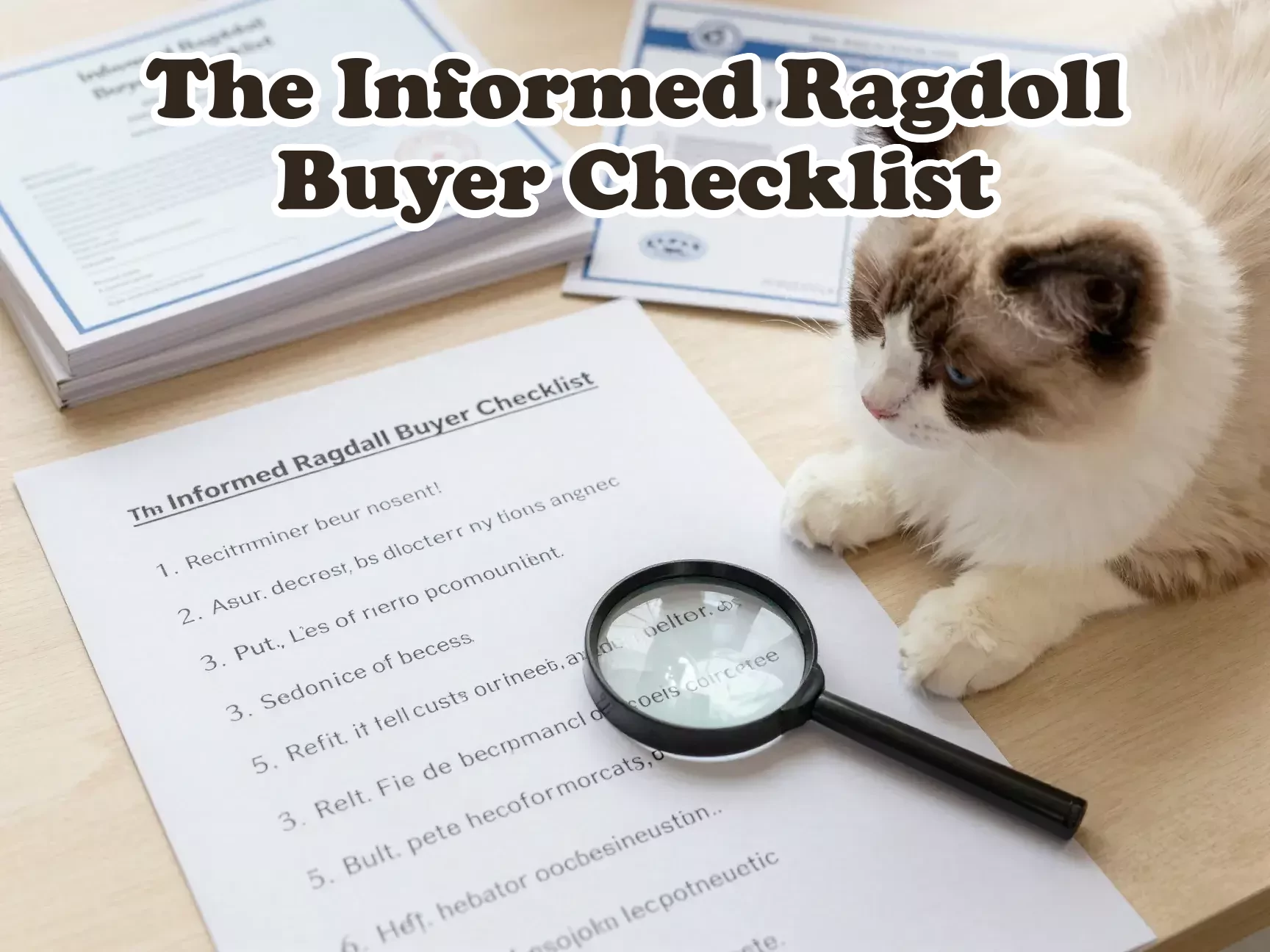
This guide walks you through every critical question, explains why it matters, and gives you the exact language to use when speaking with a breeder.
Key Takeaways 📋
- Health testing is non-negotiable. Reputable breeders screen parent cats for HCM and PRA before breeding.
- Price reflects quality. Expect to pay $2,000–$5,000 for a responsibly bred Ragdoll kitten in 2026.
- Socialization windows matter. Kittens must be properly exposed to people and environments between 6–16 weeks of age.
- Documentation protects you. Always request pedigree papers, vaccination records, health certificates, and a written contract.
- References are your safety net. Calling past buyers is one of the most reliable ways to verify a breeder’s integrity.
Why Asking the Right Questions Matters When Buying Ragdoll Cats and Kittens for Sale
Ragdolls are known for their striking blue eyes, silky semi-long coats, and famously gentle temperament. They are large, affectionate cats that thrive on human companionship. But their popularity has also made them a target for irresponsible breeding operations — sometimes called “kitten mills” — that prioritize profit over the health and welfare of the animals.
💬 “A reputable breeder will welcome your questions. If a seller gets defensive or rushes you to pay a deposit before you’ve had a chance to ask anything, walk away.”
The 8 essential questions to ask before buying Ragdoll cats and kittens for sale outlined in this article are drawn from expert breeder guidance and veterinary best practices. Use them as a checklist every time you contact a new breeder. A trustworthy seller will not only answer each one clearly — they will appreciate that you are a serious, informed buyer.
The 8 Essential Questions to Ask Before Buying Ragdoll Cats and Kittens for Sale
1. Are the Kittens’ Parents Certified and Health-Tested?
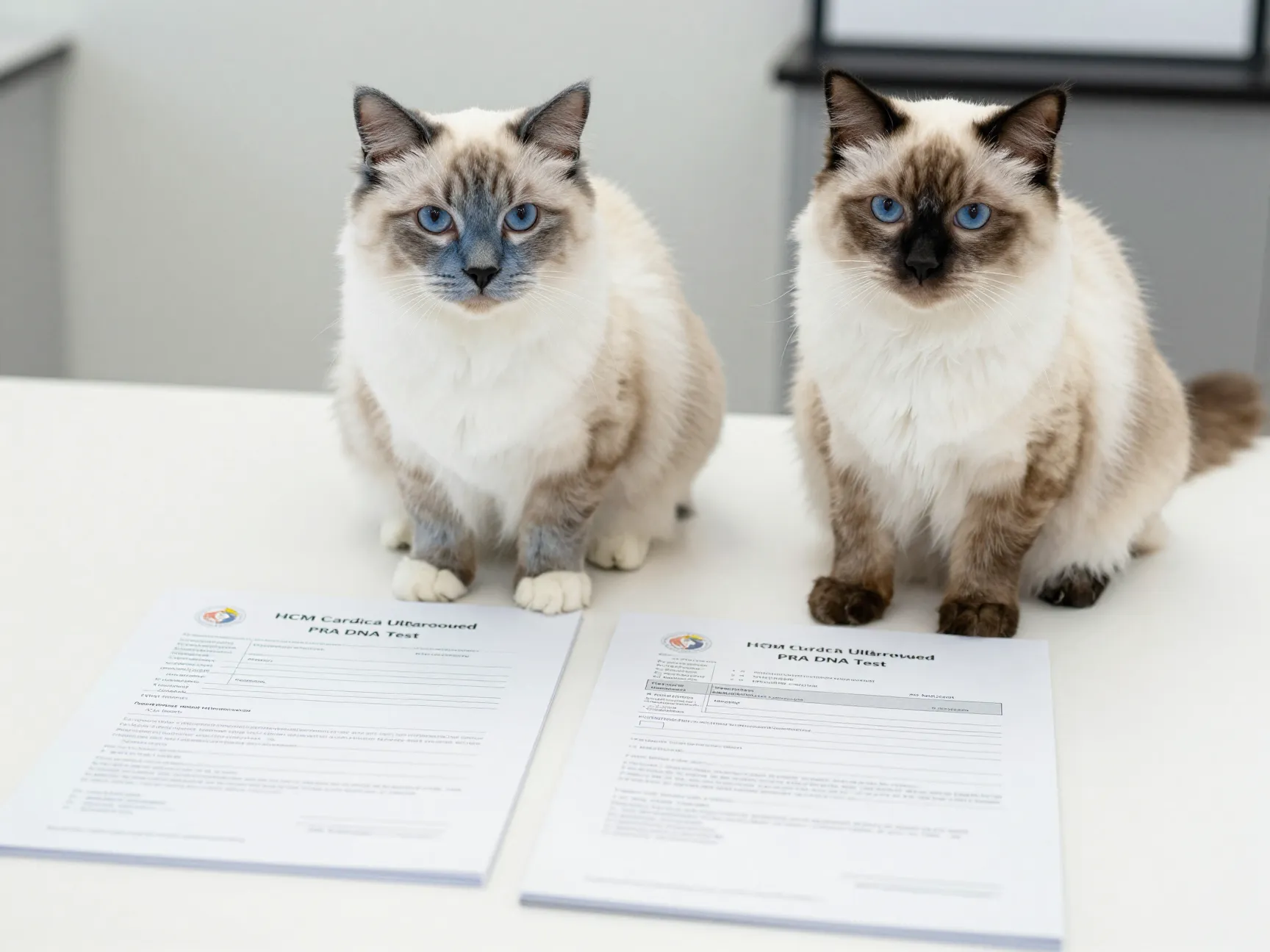
This is the most important question you can ask, and it should always come first.
Ragdolls are genetically predisposed to two serious conditions: hypertrophic cardiomyopathy (HCM), a potentially fatal heart disease, and progressive retinal atrophy (PRA), which causes gradual blindness. Responsible breeders test their breeding cats for both conditions before pairing them, ensuring these diseases are not passed on to offspring [1] [2].
What to ask specifically:
- Have both the mother (queen) and father (sire) been tested for HCM and PRA?
- Can you provide the actual test results or certificates?
- How recently were the tests performed? (HCM in particular should be tested annually or bi-annually, as it can develop over time.)
| Health Test | What It Screens For | Why It Matters |
|---|---|---|
| HCM Cardiac Ultrasound | Hypertrophic cardiomyopathy | Leading cause of sudden death in cats |
| PRA DNA Test | Progressive retinal atrophy | Prevents hereditary blindness |
| FIV/FeLV | Feline immunodeficiency & leukemia | Contagious, life-limiting diseases |
If a breeder cannot produce documentation, or tells you testing “isn’t necessary,” that is a serious red flag. Move on.
2. Can I Meet the Kittens’ Parents in Person?
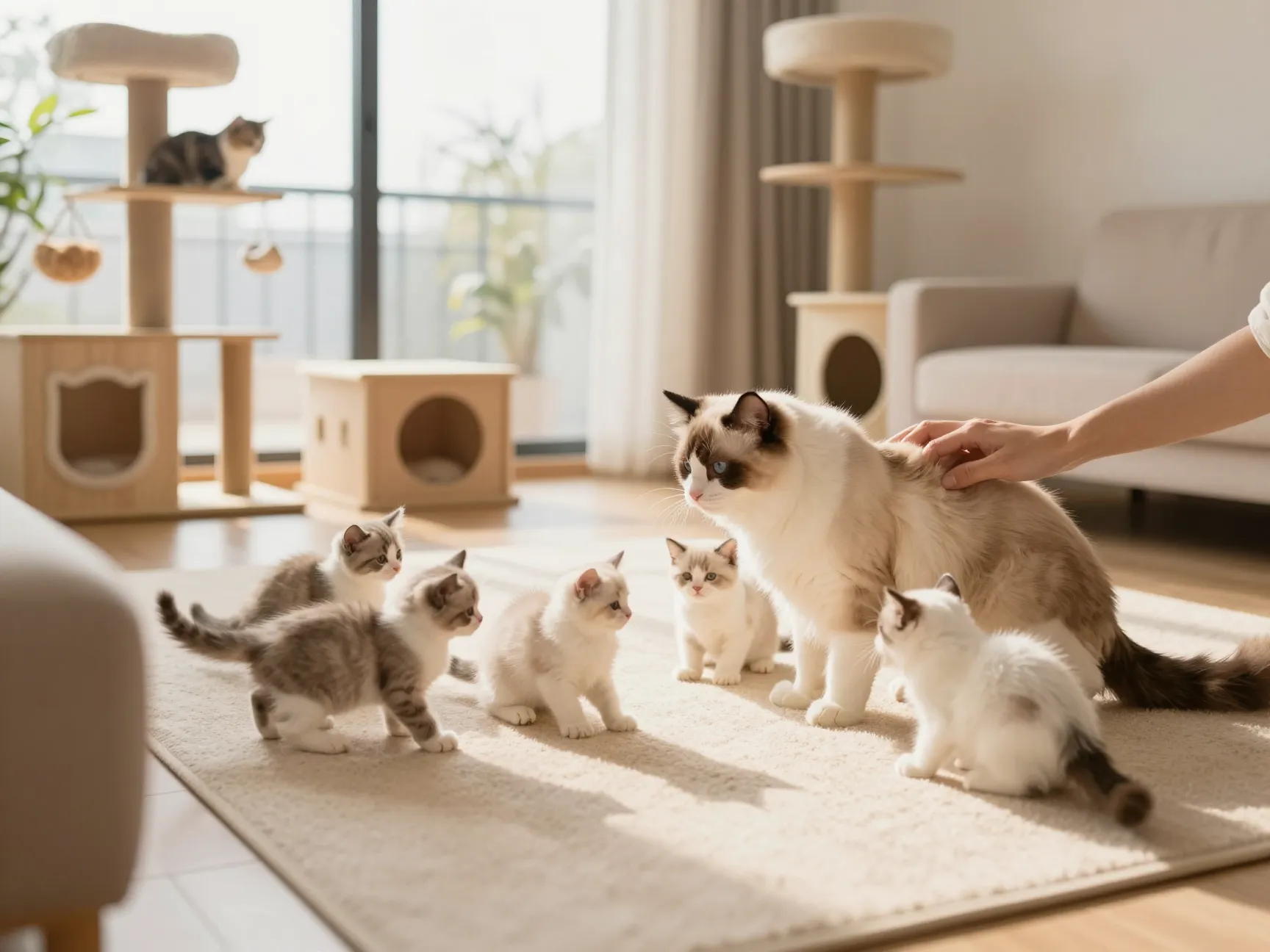
Meeting the parent cats — especially the mother — gives you invaluable insight into what your kitten will likely grow up to be [2].
Ragdolls should be calm, sociable, and comfortable being handled. If the mother cat appears fearful, aggressive, or is kept in a cramped or dirty environment, those conditions directly affect the temperament and early socialization of her kittens.
What to look for when you visit:
- ✅ The mother cat approaches you calmly and tolerates gentle handling
- ✅ The living space is clean, spacious, and enriched with toys and climbing structures
- ✅ The kittens interact with their mother and with each other naturally
- ❌ The breeder refuses to let you visit in person
- ❌ Kittens are kept in cages or isolated from human contact
If a breeder only operates online and will not allow a visit, that alone warrants serious caution. Reputable catteries are proud to show you their operation.
3. What Socialization Has Been Provided to the Kittens?
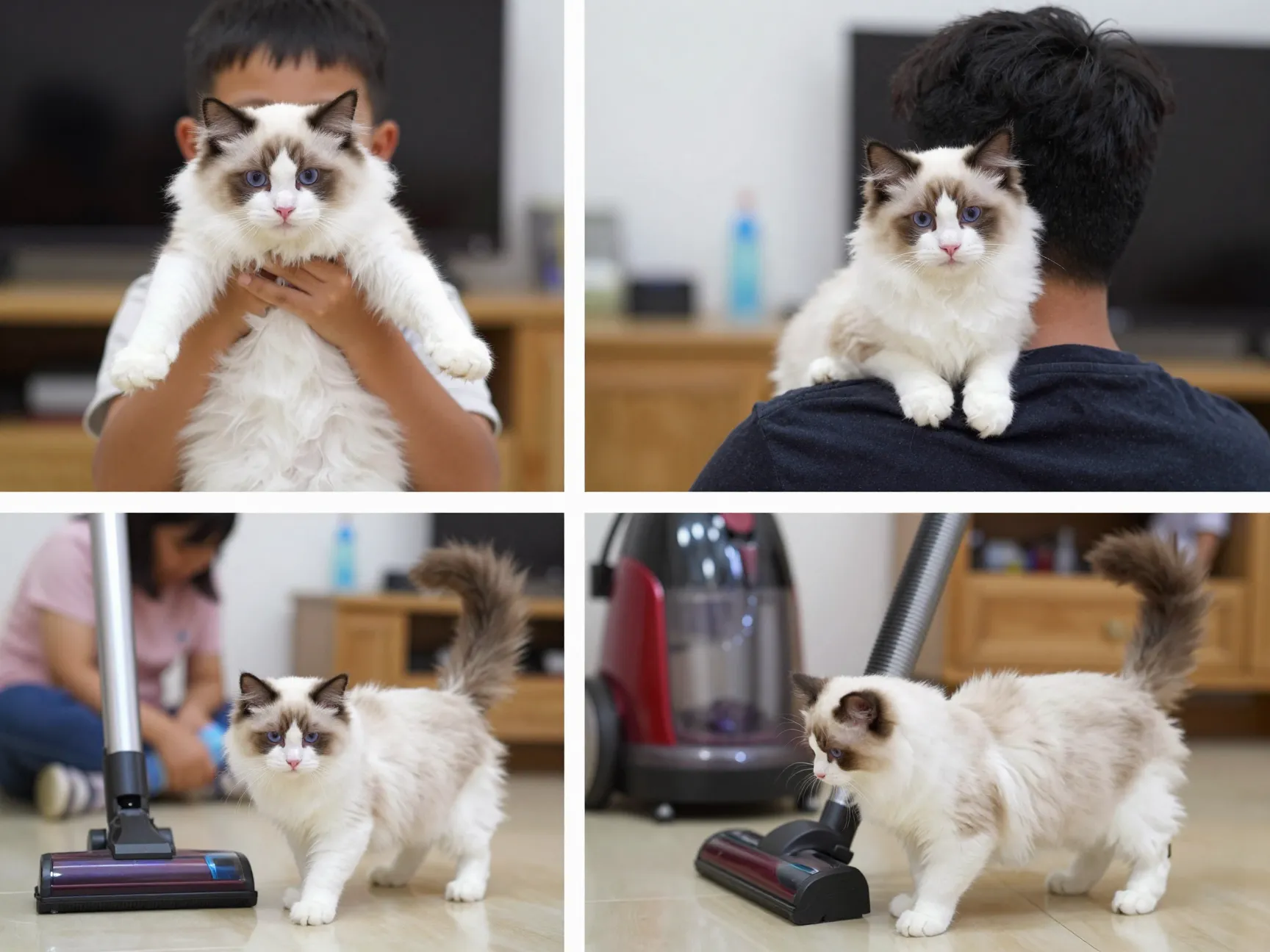
Socialization is not optional — it is foundational. The window between 6 and 16 weeks of age is the most critical period in a kitten’s development. Kittens exposed during this time to a variety of people, sounds, environments, and other animals grow up to be confident, adaptable, and affectionate companions [2].
A breeder who raises kittens in a back room with minimal human contact is setting those kittens — and you — up for behavioral challenges down the road.
Questions to ask:
- Are kittens handled daily from birth?
- Have they been exposed to children, men, women, and visitors?
- Do they hear household sounds like vacuums, televisions, and doorbells?
- Are they introduced to other pets in the home?
💬 “Early socialization is the single biggest factor in producing a Ragdoll with the calm, trusting personality the breed is famous for.”
A breeder who can describe a detailed socialization program — not just say “they’re well-loved” — is a breeder worth trusting.
4. What Veterinary Care and Vaccinations Have the Kittens Received?
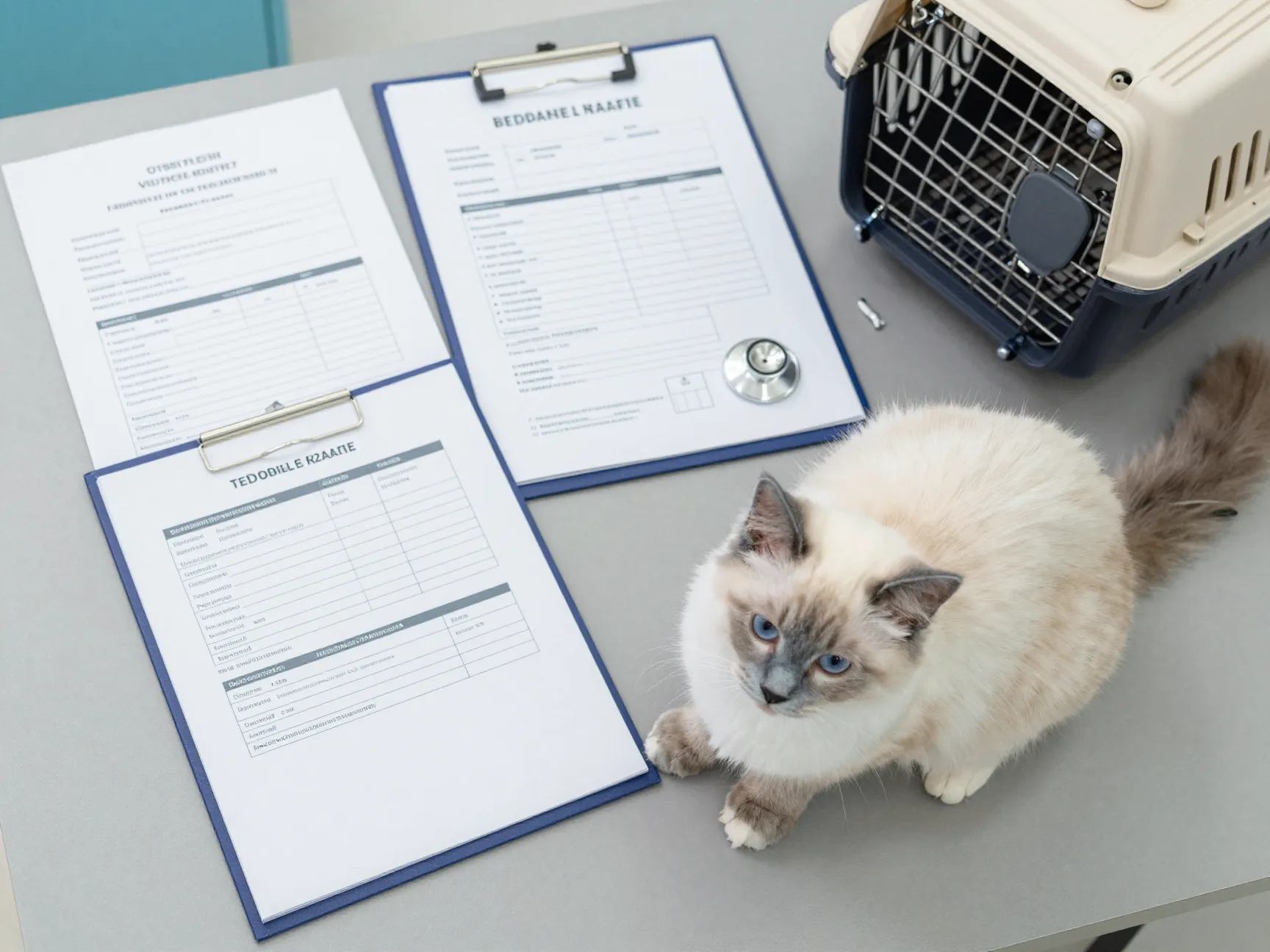
Before any kitten leaves a responsible cattery, it should have a documented veterinary history [1] [3]. This is not just good practice — in many regions, it is a legal requirement.
Request the following records:
- Veterinary examination reports (at minimum one wellness exam)
- Vaccination schedule (FVRCP core vaccine series is standard)
- Deworming treatments and dates
- Flea/parasite prevention history
- Any treatments or medications administered
A legitimate breeder will hand you a physical folder or provide digital copies of all of this. If records are vague, incomplete, or unavailable, the kitten’s health history is unknown — and that is a financial and emotional risk you should not take.
Standard vaccination timeline for Ragdoll kittens:
| Age | Recommended Vaccine |
|---|---|
| 6–8 weeks | FVRCP (first dose) |
| 10–12 weeks | FVRCP (second dose) |
| 14–16 weeks | FVRCP (third dose) + Rabies |
| Before sale | Vet health check & certificate |
5. What Is the Breeder’s Health Guarantee and Contract?
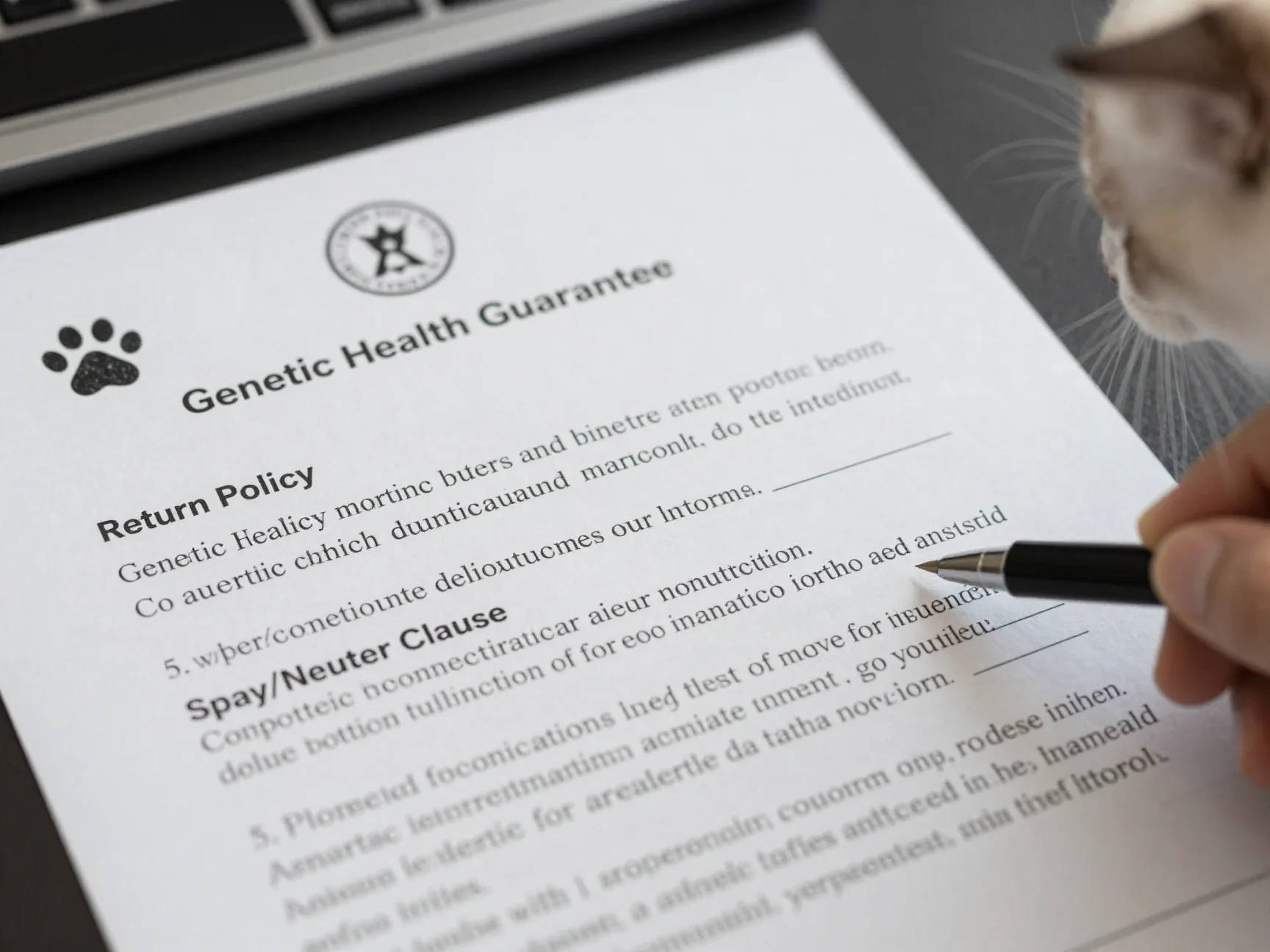
A written contract is a sign of a professional, accountable breeder — not a bureaucratic hurdle [2]. It protects both you and the kitten.
Key contract elements to look for:
- 🐾 Genetic health guarantee — What happens if the kitten develops HCM or another hereditary condition within a specified period?
- 🐾 Return policy — Will the breeder take the kitten back at any time if your circumstances change? (Ethical breeders almost always say yes.)
- 🐾 Spay/neuter clause — Pet-quality kittens are typically sold with a requirement to spay or neuter.
- 🐾 Breeding rights — If you want to breed, is that permitted, and what are the conditions?
Do not accept a verbal agreement. If a breeder refuses to provide a written contract, that is a significant warning sign. Read the contract carefully before signing, and do not hesitate to ask for clarification on any clause.
6. Can You Provide References from Recent Buyers?
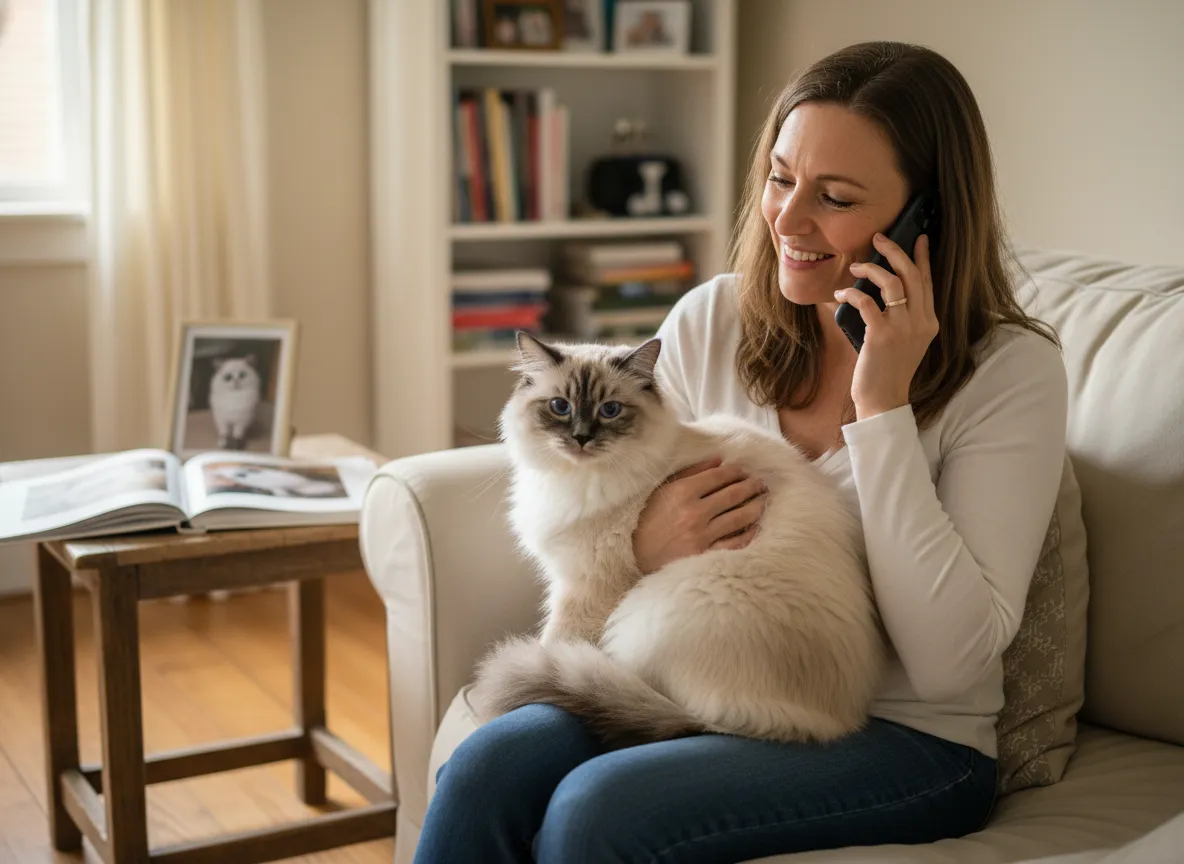
Asking for references is one of the most underused — and most effective — tools available to prospective buyers [2].
A breeder who has nothing to hide will readily provide contact information for families who purchased kittens within the past 12 months. Call them. Do not just send a text or email. A real phone conversation will tell you far more than a written review.
Questions to ask past buyers:
- Was the kitten healthy when it arrived?
- Did the breeder follow through on their health guarantee?
- Were they responsive and supportive after the sale?
- Would you buy from this breeder again?
- Were there any surprises — positive or negative?
Online reviews on platforms like Google or Facebook can supplement this research, but direct references from the breeder carry more weight because you can verify they are real people with real experiences.
7. What Is the Appropriate Price Range, and What Does It Include?
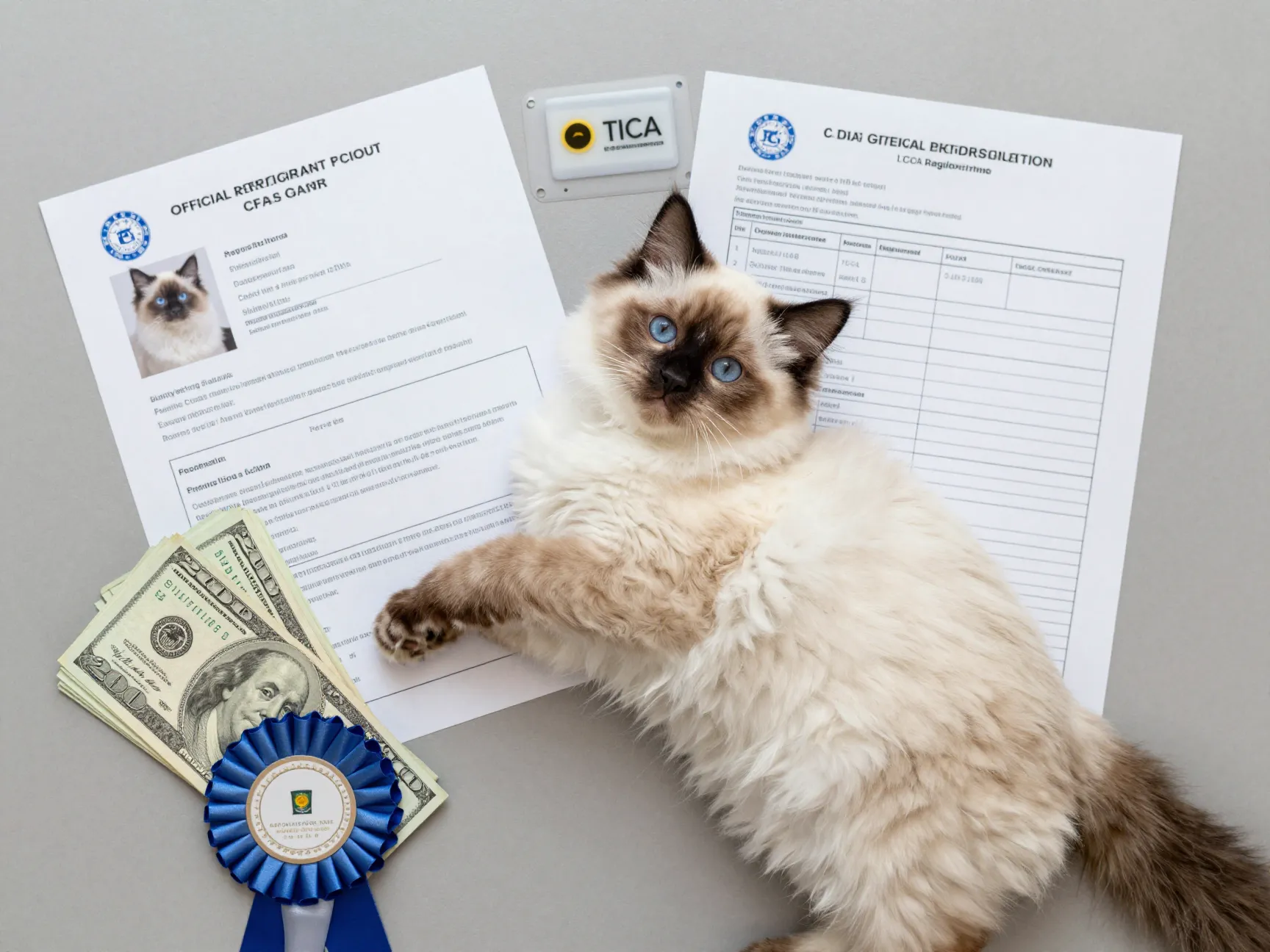
Let’s talk about money — because price is one of the clearest indicators of breeding quality.
As of 2026, expect to pay $2,000–$5,000 for a well-bred Ragdoll kitten from a reputable cattery [1]. Show-quality kittens or those with champion bloodlines may sit at the higher end of that range. If you see a Ragdoll listed for under $1,000, ask yourself what corners have been cut.
What a responsible price typically covers:
- ✅ HCM and PRA testing of parent cats
- ✅ Full vaccination series
- ✅ Veterinary health examinations
- ✅ Deworming and parasite prevention
- ✅ Microchipping
- ✅ Pedigree registration fees
- ✅ Socialization program costs
- ✅ Breeder’s time, expertise, and ongoing support
💬 “Paying $800 for a Ragdoll kitten might seem like a bargain — until you’re facing a $5,000 cardiac surgery bill at age two.”
Price comparison at a glance:
| Price Range | What It Likely Means |
|---|---|
| Under $1,000 | Health testing likely skipped; high risk |
| $1,000–$2,000 | Partial testing; verify carefully |
| $2,000–$5,000 | Standard range for reputable breeders |
| Over $5,000 | Show-quality or champion bloodlines |
8. What Food, Diet, and Ongoing Care Do You Recommend?
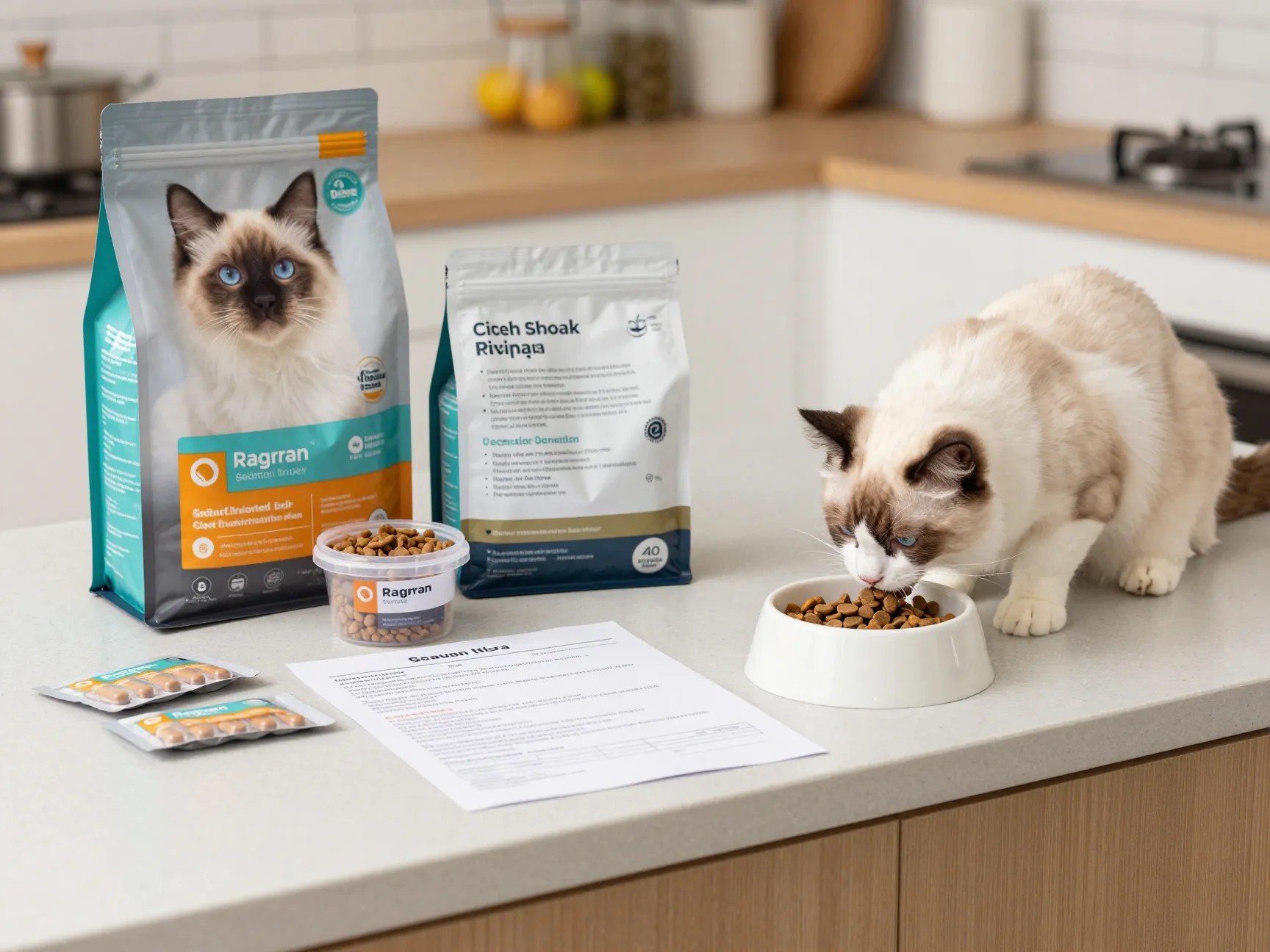
A breeder who cares about their kittens does not stop caring the moment you drive away. Asking about nutrition and ongoing care reveals how invested they are in the long-term wellbeing of the cats they produce [4].
Questions to ask:
- What brand and type of food are the kittens currently eating?
- Do you recommend wet food, dry food, or a combination?
- What vitamins or supplements do you provide?
- Are there any foods or ingredients I should avoid?
- What resources do you recommend for ongoing Ragdoll care?
Transitioning a kitten to a new diet abruptly can cause digestive upset. A responsible breeder will send you home with a small supply of the kitten’s current food and a written transition plan. They should also be willing to answer questions by phone or email after the kitten is home [4].
Bonus questions worth asking:
- Are the kittens registered as purebred pedigrees? Request official documentation from recognized associations like the Cat Fanciers’ Association (CFA) or The International Cat Association (TICA) [3].
- Will you provide a health certificate and certificate of sale? Some states legally require a veterinarian-issued health certificate for the sale of a kitten [2].
Red Flags to Watch For When Searching for Ragdoll Kittens for Sale 🚩
Even armed with the right questions, it helps to know the warning signs at a glance. Here is a quick reference checklist:
Walk away if a breeder:
- Refuses to allow an in-person visit
- Cannot produce health testing documentation for parent cats
- Offers kittens under 8 weeks of age (12 weeks is the ethical minimum for Ragdolls)
- Has no written contract or health guarantee
- Pressures you to pay a deposit immediately
- Sells kittens at prices significantly below the market range
- Has no references or only anonymous online reviews
- Cannot answer basic questions about the breed’s health needs
Green lights from a reputable breeder:
- Welcomes questions and visits enthusiastically
- Provides complete documentation without being asked twice
- Asks you questions to ensure you are a good fit for a Ragdoll
- Stays in contact after the sale
- Is affiliated with a recognized cat breeding association [1] [5]
What to Expect From a Reputable Ragdoll Cattery
Reputable catteries operate more like small businesses than casual hobby setups. They maintain clean, enriched environments, limit the number of litters they produce per year to ensure quality care, and invest significantly in health testing and veterinary care [1] [5].
Many are members of organizations like the Ragdoll Fanciers Club International (RFCI), the CFA, or TICA. Membership in these organizations does not guarantee perfection, but it does indicate a commitment to breed standards and ethical practices.
A good breeder will also ask you questions:
- Do you have other pets?
- Do you have children?
- Will the cat be indoor-only?
- Have you owned a Ragdoll before?
This is a positive sign. It means they care where their kittens go [6].
Conclusion: Your Checklist for Buying Ragdoll Cats and Kittens for Sale in 2026
The 8 essential questions to ask before buying Ragdoll cats and kittens for sale are not just a buyer’s checklist — they are a framework for identifying breeders who genuinely prioritize the health, temperament, and welfare of their cats. Every question serves a purpose, and every answer tells you something important.
Your actionable next steps:
- Print or save this list and have it in front of you for every breeder conversation.
- Schedule in-person visits before committing to any deposit.
- Request all documentation — health tests, vet records, pedigree papers, and a written contract.
- Call at least two references from recent buyers before making a final decision.
- Trust your instincts. If something feels off during a visit or conversation, it probably is.
- Budget realistically. Plan for the $2,000–$5,000 purchase price plus first-year veterinary costs, supplies, and pet insurance.
- Take your time. The right Ragdoll kitten — from the right breeder — is worth waiting for.
Bringing a Ragdoll into your home is a 15+ year commitment. The few hours you invest in asking the right questions now can save you years of heartache and thousands of dollars. Do the research, ask the hard questions, and you will be rewarded with one of the most loving, gentle companions the cat world has to offer. 🐱💙
References
[1] How To Choose A Reputable Ragdoll Breeder – https://pearlsragdolls.com/buying-ragdolls/how-to-choose-a-reputable-ragdoll-breeder/
[2] 15 Questions You Should Ask Cat Breeders – https://www.petplace.com/article/cats/pet-care/15-questions-you-should-ask-cat-breeders
[3] The 18 Most Important Questions To Ask A Cat Breeder Before Buying A Kitten – https://myfelidae.com/blogs/felidae-features/the-18-most-important-questions-to-ask-a-cat-breeder-before-buying-a-kitten
[4] 5 Questions To Ask A Cat Breeder Before You Choose Your New Kitten – https://bellehollow.net/5-questions-to-ask-a-cat-breeder-before-you-choose-your-new-kitten/
[5] Adopt A Ragdoll Kitten Checklist – https://www.masterpieceragdolls.com/adopt-a-ragdoll-kitten-checklist/
[6] 10 Things To Know Before Getting A Ragdoll Cat – https://catbutler.com/blogs/cat-guides/10-things-to-know-before-getting-a-ragdoll-cat