8 Australian Sheep Dogs Breeds You Probably Haven’t Heard Of
Australia is home to roughly 70 million sheep — nearly three sheep for every person living on the continent. Managing that enormous flock has, over centuries, shaped some of the most capable, intelligent, and underappreciated working dogs on the planet. Yet when most people think of herding dogs, they reach for the Border Collie or the German Shepherd. The truth is, the 8 Australian sheep dog breeds you probably haven’t heard of are every bit as impressive — and in many cases, far better suited to the harsh, unforgiving conditions of the Australian bush.
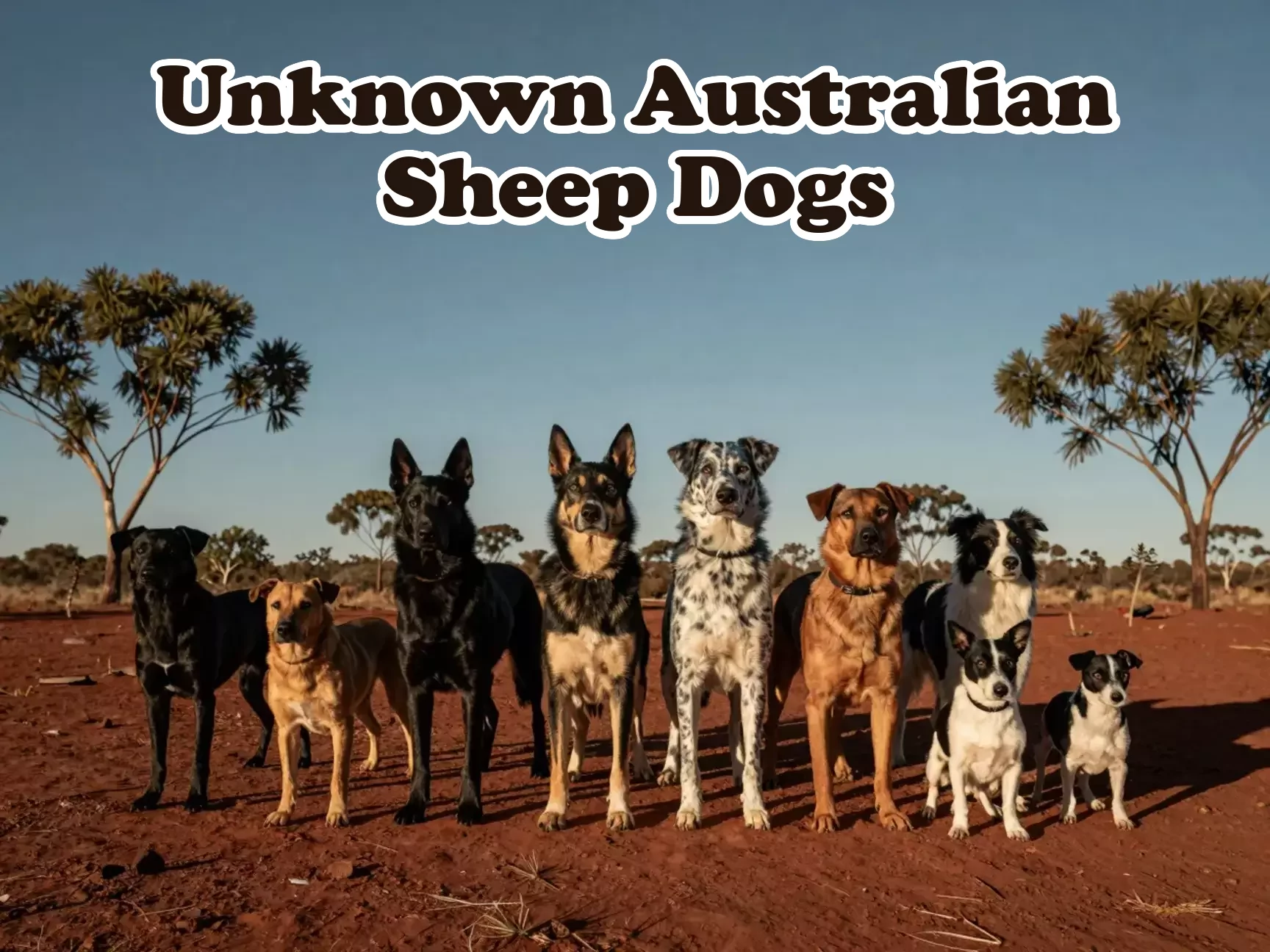
In this guide, I’ll walk you through these remarkable breeds, exploring their origins, temperaments, and what makes each one uniquely suited to sheep work. Whether you’re a farmer, a dog enthusiast, or simply curious, you’ll find something surprising here. [1][2]
Key Takeaways 🐾
- Australia has developed distinct herding breeds shaped by extreme climate, vast terrain, and specific livestock needs.
- Many of these breeds remain largely unknown outside of Australia, even among dedicated dog lovers.
- Working ability is the defining trait — these dogs were bred for function first, appearance second.
- Several breeds are at risk of declining populations, making awareness critically important in 2026.
- Each breed has unique herding style, from eye-stalking to heeling, suited to different sheep management scenarios.
Why Australia Developed Its Own Sheep Dog Breeds
Before diving into the 8 Australian sheep dog breeds you probably haven’t heard of, it helps to understand why Australia needed to develop its own herding dogs at all.
European settlers arrived with dogs bred for the green, compact fields of Britain and Europe. Those dogs struggled. The Australian bush presented:
| Challenge | Impact on Imported Dogs |
|---|---|
| Extreme heat (up to 50°C) | Rapid overheating, reduced stamina |
| Vast, unfenced stations | Inability to cover required distances |
| Rocky, uneven terrain | Paw and joint injuries |
| Tough, independent merino sheep | Insufficient herding drive |
Settlers responded by crossbreeding imported dogs with local and imported working stock, selecting ruthlessly for endurance, heat tolerance, and natural herding instinct. The result? A collection of breeds that are, arguably, the most efficient sheep dogs in the world. [3]
💬 “Australian working dogs weren’t bred to look good in a show ring. They were bred to survive and work in conditions that would break most other dogs.”
The 8 Australian Sheep Dog Breeds You Probably Haven’t Heard Of
1. Australian Kelpie
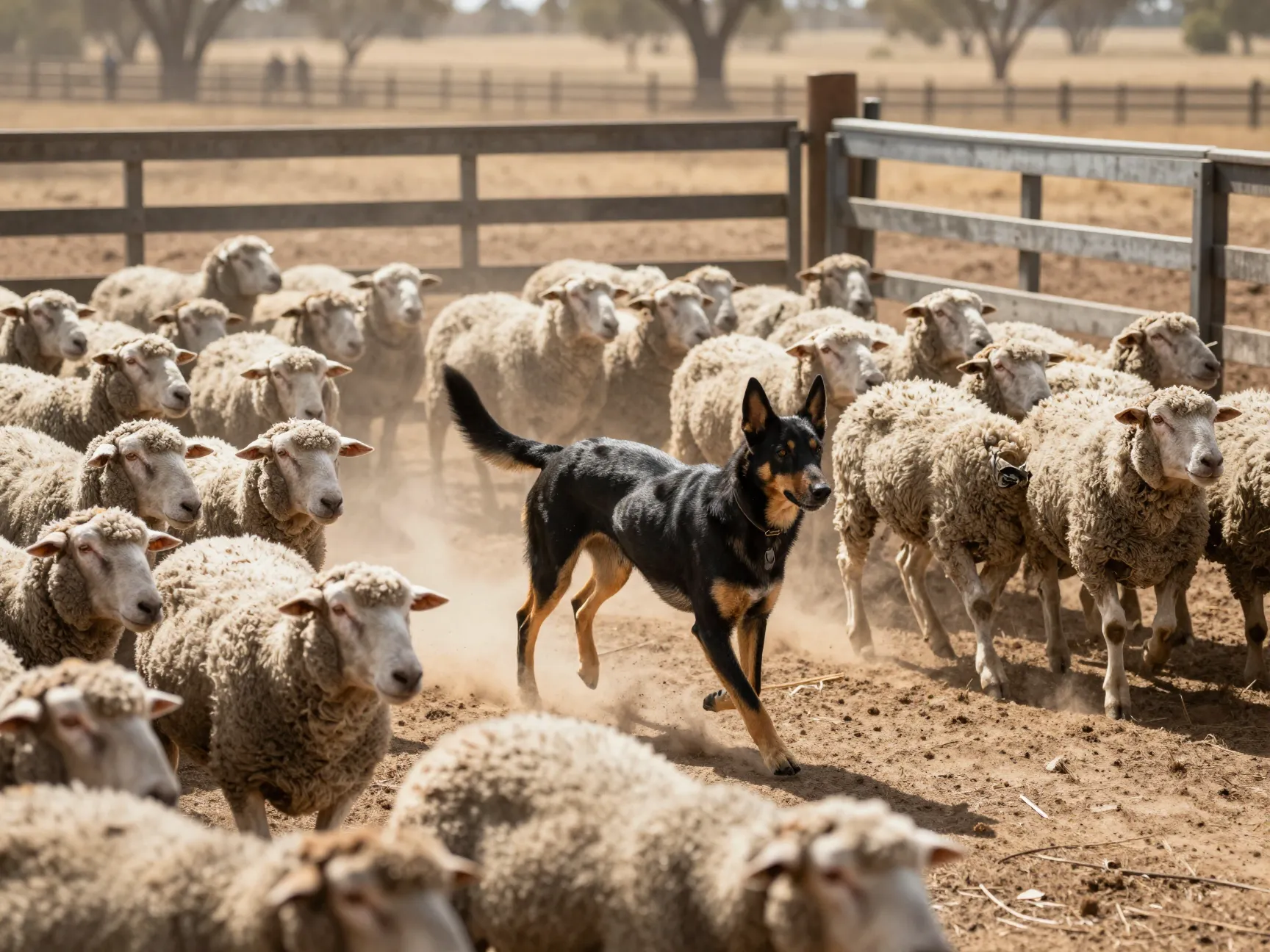
The Australian Kelpie is perhaps the most celebrated working dog on this list — yet remains almost invisible in international dog culture compared to the Border Collie.
Origin: Developed in the 1870s from British Collie stock, possibly crossed with the Dingo, the Kelpie was purpose-built for Australian conditions. [1]
Key characteristics:
- Weight: 14–21 kg
- Coat: Short, dense double coat in black, red, fawn, chocolate, or blue
- Lifespan: 10–13 years
- Herding style: Eye and force — uses intense gaze combined with physical pressure
What makes them remarkable: A single Kelpie can manage up to 3,000 sheep with minimal handler instruction. They are famous for “backing” — running across the backs of tightly packed sheep to move them through gates. This is a skill almost no other breed demonstrates naturally.
They thrive in heat that would exhaust a Border Collie within an hour. Their short coat and lean build allow efficient thermoregulation. [2]
⚠️ Note for potential owners: Kelpies need a job. Without structured work or intensive mental stimulation, they become destructive. This is not a suburban couch dog.
2. Australian Cattle Dog (Blue Heeler / Red Heeler)
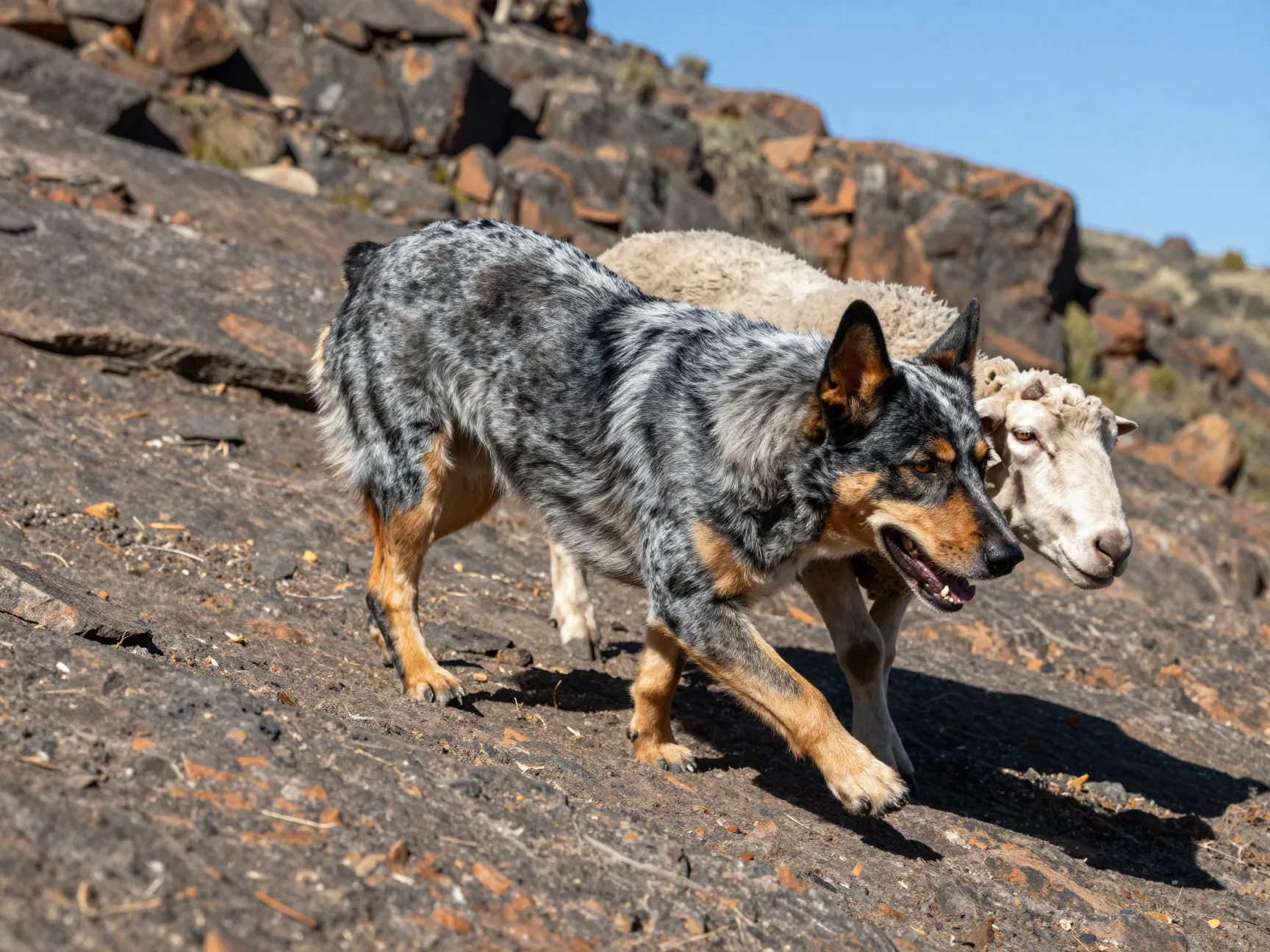
Often confused with a cattle dog exclusively, the Australian Cattle Dog is also a highly effective sheep herder — and one of the most genetically fascinating dogs in existence.
Origin: Developed in the 1840s by Thomas Hall and later refined by the Bagust family. Crosses included the Dingo, Dalmatian, Black and Tan Kelpie, and Bull Terrier. [1]
Key characteristics:
- Weight: 15–22 kg
- Coat: Short, dense; blue or red speckle
- Lifespan: 12–16 years
- Herding style: Heeling — nipping at the heels of livestock to move them
What makes them remarkable: The Dingo influence gave this breed extraordinary pain tolerance, independence, and survival instinct. Their loyalty is intense but selective — they typically bond deeply with one person.
They are among the longest-lived dog breeds globally, with multiple verified cases of individuals reaching 20+ years. [3]
💬 “The Blue Heeler is the dog equivalent of a Swiss Army knife — compact, tough, and capable of far more than it looks.”
3. Australian Stumpy Tail Cattle Dog
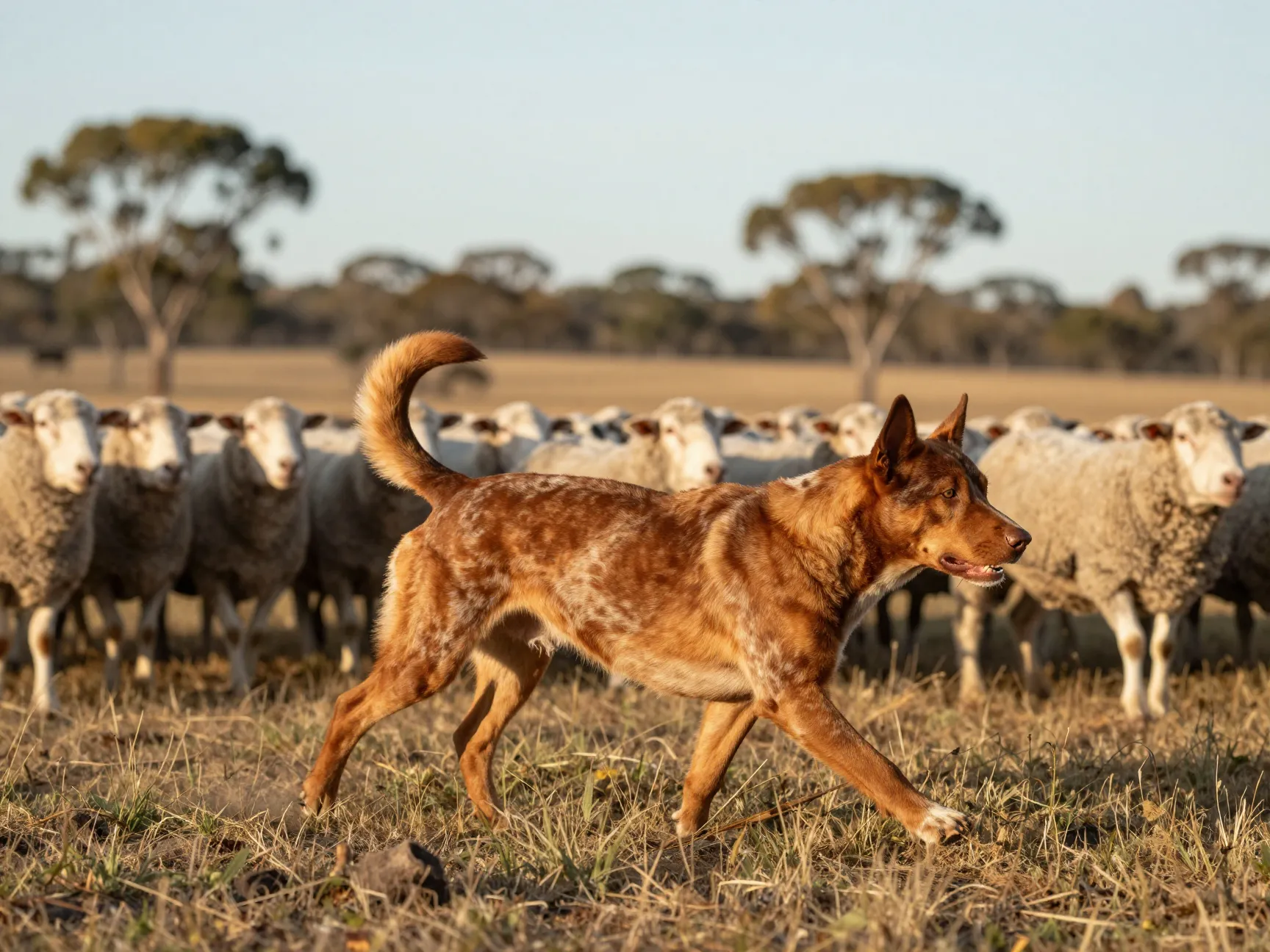
This breed is often mistaken for a docked Australian Cattle Dog — but it is a genuinely distinct breed with a naturally bobbed tail, and far fewer people know it exists.
Origin: Believed to be one of Australia’s oldest working dog breeds, developed before the Australian Cattle Dog was formally standardised. Its ancestry likely includes the Smithfield, a now-extinct British drover’s dog, crossed with the Dingo. [1]
Key characteristics:
- Weight: 16–23 kg
- Coat: Short, dense; blue or red speckle (similar to ACD but slightly different pattern)
- Lifespan: 12–15 years
- Herding style: Heeling and driving
What makes them remarkable: The natural bobtail is a genetic trait, not a mutation — it occurs through a specific gene variant. The breed is recognised by the Australian National Kennel Council (ANKC) but remains rare even within Australia.
Their temperament tends to be slightly more reserved and independent than the Australian Cattle Dog, making them better suited to experienced handlers.
4. Tenterfield Terrier (Working Variant)
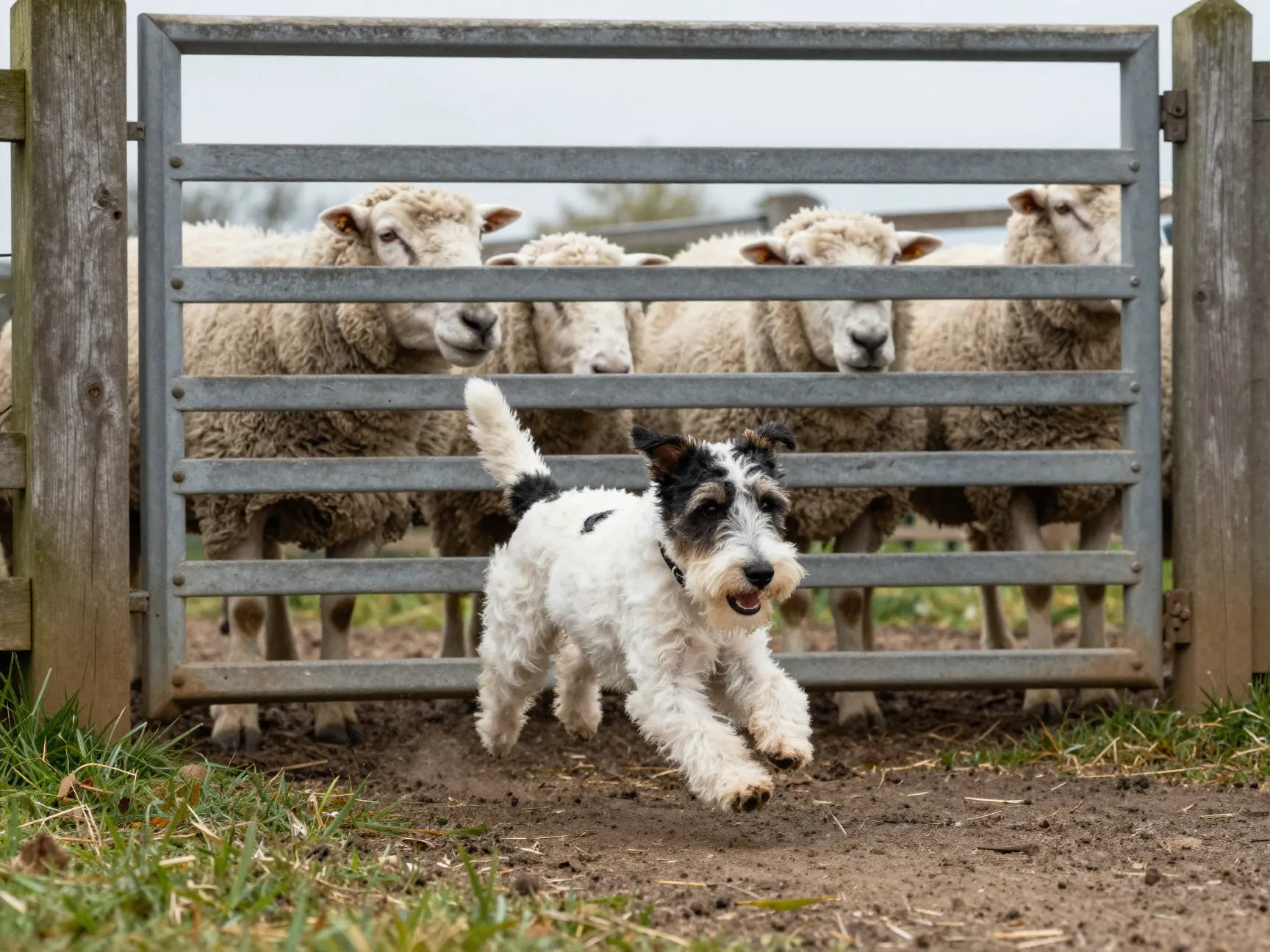
This one surprises people. The Tenterfield Terrier is typically classified as a companion or ratter — but working strains on Australian farms have long been used to assist in sheep management, particularly in moving sheep through tight spaces and yards.
Origin: Descended from the small Fox Terriers brought to Australia by British settlers in the 19th century. Named after the town of Tenterfield in New South Wales. [1]
Key characteristics:
- Weight: 3.5–5 kg
- Coat: Short, smooth; white with black, tan, or liver patches
- Lifespan: 12–14 years
- Role: Yard dog, auxiliary herder, vermin control
What makes them remarkable: Their size is their advantage in confined yard work. They can dart under gates, squeeze through gaps, and create pressure in spaces where larger dogs cannot operate. On small family farms, a Tenterfield Terrier working alongside a Kelpie is a surprisingly effective team.
They are not recognised internationally as a herding breed, but their functional role on Australian farms earns them a place on this list.
5. McNab Shepherd (Australian Working Lines)
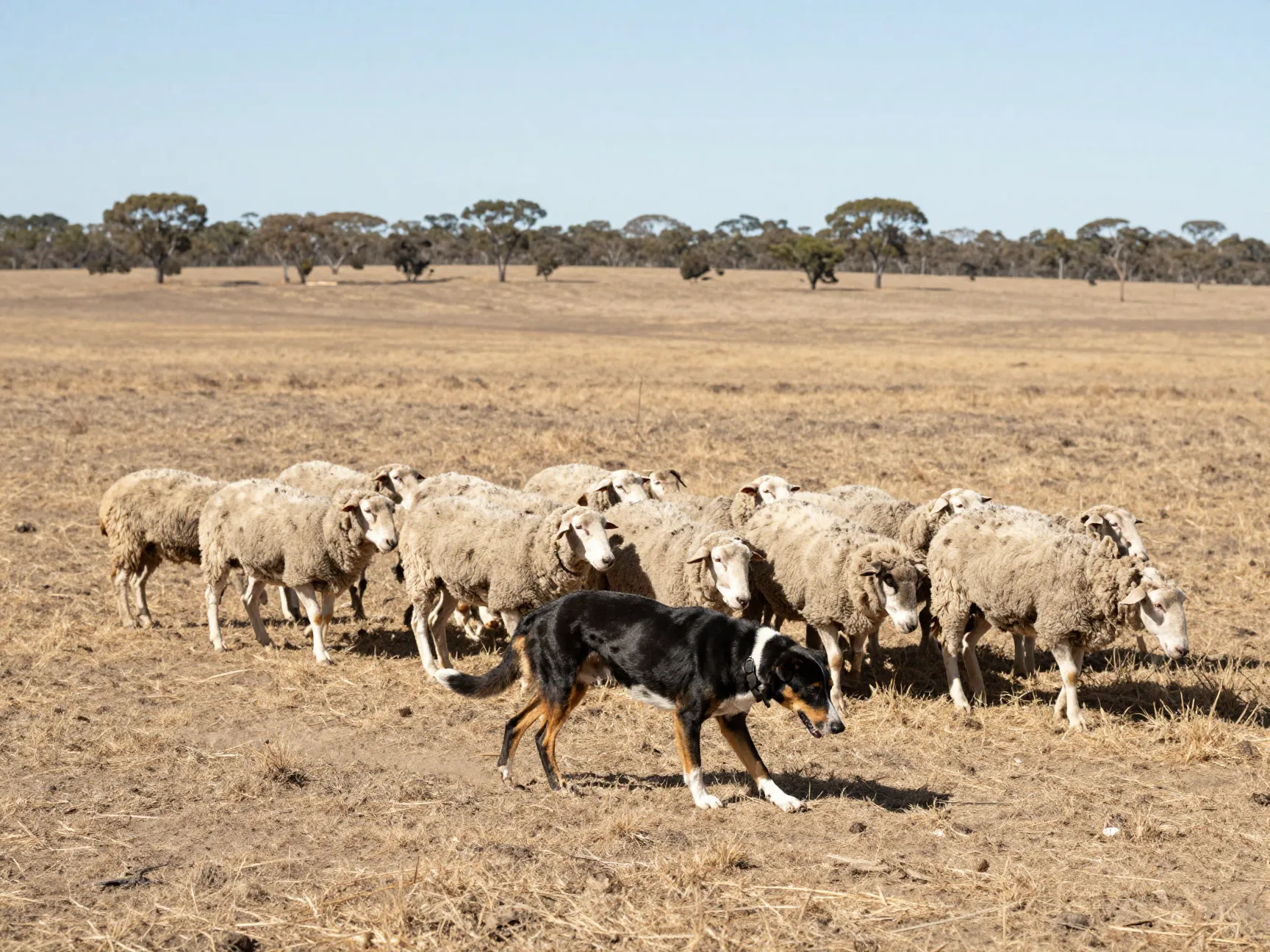
Technically originating in California, the McNab Shepherd developed significant working populations in Australia through importation, where Australian breeders selected specifically for sheep work in hot, dry conditions. Australian McNab lines are now considered distinct from their American counterparts by many working dog enthusiasts. [2]
Key characteristics:
- Weight: 16–30 kg
- Coat: Short to medium; black or red with white markings
- Lifespan: 13–15 years
- Herding style: Eye and gather — similar to Border Collie but less intense
What makes them remarkable: Australian McNab lines were selected for reduced “eye” (the intense Border Collie stare that can stress sheep) while maintaining strong gather and drive instincts. This makes them exceptionally versatile — effective on both sheep and cattle without over-stressing stock.
They are virtually unknown outside of working dog circles, even in Australia. [2]
6. Barb (The Australian Barb)
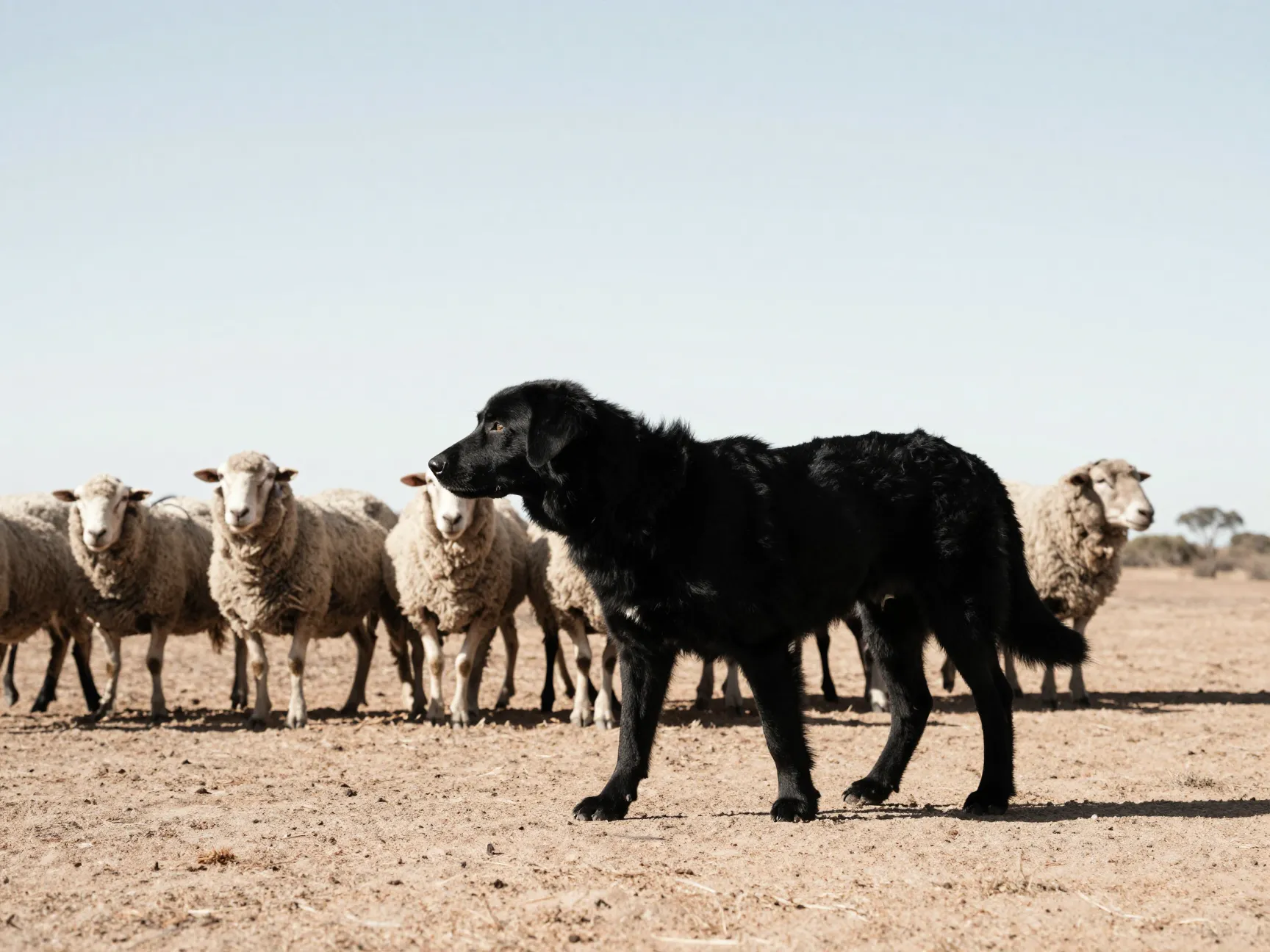
The Barb is one of Australia’s most obscure breeds — so rare that many Australian dog owners have never encountered one. It is essentially a black-coated working dog developed from Kelpie and Collie crosses, selected specifically for its coat colour and working ability in high-UV environments.
Origin: Developed in Victoria and New South Wales in the late 19th and early 20th centuries. Named after a famous black racehorse, “The Barb,” which won the Melbourne Cup in 1866. [1]
Key characteristics:
- Weight: 14–20 kg
- Coat: Short to medium, always black
- Lifespan: 12–15 years
- Herding style: Eye and force
What makes them remarkable: The black coat, counterintuitively, may offer UV protection in the harsh Australian sun compared to lighter-coated breeds. Breeders also reported that the black coat made the dog more visible against the pale, dusty Australian landscape — an important practical consideration when working at distance.
The Barb is registered with the ANKC but is considered a vulnerable breed in 2026, with very small annual registration numbers.
7. Working Kelpie (Show vs. Working Strain)
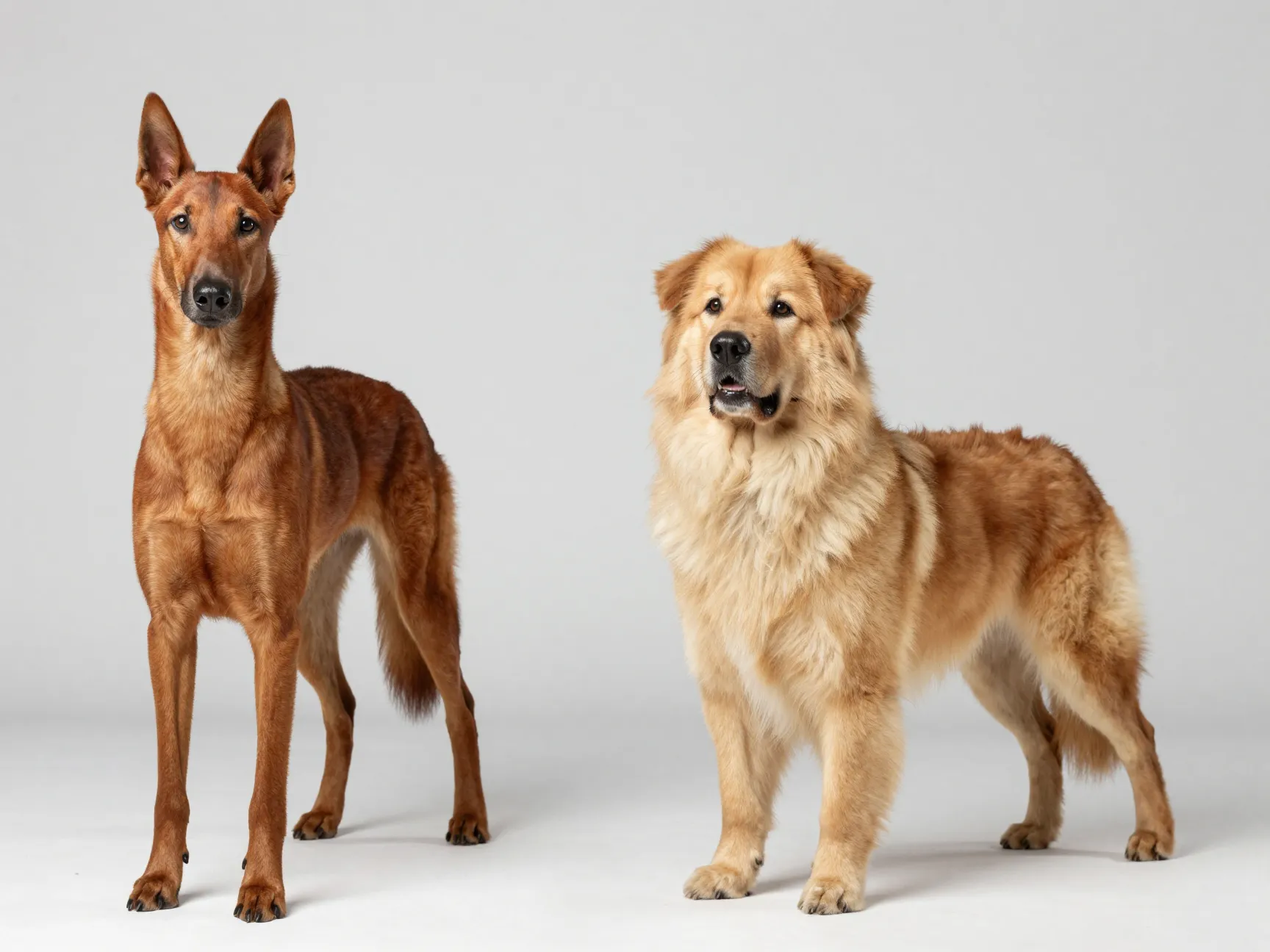
This deserves its own entry because the Working Kelpie and the Show Kelpie have diverged so significantly that many working dog experts consider them functionally different breeds — even though they share a name and formal breed standard.
The divergence:
| Trait | Show Kelpie | Working Kelpie |
|---|---|---|
| Build | Heavier, more muscular | Leaner, more athletic |
| Coat | Often longer, more varied colours | Shorter, weather-resistant |
| Drive | Moderate | Extremely high |
| Trainability | Good | Exceptional but demanding |
| Popularity | Growing as companion | Primarily on farms |
Working Kelpies are bred exclusively for function. They are tested on sheep, not in show rings. The best working bloodlines are passed down through performance records, not conformation scores. [1][2]
💬 “A top Working Kelpie pup from proven trial bloodlines can sell for more than AUD $10,000 at Australian working dog auctions.”
This financial reality reflects just how valued these dogs are in the agricultural community — and how invisible they remain to the general public.
8. Australian Shepherd (The Irony of the Name)
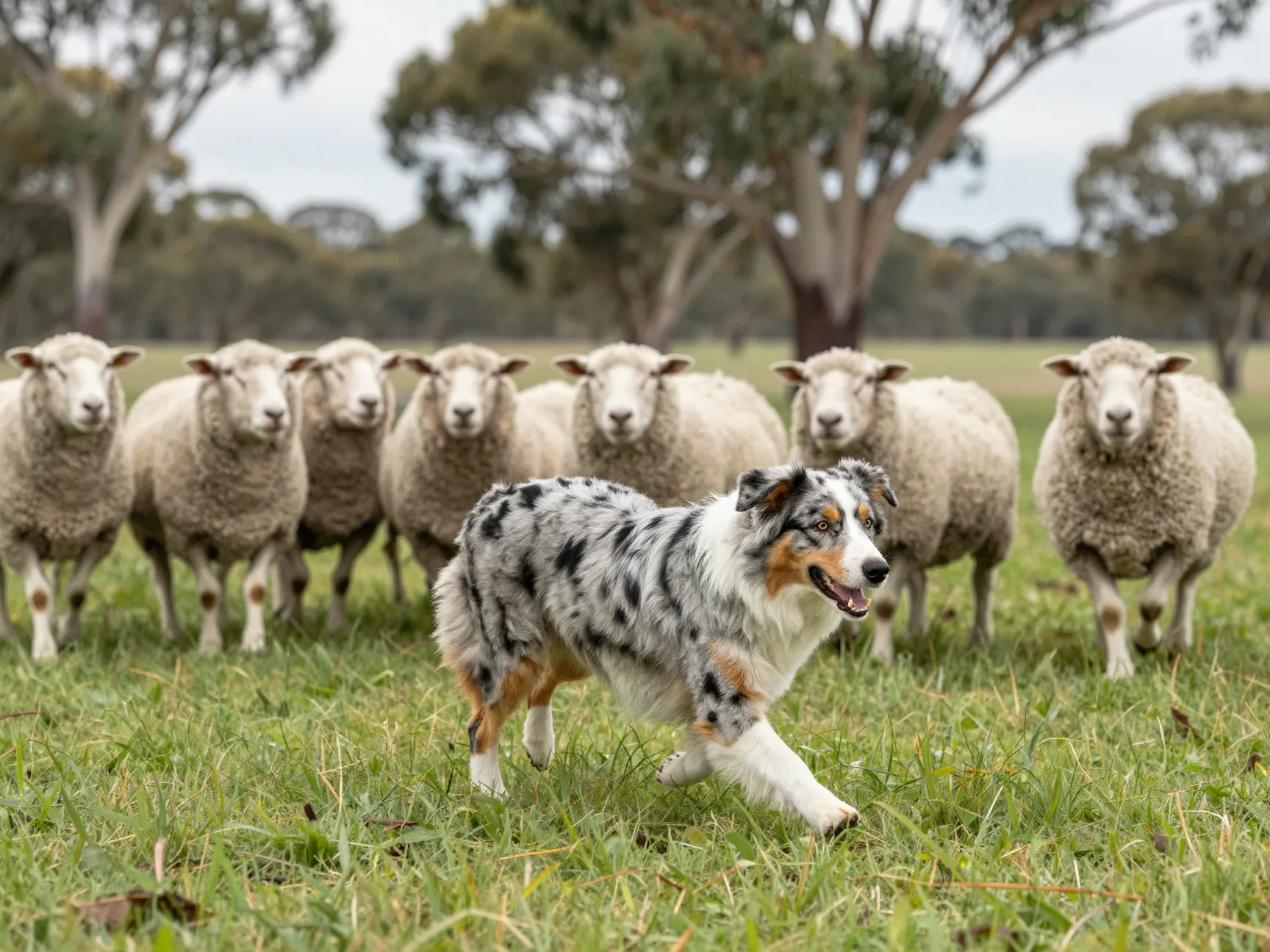
Here’s the twist that surprises almost everyone: the Australian Shepherd did not originate in Australia. [4]
The breed was developed in the western United States in the 19th and early 20th centuries, likely from Basque shepherd dogs that passed through Australia on their way to America — giving the breed its misleading name. [4][5]
However, there is a genuine Australian connection worth understanding:
- Basque shepherds who migrated to the American West via Australia brought their dogs with them
- Those dogs were called “Australian” by American ranchers simply because of their origin point
- Australian-bred lines of these dogs do exist today, and they are used for sheep work in Australia [5]
Key characteristics:
- Weight: 16–32 kg
- Coat: Medium length, merle or solid colours
- Lifespan: 12–15 years
- Herding style: Eye, gather, and drive
What makes them remarkable in the Australian context: Australian-bred Aussie Shepherds have been selectively bred for the specific demands of Australian sheep farming — heat tolerance, wide-area coverage, and the ability to work independently. They represent a fascinating full-circle story in working dog history. [4]
Comparing the 8 Australian Sheep Dog Breeds at a Glance
| Breed | Weight | Herding Style | Best For | Rarity |
|---|---|---|---|---|
| Australian Kelpie | 14–21 kg | Eye + Force | Large mob work | Common |
| Australian Cattle Dog | 15–22 kg | Heeling | Tough terrain | Common |
| Stumpy Tail Cattle Dog | 16–23 kg | Heeling + Drive | Experienced handlers | Rare |
| Tenterfield Terrier (working) | 3.5–5 kg | Yard assistance | Small farm yards | Very Rare |
| McNab Shepherd (Aus. lines) | 16–30 kg | Eye + Gather | Versatile stock work | Very Rare |
| Barb | 14–20 kg | Eye + Force | High-UV environments | Endangered |
| Working Kelpie (working strain) | 14–21 kg | Eye + Force | Elite sheep trials | Uncommon |
| Australian Shepherd (Aus. bred) | 16–32 kg | Eye + Gather + Drive | Diverse sheep work | Uncommon |
What Makes a Great Australian Sheep Dog? 🐕
Regardless of breed, the best Australian sheep herding dogs share a core set of traits. Understanding these helps explain why Australia developed such specialised breeds in the first place.
Essential traits:
- Heat tolerance — the ability to work through midday temperatures without overheating
- Stamina — covering 50–80 km per day on rough terrain
- Natural herding instinct — the drive to gather, move, and control livestock without extensive training
- Independence — the ability to make decisions when the handler is out of sight or earshot
- Toughness — physical resilience to rocky ground, thorny scrub, and harsh conditions
- Stock sense — an innate understanding of sheep behaviour that allows calm, efficient movement
These traits were not bred in overnight. They represent generations of ruthless selection by farmers whose livelihoods depended on their dogs performing. [3]
Are These Breeds Right for You?
Most of the 8 Australian sheep dog breeds you probably haven’t heard of are not ideal pets for the average household. I want to be direct about this.
These are working dogs. Their energy levels, intelligence, and drive are calibrated for 8–12 hours of active work per day. In a suburban home without a job to do, they can develop:
- Destructive behaviour (chewing, digging, escaping)
- Anxiety and stress-related conditions
- Obsessive behaviours (chasing cars, shadows, or children)
- Aggression born from frustration
That said, if you can provide:
✅ A rural or semi-rural environment
✅ Daily structured work or intensive sport (agility, flyball, herding trials)
✅ Experienced dog handling
✅ Mental enrichment alongside physical exercise
…then these breeds will reward you with a level of intelligence, loyalty, and capability that few other dogs can match.
Preserving Rare Australian Sheep Dog Breeds in 2026
In 2026, several of the breeds on this list face real population pressures. The Barb, in particular, is considered critically rare. The Stumpy Tail Cattle Dog, while registered, has low annual registration numbers with the ANKC.
What you can do:
- Support registered breeders who prioritise working ability and genetic diversity
- Attend working dog trials — events like the Australian Kelpie Muster at Casterton bring visibility to these breeds
- Advocate for breed recognition in international kennel clubs where applicable
- Adopt from working dog rescue organisations where retired farm dogs need homes
- Spread awareness — sharing information about these breeds helps ensure their survival
The loss of a working dog breed is not just a cultural loss. It represents the erasure of generations of genetic selection that cannot be easily recreated. [1][3]
Conclusion: The Unsung Heroes of the Australian Bush
The 8 Australian sheep dog breeds you probably haven’t heard of represent some of the most extraordinary working dogs ever developed. From the heat-defying Kelpie to the genetically unique Stumpy Tail Cattle Dog, from the surprising Tenterfield Terrier to the ironically named Australian Shepherd, each breed carries a story of human ingenuity, agricultural necessity, and remarkable canine capability.
Australia’s sheep industry could not function without these dogs. And yet, most of the world has never heard their names.
Your actionable next steps:
- 🔍 Research a breed from this list that interests you — go deeper than this article
- 🐑 Visit a working dog trial in your region to see these breeds in action
- 📣 Share this article to raise awareness of rare Australian working breeds
- 🤝 Connect with breed clubs such as the Australian Working Kelpie Council or the ANKC for accurate, up-to-date information
- 🐾 Consider adoption if you have the lifestyle to support a working dog
These dogs have given everything to Australian agriculture. The least we can do is know their names.
References
[1] 8 Unique Dog Breeds From Australia – https://petzpark.com.au/blogs/petz-park-blog/8-unique-dog-breeds-from-australia
[2] Top Shepherd Dog Breeds – https://wagwalking.com/breed/top-shepherd-dog-breeds
[3] Australian Dog Breeds – https://www.purina.co.uk/find-a-pet/articles/dog-types/breed-guides/australian-dog-breeds
[4] Australian Shepherd – https://www.paula-mcdermid.com/aussie-blog/category/australian-shepherd
[5] 171338 Australian Shepherd – https://www.dolforums.com.au/topic/171338-australian-shepherd/
[6] Watch – https://www.youtube.com/watch?v=VXXTwZ8yhhE