8 Adorable Tips For Caring For Your New Weenie Dog Puppies
Bringing home a new dachshund puppy is like welcoming a tiny sausage-shaped bundle of joy into your family! 🌭 These adorable “weenie dogs” with their elongated bodies and short legs have captured hearts worldwide, but their unique anatomy and spirited personalities require special care considerations. Whether you’ve just adopted your first miniature dachshund or you’re preparing for the arrival of these charming pups, understanding the specific needs of these remarkable dogs is essential for their health and happiness.

The 8 adorable tips for caring for your new weenie dog puppies outlined in this comprehensive guide will help you navigate the exciting journey of dachshund ownership. From proper feeding schedules to exercise routines that protect their distinctive spines, these evidence-based strategies ensure your new furry family members thrive during their crucial puppy development phase.
Key Takeaways
- Feed miniature dachshund puppies three to four small meals daily with carefully measured portions to prevent weight gain that can stress their backs [1]
- Start with 5-10 minutes of low-impact exercise twice daily, avoiding jumping and high-impact activities that could damage their long spines [2]
- Establish consistent potty training routines with frequent outdoor breaks after meals, naps, and play sessions due to their small bladders [1]
- Begin grooming habits early including weekly brushing for smooth coats and daily teeth brushing with dog-safe toothpaste [2]
- Use positive reinforcement training methods with treats and verbal praise, as dachshunds respond poorly to punishment due to their independent nature [2]
Essential Feeding Guidelines for Your New Weenie Dog Puppies
1. Establish a Proper Feeding Schedule and Portion Control

Miniature dachshund puppies require three to four small meals per day with carefully measured portions, as these adorable pups are particularly prone to weight gain [1]. Unlike larger breeds that can handle fewer, larger meals, weenie dogs need frequent feeding to maintain stable blood sugar levels while preventing overeating that leads to obesity.
The key to successful feeding lies in monitoring your puppy’s body condition regularly. You should be able to feel their ribs without excess fat covering—if you notice excessive weight gain, adjust portions immediately [4]. This is crucial because extra weight puts tremendous stress on their elongated spines, potentially leading to serious back problems later in life.
Feeding Schedule Recommendations:
- 8-12 weeks old: 4 small meals daily
- 3-6 months old: 3 meals daily
- 6+ months old: 2-3 meals daily
- Portion size: Follow manufacturer guidelines based on expected adult weight
Remember that dachshund puppies have small stomachs but big appetites. Using a measuring cup rather than eyeballing portions helps maintain consistency and prevents overfeeding. High-quality puppy food specifically formulated for small breeds provides the concentrated nutrition these tiny dogs need for proper development [7].
2. Choose the Right Food and Monitor Growth

Selecting appropriate nutrition forms the foundation of the 8 adorable tips for caring for your new weenie dog puppies. Premium puppy food designed for small breeds contains the right balance of protein, fats, and calories to support healthy growth without promoting rapid weight gain that could stress developing joints and bones.
Essential Nutritional Considerations:
- Protein content: 22-28% for growing puppies
- Fat content: 8-15% to prevent obesity
- Calcium and phosphorus: Balanced ratios for bone development
- Small kibble size: Appropriate for tiny mouths
- No fillers: Avoid corn, wheat, and by-products
Monitor your puppy’s growth weekly during the first few months. Dachshunds should gain weight steadily but not rapidly. A sudden growth spurt or excessive weight gain can indicate overfeeding or inappropriate food choices [8].
“The foundation of a healthy dachshund starts with proper nutrition during the puppy stage. What you feed them now directly impacts their spine health and overall quality of life as adults.”
Grooming and Health Maintenance for Weenie Dog Puppies
3. Develop a Comprehensive Grooming Routine
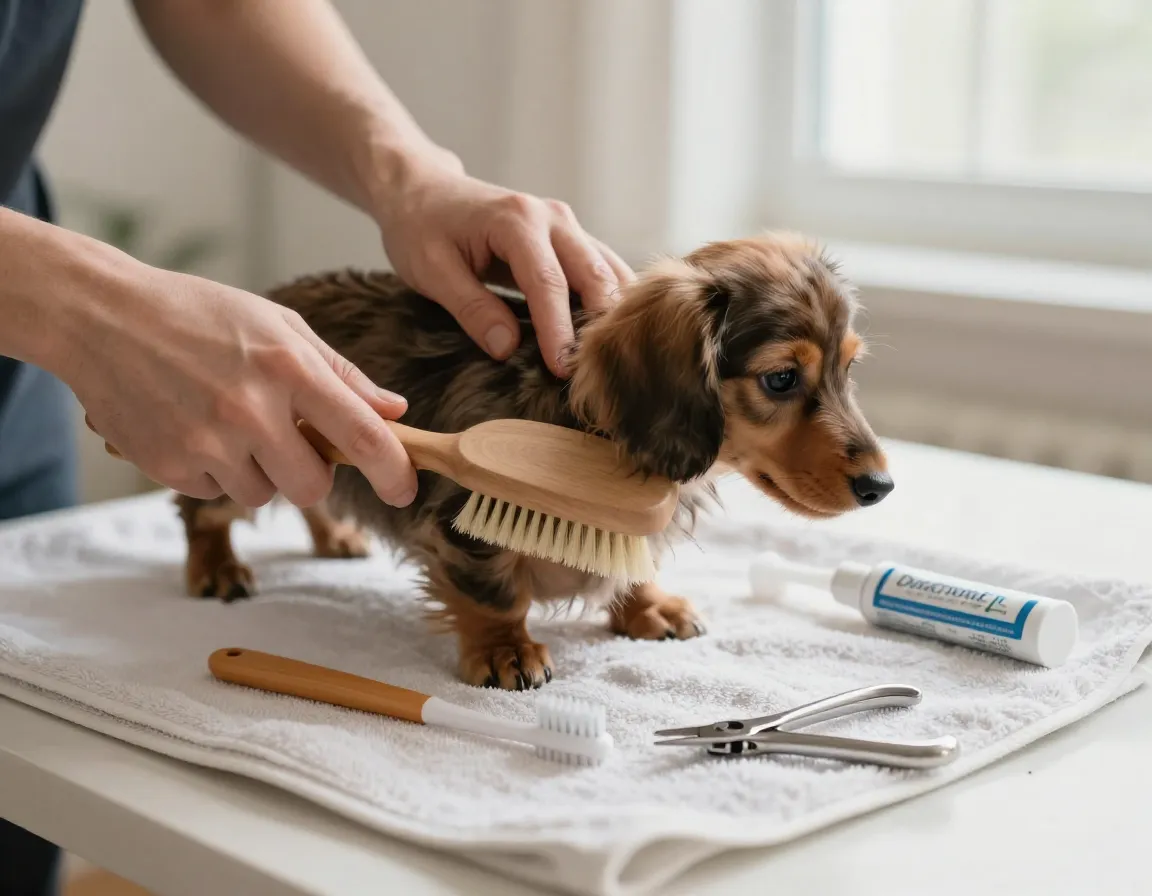
Early grooming habits are essential for your dachshund puppy’s health and comfort. Different coat types require varying levels of care, but all dachshunds benefit from regular grooming that starts during puppyhood [1].
Coat-Specific Grooming Requirements:
- Smooth-coated puppies: Brush weekly with a soft bristle brush
- Long-haired puppies: Brush 2-3 times weekly to prevent matting
- Wire-haired puppies: Weekly brushing; consider professional grooming every 6-8 weeks
Begin nail trimming early to help your puppy become comfortable with the process. Dachshunds’ nails grow quickly, and overgrown nails can affect their gait and potentially cause back problems [2]. Start with just one or two nails per session, using treats and praise to create positive associations.
Daily teeth brushing with dog-safe toothpaste prevents dental disease, which is common in small breeds [2]. Start by letting your puppy taste the toothpaste, then gradually introduce the toothbrush. Dental health directly impacts overall health, making this routine crucial for long-term wellbeing.
4. Master the Art of Proper Bathing
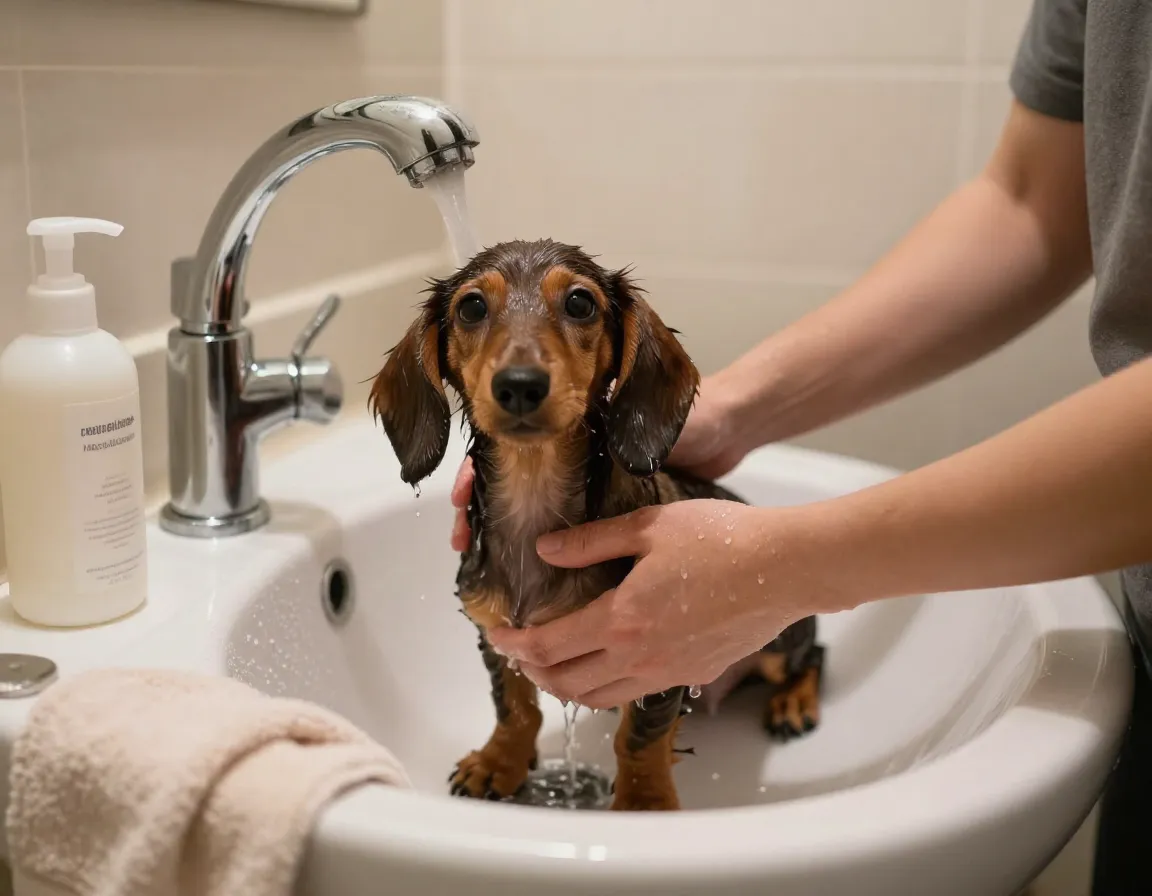
Bathe your dachshund puppy every 3-4 weeks using gentle, hypoallergenic puppy shampoo to maintain skin and coat health without over-bathing [1][2]. These frequent baths help establish the routine while keeping your puppy clean and comfortable.
Bathing Best Practices:
- Water temperature: Lukewarm, never hot
- Shampoo choice: Puppy-specific, hypoallergenic formulas
- Frequency: Every 3-4 weeks or as needed
- Drying: Thorough but gentle towel drying
- Ear protection: Avoid getting water in ears
Avoid over-bathing, which strips natural oils from the skin and can lead to irritation or dryness. Between baths, use pet-safe wipes to clean muddy paws or minor dirt. The goal is maintaining cleanliness while preserving the natural protective oils in their coat [1].
Training and Behavioral Development Strategies
5. Implement Effective Potty Training Techniques
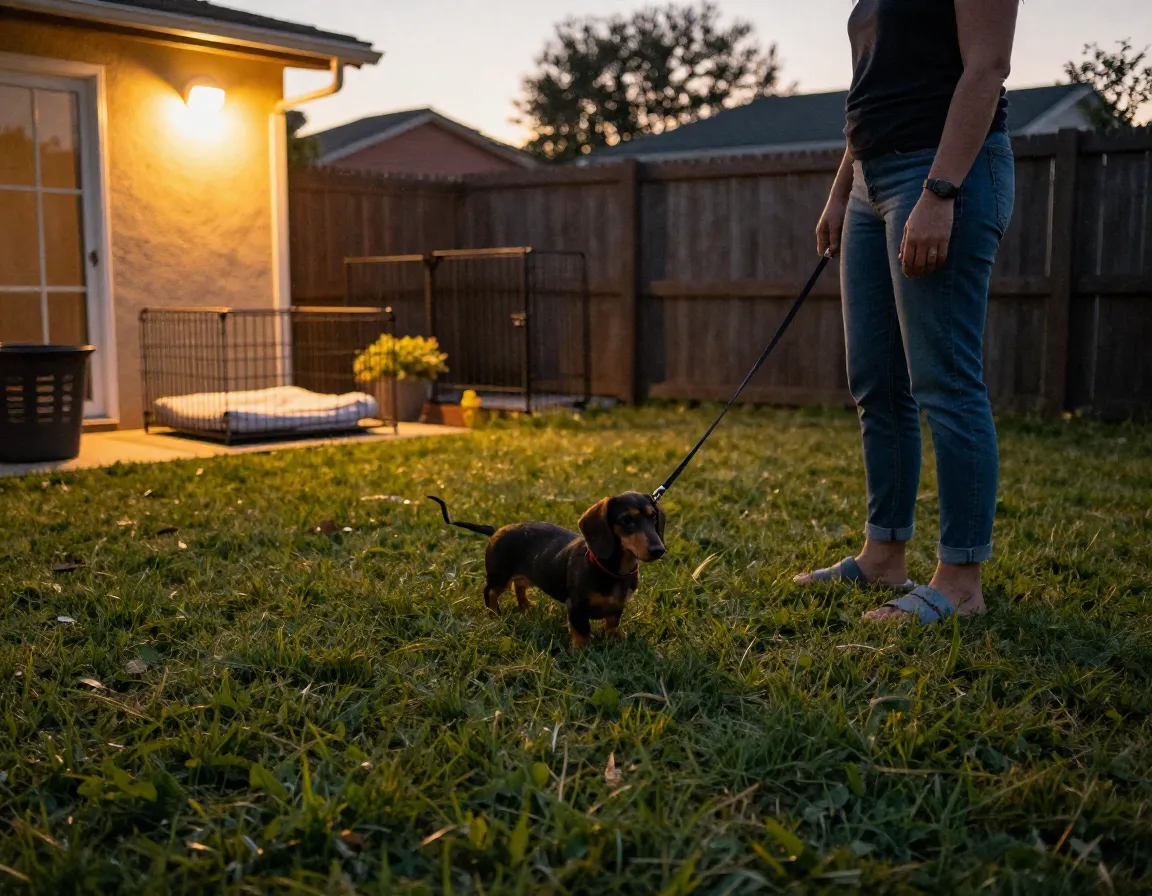
Consistent potty training routines are crucial for dachshund puppies, who have small bladders and may take longer to housetrain than larger breeds [1]. Take puppies outside after meals, naps, and play sessions to establish reliable bathroom habits and prevent accidents.
Effective Potty Training Schedule:
- First thing in the morning
- 15-30 minutes after each meal
- After naps and play sessions
- Before bedtime
- Every 2-3 hours during the day
Miniature dachshunds may take longer to housetrain due to their small size and independent nature [1]. Patience and consistency are key. Use pet-safe odor neutralizers to clean accidents thoroughly, as improper cleaning encourages repeat incidents in the same spot [5].
Crate training supports potty training efforts by teaching bladder control and providing a safe space. Start with short sessions and gradually increase duration, always ensuring the crate remains a positive environment with comfortable bedding and occasional treats [2].
6. Establish Positive Training Methods

Dachshunds require consistent routines paired with treats and verbal praise due to their independent natures and poor response to punishment [2]. These intelligent but sometimes stubborn dogs respond best to positive reinforcement techniques that make training enjoyable and rewarding.
Effective Training Principles:
- Consistency: Same commands and expectations from all family members
- Positive reinforcement: Treats, praise, and play as rewards
- Short sessions: 5-10 minutes to match puppy attention spans
- Patience: Independent nature requires extra time and understanding
- Early socialization: Exposure to various people, sounds, and experiences
Start basic commands early including sit, stay, come, and down. Dachshunds are intelligent dogs who enjoy mental stimulation, making training sessions an excellent bonding opportunity. Avoid punishment-based methods, which can damage trust and worsen stubborn behaviors [2].
The independent streak common in dachshunds means they may test boundaries more than other breeds. Consistent, patient training with clear expectations helps establish respect and cooperation without damaging their spirited personality [9].
Exercise and Physical Activity Guidelines
7. Design Age-Appropriate Exercise Programs
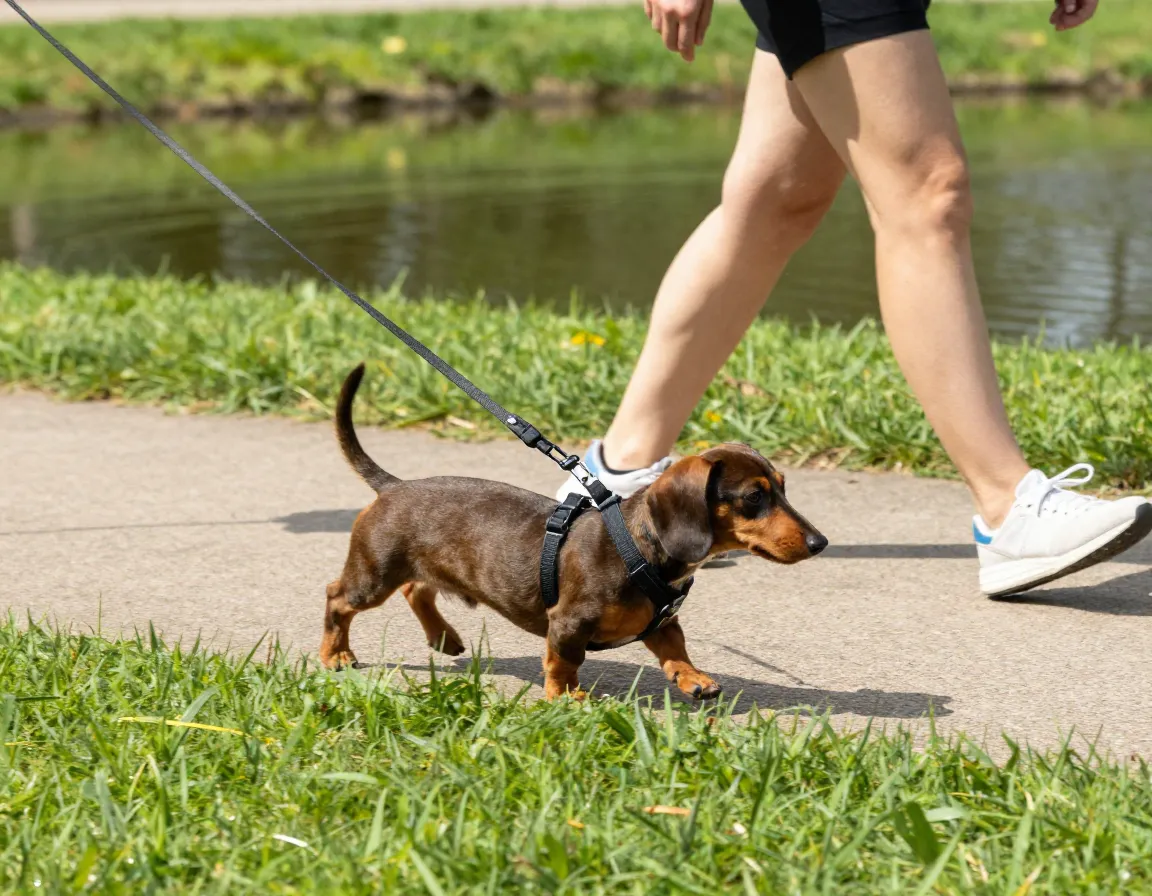
Start with 5-10 minutes of low-impact activity twice daily, gradually increasing as puppies grow [2]. This careful approach to exercise protects developing joints and spine while providing necessary physical and mental stimulation for healthy development.
Age-Specific Exercise Guidelines:
- 8-12 weeks: Short indoor play sessions, gentle exploration
- 3-4 months: Brief leash walks, supervised yard time
- 4-6 months: Longer walks (15-20 minutes), increased play
- 6+ months: Adult exercise routines with continued spine protection
Avoid high-impact activities, jumping, and furniture strain due to dachshunds’ long backs and short legs [3][5]. This means no jumping on or off furniture, avoiding stairs when possible, and preventing activities that could stress their unique spinal structure.
Safe Exercise Options:
- Gentle leash walks on flat surfaces
- Swimming (excellent low-impact exercise)
- Interactive puzzle toys for mental stimulation
- Short fetch sessions on level ground
- Supervised free play in securely fenced areas
8. Ensure Safety During Physical Activities

Dachshunds have high prey drives and require leash walks and sturdy fencing for safe outdoor activities [3]. Their hunting instincts can override training when they spot interesting prey, making secure containment essential for their safety.
Safety Considerations for Exercise:
- Always use a leash during walks and outdoor activities
- Secure fencing minimum 4-6 feet high in play areas
- Avoid overexertion especially in hot weather
- Provide water during longer activities
- Watch for signs of fatigue including excessive panting or reluctance to continue
Ramps and steps help protect their backs when accessing furniture or vehicles. Teaching your puppy to use these tools early prevents the jumping behaviors that can cause serious spinal injuries throughout their lives [5].
Mental stimulation is equally important as physical exercise for these intelligent dogs. Puzzle toys, training sessions, and interactive games provide the mental challenges dachshunds need to stay happy and well-behaved [8].
Creating a Safe and Comfortable Environment
Puppy-Proofing Your Home for Weenie Dogs
Creating a safe environment is fundamental when implementing the 8 adorable tips for caring for your new weenie dog puppies. Their small size and curious nature require specific safety considerations that differ from larger breed requirements.
Essential Safety Measures:
- Block access to stairs until puppies are older and stronger
- Remove small objects that could become choking hazards
- Secure electrical cords and toxic plants
- Install baby gates to control access to certain areas
- Provide non-slip surfaces on smooth floors
Establish a designated puppy area with appropriate bedding, toys, food and water bowls, and easy access to outdoor potty areas. This safe space helps with crate training while providing security during the adjustment period [6].
Building Positive Associations and Preventing Separation Anxiety
Establish crate training to prevent separation anxiety and aid potty training by building positive associations through short sessions with rewards [2]. Dachshunds can be prone to separation anxiety, making early independence training crucial for their emotional wellbeing.
Crate Training Success Strategies:
- Start with short periods (15-30 minutes) while home
- Provide comfortable bedding and a favorite toy
- Feed meals in the crate to create positive associations
- Never use the crate for punishment
- Gradually increase duration as comfort levels improve
Socialization during the puppy period helps prevent behavioral issues later in life. Expose your dachshund puppy to various people, sounds, and experiences in controlled, positive ways. This builds confidence and reduces anxiety in new situations [9].
Health Monitoring and Veterinary Care
Regular Health Checkups and Preventive Care
Establishing a relationship with a veterinarian experienced in dachshund care ensures your puppy receives appropriate preventive care and early intervention for breed-specific health concerns. Regular checkups during the puppy period are crucial for monitoring growth and development.
Essential Veterinary Care Timeline:
- 6-8 weeks: First puppy examination and vaccination series
- 10-12 weeks: Second round of vaccinations
- 14-16 weeks: Final puppy vaccinations and health assessment
- 6 months: Spay/neuter consultation and adult health planning
- Annual: Ongoing preventive care and health monitoring
Monitor for signs of common dachshund health issues including back problems, obesity, and dental disease. Early detection and intervention significantly improve outcomes for these conditions [8].
Recognizing Warning Signs and Emergency Situations
Understanding emergency warning signs specific to dachshunds helps ensure prompt medical attention when needed. Their unique anatomy makes them susceptible to certain conditions that require immediate veterinary care.
Emergency Warning Signs:
- Sudden inability to walk or dragging back legs
- Extreme pain when touched or lifted
- Loss of bladder or bowel control
- Difficulty breathing or excessive panting
- Persistent vomiting or diarrhea
Intervertebral disc disease (IVDD) is a serious concern for dachshunds of all ages. Teaching proper lifting techniques and preventing jumping helps reduce risk, but knowing the warning signs ensures quick response if problems develop [3].
Conclusion
Successfully implementing these 8 adorable tips for caring for your new weenie dog puppies creates the foundation for a lifetime of health and happiness with your dachshund companions. From establishing proper feeding routines and grooming habits to designing safe exercise programs and positive training methods, each element contributes to your puppy’s physical and emotional wellbeing.
Remember that consistency is key in all aspects of dachshund puppy care. Their independent nature and unique physical characteristics require patient, dedicated attention during the crucial puppy development period. The time and effort invested now in proper care techniques will pay dividends throughout your dog’s life in the form of better health, improved behavior, and stronger bonds.
Take action today by implementing these evidence-based care strategies. Start with the most critical elements like proper feeding schedules and safe exercise routines, then gradually incorporate grooming and training practices. Consult with a veterinarian experienced in dachshund care to develop a personalized health plan that addresses your puppy’s specific needs.
Your new weenie dog puppies depend on you for guidance, protection, and love during this formative period. By following these comprehensive care guidelines, you’re setting the stage for many years of joy with these remarkable, spirited companions who will undoubtedly steal your heart with their unique personalities and unwavering loyalty.
References
[1] Your New Miniature Dachshund Puppy The Essentials – https://www.joiipetcare.com/blogs/advice/your-new-miniature-dachshund-puppy-the-essentials
[2] Dachshund Puppies Everything You Need To Know – https://www.rover.com/blog/dachshund-puppies-everything-you-need-to-know/
[3] Dachshund – https://vidavetcentennial.com/dog-breed/dachshund/
[4] Guide To Dachshund Puppies – https://k9sportsack.com/blogs/news/guide-to-dachshund-puppies
[5] Dachshund Puppy Essentials – https://www.dachshundstation.com/dachshund-puppy-essentials/
[6] First Week With My Dachshund Puppy Lessons Learned And Tips For Success – https://youdidwhatwithyourweiner.com/first-week-with-my-dachshund-puppy-lessons-learned-and-tips-for-success/
[7] Dachshund Puppy Diet Guide Feeding Tips For Healthy Growth – https://happytailpuppies.com/blogs/news/dachshund-puppy-diet-guide-feeding-tips-for-healthy-growth
[8] Caring For Your Dachshund A Complete Guide – https://worlddachshundday.com/f/caring-for-your-dachshund-a-complete-guide
[9] Tips For New Owners – https://www.dachshundhealth.org.uk/tips-for-new-owners