7 Puppy Training Techniques That Actually Work (And Why)
Bringing home a new puppy is one of life’s greatest joys—until you realize your adorable furry friend has turned your favorite shoes into chew toys and treats your living room like their personal bathroom. 🐕 If you’re feeling overwhelmed by conflicting training advice or frustrated by techniques that simply don’t work, you’re not alone. The truth is, 7 puppy training techniques that actually work (and why) are grounded in science, not outdated dominance theories or quick-fix gimmicks.
After working with hundreds of puppies and their families over the years, I’ve seen firsthand which methods create lasting behavioral changes and which ones fail miserably. The techniques I’ll share aren’t just popular—they’re proven effective by veterinary behaviorists, backed by research, and consistently deliver results when applied correctly.
Key Takeaways
- Positive reinforcement is the gold standard for puppy training, creating stronger bonds and faster learning than punishment-based methods
- Early socialization combined with structured training sessions prevents behavioral issues and builds confidence that lasts into adulthood
- Short, frequent training sessions (5-10 minutes) work better than long, overwhelming sessions for young puppies
- Consistency and timing are more important than perfection—reward good behavior immediately for maximum impact
- Age-appropriate expectations prevent frustration and set both you and your puppy up for long-term success
Understanding the Science Behind Effective Puppy Training
Before diving into the specific techniques, it’s crucial to understand why these methods work. Modern dog training is based on learning theory and positive reinforcement principles that have been extensively studied and refined over decades[1].
Puppies learn through classical conditioning (associating experiences with outcomes) and operant conditioning (learning that behaviors have consequences). When we use science-based training methods, we’re working with your puppy’s natural learning processes rather than against them.
Research shows that puppies trained with positive reinforcement methods demonstrate:
- Faster learning and better retention
- Stronger bonds with their owners
- Less stress during training sessions
- More confident and well-adjusted adult behavior[2]
The key is understanding that punishment-based methods, while they might seem to work quickly, often create fear, anxiety, and can actually slow down the learning process. That’s why the 7 puppy training techniques that actually work (and why) focus on building positive associations and clear communication.
The Foundation: Why These 7 Puppy Training Techniques That Actually Work
1. Positive Reinforcement Training
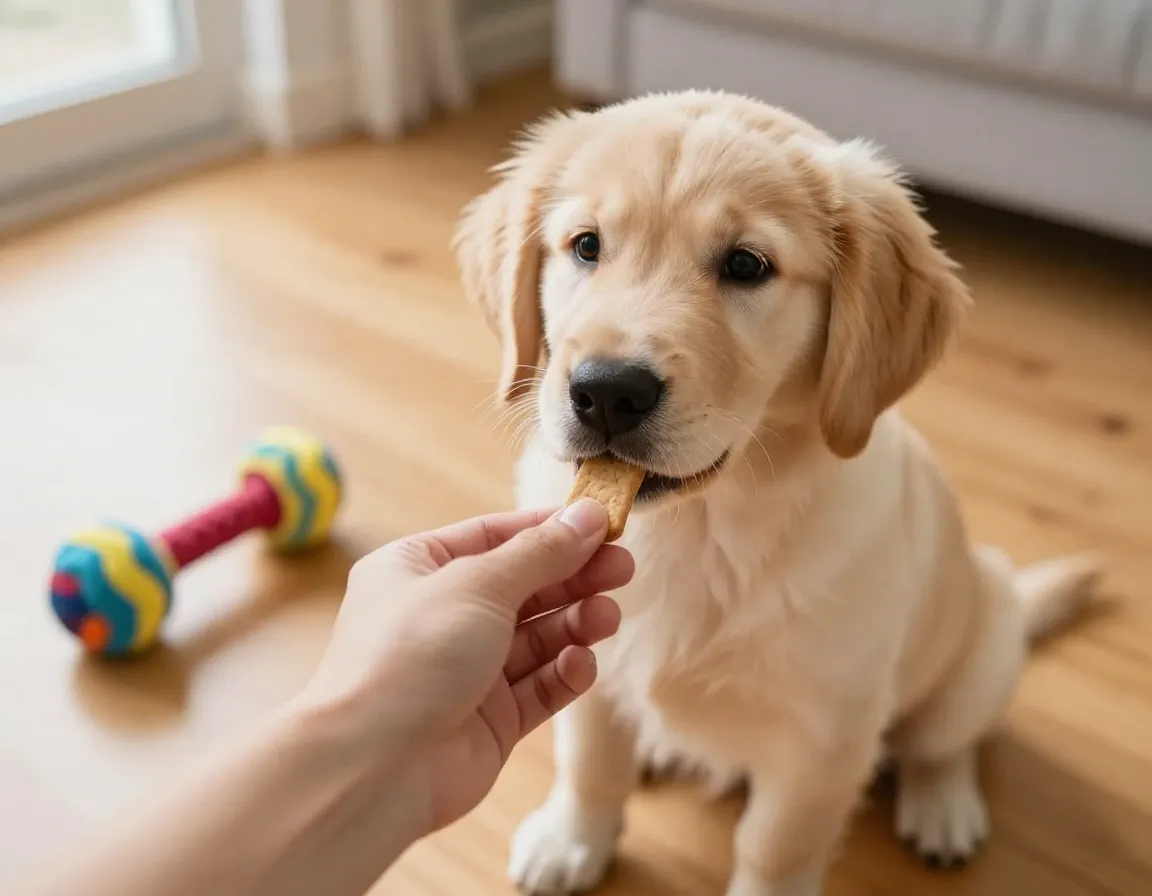
Positive reinforcement is the cornerstone of effective puppy training and for good reason—it’s the most scientifically supported method available[1]. This technique involves rewarding desired behaviors immediately when they occur, making your puppy more likely to repeat those behaviors.
How it works:
- Timing is everything: Reward within 1-3 seconds of the desired behavior
- Use high-value rewards: Find what motivates your puppy (treats, toys, praise)
- Be consistent: Everyone in your household should use the same commands and rewards
- Start simple: Begin with easy behaviors like “sit” before moving to complex commands
Why it’s effective:
Positive reinforcement works because it creates positive associations with training and builds your puppy’s confidence. Instead of learning what not to do through punishment, your puppy learns what TO do through rewards. This approach strengthens the bond between you and your puppy while reducing stress and anxiety[2].
Real-world application:
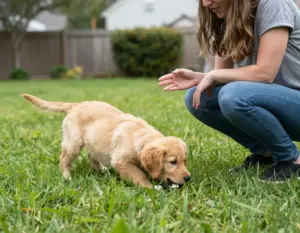
When your puppy sits without being asked, immediately say “Good sit!” and give a treat. This reinforces the behavior and makes it more likely to happen again. Avoid waiting too long to reward—puppies have short attention spans and need immediate feedback.
2. Clicker Training for Clear Communication
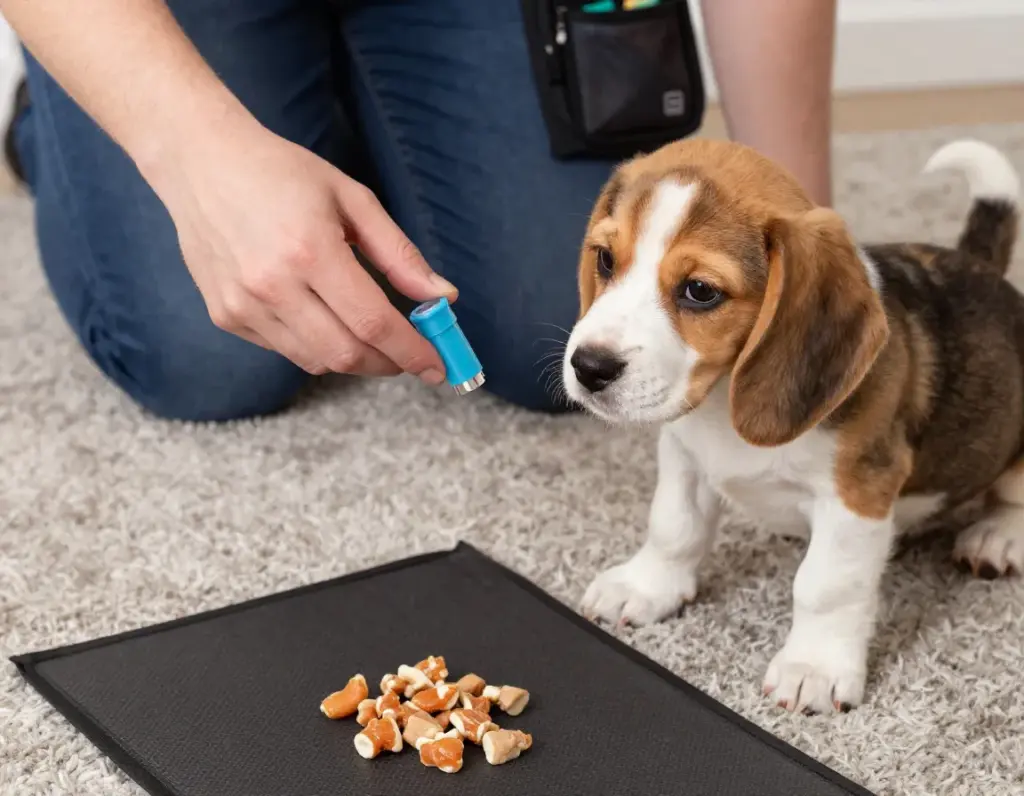
Clicker training takes positive reinforcement to the next level by providing precise timing and clear communication. The clicker serves as a “bridge” between the desired behavior and the reward, helping your puppy understand exactly what they did right[2].
How it works:
- Charge the clicker: First, teach your puppy that click = treat by clicking and immediately giving a reward
- Mark the behavior: Click the instant your puppy performs the desired behavior
- Follow with reward: Always follow a click with a treat—never click without rewarding
- Keep sessions short: 5-10 minutes maximum for young puppies
Why it’s scientifically sound:
Clicker training leverages classical conditioning by creating a conditioned reinforcer (the click sound) that your puppy learns to associate with good things. The click is more precise than verbal praise because it’s:
- Consistent in sound and duration
- Immediate and can mark exact moments
- Emotionally neutral (doesn’t vary with your mood)
Pro tip: Start with simple behaviors like eye contact or sitting. Click the moment your puppy looks at you, then immediately treat. This builds the foundation for more complex training.
3. Strategic Socialization and Exposure
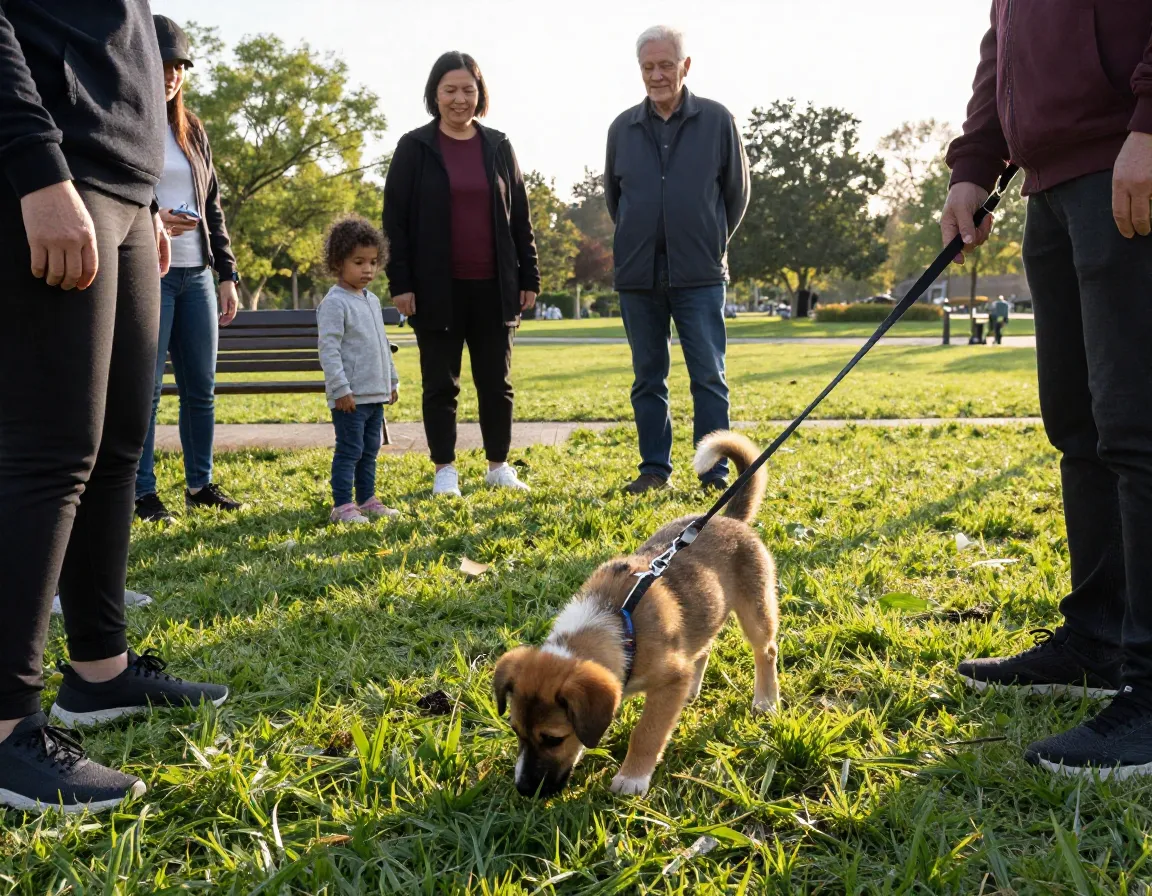
Socialization is arguably the most critical aspect of puppy development, yet it’s often misunderstood. Proper socialization isn’t just about meeting other dogs—it’s about controlled exposure to various people, animals, environments, sounds, and experiences during the critical socialization period (3-14 weeks)[2].
Effective socialization includes:
- People of all ages, ethnicities, and appearances
- Different environments: parks, busy streets, quiet neighborhoods
- Various sounds: traffic, children playing, household noises
- Other animals: well-socialized dogs, cats, and other pets
- Handling exercises: touching paws, ears, mouth for future vet visits
Why timing matters:
Research shows that experiences during the critical socialization period have lasting effects on adult behavior. Puppies who receive proper socialization show greater confidence, better impulse control, and fewer behavioral issues as adults[4].
Safety first approach:
- Ensure all dog interactions are with vaccinated, friendly dogs
- Supervise all interactions closely
- End on a positive note before your puppy becomes overwhelmed
- Go at your puppy’s pace—never force interactions
“Puppies tested at 6-7 months old showed traits—including gesture comprehension, self-confidence, and impulse control—that remained stable into adulthood, suggesting early training has lasting effects.”[4]
4. Crate Training for Security and Structure
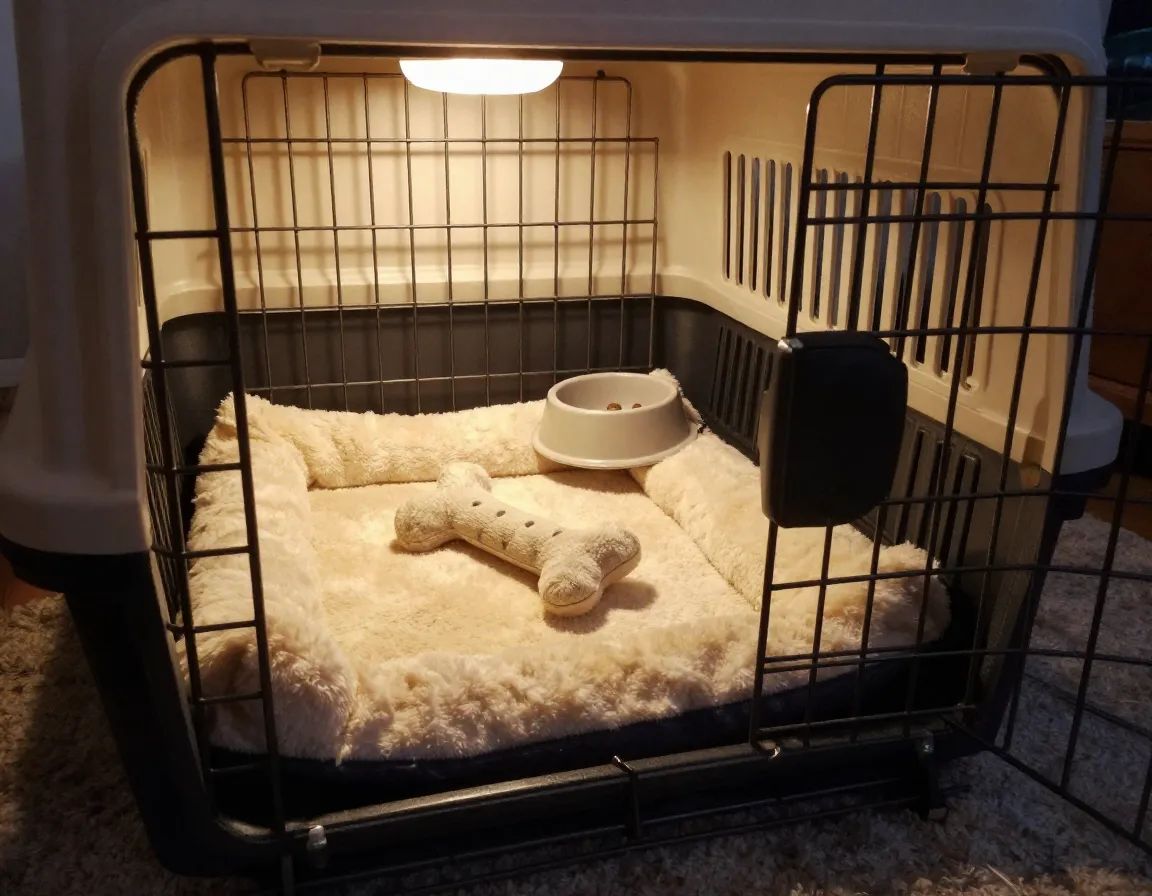
Crate training is one of the most valuable skills you can teach your puppy, providing them with a safe space while helping with housebreaking and preventing destructive behaviors. When done correctly, most puppies learn to love their crate as their personal den[1].
Step-by-step crate training:
- Make it comfortable: Add soft bedding and a favorite toy
- Feed meals inside: Create positive associations with the crate
- Start with short periods: Begin with just a few minutes while you’re home
- Gradually increase time: Slowly extend crate time as your puppy adjusts
- Never use as punishment: The crate should always be a positive space
Why crates work:
Dogs are naturally den animals and appreciate having a secure space that’s entirely their own. Crate training works because it:
- Prevents destructive behavior when unsupervised
- Aids in housebreaking (dogs won’t soil their sleeping area)
- Provides security during stressful situations
- Makes travel safer and less stressful
Common mistakes to avoid:
- Crating too long: Puppies can only “hold it” for about one hour per month of age
- Using the crate for punishment: This creates negative associations
- Ignoring distress signals: Some whining is normal, but excessive distress isn’t
Advanced Techniques That Deliver Results
5. Bite Inhibition Training
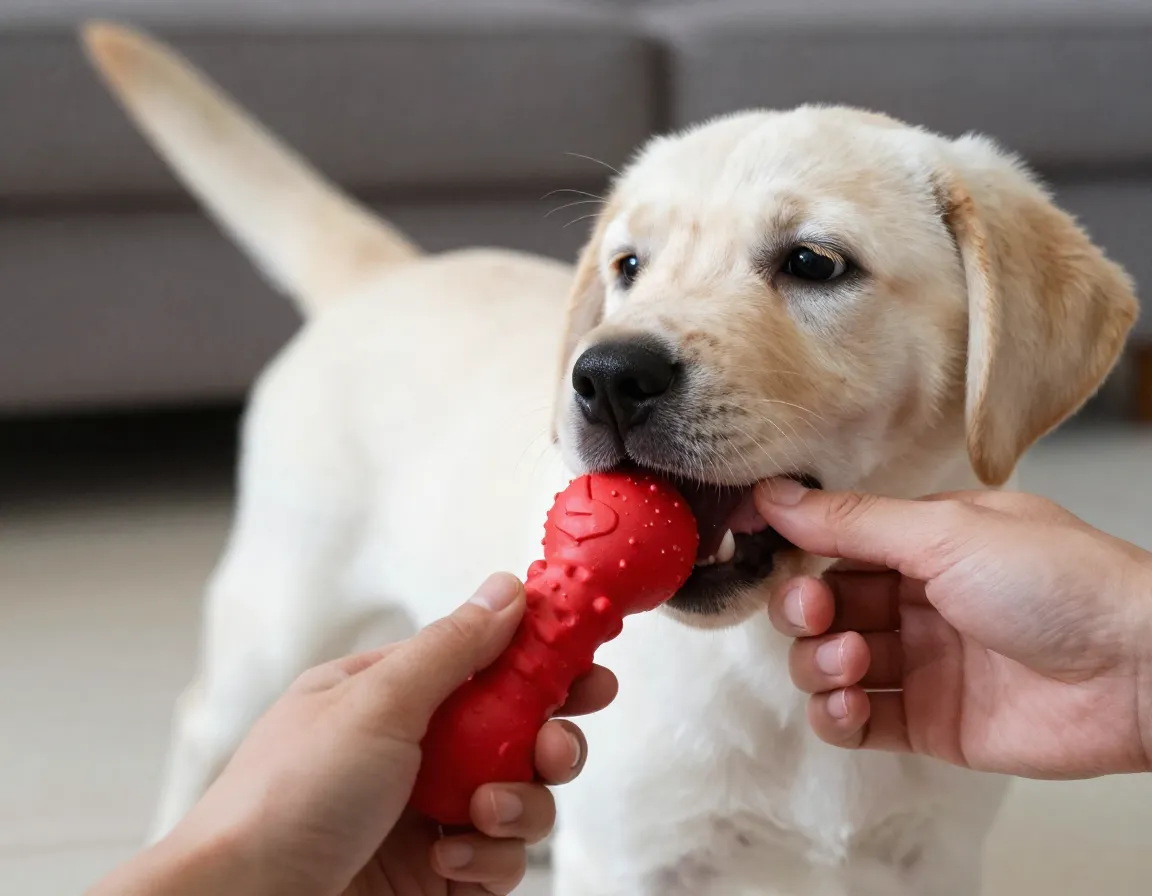
Bite inhibition is the ability to control the force of a bite, and it’s a crucial skill that puppies must learn early. While puppy bites might seem harmless now, teaching proper bite inhibition prevents serious problems as your dog grows[1].
How puppies naturally learn bite inhibition:
- Playing with littermates: Other puppies yelp and stop playing when bitten too hard
- Mother dog corrections: Mom dogs teach appropriate bite pressure
- Human intervention: We must continue this education in our homes
Training technique:
- Let your puppy mouth gently during play
- Yelp loudly if they bite too hard and immediately stop playing
- Resume play after a few seconds if they’re calmer
- Gradually reduce acceptable pressure over time
- Redirect to appropriate chew toys
Why this approach works:
This method mimics natural learning processes while teaching your puppy that human skin is delicate. Harsh corrections or punishment can actually increase biting behavior or cause fear-based aggression. The gentle, consistent approach builds understanding rather than fear[1].
6. Shaping Complex Behaviors
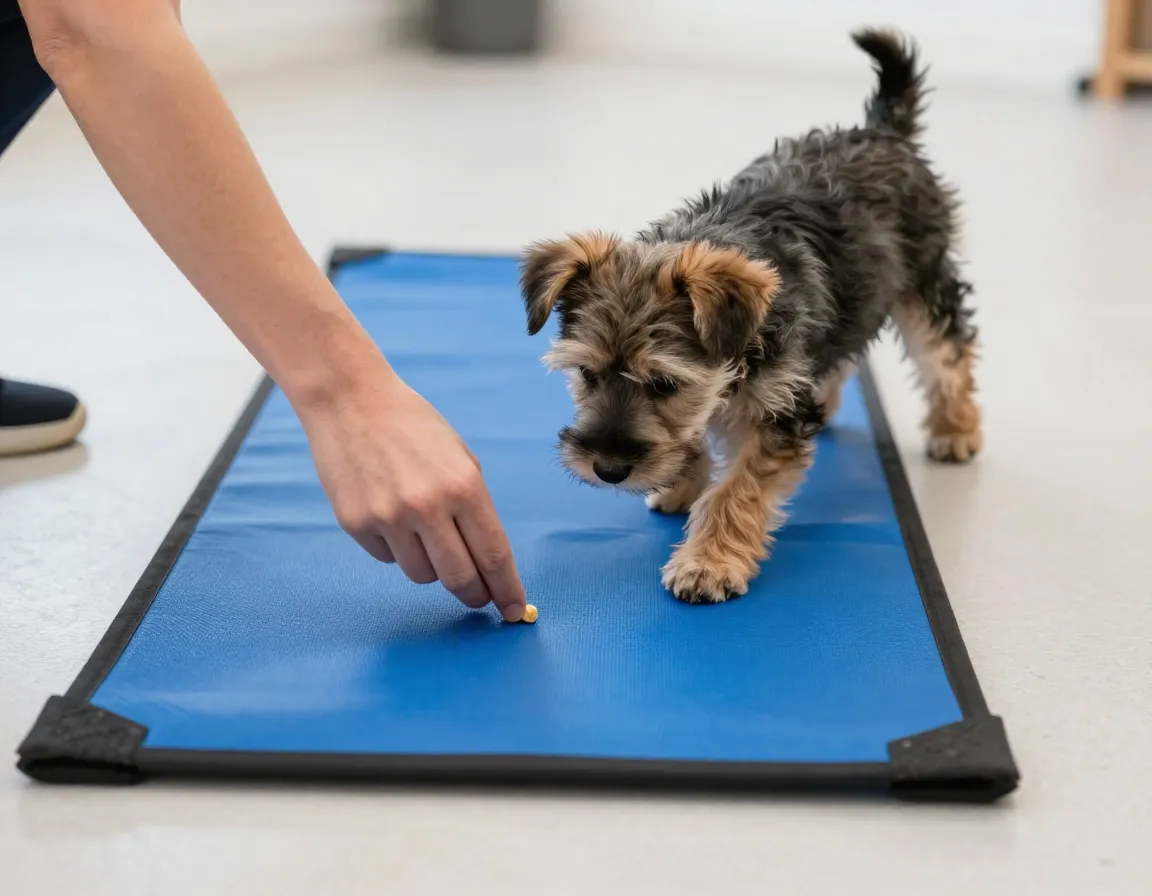
Shaping is a powerful technique that breaks complex behaviors into small, manageable steps. Instead of expecting your puppy to perform a complete behavior immediately, you reward successive approximations toward the final goal[1].
The shaping process:
- Define the end goal clearly (e.g., “roll over”)
- Break it into tiny steps (lie down → lie on side → roll to back → complete roll)
- Reward each small improvement
- Gradually raise criteria as your puppy succeeds
- Be patient and celebrate small wins
Real-world example – Teaching “Place”:
- Reward looking at the mat
- Reward stepping toward the mat
- Reward touching the mat with one paw
- Reward standing on the mat
- Reward lying down on the mat
- Add the verbal cue “place”
Why shaping is effective:
Shaping works because it builds confidence and allows your puppy to actively participate in learning. Instead of forcing behaviors, you’re guiding your puppy to discover what you want, making them an enthusiastic partner in training[1].
7. Environmental Management and Enrichment
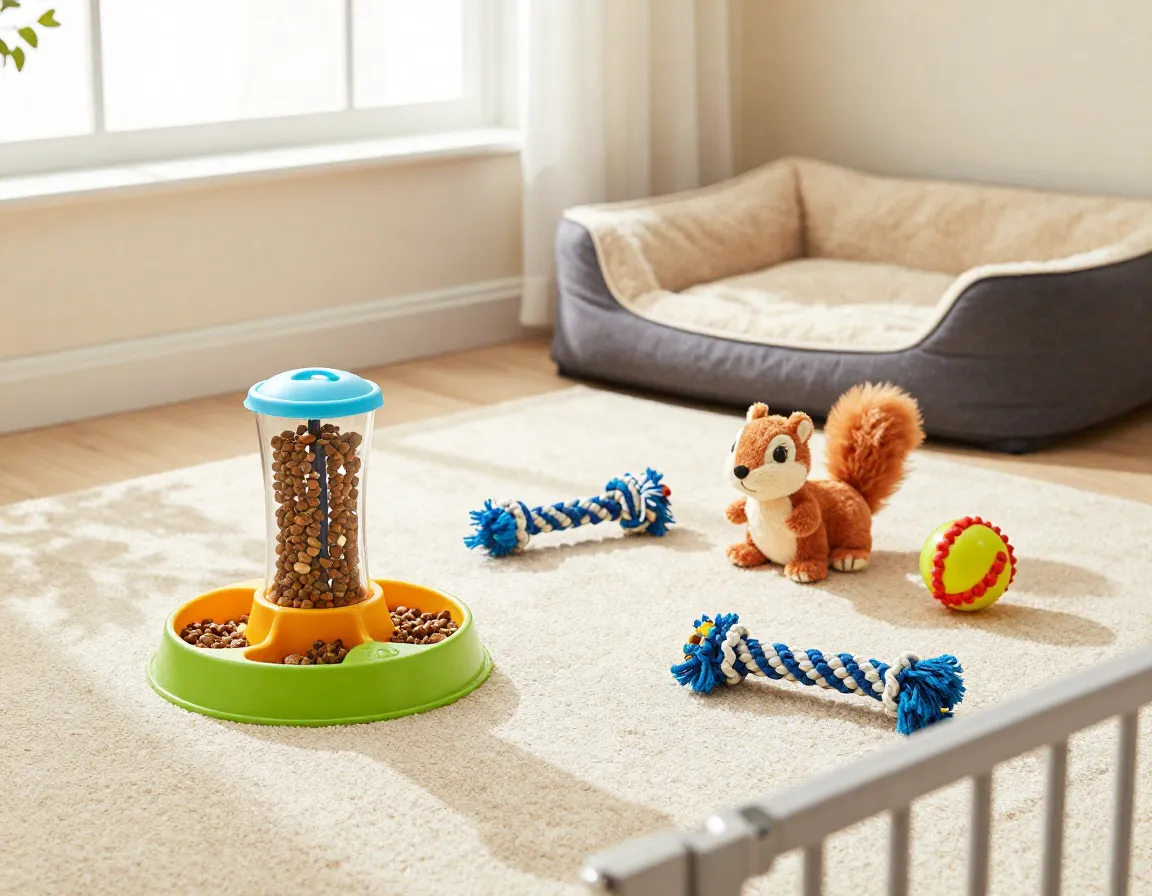
The final technique focuses on setting your puppy up for success by managing their environment and providing appropriate mental and physical stimulation. This proactive approach prevents many behavioral problems before they start[1].
Environmental management strategies:
- Puppy-proof your space: Remove tempting but inappropriate items
- Provide appropriate outlets: Chew toys, puzzle feeders, interactive games
- Create structured routines: Consistent feeding, potty, and play schedules
- Use baby gates: Manage access to different areas of your home
- Rotate toys: Keep things interesting by rotating available toys weekly
Mental enrichment activities:
- Puzzle feeders and treat-dispensing toys
- Hide and seek games with treats or toys
- Basic training sessions as mental exercise
- Exploration walks in new environments
- Scent work and sniffing games
Why environmental management matters:
A well-managed environment prevents rehearsal of unwanted behaviors while providing appropriate outlets for natural puppy energy and curiosity. When puppies have their needs met through appropriate channels, they’re less likely to develop destructive or problematic behaviors[1].
The connection to training:
Environmental enrichment supports all other training efforts by:
- Reducing excess energy that can interfere with focus
- Building problem-solving skills
- Increasing confidence through positive experiences
- Strengthening your bond through interactive play
Implementing These 7 Puppy Training Techniques That Actually Work
Creating Your Training Schedule
Consistency is key to success with any of these techniques. Here’s how to structure your training for maximum effectiveness:
Daily training schedule:
- Morning session (5-10 minutes): Basic commands and housebreaking
- Midday session (5-10 minutes): Socialization or environmental exposure
- Evening session (5-10 minutes): Fun tricks or shaping exercises
- Throughout the day: Reinforce good behavior as it happens naturally
Weekly goals:
- Week 1-2: Focus on crate training and basic positive reinforcement
- Week 3-4: Add clicker training and begin socialization
- Week 5-6: Introduce bite inhibition and environmental management
- Week 7+: Begin shaping more complex behaviors
Common Mistakes to Avoid
Even with the best intentions, many puppy owners make mistakes that can slow progress. Here are the most common pitfalls:
Training mistakes:
- Inconsistent timing: Delaying rewards reduces effectiveness
- Mixed messages: Using different commands for the same behavior
- Training when frustrated: Your mood affects your puppy’s learning
- Skipping socialization: Waiting until after vaccinations is often too late
- Overwhelming sessions: Long training sessions cause mental fatigue
Environmental mistakes:
- Expecting too much too soon: Puppies need time to develop
- Punishment-based corrections: These can damage your relationship
- Inadequate exercise: Tired puppies learn better than hyper ones
- Ignoring individual personality: Some puppies need more time or different approaches
Measuring Progress and Success
Tracking your puppy’s progress helps you stay motivated and adjust your approach when needed. Look for these signs of success:
Behavioral indicators:
- Faster response to known commands
- Increased focus during training sessions
- Better impulse control in exciting situations
- Reduced anxiety in new environments
- Stronger bond and trust with family members
Timeline expectations:
- Basic commands (sit, stay, come): 2-4 weeks with consistent practice
- Housebreaking: 4-6 months for full reliability
- Crate training: 2-8 weeks depending on individual puppy
- Socialization: Ongoing process throughout puppyhood
- Complex behaviors: 4-12 weeks depending on complexity
Troubleshooting Common Challenges
When Progress Stalls
If your puppy seems to have stopped learning or is regressing, consider these factors:
Possible causes:
- Medical issues: Pain or illness can affect behavior
- Developmental stages: Adolescent phases can cause temporary setbacks
- Environmental stress: Changes in routine or household
- Training fatigue: Too much too fast can overwhelm puppies
- Inconsistent application: Mixed messages from family members
Solutions:
- Take a break: Sometimes a few days off helps reset motivation
- Simplify expectations: Go back to easier versions of behaviors
- Increase reward value: Use higher-value treats or rewards
- Check your timing: Ensure you’re rewarding at the right moment
- Consult a professional: Sometimes an outside perspective helps
Dealing with Specific Behavioral Issues
Excessive barking:
- Identify triggers: What causes the barking?
- Redirect attention: Teach “quiet” command with positive reinforcement
- Manage environment: Remove or reduce triggers when possible
- Increase exercise: Often barking decreases with adequate physical activity
Jumping on people:
- Ignore the behavior: No attention (positive or negative) for jumping
- Reward four paws on floor: Give attention only when calm
- Teach alternative greeting: Train “sit” for greetings
- Manage interactions: Use leash or baby gates to control greetings
Resource guarding:
- Never punish: This can escalate guarding behavior
- Trade for something better: Teach “drop it” with high-value rewards
- Practice handling exercises: Build positive associations with human interaction around resources
- Seek professional help: This issue can escalate and requires careful management
Conclusion
The 7 puppy training techniques that actually work (and why) aren’t magic solutions—they’re scientifically-backed methods that respect your puppy’s natural learning processes while building a strong, trusting relationship. Success comes from consistent application, patience, and understanding that every puppy learns at their own pace.
Remember that positive reinforcement, clicker training, strategic socialization, crate training, bite inhibition, behavior shaping, and environmental management work best when used together as part of a comprehensive training program. Each technique supports and enhances the others, creating a foundation for lifelong learning and cooperation.
Your next steps:
- Choose one technique to focus on this week—I recommend starting with positive reinforcement
- Set up a consistent training schedule with short, frequent sessions
- Gather your supplies: treats, clicker, crate, and appropriate toys
- Track your progress in a training journal to stay motivated
- Be patient with yourself and your puppy—learning takes time for both of you
The investment you make in training during your puppy’s first few months will pay dividends for years to come. A well-trained dog isn’t just better behaved—they’re happier, more confident, and able to participate fully in family life. Start today, stay consistent, and enjoy watching your puppy grow into the amazing companion you’ve always dreamed of having. 🎾
References
[1] 12 Dog Training Methods Explained Science Backed Guide – https://www.qcpetstudies.com/blog/2025/10/12-dog-training-methods-explained-science-backed-guide
[2] The Science Behind Why Our Training Works – https://dogdynamics.org/training-tips/the-science-behind-why-our-training-works/
[3] Innovations In Dog Training Techniques – https://www.gingrapp.com/blog/innovations-in-dog-training-techniques
[4] Science Train Your Puppy Behaviors – https://www.sciencenews.org/article/science-train-your-puppy-behaviors
[5] How To Train Your Dog A Size Appropriate Guide – https://www.psychologytoday.com/us/blog/the-venn-diagram-life/202602/how-to-train-your-dog-a-size-appropriate-guide
[6] The Ultimate Dog Training Guide – https://www.petworks.com/articles/the-ultimate-dog-training-guide/