Labrador Retriever English vs American: 9 Crucial Comparisons
If you’ve ever stood at a dog park watching two Labs that look completely different and wondered, “Are those really the same breed?” — you’re not alone. The Labrador Retriever English vs American: 9 Crucial Comparisons debate is one of the most common conversations among dog lovers, breeders, and hunters alike. Despite sharing the same breed name and AKC registration, English and American Labradors can look and act so differently that choosing the wrong one for your lifestyle can be a frustrating mistake. In 2026, with Lab ownership at an all-time high, understanding these differences has never been more important.

Let’s break down every key distinction so you can make a confident, informed decision.
Key Takeaways
- 🐾 English and American Labs are the same breed — the AKC recognizes only one Labrador Retriever, but the two types differ significantly in build, temperament, and purpose [2][4].
- 🏋️ English Labs are stockier and calmer, making them ideal for families, therapy work, and first-time dog owners [1][2].
- 🏃 American Labs are leaner and more energetic, bred for hunting, field trials, and high-performance tasks [2][4].
- 📏 Physical differences are measurable — height, weight, head shape, and tail structure all vary between the two types [1][5].
- 🎯 Choosing the right type matters — matching your lifestyle to the right Lab type leads to a happier dog and a happier owner.
What Makes These Two Types Different? A Quick Overview
Before diving into the Labrador Retriever English vs American: 9 Crucial Comparisons, it helps to understand why these differences exist. Both types descend from the same Labrador Retriever lineage, but decades of selective breeding for different goals have created two visually and behaviorally distinct dogs.
💬 “The American Kennel Club recognizes only one Labrador Retriever breed. ‘English’ and ‘American’ are styling designations — not separate breeds.” [2][4]
English Labs (also called British Labs or show Labs) were bred primarily for conformation shows and companionship. American Labs (also called field Labs or working Labs) were developed for hunting, field trials, and demanding outdoor work [2][4][7].
| Feature | English Lab | American Lab |
|---|---|---|
| Build | Stocky, blocky | Lean, athletic |
| Energy Level | Calm, moderate | High, driven |
| Primary Purpose | Show/companion | Field/hunting |
| Training Ease | Easier | More challenging |
| Best For | Families, seniors | Active owners, hunters |
The 9 Crucial Comparisons: Labrador Retriever English vs American
1. Body Build and Overall Structure
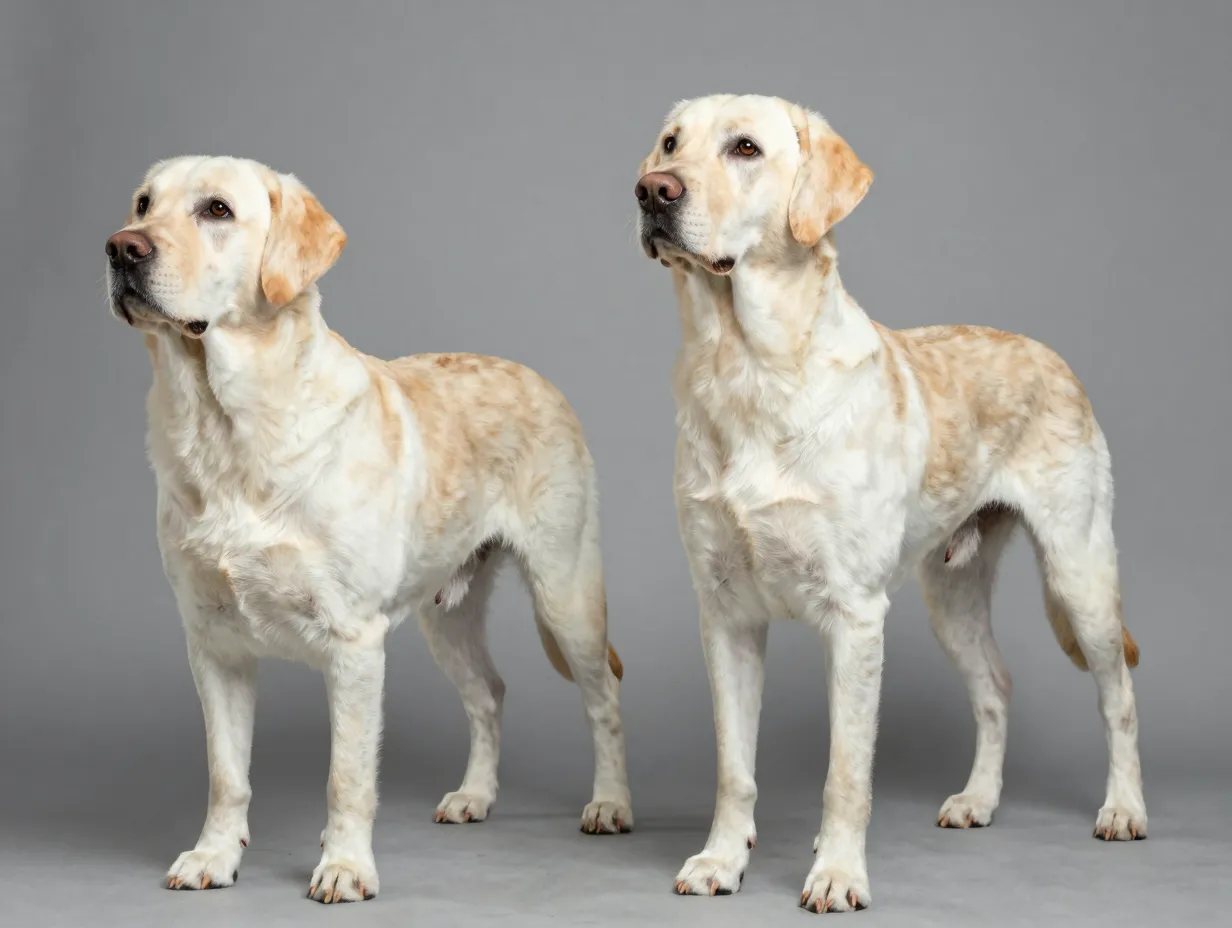
The most obvious difference between English and American Labs is how they look standing next to each other. English Labs are stocky, with barrel chests, shorter legs, and a heavier overall frame [1][2][4]. They look powerful and solid — almost like a compact tank.
American Labs, on the other hand, are built for speed and endurance. They are taller, leaner, and more athletic in appearance [1][2]. Their bodies are built to cover ground quickly during a long day of hunting or field work.
- English Lab: Wide, deep chest; short, sturdy legs; compact frame
- American Lab: Narrower chest; longer legs; streamlined body
This structural difference isn’t just cosmetic — it reflects the purpose each type was bred for. Show dogs need to look impressive standing still; field dogs need to move efficiently for hours.
2. Height Differences
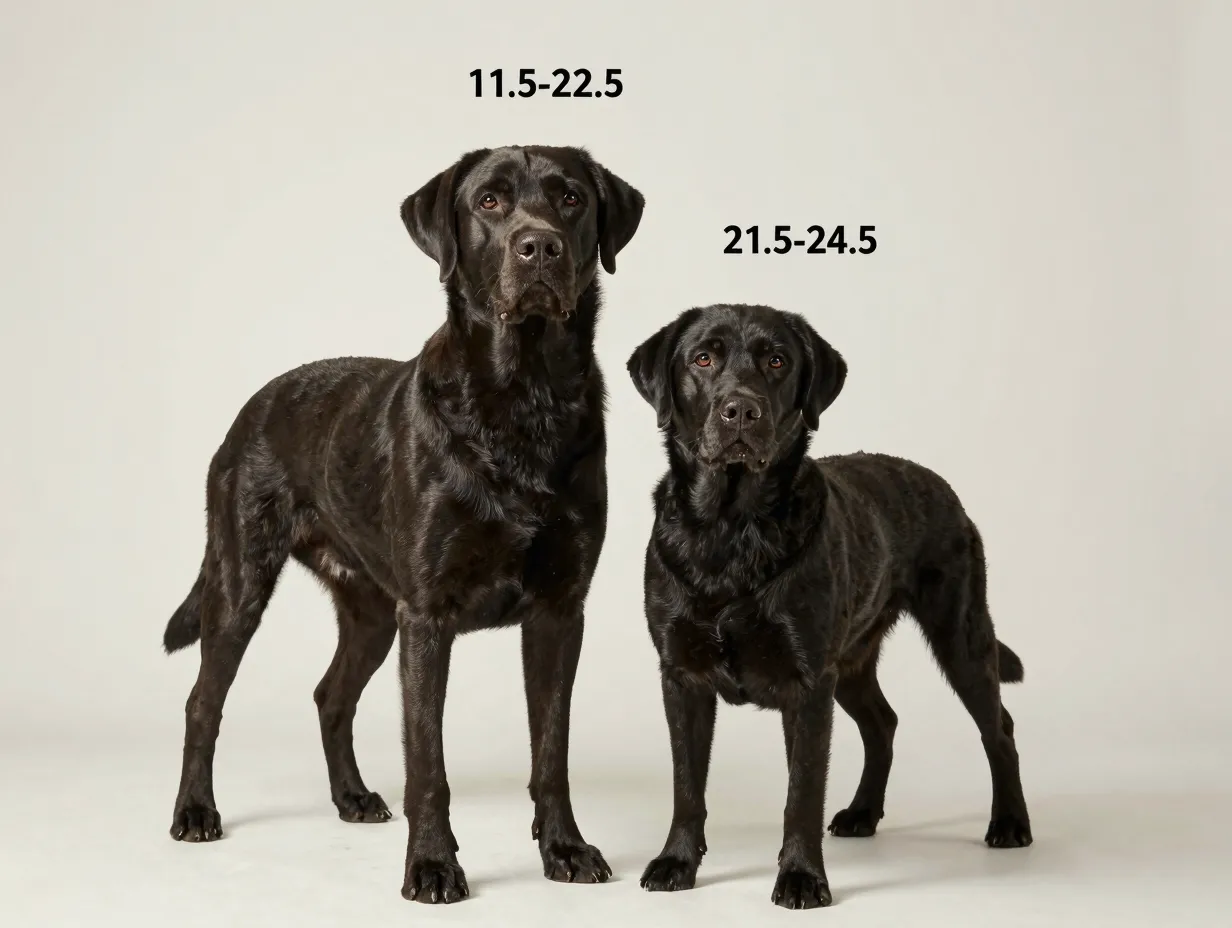
When it comes to height, American Labs have a clear edge. English Labs typically stand 21.5 to 22.5 inches tall, while American Labs can reach 21.5 to 24.5 inches [1][5].
That extra two inches might not sound like much, but combined with their leaner build, it gives American Labs a noticeably taller, more elegant silhouette. English Labs look shorter and more grounded, which contributes to their sturdy, compact appearance.
📏 Quick Fact: An American Lab at full height (24.5 inches) is nearly 14% taller than a shorter English Lab (21.5 inches) — a visible difference in person.
3. Weight and Body Mass

Weight differences between the two types are also meaningful. Male English Labs weigh between 70 and 85 pounds, while male American Labs typically weigh 65 to 80 pounds [1]. Females follow a similar pattern — English females range from 60 to 70 pounds, while American females weigh 55 to 70 pounds [1].
English Labs carry more mass in a shorter frame, giving them that dense, heavy feel. American Labs distribute their weight across a taller, longer body, resulting in a leaner look even when they weigh a similar amount.
This weight difference matters for:
- Joint health — heavier English Labs may be more prone to joint stress
- Exercise requirements — lighter American Labs can sustain longer physical activity
- Feeding costs — heavier dogs generally eat more
4. Head Shape and Facial Features
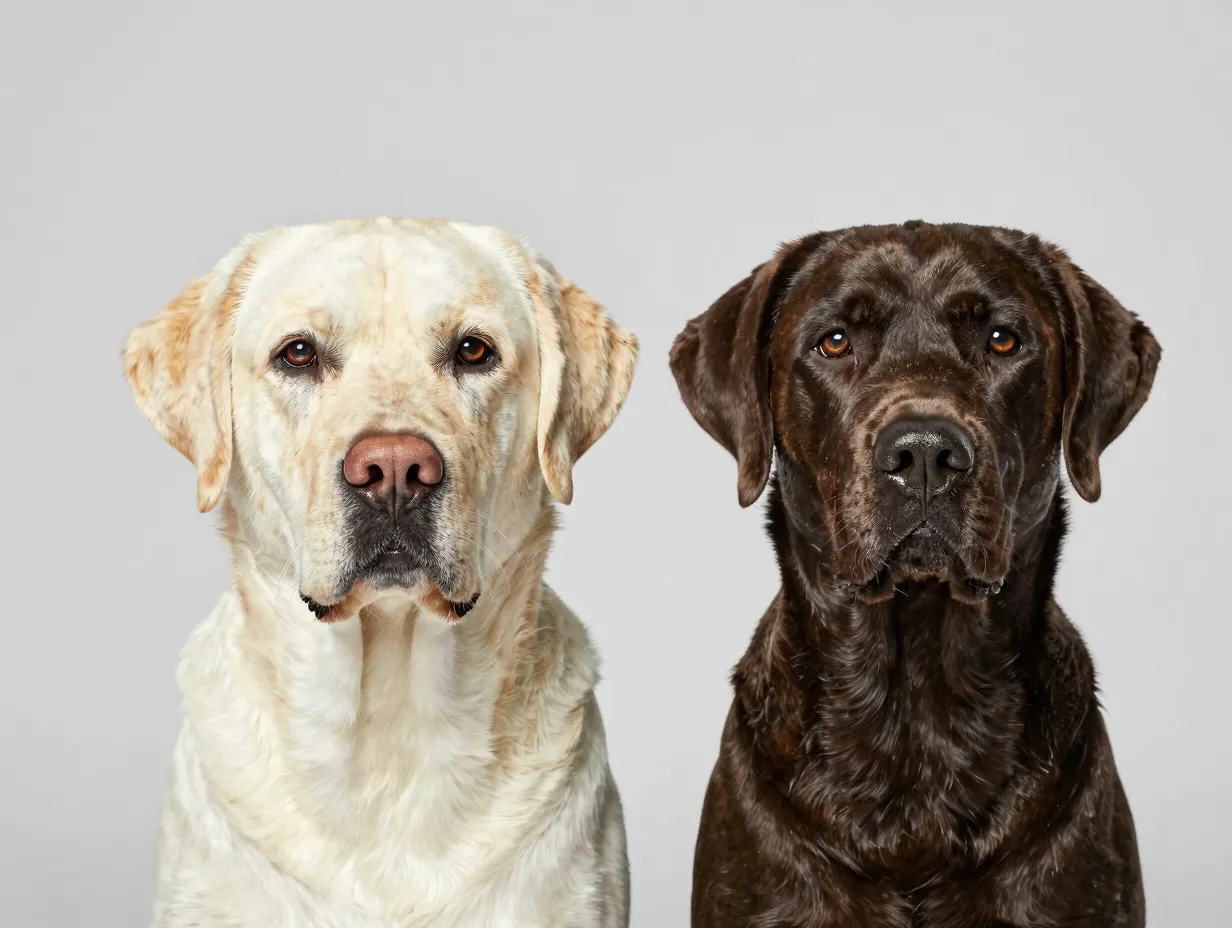
One of the easiest ways to tell the two types apart is by looking at their heads. English Labs have wider, blockier heads with shorter, broader muzzles [1][4][5]. Their faces look almost square-shaped, with prominent brow ridges and a noble, dignified expression.
American Labs have sleeker, more refined heads with longer muzzles [1][4][5]. Their facial structure looks more streamlined and alert — built for scanning fields and tracking game.
🐶 Visual Tip: If a Lab’s head looks like it could be a pillow — wide, flat, and blocky — it’s probably an English Lab. If the head looks more like a pointed arrow — narrow and forward-facing — it’s likely an American Lab.
5. Tail Shape and Thickness
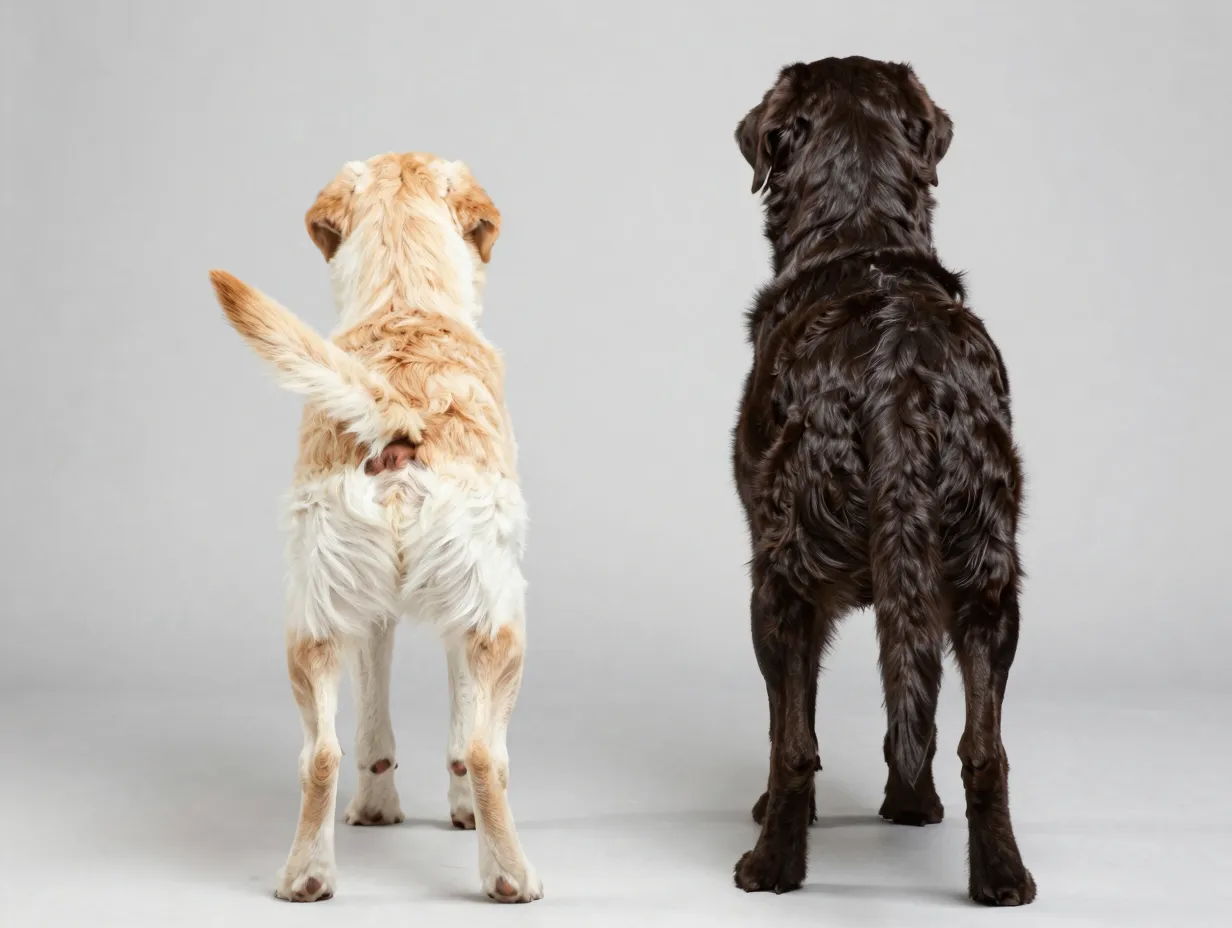
This comparison surprises many people. English Labs have thinner tails that curve upward, giving them a slightly elegant, curved tail carriage [3]. American Labs have thicker, straighter tails that extend more horizontally from the body [3].
The American Lab’s thick, powerful tail (sometimes called an “otter tail”) is a functional trait — it acts as a rudder when swimming in water to retrieve game. Both types have this otter-tail trait to some degree, but it is more pronounced in American field-bred Labs.
6. Temperament and Energy Level

This is where the two types diverge most dramatically in everyday life. English Labs are calmer, gentler, and more laid-back [2][4]. They are happy to lounge on the couch after a moderate walk. They tend to be quieter and more reserved [7].
American Labs are energetic, driven, and enthusiastic — sometimes to the point of being described as “high-strung” [2][4][7]. They are vocal, expressive, and always ready for the next adventure. Without enough stimulation, they can become destructive or anxious.
💬 “American Labs are often vocal, enthusiastic, and high-strung; English and British Labs are reserved and quieter.” [7]
Which temperament suits you?
- 🛋️ Prefer a calm companion? → English Lab
- 🏕️ Love outdoor adventures? → American Lab
- 👨👩👧 Have young children? → English Lab
- 🦆 Into hunting or field sports? → American Lab
7. Training Ease and Handler Requirements
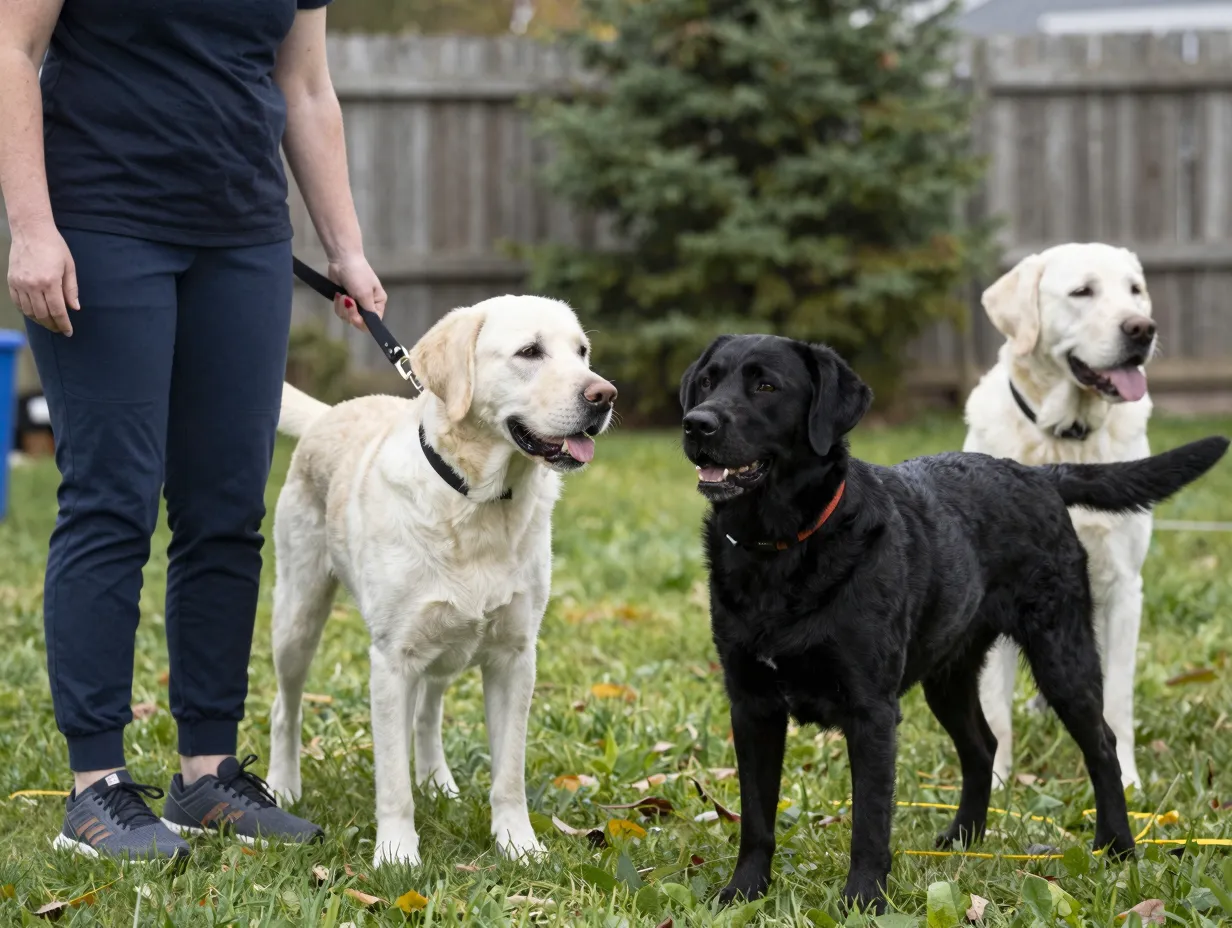
Training differences between the two types are significant — especially for first-time dog owners. English Labs are generally easier to train because their lower energy levels make it easier to keep their attention [1][4]. They are patient, eager to please, and respond well to positive reinforcement.
American Labs require more experienced handlers [1][4]. Their high drive and energy mean they can easily become distracted or overstimulated during training sessions. They need firm, consistent guidance and plenty of mental stimulation to channel their intelligence productively.
| Training Factor | English Lab | American Lab |
|---|---|---|
| Focus during training | High | Moderate (easily distracted) |
| Best for beginners? | ✅ Yes | ❌ Not ideal |
| Drive to work | Moderate | Very high |
| Response to commands | Quick | Quick but needs more repetition |
| Mental stimulation needed | Moderate | High |
8. Exercise Needs and Activity Requirements
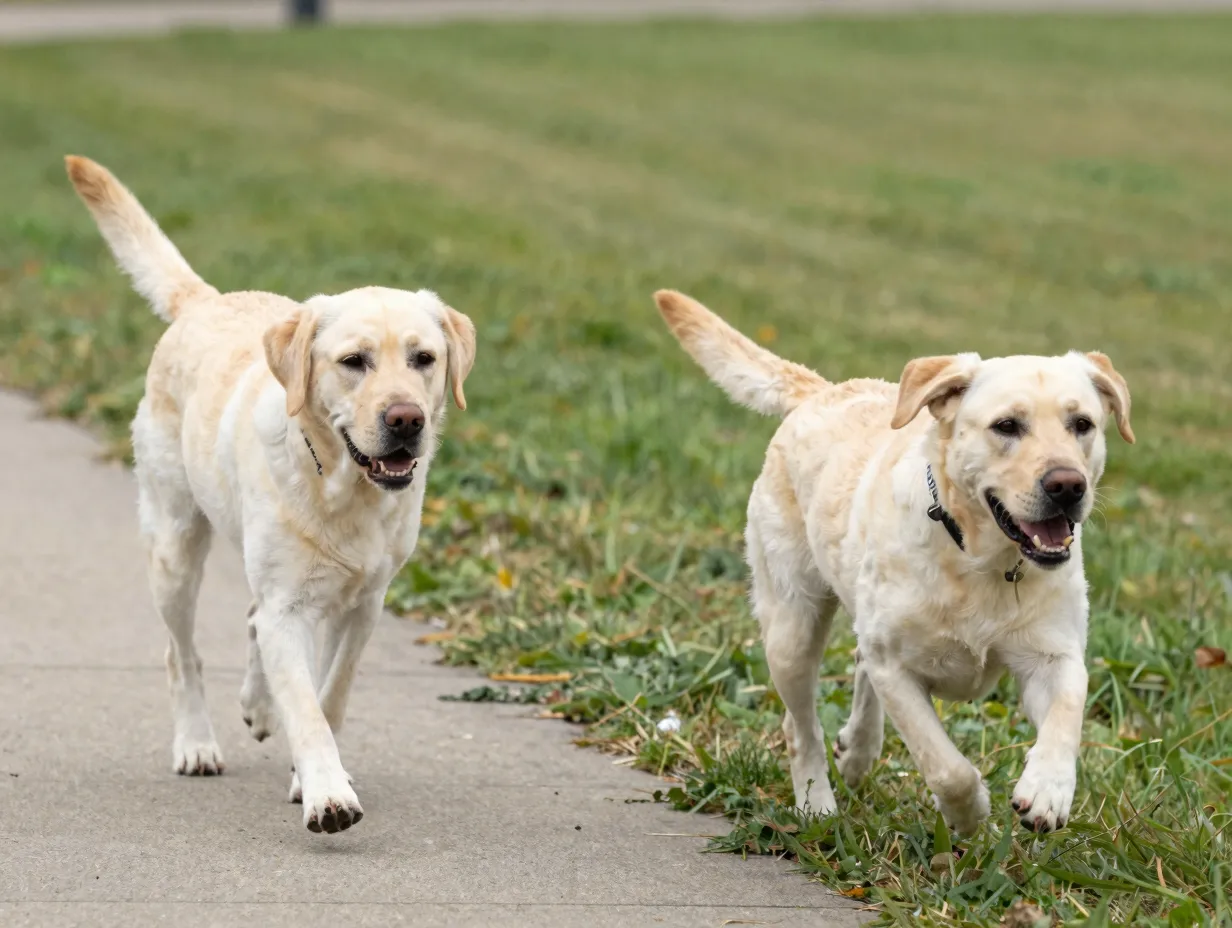
Both types need roughly 60 minutes of daily exercise [1] — but the type and intensity of that exercise differ considerably.
English Labs are satisfied with:
- A brisk 30-minute morning walk
- A relaxed 30-minute evening stroll
- Occasional fetch sessions or swimming
American Labs need:
- High-intensity running or fetch
- Swimming, hiking, or agility training
- Mental stimulation through puzzle toys, nose work, or field training
- Multiple vigorous sessions per day [1]
An American Lab that only gets a leisurely walk will find ways to entertain itself — usually by chewing furniture, digging holes, or barking excessively. Their exercise needs are not just physical; they need their minds challenged too.
9. Breeding Purpose and Ideal Owner Profile

The final — and arguably most important — comparison comes down to why each type was bred and who they are best suited for.
English Labs were bred for conformation shows and companionship [2][4]. Their ideal owners include:
- Families with young children [1][2]
- Older adults or retirees with moderate activity levels [1]
- First-time dog owners
- People interested in therapy or service dog work
American Labs were bred for hunting, field trials, and high-performance working roles [2][4]. Their ideal owners include:
- Hunters and outdoor enthusiasts
- Active individuals who exercise daily
- Experienced dog handlers
- People interested in competitive dog sports
💬 “English Labs are better for families with young children and older owners with lower activity levels.” [1][2]
Making the Right Choice: English Lab vs American Lab
Now that we’ve explored the Labrador Retriever English vs American: 9 Crucial Comparisons in detail, the decision comes down to one key question: What does your daily life actually look like?
Be honest with yourself. Many people fall in love with the idea of a high-energy field dog, only to discover that their apartment lifestyle and 9-to-5 schedule can’t support one. Equally, an active hunter who gets an English Lab may find the dog lacks the drive and stamina needed for a long day in the field.
Ask yourself these questions before choosing:
- How many hours per day can I commit to exercise and play?
- Do I have experience training high-energy dogs?
- Will this dog be around children or elderly family members?
- Am I interested in hunting, field trials, or dog sports?
- Do I want a calm companion or an enthusiastic working partner?
Your honest answers will point you clearly toward one type or the other.
A Note on Breed Recognition
It’s worth repeating: the AKC recognizes only one Labrador Retriever breed [2][4][7]. “English” and “American” are informal labels used by breeders, hunters, and enthusiasts to describe two distinct breeding lines — not two separate breeds. Both types can be registered as purebred Labrador Retrievers.
This means that when you’re searching for a puppy, you need to ask breeders directly about their breeding focus — show lines vs. field lines — rather than relying on AKC registration alone.
Conclusion
The Labrador Retriever English vs American: 9 Crucial Comparisons we’ve explored reveal two very different dogs hiding under the same breed name. From body build and head shape to temperament, training needs, and exercise requirements, the differences are real and meaningful.
Here are your actionable next steps:
- Assess your lifestyle honestly — your activity level, living space, and experience with dogs should drive your decision.
- Visit breeders in person — meet dogs from both show lines and field lines before committing.
- Ask about the parents — a puppy’s temperament is strongly influenced by its parents’ breeding history.
- Consider rescue organizations — many Labs of both types are available through Labrador-specific rescue groups.
- Consult a veterinarian or certified trainer — they can help you evaluate which type fits your home environment.
Whether you choose the calm, blocky English Lab or the lean, driven American Lab, you’re getting one of the most loyal, loving, and intelligent dogs on the planet. The key is simply choosing the right Lab for you. 🐾
References
[1] An English Labrador Vs American Labrador – https://www.smokymtnlabrador.com/blog/an-english-labrador-vs-american-labrador
[2] English Labrador Vs American Labrador – https://kindredpup.com/english-labrador-vs-american-labrador/
[3] English Lab Vs American Lab – https://fieldandstream.com/stories/dogs/hunting-dogs/english-lab-vs-american-lab
[4] English Lab Vs American Lab – https://animals.howstuffworks.com/pets/english-lab-vs-american-lab.htm
[5] The Difference Between The English Labrador And The American Labrador – https://www.fieldstonekennels.com/post/the-difference-between-the-english-labrador-and-the-american-labrador
[7] English Lab Vs American Lab – https://www.outdoorlife.com/hunting/english-lab-vs-american-lab/