
Chocolate Lab Mixed With Golden Retriever: 9 Predictable Traits
If you have ever watched a Goldador bound across a yard — tail spinning, eyes bright, ready to fetch anything you throw — you already understand the magnetic appeal of this crossbreed. The Chocolate Lab Mixed With Golden Retriever is one of the most lovable designer dogs you can bring home in 2026, and the good news is that its temperament and physical traits are far more predictable than most mixed breeds. Because both parent breeds share remarkably similar personalities and working histories, prospective owners can plan ahead with real confidence.
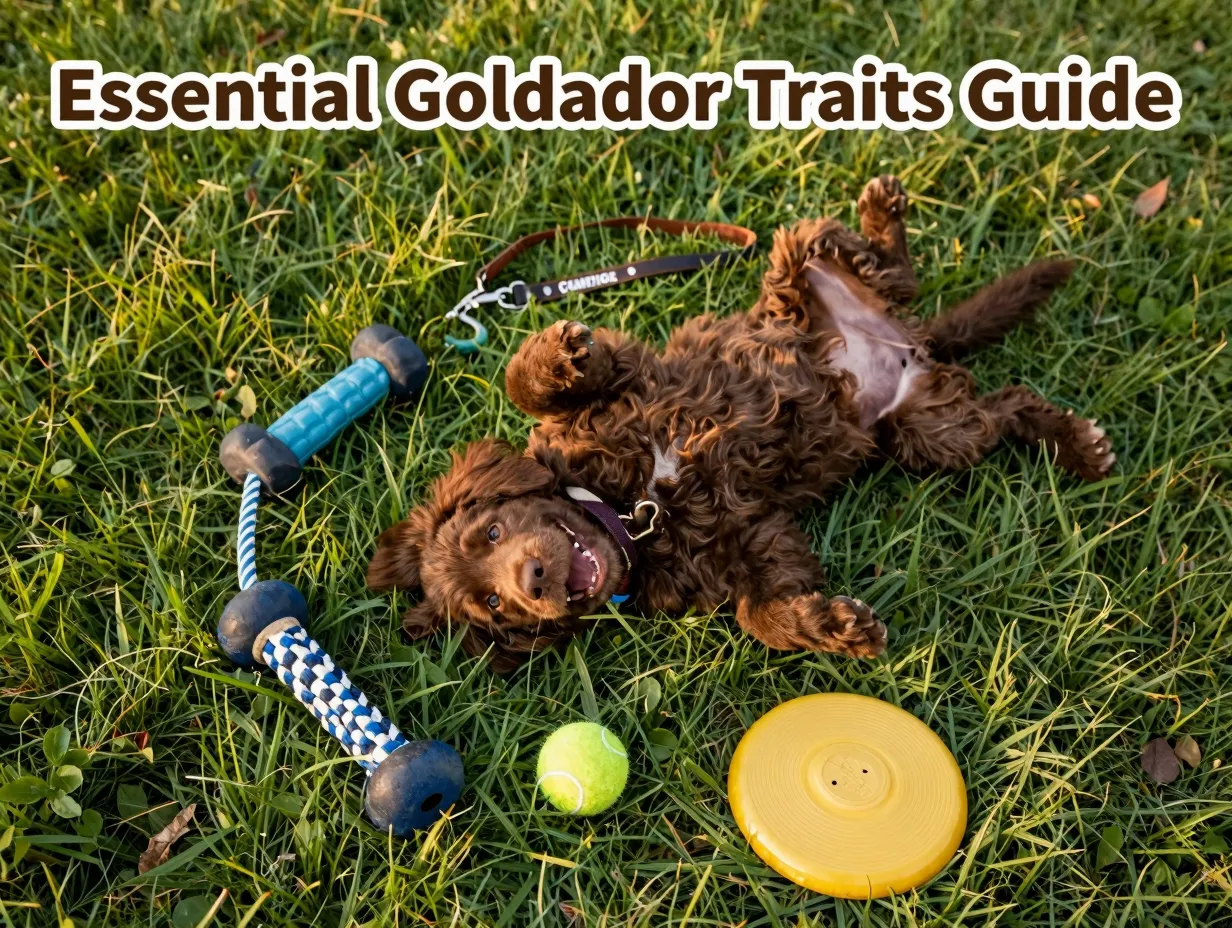
In this guide, I break down the Chocolate Lab Mixed With Golden Retriever: 9 Predictable Traits you can expect from this crossbreed — from energy levels and size to health considerations and social behavior. Whether you are a first-time dog owner or a seasoned handler, this article will give you a clear picture of life with a Goldador.
Key Takeaways
- 🐾 Behavioral predictability is a major advantage — the Goldador’s two parent breeds are so similar that temperament outcomes are unusually consistent [1]
- 💪 High energy and athleticism make this dog an ideal partner for active families who love the outdoors
- 🧠 Intelligence is strong, but chocolate-coat genetics may slightly influence trainability compared to other color variants [2]
- ❤️ Sociable and family-oriented — these dogs bond deeply and dislike being left alone for long periods
- 🏥 Reduced cancer risk compared to purebred Golden Retrievers is one notable health advantage of this mix [1]
What Is a Chocolate Lab Mixed With Golden Retriever?
The Goldador (also called a Golden Lab or Golden Retriever Lab mix) is a first-generation crossbreed between a Labrador Retriever and a Golden Retriever. When the Lab parent carries the chocolate coat gene, the resulting puppies may display rich brown or dark golden coats — sometimes a stunning blend of both.
Both parent breeds were originally developed as gun dogs and waterfowl retrievers, which explains why the Goldador inherits such a consistent set of working traits. Unlike crosses between very different breeds, the Goldador’s gene pool draws from two dogs with nearly identical temperaments, making the Chocolate Lab Mixed With Golden Retriever: 9 Predictable Traits listed below genuinely reliable predictions rather than guesses [1].
💬 “Designer breed temperaments combining Labrador and Golden Retriever traits are more predictable than other mixed breeds due to the two parent breeds’ similar demeanor.” — The Labrador Site [1]
Chocolate Lab Mixed With Golden Retriever: 9 Predictable Traits at a Glance
| Trait | What to Expect | Predictability |
|---|---|---|
| Energy Level | Very High | ⭐⭐⭐⭐⭐ |
| Adult Size | ~75 lbs / 24 inches | ⭐⭐⭐⭐⭐ |
| Intelligence | High | ⭐⭐⭐⭐ |
| Trainability | High (with caveats) | ⭐⭐⭐⭐ |
| Sociability | Extremely Friendly | ⭐⭐⭐⭐⭐ |
| Family Bonding | Very Strong | ⭐⭐⭐⭐⭐ |
| Cancer Risk | Lower than Purebred Golden | ⭐⭐⭐⭐ |
| Chewing Behavior | Moderate–High | ⭐⭐⭐⭐ |
| Prey Drive | Moderate | ⭐⭐⭐⭐ |
The 9 Predictable Traits of a Chocolate Lab Mixed With Golden Retriever
1. High Energy Levels and a Love for Activity
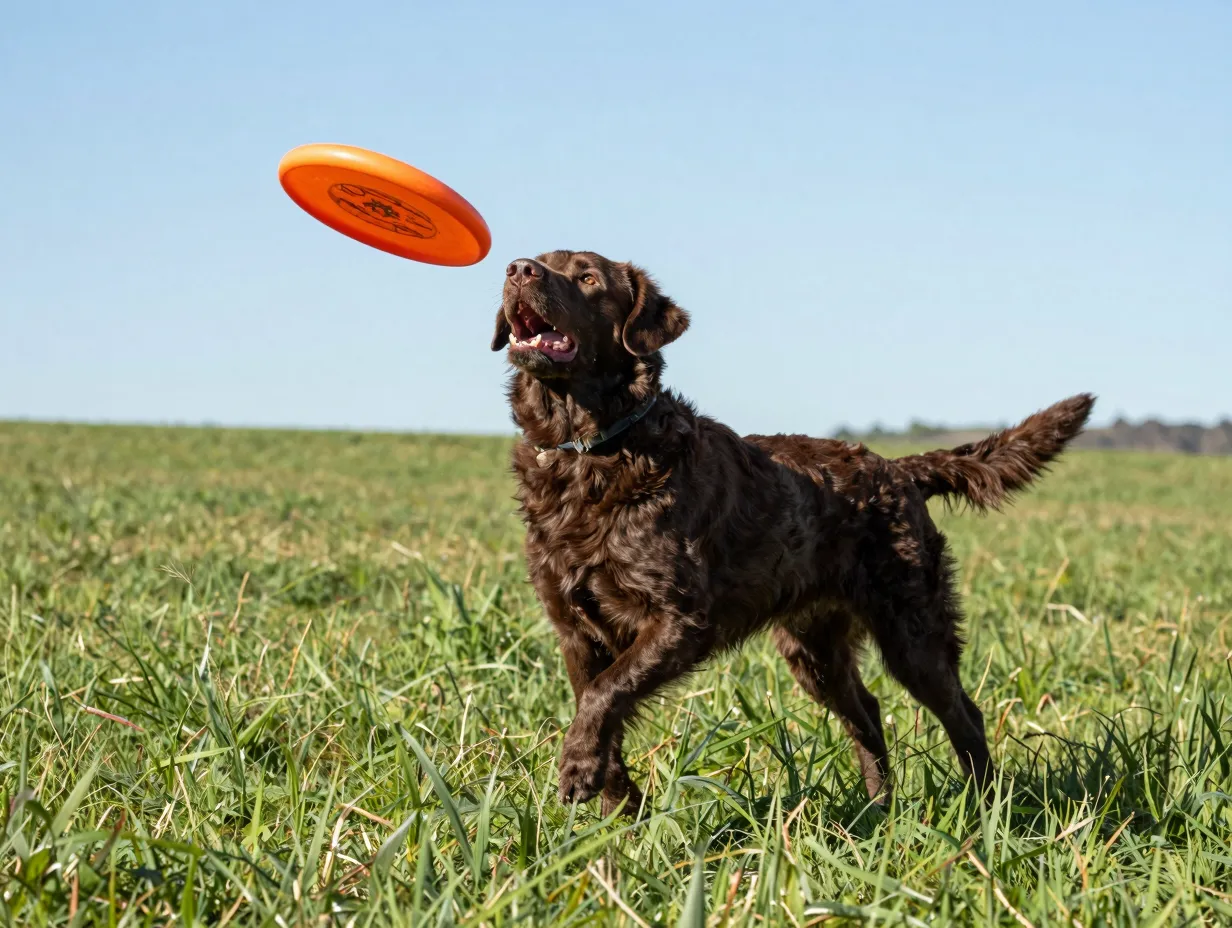
One of the first things you will notice about a Goldador is that this dog does not have an “off” switch — at least not during waking hours. Both the Labrador and the Golden Retriever were bred as working dogs that spent full days in the field, and those genes carry forward strongly.
What this looks like in daily life:
- Enthusiastic participation in fetch, frisbee, and tug-of-war
- A strong desire to join you on runs, hikes, and bike rides
- Natural swimming ability and a love of water [1]
- Restlessness and destructive behavior if exercise needs are not met
A Goldador typically needs at least 60–90 minutes of vigorous exercise per day. Families with large yards, access to trails, or active lifestyles will find this dog to be a perfect match. Apartment dwellers or sedentary owners may struggle to keep up.
2. Large Adult Size
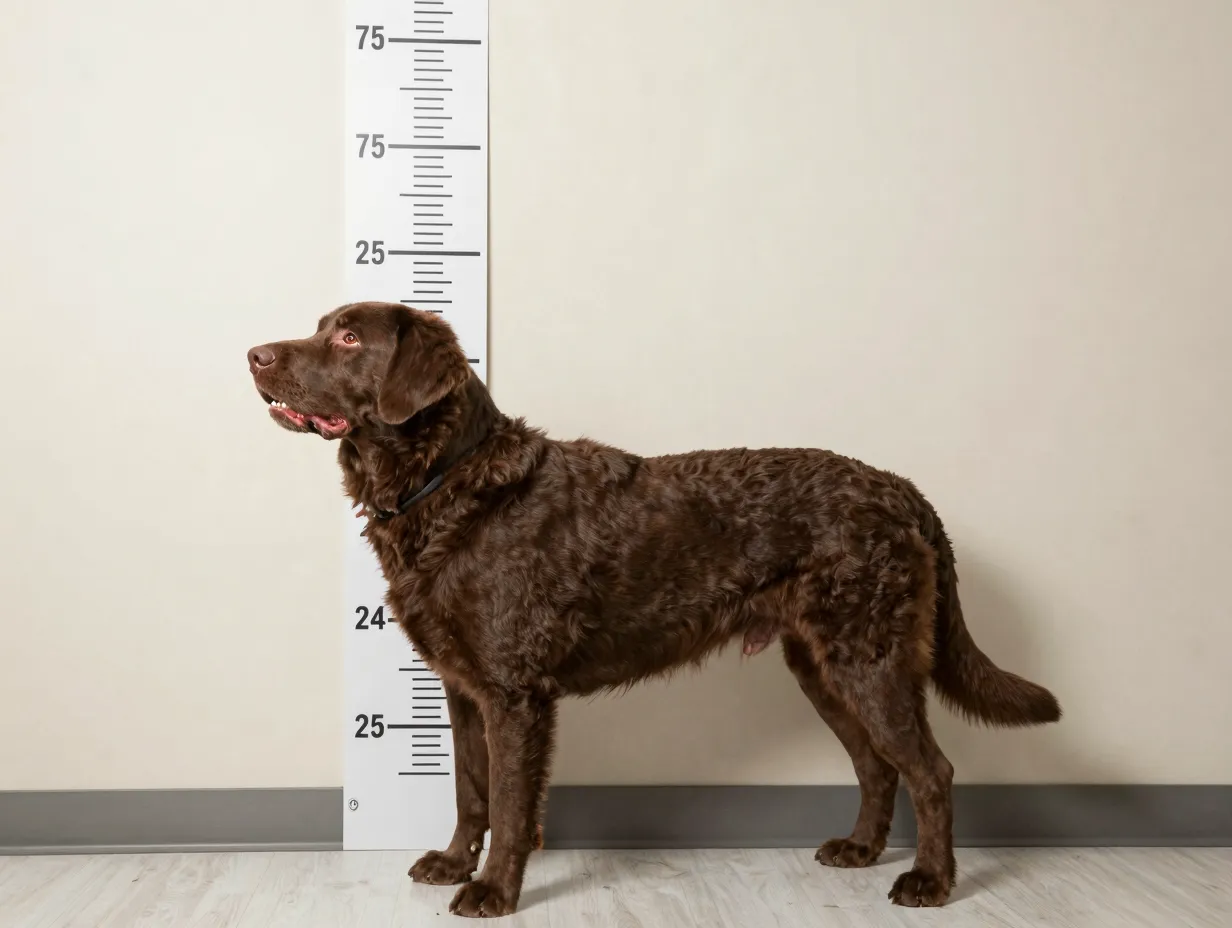
Size surprises are rare with this mix. When you adopt a Chocolate Lab Mixed With Golden Retriever puppy, you can plan confidently for a large adult dog. Most Goldadors reach approximately 75 pounds and 24 inches in height at the shoulder when fully grown [1].
Size planning tips:
- Budget for large-breed food, which is formulated for joint and bone health
- Choose a crate, bed, and vehicle setup sized for a 70–80 lb dog
- Consider whether your living space has enough room for a large, active dog to move comfortably
Both male and female Goldadors fall within a similar size range, though males tend to sit at the upper end. If either parent is on the larger side, expect the puppies to reflect that [5].
3. Strong Intelligence
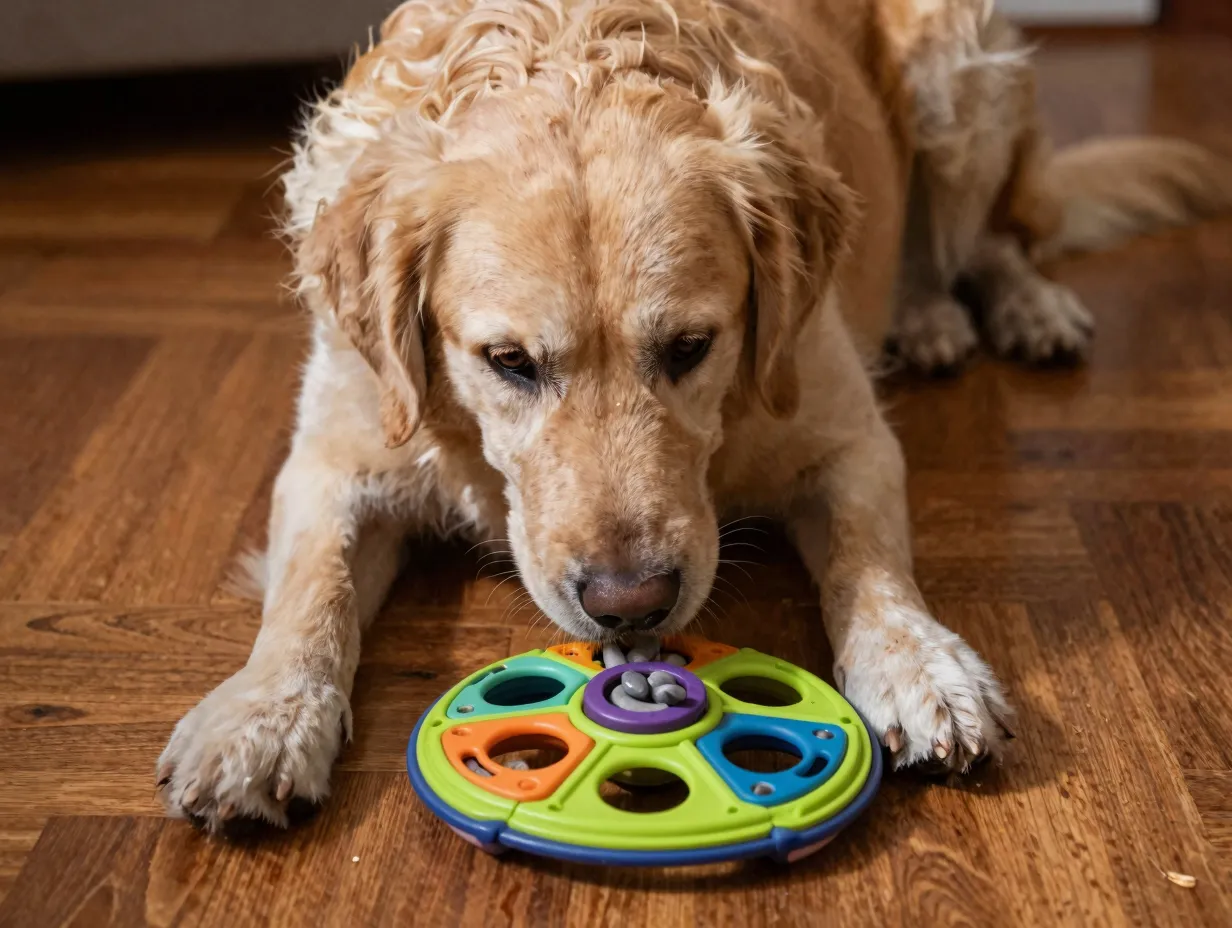
The Goldador consistently ranks as one of the more intelligent designer breeds available today. Both the Labrador and the Golden Retriever appear in the top 10 of most canine intelligence rankings, and their offspring inherit that cognitive sharpness [3].
Signs of Goldador intelligence include:
- Rapid learning of new commands (often within 5–10 repetitions)
- Problem-solving behavior, such as figuring out how to open latches or find hidden treats
- Reading human emotional cues with impressive accuracy
- Excelling in roles like therapy work, search and rescue, and service dog training
This intelligence is a double-edged sword. A bored Goldador will find its own entertainment — and you may not like the results. Mental stimulation through puzzle feeders, training sessions, and interactive play is just as important as physical exercise.
4. Trainability — With a Chocolate-Specific Caveat
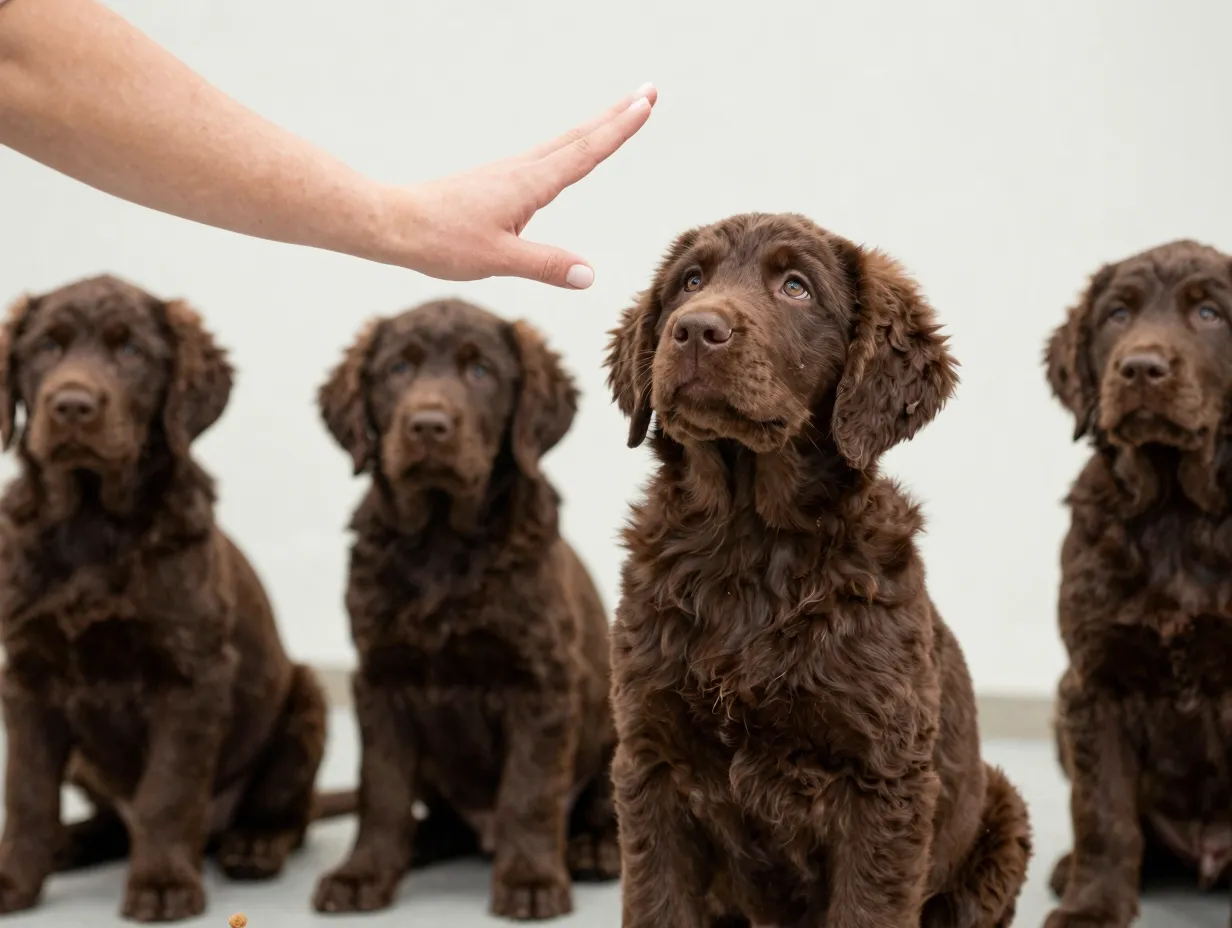
Here is where things get genuinely interesting. While Goldadors are broadly described as highly trainable people-pleasers [3], research published in scientific literature reveals a nuance specific to chocolate-coated dogs.
A peer-reviewed study found that chocolate Labradors — those carrying the TYRP1 genotype responsible for their brown coat — showed measurably lower trainability scores compared to yellow and black Labradors [2]. Because the chocolate coat gene comes from the Lab parent in this mix, some Goldadors with darker coats may inherit this slight reduction in trainability.
💬 “Chocolate Labradors specifically show lower trainability linked to genetic factors (TYRP1 genotype).” — PMC Research [2]
Practical training advice for chocolate Goldadors:
- Use positive reinforcement exclusively — these dogs respond poorly to harsh corrections
- Keep training sessions short (10–15 minutes) and highly rewarding
- Start obedience training early — ideally before 12 weeks of age
- Be patient and consistent; progress may be slightly slower than with a black or yellow Lab mix
This does not mean a chocolate Goldador cannot be trained to a high level. It simply means owners should set realistic expectations and commit to consistent, reward-based methods.
5. Sociable and Friendly Temperament

If you are looking for a guard dog, the Goldador is not your answer. These dogs are famously friendly — sometimes embarrassingly so. They inherit the Labrador’s tendency to love new faces and make instant friends with virtually everyone they meet [1].
Social traits you can expect:
- Enthusiastic greetings for family, friends, and strangers alike
- Gentle behavior with children and other pets when properly socialized
- Minimal aggression or territorial behavior
- A tendency to seek out human company at every opportunity
This sociability makes the Goldador an outstanding therapy dog and a wonderful family companion. However, it also means this dog will not reliably alert you to intruders — it is more likely to offer them a tennis ball.
6. Deep Family Bonds

While the Goldador is friendly with everyone, it forms especially deep bonds with its immediate family [1]. This is not a dog that is indifferent to its people. Goldador puppies and adults alike track their family members, prefer to be in the same room, and show visible distress when separated for extended periods.
What strong bonding looks like:
- Following family members from room to room
- Seeking physical contact (leaning, cuddling, pawing for attention)
- Calm and confident behavior when family is present
- Anxiety and restlessness when left alone for too long
This bonding trait is one of the most endearing qualities of the Goldador, but it comes with responsibility. Owners who work long hours away from home will need to arrange dog walkers, doggy daycare, or a companion pet to prevent separation anxiety.
7. Reduced Cancer Susceptibility Compared to Purebred Goldens

This trait is one of the most compelling health arguments for choosing a Goldador over a purebred Golden Retriever. Golden Retrievers carry a well-documented genetic predisposition to certain cancers — a serious concern for breed enthusiasts.
The Chocolate Lab Mixed With Golden Retriever crossbreed benefits from hybrid vigor, which reduces the concentration of cancer-linked genes from either parent line [1]. While no dog is immune to cancer, the Goldador is statistically less likely to be affected by the cancer gene currently impacting purebred Golden Retrievers [1].
Health considerations for Goldador owners:
- Schedule annual veterinary wellness exams
- Monitor for joint issues (hip and elbow dysplasia are common in large breeds)
- Maintain a healthy weight — obesity accelerates joint problems
- Discuss breed-appropriate cancer screening with your vet as the dog ages
The average lifespan of a Goldador is 10 to 12 years [1], which is typical for large breeds. Chocolate variants may sit slightly toward the lower end of that range, consistent with research on chocolate Labradors’ longevity.
8. Anxiety-Driven Chewing and Destructive Behavior
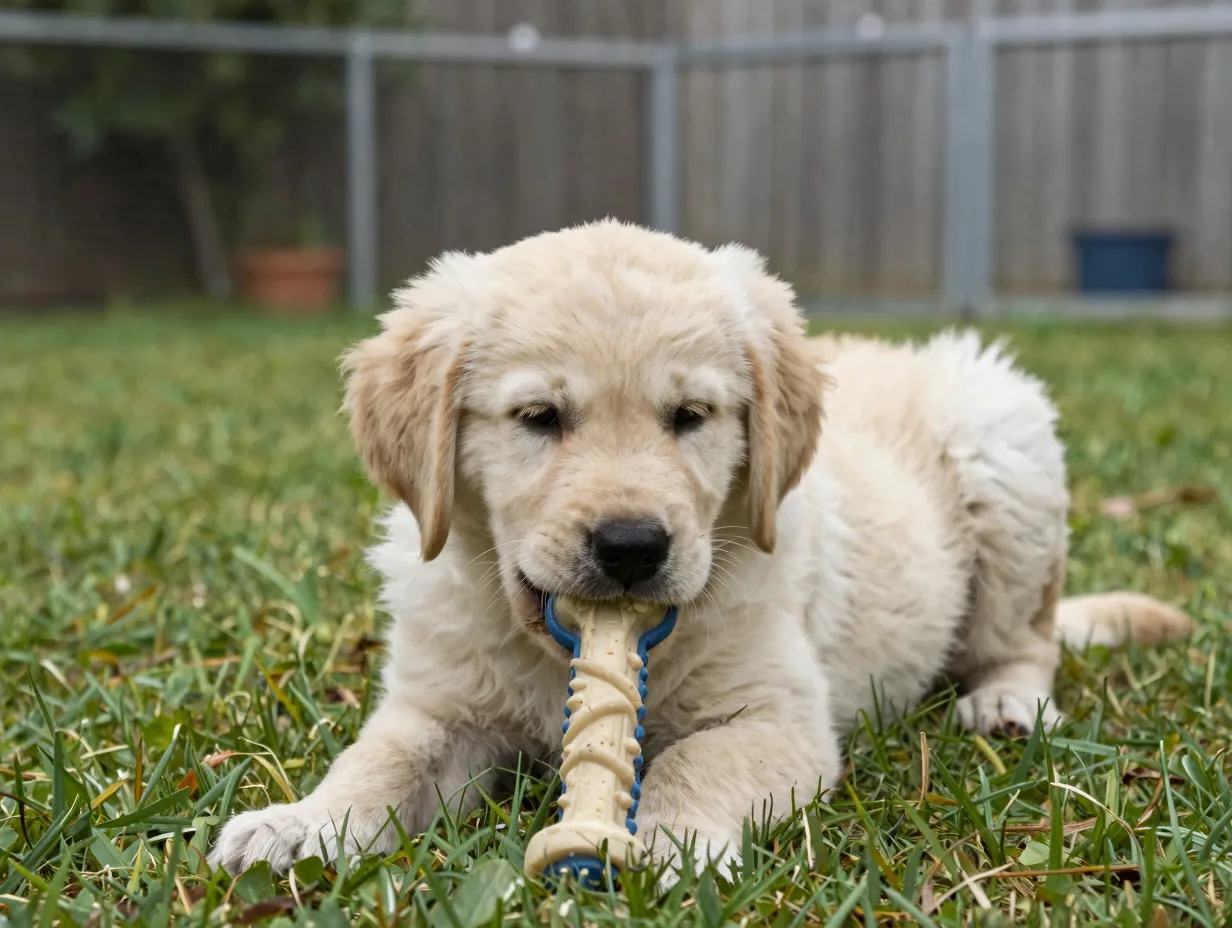
Let me be direct: if you leave a Goldador alone, bored, or under-exercised, it will chew. This is not a character flaw — it is a predictable expression of anxiety and excess energy that both parent breeds are known for [1].
Common triggers for chewing behavior:
- Being left alone for more than 3–4 hours without stimulation
- Insufficient daily exercise
- Lack of appropriate chew toys and outlets
- Transition periods such as moving homes or changes in family routine
How to manage chewing effectively:
- Provide a secure, enclosed backyard where the dog can safely burn energy [1]
- Invest in durable chew toys and rotate them regularly to maintain novelty
- Use puzzle feeders to extend mealtime and provide mental engagement
- Train a strong recall command early — this is critical for off-leash safety [1]
- Consider crate training as a safe space when you cannot supervise
Chewing is manageable with the right setup, but owners who underestimate this trait often find furniture, shoes, and garden plants paying the price.
9. Moderate Prey Drive
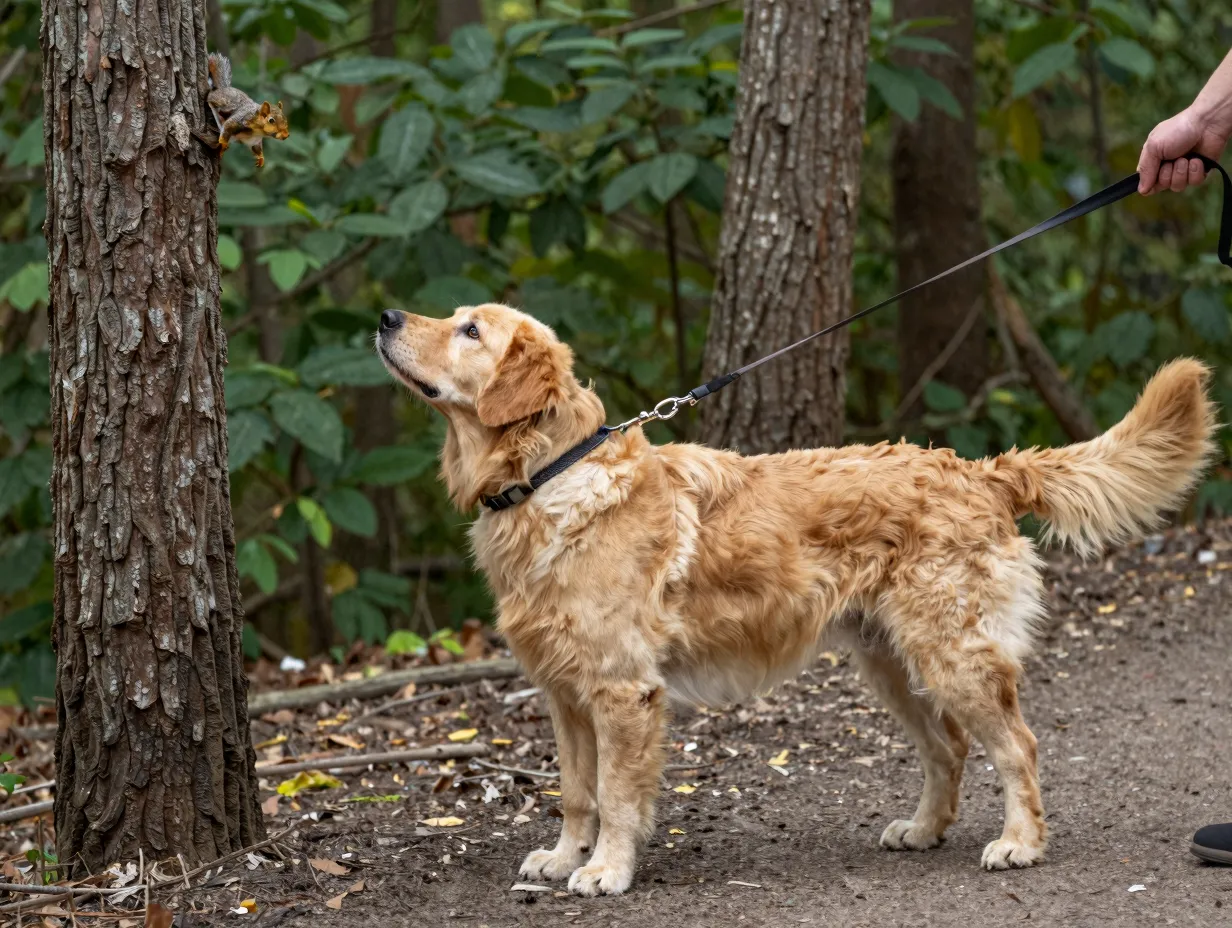
Both the Labrador and the Golden Retriever were bred to retrieve game — which means both carry a genetic instinct to chase moving objects and small animals [1]. In a Goldador, this prey drive is typically moderate rather than intense, but it is present and should not be ignored.
What prey drive looks like in a Goldador:
- Chasing squirrels, rabbits, birds, and other small animals
- Strong interest in scent trails during walks
- Pulling on the leash when spotting wildlife
- Difficulty recalling when highly stimulated by a moving target
Management strategies:
- Always use a leash in unfenced areas until recall is rock-solid
- Teach a reliable “leave it” command from puppyhood
- Ensure your yard has secure fencing — a motivated Goldador can cover ground quickly
- Channel the instinct positively through fetch, scent work, or retrieving games
The good news is that the Goldador’s prey drive is rarely aggressive. It is more about the thrill of the chase than any desire to harm. With proper training, most Goldadors learn to coexist peacefully with cats and smaller pets.
Chocolate Lab Mixed With Golden Retriever: 9 Predictable Traits — What Owners Say
Real-world owners consistently confirm these traits. Forum discussions among breeders and owners highlight the remarkable consistency of Goldador temperament, with most describing their dogs as energetic, loving, and highly food-motivated — all traits that align directly with what the research and breed profiles predict [4].
Many owners also note that the chocolate coat variant adds a striking visual appeal to an already beautiful dog. The rich brown tones of the Lab parent blended with the wavy, dense coat of the Golden Retriever often produce a dog with a unique, eye-catching appearance that turns heads on every walk [5].
Is the Chocolate Lab Golden Retriever Mix Right for You?
Before committing to this breed, ask yourself these questions:
✅ This dog is a great fit if you:
- Live an active lifestyle with time for daily exercise
- Have a securely fenced yard or easy access to open spaces
- Work from home or have flexible hours to spend with your dog
- Have children or other pets (with proper socialization)
- Want a trainable, eager-to-please companion
❌ This dog may not be the best fit if you:
- Work long hours away from home without pet care arrangements
- Live in a small apartment without outdoor access
- Prefer a low-energy, independent dog
- Are not prepared for regular grooming (both parent breeds shed significantly)
- Want a reliable guard dog
Conclusion
The Chocolate Lab Mixed With Golden Retriever is one of the most rewarding dogs you can welcome into your home — but only if you go in with clear eyes and realistic expectations. The Chocolate Lab Mixed With Golden Retriever: 9 Predictable Traits covered in this guide give you a genuine roadmap for what life with a Goldador looks like day to day.
Here are your actionable next steps:
- Assess your lifestyle honestly — use the quiz above to check your compatibility before committing
- Research reputable breeders or rescues — look for health-tested parents and transparent breeding practices
- Prepare your home — secure your yard, stock up on durable toys, and set up a crate before your puppy arrives
- Enroll in puppy classes early — positive reinforcement training from week one pays dividends for years
- Budget for the long term — large-breed food, annual vet visits, and enrichment tools are ongoing costs
- Plan for companionship — arrange dog walkers or daycare if you work long hours away from home
A well-matched Goldador owner will tell you this dog is one of the greatest joys of their life. With the right preparation, yours can be too. 🐾
References
[1] Goldador – https://www.thelabradorsite.com/goldador/
[2] Pmc6884874 – https://pmc.ncbi.nlm.nih.gov/articles/PMC6884874/
[3] Watch – https://www.youtube.com/watch?v=MhMGZYZPz5M
[4] Breeding My Chocolate Lab With A Golden Retriever – https://thelabradorforum.com/threads/breeding-my-chocolate-lab-with-a-golden-retriever.23886/
[5] Golden Retriever Lab Mix – https://dogbreeds.petsnock.com/golden-retriever-lab-mix/