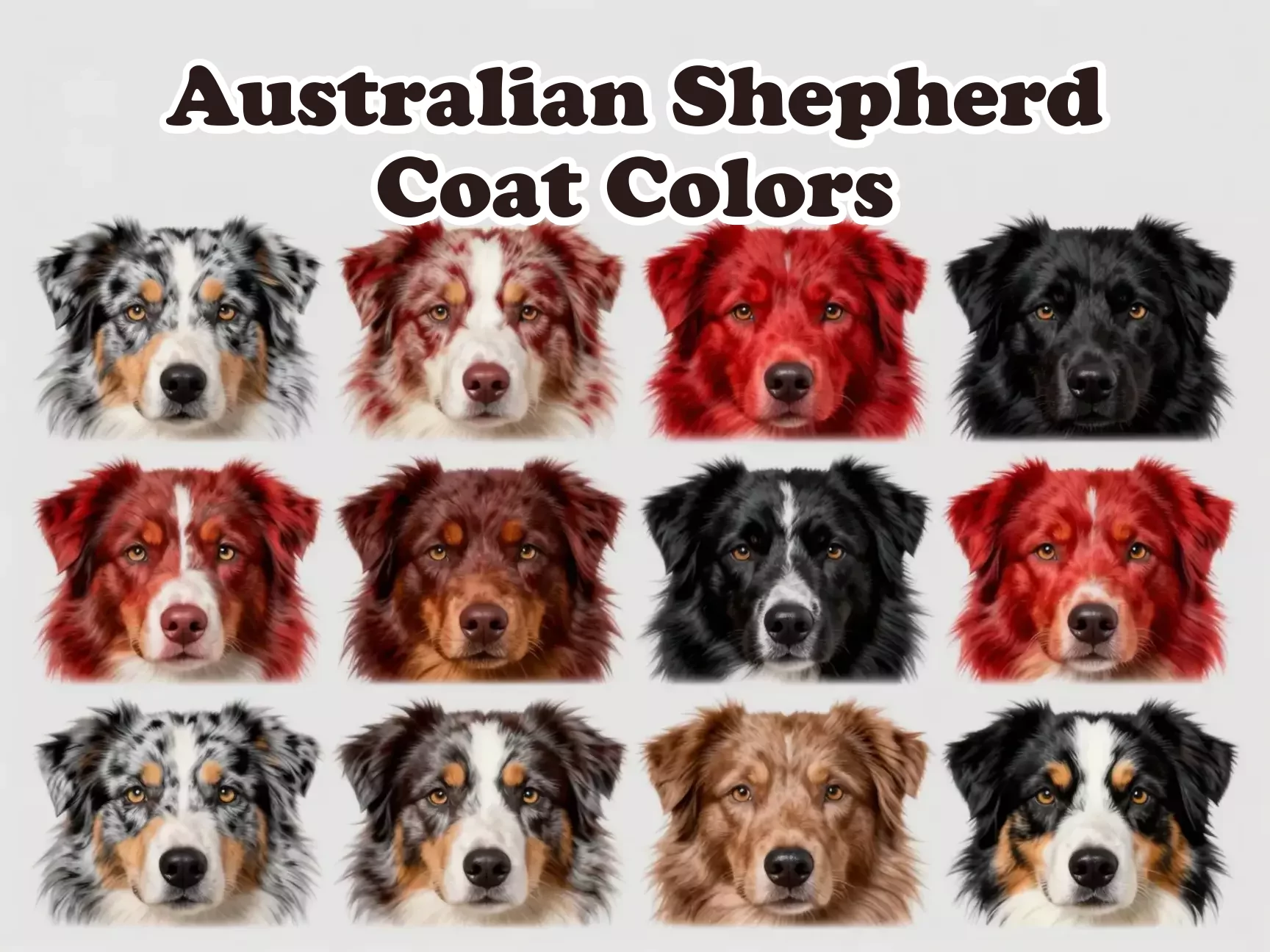
Australian Shepherd Colors: 9 Stunning Variations From Blue Merle to Solid Black
Only four coat colors are officially recognized by the Australian Shepherd Club of America — yet within those four, the breed produces some of the most visually diverse and breathtaking coat patterns in the entire dog world [1]. If you’ve ever stood at a dog park wondering how two dogs labeled “Australian Shepherd” could look so completely different from each other, you’re not alone. This guide breaks down Australian Shepherd Colors: 9 Stunning Variations From Blue Merle to Solid Black, covering everything from the genetics behind each pattern to the subtle pigmentation clues that help you identify what you’re actually looking at.
Key Takeaways 📌
- The Australian Shepherd Club of America (ASCA) officially recognizes only four base colors: blue merle, red merle, solid black, and solid red — with no order of preference [1]
- Within those four colors, Aussies can appear in bi-color or tri-color combinations with white markings and/or tan (copper) points [4]
- Nose and eye-rim pigmentation differs by color group: black-based dogs (black and blue merle) have black pigmentation; red-based dogs (red and red merle) have liver/brown pigmentation [1][4]
- The merle gene randomly dilutes pigment, meaning no two merle Aussies look exactly alike [3]
- Cryptic merles may appear solid-colored but carry the merle gene — an important consideration for responsible breeding [4]
Understanding the Genetics Behind Australian Shepherd Coat Colors
Before diving into each variation, it helps to understand the framework. The Australian Shepherd’s coat color is determined by two primary pigments: eumelanin (black-based) and phaeomelanin (red-based). Genes then modify, dilute, or pattern these base pigments to create the stunning range we see in the breed.
💡 Pull Quote: “The merle gene doesn’t add color — it removes it, creating a patchwork of diluted and full-pigment areas that makes every merle dog one of a kind.” [3]
The four officially recognized colors — blue merle, red merle, solid black, and solid red — can each appear with or without:
- White markings (typically on the face, chest, legs, and collar area)
- Tan/copper points (above the eyes, on the cheeks, legs, and under the tail)
This creates a matrix of combinations. When you add bi-color and tri-color variations, the result is the 9 stunning coat variations we’ll explore below [2][4].
The Two Pigmentation Groups
| Color Group | Nose/Lip/Eye-Rim Color | Base Pigment |
|---|---|---|
| Black & Blue Merle | Black | Eumelanin |
| Red & Red Merle | Liver (brown) | Phaeomelanin |
This pigmentation rule is one of the most reliable ways to identify an Aussie’s color group at a glance [1][4].
Australian Shepherd Colors: 9 Stunning Variations From Blue Merle to Solid Black — The Complete Breakdown
Here are all 9 coat variations, numbered in ascending order, organized within the four recognized base colors.
1. Blue Merle (Solid Bi)
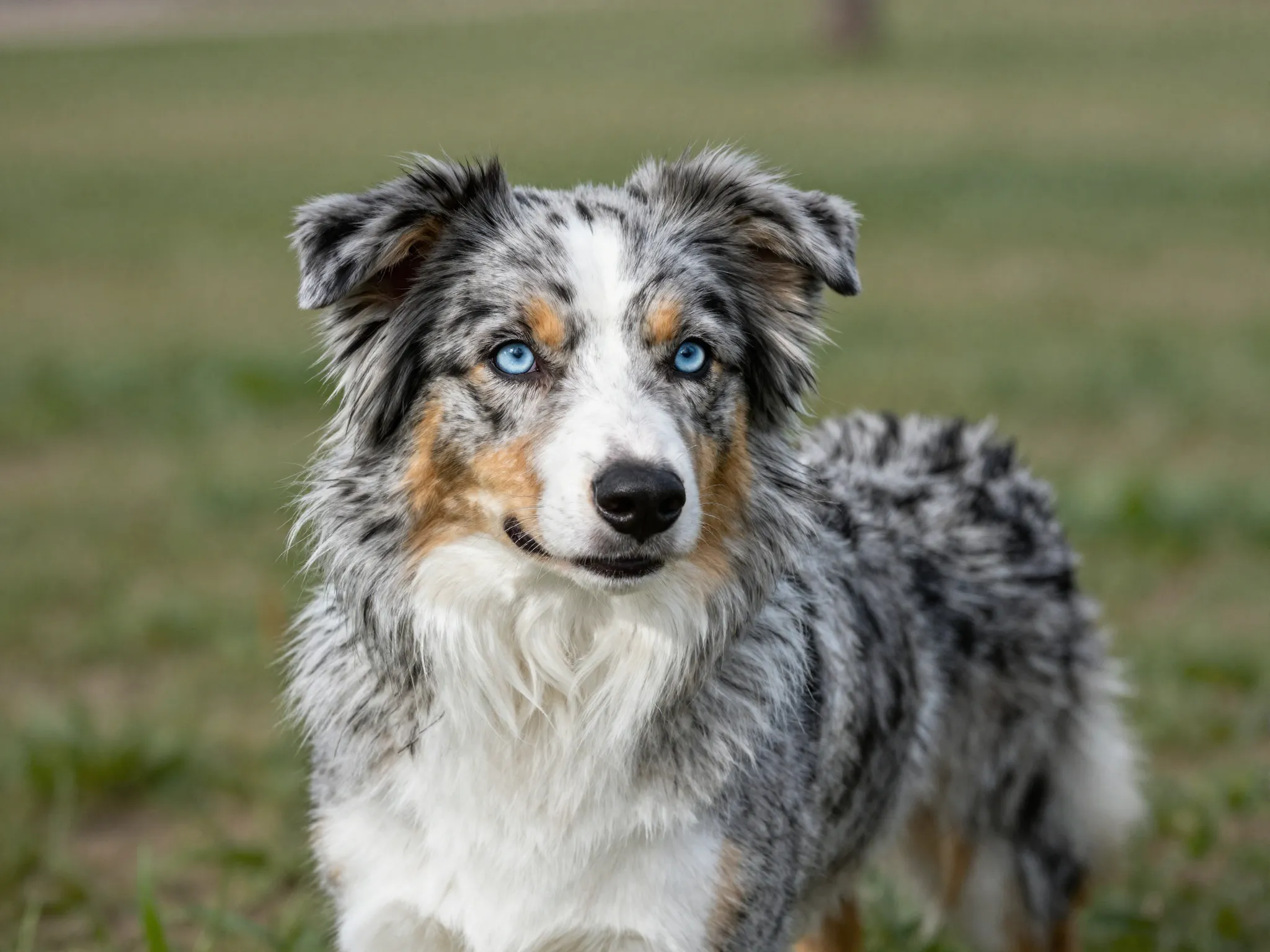
The blue merle bi-color is arguably the most iconic Aussie look. The merle gene randomly dilutes black pigment into a swirling patchwork of gray, silver, and black — no two dogs look the same [3]. A blue merle bi has this marbled base coat plus white markings on the face, chest, collar, and legs, but no tan/copper points.
Key features:
- Marbled gray-and-black coat
- White on face, chest, and legs
- Black nose, lips, and eye-rims [1]
- Eyes often blue, brown, or a combination
The amount of blue (diluted gray) versus black varies significantly from dog to dog. Some blue merles appear mostly gray with small black patches; others are predominantly black with subtle gray marbling [3].
2. Blue Merle Tri
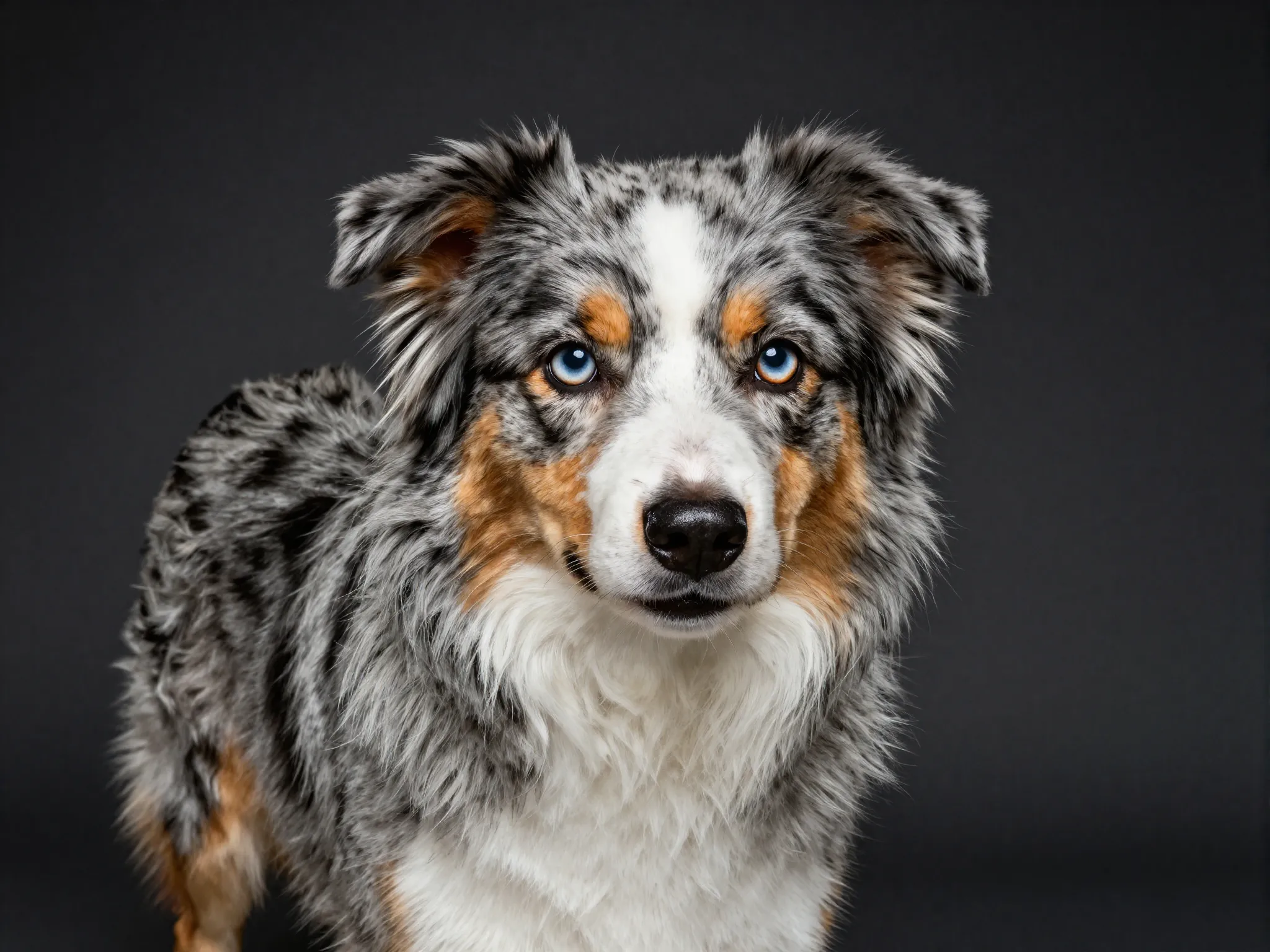
The blue merle tri adds tan/copper points to the blue merle bi pattern. These rich copper markings appear above the eyes (giving the classic “four-eyed” look), on the cheeks, legs, and beneath the tail.
This is one of the most visually complex and sought-after Aussie patterns because it layers three distinct colors — the merle patchwork, white, and copper — into a single coat [2][5].
What sets it apart from blue merle bi:
- Copper/tan dots above both eyes
- Tan on the lower legs and paws
- Tan under the tail
3. Red Merle (Solid Bi)
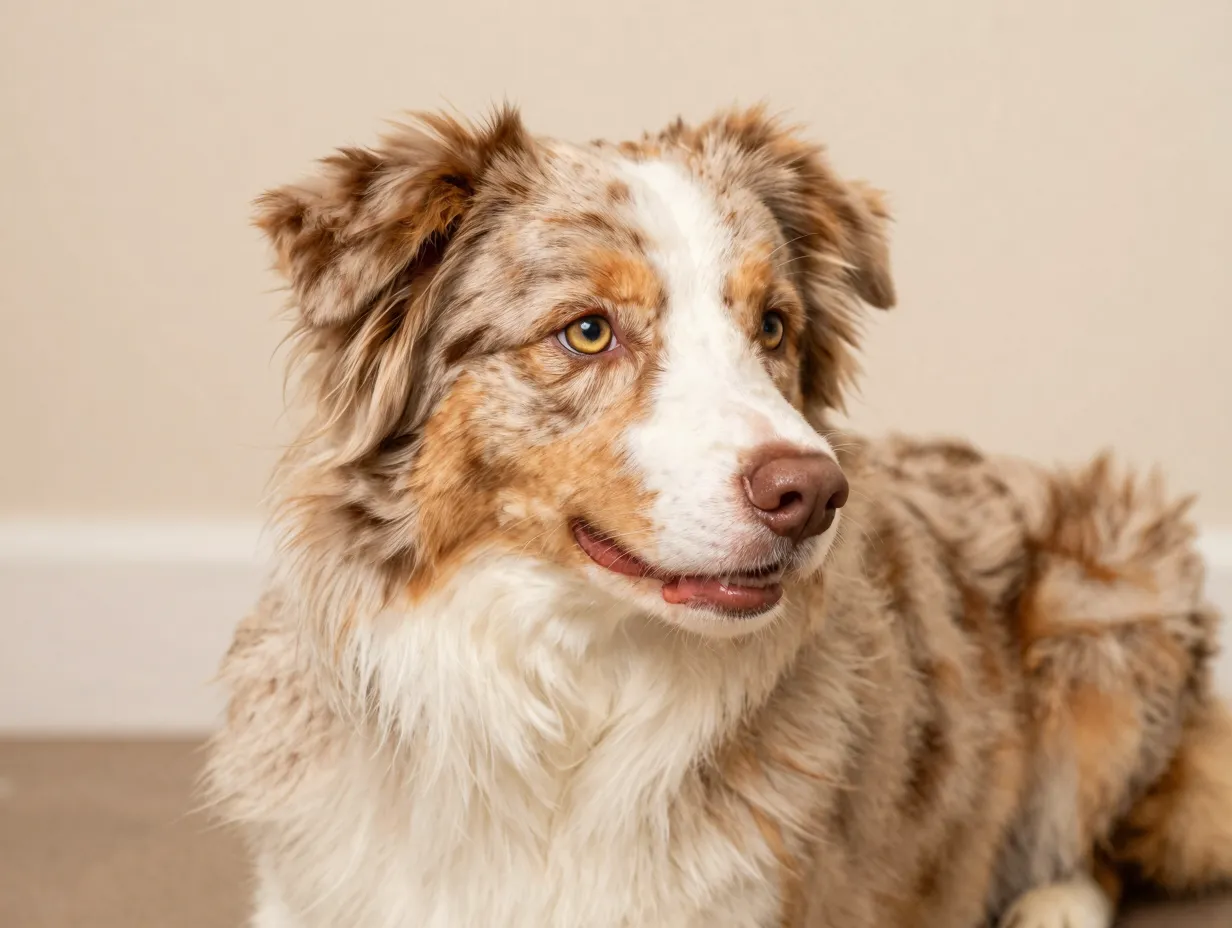
Swap the black base pigment for red/liver, and you get the red merle bi. The merle gene dilutes red pigment into a warm, creamy patchwork of buff, cream, and red-brown tones — softer and warmer in palette than blue merle, but equally unique [3][4].
Key features:
- Warm cream-and-red marbled coat
- White markings on face, chest, and legs
- Liver (brown) nose, lips, and eye-rims — not black [1][4]
- Eyes often amber, blue, or marbled
🐾 Fun fact: Because the red merle’s coat can appear almost white in certain lighting, these dogs are sometimes mistaken for albinos — but their liver pigmentation and colored eyes confirm otherwise.
4. Red Merle Tri
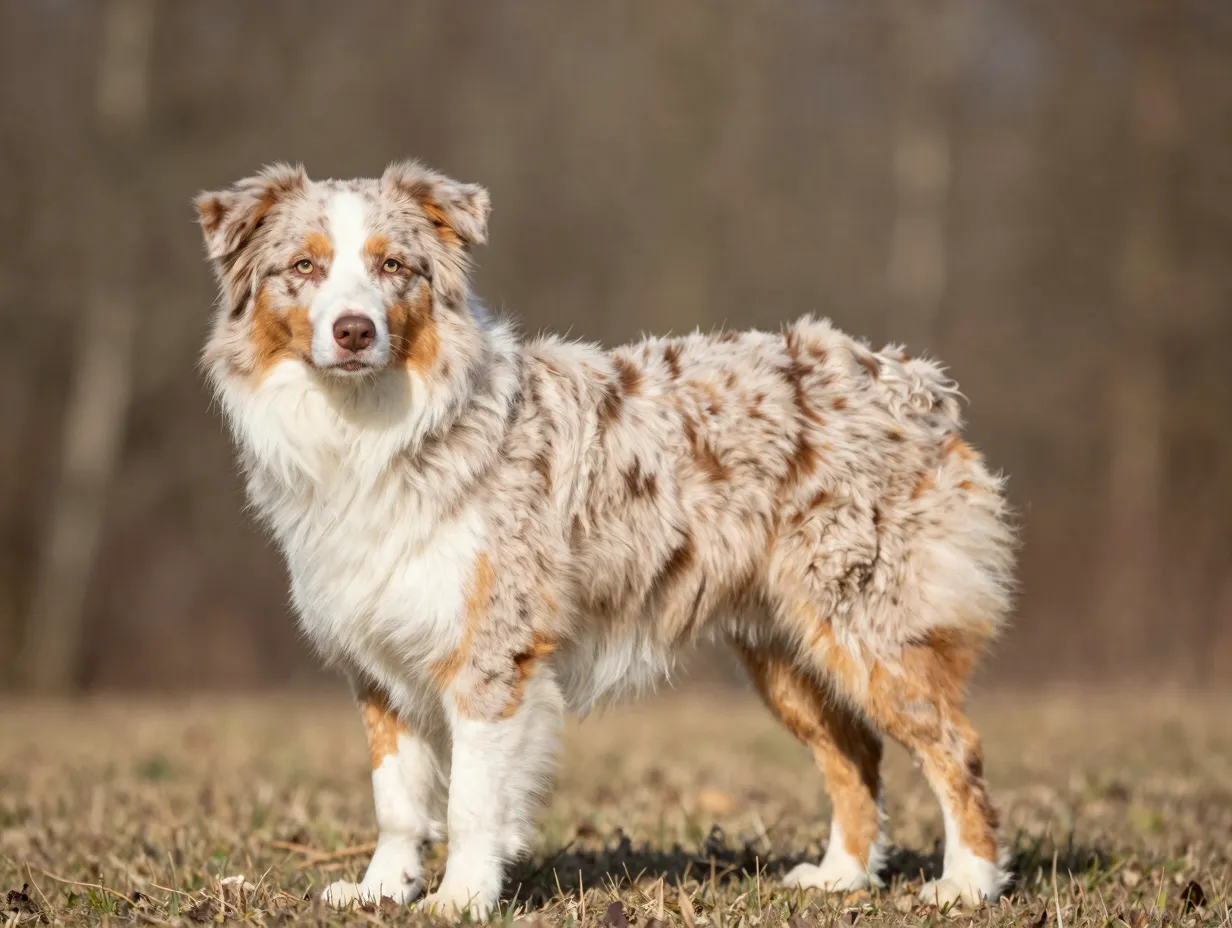
The red merle tri mirrors the blue merle tri structure but in warm red tones. Copper/tan points appear above the eyes, on the cheeks, and on the legs, layered over the red merle base and white markings.
Red merle tris can range from very light (almost pastel) to deeply saturated depending on the individual dog’s genetics. The liver-colored nose and eye-rims remain the consistent identifier for this color group [4][5].
5. Solid Black (Bi-Color)
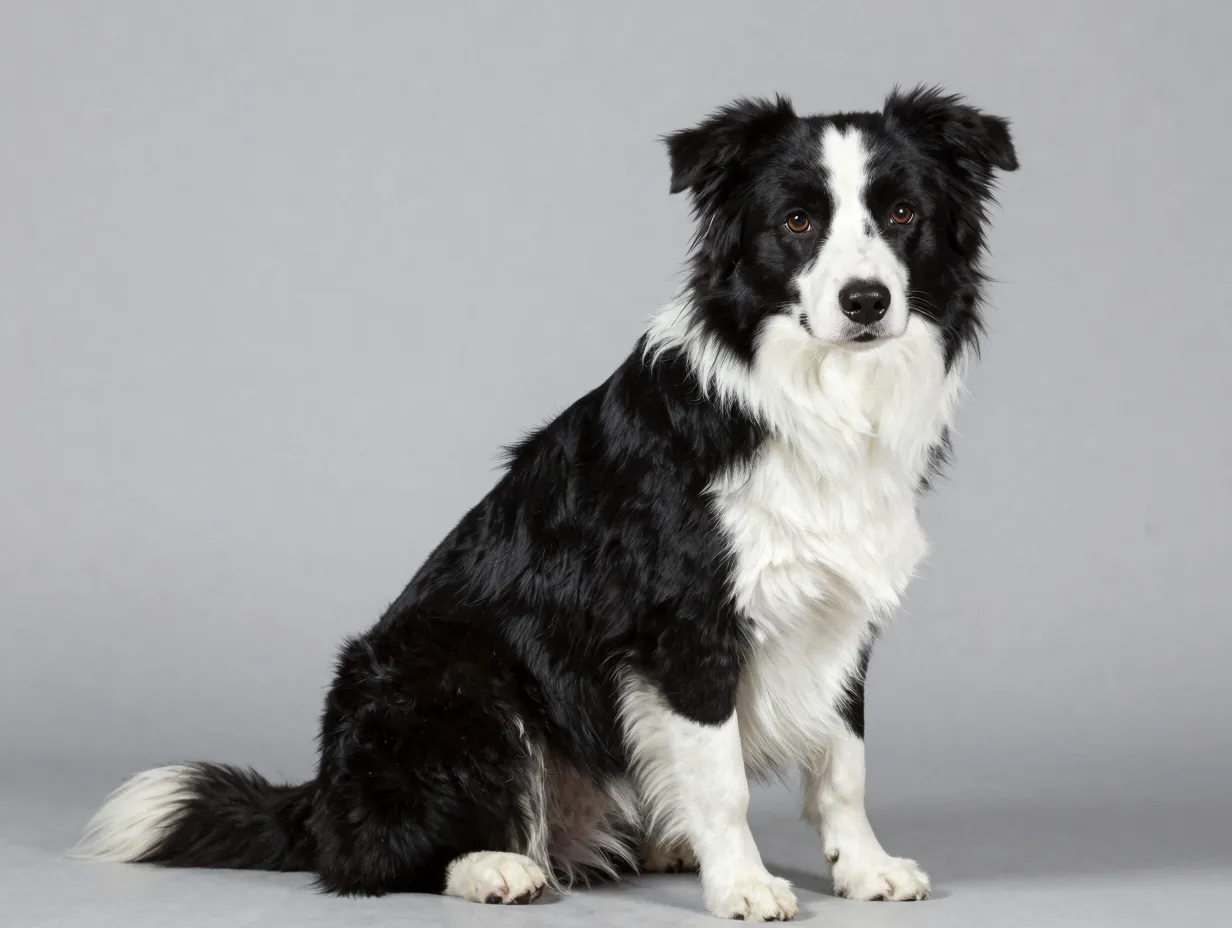
Solid black bi-color Aussies have a rich, glossy jet-black base coat with white markings on the traditional areas — face blaze, chest, collar, and legs — but no copper points. These dogs are sometimes overlooked at shelters because their striking coloring is less flashy than merle patterns, but they are genuinely beautiful animals.
Key features:
- Deep, uniform black base coat
- White on face, chest, and legs
- Black nose, lips, and eye-rims [1]
- Eyes typically brown, though blue eyes can occur
Black bi Aussies are genetically straightforward — they carry no merle gene, making them a lower-risk choice from a health genetics standpoint [4].
6. Black Tri-Color
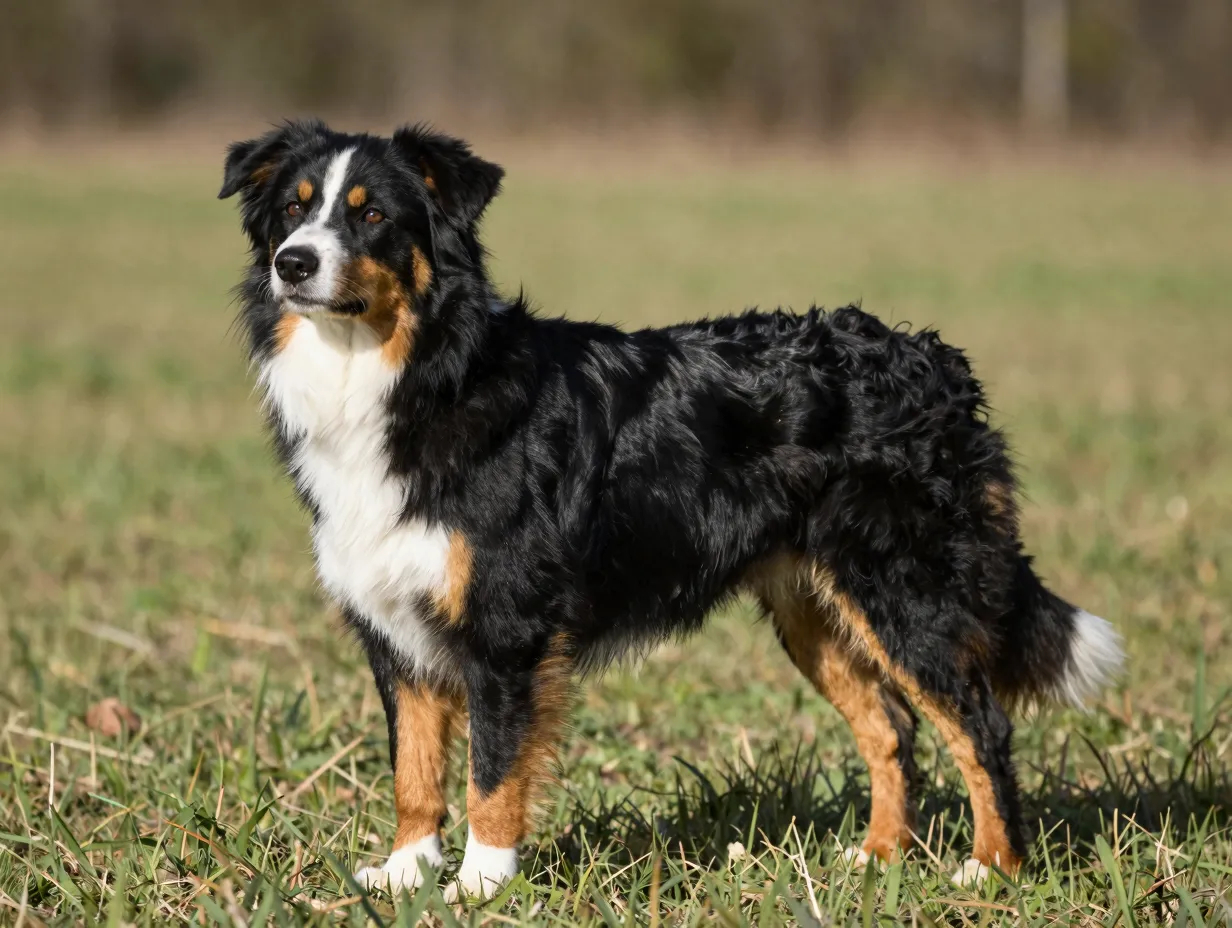
The black tri is one of the most classic and beloved Aussie looks. It adds rich copper/tan points to the black bi pattern, creating the traditional tricolor herding dog appearance familiar from Border Collies and Bernese Mountain Dogs.
Tan markings appear:
- Above both eyes (the “eyebrow dots”)
- On the cheeks and muzzle
- On the lower legs and paws
- Under the tail
Black tris have black noses and eye-rims, and their eyes are most commonly brown, though blue eyes do appear [1][2]. This is a timeless, high-contrast look that showcases the breed’s herding heritage.
7. Solid Red (Bi-Color)
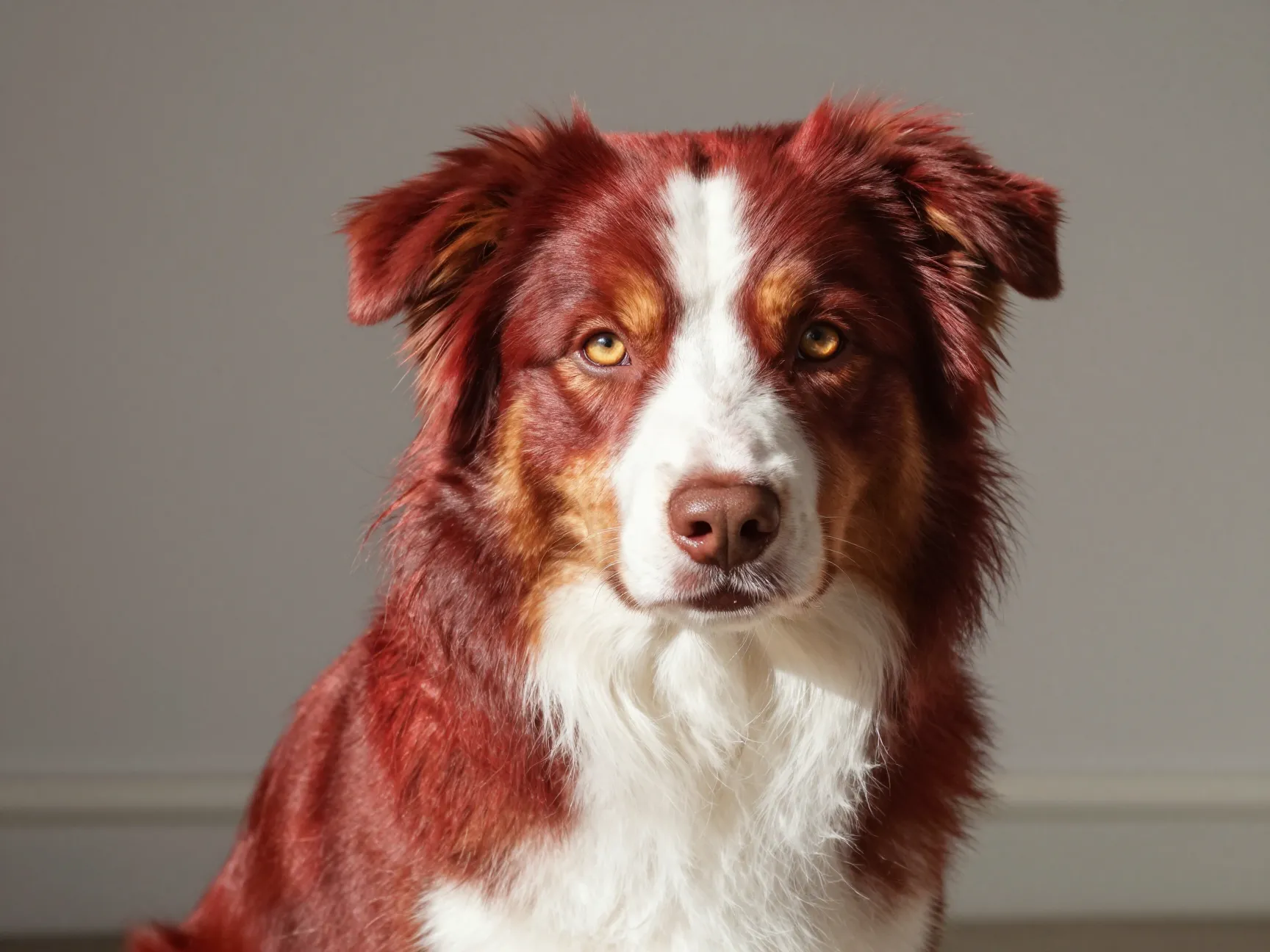
Solid red bi-color Aussies carry a warm, mahogany-to-golden-red base coat with white markings. The shade of red varies considerably — some dogs appear a deep chestnut red, while others lean toward a lighter, golden-copper tone.
Key features:
- Rich red base coat (shade varies by individual)
- White on face, chest, and legs
- Liver (brown) nose, lips, and eye-rims [1][4]
- Eyes typically amber or hazel
Red bi Aussies are sometimes called “red and white” informally. Like black bi dogs, they carry no merle gene and are genetically straightforward [4].
8. Red Tri-Color
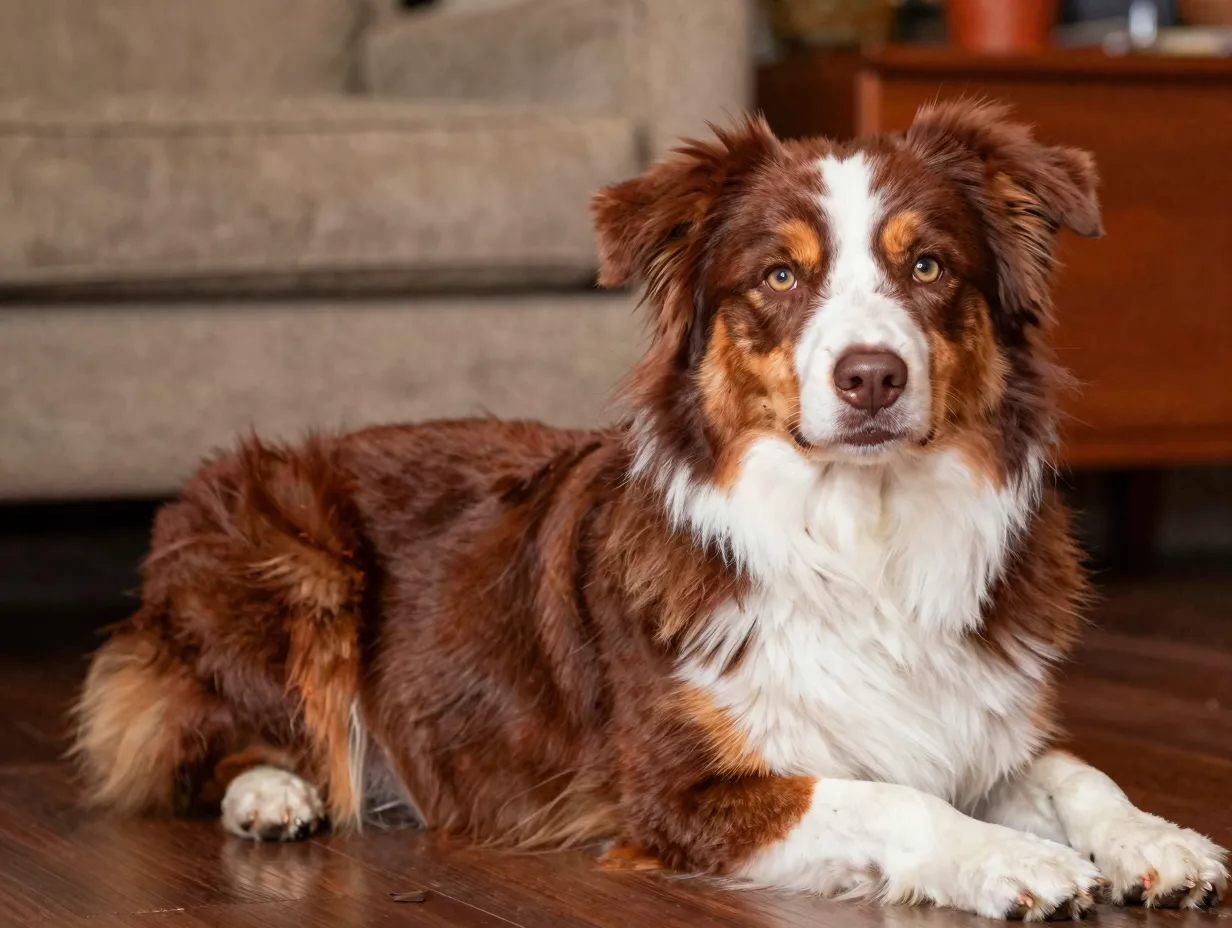
The red tri adds copper/tan points to the red bi pattern. This creates a warm, rich three-color combination of red, white, and tan — all in the same warm-toned palette.
Red tris are particularly striking because all three colors harmonize rather than contrast sharply. The copper points blend naturally with the red base, while white markings provide definition [2][5].
Identification tip: Always check the nose leather. A red tri will have a liver/brown nose, never black. This single detail confirms the dog’s color group immediately [4].
9. Cryptic Merle
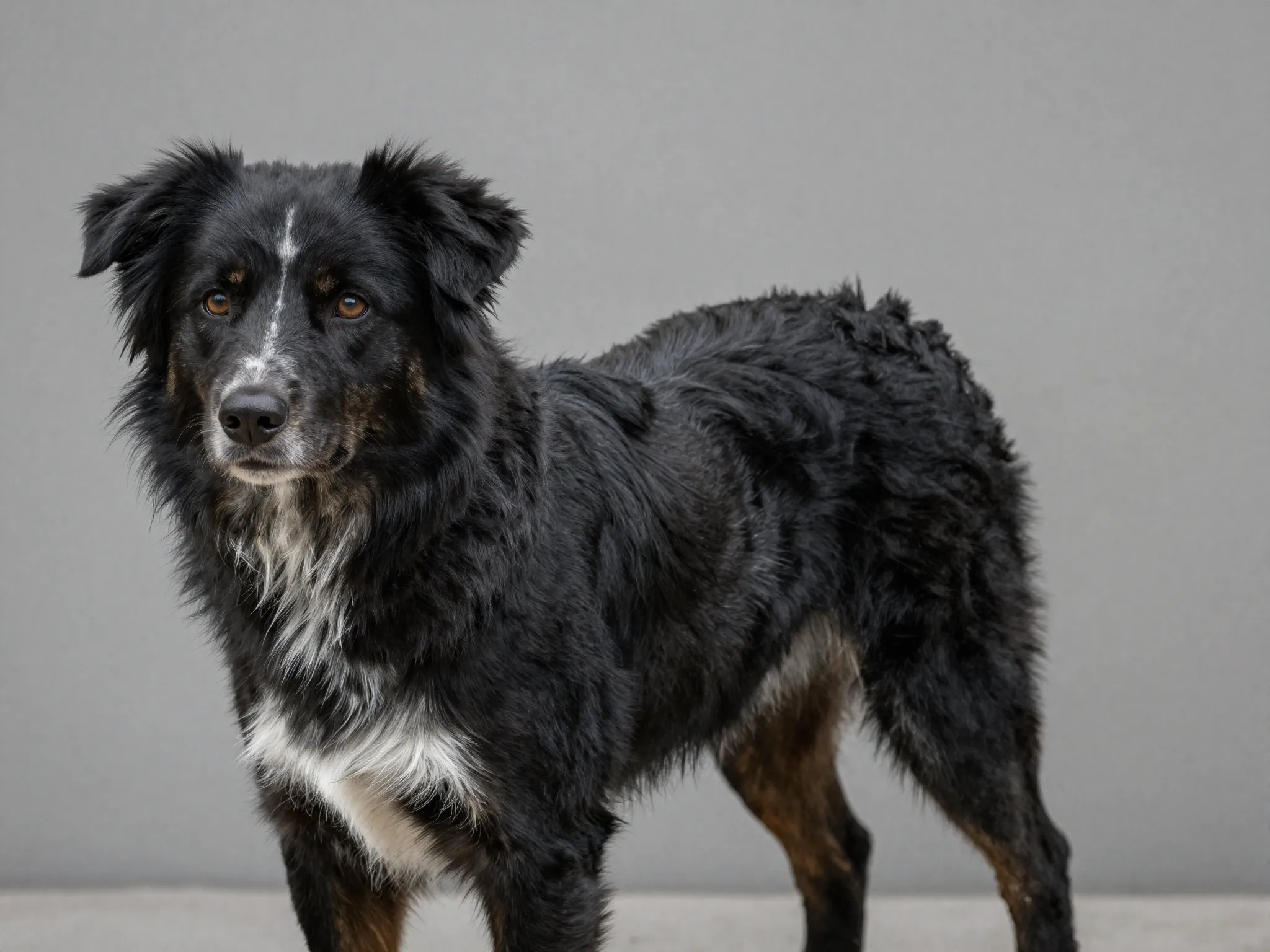
The cryptic merle is the most misunderstood variation in the breed. These dogs carry the merle gene but express it so minimally that they may appear to be solid-colored or only slightly patchy [4].
⚠️ Important for breeders: A cryptic merle bred to another merle can produce double merle puppies, which carry serious health risks including blindness and deafness. Visual coat inspection alone is not sufficient — DNA testing is essential [4].
Cryptic merles result from variations in the SINE insertion that determines merle spot and patch size [4]. The merle pattern may show as:
- A small patch of lighter color on an otherwise solid coat
- Excessive white markings
- Barely detectable lighter areas in certain lighting
Because they look solid, cryptic merles are sometimes unknowingly registered as solid-colored dogs — making genetic testing critical for responsible breeding programs.
Eye Color in Australian Shepherds: A Bonus Feature 👁️
No discussion of Aussie coat colors is complete without mentioning their extraordinary eyes. The breed is famous for heterochromia (two different eye colors) and marbled or “split” eyes (two colors within a single eye) [4].
Common Eye Colors by Coat Type
| Coat Color | Most Common Eye Colors |
|---|---|
| Blue Merle | Blue, brown, amber, marbled |
| Red Merle | Blue, amber, hazel, marbled |
| Solid Black | Brown (blue possible) |
| Solid Red | Amber, hazel (blue possible) |
The merle gene is strongly linked to blue eye expression and marbled eye patterns [4]. Solid-colored Aussies can still produce blue eyes, but it’s far more common in merle-patterned dogs.
Types of Aussie eye patterns:
- Solid color — one uniform color in both eyes
- Heterochromia — each eye is a different color (e.g., one blue, one brown)
- Marbled/split — two colors within a single eye
White Markings and Tan Points: How the Pattern System Works
Understanding the white and tan point system is key to correctly identifying any Aussie’s full color description [2][4].
White Markings (the “Bi” factor)
White typically appears on:
- The face (blaze between the eyes, muzzle)
- The chest and belly
- The collar (around the neck)
- The legs and paws
- The tail tip
Tan/Copper Points (the “Tri” factor)
Copper points appear in specific locations:
- Above the eyes (eyebrow dots)
- On the cheeks
- On the lower legs
- Under the tail
A dog with only a base coat and white markings is called a bi-color. Add copper points, and it becomes a tri-color [4][5]. This is why we go from four base colors to nine distinct variations.
Health Considerations Related to Australian Shepherd Colors
Color in Australian Shepherds isn’t purely cosmetic — it’s directly linked to certain health considerations that every owner and breeder should understand.
The Double Merle Risk ⚠️
Breeding two merle dogs together (merle × merle) can produce double merle offspring. Double merles inherit two copies of the merle gene, which can cause:
- Partial or complete blindness
- Partial or complete deafness
- Microphthalmia (abnormally small eyes)
- Excessive white coat coverage
This is why the cryptic merle variation is so important to identify through DNA testing before breeding [4].
Pigmentation and Sun Sensitivity
Dogs with excessive white markings — particularly around the face and ears — may have reduced pigmentation in those areas, which can increase sensitivity to UV exposure. This is not exclusive to Aussies but is worth monitoring in heavily white-marked individuals.
Responsible Color-Based Breeding Tips
- Always DNA test merle-appearing dogs before breeding
- Never breed merle to merle without genetic confirmation of both parents’ merle status
- Work with ASCA-registered breeders who follow color genetics guidelines [1]
- Ask for health testing documentation — color should never be prioritized over health
How to Identify Your Australian Shepherd’s Color 🔍
Not sure what color your Aussie actually is? Use this simple identification process:
Step 1: Check the nose leather
- Black nose = black-based dog (black or blue merle)
- Brown/liver nose = red-based dog (red or red merle)
Step 2: Look for merle patterning
- Marbled, patchy coat = merle
- Solid, uniform base = non-merle (or potentially cryptic merle)
Step 3: Count the colors
- Base coat only = solid
- Base + white = bi-color
- Base + white + copper = tri-color
Step 4: Match to the 9 variations
Cross-reference your findings with the 9 variations listed above. If your dog appears solid but has any unusual lighter patches, consider DNA testing to rule out cryptic merle status [4].
Frequently Asked Questions About Australian Shepherd Colors
Q: Are rare Aussie colors like “slate” or “lilac” recognized?
No. ASCA recognizes only four base colors. “Slate,” “lilac,” “Isabella,” and similar terms are not officially recognized and often indicate mixed breeding or non-standard genetics [1].
Q: Does coat color affect temperament?
No credible scientific evidence supports a link between coat color and temperament in Australian Shepherds. Behavior is shaped by genetics (lineage), socialization, and training — not color.
Q: Can two black Aussies produce a blue merle puppy?
Only if both parents carry a hidden merle gene (cryptic merles). This is why DNA testing matters — visual inspection alone cannot confirm merle carrier status [4].
Q: Do Aussie colors change as they age?
Merle patterns can lighten slightly with age, and some puppies’ copper points deepen as they mature. However, the base color group (black-based vs. red-based) remains constant throughout life.
Conclusion: Choosing and Celebrating Your Aussie’s Color
The Australian Shepherd Colors: 9 Stunning Variations From Blue Merle to Solid Black represent one of the most visually diverse palettes in the dog world — all within a breed that is equally celebrated for its intelligence, athleticism, and loyalty. Whether you’re drawn to the electric marbling of a blue merle tri, the warm softness of a red merle bi, or the classic elegance of a black tri, every Aussie color has its own unique appeal.
Your Actionable Next Steps ✅
- Identify your Aussie’s color using the nose leather + pattern + point system outlined above
- If you’re breeding, invest in DNA color testing — especially to rule out cryptic merle status before pairing dogs
- Connect with ASCA-registered breeders who prioritize health testing alongside color standards [1]
- Avoid breeders who charge premiums for “rare” colors not recognized by ASCA — this often signals irresponsible breeding practices
- Celebrate your dog’s unique pattern — even within the same color category, no two Aussies are identical
The genetics behind these colors are complex, but the takeaway is simple: responsible breeding, proper identification, and an appreciation for the science behind these patterns will help you make better decisions — whether you’re a new owner, a seasoned breeder, or simply an admirer of one of the world’s most beautiful dog breeds.
References
[1] Color Coat – https://asca.org/aussies/about-aussies/health-and-genetics/color-coat/
[2] Aussie Colors And Patterns – https://www.highdesertcompanions.com/aussie-colors-and-patterns
[3] Blue Merles – https://color.ashgi.org/color/blue_merles.htm
[4] Breeding Genetics – https://nkranchbreeding.weebly.com/breeding–genetics.html
[5] Size Color – https://lonestaraussies.com/size-color