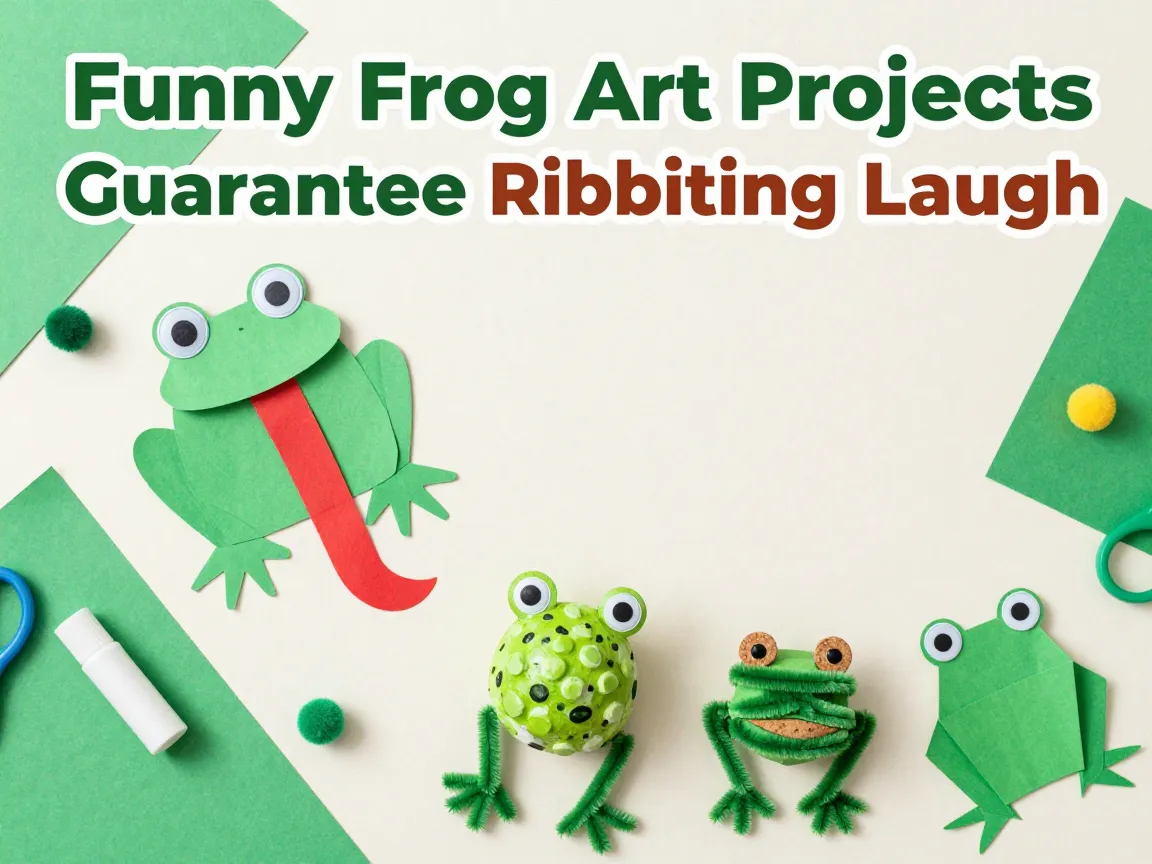
Funny Frog Art Projects That Will Guarantee A Ribbiting Laugh
More than 250 royalty-free “meme frog” images now circulate across major stock photo platforms, and craft blogs published a fresh wave of frog activity roundups in September 2026 alone. That is not a coincidence. Frogs have become the internet’s unofficial comedy mascot, and parents, teachers, and hobbyists are capitalizing on that goodwill by turning amphibians into glue-stick, googly-eye, and pipe-cleaner masterpieces. This guide rounds up six funny frog art projects that will guarantee a ribbiting laugh, whether the goal is a rainy-day classroom activity, a birthday party station, or a quiet weekend project with a cup of coffee and a stack of green construction paper.
Disclosure: This post contains affiliate links. As an Amazon Associate, we earn from qualifying purchases, and at no extra cost to you.
Each project below uses cheap, easy-to-find materials, works for a range of ages, and leans into the goofiest parts of frog anatomy: the bulging eyes, the stretchy tongue, the bumpy skin, and the springy legs. No advanced art training is required. A glue stick, some patience, and a sense of humor are the only real prerequisites.
Key Takeaways
- The six funny frog art projects covered here use common household and craft-store supplies, including paper plates, egg cartons, corks, and sponges.
- Frog-themed crafts are trending in 2026 because they combine humor, low cost, and genuine educational value for counting, fine motor skills, and even conservation awareness.
- Paper plate frogs with oversized tongues and egg-carton bumpy frogs are the two easiest entry points for beginners or young children.
- Origami and cork-based frogs offer more advanced options for older kids, teens, or adults who want a tidier finished look.
- Several national and global programs, including an annual conservation art contest, now encourage frog art as a tool for environmental education, not just entertainment.
Why Funny Frog Art Projects Are Taking Over Craft Rooms in 2026
Frog crafts are not new, but the current surge has a specific cause: amphibians sit at the intersection of comedy and conservation messaging. Stock-image libraries report steady growth in “meme frog” and “doodle cute frog” collections aimed squarely at kids’ coloring pages and casual design work. At the same time, organizations running amphibian conservation programs have leaned into cartoonish, exaggerated frog art as an entry point for teaching kids about wetland habitats and declining frog populations worldwide.
That combination explains why so many “funny frog” roundups appeared across craft blogs and kid-activity sites in September 2026. A family craft blog released a free cut-and-paste sitting frog template that kids can color, cut, and glue together in under thirty minutes. Separately, a well-known kids’ activity guide published step-by-step instructions for paper plate frogs, origami frogs, egg-carton frogs, painted frog rocks, sponge-printed frog art, and toilet-paper-roll frogs, essentially previewing the exact lineup many classrooms are now using.
Teachers like frog projects because they double as lessons. A frog’s life cycle, from egg to tadpole to adult, is a classic elementary science unit, and a goofy craft makes that content stick. Parents like frog projects because the materials are already sitting in a recycling bin. And honestly, most adults enjoy them too, since there is something inherently funny about an amphibian with a tongue longer than its own body.
“The bumpier and bulgier the eyes, the funnier the frog.” That simple rule of thumb guides nearly every project on this list.
The 6 Funny Frog Art Projects That Will Guarantee A Ribbiting Laugh
Each of the six funny frog art projects below has been chosen for three reasons: low material cost, genuine comedic payoff, and flexibility across age groups. Several can be completed in under an hour, which makes them ideal for a classroom period, a birthday party table, or a quick family activity after dinner. Gather basic supplies ahead of time, since switching mid-project to search for glue or scissors tends to kill momentum, especially with younger kids.
1. Paper Plate Frog With a Giant Tongue
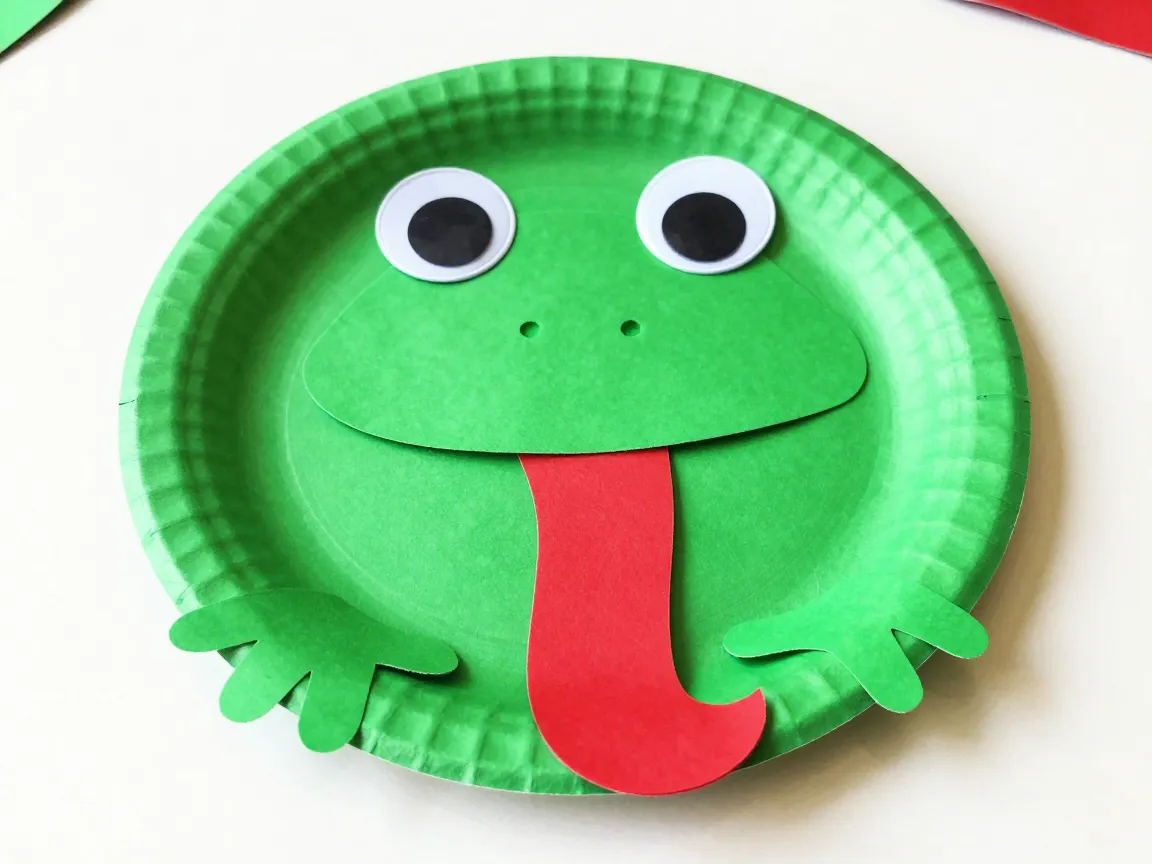
The paper plate frog is the gateway project for a reason. A single paper plate becomes the body and head combined, painted bright green with a quick coat of craft paint or covered in green construction paper. The real comedy comes from two features: oversized googly eyes glued near the top rim, and a long, curling red paper tongue that unrolls out of a cut slit near the bottom.
To build the tongue, cut a thin strip of red paper about twelve inches long and curl it tightly around a pencil before gluing one end inside the mouth slit. The spring-like curl gives the tongue a bouncy, cartoonish look that kids find endlessly funny, especially when they stretch it out and let it snap back. Add short paper legs on the sides for a finished look.
Materials needed: one paper plate, green paint or paper, two large googly eyes, red construction paper, scissors, glue.
Best for: ages four and up, with adult help for cutting the tongue slit.
2. Egg-Carton Bumpy Frog
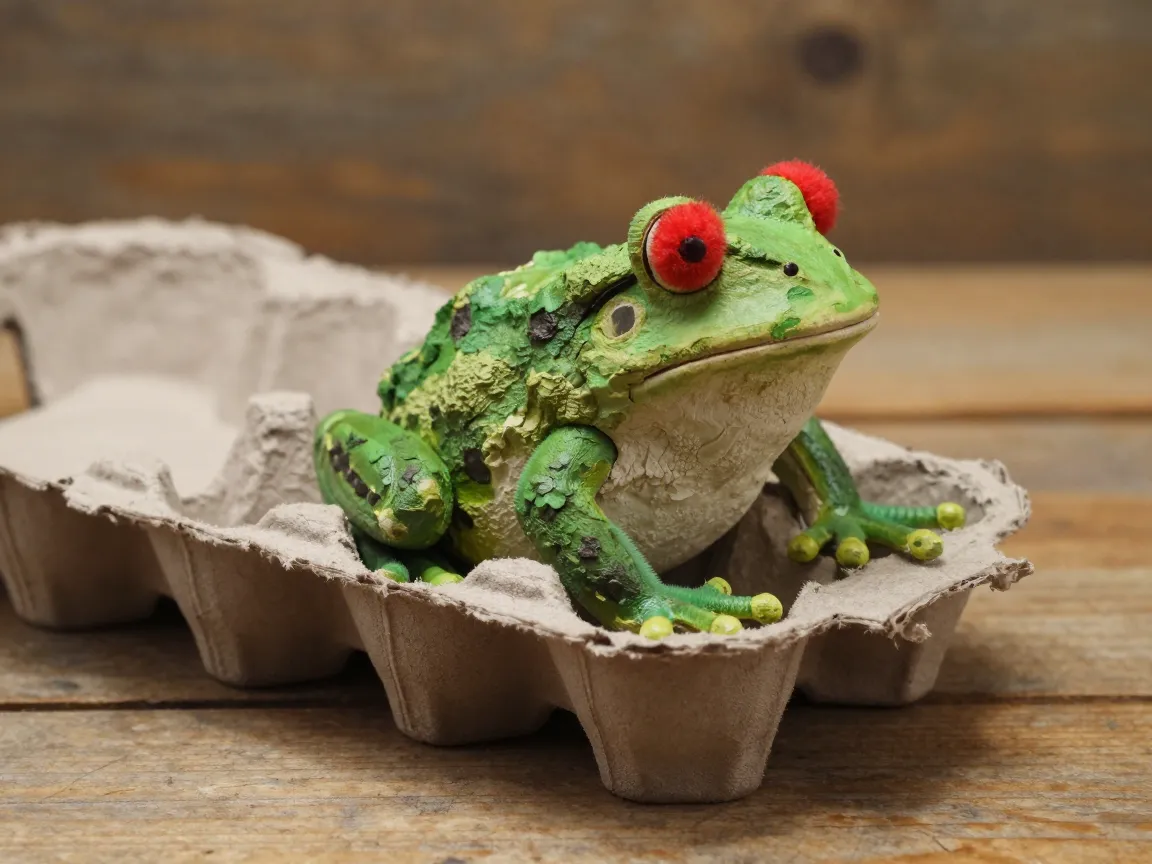
Frog skin is naturally bumpy, which makes an egg carton the perfect raw material. Cut two connected cups from a cardboard egg carton to form a humped frog body, then paint the whole piece a textured shade of green. The natural ridges of the carton mimic warty frog skin far better than flat paper ever could, which is exactly why this project shows up in nearly every frog craft roundup published in 2026.
Add pipe-cleaner legs by poking small holes in the sides of the carton and threading green or brown pipe cleaners through, bending them into bent “sitting” legs. Top it off with two small pom-poms or painted bottle caps glued on as bulging eyes. The finished frog has real dimension and a slightly lumpy charm that flat paper crafts cannot match.
Materials needed: egg carton section, green paint, pipe cleaners, pom-poms or bottle caps, glue.
Best for: ages five and up; younger children may need help with the painting step to avoid soggy cardboard.
3. Sponge-Printed Frog Art
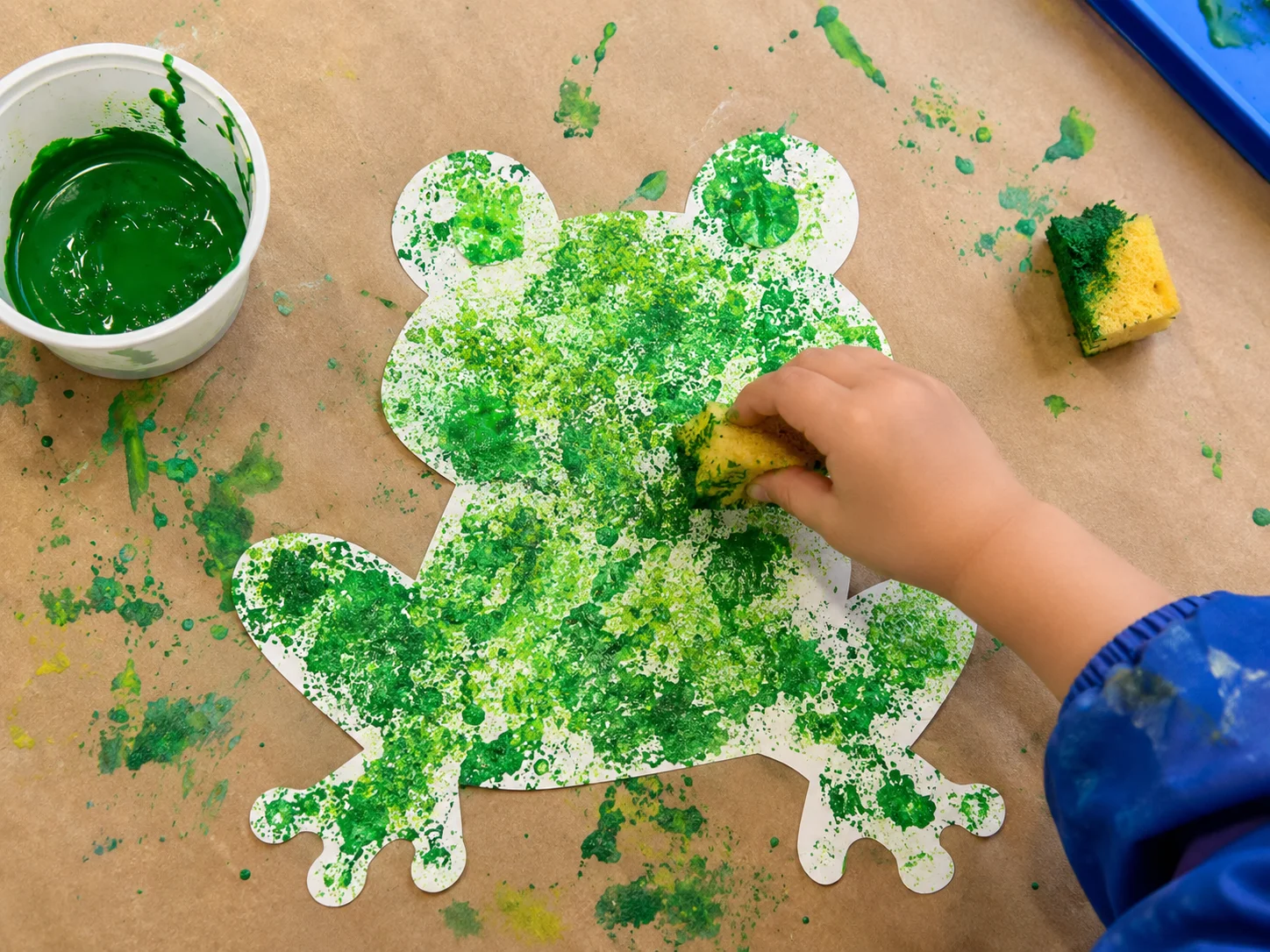
Sponge printing turns a simple frog silhouette into a textured piece of wall art, and it is one of the messiest, most popular options among preschool-focused activity guides. Start by cutting a frog shape out of thick paper or cardstock, or print a simple outline template. Dip a cut sponge piece into green paint and dab it across the frog shape to build up a speckled, bumpy texture that again nods to real frog skin.
Once the base coat dries, add details with a fine paintbrush or marker: wide white eyes with black pupils, a curved smile, and small spots in a contrasting color like yellow or brown. Because the sponge technique does most of the visual work, this project is forgiving for kids who feel nervous about “ruining” a drawing. There is no wrong way to dab a sponge.
Materials needed: sponge pieces, green and accent-color paint, cardstock or a printed frog outline, paintbrush for details.
Best for: ages three and up, ideal for preschool classrooms and sensory-friendly activities.
4. Toilet-Paper-Roll Hopping Frog
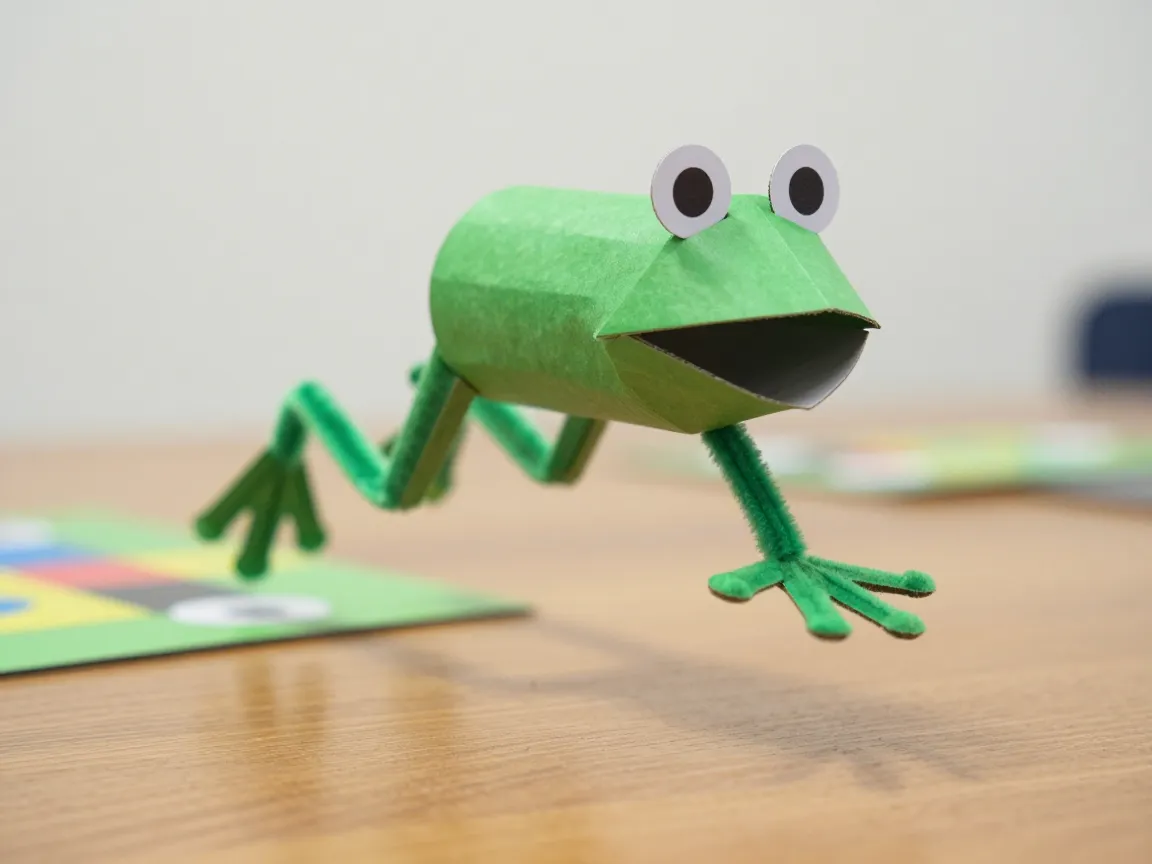
Cardboard tubes are a craft-closet staple, and when wrapped in green paper or paint, they make a surprisingly sturdy little frog body that can actually “hop” across a table when flicked from behind. Cut the tube down to about two inches tall, cover it in green paper, and glue on a folded paper mouth shape that sticks out slightly for a comic, underbite-style grin.
Add two large paper eyes on stalks by gluing small white circles onto folded paper strips, then attach bent pipe-cleaner or paper legs to the base so the frog appears to be crouching, ready to jump. Kids enjoy racing these frogs across a table in impromptu competitions, which adds a layer of play value beyond the craft itself.
Materials needed: cardboard tube, green paper or paint, white paper, pipe cleaners, glue.
Best for: ages six and up, especially fans of building toys that double as crafts.
5. Googly-Eyed Cork Frog
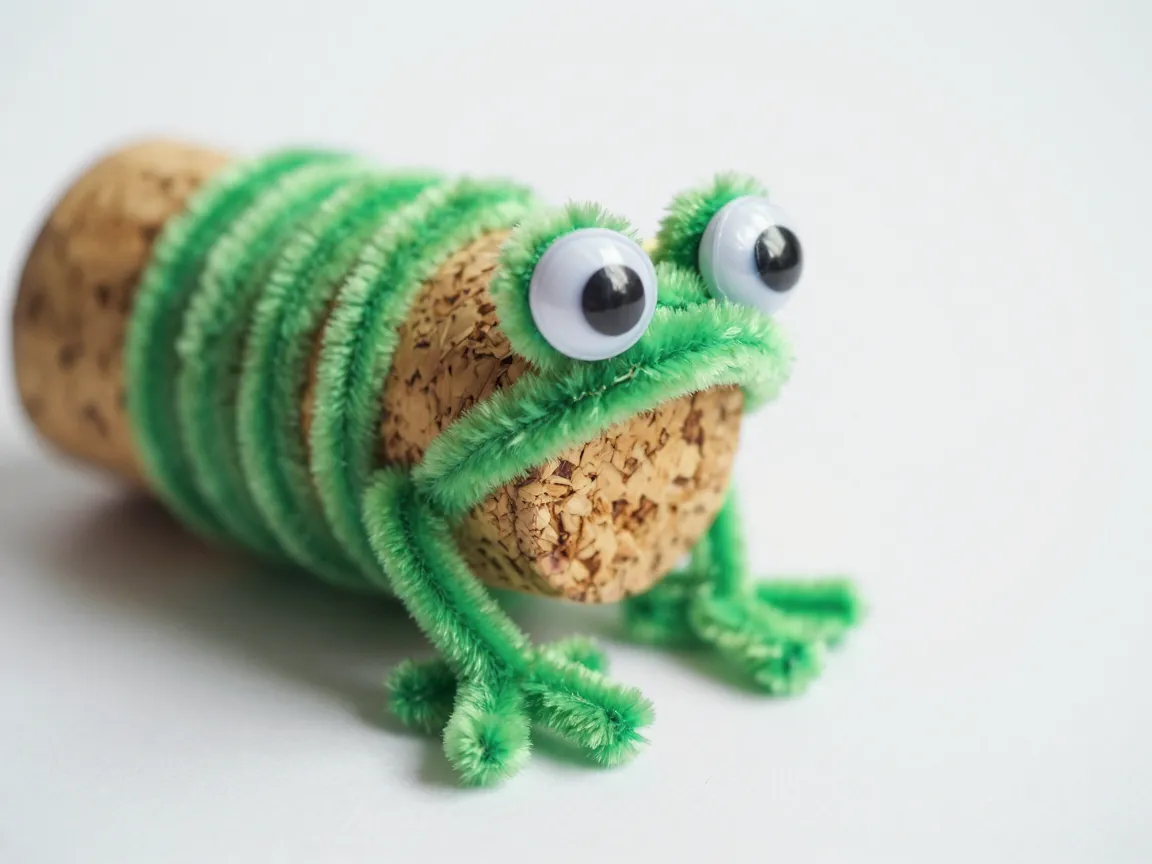
For a project with a slightly more polished, display-worthy finish, wine corks make an excellent frog body. Wrap a cork in green pipe cleaners by coiling them tightly from end to end, then bend two additional pipe cleaners into bent legs and attach them to the underside with a dab of hot glue. Finish with two tiny googly eyes glued to the top of the cork.
Because corks are small and lightweight, this project works well as a party favor, a desk decoration, or a tiny fridge magnet when a magnetic strip is glued to the bottom. The scale makes it less messy than paper plate or egg carton versions, which makes it a strong option for adult craft nights or teen groups who want something a little more refined without losing the humor.
Materials needed: one cork, green pipe cleaners, two small googly eyes, hot glue.
Best for: ages ten and up, or younger kids with close adult supervision around the hot glue gun.
6. Origami Leaping Frog
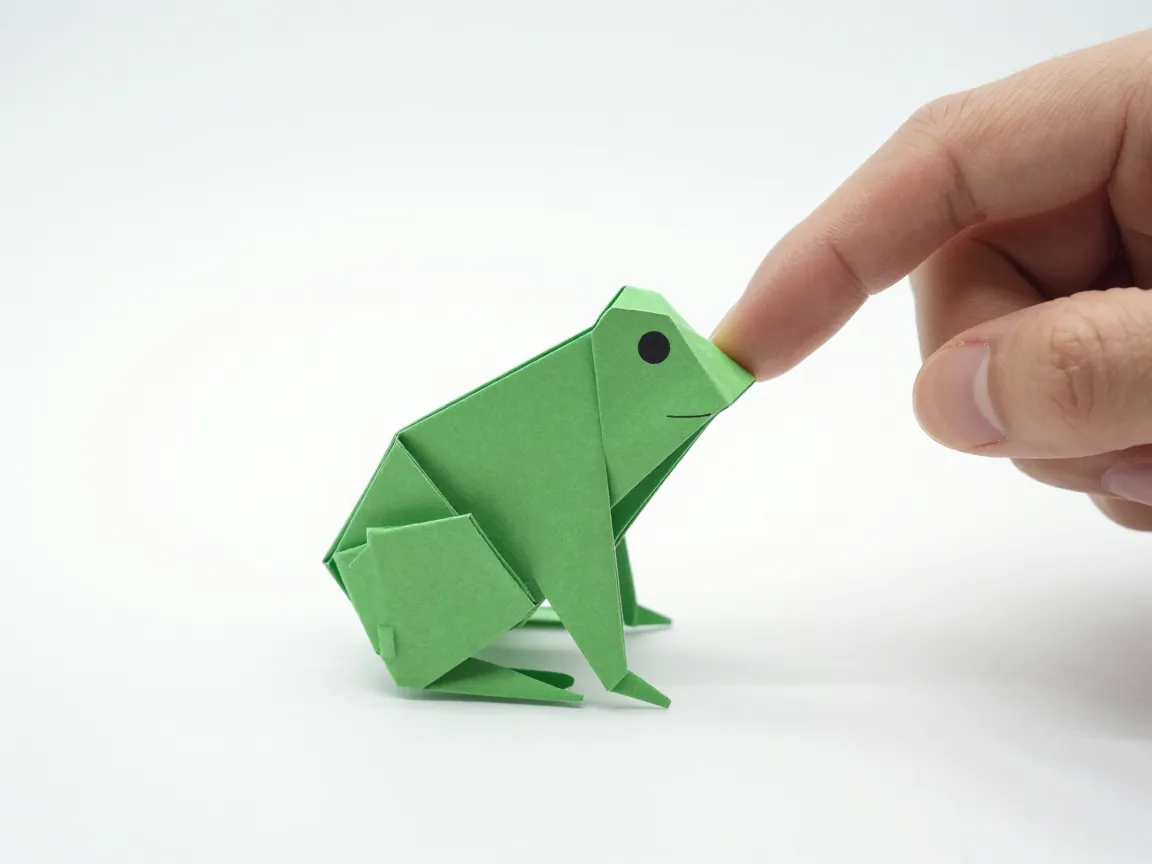
The origami leaping frog is the most technical project on this list, but it rewards the effort with genuine interactivity: a well-folded paper frog can actually jump several inches when its back is pressed down and released. This classic fold uses a single square sheet of green or patterned paper, folded into a compact accordion-style base that stores spring tension in the paper itself.
Add a simple face with a marker once the fold is complete, including two dot eyes and a wide smile, then host a mini jumping contest to see whose frog leaps the farthest. Because no glue, scissors, or paint is required, this project travels well and works nicely as a quiet activity for car rides, waiting rooms, or classroom downtime between lessons.
Materials needed: one square sheet of paper, a marker for the face.
Best for: ages eight and up; younger children may need a folding partner for the trickier creases.
Quick Comparison: 6 Funny Frog Art Projects That Will Guarantee A Ribbiting Laugh at a Glance
The table below summarizes material cost, mess level, and recommended age range so a project can be matched quickly to the setting, whether that is a classroom, a birthday party, or a quiet solo craft session.
| Project | Core Materials | Mess Level | Best Age Range |
|---|---|---|---|
| Paper Plate Frog With a Giant Tongue | Paper plate, paint, googly eyes | Low | 4 and up |
| Egg-Carton Bumpy Frog | Egg carton, pipe cleaners, paint | Medium | 5 and up |
| Sponge-Printed Frog Art | Sponge, paint, cardstock | High | 3 and up |
| Toilet-Paper-Roll Hopping Frog | Cardboard tube, paper, pipe cleaners | Low | 6 and up |
| Googly-Eyed Cork Frog | Cork, pipe cleaners, hot glue | Low | 10 and up |
| Origami Leaping Frog | One square paper sheet | None | 8 and up |
This side-by-side view makes it easy to pick two or three projects that fit the available time and supplies rather than attempting all six in a single session, which can overwhelm younger participants.
Tips for Hosting a Frog Art Session That Gets the Biggest Laughs
A great frog craft session is not just about the finished product. A few small adjustments can push any of these six funny frog art projects from “cute” to genuinely funny.
- Exaggerate the eyes. Oversized googly eyes, glued slightly crooked, almost always get a bigger laugh than perfectly centered ones. Frogs already have bulging eyes in nature, so leaning into that feature pays off visually.
- Add an unexpected accessory. A tiny paper bow tie, a felt top hat, or a pipe-cleaner crown turns a standard frog craft into a character with personality. Some artists have even dressed frog characters in full holiday outfits, including a green-suited frog with a bow tie and shamrock for seasonal projects.
- Encourage silly names. Letting kids name their frog creations, whether “Bogart” or something sillier, builds attachment to the project and extends engagement well past the glue-drying stage.
- Set up a photo backdrop. A simple blue paper “pond” background with a few paper lily pads gives finished frogs a stage and makes for better display photos on a classroom wall or refrigerator.
- Time the mess appropriately. Sponge-printing and paint-based projects should be scheduled earlier in a session, leaving quieter, glue-only projects like origami for cleanup-sensitive moments near the end.
How Frog Art Fits Into Bigger Lessons
Funny frog art projects are not purely comedic. Many of the same features that make frog crafts amusing, like exaggerated eyes and bumpy textures, also make them effective teaching tools. Preschool-focused activity guides frequently pair frog art with counting exercises, such as counting spots on a lily pad or matching a set number of flies to a frog’s open mouth, turning a silly project into an early numeracy lesson.
On a larger scale, an annual international art contest focused on frog conservation invites artists of all ages to submit frog-themed drawings, paintings, and digital art, with entries typically due in the fall. The program treats humorous and cartoonish frog art as a legitimate on-ramp to conservation education, arguing that a child who laughs at a goofy frog drawing today is more likely to care about wetland habitats tomorrow. That framing matters for anyone building a classroom unit: a funny frog art project is rarely “just” a craft. It is often step one in a longer conversation about amphibian habitats, life cycles, and why so many frog species are currently at risk.
Educators who want to extend a basic craft session can pair any of the six projects above with a short discussion of real frog species, a simple life-cycle diagram, or a map showing where frogs live around the world. The humor keeps attention in the room; the follow-up content keeps the lesson from feeling like filler.
Frequently Asked Questions
What age group works best for frog art projects?
Most of the six funny frog art projects covered here work for ages four through twelve, though origami and cork-based projects suit older kids, teens, and adults better due to finer motor control requirements.
What is the cheapest frog craft to make?
The origami leaping frog requires only a single sheet of paper and a marker, making it the lowest-cost option on this list. Paper plate and egg-carton frogs come in close behind since both reuse household items.
Can these projects be adapted for a classroom of twenty or more students?
Yes. Paper plate frogs and sponge-printed frog art scale well for large groups because materials are inexpensive and the steps are simple enough for independent work with minimal supervision.
Are there frog art contests for kids?
An annual global frog art contest accepts drawings, paintings, and digital art from entrants of all ages, typically with a fall submission deadline, and frequently welcomes humorous or cartoonish styles alongside realistic ones.
How long does a typical frog craft project take to complete?
Most projects on this list take between twenty minutes and one hour, depending on drying time for paint and the complexity of folds or cuts involved.
Conclusion
Frogs have earned their spot as one of the internet’s favorite comedic mascots, and that same charm translates beautifully into hands-on art. The six funny frog art projects that will guarantee a ribbiting laugh outlined above, from a paper plate frog with an absurdly long tongue to a spring-loaded origami leaper, prove that a few cents’ worth of craft supplies can produce genuine laughter alongside a finished keepsake. Start with the simplest option that matches the available time and materials, then layer in extras like silly names, pond backdrops, or a short lesson on real frog habitats to stretch the activity further. Whether the goal is a rainy afternoon at home, a classroom science unit, or a submission to a conservation art contest, these projects offer an easy, low-cost way to turn a stack of paper and paint into something genuinely funny.