Your German Shepherd 3 Months Old: 9 Development Milestones & Care Tips
German Shepherd puppies grow faster than most owners expect — by the time your pup hits 12 weeks, they have already completed more neurological development than in any other single month of their life. If you are raising a three-month-old GSD right now, you are standing at one of the most critical windows in your dog’s entire lifespan. Miss it, and you may spend years correcting behavioral problems. Nail it, and you set the foundation for a confident, obedient, and healthy companion.
Disclosure: This post contains affiliate links. As an Amazon Associate, we earn from qualifying purchases, and at no extra cost to you.
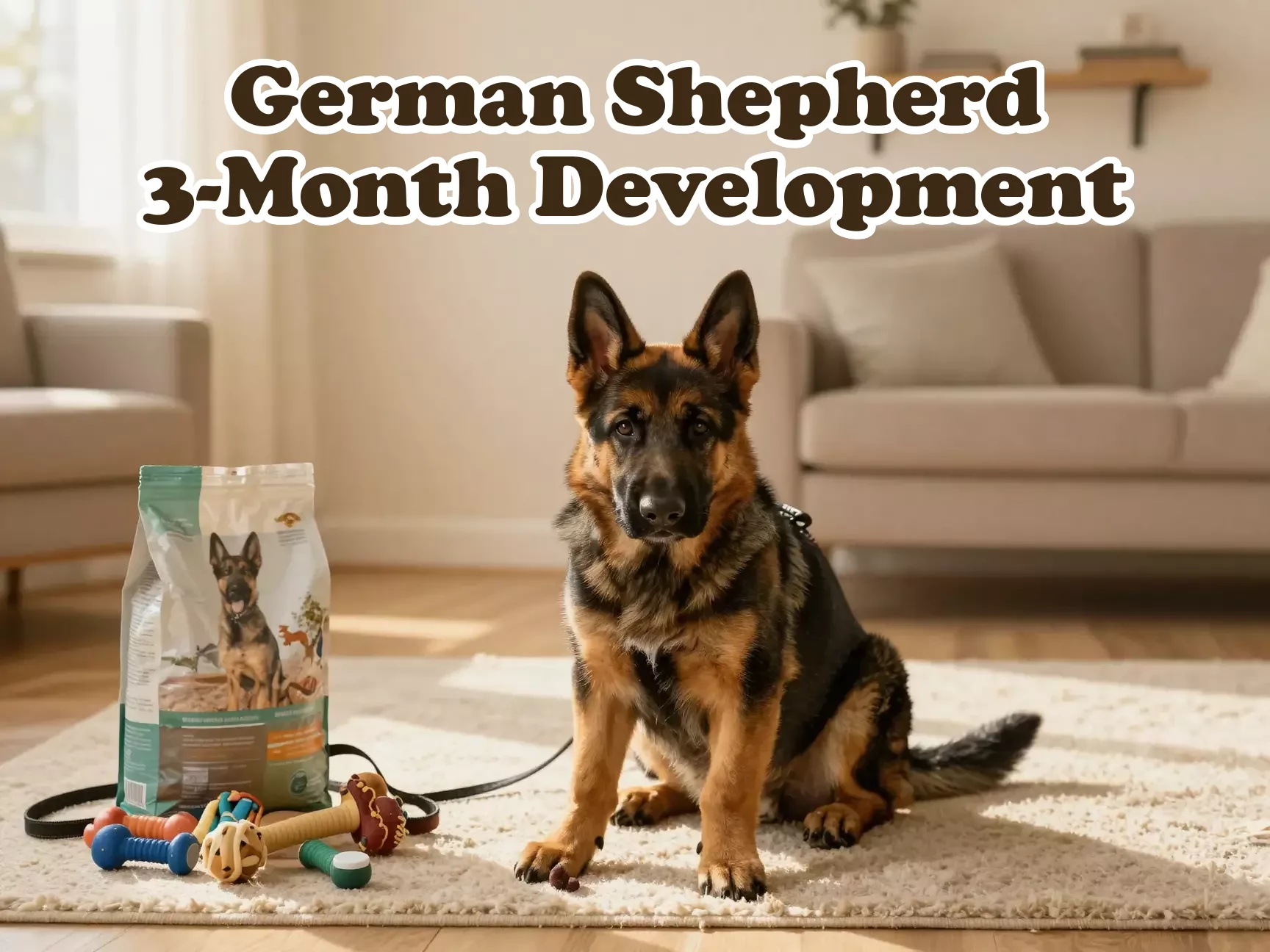
This guide covers Your German Shepherd 3 Months Old: 9 Development Milestones & Care Tips in detail — from teething and physical growth to training, diet, and socialization. Whether this is your first GSD or your fifth, you will find actionable, research-backed guidance here.
Key Takeaways 📋
- A 3-month-old German Shepherd is entering the juvenile period, a phase of explosive physical and behavioral change
- Baby teeth begin shedding around this age — chew toys are not optional, they are essential
- Basic obedience training should start now, including sit, stay, down, and loose-leash walking
- Diet and exercise must be carefully managed to protect developing joints and prevent future health problems
- Socialization is still a top priority — exposure to new sights, sounds, and people shapes your dog’s temperament for life
Understanding the 3-Month-Old German Shepherd Stage
At 12 weeks old, your German Shepherd puppy is transitioning out of the early socialization period and entering what experts call the juvenile period (roughly 3–6 months). This phase is marked by rapid physical growth, increasing independence, and a strong drive to explore [1].
Think of it like toddlerhood for dogs. Your puppy is curious, energetic, and just clumsy enough to be adorable — but also at a stage where habits, both good and bad, are being formed daily. Understanding what is happening developmentally helps you respond with the right care at the right time.
💡 Pull Quote: “The juvenile period in German Shepherds is when the brain is most plastic — every positive experience you create now pays dividends for the next decade.”
Your German Shepherd 3 Months Old: 9 Development Milestones & Care Tips
Let’s walk through each of the nine key milestones and care tips you need to know right now.
1. The Teething Phase Begins
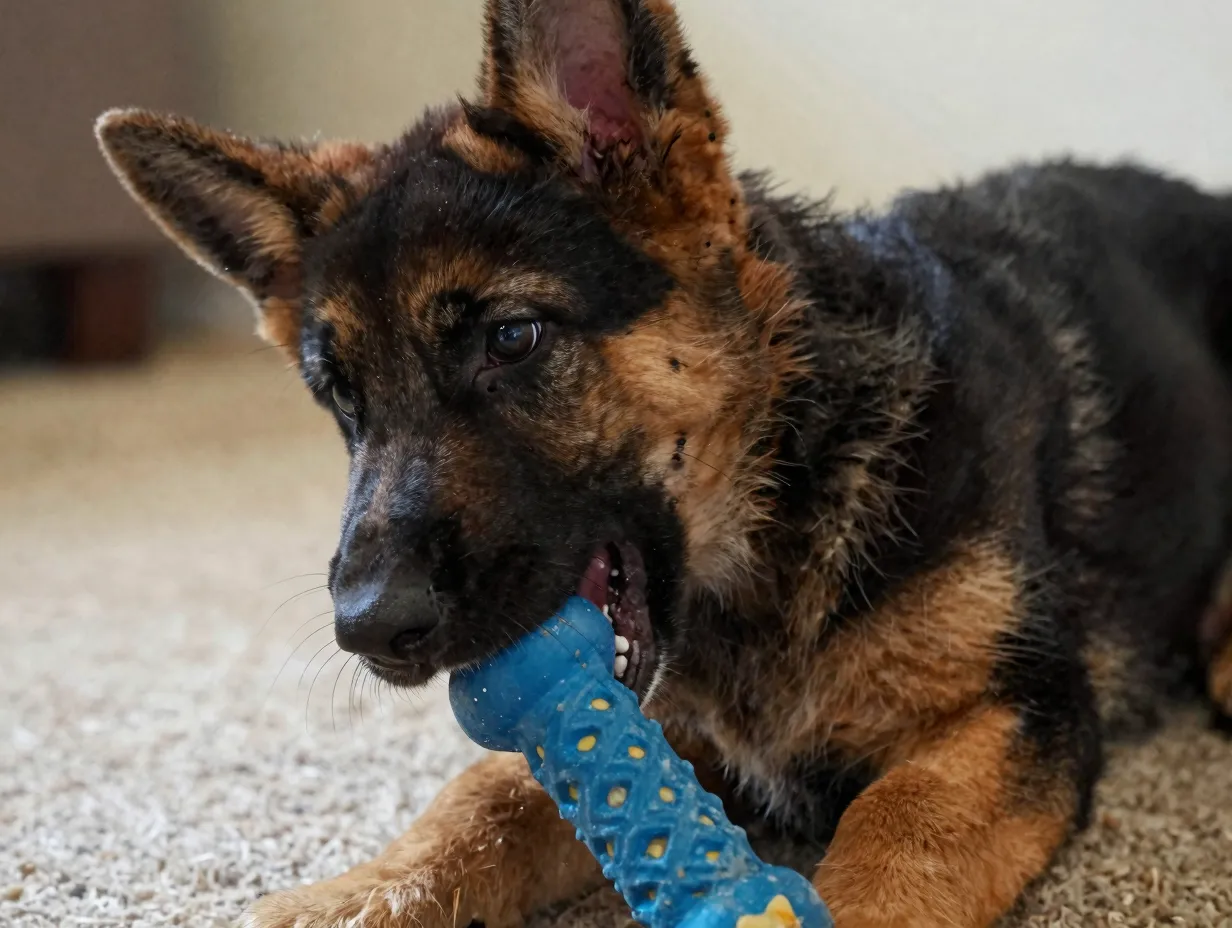
One of the most noticeable changes at 3 months old is the start of teething. Baby teeth begin shedding and adult teeth start growing in around this age, making proper chew toys an absolute necessity [1].
You may notice your puppy chewing on everything — furniture, shoes, your hands. This is not bad behavior; it is biology. The gums are sore and chewing provides relief.
What to do:
- Offer a variety of puppy-safe chew toys (rubber, rope, and nylon options)
- Keep valuable items out of reach
- Redirect chewing to appropriate toys consistently
- Check the mouth weekly for retained baby teeth or signs of infection
Avoid hard bones or toys that do not flex, as these can fracture fragile puppy teeth.
2. Explosive Physical Growth and Coordination
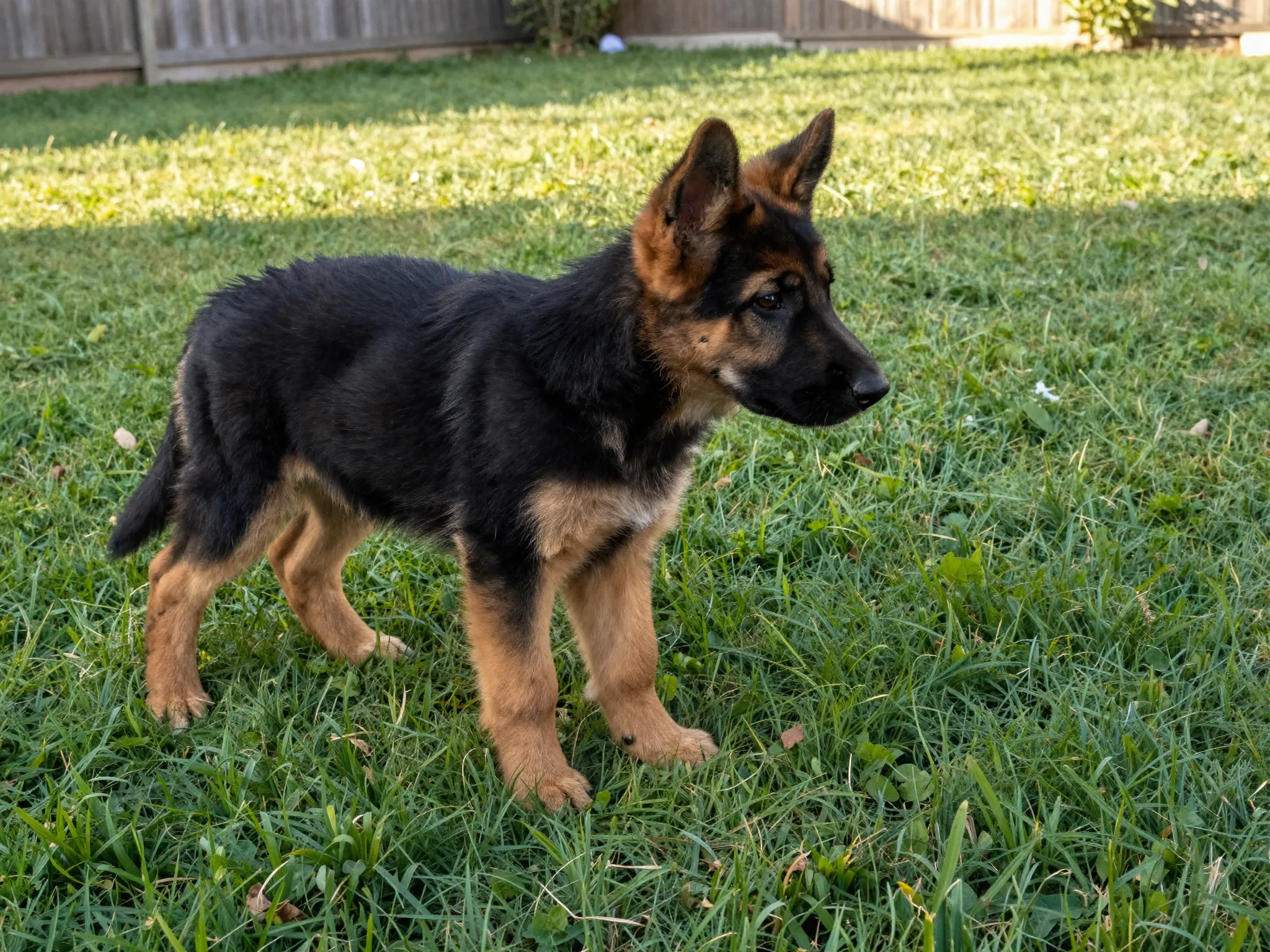
At 3 months, your GSD is growing at a rate that can seem almost overnight. Puppies experience explosive physical growth, often gaining weight and height rapidly, with oversized paws that make them clumsy as their limbs grow unevenly [3].
This awkward, gangly phase is completely normal. Their bodies are not yet proportional, and their coordination is still catching up with their size. However, physical coordination does improve dramatically during the juvenile period, and you will notice your puppy becoming more confident in exploring their environment week by week [1].
Typical weight range at 3 months:
| Sex | Average Weight |
|---|---|
| Male | 22–30 lbs (10–14 kg) |
| Female | 17–26 lbs (8–12 kg) |
These numbers vary based on genetics and diet, so use them as a guideline rather than a strict rule.
3. Rapid Energy Development
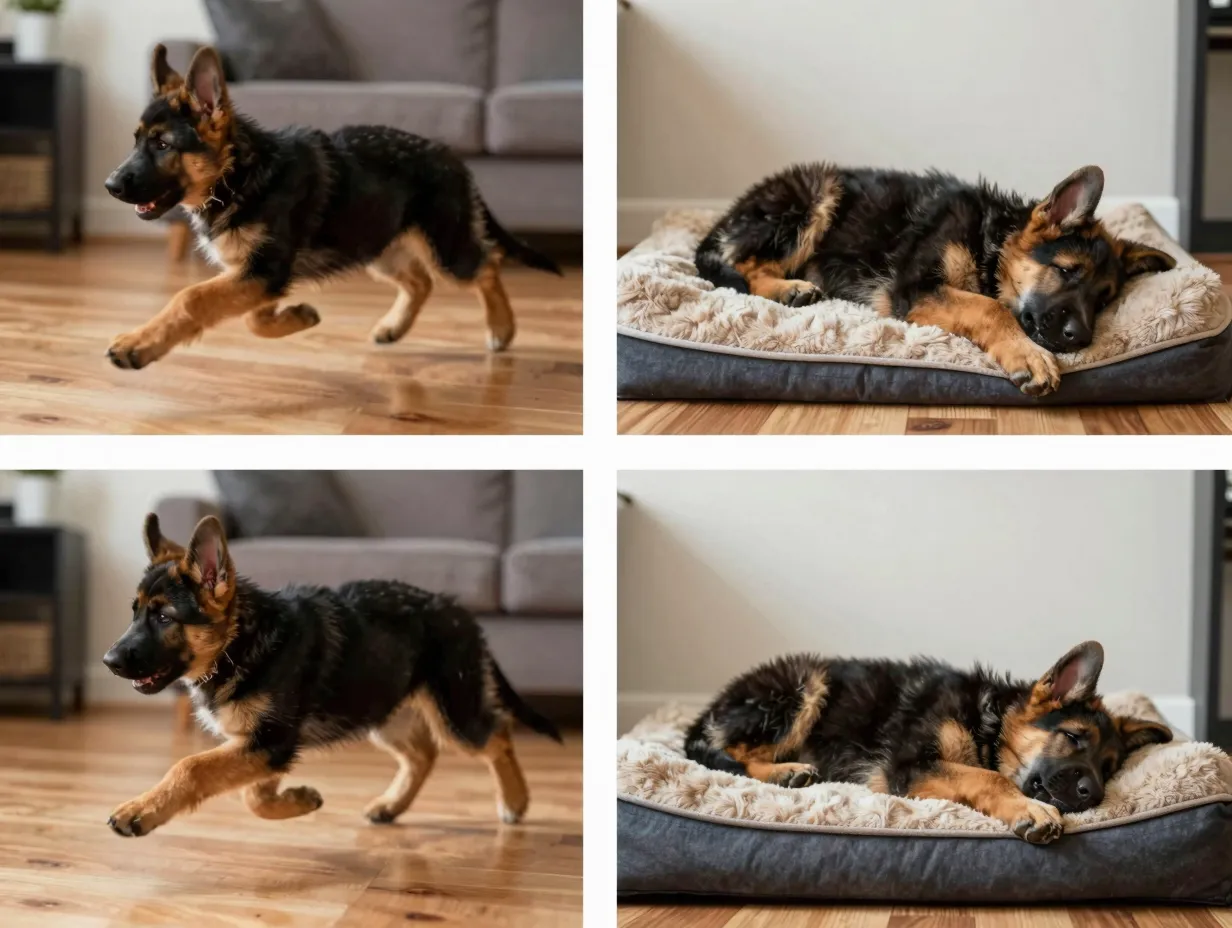
If you feel like your puppy has more energy every single day, you are not imagining it. Rapid energy development occurs during this phase, with puppies doubling in size and developing significant energy levels [6].
This surge in energy is paired with a short attention span, which means your puppy can go from full sprint to deep sleep in minutes. Managing this energy wisely is key to preventing destructive behavior.
Daily energy management tips:
- Schedule 3–4 short play sessions per day (10–15 minutes each)
- Include mental stimulation through puzzle feeders and training
- Allow adequate rest between activity periods
- Watch for signs of over-tiredness, such as nipping or whining
4. Basic Obedience Training Starts Now
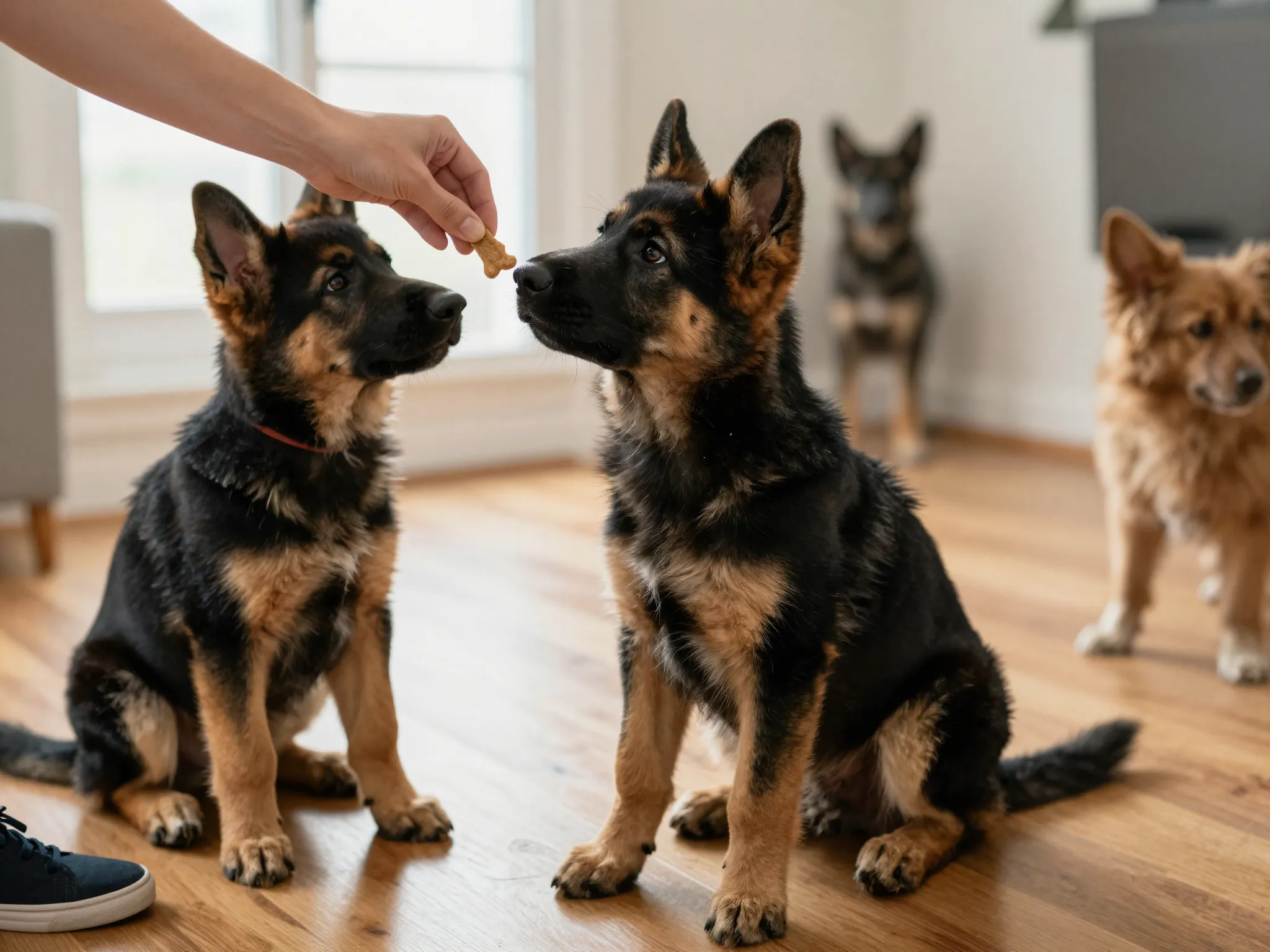
Three months old is the ideal time to begin structured training. Obedience training should begin in earnest, focusing on basic commands like sit, down, stay, and loose-leash walking [2].
German Shepherds are one of the most trainable breeds in the world, but that intelligence cuts both ways — a bored, untrained GSD will find its own entertainment, and you probably will not like what it chooses.
Core commands to introduce at 3 months:
- Sit
- Down
- Stay (start with 2–3 seconds)
- Come (recall)
- Leave it
- Loose-leash walking
Keep training sessions short and positive — 5 to 10 minutes, two to three times per day. Use high-value treats and enthusiastic praise. End every session on a success.
🐾 Pro Tip: German Shepherds respond exceptionally well to marker training (clicker or verbal “yes”). The precision helps them understand exactly which behavior earned the reward.
5. Impulse Control Training Is Critical
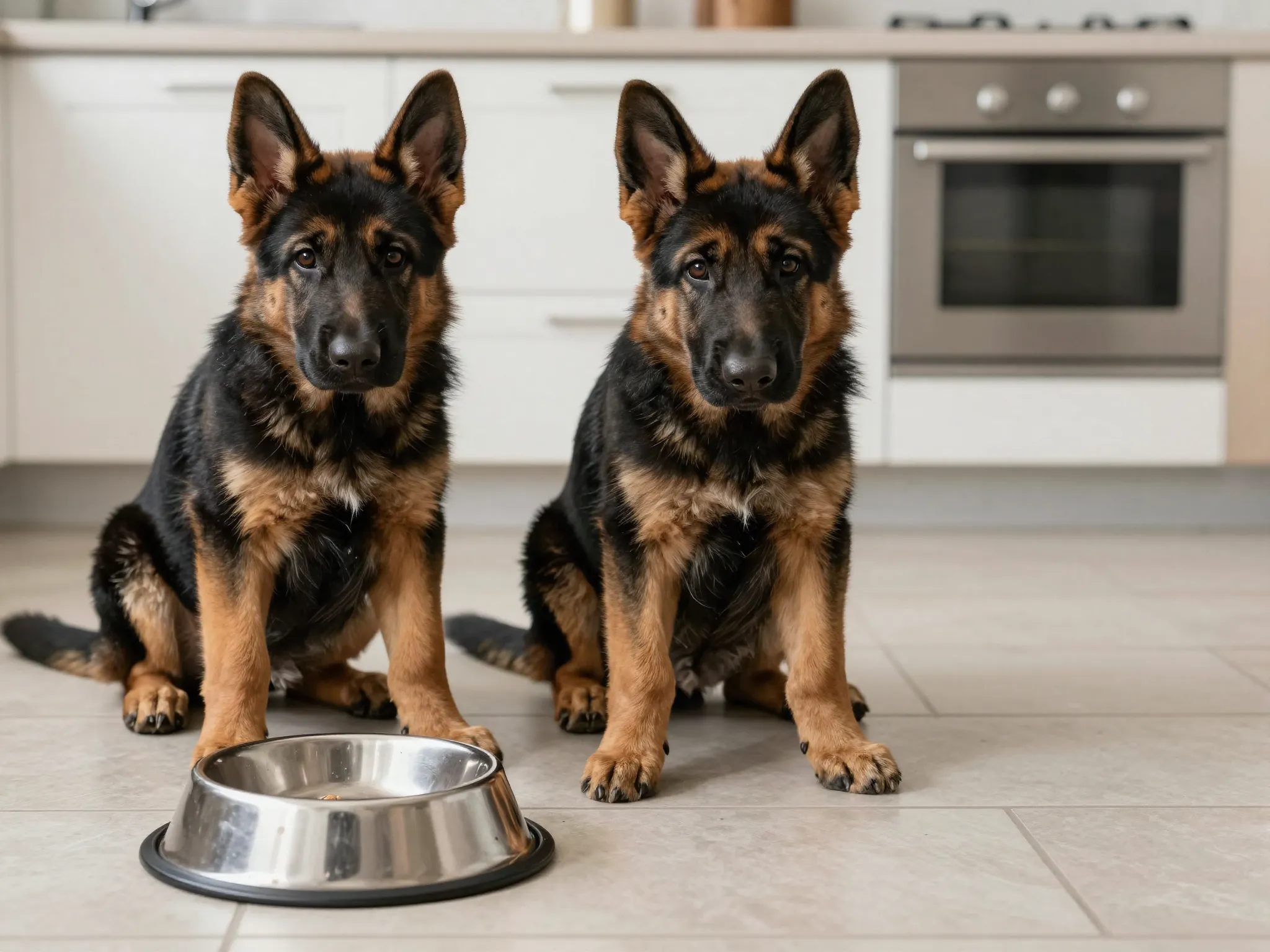
Beyond basic commands, impulse control training is critical to prevent problem behaviors such as excessive barking, digging, aggressive chewing, and inappropriate chasing due to prey drive [2].
At 3 months, your GSD’s prey drive is beginning to emerge. You might notice them stalking leaves, chasing shadows, or fixating on small animals. This is natural GSD behavior — but without guidance, it can escalate into serious problems.
Impulse control exercises to start now:
- “Wait” before meals — ask your puppy to sit and wait before placing the food bowl down
- Door manners — practice sitting before going through doors or gates
- Drop it — teach your puppy to release items on command
- Controlled greetings — reward calm behavior when meeting new people instead of jumping
Consistency is everything here. Every family member must enforce the same rules.
6. Puppy Socialization Classes Are a Must
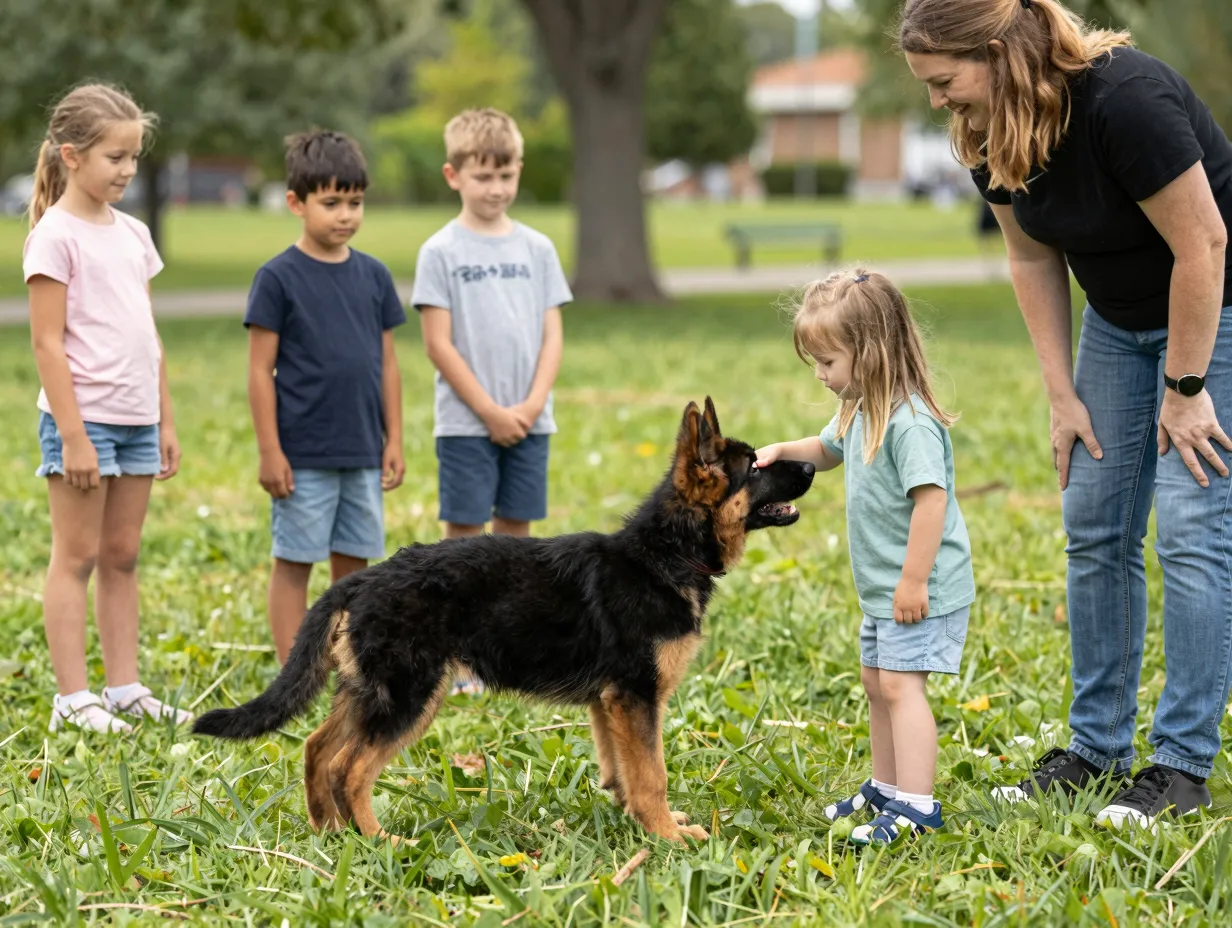
At this age, puppy obedience classes are recommended because they help teach commands while providing crucial socialization opportunities [2]. A group class setting exposes your puppy to other dogs, unfamiliar people, and new environments — all in a controlled, supervised context.
Early socialization continues to be crucial, with exposure to different sights, sounds, and smells helping develop confidence and reduce fear-based reactivity later in life [4].
Socialization checklist for 3-month-old GSDs:
- ✅ Children of different ages
- ✅ Men with hats, beards, or glasses
- ✅ Bicycles, skateboards, and strollers
- ✅ Loud noises (traffic, thunder sounds, vacuum cleaners)
- ✅ Different floor surfaces (tile, grass, gravel, wood)
- ✅ Other vaccinated, friendly dogs
- ✅ Veterinary office visits (even just for “happy visits”)
Make every new experience positive. Bring treats, stay calm, and never force your puppy into a situation that is clearly overwhelming.
7. Diet Management During Rapid Growth
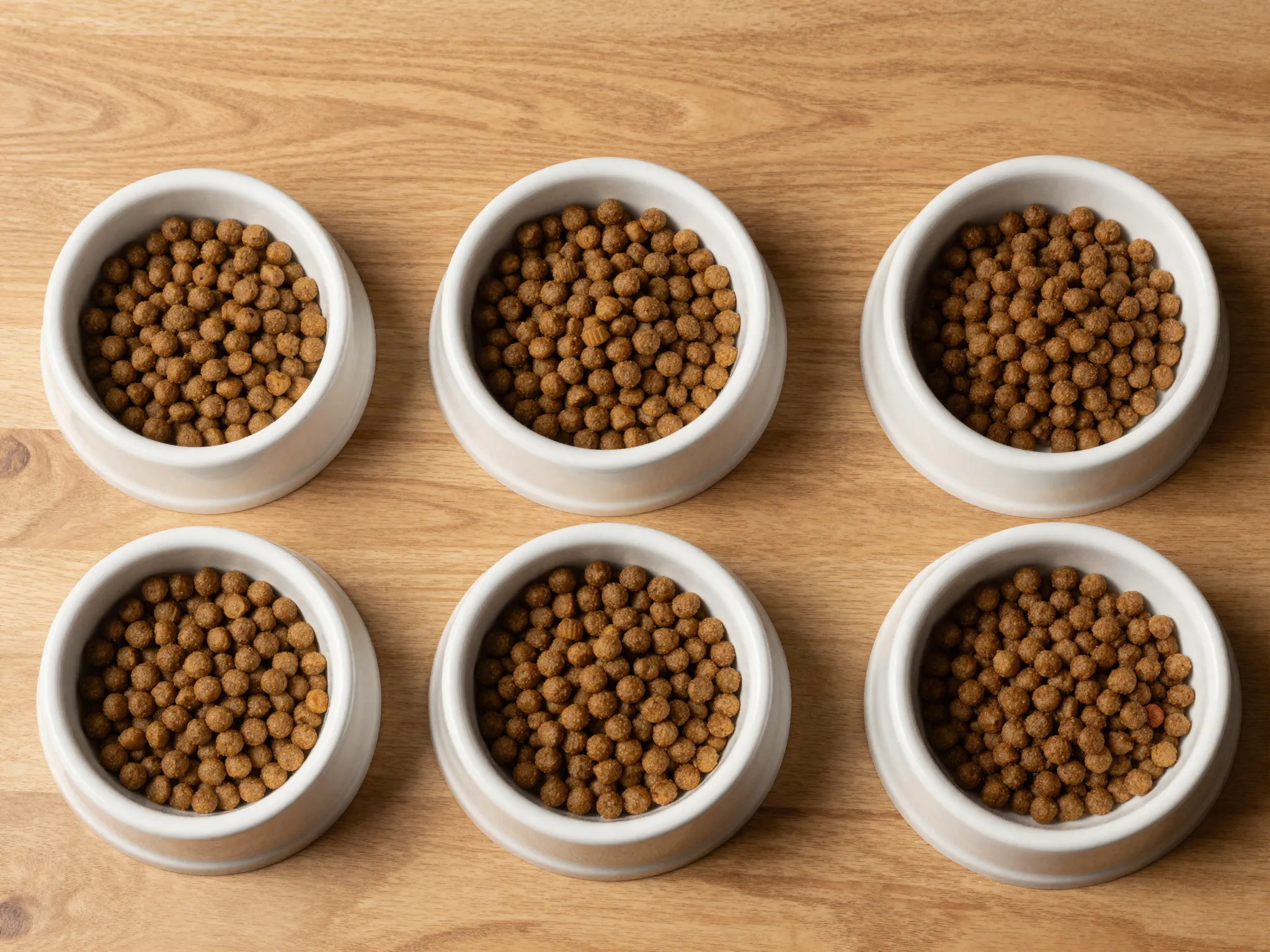
Feeding a 3-month-old German Shepherd correctly is more nuanced than most owners realize. Careful diet management is essential because too much protein or calcium can be harmful during rapid growth phases [3].
Large breed puppies like GSDs have specific nutritional needs that differ from small breeds. Excess calcium, in particular, can interfere with bone development and increase the risk of conditions like hip dysplasia.
Feeding guidelines at 3 months:
| Factor | Recommendation |
|---|---|
| Meals per day | 3 meals (morning, midday, evening) |
| Food type | Large breed puppy formula |
| Calcium level | 1.0–1.8% DM (dry matter) |
| Protein level | 22–28% (avoid excessive amounts) |
| Portion control | Follow label guidelines; adjust for body condition |
Overfeeding should be avoided because German Shepherds are prone to weight gain, which can lead to joint problems later in life [5]. You should be able to feel your puppy’s ribs without pressing hard, but not see them prominently.
⚠️ Important: Always consult your veterinarian before changing your puppy’s diet or adding supplements.
8. Exercise Should Be Gentle and Moderated
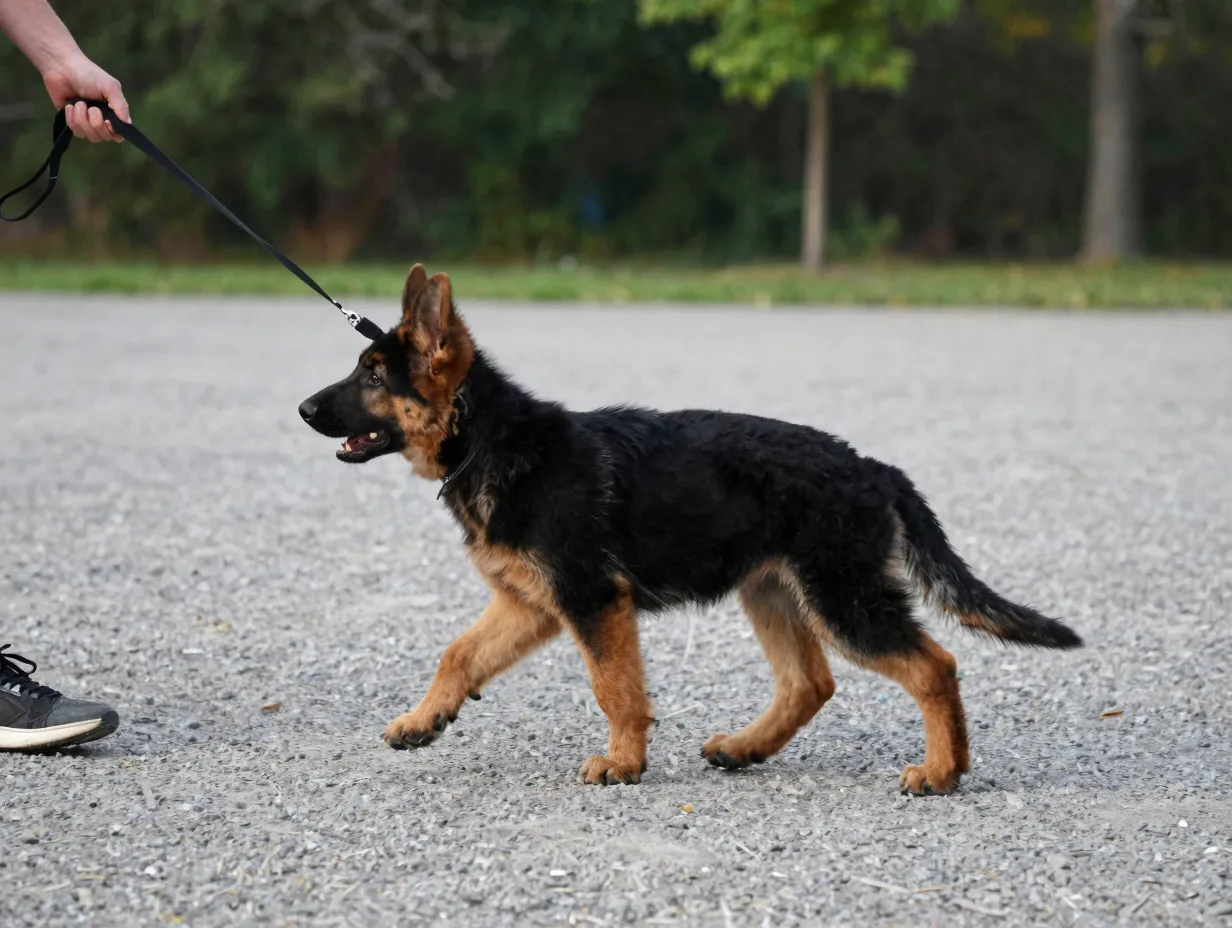
This is one of the most misunderstood aspects of raising a GSD puppy. Many owners assume that a high-energy breed needs intense exercise. At 3 months old, the opposite is true.
Exercise should be moderated and gentle, avoiding excessive jumping or high-impact activities since growing joints are still developing [5]. The growth plates in a German Shepherd’s bones do not close until around 18 months, making them vulnerable to injury during this entire juvenile period.
The 5-minute rule: Many veterinarians recommend no more than 5 minutes of structured exercise per month of age, twice daily. At 3 months, that means roughly 15 minutes of structured exercise, twice a day.
Safe activities at 3 months:
- Leash walks on flat surfaces
- Gentle play in the yard
- Short fetch sessions (avoid repetitive jumping)
- Swimming (if introduced carefully)
Activities to avoid:
- Running on hard pavement for long distances
- Jumping on/off furniture repeatedly
- Rough play with much larger dogs
- Forced exercise (treadmills, jogging)
Short, frequent play sessions throughout the day are far better than one long, intense workout [5].
9. Establishing a Daily Routine
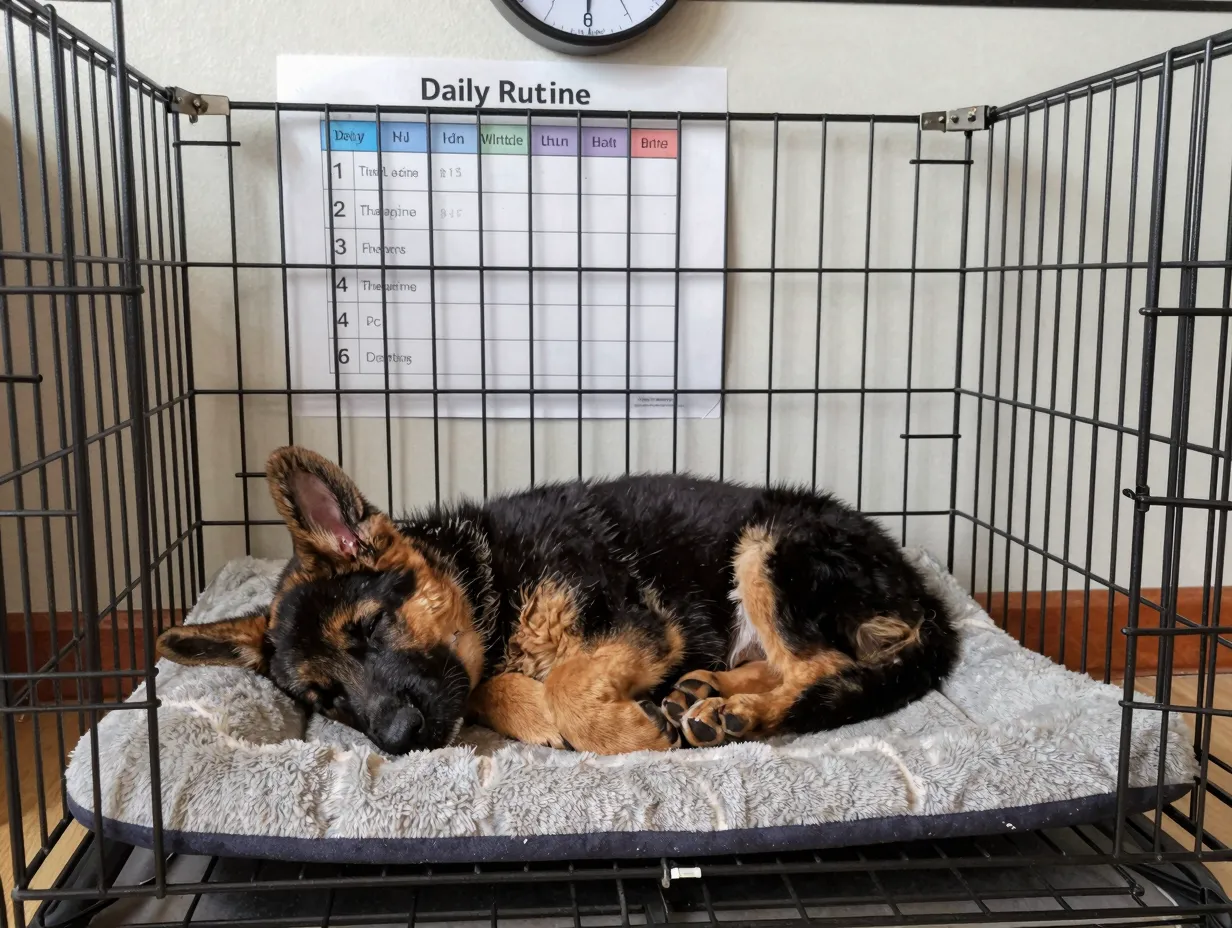
German Shepherds thrive on structure. At 3 months old, establishing a consistent daily routine helps reduce anxiety, accelerate housetraining, and set behavioral expectations [7].
A predictable schedule tells your puppy what comes next, which reduces stress and makes them easier to train. It also helps you catch health issues early — if your puppy suddenly refuses to eat or skips a bathroom break, you will notice because you know their normal pattern.
Sample daily routine for a 3-month-old GSD:
| Time | Activity |
|---|---|
| 7:00 AM | Wake up, immediate outdoor bathroom break |
| 7:15 AM | Breakfast (measured portion) |
| 7:30 AM | Short play session (10–15 min) |
| 8:00 AM | Nap time in crate |
| 10:00 AM | Outdoor bathroom break + training session (5–10 min) |
| 12:00 PM | Lunch + short walk |
| 1:00 PM | Nap |
| 3:00 PM | Bathroom break + socialization or play |
| 5:30 PM | Dinner |
| 6:00 PM | Training session + family interaction |
| 8:00 PM | Calm wind-down time |
| 9:00 PM | Final bathroom break + bedtime in crate |
Adjust timing to fit your household, but keep the sequence and spacing consistent.
Your German Shepherd 3 Months Old: 9 Development Milestones & Care Tips — Common Mistakes to Avoid
Even well-intentioned owners make errors during this critical stage. Here are the most common pitfalls and how to sidestep them.
1. Skipping crate training. The crate is not a punishment — it is a safe space. Puppies who are crate trained have fewer anxiety issues as adults and are easier to housetrain.
2. Allowing jumping on people. A 25-pound puppy jumping up is cute. A 90-pound adult doing the same is dangerous. Correct this behavior now, consistently.
3. Free-feeding. Leaving food out all day makes it impossible to monitor intake, track appetite changes, or maintain a bathroom schedule.
4. Punishing accidents. Rubbing a puppy’s nose in an accident or scolding them after the fact does not work. They cannot connect the punishment to the act. Clean up calmly and supervise more closely.
5. Waiting to train. Some owners believe puppies cannot learn until 6 months old. This is a myth. Every day without training is a day your puppy is learning on its own — and not always the right lessons.
6. Over-exercising. As covered above, too much high-impact activity can cause lasting joint damage. Stick to the 5-minute rule.
Health Checkpoints at 3 Months Old
Your veterinarian should be a regular part of your puppy’s life at this stage. Here is what to expect health-wise at 3 months:
Vaccinations: Your puppy should be on a standard vaccination schedule. By 12 weeks, they typically receive their second round of core vaccines (distemper, parvovirus, adenovirus). Confirm the schedule with your vet.
Parasite prevention: Begin or continue flea, tick, and heartworm prevention as recommended by your vet.
Deworming: Puppies are commonly treated for intestinal parasites at multiple points during their first months of life.
Weight monitoring: Weigh your puppy weekly and track the trend. Sudden weight loss or gain warrants a vet call.
Ear check: German Shepherds can be prone to ear issues. Check ears weekly for redness, odor, or excessive wax.
Frequently Asked Questions
How much should a 3-month-old German Shepherd weigh?
Males typically weigh 22–30 lbs and females 17–26 lbs at 12 weeks, though genetics and diet cause variation.
When do German Shepherds’ ears stand up?
Most GSDs have fully erect ears by 5 months, though some fluctuate during teething. Do not tape or prop ears — this usually resolves on its own.
How many hours a day should a 3-month-old GSD sleep?
Puppies this age sleep 16–18 hours per day. If your puppy seems tired, let them rest. Over-stimulation leads to overtired, nippy behavior.
Is it too early to start training at 3 months?
No — in fact, 3 months is the ideal time to start. Short, positive sessions work best.
Can I take my 3-month-old GSD to the dog park?
Most veterinarians advise waiting until the full vaccination series is complete (typically around 16 weeks) before visiting dog parks where unknown dogs congregate.
Conclusion: Your Action Plan for a Thriving 3-Month-Old German Shepherd
Raising a German Shepherd at 3 months old is both a privilege and a responsibility. This is the window where your investment of time and consistency pays off the most. The nine milestones covered here — from teething and physical growth to training, diet, and routine — are not isolated topics. They work together as a system.
Here are your immediate next steps:
- Schedule a vet appointment this week if you have not had a 12-week checkup yet
- Buy appropriate chew toys today to manage the teething phase safely
- Start a 5-minute training session tonight — sit and down are perfect starting points
- Write out a daily routine and share it with everyone in your household
- Sign up for a puppy obedience class in your area for socialization and guided training
- Audit your puppy’s food — make sure it is a large breed puppy formula with appropriate calcium levels
- Limit exercise to short, gentle sessions and avoid high-impact play
The German Shepherd you raise at 3 months will be the dog you live with for the next decade or more. Every positive experience, every training session, and every well-managed meal is an investment. Start strong, stay consistent, and enjoy the process — this clumsy, curious, oversized-pawed puppy grows up faster than you think.
References
[1] German Shepherd Puppy Growth Stages – https://kaisergsd.com/german-shepherd-puppy-growth-stages/
[2] Puppy Training Timeline For Your German Shepherd Dog – https://www.akc.org/expert-advice/dog-breeds/puppy-training-timeline-for-your-german-shepherd-dog/
[3] Growth Stages Of A Male German Shepherd Puppy Explained – https://www.goldenridgefarmsgermanshepherds.com/growth-stages-of-a-male-german-shepherd-puppy-explained/
[4] How To Care For German Shepherd Puppies – https://www.mittelwest.com/blog/how-to-care-for-german-shepherd-puppies/
[5] Watch – https://www.youtube.com/watch?v=twWiGmYoVRw
[6] What To Expect Milestones In Your German Shepherd’s First Year – https://vonogsd.com/learn-more-about-gsd/f/what-to-expect-milestones-in-your-german-shepherd%E2%80%99s-first-year
[7] German Shepherd Puppy Daily Routine – https://dognutrio.com/german-shepherd-puppy-daily-routine/