Miniature Australian Shepherd Training: 8 Must-Know Commands for Smart Pups
Miniature Australian Shepherds rank among the top 5% of dog breeds for working intelligence — yet owners consistently underestimate just how fast these compact herders can learn. If you don’t give a Mini Aussie a job to do, it will invent one — usually involving your couch cushions, your garden, or your ankles. That’s why starting Miniature Australian Shepherd Training: 8 Must-Know Commands for Smart Pups early isn’t optional; it’s essential for a happy, well-adjusted dog and a sane household.
Disclosure: This post contains affiliate links. As an Amazon Associate, we earn from qualifying purchases, and at no extra cost to you.
In this guide, I’ll walk you through the eight commands every Mini Aussie owner needs to master, backed by expert sources and real training principles. Whether your pup is 8 weeks old or 8 months, these commands will build the foundation for a lifetime of good behavior.
Key Takeaways
- 🧠 Mini Aussies are exceptionally intelligent and require structured mental stimulation through consistent command training.
- 📅 The ideal training window begins between 8–16 weeks, covering basics like sit, stay, down, and recall [4].
- 🍖 Treat-based, positive reinforcement methods work best with this breed — food motivation is highly effective [2].
- 🔁 Consistency in verbal cues — using the exact same word and tone every time — is the single most important factor in preventing confusion [2].
- 🐑 Mini Aussies have herding instincts that can be channeled through specific commands, turning a natural drive into a trained behavior [1].
Why Miniature Australian Shepherd Training Demands a Unique Approach
Before diving into the eight commands, it’s worth understanding why Mini Aussies need a tailored training strategy. These dogs aren’t simply smaller Australian Shepherds — they carry the same high-octane herding drive, sharp intelligence, and intense loyalty packed into a 20–40 lb frame.
The Mini Aussie Brain: What You’re Working With
“A bored Mini Aussie is a destructive Mini Aussie.” This isn’t a cliché — it’s a behavioral reality rooted in the breed’s working heritage.
Mini Aussies were bred to make independent decisions while herding livestock. That means they’re wired to think, not just obey. This is both a gift and a challenge:
- Gift: They learn commands faster than most breeds.
- Challenge: They’ll question commands that don’t make sense to them.
The key is making training feel purposeful and rewarding. According to training experts, food motivation works exceptionally well with Australian Shepherds, as they respond quickly to treat-based methods [2]. Combine that with short, focused sessions (5–10 minutes for puppies) and you have a recipe for rapid progress.
When to Start Training
The American Kennel Club recommends that puppies between 8 and 16 weeks focus on foundational commands: sit, stay, down, recall, and leash walking [4]. Don’t wait until your Mini Aussie develops bad habits — early training shapes neural pathways during the most receptive learning window.
| Age Range | Training Focus |
|---|---|
| 8–12 weeks | Sit, down, name recognition, socialization |
| 12–16 weeks | Stay, come, leash introduction |
| 4–6 months | Wait, leave it, heel, duration building |
| 6–12 months | Proofing commands, distractions, advanced cues |
Miniature Australian Shepherd Training: 8 Must-Know Commands for Smart Pups
Now let’s get into the core of what you came for. Each command below includes the why, the how, and the common mistakes to avoid. Follow these in order — they build on each other.
1. Sit — The Gateway Command
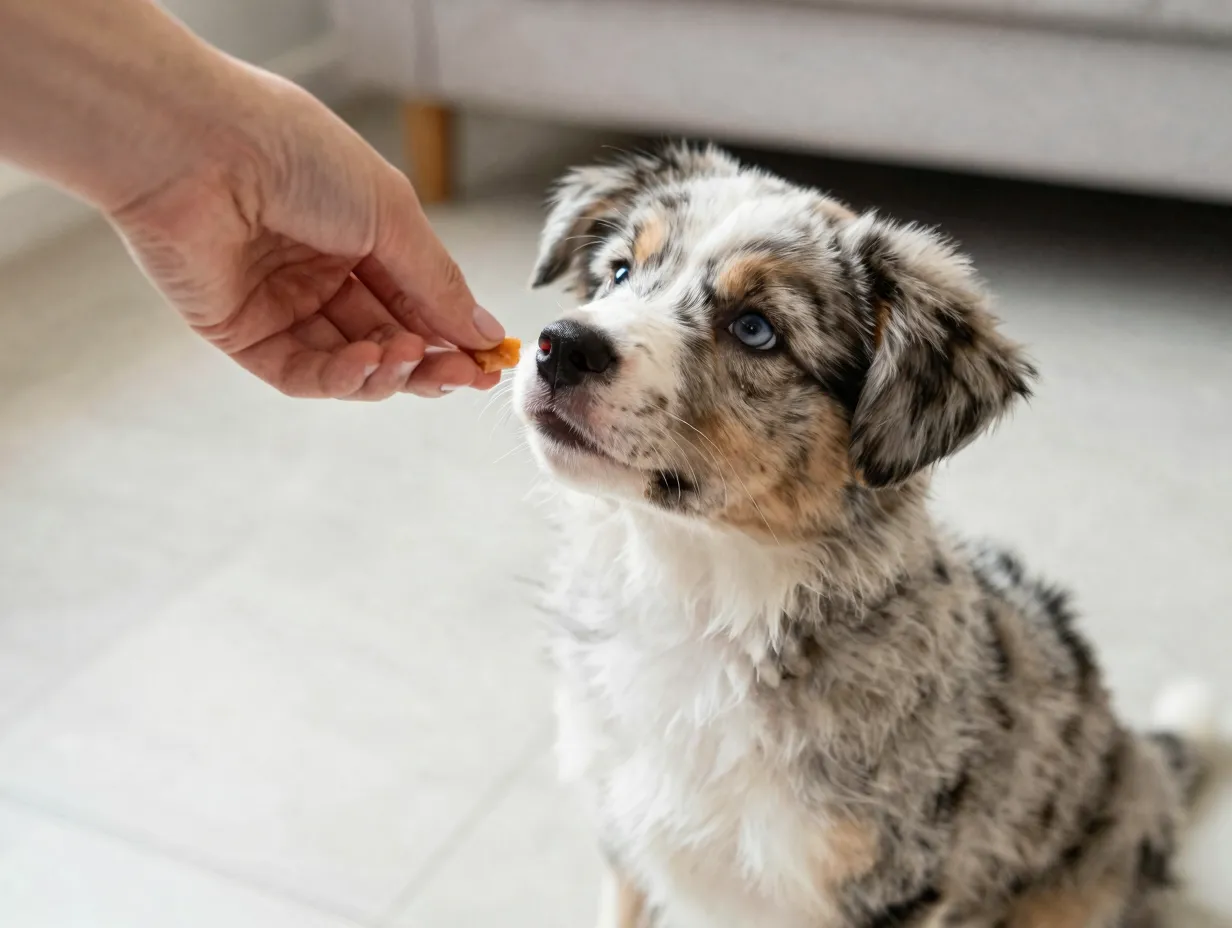
Sit is the first command almost every trainer recommends, and for good reason: it’s the easiest for dogs to understand and the most useful in daily life [2]. Teaching “sit” establishes the basic communication loop between you and your pup — you ask, they respond, they get rewarded.
How to teach it:
- Hold a treat close to your dog’s nose.
- Slowly move your hand up — this naturally lowers the dog’s bottom.
- Once they’re fully seated, say “sit” clearly and firmly.
- Give the treat immediately and follow with praise.
Pro tip: 🍖 Use small, high-value treats (think tiny pieces of chicken or cheese) to keep motivation high without overfeeding. Consistency in the verbal cue is critical — always say “sit,” never “sit down” or “sit please” [2].
Common mistake: Repeating the command multiple times before the dog complies. Say it once, wait, then guide them into position. Repeating teaches them to ignore the first cue.
2. Down — Building Impulse Control
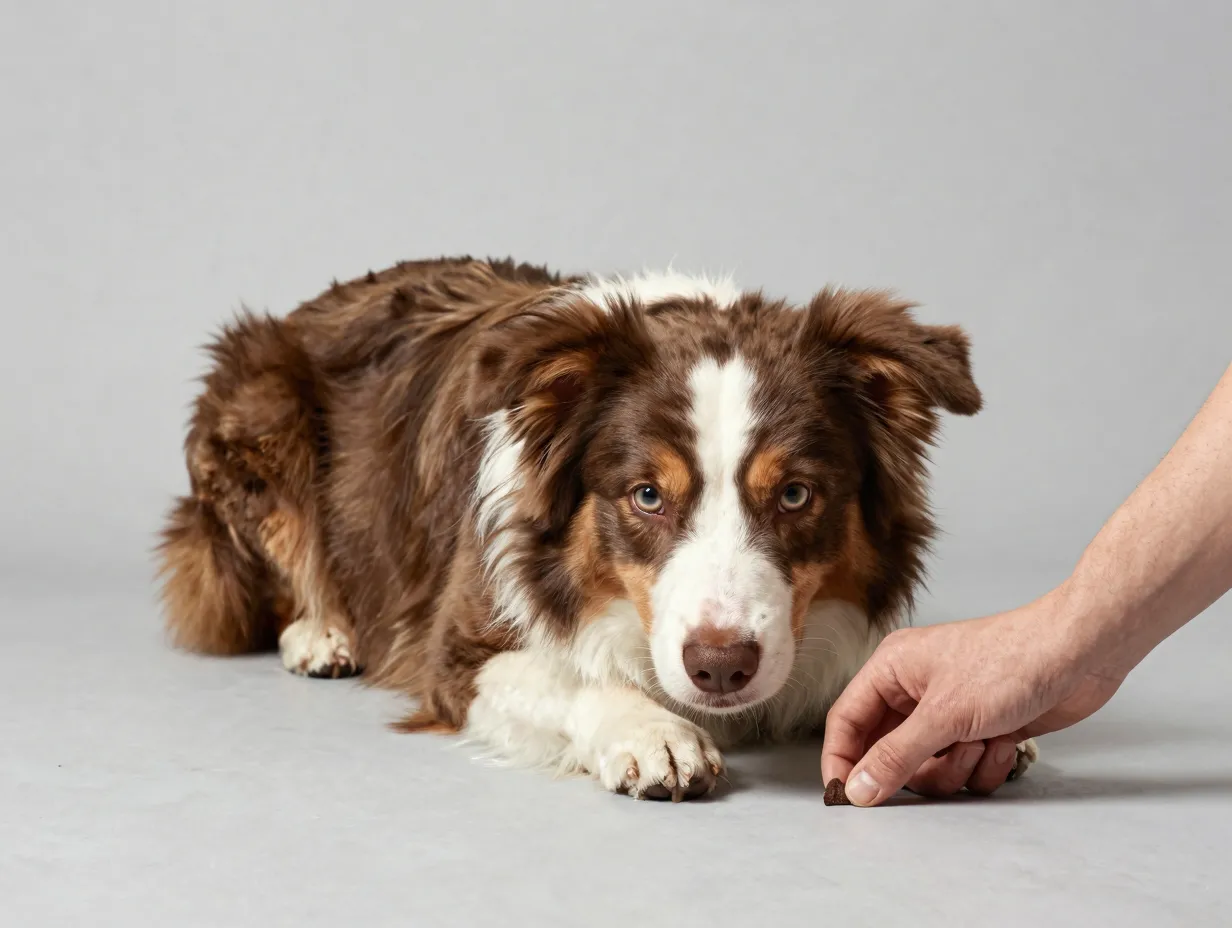
Down (or “lie down”) is a step up from sit because it requires more physical submission and mental patience from your dog. It’s foundational for impulse control — a skill Mini Aussies need given their naturally high energy [2].
How to teach it:
- Ask your dog to sit first.
- Hold a treat in a closed fist near their nose.
- Slowly move your hand straight down to the floor between their front paws.
- As their elbows hit the floor, say “down” and reward immediately.
Why it matters: Down is essential for situations where you need your dog to stay calm for extended periods — at a café, during a vet visit, or when guests arrive. It’s also the foundation for the “stay” command.
💡 Pull Quote: “Teaching ‘down’ before ‘stay’ is like building walls before adding a roof — the structure depends on the sequence.”
3. Stay — Teaching Patience in a High-Energy Breed
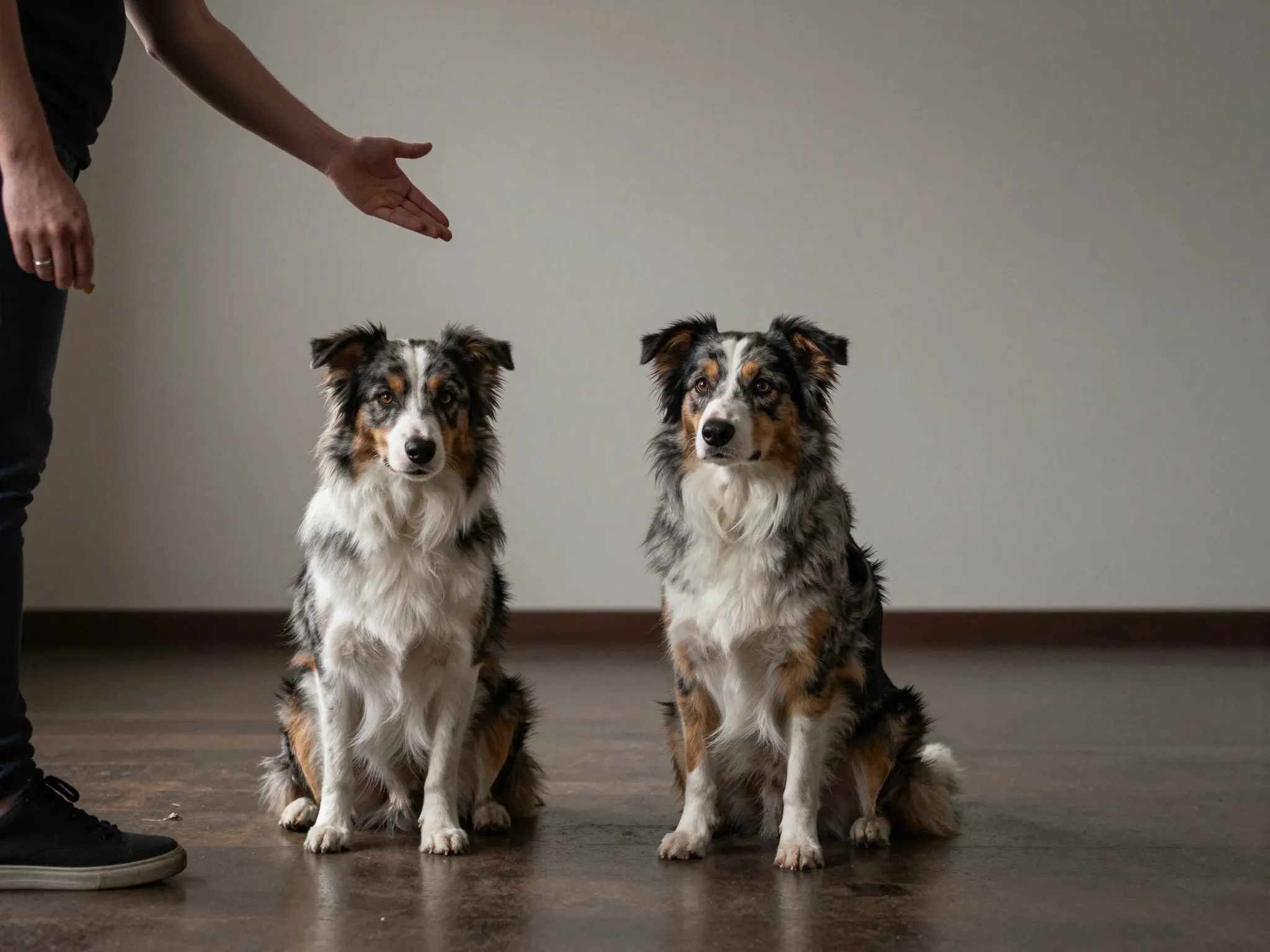
Stay is arguably the most important safety command you’ll teach. It tells your dog to hold their current position until you release them — and for a breed that wants to be everywhere at once, this takes real practice [2].
How to teach it:
- Ask your dog to sit or down.
- Open your palm toward them (like a “stop” gesture) and say “stay.”
- Take one step back, pause, then return and reward.
- Gradually increase distance and duration over multiple sessions.
The three Ds of stay:
| D | What It Means | Example |
|---|---|---|
| Duration | How long they hold the position | 5 seconds → 2 minutes |
| Distance | How far you move away | 1 foot → across the room |
| Distraction | What’s happening around them | Quiet room → busy park |
Work on each “D” separately before combining them. Rushing this process is the #1 reason stay breaks down.
4. Come — The Life-Saving Recall
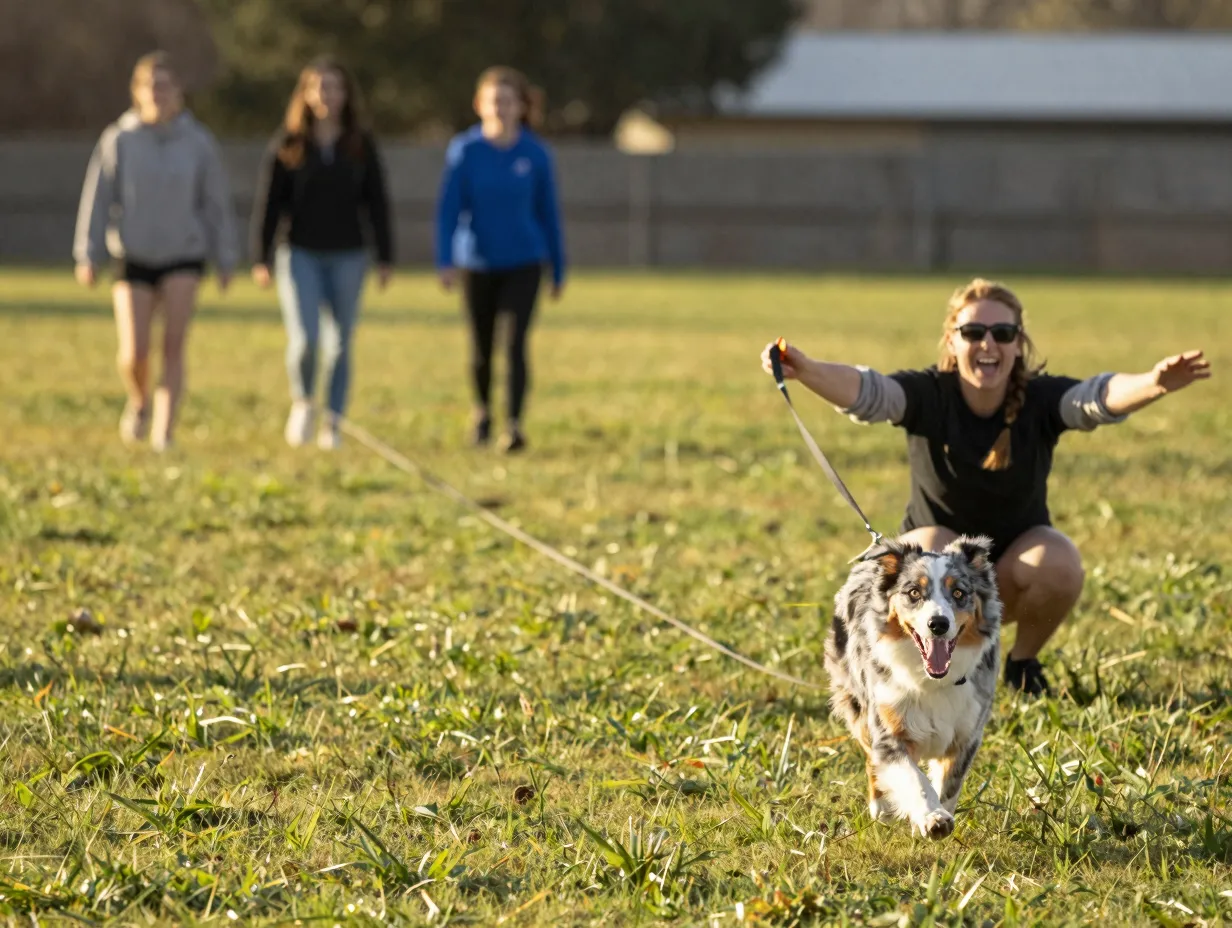
The come command (also called “recall”) could literally save your dog’s life. A solid recall means your Mini Aussie returns to you immediately, regardless of distractions. According to training guidance, this command should be taught using a leash in a safe location, tugging gently as you give the command in a firm, authoritative voice [1].
How to teach it:
- Attach a long leash (15–30 feet) to your dog’s collar.
- Let them wander, then call “come!” in a bright, enthusiastic tone.
- Give a gentle tug on the leash if they don’t respond immediately [1].
- When they reach you, reward with a high-value treat and enthusiastic praise.
Critical rules for recall:
- ✅ Always make coming to you a positive experience — never call your dog to scold them.
- ✅ Never repeat the command — say “come” once, then use the leash to guide.
- ❌ Never punish a dog that comes to you slowly — even a slow recall should be rewarded.
Practice tip: Play “round robin recall” with two family members, taking turns calling the dog between you. Mini Aussies love this game, and it builds a lightning-fast recall response.
5. Wait — The Doorway Safety Command
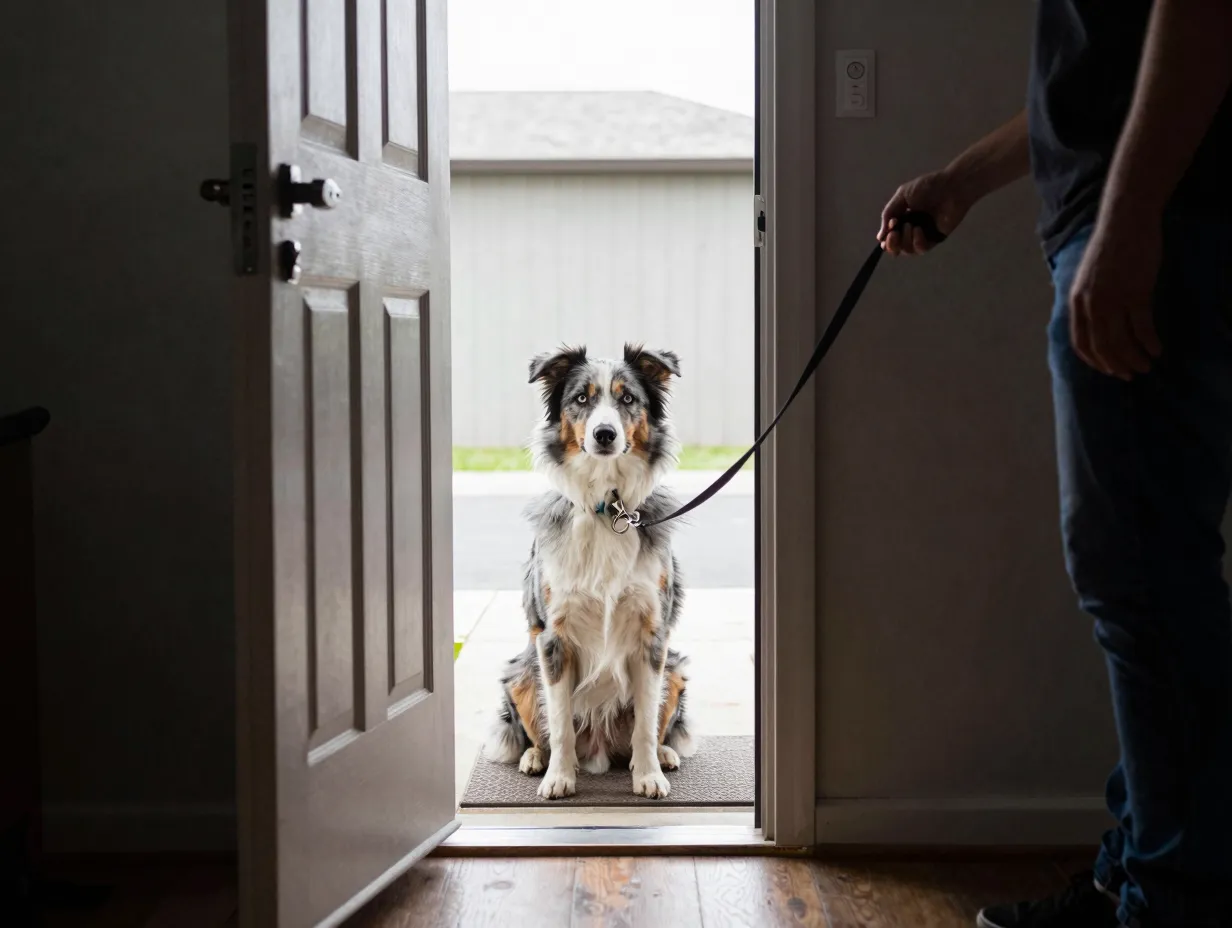
Many owners confuse wait with stay, but they serve different purposes. Stay means “hold this position until I release you.” Wait means “pause before moving through this threshold” — and it’s specifically designed for doorways, car doors, and gates [1].
How to teach it:
- Approach a doorway with your dog on leash.
- Begin to open the door. The moment your dog moves toward it, close it gently.
- When they step back or pause, say “wait” and reward.
- Repeat until they automatically pause when the door opens.
- Then give a release word (“okay!” or “free!”) to let them through.
Why it’s a must-know: Mini Aussies are fast. A dog that bolts through an open front door into traffic is a dog in danger. The wait command creates a consistent pause that becomes automatic over time [1].
Reinforcement tip: Practice this command every single time you open a door — not just during dedicated training sessions. The repetition is what makes it stick [1].
6. Leave It — Protecting Curious Pups From Themselves
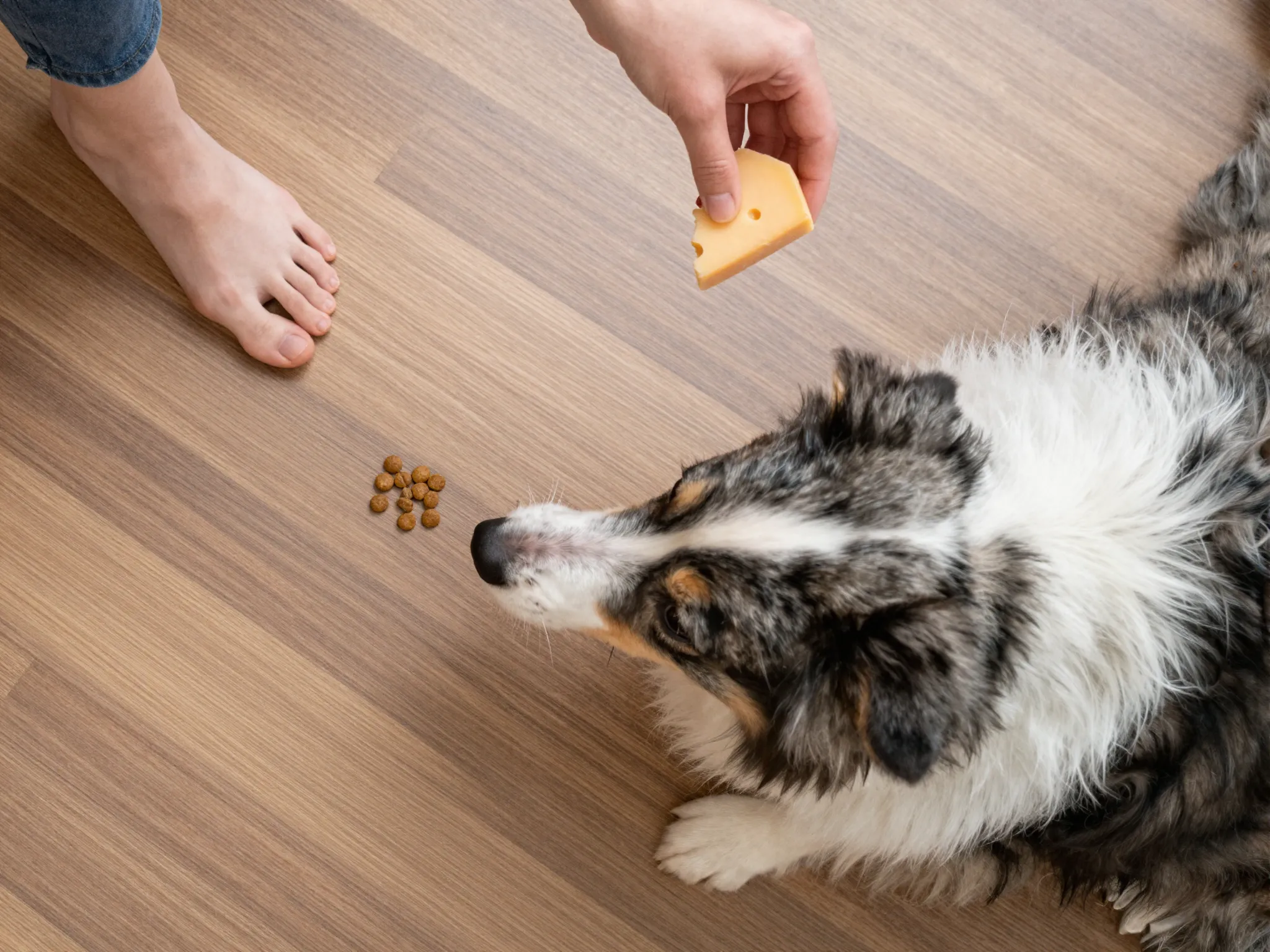
Mini Aussies are curious, nose-driven explorers. Leave it teaches them to disengage from anything you don’t want them to touch — whether that’s a chicken bone on the sidewalk, a child’s toy, or another dog’s food bowl.
How to teach it:
- Place a low-value treat in your closed fist.
- Let your dog sniff and paw at your hand. Say nothing.
- The moment they pull away or stop trying, say “leave it” and reward with a different, higher-value treat from your other hand.
- Gradually progress to treats on the floor covered by your foot, then uncovered.
The two-treat rule: Always reward “leave it” with something better than what they’re leaving. This teaches your dog that disengaging always pays off more than grabbing.
Real-world applications:
- 🚫 Dropped medication on the floor
- 🚫 Dead animals on a walk
- 🚫 Food on a coffee table
- 🚫 Aggressive interaction with another dog
7. Heel — Mastering the Walk
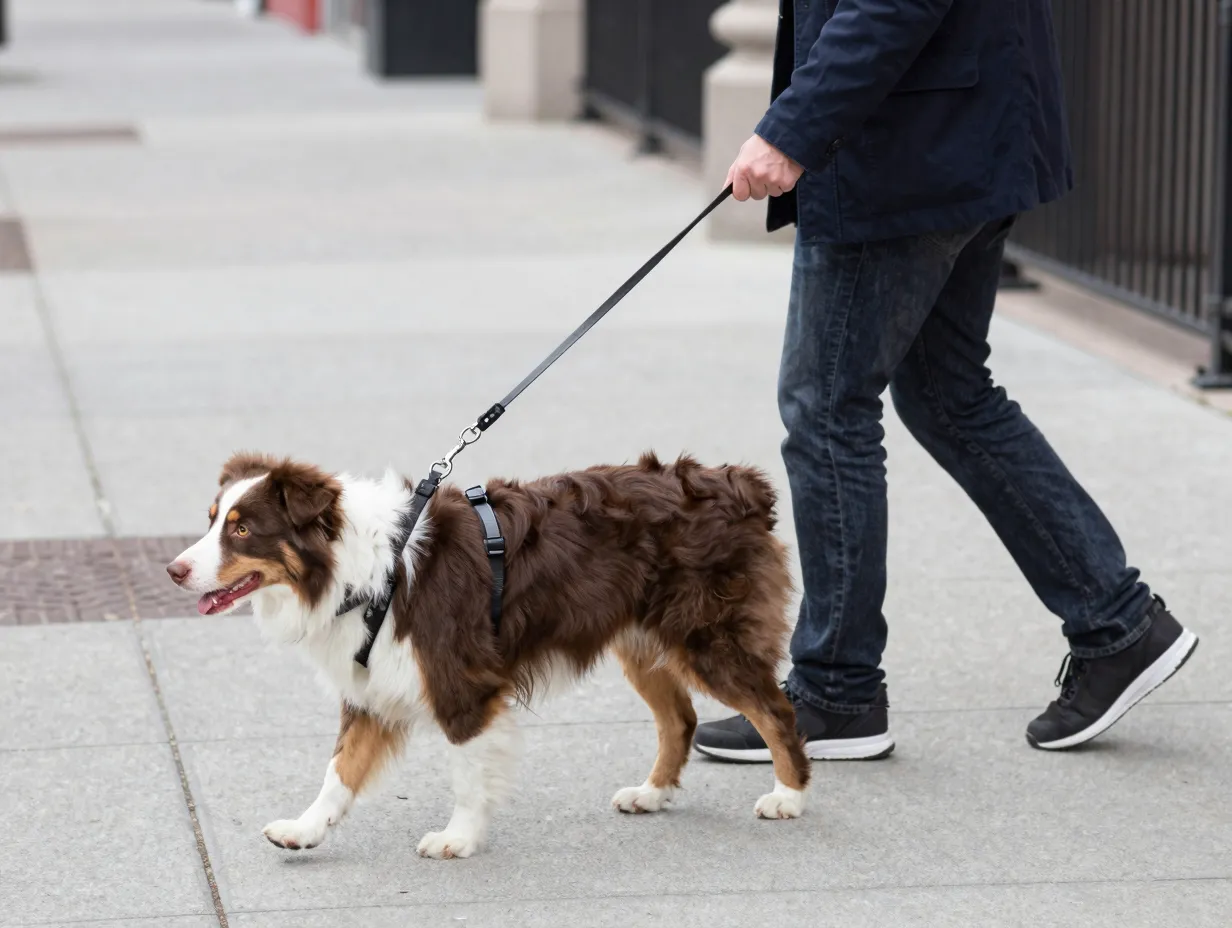
Heel means your dog walks calmly beside you — typically on your left side — without pulling, lagging, or zigzagging. For a high-energy Mini Aussie, this is one of the more challenging commands, but also one of the most rewarding to master.
How to teach it:
- Start with your dog on a standard 6-foot leash on your left side.
- Hold a treat at your left hip to lure them into position.
- Take a step forward, saying “heel.”
- Reward every few steps initially, then gradually increase the distance between rewards.
- Stop walking the moment your dog pulls — only move forward when the leash is loose.
Training table: Heel progression
| Stage | Goal | Duration |
|---|---|---|
| Stage 1 | 5 steps without pulling | Days 1–3 |
| Stage 2 | 20 steps, turns included | Days 4–7 |
| Stage 3 | 1 minute continuous heel | Week 2 |
| Stage 4 | Heel in distracting environments | Weeks 3–4 |
Equipment note: A front-clip harness can help manage pulling during the learning phase without causing discomfort. Avoid retractable leashes during heel training — they teach the opposite of what you want.
8. Herding Commands — Channeling the Breed’s Natural Drive
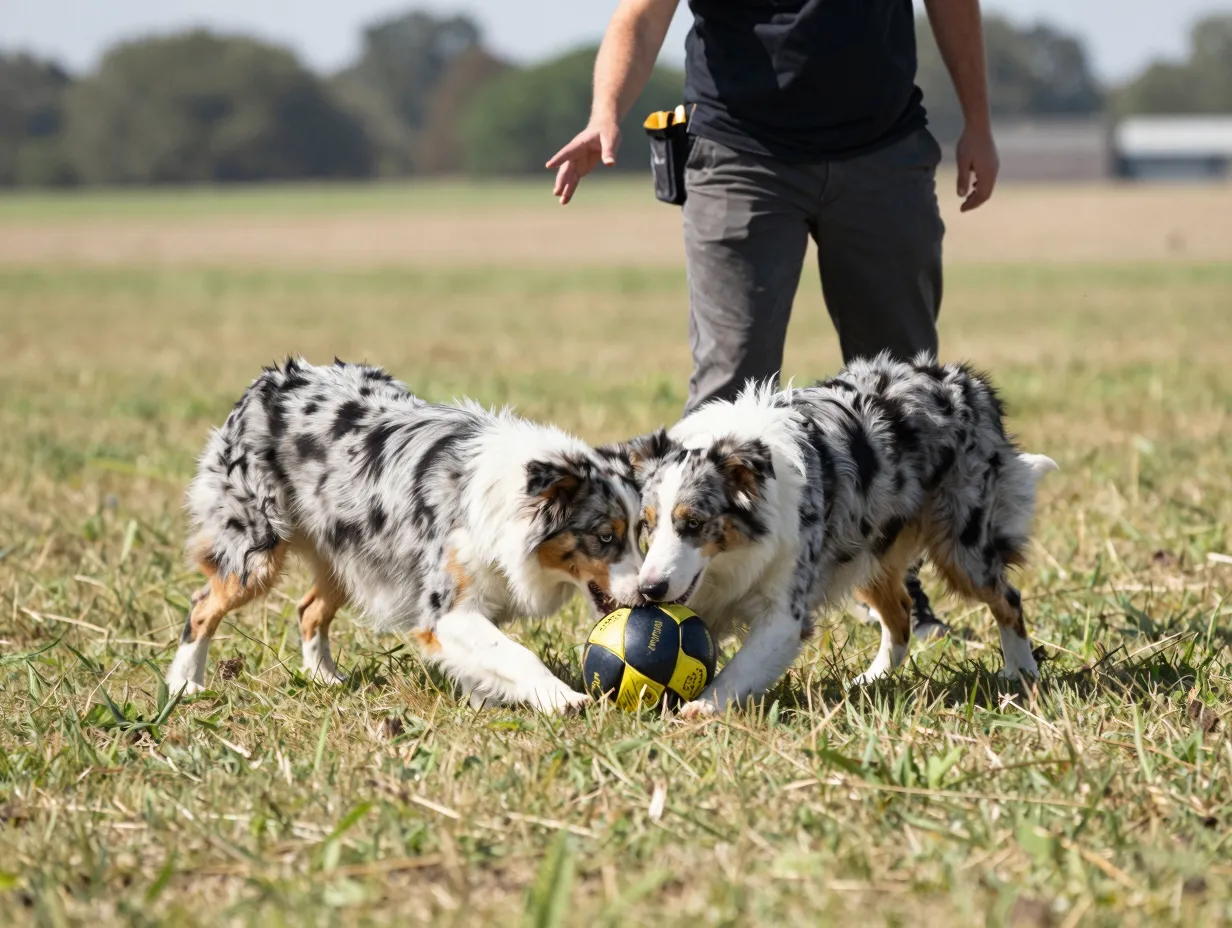
This is where Mini Aussie training gets truly exciting. Because these dogs carry deep herding instincts, teaching herding-specific commands gives them a purposeful outlet for their natural drive [1]. Even if you don’t have livestock, these commands can be used in structured play or herding sports.
The three core herding commands:
- “Come by” — directs the dog to circle clockwise around the herd (or target object).
- “Away to me” — directs the dog to circle counterclockwise.
- “That’ll do” — tells the dog to stop herding and return to the handler [1].
How to introduce herding commands:
- Start with a herding ball (a large ball the dog can push with their nose/body).
- Use “come by” and “away to me” to direct them around the ball.
- Reward correct directional movement with treats and praise.
- Use “that’ll do” to end every session — this is critical for teaching an off switch.
Why this matters for pet owners: Even if your Mini Aussie never sees a sheep, these commands satisfy the breed’s need for purposeful work. Dogs that have an outlet for their herding instinct are calmer, less anxious, and less likely to herd children or other pets inappropriately.
🐑 Pull Quote: “A Mini Aussie with a job is a Mini Aussie at peace. Herding commands don’t just teach skills — they fulfill a biological need.”
Training Tips That Apply to All 8 Commands
Knowing the commands is only half the equation. How you deliver training sessions determines whether your Mini Aussie thrives or stalls. Here are the principles that apply across all eight commands:
Consistency Is Non-Negotiable
Use the exact same word and tone every time you give a command [2]. If one family member says “come” and another says “come here, boy!” the dog receives two different cues. Create a household command list and post it somewhere visible.
Keep Sessions Short and Frequent
- 🕐 Puppies (under 6 months): 5–7 minutes per session, 3–4 times daily
- 🕐 Adolescents (6–12 months): 10–15 minutes per session, 2–3 times daily
- 🕐 Adults (12+ months): 15–20 minutes per session, 1–2 times daily
Short sessions prevent mental fatigue and keep motivation high. End every session on a success — even if that means asking for a command you know they’ll nail.
Positive Reinforcement Over Punishment
Mini Aussies are sensitive dogs. Harsh corrections damage trust and slow learning. Stick to positive reinforcement — treats, praise, and play — as your primary training currency [2]. When your dog makes a mistake, simply withhold the reward and try again.
Proof Every Command
“Proofing” means practicing a command in different locations, with different distractions, and with different people giving the cue. A dog that sits perfectly in your kitchen but ignores “sit” at the park hasn’t fully learned the command — they’ve learned to sit in the kitchen. Vary your training environments constantly.
Use a Release Word
Every command needs a clear ending. Choose a release word — “okay,” “free,” or “release” — and use it consistently to signal that the dog can stop holding the command. Without a release word, dogs learn to break commands on their own schedule.
Common Training Mistakes Mini Aussie Owners Make
Even well-intentioned owners fall into predictable traps. Here are the most common ones to avoid:
- Training when frustrated: Dogs read your emotional state. If you’re irritated, end the session.
- Skipping the basics: Owners often rush to advanced tricks before sit, stay, and come are solid [2].
- Inconsistent rewards: Rewarding sometimes but not others creates confusion in the early stages.
- Ignoring mental exercise: Physical exercise alone won’t satisfy a Mini Aussie’s brain. Command training is mental exercise.
- Training in only one location: As noted above, location-specific learning isn’t true learning.
Conclusion: Your Action Plan for a Well-Trained Mini Aussie
Miniature Australian Shepherd Training: 8 Must-Know Commands for Smart Pups isn’t a one-week project — it’s an ongoing relationship between you and one of the most intelligent dog breeds on the planet. The eight commands in this guide — sit, down, stay, come, wait, leave it, heel, and herding commands — form a complete behavioral toolkit that will serve your dog for life.
Here’s your actionable next-step plan for 2026 and beyond:
- This week: Start with sit and down. Practice 5-minute sessions three times daily using high-value treats.
- Week 2: Add stay and come. Use a long leash for recall practice in a safe, enclosed area.
- Week 3: Introduce wait at every doorway in your home. Make it a non-negotiable daily habit.
- Week 4: Begin leave it and heel. Invest in a front-clip harness if pulling is an issue.
- Month 2+: Introduce herding commands through herding ball play. Consider enrolling in a local herding sport club or obedience class for structured socialization.
The most important thing you can do right now is start today. Every day without training is a day your Mini Aussie’s brain fills itself with its own agenda. Give it direction, give it purpose, and you’ll have a companion that’s not just well-behaved — but genuinely fulfilled.
References
[1] Watch – https://www.youtube.com/watch?v=kQOgzw_ADwA
[2] How To Train An Australian Shepherd – https://www.dogster.com/dog-training/how-to-train-an-australian-shepherd
[3] 6 Tips For Training Your Australian Shepherd – https://www.kelleyrene.com/family/6-tips-for-training-your-australian-shepherd/
[4] How To Train An Australian Shepherd Puppy Timeline Milestones – https://www.akc.org/expert-advice/dog-breeds/how-to-train-an-australian-shepherd-puppy-timeline-milestones/
[5] Australian Shepherd Tricks – https://www.australian-shepherd-lovers.com/australian-shepherd-tricks.html