
8 Quirky Traits of Devon Rex Cats Kittens Owners Adore
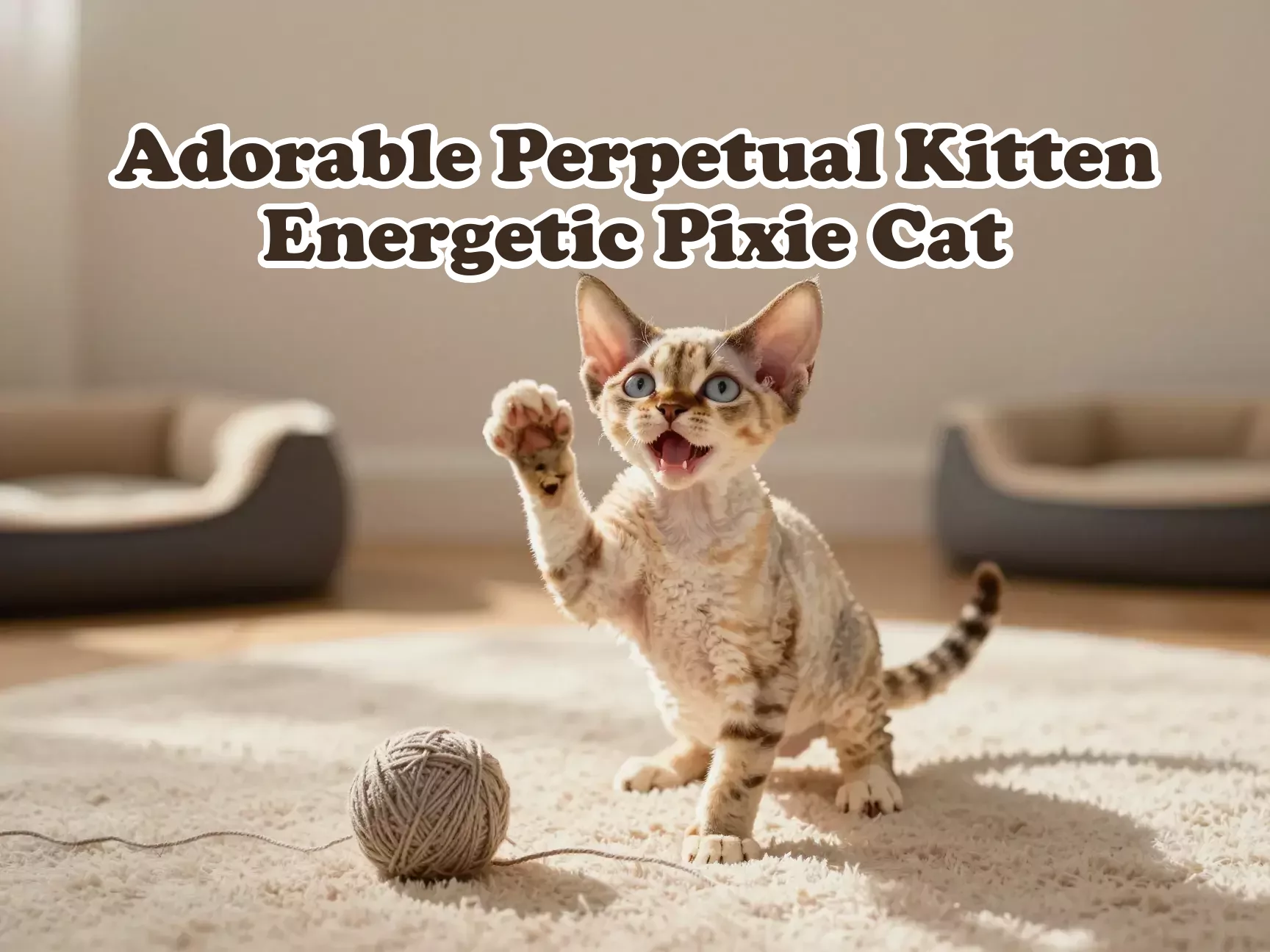
Only about 1 in 5 cat owners who first encounter a Devon Rex can accurately predict what living with one is actually like — and that gap between expectation and reality is exactly what makes this breed so unforgettable. The 8 Quirky Traits of Devon Rex Cats Kittens Owners Adore aren’t just charming quirks on paper. They are daily, lived experiences that reshape how owners think about cats altogether. From performing fetch on command to demanding a spot under your blanket every single night, the Devon Rex rewrites the rulebook on feline companionship in the most delightful ways possible.
Disclosure: This post contains affiliate links. As an Amazon Associate, we earn from qualifying purchases, and at no extra cost to you.
Key Takeaways
- 🐾 Devon Rex cats are lifelong kittens — their playful energy never fades with age.
- 🧠 They are exceptionally intelligent and can learn dog-like tricks such as fetch and high-fives.
- 💬 These cats are highly vocal and form deep emotional bonds with their owners.
- 🌡️ Devon Rex cats are sensitive to cold and need warm, comfortable environments.
- 🏥 Owners should be aware of breed-specific health needs, including ear care and patellar luxation risk.
What Makes the Devon Rex So Uniquely Irresistible?
Before diving into the full list of the 8 Quirky Traits of Devon Rex Cats Kittens Owners Adore, it helps to understand where this breed comes from. The Devon Rex originated in Buckfastleigh, Devon, England in 1959 when a curly-coated kitten named Kirlee was discovered [3]. With their large bat-like ears, pixie faces, and wavy coats, they look like they were designed by a fantasy artist. But their looks are only the beginning.
What truly sets this breed apart is personality — a cocktail of intelligence, affection, mischief, and sensitivity that few other breeds can match. Whether you’re a first-time cat owner or a seasoned feline enthusiast, the Devon Rex will surprise you. Let’s break down exactly what you’re signing up for.
The 8 Quirky Traits of Devon Rex Cats Kittens Owners Adore
1. They Never Grow Out of the Kitten Phase 🐱
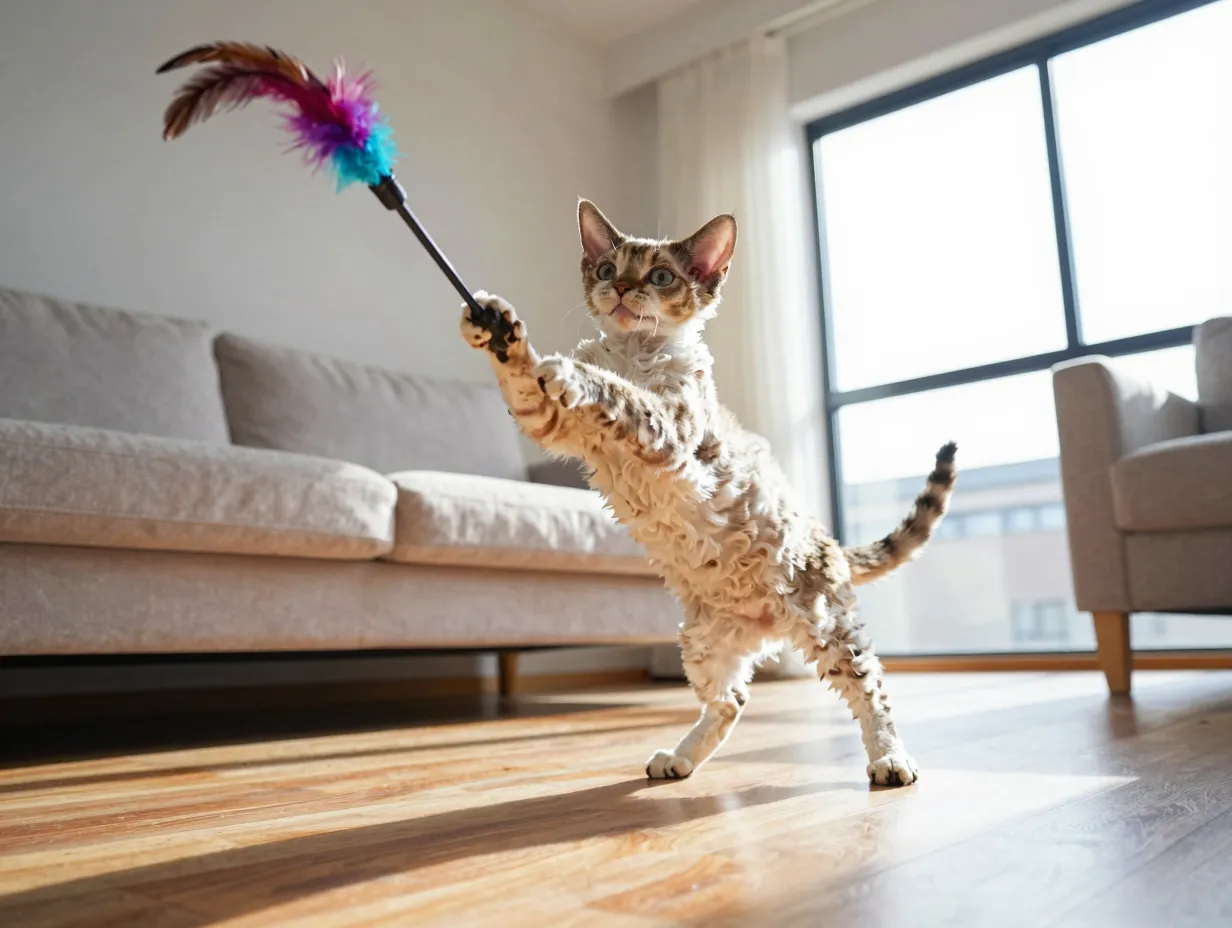
“The Devon Rex is often called the ‘Peter Pan of the cat kingdom’ — and for good reason.”
Most cats mellow out as they age. Devon Rex cats? Not so much. These cats are perpetually playful, maintaining kitten-like energy and curiosity well into their adult and senior years [2]. Owners frequently describe the experience as having a permanent kitten in the house — one that never loses interest in toys, games, or finding new ways to entertain itself (and you).
This trait is both a joy and a commitment. A Devon Rex won’t be satisfied lounging on a shelf all day. They want to chase, leap, explore, and interact constantly. Interactive wand toys, puzzle feeders, and regular play sessions aren’t optional with this breed — they’re essential.
What this means for owners:
- Budget time for daily play sessions (at least 15–20 minutes, twice a day)
- Rotate toys regularly to keep things fresh
- Consider a cat tree or climbing wall to satisfy their acrobatic tendencies
2. They Are Remarkably Cold-Sensitive ❄️
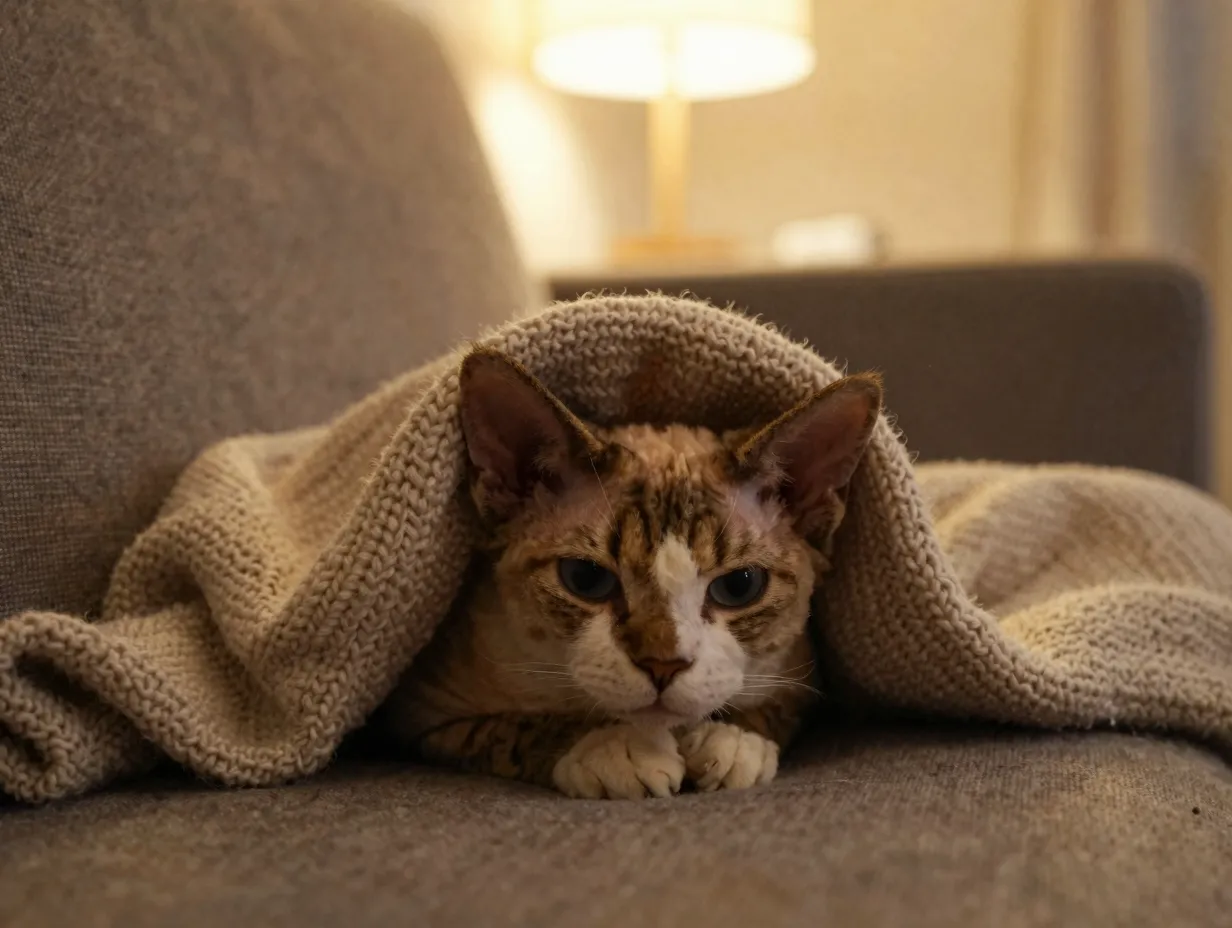
Here’s something that catches many new Devon Rex owners off guard: these cats hate being cold. Unlike thick-coated breeds that can handle a drafty room without complaint, the Devon Rex has a short, fine, wavy coat that provides minimal insulation [2]. They feel temperature changes acutely and will actively seek out warm spots — your lap, your neck, under the covers, next to the radiator.
This sensitivity has real practical implications. If you run your air conditioning low in summer, your Devon Rex will likely be miserable. Many owners invest in heated cat beds or blankets specifically for this breed.
| Situation | Devon Rex Response |
|---|---|
| Cold room (below 68°F/20°C) | Seeks body heat, burrows under blankets |
| Air conditioning on high | Becomes lethargic, seeks warmth urgently |
| Warm lap available | Immediately claims it as territory |
| Heated cat bed present | Uses it daily, often for hours |
The upside? A Devon Rex will almost always want to cuddle with you — partly out of affection, partly because you’re warm. It’s a win-win.
3. Separation Anxiety Is Real — and Intense 😿
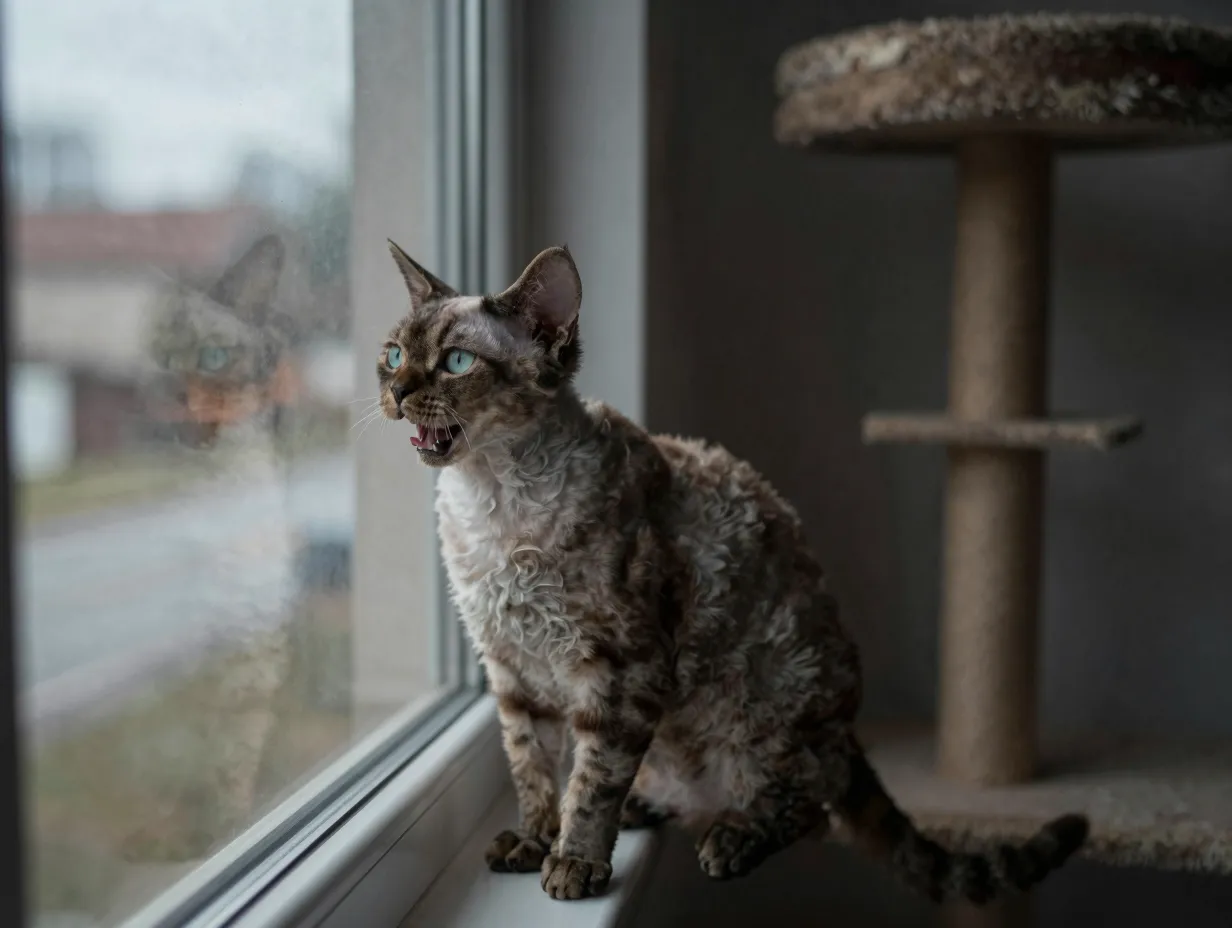
Devon Rex cats form exceptionally strong bonds with their human families. This is one of the most talked-about traits among owners, and it’s one that requires honest consideration before adopting. When left alone for long periods, these cats can exhibit signs of genuine distress [1].
Common stress behaviors include:
- Excessive vocalization (meowing loudly and persistently)
- Destructive behavior (knocking things over, scratching furniture)
- Over-grooming, which can lead to bald patches
This doesn’t mean you can never leave the house. It means that a Devon Rex thrives in environments where they have company for most of the day. Many owners adopt two Devon Rex cats so they can keep each other company. Others work from home and find the breed to be the perfect desk companion.
💡 Pro Tip: If you work long hours away from home, a Devon Rex may not be the best solo pet. Consider adopting a bonded pair or pairing them with a dog-friendly breed.
4. They Talk — A Lot 🗣️
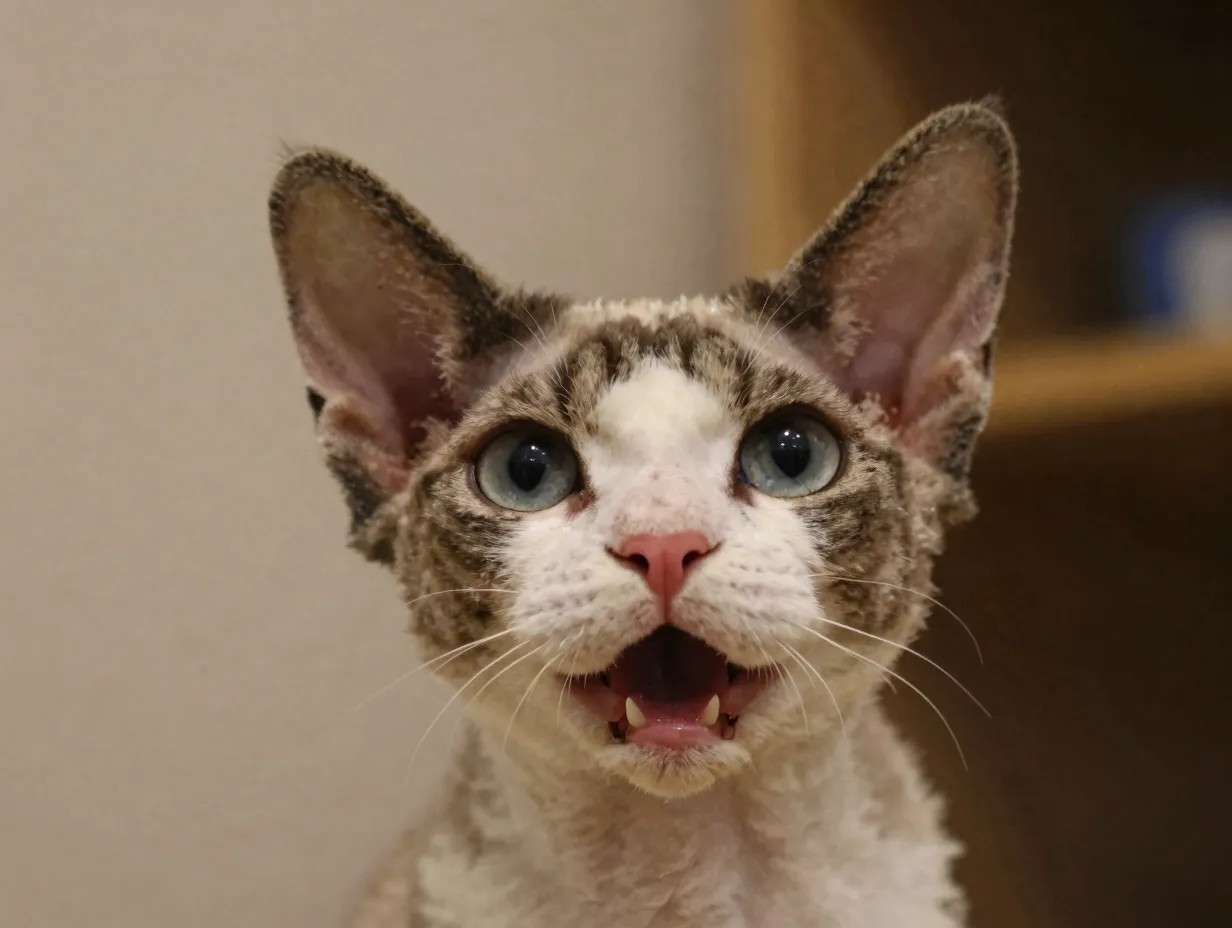
One of the 8 Quirky Traits of Devon Rex Cats Kittens Owners Adore most often mentioned in owner communities is the breed’s vocal nature. Devon Rex cats communicate with a wide range of sounds — chirps, trills, soft meows, loud yowls, and everything in between [1]. They are not shy about expressing their opinions.
Hungry? You’ll hear about it. Want attention? There’s a sound for that. Spotted a bird through the window? Expect a running commentary.
This vocalization isn’t random noise — it’s intentional communication. Owners who spend time with their Devon Rex quickly learn to read the different sounds and what they mean. It creates a surprisingly conversational dynamic that many people find deeply rewarding.
Common Devon Rex vocalizations and what they mean:
- Soft chirp — Greeting or expressing excitement (often directed at birds or toys)
- Persistent meow — Hunger, boredom, or a request for attention
- Loud yowl — Distress, loneliness, or discomfort
- Purr with kneading — Deep contentment and affection
- Trill or warble — Playful invitation or acknowledgment
5. They Can Learn Dog-Like Tricks 🐕
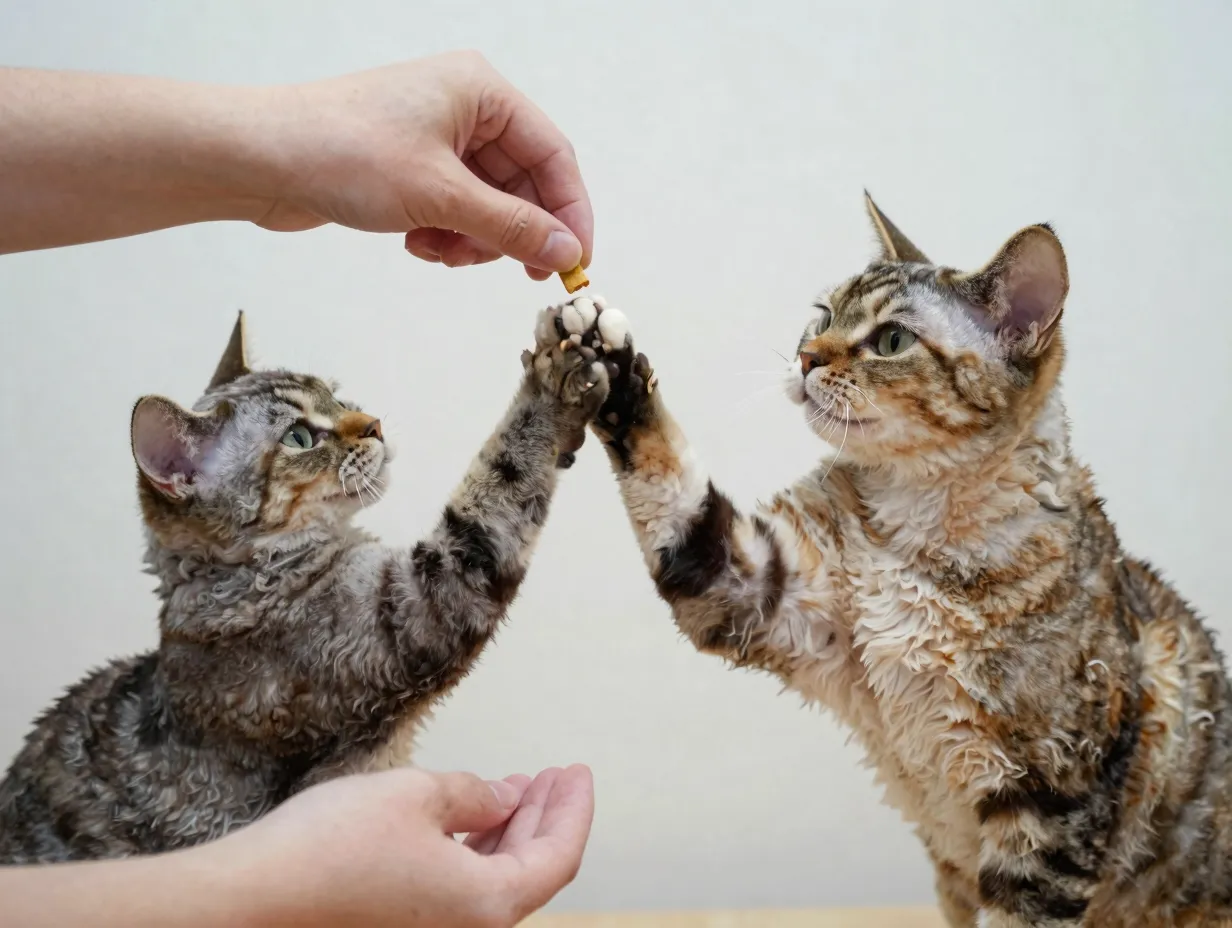
This is the trait that consistently shocks people who think of cats as untrainable. Devon Rex cats can be taught to high-five, fetch toys, jump through hoops, and even come when called [1]. Their trainability rivals that of many dog breeds, and they genuinely seem to enjoy the mental engagement that training provides.
The key is positive reinforcement. Use small, high-value treats and keep sessions short (5–10 minutes). Devon Rex cats respond well to clicker training and are quick to make the connection between a behavior and a reward.
Tricks Devon Rex cats have been successfully trained to perform:
- Sit on command
- High-five or shake hands
- Fetch and retrieve toys
- Jump through a hoop
- Come when called by name
- Spin in a circle
- Stand on hind legs
This trainability isn’t just a party trick. It’s a mental health tool for the cat. A Devon Rex that has regular training sessions is a happier, less destructive, and more well-adjusted pet.
6. Their Intelligence Can Work Against You 🧩
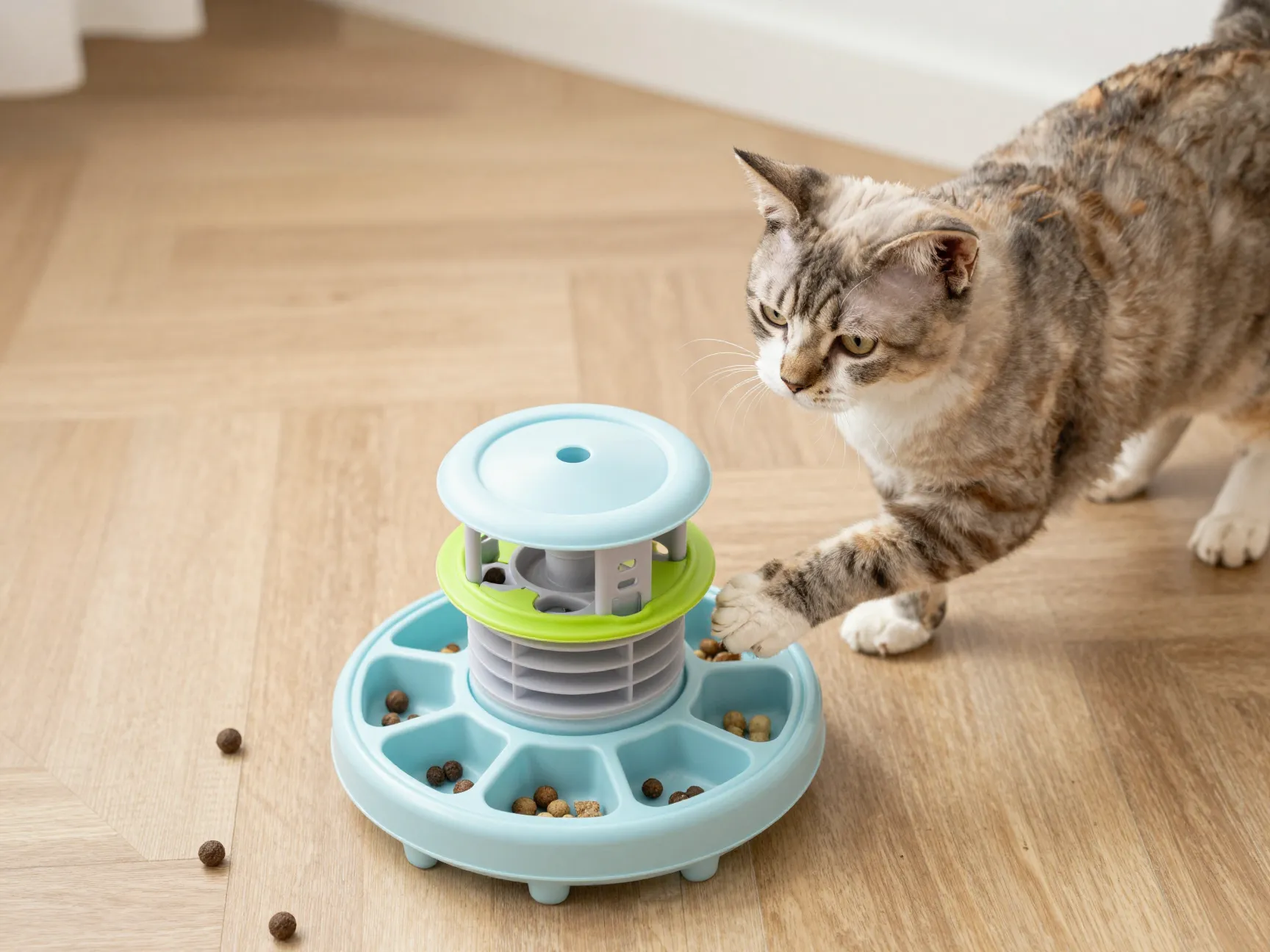
Devon Rex cats are described by breed experts as “incredibly smart” — and sometimes “too smart for their own good” [2]. This intelligence is one of the most endearing and occasionally maddening traits of the breed. They figure out how to open cabinets. They learn your routines and exploit them. They test boundaries with the methodical patience of a scientist.
Mental stimulation isn’t a luxury for this breed — it’s a necessity. A bored Devon Rex will find its own entertainment, and that entertainment may involve your belongings, your food, or your sanity.
Best mental enrichment options for Devon Rex cats:
- Puzzle feeders — Make mealtime a brain exercise
- Interactive electronic toys — Rotating feather wands, laser toys on timers
- Window perches with bird feeders outside — Nature TV for cats
- Training sessions — As discussed above, these double as enrichment
- Foraging games — Hide treats around the house for them to find
“A Devon Rex with nothing to do is a Devon Rex planning something you won’t enjoy.” — Common sentiment among breed owners
7. Their Ears Need Regular Attention 👂
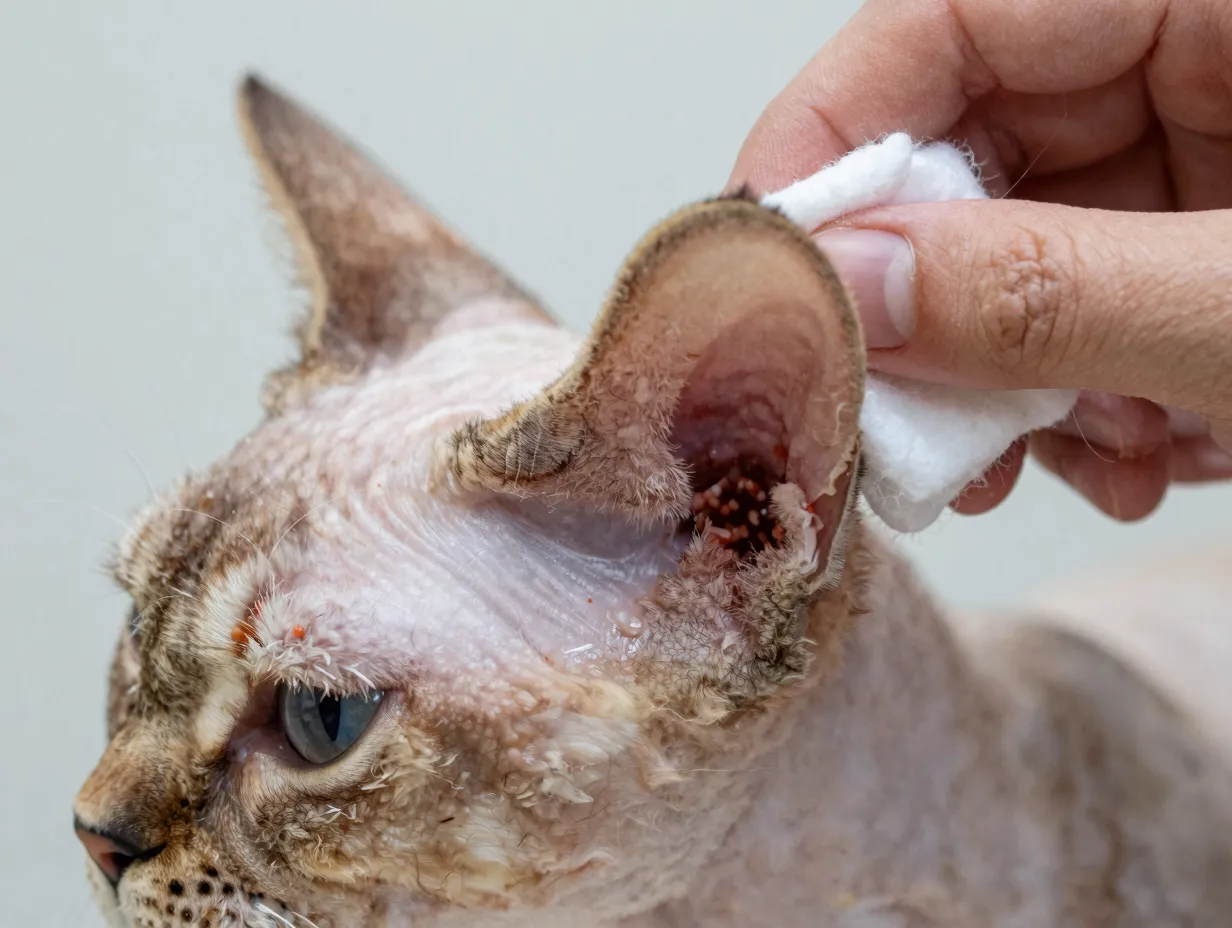
Among the more practical of the 8 Quirky Traits of Devon Rex Cats Kittens Owners Adore is something that surprises first-time owners: those gorgeous, oversized ears require consistent cleaning [2]. The large ear canals of the Devon Rex tend to accumulate wax and debris more readily than those of other breeds.
Neglecting ear care can lead to buildup, discomfort, and potentially ear infections. The good news is that with a regular routine, this is entirely manageable.
Devon Rex ear care basics:
- Check ears weekly for wax buildup, redness, or unusual odor
- Use a vet-approved ear cleaning solution and cotton balls (never cotton swabs inside the canal)
- Introduce ear cleaning early in kittenhood to normalize the experience
- Schedule a vet check if you notice excessive scratching at ears or dark, crumbly discharge (which may indicate ear mites)
Beyond the ears, Devon Rex grooming is actually relatively low-maintenance compared to long-haired breeds. Their short, wavy coat doesn’t mat and requires only occasional gentle brushing — or sometimes just a wipe-down with a damp cloth [3].
8. They Are Prone to Patellar Luxation 🦴
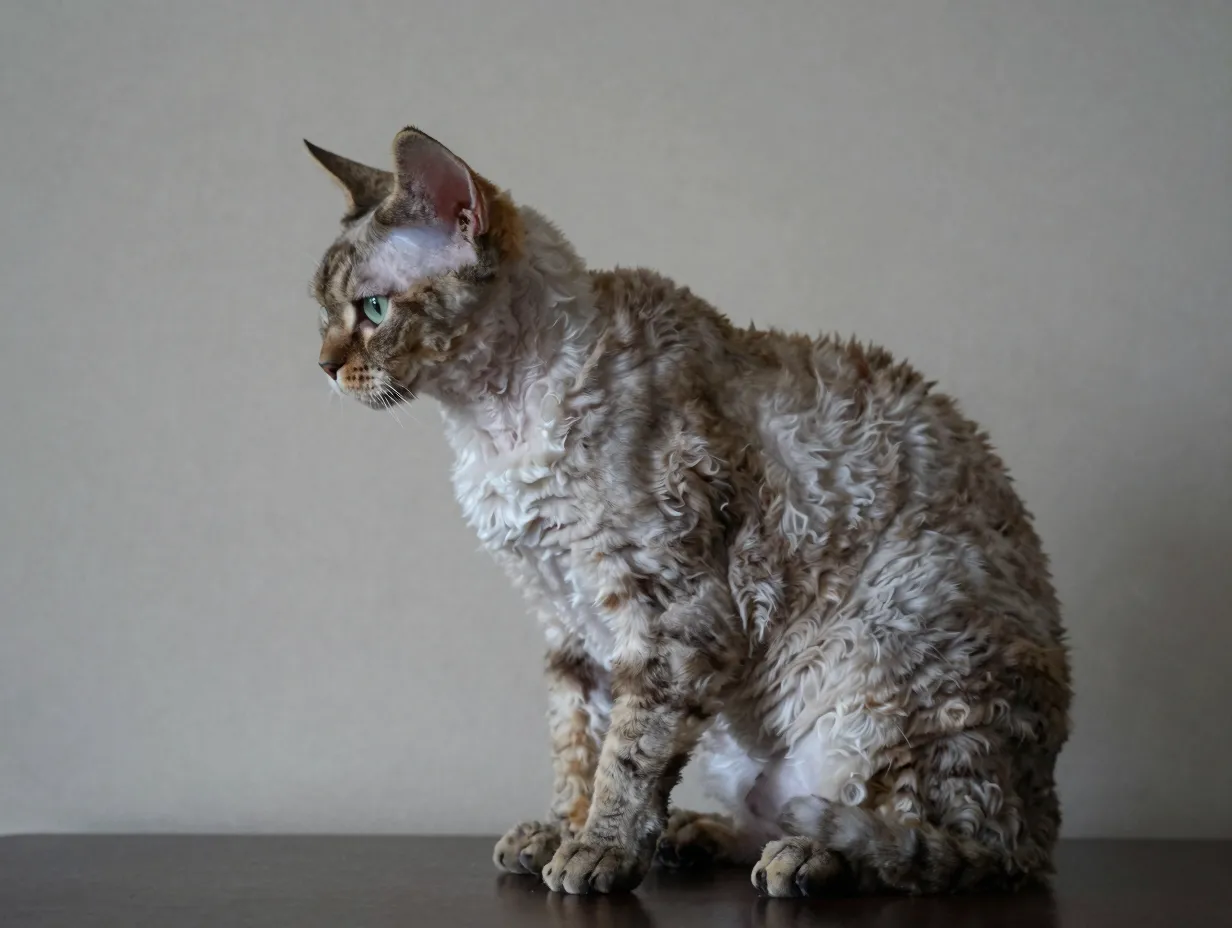
The final trait on our list is the most medically significant. Devon Rex cats have a genetic predisposition to patellar luxation — a condition where the kneecap (patella) slips out of its normal position [2]. This can range from mild and intermittent to severe and debilitating, depending on the grade of the condition.
Grades of patellar luxation in cats:
| Grade | Description | Typical Treatment |
|---|---|---|
| Grade 1 | Kneecap occasionally slips but returns on its own | Monitoring, weight management |
| Grade 2 | Kneecap slips frequently, causes intermittent lameness | Anti-inflammatory medication |
| Grade 3 | Kneecap usually out of position | Surgery often recommended |
| Grade 4 | Kneecap permanently displaced | Surgical correction required |
Early detection is key. Reputable breeders will have their breeding cats screened, and owners should discuss baseline x-rays with their vet when the cat is young [2]. Catching the condition early allows for proactive management before it becomes painful or limits mobility.
Signs to watch for:
- Occasional skipping or hopping on one hind leg
- Reluctance to jump or climb
- Stiffness after rest
- Visible discomfort when the leg is touched or extended
This health consideration doesn’t diminish the joy of owning a Devon Rex — it simply means being an informed, proactive owner.
A Quick Comparison: Devon Rex vs. Other Popular Breeds
Understanding how the Devon Rex stacks up against other breeds helps contextualize just how unique these traits really are.
| Trait | Devon Rex | Siamese | Maine Coon | Persian |
|---|---|---|---|---|
| Playfulness (adult) | ⭐⭐⭐⭐⭐ | ⭐⭐⭐⭐ | ⭐⭐⭐⭐ | ⭐⭐ |
| Vocalization | High | Very High | Moderate | Low |
| Trainability | Very High | High | Moderate | Low |
| Cold Sensitivity | High | Low | Low | Low |
| Separation Anxiety | High | Moderate | Low | Low |
| Grooming Needs | Low-Moderate | Low | High | Very High |
Is a Devon Rex Right for You?
Now that you know the 8 Quirky Traits of Devon Rex Cats Kittens Owners Adore, the honest question is: does this breed match your lifestyle?
The Devon Rex is an excellent fit if you:
- Work from home or have someone home most of the day
- Want an interactive, trainable, dog-like companion
- Enjoy a chatty, expressive pet
- Can maintain a warm home environment
- Are committed to regular vet checkups and ear care
The Devon Rex may not be ideal if you:
- Travel frequently or work very long hours away from home
- Prefer a low-energy, independent cat
- Live in a consistently cold environment without easy heating solutions
- Are looking for a hands-off pet
Conclusion: Embrace the Quirks
The 8 Quirky Traits of Devon Rex Cats Kittens Owners Adore — from their eternal kitten energy and cold sensitivity to their dog-like tricks and heartfelt emotional bonds — paint a picture of a cat that is anything but ordinary. These aren’t just personality quirks. They are the defining characteristics of a breed that demands engagement, rewards attention, and delivers companionship on a level that surprises even experienced cat owners.
Your actionable next steps:
- Research reputable breeders who screen for patellar luxation and other genetic conditions before committing to adoption.
- Prepare your home — invest in a heated cat bed, puzzle toys, and a tall cat tree before your Devon Rex arrives.
- Schedule a vet consultation early to establish a baseline health record and discuss breed-specific care.
- Consider adopting a pair if your schedule keeps you away from home for long stretches.
- Start training early — kittens pick up tricks faster, and early training builds a lifelong bond.
A Devon Rex won’t let you forget they’re there. And honestly? That’s the whole point. 🐾
References
[1] Devon Rex Breed Guide – https://vetslovepets.com.au/blogs/cat/devon-rex-breed-guide
[2] Devon Rex – https://www.thedrakecenter.com/services/cats/breeds/devon-rex
[3] Devon Rex – https://www.purina.co.uk/find-a-pet/cat-breeds/devon-rex