8 Different Types of Cats: A Guide to Breeds, Coats & Personalities
Over 600 million domestic cats live alongside humans worldwide — yet most people can only name three or four breeds. That gap between familiarity and knowledge matters, especially when you’re choosing a lifelong companion. This guide to 8 Different Types of Cats: A Guide to Breeds, Coats & Personalities cuts through the noise and gives you the real picture: what each breed looks like, how their coat behaves, and what kind of personality you’ll actually be living with.
Disclosure: This post contains affiliate links. As an Amazon Associate, we earn from qualifying purchases, and at no extra cost to you.
Whether you’re a first-time cat owner or a seasoned feline enthusiast, understanding breed differences helps you make smarter decisions — and build a stronger bond with your cat. 🐾
Key Takeaways
- Breed matters — behavioral research confirms that different cat breeds show measurable differences in aggression, shyness, and activity levels [1]
- Coat type affects grooming needs significantly; long-haired breeds require daily brushing while shorthairs are mostly low-maintenance [7]
- Coat color may offer subtle clues about personality, with ginger cats often rated as friendly and calico cats as more independent [2]
- Energy level is one of the most important factors to match with your lifestyle — active breeds like Bengals need stimulation, while Persians prefer calm environments [5]
- Personality is not random — genetics, early socialization, and breed heritage all shape how a cat behaves with people and other animals [6]
Understanding Cat Breeds Before You Choose
Before diving into the list, it helps to understand why breeds differ so much. Unlike dogs, cats were domesticated primarily for pest control rather than specific tasks, which means selective breeding for personality traits is a more recent development. Still, modern research published in behavioral science journals confirms that breed-specific personality traits are real and measurable [1].
Researchers have studied traits like aggression toward strangers, shyness, activity levels, and sociability with other pets across dozens of breeds. The results show clear patterns that go beyond individual variation [1].
💡 Pull Quote: “Understanding your cat’s breed background is one of the most underrated tools for building a harmonious home.”
Coat type is equally important. From silky long fur to dense plush coats to the nearly hairless Sphynx, each coat type comes with specific grooming requirements and even some health considerations [7]. The Cat Fanciers’ Association (CFA) recognizes dozens of distinct coat color and pattern categories, reflecting just how much variety exists [9].
Now, let’s get into the breeds themselves.
8 Different Types of Cats: A Guide to Breeds, Coats & Personalities — The Full List
1. Siamese 🗣️
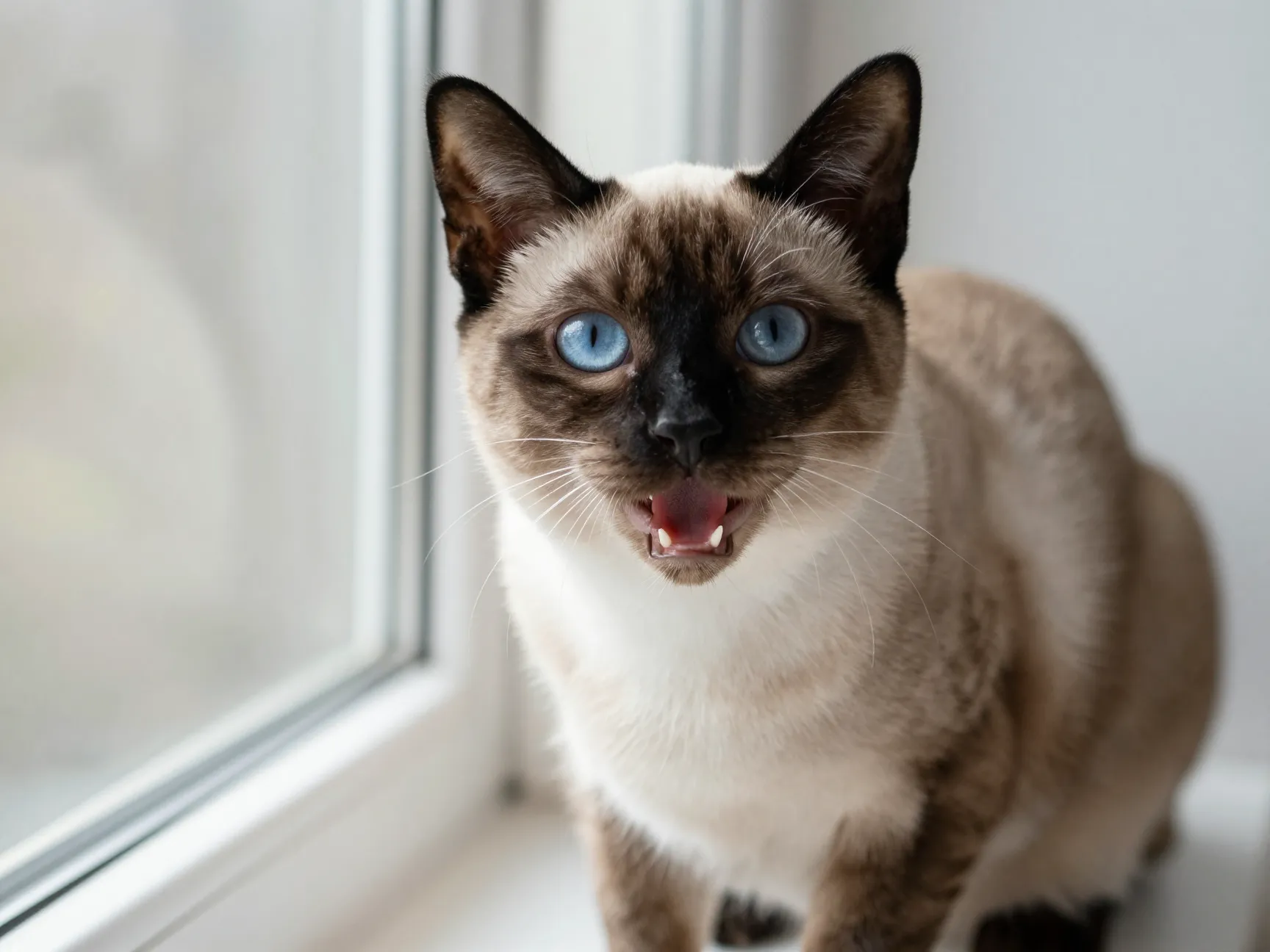
Origin: Thailand (formerly Siam)
Coat Type: Short, fine, low-shedding
Coat Colors: Seal point, blue point, chocolate point, lilac point
The Siamese is one of the oldest and most recognizable cat breeds in the world. Their striking color-pointed coat — darker on the face, ears, paws, and tail — is caused by a temperature-sensitive enzyme that affects pigment production in cooler body areas [9].
Personality at a Glance:
| Trait | Level |
|---|---|
| Vocalization | ⭐⭐⭐⭐⭐ Very High |
| Affection | ⭐⭐⭐⭐⭐ Very High |
| Energy | ⭐⭐⭐⭐ High |
| Independence | ⭐ Very Low |
Siamese cats are famously talkative — they’ll hold full conversations with you. They are highly social, deeply attached to their owners, and can develop separation anxiety if left alone for long periods [4]. Research consistently places them among the most people-oriented breeds [5].
Best for: Owners who are home often and want an interactive, communicative companion.
2. Maine Coon 🦁
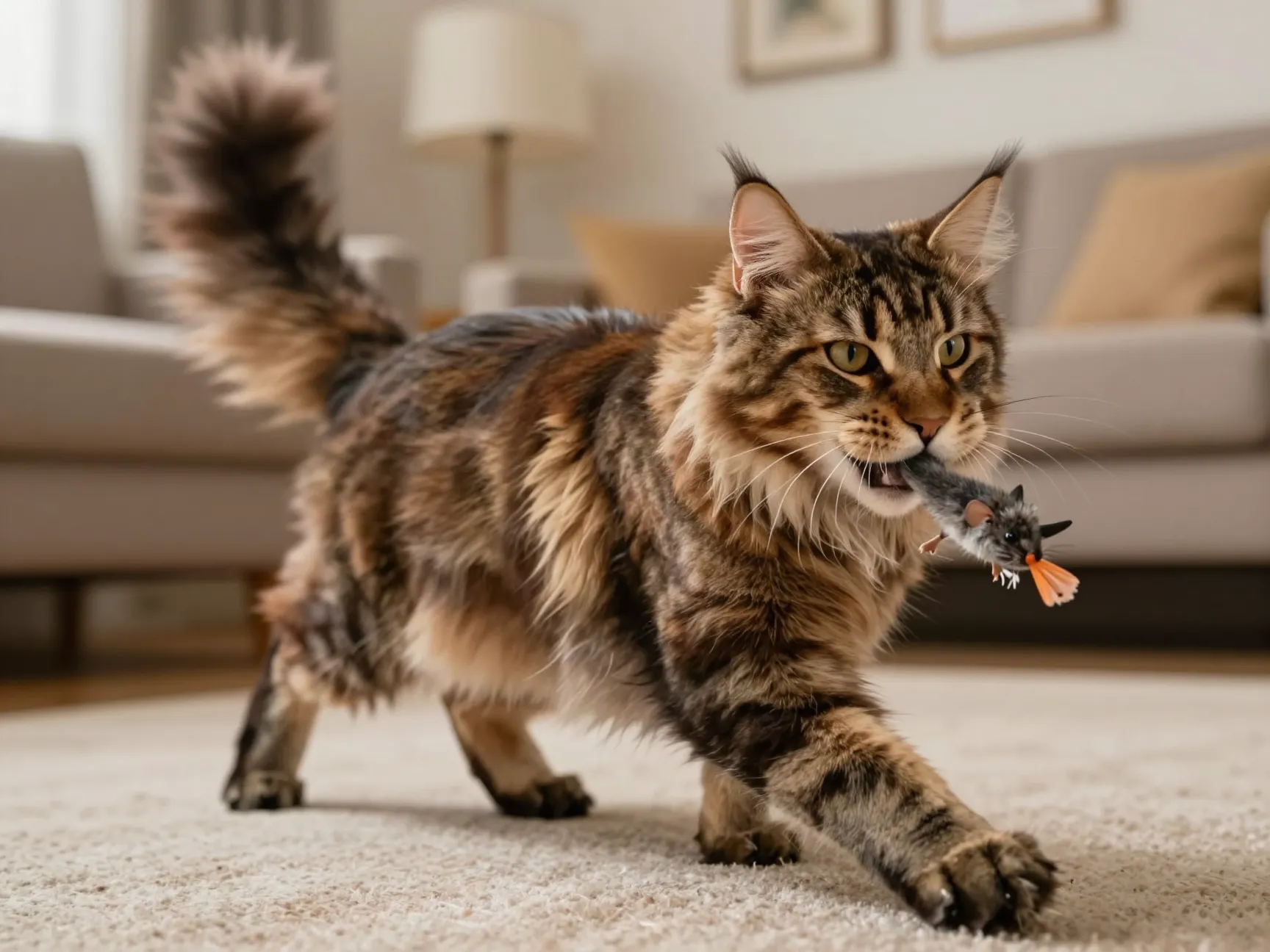
Origin: United States (Maine)
Coat Type: Long, thick, water-resistant double coat
Coat Colors: Wide variety including tabby, solid, tortoiseshell
The Maine Coon is the largest domestic cat breed, with males often weighing between 13–18 pounds. Their luxurious coat evolved for harsh New England winters and features a distinctive ruff around the neck, tufted ears, and a bushy tail [3].
Grooming Note: Their long coat requires brushing 2–3 times per week to prevent matting [7].
Personality at a Glance:
| Trait | Level |
|---|---|
| Vocalization | ⭐⭐⭐ Moderate (chirping) |
| Affection | ⭐⭐⭐⭐ High |
| Energy | ⭐⭐⭐⭐ High |
| Dog-like Behavior | ⭐⭐⭐⭐⭐ Very High |
Maine Coons are often described as “dogs in cat suits.” They enjoy playing fetch, following their owners around the house, and greeting guests at the door. Despite their size, they are gentle, playful, and remarkably patient with children and other pets [4]. Behavioral studies place them among the least aggressive and most sociable breeds [1].
Best for: Families with children, multi-pet households, or anyone wanting a large, affectionate companion.
3. Persian 😌
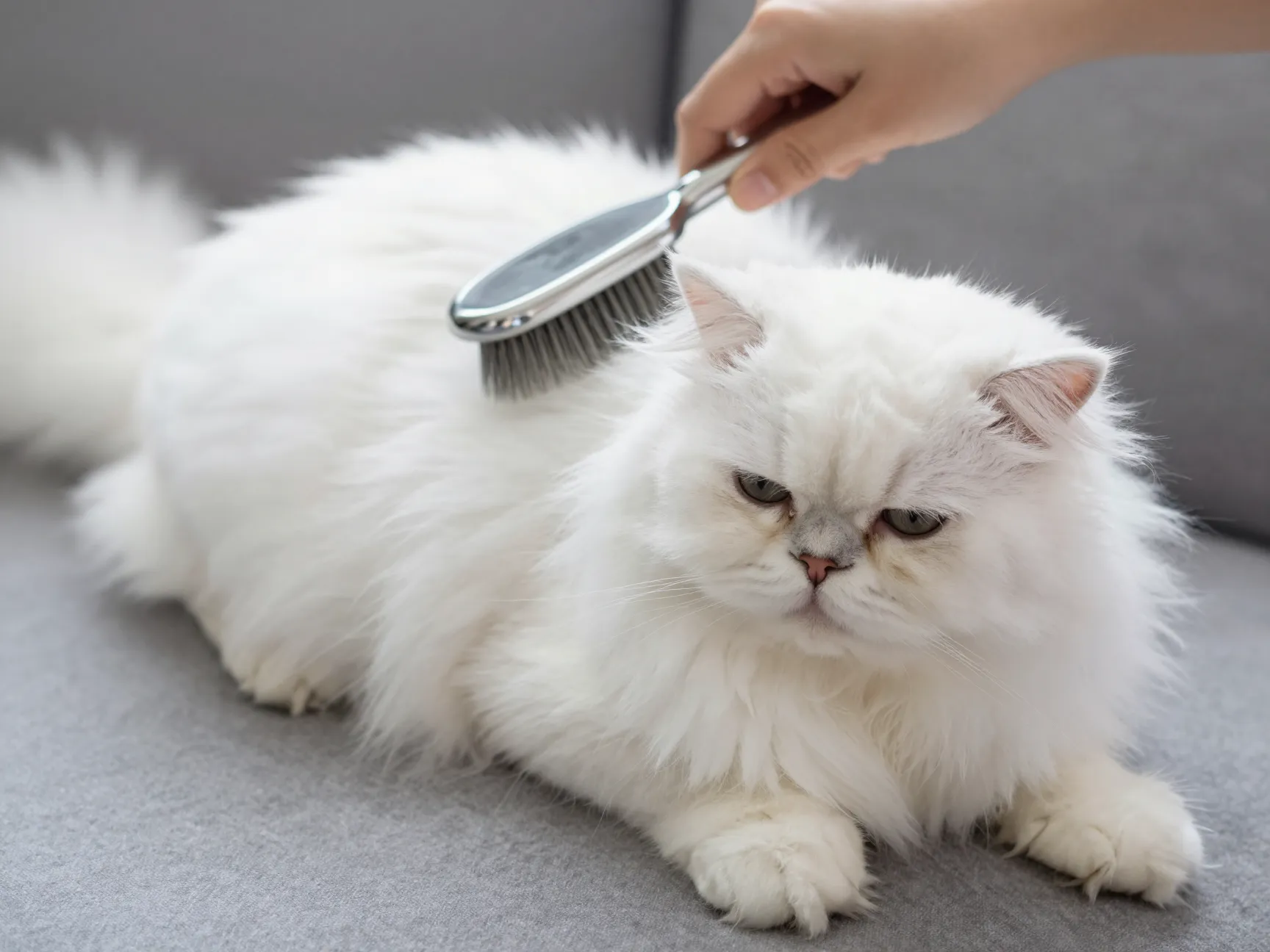
Origin: Iran (Persia)
Coat Type: Long, thick, silky — requires daily grooming
Coat Colors: White, black, blue, cream, silver, golden, and many more
The Persian is the quintessential lap cat. With their flat (brachycephalic) face, round eyes, and flowing coat, Persians are one of the most visually distinctive breeds in the world. However, that beautiful coat comes with a significant commitment — daily brushing is non-negotiable to prevent tangles and mats [7].
Personality at a Glance:
| Trait | Level |
|---|---|
| Vocalization | ⭐ Very Low |
| Affection | ⭐⭐⭐⭐ High (on their terms) |
| Energy | ⭐ Very Low |
| Independence | ⭐⭐⭐ Moderate |
Persians are calm, quiet, and dignified. They prefer serene environments and are not fans of loud households or sudden changes. They enjoy being petted and will sit contentedly in your lap for hours, but they won’t demand attention the way a Siamese will [5]. Research classifies Persians firmly in the “relaxed/calm” personality category [5].
Best for: Quiet households, seniors, or anyone wanting a low-energy, elegant companion.
4. Bengal 🐆
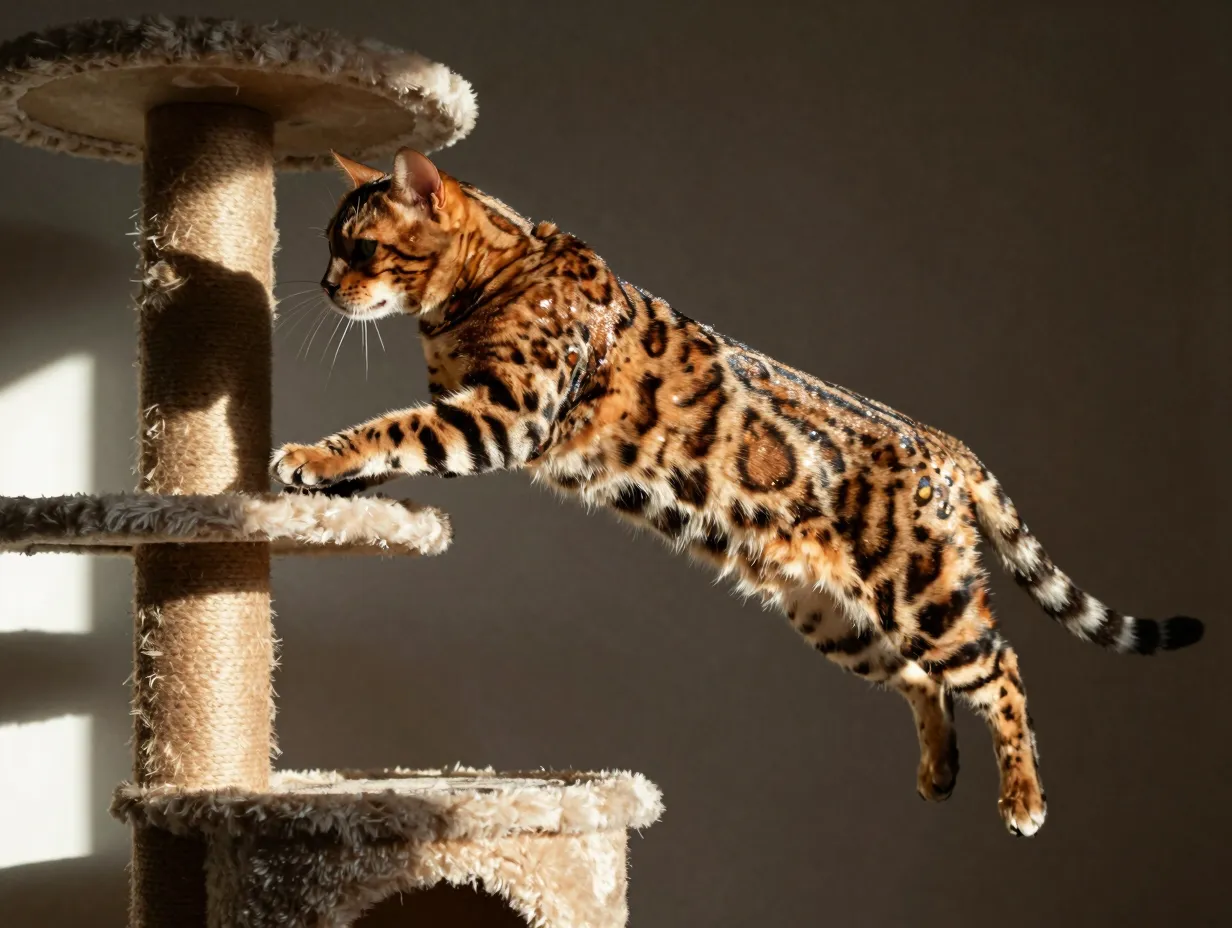
Origin: United States (hybrid of Asian Leopard Cat)
Coat Type: Short, dense, incredibly soft — minimal shedding
Coat Colors: Brown tabby, silver tabby, snow; with spotted or marbled patterns
Bengals look like miniature leopards, and their personality matches that wild aesthetic. They are one of the most active, athletic, and mentally demanding breeds available [3]. Their distinctive spotted or marbled coat has a unique glitter effect — individual hairs catch light in a way that makes the coat appear to shimmer [7].
Personality at a Glance:
| Trait | Level |
|---|---|
| Vocalization | ⭐⭐⭐ Moderate |
| Energy | ⭐⭐⭐⭐⭐ Extremely High |
| Curiosity | ⭐⭐⭐⭐⭐ Extremely High |
| Trainability | ⭐⭐⭐⭐⭐ Very High |
Bengals are not couch cats. They climb, leap, investigate, and get into everything. They can learn to walk on a leash, open doors, and even play fetch. Without adequate mental stimulation, they become destructive [6]. Behavioral research flags Bengals as one of the highest-energy breeds with strong predatory instincts [1].
Best for: Active owners, experienced cat people, or households that can provide enrichment, outdoor enclosures, or leash walks.
5. British Shorthair 🧸
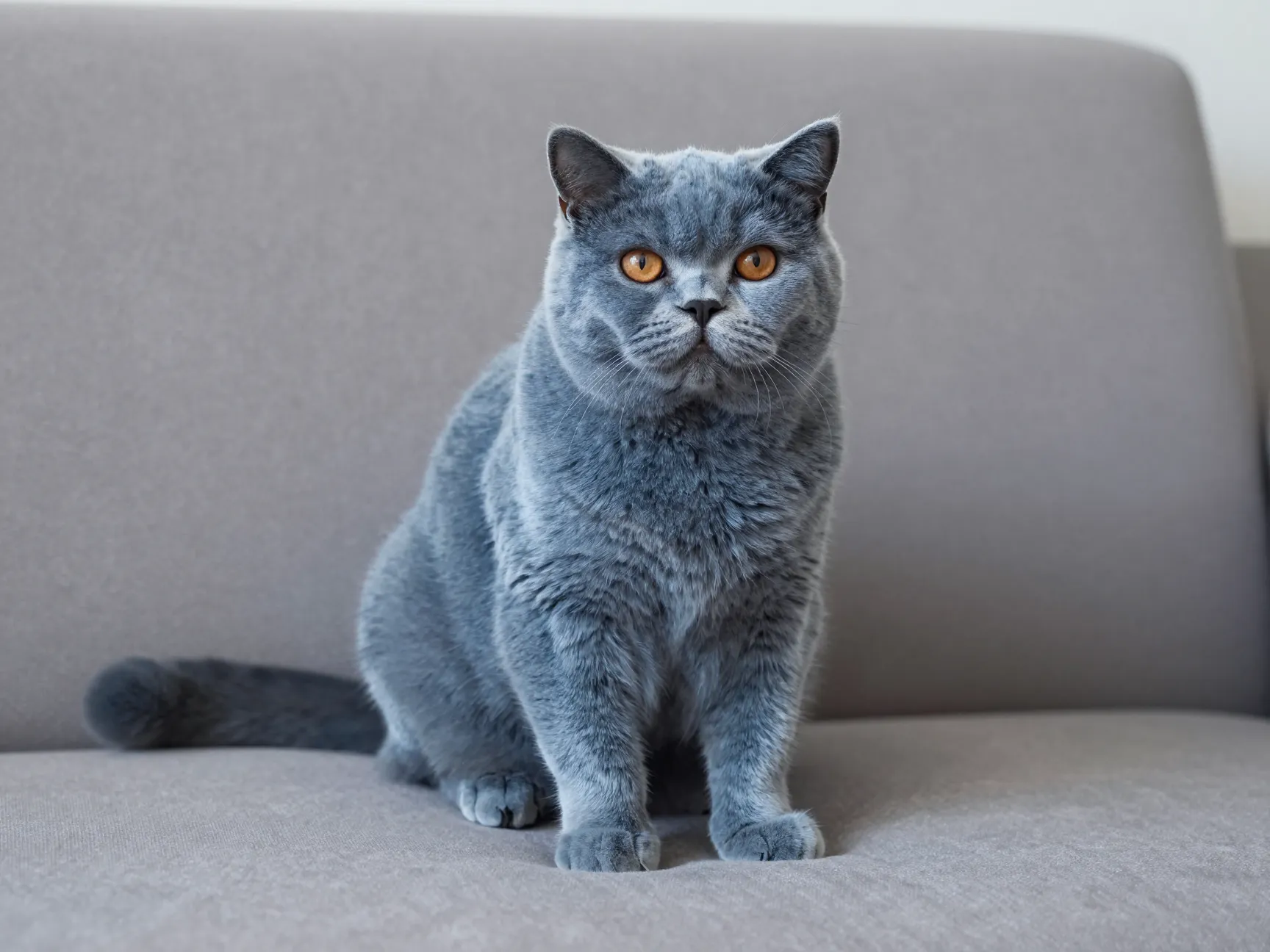
Origin: United Kingdom
Coat Type: Short, dense, plush — often described as “teddy bear” fur
Coat Colors: Blue (most iconic), black, white, cream, tabby, colorpoint
The British Shorthair is the embodiment of a calm, collected cat. Their round face, chubby cheeks, and dense plush coat give them an almost toy-like appearance. Their coat is notably thick and stands away from the body, requiring only weekly brushing [7].
Personality at a Glance:
| Trait | Level |
|---|---|
| Vocalization | ⭐⭐ Low |
| Affection | ⭐⭐⭐ Moderate |
| Energy | ⭐⭐ Low–Moderate |
| Independence | ⭐⭐⭐⭐ High |
British Shorthairs are loyal but not clingy. They enjoy being near their owners without necessarily needing constant physical contact. They are patient, even-tempered, and adapt well to apartment living [4]. Behavioral classifications consistently place them in the “relaxed” category [5].
🐾 Fun Fact: The British Shorthair is believed to be the inspiration for Lewis Carroll’s Cheshire Cat.
Best for: Busy professionals, apartment dwellers, or anyone wanting a low-maintenance but affectionate companion.
6. Ragdoll 💙
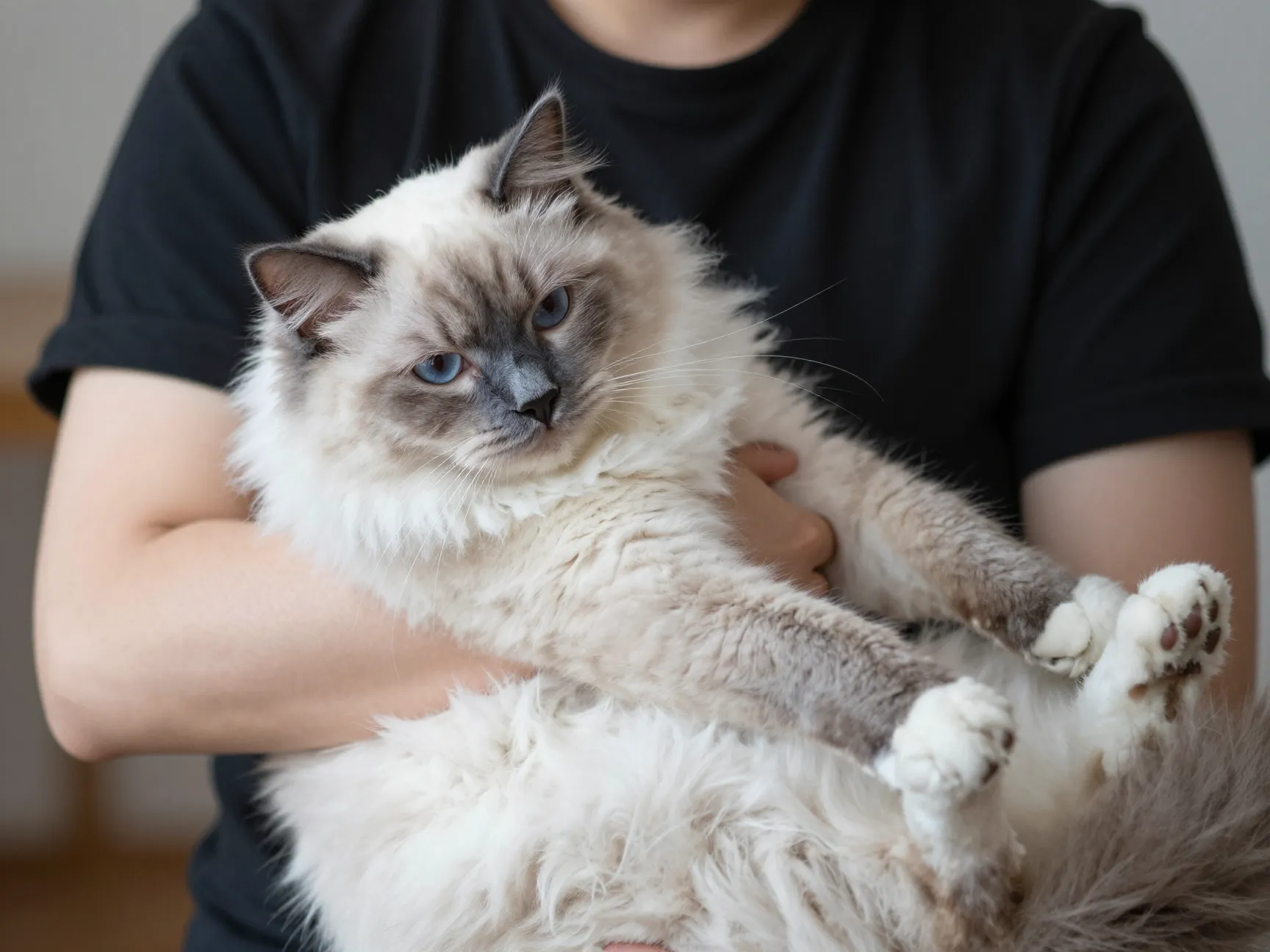
Origin: United States (California)
Coat Type: Semi-long, silky, low-matting
Coat Colors: Color-pointed (like Siamese) in seal, blue, chocolate, lilac, red, cream
The Ragdoll gets its name from a charming quirk — when picked up, they go limp and relaxed like a ragdoll. This breed was developed in the 1960s by breeder Ann Baker, who selected specifically for docile, gentle temperament [3].
Personality at a Glance:
| Trait | Level |
|---|---|
| Vocalization | ⭐⭐ Low–Moderate |
| Affection | ⭐⭐⭐⭐⭐ Very High |
| Energy | ⭐⭐ Low–Moderate |
| Tolerance | ⭐⭐⭐⭐⭐ Extremely High |
Ragdolls are often described as puppy-like in their devotion. They follow their owners from room to room, greet them at the door, and are remarkably tolerant of being handled — making them excellent with children [4]. Unlike Persians, they actively seek human contact rather than simply tolerating it [6].
Best for: Families with young children, first-time cat owners, or anyone wanting a gentle, affectionate indoor companion.
7. Abyssinian ⚡
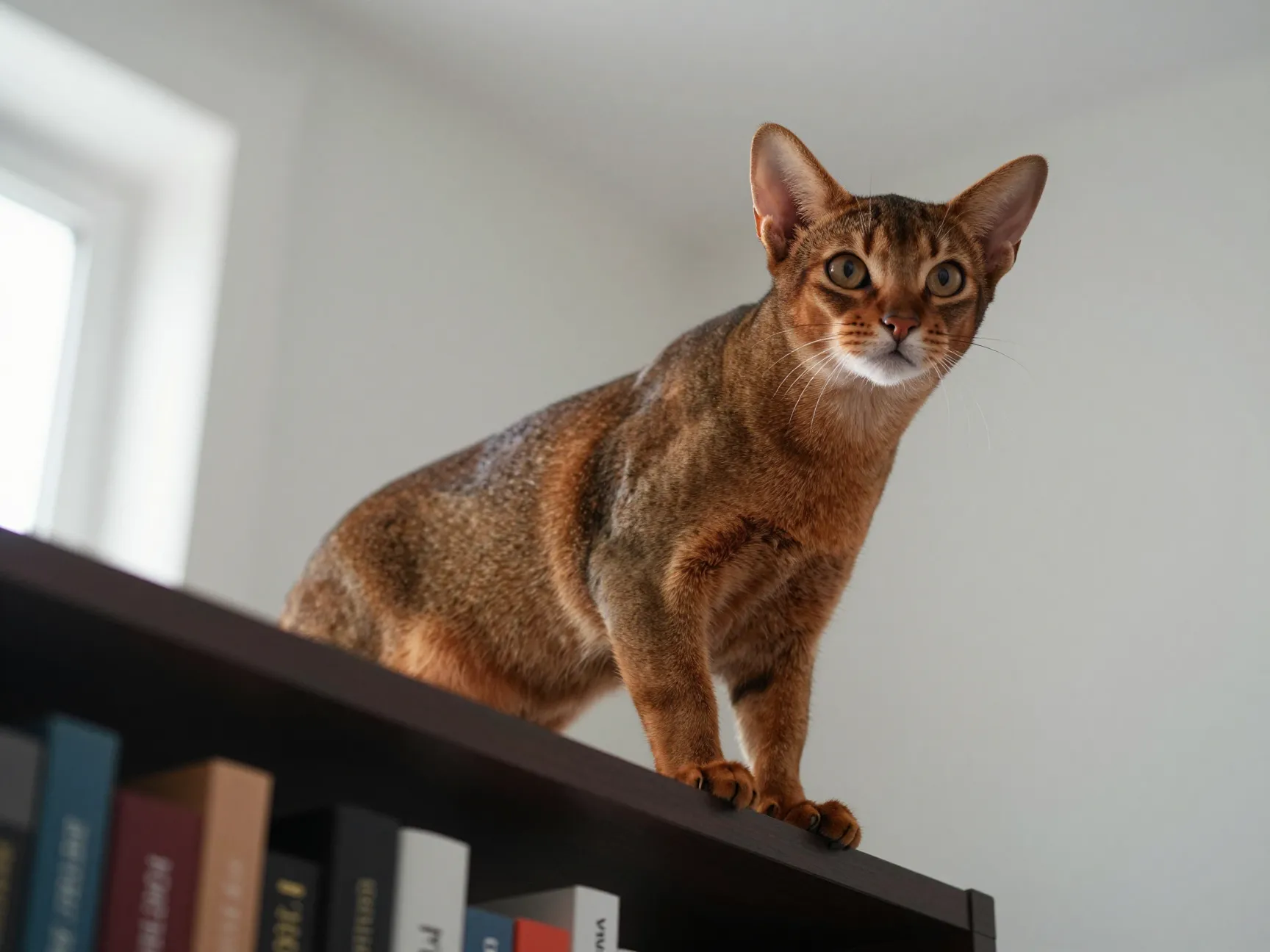
Origin: Ethiopia (formerly Abyssinia)
Coat Type: Short, fine, ticked tabby pattern
Coat Colors: Ruddy, red, blue, fawn — each hair has multiple color bands (ticking)
The Abyssinian is one of the oldest known cat breeds and one of the most athletic. Their coat features a distinctive ticked tabby pattern — each individual hair has alternating bands of color — which gives them a wild, agouti appearance similar to a wild rabbit or cougar [9].
Personality at a Glance:
| Trait | Level |
|---|---|
| Vocalization | ⭐⭐ Low–Moderate |
| Energy | ⭐⭐⭐⭐⭐ Extremely High |
| Curiosity | ⭐⭐⭐⭐⭐ Extremely High |
| Affection | ⭐⭐⭐ Moderate |
Abyssinians are perpetually in motion. They explore every corner of a home, love to climb to the highest point in any room, and are endlessly curious about their environment [3]. Unlike Bengals, they tend to be more independent — they’ll play near you rather than with you [5].
Best for: Active households, experienced cat owners, or homes with plenty of vertical space and enrichment.
8. Domestic Shorthair (Mixed Breed) 🏠
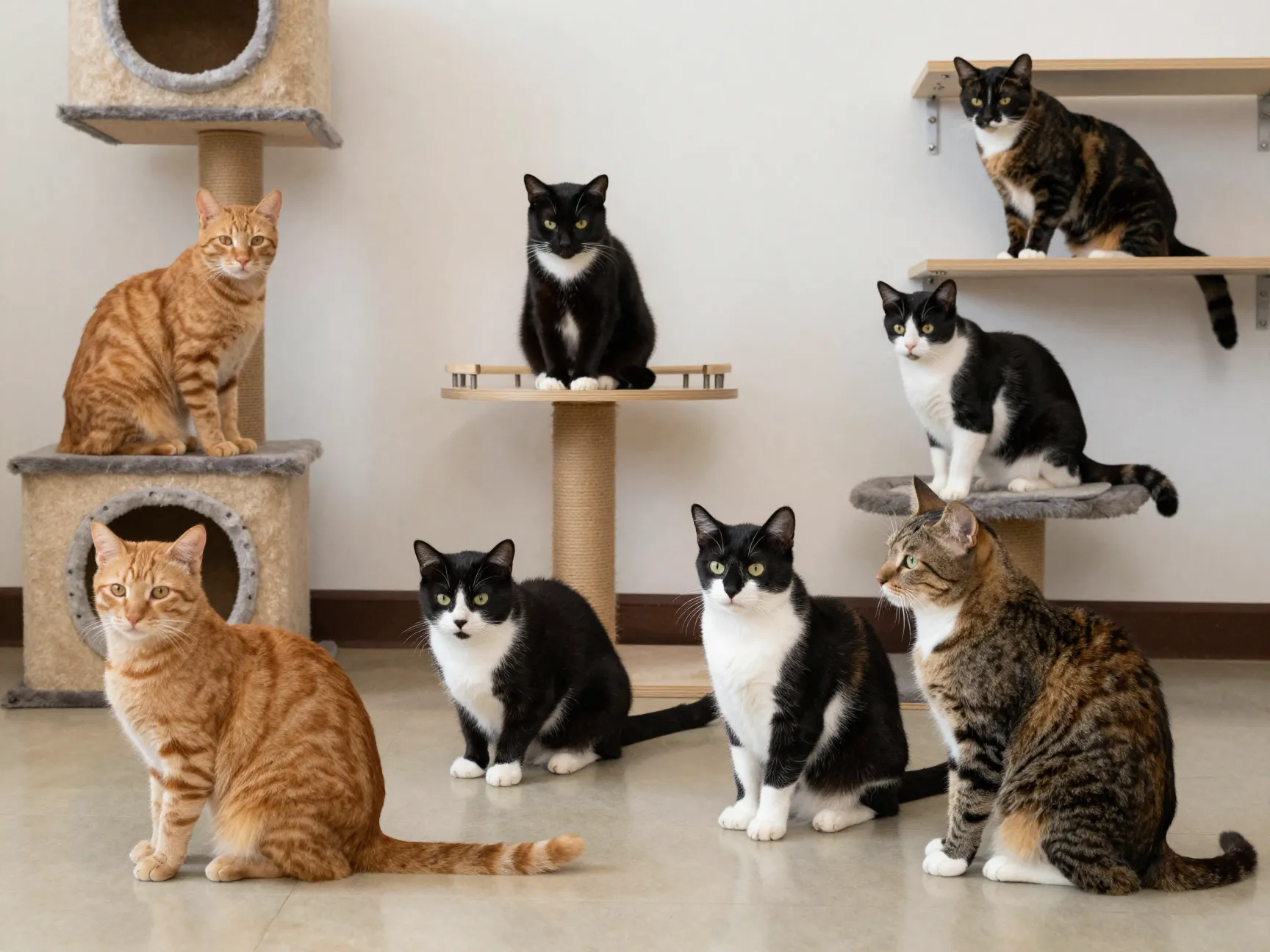
Origin: Worldwide
Coat Type: Short, variable
Coat Colors: Every color and pattern imaginable — tabby, tuxedo, calico, ginger, tortoiseshell
The Domestic Shorthair isn’t a “breed” in the traditional sense — it’s the cat world’s equivalent of a mixed-breed dog. They make up the vast majority of pet cats globally and are the most commonly adopted cats from shelters. Their personalities vary widely, but research on coat color offers some interesting clues [2].
Coat Color & Personality Associations:
| Coat Color | Common Personality Traits |
|---|---|
| 🟠 Ginger/Orange | Friendly, bold, social [2] |
| 🖤⬜ Tuxedo (black & white) | Playful, mischievous, confident [2] |
| 🌈 Calico | Independent, strong-willed [2] |
| 🐯 Tabby | Easygoing, adaptable [2] |
| 🟤🖤 Tortoiseshell | Feisty, loyal, intense (“tortitude”) [2] |
It’s worth noting that coat color correlations are based on owner surveys and behavioral observations rather than controlled genetic studies — so treat them as fun guidelines rather than hard rules [2].
Best for: Anyone! Mixed-breed cats are adaptable, resilient, and often healthier due to genetic diversity. Adopting from a shelter gives you the chance to assess personality directly before committing.
Coat Types Explained: What to Expect From Grooming
Understanding coat type is essential before choosing a cat. Here’s a quick reference guide to the main coat categories you’ll encounter [7]:
Short Coats
These are the easiest to maintain. Breeds like the British Shorthair, Bengal, and Siamese shed moderately and typically need only weekly brushing. Their coats stay cleaner and are less prone to matting.
Long Coats
Maine Coons, Persians, and Ragdolls all have long coats that require significantly more attention. Persians in particular need daily brushing to prevent painful mats from forming close to the skin [7]. Long-coated cats also tend to track more litter and may need occasional bathing.
Ticked/Patterned Coats
Abyssinians and some tabby patterns feature ticking — multiple color bands on each hair shaft. These coats are typically short and low-maintenance but visually striking [9].
Double Coats
Maine Coons and some other northern breeds have a dense undercoat beneath a longer topcoat. This provides insulation but means heavier seasonal shedding, especially in spring [7].
⚠️ Grooming Reality Check: Before choosing a long-haired breed, honestly assess whether you have 10–15 minutes daily for brushing. Neglected long coats lead to painful mats that often require professional grooming or veterinary intervention.
How to Match a Cat Breed to Your Lifestyle
Choosing the right cat isn’t just about looks — it’s about compatibility. Here’s a quick matching framework:
If you work long hours or travel frequently:
Choose an independent breed like the British Shorthair or Persian. Avoid highly social breeds like the Siamese or Ragdoll, which can develop anxiety when left alone [5].
If you have young children:
Ragdolls and Maine Coons are excellent choices due to their patience and tolerance. Both breeds score high on sociability and low on aggression in behavioral research [1].
If you live in a small apartment:
Persians, British Shorthairs, and Ragdolls adapt well to smaller spaces. Bengals and Abyssinians need room to run and climb — a small apartment without enrichment will make them miserable [6].
If you want a trainable, interactive cat:
Bengals and Siamese are the standout choices. Both breeds are highly intelligent, respond well to training, and enjoy puzzle feeders, leash walks, and interactive play sessions [3].
If you’re a first-time cat owner:
Ragdolls and Domestic Shorthairs are forgiving choices. Ragdolls are gentle and easy to handle; mixed-breed cats are often resilient and adaptable [4].
8 Different Types of Cats: A Guide to Breeds, Coats & Personalities — Quick Comparison Table
| # | Breed | Coat Length | Energy Level | Affection | Best For |
|---|---|---|---|---|---|
| 1 | Siamese | Short | High | Very High | Interactive owners |
| 2 | Maine Coon | Long | High | High | Families |
| 3 | Persian | Long | Low | High (calm) | Quiet homes |
| 4 | Bengal | Short | Very High | Moderate | Active owners |
| 5 | British Shorthair | Short | Low–Moderate | Moderate | Busy professionals |
| 6 | Ragdoll | Semi-Long | Low–Moderate | Very High | First-time owners |
| 7 | Abyssinian | Short | Very High | Moderate | Experienced owners |
| 8 | Domestic Shorthair | Short | Variable | Variable | Everyone |
Conclusion: Finding Your Perfect Feline Match
This guide to 8 Different Types of Cats: A Guide to Breeds, Coats & Personalities has covered a lot of ground — from the chatty Siamese to the gentle Ragdoll, from the wild-looking Bengal to the dignified Persian. The key insight is this: there is no universally “best” cat breed. There is only the best breed for you.
Here are your actionable next steps:
- Assess your lifestyle honestly — energy level, time at home, living space, and household composition all matter more than aesthetics.
- Visit a shelter or reputable breeder — spend time with individual cats before committing. Personality varies even within breeds.
- Research coat grooming requirements before falling in love with a fluffy Persian or Maine Coon — grooming is a daily commitment, not an occasional task [7].
- Consider a mixed-breed cat from your local shelter — they are often healthier, just as loving, and desperately need homes.
- Talk to a veterinarian about breed-specific health considerations, especially for brachycephalic breeds like Persians.
The right cat will fit your life like a key in a lock. Take your time, do your research, and you’ll gain a companion that enriches your daily life for 15 years or more. 🐱
References
[1] Cat Breeds And Their Personalities According To Research – https://www.psychologytoday.com/us/blog/the-modern-heart/202006/cat-breeds-and-their-personalities-according-to-research
[2] What Your Cat S Coat Color Says About Their Personality – https://happyandpolly.com/blogs/cat/what-your-cat-s-coat-color-says-about-their-personality
[3] Breeds Of Cats – https://www.litter-robot.com/blog/breeds-of-cats/
[4] Different Cat Breeds And Their Personalities – https://www.orlandovets.com/different-cat-breeds-and-their-personalities/
[5] Kitty Personalities What Personality Traits Do Different Breeds Have – https://us.feliway.com/blogs/news/kitty-personalities-what-personality-traits-do-different-breeds-have
[6] Cat Breed By Behavior – https://thecatsite.com/c/cat-breed-by-behavior/
[7] Guide To Cat Fur – https://cats.com/guide-to-cat-fur
[9] Coat Color Descriptions – https://cfa.org/coat-color-descriptions/