7 Must-Know Black Lab Puppy Training Tips for Energetic Buddies
Picture this: you’ve just brought home an adorable black Labrador puppy, and within minutes, your new furry friend has already chewed your favorite shoes, knocked over a plant, and somehow managed to turn your living room into what looks like a tornado aftermath. Sound familiar? If you’re nodding your head while simultaneously checking on your own energetic black Lab puppy, you’re not alone! These 7 Must-Know Black Lab Puppy Training Tips for Energetic Buddies will transform your chaotic household into a harmonious home where both you and your four-legged companion can thrive together.

Disclosure: This post contains affiliate links. As an Amazon Associate, we earn from qualifying purchases, and at no extra cost to you.
Black Labrador Retrievers are renowned for their intelligence, loyalty, and boundless energy. While these traits make them incredible companions, they also present unique training challenges that require specific strategies. The key to success lies in understanding your puppy’s natural instincts and channeling that enthusiasm into productive learning experiences.
Key Takeaways
- Start early with positive reinforcement – Black Lab puppies respond best to praise, treats, and consistent encouragement rather than punishment-based methods
- Keep training sessions short and frequent – Multiple 5-10 minute sessions throughout the day are more effective than lengthy training marathons
- Establish consistent routines – Predictable schedules for feeding, exercise, and training help energetic puppies understand expectations
- Focus on socialization alongside basic commands – Early exposure to various environments and experiences builds confidence in your energetic buddy
- Channel natural energy into structured activities – Use your Lab’s enthusiasm as a training advantage through engaging, game-based learning
Understanding Your Black Lab Puppy’s Energy Levels
Before diving into the 7 Must-Know Black Lab Puppy Training Tips for Energetic Buddies, it’s crucial to understand what makes these puppies so uniquely energetic. Black Labradors were originally bred as working dogs, specifically for retrieving waterfowl for hunters. This heritage means they possess:
- High intelligence that craves mental stimulation
- Strong retrieving instincts that drive them to carry objects
- Water-loving tendencies that make them fearless explorers
- Social nature that requires interaction with humans and other animals
- Athletic build designed for endurance and activity
These characteristics explain why your black Lab puppy seems to have an endless supply of energy. Rather than viewing this as a challenge, I encourage you to see it as an opportunity to build an incredibly strong bond through effective training.
1. Master Positive Reinforcement Techniques

The foundation of successful black Lab puppy training lies in positive reinforcement. This approach is particularly crucial for Labs due to their sensitive temperament and eagerness to please [1][2][3]. Unlike breeds that might respond to more assertive training methods, black Lab puppies thrive when they feel encouraged and supported.
Why Positive Reinforcement Works Best
Black Labrador puppies are naturally people-pleasers, which means they respond exceptionally well to:
- Verbal praise (“Good boy!” or “Yes!”)
- High-value treats (small, soft training treats)
- Physical affection (gentle petting or belly rubs)
- Play rewards (tug toys or fetch sessions)
Important: Avoid negative reinforcement techniques such as yelling or physical punishment, as these methods can damage trust and create fearful, less responsive dogs [3]. I’ve seen countless Lab owners struggle with training simply because they inadvertently used intimidation tactics that shut down their puppy’s natural enthusiasm for learning.
Implementing Positive Reinforcement
Here’s how to effectively use positive reinforcement with your energetic buddy:
- Timing is everything – Reward immediately when your puppy performs the desired behavior
- Be specific with praise – Instead of generic “good dog,” try “good sit” or “good stay”
- Use high-value rewards – Discover what motivates your puppy most (usually food, but sometimes toys or attention)
- Gradually reduce treats – As behaviors become consistent, replace food rewards with praise and affection
“The most effective training happens when your puppy associates learning with positive experiences. This creates a lifelong love of training rather than fear or resistance.” – Professional Dog Trainer
2. Keep Training Sessions Short and Frequent

One of the most critical aspects of the 7 Must-Know Black Lab Puppy Training Tips for Energetic Buddies involves understanding your puppy’s attention span. Research shows that 5-10 minute training sessions multiple times daily are significantly more effective than longer sessions [1][3].
The Science Behind Short Sessions
Puppies have limited attention spans, typically lasting:
- 8-10 weeks old: 2-5 minutes
- 10-12 weeks old: 5-8 minutes
- 12-16 weeks old: 8-10 minutes
- 16+ weeks old: 10-15 minutes
Daily Training Schedule Example
Here’s a sample schedule that works well for most black Lab puppies:
| Time | Training Focus | Duration |
|---|---|---|
| 7:00 AM | Potty training + basic commands | 5 minutes |
| 11:00 AM | Socialization exercises | 8 minutes |
| 2:00 PM | Trick training | 5 minutes |
| 5:00 PM | Leash walking practice | 10 minutes |
| 8:00 PM | Calm settling exercises | 5 minutes |
Signs Your Puppy Needs a Break
Watch for these indicators that your training session should end:
- 🐕 Excessive panting or drooling
- 🐕 Loss of focus or looking away frequently
- 🐕 Increased mistakes with previously mastered commands
- 🐕 Hyperactive behavior or inability to settle
- 🐕 Whining or stress signals
Remember, ending on a positive note with a successful command helps maintain your puppy’s confidence and enthusiasm for the next session.
3. Establish Consistency Across All Family Members
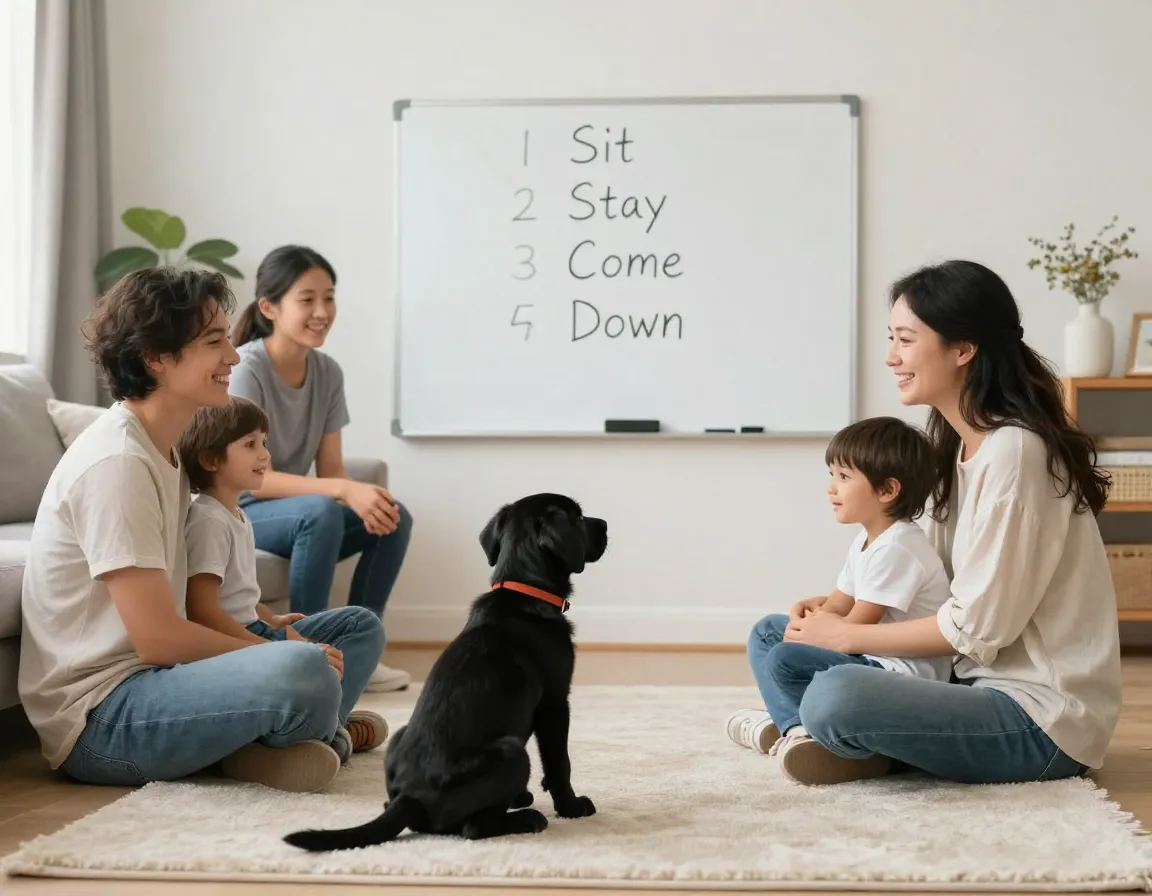
Consistency across all family members is absolutely essential for successful black Lab puppy training [3]. Nothing confuses an energetic puppy more than receiving mixed signals from different people in the household. This consistency must extend to commands, rules, and expectations.
Creating a Family Training Plan
To implement this crucial aspect of the 7 Must-Know Black Lab Puppy Training Tips for Energetic Buddies, gather all family members for a training meeting:
Step 1: Standardize Commands
- Sit: Everyone uses “sit” (not “sit down” or “park it”)
- Stay: Everyone uses “stay” (not “wait” or “hold”)
- Come: Everyone uses “come” (not “here” or “come here”)
- Down: Everyone uses “down” (not “lie down” or “drop”)
Step 2: Agree on House Rules
- Jumping on furniture (allowed/not allowed)
- Begging during meals (response protocol)
- Greeting visitors (jumping vs. sitting)
- Sleeping arrangements (crate, bed, floor)
Step 3: Establish Consequences
- What happens when rules are broken?
- Who handles corrections?
- How do you redirect unwanted behavior?
Common Consistency Mistakes
I’ve observed these frequent errors that can derail your training progress:
❌ Dad allows jumping while Mom discourages it
✅ Everyone requires four paws on the floor for attention
❌ Kids give treats randomly while parents use them strategically
✅ Treats only given for earned behaviors by all family members
❌ Different family members use different commands for the same behavior
✅ Written command list posted where everyone can reference it
Training Documentation
Create a simple training log that includes:
- Commands being taught
- Current progress level
- Reward preferences
- Behavioral challenges
- Success stories
This documentation ensures everyone stays informed about your puppy’s development and maintains consistent expectations.
4. Prioritize Early Socialization for Confidence Building

Early socialization builds confidence and is particularly important for energetic black Lab puppies who can become overwhelmed by their own enthusiasm [1][3]. Proper socialization during the critical period (8-16 weeks) shapes your puppy’s temperament for life.
The Socialization Window
The critical socialization period occurs between 8-16 weeks of age. During this time, your black Lab puppy’s brain is incredibly receptive to new experiences. Positive exposures during this window help create a confident, well-adjusted adult dog, while negative experiences or lack of exposure can lead to:
- Fearfulness around new people or situations
- Reactive behavior toward other dogs
- Anxiety in unfamiliar environments
- Difficulty adapting to change
Gradual Exposure Protocol
This essential component of the 7 Must-Know Black Lab Puppy Training Tips for Energetic Buddies requires a systematic approach:
Week 1-2 (8-10 weeks)
- Household sounds (vacuum, doorbell, TV)
- Family members and close friends
- Different surfaces (carpet, tile, grass)
- Car rides to safe locations
Week 3-4 (10-12 weeks)
- Controlled meetings with vaccinated, friendly dogs
- Short visits to pet-friendly stores
- Various people (different ages, appearances)
- Basic handling exercises (paws, ears, mouth)
Week 5-6 (12-14 weeks)
- Puppy socialization classes
- Outdoor environments (parks, sidewalks)
- Urban sounds (traffic, construction)
- Different weather conditions
Week 7-8 (14-16 weeks)
- Dog parks (after full vaccination)
- Crowded environments
- Children playing
- Other animals (cats, birds, livestock if applicable)
Socialization Checklist
Use this checklist to ensure comprehensive socialization:
People Exposure:
- [ ] Men with beards
- [ ] People wearing hats/sunglasses
- [ ] Children of various ages
- [ ] People using mobility aids
- [ ] Delivery personnel
- [ ] People in uniforms
Environmental Exposure:
- [ ] Busy streets
- [ ] Elevators
- [ ] Stairs (various types)
- [ ] Bridges or overpasses
- [ ] Different flooring surfaces
- [ ] Outdoor markets or events
Sound Exposure:
- [ ] Thunderstorms (recordings)
- [ ] Fireworks (recordings)
- [ ] Sirens and alarms
- [ ] Construction noises
- [ ] Musical instruments
- [ ] Appliances running
Managing Overwhelming Situations
If your energetic puppy becomes overwhelmed during socialization:
- Remove them from the situation immediately
- Provide comfort without excessive coddling
- Try the same exposure at a lower intensity later
- End socialization sessions on positive notes
- Consult a professional trainer if fear persists
5. Create Predictable Routines and Structure
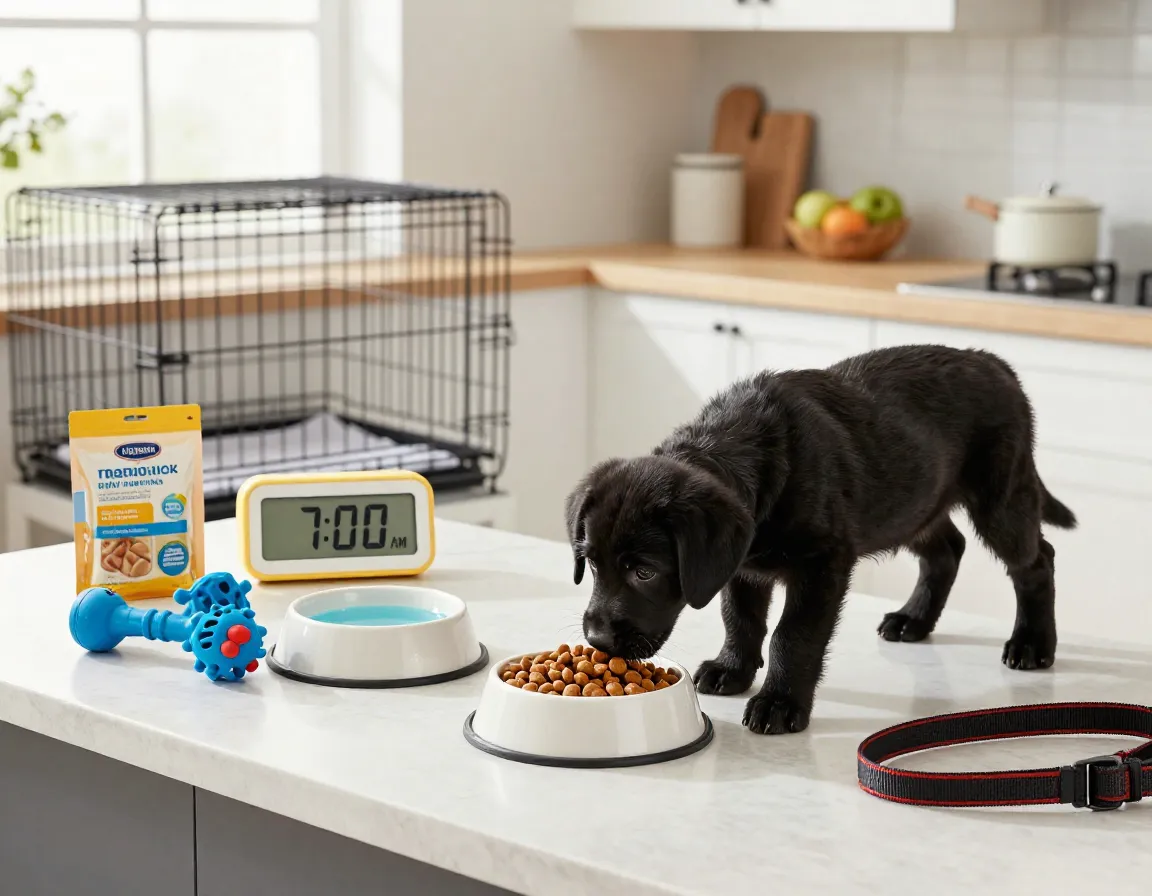
Establishing predictable routines is fundamental to helping energetic black Lab puppies understand expectations and reduce anxiety [2]. Structure provides security for your puppy while making training more effective and efficient.
The Power of Routine for Energetic Puppies
Black Lab puppies thrive on routine because it:
- Reduces anxiety by creating predictability
- Improves learning through repetition
- Establishes boundaries naturally
- Builds trust between puppy and owner
- Prevents behavioral problems before they start
Essential Daily Routines
This critical element of the 7 Must-Know Black Lab Puppy Training Tips for Energetic Buddies should include these key components:
Morning Routine (6:30-8:00 AM)
- Immediate potty break upon waking
- Fresh water and breakfast
- Short training session (5 minutes)
- Supervised play time
- Another potty break
Midday Routine (11:00 AM-1:00 PM)
- Potty break
- Training session focusing on new skills
- Mental stimulation activity (puzzle toy)
- Rest period in crate or designated area
Afternoon Routine (3:00-5:00 PM)
- Potty break
- Physical exercise (walk or yard play)
- Socialization activity
- Training reinforcement session
Evening Routine (6:00-9:00 PM)
- Dinner time
- Post-meal potty break
- Family interaction time
- Calm training session (settling exercises)
- Final potty break before bed
Feeding Schedule Structure
Consistent meal times support both training and house-breaking:
| Age | Meals Per Day | Schedule |
|---|---|---|
| 8-12 weeks | 4 meals | 7 AM, 11 AM, 3 PM, 7 PM |
| 12-16 weeks | 3 meals | 7 AM, 1 PM, 6 PM |
| 16+ weeks | 2 meals | 7 AM, 6 PM |
Flexibility Within Structure
While routines are important, allow for some flexibility:
- Weekend variations are acceptable
- Special occasions can include routine adjustments
- Weather changes may require indoor alternatives
- Growth phases might need schedule modifications
The goal is consistency, not rigidity. Your puppy should feel secure in the general pattern while adapting to reasonable changes.
6. Channel Natural Enthusiasm Into Structured Training
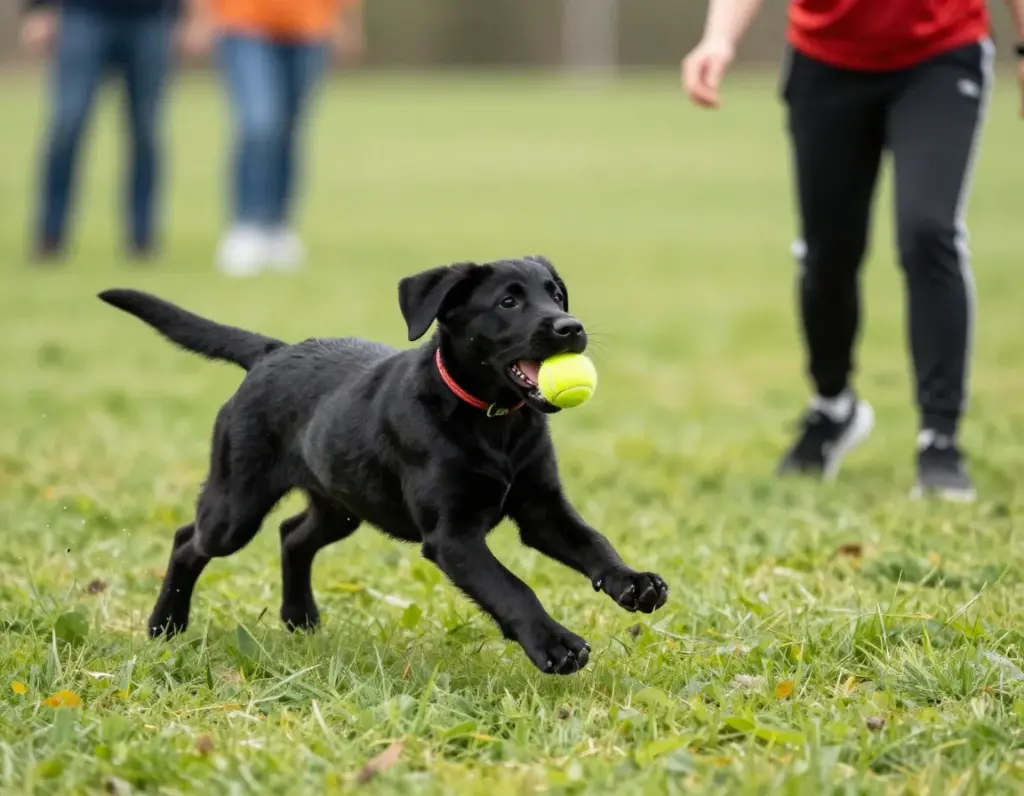
One of the most effective strategies among the 7 Must-Know Black Lab Puppy Training Tips for Energetic Buddies involves channeling natural enthusiasm into training activities [3]. Rather than fighting your puppy’s energy, use it as a powerful training tool.
Understanding Lab Energy Patterns
Black Lab puppies typically experience energy in cycles:
- High energy periods: 2-3 times daily
- Moderate energy: Throughout most of the day
- Low energy: After meals and exercise
- Rest periods: Natural downtime for processing learning
Energy-Based Training Activities
High Energy Training (Use during peak energy times):
- Recall Games
- Hide and seek with family members
- Long-distance recall practice
- Emergency recall training with high rewards
- Retrieve Training
- Basic fetch with commands
- Directed retrieves (left/right)
- Multiple object retrieval
- Agility Foundations
- Tunnel crawls
- Low jump practice
- Weave pole introduction
Moderate Energy Training (Regular training sessions):
- Obedience Commands
- Sit, stay, down combinations
- Heel training
- Place/mat training
- Trick Training
- Shake hands
- Roll over
- Play dead
- Impulse Control
- Wait for meals
- Door manners
- Greeting protocols
Low Energy Training (Calm periods):
- Settling Exercises
- Relaxed down-stays
- Calm handling practice
- Gentle grooming introduction
- Mental Stimulation
- Puzzle toys
- Scent work basics
- Problem-solving games
Game-Based Learning Strategies
Transform training into games to maintain your puppy’s interest:
“Find It” Game
- Hide treats around the house
- Start easy, gradually increase difficulty
- Teaches scent work and problem-solving
“Red Light, Green Light”
- Green light = move forward
- Red light = immediate stop
- Builds impulse control and attention
“Musical Sits”
- Play music, puppy moves freely
- When music stops, puppy must sit
- Combines fun with obedience
Rotating Training Focus
Prevent boredom by rotating between different types of training:
Monday/Wednesday/Friday: Obedience focus
Tuesday/Thursday/Saturday: Trick and game training
Sunday: Fun socialization and free play
This rotation keeps your energetic buddy engaged while ensuring comprehensive skill development.
7. Start With Essential Basic Commands
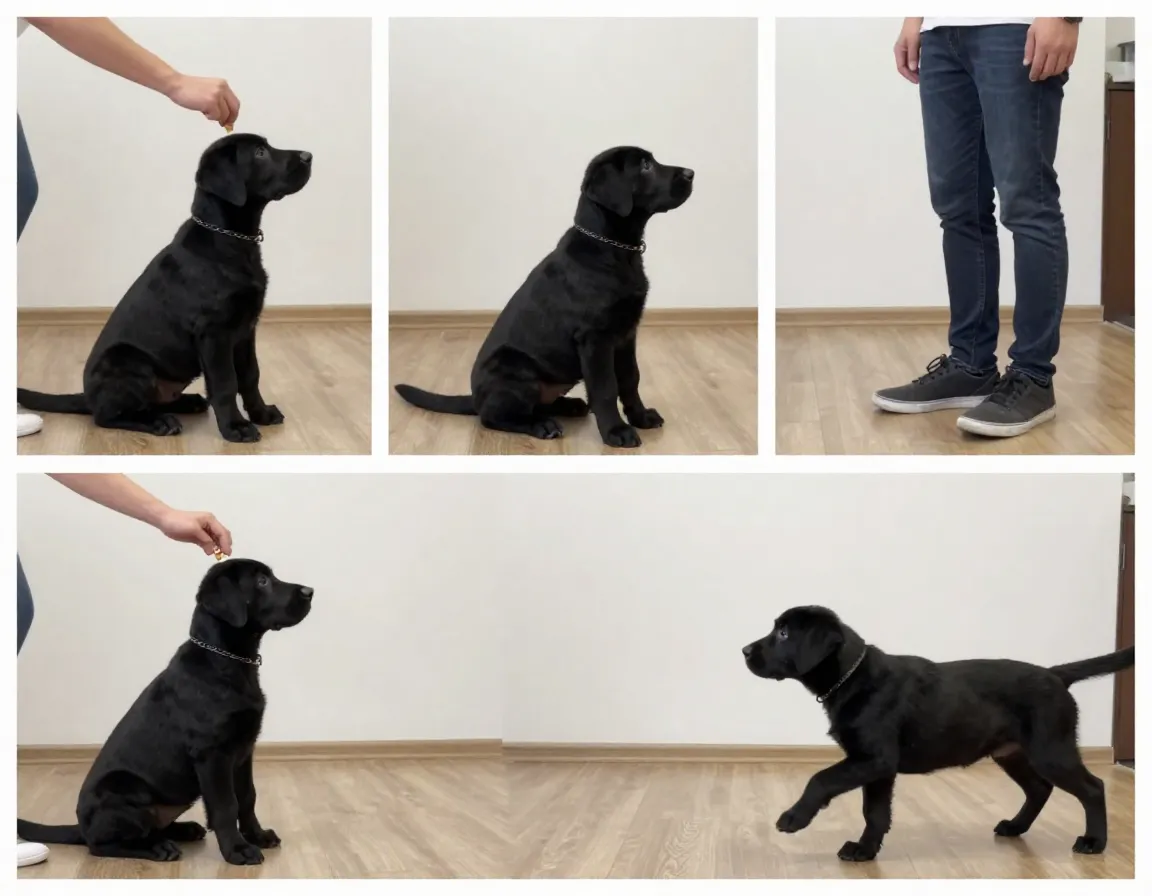
The final component of the 7 Must-Know Black Lab Puppy Training Tips for Energetic Buddies focuses on starting with basic commands during the crucial early stages (8-12 weeks) [1]. These foundation commands create the building blocks for all future training success.
The “Big Three” Foundation Commands
1. SIT Command
This is typically the easiest command for black Lab puppies to learn:
Training Steps:
- Hold treat close to puppy’s nose
- Slowly lift treat over their head
- As their bottom touches ground, say “Sit”
- Immediately reward and praise
- Practice 5-10 repetitions per session
Common Mistakes:
- Saying “sit” before the behavior occurs
- Holding treat too high (causing jumping)
- Forgetting to reward immediately
2. STAY Command
Build duration gradually with this essential safety command:
Training Steps:
- Start with puppy in sit position
- Hold palm up in “stop” gesture
- Say “Stay” and take one small step back
- Wait 2-3 seconds, return and reward
- Gradually increase distance and duration
Progression Timeline:
- Week 1: 3-5 seconds, 1 foot away
- Week 2: 10-15 seconds, 2-3 feet away
- Week 3: 30 seconds, across the room
- Week 4: 1 minute, out of sight briefly
3. COME Command
This life-saving command requires extra attention and high-value rewards:
Training Steps:
- Start in a small, enclosed area
- Get down to puppy’s level
- Say “Come” in happy, excited voice
- Reward enthusiastically when they reach you
- Never call your puppy to come for something negative
Safety Note: Always practice recall in secure areas until the command is 100% reliable.
Teaching Sequence and Timeline
Follow this progression for optimal results:
Weeks 8-10: Foundation Building
- Sit (primary focus)
- Name recognition
- Basic attention/focus
Weeks 10-12: Expanding Skills
- Stay (short duration)
- Come (in secure areas)
- Down (introduction)
Weeks 12-16: Reliability Building
- Combining commands
- Increasing distractions
- Proofing behaviors
Command Training Tips
Environment Management:
- Start in quiet, familiar spaces
- Gradually add distractions
- Practice in various locations
- Always set your puppy up for success
Reward Strategies:
- Use jackpot rewards (multiple treats) for breakthrough moments
- Vary reward types to maintain interest
- Phase out food rewards gradually
- Always end sessions on a positive note
Troubleshooting Common Issues:
Problem: Puppy won’t sit
- Check treat motivation level
- Ensure proper lure technique
- Practice when puppy is alert but not overly excited
Problem: Breaking stay command
- Reduce duration expectations
- Decrease distance temporarily
- Increase reward value for successful stays
Problem: Ignoring come command
- Never chase your puppy
- Make yourself more interesting than distractions
- Practice recall games instead of formal training
Building on Basic Commands
Once your puppy masters these foundation commands, you can introduce:
- Down (lying down on command)
- Leave it (ignoring objects or food)
- Drop it (releasing items from mouth)
- Heel (walking beside you)
- Place (going to a specific location)
Advanced Training Considerations for Black Lab Puppies
As your energetic buddy masters the 7 Must-Know Black Lab Puppy Training Tips for Energetic Buddies, you’ll want to consider advanced training opportunities that match their intelligence and energy levels.
Specialized Training Paths
Service Dog Training
Black Labs excel as service dogs due to their:
- Calm temperament under pressure
- Strong desire to please
- High intelligence and trainability
- Appropriate size for mobility assistance
Hunting and Retrieval Training
Tap into their natural instincts with:
- Water retrieval exercises
- Scent discrimination training
- Steady training (remaining calm around gunfire)
- Advanced marking and memory work
Competitive Sports
Channel energy into organized activities:
- Agility competitions – obstacle courses testing speed and accuracy
- Dock diving – jumping into water for distance or height
- Rally obedience – navigating courses with various commands
- Field trials – testing natural hunting abilities
Mental Stimulation Activities
Keep your Lab’s intelligent mind engaged with:
Puzzle Toys and Games
- Interactive feeding toys
- Hide-and-seek variations
- Scent work and nose games
- Problem-solving challenges
Training Challenges
- Teaching complex trick sequences
- Distance command work
- Multi-step task completion
- Environmental awareness exercises
Addressing Common Behavioral Challenges
Even with excellent training, black Lab puppies may develop specific behavioral issues:
Excessive Chewing
- Provide appropriate chew toys
- Rotate toys to maintain interest
- Redirect to acceptable items immediately
- Ensure adequate mental and physical stimulation
Jumping on People
- Teach alternative greeting behaviors
- Ignore jumping completely (no attention)
- Reward four-paws-on-floor consistently
- Practice with willing volunteers
Pulling on Leash
- Start leash training indoors
- Use positive reinforcement for loose leash walking
- Stop moving when puppy pulls
- Consider front-clip harnesses for better control
Creating a Long-Term Training Plan
Success with the 7 Must-Know Black Lab Puppy Training Tips for Energetic Buddies requires thinking beyond puppyhood. Develop a comprehensive plan that grows with your dog.
Monthly Training Goals
Months 2-4 (8-16 weeks): Foundation Phase
- Master basic commands
- Complete socialization checklist
- Establish routines
- Begin house training
Months 4-8 (16-32 weeks): Skill Building Phase
- Improve command reliability
- Add complexity to exercises
- Begin specialized training interests
- Address behavioral challenges
Months 8-12 (32-52 weeks): Refinement Phase
- Perfect obedience under distractions
- Explore advanced training options
- Solidify adult behavioral expectations
- Transition to adult exercise requirements
Ongoing Training Maintenance
Daily Requirements:
- 15-20 minutes of structured training
- Mental stimulation activities
- Physical exercise appropriate for age
- Positive social interactions
Weekly Goals:
- Practice all basic commands
- Introduce new challenges
- Socialize in different environments
- Assess progress and adjust training plan
Monthly Evaluations:
- Review training goals and achievements
- Identify areas needing improvement
- Celebrate successes and milestones
- Plan upcoming training focuses
Conclusion
Implementing these 7 Must-Know Black Lab Puppy Training Tips for Energetic Buddies will transform your relationship with your four-legged companion from chaotic to harmonious. Remember that training a black Lab puppy is not just about teaching commands—it’s about building a lifelong partnership based on trust, communication, and mutual respect.
The key elements we’ve covered—positive reinforcement, short training sessions, family consistency, early socialization, structured routines, energy channeling, and basic command mastery—work together to create a comprehensive training foundation. Your energetic buddy’s natural intelligence and eagerness to please make them incredibly rewarding to train when you use the right approaches.
Your Next Steps
- Start immediately with positive reinforcement techniques, even if your puppy is very young
- Create a family training plan ensuring everyone uses consistent commands and expectations
- Establish daily routines that include multiple short training sessions
- Begin socialization safely and systematically during the critical 8-16 week window
- Channel your puppy’s energy into productive training activities rather than fighting against it
- Focus on the three foundation commands (sit, stay, come) before moving to advanced skills
- Document progress and celebrate small victories along the way
Remember, every black Lab puppy develops at their own pace. Some may master commands quickly while others need more repetition and patience. The most important factor is maintaining consistency and positivity throughout the training process.
Your energetic buddy has the potential to become an incredibly well-behaved, confident, and happy adult dog. By investing time and effort into proper training during these crucial early months, you’re setting both of you up for years of joy, adventure, and companionship. The energy that seems overwhelming now will become one of your Lab’s greatest assets when properly channeled through effective training.
Stay patient, remain consistent, and enjoy the journey of watching your black Lab puppy grow into the amazing companion they’re destined to become. The time and effort you invest now will pay dividends for the next 10-15 years of your life together.
References
[1] Labrador Puppy Training 101 Essential Tips – https://www.joiipetcare.com/blogs/advice/labrador-puppy-training-101-essential-tips
[2] Complete Guide To Labrador Retriever Puppy Training And Care – https://porchpotty.com/blogs/news/complete-guide-to-labrador-retriever-puppy-training-and-care
[3] Labrador Training Tips 7 Ways To Train – https://dogtrainersspokanewa.com/labrador-training-tips-7-ways-to-train/