
8 Essential Tips for Raising Happy & Healthy German Shepherd Puppies
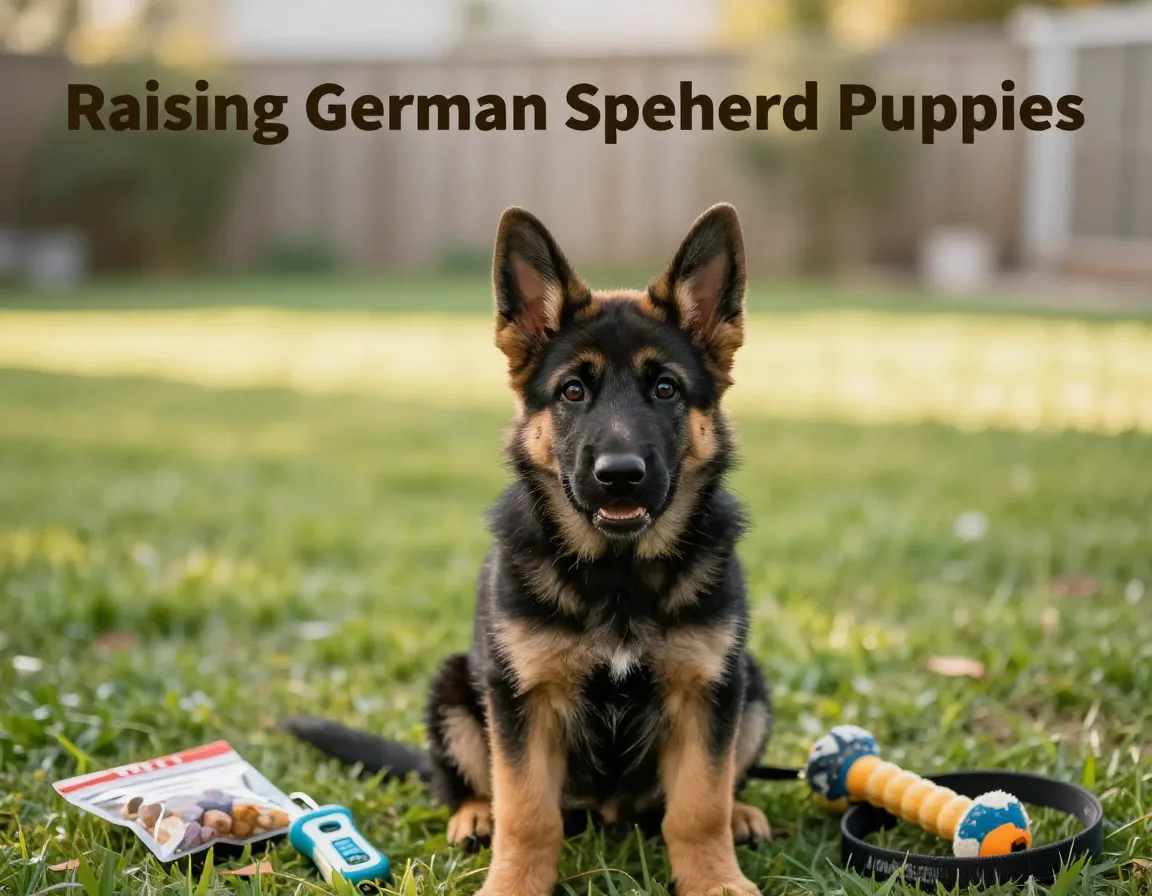
Picture this: a fluffy German Shepherd puppy with oversized ears and bright, intelligent eyes looking up at you with complete trust and boundless energy. 🐕 While this moment melts hearts, it also marks the beginning of a crucial journey that will shape your puppy’s entire life. The decisions made during the first few months of a German Shepherd’s life determine whether they’ll grow into confident, well-adjusted companions or struggle with behavioral issues for years to come.
Disclosure: This post contains affiliate links. As an Amazon Associate, we earn from qualifying purchases, and at no extra cost to you.
German Shepherds are among the most intelligent and loyal dog breeds, but their exceptional qualities come with unique responsibilities. These 8 Essential Tips for Raising Happy & Healthy German Shepherd Puppies provide a roadmap for navigating the critical early months when your puppy’s personality, habits, and relationship with the world are being formed.
Key Takeaways
- Early socialization during the first three months is crucial for preventing overprotectiveness and building confidence in German Shepherd puppies
- Consistent daily routines and positive reinforcement training create the structure these intelligent dogs need to thrive
- Mental and physical stimulation must be age-appropriate, gradually increasing as puppies mature from 6 months to one year
- Crate training and household consistency prevent separation anxiety and accelerate learning across all family members
- Professional trainer support can accelerate progress, but owners must maintain active involvement to ensure responsiveness
Foundation Training: Building Blocks for Success
1. Prioritize Early Socialization During the Critical Window

The foundation of a well-adjusted German Shepherd begins with early socialization during the first three months of life. This critical period shapes how your puppy will interact with the world for the rest of their life [1]. German Shepherds are naturally skeptical of unfamiliar people and animals, making proper socialization essential to prevent overprotectiveness later [2].
Safe socialization strategies include:
- Exposing puppies to new sights, sounds, and smells in controlled environments
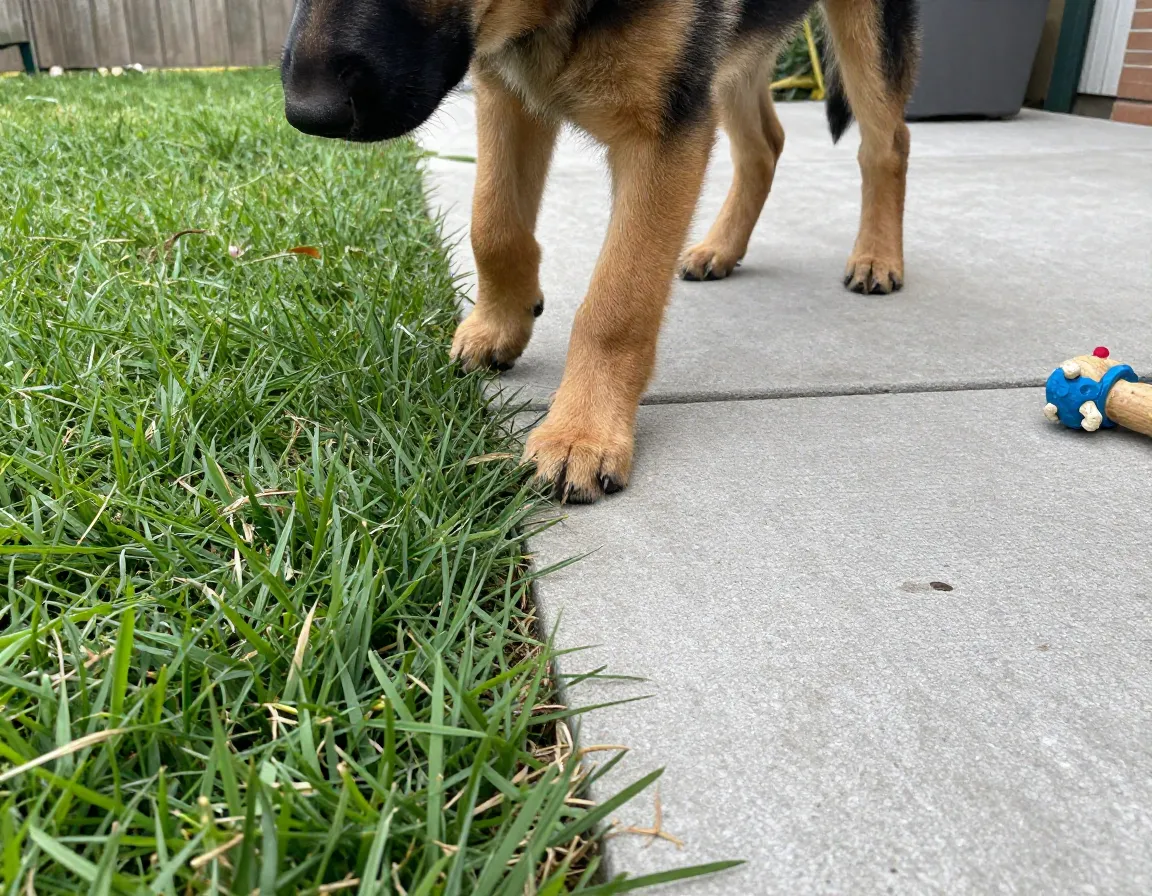
- Introducing different textures under their paws (grass, concrete, sand)
- Playing recordings of household noises (vacuum cleaners, doorbells, traffic)
- Arranging supervised meetings with vaccinated, friendly dogs
- Inviting calm visitors to interact with your puppy
“Proper socialization builds the confidence foundation necessary for well-adjusted adult dogs and prevents overprotectiveness, since German Shepherds are naturally skeptical of unfamiliar people and animals.” [2]
Important safety note: Until your puppy completes their vaccination series, avoid high-traffic areas like dog parks. Instead, carry them to observe busy environments or invite people to your home for controlled interactions.
2. Start Training from Day One with Short Sessions
German Shepherds are incredibly intelligent dogs that thrive on mental stimulation from an early age. Training should begin immediately, but sessions must be age-appropriate to prevent overwhelming your puppy [5]. Start with simple commands like ‘sit’ and ‘stay’ using 5-10 minute training sessions spread throughout the day [5].
Effective early training schedule:
- Week 8-12: 5-minute sessions, 3-4 times daily
- Week 12-16: 10-minute sessions, 2-3 times daily
- Week 16-24: 15-minute sessions, 2 times daily
- 6+ months: Gradually increase to 20-30 minute sessions
Essential first commands to teach:
- Name recognition – Say their name and reward when they look at you
- Sit – Hold treat above their head, move backward slowly
- Stay – Start with 2-3 seconds, gradually increase duration
- Come – Practice in secure areas with high-value treats
- Down – Lower treat to ground, wait for natural lying position
The key is consistency and patience. German Shepherds learn quickly but need clear, repeated instruction to solidify behaviors [3].
3. Use Positive Reinforcement as Your Primary Training Method
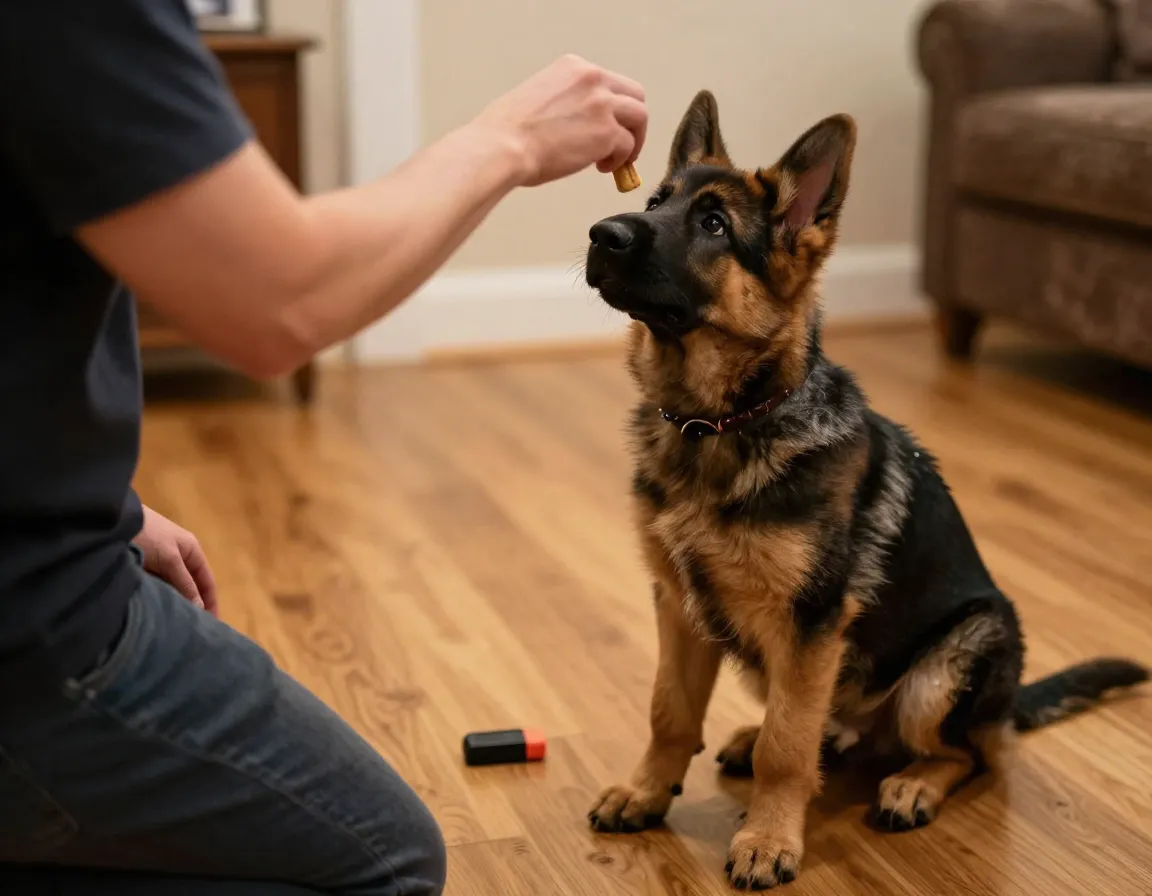
Positive reinforcement builds confidence and creates reliable responsiveness in German Shepherd puppies [6]. This approach rewards desired behaviors with treats, toys, or praise rather than punishing unwanted actions. German Shepherds are sensitive dogs that respond much better to encouragement than correction.
Effective positive reinforcement techniques:
| Reward Type | Best Used For | Timing |
|---|---|---|
| High-value treats | New command learning | Immediately after correct behavior |
| Praise and petting | Reinforcing known behaviors | During and after correct behavior |
| Toy play | High-energy training sessions | After completing training sequence |
| Life rewards | House training, calm behavior | Access to desired activities |
Common mistakes to avoid:
- ❌ Delayed rewards (more than 3 seconds after behavior)
- ❌ Inconsistent reward criteria
- ❌ Using punishment for normal puppy behaviors
- ❌ Training when frustrated or impatient
Remember that timing is everything with positive reinforcement. The reward must happen within 1-3 seconds of the desired behavior for your puppy to make the connection [6].
4. Implement Crate Training to Prevent Separation Anxiety
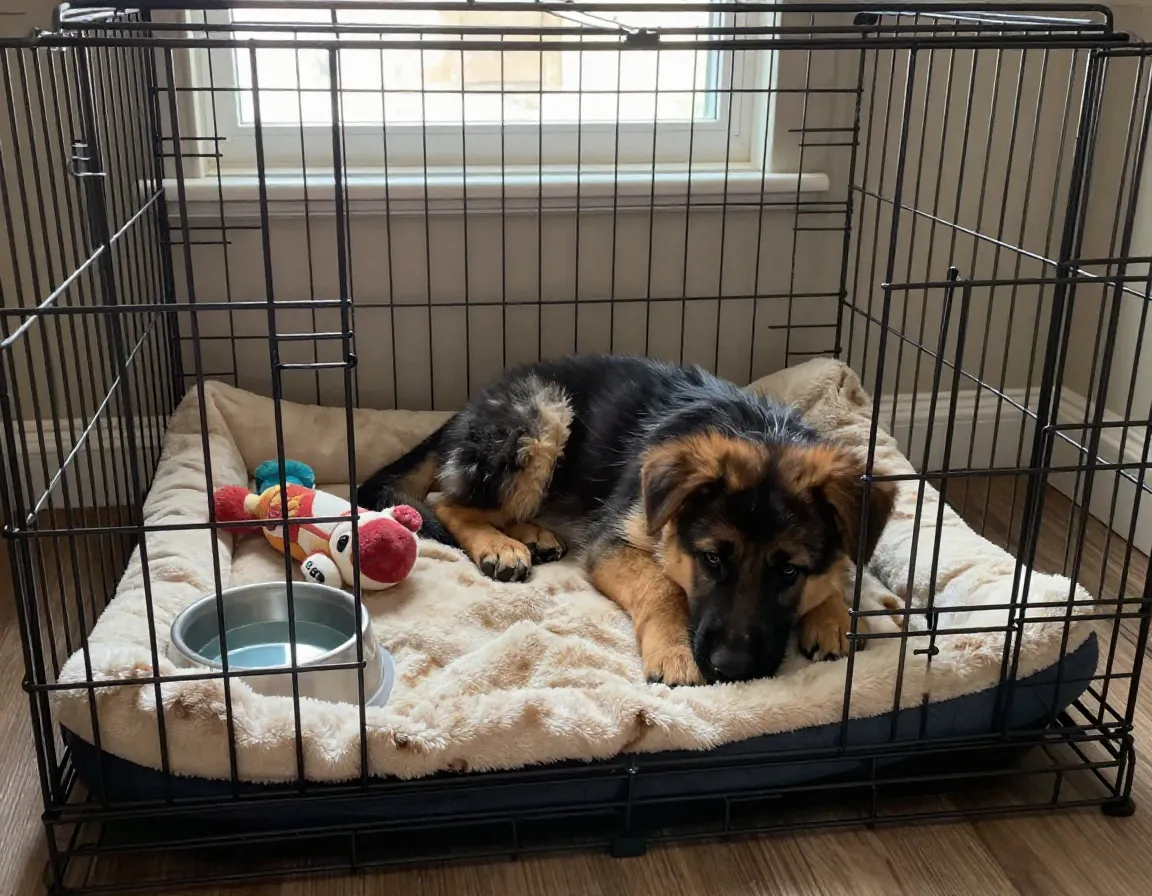
Crate training is essential for German Shepherd puppies, not just for house training but for preventing separation anxiety [1]. When introduced properly, the crate becomes a safe, cozy space that provides security and helps establish healthy independence.
Step-by-step crate introduction:
Week 1: Make the crate appealing
- Feed meals inside the crate with door open
- Place favorite toys and soft bedding inside
- Never force your puppy into the crate
- Allow voluntary exploration and napping
Week 2: Begin door closure
- Close door for 5-10 minutes while you’re home
- Gradually increase duration as puppy stays calm
- Ignore whining or barking (don’t reinforce with attention)
- Only open door when puppy is quiet
Week 3+: Practice departures
- Use crate for short errands (15-30 minutes)
- Don’t make departures dramatic or emotional
- Vary departure times to prevent anticipation anxiety
- Ensure puppy has had exercise and bathroom break first
Crate training benefits:
- 🏠 Faster house training – Dogs won’t soil their sleeping area
- 🧘 Reduced anxiety – Provides safe space during overwhelming situations
- 🛡️ Prevents destructive behavior – Keeps puppy safe when unsupervised
- ✈️ Travel preparation – Familiarizes puppy with confined spaces
The key is making the crate a positive space without correlating it to owner departures [2].
Daily Care and Long-term Success
5. Establish and Maintain Consistent Daily Routines

German Shepherds are creatures of habit that thrive on predictable schedules. Consistent daily routines for mealtimes, potty breaks, walks, playtime, training, and bedtime are essential for reducing anxiety and preventing behavior problems [4]. This predictability also significantly improves potty training success [4].
Sample daily routine for 8-16 week old puppies:
6:00 AM – Wake up, immediate potty break
6:15 AM – Breakfast feeding
6:45 AM – Post-meal potty break
7:00 AM – Short training session (5-10 minutes)
8:00 AM – Nap time in crate
10:00 AM – Potty break + supervised play
11:00 AM – Mental stimulation (puzzle toys)
12:00 PM – Lunch feeding + potty break
1:00 PM – Afternoon nap
3:00 PM – Potty break + socialization activity
5:00 PM – Dinner feeding + potty break
6:00 PM – Training session + family time
8:00 PM – Final potty break
9:00 PM – Quiet time/bedtime routine
Benefits of consistent routines:
- ⏰ Improved house training – Predictable bathroom needs
- 😌 Reduced anxiety – Puppy knows what to expect
- 🎯 Better behavior – Less confusion about expectations
- 💤 Better sleep – Established rest periods
- 🍽️ Healthy digestion – Regular meal times
Adjust timing based on your schedule, but maintain consistency once established [5].
6. Provide Age-Appropriate Mental and Physical Stimulation
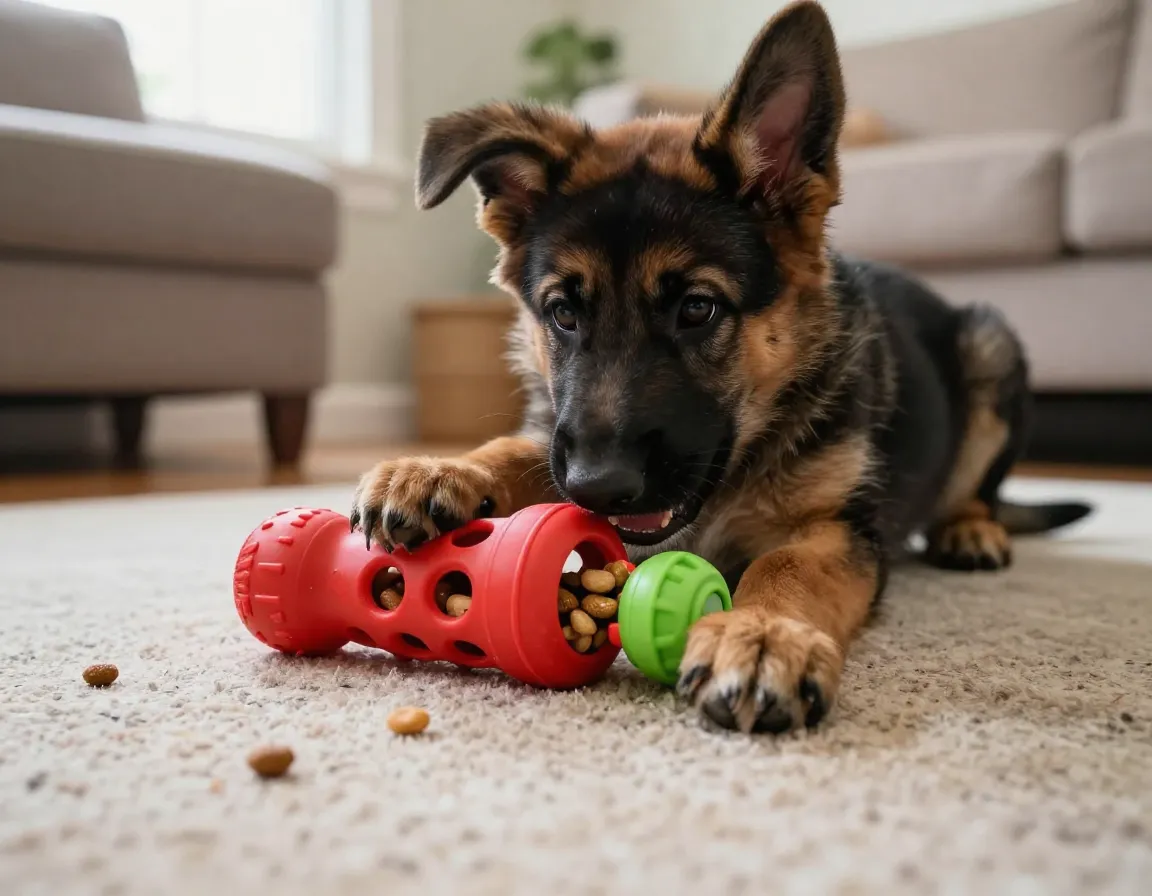
German Shepherds are high-energy, intelligent dogs that require regular mental and physical stimulation to prevent boredom and behavioral problems [2]. However, stimulation must be age-appropriate to avoid overwhelming young puppies or damaging developing joints.
8-16 weeks: Foundation stimulation
- Short indoor play sessions (10-15 minutes)
- Basic puzzle toys with treats
- Supervised exploration of safe environments
- Gentle handling exercises (touching paws, ears, mouth)
- Simple hide-and-seek games
4-6 months: Increased activity
- Longer play sessions (20-30 minutes)
- Introduction to leash walking
- More complex puzzle toys
- Basic agility obstacles (low jumps, tunnels)
- Structured socialization outings
6+ months: Advanced stimulation
At six months to one year, advance to longer exercise sessions and intense mental games using puzzle toys and training challenges [2]. This is when German Shepherds can handle more demanding activities.
Advanced activities include:
- 🧩 Complex puzzle feeders – Multi-step problem solving
- 🏃 Structured exercise – Longer walks, hiking, swimming
- 🎯 Advanced training – Trick training, agility, scent work
- 🎾 Interactive games – Fetch variations, tug-of-war with rules
- 👥 Group activities – Puppy classes, supervised dog park visits
Warning signs of insufficient stimulation:
- Excessive barking or whining
- Destructive chewing or digging
- Hyperactivity or inability to settle
- Attention-seeking behaviors
- Repetitive behaviors (tail chasing, spinning)
7. Maintain Consistency Across All Household Members
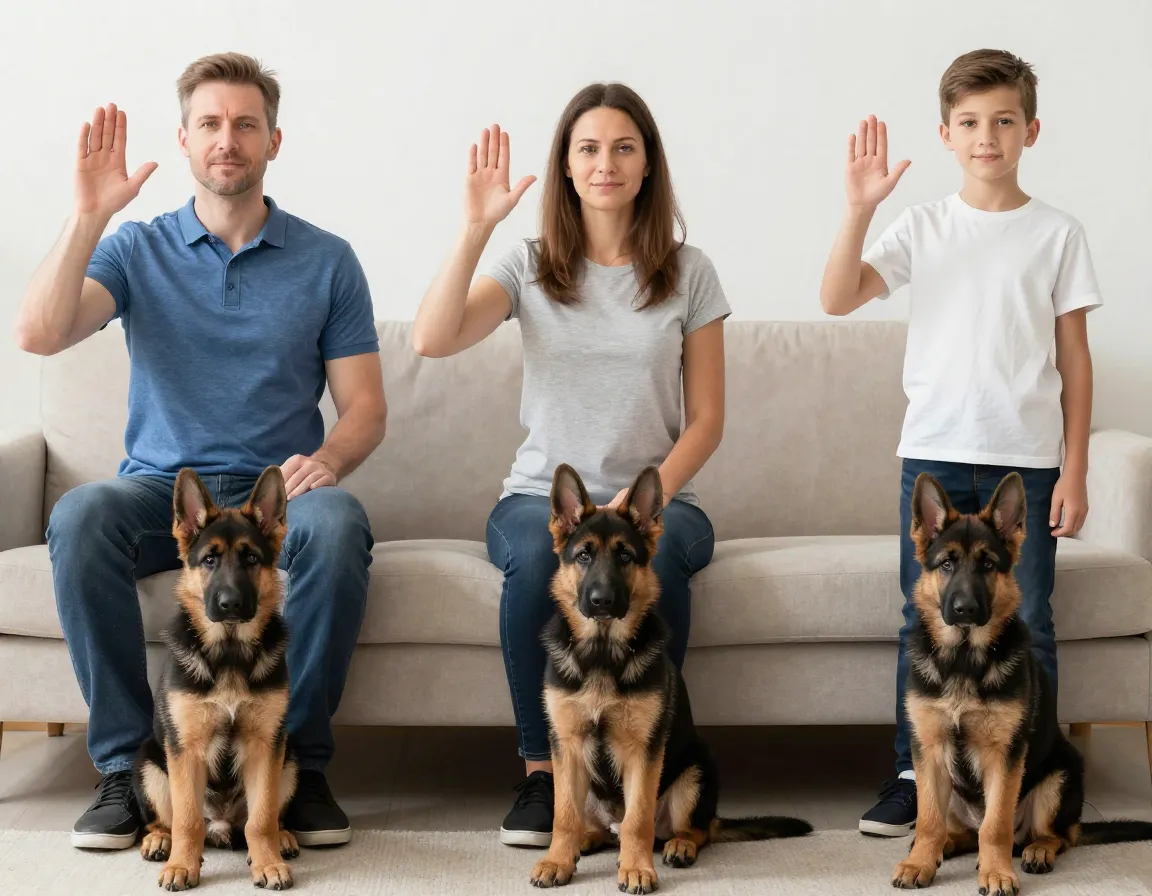
Household consistency is critical for intelligent dogs like German Shepherds that thrive on predictability [5]. All family members must use the same commands, hand signals, and marking words to reinforce learning effectively. Mixed messages confuse puppies and slow training progress significantly.
Essential consistency areas:
Commands and cues:
- Use identical verbal commands (“sit” vs “sit down”)
- Establish standard hand signals for each behavior
- Agree on release words (“okay” vs “free” vs “break”)
- Maintain consistent tone and volume
House rules:
- Furniture access (allowed on couch or not?)
- Meal time protocols (wait for permission vs free feeding)
- Greeting behaviors (jumping vs sitting for attention)
- Play rules (appropriate toys, acceptable roughness)
Training protocols:
- Same reward timing and criteria
- Consistent correction methods (redirect vs ignore)
- Identical daily routines when possible
- Unified response to problem behaviors
Family training meeting checklist:
✅ Review all commands and hand signals
✅ Practice consistent marking words (“yes,” “good”)
✅ Establish house rules and consequences
✅ Assign specific training responsibilities
✅ Schedule weekly progress reviews
“This structured approach is critical for intelligent dogs that thrive on predictability.” [5]
Common consistency mistakes:
- Different family members using different commands
- Inconsistent enforcement of rules
- Varying reward criteria between handlers
- Mixed messages about acceptable behavior
8. Consider Professional Trainer Support for Faster Progress
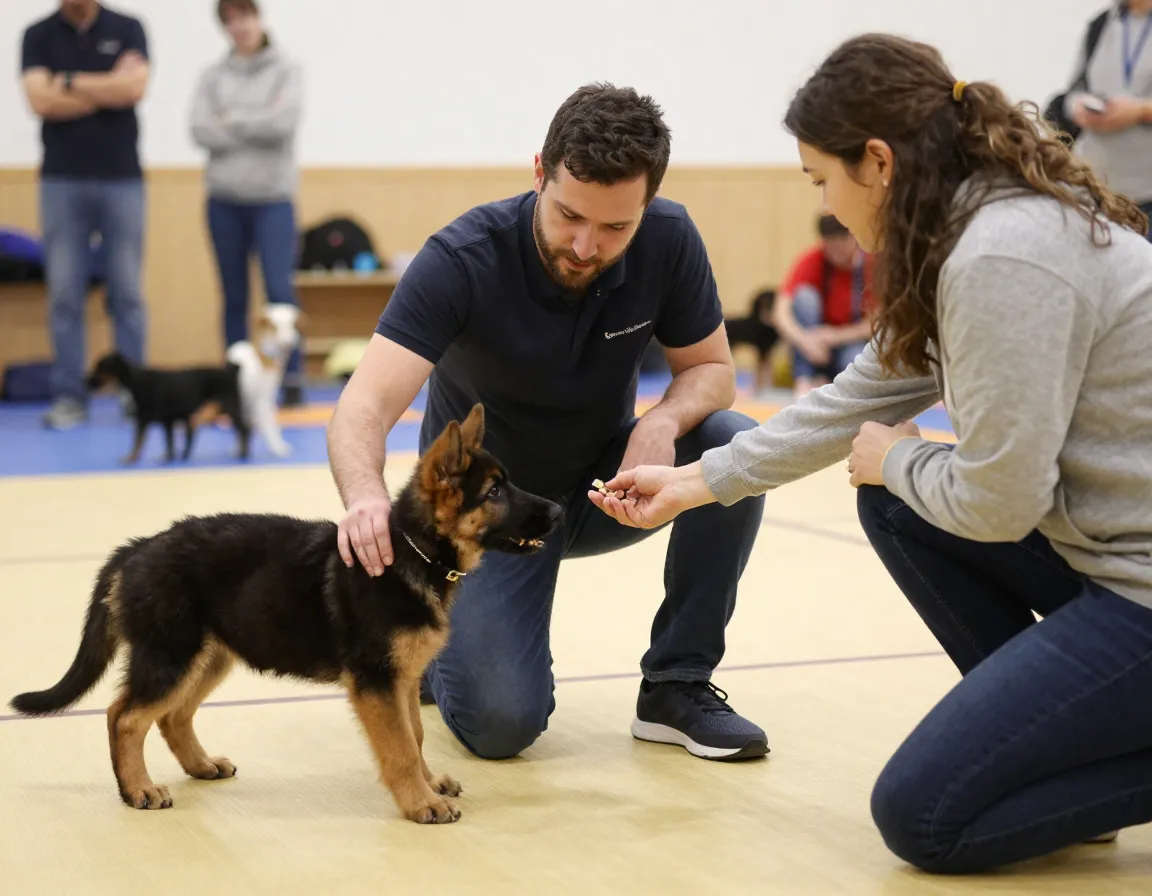
While these 8 Essential Tips for Raising Happy & Healthy German Shepherd Puppies provide a solid foundation, professional trainer support can accelerate training and address specific challenges more effectively [6]. German Shepherds are complex dogs that benefit from expert guidance, especially for first-time owners.
When to consider professional help:
- Persistent house training issues after 16 weeks
- Excessive fear or aggression toward people/dogs
- Destructive behavior despite adequate stimulation
- Difficulty with basic obedience commands
- Family disagreements about training methods
Types of professional support:
Puppy kindergarten classes:
- Group socialization with age-matched puppies
- Basic obedience in distracting environments
- Professional guidance for common puppy problems
- Typically 6-8 weeks, starting around 12-16 weeks old
Private training sessions:
- Customized approach for specific challenges
- One-on-one attention for complex issues
- Faster progress for motivated owners
- Usually 4-8 sessions over 2-3 months
Board-and-train programs:
- Intensive training in professional facility
- Rapid behavior modification for serious issues
- Requires owner follow-up training for lasting results
- Best for severe behavioral problems
Important consideration: Pet parents must continue working with the puppy to ensure responsiveness to them, not just the trainer [6]. Professional training is most effective when owners actively participate and practice techniques at home.
Questions to ask potential trainers:
- What training methods do you use? (Look for positive reinforcement focus)
- Do you have experience with German Shepherd puppies specifically?
- Can you provide references from recent clients?
- What ongoing support do you offer after formal training ends?
- How do you involve family members in the training process?
Conclusion
Raising a German Shepherd puppy using these 8 Essential Tips for Raising Happy & Healthy German Shepherd Puppies sets the foundation for a lifetime of companionship with a confident, well-adjusted dog. The early months are crucial—every interaction, routine, and training session shapes your puppy’s future behavior and relationship with the world.
Your next steps:
- Start immediately with socialization and basic training, even if your puppy is very young
- Establish consistent routines for feeding, potty breaks, and training across all household members
- Invest in proper equipment including a appropriately-sized crate, puzzle toys, and high-value training treats
- Document progress with photos and training logs to track improvement and identify areas needing attention
- Connect with professionals by researching local puppy kindergarten classes and positive reinforcement trainers in your area
Remember that patience and consistency are your greatest tools. German Shepherds are incredibly intelligent and eager to please, but they need clear guidance and structured learning to reach their full potential. The effort invested during puppyhood pays dividends throughout your dog’s 10-15 year lifespan.
The journey of raising a German Shepherd puppy can feel overwhelming at times, but following these evidence-based strategies will help you navigate challenges with confidence. Your puppy is counting on you to provide the structure, socialization, and training they need to become the loyal, well-behaved companion that German Shepherds are known to be.
Start today—your future self and your fully-grown German Shepherd will thank you for the strong foundation you’re building right now. 🎾
References
[1] Puppy Training Timeline For Your German Shepherd Dog – https://www.akc.org/expert-advice/dog-breeds/puppy-training-timeline-for-your-german-shepherd-dog/
[2] German Shepherd Puppies – https://www.rover.com/blog/german-shepherd-puppies/
[3] German Shepherd Training – https://www.woofz.com/blog/german-shepherd-training/
[4] 9 Common Mistakes German Shepherd Owners Make When Raising A Puppy – https://germanshepherdshop.com/blogs/list/9-common-mistakes-german-shepherd-owners-make-when-raising-a-puppy
[5] Temperament Training Shaping Your German Shepherd Puppys Personality – https://kaisergsd.com/temperament-training-shaping-your-german-shepherd-puppys-personality/
[6] How To Train A German Shepherd Puppy – https://www.chewy.com/education/dog/training-and-behavior/how-to-train-a-german-shepherd-puppy