7 Essential Questions to Ask Your Pet Sitting Services Provider
When the vacation countdown begins, pet parents face a crucial decision that can make or break their peace of mind: choosing the right pet sitting services provider. The wrong choice could leave beloved furry family members stressed, neglected, or even in danger, while the perfect match ensures tails keep wagging and purrs continue flowing in the comfort of home. Understanding the 7 essential questions to ask your pet sitting services provider transforms this daunting selection process into a confident, informed decision that protects both pets and peace of mind.

Disclosure: This post contains affiliate links. As an Amazon Associate, we earn from qualifying purchases, and at no extra cost to you.
Key Takeaways
- Verify credentials and insurance coverage to protect your pets and property from potential liability issues
- Assess the sitter’s specific experience with your pet’s breed, age, and any special needs or medical requirements
- Confirm emergency preparedness protocols including veterinary contacts and after-hours emergency procedures
- Establish clear service expectations regarding visit frequency, duration, and specific care routines
- Schedule a meet-and-greet session to evaluate compatibility between your pets and the potential sitter
Understanding Pet Sitting Service Standards in 2026
The pet care industry has evolved significantly, with professional standards becoming more stringent and pet parents more discerning about their choices. Modern pet sitting services encompass everything from basic feeding and walking to administering medications, providing companionship, and maintaining detailed care logs.
Professional pet sitters in 2026 often carry specialized training, insurance coverage, and certifications that distinguish them from casual neighborhood helpers. The industry has recognized that quality pet care requires expertise, not just good intentions.
“The best pet sitters understand that they’re not just feeding animals – they’re maintaining the emotional well-being of family members who happen to have four legs and fur.”
The Foundation Questions: Credentials and Experience
1. What Experience Do You Have With My Specific Type of Pet?

Experience matters tremendously in pet sitting, especially when dealing with specific breeds, ages, or temperaments. A sitter who excels with energetic puppies might struggle with senior cats requiring medication, while someone comfortable with reptiles may feel overwhelmed by high-energy dogs [2].
Key areas to explore include:
- Previous experience with your pet’s breed and size
- Comfort level with your pet’s age group (puppy, adult, senior)
- Experience handling pets with similar energy levels
- Familiarity with breed-specific needs or health concerns
Questions to ask:
- “How many [specific breed] have you cared for?”
- “What’s the longest you’ve cared for a pet similar to mine?”
- “Have you worked with pets that have [specific behavioral traits]?”
The ideal sitter should provide specific examples rather than vague assurances. Look for stories about similar pets they’ve cared for and how they handled particular situations.
2. Are You Bonded and Insured, and Can You Provide Proof?

Insurance and bonding represent non-negotiable requirements for professional pet sitting services. These protections safeguard both pets and property against accidents, theft, or damage that could occur during care [1].
Essential coverage types include:
- Liability insurance: Protects against property damage or injury claims
- Bonding: Covers theft or dishonest acts by the sitter
- Pet care insurance: Specifically covers incidents involving pet injury or loss
| Coverage Type | What It Protects | Why It Matters |
|---|---|---|
| General Liability | Property damage, personal injury | Covers accidents in your home |
| Bonding | Theft, dishonesty | Protects valuables and property |
| Pet Care Liability | Pet injury, escape, loss | Covers pet-specific incidents |
Red flags include:
- Reluctance to provide insurance documentation
- Expired or inadequate coverage amounts
- Claims that “nothing ever happens” so insurance isn’t needed
Professional sitters should readily provide current certificates and explain their coverage limits. Many carry insurance through organizations like Pet Sitters Associates or independent providers [3].
Service Delivery and Compatibility Questions
3. What Specific Services Do You Provide and How Often?

Service clarity prevents misunderstandings that could compromise pet care quality. Professional pet sitters offer various service levels, from basic feeding visits to comprehensive overnight care [1].
Common service options include:
🏠 In-Home Visits
- Duration: 15 minutes to 2+ hours
- Frequency: 1-4 times daily
- Services: Feeding, walking, companionship, basic cleaning
🌙 Overnight Stays
- Duration: 12-24 hours
- Location: Your home
- Services: Full routine maintenance, security presence, extended companionship
- Location: Sitter’s home
- Duration: Full stay period
- Services: Integration with sitter’s household, specialized attention
Essential questions to clarify:
- “How long do typical visits last?”
- “What specific tasks are included in each visit?”
- “Do you provide updates or photos during visits?”
- “What happens if my pet seems distressed or unwell?”
Detailed service agreements should outline exact expectations, including feeding schedules, exercise requirements, medication administration, and communication protocols [3].
4. Can You Accommodate My Pet’s Established Routine?
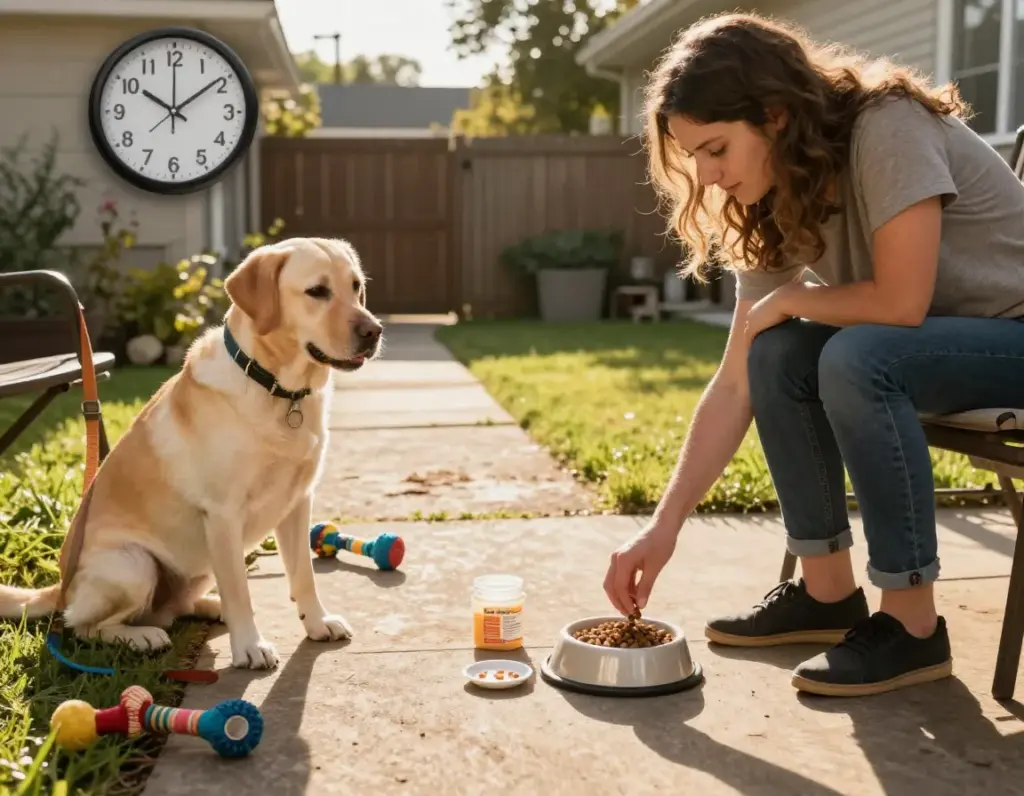
Routine maintenance significantly reduces pet stress during owner absence. Professional sitters understand that disrupting established patterns can trigger anxiety, behavioral issues, or health problems [4].
Critical routine elements include:
- Feeding schedules: Exact times and portion sizes
- Medication timing: Precise administration schedules
- Exercise patterns: Duration, intensity, and preferred routes
- Sleep arrangements: Bedtime routines and sleeping locations
- Bathroom schedules: Outdoor access timing for dogs
Questions to explore:
- “How closely can you follow our existing schedule?”
- “What happens if you can’t make a scheduled visit?”
- “Are you comfortable administering medications?”
- “Can you maintain our training routines?”
Flexibility within structure often works best. While sitters should accommodate core routine elements, minor adjustments might be necessary based on their schedule constraints.
Safety and Emergency Preparedness
5. How Do You Handle Pet Emergencies and What’s Your Emergency Plan?
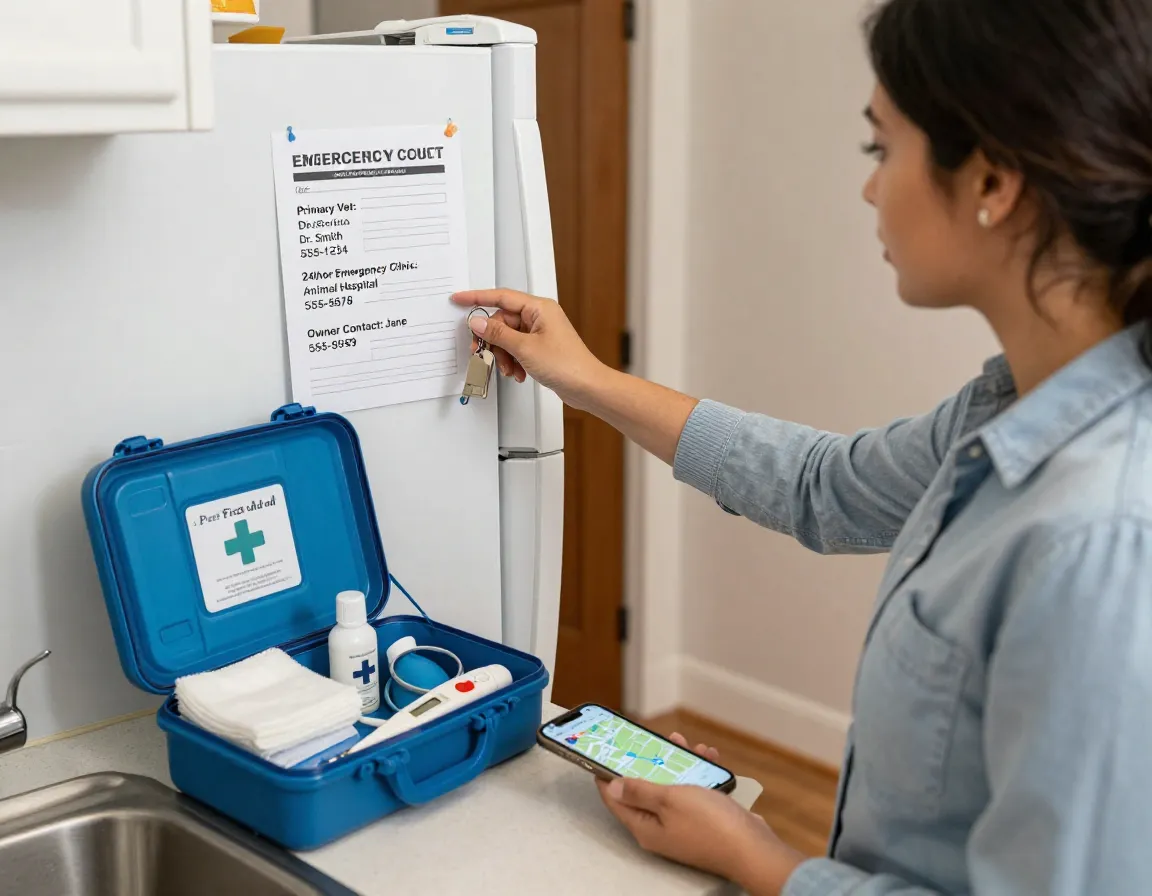
Emergency preparedness separates professional sitters from amateurs. Comprehensive emergency planning includes medical situations, natural disasters, home security issues, and pet behavioral crises [1][4].
A robust emergency plan should cover:
🚨 Medical Emergencies
- Immediate veterinary contact procedures
- After-hours emergency clinic locations and contact information
- Authorization protocols for emergency treatment
- Pet insurance or payment arrangements
🏠 Home Security Issues
- Response to break-ins or security system alerts
- Utility failures or home maintenance emergencies
- Natural disaster or severe weather protocols
🐕 Behavioral Crises
- Pet escape or loss procedures
- Aggressive behavior management
- Interaction issues with other animals or people
Essential emergency questions:
- “What’s your procedure if my pet needs immediate veterinary care?”
- “Do you know the location of our regular vet and nearest emergency clinic?”
- “How quickly can you respond to urgent situations?”
- “What authority do you have to make medical decisions?”
Professional sitters should have written emergency protocols and demonstrate familiarity with local veterinary resources. They should also understand your pet’s specific medical history and risk factors [4].
6. What Training and Certifications Do You Hold?
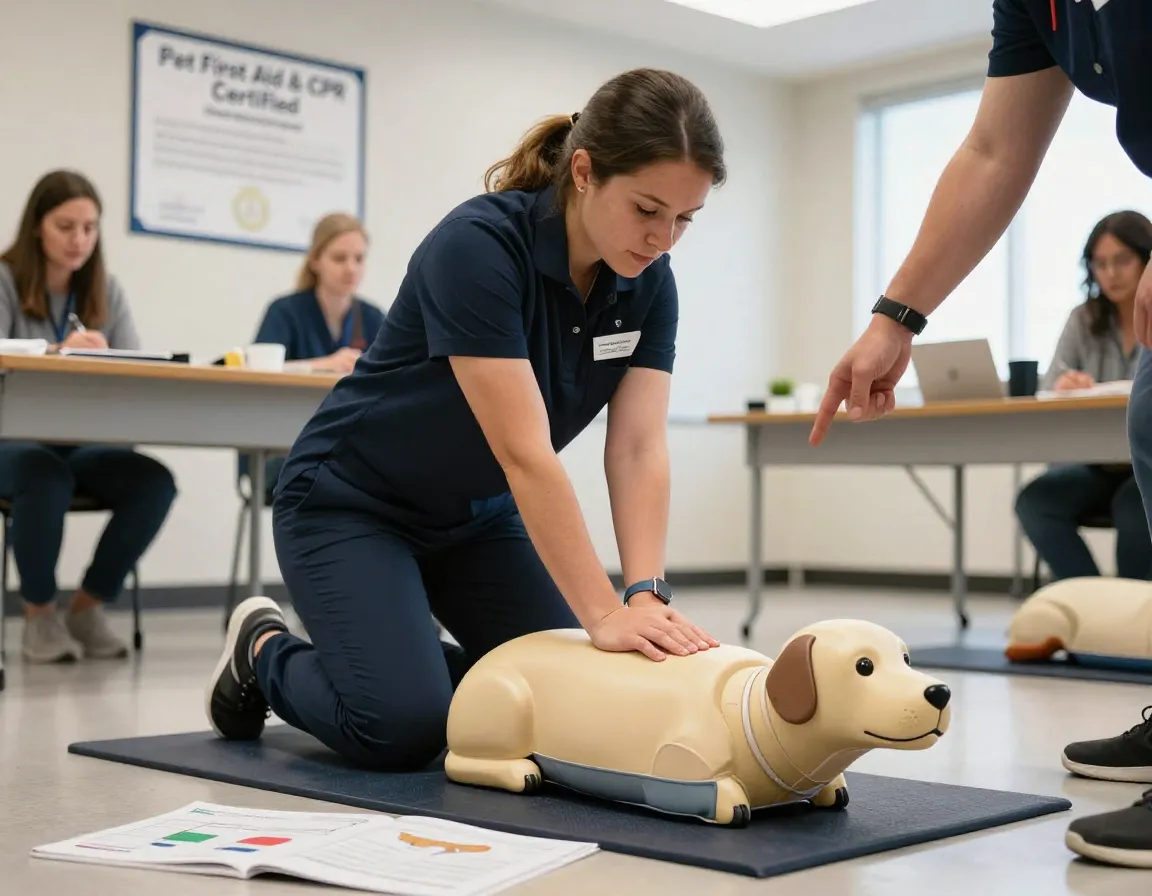
Professional development distinguishes serious pet sitters from casual caregivers. While formal training isn’t legally required in most areas, certifications demonstrate commitment to excellence and ongoing education [3].
Valuable certifications include:
🎓 Professional Organizations
- National Association of Professional Pet Sitters (NAPPS)
- Pet Sitters International (PSI)
- International Association of Animal Behavior Consultants (IAABC)
🏥 Medical Training
- Pet first aid certification
- CPR for pets
- Medication administration training
🎯 Specialized Skills
- Canine behavior certification
- Feline specialist training
- Senior pet care specialization
Training-related questions:
- “What professional development have you completed recently?”
- “Are you certified in pet first aid?”
- “Do you participate in continuing education programs?”
- “What specialized training do you have for [specific pet needs]?”
Ongoing education indicates a sitter’s commitment to staying current with best practices, new techniques, and industry standards.
Compatibility and Trial Periods
7. Can We Schedule a Meet-and-Greet Before Committing to Services?

Compatibility assessment protects everyone involved – pets, owners, and sitters. A successful meet-and-greet reveals personality matches, identifies potential issues, and establishes communication patterns [3].
Effective meet-and-greet sessions should include:
🤝 Initial Introductions
- Gradual introduction to reduce pet stress
- Observation of pet’s reaction to the sitter
- Assessment of sitter’s comfort level with your pets
📝 Detailed Consultation
- Review of pet care requirements and routines
- Discussion of emergency procedures and contacts
- Clarification of service expectations and boundaries
🏠 Home Familiarization
- Tour of relevant areas (food storage, supplies, emergency equipment)
- Location of important items and information
- Security system or access procedures
Red flags during meet-and-greets:
- Pets showing extreme stress or fear reactions
- Sitter appearing uncomfortable or unprepared
- Poor communication or failure to ask relevant questions
- Unwillingness to follow your pet care instructions
Successful interactions typically feature pets showing curiosity or acceptance, sitters asking thoughtful questions, and natural communication flow between all parties.
Making Your Final Decision
After exploring these 7 essential questions to ask your pet sitting services provider, the decision process becomes more straightforward. Quality indicators include:
- Comprehensive insurance coverage with readily available documentation
- Relevant experience with specific examples and references
- Detailed emergency planning with written protocols
- Professional training and ongoing education commitment
- Positive meet-and-greet interactions with both pets and owners
- Clear service agreements outlining expectations and procedures
- Responsive communication and professional demeanor
Warning signs to avoid:
- Reluctance to provide references or insurance proof
- Vague answers about experience or procedures
- Lack of emergency planning or veterinary knowledge
- Poor interaction with pets during initial meetings
- Unprofessional communication or unreliable responses
Conclusion
Selecting the right pet sitting services provider requires careful evaluation beyond basic qualifications. These 7 essential questions to ask your pet sitting services provider create a framework for making informed decisions that prioritize pet safety, comfort, and well-being.
Take action by:
- Creating a checklist based on these seven questions to use during sitter interviews
- Scheduling meet-and-greets with at least 2-3 potential providers for comparison
- Requesting and verifying insurance documentation and references before making final decisions
- Establishing clear communication protocols and service agreements with your chosen provider
- Planning a trial run with shorter absences before longer trips
Remember that the cheapest option rarely provides the best value when it comes to pet care. Investing in a qualified, experienced, and properly insured pet sitter ensures peace of mind and keeps beloved pets safe, happy, and healthy until the joyful reunion at journey’s end.
The right pet sitting services provider becomes a trusted partner in pet care, offering not just basic services but genuine peace of mind that allows pet parents to travel confidently, knowing their furry family members are receiving exceptional care in the comfort of their own home.
References
[1] 5 Must Ask Questions Before Hiring A Pet Sitter – https://pawsandclaws.pet/2023/02/07/5-must-ask-questions-before-hiring-a-pet-sitter/
[2] Questions To Ask A Pet Sitter – https://www.trustedhousesitters.com/blog/owners/questions-to-ask-a-pet-sitter/
[3] Questions To Ask Your Dog Sitter – https://comfortedcanine.com/questions-to-ask-your-dog-sitter/
[4] Questions To Ask Before House Sitting – https://twocantravel.com/questions-to-ask-before-house-sitting/