
9 Unexpected Traits of a Golden Retriever Mixed With Dachshund
What happens when you cross one of the world’s most beloved family dogs with a feisty, stubborn badger hunter? You get the Golden Dox — and trust me, this hybrid will surprise you in ways you never expected. If you’re considering bringing one of these dogs home, or you’re simply curious about this unusual mix, understanding the 9 unexpected traits of a Golden Retriever mixed with Dachshund could save you a lot of confusion (and maybe a few chewed-up couch cushions). 🐾

This guide breaks down everything you need to know about the Golden Dox in 2026, from its quirky size variations to its hidden hunting instincts. Whether you’re a first-time dog owner or a seasoned pet parent, these traits will change how you see this charming crossbreed.
Key Takeaways
- 🐕 The Golden Dox is a highly unpredictable hybrid — its size, coat, and temperament can vary widely from dog to dog.
- ⚠️ Despite its friendly Golden Retriever personality, the Dachshund side brings hidden prey drive and stubborn training challenges.
- 🏥 Back problems and weight gain are real health concerns that every Golden Dox owner must plan for.
- 🧠 Early socialization and consistent training are essential for managing this dog’s complex personality.
- 💤 This breed tires faster than you’d expect, requiring a careful balance of exercise and rest.
What Is a Golden Dox?
Before we dive into the 9 unexpected traits of a Golden Retriever mixed with Dachshund, let’s set the stage. The Golden Dox (also called a Golden Weenie or Doxie Golden) is a designer hybrid breed created by crossing a Golden Retriever with a Dachshund. This is not a common pairing — in fact, it’s considered quite rare [2].
The two parent breeds could not be more different in size, temperament, or purpose. Golden Retrievers were bred as gentle gun dogs and family companions. Dachshunds were bred to hunt badgers underground. The result of combining these two very different dogs is a hybrid full of surprises.
| Feature | Golden Retriever | Dachshund | Golden Dox (Typical) |
|---|---|---|---|
| Height | 21–24 inches | 5–9 inches | 10–23 inches |
| Weight | 55–75 lbs | 8–32 lbs | 30–60 lbs |
| Temperament | Gentle, eager to please | Stubborn, alert, bold | Mixed — varies widely |
| Shedding | Heavy | Low to moderate | Low to moderate |
| Trainability | High | Moderate | Moderate |
The 9 Unexpected Traits of a Golden Retriever Mixed With Dachshund
Now let’s get into the heart of this article. These are the traits that even experienced dog owners often don’t see coming.
1. Their Size Is Completely Unpredictable

One of the first things that surprises new Golden Dox owners is just how much size can vary between individual dogs. Unlike purebred dogs with established breed standards, the Golden Dox has no standard size at all [3].
Depending on which parent’s genes dominate, a Golden Dox can stand anywhere from 10 to 23 inches tall and weigh between 30 and 60 pounds [3]. That’s an enormous range. You might end up with a dog that looks like a small Golden Retriever on stubby legs, or something that looks more like a very large, golden-colored Dachshund.
💡 Pro Tip: If you’re buying a Golden Dox puppy, ask to see both parents. The size of the parents will give you the best clue about how big your dog will get — but even then, there are no guarantees.
This unpredictability makes it difficult to plan for things like crate size, car travel arrangements, and even how much food to budget for. It’s one of the most practically important traits to understand before adopting.
2. They Have a Hidden Badger-Hunting Instinct

Here’s a trait that catches many Golden Dox owners completely off guard. Despite the Golden Retriever’s gentle, friendly reputation, the Dachshund side brings a strong prey drive that can surface unexpectedly [1].
Dachshunds were originally bred in Germany to hunt badgers underground — a job that required boldness, determination, and a powerful prey instinct. That instinct doesn’t disappear just because the dog is mixed with a Golden Retriever.
This means your Golden Dox may:
- Chase cats, rabbits, squirrels, and other small animals
- Dig holes in the yard (a classic Dachshund behavior)
- Follow scent trails obsessively during walks
- Bark aggressively at smaller pets
Early socialization is critical if you have cats or other small animals in the home [1]. Introducing your Golden Dox to other pets as a puppy — and doing so consistently — is the best way to manage this instinct.
3. Boredom Makes Them Destructive Fast

The Golden Dox is an energetic, intelligent dog. But when that energy has nowhere to go, things can go sideways quickly. Without adequate mental and physical stimulation, Golden Doxes are prone to weight gain and destructive behaviors [1].
Common boredom behaviors include:
- Tearing up furniture and cushions
- Digging holes in the yard or carpet
- Excessive barking
- Chewing shoes, cables, and household items
This trait is a direct result of both parent breeds. Golden Retrievers need daily exercise and mental engagement. Dachshunds, despite their small size, were working dogs with high drive. When that drive has no outlet, it turns destructive.
The fix is straightforward: aim for at least 30–60 minutes of exercise per day, combined with puzzle toys, training sessions, and social interaction. A bored Golden Dox is a destructive Golden Dox.
4. They Tire Faster Than You’d Expect

Here’s a paradox that confuses many Golden Dox owners: this dog has significant energy but also tires quickly [3]. It sounds contradictory, but it makes sense when you consider the Dachshund’s shorter legs and compact body structure.
A Golden Dox might zoom around the yard with enthusiasm for 20 minutes, then suddenly become irritable and overstimulated. If pushed past this point, they can become snappy or anxious.
🗣️ “Golden Doxes need activity — but they also need you to recognize when they’ve had enough. Overstimulation is a real issue with this breed.”
Signs your Golden Dox is hitting its limit:
- Slowing down dramatically during play
- Panting heavily
- Becoming irritable or snapping
- Seeking a quiet corner to rest
The best approach is short, frequent exercise sessions rather than one long marathon walk. This respects both their energy levels and their physical limits [3].
5. Training Is Harder Than Their Intelligence Suggests

If you assume that a Golden Retriever mix will be easy to train, the Golden Dox will humble you quickly. While these dogs are genuinely intelligent, the Dachshund genetics introduce a short attention span and a stubborn streak that limits training progress [3].
Dachshunds are famously independent thinkers. They were bred to make decisions on their own underground, without guidance from a human handler. That independence doesn’t disappear in a mixed breed.
| Training Aspect | Golden Retriever | Dachshund | Golden Dox Reality |
|---|---|---|---|
| Attention Span | Long | Short | Short to moderate |
| Motivation | People-pleasing | Food/self-interest | Primarily food |
| Command Retention | Excellent | Basic only | Basic to moderate |
| Stubbornness | Low | High | Moderate to high |
Best training strategies for Golden Doxes:
- Keep sessions short (5–10 minutes maximum)
- Use high-value food rewards
- Be consistent and patient — never punish
- Start training from puppyhood
- Focus on the most important commands first
Don’t expect your Golden Dox to learn 50 commands. Focus on the essentials: sit, stay, come, leave it, and leash manners [3].
6. Their Coats Shed Less Than You’d Think

Given that Golden Retrievers are notorious heavy shedders, most people assume a Golden Dox will coat your furniture in fur. This is one of the most pleasant surprises this breed has to offer.
Golden Doxes typically have dense, fluffy golden coats but shed minimally [5]. The Dachshund’s lower-shedding genetics appear to moderate the Golden Retriever’s heavy shedding tendency significantly.
That said, low shedding does not mean low maintenance. The Golden Dox coat still requires:
- Professional grooming every 4–6 weeks to prevent matting [5]
- Regular brushing at home (2–3 times per week)
- Ear cleaning (floppy ears trap moisture and debris)
- Nail trimming every 3–4 weeks
⚠️ Important: Skipping professional grooming appointments can lead to painful matting, especially around the ears, armpits, and hindquarters. Budget for grooming costs before adopting.
7. Back Problems Are a Serious Genetic Risk

This is perhaps the most medically important of the 9 unexpected traits of a Golden Retriever mixed with Dachshund. The Dachshund’s signature long body and short legs come with a well-documented genetic vulnerability: intervertebral disc disease (IVDD) [3].
IVDD occurs when the discs between the vertebrae of the spine degenerate or rupture, causing pain, nerve damage, and in severe cases, paralysis. Golden Doxes that inherit a longer body structure from the Dachshund side are particularly at risk [3].
Key prevention and management strategies:
- Avoid letting your dog jump on and off furniture
- Use ramps or steps to help them access beds and sofas
- Maintain a healthy weight (obesity dramatically increases spinal stress)
- Watch for early warning signs: reluctance to move, yelping when touched, hunched posture
- Schedule regular vet checkups that include spinal assessment
This is a lifelong concern, not just a puppy issue. As Golden Doxes age, their risk of spinal problems increases. Being proactive about back health can make a significant difference in your dog’s quality of life.
8. They’re Both Watchdogs and Social Butterflies

One of the most fascinating behavioral contradictions in the Golden Dox is its dual nature as both a welcoming social dog and an alert watchdog [1]. This seems impossible — but it’s actually one of the breed’s most useful traits.
From the Golden Retriever side, these dogs are friendly, trusting, and warm toward strangers. From the Dachshund side, they’re alert, vocal, and suspicious of unusual sounds or movements. The result is a dog that will bark to alert you when someone approaches — and then wag its tail when that person walks through the door.
What this means practically:
- ✅ They make effective alert dogs for small homes and apartments
- ✅ They’re sociable enough to handle guests and new environments
- ✅ They’re unlikely to be aggressive toward strangers (unlike some guard breeds)
- ⚠️ They can become nuisance barkers if their alert instinct isn’t managed through training
This dual nature makes the Golden Dox a surprisingly good fit for people who want a small-to-medium dog that provides some security awareness without the aggression of a traditional guard breed [1].
9. Separation Anxiety Is a Real Concern
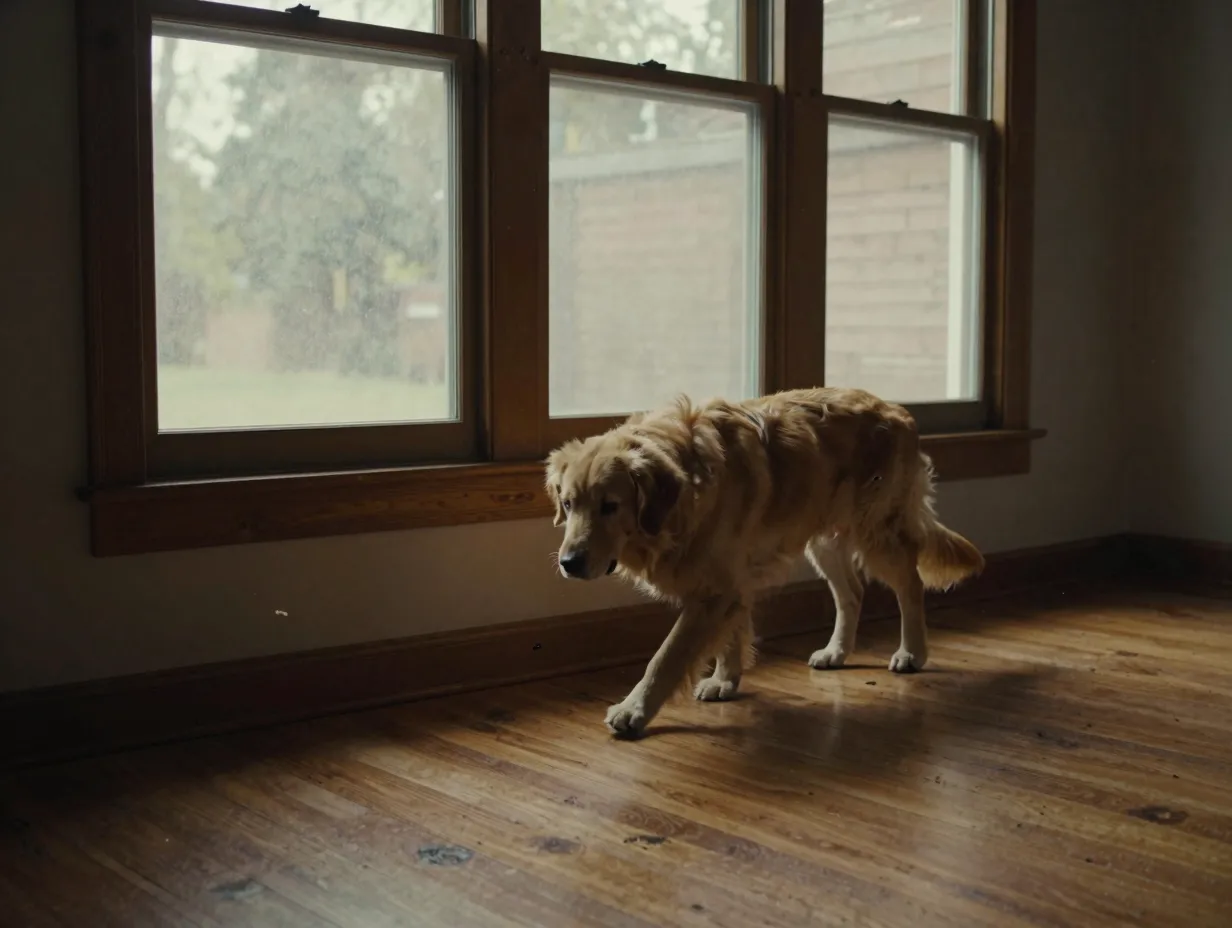
The final trait on our list of 9 unexpected traits of a Golden Retriever mixed with Dachshund is one that affects daily life significantly: moderate separation anxiety [3].
Both parent breeds are social dogs that bond deeply with their families. Golden Retrievers, in particular, are known for being “velcro dogs” that want to be near their people at all times. Dachshunds, despite their independent streak, also form strong attachments.
The Golden Dox inherits this need for social connection. When left alone for long periods, these dogs can become anxious, vocal, and destructive.
Signs of separation anxiety in Golden Doxes:
- Excessive barking or howling when alone
- Destructive chewing (especially near doors and windows)
- House soiling despite being fully trained
- Pacing or restlessness before you leave
Management strategies that work:
- Crate training — a crate becomes a safe den, not a punishment
- Gradual desensitization — practice leaving for short periods and gradually extending
- Mental enrichment — puzzle feeders and chew toys keep the brain busy
- Doggy daycare or a dog walker for owners who work long hours
- Consistent routines — predictability reduces anxiety
This breed is best suited for households where someone is home for a significant portion of the day [3]. If you work 10-hour shifts five days a week, a Golden Dox may struggle without additional support.
Is the Golden Dox the Right Dog for You?
Now that you know the 9 unexpected traits of a Golden Retriever mixed with Dachshund, let’s put it all together. This is a dog that rewards patient, engaged owners who can provide:
- ✅ Daily exercise (moderate intensity, short sessions)
- ✅ Consistent, positive reinforcement training
- ✅ Regular professional grooming
- ✅ Veterinary attention to spinal health
- ✅ Plenty of social interaction and companionship
The Golden Dox is NOT ideal for:
- ❌ Busy owners who are away from home for long hours
- ❌ Households with very small pets (unless socialized early)
- ❌ Owners who want a highly obedient, competition-level trained dog
- ❌ People unprepared for potential back health expenses
Conclusion
The 9 unexpected traits of a Golden Retriever mixed with Dachshund paint a picture of a dog that is genuinely one-of-a-kind. The Golden Dox is charming, affectionate, and surprisingly alert — but it also comes with a hidden prey drive, a stubborn training streak, and real health vulnerabilities that demand proactive ownership.
Here’s what to do next:
- Take the compatibility quiz above to honestly assess whether your lifestyle suits this breed.
- Research reputable breeders or rescue organizations that specialize in Dachshund or Golden Retriever mixes.
- Budget for grooming, veterinary care, and training before you bring a Golden Dox home.
- Prepare your home — remove hazards for a long-backed dog, set up ramps, and create a safe, enriched environment.
- Connect with Golden Dox owners in online communities to get real-world advice from people who live with this breed daily.
The Golden Dox is not the easiest dog to own — but for the right person, it’s one of the most rewarding. 🐾
References
[1] Golden Dox – https://www.dogster.com/dog-breeds/golden-dox
[2] Unexpected Dog Romance Created Rare Mix – https://paradepets.com/pet-news/unexpected-dog-romance-created-rare-mix
[3] Golden Dox – https://a-z-animals.com/animals/golden-dox/
[4] lemon8-app – https://www.lemon8-app.com/dersy/7225772897015759365?region=us
[5] Golden Dox – https://wagwalking.com/breed/golden-dox