9 Types of German Shepherd Dogs: From Show Lines to Working Lines
Fewer than 100 years after the German Shepherd was standardized as a breed, it had already split into dramatically different genetic lines — some bred for the show ring, others for war zones and border patrols. That divergence is still shaping the dogs people bring home today, and most buyers have no idea it exists.
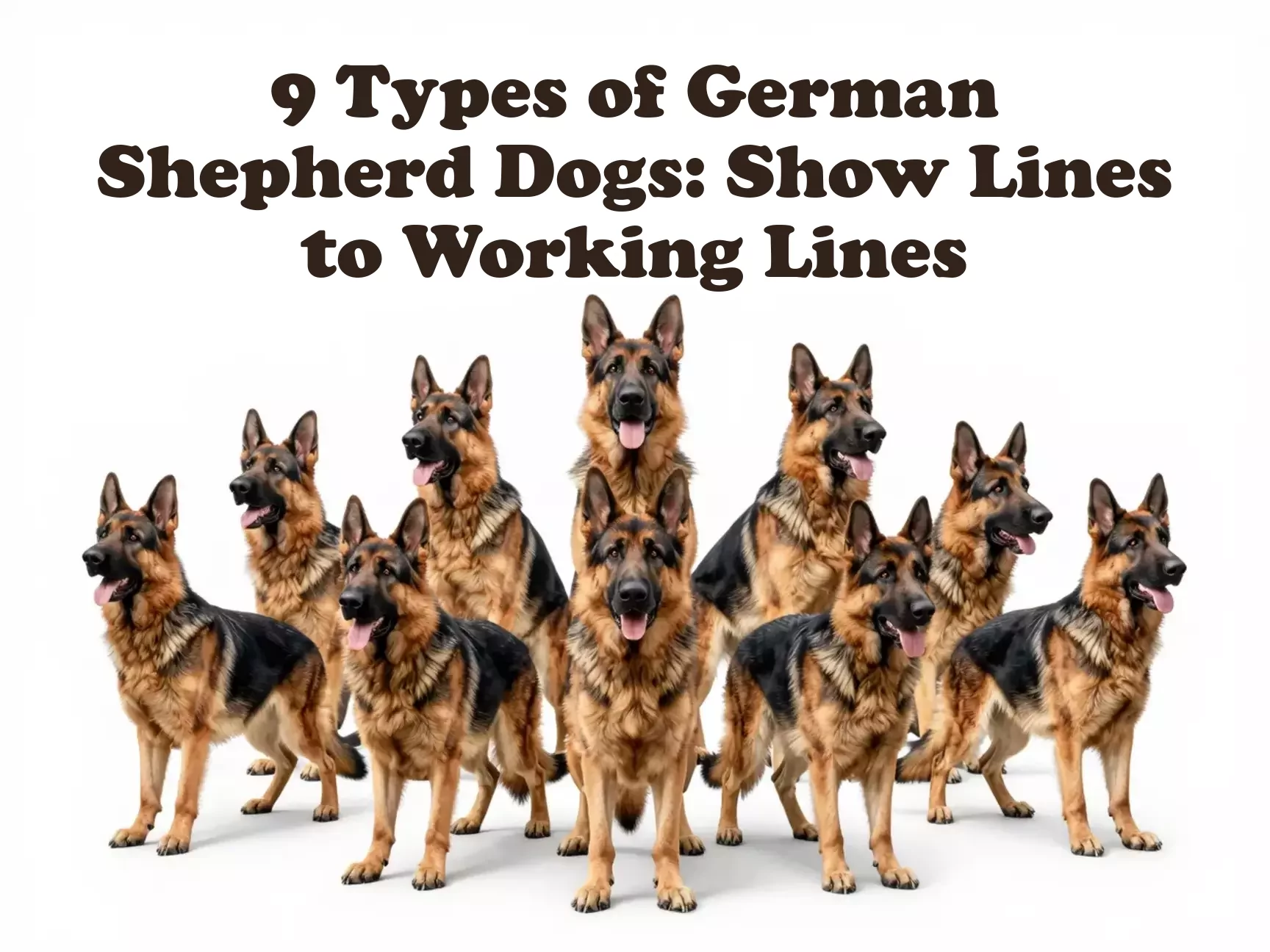
This guide to the 9 Types of German Shepherd Dogs: From Show Lines to Working Lines breaks down every major line, what makes each one distinct, and which type actually fits your lifestyle. Whether you’re a first-time dog owner, a working dog handler, or somewhere in between, understanding these lines before you commit could save you years of frustration — or lead you to the most capable partner you’ve ever had.
Key Takeaways 🐾
- German Shepherds are divided into show lines and working lines, each bred for very different purposes.
- Show lines (West German, American, Canadian) prioritize appearance, temperament, and conformation standards.
- Working lines (DDR, Czech, West German Working, Belgian) prioritize drive, endurance, and task performance.
- The “right” type depends entirely on your activity level, experience, and intended use.
- Buying from a reputable breeder who understands lineage is critical — mislabeled lines are common.
Why German Shepherd Lines Matter More Than You Think
Most people searching for a German Shepherd puppy focus on coat color or price. Very few ask about lineage — and that’s a costly mistake.
A West German Show Line GSD and a DDR Working Line GSD may look similar at first glance, but they are functionally different animals. One thrives in a calm family home; the other needs a job, structured training, and an experienced handler. Matching the wrong line to the wrong home leads to behavioral problems, rehoming, and stress for both dog and owner.
💬 “The line a German Shepherd comes from is arguably more predictive of its behavior than any individual training approach.”
Understanding the full spectrum of the 9 Types of German Shepherd Dogs: From Show Lines to Working Lines is the first step toward making a smart, informed decision.
The 5 Major Show Lines
Show lines are bred primarily to meet breed standards set by kennel clubs. Judges evaluate these dogs on structure, gait, coat, and temperament during conformation competitions. That doesn’t mean they’re “lesser” dogs — it means their breeding priorities differ from working lines.
1. West German Show Line
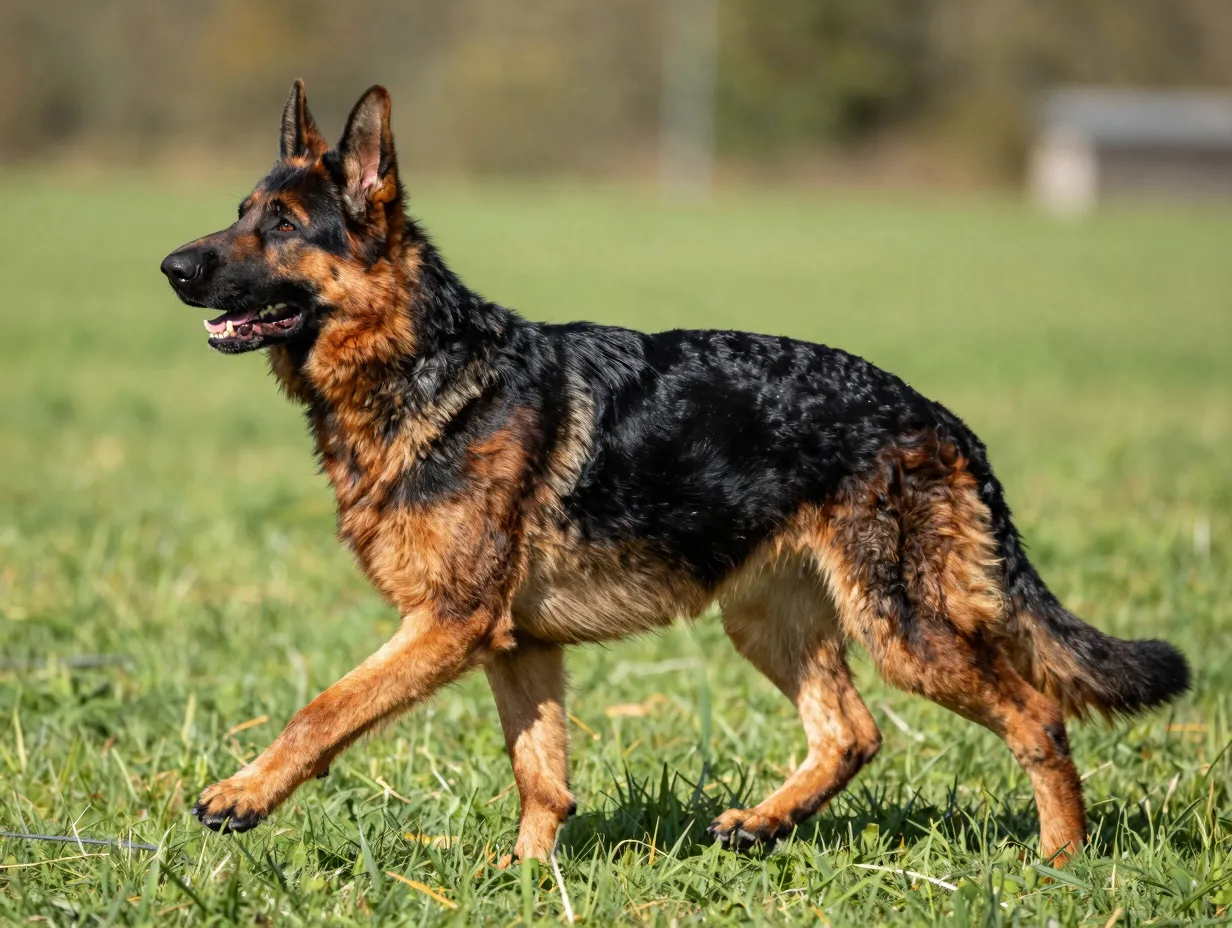
The West German Show Line is often considered the gold standard of the breed’s appearance. These dogs are bred to meet the strict standards of the Verein für Deutsche Schäferhunde (SV), Germany’s official German Shepherd club, which requires health testing, temperament evaluations, and working titles before breeding [1].
Key Characteristics:
- Large, well-muscled build
- Striking black and red or black and tan coloring
- Moderately sloped back (less extreme than American lines)
- Stable, confident temperament
- Higher drive than American show lines, but manageable for experienced families [4]
These dogs are better suited for active families who want a beautiful, trainable companion without the intensity of a full working line dog [1]. They’re a popular choice for Schutzhund (IPO) sport competitors who want a dog that’s both competitive and livable at home.
| Feature | West German Show Line |
|---|---|
| Primary Purpose | Conformation + Sport |
| Energy Level | Medium-High |
| Family Suitability | High |
| Drive Level | Moderate |
| Coat Color | Black & Red / Black & Tan |
2. American Show Line
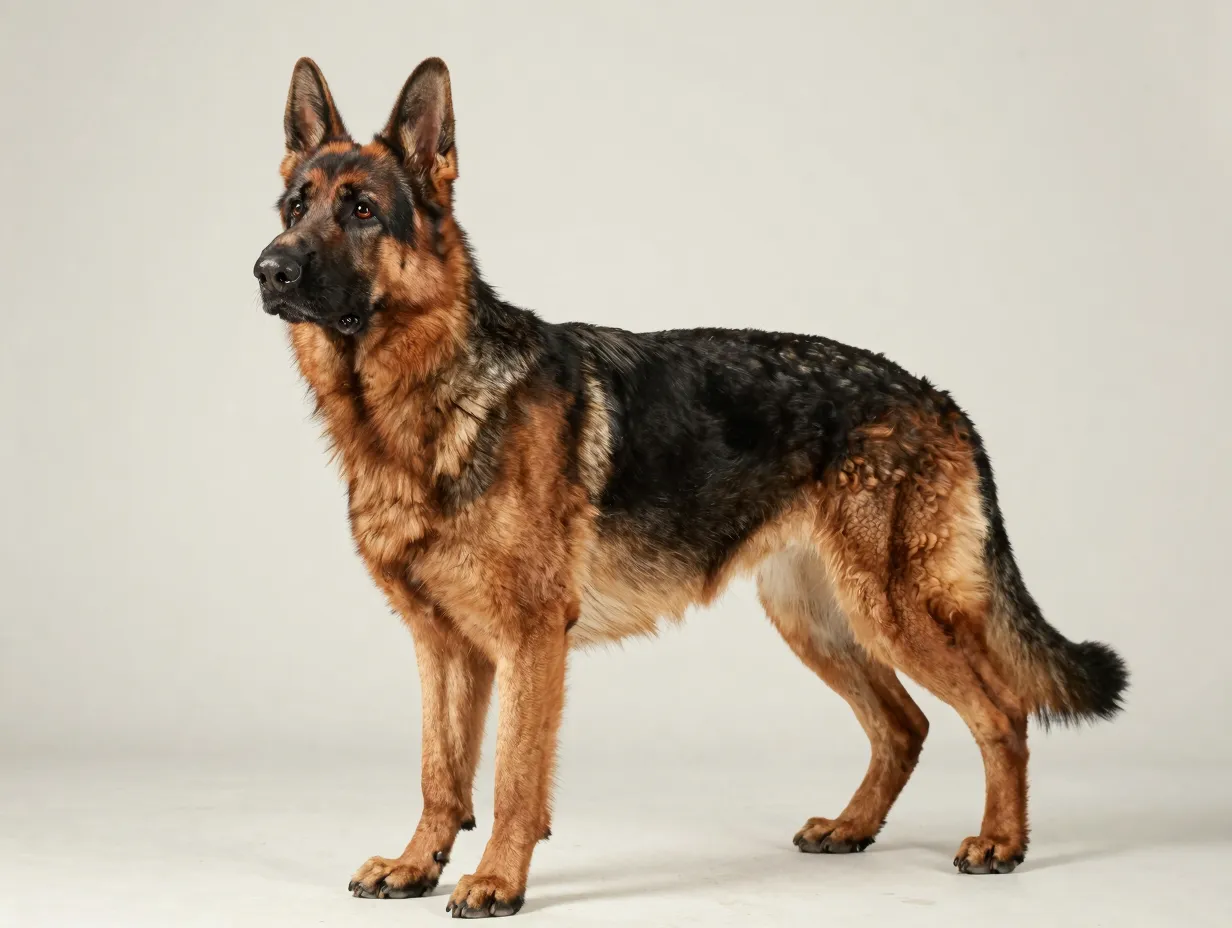
The American Show Line is bred according to the standards of the American Kennel Club (AKC), United Kennel Club (UKC), and Canadian Kennel Club (CKC) [3]. These are the German Shepherds most commonly seen at AKC dog shows across the United States.
Key Characteristics:
- Highly angulated hindquarters (the “roach back” appearance)
- Softer, more flowing coat
- Calmer, lower-drive temperament
- Bred heavily for appearance over working ability
American Show Lines are generally the most family-friendly of all GSD types. They tend to be calm, gentle, and easy to live with. However, critics argue that the extreme rear angulation common in this line contributes to hip and joint problems — a legitimate concern backed by veterinary research.
3. Canadian Show Line
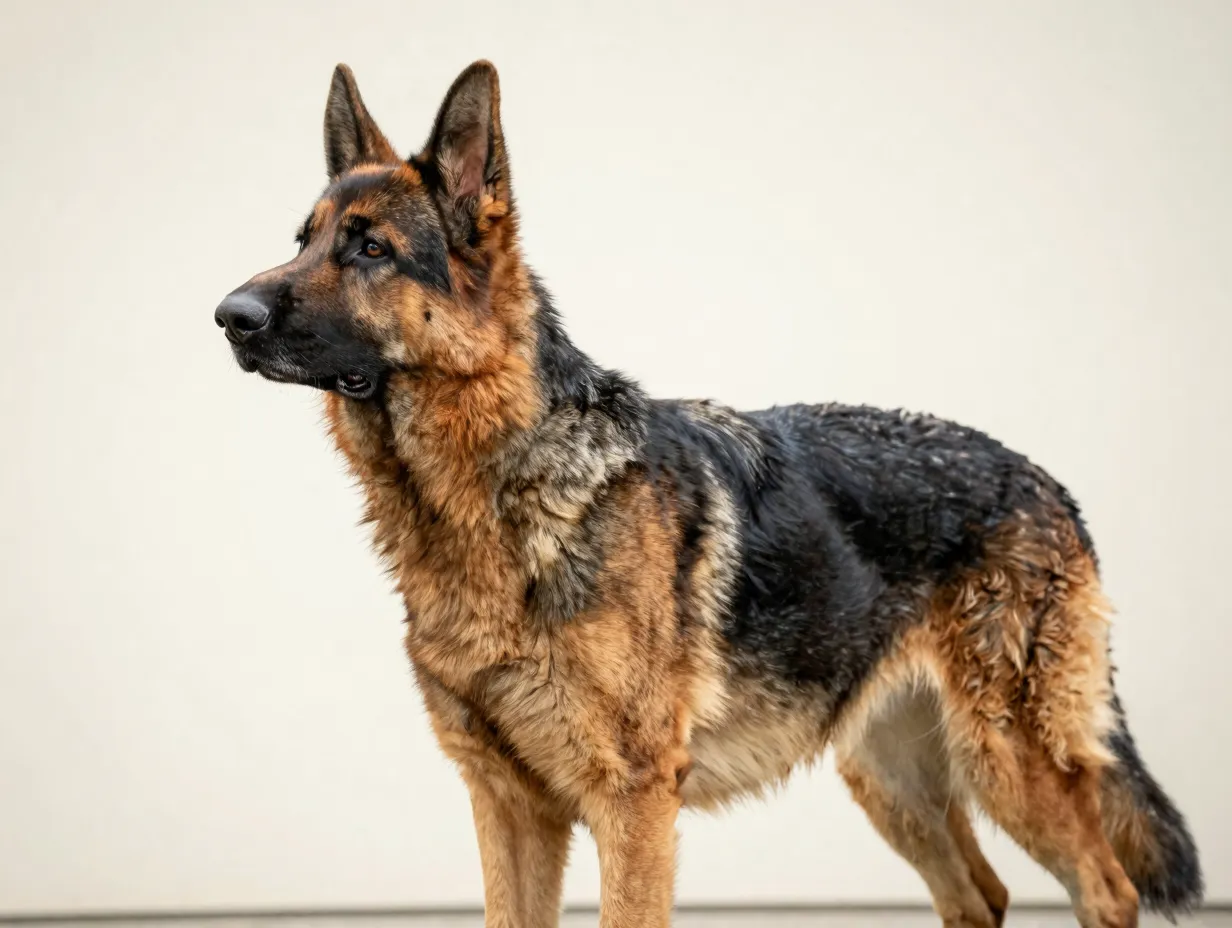
The Canadian Show Line closely mirrors the American Show Line in structure and breeding priorities. These dogs are bred to CKC standards and share many of the same traits — including the pronounced rear angulation and lower working drive.
Key Characteristics:
- Similar structure to American Show Lines
- Bred for CKC conformation competitions
- Gentle, calm temperament
- Lower prey drive and energy compared to working lines [3]
For families in Canada seeking a loyal, manageable companion dog, this line is a solid choice. Just be sure to work with a reputable breeder who health-tests for hip and elbow dysplasia.
4. British/UK Show Line
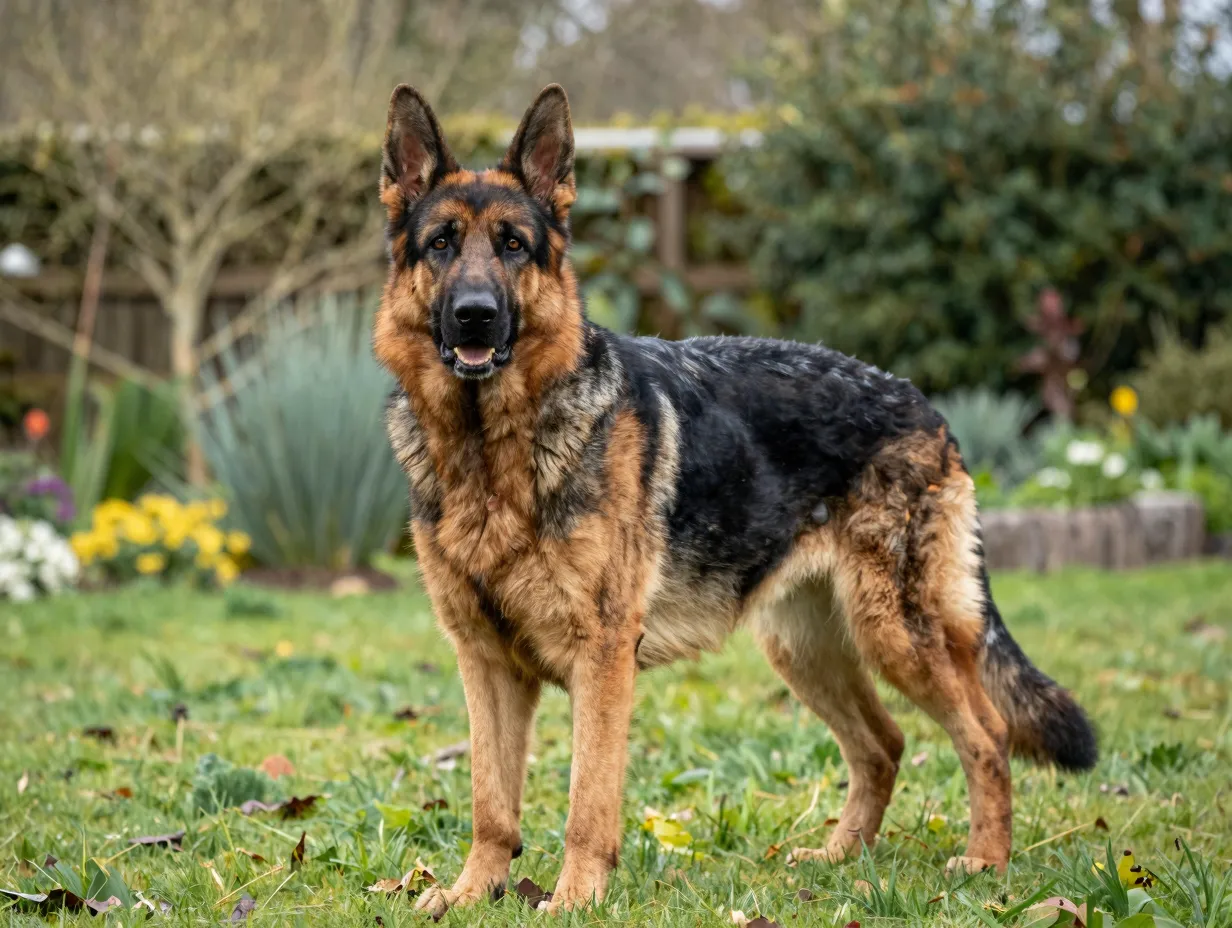
The British Show Line is less commonly discussed but represents a distinct branch of the show line family. Bred to Kennel Club (UK) standards, these dogs tend to have a slightly different structure than their American counterparts.
Key Characteristics:
- Moderate rear angulation (less extreme than American lines)
- Stable, even temperament
- Good family dogs with moderate energy
- Less common outside the UK
British lines are often praised for being a middle ground — more structurally sound than American lines but without the intense drive of working lines.
5. International/FCI Show Line
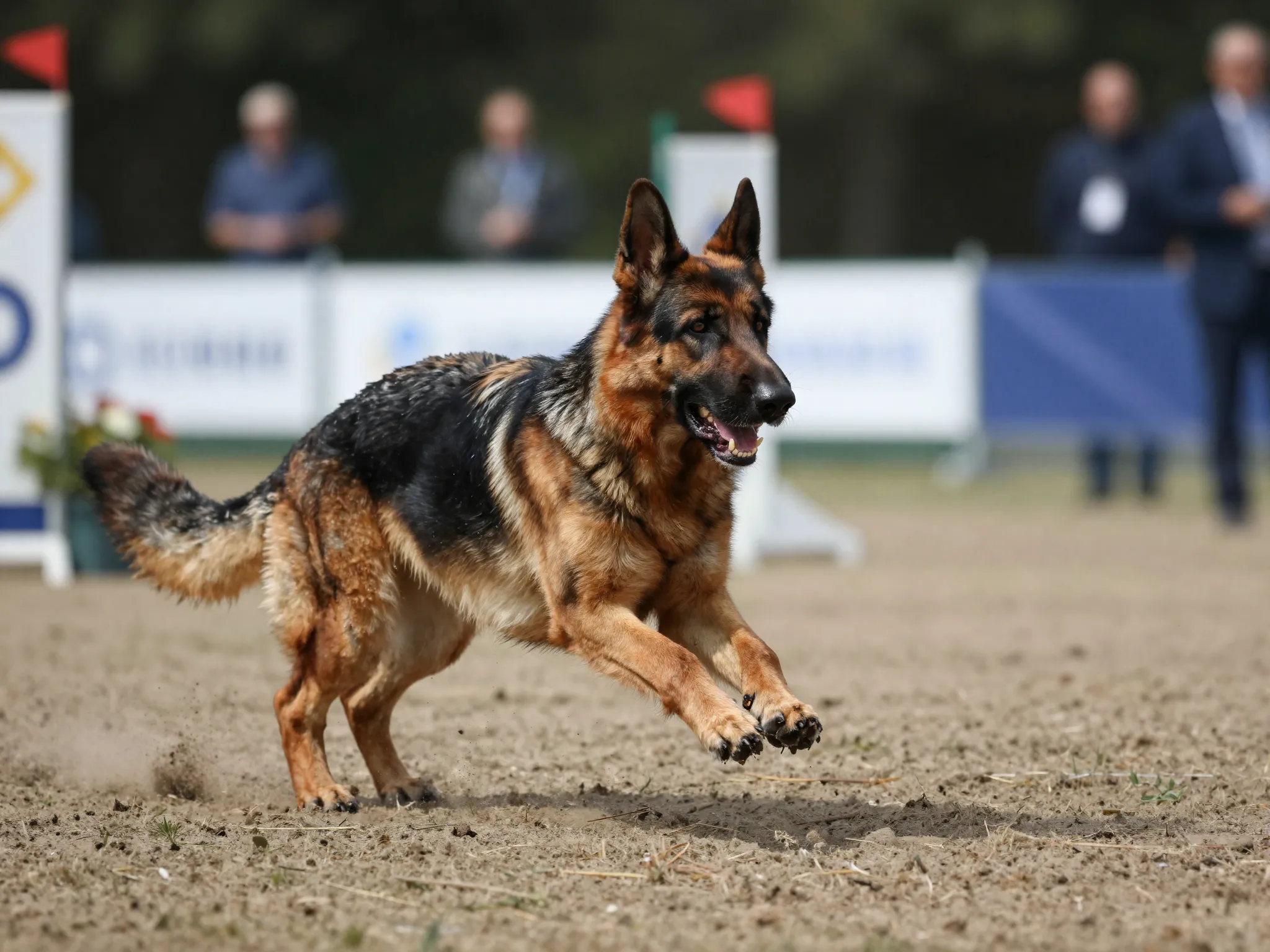
The FCI (Fédération Cynologique Internationale) Show Line represents dogs bred to international standards recognized across Europe and much of the world. These dogs often overlap with West German Show Lines but may come from breeding programs in countries like the Netherlands, Belgium, or Scandinavia.
Key Characteristics:
- Bred to FCI breed standards
- Requires working titles and health clearances in many countries
- Balanced temperament and structure
- Often used in European sport dog competitions
The 4 Major Working Lines
Working lines are bred for performance, not appearance. These dogs are selected for drive, endurance, nerve strength, and task-specific ability. They are not recommended for inexperienced dog owners.
6. West German Working Line
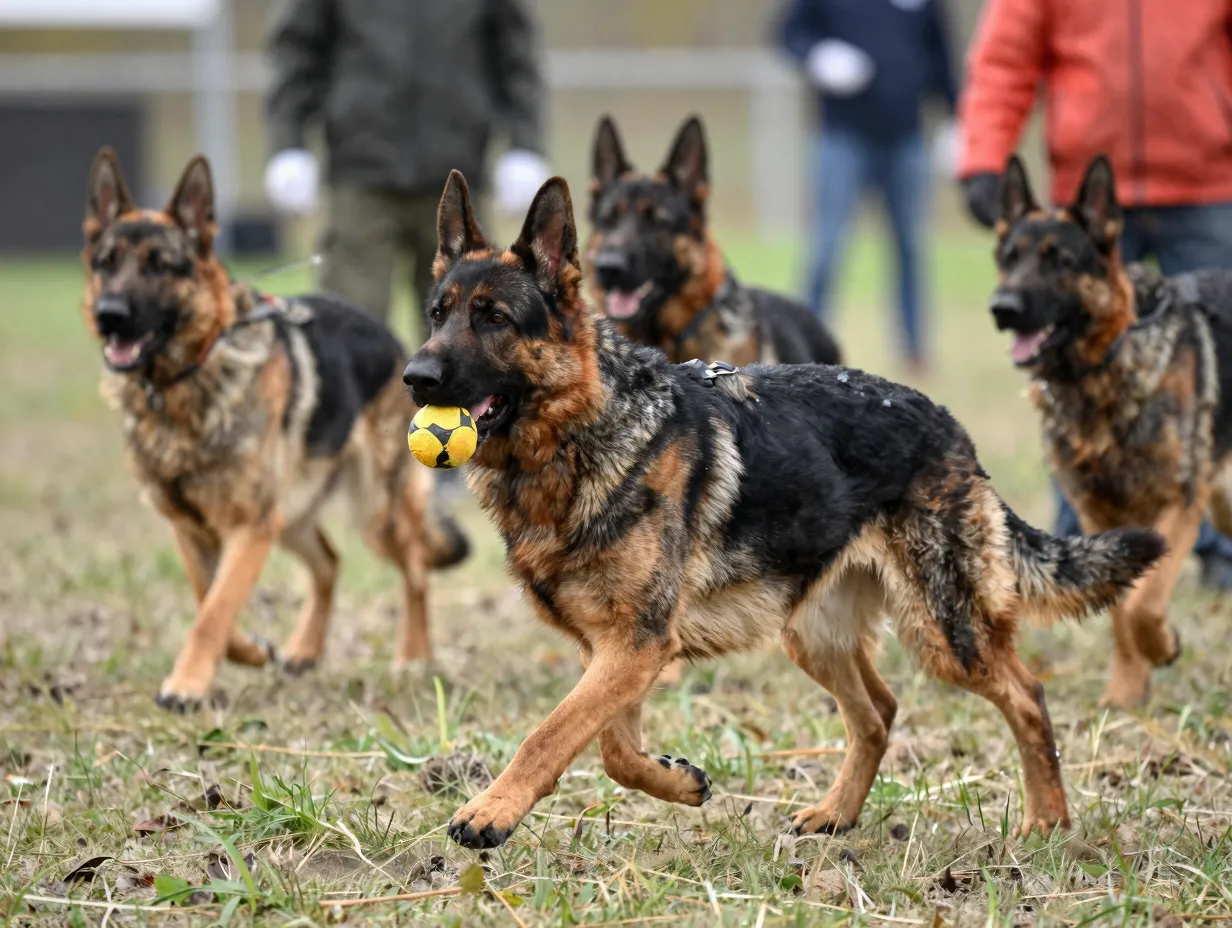
The West German Working Line is one of the most versatile of all GSD types. Unlike show lines, these dogs are bred with stable temperament, high drives, and exceptional working ability as the primary goals [3].
Key Characteristics:
- High prey drive and ball drive
- More sloped backs than DDR lines, but remain highly energetic [3]
- Excellent for Schutzhund/IPO, search and rescue, and police work
- Can adapt to family life with proper exercise and training
- Sable, black, or black-and-tan coloring
West German Working Lines are often described as the “thinking person’s working dog” — intense enough to excel at demanding tasks, but trainable and biddable enough for skilled handlers to manage effectively [1].
| Feature | West German Working Line |
|---|---|
| Primary Purpose | Sport + Police + SAR |
| Energy Level | High |
| Family Suitability | Moderate (experienced owners) |
| Drive Level | High |
| Coat Color | Sable / Black / Black & Tan |
7. DDR / East German Working Line
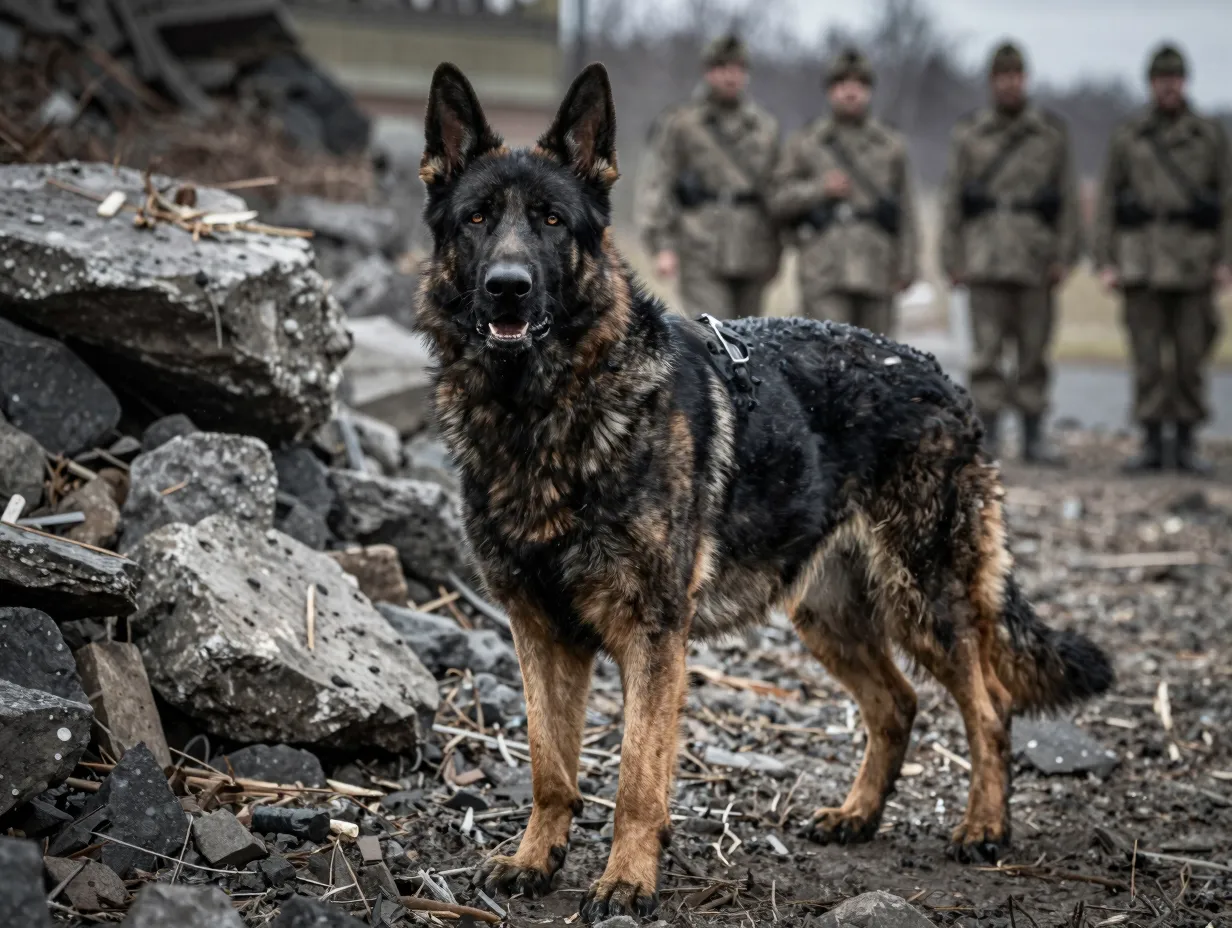
The DDR Line (from Deutsches Demokratische Republik, or East Germany) is widely considered the most physically demanding and mentally intense of all German Shepherd types. These dogs were bred by the East German government specifically for border patrol, military service, tracking, and search and rescue in harsh conditions [3][4].
After the Berlin Wall fell in 1989, DDR breeding programs were dismantled. Dedicated breeders preserved the bloodlines, and today DDR dogs are prized by serious working dog handlers worldwide.
💬 “DDR dogs are often called ‘Hard Dogs’ — a term that reflects their extraordinary endurance, nerve strength, and physical resilience.” [3]
Key Characteristics:
- Dense, dark sable or black coloring
- Broad, heavy head and powerful build
- Exceptional endurance and pain tolerance
- Bred for harsh environmental conditions [4]
- Extremely high drive — not suitable for casual owners
- Used in police work, military K9 units, and elite search and rescue [3]
DDR dogs are not family pets in the traditional sense. They need a job, structured training, and an experienced handler who understands working dog psychology. In the right hands, they are extraordinary animals.
8. Czech Working Line
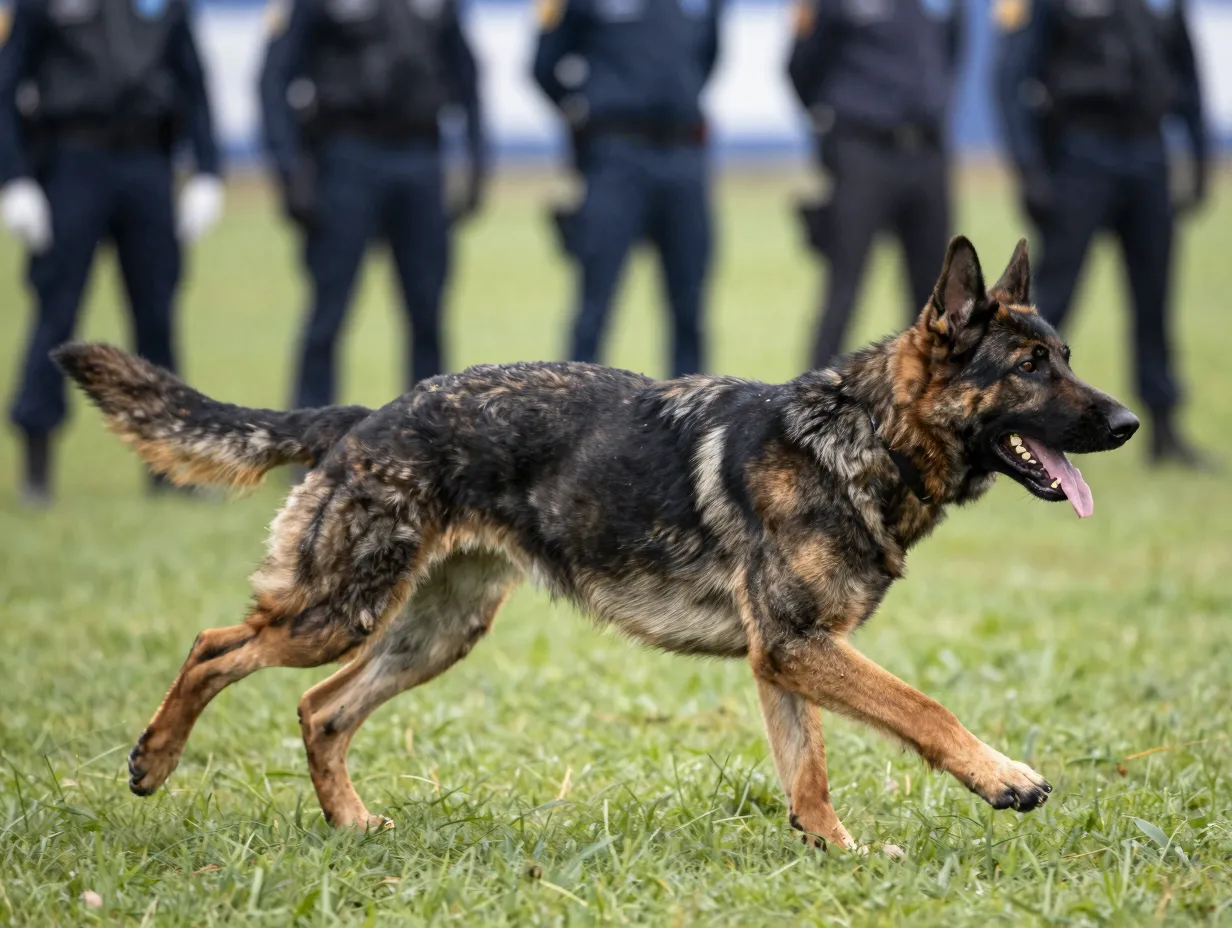
The Czech Working Line emerged from breeding programs developed in Czechoslovakia, primarily within the Czech military and border patrol system. Like DDR dogs, Czech lines were bred under strict government oversight for working performance [2][3].
Key Characteristics:
- Lean, athletic build
- Dark sable coloring is most common
- Extremely high drive and prey instinct
- Strong nerves and environmental confidence
- Excellent for protection sports, police work, and military applications [2]
Czech lines and DDR lines are often compared — both are intense, high-drive working dogs. The Czech line tends to be slightly leaner and more agile, while DDR dogs are often heavier and more powerful. Both require experienced handlers.
| Feature | Czech Working Line | DDR Working Line |
|---|---|---|
| Build | Lean, Athletic | Heavy, Powerful |
| Drive Level | Very High | Very High |
| Coloring | Dark Sable | Dark Sable / Black |
| Best Use | Sport / Police / Military | Border Patrol / SAR / Military |
| Family Suitability | Low (novice owners) | Low (novice owners) |
9. Belgian / Mixed Working Line
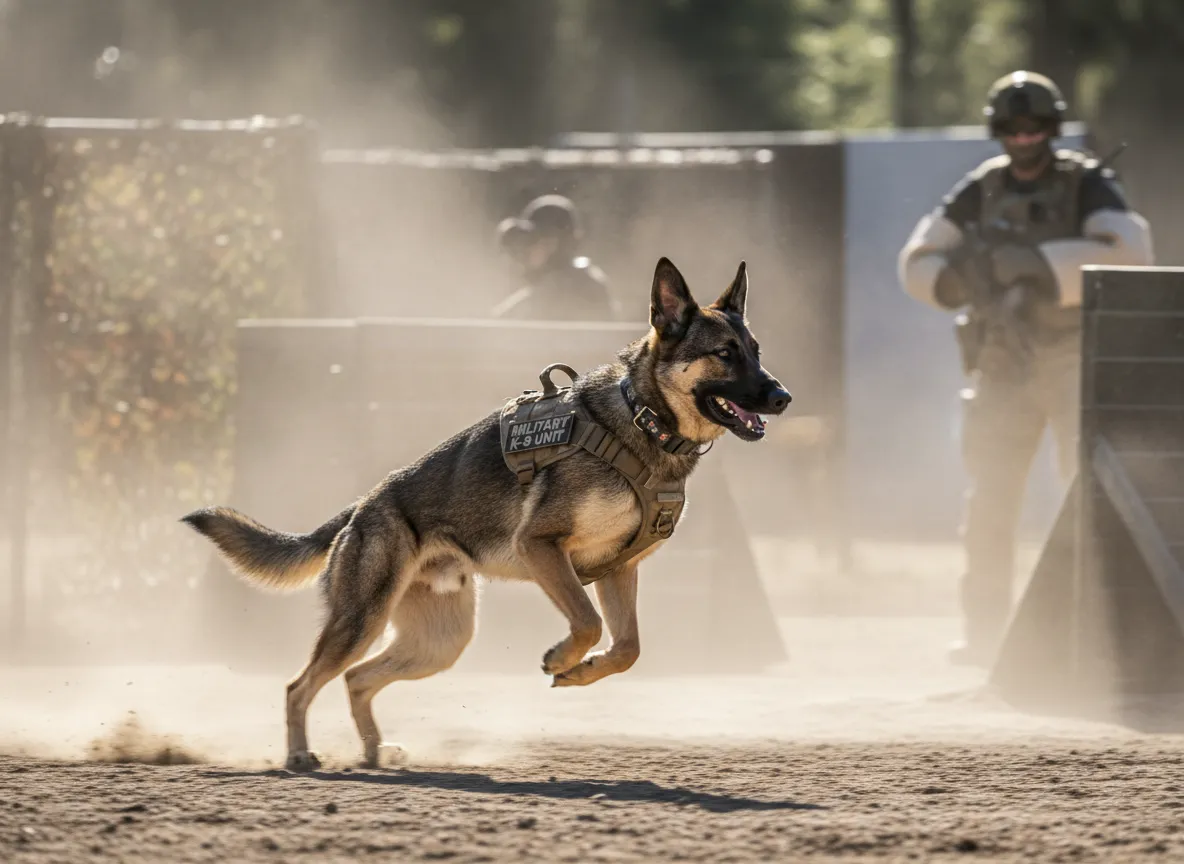
The Belgian Working Line (sometimes called mixed or European working lines) refers to German Shepherds that may carry Belgian Malinois influence or come from Belgian-based GSD breeding programs. This is the most nuanced category in the 9 Types of German Shepherd Dogs: From Show Lines to Working Lines spectrum.
Key Characteristics:
- Leaner build, often with higher energy than pure GSD lines
- Extremely fast and reactive
- Used extensively in elite military and police units worldwide
- Requires expert-level handling and near-constant mental stimulation
- Not recommended for any but the most experienced dog professionals
Some breeders and handlers debate whether this constitutes a true “German Shepherd line” or a hybrid category. Regardless of classification, these dogs represent the absolute peak of working dog intensity.
Show Lines vs. Working Lines: A Side-by-Side Comparison
Understanding the differences between these categories is central to the 9 Types of German Shepherd Dogs: From Show Lines to Working Lines discussion. Here’s a quick reference table:
| Category | Show Lines | Working Lines |
|---|---|---|
| Primary Breeding Goal | Appearance & Temperament | Drive & Performance |
| Energy Level | Low to Medium-High | High to Extreme |
| Best For | Families, Sport, Companion | Police, Military, SAR, Sport |
| Experience Required | Beginner to Intermediate | Intermediate to Expert |
| Health Testing | Varies by country/registry | Often rigorous (DDR, Czech) |
| Trainability | High (eager to please) | High (but intense) |
| Typical Lifespan | 9–13 years | 9–13 years |
How to Choose the Right German Shepherd Line for You 🐕
Choosing between show lines and working lines isn’t about which is “better” — it’s about fit. Here are the key questions to ask yourself:
1. What is your experience level?
If you’re a first-time dog owner, a West German Show Line or American Show Line is a much safer starting point than a DDR or Czech Working Line.
2. How active is your lifestyle?
Working line dogs need 2+ hours of structured activity daily. Show lines are more forgiving of moderate exercise routines.
3. Do you have a specific job for the dog?
If you’re a law enforcement officer, military handler, or serious sport competitor, a working line is likely the right choice. For companionship and family life, show lines excel [1][4].
4. Do you have children or other pets?
West German Show Lines and American Show Lines are generally more tolerant and adaptable in multi-pet or family households [1].
5. Are you prepared for intensive training?
Working line dogs don’t just need training — they demand it. Without structured outlets, high-drive dogs can become destructive or develop behavioral problems.
Red Flags When Buying a German Shepherd 🚩
The German Shepherd market is unfortunately full of breeders who misrepresent their dogs’ lineage. Here’s what to watch for:
- No health testing documentation (OFA hip/elbow scores, DM testing)
- Vague claims about “working line” dogs without pedigree papers
- No working titles on parents of dogs claiming to be West German Show or Working Lines
- Extremely low prices for “rare” or “imported” lines
- Unwillingness to show pedigree papers or allow kennel visits
Always request a 3-generation pedigree and verify the breeder’s registration with the SV (for German lines) or the appropriate national kennel club.
Conclusion: Match the Line to Your Life
The 9 Types of German Shepherd Dogs: From Show Lines to Working Lines represent one of the most fascinating examples of selective breeding in the canine world. From the elegant West German Show Line to the formidable DDR Working Line, each type carries a distinct genetic legacy — and a distinct set of needs.
In 2026, the demand for German Shepherds remains at an all-time high, but too many dogs end up in shelters because buyers chose based on looks rather than lineage. Don’t make that mistake.
Here are your actionable next steps:
- Identify your lifestyle honestly — activity level, experience, living situation.
- Research breeders who specialize in the specific line you’re interested in.
- Request pedigree documentation and verify health clearances before committing.
- Visit the kennel and meet the parent dogs to assess temperament firsthand.
- Connect with breed clubs like the German Shepherd Dog Club of America (GSDCA) or the SV for breeder referrals.
The right German Shepherd, from the right line, is one of the most rewarding partnerships a person can have. Take the time to get it right.
References
[1] German Shepherd Working Vs Show Lines – https://www.banffyhausgermanshepherds.com/german-shepherd-working-vs-show-lines/
[2] Types Of German Shepherd Lines – https://www.vomgeliebtenhaus.com/types-of-german-shepherd-lines
[3] Aboutlines – https://www.gsdtotal.com/site/aboutlines.html
[4] Differences Between German Shepherd Show Working Lines – https://www.mittelwest.com/blog/differences-between-german-shepherd-show-working-lines/
[5] Kc4o4xiaq W – https://www.youtube.com/shorts/Kc4O4XiAQ_w