9 of the Largest Domestic Cat Breeds That Are Gentle Giants
A fully grown Maine Coon can weigh as much as a small dog — up to 25 pounds — and stretch over 40 inches from nose to tail tip [1]. Yet despite that imposing size, owners consistently describe these cats as soft-spoken, affectionate companions who follow their humans from room to room like loyal shadows. That combination of impressive stature and sweet temperament is exactly what makes the world of large cat breeds so fascinating.
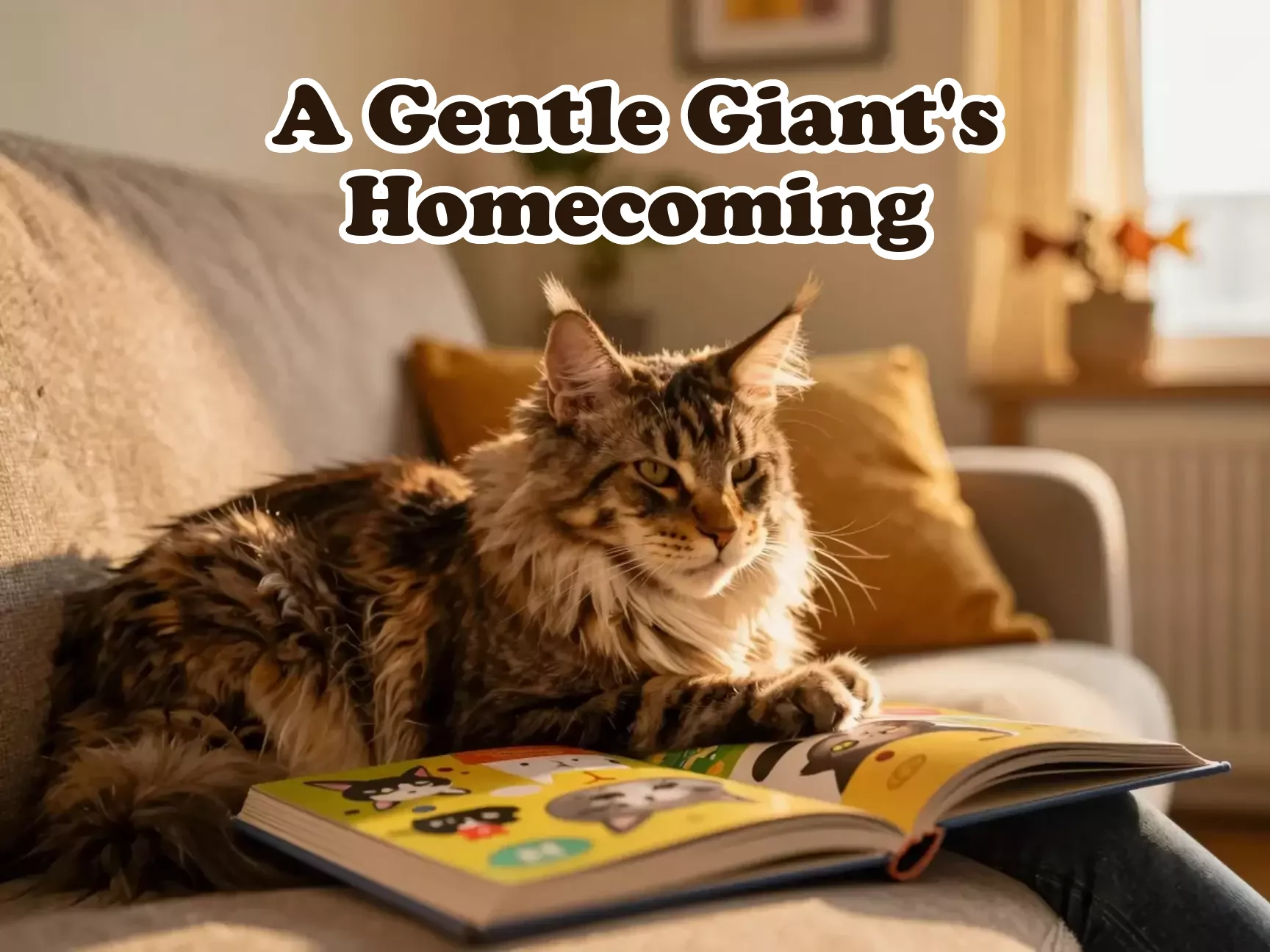
If you have been searching for a feline companion that fills both your lap and your heart, this guide to 9 of the Largest Domestic Cat Breeds That Are Gentle Giants is your starting point. We have pulled together verified size data, personality insights, and care tips so you can find the perfect big cat for your home in 2026.
Key Takeaways
- 🐾 The Maine Coon holds the record for the longest domestic cat, measuring nearly 4 feet from head to tail [2].
- 🐾 Most gentle giant breeds weigh between 12 and 25 pounds and have calm, sociable personalities.
- 🐾 Several large breeds — including the Siberian and Norwegian Forest Cat — take 3–5 years to reach their full adult size.
- 🐾 Some large cats, like the Savannah, are hybrid breeds that combine domestic cats with wild ancestors.
- 🐾 Size alone does not define a gentle giant — temperament, trainability, and affection levels matter just as much.
What Makes a Cat a “Gentle Giant”?
Before diving into the list, it helps to understand what earns a breed the “gentle giant” label. The term refers to cats that are:
- Significantly larger than the average domestic cat (which typically weighs 8–10 pounds)
- Calm and sociable rather than skittish or aggressive
- Good with families, children, and often other pets
- Adaptable to indoor living despite their size
“Size is just the headline. What keeps owners devoted to these breeds is the extraordinary gentleness that comes with the territory.”
Large cat breeds also tend to have longer lifespans when properly cared for, making them a long-term commitment worth taking seriously. Now, let us explore 9 of the largest domestic cat breeds that are gentle giants, one by one.
9 of the Largest Domestic Cat Breeds That Are Gentle Giants: The Full List
1. Maine Coon — The Record-Breaking Gentle Giant
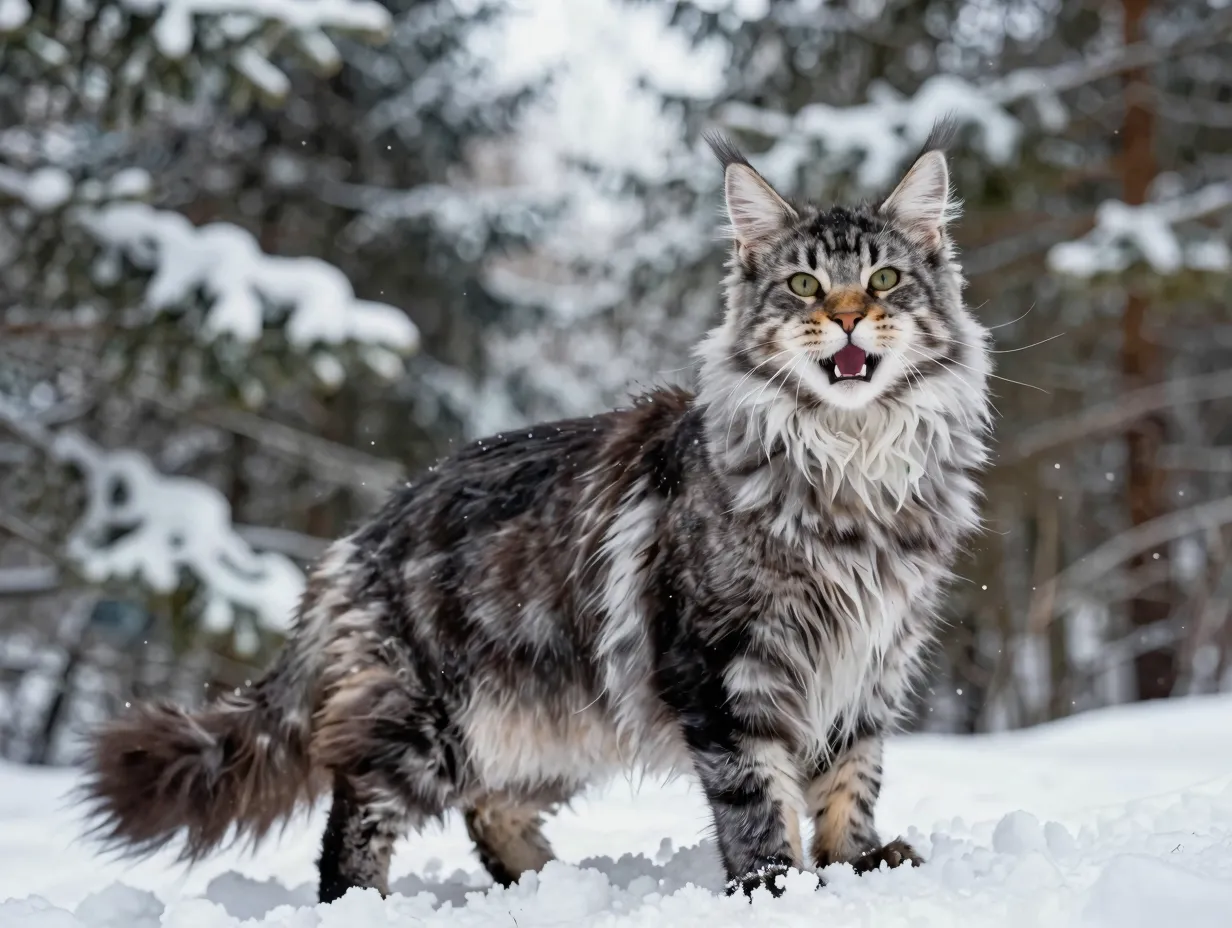
Average weight: 13–25 pounds
Average length: Up to 40+ inches (nose to tail)
Personality: Playful, dog-like, affectionate
The Maine Coon is the undisputed heavyweight champion of domestic cat breeds. Males regularly tip the scales at 18–25 pounds, and the Guinness World Record for the longest cat belongs to a Maine Coon named Barivel, who measured an astonishing 3 feet 11.2 inches from head to tail tip [2].
Originally bred in the northeastern United States, Maine Coons developed thick, water-resistant coats and tufted ears to survive harsh winters. Today, they are celebrated for their chirping vocalizations, playful intelligence, and willingness to walk on a leash. They are often called “the dogs of the cat world.”
Care tip: Their long, silky coats need brushing 2–3 times per week to prevent matting.
| Feature | Details |
|---|---|
| Weight range | 13–25 lbs |
| Coat type | Long, silky, water-resistant |
| Temperament | Playful, gentle, curious |
| Good with kids? | ✅ Yes |
2. Ragdoll — The Living Plush Toy
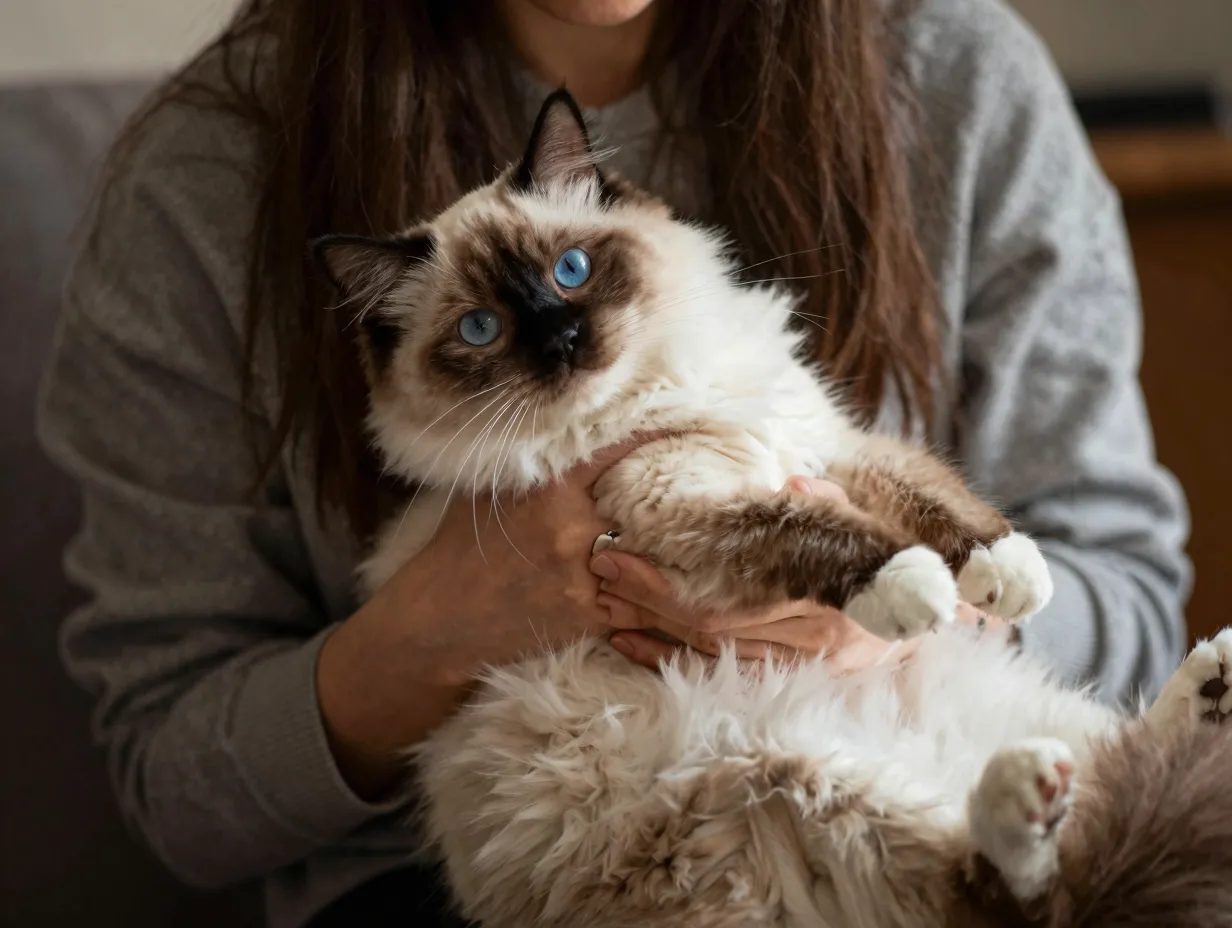
Average weight: Up to 20 pounds (males and females)
Personality: Docile, loving, calm
Developed in California in the 1960s, the Ragdoll earned its name from its remarkable tendency to go completely limp when picked up — much like a ragdoll toy [4]. This breed is one of the most popular large domestic cats in 2026, and for good reason.
Ragdolls are bred specifically for temperament. They are known for greeting owners at the door, following family members around the house, and tolerating children and other pets with extraordinary patience [5]. Their blue eyes and color-pointed coats add to their undeniable appeal.
Fun fact: 🐱 Ragdolls are slow to mature and may not reach their full adult weight until age 3–4.
Care tip: Despite their plush coats, Ragdolls are surprisingly low-maintenance — weekly brushing is usually sufficient.
3. Norwegian Forest Cat — The Viking of the Cat World
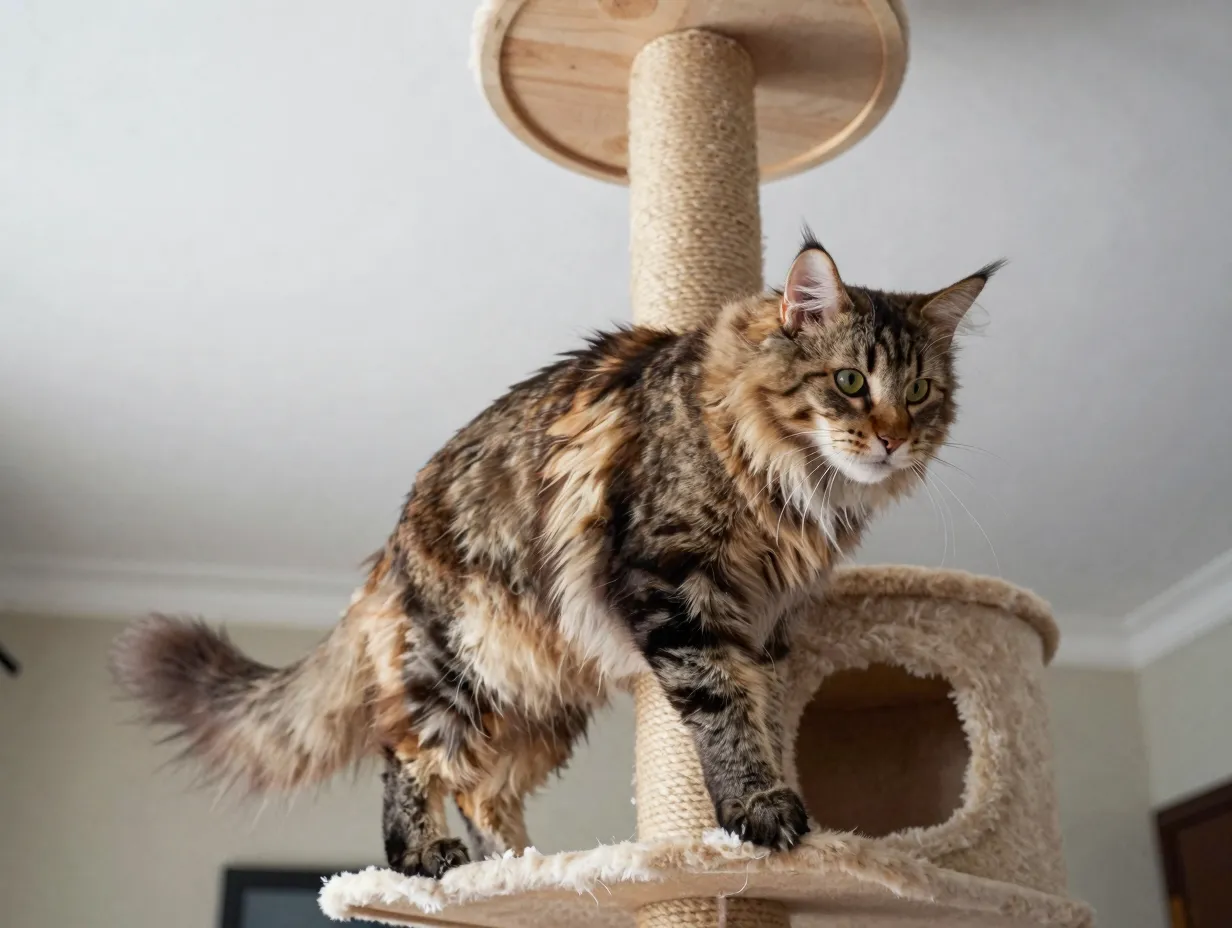
Average weight: 8–20 pounds (3.6–9 kg)
Personality: Calm, independent, patient
Known in Norway as the Norsk Skogkatt, the Norwegian Forest Cat was built to survive Scandinavian winters [3]. Its thick double coat, tufted paws, and muscular frame make it one of the most physically impressive large breeds.
What sets this breed apart is its combination of independence and loyalty. Norwegian Forest Cats are not clingy, but they form deep bonds with their families. They are excellent climbers and love vertical space — a tall cat tree is practically a requirement [4].
“The Norwegian Forest Cat brings the spirit of the wilderness into your living room — without any of the danger.”
Care tip: Invest in a sturdy, tall cat tree. This breed needs to climb to stay happy and healthy.
4. Savannah Cat — The Tallest Domestic Cat on Record
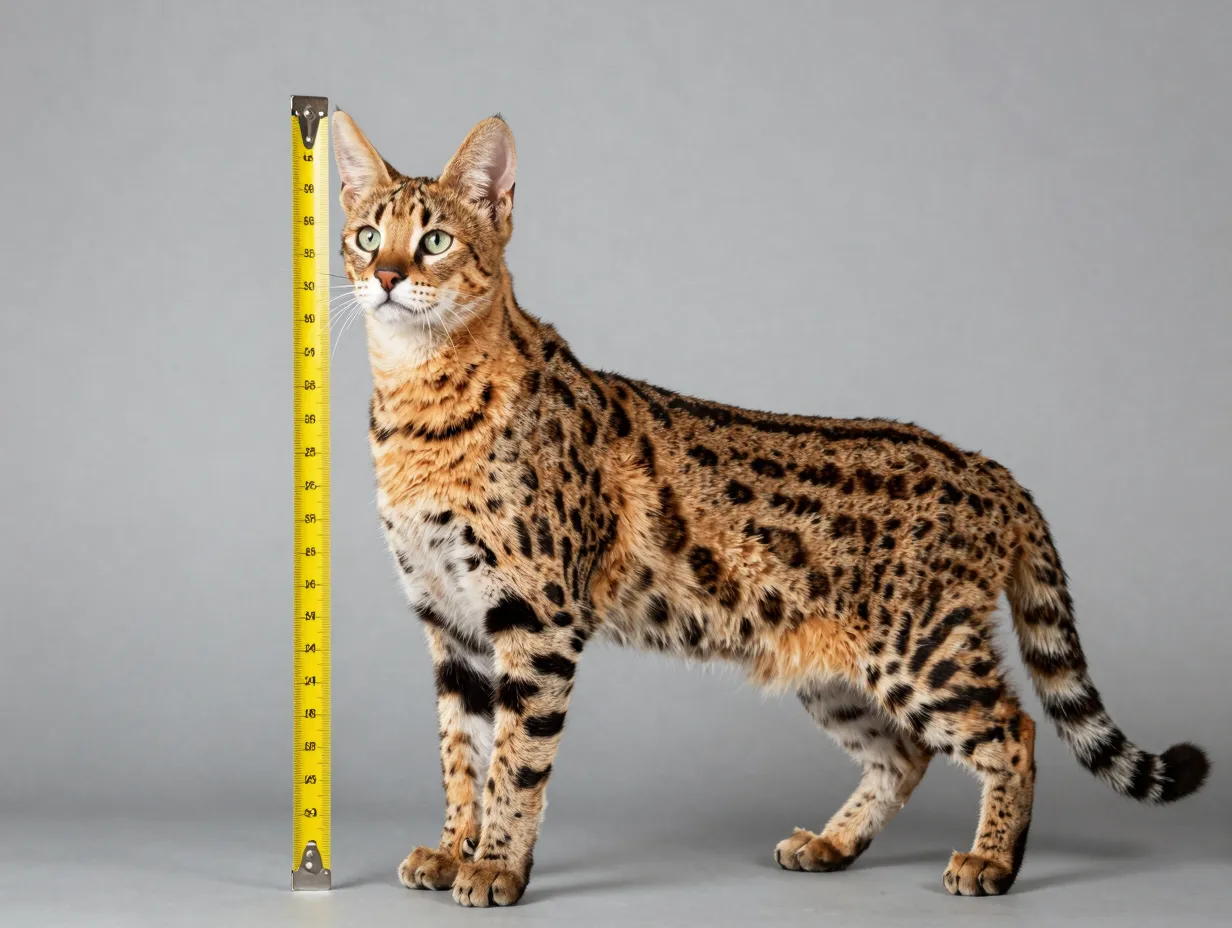
Average weight: 12–25 pounds
Average height: Up to 19 inches at the shoulder
Personality: Active, intelligent, loyal
The Savannah cat is a hybrid breed — a cross between a domestic cat and an African serval — and it holds the record for the tallest domestic cat [2]. The record holder, Arcturus Aldebaran Powers, stood at an incredible 19.05 inches from the ground to his withers [2].
Savannahs are categorized by generations (F1 through F5), with earlier generations being larger and more wild in temperament [5]. They are highly active, curious, and can be trained to walk on a leash or play fetch. However, they require experienced owners who can match their energy levels.
Important note: ⚠️ Some U.S. states and countries have restrictions on owning Savannah cats, particularly early-generation (F1/F2) cats. Always check local laws before adopting.
| Generation | Size | Temperament |
|---|---|---|
| F1 | Largest | Most wild-like |
| F2–F3 | Large | Moderately active |
| F4–F5 | Medium-large | Most domestic-like |
5. Turkish Van — The Rare Swimming Cat
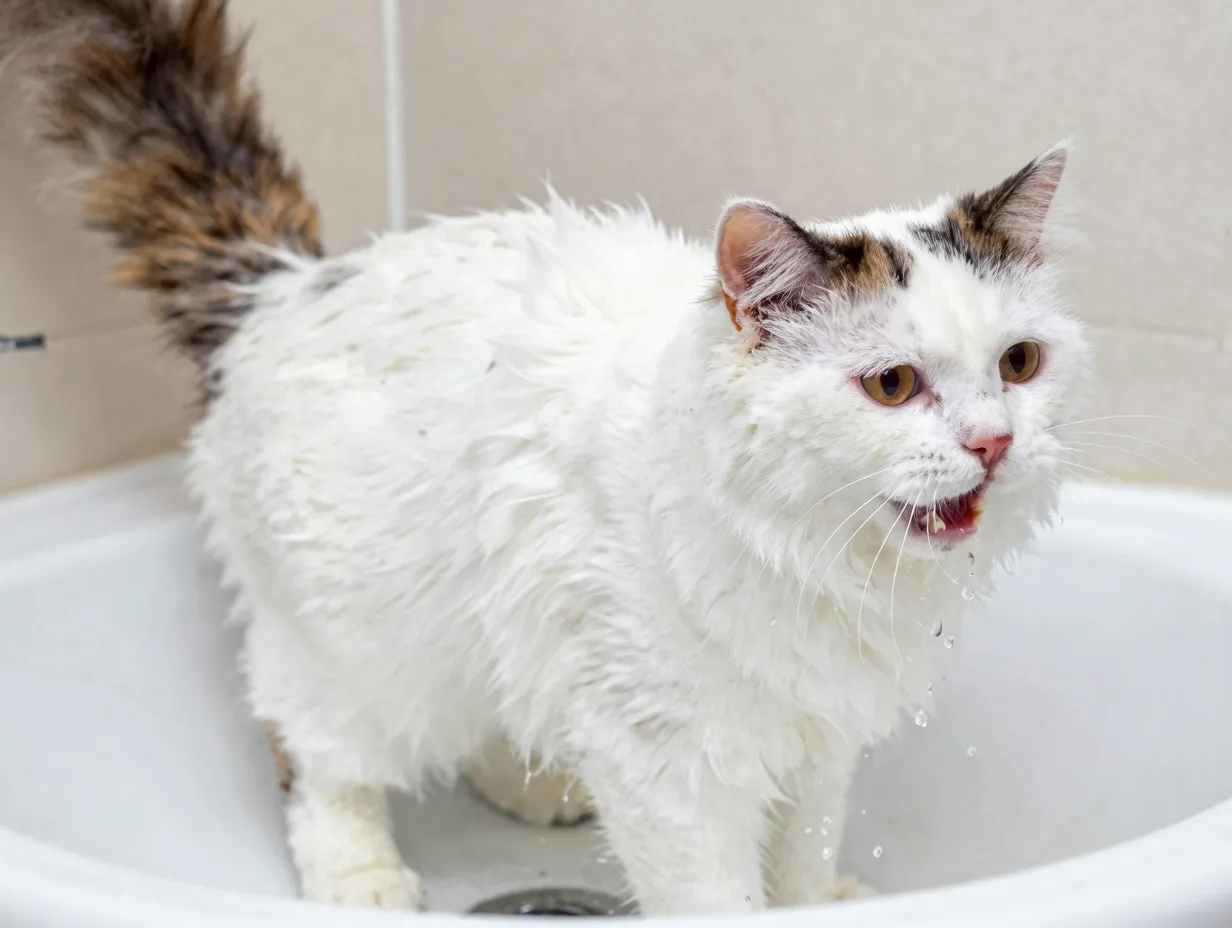
Average weight: 10–20 pounds
Personality: Energetic, affectionate, curious
The Turkish Van is one of the rarest large cat breeds in the world [4]. Originating from the Lake Van region of Turkey, this breed is famous for its love of water — an unusual trait among cats. Their semi-long, cashmere-like coats are predominantly white with color restricted to the head and tail (a pattern called the “Van pattern”).
Turkish Vans are athletic and playful, with a strong personality that keeps owners entertained. They bond deeply with their families but can be selective about who they trust. Their rarity makes them a prized find for dedicated cat enthusiasts.
Care tip: Turkish Vans are active cats — provide plenty of interactive toys and playtime to keep them stimulated.
6. Siberian Cat — Russia’s National Treasure
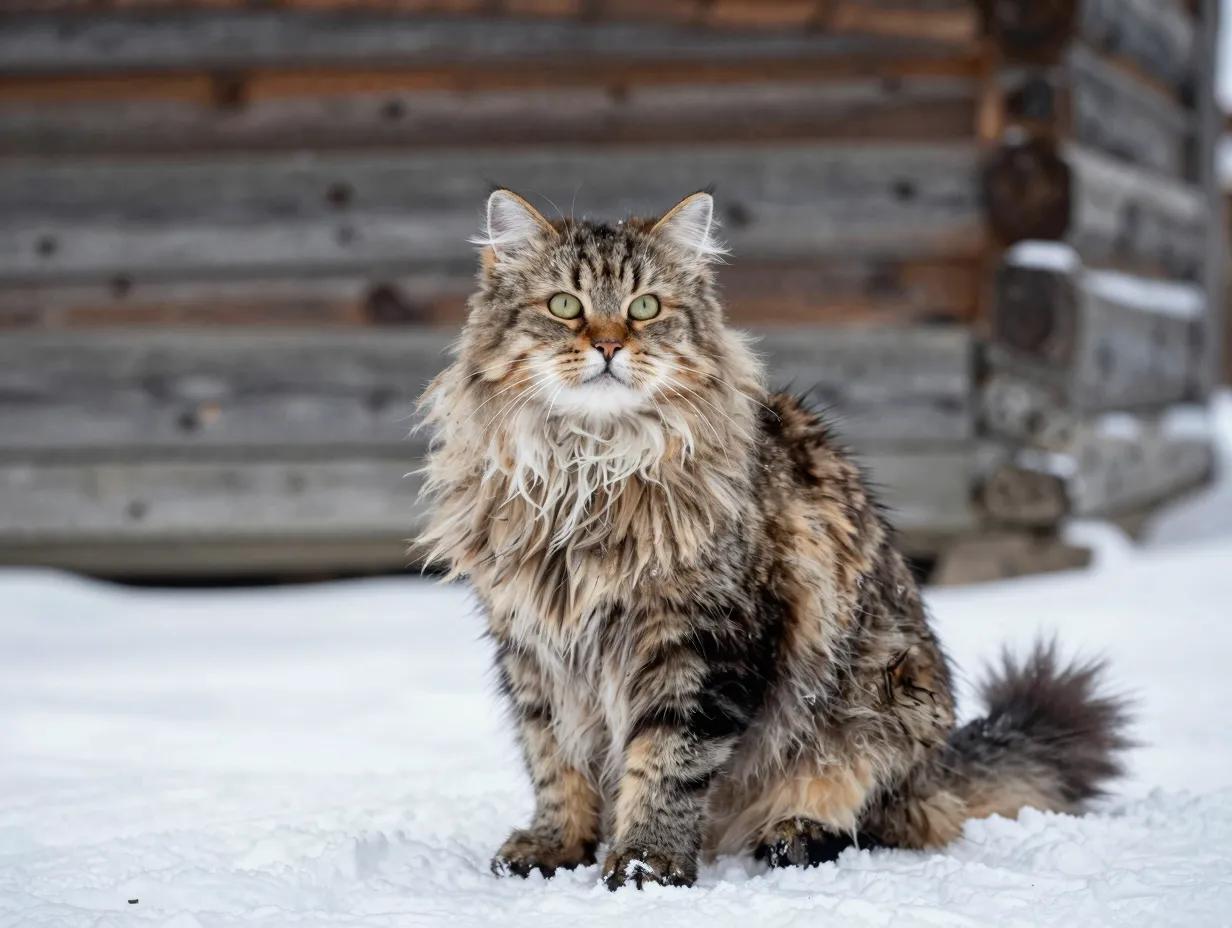
Average weight: 12–15 pounds
Time to full size: Up to 5 years
Personality: Affectionate, adventurous, dog-like
The Siberian cat is Russia’s national cat breed and has been documented in Russian literature for over 1,000 years [6]. Like the Norwegian Forest Cat, Siberians developed their dense, triple-layered coats to survive brutal winters.
One of the most exciting facts about Siberians is their slow development — they can take up to five years to reach their full adult size [6]. This means you get to enjoy watching your kitten gradually grow into a magnificent, large cat over several years.
🐾 Bonus: Siberians are often considered hypoallergenic (or at least lower-allergen) because they produce less of the Fel d 1 protein that triggers cat allergies. This makes them a popular choice for allergy-sensitive households.
Care tip: Their thick triple coat needs regular brushing, especially during seasonal shedding periods.
7. Persian Cat — The Fluffy Aristocrat
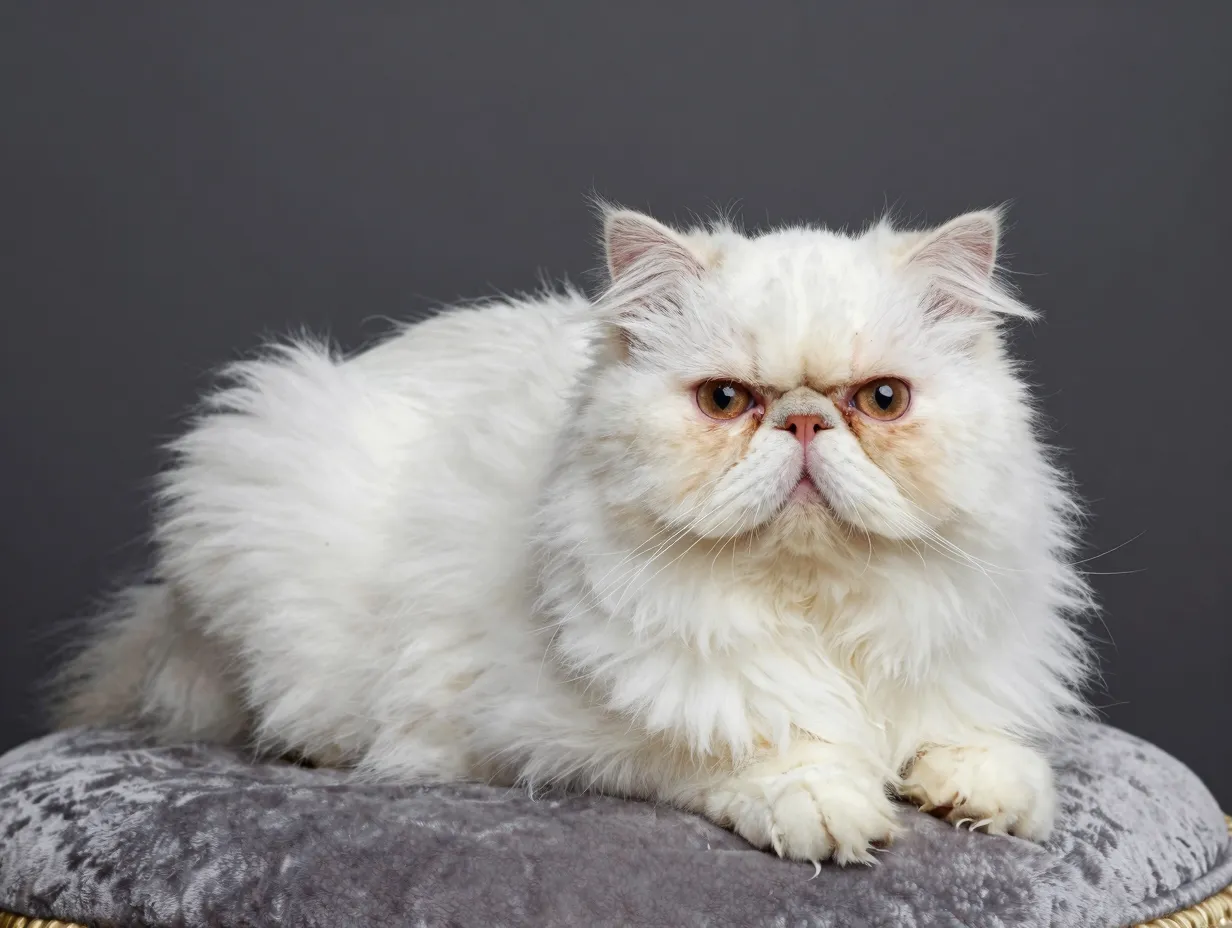
Average weight: Around 12 pounds
Personality: Calm, intelligent, laid-back
At first glance, the Persian may not seem as large as other breeds on this list. However, their extraordinarily plush, dense coats give them a significantly larger visual presence [2]. Persian cats are the definition of regal elegance — flat faces, round eyes, and a calm demeanor that suits apartment living perfectly.
Persians are highly intelligent and deeply affectionate, but they prefer a quiet, predictable environment. They are not the most active cats, which actually makes them ideal companions for people who want a low-energy, cuddly large breed.
“A Persian cat does not chase the laser pointer — it watches you chase it and judges your life choices.”
Care tip: 🚨 Persian coats require daily brushing to prevent painful mats and tangles. This is non-negotiable for this breed.
| Feature | Details |
|---|---|
| Weight range | ~12 lbs |
| Coat type | Long, dense, plush |
| Energy level | Low |
| Grooming needs | Daily |
8. Ragamuffin — The Teddy Bear Cat
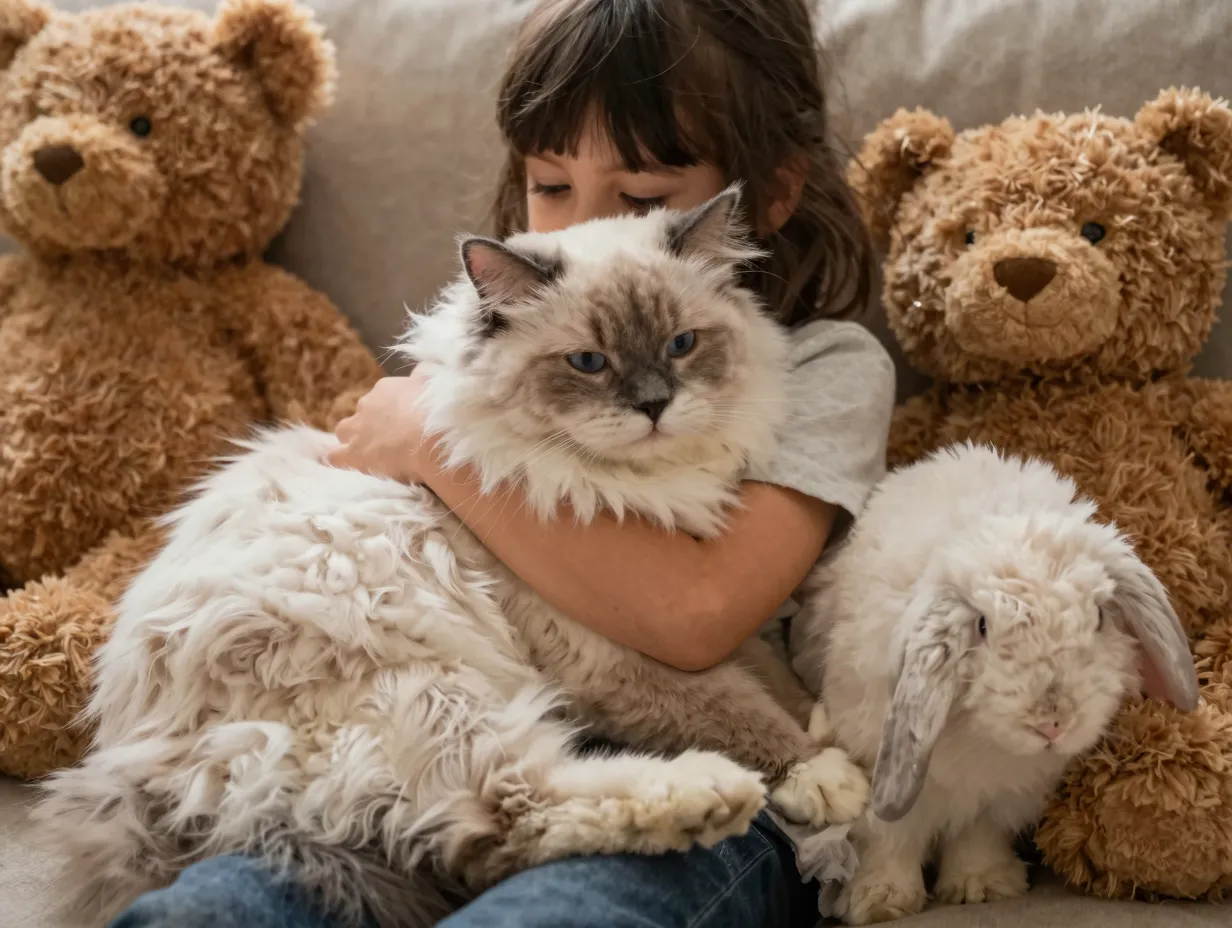
Average weight: 8–20 pounds (3.6–9.1 kg)
Personality: Loving, easy-going, gentle
The Ragamuffin is closely related to the Ragdoll but was developed as a separate breed to introduce more coat colors and patterns [3]. Their fur has been compared to rabbit fur — incredibly soft, thick, and plush to the touch.
Ragamuffins are known for their almost childlike sweetness. They love being held, carried, and cuddled, and they adapt well to multi-pet households. Their easy-going nature makes them one of the best large cat breeds for families with young children.
Fun fact: 🐱 Like Ragdolls, Ragamuffins tend to go limp when held — a behavior that makes them feel like living stuffed animals.
Care tip: Despite their thick coats, Ragamuffins are relatively easy to groom — their fur resists matting better than many long-haired breeds.
9. Bengal Cat — The Wild-Looking Gentle Giant
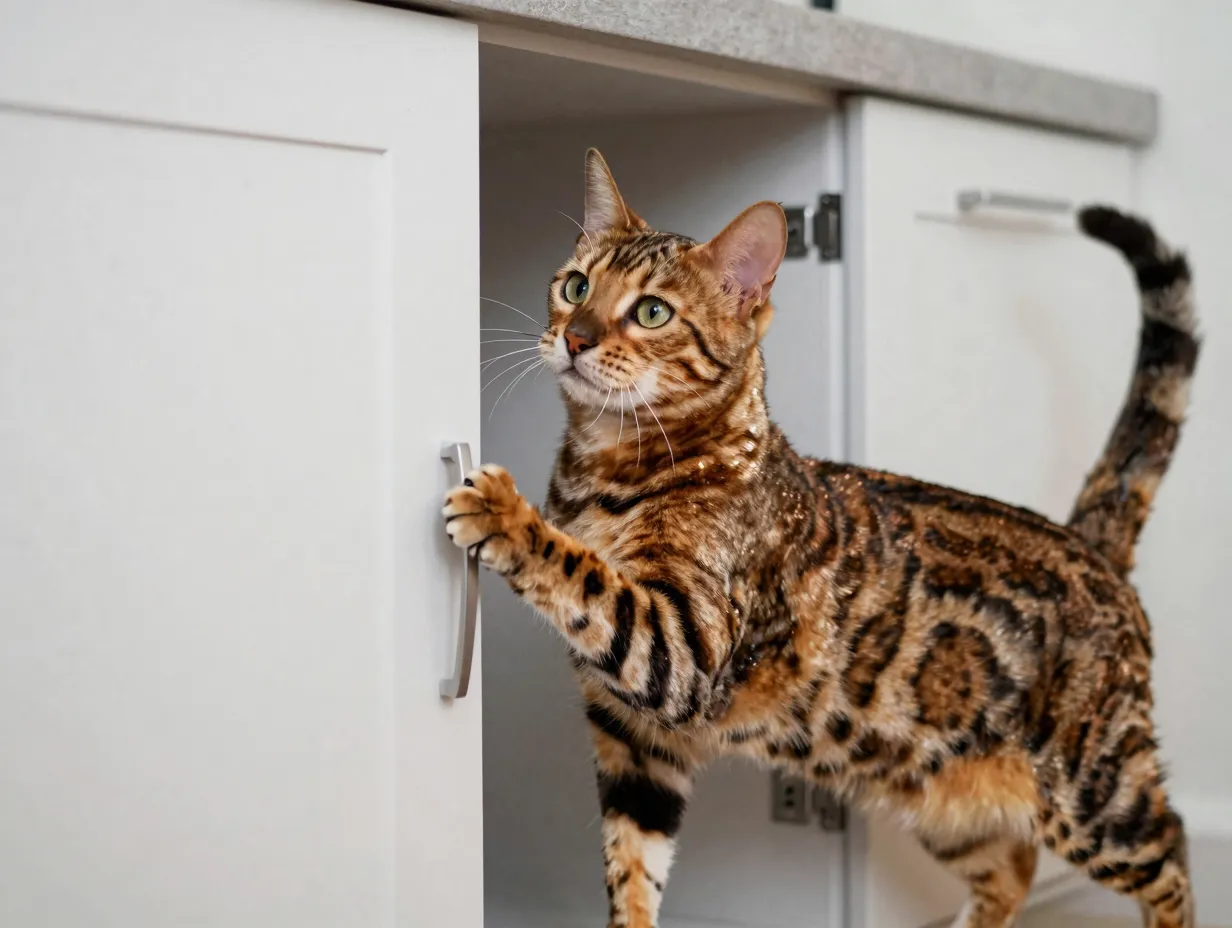
Average weight: 12–18 pounds
Personality: Active, intelligent, affectionate
Rounding out our list of 9 of the largest domestic cat breeds that are gentle giants is the stunning Bengal. Created by crossing domestic cats with the Asian leopard cat, Bengals have a wild, exotic appearance — complete with glittered coats featuring rosettes or marbling patterns [5].
Do not let the wild looks fool you. Bengals are deeply affectionate and highly trainable. They love water, enjoy playing fetch, and can learn to open doors and cabinets (which is as impressive as it is inconvenient). Their muscular, athletic build puts them firmly in the large cat category.
Important note: ⚠️ Bengals are high-energy cats that need significant mental and physical stimulation. They are not ideal for owners who want a relaxed, low-maintenance pet.
Care tip: Provide puzzle feeders, climbing structures, and at least 30 minutes of active play per day to keep a Bengal happy.
Size Comparison: All 9 Breeds at a Glance
| # | Breed | Weight Range | Key Trait |
|---|---|---|---|
| 1 | Maine Coon | 13–25 lbs | Longest domestic cat on record |
| 2 | Ragdoll | Up to 20 lbs | Goes limp when held |
| 3 | Norwegian Forest Cat | 8–20 lbs | Built for Scandinavian winters |
| 4 | Savannah | 12–25 lbs | Tallest domestic cat on record |
| 5 | Turkish Van | 10–20 lbs | Rare breed; loves water |
| 6 | Siberian | 12–15 lbs | Takes up to 5 years to mature |
| 7 | Persian | ~12 lbs | Plush coat creates larger appearance |
| 8 | Ragamuffin | 8–20 lbs | Rabbit-soft fur; teddy bear personality |
| 9 | Bengal | 12–18 lbs | Wild rosette coat; highly trainable |
What to Consider Before Adopting a Large Cat Breed
Owning one of these gentle giants is a rewarding experience, but it comes with specific responsibilities. Here is what to think about before bringing a large cat home:
🏠 Space: Large cats need room to move. A spacious home with vertical climbing opportunities (cat trees, shelves) is ideal.
💰 Cost: Bigger cats eat more food, and some breeds (like Persians and Maine Coons) have higher grooming costs. Veterinary care can also cost more due to size-specific health concerns.
⏳ Time commitment: High-energy breeds like Bengals and Savannahs need daily interactive play. If you have a busy lifestyle, a calmer breed like the Ragdoll or Persian may be a better fit.
👨👩👧 Family compatibility: Most gentle giant breeds are excellent with children and other pets, but always research breed-specific temperament before adopting.
🏥 Health screening: Large breeds can be prone to specific conditions. Maine Coons, for example, have a higher risk of hypertrophic cardiomyopathy (HCM). Always ask breeders for health certifications.
Conclusion: Finding Your Perfect Gentle Giant
The 9 of the largest domestic cat breeds that are gentle giants we have explored — from the record-breaking Maine Coon to the wild-looking Bengal — share one defining quality: they prove that big cats can have the biggest hearts. Whether you are drawn to the dog-like loyalty of the Maine Coon, the plush serenity of the Ragdoll, or the exotic beauty of the Savannah, there is a gentle giant perfectly suited to your lifestyle.
Your Actionable Next Steps:
- Narrow down your shortlist to 2–3 breeds based on your living space, activity level, and grooming commitment.
- Visit a reputable breeder or rescue organization that specializes in your chosen breed — ask for health certifications and meet the parents if possible.
- Prepare your home before your new cat arrives: invest in a tall cat tree, quality large-breed food, and appropriately sized litter boxes.
- Schedule a vet appointment within the first week of adoption to establish a health baseline and discuss breed-specific screening.
- Join breed-specific communities online — Facebook groups, Reddit communities, and forums are goldmines of real-world advice from experienced owners.
The right gentle giant will not just fill your home — they will fill every room with personality, warmth, and a presence that smaller cats simply cannot match. 🐾
References
[1] Largest Cat Breeds – https://www.pumpkin.care/post/largest-cat-breeds
[2] Big Cat Breeds – https://www.purina.com.sg/find-a-pet/cat/big-cat-breeds
[3] Largest Adorable Cat Breeds – https://headsupfortails.com/blogs/cats/largest-adorable-cat-breeds
[4] Largest Cat Breeds – https://www.litter-robot.com/blog/largest-cat-breeds/
[5] Largest Domestic Cat Breeds Guide – https://www.latimes.com/companion-animals/cats/breeds/story/largest-domestic-cat-breeds-guide
[6] Big Cat Breeds – https://www.petmd.com/cat/general-health/big-cat-breeds