9 Key Steps to Raising Happy Labrador Retriever Puppies Yellow
Bringing home a fluffy, golden bundle of joy is one of life’s greatest pleasures — but if you’ve ever been knocked over by an overly excited, undertrained Labrador, you know that happiness doesn’t happen by accident. Following the 9 Key Steps to Raising Happy Labrador Retriever Puppies Yellow gives you a clear, proven roadmap to turn that adorable chaos into a confident, well-mannered companion you’ll cherish for years. Whether you’re a first-time dog owner or a seasoned Lab lover, these steps will set both you and your puppy up for success. 🐾

Key Takeaways
- 🐶 Early socialization (weeks 3–14) is the single most important window for shaping a confident, friendly yellow Lab.
- 🏠 Consistent routines for feeding, potty breaks, and sleep reduce anxiety and speed up training.
- 🎉 Positive reinforcement — treats, praise, and play — works best with Labs’ eager-to-please personalities.
- 🛏️ Crate training is a humane, effective tool for housetraining and giving your puppy a safe space.
- 🩺 Preventive veterinary care and proper nutrition lay the foundation for a long, healthy life.
Why Yellow Labrador Retrievers Are Special
Yellow Labs are one of the most popular dog breeds in the world — and for good reason. Their sunny coats range from pale cream to rich fox-red, but it’s their personality that truly shines. They are intelligent, gentle, and deeply loyal. They thrive on human connection and are highly motivated by food and play, which makes training both rewarding and fun.
However, that same energy and intelligence can become a challenge without proper guidance. A bored or under-stimulated yellow Lab puppy can chew furniture, bark excessively, or develop anxiety. That’s exactly why knowing the 9 Key Steps to Raising Happy Labrador Retriever Puppies Yellow matters so much from day one. [6]
The 9 Key Steps to Raising Happy Labrador Retriever Puppies Yellow
1. Prepare Your Home Before Puppy Arrives
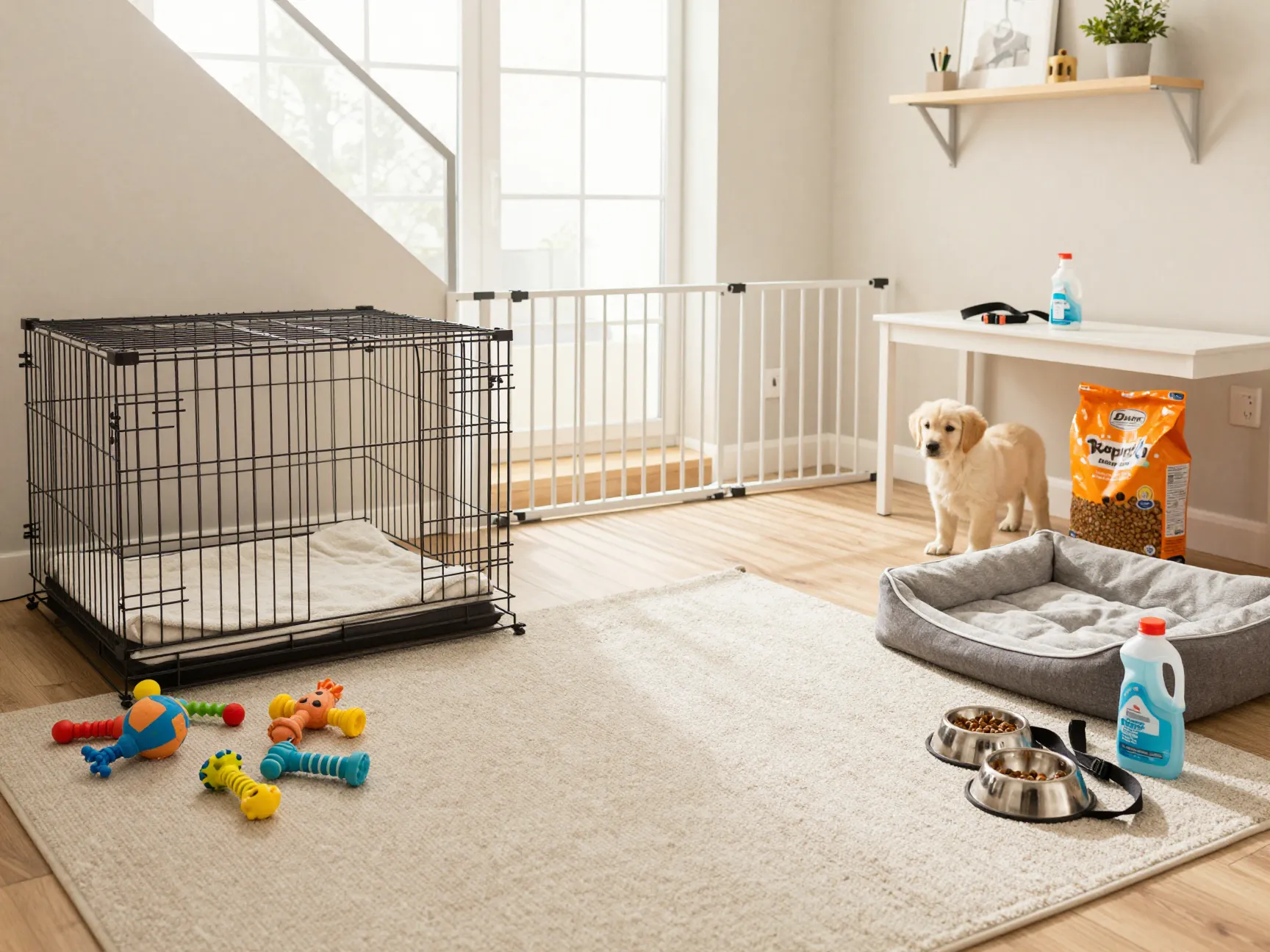
Before your yellow Lab puppy sets one paw inside your front door, your home needs to be puppy-proofed. Think of it like baby-proofing, but for a creature that can chew through a phone charger in under 30 seconds.
Puppy-proofing checklist:
- Secure electrical cords and cables
- Remove toxic plants (e.g., lilies, sago palm)
- Store cleaning products and medications out of reach
- Block off stairs with baby gates
- Set up a designated puppy zone with a crate, bed, and toys
You’ll also want to purchase supplies in advance:
| Supply | Purpose |
|---|---|
| Crate (wire or plastic) | Safe sleeping space, housetraining |
| Collar + ID tag | Safety and identification |
| Food and water bowls | Daily feeding |
| Puppy-specific kibble | Proper nutrition |
| Leash (4–6 ft) | Walks and training |
| Chew toys | Teething and mental stimulation |
| Enzymatic cleaner | Accident cleanup |
Getting everything ready before pickup day means your puppy can settle in calmly — and so can you. [3]
2. Choose the Right Nutrition for Your Yellow Lab Puppy
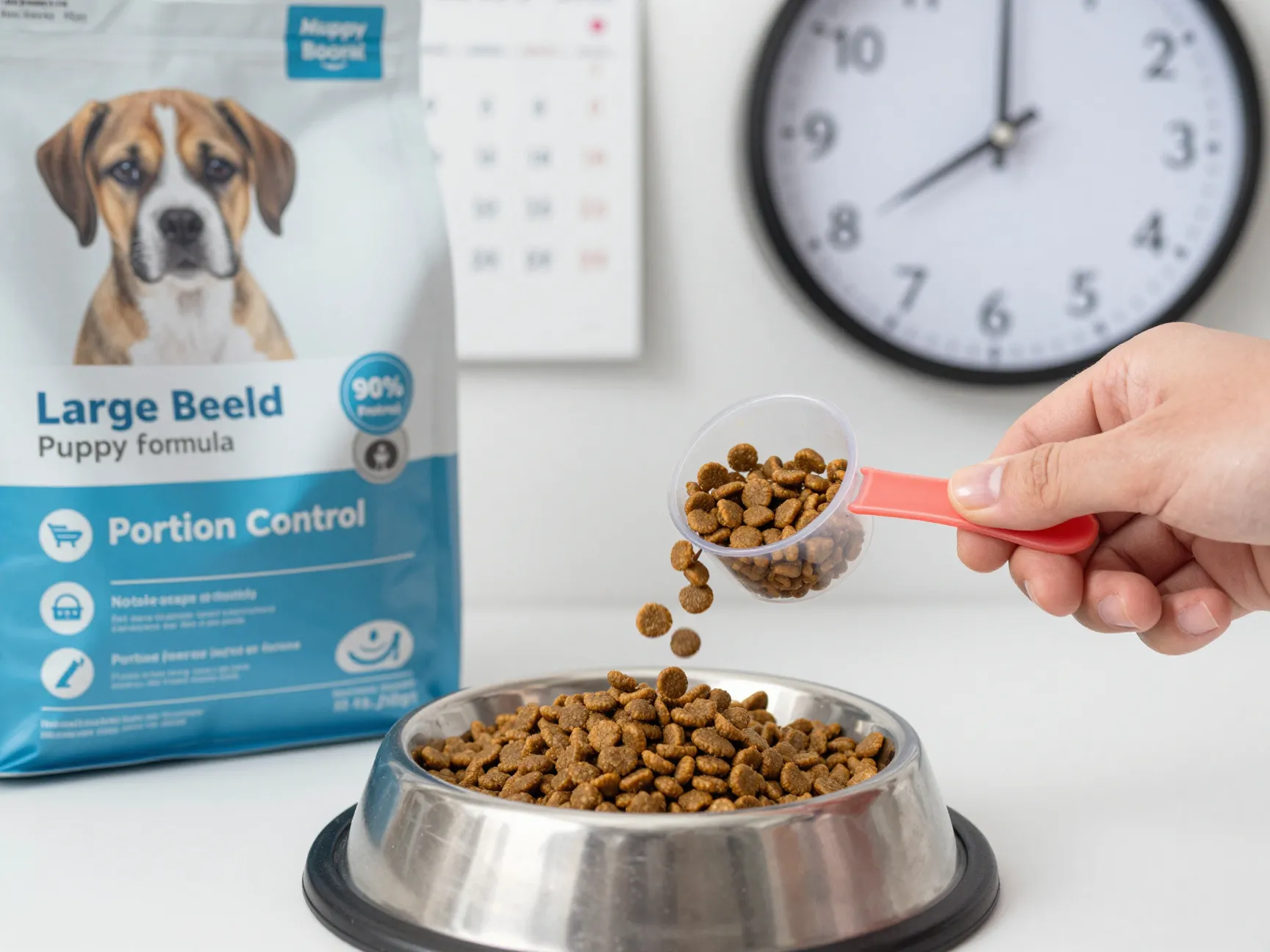
What your puppy eats in their first year shapes their bones, brain, and immune system. Yellow Labs are prone to obesity, so feeding the right amount of the right food is critical. [6]
Key nutrition guidelines:
- Choose a large-breed puppy formula. These are specially balanced to support controlled bone growth and prevent joint problems.
- Follow the feeding schedule on the bag as a starting point, then adjust based on your puppy’s body condition.
- Feed 3 times per day until 6 months, then transition to 2 meals daily.
- Avoid free-feeding (leaving food out all day), as Labs will overeat.
- Limit treats to no more than 10% of daily caloric intake.
💡 “A lean puppy is a healthy puppy. You should be able to feel — but not see — your Lab’s ribs.”
Fresh water should always be available. Avoid giving table scraps, especially foods toxic to dogs like grapes, onions, chocolate, and xylitol.
3. Schedule a Vet Visit in the First Week

One of the most important early steps is establishing care with a trusted veterinarian. Ideally, schedule your first appointment within 72 hours of bringing your puppy home. [4]
Your first vet visit should cover:
- Full physical examination
- Deworming (most puppies have parasites)
- Core vaccine schedule (distemper, parvovirus, adenovirus)
- Flea, tick, and heartworm prevention plan
- Microchipping
- Spay/neuter discussion
Puppy vaccine schedule overview:
| Age | Vaccines/Treatments |
|---|---|
| 6–8 weeks | DHPP (first dose), deworming |
| 10–12 weeks | DHPP (second dose), Bordetella |
| 14–16 weeks | DHPP (third dose), Rabies |
| 12–16 months | Booster vaccines |
Regular vet checkups aren’t just about shots — they’re your best tool for catching health issues early. Yellow Labs can be prone to hip dysplasia, elbow dysplasia, and obesity-related conditions, so proactive care pays off. [6]
4. Start Crate Training Immediately
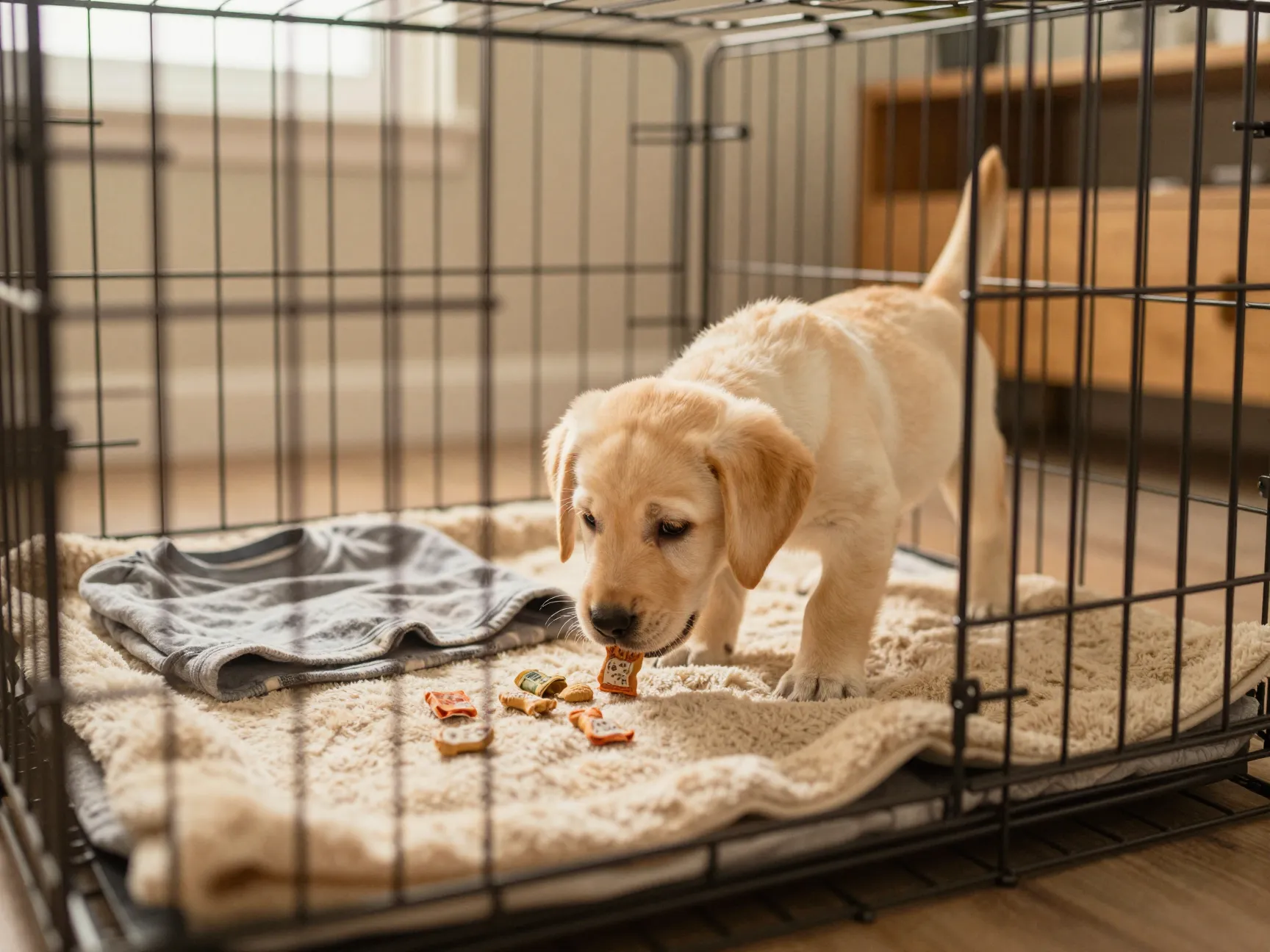
Crate training is one of the most misunderstood — and most valuable — tools in the puppy-raising toolkit. Dogs are naturally den animals, and a properly introduced crate becomes a safe, comforting retreat rather than a punishment. [3]
How to introduce the crate:
- Place the crate in a busy family area (not isolated)
- Put a soft blanket and a worn t-shirt inside for your scent
- Toss treats inside without closing the door — let the puppy explore freely
- Gradually increase time inside with the door closed
- Never use the crate as punishment
Crate time guidelines by age:
| Puppy Age | Maximum Crate Time |
|---|---|
| 8–10 weeks | 30–60 minutes |
| 11–14 weeks | 1–3 hours |
| 15–16 weeks | 3–4 hours |
| 17+ weeks | 4–5 hours (max) |
A crated puppy at night should be close enough to hear you — this reduces anxiety and helps them settle faster. Most yellow Lab puppies can sleep through the night by 12–16 weeks with consistent crate training. [3]
5. Establish a Consistent Daily Routine
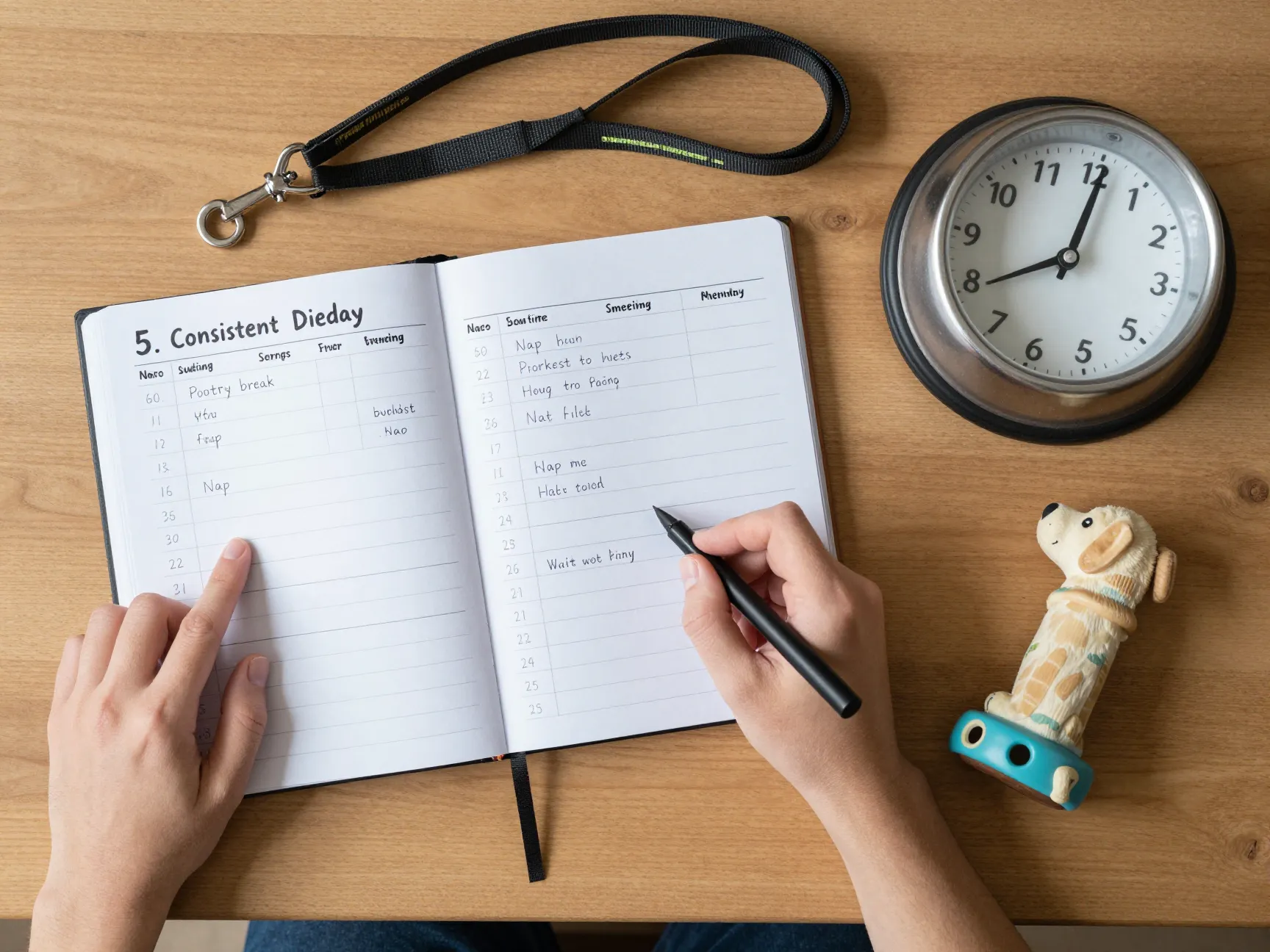
Puppies thrive on predictability. A consistent schedule reduces anxiety, speeds up housetraining, and makes your puppy feel secure. Think of it as giving your Lab a reliable map of their day. [1]
Sample daily schedule for an 8–12 week yellow Lab puppy:
| Time | Activity |
|---|---|
| 6:30 AM | Wake up → immediate potty break |
| 7:00 AM | Breakfast |
| 7:15 AM | Short play session |
| 7:45 AM | Nap in crate |
| 10:00 AM | Potty break + exploration |
| 12:00 PM | Lunch |
| 12:15 PM | Short training session (5 min) |
| 12:30 PM | Nap |
| 3:00 PM | Potty break + play |
| 5:30 PM | Dinner |
| 6:00 PM | Walk or yard play |
| 8:00 PM | Calm time + last potty break |
| 9:00 PM | Bedtime in crate |
🗓️ Consistency is the kindest thing you can do for a new puppy. When they know what to expect, they feel safe.
6. Begin Socialization During the Critical Window

This step is arguably the most impactful of all the 9 Key Steps to Raising Happy Labrador Retriever Puppies Yellow. The socialization window — roughly 3 to 14 weeks of age — is when your puppy’s brain is most open to new experiences. What they learn (or don’t learn) during this period shapes their personality for life. [1]
Socialization goals before 14 weeks:
- Meet at least 100 different people (men, women, children, people with hats/glasses/beards)
- Hear a variety of sounds (traffic, vacuum cleaners, thunderstorms, crowds)
- Walk on different surfaces (grass, gravel, tile, carpet, wood)
- Meet friendly, vaccinated dogs and other animals
- Experience car rides, elevators, and new environments
- Be gently handled (ears, paws, mouth, tail)
Important: Socialization doesn’t mean overwhelming your puppy. Keep experiences positive and brief. If your puppy shows fear, give them space and try again more gently. [1]
Puppies that miss this window are significantly more likely to develop fear, aggression, or anxiety as adults. Don’t wait — start socialization the day your puppy comes home. [4]
7. Use Positive Reinforcement Training From Day One
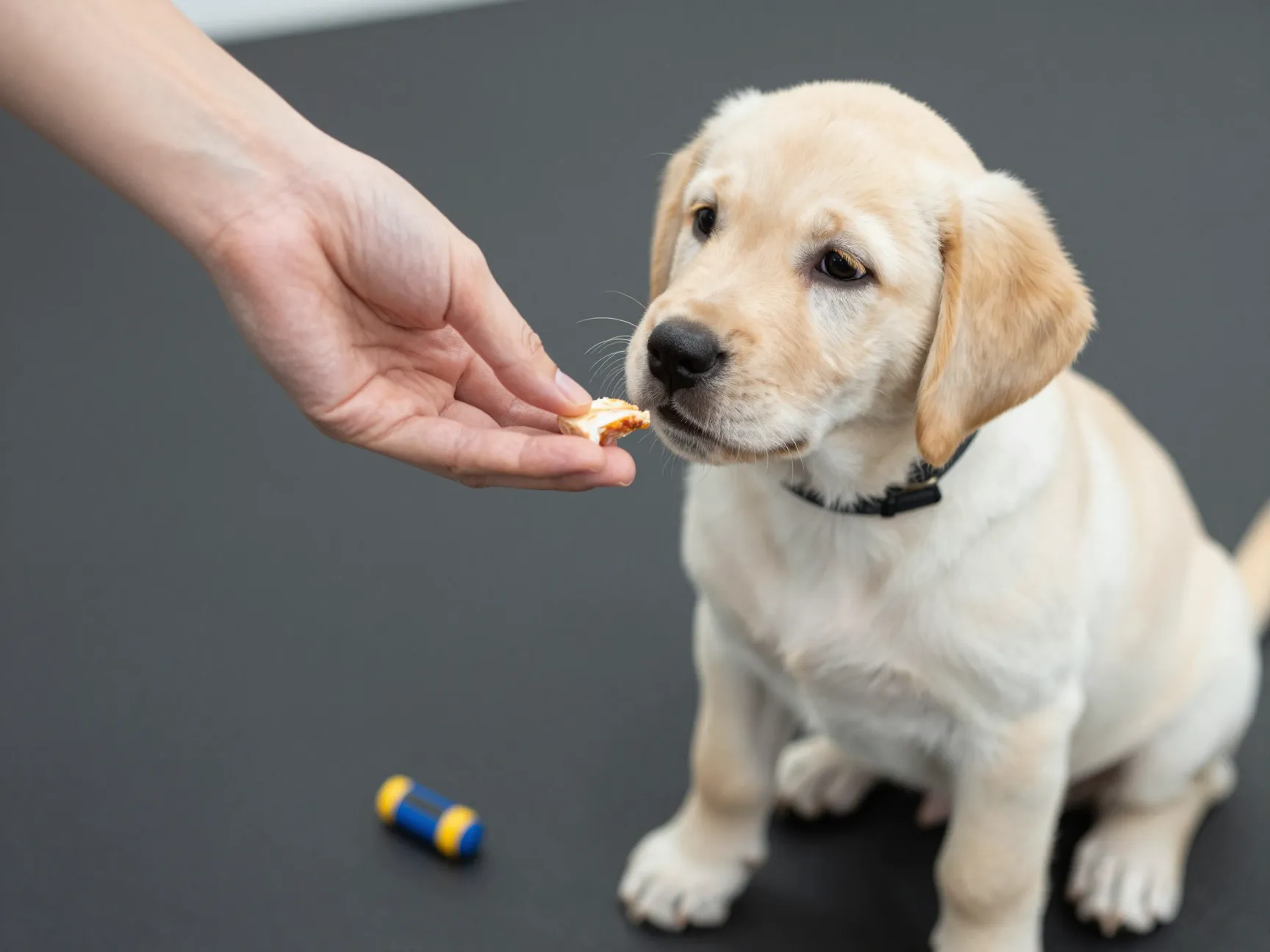
Yellow Labs are food-motivated, people-pleasing learners — which makes them a joy to train. Positive reinforcement (rewarding the behavior you want) is the most effective and humane training method for this breed. [2]
Core commands to teach in the first 8 weeks at home:
- Sit — the foundation of all training
- Stay — builds impulse control
- Down — useful for calm greetings
- Come (recall) — a life-saving command
- Leave it — prevents dangerous scavenging
- Loose-leash walking — for enjoyable walks
Training tips that actually work:
- Keep sessions short (3–5 minutes) and frequent (3–5 times per day)
- Always end on a success — even if you have to make the last task easy
- Use high-value treats (small pieces of chicken, cheese, or commercial training treats)
- Say the command once — don’t repeat it endlessly
- Ignore unwanted behaviors rather than punishing them [2]
🏆 “Labs don’t need to be forced into good behavior — they want to please you. Your job is simply to show them what ‘good’ looks like.”
Puppy classes are a fantastic investment. They combine socialization with structured training in a supervised environment. Look for classes that use force-free, reward-based methods. [2]
8. Provide Adequate Exercise and Mental Stimulation
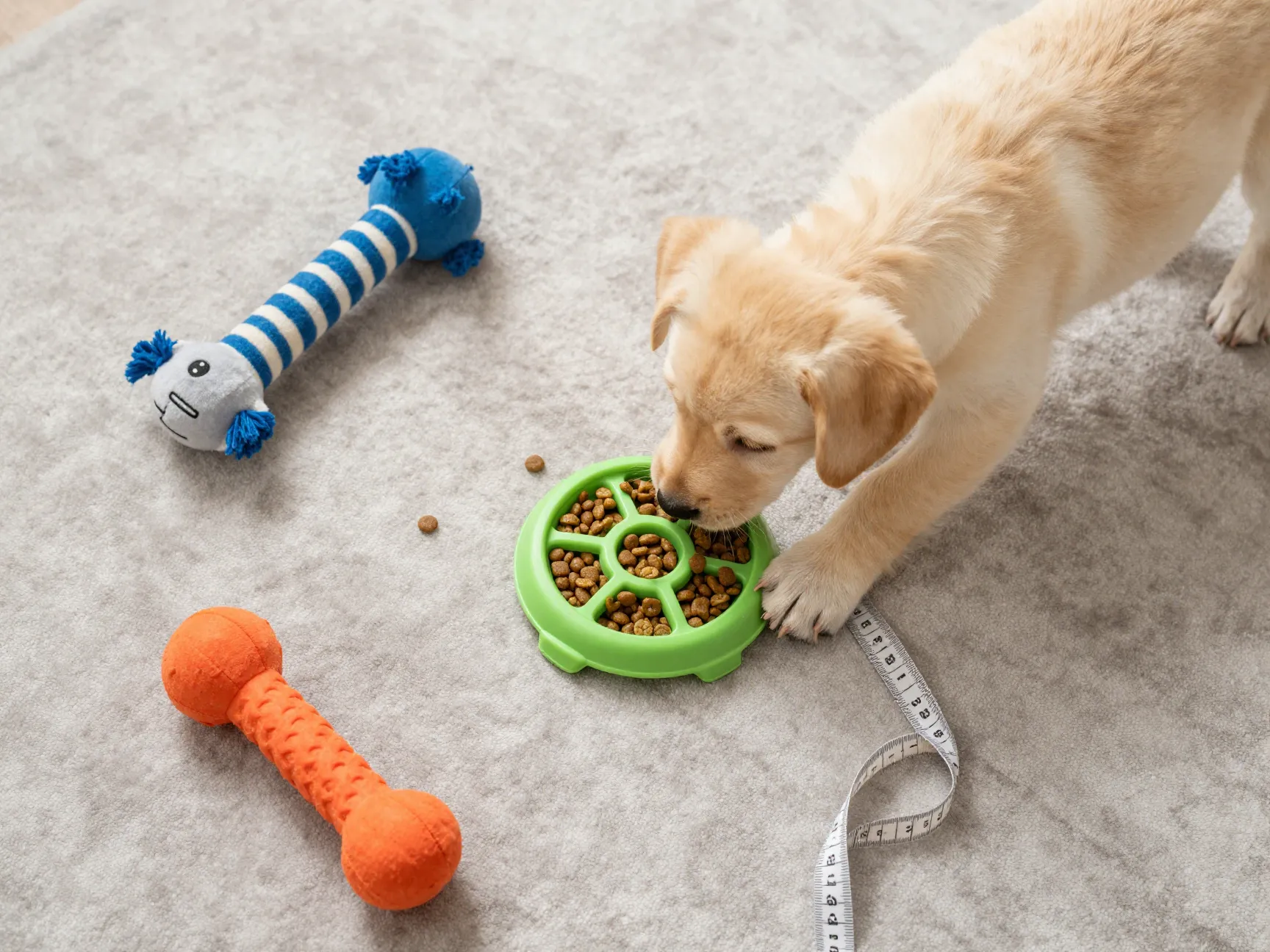
A tired Lab is a well-behaved Lab. But there’s an important caveat: over-exercising a puppy can damage developing joints. Yellow Labs grow rapidly, and their growth plates don’t close until around 12–18 months of age. [6]
Safe exercise guidelines:
- Use the 5-minute rule: 5 minutes of exercise per month of age, twice daily. An 8-week puppy = 10 minutes per session.
- Avoid repetitive high-impact activities (long runs, jumping, stairs) until 12–18 months
- Free play in a yard is safer than forced walks on hard pavement
- Swimming is excellent — low impact and highly enjoyable for Labs
Mental stimulation is just as important as physical exercise:
| Activity | Benefit |
|---|---|
| Puzzle feeders / Kongs | Slows eating, reduces boredom |
| Sniff walks (let them explore) | Mental exhaustion, stress relief |
| Hide-and-seek with treats | Nose work, problem-solving |
| Training sessions | Builds focus and confidence |
| Chew toys | Teething relief, calm behavior |
A puppy that gets both physical and mental outlets is far less likely to develop destructive habits. [1]
9. Build a Strong Bond Through Love and Consistency

All the training and routines in the world won’t matter much without a genuine, trusting relationship between you and your yellow Lab. Labs are deeply social dogs — they don’t just want to be near you, they need it. [6]
Ways to build a strong bond:
- Hand-feed meals occasionally to build trust and focus
- Groom regularly — brushing, nail trims, and ear checks build tolerance and closeness
- Play together every day — fetch, tug, and chase are Lab favorites
- Be patient — puppies make mistakes. Respond with calm redirection, not frustration
- Learn your puppy’s signals — when they’re tired, overstimulated, or scared
❤️ “The bond you build in the first year is the one your dog will carry for their entire life.”
Avoid these common bonding mistakes:
- Punishing accidents — they don’t understand after the fact
- Isolating your puppy for long periods
- Inconsistent rules (allowing jumping one day, correcting it the next)
- Skipping training sessions when life gets busy
Consistency is love in action. When your puppy knows what to expect from you, they trust you — and that trust is the foundation of everything. [1]
Common Mistakes to Avoid When Raising Yellow Lab Puppies
Even well-meaning owners make these errors. Watch out for:
- Skipping socialization because the puppy “seems fine” — the window closes fast.
- Over-exercising a young puppy, risking permanent joint damage.
- Free-feeding a Lab — they will eat until they’re sick.
- Using punishment-based training — it damages trust and increases anxiety.
- Expecting too much too soon — puppies have short attention spans and developing brains.
- Neglecting mental stimulation — a bored Lab is a destructive Lab.
Conclusion: Your Yellow Lab’s Happy Future Starts Today
Raising a happy, healthy yellow Labrador Retriever puppy is one of the most rewarding experiences a dog lover can have — and it’s entirely within your reach. By following these 9 Key Steps to Raising Happy Labrador Retriever Puppies Yellow, you’re giving your puppy the best possible foundation for a long, joyful life.
Your actionable next steps:
- ✅ Puppy-proof your home and gather all supplies before pickup day
- ✅ Book your first vet appointment for within 72 hours of arrival
- ✅ Set up a crate and begin gentle introductions on day one
- ✅ Create a daily schedule and stick to it
- ✅ Start socialization immediately — every positive experience counts
- ✅ Begin short, positive training sessions from week one
- ✅ Use the 5-minute exercise rule to protect growing joints
- ✅ Provide puzzle toys and enrichment daily
- ✅ Show up consistently — your puppy is counting on you
The yellow Lab you raise today becomes the loyal, loving companion you’ll have for the next 10–14 years. Every treat given, every patient moment, and every training session is an investment in that relationship. Start strong, stay consistent, and enjoy every single muddy, tail-wagging moment. 🐕💛
References
[1] Complete Guide To Labrador Retriever Puppy Training And Care – https://porchpotty.com/blogs/news/complete-guide-to-labrador-retriever-puppy-training-and-care
[2] Breeds 2 – https://www.paws4training.com/breeds-2/
[3] How To Raise Care For A Labrador Puppy – https://www.snowypineswhitelabs.com/blog/how-to-raise-care-for-a-labrador-puppy/
[4] Train Labrador Retriever Puppy Milestone Timeline – https://www.akc.org/expert-advice/puppy-information/train-labrador-retriever-puppy-milestone-timeline/
[6] Labrador Puppies – https://www.thelabradorsite.com/labrador-puppies/