9 Differences Between the Kangal Dog Anatolian Shepherd & Other Livestock Guardians
Wolves kill an estimated $200 million worth of livestock in the United States every year — and yet, certain dog breeds have been solving this exact problem for thousands of years with remarkable efficiency. If you’ve ever researched livestock guardian dogs (LGDs), you’ve likely encountered the Kangal Dog and the Anatolian Shepherd at the top of nearly every recommendation list. But what actually sets these Turkish titans apart from each other — and from other well-known guardian breeds like the Great Pyrenees, Caucasian Shepherd, and Tibetan Mastiff?
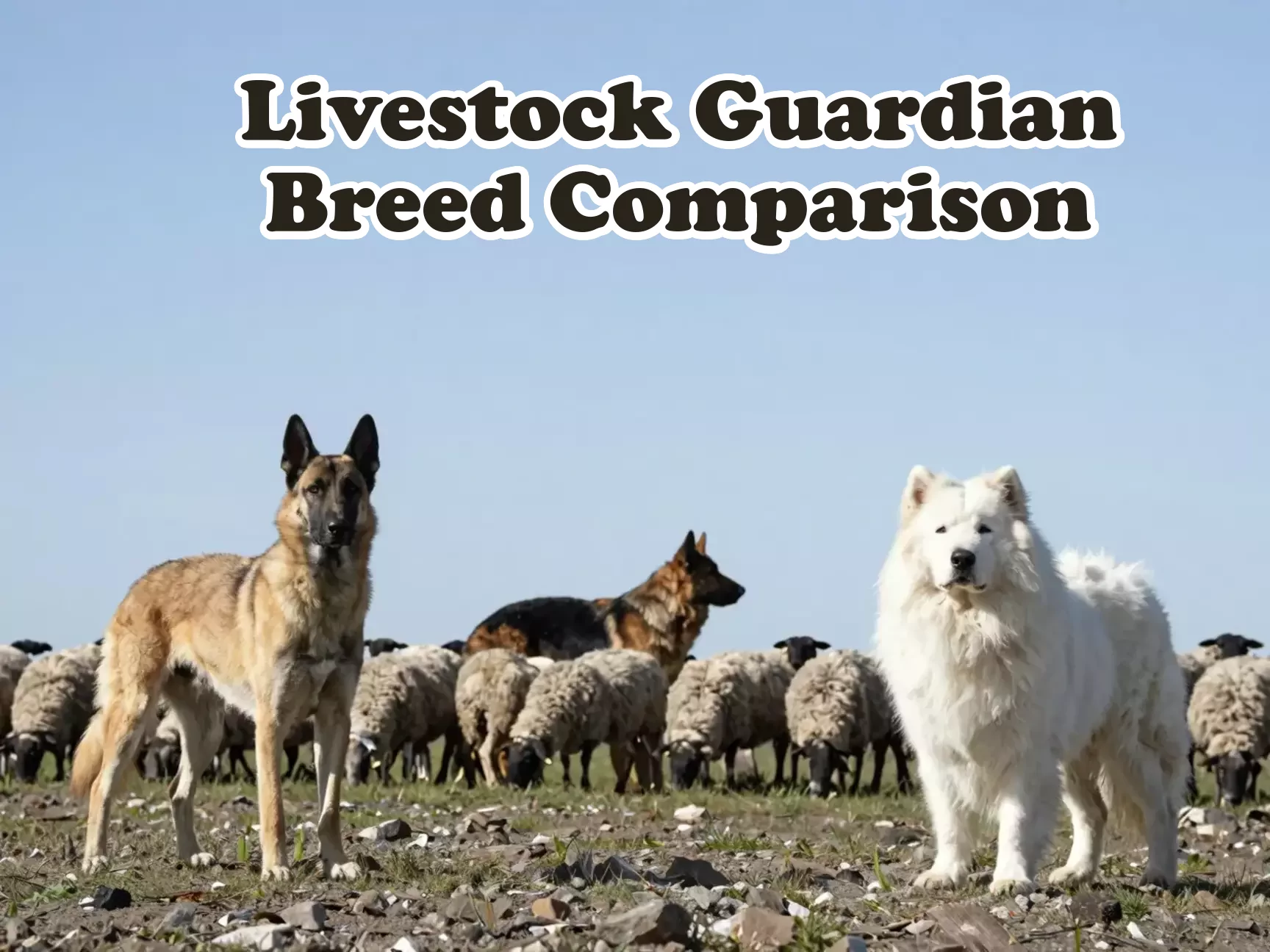
Understanding the 9 differences between the Kangal Dog Anatolian Shepherd & other livestock guardians isn’t just an academic exercise. It’s a practical decision that affects the safety of your flock, the welfare of your dog, and the long-term success of your operation. In this guide, I’ll walk you through each key distinction so you can make a confident, informed choice.
Key Takeaways 📌
- The Kangal Dog and Anatolian Shepherd are often confused but have distinct physical and behavioral profiles — they may even be separate breeds depending on the registry.
- Kangal Dogs are widely regarded as having one of the strongest bite forces of any domestic dog breed.
- Unlike the Great Pyrenees or Tibetan Mastiff, Kangal and Anatolian Shepherds were selectively bred for speed and agility alongside raw power.
- Different livestock guardian breeds suit different climates, predator pressures, and livestock types — there is no single “best” LGD.
- Proper socialization, working environment, and owner experience matter as much as breed choice when selecting a livestock guardian.
What Are Livestock Guardian Dogs, and Why Does Breed Choice Matter?
Livestock guardian dogs are working dogs bred specifically to protect flocks and herds from predators. Unlike herding dogs that move animals, LGDs live with the livestock, bond with them, and deter or confront threats. Breeds in this category include the Kangal, Anatolian Shepherd, Great Pyrenees, Caucasian Shepherd (also called Caucasian Ovcharka), Tibetan Mastiff, Pyrenean Mastiff, and several others.
Choosing the wrong breed for your environment can lead to:
- Inadequate predator deterrence
- Behavioral problems from poor climate adaptation
- Difficulty managing an overly aggressive dog around visitors or children
- High maintenance costs from grooming-intensive breeds in hot climates
The 9 differences between the Kangal Dog Anatolian Shepherd & other livestock guardians explored below will help you cut through the confusion and match the right breed to your specific needs.
The 9 Differences Between the Kangal Dog Anatolian Shepherd & Other Livestock Guardians
1. Breed Origin and Historical Purpose
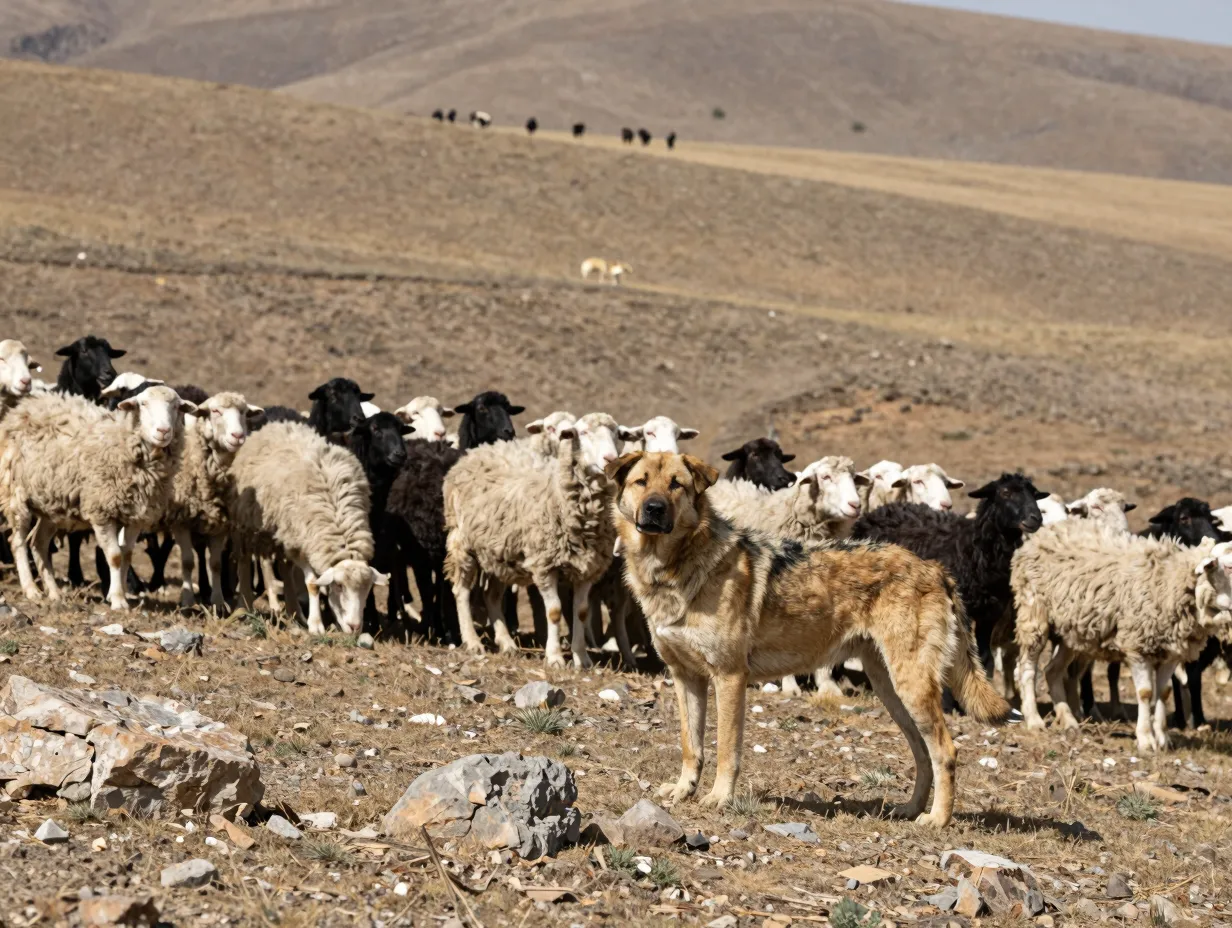
The Kangal Dog originates specifically from the Sivas province of Turkey, where it was developed by the Kangal people to guard sheep and goats against wolves, bears, and jackals on the Anatolian plateau. It is considered a national treasure in Turkey and is subject to strict breeding controls in its homeland.
The Anatolian Shepherd, by contrast, is a broader term used — particularly in Western countries — to describe a range of Turkish shepherd dogs that may include Kangal-type dogs alongside other regional varieties [1].
Other LGDs have equally distinct origins:
- 🐾 Great Pyrenees — French and Spanish Pyrenees mountains, bred for cold-climate wolf deterrence
- 🐾 Caucasian Shepherd — Caucasus mountain region, bred for extreme predator aggression
- 🐾 Tibetan Mastiff — Himalayan plateau, bred to guard monasteries and nomadic camps
- 🐾 Pyrenean Mastiff — Aragon, Spain, bred for large-scale migratory sheep flocks
Understanding origin matters because the predator profile and terrain of each region shaped each breed’s instincts in fundamentally different ways.
2. Physical Build and Size
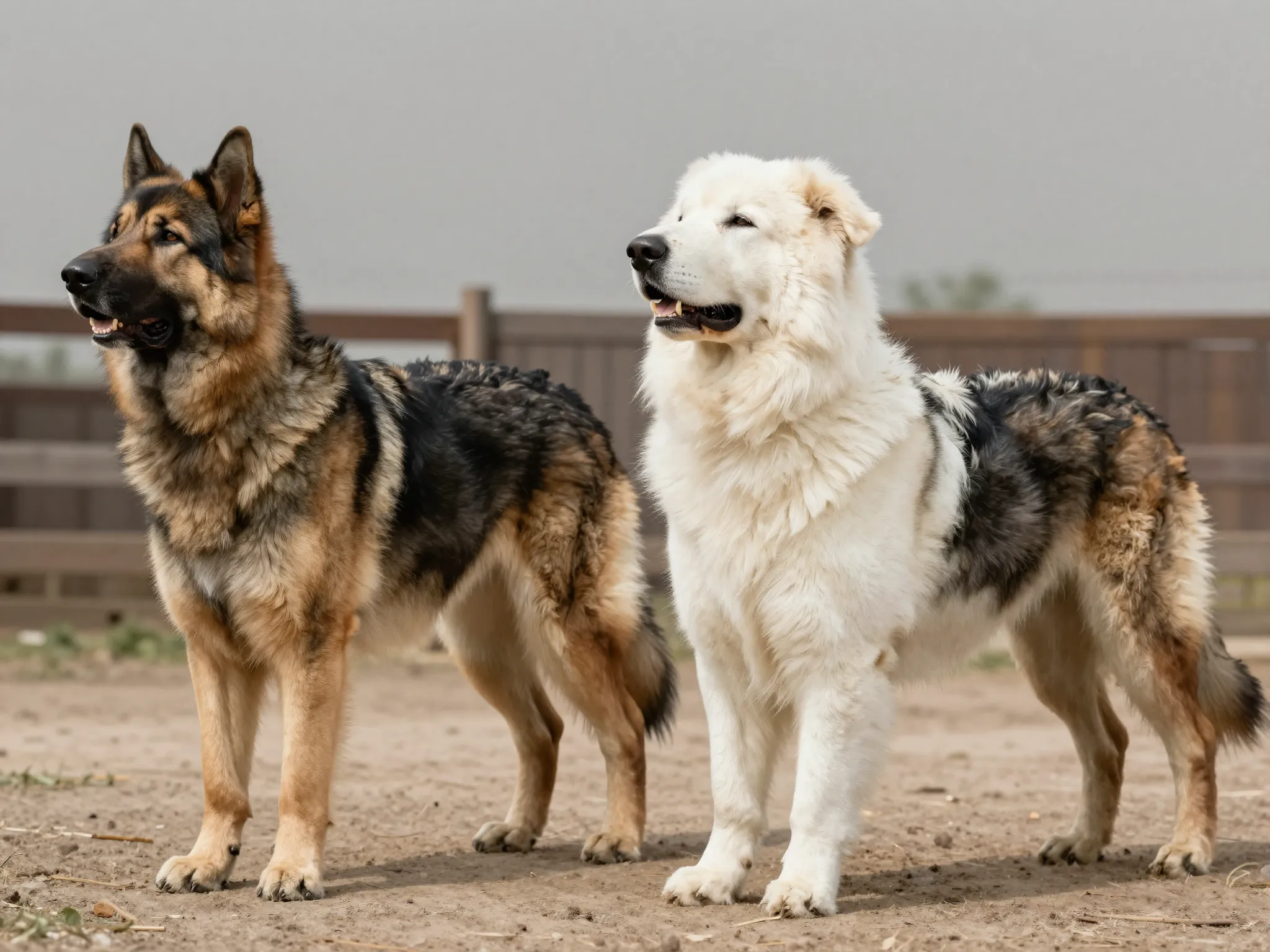
One of the most visible differences among livestock guardian breeds is body structure.
| Breed | Weight Range | Height (at shoulder) | Build |
|---|---|---|---|
| Kangal Dog | 90–145 lbs | 28–32 inches | Athletic, lean, muscular |
| Anatolian Shepherd | 80–150 lbs | 27–32 inches | Slightly heavier-boned |
| Great Pyrenees | 85–115 lbs | 25–32 inches | Heavy, fluffy, broad |
| Caucasian Shepherd | 99–170+ lbs | 23–30 inches | Massive, heavily muscled |
| Tibetan Mastiff | 70–150 lbs | 24–26 inches | Dense, stocky, heavily coated |
The Kangal Dog is notably leaner and more agile than most other LGDs. This athleticism was essential for chasing down fast predators like wolves across open terrain. The Caucasian Shepherd, by contrast, is built more like a tank — prioritizing raw power over speed [1].
💬 “The Kangal’s build is deceptive — it looks sleek compared to a Caucasian Shepherd, but its speed and endurance in the field are exceptional.”
3. Coat Type and Climate Adaptability
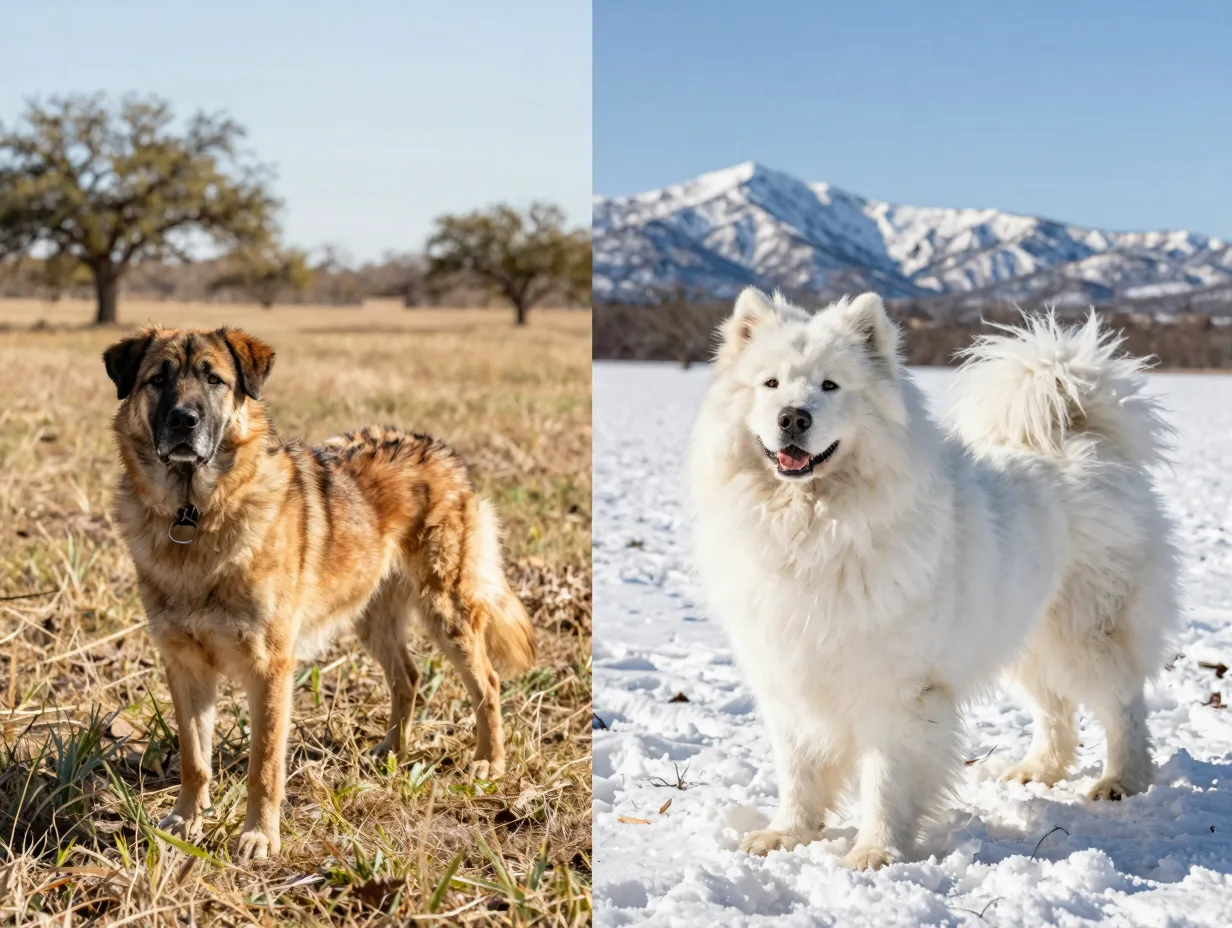
Coat type is a critical practical factor, especially for farmers in hot or humid climates.
Kangal Dogs have a short to medium double coat — dense enough for cold Anatolian winters but manageable in heat. Their fawn or tan coat with a black mask is iconic and functional, absorbing less heat than darker coats.
Anatolian Shepherds similarly tend toward shorter coats, though some lines carry longer fur depending on regional ancestry [1].
Compare this to:
- Great Pyrenees: Long, thick white double coat — excellent for cold, but can cause heat stress in warm climates and requires significant grooming
- Caucasian Shepherd: Extremely dense, long coat suited to harsh mountain winters — a poor fit for Southern U.S. summers without careful management
- Tibetan Mastiff: Heavy double coat adapted to Himalayan cold — not ideal for warm-climate farms
Bottom line: If you’re farming in Texas, Arizona, or a similarly hot region, the Kangal or Anatolian Shepherd’s coat management needs are significantly lower than those of a Great Pyrenees or Caucasian Shepherd.
4. Bite Force and Predator Deterrence Capability
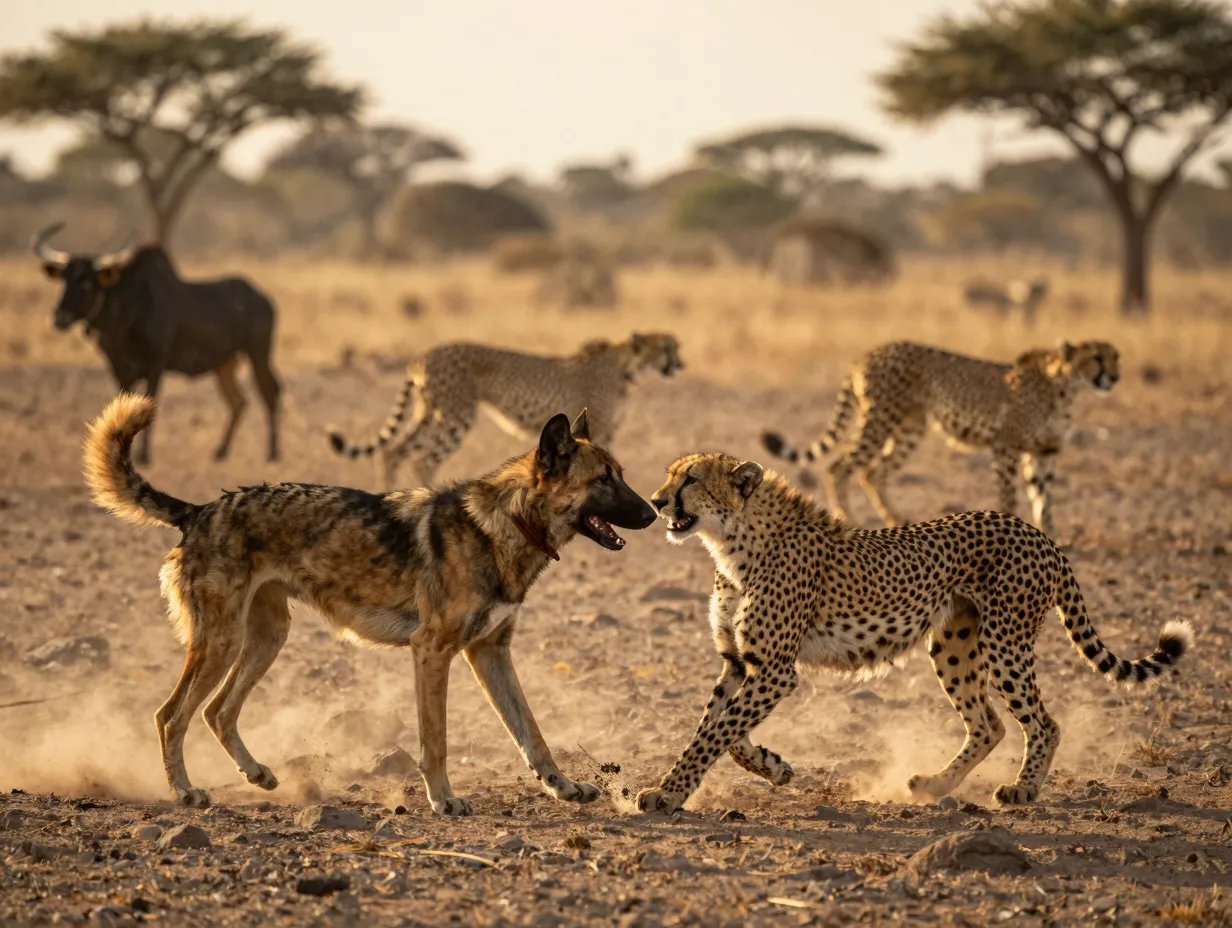
This is where the Kangal Dog earns its legendary reputation. The Kangal is widely reported to have one of the highest bite forces of any domestic dog breed, with estimates commonly cited between 700–743 PSI (pounds per square inch). This makes it capable of confronting wolves, bears, and even cheetahs — a fact documented in Africa, where Kangal Dogs have been deployed by conservation programs to protect livestock from cheetahs, reducing retaliatory killings of the endangered cats.
How does this compare?
- Kangal Dog: ~700–743 PSI (widely cited)
- Caucasian Shepherd: ~550–700 PSI (estimated)
- Great Pyrenees: ~400–500 PSI (estimated)
- Tibetan Mastiff: ~550–650 PSI (estimated)
- Anatolian Shepherd: ~400–700 PSI (varies by lineage)
⚠️ Note: Bite force measurements in dogs are notoriously difficult to standardize, and published figures vary widely by source and methodology. These are commonly cited estimates, not laboratory-certified values.
What’s clear is that the Kangal’s combination of speed, size, and jaw strength makes it a uniquely effective predator deterrent compared to most other LGD breeds.
5. Temperament and Trainability
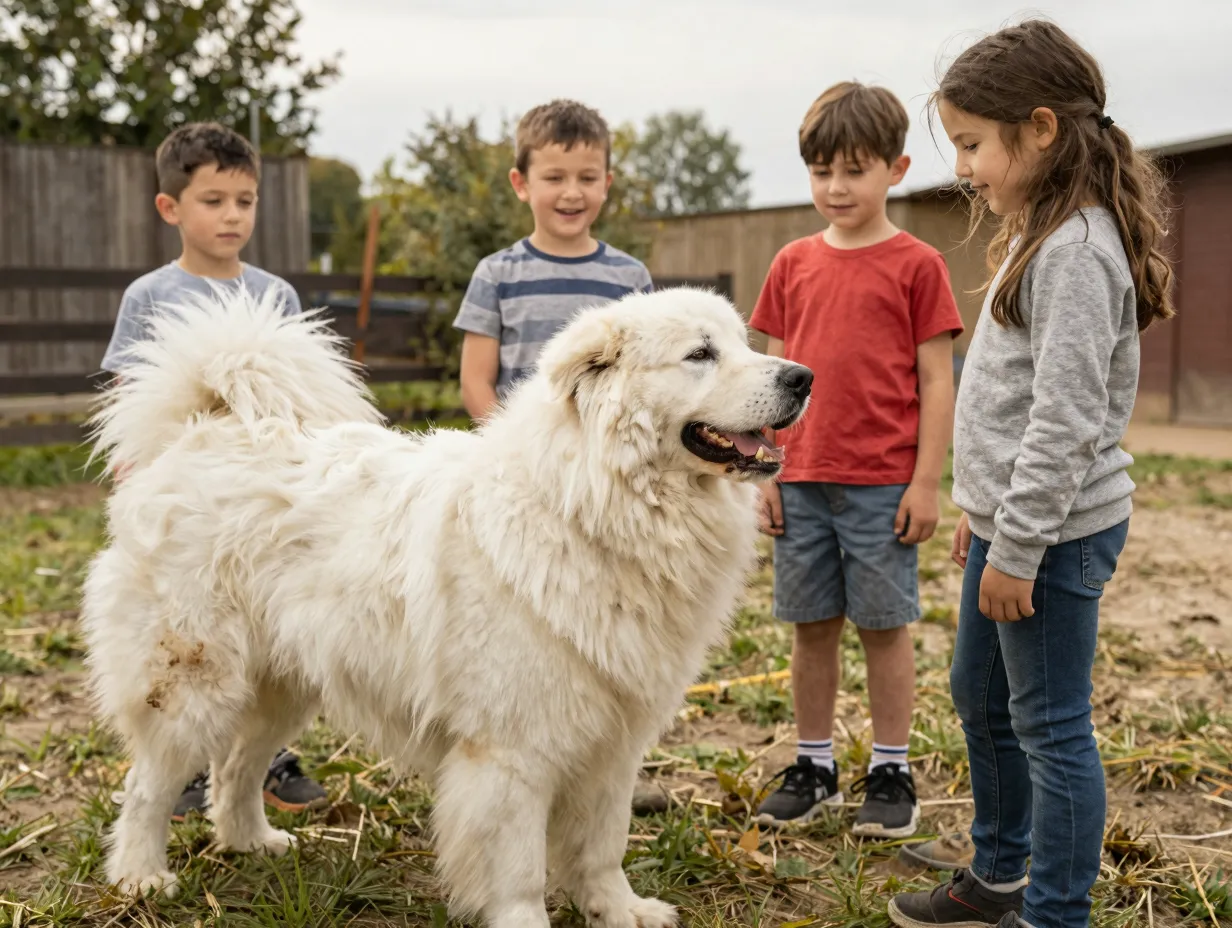
All livestock guardian dogs share certain temperament traits: independence, loyalty to their flock, wariness of strangers, and a strong protective instinct. But the degree and expression of these traits vary meaningfully across breeds.
Kangal Dogs are known for being:
- Calm and measured in their response — they prefer to deter rather than attack
- Deeply loyal to their family and flock
- Relatively controllable compared to some other LGDs [1]
Anatolian Shepherds are similarly independent but can be:
- More stubborn and harder to redirect once focused on a perceived threat
- Excellent problem-solvers (which can mean creative escape artists)
Caucasian Shepherds are at the far end of the aggression spectrum — they are not recommended for inexperienced dog owners and can be genuinely dangerous to strangers without rigorous socialization.
Great Pyrenees tend to be gentler and more tolerant of strangers, making them a popular choice for farms with frequent visitors, children, or agritourism operations.
Tibetan Mastiffs are notoriously aloof and can be difficult to manage — they are often described as “not for everyone” even among LGD enthusiasts.
💡 Pro Tip: If you’re new to livestock guardian dogs, the Great Pyrenees or Kangal Dog are generally considered more manageable starting points than the Caucasian Shepherd or Tibetan Mastiff.
6. Breed Recognition and Standardization
This is one of the most confusing aspects of the Kangal vs. Anatolian Shepherd debate, and it has real implications for breeders and buyers.
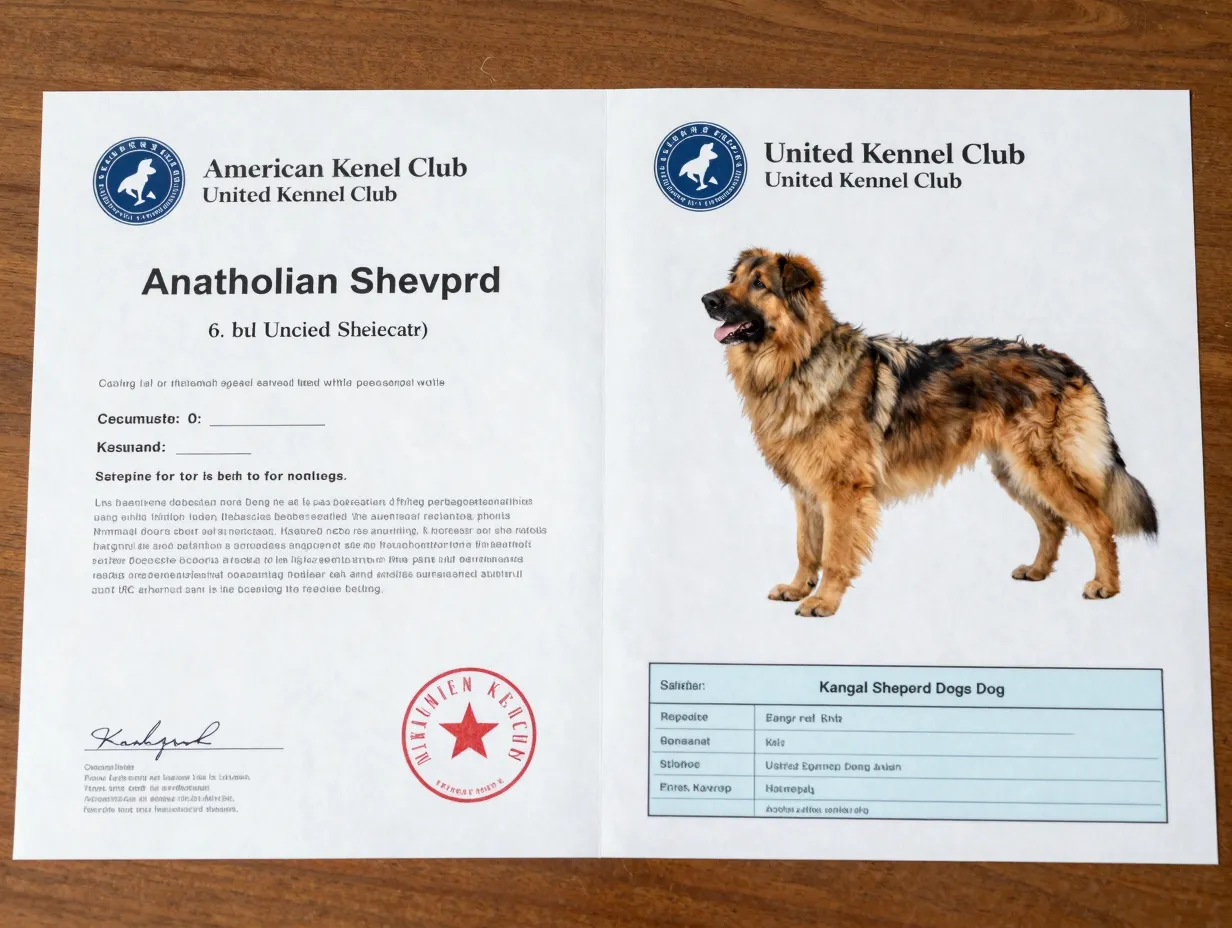
- The American Kennel Club (AKC) currently recognizes the Anatolian Shepherd as a distinct breed but does not separately recognize the Kangal Dog.
- The United Kennel Club (UKC) recognizes the Kangal Shepherd Dog as a distinct breed.
- In Turkey, the Kangal Dog is considered a separate and protected national breed, distinct from other Anatolian shepherd-type dogs [1].
This lack of universal standardization means that dogs sold as “Kangal Dogs” in the United States may not always conform to the strict standards maintained in Turkey. Buyers should research breeders carefully and, where possible, seek dogs with documented Turkish lineage or UKC registration.
Other LGD breeds like the Great Pyrenees, Caucasian Shepherd, and Tibetan Mastiff enjoy more consistent international breed standards across major kennel clubs.
7. Working Style and Guardian Strategy
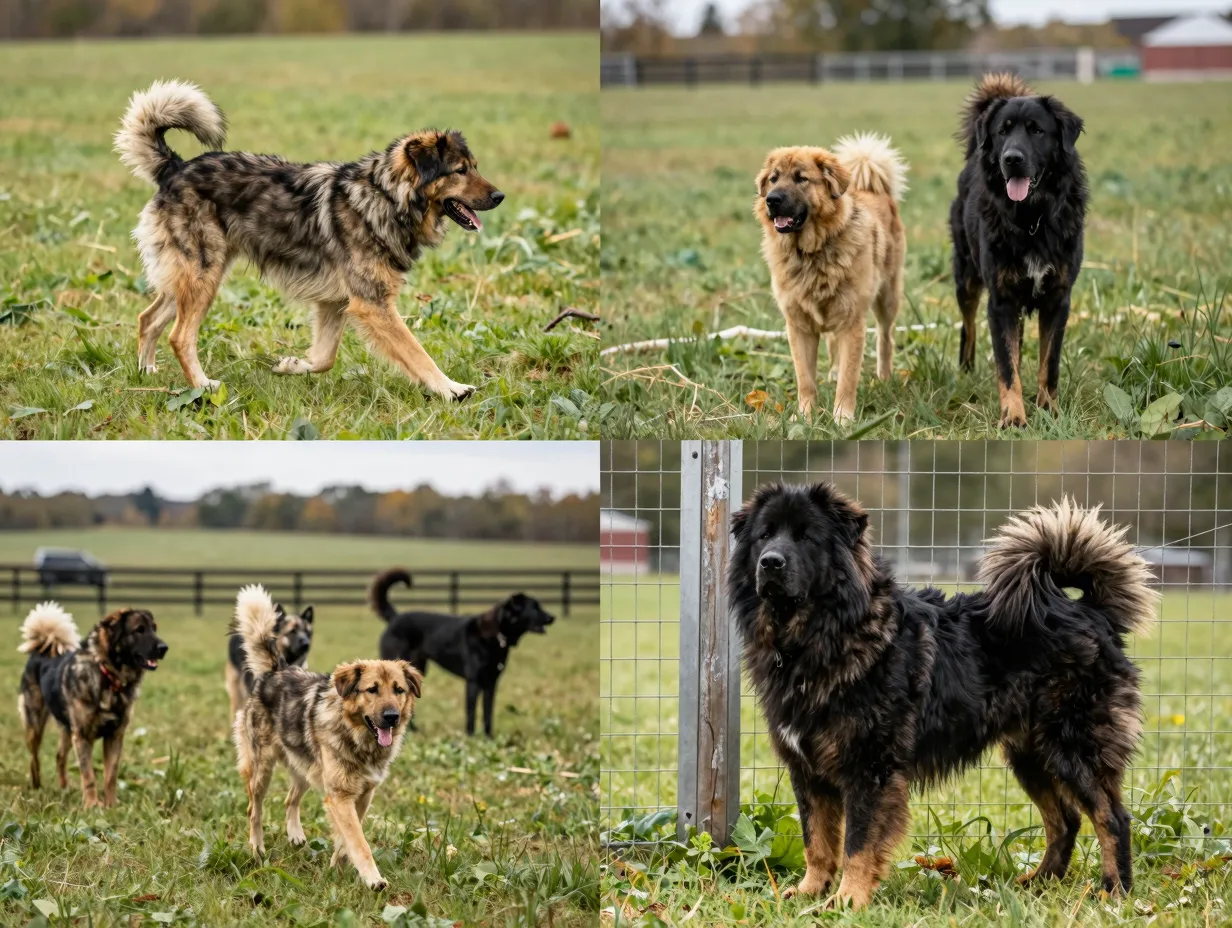
Not all livestock guardian dogs work the same way — and this difference can significantly affect how well a breed fits your operation.
Kangal Dogs use a patrol-and-deter strategy. They are highly alert, cover large areas, and will place themselves between the flock and a threat. They tend to bark first and engage physically only when necessary — a measured, strategic approach [1].
Anatolian Shepherds are similarly proactive patrollers but may be more likely to pursue a threat aggressively rather than simply holding position.
Great Pyrenees are known for nocturnal barking — they are most active at night when predator pressure is highest. This makes them excellent nighttime guardians but can be a noise concern for neighbors.
Caucasian Shepherds take an extremely aggressive approach — they will actively confront and attack perceived threats, which can be highly effective but also poses risks if the dog misjudges a threat (e.g., a neighboring dog, a visiting person).
Tibetan Mastiffs are more territorial than flock-bonded — they guard a perimeter rather than moving with the livestock, which suits some farm setups better than others.
Understanding your predator type, farm layout, and flock size will help determine which working style fits your needs best.
8. Health, Lifespan, and Maintenance Needs
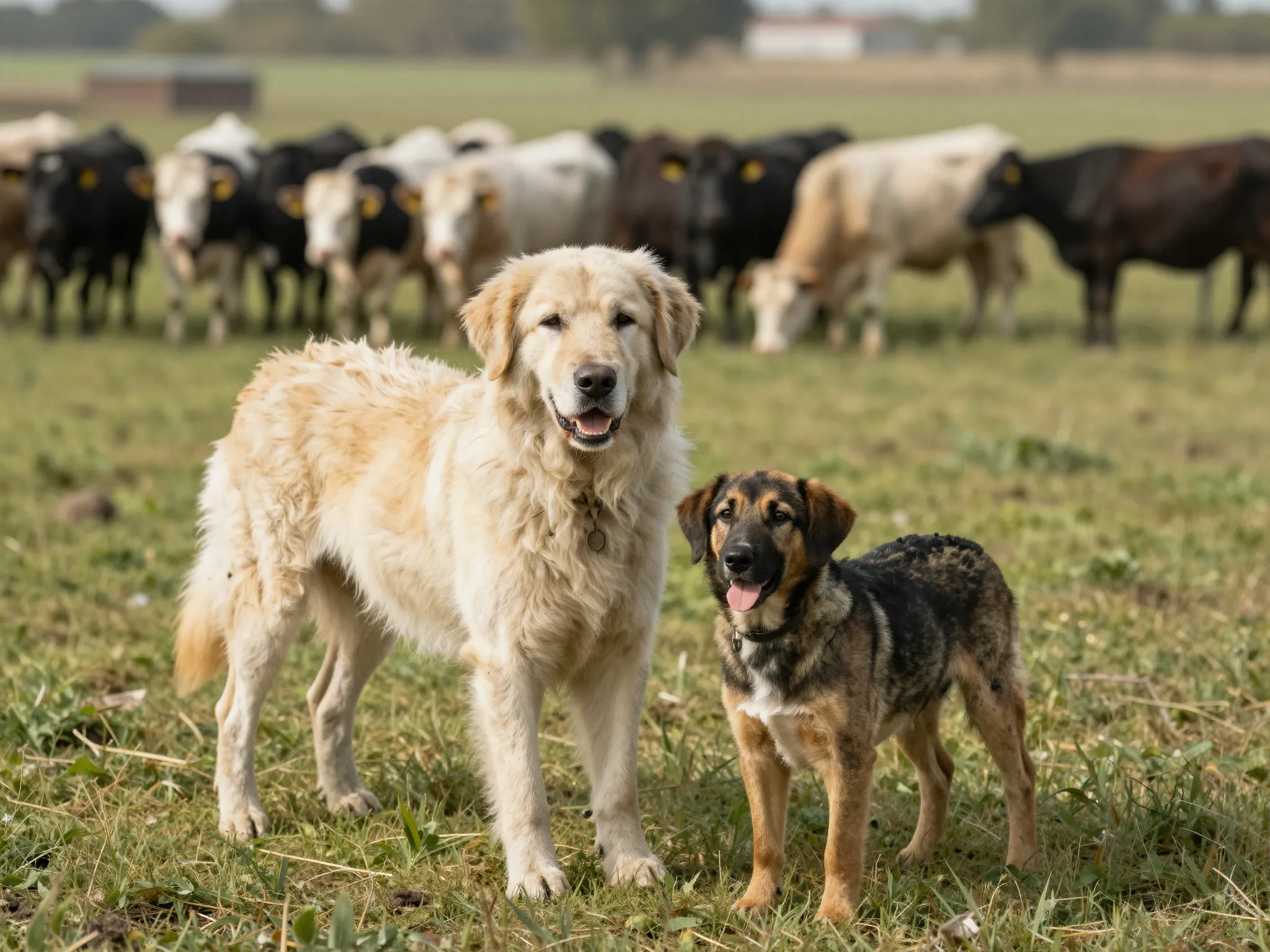
Working dogs need to be healthy to do their job. Here’s how the major LGD breeds compare on key health and maintenance metrics:
| Breed | Average Lifespan | Common Health Issues | Grooming Needs |
|---|---|---|---|
| Kangal Dog | 12–15 years | Hip dysplasia, entropion | Low–Moderate |
| Anatolian Shepherd | 11–13 years | Hip dysplasia, hypothyroidism | Low–Moderate |
| Great Pyrenees | 10–12 years | Hip dysplasia, bloat, skin issues | High (heavy shedding) |
| Caucasian Shepherd | 10–12 years | Hip dysplasia, obesity | High |
| Tibetan Mastiff | 10–12 years | Hip dysplasia, hypothyroidism | High |
The Kangal Dog’s longer average lifespan (12–15 years) is a notable advantage for working farm operations, where replacing a well-bonded guardian dog is both emotionally and practically costly. Their relatively low grooming needs also reduce the labor burden on busy farmers.
9. Availability, Cost, and Breeder Access
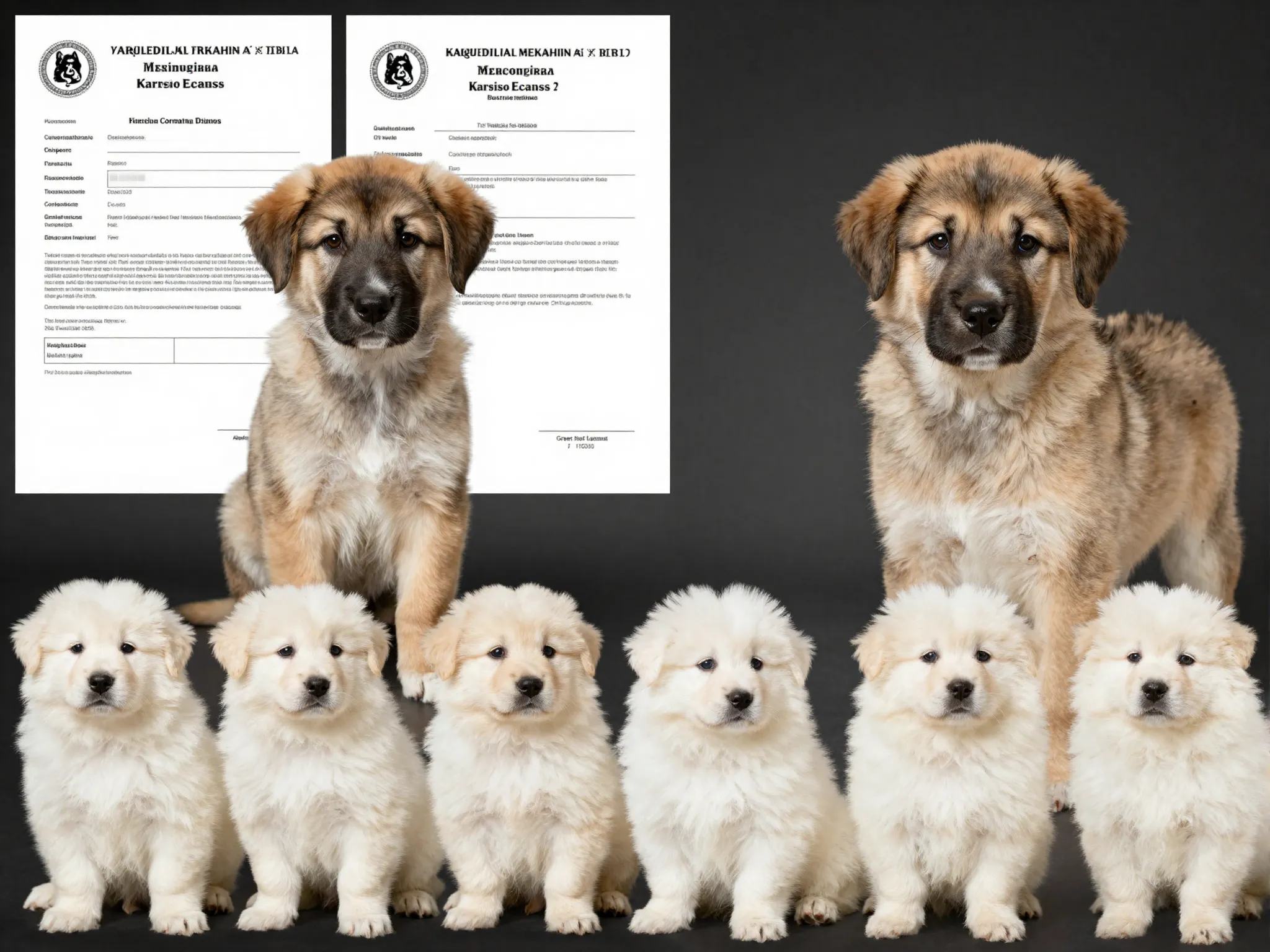
Practical considerations matter when choosing a livestock guardian breed, and availability varies significantly.
Great Pyrenees are the most widely available LGD in North America. They can be found through reputable breeders, rescue organizations, and farm networks at a wide range of price points ($500–$2,500+ for puppies from working lines).
Anatolian Shepherds are moderately available in the U.S., with a solid network of breeders and an active national club.
Kangal Dogs (true Turkish-lineage Kangals) are significantly harder to source in the United States. Import restrictions from Turkey and a smaller breeding population mean that authentic Kangal puppies can cost $1,500–$4,000+ and may require a waiting list.
Caucasian Shepherds and Tibetan Mastiffs are also relatively rare in North America and command premium prices, often $2,000–$5,000+ for quality working-line puppies.
Key considerations when budgeting:
- Purchase price is just the beginning — factor in food (large LGDs eat a lot), veterinary care, and fencing
- A well-bred dog from proven working lines typically outperforms a cheaper dog from unknown lineage
- Rescue and rehome networks exist for most LGD breeds and can be a cost-effective option for experienced handlers
How to Choose the Right Livestock Guardian for Your Farm
After reviewing the 9 differences between the Kangal Dog Anatolian Shepherd & other livestock guardians, the decision ultimately comes down to matching breed characteristics to your specific situation. Use this quick decision framework:
✅ Choose a Kangal Dog if:
- You face serious predator pressure (wolves, coyotes, bears)
- You farm in a hot or variable climate
- You want a long-lived, athletic, relatively trainable guardian
✅ Choose an Anatolian Shepherd if:
- You want a proven Turkish guardian breed with broader U.S. availability
- You need a versatile dog that can adapt to varied terrain
- You’re an experienced LGD handler
✅ Choose a Great Pyrenees if:
- You have a cold climate and heavy snowfall
- You have frequent farm visitors or children present
- You’re new to livestock guardian dogs
✅ Choose a Caucasian Shepherd if:
- You face extreme predator pressure and have experience with powerful, independent dogs
- Your farm is relatively isolated from public access
- You can commit to rigorous, consistent socialization from puppyhood
✅ Choose a Tibetan Mastiff if:
- You need a perimeter guardian rather than a flock-follower
- You are in a cold, high-altitude environment
- You want a breed with a distinctive presence and history
Conclusion: Making the Right Guardian Choice in 2026
The debate over the 9 differences between the Kangal Dog Anatolian Shepherd & other livestock guardians isn’t just about breed pride — it’s about finding the right working partner for your land, your animals, and your lifestyle. Each breed brings a unique combination of history, physical capability, temperament, and working style to the table.
In my assessment, the Kangal Dog stands out as one of the most well-rounded livestock guardians in the world — combining exceptional bite force, impressive speed, a manageable coat, and a notably long lifespan. The Anatolian Shepherd offers similar qualities with greater availability in North America. Neither is universally “best,” but both deserve their strong reputations.
Actionable Next Steps:
- Assess your predator profile — identify what threats your livestock actually face before choosing a breed.
- Visit working farms — spend time with each breed you’re considering in a real working environment, not just at dog shows.
- Contact breed clubs — the Anatolian Shepherd Dog Club of America and Kangal Dog Club of America are excellent resources for breeder referrals and guidance.
- Plan for socialization — whichever breed you choose, early and consistent socialization with your livestock, your family, and your community is non-negotiable.
- Budget realistically — a quality LGD is a long-term investment; cutting corners on purchase price often costs more in the long run.
The right livestock guardian dog can protect your livelihood for over a decade. Take the time to choose wisely.
References
[1] Anatolian Shepherd Vs Kangal – https://animals.howstuffworks.com/pets/anatolian-shepherd-vs-kangal.htm