
8 Things Only Black Labrador Retriever Dog Owners Understand
If you share your home with a black Labrador Retriever, you already know that life is equal parts joy, chaos, and an endless supply of lint rollers. From the moment that sleek, dark-coated bundle of energy bounded into your life, you entered a club that no one else quite understands. This article covers the 8 Things Only Black Labrador Retriever Dog Owners Understand — the quirks, the challenges, the hilarious daily realities, and the deep bond that makes owning a black Lab one of the most rewarding experiences a dog lover can have. Whether you’re a new Lab parent or a seasoned veteran, you’ll recognize every single one of these truths.

Key Takeaways
- 🐾 Black Labs are energy machines — they can sprint to 12 mph in just three seconds and need consistent daily exercise [1]
- 🍖 Food obsession is genetic — roughly 23% of Labradors carry a gene mutation that prevents them from feeling full [3]
- 🖤 Black fur gets everywhere — their dense double coat sheds year-round, requiring brushing 2–3 times per week [1]
- ❤️ They live to please you — their people-first personality makes them elite service and therapy dogs [1]
- 🏠 They are terrible guard dogs — and that’s perfectly fine, because they’ll greet every stranger like a long-lost best friend [5]
The Joyful Chaos of Owning a Black Lab: An Introduction
Labrador Retrievers have held the title of America’s most popular dog breed for decades — and for very good reason. [7] The black variety, with its striking jet-dark coat and warm amber or brown eyes, carries every classic Lab trait in full force. If you’ve searched for the 8 Things Only Black Labrador Retriever Dog Owners Understand, chances are you’ve already lived through at least a few of them. Let’s dive in.
8 Things Only Black Labrador Retriever Dog Owners Understand: The Full List
1. Your Dog Is a Four-Legged Speed Demon

One of the first 8 Things Only Black Labrador Retriever Dog Owners Understand is that these dogs don’t simply run — they launch. Labs can accelerate to 12 miles per hour in just three seconds. [1] That’s sports-car-level acceleration in a dog’s body.
What this means for daily life:
- Off-leash moments require a fully fenced yard or serious recall training
- Morning walks often turn into full cardio sessions — for you, not just the dog
- Zoomies at 6 a.m. are a real and recurring event
💬 “I thought I was in shape until my black Lab decided the backyard needed to be lapped at full speed — fifteen times in a row.”
Labs were originally bred as working retrievers, built to swim through icy Atlantic waters and sprint across rocky terrain. [7] That heritage doesn’t disappear just because they now live in your suburban home. A bored black Lab is a destructive black Lab. Aim for at least 60–90 minutes of vigorous exercise daily to keep your dog happy, healthy, and your furniture intact.
| Exercise Type | Recommended Frequency | Benefit |
|---|---|---|
| Brisk walks | Daily (2x) | Mental stimulation + cardio |
| Fetch / retrieve games | 4–5x per week | Taps into natural instincts |
| Swimming | 2–3x per week (if available) | Low-impact, high-reward |
| Off-leash running | Daily (safe area) | Burns peak energy |
2. Black Fur Is Now Your Official Wardrobe Color
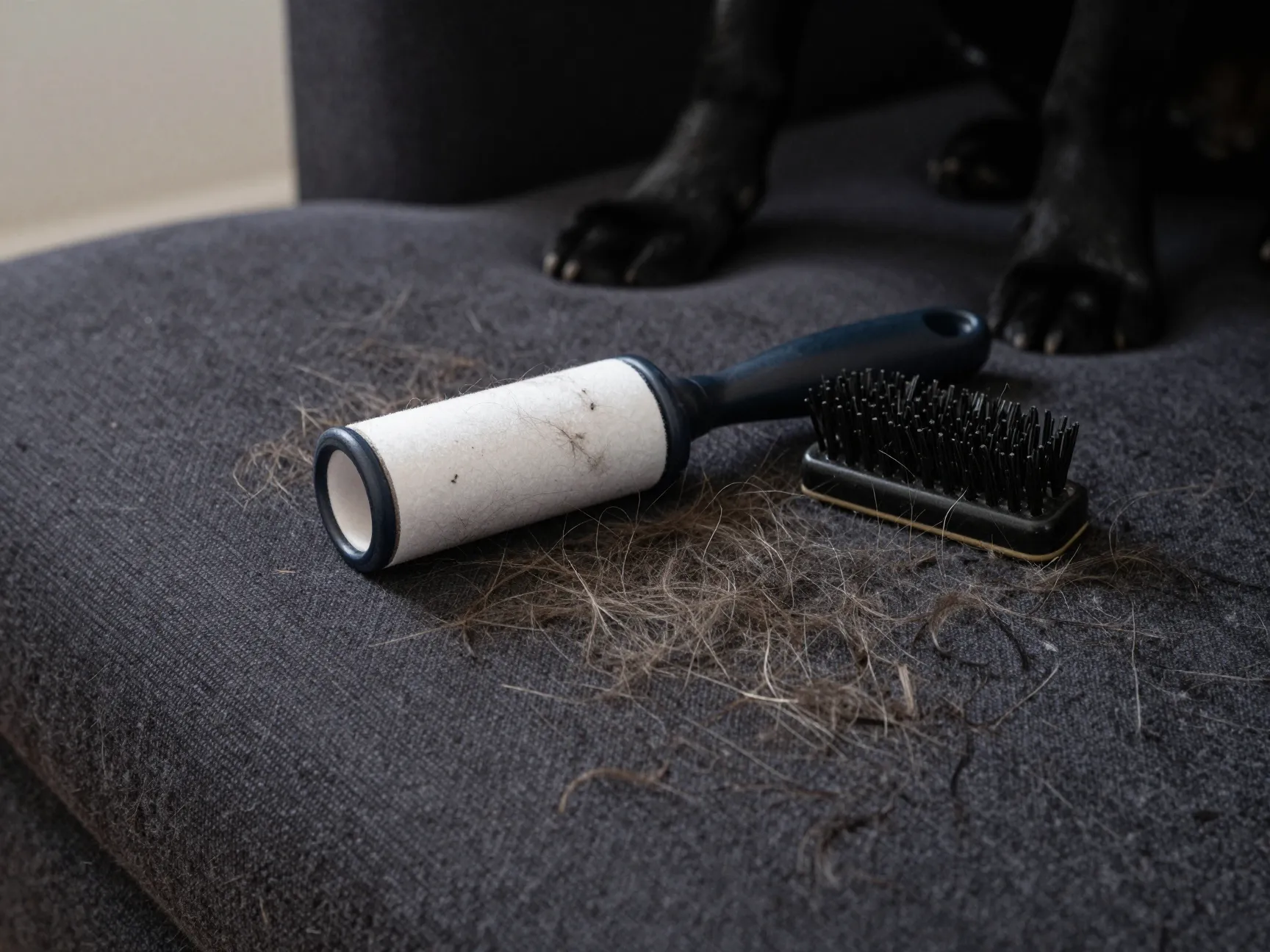
If you own a black Lab, you’ve quietly accepted one universal truth: black fur is a permanent accessory. Their thick, water-resistant double coat sheds significantly throughout the year, and brushing 2–3 times per week is not optional — it’s survival. [1]
Here’s what black Lab owners know that others don’t:
- Dark clothing is a trap. You’ll think the fur doesn’t show. It does. Oh, it does.
- Lint rollers multiply. You’ll find them in your car, your desk drawer, your coat pocket, and somehow your gym bag.
- Shedding season is not a season. It’s a lifestyle.
The double coat — a soft, insulating undercoat beneath a short, dense outer coat — was designed to protect Labs from cold water and harsh weather. [1] It does that job brilliantly. It also does the job of coating every sofa cushion, car seat, and dinner plate within a 10-foot radius.
Pro tips for managing the shed:
- Invest in a high-quality deshedding brush (a Furminator-style tool is a fan favorite)
- Brush outside whenever possible
- Vacuum at least 3x per week during peak shedding periods
- Use washable slipcovers on furniture
- Accept that your black Lab’s fur is now part of your home’s interior design
3. The Food Obsession Is Not Just a Phase — It’s Genetic

Ask any black Lab owner and they’ll tell you the same story: their dog acts like every meal is their last, and every snack is a miracle. This isn’t just a personality quirk. It’s science.
Approximately 23% of Labradors carry an inherited mutation in the POMC gene, which affects the brain’s satiety signals. [3] In plain terms, their brain doesn’t send the “I’m full” message the way other dogs’ brains do. They are, quite literally, always hungry.
💬 “My Lab will eat until he physically can’t, then look at me like I’m the one who’s being unreasonable.”
This genetic tendency has real health consequences:
- Obesity risk is significantly elevated in Labs compared to other breeds
- Counter-surfing becomes an Olympic sport in your household
- Trash diving is a constant threat
- Begging behavior reaches Academy Award-winning levels of drama
What black Lab owners do differently:
- Use puzzle feeders and slow-feed bowls to extend mealtime
- Measure every meal — no free-feeding
- Keep counters and trash cans secured at all times
- Use low-calorie treats for training to manage daily caloric intake
- Schedule regular vet check-ins to monitor weight
4. You’ve Become an Accidental Personal Trainer

Here’s one of the more surprising entries in the 8 Things Only Black Labrador Retriever Dog Owners Understand: your dog has done more for your fitness than any gym membership ever did.
Because Labs need 60–90 minutes of vigorous exercise daily [1], owners quickly find themselves walking, jogging, hiking, and playing fetch far more than they ever planned. Studies consistently show that dog owners are more physically active than non-dog owners — and Lab owners especially so.
Your black Lab doesn’t care if it’s raining. They don’t care if it’s cold. They don’t care if you had a long day. The leash comes out, and you go. That accountability is, honestly, one of the breed’s greatest gifts.
Activities black Lab owners end up doing regularly:
- Early morning runs (because the dog woke you up at 5:45 anyway)
- Long weekend hikes
- Swimming at local lakes or dog-friendly beaches
- Fetch sessions that last longer than you planned
- Agility or obedience training classes
5. They Will Love Every Single Human They Meet — Including Burglars
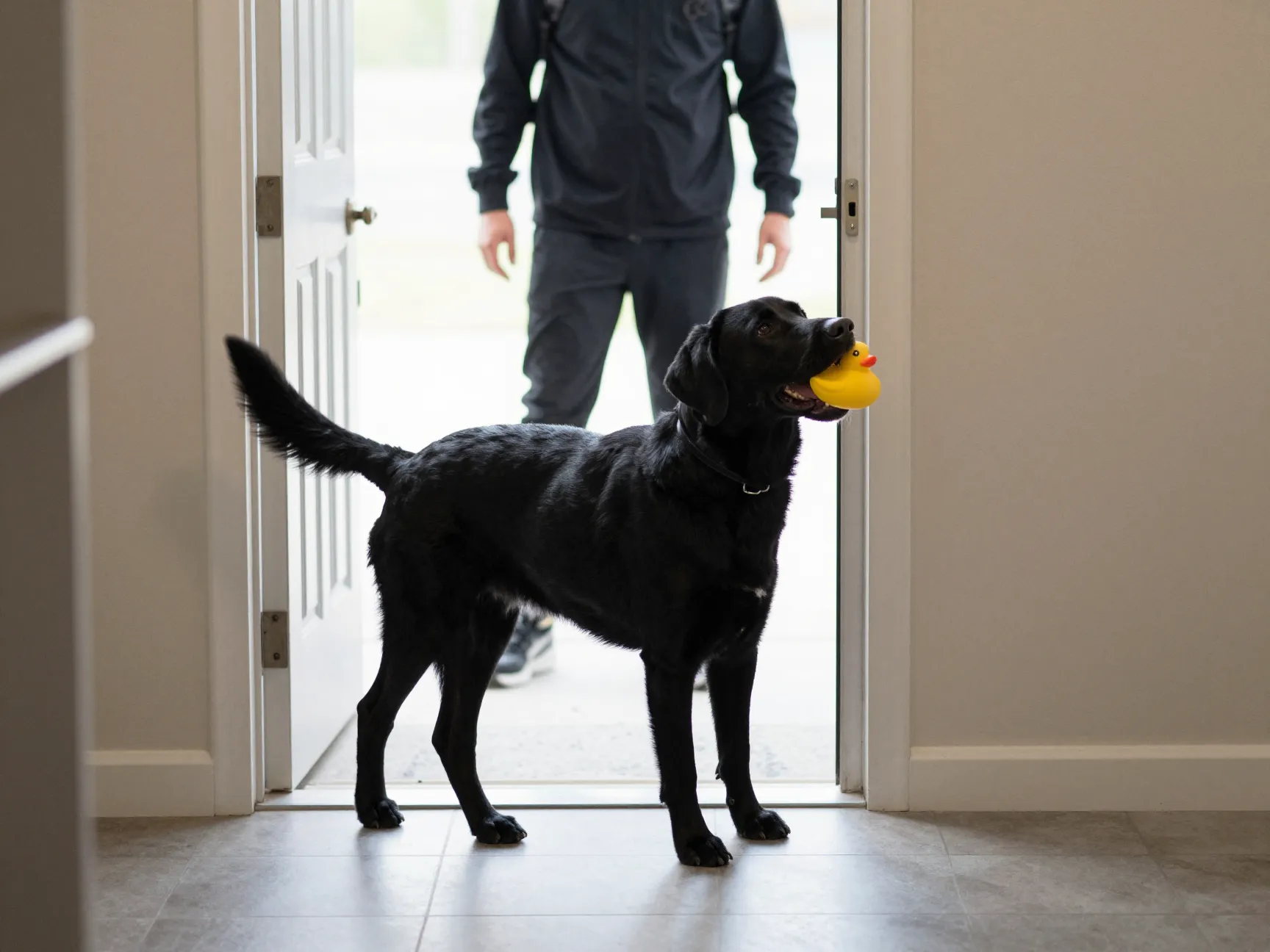
One of the most universally understood entries in the 8 Things Only Black Labrador Retriever Dog Owners Understand is this: your black Lab is a terrible guard dog, and that’s completely fine. [5]
Labs are famously, almost comically, friendly toward all people. A stranger approaching your door will not be met with growling or suspicion. They will be met with a wagging tail, a toy offering, and possibly a full-body lean. [5]
💬 “Someone knocked on my door at midnight. My black Lab ran to greet them with a squeaky duck. I feel very protected.”
This people-pleasing, trust-everyone personality is actually a feature, not a bug. It’s precisely what makes Labradors the #1 breed choice for service dogs, therapy dogs, and search-and-rescue operations. [1] Their openness to humans — all humans — allows them to work in hospitals, schools, airports, and disaster zones with calm, reliable temperament.
| Lab as Guard Dog | Reality |
|---|---|
| Intimidating bark | Enthusiastic “hello” bark |
| Suspicious of strangers | Treats strangers as new best friends |
| Protective stance | Full-body wiggle and toy presentation |
| Deters intruders | Probably shows them where the treats are |
If you need a guard dog, a black Lab is not your answer. If you need a dog that will make every person who enters your home feel instantly welcomed and loved, you’ve found your breed.
6. The “Velcro Dog” Is Real and It Never Turns Off
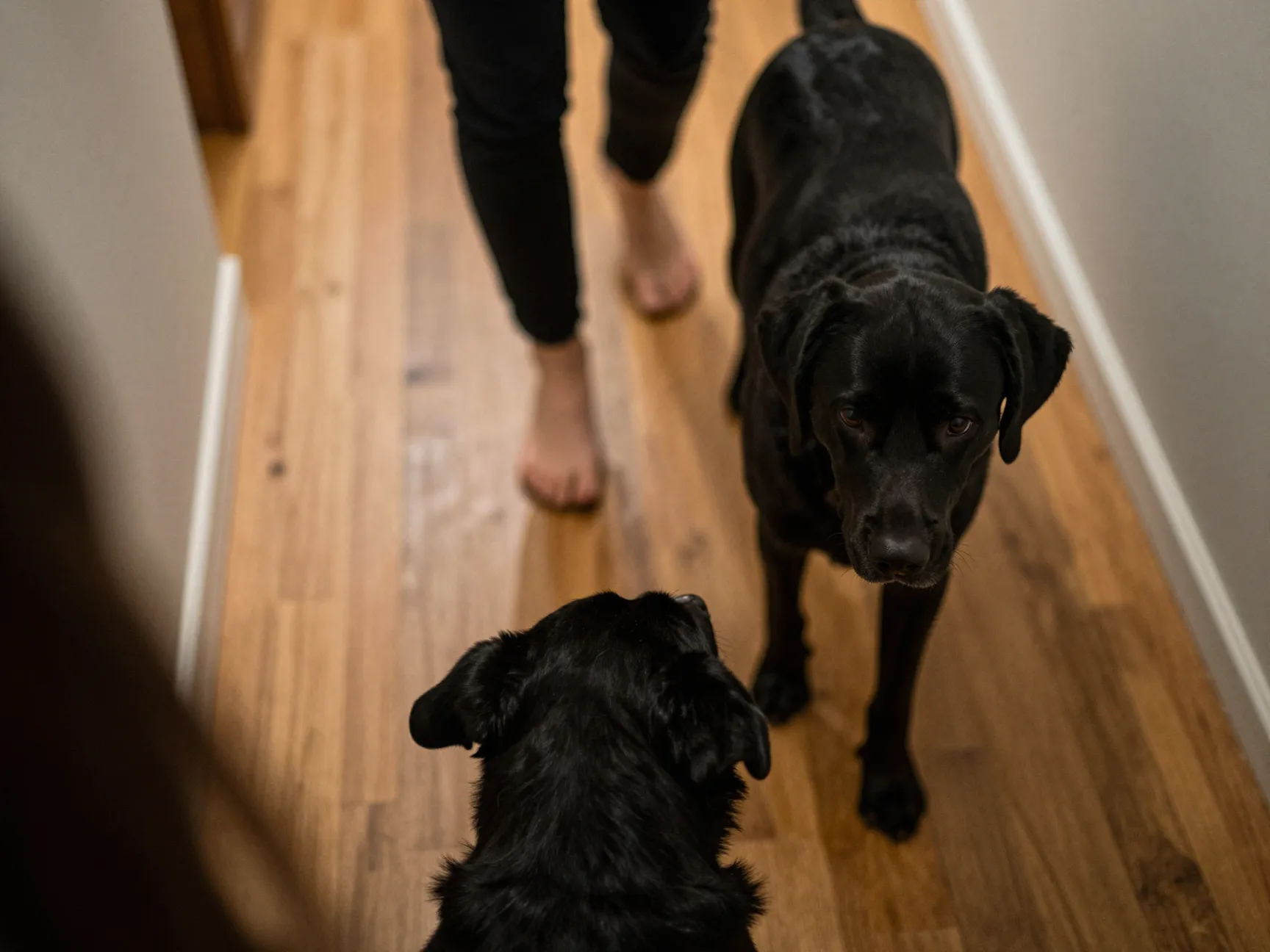
Black Lab owners develop a sixth sense: the ability to feel a 70-pound shadow following them everywhere. Labs are often called “velcro dogs” because they attach themselves to their owners with remarkable consistency.
Bathroom trips are supervised. Kitchen visits are monitored. Bedtime is a group activity whether you planned it that way or not.
This behavior stems from the Lab’s deep people-pleasing instinct [1] and their history as working dogs who operated in close partnership with humans. They are not built for isolation. They thrive on human connection, and they will pursue it relentlessly.
Signs you have a velcro black Lab:
- They sit on your feet the moment you stop moving
- They follow you from room to room without exception
- They press their full body weight against your legs while you cook
- They greet you at the door as if you’ve been gone for six months — even if you just checked the mail
- They sleep with their head on your pillow (or on your face)
This trait does come with a caution: Labs are prone to separation anxiety if not properly trained to be comfortable alone. Early independence training and gradual alone-time practice are important for a balanced, confident dog.
7. Joint Health Becomes a Serious Conversation Early

This one is less funny and more important. Black Lab owners who do their research quickly learn that their beloved breed carries a significant health vulnerability: Labradors are three times more likely to develop arthritis compared to crossbreed dogs. [3]
Hip and elbow dysplasia are also common in the breed, often showing up in middle age (5–7 years). Given that Labs are active, high-energy dogs, joint issues can dramatically impact their quality of life if not managed proactively.
What responsible black Lab owners do:
- Maintain a healthy weight — excess weight accelerates joint wear significantly
- Choose reputable breeders who screen for hip and elbow scores
- Start joint supplements early — glucosamine and omega-3 fatty acids are widely recommended
- Provide low-impact exercise options like swimming, which is easy on joints
- Schedule regular vet check-ups to catch early signs of stiffness or discomfort
⚠️ Early intervention matters. If your Lab is slowing down on walks or hesitating on stairs, don’t wait — talk to your vet.
The good news: with proper care, weight management, and veterinary support, many Labs live active, comfortable lives well into their senior years.
8. The Love They Give Is Completely Disproportionate — and That’s the Best Part

The final and most important of the 8 Things Only Black Labrador Retriever Dog Owners Understand is this: no other breed loves quite like a black Lab does.
Their eager-to-please nature [1], their joyful enthusiasm, their unwavering loyalty — it all adds up to a dog that gives love in quantities that seem almost physically impossible for one animal to contain. They don’t have bad days. They don’t hold grudges. Every single morning, they wake up thrilled to be alive and even more thrilled that you’re there.
What makes black Lab love unique:
- They celebrate your return every single time, no matter how long you were gone
- They sense when you’re sad and press close without being asked
- They bring you toys not to play, but as gifts — because sharing what they love is how they show love
- They make eye contact that feels genuinely communicative and warm
- They are, in every sense, your most loyal fan
This emotional intelligence and devotion is why Labs are consistently chosen as therapy and emotional support animals across hospitals, schools, and rehabilitation centers. [1] They have an almost supernatural ability to read human emotion and respond with comfort.
Conclusion: Welcome to the Black Lab Life
If you’ve made it through all 8 Things Only Black Labrador Retriever Dog Owners Understand, you’ve either nodded along vigorously or laughed out loud in recognition. Owning a black Lab is not for the faint of heart — but it is absolutely one of the most joyful, fulfilling, and love-filled experiences a person can have.
Here’s what to do next:
- Use the care checklist above to build a consistent daily routine for your Lab
- Talk to your vet about joint health and weight management — start early, not late
- Invest in proper exercise — 60–90 minutes daily is non-negotiable for a happy Lab
- Embrace the fur — buy the lint roller in bulk and make peace with black-on-everything
- Cherish the velcro moments — that shadow following you everywhere is the purest form of love
Your black Lab doesn’t just live in your house. They live in your heart, on your couch, in your car, and apparently on every item of clothing you own. And honestly? You wouldn’t have it any other way.
References
[1] 10 Things Only Labrador Retriever People Understand – https://pupford.com/blogs/all/10-things-only-labrador-retriever-people-understand
[2] Watch – https://www.youtube.com/watch?v=_tRPTmAIb1Y
[3] 7 Things To Know About Labradors Fun Facts True Tails And Key Health Concerns – https://www.joiipetcare.com/blogs/advice/7-things-to-know-about-labradors-fun-facts-true-tails-and-key-health-concerns
[4] Watch – https://www.youtube.com/watch?v=h9OkMT8oM9U
[5] Watch – https://www.youtube.com/watch?v=oD1Sw2GX32g
[6] Watch – https://www.youtube.com/watch?v=Beqs7J8QZ7M
[7] Fun Facts Labrador Retrievers – https://www.akc.org/expert-advice/lifestyle/fun-facts-labrador-retrievers/