
8 Things Nobody Tells You About a Black Labrador Dog Puppy
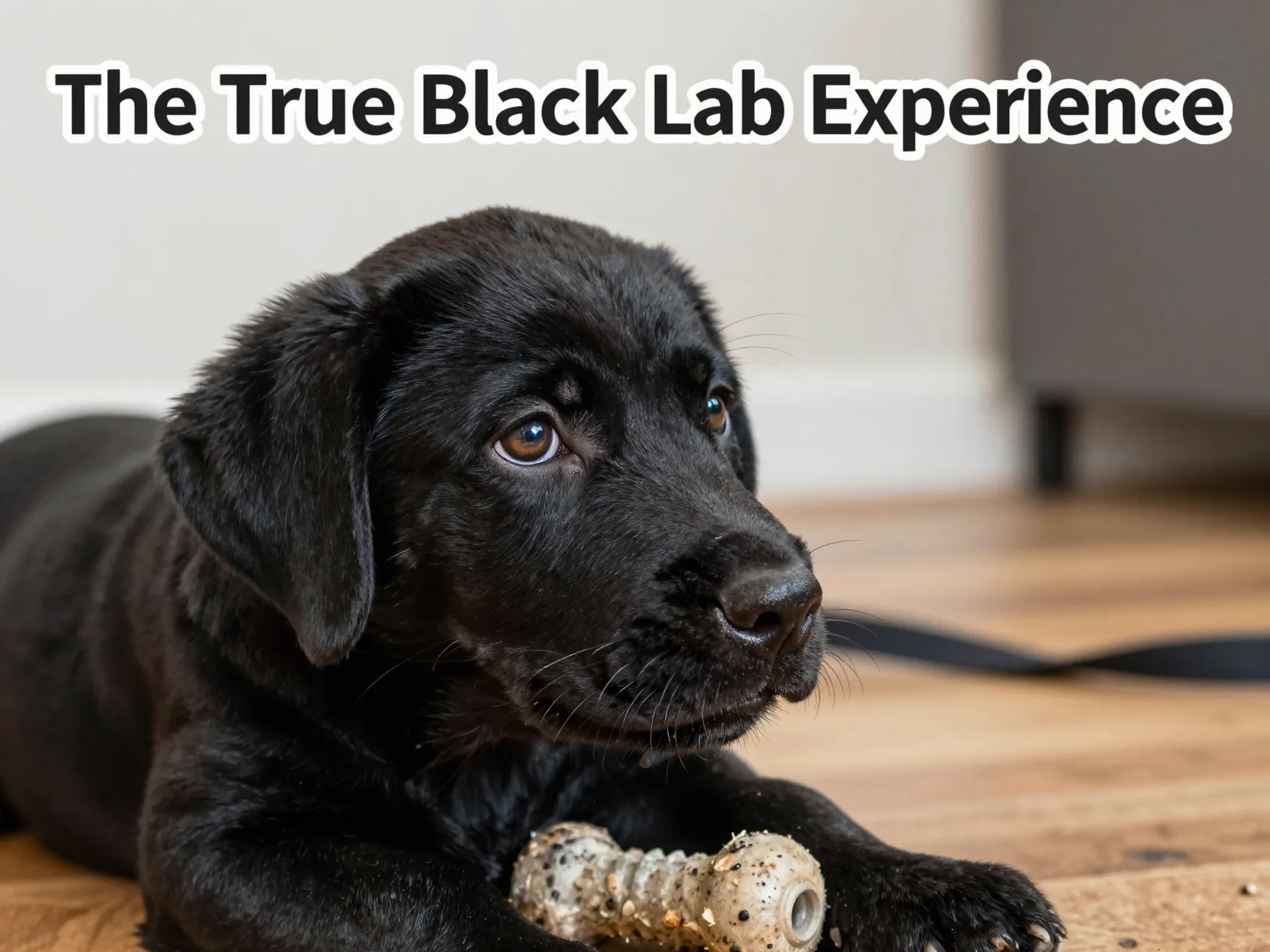
You fell in love the moment you saw that round, wiggly, jet-black ball of fur. Who wouldn’t? But here’s the truth most breeders, pet stores, and even well-meaning friends forget to mention: bringing home a black Labrador puppy is one of the most rewarding — and surprisingly demanding — experiences a dog owner can have. If you’re researching 8 Things Nobody Tells You About a Black Labrador Dog Puppy, you’re already smarter than most new Lab owners. This guide covers the hidden realities, the jaw-dropping science, and the practical tips that will make your journey with your new pup far smoother than average.
Key Takeaways 📌
- Black Labrador puppies need at least 1.5–2 hours of exercise daily — far more than most new owners expect
- About 23% of Labs carry a gene mutation that makes them feel constantly hungry, leading to overeating and obesity
- Their sense of smell is 10,000 times more sensitive than a human’s — which explains a lot of their behavior
- Labs are genetically prone to hip and elbow dysplasia, so early vet screening is essential
- Their love of water, mud, and chewing is hardwired into their DNA — not a training failure
Why Black Labrador Puppies Surprise So Many New Owners
Labrador Retrievers have held the top spot as one of the world’s most popular dog breeds for decades — and for good reason. They’re friendly, loyal, and endlessly lovable [6]. But popularity comes with a problem: most people adopt a Lab based on their reputation as “easy” dogs, only to discover a very different reality in the first few months.
The 8 Things Nobody Tells You About a Black Labrador Dog Puppy listed in this article aren’t meant to scare you off. They’re meant to prepare you. Knowledge is the difference between a frustrated owner and a thriving one.
Let’s dive in.
1. They Have Energy Levels That Will Outlast You

“I thought I was getting a calm family dog. I got a four-legged tornado instead.” — Nearly every new Lab owner
Black Lab puppies are not lap dogs. They are working retrievers bred for hours of activity in the field, and that drive doesn’t disappear just because they live in a suburban home.
According to veterinary guidance, Labradors require a minimum of 1.5 to 2 hours of exercise per day [1]. For a puppy, this needs to be broken into shorter, age-appropriate sessions — but the need is real and constant.
What happens when a Lab doesn’t get enough exercise?
- Destructive chewing (furniture, shoes, walls — yes, walls)
- Excessive barking and whining
- Hyperactivity indoors
- Anxiety and behavioral problems
Skipping exercise is one of the most critical mistakes new Lab owners make [4]. These dogs are bred to retrieve — they need outdoor activity and bonding time with their owners to stay mentally and physically balanced.
Pro Tip 💡: Start a daily exercise routine from week one. Fetch, swimming, leash walks, and scent games all count. A tired Lab is a well-behaved Lab.
2. Their Sense of Smell Is Almost Supernatural
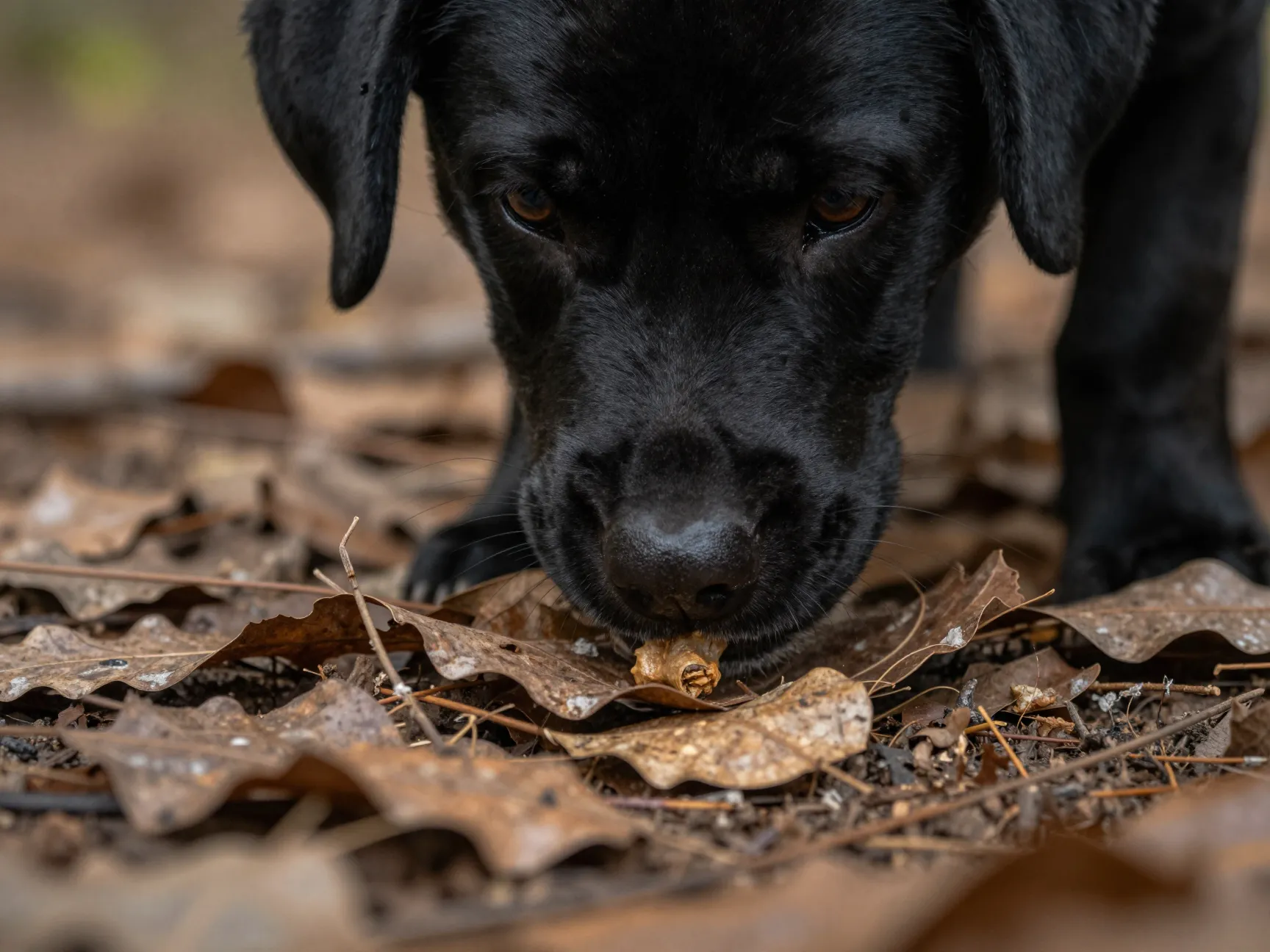
Here’s a fact that will change how you see your puppy forever. Labradors have approximately 300 million smell receptors in their noses. Humans have around 6 million. That means your black Lab puppy’s nose is roughly 10,000 times more sensitive than yours [1].
To put that in perspective: a Lab can detect a person or object up to 20 kilometers away under the right conditions [1]. This is why Labs are the breed of choice for search-and-rescue teams, drug detection units, and medical alert services.
What this means for your puppy at home:
| Situation | What Your Lab’s Nose Detects |
|---|---|
| You walk in the door | Exactly where you’ve been all day |
| You open the fridge | Every individual item inside |
| You hide a treat | Even through multiple layers of packaging |
| A stranger approaches | Their scent from half a block away |
This extraordinary sense of smell also explains why your puppy seems “distracted” on walks. They’re not ignoring you — they’re reading an entire novel written in scent that you can’t even perceive. Leash training and recall commands need to account for this reality.
3. About 1 in 4 Labs Has a “Broken Fullness Gene”

This is one of the most shocking things nobody tells you about a black Labrador dog puppy — and it has major health implications.
Approximately 23% of Labradors carry a genetic mutation that affects the gene responsible for signaling fullness after eating [1]. In plain terms: these dogs are biologically incapable of feeling satisfied. They will eat, and eat, and eat — not because they’re greedy, but because their brain never receives the “I’m full” signal.
This genetic quirk is one reason Labs are so food-motivated (which makes training easier) but also one reason Lab obesity is a serious epidemic.
Signs your puppy may have this gene:
- Obsessive food-seeking behavior
- Eating extremely fast
- Begging constantly, even right after meals
- Attempting to steal food from counters or other pets
What you can do:
- Measure every meal — never free-feed a Lab
- Use slow-feeder bowls to reduce eating speed
- Count treats as part of daily calorie intake
- Ask your vet about body condition scoring at every checkup
4. They Will Eat Things That Aren’t Food
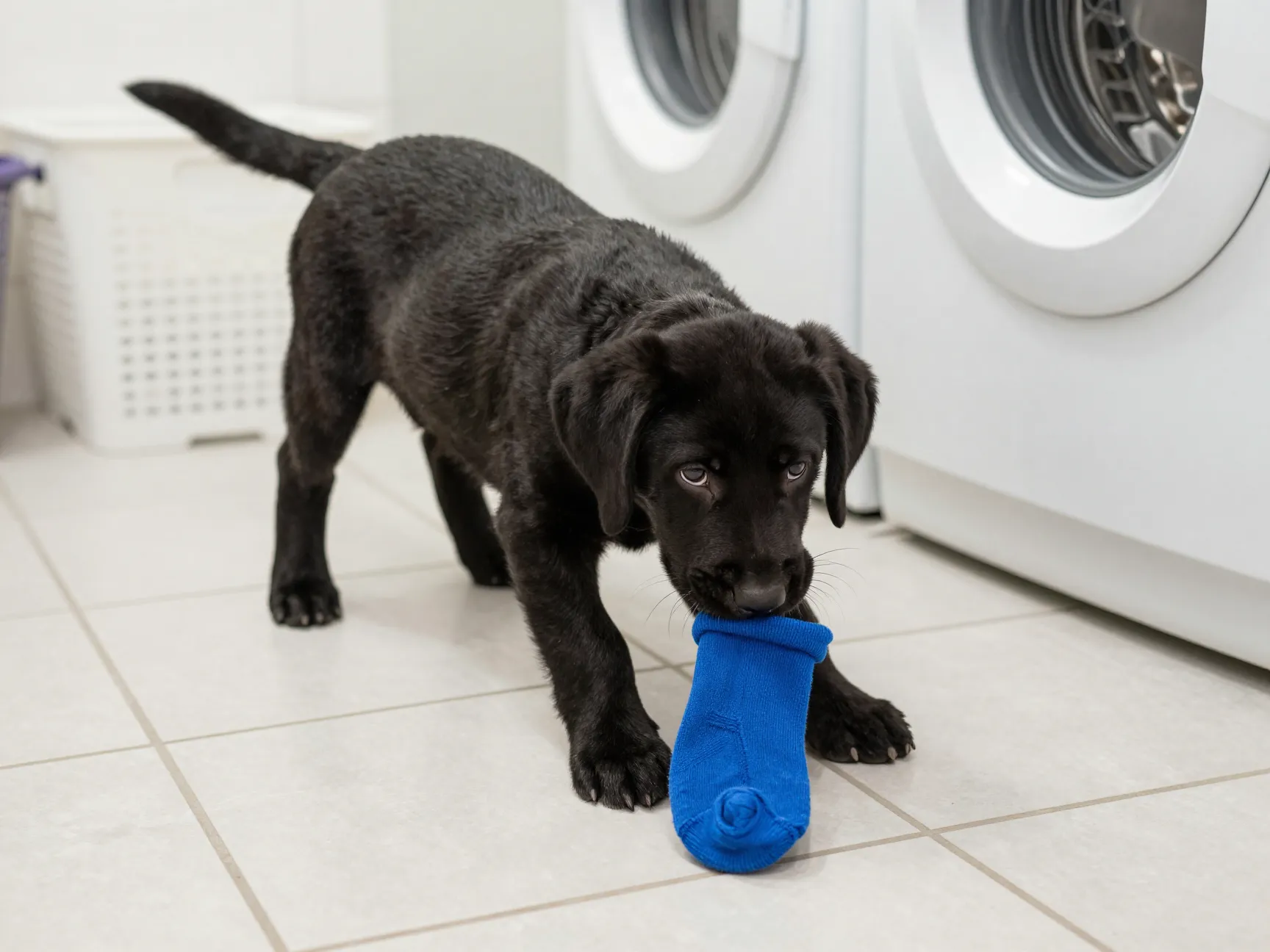
Related to point 3, but distinct enough to deserve its own spotlight: black Lab puppies don’t just overeat — they eat things that aren’t food at all.
Documented cases of Labradors consuming non-food items include socks, underwear, rocks, remote controls, and even tin cans [2]. This behavior, known as pica, is especially common in Labs and can lead to dangerous intestinal blockages requiring emergency surgery.
Common non-food items Labs eat:
- 🧦 Socks and underwear (a Lab classic)
- 🪨 Rocks and gravel
- 📱 Remote controls and phone chargers
- 🌿 Sticks, mulch, and garden plants
- 🧸 Stuffed toy filling
Puppy-proofing checklist for Lab owners:
- Keep laundry in closed hampers
- Use baby gates to restrict kitchen and bathroom access
- Supervise all outdoor time, especially in gardens
- Provide plenty of appropriate chew toys
- Never leave shoes or small objects on the floor
If your puppy swallows something suspicious, contact your vet immediately. Don’t wait for symptoms.
5. Hip and Joint Problems Are a Real Risk From Day One

One of the most important — and least discussed — things nobody tells you about a black Labrador dog puppy is their genetic vulnerability to joint disease.
Research shows that 3–17% of Labradors show some degree of hip dysplasia on x-rays [1]. Even more striking, Labs are nearly 6 times more likely to develop elbow dysplasia than crossbreed dogs [1]. These conditions can cause chronic pain, reduced mobility, and a significantly lower quality of life if not caught early.
Risk factors that increase the likelihood of joint problems:
- Rapid weight gain during puppyhood
- Over-exercising on hard surfaces before growth plates close (usually around 12–18 months)
- Obesity in adulthood
- Poor breeding practices (always ask breeders for hip and elbow scores)
Protective steps you can take right now:
- Feed the right amount — excess weight puts enormous pressure on developing joints
- Avoid high-impact exercise like jumping or long runs until your puppy is at least 12 months old
- Ask your vet about a baseline joint assessment at 6–8 months
- Choose a reputable breeder who screens parent dogs for hip and elbow scores
💬 “The best time to protect your Lab’s joints is before there’s ever a problem.”
6. Their Love of Water and Mud Is Hardwired — Not a Bad Habit

New Lab owners often think their puppy’s obsession with puddles, ponds, and muddy patches is a behavioral problem. It isn’t. It’s pure biology.
Black Labradors were originally bred as water retrievers in Newfoundland, Canada, working alongside fishermen to retrieve nets and fish from icy Atlantic waters [3]. Their bodies evolved specifically for this purpose:
- Webbed feet for powerful swimming
- A thick, water-resistant double coat that repels water and insulates in cold temperatures
- An “otter tail” — thick at the base and tapered — used as a rudder when swimming [3]
This heritage means that no amount of training will make your Lab not love water. The goal isn’t elimination — it’s management.
Practical tips for water-loving Lab owners:
| Challenge | Solution |
|---|---|
| Muddy paws after every walk | Keep a towel and rinse bucket by the door |
| Jumping into every puddle | Use a long-line leash near water sources |
| Wet dog smell indoors | Regular grooming and a designated drying area |
| Swimming in unsafe water | Train a reliable “leave it” and “come” command |
Embrace the water love — it’s one of the most joyful things about this breed. Just be prepared.
7. Shedding Is on a Scale You Cannot Imagine Until You Live It

Here’s something every Lab owner discovers in their first week: black Labradors shed. A lot. All year round.
Their double coat — that same waterproof, insulating marvel mentioned above — sheds continuously, with two major “blow coat” seasons per year (typically spring and fall) when shedding intensifies dramatically.
The reality of Lab shedding:
- Black fur shows up on every light-colored surface in your home
- Furniture, clothing, food, and guests are all fair game
- Even “low-shedding” periods still produce significant hair
Grooming routine that actually works:
- Brush 3–4 times per week with a deshedding tool or slicker brush
- Bathe every 4–6 weeks (more often if they swim or play in mud)
- Vacuum with a pet-specific vacuum at least twice a week
- Use a lint roller as a permanent accessory in your home and car
- During blow-coat season, consider a professional grooming session
The good news? A well-groomed Lab’s coat is genuinely beautiful — glossy, dense, and striking. The work is worth it.
8. They Live 10–12+ Years, and Every Stage Is Different

The final — and perhaps most profound — thing nobody tells you about a black Labrador dog puppy is just how long and layered this relationship will be.
Black Labradors typically live 10 to 12+ years [1]. That means the adorable, chaotic puppy you’re bringing home today will grow into a boisterous adolescent (brace yourself for ages 6–18 months), a confident adult, and eventually a gentle, slower-moving senior dog.
The stages of a black Lab’s life:
| Life Stage | Age | What to Expect |
|---|---|---|
| Puppy | 0–6 months | Biting, chewing, rapid learning, socialization window |
| Adolescent | 6–18 months | High energy, selective hearing, testing boundaries |
| Young Adult | 18 months–3 years | Calmer but still very active, peak trainability |
| Mature Adult | 3–7 years | Settled, loyal, wonderful companion |
| Senior | 7+ years | Slower pace, potential joint issues, deeper bond |
Each stage requires different care, training approaches, and health monitoring. The commitment is real — and so is the reward.
💬 “A Lab doesn’t just become your dog. Over 10+ years, they become part of who you are.”
Planning for the long haul:
- Budget for annual vet visits plus potential orthopedic care in senior years
- Invest in pet insurance early, before any conditions are diagnosed
- Adjust exercise and diet as your dog ages
- Cherish every stage — the chaos of puppyhood passes faster than you think
Conclusion: Are You Ready for the Real Black Lab Experience?
Understanding the 8 Things Nobody Tells You About a Black Labrador Dog Puppy isn’t about lowering your expectations — it’s about raising your preparedness. Black Labs are extraordinary dogs: intelligent, affectionate, endlessly loyal, and genuinely fun to live with [6]. But they thrive with owners who go in with eyes wide open.
Your actionable next steps as a new or prospective Lab owner:
- ✅ Set up a daily exercise schedule of at least 1.5 hours before your puppy arrives
- ✅ Puppy-proof your home thoroughly, paying special attention to swallowable items
- ✅ Find a vet experienced with large breeds and schedule a joint assessment at 6 months
- ✅ Invest in a slow-feeder bowl and commit to measured, consistent meals
- ✅ Buy a quality deshedding brush and build grooming into your weekly routine
- ✅ Get pet insurance early — before any conditions are on record
- ✅ Connect with a Lab community online or locally for ongoing support and advice
The black Lab puppy curled up in your lap right now will become one of the great loves of your life. Give them the knowledge-backed care they deserve, and they’ll give you a decade-plus of pure, unfiltered joy.
References
[1] 7 Things To Know About Labradors Fun Facts True Tails And Key Health Concerns – https://www.joiipetcare.com/blogs/advice/7-things-to-know-about-labradors-fun-facts-true-tails-and-key-health-concerns
[2] Watch – https://www.youtube.com/watch?v=We0–T5nuHE
[3] Fun Facts Labrador Retrievers – https://www.akc.org/expert-advice/lifestyle/fun-facts-labrador-retrievers/
[4] Watch – https://www.youtube.com/watch?v=YzKefaqutbw
[5] Labrador Retriever – https://www.rover.com/blog/breeds/labrador-retriever/
[6] Watch – https://www.youtube.com/watch?v=rbUmAYqXS0g
[7] Watch – https://www.youtube.com/watch?v=h9OkMT8oM9U
[8] 20 Things No One Tells You When You Get Your First Dog – https://www.somethingwagging.com/20-things-no-one-tells-you-when-you-get-your-first-dog/