
8 Must-Know Tips for Raising a Healthy Tabby Cat Kitten
Only 10% of cat owners feel fully prepared when they bring a new kitten home — and tabby kittens, with their high energy and curious nature, demand even more from their caregivers in those critical early weeks. If you’re about to welcome one of these striped bundles of joy into your life, knowing the 8 Must-Know Tips for Raising a Healthy Tabby Cat Kitten before day one can make the difference between a thriving, well-adjusted cat and a lifetime of preventable health and behavior problems.
This guide pulls together the most current, vet-aligned advice to help you raise a tabby kitten who is healthy, happy, and deeply bonded to you. Whether you’re a first-time kitten owner or adding a new feline member to an experienced household, these tips will give you a clear, practical roadmap.
Key Takeaways 🐾
- Nutrition is the foundation: Tabby kittens need high-protein, kitten-specific food served in multiple small meals daily.
- Early vet visits matter: The 7–8 week window is critical for vaccinations, parasite prevention, and establishing baseline health.
- Environment shapes behavior: Kitten-proofing your home and providing enrichment prevents accidents and builds confidence.
- Socialization and handling build trust: Gentle, consistent handling from an early age creates a calm, friendly adult cat.
- Routine is your best tool: Consistent feeding, grooming, litter training, and vet schedules set your kitten up for lifelong wellness.
Why Tabby Kittens Deserve Special Attention
Before diving into the 8 Must-Know Tips for Raising a Healthy Tabby Cat Kitten, it helps to understand what makes tabby kittens unique. “Tabby” is not a breed — it’s a coat pattern found across dozens of breeds, characterized by distinctive stripes, swirls, or spots. Tabby kittens tend to be active, curious, and highly social, which means their physical and emotional needs are significant during the first year of life [2].
Their energy levels and inquisitive personalities make proper nutrition, early socialization, and a safe environment especially important. Neglecting any one of these areas can lead to behavioral issues, health problems, or a stressed, fearful cat down the road.
The 8 Must-Know Tips for Raising a Healthy Tabby Cat Kitten
1. Fuel Growth With Kitten-Specific Nutrition
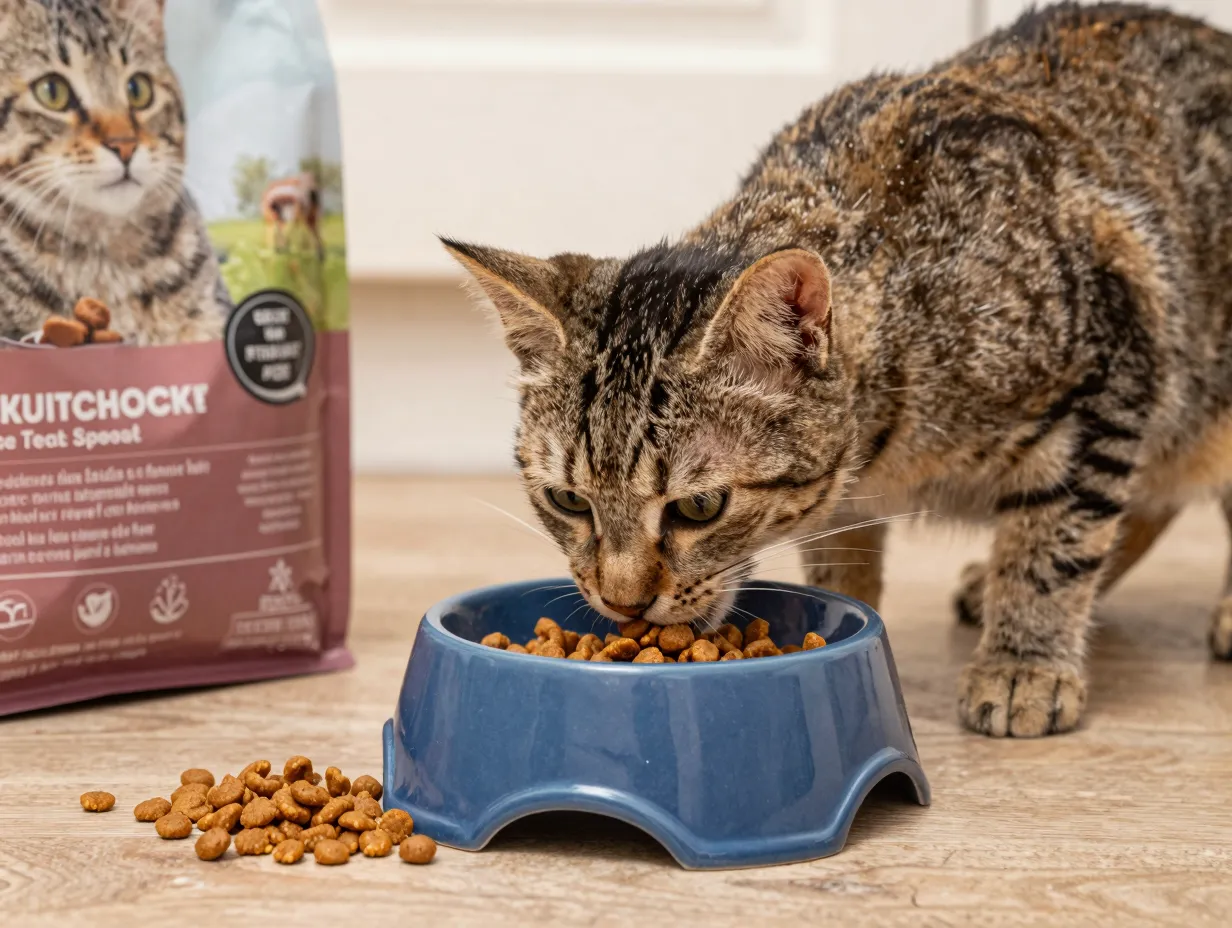
Nutrition is the single most powerful lever you have in your tabby kitten’s early development. Kittens under 6 months old have dramatically different dietary needs than adult cats — they require higher protein content, more calories per pound of body weight, and a carefully balanced ratio of vitamins and minerals to support rapid bone and muscle growth [5].
Do not feed your tabby kitten adult cat food. It simply does not contain enough protein or calories to meet a kitten’s needs. Look for products labeled “complete and balanced for kittens” or “all life stages” [3].
Here’s a quick comparison to keep in mind:
| Nutrient | Kitten Food | Adult Cat Food |
|---|---|---|
| Protein (min.) | ~30–35% | ~25–30% |
| Fat (min.) | ~12–15% | ~9–12% |
| Caloric density | Higher | Lower |
| Feeding frequency | 4–5 meals/day | 2 meals/day |
Feed your kitten 4 to 5 small meals per day rather than leaving food out all day. Free-feeding can lead to overeating and obesity later in life [5]. Tabby kittens specifically need good-quality food rich in protein and nutrients to match their naturally high activity levels [2].
💡 Pro Tip: Set a consistent feeding schedule from day one. Kittens thrive on routine, and a predictable meal schedule also makes it easier to monitor their appetite and catch early signs of illness.
2. Combine Wet and Dry Food for Optimal Health
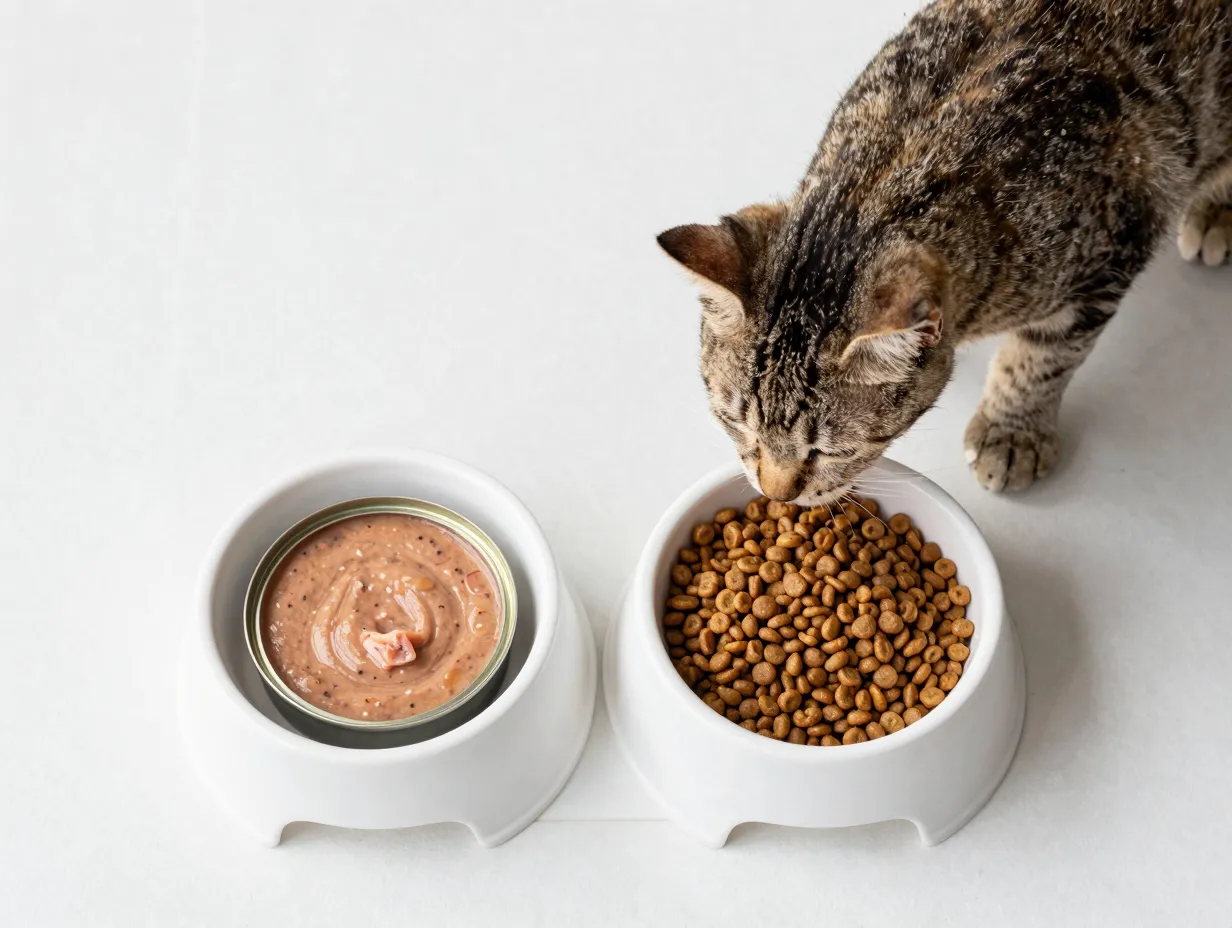
One of the most common mistakes new kitten owners make is feeding exclusively dry kibble. While dry food is convenient and helps with dental health, wet food is critically important for tabby kittens because it closely mirrors the moisture content of a cat’s natural prey-based diet [3].
A combination approach works best:
- Wet food: Serve canned kitten food at least twice daily. It provides hydration, is easier to chew for young kittens, and is generally more palatable [3].
- Dry food: Offer quality kitten kibble as a supplement between meals for convenience and dental benefits.
This mixed feeding strategy ensures your kitten gets both the hydration benefits of wet food and the dental advantages of dry kibble. As your kitten grows, you can gradually adjust the ratio, but wet food should remain a staple throughout kittenhood [5].
What to look for on the label:
- Named protein source as the first ingredient (e.g., chicken, salmon, turkey)
- No artificial preservatives or colors
- AAFCO statement confirming it’s formulated for kittens
3. Keep Hydration a Daily Priority
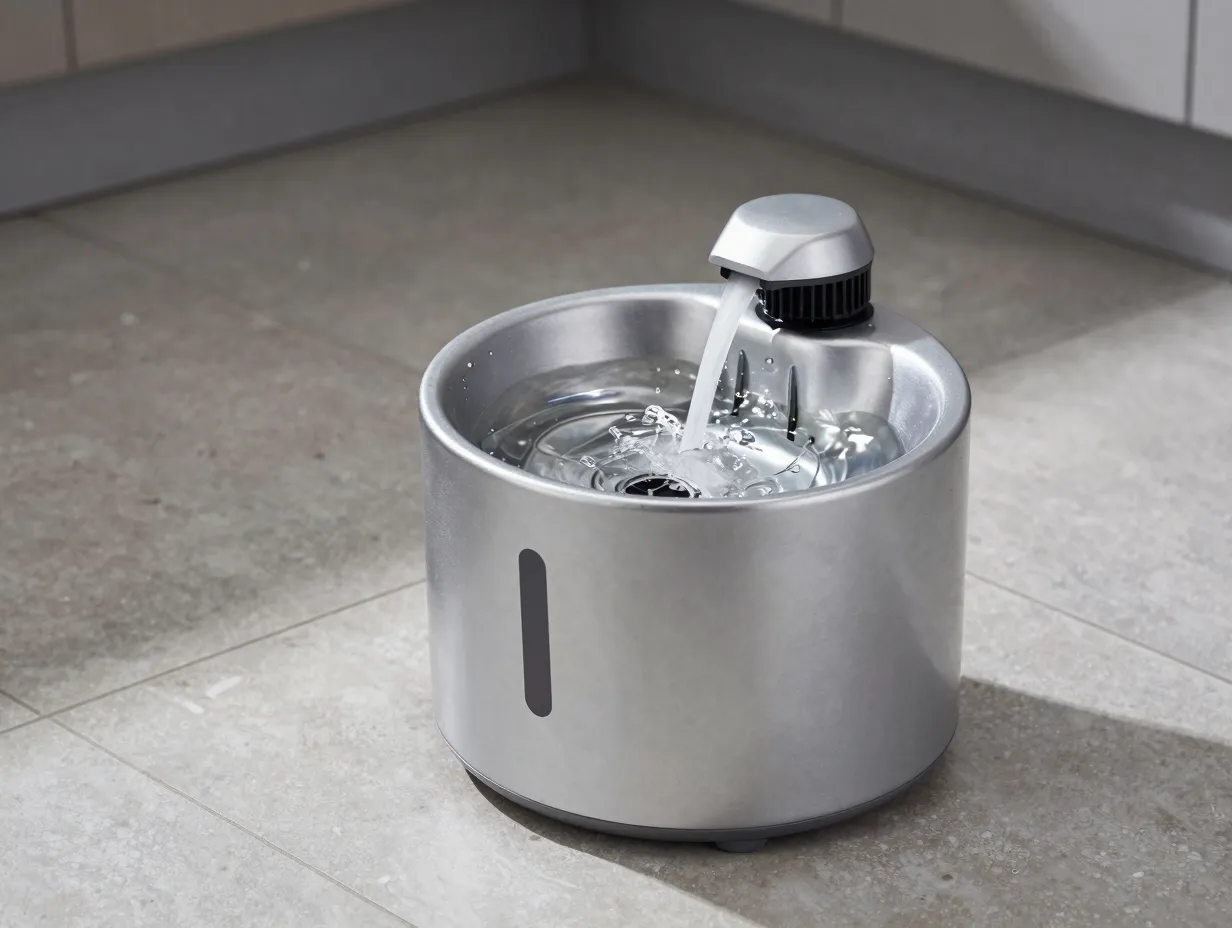
Water is often overlooked in kitten care, but dehydration is a serious risk — especially for kittens eating primarily dry food. Always provide fresh, clean water in a separate bowl from food [2].
Some kittens are picky about water sources. If your tabby kitten ignores the water bowl, try these strategies:
- Use a pet water fountain — the moving water attracts many cats.
- Place multiple water bowls in different locations around the home.
- Switch to a wide, shallow ceramic or stainless-steel bowl — some cats dislike their whiskers touching the sides of deep bowls.
- Offer slightly chilled water during warmer months.
🚫 Important: Never give your kitten cow’s milk or dairy products. Most cats are lactose intolerant, and dairy can cause digestive upset.
4. Avoid Human Food Entirely
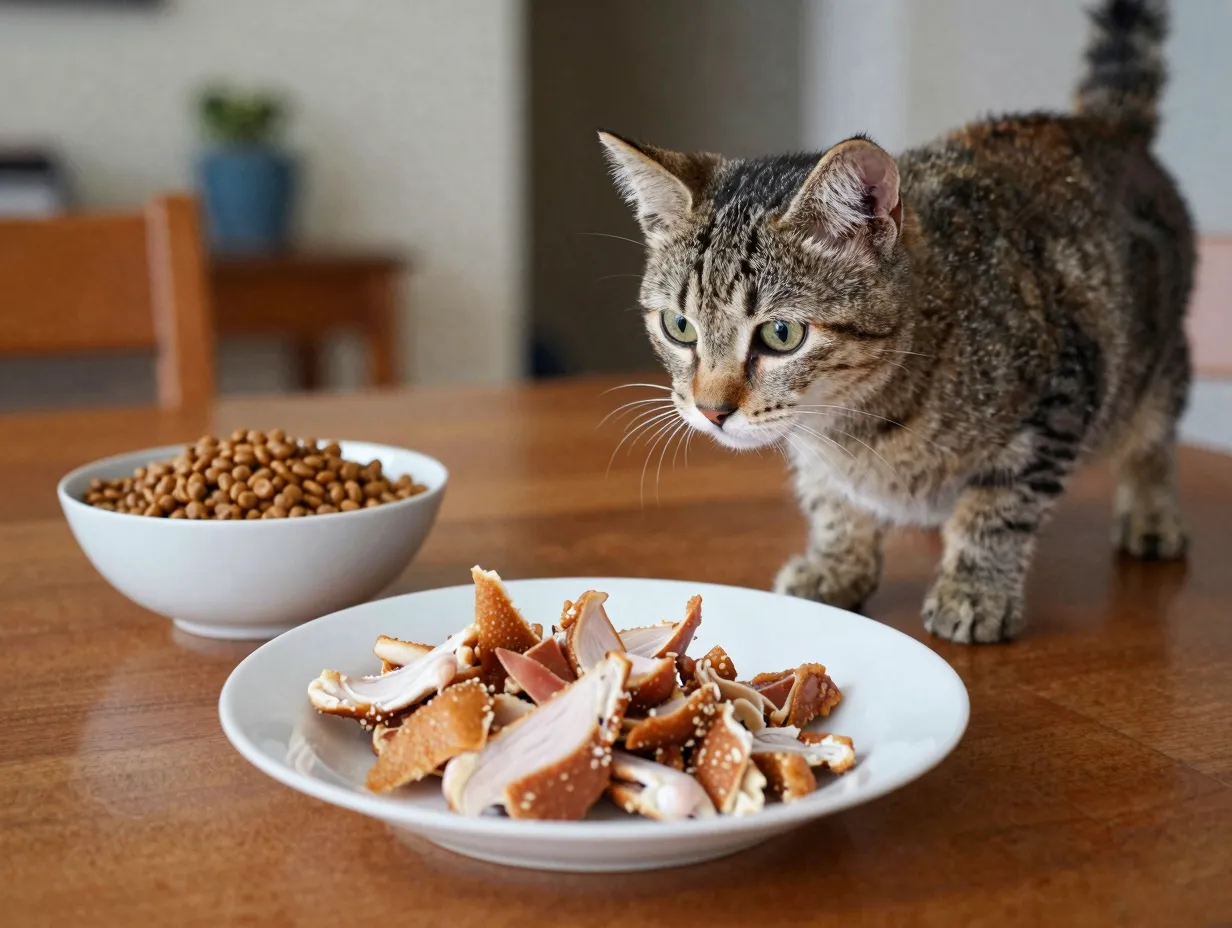
This one is non-negotiable. Feed only cat food to your tabby kitten. Human food — even seemingly harmless items like chicken scraps or tuna meant for people — can compromise your kitten’s health in several ways [2]:
- Nutritional imbalance: Human food doesn’t meet a kitten’s specific nutrient requirements.
- Toxic ingredients: Many common human foods are toxic to cats, including onions, garlic, grapes, raisins, chocolate, and xylitol.
- Bad habits: Feeding table scraps encourages begging and can make your kitten reluctant to eat proper cat food.
🐱 “The simplest rule: if it’s not labeled for cats, it doesn’t belong in your kitten’s bowl.”
If you want to give treats, choose kitten-specific treats in small quantities. Treats should make up no more than 10% of your kitten’s daily caloric intake.
5. Start Litter Box Training Early and Correctly
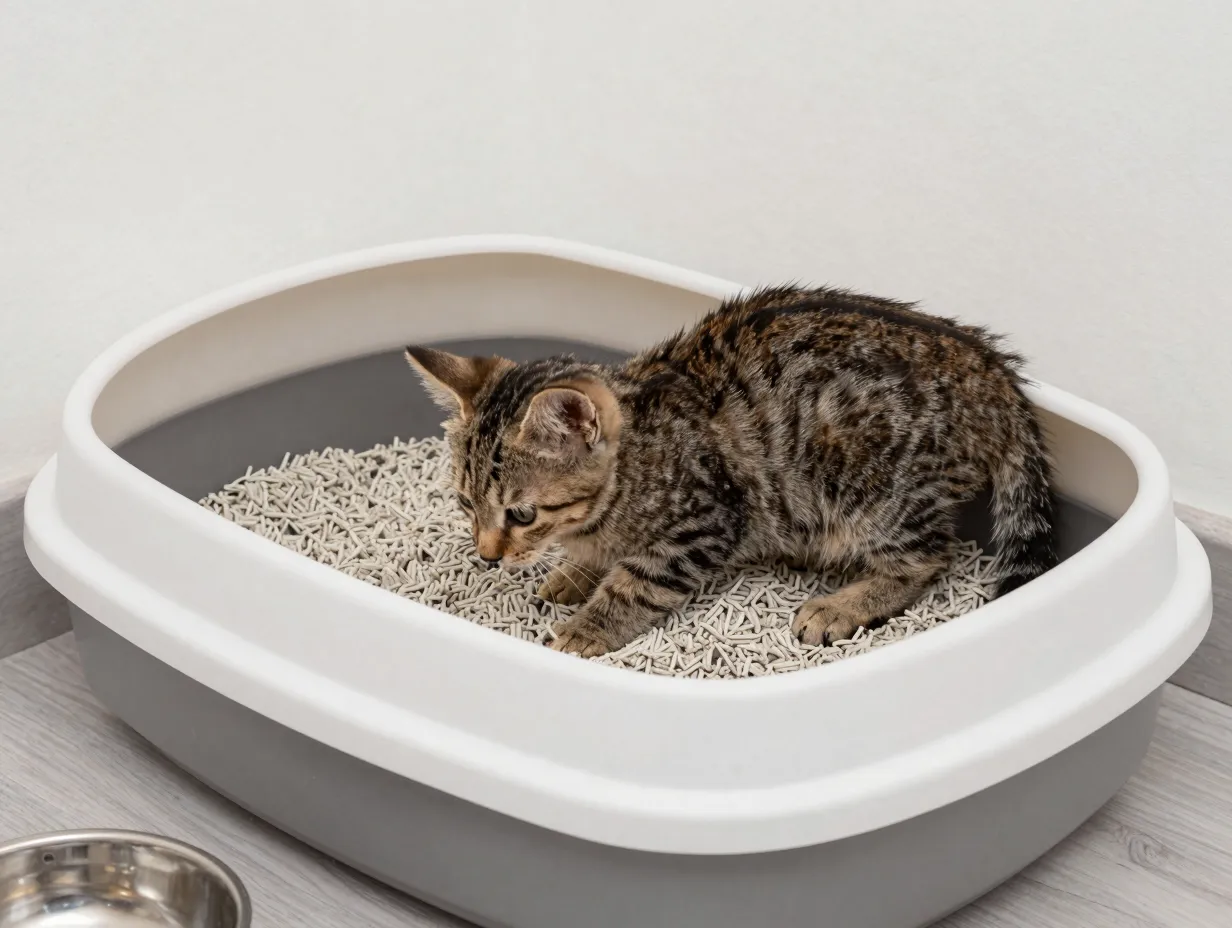
Most kittens take to litter training quickly — but only if you set them up for success from the start. Begin litter training on day one by placing your kitten in the litter box after every meal and immediately after they wake up from a nap [8].
Gently guide their front paws in a digging motion to help them understand the purpose of the box. Most kittens will catch on within a few days [8].
Litter box setup checklist:
- Use an unscented, clumping litter — strong fragrances can deter kittens.
- Place the box in a quiet, low-traffic area where your kitten feels safe.
- Keep the litter box away from food and water bowls — cats instinctively avoid eliminating near their feeding area [7].
- Scoop the box at least once daily to keep it clean and inviting.
- For young kittens, choose a box with low sides for easy entry and exit.
💡 Rule of thumb: One litter box per cat, plus one extra. For a single kitten, two boxes is ideal.
Accidents will happen. Never punish your kitten for going outside the box — this creates fear and makes training harder. Instead, clean the area thoroughly with an enzymatic cleaner to eliminate odors that might attract them back to the same spot.
6. Kitten-Proof Your Home Before They Arrive
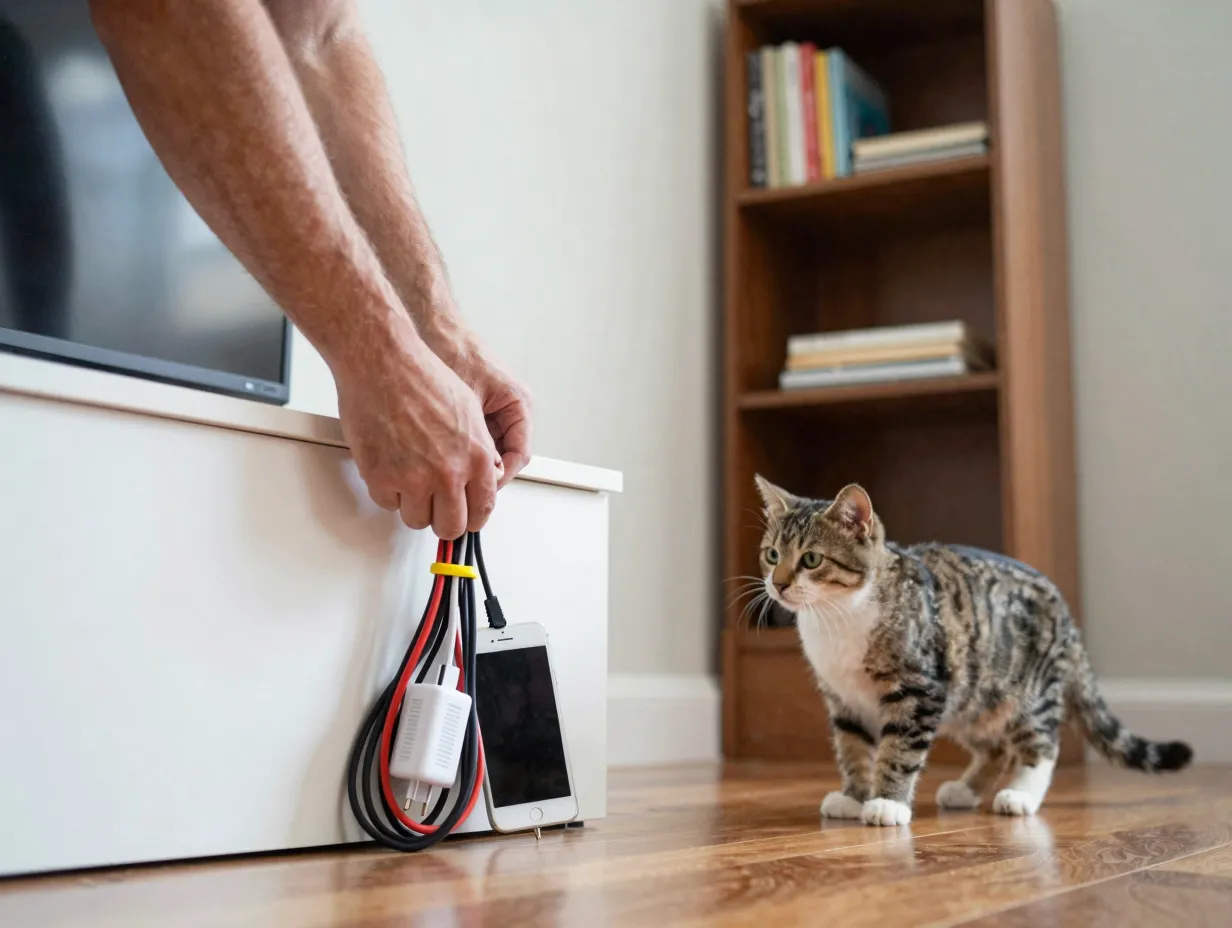
Your home is full of hidden hazards for a curious, climbing, chewing tabby kitten. Kitten-proofing is not optional — it’s a safety essential that should be completed before your kitten sets a single paw inside [7].
Room-by-room kitten-proofing checklist:
🏠 Kitchen & Bathroom:
- Keep toilet lids closed at all times (kittens can fall in and drown) [7]
- Store cleaning products and medications in locked cabinets
- Secure trash cans with lids
🔌 Living Areas:
- Bundle or hide electrical cords and phone chargers [7]
- Remove or secure small objects that could be swallowed
- Anchor tall bookshelves and furniture to the wall
🌿 Plants & Scents:
- Remove toxic houseplants (lilies are extremely dangerous to cats)
- Avoid aerosol sprays, scented candles, and essential oil diffusers near your kitten — cats have a highly sensitive sense of smell, and these can cause respiratory irritation [7]
🧶 Toys & Accessories:
- Avoid toys with long strings, ribbons, or small detachable parts that could be swallowed [7]
- Choose toys specifically designed and tested for kittens
Prepare these essential supplies before your kitten arrives [5]:
| Supply | Purpose |
|---|---|
| Kitten food bowls | Feeding wet and dry food |
| Litter box + litter | Bathroom needs |
| Age-appropriate toys | Mental and physical stimulation |
| Scratching post | Redirecting natural scratching behavior |
| Comfortable bed | Rest and security |
| Carrier | Safe transport to vet |
7. Establish a Veterinary Care Routine Starting at 7–8 Weeks
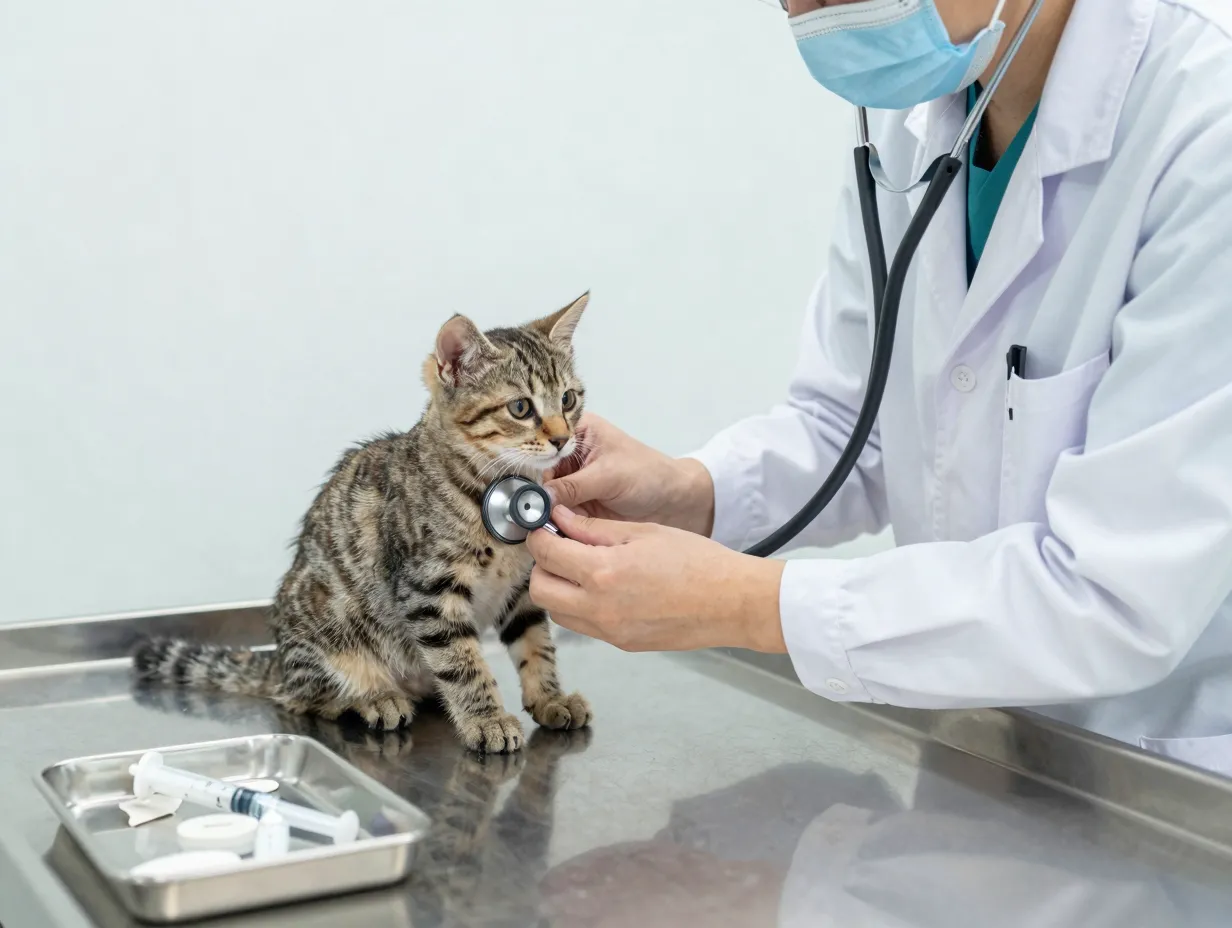
The 7 to 8 week window is one of the most important periods in your tabby kitten’s life. This is the ideal time to transition kittens to their new home and begin essential veterinary care [3].
What your kitten’s first vet visits should cover:
- Physical examination — baseline health assessment
- Vaccinations — core vaccines include FVRCP (feline viral rhinotracheitis, calicivirus, panleukopenia) and rabies
- Parasite prevention — deworming and flea/tick prevention
- Microchipping — permanent identification
- Spay/neuter discussion — typically recommended between 4–6 months
Recommended vaccination schedule (general guideline):
| Age | Vaccine/Care |
|---|---|
| 6–8 weeks | First FVRCP vaccine |
| 10–12 weeks | FVRCP booster |
| 14–16 weeks | Final FVRCP booster + rabies |
| 6 months | Spay/neuter |
| 1 year | Annual boosters |
⚠️ Always follow your specific veterinarian’s recommendations — schedules may vary based on your kitten’s health history and local disease risks.
For very young or bottle-fed kittens, weigh your kitten daily and keep them warm before feeding to ensure proper development and catch any weight loss early [1].
8. Prioritize Socialization, Handling, and Positive Reinforcement
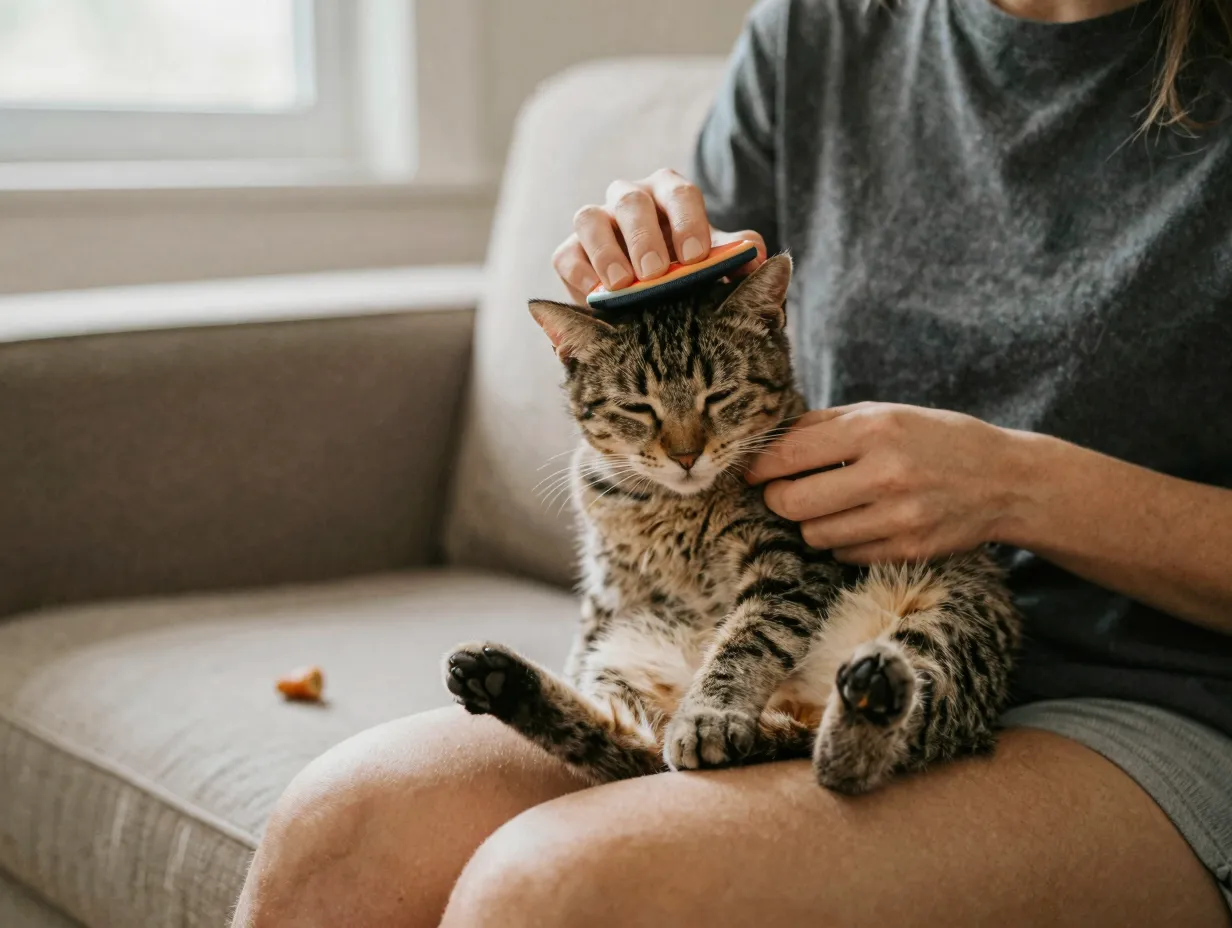
The final — and perhaps most underrated — of the 8 Must-Know Tips for Raising a Healthy Tabby Cat Kitten is consistent, gentle socialization. The experiences your kitten has between 2 and 14 weeks of age shape their personality for life. A well-socialized kitten grows into a confident, friendly adult cat [6].
How to handle your kitten correctly:
- Always hold your kitten while sitting down to prevent injury from falls [4]
- Gently stroke sensitive areas including the belly, paws, and chin to build comfort with being touched [4]
- Handle your kitten frequently and consistently — even shy kittens become more comfortable with regular, gentle contact [4]
- Expose your kitten to different people, sounds, and environments gradually and positively [6]
Brush your kitten regularly — daily if they have longer hair. Regular brushing keeps the coat clean, reduces dander (which can trigger human allergies), and turns grooming into a bonding ritual rather than a stressful event [4].
Use positive reinforcement for all training:
- Reward good behavior immediately with a small treat or verbal praise [6]
- Redirect unwanted behavior (like scratching furniture) toward appropriate alternatives like scratching posts [6]
- Never use punishment — it damages trust and can cause fear-based aggression
- Practice short, frequent training sessions — 2 to 5 minutes is ideal for kittens with short attention spans
🐾 Kittens learn fastest when training feels like play. Keep sessions fun, light, and always end on a positive note.
Common Tabby Kitten Mistakes to Avoid
Even well-intentioned owners make these errors. Here’s a quick reference:
| ❌ Mistake | ✅ Better Approach |
|---|---|
| Feeding adult cat food | Use kitten-formulated food until 12 months |
| Free-feeding all day | Scheduled meals 4–5 times daily |
| Skipping early vet visits | Schedule first visit at 7–8 weeks |
| Punishing accidents | Clean thoroughly; reinforce correct behavior |
| Isolating the kitten | Gradual, positive socialization daily |
| Ignoring kitten-proofing | Complete a full home safety check before arrival |
Conclusion: Your Tabby Kitten’s Best Start Begins With You
Raising a healthy tabby cat kitten is one of the most rewarding experiences a pet owner can have — but it requires intentional preparation and consistent care. The 8 Must-Know Tips for Raising a Healthy Tabby Cat Kitten covered in this guide give you everything you need to start strong:
Your actionable next steps:
- ✅ This week: Kitten-proof your home and gather all essential supplies before your kitten arrives.
- ✅ Day one: Set up a consistent feeding schedule with high-quality kitten food (wet + dry combination).
- ✅ Week one: Begin litter box training and gentle handling sessions daily.
- ✅ Week two: Schedule your first veterinary appointment if you haven’t already.
- ✅ Ongoing: Commit to daily socialization, grooming, and positive reinforcement training.
Every healthy, confident adult tabby cat was once a kitten whose owner made the right choices early. You now have the knowledge — the next step is putting it into practice. Your tabby kitten is counting on you, and with these tips as your guide, you’re already ahead of the curve. 🐱
References
[1] Kitten Care – https://pethoodga.org/kitten-care/
[2] Tabby Breed Guide – https://vetslovepets.com.au/blogs/breed-guides/tabby-breed-guide
[3] Cat Kitten Care How To Raise A Healthy Kitten – https://love.vet/cat-kitten-care-how-to-raise-a-healthy-kitten/
[4] 10 Tips On Raising A Happy Kitten – https://spcanova.org/10-tips-on-raising-a-happy-kitten/
[5] New Kitten Checklist – https://www.petmd.com/cat/general-health/new-kitten-checklist
[6] Kitten Care 101 Vet Approved Guide – https://www.medvet.com/kitten-care-101-vet-approved-guide/
[7] Kitten Practical Tips – https://www.healthline.com/health/kitten-practical-tips
[8] Raising A Kitten – https://www.purina.com/articles/cat/kitten/health/raising-a-kitten