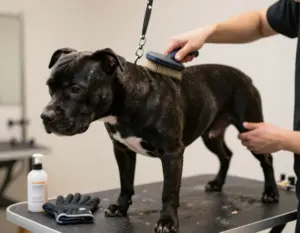
8 Essential Supplies for Your New German Shepherd Dogs Puppy
German Shepherds are the second most popular dog breed in the United States — and for good reason. They are loyal, intelligent, and deeply devoted to their families. But here is the hard truth most new owners discover too late: bringing home a German Shepherd puppy without the right supplies is one of the fastest ways to turn those first weeks into chaos. The wrong food, a flimsy leash, or a missing crate can set your training back by months.
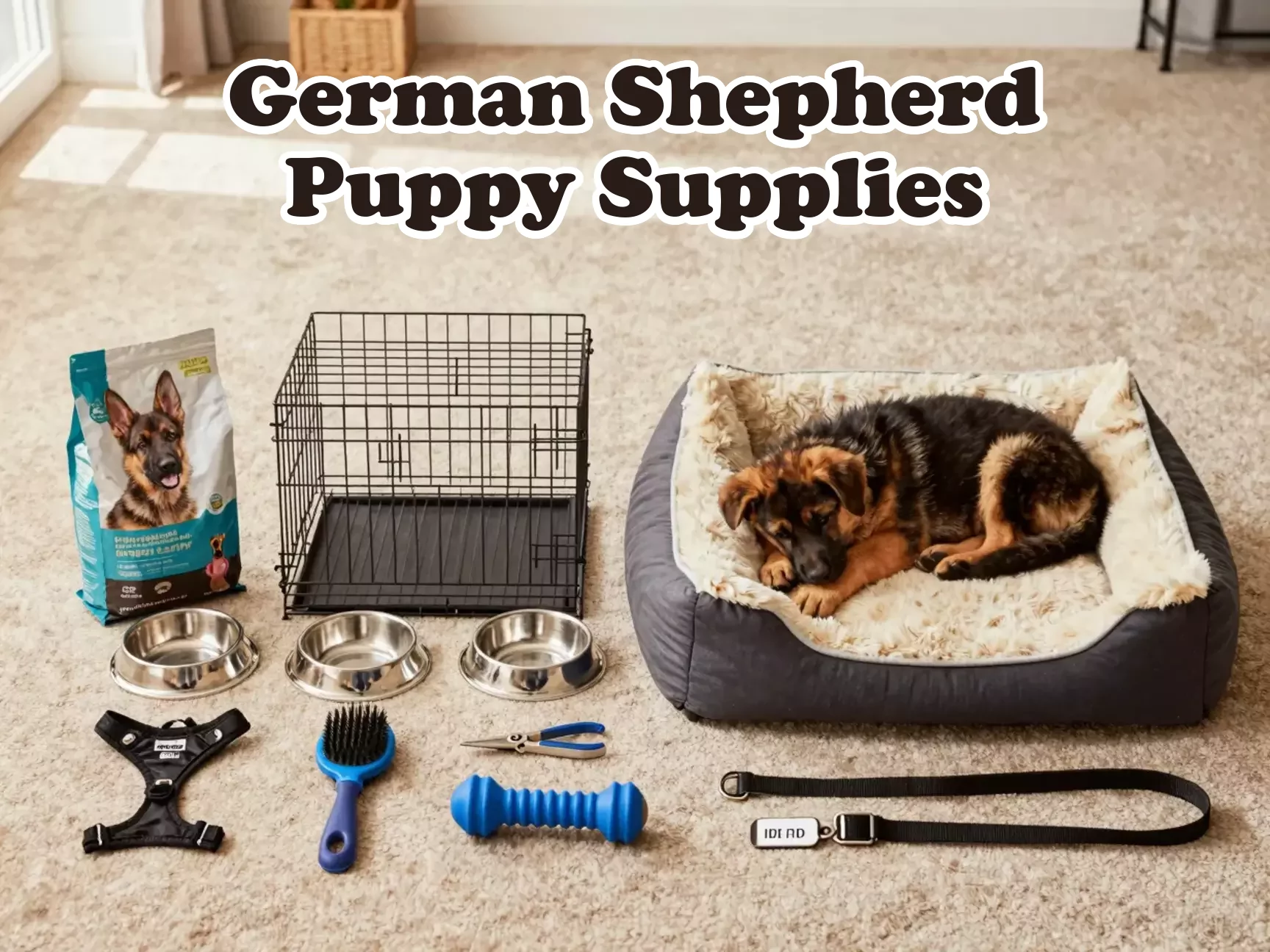
That is exactly why I put together this guide covering the 8 Essential Supplies for Your New German Shepherd Dogs Puppy. Whether you are a first-time dog owner or an experienced handler adding a GSD to your pack, having the right gear from day one makes an enormous difference. These are not luxury items — they are the foundational tools your puppy needs to grow up healthy, safe, and well-behaved.
Key Takeaways 📌
- Nutrition is non-negotiable: German Shepherd puppies need breed-specific, high-protein food to support their rapid growth and joint development.
- Safety gear saves lives: A proper collar, ID tag, and harness are your first line of defense if your puppy ever wanders off.
- Mental stimulation matters as much as physical exercise: Interactive toys and puzzle feeders prevent destructive behavior in this highly intelligent breed.
- Grooming early builds lifelong habits: Starting a grooming routine with the right brushes during puppyhood reduces shedding and keeps your GSD comfortable.
- A crate is not a punishment — it is a sanctuary: Proper crate training is one of the most effective tools for housebreaking and reducing anxiety.
The Complete Guide to the 8 Essential Supplies for Your New German Shepherd Dogs Puppy
Getting everything ready before your puppy arrives is the smartest move you can make. Think of it like setting up a nursery — every item on this list serves a specific purpose in your puppy’s health, safety, and development. Let’s walk through each one.
1. High-Quality, Breed-Specific Puppy Food 🍖
This is the single most important purchase you will make for your new puppy.
German Shepherds have unique nutritional needs that generic puppy food simply cannot meet. Their rapid growth phase — from a few pounds to potentially 90+ pounds in under a year — demands elevated protein content, balanced calcium-to-phosphorus ratios, and specific nutrients that support joint, bone, and muscle development [1].
Look for puppy foods that list a named protein source (chicken, beef, or lamb) as the first ingredient. Avoid formulas loaded with fillers like corn syrup or artificial preservatives.
| What to Look For | What to Avoid |
|---|---|
| Named protein as first ingredient | Unnamed “meat by-products” |
| DHA for brain development | Artificial colors and preservatives |
| Balanced calcium/phosphorus ratio | Excessive grain fillers |
| Large-breed puppy formula | Adult dog food (different nutrient ratios) |
| Glucosamine for joint support | High sugar or corn syrup content |
💡 Pro Tip: Always transition your puppy’s food gradually over 7–10 days to avoid digestive upset. Mix increasing amounts of the new food with the old formula.
German Shepherds are also prone to bloat (gastric dilatation-volvulus), so feeding smaller, more frequent meals rather than one large portion per day is strongly recommended [1].
2. Sturdy, Non-Slip Food and Water Bowls 🥣
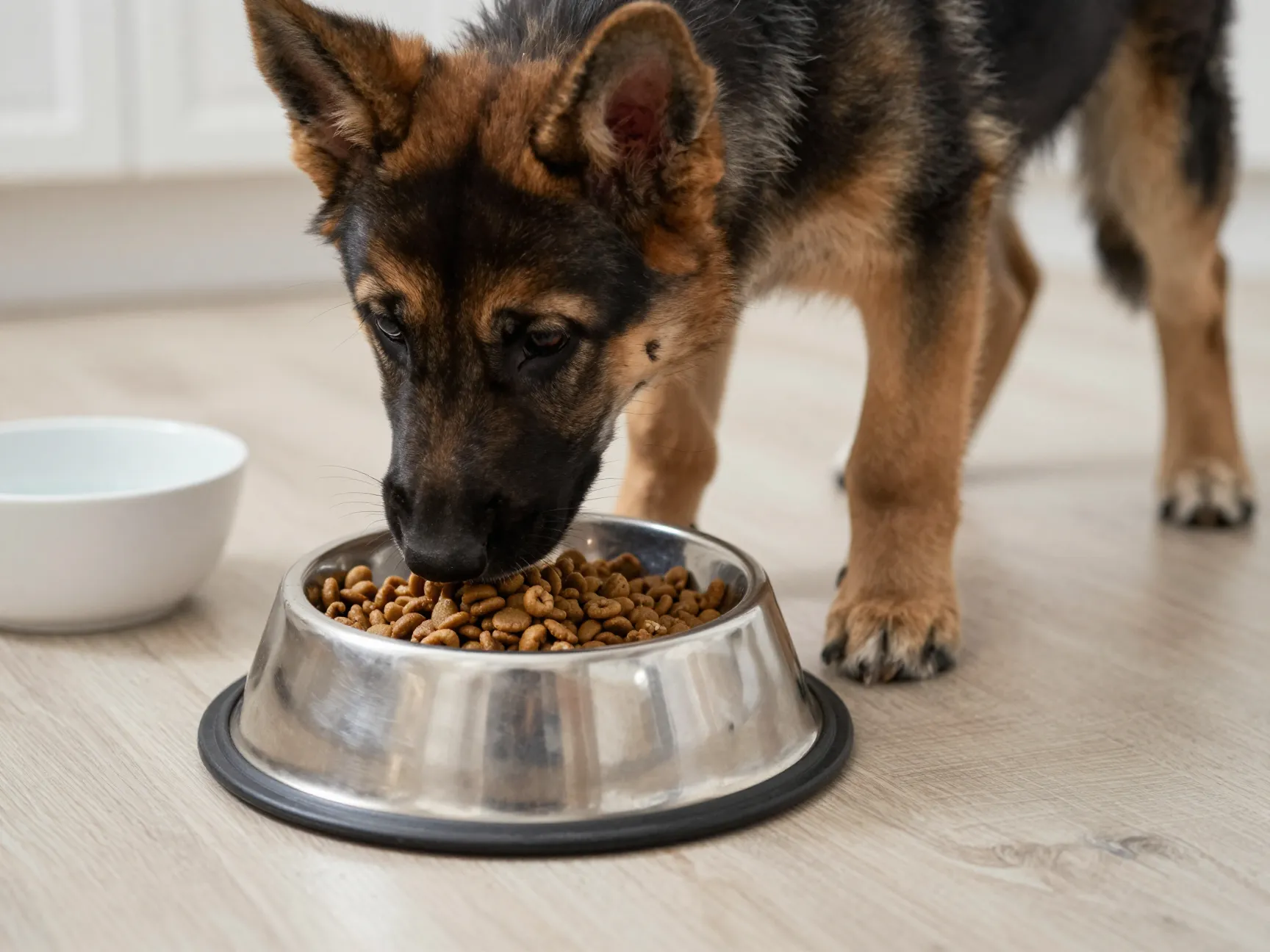
It sounds simple, but the wrong bowl can cause real problems. Plastic bowls scratch easily, harbor bacteria in those scratches, and can cause chin acne in some dogs. They also slide around during mealtime, which frustrates puppies and slows down feeding.
Stainless steel or ceramic bowls are the gold standard for German Shepherd puppies [1]. Here is why:
- ✅ Stainless steel is virtually indestructible, dishwasher-safe, and bacteria-resistant
- ✅ Ceramic is heavier (less sliding), easy to clean, and aesthetically pleasing
- ❌ Plastic scratches, stains, and can leach chemicals over time
Look for bowls with a rubber base or non-slip ring on the bottom. German Shepherd puppies eat enthusiastically — a sliding bowl becomes a frustrating game very quickly.
For water, consider a larger capacity bowl since GSDs drink significant amounts, especially after exercise. Stainless steel is ideal here as it keeps water cleaner longer than plastic alternatives.
3. A Comfortable, Appropriately Sized Puppy Crate 🏠
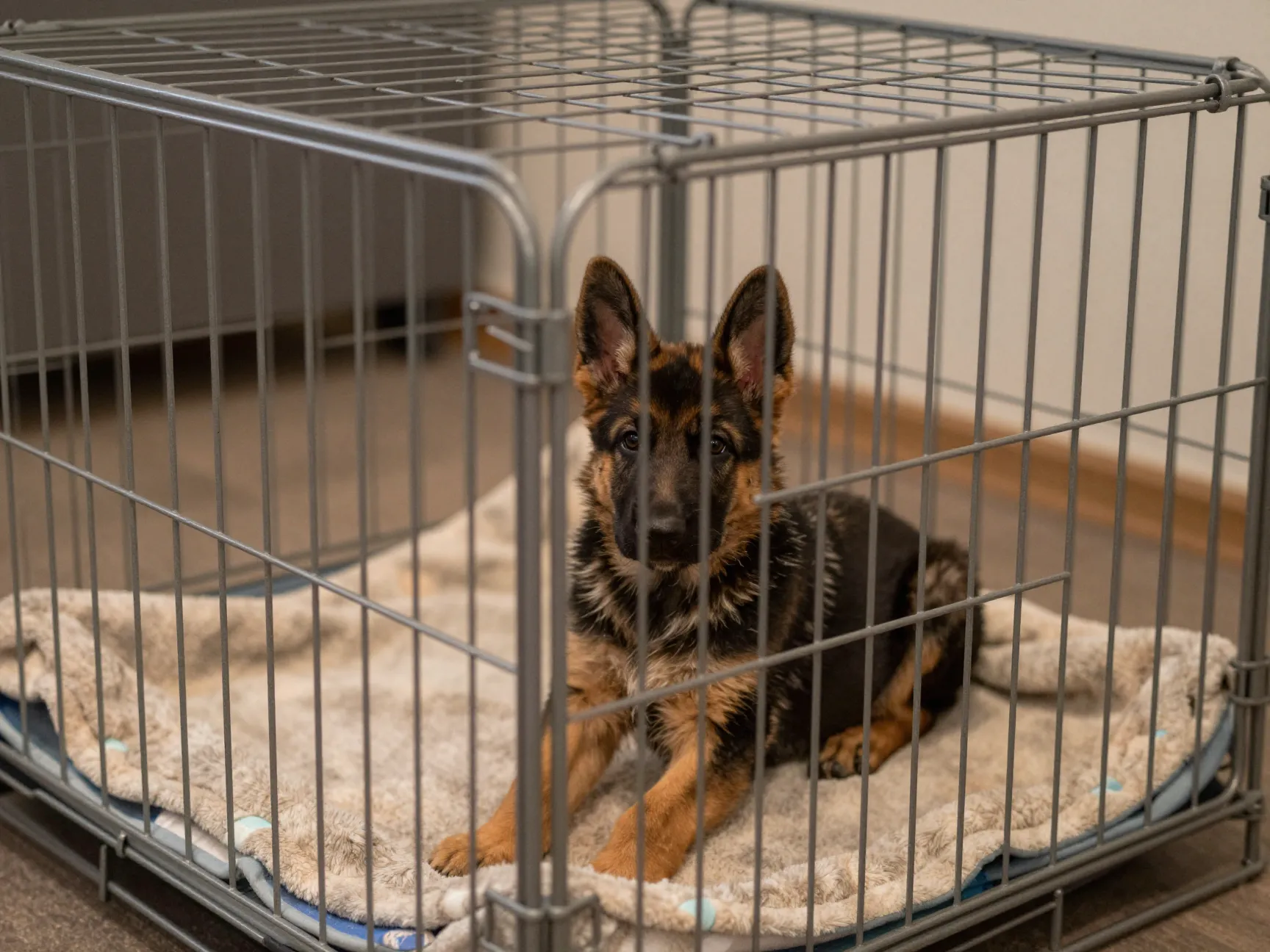
A crate is one of the most misunderstood tools in puppy raising. Many new owners feel guilty using one, but the reality is that dogs are den animals by nature, and a properly introduced crate becomes a place of comfort and security — not confinement [2].
For German Shepherd puppies, crate training serves two critical purposes:
- Housebreaking: Puppies instinctively avoid soiling their sleeping area, making crates an incredibly effective potty training tool.
- Safety: When you cannot supervise your puppy, a crate prevents destructive behavior and keeps them out of danger.
Sizing is crucial. A crate that is too large allows the puppy to use one end as a bathroom. A crate that is too small causes stress. For a GSD puppy that will grow into a large adult, purchase a 42-inch crate with a divider panel so you can adjust the space as they grow [2].
| Puppy Age | Recommended Crate Space |
|---|---|
| 8–12 weeks | Small section (divider in place) |
| 3–6 months | Medium section (adjust divider) |
| 6+ months | Full 42-inch crate space |
Add a soft crate mat or blanket and a worn t-shirt with your scent to help your puppy settle in during those first anxious nights.
4. Orthopedic Dog Bed for Joint Health 😴
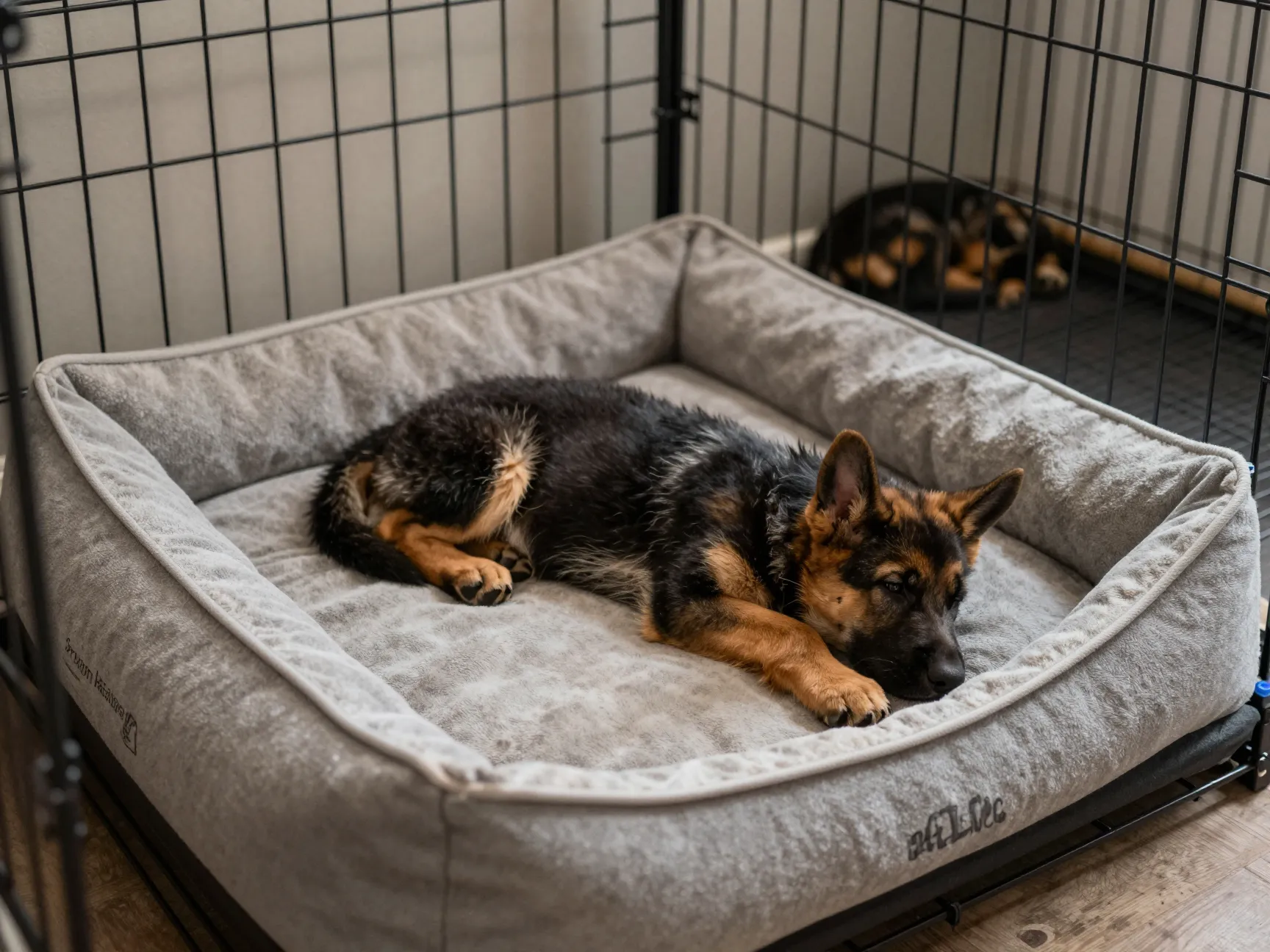
German Shepherds are genetically predisposed to hip dysplasia and elbow dysplasia — two of the most common health concerns in the breed. While genetics play the largest role, environmental factors during puppyhood — including sleeping surfaces — can influence joint development and long-term comfort [2].
An orthopedic dog bed with memory foam or high-density foam provides:
- Extra padding that reduces pressure on developing joints
- Better spinal alignment during sleep
- Reduced risk of calluses on elbows from hard floor surfaces
- A dedicated, comfortable space that reinforces calm behavior
🗣️ “Orthopedic beds are particularly beneficial for German Shepherds as they provide extra padding to reduce joint stress and help prevent arthritis development.” — Petmate [2]
When choosing a bed, look for chew-resistant covers — GSD puppies are notorious chewers, and a bed that falls apart in week one is money wasted. Removable, machine-washable covers are a practical must-have.
Place the bed inside or near the crate during the early weeks so your puppy associates both spaces with rest and relaxation.
5. Well-Fitted Collar, Harness, and Sturdy Leash 🦮
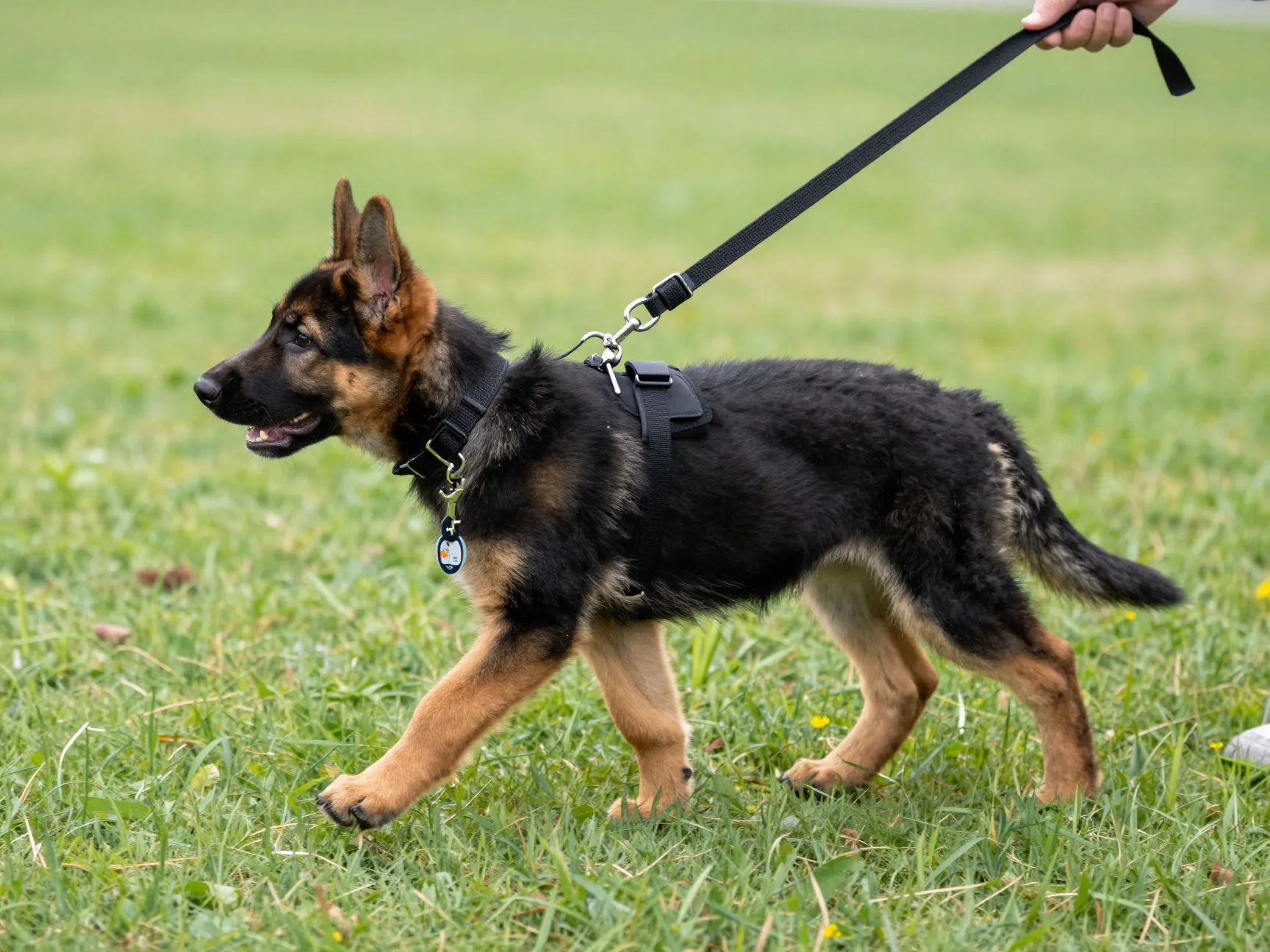
Your puppy needs two forms of ID and restraint: a collar for tags and a harness for walking. These are not interchangeable — each serves a distinct purpose.
The Collar:
A flat, adjustable collar is essential from day one — not for walking, but for carrying your puppy’s ID tag [5]. Choose a collar that fits snugly but allows two fingers to slip underneath. Check the fit weekly since GSD puppies grow fast.
The Harness:
For actual walks and training sessions, a comfortable, well-fitted harness distributes pressure across the chest and shoulders rather than the neck [5]. This is especially important for puppies whose tracheas and neck muscles are still developing. A front-clip harness also helps discourage pulling — a habit you want to address early with a breed as strong as a German Shepherd.
The Leash:
A 6-foot standard leash made from nylon or leather is ideal for training and daily walks [5]. Avoid retractable leashes for puppies — they teach dogs that pulling extends their freedom, which is the opposite of what you want.
| Item | Purpose | Recommended Type |
|---|---|---|
| Collar | ID tag attachment, basic control | Flat, adjustable, buckle-style |
| Harness | Walking, training, pressure distribution | Front-clip, padded, adjustable |
| Leash | Control during walks | 6-foot nylon or leather |
6. Grooming Essentials: Brushes, Clippers, and Shampoo ✂️
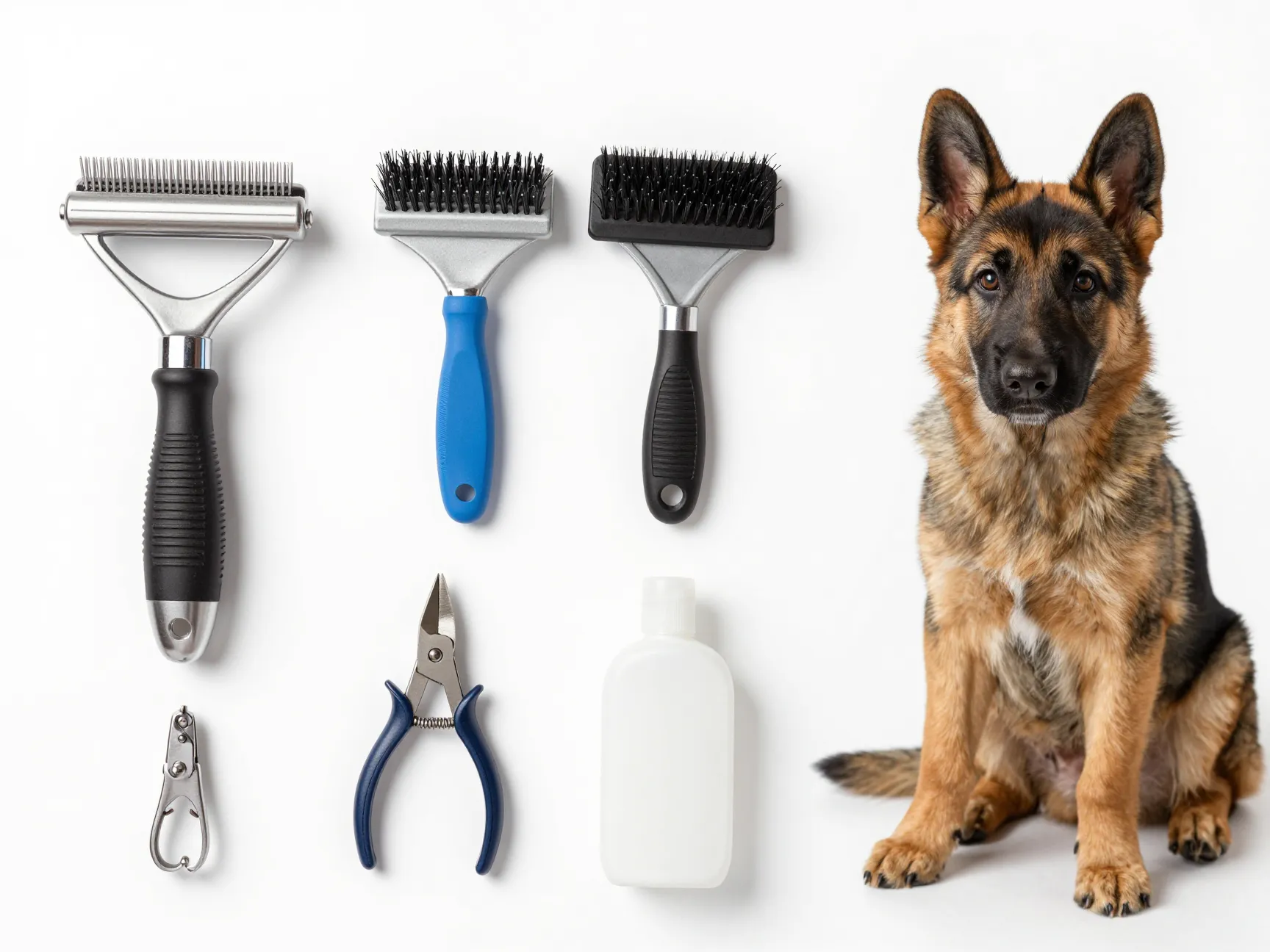
German Shepherds are double-coated dogs that shed year-round, with two major “blowing coat” seasons in spring and fall. Starting a grooming routine during puppyhood is not just about aesthetics — it is about building trust, preventing matting, and maintaining skin health [2].
The essential grooming toolkit includes:
- FURminator or deshedding tool: Reaches the dense undercoat to remove loose fur before it ends up on your couch.
- Slicker brush: Smooths the outer coat and removes tangles.
- Double-row undercoat rake: Particularly effective for standard-coat GSDs, this tool works through the thick undercoat without damaging the topcoat [2].
- Nail clippers (dog-specific): Long nails cause discomfort and can affect your puppy’s gait. Trim every 2–3 weeks [1].
- Dog-specific shampoo: Human shampoo disrupts a dog’s skin pH. Choose a gentle, breed-appropriate formula [1].
💡 Grooming Frequency Guide:
- Brushing: 3–4 times per week (daily during shedding season)
- Bathing: Every 4–6 weeks (or as needed)
- Nail trimming: Every 2–3 weeks
- Ear cleaning: Monthly or as recommended by your vet
Start grooming sessions short and positive — even just 5 minutes with treats and praise. A puppy that tolerates grooming becomes an adult dog that makes vet visits and bath time much easier.
7. Toys for Mental Stimulation and Physical Development 🧩
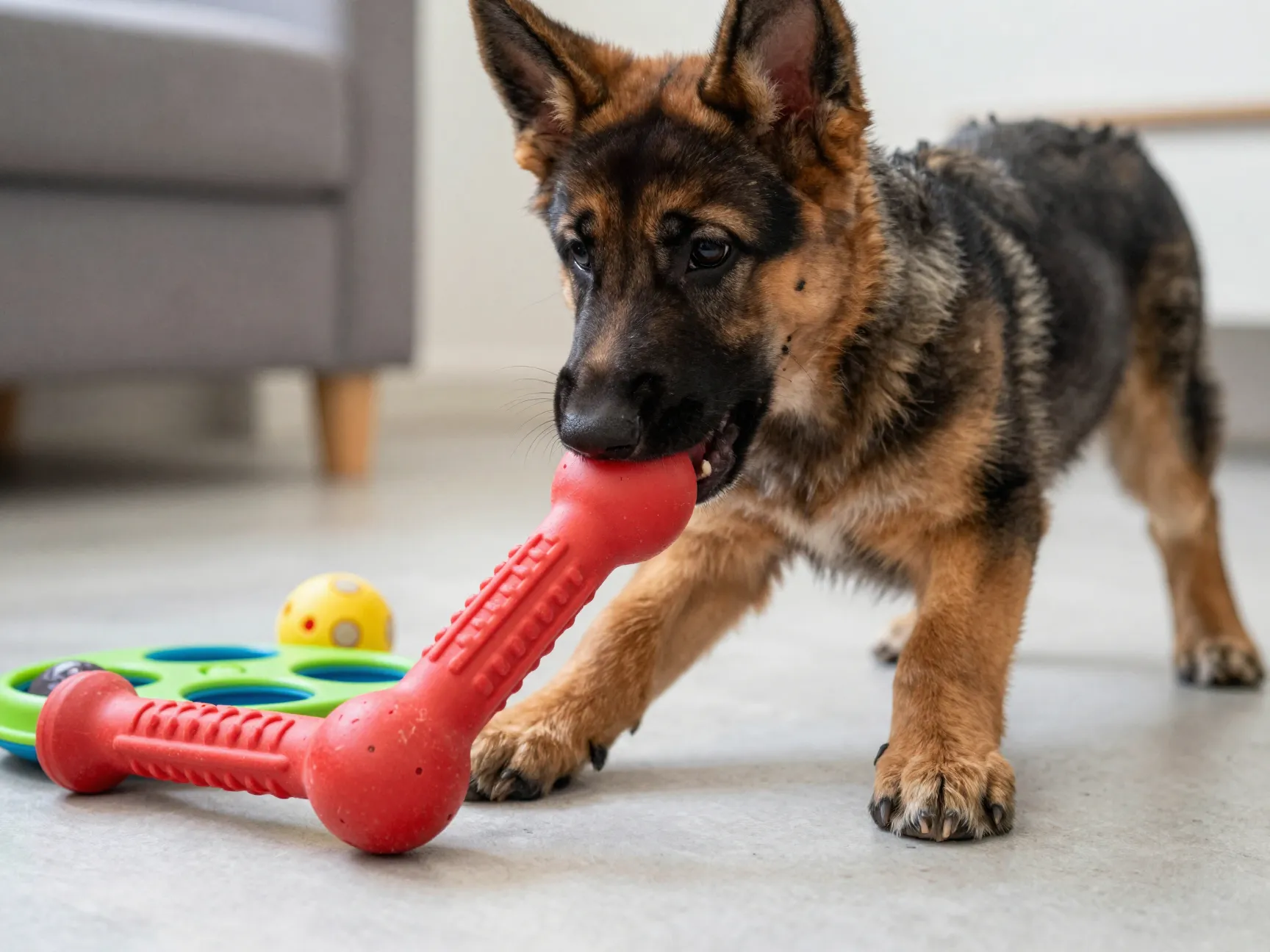
German Shepherds are ranked among the top 3 most intelligent dog breeds in the world. That intelligence is a gift — and a responsibility. A bored GSD puppy will find its own entertainment, and you probably will not enjoy what it chooses.
The right mix of toys addresses three key needs [2]:
Chew Toys:
Puppies chew to relieve teething pain and explore their world. Durable rubber chew toys (like Kongs) satisfy this instinct safely and can be stuffed with treats or frozen peanut butter to extend engagement time.
Interactive Puzzle Toys:
Puzzle feeders and sniff mats slow down fast eaters (reducing bloat risk) and challenge your puppy’s problem-solving skills. These are especially valuable during rainy days or when outdoor exercise is limited.
Training Balls:
A high-value ball specifically used during training sessions improves focus and agility [2]. The key is to make the training ball a special reward — not a toy available all the time — so it retains its motivational power.
| Toy Type | Primary Benefit | Best For |
|---|---|---|
| Rubber chew toy (Kong) | Teething relief, mental engagement | Daily use, alone time |
| Puzzle feeder | Cognitive development, slow feeding | Mealtime, rainy days |
| Training ball | Focus, reward-based training | Training sessions |
| Rope toy | Interactive play, dental health | Supervised play with owner |
Rotate toys regularly to keep your puppy’s interest. What is novel and exciting today becomes boring in a week — variety is the key to sustained engagement.
8. ID Tags and Veterinary Care Supplies 🏷️🩺
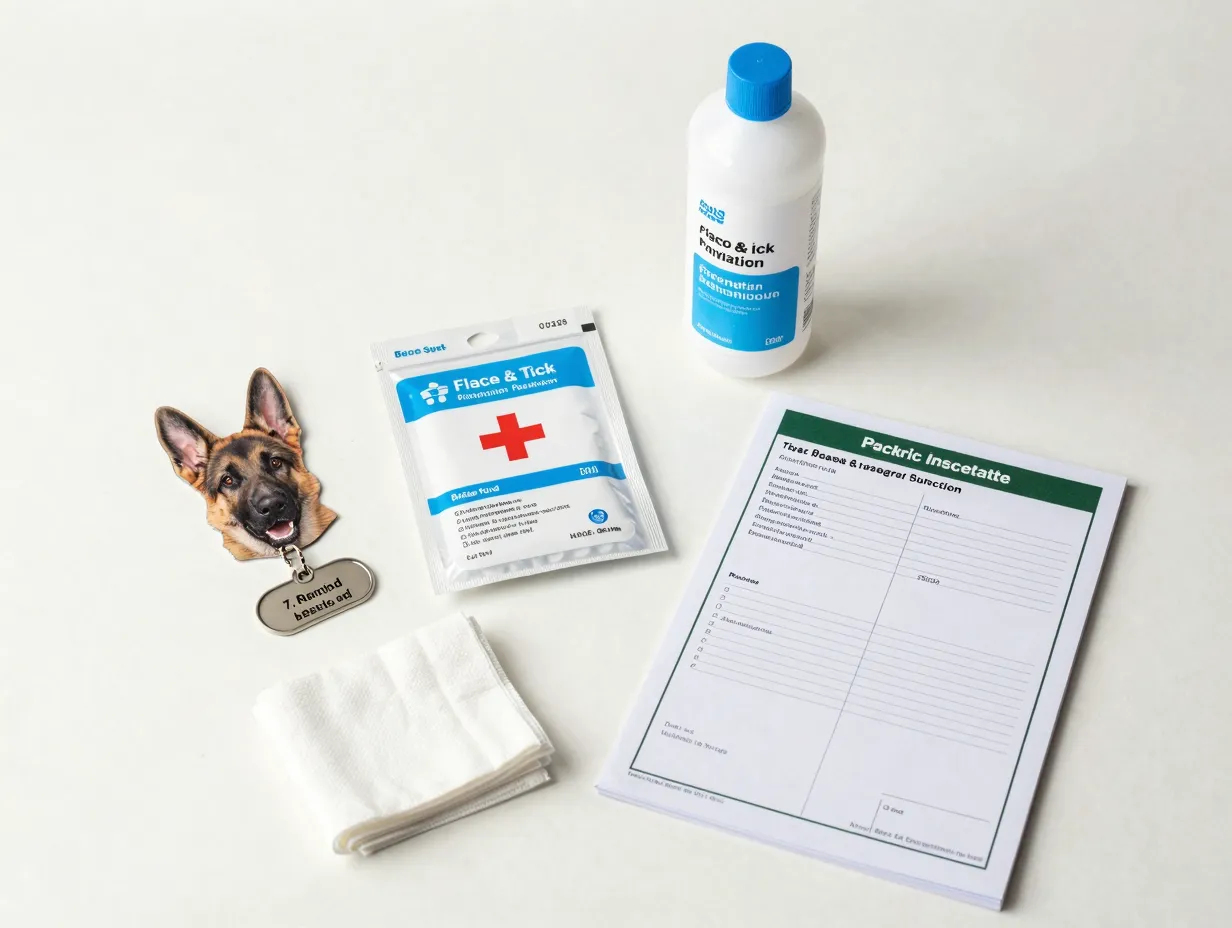
The final category is arguably the most critical for your puppy’s safety and long-term health. It covers two related areas: identification and preventive care.
Identification Tags:
Every German Shepherd puppy should wear an ID tag from the moment they arrive home [1]. The tag should display:
- Your name
- Your phone number (at minimum)
- Your city or area (optional but helpful)
Even if your puppy is microchipped — and they absolutely should be — a visible ID tag is the fastest way for a good Samaritan to return your dog without involving a shelter. Tags are inexpensive and can be engraved within days at most pet stores.
Veterinary Care Supplies:
Beyond scheduling your first vet visit within 48–72 hours of bringing your puppy home, you should have these supplies on hand [1]:
- ✅ Flea and tick prevention: Your vet will recommend the appropriate product for your region and your puppy’s age/weight.
- ✅ Basic first-aid kit: Include gauze, antiseptic wipes, tweezers, a digital thermometer, and styptic powder (for nail bleeding).
- ✅ Puppy-safe enzymatic cleaner: For inevitable accidents — this neutralizes odors and discourages repeat marking in the same spot.
- ✅ Vaccination and health records folder: Keep all vet paperwork organized from day one.
🗣️ “Veterinary care supplies including flea and tick prevention products and a first-aid kit should be maintained in advance to prepare for potential health emergencies.” [1]
Consider pet insurance as well. German Shepherds are prone to several breed-specific conditions (hip dysplasia, degenerative myelopathy, bloat), and insurance purchased during puppyhood — before any conditions are diagnosed — can save thousands of dollars down the road.
Quick Reference: The 8 Essential Supplies Checklist ✅
Here is a fast-reference summary of everything covered in the 8 Essential Supplies for Your New German Shepherd Dogs Puppy:
| # | Supply | Priority Level | Estimated Cost Range |
|---|---|---|---|
| 1 | Breed-specific puppy food | 🔴 Critical | $40–$80/month |
| 2 | Stainless steel food and water bowls | 🔴 Critical | $15–$35 |
| 3 | Puppy crate (42-inch with divider) | 🔴 Critical | $60–$150 |
| 4 | Orthopedic dog bed | 🟡 High | $40–$120 |
| 5 | Collar, harness, and leash | 🔴 Critical | $30–$80 |
| 6 | Grooming kit (brush, clippers, shampoo) | 🟡 High | $50–$100 |
| 7 | Toys (chew, puzzle, training) | 🟡 High | $30–$70 |
| 8 | ID tag and vet care supplies | 🔴 Critical | $20–$60 |
Total estimated startup cost: $285–$715 (excluding ongoing food costs and vet visits)
Conclusion: Set Your German Shepherd Puppy Up for Success
Bringing home a German Shepherd puppy in 2026 is an exciting, life-changing experience — but it rewards preparation above everything else. The 8 Essential Supplies for Your New German Shepherd Dogs Puppy outlined in this guide are not optional extras. They are the foundation of a safe, healthy, and happy start for your new companion.
Here are your actionable next steps:
- Order supplies before pickup day. Do not wait until your puppy is already home and you are scrambling.
- Set up the crate and bed in a quiet area of your home before arrival — let the space feel settled.
- Schedule your first vet appointment within 48 hours of bringing your puppy home.
- Research breed-specific training resources — German Shepherds thrive with consistent, positive reinforcement-based training started early.
- Join a GSD owner community online or locally. The collective experience of other German Shepherd owners is an invaluable resource.
A well-prepared owner raises a confident, well-adjusted dog. Invest in the right supplies now, and your German Shepherd puppy will reward you with years of loyalty, protection, and companionship that few other breeds can match.
References
[1] German Shepherd Puppy Preperation Supplies – https://www.bartonsgermanshepherds.com/german-shepherd-puppy-preperation-supplies/
[2] Must Have Accessories For Your German Shepherd – https://www.petmate.com/blogs/petmate-academy/must-have-accessories-for-your-german-shepherd
[5] New Puppy Checklist – https://www.akc.org/expert-advice/puppy-information/new-puppy-checklist/