8 Classic Black and White Cat Cartoons We All Love
There is something magical about a simple black and white cartoon cat that has kept audiences hooked for over a century. Long before color animation took over our screens, monochrome feline characters were already stealing hearts, inspiring laughs, and building legacies that still resonate in 2026. In this article, we explore the 8 Classic Black and White Cat Cartoons We All Love — timeless characters whose bold ink lines and expressive personalities defined an entire era of animation history.
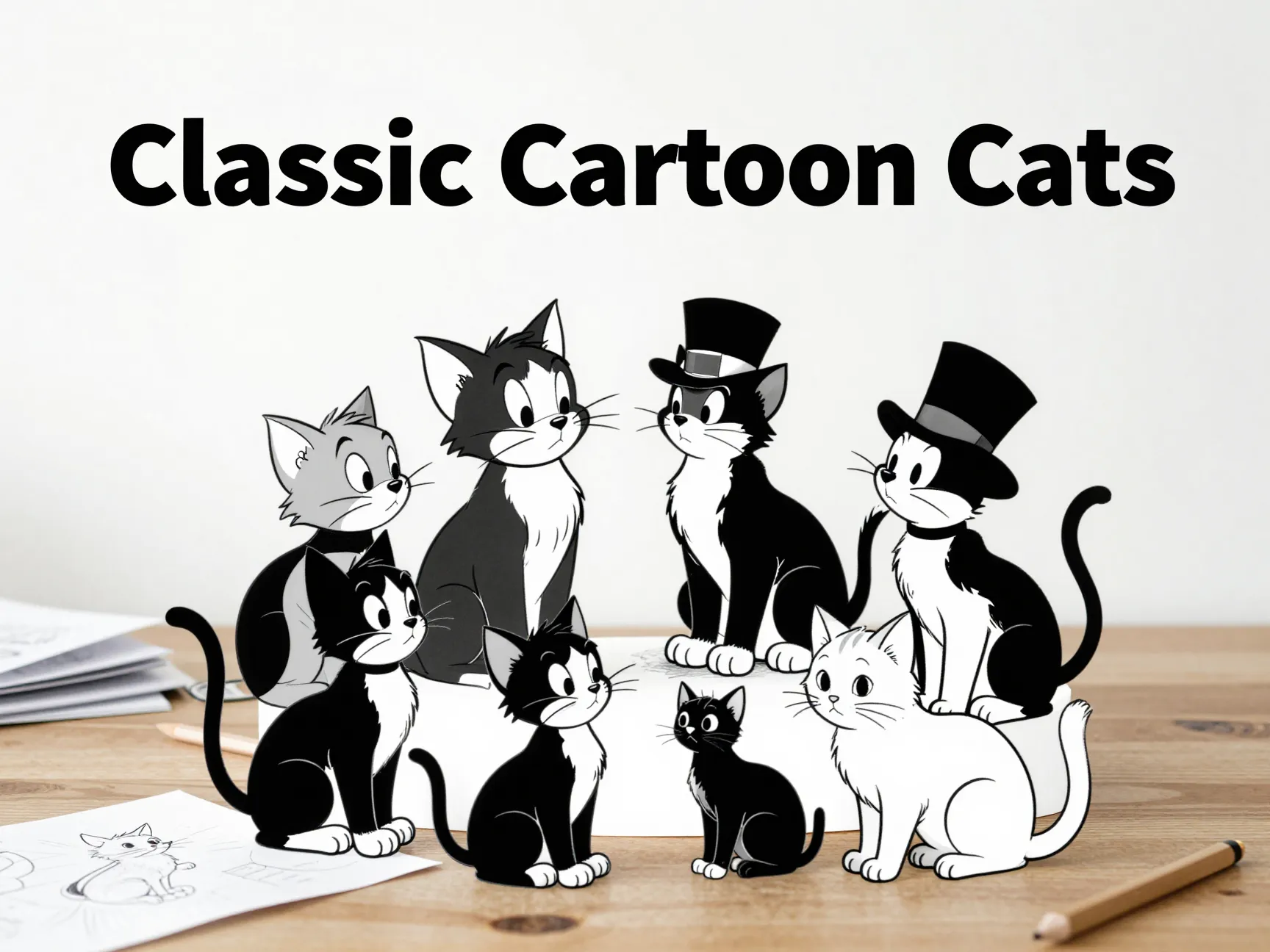
Whether you grew up watching Saturday morning cartoons or discovered these classics through streaming, these iconic cats share one thing in common: they never needed color to be unforgettable. 🐾
Key Takeaways
- Black and white cat cartoons have a history stretching back to the silent film era of the early 1900s.
- Characters like Felix the Cat and Tom (of Tom and Jerry) helped establish the foundations of modern animation storytelling.
- Many of these classic characters have experienced major cultural revivals through merchandise, reboots, and digital media.
- The monochrome aesthetic of these cartoons was not a limitation — it became a defining artistic style that still influences animators today.
- These beloved feline characters teach us that strong character design and personality matter far more than technical complexity.
Why Black and White Cat Cartoons Still Matter Today
Before we dive into our curated list, it is worth asking: why do black and white cat cartoons still hold such a firm place in popular culture in 2026?
The answer lies in the power of simplicity. Early animators had no color palettes, no digital tools, and no surround sound. What they had was ink, imagination, and a deep understanding of physical comedy. The result was a set of characters so expressive and so well-crafted that they outlasted nearly every technological shift in entertainment history.
“A great cartoon character does not need color to make you feel something — it needs personality, timing, and a story worth telling.”
Black and white cat characters, in particular, benefited from the natural visual contrast of their design. A black cat on a white background (or vice versa) creates instant visual drama. The bold outlines and stark contrast made these characters pop off the screen in ways that still feel dynamic today.
Let us now look at the 8 Classic Black and White Cat Cartoons We All Love, ranked not by quality but by their place in animation history.
The 8 Classic Black and White Cat Cartoons We All Love
1. Felix the Cat
First appearance: 1919
Studio: Pat Sullivan Studio / Otto Messmer
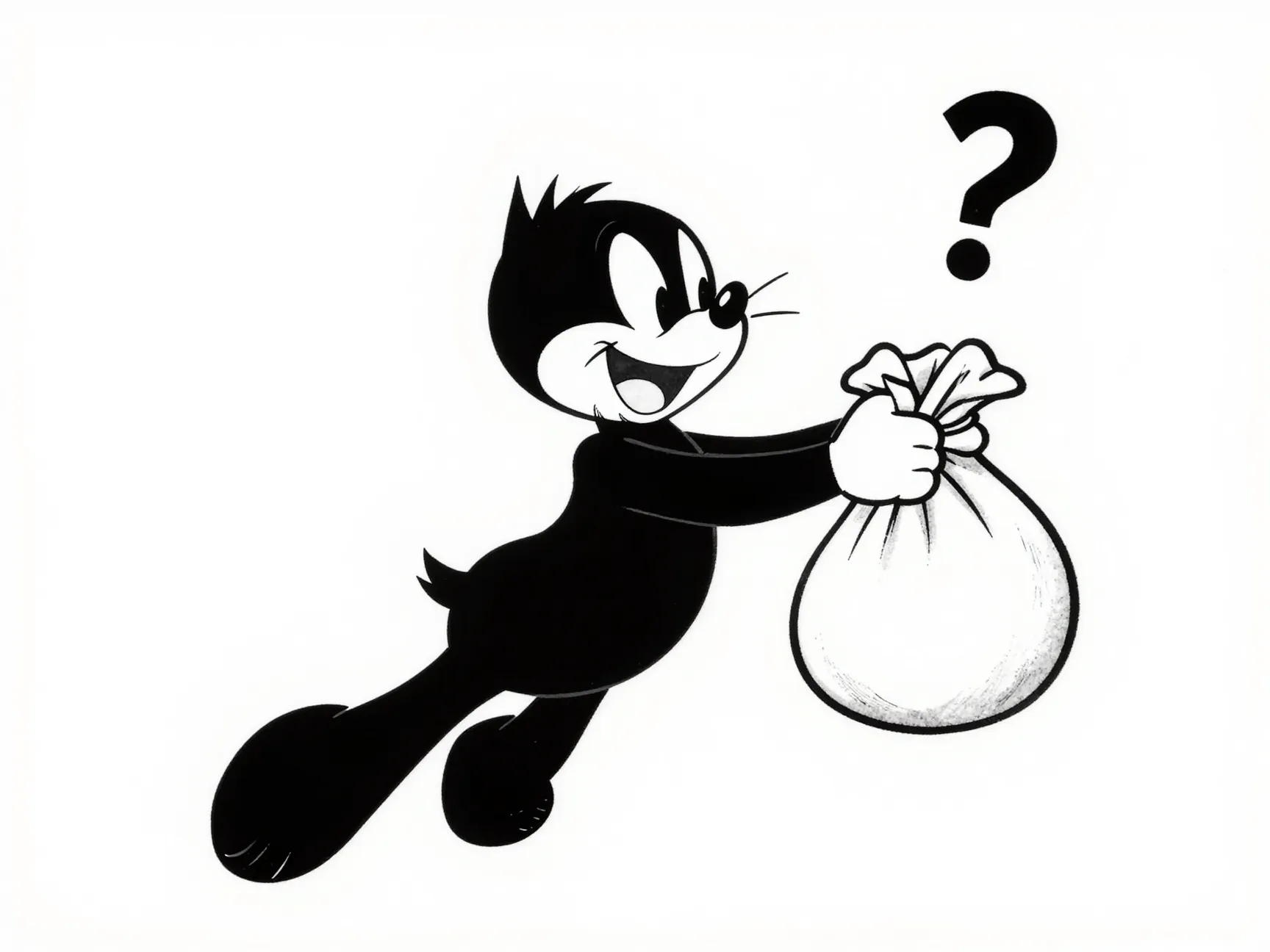
If there is one name that defines the entire category of black and white cat cartoons, it is Felix the Cat. Created during the silent film era, Felix was arguably the first true animated superstar. His jet-black body, white face, and wide eyes made him instantly recognizable — a design so strong it has barely changed in over 100 years.
Felix was not just a visual icon. He was a storytelling pioneer. His cartoons introduced the idea of a character interacting with the abstract world around him, bending reality, pulling his own tail off to use as a tool, and breaking the fourth wall before that was even a concept in animation.
| Feature | Detail |
|---|---|
| Debut Year | 1919 |
| Creator | Otto Messmer / Pat Sullivan |
| Signature Trait | Magic bag of tricks |
| Legacy | First major animated merchandising phenomenon |
Felix became the first cartoon character to be licensed for merchandise, appearing on toys, dolls, and even early television test broadcasts. His image was used by RCA as a test pattern for early TV experiments in the late 1920s. In 2026, Felix remains one of the most recognizable cartoon characters in the world. 🖤
2. Tom (Tom and Jerry)
First appearance: 1940
Studio: MGM / William Hanna and Joseph Barbera
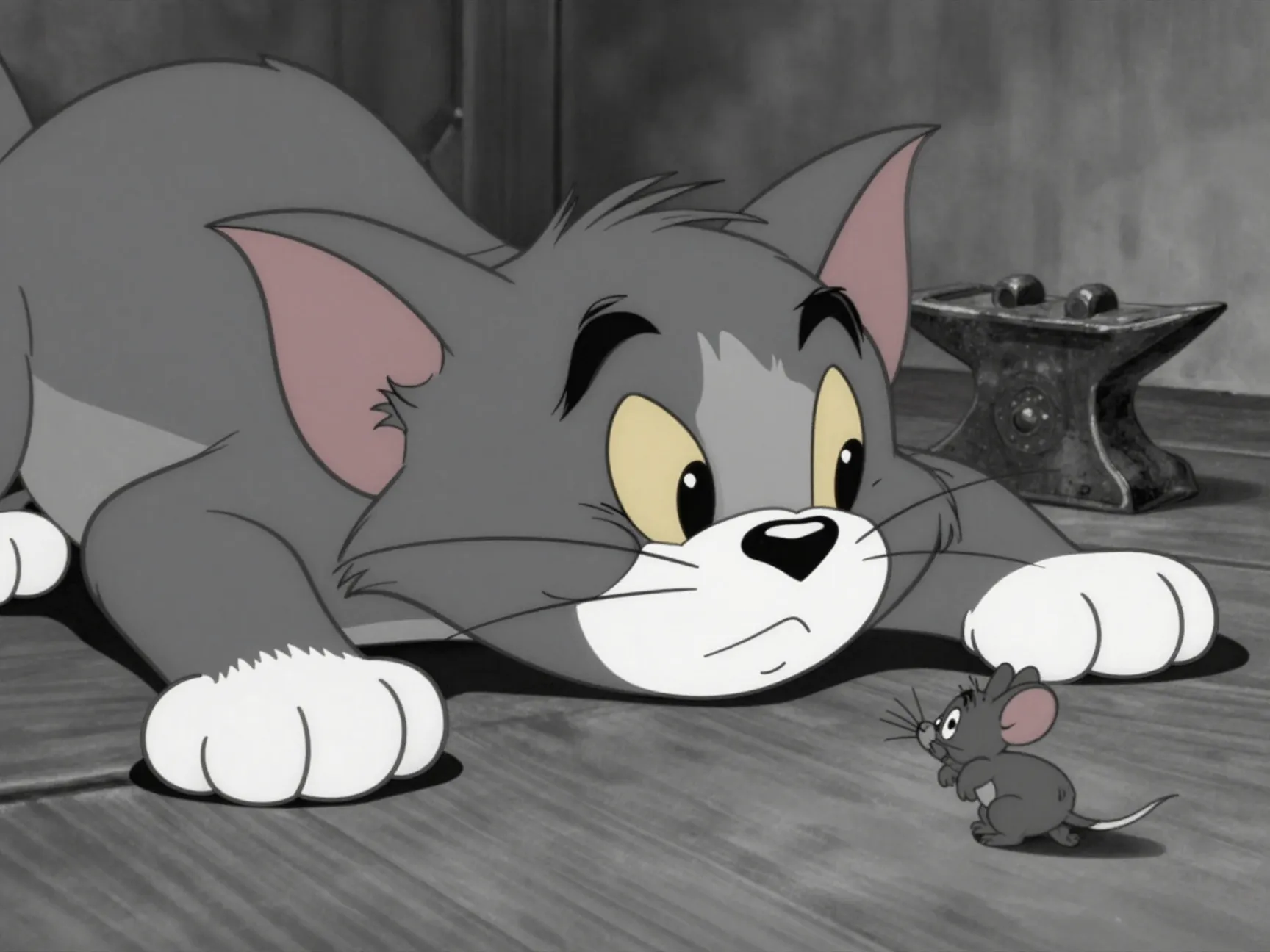
Tom is perhaps the most famous black and white (and gray) cat in animation history, though his design evolved significantly over the decades. In the earliest Tom and Jerry cartoons produced by MGM, Tom had a rougher, more stylized look that leaned heavily into the monochrome aesthetic of classic animation.
What made Tom special was the perfect dynamic between predator and prey. Tom never quite catches Jerry, and that eternal frustration became one of the most beloved running gags in cartoon history. The physical comedy in early Tom and Jerry shorts was so precisely timed that it set a benchmark for slapstick animation that has never truly been surpassed.
The early MGM shorts won seven Academy Awards for Best Animated Short Film, a record that speaks to the extraordinary craft behind every episode. Tom’s expressive face — whether smug, terrified, or heartbroken — could convey more emotion in a single frame than many live-action actors could in a full scene.
3. Sylvester the Cat
First appearance: 1945
Studio: Warner Bros. / Looney Tunes
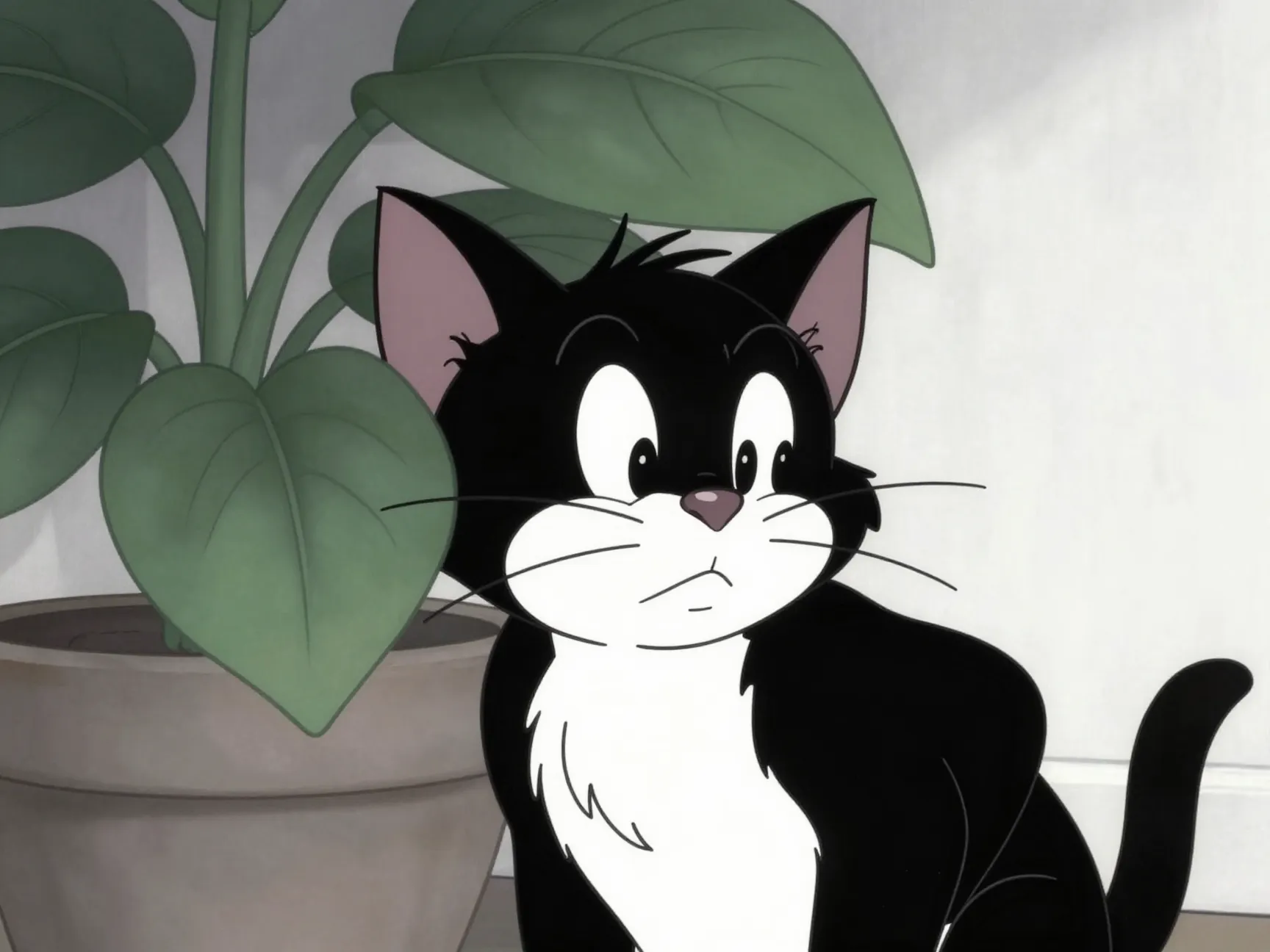
Sylvester J. Pussycat Sr. — better known simply as Sylvester — is one of the great black and white cat cartoons characters from the golden age of Warner Bros. animation. His tuxedo-style coloring (black body, white chest and face) gave him a look that was both classic and instantly memorable.
Sylvester’s defining characteristic was his relentless, futile pursuit of Tweety Bird. Despite being far larger and theoretically far more powerful than his tiny yellow nemesis, Sylvester almost never succeeded. His catchphrase — “Sufferin’ succotash!” — became one of the most quoted lines in cartoon history.
What makes Sylvester stand out among black and white cat cartoon characters is his emotional depth. Unlike some cartoon villains who are purely menacing, Sylvester was sympathetic. You could not help but root for him a little, even as you laughed at his failures. That balance of comedy and pathos is a hallmark of great character writing.
4. Krazy Kat
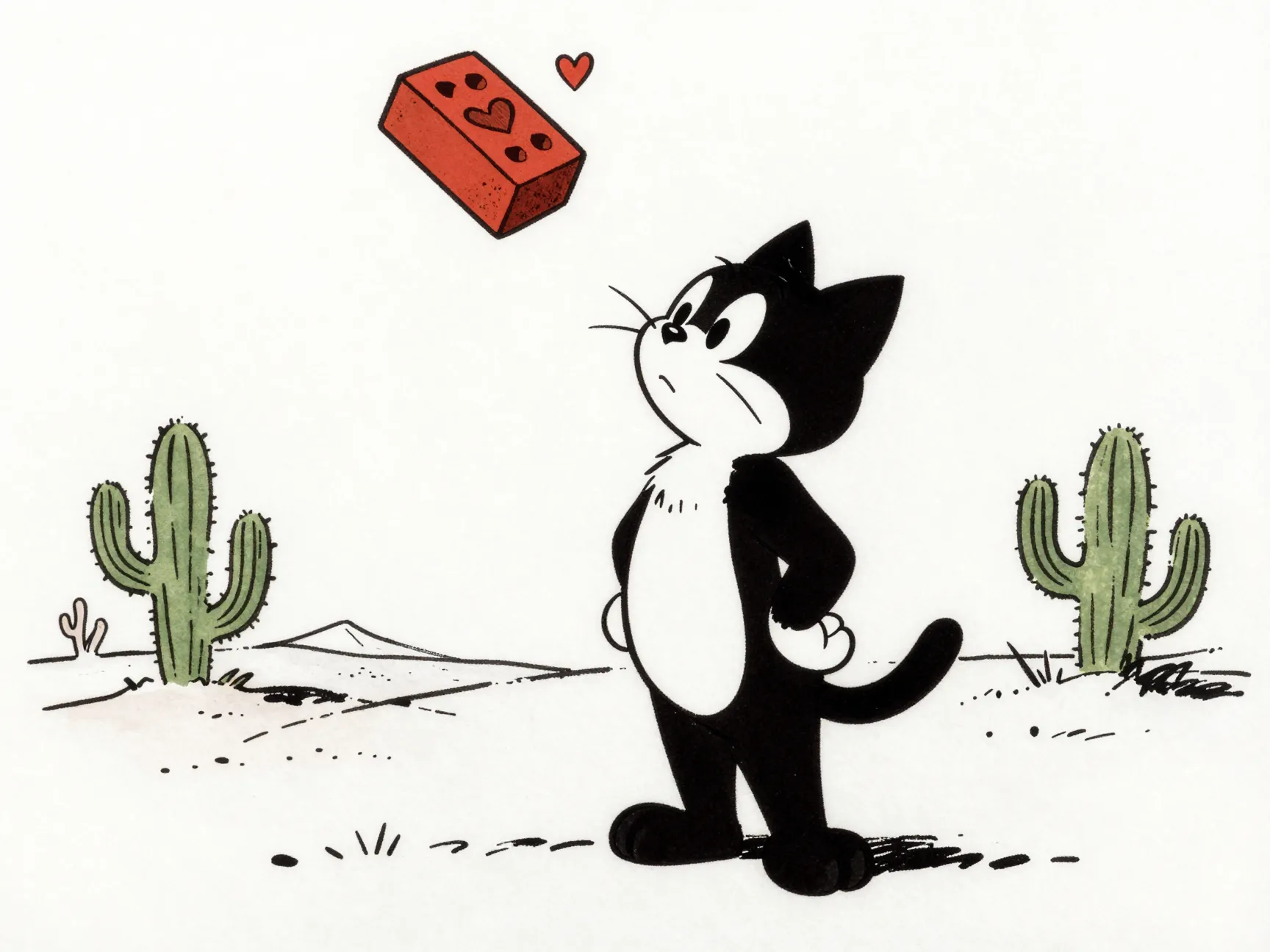
First appearance: 1913 (comic strip), 1916 (animated)
Studio: Various / George Herriman
Before Felix, before Tom, there was Krazy Kat — one of the most artistically ambitious and philosophically layered cartoon characters ever created. Originally a newspaper comic strip by George Herriman, Krazy Kat was adapted into animated shorts starting in 1916, making it one of the earliest black and white cat cartoons in history.
The premise was deceptively simple: Krazy Kat loves Ignatz Mouse, who constantly throws bricks at Krazy’s head, which Krazy interprets as a sign of affection. Officer Pupp tries to protect Krazy and arrest Ignatz. It sounds absurd, and it is — but beneath the slapstick was a surprisingly tender meditation on love, identity, and perception.
Krazy Kat was described by critics as “the most amusing and fantastic and satisfying work of art produced in America today” — a remarkable statement for a cartoon cat.
Krazy Kat’s influence on later animators, comic artists, and even literary figures was enormous. Many credit Herriman’s work as the foundation upon which all subsequent American cartoon storytelling was built.
5. The Cat in the Hat (Animated)
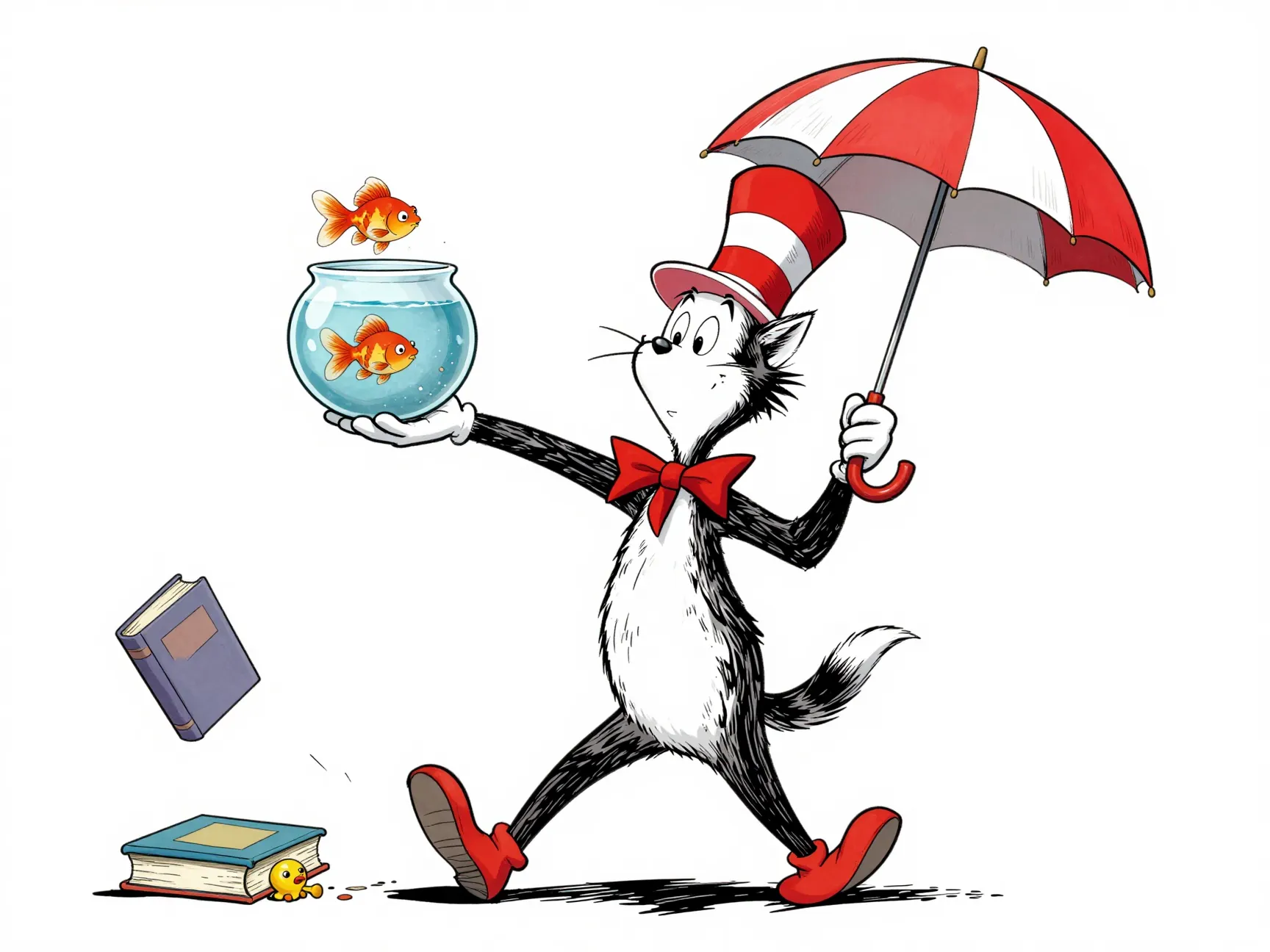
First appearance: 1957 (book), 1971 (animated special)
Studio: DePatie-Freleng Enterprises / CBS
The Cat in the Hat occupies a unique place in our list of 8 Classic Black and White Cat Cartoons We All Love. While Dr. Seuss’s original book illustrations were black and white, and the character’s design is rooted in that stark monochrome tradition, the 1971 animated special introduced some color. However, the iconic design — tall striped hat, white gloves, red bow tie against a black and white feline form — remains fundamentally a product of the black and white cartoon tradition.
The Cat in the Hat became one of the most beloved characters in children’s media, teaching generations about imagination, responsibility, and the joy of chaos (within reason). The animated special, narrated with the rhythmic cadence of Seuss’s original verse, remains a holiday classic that families return to every year.
| Feature | Detail |
|---|---|
| Book Debut | 1957 |
| Animated Special | 1971 |
| Creator | Dr. Seuss (Theodor Geisel) |
| Core Theme | Imagination and responsibility |
6. Figaro
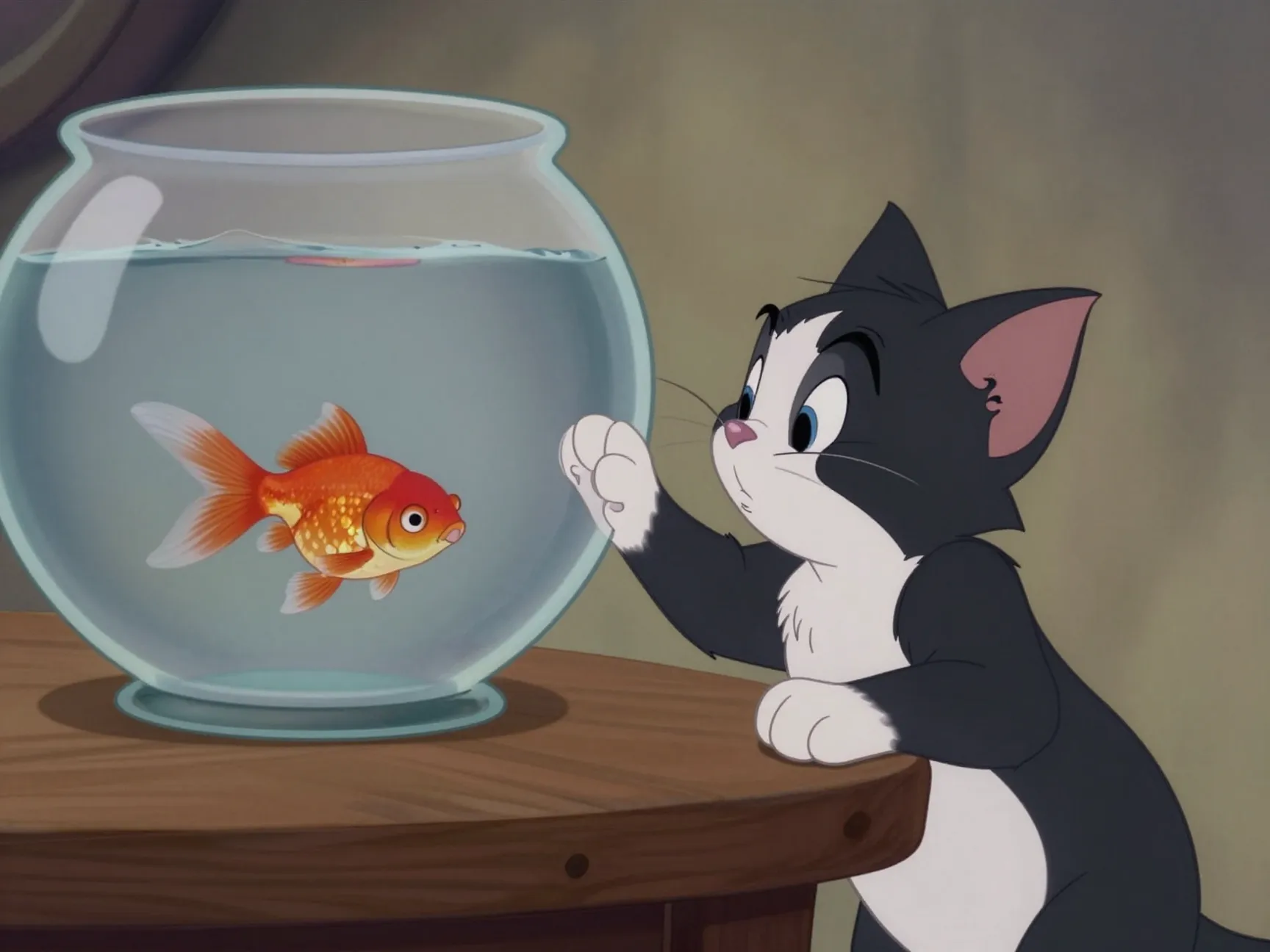
First appearance: 1940
Studio: Walt Disney Productions
Figaro is Disney’s contribution to the world of classic black and white cat cartoons. Introduced in Pinocchio (1940), this small tuxedo kitten was so popular with audiences — and reportedly with Walt Disney himself — that he went on to star in his own series of theatrical shorts throughout the 1940s.
What made Figaro special was his extraordinary expressiveness. Disney’s animators were masters of conveying emotion through subtle facial movements, and Figaro became a showcase for that skill. His interactions with Minnie Mouse and his complicated relationship with Cleo the goldfish gave him a rich personality despite his small size and lack of dialogue.
Figaro represents the Disney school of character animation at its finest: every movement purposeful, every expression meaningful, every scene emotionally resonant. He may be smaller and less famous than some of the other cats on this list, but his craftsmanship is second to none. 🐱
7. Top Cat
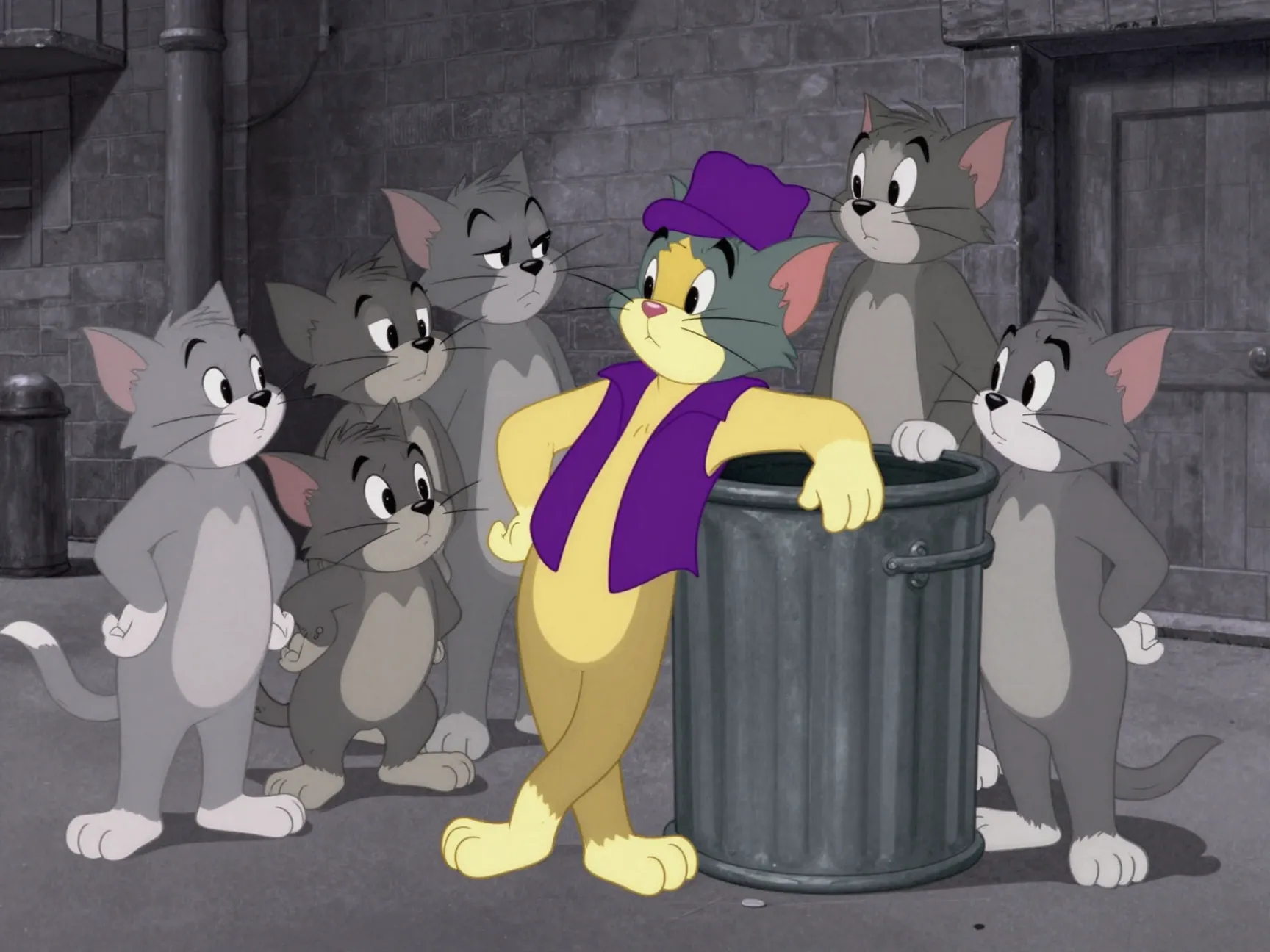
First appearance: 1961
Studio: Hanna-Barbera
Top Cat (also known as T.C.) brought a new kind of energy to black and white cat cartoons when he debuted on ABC in 1961. Unlike the silent-era or theatrical short characters above, Top Cat was designed for television, and his personality reflected the faster, wittier style of TV comedy that was emerging in the early 1960s.
Top Cat was clearly inspired by the Sergeant Bilko character from the popular TV show The Phil Silvers Show, and the show leaned into that connection with sharp, dialogue-driven humor. T.C. led a gang of alley cats in New York City, constantly scheming to get rich quick while staying one step ahead of Officer Dibble.
The show ran for only one season (1961–1962), but it left a massive cultural footprint. Top Cat was particularly beloved in Latin America, where the character became a genuine pop culture phenomenon with multiple theatrical film revivals as recently as the 2010s. His legacy proves that a well-written character can transcend its original broadcast run by decades.
8. Simon’s Cat
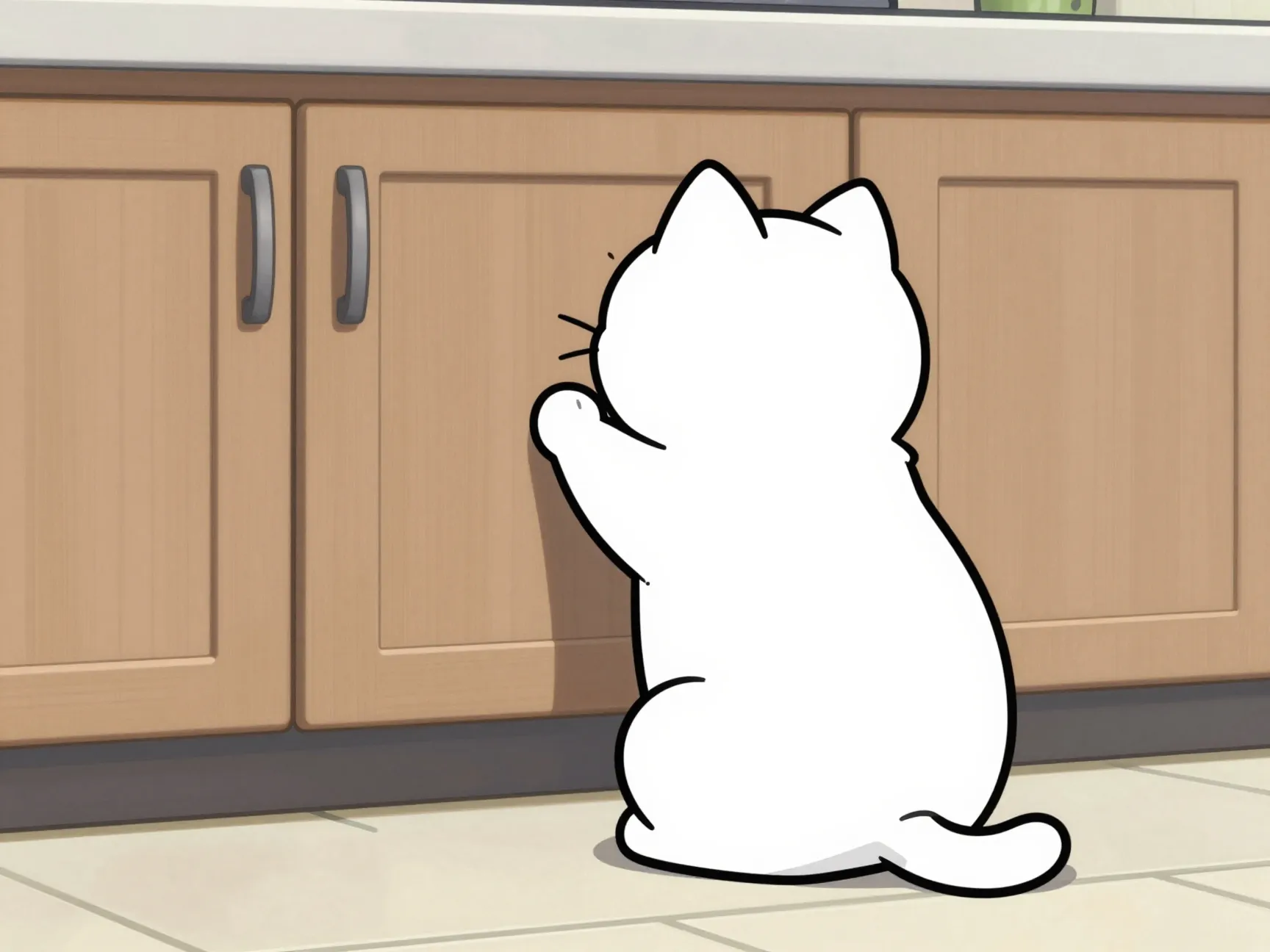
First appearance: 2008
Creator: Simon Tofield (independent / YouTube)
Our final entry in the 8 Classic Black and White Cat Cartoons We All Love is the most modern on the list — and the only one born on the internet. Simon’s Cat, created by British animator Simon Tofield, debuted on YouTube in 2008 and quickly became a global phenomenon, accumulating hundreds of millions of views.
What makes Simon’s Cat remarkable is that it deliberately embraced the black and white aesthetic at a time when full-color digital animation was the norm. The simple ink-line style, the expressive white cat with bold black outlines, and the wordless physical comedy all pay direct homage to the golden-age cartoon tradition that Felix the Cat and Krazy Kat established a century earlier.
Simon’s Cat captures something deeply true about living with cats — the 3 AM wake-up calls, the obsession with food, the casual destruction of household objects — and presents it with warmth, humor, and genuine affection. In 2026, the YouTube channel continues to release new content and remains one of the most successful independent animation projects in internet history.
Simon’s Cat proves that the black and white cartoon cat is not a relic of the past — it is a timeless format that continues to find new audiences in every generation.
What These 8 Cartoons Have in Common
Looking across all 8 Classic Black and White Cat Cartoons We All Love, several shared qualities emerge that help explain their enduring appeal:
1. Strong visual identity. Every character on this list is recognizable in silhouette alone. The black and white design forces clarity and boldness.
2. Universal comedy. Physical comedy, frustration, and the eternal battle between ambition and reality are themes that cross every language and cultural barrier.
3. Emotional authenticity. Even the most slapstick characters on this list — Tom, Sylvester, Figaro — have moments of genuine emotional resonance that make audiences care about them.
4. Timeless storytelling. None of these cartoons rely on topical humor or dated references. Their stories are built on universal human (and feline) experiences.
5. Artistic innovation. Each of these characters, in their own era, pushed the boundaries of what animation could do. They were not just entertainment — they were art.
Quick Comparison Table: The 8 Classic Black and White Cat Cartoons
| # | Character | Debut Year | Studio/Creator | Signature Style |
|---|---|---|---|---|
| 1 | Felix the Cat | 1919 | Pat Sullivan / Otto Messmer | Surreal, silent-era comedy |
| 2 | Tom (Tom & Jerry) | 1940 | MGM / Hanna-Barbera | Precision slapstick |
| 3 | Sylvester | 1945 | Warner Bros. | Looney Tunes chaos |
| 4 | Krazy Kat | 1913/1916 | George Herriman | Philosophical absurdism |
| 5 | The Cat in the Hat | 1957/1971 | Dr. Seuss / CBS | Rhythmic, imaginative |
| 6 | Figaro | 1940 | Walt Disney | Expressive pantomime |
| 7 | Top Cat | 1961 | Hanna-Barbera | TV sitcom wit |
| 8 | Simon’s Cat | 2008 | Simon Tofield | Modern observational comedy |
The Cultural Legacy of Black and White Cat Cartoons
The influence of these classic characters extends far beyond animation. Felix the Cat inspired Andy Warhol and countless pop artists. Krazy Kat was praised by literary critics and academics as a genuine work of American art. Tom and Jerry influenced Jackie Chan’s approach to physical comedy in his action films. Simon’s Cat helped prove that independent animation could build a global audience without a studio budget.
In 2026, we are seeing a renewed appreciation for the minimalist aesthetic that black and white cartoons represent. As digital media becomes increasingly saturated with hyper-realistic CGI and complex visual effects, the clean simplicity of a bold ink line on a white background feels refreshing, even radical.
Merchandise, fan art, tattoos, and social media accounts dedicated to these characters continue to thrive. Felix the Cat merchandise alone generates millions of dollars annually. Top Cat theatrical films have introduced the character to entirely new generations of Latin American audiences. Simon’s Cat merchandise and books have built a global brand from a single YouTube video.
These are not nostalgic relics. They are living cultural institutions. 🐾
Conclusion
The 8 Classic Black and White Cat Cartoons We All Love — Felix the Cat, Tom, Sylvester, Krazy Kat, The Cat in the Hat, Figaro, Top Cat, and Simon’s Cat — represent more than a century of animation history. They prove that great character design, sharp storytelling, and genuine emotional honesty can create something that lasts forever.
In 2026, as we navigate an entertainment landscape of endless streaming content and AI-generated media, there is something deeply comforting about returning to these simple, bold, beautifully crafted characters. They remind us that the best stories do not need the latest technology — they need heart.
Here are your actionable next steps to celebrate these classics:
- Watch one classic cartoon today. Start with Felix the Cat shorts on YouTube — many are in the public domain and free to watch.
- Subscribe to Simon’s Cat on YouTube for new content that carries the black and white tradition into the modern era.
- Share your favorite black and white cartoon cat with someone who has never seen it. These characters deserve new audiences.
- Explore the history. Books and documentaries on golden-age animation will deepen your appreciation for the craft behind every frame.
- Support independent animators who continue the tradition of bold, character-driven, hand-drawn animation today.
The black and white cartoon cat is not going anywhere. If anything, its appeal is growing stronger with every passing year. 🖤🐱