7 Proven Tips on Potty Training a Puppy for a Cleaner Home
Picture this: you’ve just brought home an adorable new puppy, and within the first week, your beautiful hardwood floors have become a minefield of unexpected “surprises.” Sound familiar? If you’re nodding your head right now, you’re not alone. Every new puppy parent faces the challenge of house training, but the good news is that with the right approach, you can transform your furry friend into a well-trained companion while maintaining the clean, comfortable home you love. These 7 proven tips on potty training a puppy for a cleaner home will guide you through a systematic approach that works for puppies of all breeds and sizes.

Key Takeaways
- Consistency and timing are everything – Puppies need outdoor breaks every 30 minutes while awake and benefit from regular feeding schedules
- The process takes patience – Most puppies require 3-5 months to fully master house training when starting at 8 weeks old
- Positive reinforcement works better than punishment – Immediate praise and treats after successful elimination create lasting behavioral changes
- Crate training accelerates the process – Puppies naturally avoid soiling their sleeping area, making crates powerful training tools
- Prevention beats cleanup – Learning to recognize potty cues like sniffing, circling, and whining helps prevent accidents before they happen
Understanding the Foundation of Successful Puppy Potty Training
Before diving into the specific techniques, it’s important to understand why these 7 proven tips on potty training a puppy for a cleaner home work so effectively. Puppies are naturally inclined to keep their living spaces clean, but they need our guidance to understand where “clean” ends and “acceptable potty areas” begin.
The key lies in working with your puppy’s natural instincts rather than against them. Young puppies have limited bladder control and can’t “hold it” for extended periods like adult dogs. This biological reality means that successful training requires frequent opportunities for success rather than expecting them to adapt to our human schedules immediately.
Research shows that the housebreaking process typically takes three to five months when starting at eight weeks old [3], though individual variation exists based on breed, size, and consistency of training methods. Smaller breeds often take longer due to their faster metabolisms and smaller bladders, while larger breeds may catch on more quickly.
The Complete Guide: 7 Proven Tips on Potty Training a Puppy for a Cleaner Home
1. Establish a Frequent Potty Break Schedule
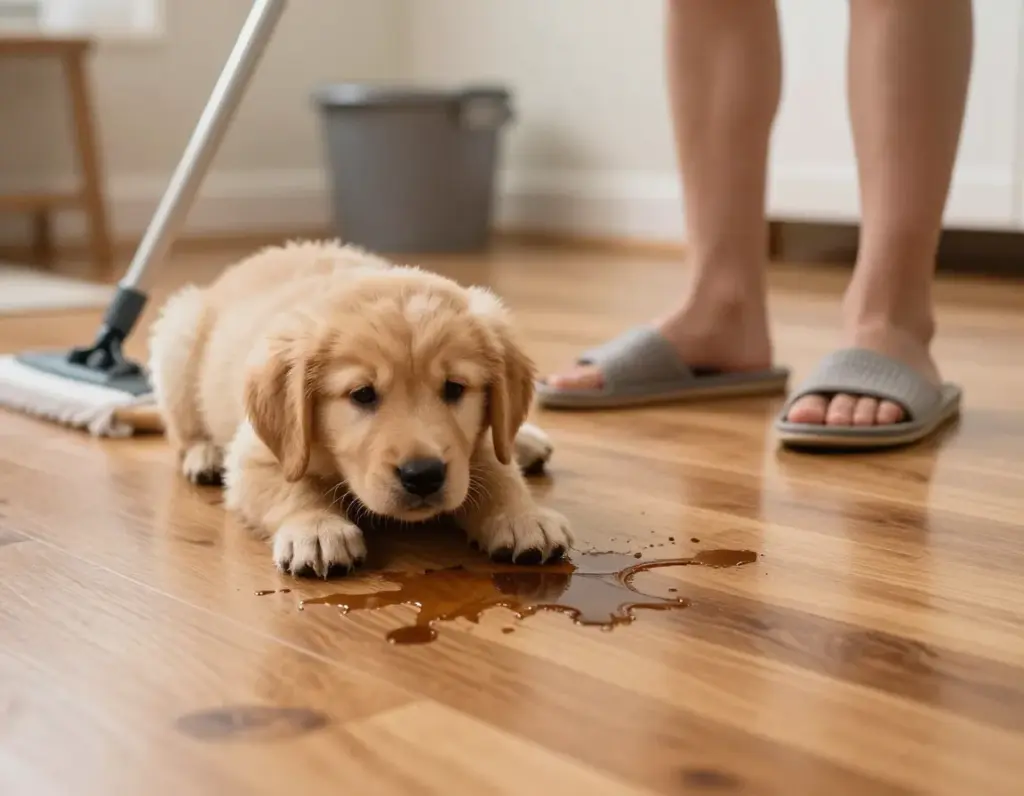
The foundation of successful house training lies in providing frequent opportunities for your puppy to succeed. Puppies need outdoor breaks at least every 30 minutes while awake, with one to two outings sufficient at night [1]. This might seem excessive at first, but remember that prevention is far easier than cleanup.
Create a structured schedule that includes:
- First thing in the morning (within 15 minutes of waking)
- After every meal (within 15-30 minutes)
- After naps
- After play sessions
- Every 30 minutes during active periods
- Last thing before bedtime
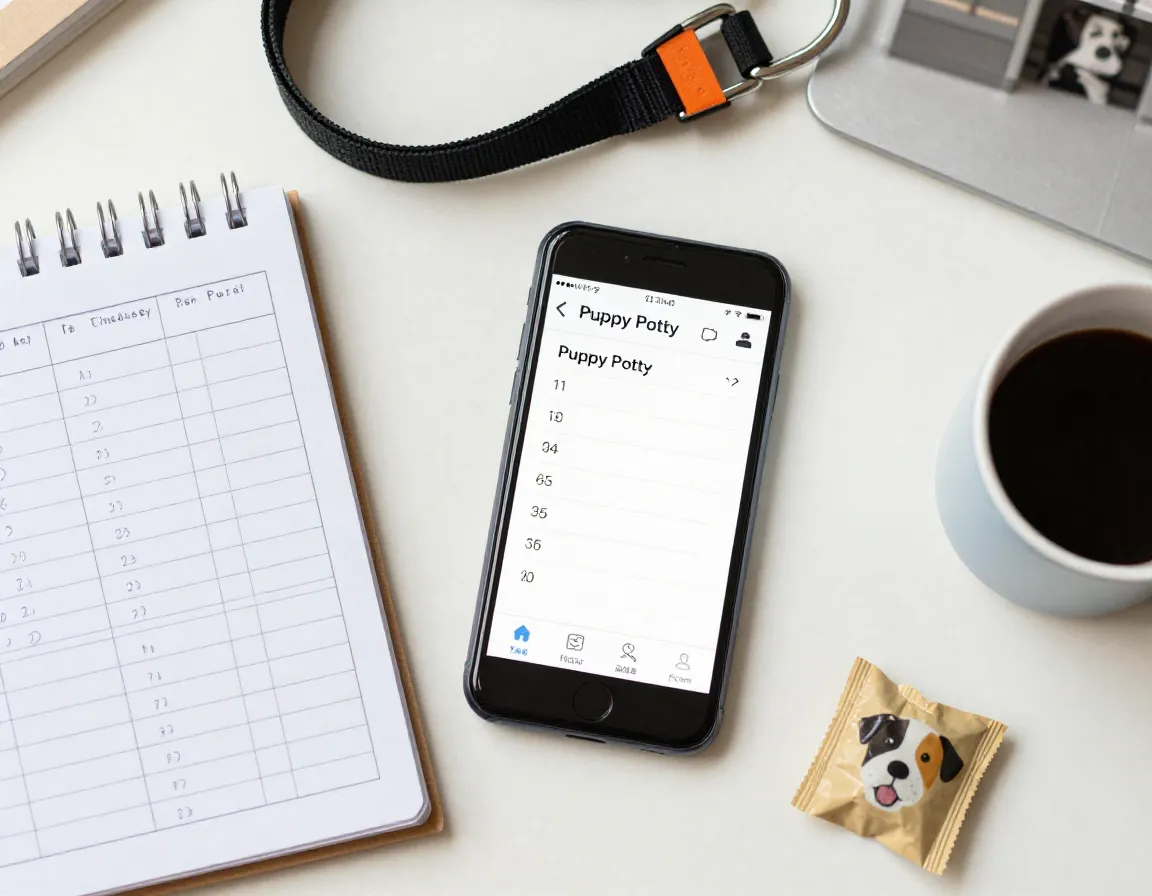
I recommend setting phone alarms for the first few weeks to ensure you don’t miss critical potty windows. Young puppies simply cannot communicate their needs effectively, so it’s our responsibility to anticipate them.
Pro tip: Keep a potty log for the first month. Track successful eliminations, accidents, and timing patterns. You’ll quickly notice your puppy’s individual rhythm, allowing you to customize the schedule for maximum effectiveness.
2. Implement Strategic Crate Training
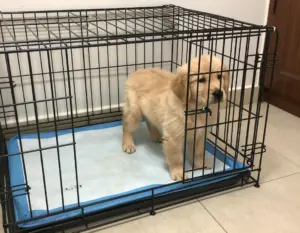
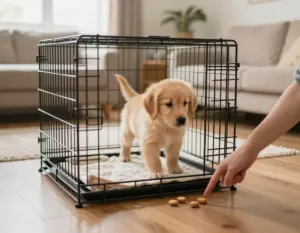
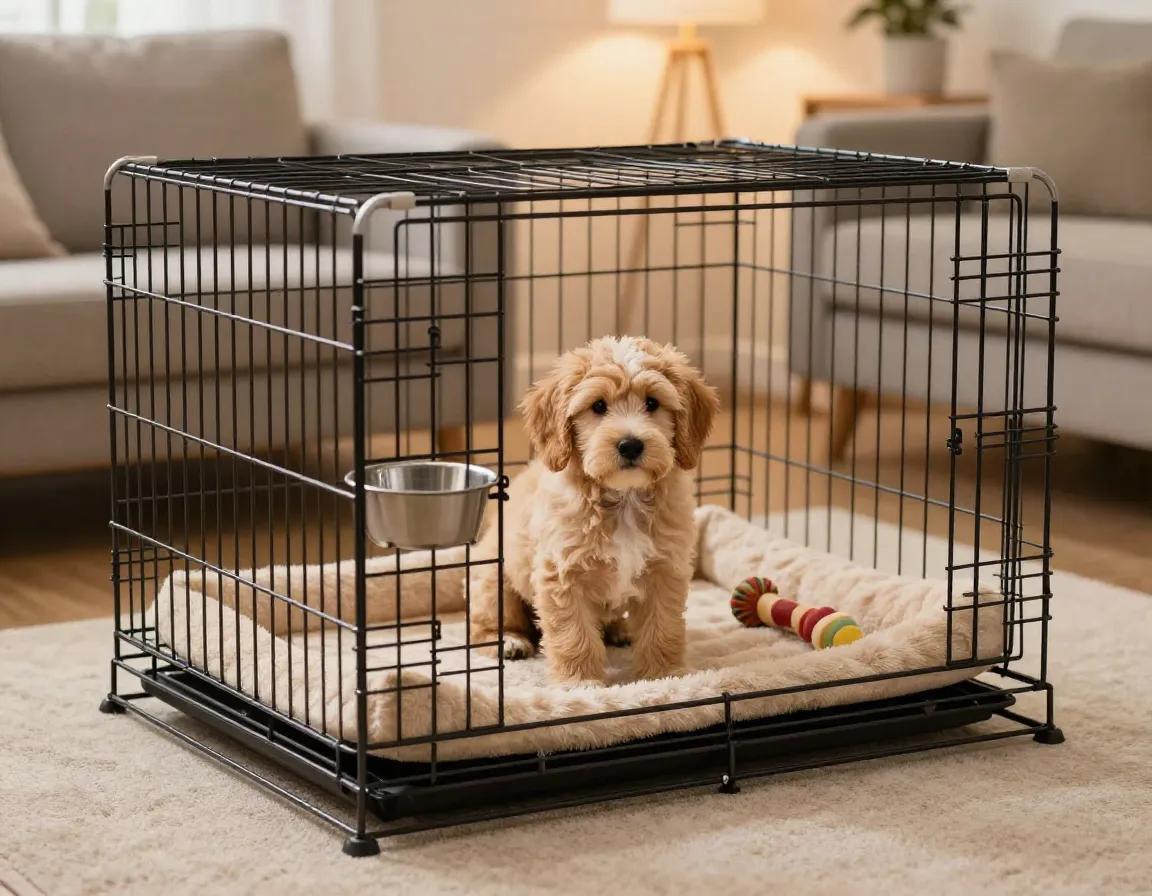
Crate training serves as one of the most powerful tools in your house training arsenal. Puppies naturally avoid soiling their sleeping area [2], making appropriately-sized crates essential for teaching bladder control. However, the key word here is “appropriately-sized.”
The crate should be:
- Large enough for your puppy to stand, turn around, and lie down comfortably
- Small enough that they can’t eliminate in one corner and sleep in another
- Equipped with comfortable bedding
- Located in a quiet but not isolated area of your home
Important timing guidelines: Crate duration should not exceed a couple of hours except overnight to prevent accidents from desperation [1]. For puppies under 12 weeks, use this general rule: age in months plus one equals maximum hours (so a 2-month-old puppy can stay crated for approximately 3 hours maximum).
Never use the crate as punishment. It should be your puppy’s safe haven, not a place of timeout or discipline. Feed meals in the crate initially to create positive associations, and always provide fresh water except during overnight crating periods.
3. Use the Designated Spot Method
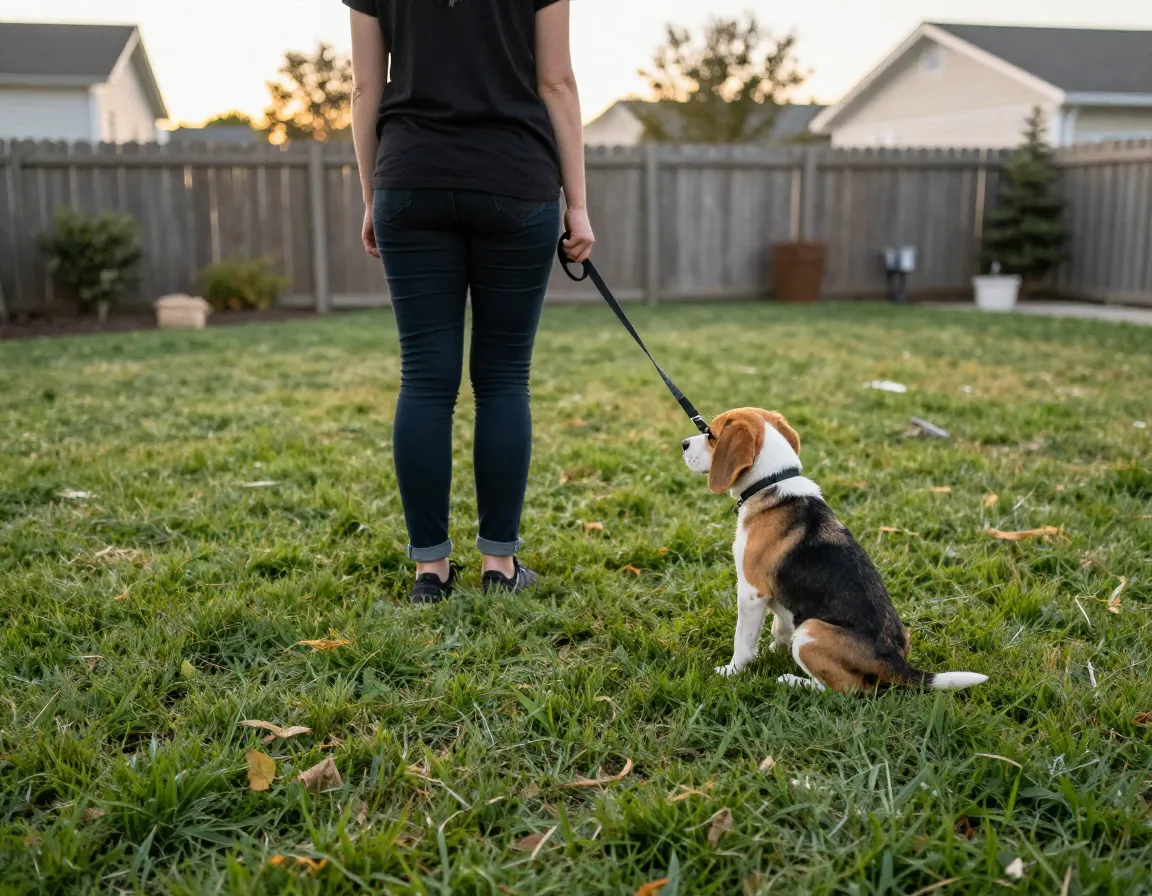
Taking puppies out on leash helps them learn to eliminate on leash and prevents distraction from their environment [1]. This technique, known as the designated spot method, involves choosing one specific area of your yard for potty breaks and consistently using only that location.
Here’s how to implement this effectively:
🎯 Choose your spot wisely – Select an area that’s easily accessible in all weather conditions and away from high-traffic play areas.
🎯 Use a leash every time – Even in a fenced yard, keep your puppy on leash during potty breaks to maintain focus.
🎯 Practice the 5-minute rule – Standing still and quietly in one potty area for five minutes helps puppies focus on elimination rather than exploration or interaction [1].
🎯 Use a consistent command – Choose a phrase like “go potty” or “do your business” and use it every single time.
The beauty of this method lies in its predictability. Your puppy learns that this specific location equals potty time, not playtime. Once they eliminate successfully, you can allow brief play as a reward, but keep the initial focus laser-sharp on the task at hand.
4. Master Positive Reinforcement Techniques
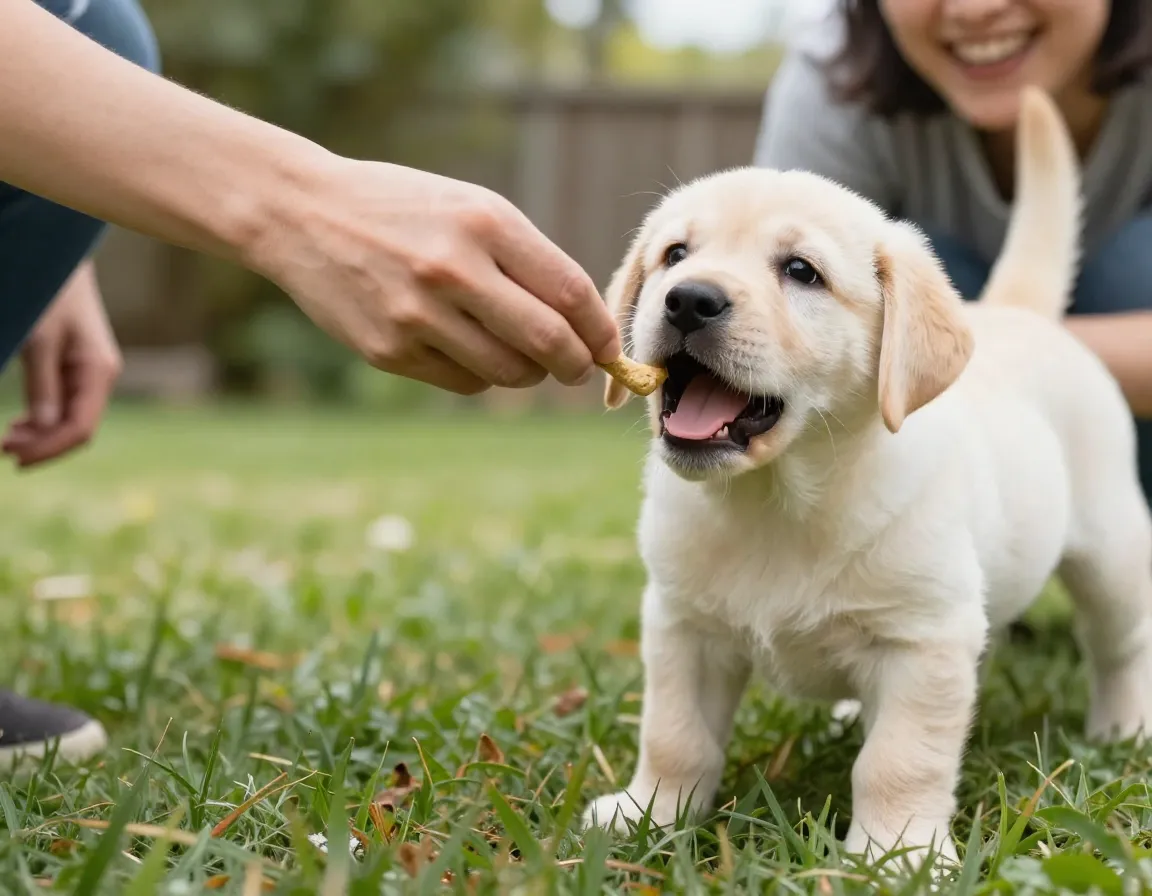
Praise and treats immediately after successful elimination reinforce desired behavior, while punishment for accidents should be avoided entirely [1][2]. The timing of your positive reinforcement is absolutely critical – it must happen within 3-5 seconds of the desired behavior to create the proper association.
Effective positive reinforcement includes:
✅ Verbal praise – Use an excited, happy voice with phrases like “Good potty!” or “Yes, outside!”
✅ High-value treats – Reserve special treats exclusively for potty training success. Small, soft treats work best for quick consumption.
✅ Physical affection – Gentle petting and scratching in your puppy’s favorite spots.
✅ Brief play sessions – A minute or two of play immediately after successful elimination.
What NOT to do:
- Never punish accidents after the fact
- Avoid rubbing your puppy’s nose in accidents
- Don’t use harsh verbal corrections
- Never hit or physically punish your puppy
Remember, accidents are learning opportunities, not failures. Clean accidents thoroughly with enzyme-based cleaners to eliminate odors that might attract repeat incidents in the same location.
5. Integrate Feeding Schedules for Predictable Results
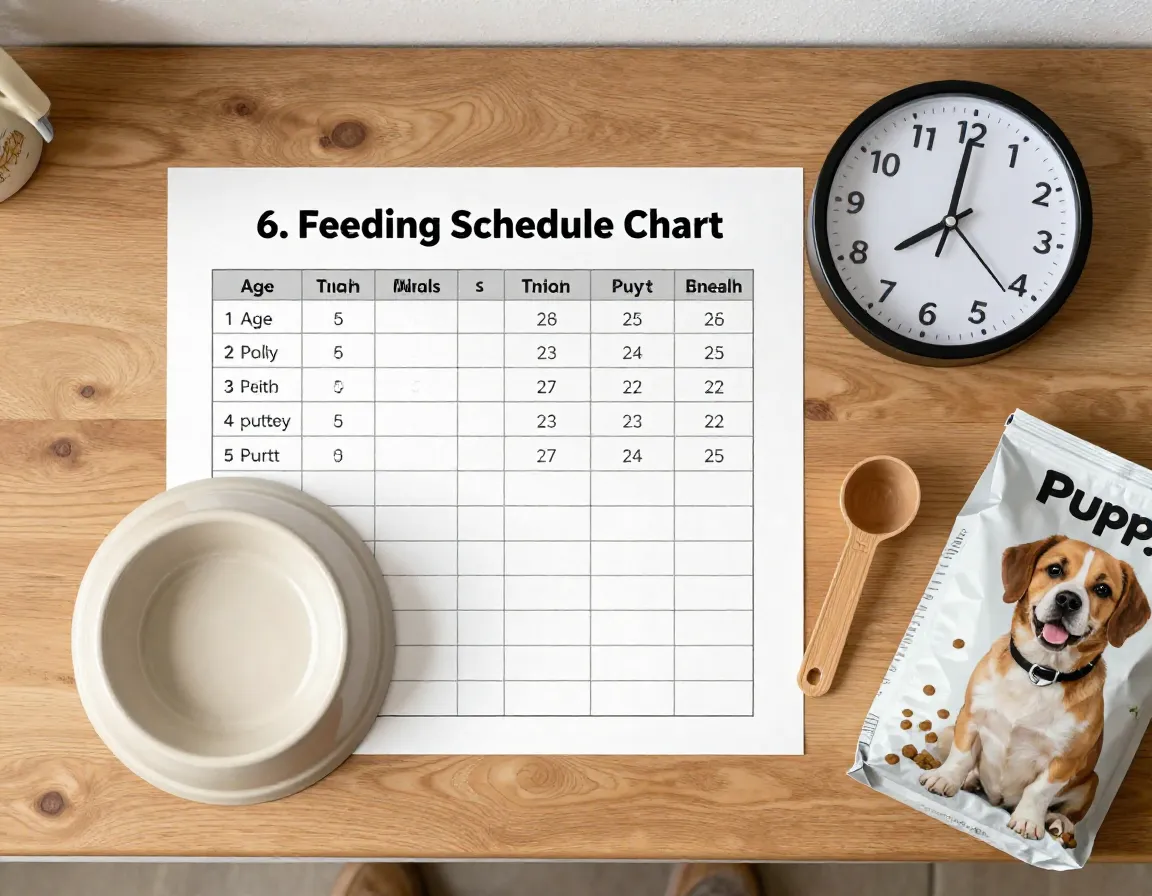
Regular meal times at consistent hours create predictable potty schedules, streamlining the training process [1]. Most puppies need to eliminate within 15-30 minutes after eating, making meal timing a powerful training tool.
Optimal feeding schedule for house training:
| Age | Meals per Day | Timing | Potty Break After |
|---|---|---|---|
| 8-12 weeks | 4 meals | Every 4 hours | 15-20 minutes |
| 3-6 months | 3 meals | Every 6-8 hours | 20-30 minutes |
| 6+ months | 2 meals | Every 12 hours | 30-45 minutes |
Additional feeding tips:
- Remove food bowls between meals to prevent grazing
- Provide fresh water throughout the day, but remove it 2-3 hours before bedtime
- Use the same type of food consistently to avoid digestive upset
- Feed in the crate to create positive associations
By controlling input, you can better predict output. This predictability is one of the cornerstones of successful house training and directly contributes to maintaining a cleaner home environment.
6. Learn to Recognize and Prevent Accidents
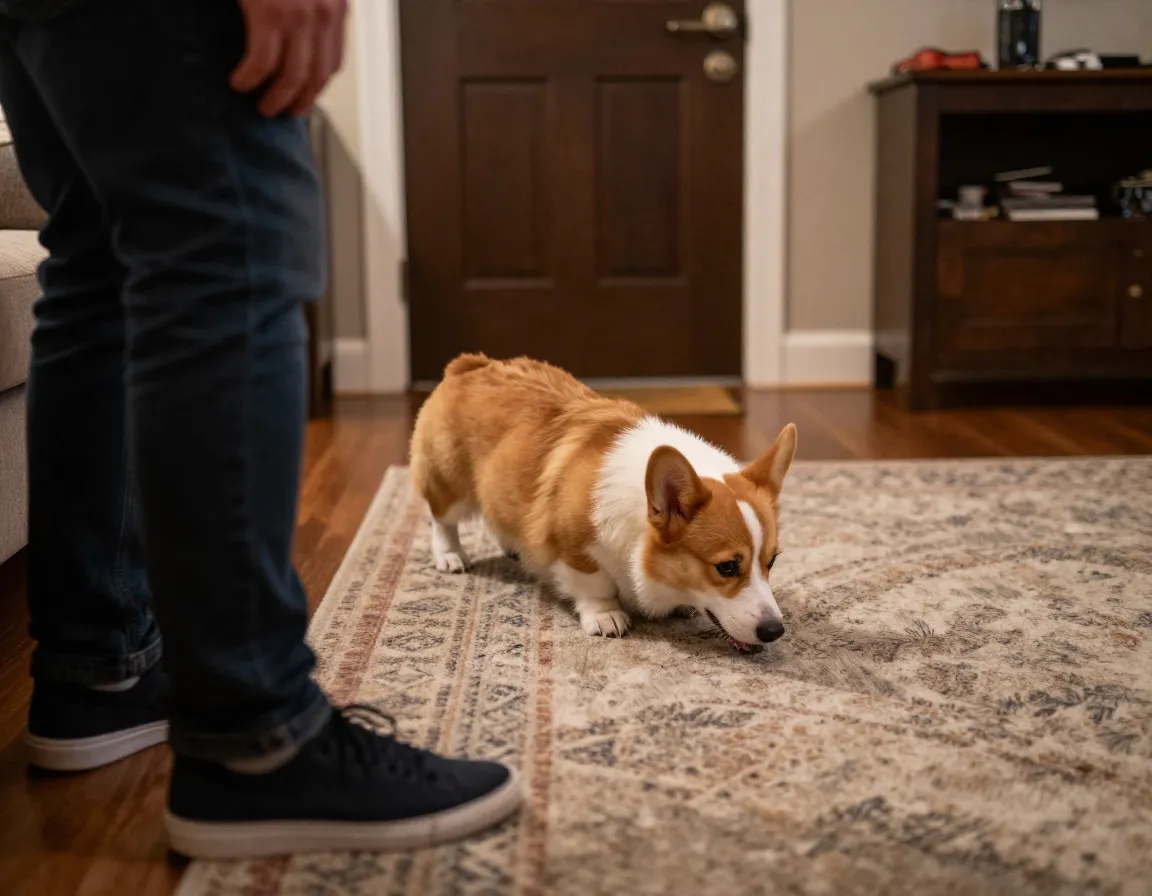
Recognizing potty cues—squatting, sniffing, circling, whining, fidgeting, and pacing—enables timely intervention [1]. Accident prevention through supervision is far more effective than dealing with cleanup after the fact.
Common pre-elimination signals include:
🔍 Sniffing the ground intensively – Puppies often search for the “right” spot before eliminating
🔍 Circling or spinning – This instinctive behavior helps them find the perfect position
🔍 Sudden restlessness – Pacing, whining, or fidgeting often indicates urgency
🔍 Moving toward previous accident sites – Puppies may return to areas where they’ve eliminated before
🔍 Scratching at doors – Some puppies learn to signal their need to go outside
When you notice these signals:
- Immediately say “Outside!” in an excited voice
- Quickly but calmly lead your puppy to the designated potty area
- Use your consistent potty command
- Reward success enthusiastically
If an accident happens: Clean it immediately with an enzyme-based cleaner, but don’t make a big fuss. Simply clean up and increase supervision and potty break frequency for the next few days.
7. Adapt Training Methods for Your Living Situation
Not everyone has immediate access to a yard, and that’s where puppy pad transition options become valuable. For those without yard access, puppy pads can be gradually moved toward and eventually outside to facilitate outdoor training transition [2].
For apartment dwellers:
📍 Start with indoor pads – Place puppy pads in a consistent location, preferably near your exit door
📍 Gradually move pads closer to the door – Every few days, move the pad a few feet closer to your exit
📍 Transition to outdoor pads – Place pads just outside your door, then gradually move them to your desired outdoor location
📍 Phase out pads entirely – Once your puppy consistently uses outdoor pads, remove them and use the bare ground
For house dwellers with yards:
- Go directly to outdoor training when possible
- Use the designated spot method from day one
- Consider a bell training system where puppies learn to ring a bell when they need to go out
Regression troubleshooting: Changes in potty break frequency, feeding schedules, or environmental access warrant review if accidents increase [1]. Common causes of regression include:
- Illness or urinary tract infections
- Changes in routine or environment
- Stress from new family members or pets
- Inconsistent training methods among family members
Creating Long-Term Success: Beyond the Basics
Successfully implementing these 7 proven tips on potty training a puppy for a cleaner home requires patience, consistency, and realistic expectations. Remember that every puppy is an individual, and what works perfectly for one may need adjustment for another.
Signs you’re on the right track:
- Fewer accidents each week
- Your puppy begins to signal when they need to go out
- Longer periods between potty breaks
- Successful elimination in the designated outdoor area
- Reduced anxiety around house training for both you and your puppy
Common setbacks and solutions:
- Weather resistance: Some puppies dislike rain or snow. Use covered areas or gradually acclimate them to different weather conditions.
- Surface preferences: Puppies may develop preferences for certain surfaces. Gradually introduce variety while maintaining the designated spot.
- Excitement urination: This often resolves with age and confidence building. Keep greetings calm and low-key.
Maintaining Your Clean Home During the Training Process
While implementing these proven potty training strategies, you can take additional steps to protect your home and make cleanup easier when accidents do occur.
Home protection strategies:
- Use washable rugs in high-traffic areas
- Consider temporary baby gates to limit access to carpeted rooms
- Keep enzyme-based cleaners readily available
- Invest in a good steam cleaner for deep cleaning
- Use furniture covers on upholstered pieces during the training period
Cleaning supplies checklist:
- Enzyme-based pet odor eliminators
- Paper towels or disposable cleaning cloths
- Rubber gloves
- Steam cleaner or carpet cleaner
- Disinfectant for hard surfaces
- Air fresheners designed for pet odors
Conclusion
Implementing these 7 proven tips on potty training a puppy for a cleaner home will transform your house training experience from a stressful ordeal into a manageable, systematic process. Remember that consistency, patience, and positive reinforcement are your most powerful tools. Every successful potty break outdoors is a step closer to the well-trained companion you envision.
Your next steps:
- Start immediately with frequent potty breaks every 30 minutes while your puppy is awake
- Set up your crate with appropriate sizing and comfortable bedding
- Choose your designated potty spot and commit to using it exclusively
- Stock up on high-value treats reserved only for potty training success
- Create a feeding schedule and stick to it religiously
- Learn your puppy’s unique signals through careful observation
- Adapt the methods to fit your living situation and lifestyle
The investment you make in proper potty training during these crucial first months will pay dividends for years to come. A well-trained dog means a cleaner home, reduced stress, and a stronger bond between you and your furry family member. Stay consistent, celebrate small victories, and remember that every expert dog trainer started exactly where you are right now.
With dedication and the right approach, you’ll soon enjoy the clean, comfortable home you love while sharing it with a perfectly house-trained companion. The journey requires patience, but the destination—a clean home and a well-trained dog—is absolutely worth every effort you invest today.
References
[1] How To Potty Train Your Dog In 7 Days – https://www.chewy.com/education/dog/new-dog/how-to-potty-train-your-dog-in-7-days
[2] Potty Training Your Puppy Tips For New Owners – https://www.thepuppyacademy.com/blog/2020/2/17/potty-training-your-puppy-tips-for-new-owners
[3] Brandon Mcmillans 8 Step Guide For Housebreaking A Dog – https://www.masterclass.com/articles/brandon-mcmillans-8-step-guide-for-housebreaking-a-dog