
6 Surprising Facts About Raising Puppy Wiener Dogs: What Every New Owner Should Know
Those adorable sausage-shaped puppies with their floppy ears and playful personalities might seem like any other dog breed, but dachshund puppies come with their own unique set of challenges and surprises. Whether you’re considering bringing home one of these charming “wiener dogs” or you’ve already fallen in love with a dachshund puppy, understanding the 6 surprising facts about raising puppy wiener dogs will help you provide the best care possible for your new four-legged family member. 🐕

From their distinctive physical development to their specialized training needs, dachshund puppies require specific knowledge and preparation that many first-time owners don’t expect. These facts will transform how you approach everything from puppy-proofing your home to establishing training routines.
Key Takeaways
- Spinal protection is critical – Dachshund puppies need ramps and should never jump from furniture due to their vulnerable spine structure
- Patience with potty training is essential – Full bladder control doesn’t develop until around 6 months of age
- Short training sessions work best – Keep training to 5-minute sessions due to their limited attention spans
- Early socialization prevents behavioral issues – The first 3 months are crucial for preventing excessive barking and nervousness
- Weight management starts early – Obesity poses serious health risks for this breed’s spine and overall wellbeing
Understanding the Unique Physical Development of Dachshund Puppies
1. Their Spinal Vulnerability Requires Immediate Safety Precautions
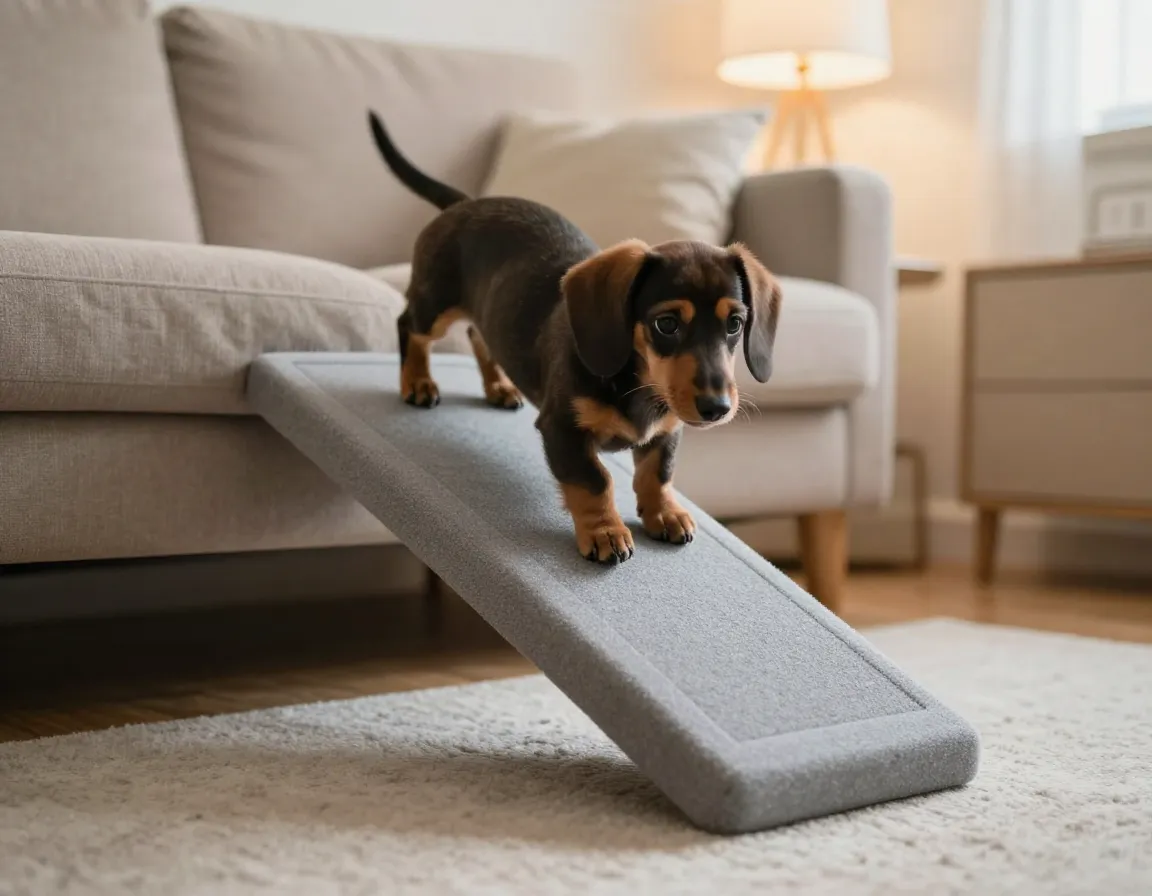
One of the most surprising facts about raising puppy wiener dogs is that their signature long backs make them incredibly vulnerable to spinal injuries from day one. Unlike other breeds where jumping and climbing are normal puppy behaviors, dachshund puppies need immediate protection from activities that could damage their developing spines [1][3].
Essential safety measures include:
- Installing ramps next to all furniture
- Teaching puppies to use ramps instead of jumping
- Avoiding activities that involve jumping or high-impact movements
- Supporting their back and hindquarters when lifting
The intervertebral disc disease (IVDD) that affects many adult dachshunds often stems from repeated stress during puppyhood. Even seemingly harmless activities like jumping off a couch can cause microscopic damage that accumulates over time [3]. Smart owners start ramp training immediately, making it a fun game rather than a restriction.
“Prevention is always better than treatment when it comes to dachshund spinal health. Starting safety measures during puppyhood can prevent a lifetime of mobility issues.”
2. Growth Patterns Follow Unexpected Timelines

Another surprising aspect of raising puppy wiener dogs involves their unique growth patterns. Both miniature and standard dachshunds experience rapid growth in their first six months, followed by dramatically slower development [1][6].
Growth timeline breakdown:
- 0-6 months: Rapid growth phase
- 6-12 months: Significantly slower growth
- 9-12 months: Transition to adult food
- 12+ months: Mature size reached
During the rapid growth phase, puppies may appear disproportionate, often with larger paws that they gradually grow into [1]. This normal development pattern means owners shouldn’t worry if their 3-month-old puppy looks slightly awkward – they’re simply growing into their distinctive dachshund proportions.
Feeding adjustments during growth:
- Puppy food requirements: Minimum 22% protein and 8% fat [1][6]
- Feeding frequency: 3-4 times daily until 9-12 months
- Adult transition: Reduce to twice daily feeding
- Portion control: Critical for preventing obesity
Training and Behavioral Insights for Wiener Dog Puppies
3. Training Sessions Must Be Remarkably Short

Perhaps the most unexpected challenge in raising puppy wiener dogs is their extremely limited attention span. Effective training sessions should last only about 5 minutes [4], making traditional training approaches completely ineffective.
Optimal training structure:
- Session length: 5 minutes maximum
- Frequency: Multiple short sessions throughout the day
- Method: Positive reinforcement only
- Focus areas: One command per session
Dachshunds are particularly sensitive to harsh corrections and respond poorly to punishment-based methods [2]. Their independent nature, originally bred for hunting badgers in underground tunnels, means they need gentle, force-free approaches that build trust and confidence [2][7].
Effective training techniques:
- Use high-value treats and praise
- Keep sessions fun and engaging
- End on a positive note
- Practice patience with repetition
4. Bladder Control Development Takes Longer Than Expected
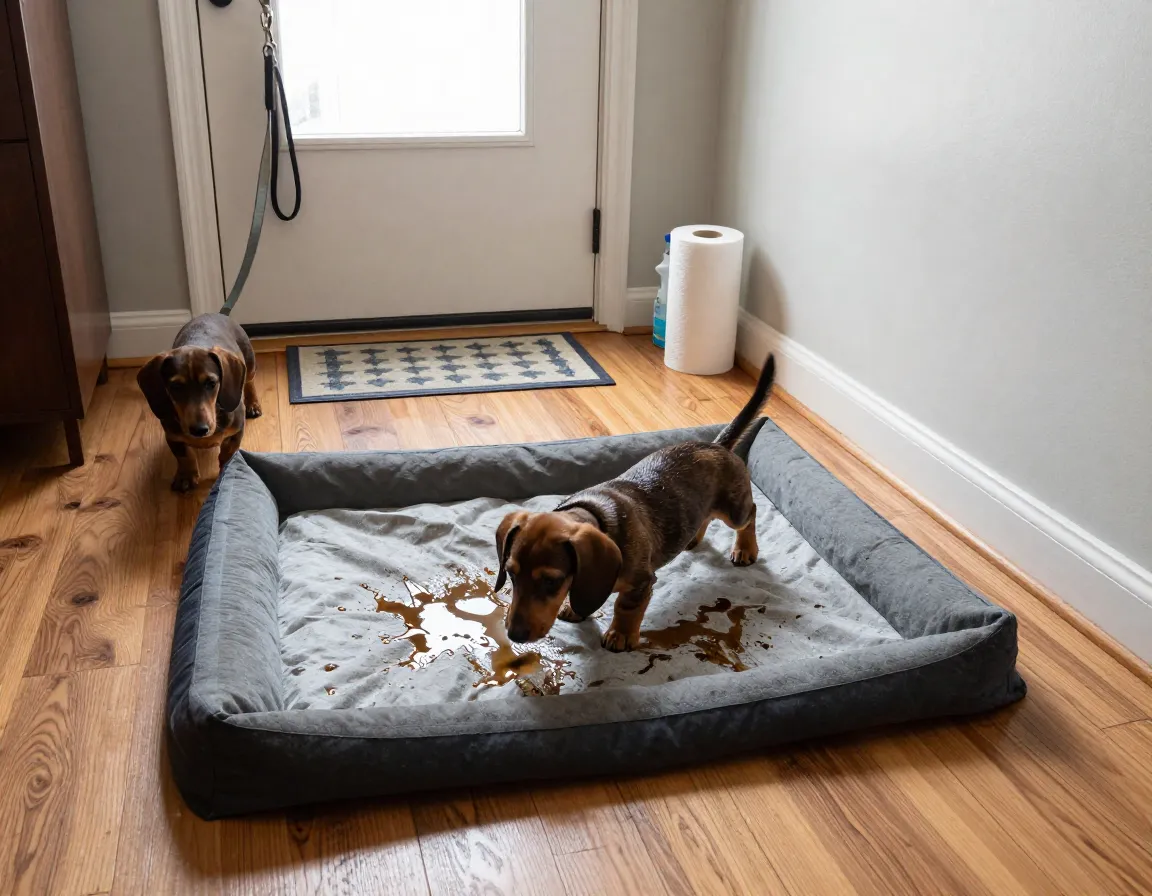
One of the most challenging facts about raising puppy wiener dogs is that full bladder control doesn’t develop until approximately 6 months of age [1]. This timeline is longer than many other breeds, requiring extraordinary patience from new owners.
Realistic potty training expectations:
- 0-3 months: Very frequent accidents are normal
- 3-6 months: Gradual improvement with consistent training
- 6+ months: Full bladder control typically achieved
- Consistency: Key to successful house training
Successful potty training strategies:
- Establish regular feeding schedules
- Take puppies outside every 2 hours
- Reward successful outdoor elimination immediately
- Clean accidents thoroughly to prevent repeat incidents
- Maintain consistent routines
The extended timeline for bladder control means owners need to prepare for a longer house-training period than they might expect with other breeds [1]. Patience and consistency during this phase prevent behavioral issues later.
5. Resource Guarding Requires Early Intervention
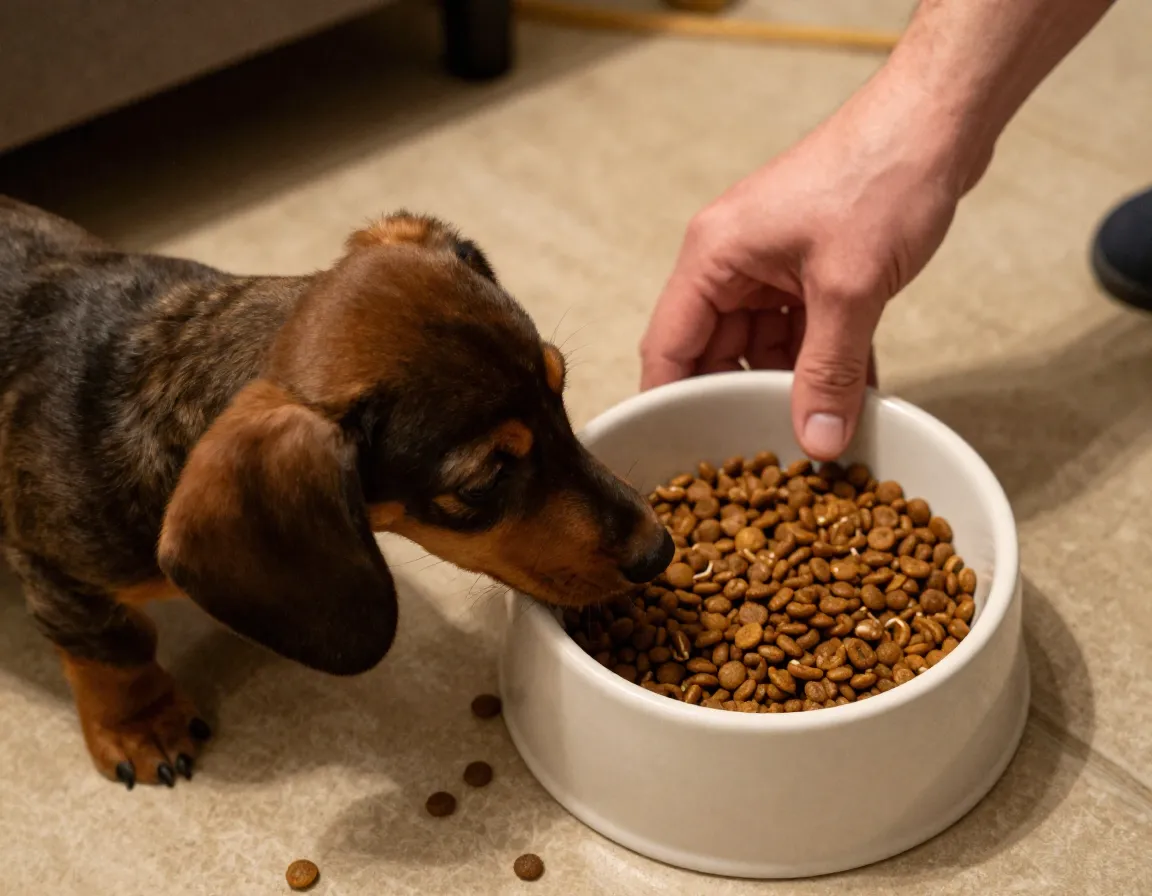
A surprising behavioral challenge in raising puppy wiener dogs is their tendency toward resource guarding behavior [3]. This natural instinct can become problematic if not addressed early through proper socialization and training techniques.
Common resource guarding behaviors:
- Growling over food bowls
- Protecting toys or treats
- Showing possessiveness over sleeping areas
- Guarding favorite family members
Prevention strategies:
- Gentle touching during mealtimes to normalize human presence [3]
- Occasional hand-feeding to build positive associations
- Teaching “drop it” and “leave it” commands early
- Positive reinforcement when sharing or giving up items
Early intervention prevents resource guarding from escalating into more serious behavioral problems. Consistent, gentle handling during the first few months establishes trust and reduces possessive tendencies [3].
6. Early Socialization Prevents Lifelong Behavioral Issues
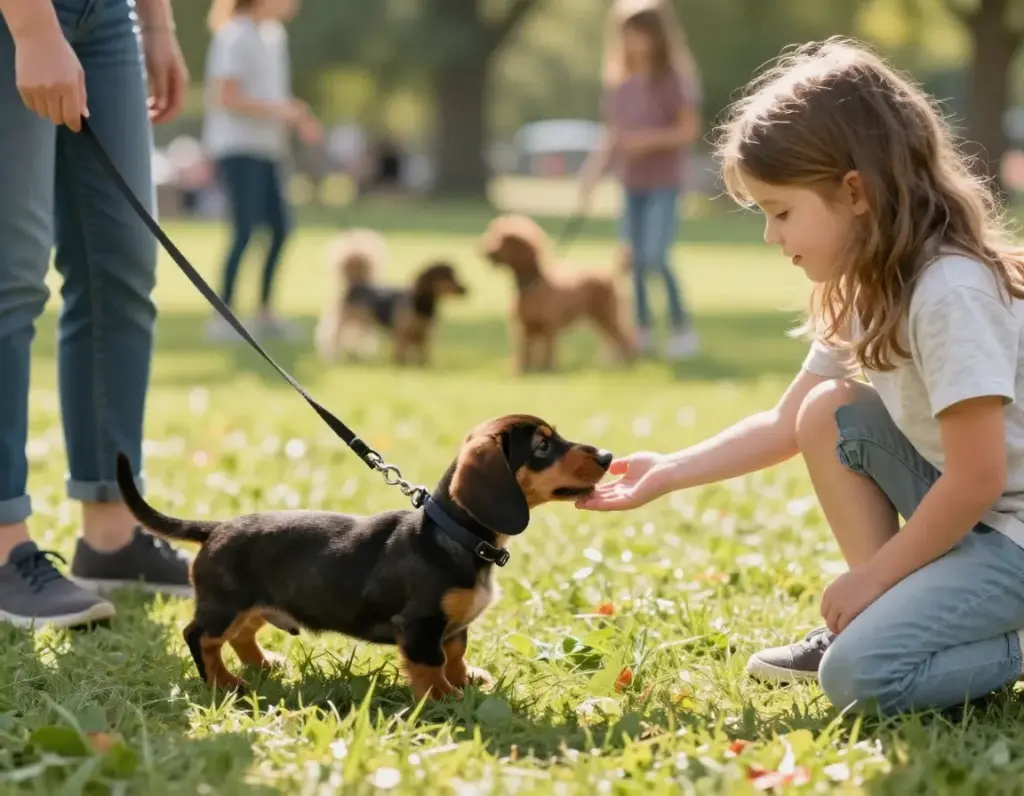
The final crucial fact about raising puppy wiener dogs centers on the critical importance of socialization during the first 3 months [5]. Proper early socialization prevents the excessive barking and nervousness that dachshunds are known for developing.
Essential socialization activities:
- Positive introductions to various people, animals, and environments
- Controlled exposure to different sounds and experiences
- Puppy socialization classes with other vaccinated dogs
- Regular handling of paws, ears, and mouth for grooming acceptance
Benefits of early socialization:
- Reduces excessive vocalization tendencies
- Prevents fear-based aggression
- Improves adaptability to new situations
- Creates confident, well-adjusted adult dogs
Quality breeders begin socialization immediately, handling and weighing newborn puppies daily [4]. This early human contact establishes the foundation for successful socialization that new owners must continue.
Socialization timeline:
- 0-3 weeks: Breeder handling and early neurological stimulation
- 3-8 weeks: Introduction to household sounds and gentle handling
- 8-16 weeks: Critical socialization period for new owners
- 16+ weeks: Continued exposure and reinforcement
Health and Nutrition Considerations
Weight Management Starts From Puppyhood
Obesity poses particularly serious risks for dachshunds due to the additional strain on their vulnerable spines [1]. Establishing healthy eating habits and portion control during puppyhood prevents lifelong weight struggles that can exacerbate spinal issues.
Weight management strategies:
- Measure food portions accurately
- Avoid free-feeding
- Use puzzle feeders to slow eating
- Monitor body condition regularly
- Provide appropriate exercise without high-impact activities
Signs of healthy weight in puppies:
- Visible waist when viewed from above
- Ribs easily felt but not visible
- No excessive fat around neck or legs
- Active and energetic behavior
Exercise Needs and Limitations
While dachshund puppies need regular exercise for healthy development, their exercise requirements differ significantly from other breeds. Low-impact activities that don’t stress the spine are essential.
Appropriate puppy exercises:
- Short walks on flat surfaces
- Gentle play sessions
- Swimming (if available and safe)
- Mental stimulation through puzzle toys
Activities to avoid:
- Jumping or leaping
- Stairs (until fully grown)
- High-impact running
- Rough play with larger dogs
Conclusion
Understanding these 6 surprising facts about raising puppy wiener dogs transforms the experience from overwhelming to manageable. From spinal protection and unique growth patterns to specialized training needs and extended potty training timelines, dachshund puppies require specific knowledge and patience that pays off with a lifetime of companionship.
Immediate action steps for new dachshund puppy owners:
- Install ramps throughout your home before bringing your puppy home
- Prepare for extended potty training with realistic expectations and consistent routines
- Plan short, frequent training sessions using positive reinforcement methods
- Begin socialization immediately with controlled, positive experiences
- Establish healthy feeding habits with measured portions and regular schedules
- Find a veterinarian experienced with dachshunds for ongoing health monitoring
The investment in understanding these breed-specific needs during puppyhood prevents behavioral problems, health issues, and training challenges later. Dachshund puppies thrive with owners who appreciate their unique requirements and provide appropriate care from the beginning.
Remember that every puppy is an individual, and while these facts provide essential guidance, observing your specific puppy’s needs and consulting with experienced veterinarians and trainers ensures the best possible start to life together. The reward of raising a well-adjusted, healthy dachshund makes the extra effort during puppyhood completely worthwhile.
References
[1] Raising A Dachshund Puppy The First Year – https://dachshundbreedcouncil.org.uk/care-lifestyle/raising-a-dachshund-puppy-the-first-year/
[2] How To Train A Dachshund – https://lyka.com.au/blog/how-to-train-a-dachshund
[3] Dachshund Puppies Everything You Need To Know – https://www.rover.com/blog/dachshund-puppies-everything-you-need-to-know/
[4] How To Train A Dachshund Puppy – https://www.akc.org/expert-advice/training/how-to-train-a-dachshund-puppy/
[5] Your New Miniature Dachshund Puppy The Essentials – https://www.joiipetcare.com/blogs/advice/your-new-miniature-dachshund-puppy-the-essentials
[6] Dachshund Progression Growth Chart Milestones And Training Tips – https://a-z-animals.com/blog/dachshund-progression-growth-chart-milestones-and-training-tips/
[7] Training Dachshunds – https://www.bestmatedogtraining.co.nz/training-dachshunds