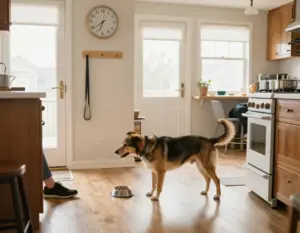
6 Puppy Pad Training Tips for Apartments & Bad Weather
Living in an apartment with a new puppy can feel overwhelming, especially when Mother Nature refuses to cooperate. I remember standing at my 15th-floor window last winter, watching the snow pile up while my 8-week-old Golden Retriever puppy whined at my feet. That’s when I realized that mastering these 6 puppy pad training tips for apartments & bad weather wasn’t just convenient—it was absolutely essential for maintaining my sanity and my security deposit.
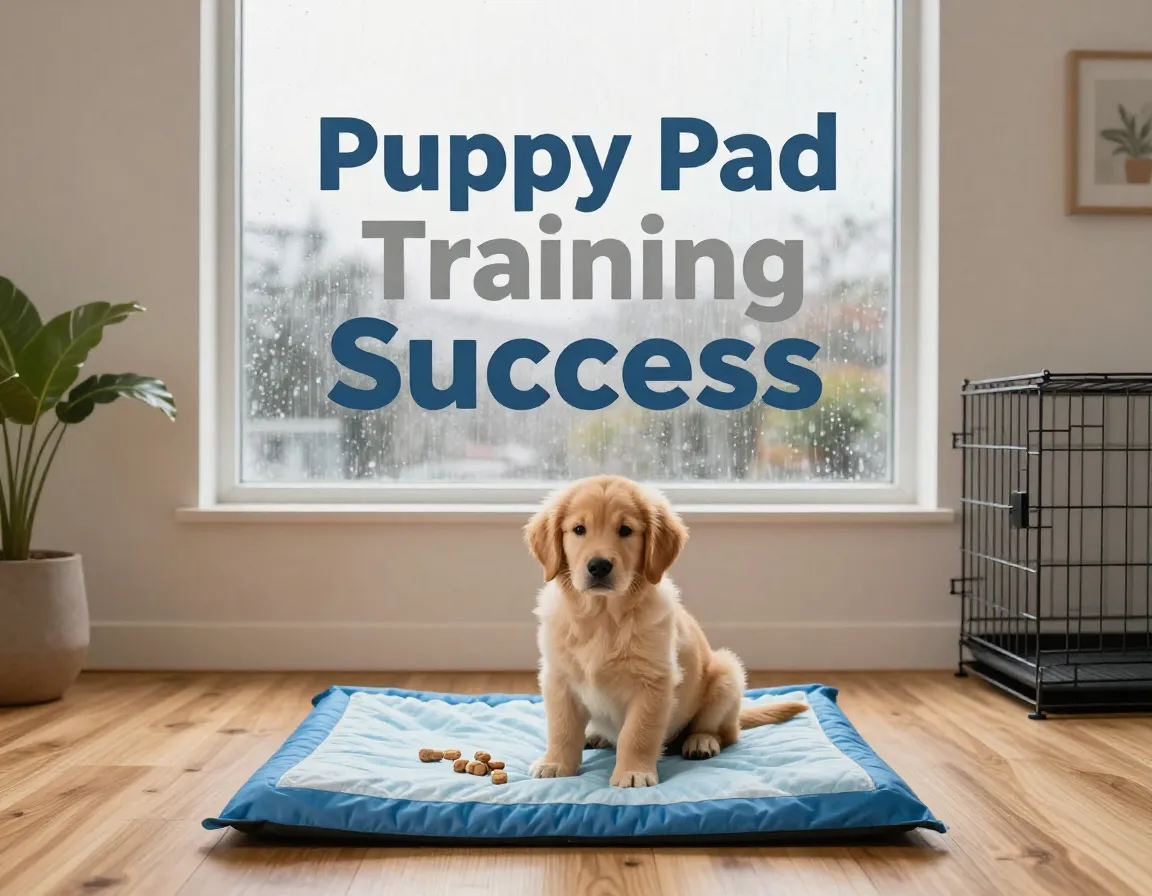
Whether you’re dealing with torrential rain, freezing temperatures, or simply the reality of high-rise living, puppy pad training offers a practical solution that can save both your floors and your stress levels. In 2026, more pet parents than ever are discovering that indoor training doesn’t have to be a compromise—it can be a strategic advantage.
Key Takeaways
- Establish a consistent schedule with potty breaks every hour for young puppies, plus additional breaks after eating, drinking, and playing
- Create a designated potty area in a low-traffic corner of your apartment and keep the pad location consistent to avoid confusion
- Use positive reinforcement immediately after successful pad use with treats and praise to reinforce the desired behavior
- Combine crate training as a support tool since dogs naturally avoid soiling their sleeping areas
- Maintain household consistency by ensuring all family members follow the same training methods and schedule
Understanding the Basics of Puppy Pad Training for Apartment Living
Puppy pad training serves as a lifeline for apartment dwellers and anyone facing challenging weather conditions. Unlike traditional outdoor potty training, this method teaches your puppy to eliminate on designated absorbent pads placed strategically in your home.
The science behind this approach is straightforward: puppies naturally seek specific textures and locations for elimination. By providing a consistent, appropriate surface in a designated area, you’re working with your puppy’s instincts rather than against them[4].
Why Apartment Living Demands Different Solutions
Apartment living presents unique challenges that traditional potty training advice often overlooks:
- Limited outdoor access during emergencies or bad weather
- Elevator wait times that young puppies can’t accommodate
- Noise considerations for late-night or early morning potty breaks
- Safety concerns in urban environments during certain hours
Many pet parents worry that pad training will confuse their puppies about indoor elimination being acceptable. While this concern has merit, research shows that dogs can successfully learn to distinguish between appropriate indoor locations (the pad) and inappropriate ones (your carpet)[1].
The 6 Essential Puppy Pad Training Tips for Apartments & Bad Weather
1. Master the Timing with Frequent Potty Schedules
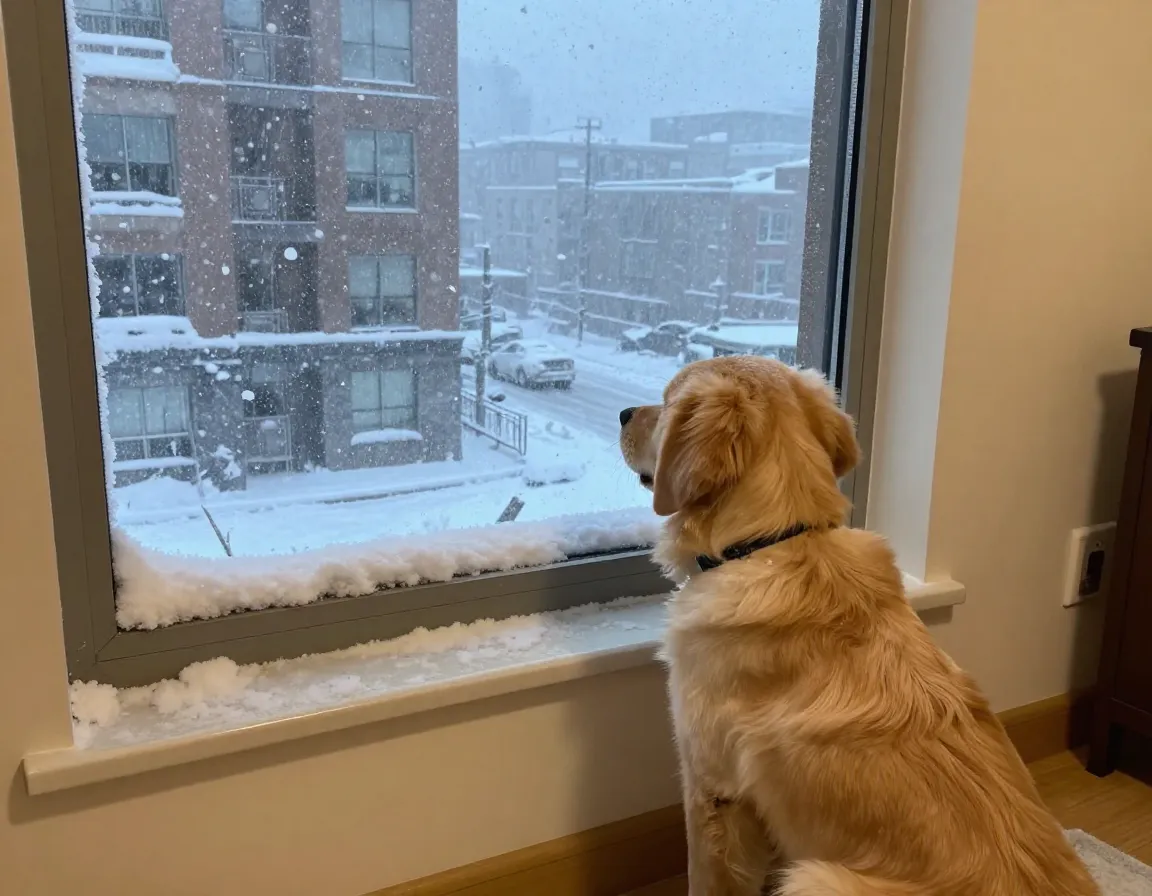
The foundation of successful pad training lies in understanding your puppy’s biological needs. Young puppies require potty breaks approximately every hour, with additional breaks immediately after waking, eating, drinking, or playing[1][2].
Here’s the golden rule I always share with new puppy parents: a puppy can hold its bladder for approximately one hour for every month of age[5]. This means:
- 8-week-old puppy: 2 hours maximum
- 12-week-old puppy: 3 hours maximum
- 16-week-old puppy: 4 hours maximum
Creating Your Puppy’s Potty Schedule:
| Time of Day | Activity | Potty Break Timing |
|---|---|---|
| Morning | Wake up | Immediately |
| Breakfast | After eating | Within 15 minutes |
| Mid-morning | Play session | Immediately after |
| Lunch | After eating | Within 15 minutes |
| Afternoon | Nap time | Immediately upon waking |
| Dinner | After eating | Within 15 minutes |
| Evening | Play/training | Every 30-60 minutes |
| Bedtime | Final break | Right before crate |
Pro Tip: Set phone alarms for the first two weeks. I learned this the hard way when I got caught up in a work call and came back to find my puppy had created his own “pad” on my favorite rug! 🚨
2. Designate a Specific Potty Area and Stick to It
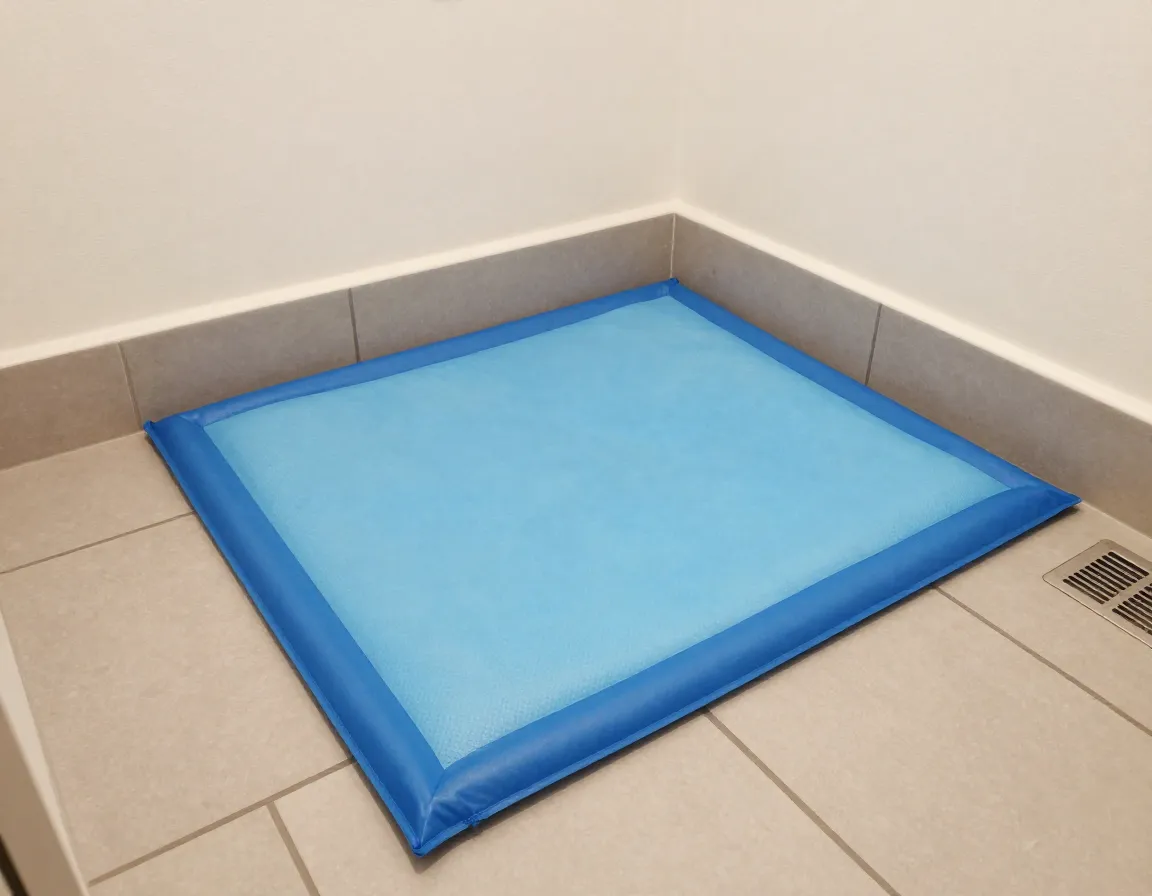
Consistency in location is absolutely crucial for successful pad training. Choose a designated spot with easy access but away from high-traffic areas, and keep the pad in one consistent location to prevent confusion[1].
Ideal Pad Placement Criteria:
✅ Away from food and water bowls (dogs prefer separation)
✅ Easy to clean flooring underneath (tile, vinyl, or hardwood)
✅ Low foot traffic area to minimize distractions
✅ Adequate ventilation for odor control
✅ Consistent lighting so your puppy can always find it
Common Placement Mistakes to Avoid:
❌ Moving the pad location frequently
❌ Placing near the puppy’s sleeping area
❌ Choosing high-traffic walkways
❌ Putting pads in multiple locations initially
❌ Placing too close to food/water stations
I recommend starting with one designated area and expanding only after your puppy has mastered that single location. Many apartment dwellers find success placing pads in a bathroom corner or laundry room where accidents are easier to clean.
3. Apply Positive Reinforcement Immediately and Effectively
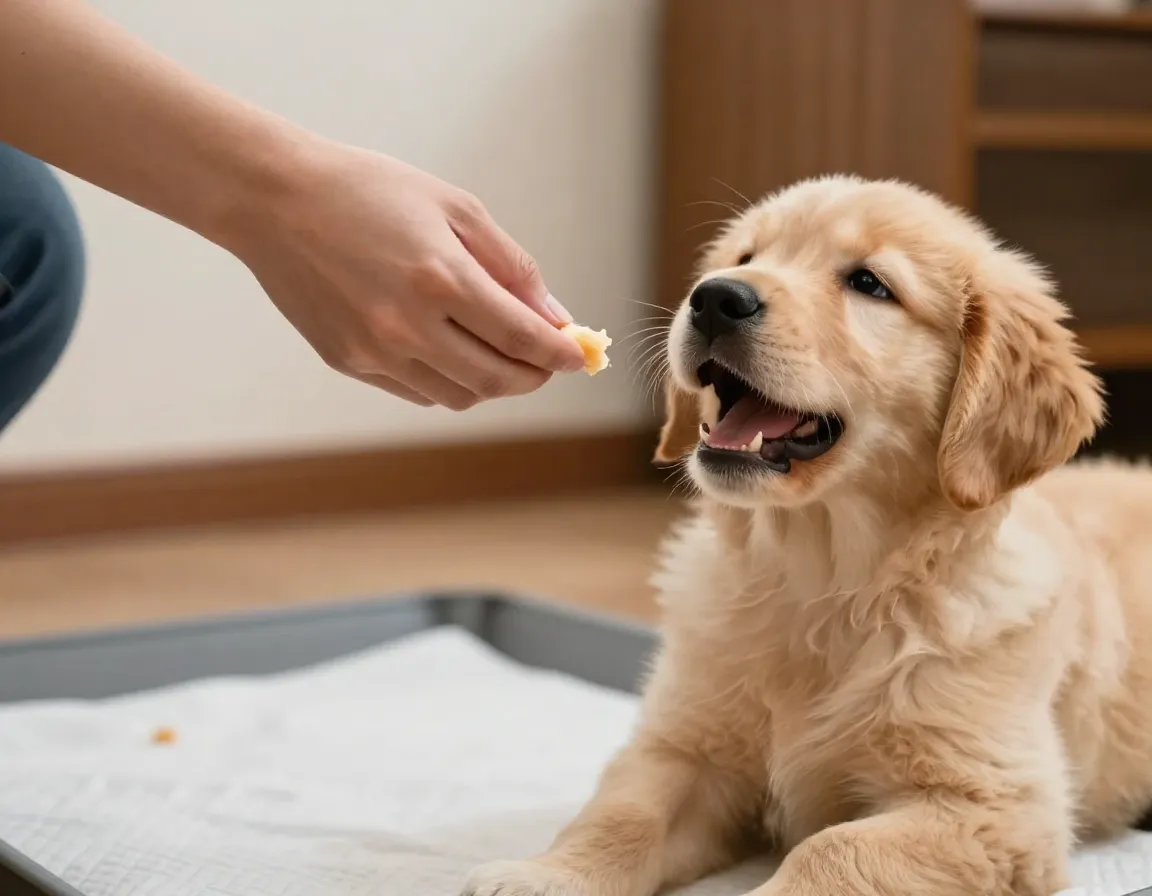
The timing of your praise and rewards can make or break your training success. Reward successful pad use with praise and treats immediately after the puppy finishes eliminating, rather than during, to avoid interrupting them[1][2].
The Perfect Reward Sequence:
- Watch quietly while your puppy uses the pad (no interrupting!)
- Wait for completion – let them finish completely
- Immediate praise – “Good potty!” in an excited voice
- Treat reward – high-value treat within 3 seconds
- Brief play session – 2-3 minutes of positive interaction
High-Value Treats for Pad Training:
- Small pieces of cooked chicken
- Freeze-dried liver treats
- Training treats (low calorie, high appeal)
- Tiny cheese cubes (if tolerated)
“The key to positive reinforcement is making the reward more exciting than any distraction. Your puppy should think using the pad is the best thing that happened all day!” – Professional Dog Trainer
What NOT to Do:
- Never punish accidents after the fact
- Don’t use negative reinforcement or scolding
- Avoid interrupting mid-elimination to redirect
- Don’t reward with treats during the elimination process
4. Use Crate Training as Your Secret Weapon
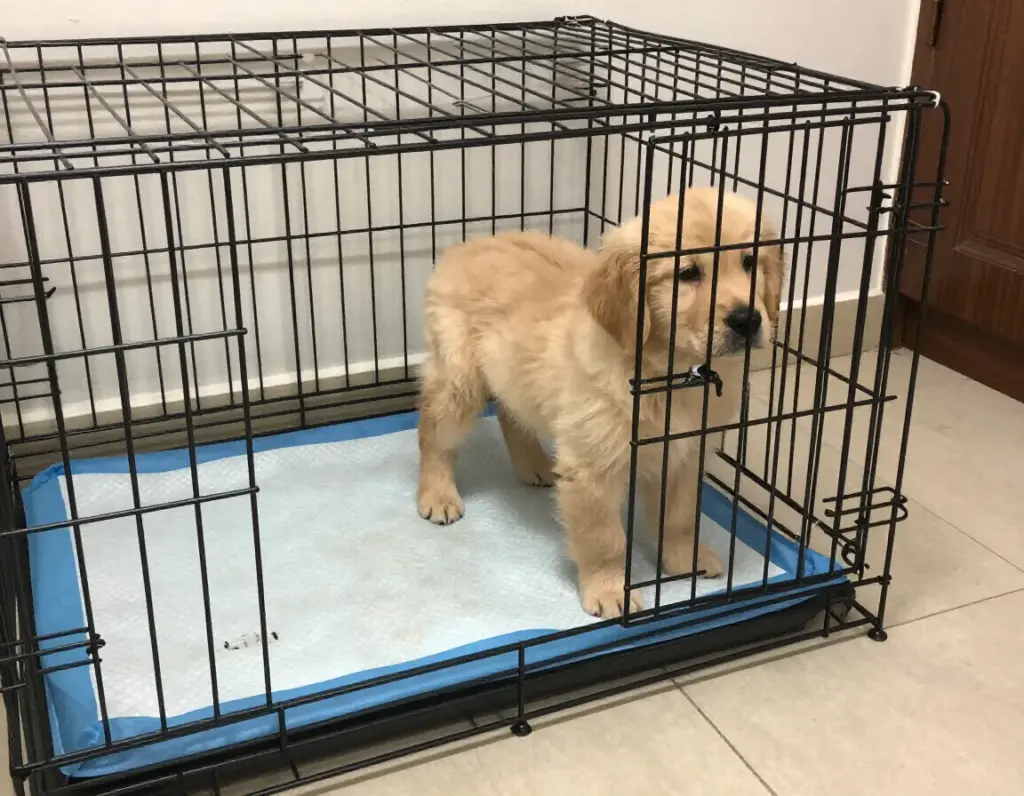
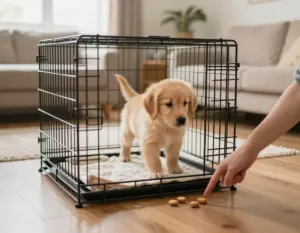
Crate training serves as the perfect complement to pad training because dogs instinctively avoid soiling their sleeping area[2]. However, it’s crucial to understand that you should never place pee pads inside the crate, as crates should remain separate sleeping areas[1].
How Crate Training Supports Pad Success:
🏠 Prevents accidents when you can’t supervise
🏠 Builds bladder control gradually and naturally
🏠 Creates routine with scheduled potty breaks
🏠 Provides safe space during your absence
🏠 Establishes boundaries between sleeping and elimination areas
Proper Crate Size Guidelines:
- Large enough for your puppy to stand, turn around, and lie down
- Not so large that they can eliminate in one corner and sleep in another
- Consider adjustable crates that grow with your puppy
Daily Crate Schedule Integration:
- Morning: Crate to pad immediately upon waking
- Meals: Crate for 30 minutes after eating, then to pad
- Naps: Crate for rest, pad break immediately after
- Night: Final pad break, then crate until morning
Remember, crate time should never exceed your puppy’s age-appropriate bladder capacity. A 10-week-old puppy shouldn’t be crated for more than 2-3 hours during the day.
5. Maintain Household Consistency Across All Family Members
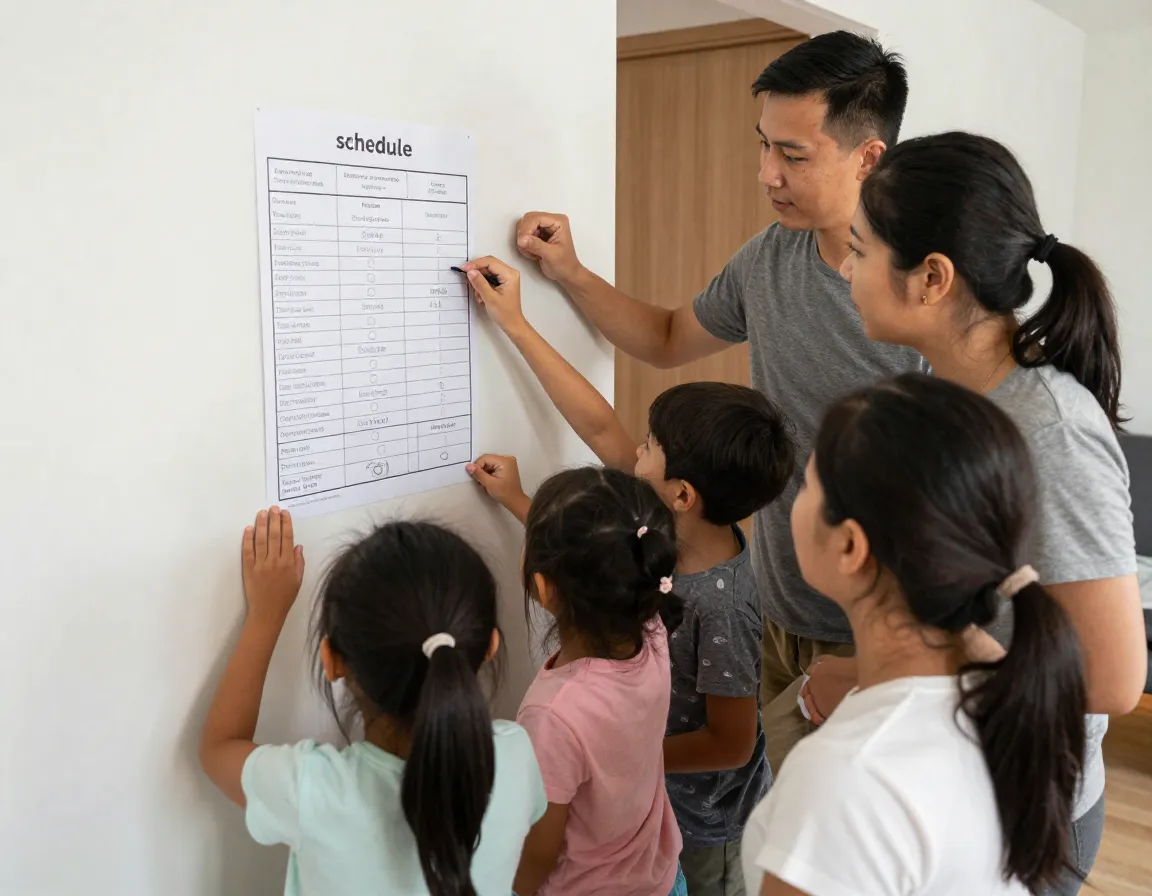
Nothing derails training faster than mixed messages from different family members. Ensure all family members follow the same training methods and schedule to avoid confusing the puppy[1].
Creating Your Family Training Protocol:
📋 Written schedule posted in a visible location
📋 Consistent commands – everyone uses “go potty” or chosen phrase
📋 Same reward system – identical treats and praise timing
📋 Unified response to accidents – clean without fuss, no punishment
📋 Shared responsibility – rotating who takes puppy to pad
Family Meeting Essentials:
- Review the hourly schedule together
- Practice the reward timing and praise phrases
- Assign backup responsibilities for busy days
- Establish house rules about pad placement and cleaning
Common Consistency Challenges:
- Different work schedules – create backup plans
- Varying commitment levels – assign primary and secondary trainers
- Children’s involvement – age-appropriate responsibilities only
- Visitor education – brief guests on house rules
I’ve seen families succeed beautifully when everyone commits to the same approach, and I’ve watched training fall apart when one person decides to “do things differently.” Consistency isn’t just helpful—it’s absolutely essential.
6. Supervise Closely and Limit Freedom Strategically
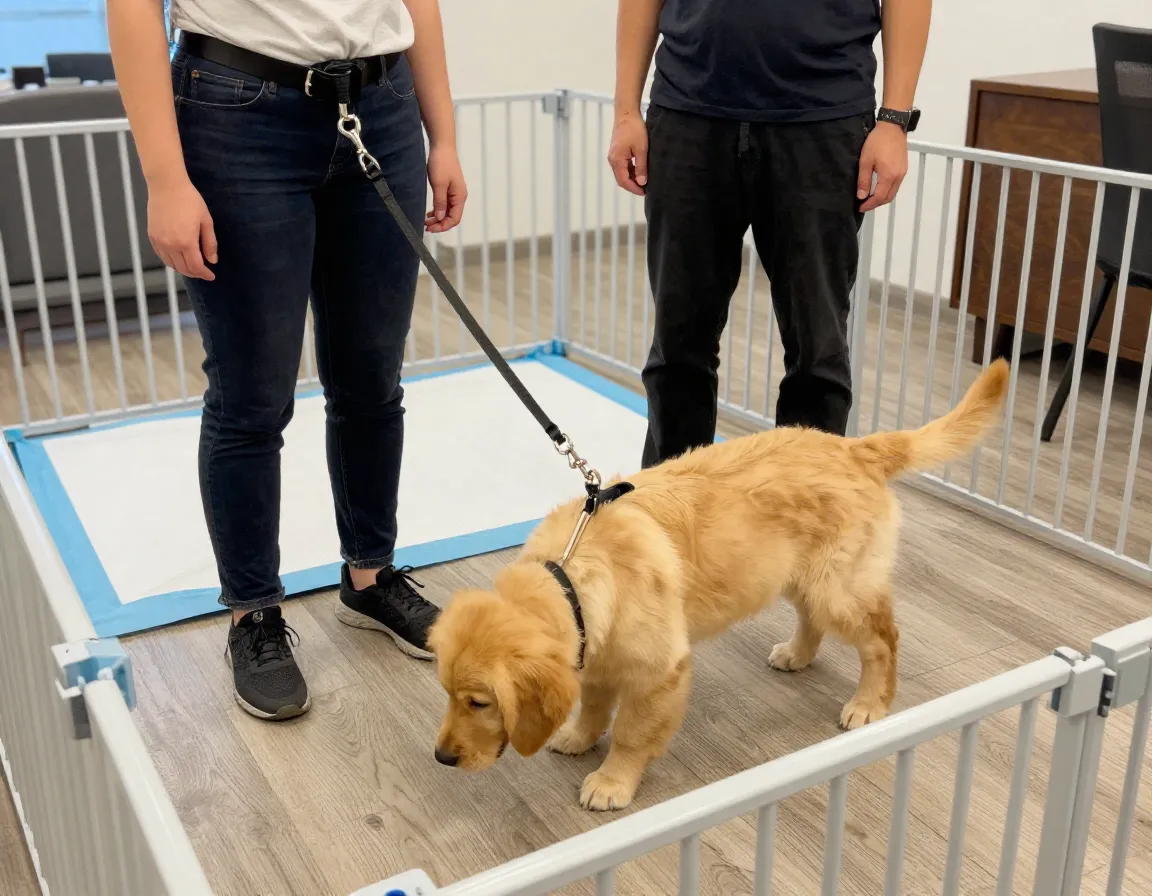
Successful pad training requires vigilant supervision during the learning phase. Keep puppies confined to small spaces or use an umbilical cord leash when inside to monitor for elimination signals[1][2].
Supervision Strategies That Work:
🔍 Umbilical cord method – attach a 6-foot leash to your belt
🔍 Baby gate confinement – limit access to pad-trained room
🔍 Constant visual contact – puppy stays where you can see them
🔍 Signal recognition – learn your puppy’s pre-elimination behaviors
🔍 Immediate redirection – guide to pad when signals appear
Pre-Elimination Signals to Watch For:
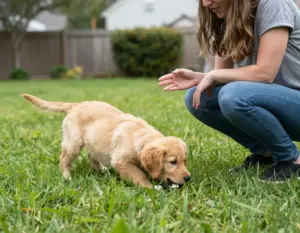
- Sniffing the ground intensely
- Circling or pacing
- Whining or restlessness
- Sudden stop during play
- Moving toward previous accident spots
- Scratching at the floor
Freedom Progression Schedule:
- Week 1-2: Constant supervision or confinement
- Week 3-4: Short periods of freedom (15-30 minutes)
- Week 5-6: Extended freedom with frequent check-ins
- Week 7+: Gradual increase based on success rate
Setting Up Success Zones:
Use baby gates to create a “success zone” that includes:
- The designated pad area
- Water bowl (not too close to pad)
- A few safe toys
- Easy-to-clean flooring
This approach prevents your puppy from developing bad habits in other areas of your apartment while building confidence in the correct location.
Advanced Strategies for Weather-Related Challenges
Bad weather presents unique opportunities to reinforce pad training success. When outdoor conditions are harsh, your puppy will naturally gravitate toward indoor solutions, making this the perfect time to solidify good habits.
Rainy Day Training Advantages:
- Puppies prefer dry, warm elimination spots
- Reduced outdoor distractions
- More focused training sessions
- Natural reinforcement of indoor options
Winter Weather Considerations:
- Maintain consistent indoor temperature near pad area
- Ensure adequate lighting during shorter daylight hours
- Keep backup supplies in case of weather-related delivery delays
- Consider paw protection for necessary outdoor trips
Storm Preparation:
- Stock extra pads before severe weather hits
- Identify backup pad locations if primary area becomes inaccessible
- Maintain calm energy during storms to avoid anxiety-related accidents
- Keep cleaning supplies easily accessible
Troubleshooting Common Apartment Pad Training Issues
Even with perfect execution, you’ll likely encounter some challenges. Here’s how to address the most common apartment-specific issues:
Problem: Puppy misses the pad consistently
- Solution: Use larger pads or multiple pads initially
- Check if the pad location has adequate space around it
- Ensure the surface underneath isn’t slippery
Problem: Accidents in the same wrong spot repeatedly
- Solution: Thoroughly clean with enzymatic cleaner
- Temporarily block access to that area
- Place a food bowl over the spot (dogs avoid eliminating near food)
Problem: Neighbor noise complaints
- Solution: Use sound-absorbing rugs around the pad area
- Schedule training during appropriate hours
- Consider discussing your training timeline with neighbors
Problem: Pad destruction or playing
- Solution: Supervise more closely during pad visits
- Remove immediately after use if puppy tends to shred
- Redirect play behavior to appropriate toys
Transitioning from Pads to Outdoor Training
Many apartment dwellers wonder about eventually transitioning to outdoor-only elimination. The good news is that dual training is absolutely possible, and many owners successfully transition from pads to outdoor-only training as puppies mature and complete vaccinations[1].
Gradual Transition Strategy:
- Maintain pad access while introducing outdoor opportunities
- Reward outdoor elimination more enthusiastically than pad use
- Gradually reduce pad size over several weeks
- Remove pads completely only after consistent outdoor success
Timeline Considerations:
- Wait until vaccinations are complete (usually 16+ weeks)
- Ensure reliable elevator/outdoor access
- Consider seasonal weather patterns
- Maintain emergency pad access for illness or extreme weather
Conclusion: Your Path to Pad Training Success
Mastering these 6 puppy pad training tips for apartments & bad weather will transform your puppy parenting experience from stressful to successful. Remember that consistency, patience, and positive reinforcement form the foundation of every training victory.
Your Next Steps:
- Set up your designated pad area today, ensuring it meets all the location criteria
- Create a written schedule and share it with all family members
- Stock up on high-value treats specifically for pad training rewards
- Establish your supervision strategy using gates or umbilical cord methods
- Prepare for weather challenges by maintaining adequate supplies
The investment you make in proper pad training now will pay dividends throughout your dog’s life, providing a reliable backup plan for emergencies, illness, or severe weather. In 2026, smart pet parents recognize that indoor training options aren’t just conveniences—they’re essential life skills for urban dogs.
Start implementing these strategies today, and within a few weeks, you’ll wonder how you ever considered apartment living with a puppy to be challenging. Your floors, your neighbors, and most importantly, your furry family member will thank you for the structured, positive approach to indoor elimination training.
References
[1] How To Puppy Pad Train A New Dog – https://1minutedog.com/blog/how-to-puppy-pad-train-a-new-dog/
[2] Potty Training In An Apartment – https://www.preventivevet.com/dogs/potty-training-in-an-apartment
[3] Mastering Puppy Potty Training In Apartments Tips Solutions And Expert Advice – https://dogtrainersmilwaukee.com/mastering-puppy-potty-training-in-apartments-tips-solutions-and-expert-advice/
[4] Potty Pad Training Your Dog – https://www.animalhumanesociety.org/resource/potty-pad-training-your-dog
[5] Potty Train Dog In Apartment – https://www.akc.org/expert-advice/training/potty-train-dog-in-apartment/
[6] House Training Your Dog Or Puppy – https://www.aspca.org/news/house-training-your-dog-or-puppy
[7] Train Your Male Dog To Use Pee Pads Without The Mess – https://doggybathroom.com/blogs/blog/train-your-male-dog-to-use-pee-pads-without-the-mess