6 Essential Tips on House Training a Puppy Without the Stress
Picture this: You’ve just brought home your adorable new puppy, and within the first hour, you discover a “surprise” on your favorite rug. Sound familiar? 🐕 If you’re feeling overwhelmed about house training your new furry family member, you’re not alone. The good news is that house training doesn’t have to be a stressful nightmare for you or your puppy. With the right approach and these 6 essential tips on house training a puppy without the stress, you can transform what many consider the most challenging part of puppy ownership into a manageable, even enjoyable experience.
House training is one of the most important skills your puppy will learn, and it sets the foundation for a happy life together. When done correctly, the process typically takes three to five months, but with consistency and patience, you’ll see progress much sooner than you might expect [3]. The key is understanding that successful house training isn’t about punishment or dominance—it’s about creating positive habits and clear communication between you and your puppy.
Key Takeaways
- Start early and be consistent: Begin house training as early as eight weeks old with regular schedules for feeding, potty breaks, and supervision
- Focus on positive reinforcement: Reward successful outdoor elimination immediately with treats, praise, and play rather than punishing accidents
- Establish predictable routines: Create consistent feeding schedules, designated potty areas, and regular exercise to make elimination habits predictable
- Maintain constant supervision: Use baby gates and appropriate confinement to prevent accidents and ensure you can reward good behavior
- Practice patience and persistence: Accept that accidents will happen and view them as learning opportunities rather than failures
Understanding the Foundation: Why These 6 Essential Tips on House Training a Puppy Without the Stress Work
Before diving into the specific tips, it’s crucial to understand why stress-free house training is more effective than traditional punishment-based methods. Puppies learn best in positive environments where they feel safe to explore and make mistakes. When we create stressful situations through scolding or harsh corrections, we actually slow down the learning process and can create anxiety around elimination.
The three most important tenets of successful house training are supervising, making frequent outings, and instilling a regular schedule [1]. These elements work together to create an environment where your puppy can succeed, and you can catch and reward the behaviors you want to see repeated.
Modern dog training science shows us that positive reinforcement creates faster, more reliable results than punishment-based methods. When we focus on encouraging where puppies should eliminate rather than punishing where they shouldn’t, we’re instilling good habits early [2]. This approach not only makes the process less stressful but also strengthens the bond between you and your puppy.
1. Start Early and Establish Consistency
The first of our 6 essential tips on house training a puppy without the stress focuses on timing and consistency. You can begin house training when puppies are as young as eight weeks old [3]. Starting early gives you the advantage of shaping behaviors before bad habits form, making the entire process smoother and less stressful for everyone involved.
Consistency is absolutely crucial for success. This means:
- Same feeding times every day: Feed puppies three meals per day until six months of age, then two meals daily, always at the same times [1]
- Regular potty break schedule: Take your puppy outside first thing in the morning, after meals, after naps, after play sessions, and last thing before bed
- Consistent commands: Use the same phrase every time, such as “Do you want to go out?” to signal elimination time [1]
- Same door and location: Always use the same outdoor door and take your puppy to the same designated potty area
Creating this predictable routine helps your puppy understand what’s expected and when. Puppies thrive on routine, and when they know what comes next, they’re less likely to have accidents and more likely to succeed.
Setting Up Your Schedule
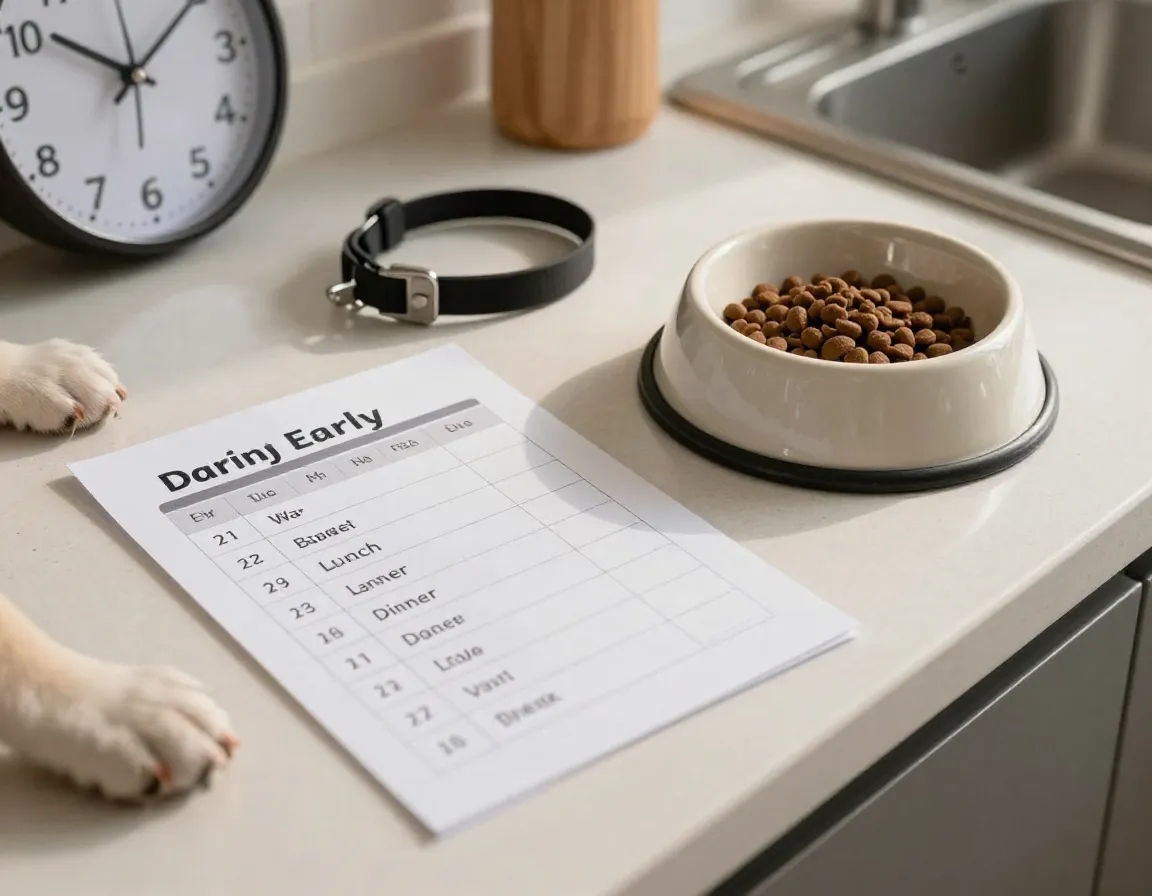
Here’s a sample daily schedule that incorporates consistency:
| Time | Activity | Notes |
|---|---|---|
| 6:00 AM | Wake up + immediate potty break | Always first priority |
| 6:15 AM | Breakfast | Same time, same location |
| 6:45 AM | Post-meal potty break | Within 15-30 minutes of eating |
| 12:00 PM | Lunch + potty break | Consistent midday routine |
| 5:00 PM | Dinner + potty break | Last meal several hours before bed [1] |
| 8:00 PM | Final potty break | Before settling for the night |
Remember, young puppies need frequent breaks—sometimes every 1-2 hours when awake. The key is maintaining consistency even when it feels overwhelming.
2. Master Positive Reinforcement Techniques
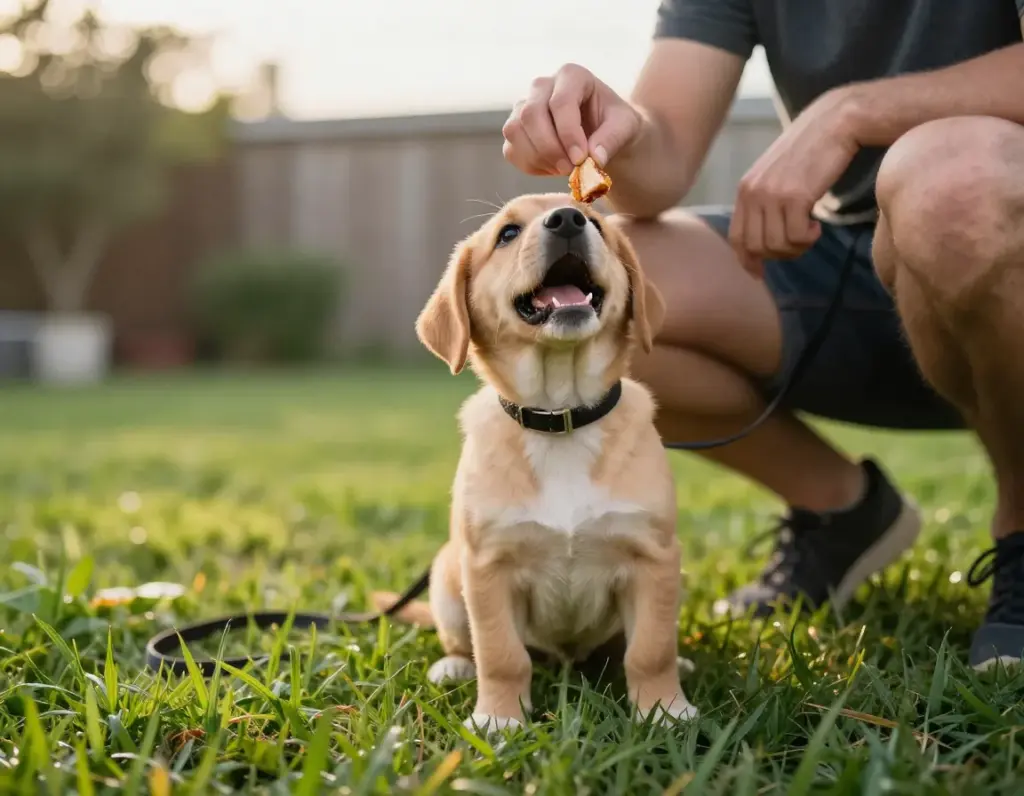
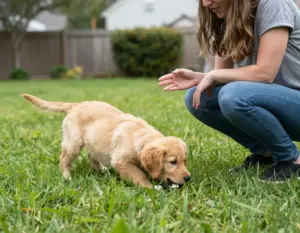
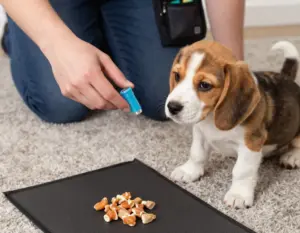
The second tip in our 6 essential tips on house training a puppy without the stress revolves around positive reinforcement. This approach focuses on rewarding the behaviors you want to see repeated rather than punishing mistakes. When your puppy successfully eliminates outdoors, reward them immediately with treats, praise, and toys [2][7].
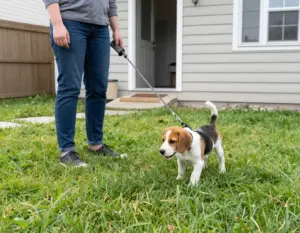
Timing is everything with positive reinforcement. The reward must happen within seconds of the desired behavior for your puppy to make the connection. This means staying present during potty breaks and supervising on a leash or in a fenced yard to deliver immediate rewards for successful elimination [2].
Effective Reward Strategies
High-value treats work best for house training rewards. Choose something your puppy finds irresistible:
- Small pieces of cooked chicken
- Freeze-dried liver treats
- Special training treats (keep these separate from regular treats)
- Enthusiastic praise with an excited voice
- Brief play session with a favorite toy
The “jackpot” method can be particularly effective: when your puppy has a perfect potty break, give them multiple treats and extra enthusiastic praise. This creates a strong positive association with outdoor elimination.
💡 Pro Tip: Always carry treats with you during potty breaks. Keep a small container by the door so you never forget to bring rewards outside.
What NOT to Do
Avoid these common mistakes that create stress:
- Never punish accidents: Scolding or rubbing your puppy’s nose in waste creates fear and confusion
- Don’t reward coming back inside: The reward should be for elimination, not returning to the house [2]
- Avoid delayed rewards: Waiting until you’re back inside defeats the purpose
Instead of punishment, use a simple correction for accidents: tether the puppy near the soiled area for 20-30 minutes, as dogs naturally avoid lingering near their waste [3]. This gentle consequence helps them understand without creating stress or fear.
3. Create a Structured Feeding and Exercise Schedule
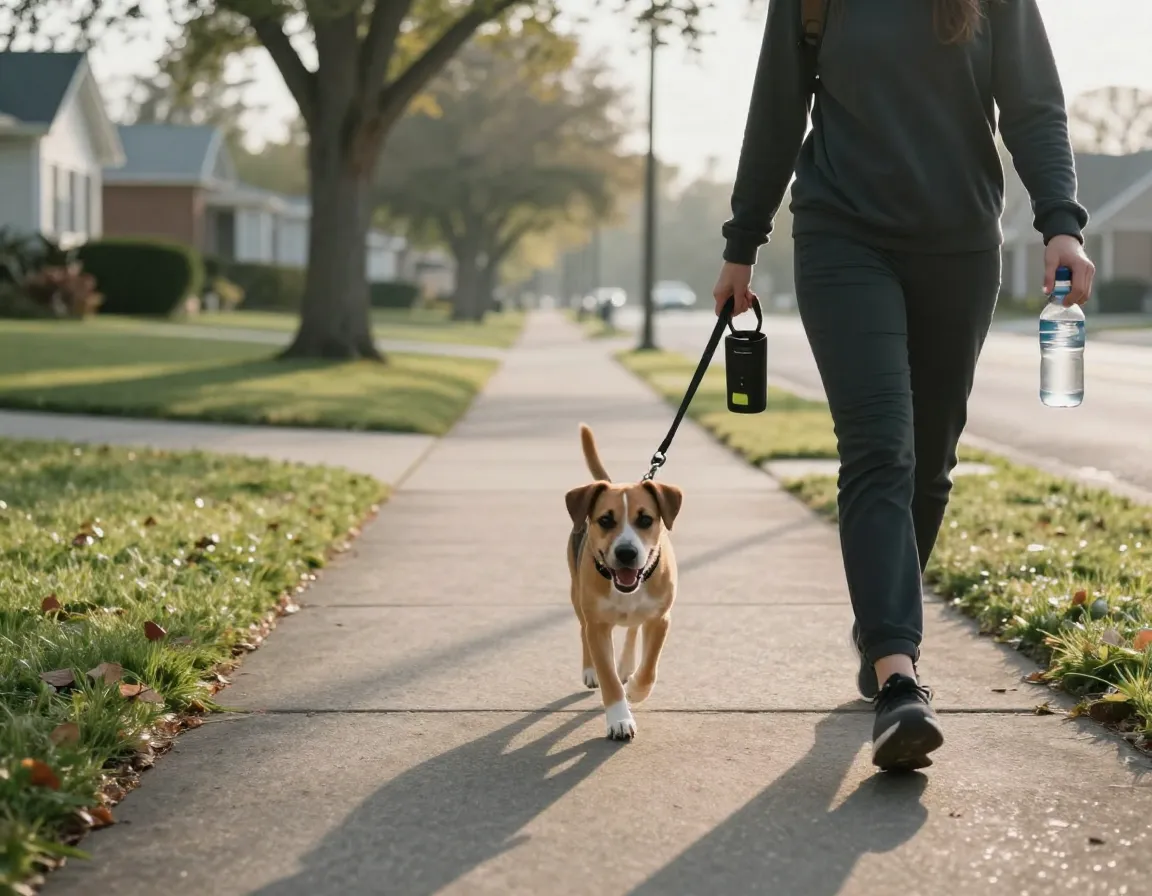
The third essential tip focuses on structured routines that make elimination predictable. A consistent feeding schedule creates predictable elimination habits, making it easier for both you and your puppy to succeed [1]. When you know when your puppy will need to go, you can prevent accidents and ensure you’re there to reward success.
Feeding schedule guidelines:
- Feed three meals per day until six months of age
- Switch to two meals daily after six months
- Always feed at the same times each day
- Avoid large meals before confinement periods
- Feed the last meal several hours before bedtime [1]
The Power of Routine Exercise
Daily exercise and play are essential components of successful house training [1]. A tired puppy is a well-behaved puppy, and regular physical activity helps regulate their digestive system. Establish a daily routine that includes:
- Morning walk or play session: Helps stimulate elimination and burns energy
- Midday activity: Prevents boredom and maintains routine
- Evening exercise: Ensures your puppy is tired enough to sleep through the night
- Training sessions: Mental stimulation is just as important as physical exercise
Managing Water Intake
While you should never restrict water completely, strategic water management can help with overnight success:
- Provide fresh water throughout the day
- Monitor water intake in the evening
- Remove water 2-3 hours before bedtime
- Always provide water immediately upon waking
This approach ensures your puppy stays hydrated while reducing the likelihood of overnight accidents.
4. Implement Smart Supervision and Confinement Strategies
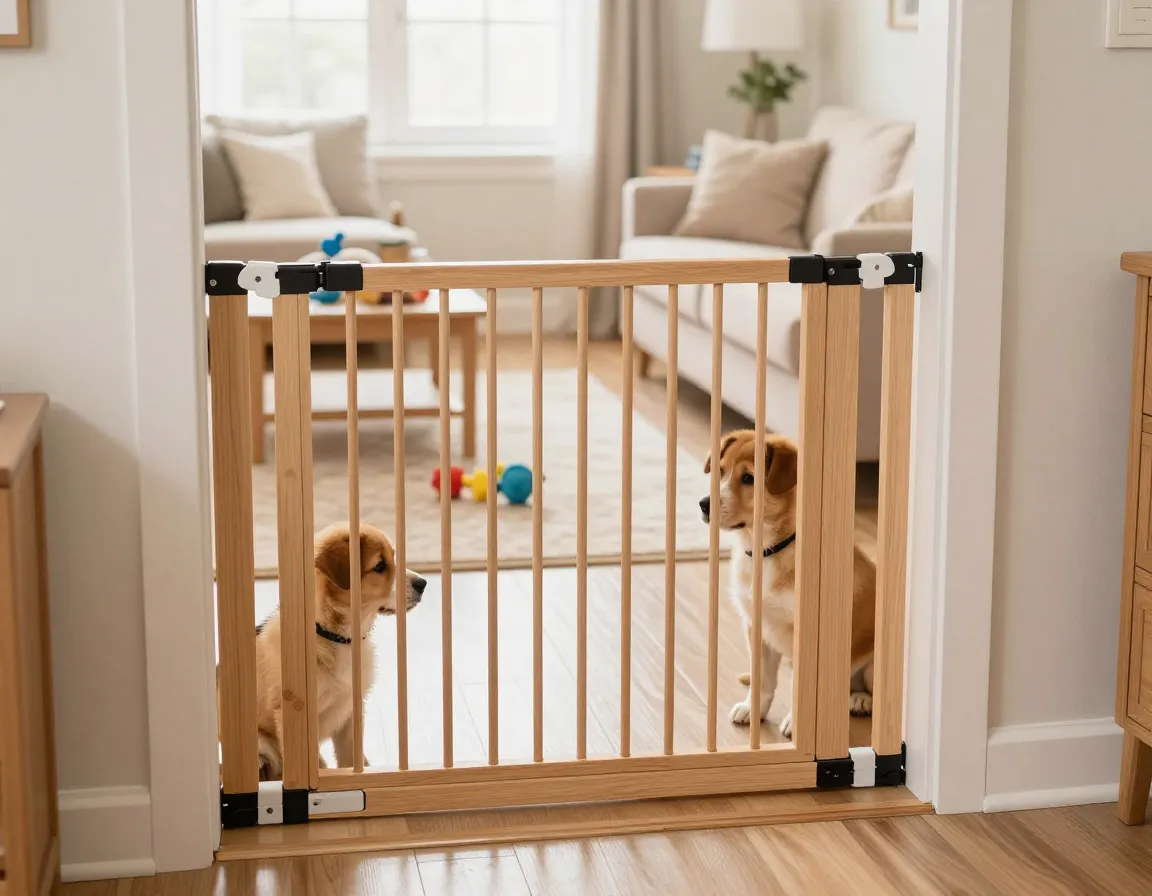
The fourth tip in our 6 essential tips on house training a puppy without the stress involves strategic supervision and confinement. Constant supervision is crucial during the house training process, as it allows you to catch signs that your puppy needs to eliminate and prevent accidents from happening [1][2].
Supervision strategies:
- Keep your puppy in the same room as you whenever possible
- Use baby gates to restrict movement and control access throughout the house [1]
- Watch for signs like sniffing, circling, whining, or heading toward the door
- Interrupt any attempt to eliminate indoors with a gentle “no” and immediately take them outside
Appropriate Confinement Techniques
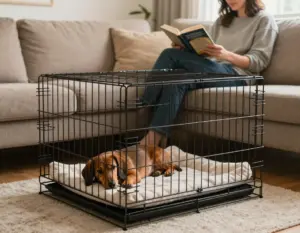
When you cannot supervise directly, proper confinement prevents accidents and reinforces the idea that the living space should be kept clean. Confine puppies to small spaces—just large enough to stand, lie down, and turn around—so they won’t want to eliminate there [4].
Confinement options:
- Crate training: Most effective for overnight and short periods
- Gated rooms: Bathroom or laundry room with easy-to-clean floors
- Tethering: Keeping puppy on a leash attached to you or furniture
- Exercise pens: Portable containment for longer periods
The key is making the confined space comfortable but not too large. Puppies naturally avoid soiling their sleeping area, so appropriately sized confinement works with their instincts.
Reading Your Puppy’s Signals
Learning to recognize elimination signals is crucial for preventing accidents:
- Sniffing the ground intensely
- Walking in circles
- Whining or restlessness
- Scratching at the door
- Sudden stops during play
- Moving toward previously soiled areas
When you see these signs, immediately take your puppy to their designated potty area. Even if they don’t eliminate, you’re reinforcing the routine and building good habits.
5. Establish a Designated Potty Area and Consistent Routine
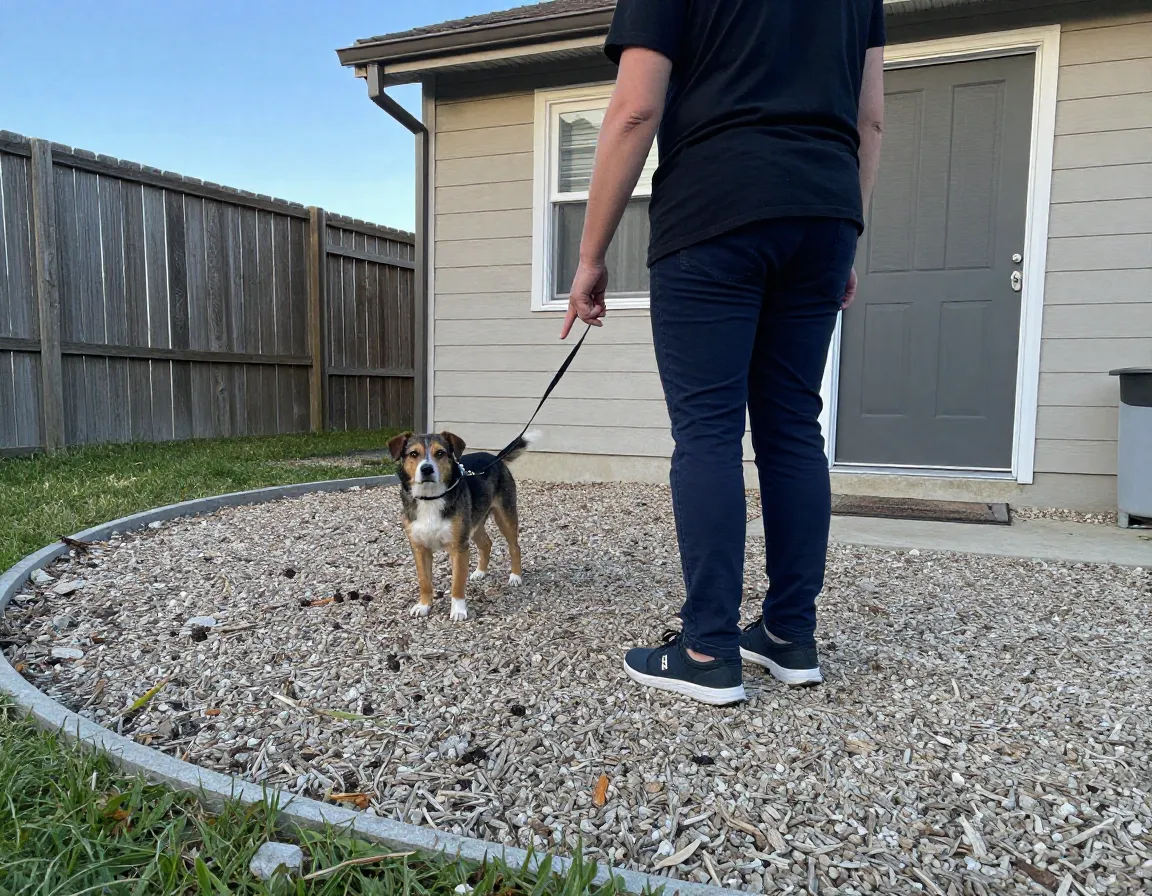
The fifth essential tip focuses on location consistency. Always use the same outdoor door and take your puppy to the same designated potty area [1]. This consistency helps your puppy understand exactly where they should eliminate and reduces confusion about appropriate locations.
Choosing the Perfect Potty Spot
Select a designated area in your yard that:
- Is easily accessible from your main exit door
- Has good drainage and is easy to clean
- Is away from high-traffic play areas
- Receives some shelter from extreme weather
- Is large enough for your puppy to move around and find the right spot
Make the area appealing:
- Keep it clean and free of debris
- Consider adding a specific surface (gravel, mulch, or grass) that you want your puppy to associate with elimination
- Use the same entrance path each time
- Avoid using this area for play or training exercises
Developing Location-Specific Commands
Introduce specific phrases that signal elimination time versus recreational outings [1]. This helps your puppy understand the purpose of each trip outside:
- Potty time: “Go potty,” “Do your business,” or “Hurry up”
- Play time: “Let’s play” or “Free time”
- Walking: “Let’s go for a walk”
Use these commands consistently, and your puppy will learn to differentiate between different types of outdoor time. This is particularly helpful when you need quick elimination breaks versus longer exercise sessions.
Weather Considerations
Prepare for challenging weather conditions that might disrupt your routine:
- Rain: Use an umbrella and stay with your puppy to provide encouragement
- Snow: Clear a path and small area for elimination
- Extreme heat: Schedule breaks during cooler parts of the day
- Cold weather: Consider a puppy coat for very small or short-haired breeds
Consistency matters more than comfort—both yours and your puppy’s. Maintaining the routine even in less-than-ideal weather reinforces the importance of outdoor elimination.
6. Handle Accidents with Patience and Strategic Responses
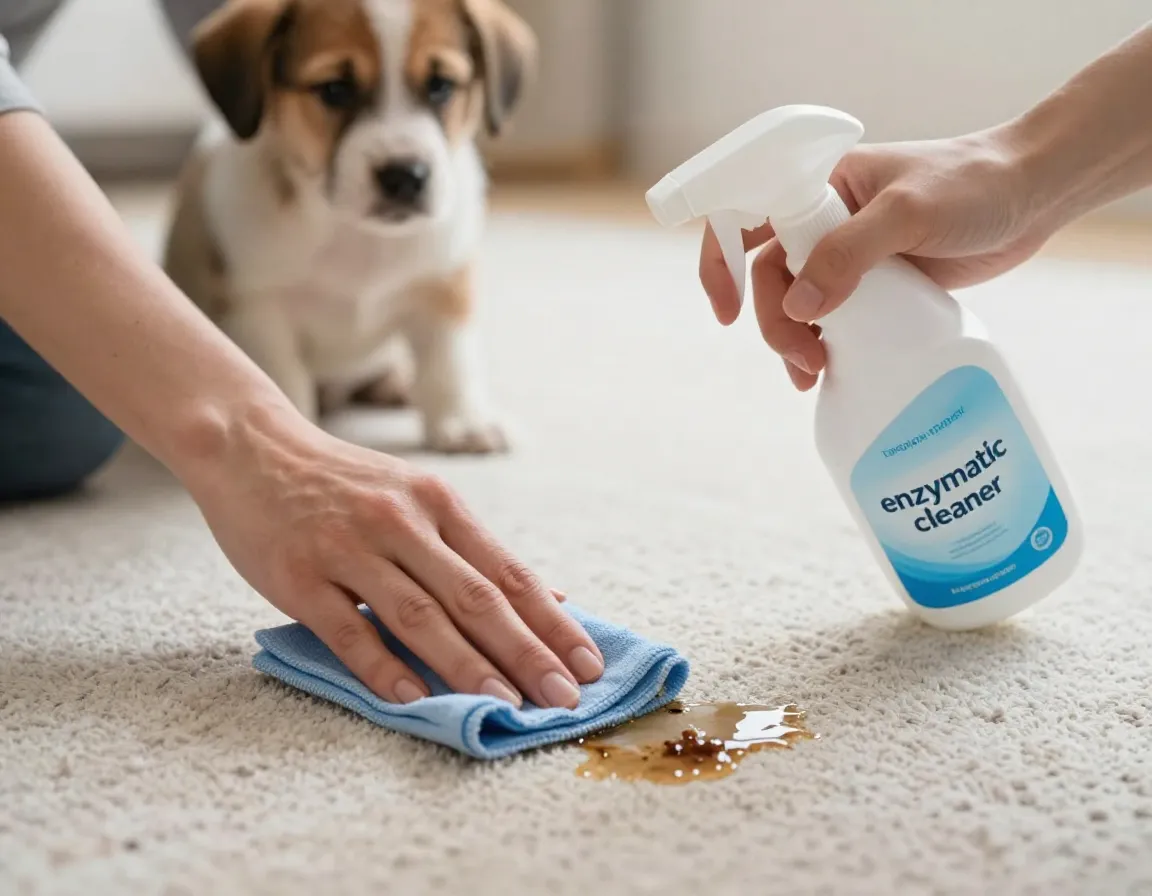
The final tip in our 6 essential tips on house training a puppy without the stress addresses accident management. Accidents are a normal part of the house training process, and how you respond to them significantly impacts your puppy’s learning and stress levels [3].
Expect and accept accidents as part of the learning process. House training requires patience, and avoiding scolding for mistakes is crucial for maintaining a stress-free environment [3]. Remember, your puppy isn’t having accidents to spite you—they’re still learning what’s expected of them.
Immediate Response to Accidents
When you catch your puppy in the act:
- Interrupt gently: Use a calm “no” or clap your hands once
- Immediately take them outside: Even if they’ve already started, they might finish outdoors
- Reward if they finish outside: This reinforces the correct location
- Clean the indoor accident thoroughly: Use enzymatic cleaners to eliminate odors
Never punish after the fact. If you discover an accident later, simply clean it up and move on. Delayed punishment only creates confusion and anxiety.
Effective Cleaning Strategies
Proper cleanup is essential for preventing repeat accidents in the same location:
- Use enzymatic cleaners: Regular household cleaners don’t eliminate the scent markers that attract puppies back to the same spot
- Clean thoroughly: Don’t just clean the surface—treat the padding and subfloor if necessary
- Block access temporarily: Use furniture or baby gates to prevent access to frequently soiled areas while retraining
- Consider professional cleaning: For carpets or upholstery with multiple accidents
Strategic Use of Puppy Pads
Puppy pads can be helpful in specific situations but should be used strategically [2][5]:
Appropriate uses:
- Apartment living with limited outdoor access
- Extreme weather conditions
- Work schedules that prevent frequent outdoor breaks
- Senior dogs or puppies with medical issues
Potential drawbacks:
- May complicate training by reinforcing indoor elimination as an option [2]
- Can create confusion about appropriate elimination locations
- May prolong the overall house training process
If you choose to use puppy pads, gradually move them closer to the door and eventually outside to transition your puppy to outdoor elimination.
Troubleshooting Common Challenges
Address specific issues that might arise during house training:
Frequent accidents in the same location:
- Deep clean with enzymatic cleaner
- Temporarily block access to the area
- Feed your puppy in that location (dogs avoid eliminating where they eat)
Regression after initial success:
- Return to more frequent potty breaks
- Increase supervision
- Check for medical issues with your veterinarian
- Evaluate recent changes in routine or environment
Difficulty with overnight training:
- Ensure the last meal is several hours before bedtime [1]
- Limit water intake 2-3 hours before sleep
- Use appropriately sized crate confinement
- Consider setting an alarm for a middle-of-the-night potty break
Creating Long-term Success: Beyond the Basics
Successfully implementing these 6 essential tips on house training a puppy without the stress requires consistency, attentiveness, and patience [4]. These elements make potty breaks predictable and help minimize accidents while building a strong foundation for lifelong good habits.
Maintaining Progress
Continue reinforcing good habits even after your puppy seems fully house trained:
- Maintain consistent feeding and potty schedules
- Continue rewarding outdoor elimination, though you can gradually reduce treats
- Stay alert for signs of stress or changes that might cause regression
- Keep enzymatic cleaner on hand for occasional accidents
Building Beyond House Training
The skills and routines you develop during house training create a foundation for other aspects of puppy ownership:
- Communication: You’ve learned to read your puppy’s signals and they’ve learned your commands
- Routine: The structured schedule benefits overall behavior and training
- Trust: Positive reinforcement builds confidence and strengthens your bond
- Problem-solving: You’ve developed skills for addressing challenges calmly and effectively
When to Seek Professional Help
Consider professional assistance if:
- Your puppy is over six months old and still having frequent accidents
- You notice signs of anxiety or fear around elimination
- Medical issues might be contributing to house training difficulties
- You’re feeling overwhelmed or stressed despite following these guidelines
A professional dog trainer or veterinary behaviorist can provide personalized guidance and identify any underlying issues that might be complicating the process.
Conclusion
House training your puppy doesn’t have to be a source of stress and frustration. By implementing these 6 essential tips on house training a puppy without the stress, you’re setting both yourself and your puppy up for success. Remember that consistency, patience, and positive reinforcement are your most powerful tools in this process.
The key takeaways from our comprehensive approach include starting early with consistent routines, focusing on positive reinforcement rather than punishment, creating structured feeding and exercise schedules, implementing smart supervision strategies, establishing designated potty areas, and handling accidents with patience and understanding.
Your next steps should be:
- Assess your current routine and identify areas where you can improve consistency
- Gather your supplies: high-value treats, enzymatic cleaner, and any confinement tools you’ll need
- Establish your schedule and commit to following it for at least two weeks
- Start implementing positive reinforcement immediately with every successful outdoor elimination
- Be patient with yourself and your puppy—remember that this is a learning process for both of you
Most importantly, celebrate the small victories along the way. Every successful potty break outdoors is progress, and with time and consistency, your puppy will develop reliable house training habits that will serve them throughout their life. The investment you make in stress-free house training now will pay dividends in the form of a well-adjusted, confident dog and a stronger bond between you and your furry family member.
House training is just the beginning of your journey together. By starting with patience, consistency, and positive methods, you’re laying the groundwork for a lifetime of successful communication and mutual respect with your canine companion. 🐾
References
[1] Puppy Potty Training And House Training – https://www.eukanuba.com/articles/training/puppy-potty-training-and-house-training
[2] Housetraining For Puppies – https://www.wihumane.org/housetraining-for-puppies
[3] Brandon Mcmillans 8 Step Guide For Housebreaking A Dog – https://www.masterclass.com/articles/brandon-mcmillans-8-step-guide-for-housebreaking-a-dog
[4] How To Potty Train A Puppy – https://www.purina.com/articles/dog/puppy/training/how-to-potty-train-a-puppy
[5] How To Potty Train A Puppy – https://www.akc.org/expert-advice/training/how-to-potty-train-a-puppy/
[6] Watch – https://www.youtube.com/watch?v=VADeX4uf-ao
[7] Puppy Potty Training – https://www.ak9boise.com/puppy-potty-training/