Gorgeous Long Hair Scottish Fold Cat Varieties & Their Care Needs
A Scottish Fold’s ears fold forward because of a single dominant cartilage mutation, and that same mutation shows up in a fluffier, longer-coated cousin that many owners have never heard of. These longhair Folds, officially called Highland Folds by many breed clubs, look like plush teddy bears with folded ears and full, feathery tails. Understanding the 6 gorgeous long hair Scottish Fold cat varieties and their care needs matters because these cats are not simply “fluffy Scottish Folds.” Their coat length changes grooming frequency, bathing schedules, and even how quickly skin problems can develop if care is skipped.
Disclosure: This post contains affiliate links. As an Amazon Associate, we earn from qualifying purchases, and at no extra cost to you.
This guide breaks down six distinct coat varieties within the longhair Scottish Fold family, explains what sets each apart, and lays out a practical, veterinarian-informed care routine. Whether already living with one of these cats or considering adopting one, this article is built to be the most complete resource on the 6 gorgeous long hair Scottish Fold cat varieties and their care needs available today.
Key Takeaways
- Longhair Scottish Folds, often called Highland Folds, come in six recognizable coat varieties: solid, tabby, colorpoint, tortoiseshell, bicolor/calico, and silver/smoke.
- These cats need brushing two to four times weekly, with near-daily brushing being the gold standard to prevent mats and hairballs.
- All Scottish Fold varieties, longhair included, carry a genetic risk of cartilage and joint issues called osteochondrodysplasia, making weight control and gentle exercise essential.
- Folded ears trap more wax and debris than normal ears, so weekly ear checks and gentle cleaning are non-negotiable.
- Bathing should be occasional, roughly once a month at most, using cat-specific shampoo to protect the coat’s natural oils.
Understanding the Longhair Scottish Fold Before Exploring Varieties
Before diving into the 6 gorgeous long hair Scottish Fold cat varieties and their care needs, it helps to understand where this cat comes from. The original Scottish Fold, discovered in Scotland in the 1960s, has short hair. When breeders occasionally paired Folds with longhaired breeds like Persians or British Longhairs to widen the gene pool, kittens with folded ears and long, silky coats appeared. Cat registries eventually gave this variant its own informal name: the Highland Fold.
The International Cat Association recognizes the Scottish Fold Longhair as a legitimate variety within the Scottish Fold breed standard. According to TICA’s breed documentation, the longhair version can appear in every color and pattern found in the Traditional and Pointed divisions, which is why there are so many visually distinct varieties rather than just one “long hair Scottish Fold.”
Every Highland Fold shares the same core traits regardless of coat color: a rounded face, big round eyes, a stocky body, and ears that fold forward and down. What changes between varieties is coat color, pattern, and sometimes texture density, which can shift grooming demands slightly.
“The fold gene affects cartilage everywhere in the body, not just the ears, which is why coat variety matters less for health risk than owners often assume, but grooming routine still needs to match the coat type in front of you.”
The 6 Gorgeous Long Hair Scottish Fold Cat Varieties and Their Care Needs
The following six varieties represent the most commonly recognized coat types among longhair Scottish Folds. Each one is technically the same breed with the same folded-ear mutation, but coloring and pattern genetics create noticeably different looks and, in some cases, slightly different grooming priorities.
1. Solid Color Highland Fold
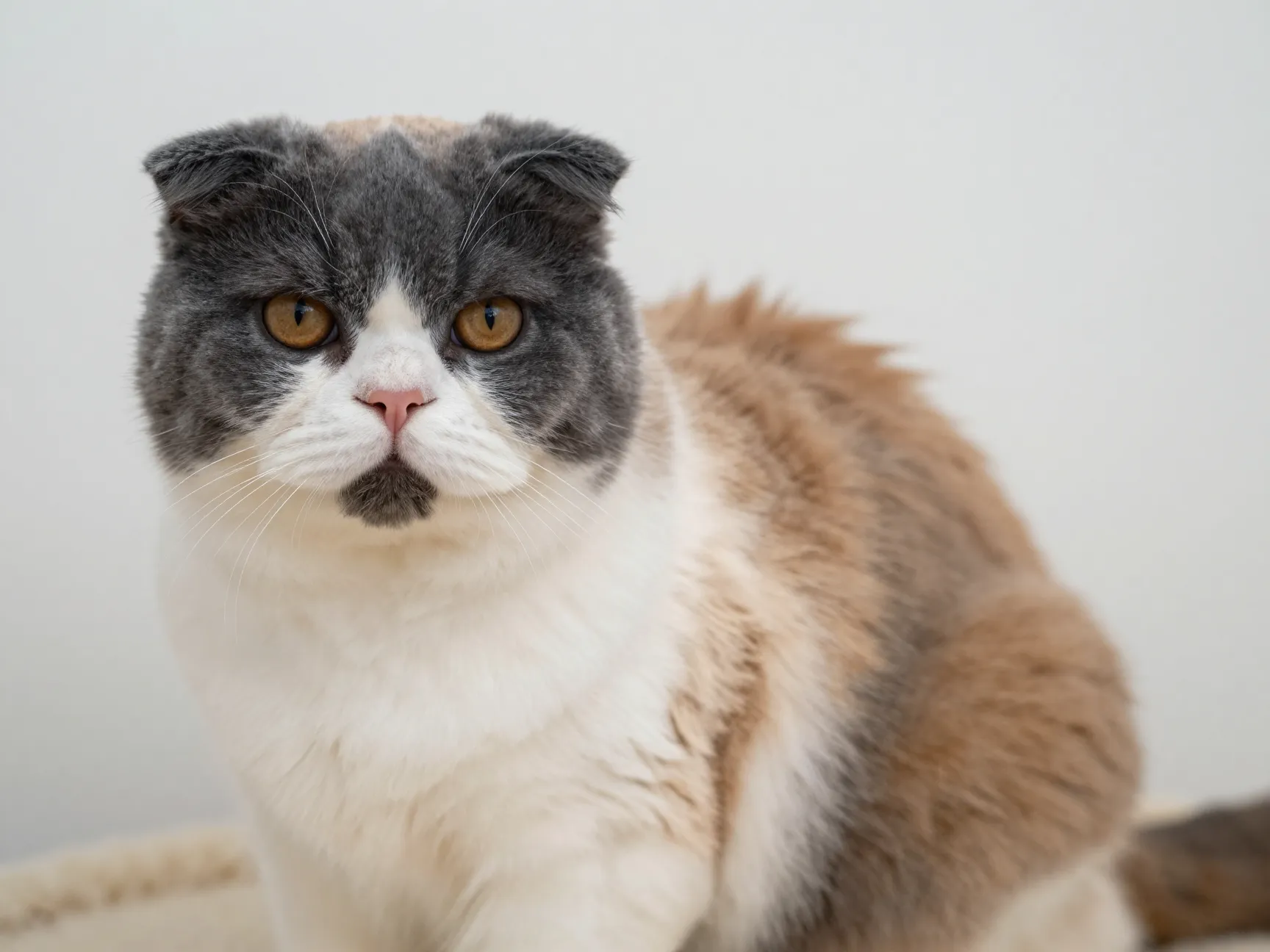
The solid color Highland Fold is the simplest variety to identify. Its coat is a single uniform shade, most often white, black, blue-gray, cream, or red, with no stripes, spots, or shading. Because there is no pattern to maintain, the coat’s health depends entirely on density and length. Solid-colored longhair Folds often carry a particularly dense undercoat, which means they are prone to matting around the armpits and belly if brushing is skipped for more than a few days.
Care priority for this variety centers on consistent brushing with a slicker brush at least three times a week, paying close attention to the underarms and hindquarters where the dense undercoat tends to felt together. Because solid white individuals are sometimes linked to deafness in cats generally, owners of white Highland Folds should ask breeders about hearing tests before adoption.
2. Tabby Highland Fold
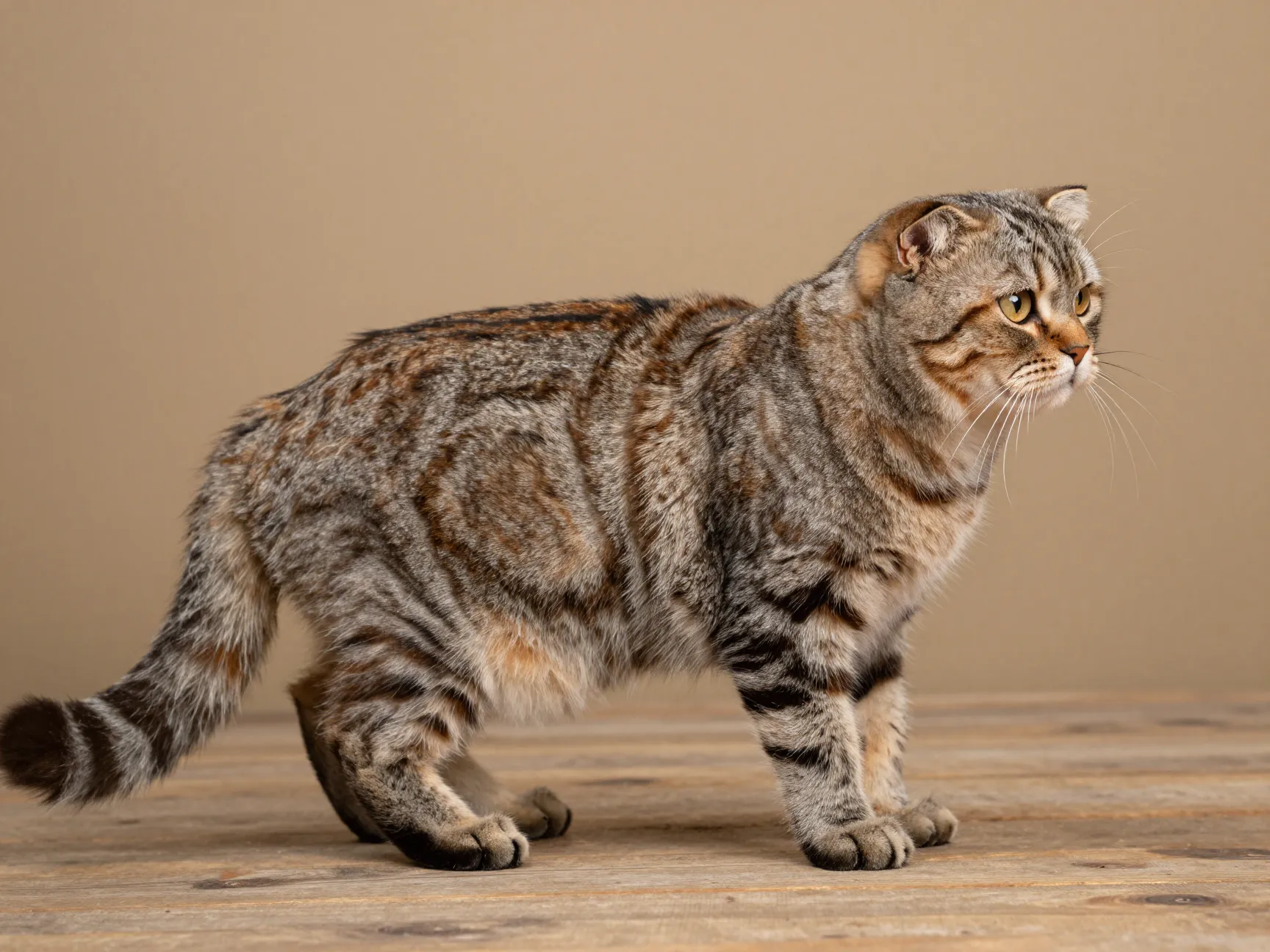
Tabby is a pattern, not a color, and it is one of the most common patterns seen in longhair Scottish Folds. Classic, mackerel, and spotted tabby variations all appear in this breed, usually in brown, silver, or red tones. The tabby pattern’s swirls and stripes are created by banded hair shafts, which tend to be slightly coarser than solid-colored fur.
This coarser texture actually helps a little with tangle resistance, but the longer guard hairs around the ruff and britches (the fur on the back legs) still mat easily. A wide-tooth comb worked through the ruff two to three times weekly, followed by a pin comb for finishing, keeps the tabby pattern looking crisp and prevents the felted clumps that hide beneath a seemingly smooth top coat.
3. Colorpoint (Pointed) Highland Fold
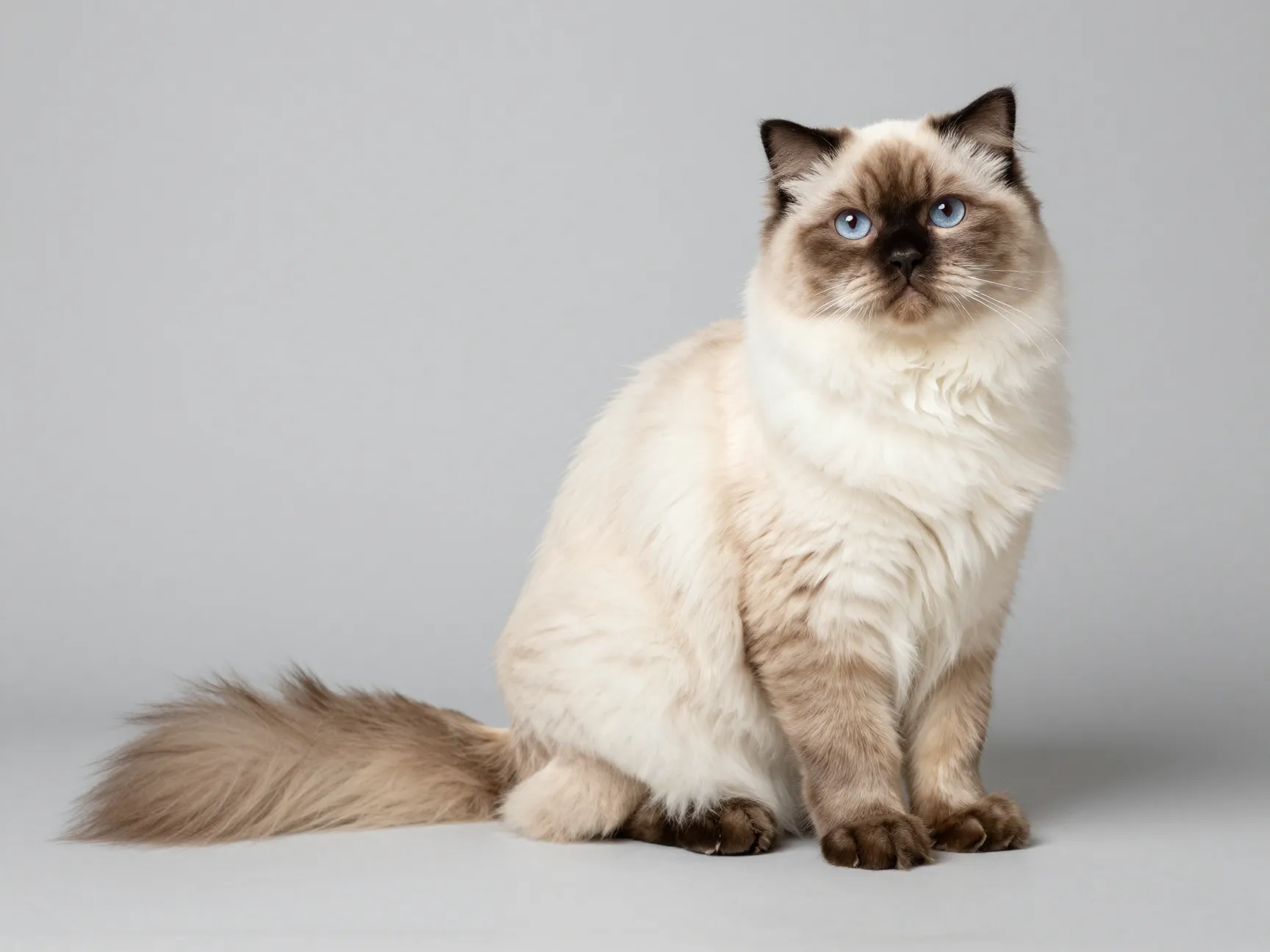
The colorpoint variety, sometimes called the pointed Highland Fold, has a pale cream or ivory body with darker “points” on the face, ears, legs, and tail, similar to a Siamese. This coloring is temperature-sensitive, meaning cooler areas of the body develop darker fur, which is why the extremities are always the most vividly colored.
Colorpoint longhair Folds tend to have slightly silkier, less dense coats than solid or tabby varieties, but the points, especially around the tail and lower legs, still tangle easily. Because darker points show dirt and grease more visibly than the pale body, owners often notice matting starting sooner. Regular combing every other day, with extra attention to the tail plume, keeps this striking coloring looking its best.
4. Tortoiseshell Highland Fold
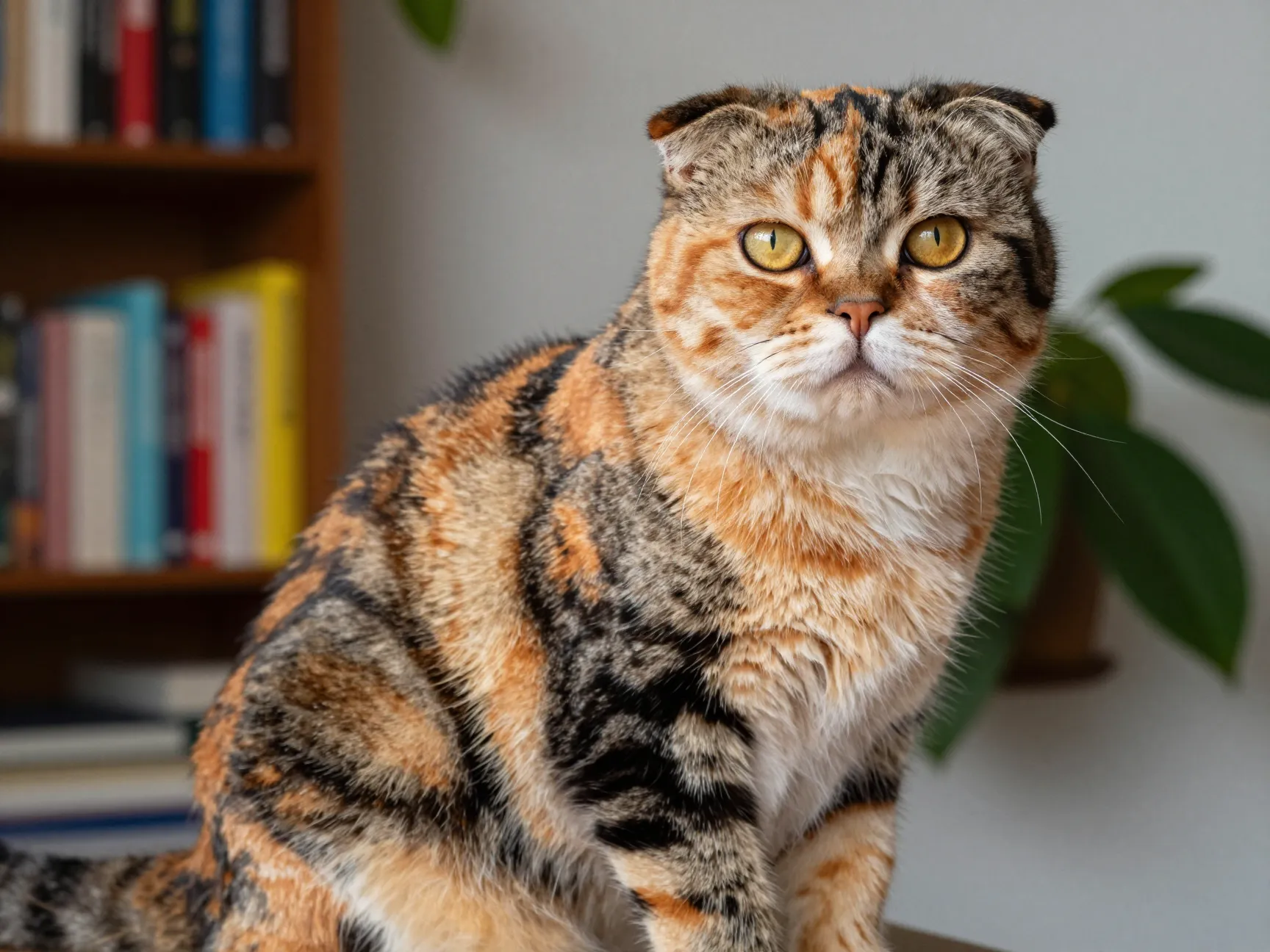
The tortoiseshell, or “tortie,” variety displays a mottled mix of black, orange, and sometimes cream patches with no set pattern. Because the tortoiseshell coloring is linked to the X chromosome, nearly all torties are female, making this variety somewhat rarer to find as a longhair Fold. Tortoiseshell cats are frequently described by owners as having strong, sometimes feisty personalities, a trait cat lovers jokingly call “tortitude.”
Coat texture in tortoiseshell Highland Folds varies patch by patch, since darker and lighter areas can have subtly different hair densities. This uneven texture means mats can form unevenly across the body rather than in predictable spots, so a full-body comb-through several times a week, rather than just brushing the usual trouble zones, is the safest approach.
5. Bicolor and Calico Highland Fold
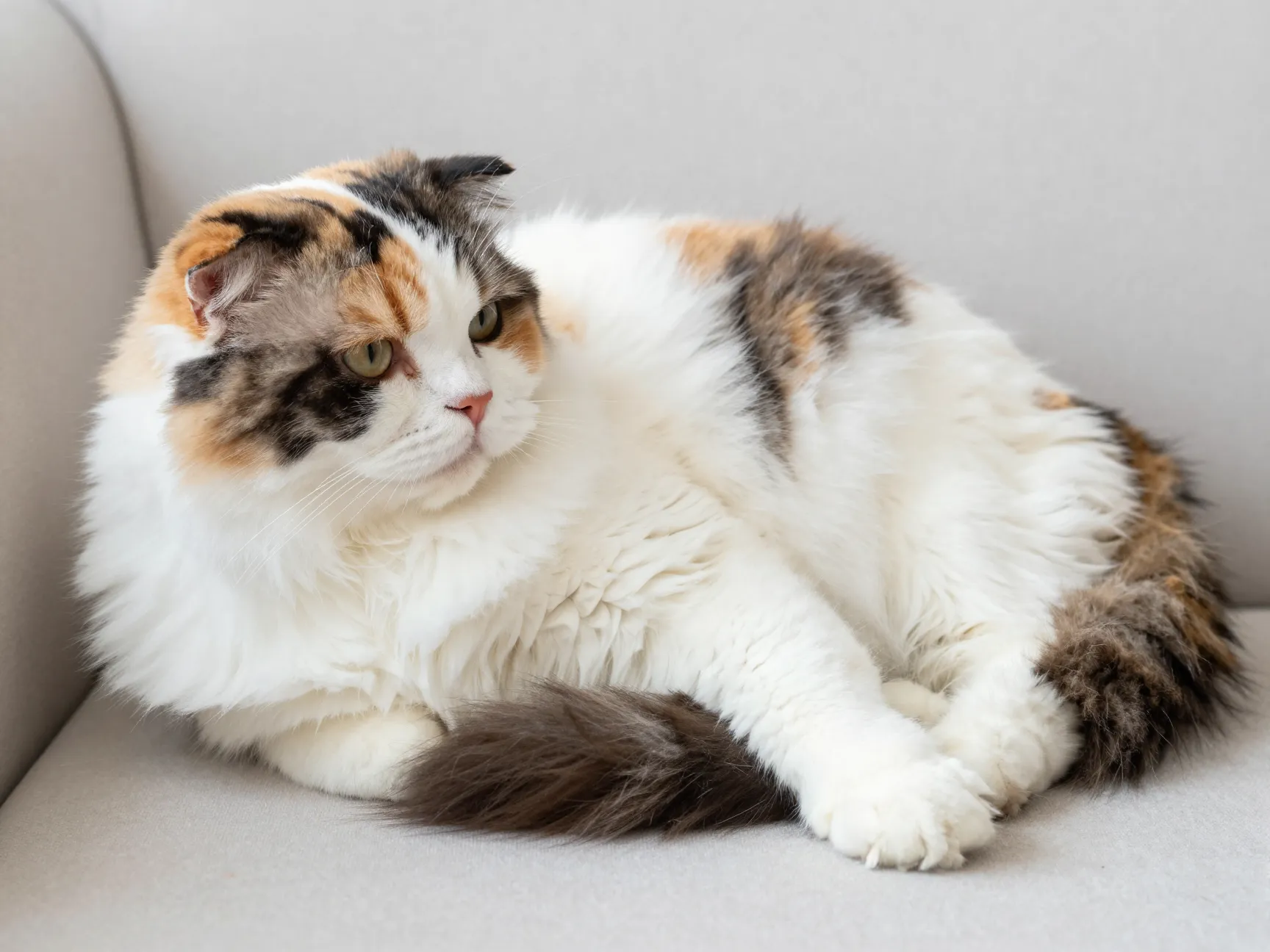
Bicolor Highland Folds combine white with one other color in patches, while calico adds a third color, typically white, black, and orange together. These cats often have striking facial masks or “boots” of white on their paws. The white patches usually consist of finer, more delicate fur compared to the pigmented sections, making them more prone to tangling and picking up debris.
Because the white sections show dirt, oil buildup, and staining most obviously, owners of bicolor and calico longhair Folds should brush at least three to four times weekly and consider a mild whitening cat shampoo during the occasional monthly bath to keep pale patches bright without over-bathing the rest of the coat.
6. Silver and Smoke Highland Fold
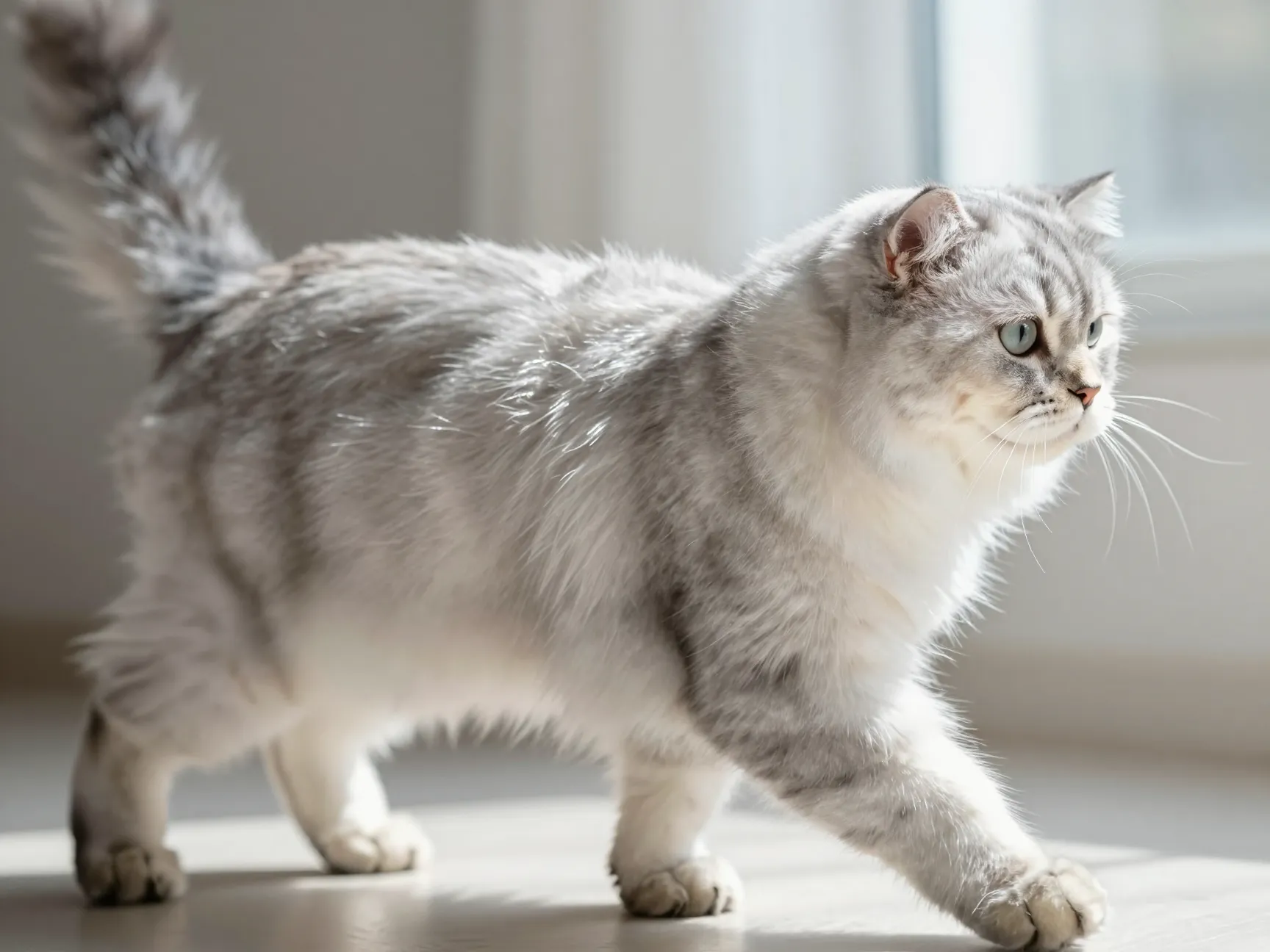
The silver and smoke variety includes shaded silver, chinchilla silver, and smoke colorations, where the base of each hair is pale or white and the tip carries color. This creates a shimmering, almost frosted look that shifts subtly as the cat moves. Smoke and silver coats are prized for this visual effect, but the color-tipped hair shafts are often finer and silkier than solid or tabby coats, making them the most delicate variety on this list.
Because the fine texture tangles quickly and mats can hide the silvery shimmer, daily or near-daily brushing with a soft slicker brush is the standard recommendation for this variety. Extra gentleness is needed since aggressive brushing can break the fine hair shafts and dull the coat’s signature sheen.
Daily and Weekly Care Needs for Longhair Scottish Fold Varieties
Regardless of which of the six varieties a cat falls into, longhair Scottish Folds share a baseline care routine that differs meaningfully from their shorthaired relatives. Shorthaired Scottish Folds often do fine with one brushing session a week. Longhair varieties need substantially more.
Grooming Frequency and Tools
Most current care guides recommend brushing longhair Scottish Folds two to four times per week at minimum, with near-daily brushing considered ideal in households where owners can manage it. Skipping grooming for even a week can allow mats to form, particularly in cats with dense undercoats like the solid and bicolor varieties.
The right tools make a significant difference:
- Slicker brushes work best for removing loose undercoat and preventing the felting that leads to mats.
- Wide-tooth combs are ideal for the first pass through tangled areas like the ruff and britches, gently separating strands before finer tools are used.
- Pin combs finish the job by smoothing the topcoat and giving the fur its characteristic fluffy appearance without pulling on the skin.
Special attention should always go to the chest, belly, and tail, since these areas experience the most friction and are where tangles and mats are most likely to start, especially in tortoiseshell and silver varieties with uneven or delicate texture.
Bathing Guidelines
Frequent bathing is not necessary and can actually harm the coat by stripping natural oils that keep fur soft and tangle-resistant. Most current guidance suggests bathing longhair Scottish Folds only when the coat becomes visibly greasy or matted, or on a monthly basis at most. Cat-specific shampoo should always be used, since human shampoo or dog shampoo can disrupt the skin’s pH balance and cause irritation.
Ear Care for the Folded Ear Structure
The same cartilage fold that gives these cats their name also creates a slightly deeper ear canal shape that can trap wax, moisture, and debris more easily than a standard cat ear. Weekly ear inspections are recommended across nearly all current care resources. Gentle cleaning with a vet-approved solution and a soft cloth or cotton pad, never a cotton swab pushed into the canal, helps prevent buildup that can lead to infection.
The table below summarizes how grooming needs shift across the six varieties covered in this guide.
| Variety | Coat Texture | Brushing Frequency | Special Care Note |
|---|---|---|---|
| Solid Color | Dense, plush | 3x weekly | Watch underarms and belly for felting |
| Tabby | Slightly coarse | 2-3x weekly | Focus on ruff and britches |
| Colorpoint | Silky, fine | Every other day | Tail plume tangles quickly |
| Tortoiseshell | Uneven density | 3-4x weekly | Full-body comb, not just trouble spots |
| Bicolor/Calico | Fine on white patches | 3-4x weekly | White areas need stain control |
| Silver/Smoke | Very fine, delicate | Near-daily | Gentle brushing to protect sheen |
Nail, Teeth, and Litter Box Hygiene
Longhair Scottish Folds are fastidious animals, and neglecting hygiene basics can trigger stress-related behavior problems. Nail trimming every two to three weeks keeps claws from snagging in the long fur or furniture. Tooth brushing once or twice a week supports dental health, since Folds are not immune to the periodontal disease common in many cat breeds. Litter boxes should be scooped daily and fully cleaned weekly, since these cats are known to avoid dirty boxes, sometimes leading to accidents elsewhere in the home.
Joint Health and the Osteochondrodysplasia Risk
The single most important health consideration across all 6 gorgeous long hair Scottish Fold cat varieties and their care needs is joint health. The same mutation that folds the ear cartilage affects cartilage throughout the skeleton, a condition called osteochondrodysplasia. This can cause stiffness, thickened tails, and in some cases painful joint disease, particularly in the tail, ankles, and knees.
Practical steps to manage this risk include:
- Keeping the cat at a lean, healthy weight, since extra pounds put additional strain on already vulnerable joints.
- Avoiding high jumps and encouraging the use of ramps or low steps to favorite resting spots.
- Scheduling regular veterinary checkups that specifically monitor gait, mobility, and signs of pain such as reluctance to jump or a stiff-looking tail.
- Watching for limping, reduced activity, or reluctance to be touched around the tail base, all of which warrant a vet visit.
Diet and Exercise Recommendations
A high-protein, portion-controlled diet supports both healthy body weight and joint function. A general guideline for an average adult longhair Scottish Fold is around one-third to one-half cup of quality cat food per day, split into two meals, though exact amounts should be tailored to the individual cat’s size, age, and activity level with veterinary input.
Daily interactive play, using wand toys or puzzle feeders, keeps these cats mentally stimulated and physically active without putting stress on joints the way repeated high jumps would. Since Highland Folds are generally calm and affectionate, short, low-impact play sessions two or three times a day tend to be more effective than one long session.
Frequently Asked Questions
Are longhair Scottish Folds the same breed as regular Scottish Folds?
Yes. Longhair Scottish Folds, often called Highland Folds, are the same breed carrying the same folded-ear cartilage mutation. The only difference is coat length, which comes from crossbreeding with longhaired cats earlier in the breed’s history.
Do all six coat varieties have the same health risks?
Largely yes. Joint and cartilage issues stem from the folded-ear gene itself, not coat color or pattern, so every variety carries a similar risk of osteochondrodysplasia regardless of whether the coat is solid, tabby, colorpoint, tortoiseshell, bicolor, or silver and smoke.
How often should a longhair Scottish Fold be brushed compared to a shorthair Fold?
Shorthaired Scottish Folds typically need brushing about once a week. Longhair varieties need considerably more, generally two to four sessions a week, with daily brushing recommended for the most delicate coats like silver and smoke.
Is it safe to clean a Scottish Fold’s ears at home?
Yes, with care. Weekly gentle cleaning using a vet-approved solution and a soft cloth is recommended, but cotton swabs should never be inserted into the ear canal since the folded structure makes injury more likely.
What is the biggest mistake new owners make with these cats?
Under-grooming is the most common mistake. Because longhair Folds look fluffy and glamorous, owners sometimes assume the coat maintains itself. In reality, skipping even one week of brushing can lead to mats that require a trip to the groomer or vet to remove safely.
Conclusion
The 6 gorgeous long hair Scottish Fold cat varieties and their care needs covered in this guide, solid, tabby, colorpoint, tortoiseshell, bicolor and calico, and silver and smoke, all share the same folded-ear charm and the same underlying genetic considerations, but each brings its own coat texture and grooming quirks. Recognizing which variety is living in a home, or which one might be adopted next, makes it far easier to build a grooming and health routine that actually fits the cat rather than a generic one-size-fits-all plan.
The next practical step is simple: set a grooming calendar based on coat type, starting at two to three sessions a week and adjusting up if mats keep appearing. Pair that with weekly ear checks, monthly-at-most baths, and a veterinary schedule that pays close attention to joint mobility. Done consistently, this routine keeps any of these six stunning varieties healthy, comfortable, and looking every bit as gorgeous as their reputation suggests.