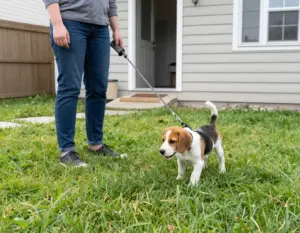
6 Foundational Service Dog Puppy Training Steps for Success
Training a service dog puppy is one of the most rewarding yet challenging journeys you can embark on. Whether you’re working with a professional trainer or considering owner-training, understanding the 6 Foundational Service Dog Puppy Training Steps for Success can make the difference between a successful partnership and months of frustration. I’ve witnessed countless handlers struggle because they skipped crucial early steps, only to realize later that a solid foundation is everything in service dog training.
Disclosure: This post contains affiliate links. As an Amazon Associate, we earn from qualifying purchases, and at no extra cost to you.
The path to creating a reliable service dog begins long before teaching specific tasks. It starts with understanding that these remarkable animals require a methodical, patient approach that builds confidence and capability step by step. In 2026, with increased awareness about service dog rights and needs, more people are seeking guidance on proper training protocols that set both dog and handler up for long-term success.
Key Takeaways
- Proper puppy selection and temperament assessment form the cornerstone of successful service dog training, focusing on emotional stability and work drive
- Early socialization and basic obedience create the behavioral foundation that all advanced service dog tasks will build upon
- Foundation skills development including targeting behaviors and focus training must be mastered before moving to complex task work
- Loose leash walking and settle/relax training are absolutely essential behaviors that require extended practice and consistency
- Age-appropriate introductions using short, positive training sessions prevent overwhelm and build confidence in young puppies
Understanding the Service Dog Training Journey
Before diving into the 6 Foundational Service Dog Puppy Training Steps for Success, it’s crucial to understand that service dog training is a marathon, not a sprint. The entire process typically takes 18-24 months, with the foundational phase being the most critical period [2].
Service dogs differ significantly from pets or even therapy dogs. They must perform specific tasks related to their handler’s disability while maintaining impeccable public behavior in all environments. This level of reliability requires a systematic approach that begins with careful puppy selection and progresses through increasingly complex training stages.
The Investment in Foundation Training
Many new handlers underestimate the time and consistency required for foundational training. However, rushing through these early steps often leads to behavioral issues that become exponentially harder to address later. Professional trainers consistently emphasize that 80% of a service dog’s reliability comes from solid foundation work completed during the puppy stage.
1. Careful Puppy Selection and Temperament Assessment
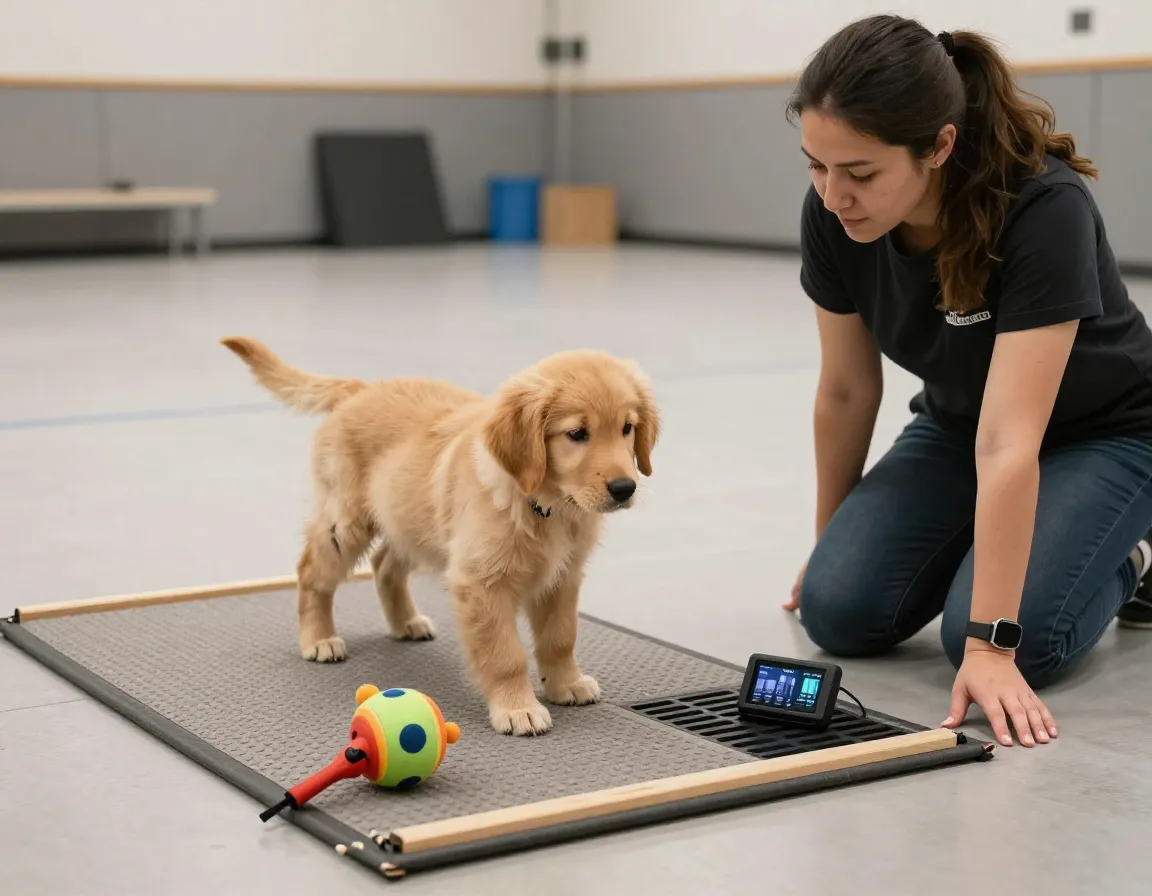
The first of the 6 Foundational Service Dog Puppy Training Steps for Success begins before training even starts. Proper puppy selection can determine whether your training journey will be successful or filled with insurmountable challenges.
Key Temperament Traits for Service Dog Success
Professional trainers evaluate potential service dog candidates for several critical characteristics [1][4]:
- Low reactivity to unexpected sounds, movements, and environmental changes
- Emotional stability under stress and in novel situations
- Strong work drive and motivation to please their handler
- Problem-solving inclination when faced with new challenges
- Social confidence without aggression or excessive fear
Conducting Proper Temperament Testing
When evaluating a puppy, I recommend working with experienced trainers who can conduct standardized temperament tests. These assessments typically include:
Environmental Testing: Exposing the puppy to various sounds, surfaces, and visual stimuli to observe their recovery time and adaptability.
Social Testing: Introducing the puppy to different people, including children and individuals using mobility aids, to assess their comfort level and appropriate interest.
Handling Assessment: Evaluating how the puppy responds to being touched, restrained, and examined, which is crucial for medical alert dogs and those requiring frequent grooming.
Play and Food Drive Evaluation: Determining the puppy’s motivation levels and what rewards will be most effective during training.
“The right puppy for service work will show curiosity rather than fear when faced with new experiences, and will recover quickly from any initial startle response.” – Professional Service Dog Trainer
Age Considerations for Selection
While some temperament traits are evident in very young puppies, the ideal age for comprehensive temperament testing is between 7-10 weeks. This timing allows evaluators to see developed personality traits while the puppy is still in the critical socialization period.
2. Comprehensive Early Socialization Program
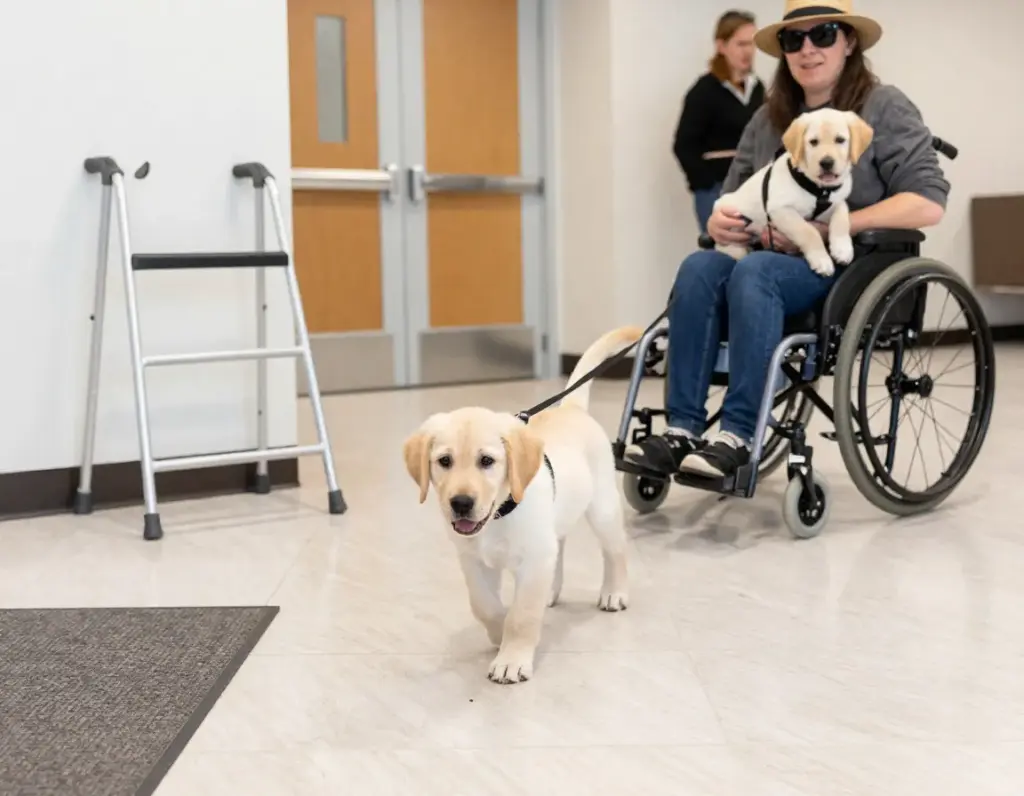
The second step in the 6 Foundational Service Dog Puppy Training Steps for Success involves exposing your puppy to the diverse world they’ll need to navigate as a working dog. Early socialization is arguably the most critical factor in developing a confident, adaptable service dog [1].
The Critical Socialization Window
Puppies have a critical socialization period from approximately 3-16 weeks of age. During this time, positive experiences with new stimuli create lasting impressions that shape their adult responses. Missing this window can result in fearfulness or reactivity that may disqualify a dog from service work.
Essential Socialization Experiences
Your socialization program should systematically introduce your puppy to:
Environmental Stimuli:
- Various floor surfaces (tile, carpet, grating, grass, gravel)
- Different lighting conditions and weather
- Elevators, escalators, and automatic doors
- Public transportation sounds and movements
- Medical equipment like wheelchairs, walkers, and oxygen tanks
Social Experiences:
- People of all ages, ethnicities, and physical appearances
- Individuals wearing uniforms, hats, and sunglasses
- People using mobility aids or medical devices
- Children playing and making noise
- Crowds and busy public spaces
Auditory Conditioning:
- Traffic noise and sirens
- Construction sounds and machinery
- Public announcement systems
- Musical instruments and appliances
- Emergency alarms and beeping devices
Socialization Safety Protocols
While socialization is crucial, it must be balanced with health considerations:
- Consult your veterinarian about safe socialization practices before full vaccination
- Use puppy-safe environments like puppy classes and homes of healthy, vaccinated dogs
- Carry your puppy in high-risk areas until fully vaccinated
- Monitor stress signals and end sessions before your puppy becomes overwhelmed
Creating Positive Associations
Every socialization experience should be paired with positive outcomes. I always recommend bringing high-value treats and allowing your puppy to observe new stimuli from a comfortable distance before gradually decreasing the space. The goal is building confidence, not forcing interactions.
3. Solid Basic Obedience Foundation
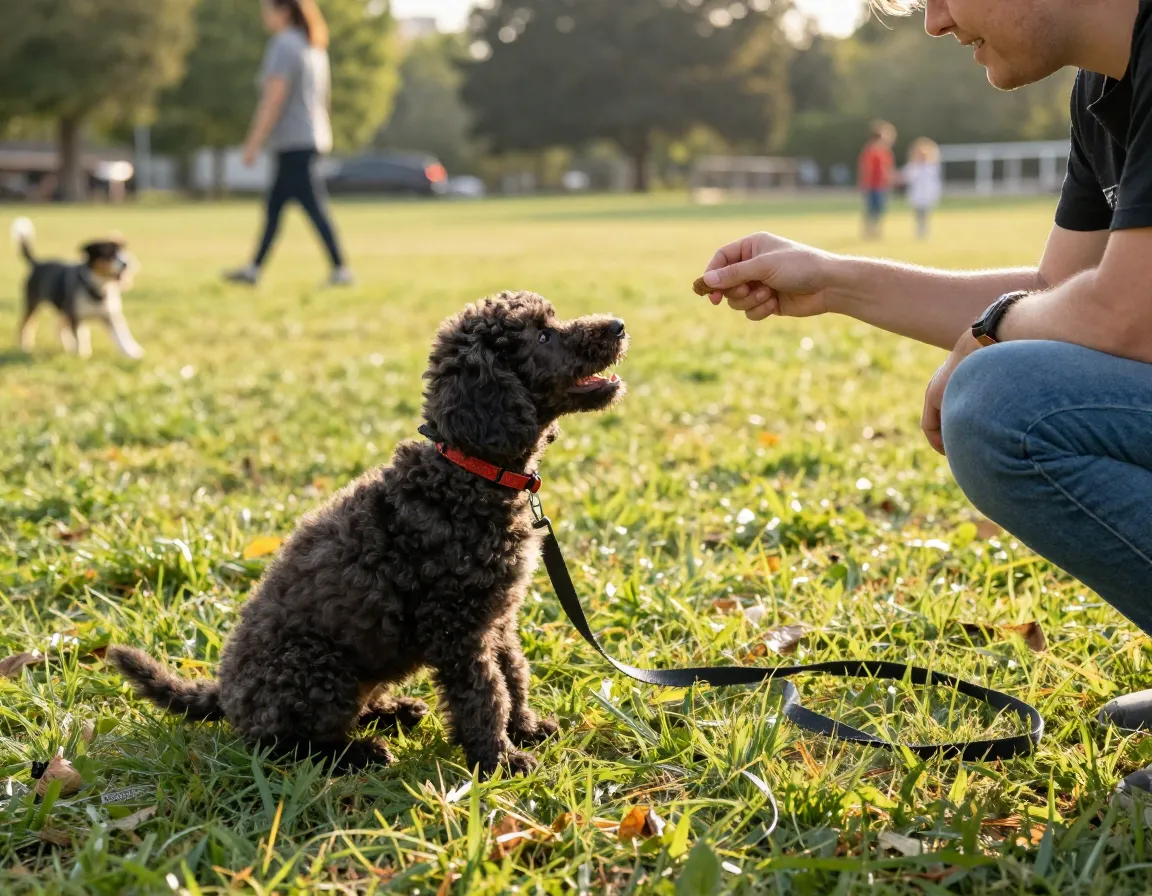
The third component of the 6 Foundational Service Dog Puppy Training Steps for Success establishes the communication system between you and your future service dog. Without reliable basic obedience, advanced task training becomes impossible [1][3].
Essential Basic Commands
Every service dog must master these fundamental commands with near-perfect reliability:
Sit: The foundation for many service dog tasks and a default behavior for waiting.
Stay: Critical for safety in public spaces and during task performance.
Come: Essential for recall in emergency situations and off-leash work.
Heel: Proper positioning for loose leash walking and public access.
Wait: Different from stay, this teaches impulse control at doorways and before meals.
Touch: A targeting command that becomes the foundation for many alert behaviors.
Training Methodology for Service Dogs
Service dog obedience training differs from pet training in several important ways:
Higher Reliability Standards: Commands must be obeyed even with significant distractions present. A 95% reliability rate is considered the minimum for service dog work.
Proofing in Multiple Environments: Each command must be practiced and perfected in various locations, from quiet homes to busy public spaces.
Duration and Distance Training: Service dogs must maintain commands for extended periods and respond from greater distances than typical pets.
Stress-Proof Performance: Commands must remain reliable when the dog is tired, excited, or in stressful situations.
Progressive Training Approach
I recommend following this progression for each command:
- Initial Teaching Phase: Introduce the command in a quiet, distraction-free environment using positive reinforcement
- Fluency Building: Practice until the dog responds quickly and consistently
- Generalization: Practice the command in different locations and situations
- Proofing: Add distractions while maintaining command reliability
- Maintenance: Regular practice to maintain performance standards
Common Training Mistakes to Avoid
- Inconsistent cue words: Using different words for the same command confuses your puppy
- Poor timing: Rewards must be delivered within 2-3 seconds of the correct behavior
- Training when frustrated: Your emotional state directly affects your puppy’s learning
- Skipping proofing: Commands that work at home may fail in public without proper preparation
4. Foundation Skills Development and Learning How to Learn
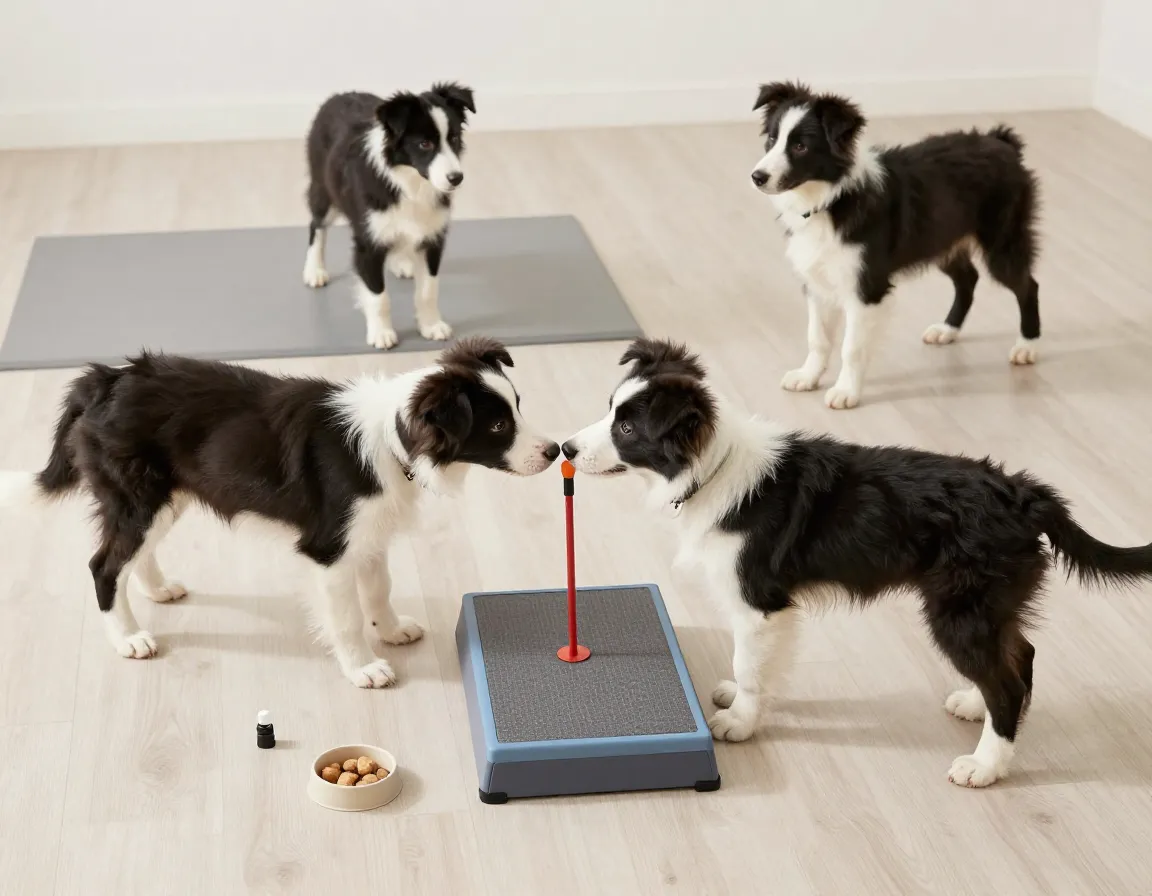
The fourth step in our 6 Foundational Service Dog Puppy Training Steps for Success focuses on developing the building blocks that will support all future task training. These foundation skills create a framework for more complex behaviors while teaching your puppy how to actively participate in the learning process [2].
Core Foundation Skills
Nose Targeting: Teaching your puppy to touch specific objects or body parts with their nose becomes the foundation for alert behaviors, light switches, and emergency buttons.
Paw Targeting: Essential for dogs who will need to operate doors, drawers, or medical alert devices with their feet.
Eye Contact and Focus: Developing sustained attention and the ability to “check in” with their handler regularly.
Platform Work: Teaching your puppy to go to and remain on designated spots, which develops body awareness and impulse control.
Chin Rest: A calming behavior that also serves as the foundation for deep pressure therapy and medical alert positioning.
The “Learning How to Learn” Concept
One of the most important aspects of foundation training is teaching your puppy to actively engage in the learning process. This involves:
Offering Behaviors: Encouraging your puppy to try different actions to earn rewards, which develops problem-solving skills and creativity.
Sustained Effort: Building your puppy’s willingness to keep trying even when they don’t immediately succeed.
Handler Focus: Teaching your puppy that you are the source of information and rewards, creating a strong working relationship.
Calm Persistence: Developing the ability to work through challenges without becoming frustrated or giving up.
Building Behavior Chains
Foundation skills often combine to create more complex behavior chains. For example:
- Medical Alert Sequence: Eye contact → nose touch → sit → stay until acknowledged
- Mobility Assistance: Platform work → wait → brace position → steady pressure
Training Session Structure
Effective foundation skill sessions should follow this pattern:
Warm-up (2-3 minutes): Review previously mastered behaviors to build confidence
New Learning (5-10 minutes): Introduce or practice developing skills with high reward rates
Integration (3-5 minutes): Combine new skills with previously learned behaviors
Cool-down (2-3 minutes): End with easy, enjoyable behaviors your puppy loves
Measuring Progress
Track your puppy’s development using these metrics:
- Response Speed: How quickly your puppy offers the correct behavior
- Accuracy Rate: Percentage of correct responses over multiple trials
- Duration: How long your puppy can maintain focus and effort
- Generalization: Success rate in new environments or with distractions
5. Mastering Loose Leash Walking and Settle/Relax Training
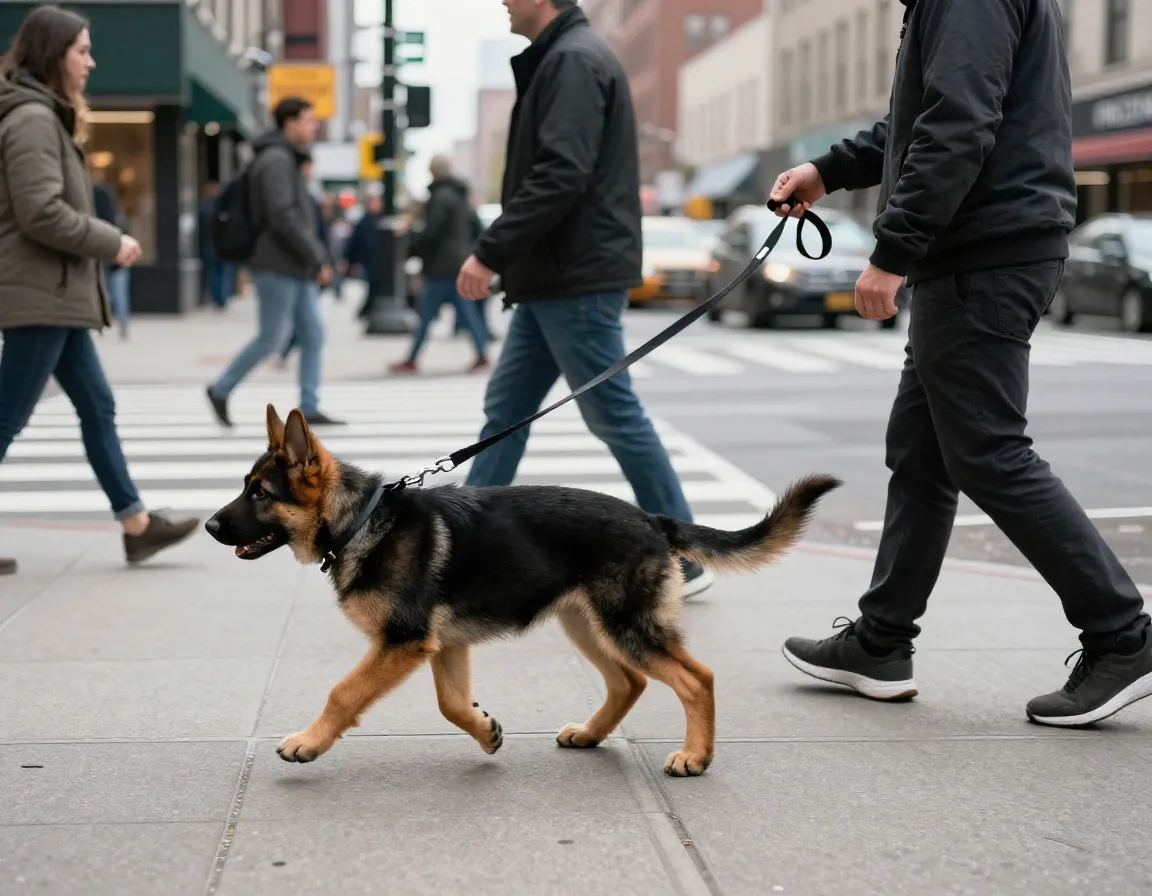
The fifth element of the 6 Foundational Service Dog Puppy Training Steps for Success focuses on two behaviors that professional trainers consider absolutely essential for service dog success [2]. These skills require extended practice and form the backbone of public access training.
The Critical Importance of Loose Leash Walking
Loose leash walking goes far beyond basic pet manners for service dogs. It represents:
Safety: A service dog that pulls can endanger their handler, especially those with mobility impairments or balance issues.
Public Access Rights: Poor leash manners can result in removal from public spaces and damage the reputation of all service dog teams.
Handler Confidence: Knowing your dog will walk calmly allows handlers to focus on their environment rather than constantly managing their dog.
Energy Conservation: Both dog and handler can navigate public spaces without exhaustion from constant tension and correction.
Progressive Loose Leash Training Method
Phase 1: Foundation Position Training
Start in a quiet environment teaching your puppy where the “heel” position is located. Use treats and praise to reward your puppy for being in the correct position relative to your leg.
Phase 2: Movement with Engagement
Begin taking single steps while maintaining your puppy’s attention and position. Reward frequently for maintaining loose leash contact during movement.
Phase 3: Duration Building
Gradually increase the distance you walk while maintaining loose leash standards. Build up to 10-15 minute sessions before moving to the next phase.
Phase 4: Environmental Proofing
Practice loose leash walking in increasingly challenging environments:
- Quiet neighborhoods
- Busy sidewalks
- Shopping centers
- Medical facilities
- Public transportation
Advanced Loose Leash Techniques
Automatic Sits: Train your puppy to automatically sit when you stop walking, preventing pulling ahead at crosswalks and doorways.
Position Changes: Practice having your puppy move from one side to the other while maintaining loose leash contact.
Obstacle Navigation: Train your puppy to navigate around obstacles while staying in proper position.
Speed Variations: Practice different walking speeds while maintaining leash standards.
Settle and Relax Training Fundamentals
The ability to settle calmly in any environment is equally crucial for service dogs. This training involves:
Duration Building: Starting with short settle periods and gradually increasing to 45-60 minutes.
Position Options: Teaching your puppy to settle in down, sit, or under positions depending on the situation.
Distraction Proofing: Maintaining calm behavior despite environmental stimuli like food smells, other animals, or loud noises.
Surface Generalization: Comfortable settling on various surfaces from carpet to concrete to grass.
Common Challenges and Solutions
| Challenge | Solution |
|---|---|
| Pulling towards distractions | Increase reward rate for attention and practice “look” command |
| Excitement in new environments | Start training in lower-stimulation areas and gradually increase difficulty |
| Inconsistent settling | Ensure adequate physical and mental exercise before training sessions |
| Handler inconsistency | Use a consistent verbal cue and reward system for all family members |
Environmental Training Progression
Your settle and loose leash training should progress through these environments:
- Home Environment: Master basics in familiar, low-distraction space
- Quiet Public Spaces: Libraries, empty waiting rooms, quiet stores
- Moderate Activity Areas: Busy waiting rooms, restaurants during off-peak hours
- High-Stimulation Environments: Airports, hospitals, crowded events
- Handler-Specific Locations: Workplaces, schools, medical appointments
6. Age-Appropriate Skill Introduction and Positive Associations
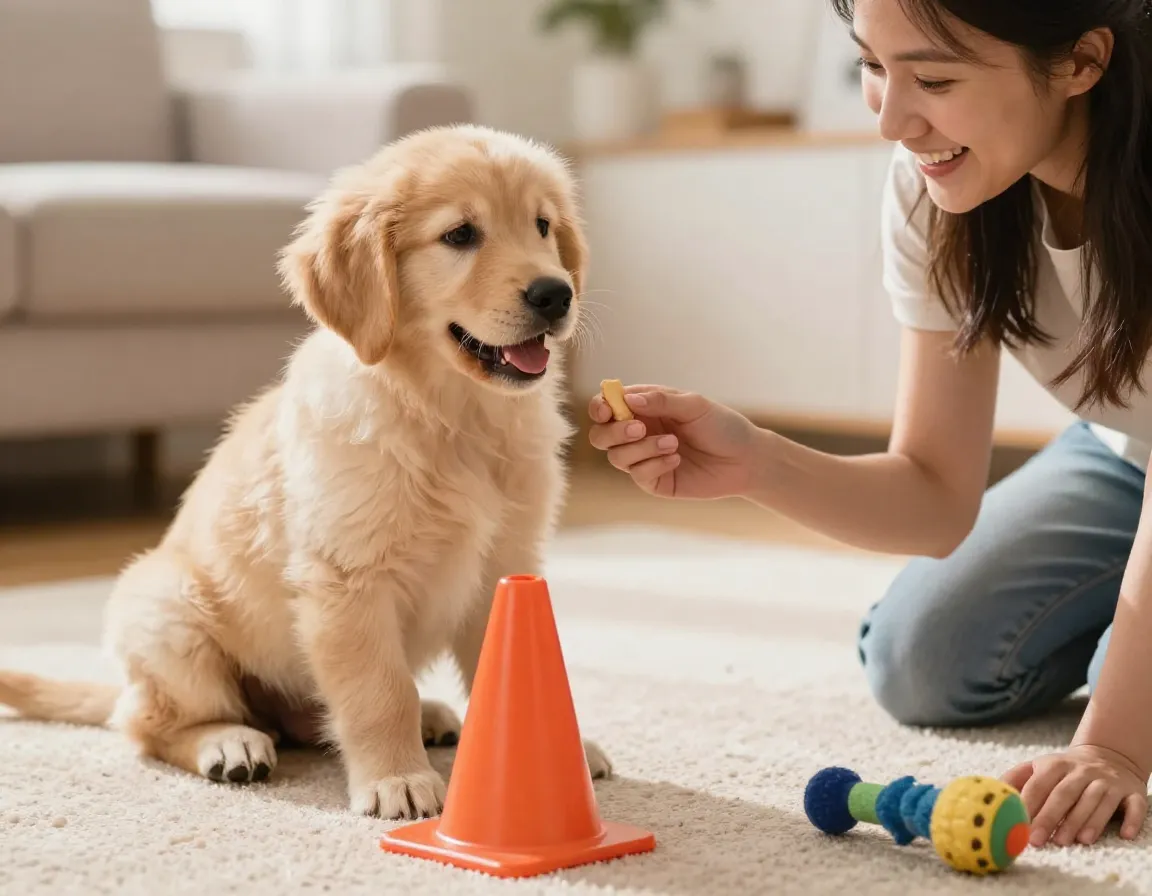
The final step in the 6 Foundational Service Dog Puppy Training Steps for Success emphasizes the importance of introducing foundational behaviors at the right developmental stage using methods that build enthusiasm rather than stress [5].
Understanding Puppy Development Stages
8-12 Weeks: Focus on basic handling, name recognition, and simple targeting behaviors. Training sessions should be 3-5 minutes maximum.
12-16 Weeks: Introduce basic obedience commands and begin socialization outings. Sessions can extend to 5-10 minutes.
16-20 Weeks: Add complexity to foundation skills and begin basic task introductions. Sessions of 10-15 minutes become appropriate.
20-24 Weeks: Integrate multiple skills and begin public access training. Sessions can extend to 20 minutes with breaks.
Short, Fun Training Sessions
Young puppies have limited attention spans and energy reserves. Successful foundation training requires:
High Success Rates: Aim for 80-90% success in each session to maintain motivation and confidence.
Frequent Rewards: Young puppies need immediate and frequent reinforcement to understand what behaviors you want.
Positive Endings: Always end training sessions on a successful note, even if it means returning to an easier skill.
Play Integration: Incorporate play and physical activity between training segments to maintain engagement.
Introducing Complex Behaviors Gradually
Task Breakdown: Complex service dog tasks must be broken into tiny, achievable steps for young puppies.
Backward Chaining: Start with the final step of a behavior chain and work backwards, ensuring each step is solid before adding complexity.
Environmental Progression: Master each skill component in easy environments before adding distractions or new locations.
Stress Monitoring: Watch for signs of fatigue, frustration, or overwhelm and adjust training intensity accordingly.
Building Positive Associations with Work
Creating enthusiasm for training is crucial for long-term success:
Variable Reward Schedules: Mix treats, praise, play, and life rewards to maintain interest and motivation.
Choice and Control: Allow your puppy to have some control over training by offering behaviors and making decisions.
Success-Based Progression: Only increase difficulty when your puppy is confidently succeeding at the current level.
Individual Adaptation: Adjust training methods to match your puppy’s learning style and personality.
Foundation Skills Timeline
Here’s a realistic timeline for introducing foundation behaviors:
Weeks 8-12:
- Basic handling and gentle restraint
- Name recognition and attention
- Simple nose targeting
- Crate training and house training
Weeks 12-16:
- Basic obedience commands (sit, stay, come)
- Platform work introduction
- Leash introduction and basic walking
- Continued socialization focus
Weeks 16-20:
- Loose leash walking refinement
- Settle training introduction
- Basic task component introduction
- Public access preparation
Weeks 20-24:
- Integration of multiple skills
- Distraction proofing
- Extended duration training
- Beginning public access work
Avoiding Common Pitfalls
Rushing Development: Each puppy develops at their own pace. Pushing too fast can create anxiety and behavioral problems.
Inconsistent Training: Daily short sessions are more effective than occasional long training marathons.
Punishment-Based Methods: Positive reinforcement creates confident, enthusiastic working dogs. Punishment can damage the working relationship.
Inadequate Socialization: Focusing only on task training while neglecting socialization creates dogs who can perform tasks but can’t handle public environments.
Monitoring Progress and Adjusting Your Approach
Successfully implementing the 6 Foundational Service Dog Puppy Training Steps for Success requires ongoing assessment and flexibility. Every puppy progresses at their own pace, and recognizing when to adjust your approach can mean the difference between success and frustration.
Key Progress Indicators
Enthusiasm for Training: Your puppy should show excitement when training sessions begin and maintain engagement throughout.
Generalization: Skills learned at home should transfer to new environments with minimal additional training.
Stress Recovery: Your puppy should bounce back quickly from challenging experiences or mistakes.
Handler Focus: Increasing attention to you even in distracting environments indicates developing working relationship.
When to Seek Professional Help
Consider working with a professional service dog trainer if you notice:
- Consistent fearfulness or anxiety in public spaces
- Aggression towards people or other animals
- Inability to focus during training sessions
- Regression in previously learned behaviors
- Your own frustration or inconsistency in training
Record Keeping and Documentation
Maintaining detailed training records helps track progress and identify patterns:
Daily Training Logs: Record what skills were practiced, duration, success rate, and your puppy’s mood.
Video Documentation: Regular videos help you see progress over time and can be valuable for trainer consultations.
Behavioral Notes: Track any concerning behaviors, triggers, and environmental factors that affect performance.
Health Monitoring: Note any physical issues that might impact training, such as fatigue, appetite changes, or discomfort.
Conclusion
The 6 Foundational Service Dog Puppy Training Steps for Success provide a roadmap for developing a confident, capable service dog partner. From careful puppy selection through age-appropriate skill introduction, each step builds upon the previous one to create a solid foundation for advanced service dog work.
Remember that service dog training is a significant commitment requiring patience, consistency, and dedication. The foundation phase typically takes 6-8 months of focused work, but this investment pays dividends throughout your dog’s working career. A properly trained service dog can provide 8-10 years of reliable assistance, making the initial training investment worthwhile.
Your Next Steps
- Assess Your Current Stage: Determine where you are in the training process and which foundational skills need attention.
- Create a Training Schedule: Establish consistent daily training sessions that fit your puppy’s attention span and energy level.
- Connect with Resources: Join service dog training groups, find qualified trainers, and build a support network for your journey.
- Document Everything: Start keeping detailed records of your puppy’s progress, challenges, and successes.
- Be Patient with the Process: Remember that rushing through foundation training often leads to problems that take much longer to fix than building skills correctly from the start.
The journey to a fully trained service dog is challenging but incredibly rewarding. By following these foundational steps and maintaining realistic expectations, you’re setting both yourself and your puppy up for a successful partnership that can transform your daily life. Stay committed to the process, celebrate small victories, and remember that every expert service dog team started exactly where you are today.
References
[1] Service Dog Training Process Steps – https://k9servicesunlimited.com/service-dog-training-process-steps/
[2] 8 Levels Of Training A Service Dog – https://servicedogtraininginstitute.online/8-levels-of-training-a-service-dog/
[3] Master Service Dog Training Diy Guide To Train Your Own Service Dog – https://www.naplestopdogs.com/master-service-dog-training-diy-guide-to-train-your-own-service-dog
[4] Training Service Dog Skills – https://ipuppee.com/blogs/news/training-service-dog-skills
[5] Training Service Dog Puppies Slow Is The New Fast – https://cooperativepaws.com/training-service-dog-puppies-slow-is-the-new-fast/