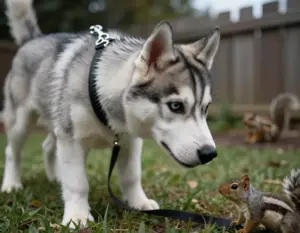
The Ultimate 8-Step Guide to Your First Bernese Mountain Dog Puppy
Picture this: a fluffy, tri-colored bundle of joy bounding toward you with the gentlest eyes and a tail that never stops wagging. Bernese Mountain Dogs are among the most beloved family companions, known for their calm temperament and stunning appearance. However, bringing home your first Bernese Mountain Dog puppy requires careful planning and preparation to ensure both you and your new furry family member thrive together.

Disclosure: This post contains affiliate links. As an Amazon Associate, we earn from qualifying purchases, and at no extra cost to you.
The Ultimate 8-Step Guide to Your First Bernese Mountain Dog Puppy provides new owners with essential knowledge to navigate the exciting yet challenging journey of puppy parenthood. From pre-arrival preparations to long-term care strategies, this comprehensive guide covers everything needed to raise a happy, healthy Bernese Mountain Dog.
Key Takeaways
- Preparation is crucial – Set up your home, gather supplies, and establish routines before your puppy arrives
- Health and nutrition – Follow proper vaccination schedules and feeding guidelines specific to large breed puppies
- Socialization timing – Begin introducing your puppy to new experiences after proper vaccination with a 1-2 week bonding period
- Exercise moderation – Limit strenuous activity until 15 months when growth plates close, focusing on 30-60 minutes of gentle daily exercise
- Grooming commitment – Expect weekly to daily brushing year-round, with intensive care during seasonal coat changes
1. Preparing Your Home for Your Bernese Mountain Dog Puppy
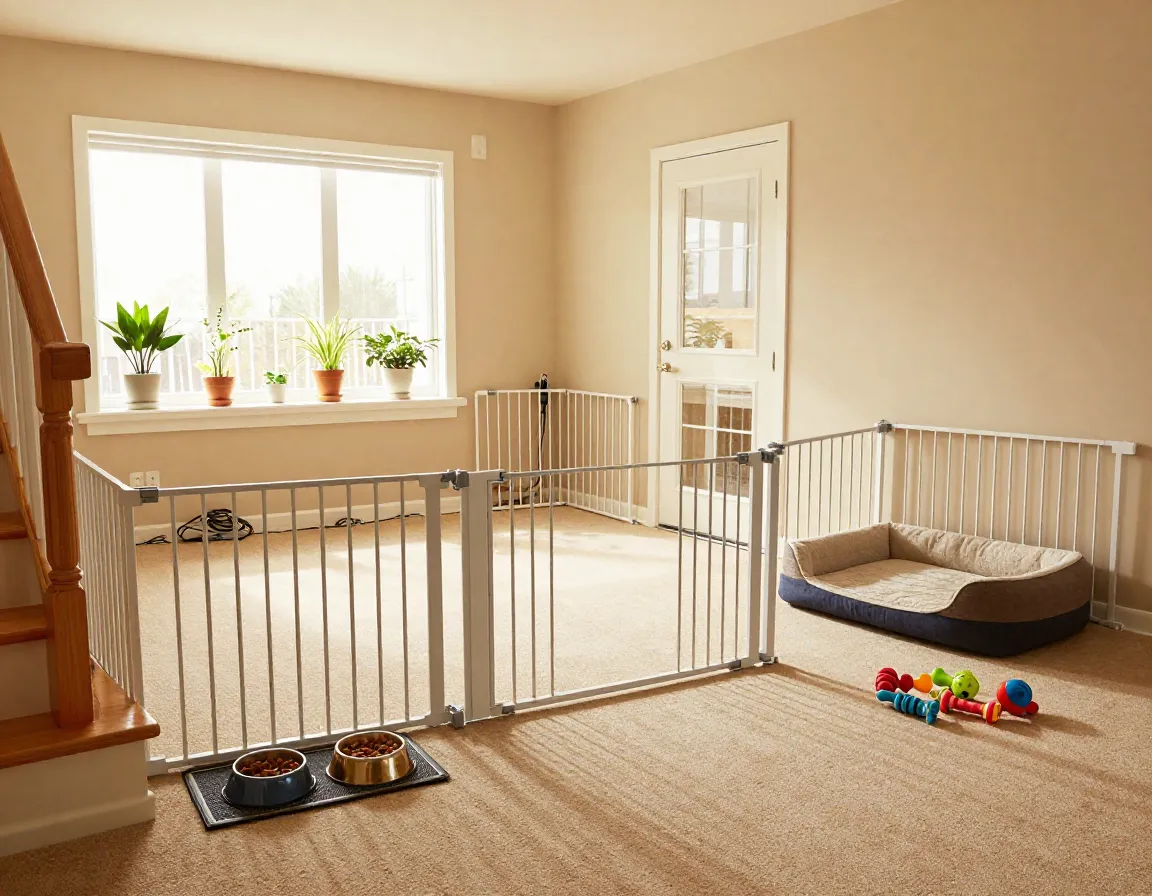
Before The Ultimate 8-Step Guide to Your First Bernese Mountain Dog Puppy journey begins, creating a safe, welcoming environment is essential. Bernese Mountain Dogs grow into large, powerful dogs weighing 80-115 pounds, so planning for their adult size from day one prevents future complications.
Essential Puppy-Proofing Steps
Remove potential hazards throughout your home, paying special attention to:
- Electrical cords and outlets
- Small objects that could cause choking
- Toxic plants and household chemicals
- Valuable items within reach of curious teeth
Install baby gates to restrict access to stairs and certain rooms. Since Bernese Mountain Dog puppies should avoid stairs during their first year to protect developing joints, gates become crucial safety tools [3].
Creating Designated Spaces
Establish specific areas for different activities:
- Sleeping area: A quiet corner with a comfortable bed
- Feeding station: Non-slip bowls in a low-traffic area
- Play zone: Open space with appropriate toys
- Potty area: Easy access to outdoor relief spots
Consider the breed’s heat sensitivity when choosing locations. Their thick double coat makes them prone to overheating, so ensure adequate ventilation and avoid placing beds near heating vents [1].
2. Gathering Essential Supplies and Equipment
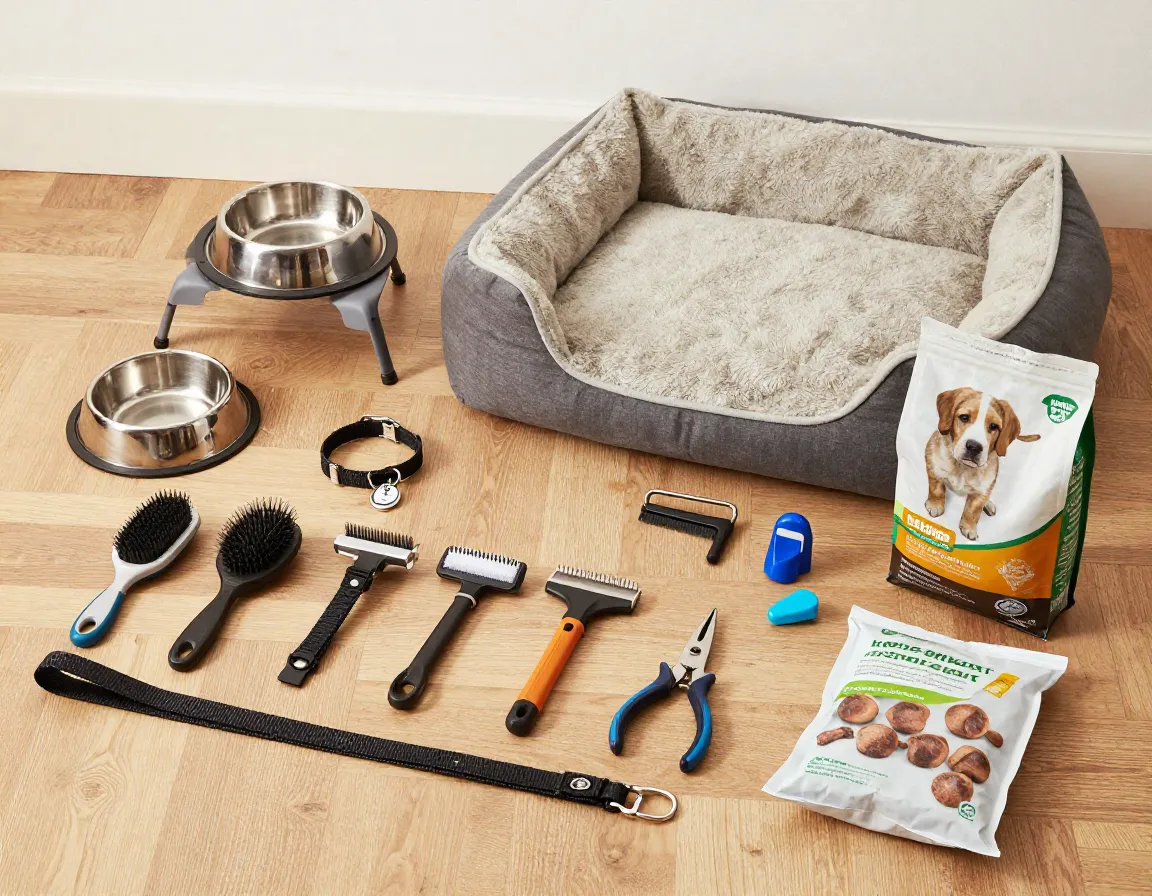
The Ultimate 8-Step Guide to Your First Bernese Mountain Dog Puppy requires specific supplies tailored to large breed needs. Quality equipment not only ensures comfort but also supports proper development during crucial growth phases.
Must-Have Supply Checklist
| Category | Essential Items | Considerations |
|---|---|---|
| Feeding | Stainless steel bowls, elevated feeder | Choose adjustable height for growing puppy |
| Sleeping | Large dog bed, crate | Size for adult weight (100+ lbs) |
| Safety | Collar, leash, ID tags | Adjustable collar for rapid growth |
| Grooming | Slicker brush, undercoat rake, nail clippers | Daily brushing tools essential |
| Training | Treats, clicker, training pads | High-value rewards for large breed motivation |
Food and Nutrition Supplies
Select large breed puppy food specifically formulated for dogs that will exceed 50 pounds at maturity. These formulas contain controlled calcium and phosphorus levels to support proper bone development [8].
Purchase enough food for the gradual transition period. New owners should transition from the breeder’s food over 7-10 days to prevent digestive upset, mixing increasing amounts of new food with decreasing amounts of the original diet [1][8].
Grooming Equipment Investment
Bernese Mountain Dogs require weekly to daily brushing year-round, with intensive daily de-shedding during seasonal “coat blowing” periods [1][2][3]. Invest in quality grooming tools from the start:
- Slicker brush for daily maintenance
- Undercoat rake for seasonal shedding
- De-shedding tool for thick undercoat management
- Nail clippers sized for large breeds
3. Establishing Feeding Schedules and Nutrition Plans

Proper nutrition forms the foundation of The Ultimate 8-Step Guide to Your First Bernese Mountain Dog Puppy success. Large breed puppies have specific dietary requirements that differ significantly from smaller breeds, making informed feeding decisions crucial for healthy development.
Puppy Feeding Frequency Guidelines
Puppies need up to four meals daily during their first few months, gradually reducing to two meals as they mature [1][8]. Follow this general schedule:
- 8-12 weeks: 4 meals per day
- 3-6 months: 3 meals per day
- 6+ months: 2 meals per day
- Adult (12+ months): 2 meals per day
Portion Control for Large Breeds
Overfeeding large breed puppies can cause rapid growth that stresses developing joints and bones. Follow feeding guidelines on quality large breed puppy food packages, adjusting portions based on:
- Current weight and body condition
- Activity level and metabolism
- Veterinary recommendations
- Growth rate monitoring
Monitor body condition weekly by feeling for ribs under a thin layer of fat. Visible ribs indicate underfeeding, while inability to feel ribs suggests overfeeding.
Transitioning Between Foods
When changing foods, use the 7-10 day gradual transition method to prevent digestive upset [1][8]:
| Days | Old Food | New Food |
|---|---|---|
| 1-2 | 75% | 25% |
| 3-4 | 50% | 50% |
| 5-6 | 25% | 75% |
| 7+ | 0% | 100% |
Watch for signs of digestive distress during transitions, including loose stools, vomiting, or decreased appetite.
4. Understanding Vaccination Schedules and Health Requirements

The Ultimate 8-Step Guide to Your First Bernese Mountain Dog Puppy includes critical health milestones that protect against serious diseases. Proper vaccination timing ensures immunity development while maintaining socialization opportunities.
Core Vaccination Timeline
Puppies receive DHPP vaccines (Distemper, Hepatitis, Parvovirus, Parainfluenza) at specific intervals, with rabies vaccination completing the initial series [3]:
- 6-8 weeks: First DHPP vaccine
- 10-12 weeks: Second DHPP vaccine
- 14-16 weeks: Third DHPP vaccine + Rabies vaccine
Pre-Vaccination Precautions
Before completing the vaccination series, limit your puppy’s exposure to:
- Unvaccinated animals
- Public spaces where unvaccinated dogs frequent
- Dog parks and pet stores
- Ground surfaces in high-traffic areas
Carry puppies when necessary outdoor exposure occurs, particularly when navigating stairs or potentially contaminated areas [3].
Health Screening Considerations
Bernese Mountain Dogs are predisposed to certain health conditions that responsible breeders screen for:
- Hip and elbow dysplasia
- Progressive retinal atrophy (PRA)
- Von Willebrand’s disease
- Degenerative myelopathy
Request health clearances from breeders and discuss screening recommendations with your veterinarian.
Establishing Veterinary Relationships
Schedule your first veterinary visit within 48-72 hours of bringing your puppy home. This initial examination:
- Confirms overall health status
- Reviews vaccination records
- Establishes baseline measurements
- Discusses breed-specific care requirements
- Plans future health monitoring
5. Implementing Socialization and Training Strategies
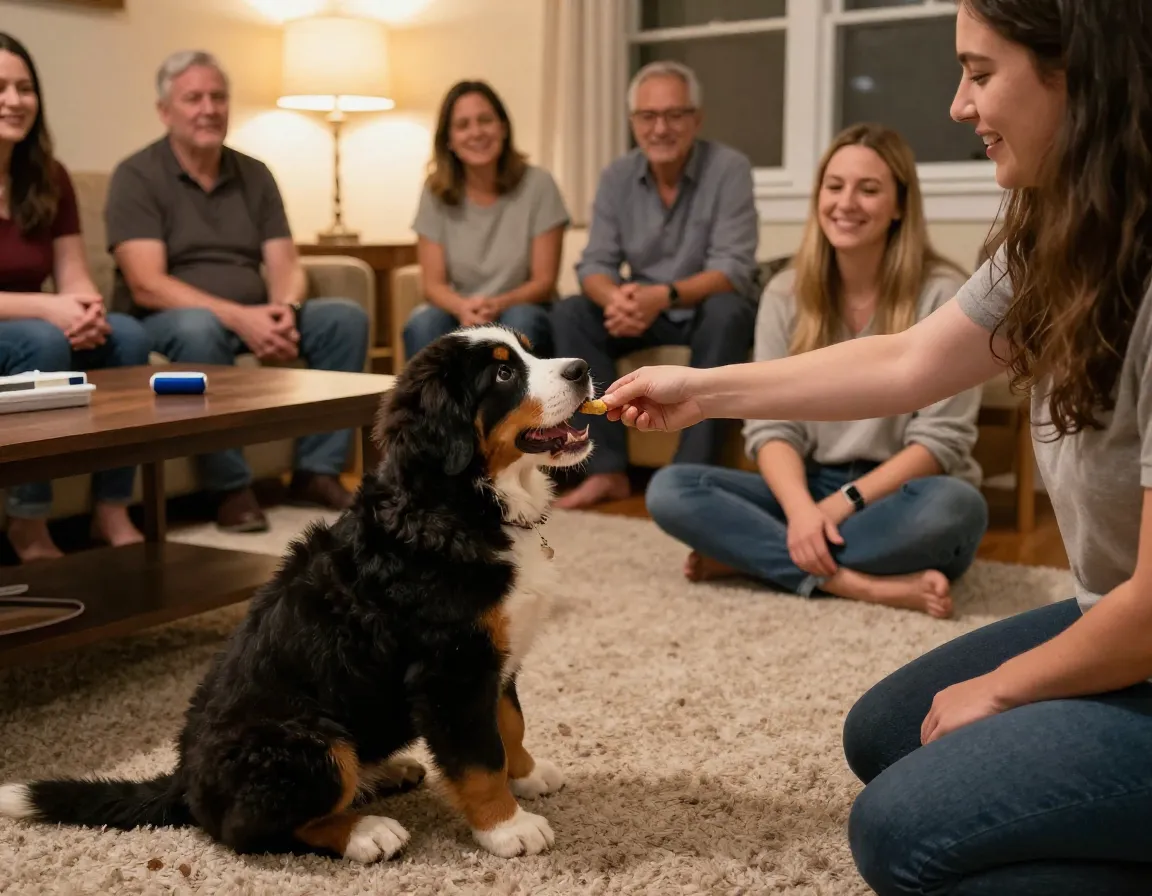
Proper socialization forms a cornerstone of The Ultimate 8-Step Guide to Your First Bernese Mountain Dog Puppy development. The critical socialization window occurs during the first 16 weeks of life, making early exposure essential for well-adjusted adult behavior.
Socialization Timeline and Approach
Introduce to people, animals, and environments after proper vaccination, with a 1-2 week bonding period before beginning extensive socialization [3]. This approach balances health safety with developmental needs.
Week 8-10: Focus on household bonding
- Family member interactions
- Household sounds and routines
- Basic handling and grooming
- Indoor environmental exposure
Week 10-16: Expand social experiences
- Supervised interactions with vaccinated dogs
- Meeting diverse people (ages, appearances, voices)
- Car rides and new environments
- Various surfaces, sounds, and situations
Training Fundamentals for Large Breeds
Bernese Mountain Dogs respond best to positive reinforcement training methods that emphasize patience and consistency. Their gentle nature makes harsh corrections counterproductive and potentially damaging to the human-dog bond.
Essential commands to prioritize:
- Name recognition
- Sit and stay
- Come when called
- Down and place
- Leave it and drop it
Managing Size and Strength
Even as puppies, Bernese Mountain Dogs possess considerable strength that requires early management:
- Teach polite greetings to prevent jumping on people
- Practice loose leash walking before they outweigh their handlers
- Establish boundaries around food, toys, and furniture
- Discourage rough play that may become problematic at adult size
Start training immediately upon arrival, as habits formed during puppyhood become increasingly difficult to modify as dogs mature and grow stronger.
6. Creating Exercise Routines Appropriate for Growing Puppies
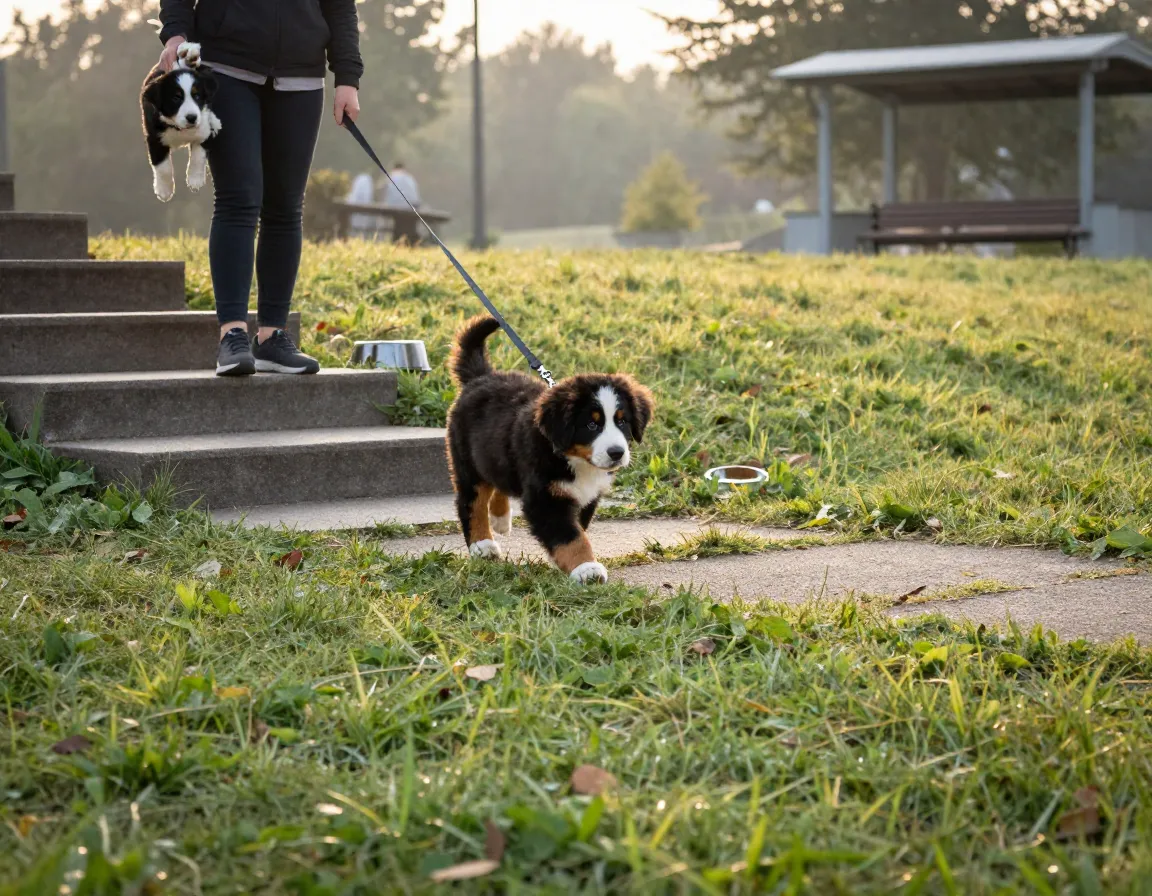
The Ultimate 8-Step Guide to Your First Bernese Mountain Dog Puppy must address exercise needs carefully, balancing physical development with joint protection. Large breed puppies require modified exercise approaches that differ significantly from adult dog routines.
Age-Appropriate Exercise Guidelines
30-60 minutes of daily physical activity is recommended for Bernese Mountain Dog puppies, though strenuous exercise should be avoided before 15 months when growth plates close [3][5]. This extended development period requires careful activity management.
8-16 weeks: Focus on mental stimulation
- Short play sessions (5-10 minutes)
- Basic training exercises
- Supervised exploration
- Gentle socialization activities
4-8 months: Increase duration gradually
- 15-20 minute walks on soft surfaces
- Free play in fenced areas
- Swimming (excellent low-impact exercise)
- Continued training and mental challenges
8-15 months: Monitor intensity carefully
- Longer walks (20-30 minutes)
- Hiking on moderate terrain
- Increased play sessions
- Avoid repetitive high-impact activities
Joint Protection Strategies
Carry puppies downstairs and avoid car rides independently for the first year to prevent joint injuries [3]. This precaution protects developing hips, elbows, and spine from excessive stress.
Additional joint protection measures include:
- Avoiding jumping from heights (furniture, vehicles)
- Limiting stair climbing until physical maturity
- Preventing overexertion during play sessions
- Providing non-slip surfaces to prevent falls
Heat Management During Exercise
Bernese Mountain Dogs’ thick double coat makes summer challenging, requiring special exercise considerations [1]:
- Exercise during early morning or evening hours
- Provide shade and cool water during outdoor activities
- Watch for overheating signs: excessive panting, drooling, lethargy
- Consider indoor activities during extreme heat
Mental Stimulation Alternatives
When physical exercise must be limited, mental stimulation provides excellent alternatives:
- Puzzle toys and treat dispensers
- Basic obedience training sessions
- Hide and seek games
- New environment exploration (safely controlled)
7. Mastering Grooming and Coat Care Essentials
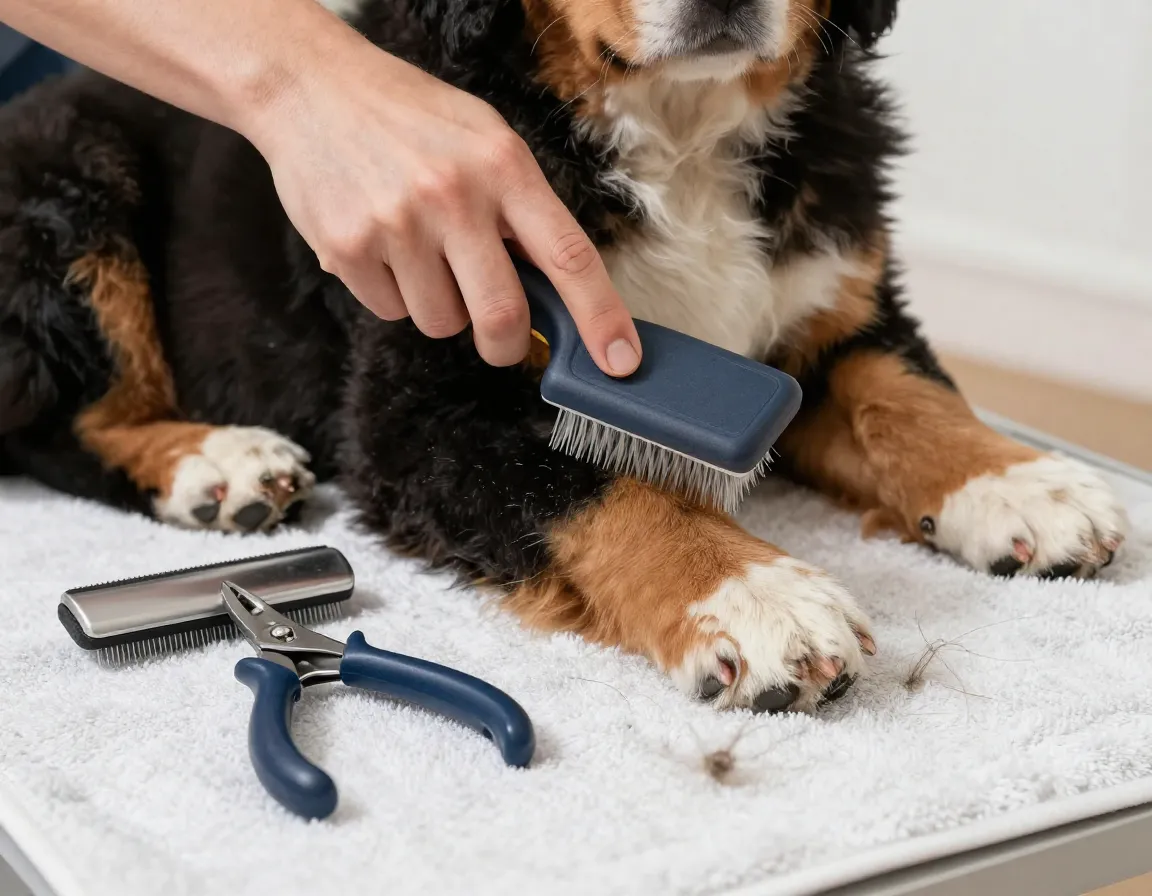
Grooming represents a significant commitment in The Ultimate 8-Step Guide to Your First Bernese Mountain Dog Puppy ownership. The breed’s beautiful tri-colored coat requires consistent maintenance to prevent matting, reduce shedding, and maintain skin health.
Daily and Weekly Grooming Routines
Weekly to daily brushing is required year-round, with the frequency depending on the season and individual coat characteristics [1][2][3]. Establish grooming routines early to help puppies accept handling.
Daily grooming tasks:
- Quick brush-through to prevent tangles
- Check for debris in coat and paws
- Wipe face and clean eye area
- Brief overall health assessment
Weekly comprehensive grooming:
- Thorough brushing of entire coat
- Nail trimming and paw care
- Ear cleaning and inspection
- Dental care and teeth cleaning
Seasonal Coat Management
Bernese Mountain Dogs experience intensive daily de-shedding during seasonal “coat blowing” periods [1][2][3]. These dramatic shedding events typically occur twice yearly and require increased grooming attention.
Spring shedding (losing winter coat):
- Daily brushing with undercoat rake
- Increased vacuuming and lint rolling
- Professional grooming consideration
- Skin health monitoring
Fall shedding (preparing for winter coat):
- Focus on removing loose summer coat
- Prepare for thicker winter growth
- Adjust grooming tool selection
- Monitor for skin irritation
Grooming Tools and Techniques
Essential grooming tools for effective coat care:
- Slicker brush: Daily maintenance and surface brushing
- Undercoat rake: Deep undercoat penetration and removal
- De-shedding tool: Intensive seasonal shedding management
- Pin brush: Gentle finishing and fluffing
- Metal comb: Detail work around face and legs
Professional Grooming Considerations
While Bernese Mountain Dogs don’t require extensive professional grooming like some breeds, periodic professional services provide benefits:
- Nail trimming for owners uncomfortable with the task
- Sanitary trimming around paws and rear end
- Coat thinning during heavy shedding periods
- Bathing with professional equipment and products
Introduce professional grooming during puppyhood to establish comfort with handling by strangers and grooming equipment sounds.
8. Establishing Long-Term Care and Wellness Plans
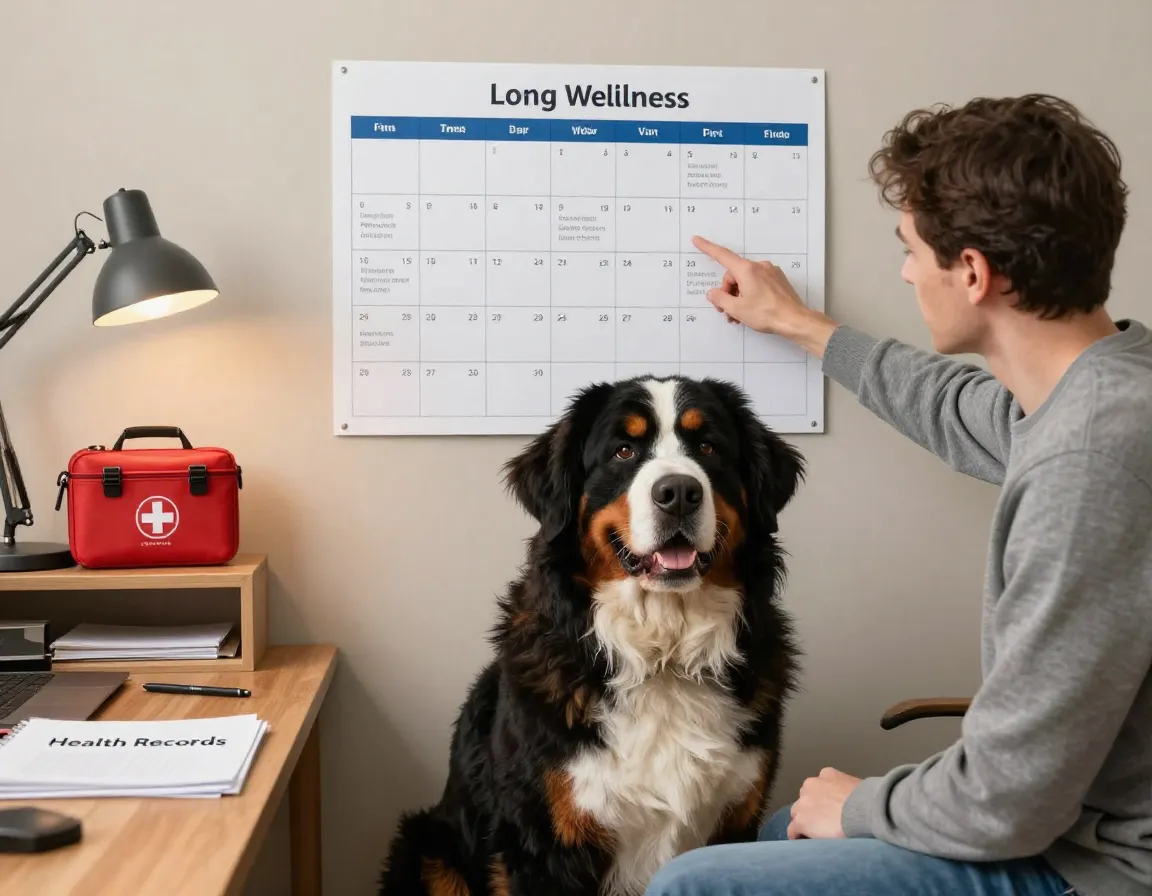
The final component of The Ultimate 8-Step Guide to Your First Bernese Mountain Dog Puppy involves planning for lifelong health and happiness. Bernese Mountain Dogs typically live 6-8 years, making quality of life optimization crucial throughout their shorter lifespan.
Preventive Healthcare Planning
Regular veterinary care forms the foundation of long-term wellness:
- Annual examinations for health monitoring
- Biannual senior care starting at age 5
- Dental cleanings as recommended
- Parasite prevention year-round
- Weight management throughout life stages
Life Stage Transitions
Puppy to adolescent (6-18 months):
- Spay/neuter timing discussions
- Growth monitoring and diet adjustments
- Continued socialization and training
- Exercise progression planning
Adolescent to adult (18 months-5 years):
- Adult food transition
- Full exercise capability
- Breeding decisions (if applicable)
- Career or activity specialization
Adult to senior (5+ years):
- Increased health monitoring
- Joint support supplements
- Activity modification as needed
- Quality of life assessments
Housetraining Milestones and Expectations
Full bladder control develops around six months of age, though individual puppies may achieve reliability earlier or later [3]. Patience and consistency are essential during this developmental process.
Housetraining timeline expectations:
- 8-12 weeks: Frequent accidents, learning routine
- 3-4 months: Improved control, fewer accidents
- 4-6 months: Reliable daytime control developing
- 6+ months: Full bladder control achieved
Building Lifelong Bonds
The 1-2 week bonding period recommended before extensive socialization establishes the foundation for your relationship [3]. Continue building this bond through:
- Consistent daily routines
- Positive training experiences
- Shared activities and adventures
- Gentle handling and care
- Patience during challenging phases
Emergency Preparedness
Prepare for potential emergencies by:
- Identifying 24-hour veterinary clinics
- Assembling first aid supplies
- Learning basic emergency procedures
- Maintaining emergency contact lists
- Discussing emergency plans with family
Conclusion
The Ultimate 8-Step Guide to Your First Bernese Mountain Dog Puppy provides the comprehensive foundation needed for successful puppy ownership. From initial home preparation through long-term wellness planning, each step builds upon the previous to create a structured approach to raising a healthy, well-adjusted companion.
The journey of Bernese Mountain Dog ownership rewards dedicated owners with unmatched loyalty, gentle companionship, and countless memorable moments. While the breed’s shorter lifespan and specific care requirements present challenges, proper preparation and commitment result in deeply fulfilling relationships.
Take action today by:
- Puppy-proofing your home using the safety checklist provided
- Gathering essential supplies before your puppy’s arrival
- Scheduling your first veterinary appointment within 72 hours
- Planning your training and socialization approach
- Establishing grooming routines from day one
Remember that successful puppy raising requires patience, consistency, and adaptability. Each puppy develops at their own pace, and flexibility in your approach ensures both you and your Bernese Mountain Dog puppy thrive together. The investment in proper preparation and care during these crucial early months establishes the foundation for years of companionship and joy.
Your Bernese Mountain Dog puppy represents not just a pet, but a family member who will grow alongside you, creating memories and strengthening bonds that last a lifetime. The Ultimate 8-Step Guide to Your First Bernese Mountain Dog Puppy ensures you’re prepared for every aspect of this incredible journey.
References
[1] Bernese Mountain Dog And Puppy – https://rubyloo.co/blogs/news/bernese-mountain-dog-and-puppy
[2] Bernese Mountain Dog Puppies The Ultimate Guide For New Dog Owners – https://www.rover.com/blog/bernese-mountain-dog-puppies-the-ultimate-guide-for-new-dog-owners/
[3] Train Bernese Mountain Dog Puppy Milestone Timeline – https://www.akc.org/expert-advice/advice/train-bernese-mountain-dog-puppy-milestone-timeline/
[4] Bernese Mountain Dog Information – https://bark.co/blogs/breeds/bernese-mountain-dog-information
[5] How To Raise Happy Bernese Mountain Dogs Care Training Guide – https://ramonaberners.com/f/how-to-raise-happy-bernese-mountain-dogs-care-training-guide?blogcategory=Prices
[6] Bernese Mountain Dog January 2026 Breed Of The Month – https://www.themillstores.com/blogs/pet-blog/bernese-mountain-dog-january-2026-breed-of-the-month
[7] A Complete Guide To Raising Your Bernese Mountain Dog – https://a-z-animals.com/slideshows/a-complete-guide-to-raising-your-bernese-mountain-dog/
[8] Bernese Mountain Dog – https://www.petmd.com/dog/breeds/bernese-mountain-dog