
7 Non-Negotiables for Your Pet Sitting Business Plan: Essential Elements for Success in 2026
The pet care industry is experiencing unprecedented growth, with millions of pet owners seeking reliable, professional care for their beloved companions. However, launching a successful pet sitting business requires more than just a love for animals—it demands a comprehensive business plan built on proven fundamentals. The 7 Non-Negotiables for Your Pet Sitting Business Plan represent the critical foundation elements that separate thriving enterprises from those that struggle to survive in this competitive market.

Disclosure: This post contains affiliate links. As an Amazon Associate, we earn from qualifying purchases, and at no extra cost to you.
Key Takeaways
- Financial planning must include substantial initial capital with projections showing break-even timelines and maintaining high contribution margins
- Technology infrastructure and customer acquisition strategies require significant upfront investment to compete effectively in 2026
- Quality control systems and rapid onboarding processes are essential for maintaining service standards and preventing customer churn
- Professional staffing and support operations form the backbone of scalable pet sitting businesses
- Clear pricing strategies and penalty structures protect both business interests and customer experience
1. Comprehensive Financial Foundation and Capital Requirements

The first of the 7 Non-Negotiables for Your Pet Sitting Business Plan centers on establishing a rock-solid financial foundation. Modern pet sitting businesses require substantial initial investment to compete effectively in today’s market.
Initial Capital and Break-Even Planning
According to industry analysis, successful pet sitting platforms require over $11 million in initial capital to sustain operations until reaching projected break-even points [1]. This substantial investment covers:
- Technology development costs of approximately $150,000 for platform creation
- Marketing and customer acquisition budgets exceeding $150,000 annually
- Operational expenses including payroll, insurance, and overhead costs
- Working capital to manage cash flow during growth phases
Contribution Margin Requirements
Financial sustainability depends on maintaining an 83% contribution margin to cover approximately $53,867 in projected monthly fixed costs [1]. This high margin requirement means:
Key Financial Metrics:
- Service pricing must account for all variable costs
- Operational efficiency becomes critical for profitability
- Regular financial monitoring and adjustment protocols
- Clear understanding of unit economics per customer
“The pet sitting industry demands significant upfront investment, but businesses that properly capitalize their operations see substantially higher success rates and market penetration.”
Revenue Projection Strategies
Successful pet sitting businesses develop detailed revenue models incorporating:
- Service pricing tiers based on pet types, duration, and special requirements
- Seasonal demand fluctuations affecting booking patterns
- Customer lifetime value calculations for retention planning
- Market penetration goals with realistic timeline expectations
2. Strategic Customer and Service Provider Acquisition

The second critical element among the 7 Non-Negotiables for Your Pet Sitting Business Plan focuses on building both sides of the marketplace through strategic acquisition efforts.
Sitter Acquisition and Cost Management
Professional pet sitting businesses allocate $50,000 for sitter acquisition marketing in 2026, targeting approximately 333 new sitters at a $150 Sitter Customer Acquisition Cost (CAC) [1]. This investment strategy includes:
Sitter Recruitment Channels:
- Digital marketing campaigns targeting pet care professionals
- Referral programs incentivizing existing quality sitters
- Professional networking through veterinary clinics and pet stores
- Social media outreach on platforms where pet lovers congregate
Customer Acquisition Strategy
Parallel customer acquisition requires $100,000 buyer acquisition budget with targets to achieve $30 Buyer CAC [1]. Effective customer acquisition strategies include:
- Local SEO optimization for geographic service areas
- Content marketing demonstrating expertise and trustworthiness
- Partnership development with veterinarians, pet stores, and groomers
- Review and reputation management across multiple platforms
Quality vs. Quantity Balance
The most successful pet sitting businesses implement supply quality strategies shifting from 50% casual sitters down to 30% by 2030, prioritizing professional service providers [1]. This approach ensures:
- Higher customer satisfaction through professional service delivery
- Reduced liability risks with experienced, trained providers
- Premium pricing opportunities justified by service quality
- Brand reputation protection through consistent excellence
Onboarding Timeline Requirements
Critical to preventing churn, sitter onboarding must occur within 14 days maximum [1]. Efficient onboarding processes include:
14-Day Onboarding Checklist:
- ✅ Background verification and reference checks
- ✅ Platform training and system familiarization
- ✅ Service standards education and certification
- ✅ First booking facilitation and support
3. Technology Infrastructure and Platform Development

Modern pet sitting businesses cannot succeed without robust technology infrastructure. This third non-negotiable requires significant investment in platform development and ongoing maintenance.
Platform Development Investment
The $150,000 technology development cost represents essential infrastructure for competitive operations [1]. Key platform features include:
Essential Technology Components:
- User-friendly booking system for seamless customer experience
- Real-time communication tools connecting owners and sitters
- Payment processing integration with secure transaction handling
- GPS tracking and check-in features for service verification
- Review and rating systems building trust and accountability
Mobile Optimization Requirements
In 2026, mobile-first design is non-negotiable for pet sitting platforms [2]. Essential mobile features include:
- Instant booking capabilities for last-minute pet care needs
- Photo and video sharing for real-time pet updates
- Emergency contact systems with one-touch communication
- Location tracking for walk routes and service verification
Data Security and Privacy
Pet sitting businesses handle sensitive personal information requiring robust security measures. The $1,500 monthly security expense for vetting procedures [1] represents just one component of comprehensive security strategies.
4. Professional Staffing and Operational Excellence

The fourth element of the 7 Non-Negotiables for Your Pet Sitting Business Plan addresses the human resources required for scalable operations.
Core Team Requirements
Successful pet sitting businesses require substantial staffing investments, with $560,000 Year 1 payroll for 55 full-time employees, including a $150,000 CEO salary [1]. Essential team positions include:
Critical Staffing Roles:
- Executive leadership providing strategic direction
- Customer support specialists ensuring service excellence
- Technology and platform managers maintaining system functionality
- Marketing and growth professionals driving customer acquisition
- Quality assurance coordinators monitoring service standards
Customer Support Operations
Quality customer support requires 10 full-time Customer Support Leads to establish effective support operations [1]. These professionals manage:
- Booking assistance and customer inquiries
- Conflict resolution between owners and sitters
- Emergency response coordination and support
- Service quality monitoring and improvement
Response Time Standards
Professional pet sitting businesses maintain one-hour response SLA for urgent booking issues [1]. This commitment requires:
- 24/7 support availability for emergency situations
- Escalation procedures for complex issues
- Communication protocols ensuring consistent responses
- Performance monitoring and continuous improvement
5. Quality Control and Service Standards

Maintaining consistent service quality represents a critical non-negotiable for sustainable pet sitting businesses.
Service Quality Metrics
Successful businesses implement comprehensive quality control systems including:
Quality Measurement Tools:
- Customer satisfaction surveys after each service
- Sitter performance tracking and improvement programs
- Service delivery audits ensuring standard compliance
- Continuous feedback loops for ongoing enhancement
Penalty and Accountability Systems
Protecting customer experience requires strict penalties for sitter no-shows [1]. Effective accountability systems include:
- Clear performance standards communicated during onboarding
- Progressive discipline policies for service failures
- Financial penalties for no-shows and policy violations
- Recognition programs rewarding exceptional service
Training and Certification Programs
Professional pet sitting businesses invest in comprehensive training covering:
- Pet behavior understanding and safety protocols
- Emergency response procedures for various scenarios
- Customer communication best practices
- Platform usage and technology tools
6. Insurance, Legal Compliance, and Risk Management
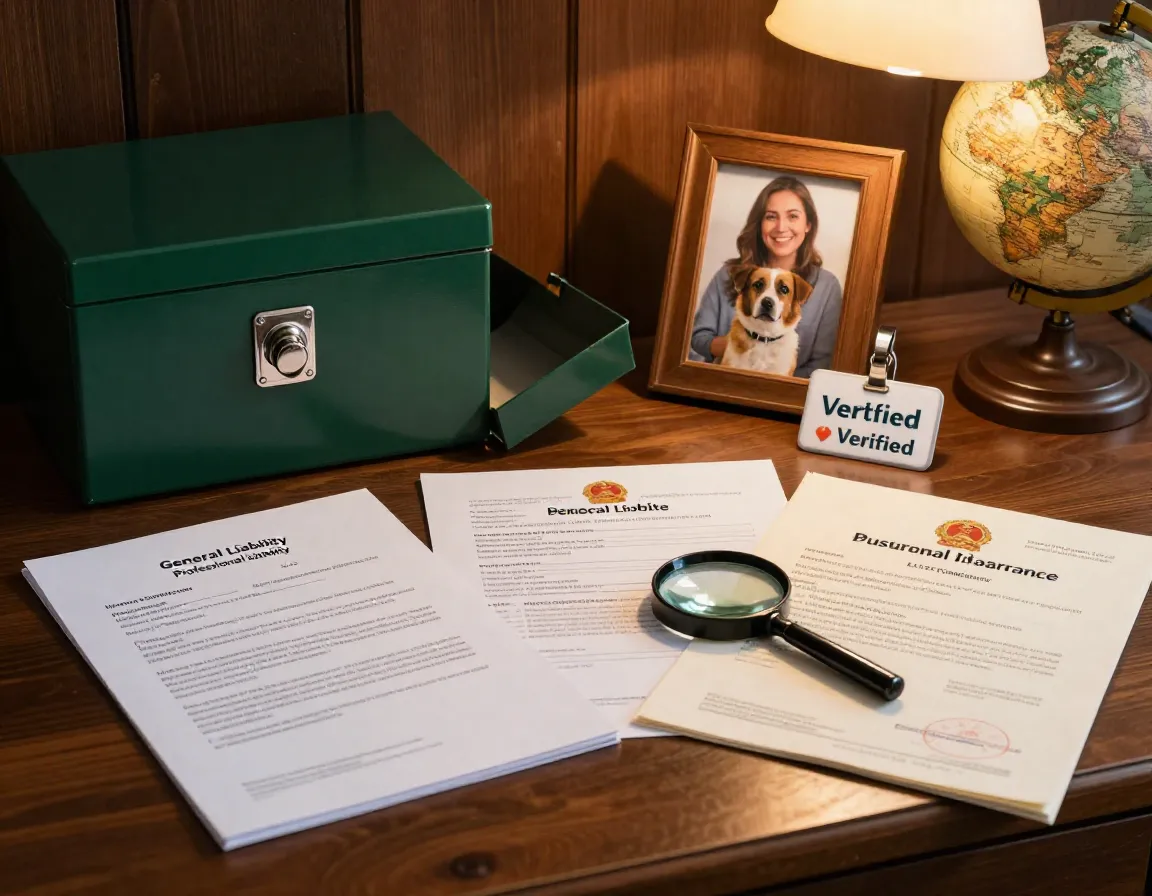
The sixth non-negotiable addresses the critical legal and insurance requirements protecting both business and customers.
Comprehensive Insurance Coverage
Pet sitting businesses require multiple insurance types including:
Essential Insurance Policies:
- General liability insurance protecting against accidents
- Professional liability coverage for service-related issues
- Bonding protection for employee theft or damage
- Commercial auto insurance for transportation services
Legal Structure and Compliance
Proper business structure ensures legal protection and operational efficiency [3]. Key considerations include:
- Business entity selection (LLC, Corporation, etc.)
- Local licensing requirements and permit acquisition
- Tax registration and compliance procedures
- Employment law adherence for staff management
Background Verification Processes
The $1,500 monthly security expense for vetting procedures [1] supports comprehensive background checks including:
- Criminal background verification for all service providers
- Reference checks from previous employers or clients
- Identity verification and documentation review
- Ongoing monitoring for continued compliance
7. Marketing Strategy and Brand Development

The final element of the 7 Non-Negotiables for Your Pet Sitting Business Plan focuses on building market presence and customer loyalty.
Digital Marketing Investment
Effective marketing requires substantial investment across multiple channels [4]. Successful strategies include:
Digital Marketing Channels:
- Search engine optimization for local visibility
- Social media marketing showcasing happy pets and satisfied customers
- Content marketing demonstrating expertise and building trust
- Email marketing for customer retention and repeat bookings
Brand Positioning and Differentiation
Standing out in the competitive pet sitting market requires clear brand positioning [7]. Effective differentiation strategies include:
- Specialized services for specific pet types or needs
- Premium positioning through superior service quality
- Local community focus building neighborhood relationships
- Technology advantages offering superior user experience
Customer Retention Programs
Building long-term customer relationships requires systematic retention efforts including:
- Loyalty programs rewarding repeat customers
- Personalized service remembering pet preferences and needs
- Regular communication maintaining relationships between bookings
- Seasonal promotions encouraging consistent usage
Performance Tracking and Analytics
Successful marketing requires continuous measurement and optimization [8]. Key metrics include:
Marketing Performance Indicators:
- Customer acquisition cost across different channels
- Customer lifetime value and retention rates
- Conversion rates from leads to bookings
- Brand awareness and market penetration metrics
Building Your Competitive Advantage
Implementing these 7 Non-Negotiables for Your Pet Sitting Business Plan creates a foundation for sustainable success in the growing pet care industry. Each element works synergistically with others, creating competitive advantages that protect market position and drive growth.
Integration and Implementation
Successful implementation requires:
- Phased rollout prioritizing most critical elements first
- Regular review and adjustment based on market feedback
- Continuous improvement incorporating industry best practices
- Performance monitoring ensuring all elements function effectively
Future-Proofing Your Business
The pet sitting industry continues evolving, requiring businesses to adapt and grow [7]. Future considerations include:
- Technology advancement adoption and integration
- Service expansion opportunities and market development
- Geographic growth strategies and scaling considerations
- Industry consolidation preparation and positioning
Conclusion
The 7 Non-Negotiables for Your Pet Sitting Business Plan provide the essential framework for building a successful, sustainable pet care business in 2026. From comprehensive financial planning requiring substantial initial capital to sophisticated technology infrastructure and professional staffing requirements, each element contributes to overall business success.
Successful pet sitting businesses recognize that competing in today’s market requires significant investment, professional operations, and unwavering commitment to service quality. The businesses that implement these non-negotiables position themselves for long-term growth and market leadership.
Take Action Today:
- Assess your current business plan against these seven non-negotiables
- Identify gaps requiring immediate attention and investment
- Develop implementation timelines for missing elements
- Secure necessary funding to support comprehensive business development
- Begin building your professional pet sitting business foundation
The pet care industry offers tremendous opportunities for well-prepared entrepreneurs. By incorporating these 7 Non-Negotiables for Your Pet Sitting Business Plan, aspiring business owners can build enterprises that thrive in competitive markets while providing exceptional care for beloved pets and peace of mind for their owners.
References
[1] Pet Sitter – https://financialmodelslab.com/blogs/write-business-plan/pet-sitter
[2] Start A Pet Sitting Business 2026 – https://www.petsit.com/start-a-pet-sitting-business-2026
[3] How To Start A Pet Sitting Business – https://youcanbook.me/blog/how-to-start-a-pet-sitting-business
[4] How To Start A Pet Sitting Business In 2026 Step By Step Guide – https://petsitterdashboard.com/blog/how-to-start-a-pet-sitting-business-in-2026-step-by-step-guide/
[5] How To Start A Pet Sitting And Dog Walking Business – https://www.wolterskluwer.com/en/expert-insights/how-to-start-a-pet-sitting-and-dog-walking-business
[6] Watch – https://www.youtube.com/watch?v=dKYPv1_8vlE
[7] How Can Pet Care Businesses Start 2026 Strong And Keep Clients Coming Back – https://www.surefirelocal.com/blog/how-can-pet-care-businesses-start-2026-strong-and-keep-clients-coming-back/
[8] 4 Top Tips Building Wildly Successful Pet Sitting Business – https://petnannycoach.com/4-top-tips-building-wildly-successful-pet-sitting-business/
[9] Watch – https://www.youtube.com/watch?v=pDp1XMr8BRY