
Dog Boarding and Daycare: 8 Key Differences Every Owner Should Know
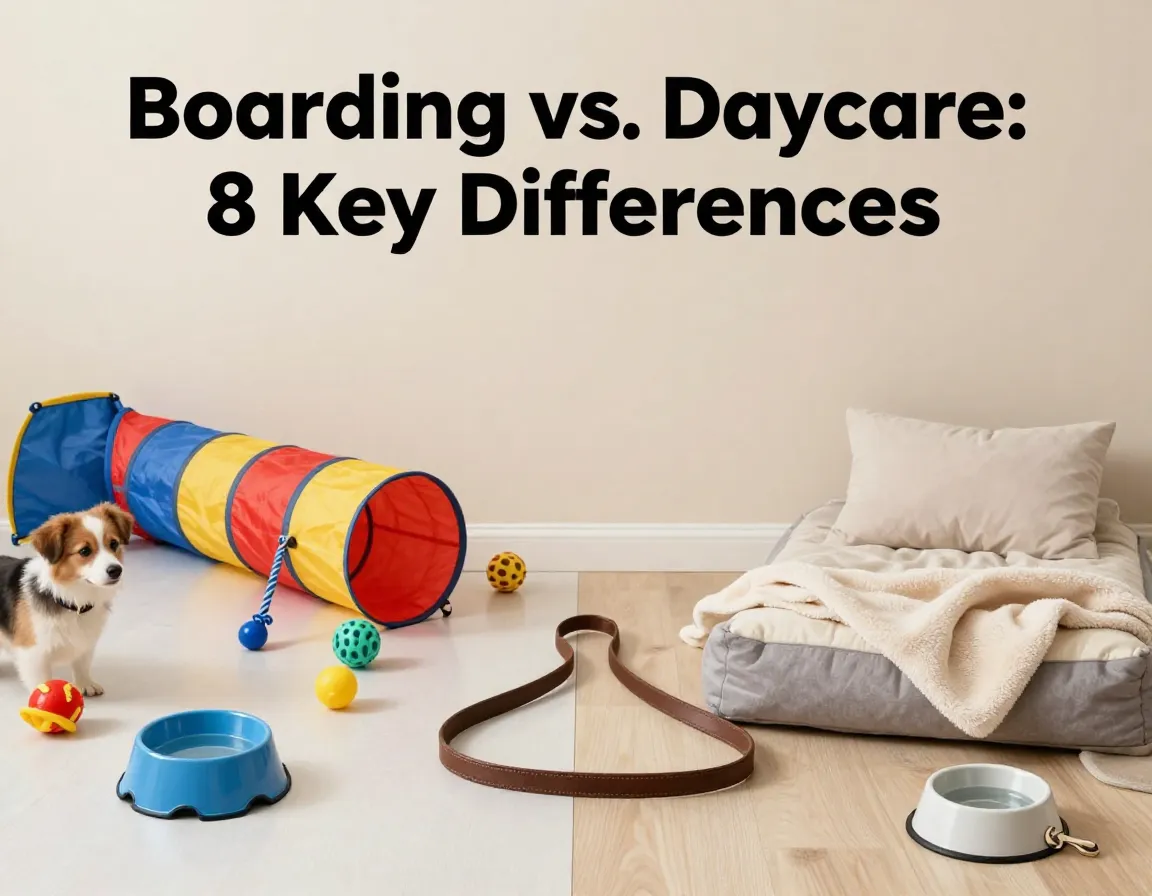
Picture this: It’s Monday morning, and you’re rushing to get ready for work when you look into your dog’s expectant eyes. Should you drop them off at daycare for the day, or do you need something more comprehensive? As a pet owner in 2026, understanding the distinction between dog boarding and daycare services has never been more crucial. With the pet daycare market forecasted to rise 8% per annum until 2032 [1], knowing these Dog Boarding and Daycare: 8 Key Differences Every Owner Should Know can save you time, money, and ensure your furry friend gets exactly the care they need.
Disclosure: This post contains affiliate links. As an Amazon Associate, we earn from qualifying purchases, and at no extra cost to you.
Key Takeaways
- Duration differs significantly: Daycare provides half or full-day services for working pet parents, while boarding requires minimum overnight stays for extended absences
- Cost varies by service type: Daycare averages $35 per day compared to boarding’s $40 per night, with different value propositions for each
- Primary purposes serve different needs: Daycare prevents daily separation anxiety for working owners, while boarding provides comprehensive care during vacations or extended travel
- Market adoption shows clear preferences: 27% of pet owners use daycare services, with day boarding representing over 60% of the U.S. pet daycare market
- Service features target specific outcomes: Daycare focuses on socialization and daily activities, while boarding emphasizes safety and continuity of care during owner absence
Understanding the Core Differences in Dog Boarding and Daycare Services
The pet care industry has evolved dramatically, offering pet owners more options than ever before. However, the fundamental differences between boarding and daycare services often confuse even experienced dog owners. These services address distinct needs and situations, making it essential to understand when each option provides the best solution for both pet and owner.
Dog daycare functions similarly to childcare for humans – it’s designed for pet owners who work during the day and don’t want to leave their pets alone for extended periods [1]. These facilities provide supervised care, socialization opportunities, and structured activities during business hours, typically operating from early morning until early evening.
Dog boarding, conversely, serves as a temporary home away from home for pets whose owners are traveling, on vacation, or otherwise unable to provide care for one or more nights [1]. Boarding facilities focus on providing safe, comfortable accommodations with professional oversight around the clock.
The distinction becomes clearer when considering that day boarding represents over 60% of the U.S. Pet Daycare market by service type [2], indicating that most pet owners require daily rather than overnight care solutions.
1. Primary Purpose and Intended Use Cases

The most fundamental difference lies in why pet owners choose each service. Dog daycare primarily serves working professionals who need reliable daily care for their pets. These owners typically maintain regular work schedules and want to ensure their dogs receive attention, exercise, and socialization during business hours.
Boarding facilities cater to entirely different circumstances. Pet owners use boarding services when traveling for business or pleasure, during family emergencies, or when temporary housing situations don’t accommodate pets. The focus shifts from daily routine maintenance to providing comprehensive care during the owner’s complete absence.
Daycare scenarios include:
- Daily work schedules (8-10 hour days)
- Business meetings or appointments
- Social events or day trips
- Regular exercise and socialization needs
Boarding scenarios include:
- Vacation travel (domestic or international)
- Extended business trips
- Family emergencies or medical procedures
- Temporary housing transitions
- Holiday visits to family
This fundamental difference in purpose influences every other aspect of these services, from facility design to staff training and pricing structures.
2. Duration of Stay and Scheduling Flexibility

Duration represents perhaps the clearest distinction between these services. Daycare typically involves half or full-day services [1], with most facilities offering flexible pickup and drop-off times to accommodate varying work schedules. Pet owners can often adjust their usage based on daily needs, using services only on specific workdays or during particularly busy periods.
Boarding requires a minimum of one overnight stay [1], with many facilities establishing minimum stay requirements during peak periods like holidays. This extended duration necessitates different facility features, staffing patterns, and care protocols.
Daycare Duration Options:
- Half-day sessions: 4-6 hours, ideal for part-time workers
- Full-day care: 8-12 hours, standard for full-time employees
- Drop-in services: Flexible hourly options for appointments
- Weekly packages: Discounted rates for regular users
Boarding Duration Considerations:
- Minimum overnight requirement: Usually 1-2 nights minimum
- Extended stay discounts: Weekly or monthly rates for longer trips
- Holiday surcharges: Premium pricing during peak travel periods
- Check-in/out times: Structured schedules unlike daycare flexibility
The scheduling flexibility inherent in daycare services appeals to the 27% of pet owners who use these services [1], as it allows them to adapt care to their changing work demands without long-term commitments.
3. Cost Structure and Pricing Models

Financial considerations often influence pet owners’ decisions, and the Dog Boarding and Daycare: 8 Key Differences Every Owner Should Know include significant cost variations. Doggy daycare costs an average of $35 per day [1], while dog boarding costs an average of $40 per night [1].
However, these baseline figures don’t tell the complete story. The pricing models differ substantially:
| Service Type | Average Cost | Pricing Model | Additional Fees |
|---|---|---|---|
| Daycare | $35/day | Daily or package rates | Minimal extras |
| Boarding | $40/night | Nightly with minimums | Multiple add-ons |
Daycare Cost Factors:
- Package discounts: Bulk purchasing reduces per-day costs
- Membership programs: Monthly fees for unlimited or discounted access
- Size-based pricing: Larger dogs may incur higher fees
- Activity add-ons: Premium services like grooming or training
Boarding Cost Considerations:
- Base overnight rate: Core accommodation and basic care
- Premium room upgrades: Private suites or luxury amenities
- Medical administration: Medication management fees
- Exercise and enrichment: Additional charges for extended play time
- Holiday premiums: Surge pricing during peak travel periods
The total cost comparison depends heavily on usage patterns. Regular daycare users might spend $700-900 monthly, while occasional boarding users might spend $200-400 per trip.
Key Service Features That Define Each Option
The Dog Boarding and Daycare: 8 Key Differences Every Owner Should Know extend beyond basic logistics to encompass the actual services provided. Day boarding often includes structured activities, socialization opportunities, and professional supervision [2], focusing on enrichment and exercise during standard business hours.
Boarding facilities typically offer safer, longer-term accommodations with specialized care protocols designed for extended stays. The emphasis shifts from active engagement to comfort, security, and maintaining routines in the owner’s absence.
Daycare Service Features:
🎾 Active play sessions with supervised group activities
🐕 Socialization programs for dogs of different sizes and temperaments
🏃 Exercise rotations ensuring adequate physical activity
🎓 Basic training reinforcement maintaining behavioral standards
📱 Daily updates including photos and activity reports
Boarding Service Features:
🏠 Private or semi-private accommodations for rest and security
⏰ 24/7 supervision with overnight staff monitoring
💊 Medication administration for pets with health requirements
🍽️ Customized feeding schedules maintaining home routines
🚨 Emergency veterinary access for health concerns
🧼 Grooming services preparing pets for owner return
These feature differences reflect the distinct goals of each service type, with daycare prioritizing stimulation and boarding emphasizing comfort and care continuity.
4. Staffing Models and Supervision Levels
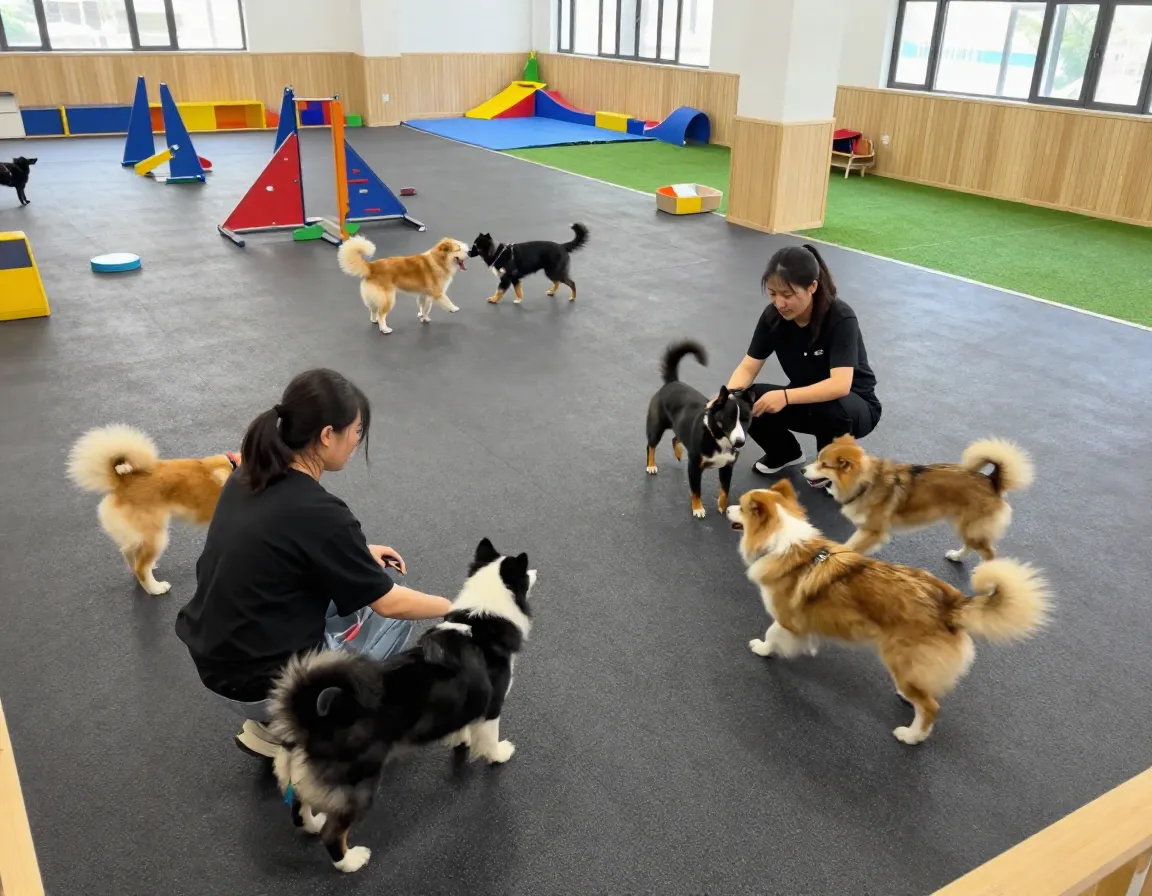
The staffing approaches differ significantly between daycare and boarding facilities, reflecting their unique operational requirements. Daycare facilities typically maintain higher staff-to-dog ratios during active hours, with trained professionals facilitating group activities and managing social dynamics.
Boarding facilities operate with different staffing patterns, maintaining 24/7 coverage with varying intensity levels. Overnight staff focus on monitoring and emergency response rather than active engagement, while day staff handle feeding, exercise, and enrichment activities.
Daycare staffing characteristics:
- Higher staff ratios during peak hours (1:10-15 dogs)
- Specialized play group facilitators
- Behavioral specialists for socialization
- Flexible scheduling matching owner drop-off/pickup patterns
Boarding staffing characteristics:
- Consistent 24/7 coverage with overnight monitoring
- Veterinary technicians or trained medical staff
- Lower ratios during rest periods (1:20-30 dogs)
- Specialized care coordinators for extended stays
5. Facility Design and Environmental Differences
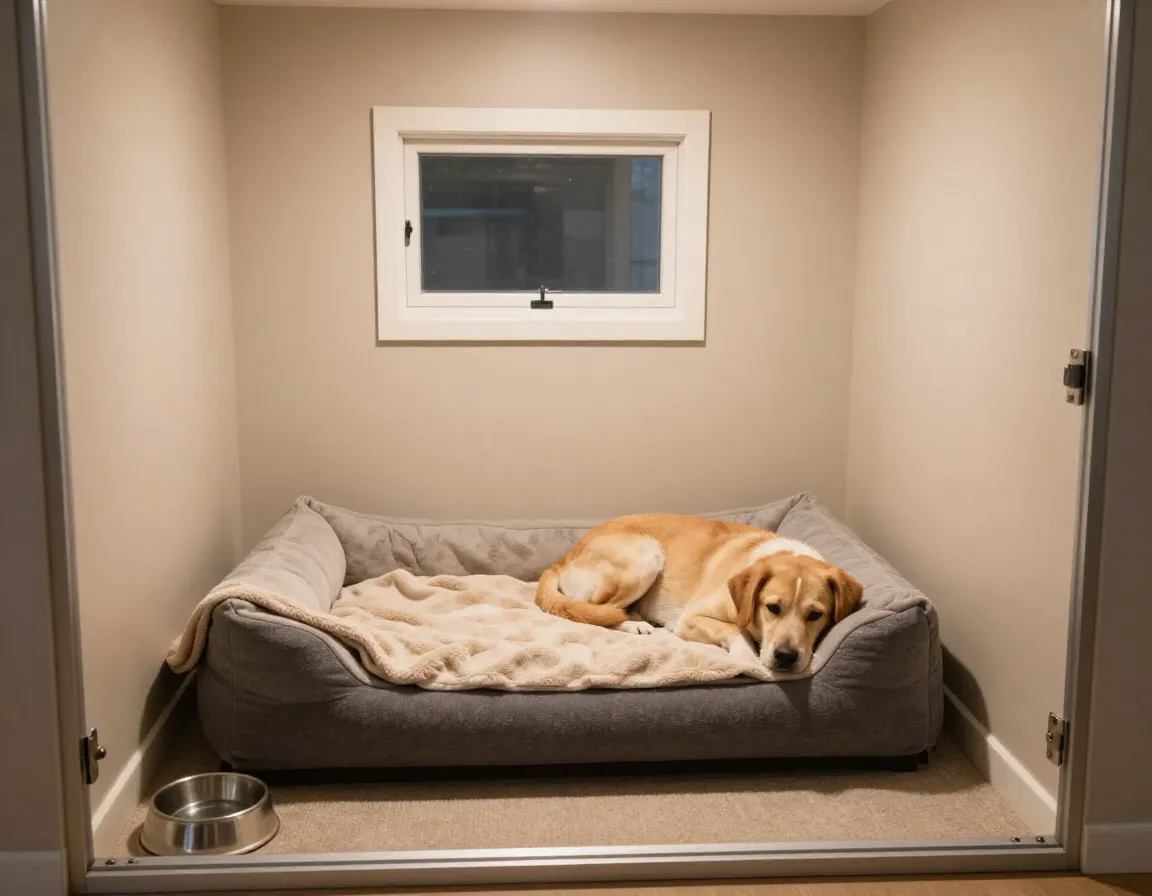
Physical facility design reflects the intended use patterns of each service type. Daycare facilities prioritize open play areas, multiple activity zones, and flexible spaces that can accommodate varying group sizes throughout the day.
Boarding facilities emphasize private resting areas, quiet zones, and comfortable sleeping accommodations. The design philosophy centers on creating a home-like environment that reduces stress during extended stays.
Daycare Facility Features:
- Large open play areas for group activities
- Multiple indoor/outdoor zones for different activity types
- Specialized equipment including agility courses and toys
- Easy-clean surfaces for quick turnover between groups
- Observation areas for staff monitoring and owner visits
Boarding Facility Features:
- Private kennels or suites with comfortable bedding
- Quiet rest areas separated from high-activity zones
- Climate-controlled environments for year-round comfort
- Secure outdoor exercise areas for individual or small group activities
- Medical isolation areas for pets requiring special attention
6. Health and Safety Protocols

Health and safety requirements vary between daycare and boarding facilities, though both maintain rigorous standards. Daycare facilities focus heavily on preventing disease transmission during high-interaction periods, while boarding facilities emphasize comprehensive health monitoring during extended stays.
Daycare health protocols:
- Daily health checks upon arrival
- Vaccination requirement verification
- Immediate isolation procedures for sick pets
- Frequent facility sanitization between play groups
- Staff training in canine first aid and behavior recognition
Boarding health protocols:
- Comprehensive health assessments at check-in
- Medication administration tracking and documentation
- 24/7 health monitoring with emergency response capabilities
- Veterinary partnerships for immediate medical attention
- Detailed health reporting for owner updates
The extended duration of boarding stays requires more comprehensive medical preparedness, while daycare facilities prioritize rapid response and prevention protocols.
7. Socialization and Behavioral Benefits

Well-run pet daycare facilities can reduce separation anxiety by up to 40% [3], demonstrating the significant behavioral benefits of regular socialization and structured activities. Daycare environments provide controlled exposure to other dogs, people, and situations that build confidence and social skills.
Boarding provides continuity of care during extended owner absence, maintaining routines and providing comfort during potentially stressful periods. While socialization occurs, the focus shifts to emotional support and stress reduction rather than active behavioral development.
Daycare Behavioral Benefits:
- Reduced separation anxiety through regular routine establishment
- Improved social skills via controlled dog-to-dog interactions
- Energy management through structured exercise and play
- Behavioral reinforcement maintaining training and manners
- Confidence building in new environments and situations
Boarding Behavioral Benefits:
- Routine maintenance preserving home schedules and habits
- Stress reduction through professional care and attention
- Gentle socialization with staff and compatible pets
- Comfort provision during owner absence anxiety
- Behavioral monitoring identifying any concerning changes
8. Booking Requirements and Advance Planning

The final key difference involves booking procedures and advance planning requirements. Daycare services often accommodate last-minute needs, understanding that work schedules can change unexpectedly. Many facilities offer online booking systems and flexible cancellation policies.
Boarding requires significantly more advance planning, particularly during peak travel periods. Holiday bookings often require reservations months in advance, and cancellation policies tend to be more restrictive due to the limited capacity and higher operational costs.
Daycare Booking Characteristics:
- Flexible scheduling with same-day availability
- Online booking platforms for convenient reservation management
- Package purchasing allowing advance payment for future use
- Lenient cancellation policies accommodating schedule changes
- Trial periods for new dogs to assess compatibility
Boarding Booking Requirements:
- Advance reservations especially during holidays and peak periods
- Detailed intake procedures including health records and emergency contacts
- Deposit requirements securing reservations for extended stays
- Strict cancellation policies with potential financial penalties
- Comprehensive preparation lists ensuring pets have necessary items
Making the Right Choice for Your Pet’s Needs
Understanding these Dog Boarding and Daycare: 8 Key Differences Every Owner Should Know empowers pet owners to make informed decisions based on their specific circumstances. The choice isn’t necessarily either/or – many pet owners utilize both services for different situations.
Consider daycare when you need regular daily care, want to address separation anxiety, or desire socialization opportunities for your pet. Choose boarding for vacation travel, extended business trips, or situations requiring overnight care with professional supervision.
Questions to guide your decision:
- How long will you be away from your pet?
- What is your primary goal (daily care vs. travel accommodation)?
- Does your pet have special medical or behavioral needs?
- What is your budget for pet care services?
- How important is socialization vs. quiet rest for your pet?
The pet care industry’s continued growth, with the market forecasted to rise 8% per annum until 2032 [1], ensures that both daycare and boarding options will continue expanding and improving. This growth benefits pet owners through increased availability, competitive pricing, and enhanced service quality.
Conclusion
The Dog Boarding and Daycare: 8 Key Differences Every Owner Should Know represent fundamental distinctions that affect every aspect of your pet care decision. From the primary purpose and duration to cost structures and facility designs, these services address different needs in the modern pet owner’s life.
Daycare excels at providing daily care for working pet parents, offering socialization, exercise, and attention during business hours. With 27% of pet owners already using daycare services [1] and day boarding representing over 60% of the market [2], this option clearly meets a significant need in today’s busy world.
Boarding provides comprehensive care during extended absences, focusing on comfort, safety, and routine maintenance when owners cannot provide direct care. The slightly higher average cost of $40 per night [1] reflects the additional services and 24/7 supervision required for overnight care.
Your next steps should include:
- Assess your specific needs – determine whether you need daily care or extended absence coverage
- Research local facilities – visit potential daycare and boarding options to evaluate their services
- Consider your pet’s personality – match your dog’s social and comfort needs with the appropriate service type
- Budget for pet care – factor both services into your annual pet care budget for maximum flexibility
- Plan ahead – establish relationships with quality providers before you need their services
By understanding these key differences, you can ensure your beloved companion receives the appropriate care, whether that’s daily socialization at daycare or comprehensive support during your next vacation. The investment in professional pet care services pays dividends in your pet’s health, happiness, and your own peace of mind.
References
[1] Pet Daycare Dog Boarding Industry Statistics – https://www.dogster.com/statistics/pet-daycare-dog-boarding-industry-statistics
[2] Us Pet Daycare Market Report – https://www.grandviewresearch.com/industry-analysis/us-pet-daycare-market-report
[3] Pet Daycare And Lodging Market Industry Analysis – https://www.technavio.com/report/pet-daycare-and-lodging-market-industry-analysis