9 Fascinating Facts About Gray Tabby Cats You Probably Didn’t Know
Gray tabby cats are the single most common coat pattern seen in domestic cats worldwide — yet most people can’t tell you why. That gap between familiarity and knowledge is exactly what makes these silver-streaked felines so worth exploring. Whether you share your home with one or simply admire them from afar, the 9 fascinating facts about gray tabby cats you probably didn’t know will completely change how you look at that iconic striped coat. From ancient genetics to pop-culture history, gray tabbies carry far more secrets than their calm expressions let on.
Key Takeaways 🐾
- Gray tabby is a coat pattern, not a breed — it appears across dozens of different cat breeds.
- The “M” marking on the forehead is one of the most recognizable features of all tabby cats and comes with fascinating legends.
- Five distinct coat patterns exist within the tabby family, each genetically unique.
- Wild cat ancestry is directly responsible for the tabby pattern we see in domestic cats today.
- Almost every domestic cat carries tabby genes, even those that appear completely solid in color.
What Exactly Is a Gray Tabby Cat?
Before we dive into the 9 fascinating facts about gray tabby cats you probably didn’t know, it helps to set the foundation. A gray tabby is not a specific breed. It is a coat pattern — a combination of gray or silver base fur layered with darker gray or charcoal markings. This pattern can appear on a Maine Coon, a British Shorthair, a domestic shorthair rescue, or dozens of other breeds.
The word “tabby” itself is believed to trace back to Attabiyah, a district in Baghdad known for its striped silk fabric. The resemblance between that fabric’s pattern and a cat’s striped coat gave us the term we use today.
💡 Pull Quote: “A gray tabby is not a breed — it’s a coat pattern that nature has been perfecting for thousands of years.”
Understanding this distinction matters because it shapes everything else we know about these cats. Their temperament, size, and health are determined by their breed, not their coat color. Their coat pattern, however, is determined by genetics that stretch all the way back to wild ancestors.
9 Fascinating Facts About Gray Tabby Cats You Probably Didn’t Know
1. Gray Tabby Is a Pattern, Not a Breed
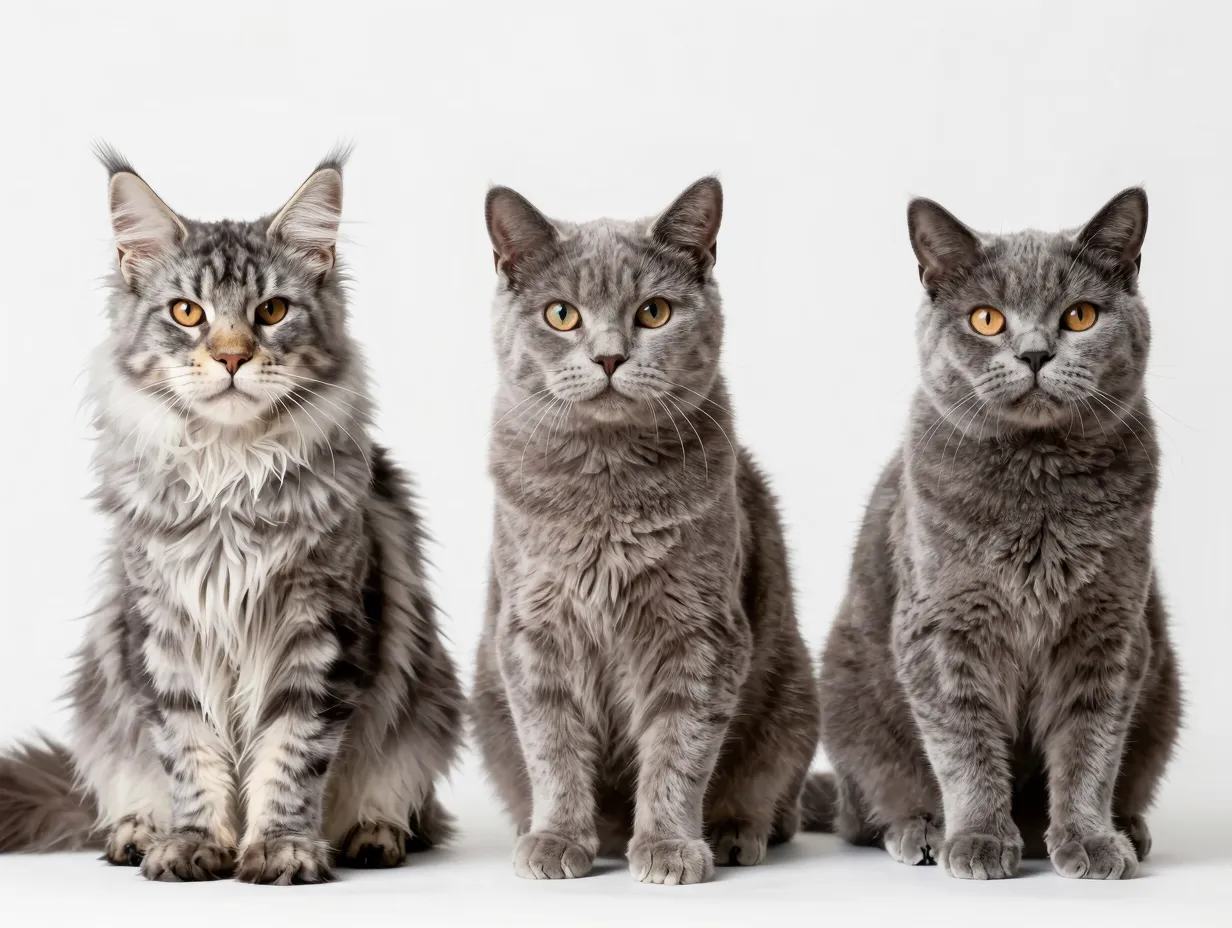
This is the single most common misconception about gray tabbies. Many people assume they are buying or adopting a specific breed when they choose a gray tabby kitten. In reality, the gray tabby coat pattern occurs across a wide range of breeds, including American Shorthairs, British Shorthairs, Maine Coons, Abyssinians, Norwegian Forest Cats, and many others [1].
What makes a cat a “gray tabby” is purely the coat — a gray or silver base color combined with darker tabby markings. The breed determines everything else: body type, personality tendencies, lifespan, and health considerations. So when someone says “I have a gray tabby,” they are describing how the cat looks, not what it is genetically classified as.
Why does this matter?
| Factor | Determined By |
|---|---|
| Coat pattern | Genetics (agouti gene) |
| Body size | Breed |
| Temperament | Breed + environment |
| Health risks | Breed |
| Eye color | Breed |
This distinction is especially important when adopting from a shelter, where many cats are listed simply as “gray tabby domestic shorthair.” That label tells you about the coat — not the full picture.
2. Every Gray Tabby Has an “M” on Its Forehead
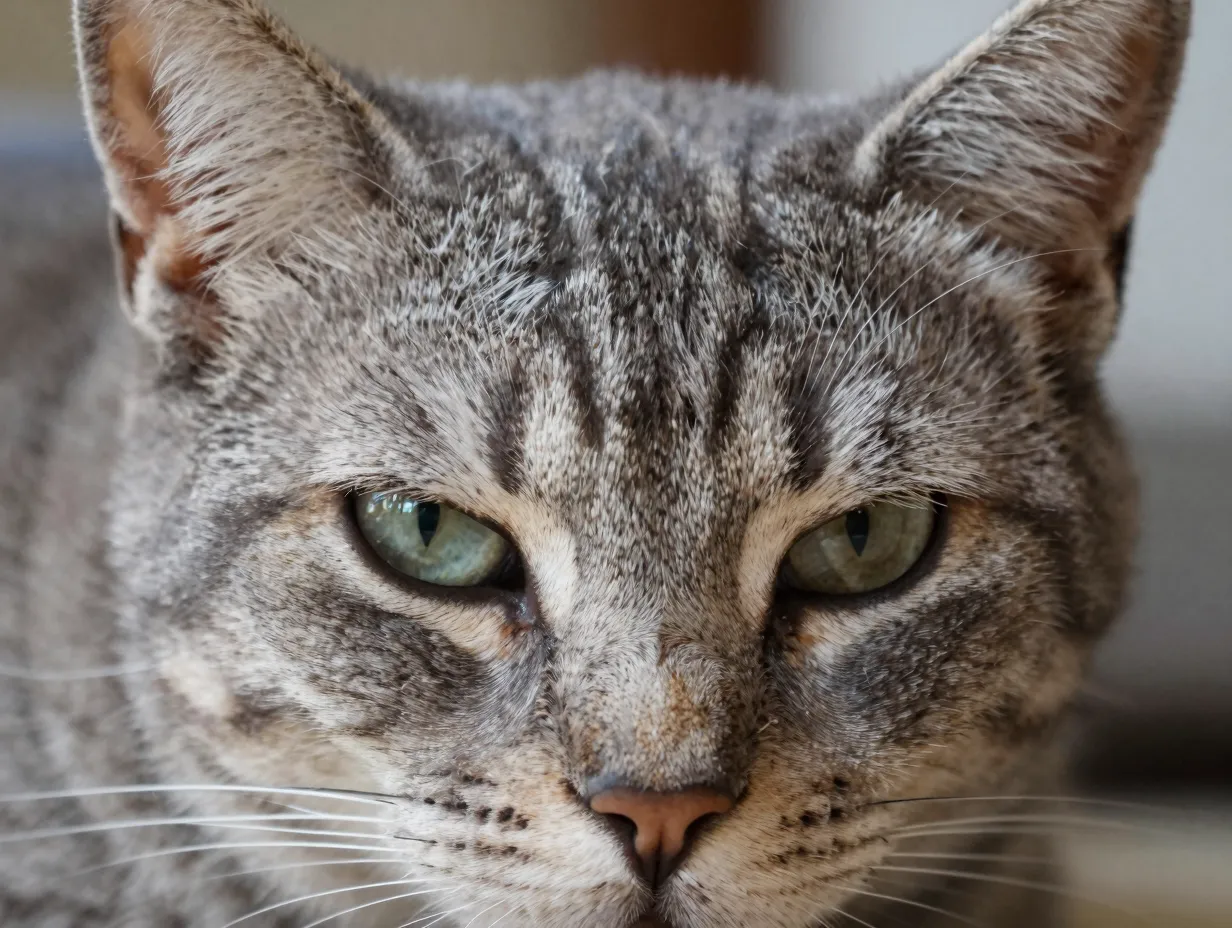
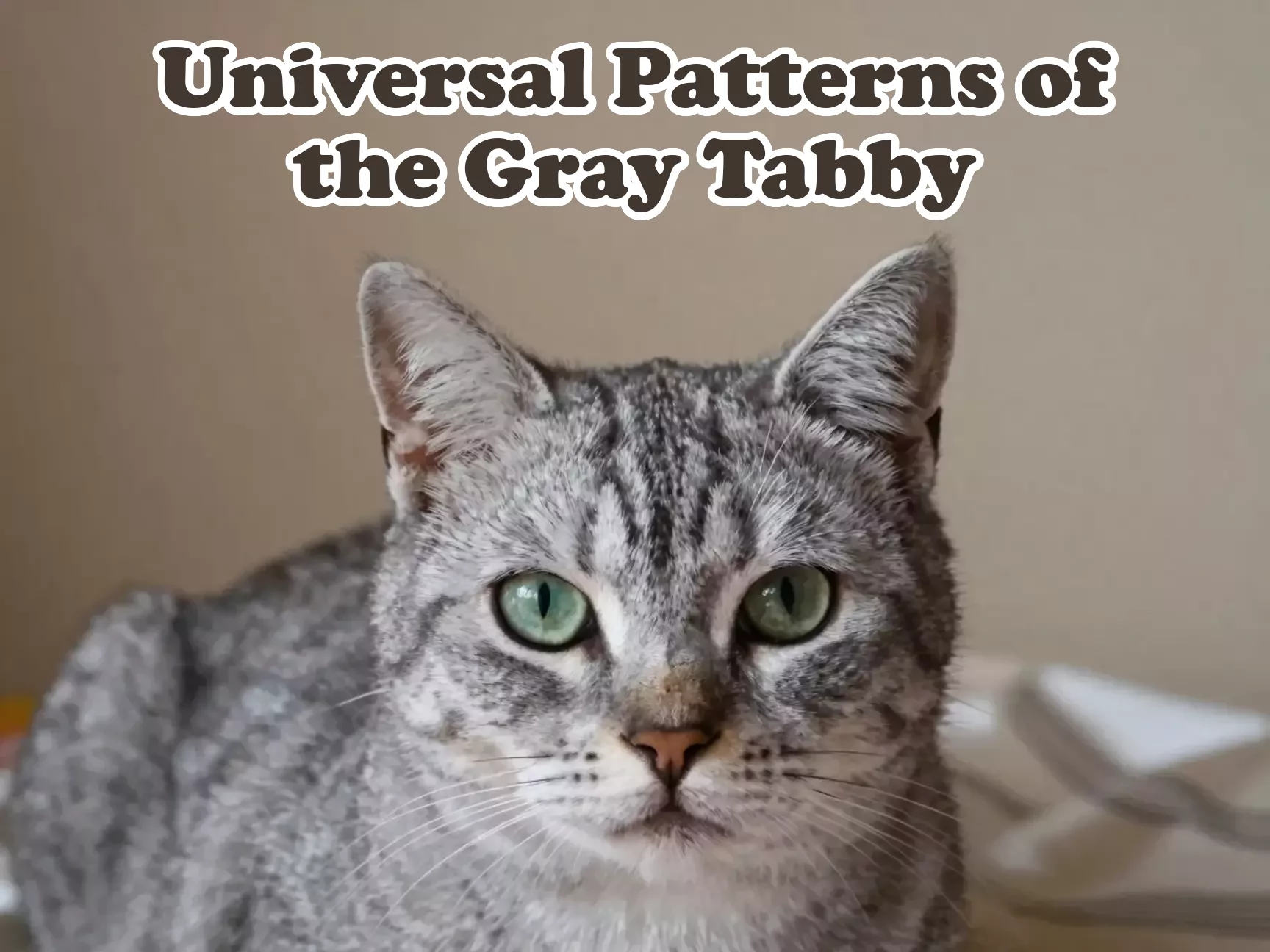
Look closely at any gray tabby’s forehead and you will find a distinct “M” shaped marking between the eyes. This is not a coincidence or a rare trait — it is a universal feature of all tabby cats, including gray ones [1].
The legends behind this marking are surprisingly rich:
- 🕌 Islamic tradition holds that the Prophet Muhammad loved cats so deeply that when his favorite tabby saved him from a snake, he stroked her forehead and left the “M” as a blessing.
- ✝️ Christian legend says the Virgin Mary marked a tabby cat with an “M” after it comforted the baby Jesus in the manger.
- 🐱 Ancient Egypt offers a third explanation: the Egyptian word for cat was mau, and the “M” marking may be a visual echo of that ancient name.
Scientifically, the “M” is simply the result of the tabby gene expressing itself in the facial fur. The forehead stripes naturally converge into that shape due to the way pigment distributes across the face. But the legends make it far more interesting to look at.
3. There Are Five Distinct Gray Tabby Coat Patterns
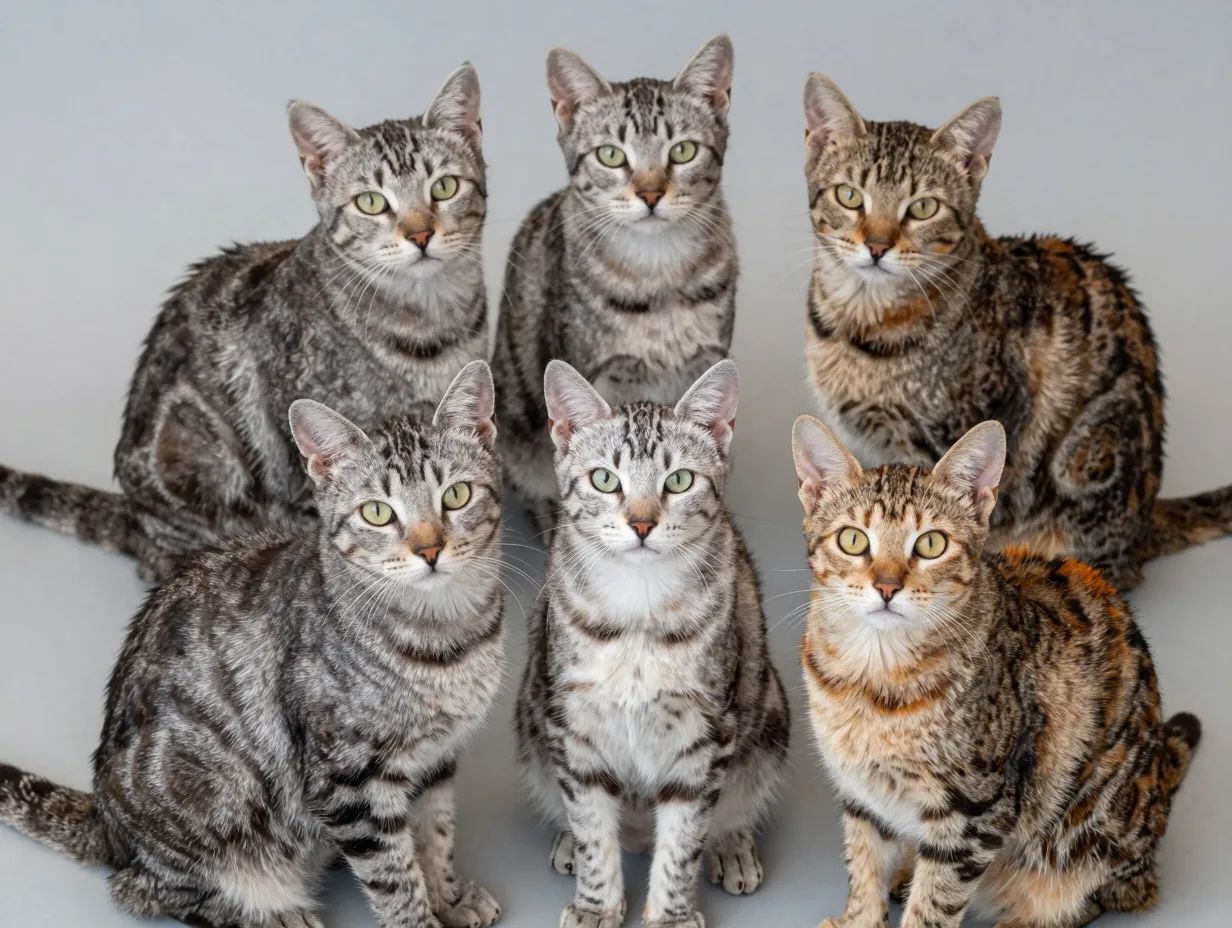
Not all gray tabbies look the same. In fact, there are five recognized tabby coat patterns, each with its own distinct visual style and genetic basis [1][2]:
- Classic (Blotched) — Bold, swirling patterns on the sides that resemble a marble cake or butterfly shape when viewed from above.
- Mackerel — Narrow, parallel stripes running vertically down the body, like a fish skeleton. This is the most common tabby pattern.
- Spotted — Instead of continuous stripes, the markings break into oval or round spots across the body.
- Ticked — No obvious stripes on the body at all. Instead, individual hairs are banded with alternating light and dark pigment, giving the coat a salt-and-pepper shimmer. Abyssinians are a classic example.
- Patched (Torbie) — A combination of tabby markings and patches of another color, most often seen in female cats due to X-chromosome genetics.
💡 Pull Quote: “Five coat patterns, one name — the gray tabby family is far more diverse than most people realize.”
Each of these patterns is controlled by specific gene variants. The mackerel pattern is actually considered the ancestral default, with the classic blotched pattern being a mutation that became common in domestic cats over centuries.
4. The Tabby Pattern Comes Directly From Wild Cats
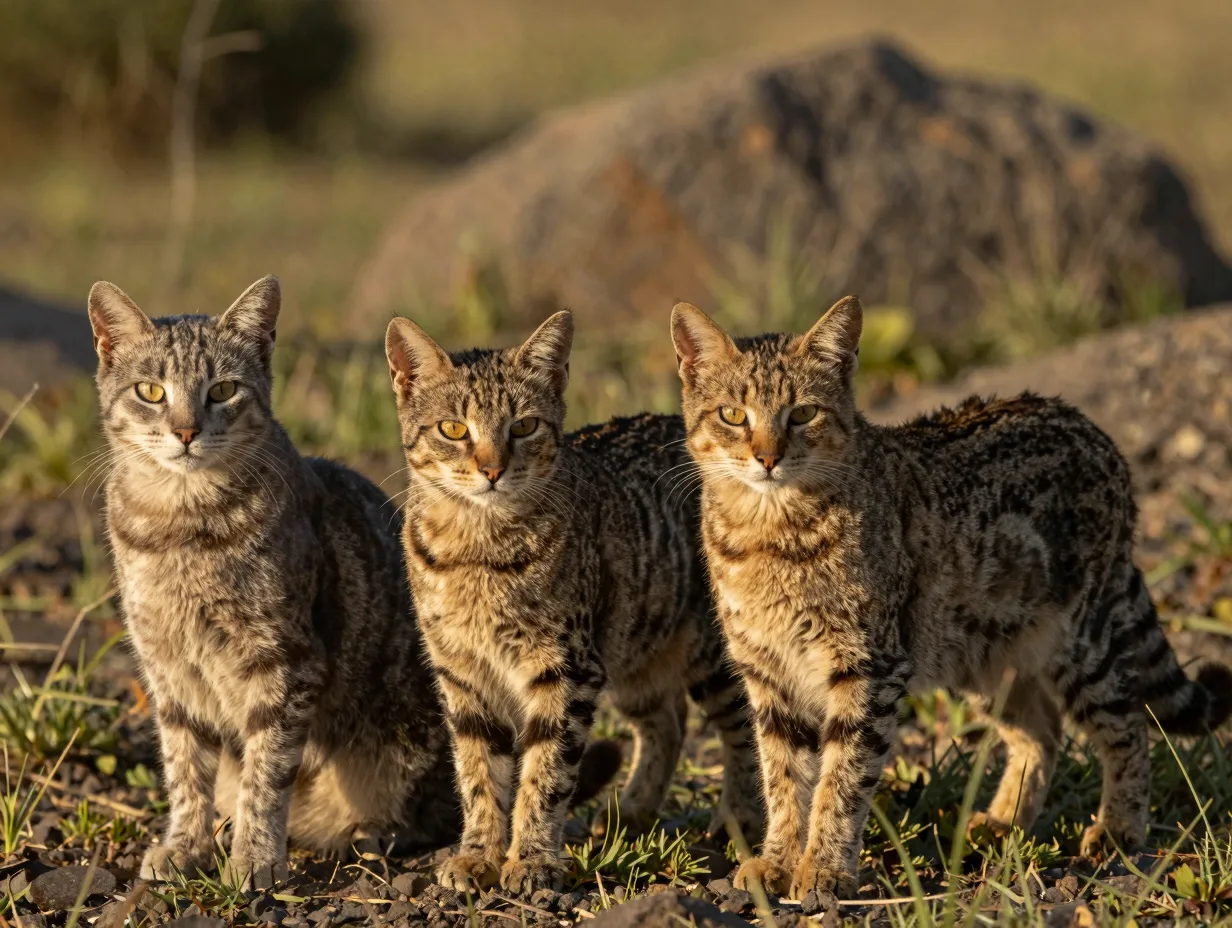
Gray tabbies are not just pretty house pets — they are walking proof of wild ancestry. The tabby coat pattern is directly inherited from wild cat species, and you can see nearly identical markings on European wildcats, African wildcats, and Asiatic wildcats today [1].
The African wildcat (Felis lybica) is widely considered the primary ancestor of all domestic cats. Its coat features the same mackerel tabby striping that we see in millions of domestic cats worldwide. When humans first began domesticating cats in the Fertile Crescent roughly 10,000 years ago, the tabby pattern came along for the ride.
This wild connection is more than cosmetic. The striped and spotted patterns that define tabbies evolved as camouflage — helping wild cats blend into grass, forest undergrowth, and rocky terrain while hunting. In domestic gray tabbies, that camouflage function is largely irrelevant, but the genetic blueprint remains intact.
5. The Agouti Gene Is the Secret Behind Every Stripe

Every gray tabby cat — in fact, every tabby cat of any color — carries a dominant agouti gene that is responsible for creating the banded, striped appearance of the coat [1][2].
Here is how it works at the hair level:
- Each individual hair on a tabby cat is not a single solid color.
- Instead, the hair shaft contains alternating bands of dark and light pigment.
- This banding effect is called agouti patterning, named after the South American rodent whose fur displays the same characteristic.
- Where the dark bands cluster together across many hairs, you see the darker stripes or spots.
- Where the light bands dominate, you see the lighter base coat.
The agouti gene is dominant, meaning a cat only needs one copy of it to display tabby markings. Cats that appear solid-colored typically carry a separate gene that suppresses the agouti expression — but as we will see in the next fact, that suppression is never quite complete.
6. Even “Solid” Cats Secretly Carry Tabby Genes
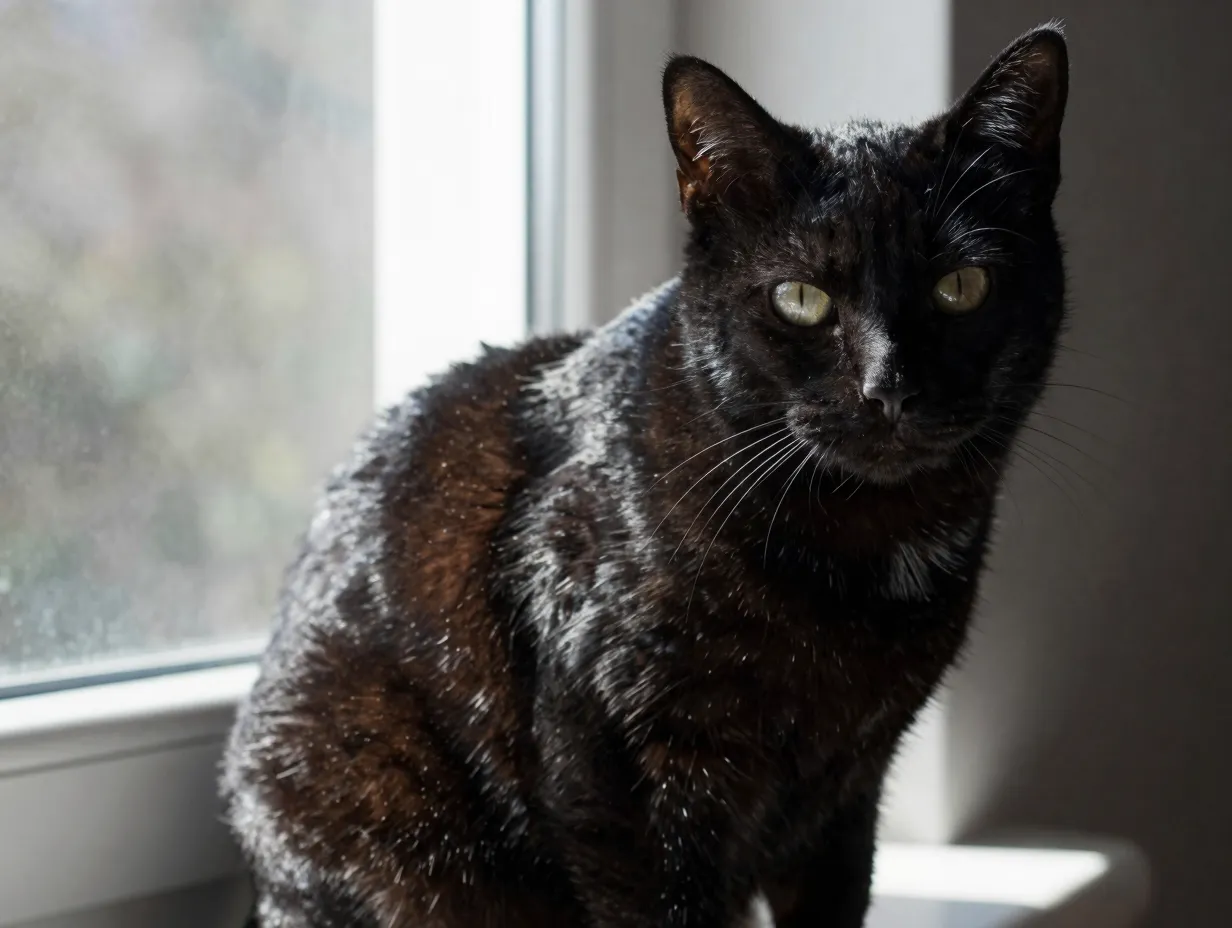
This is one of the most surprising entries in the 9 fascinating facts about gray tabby cats you probably didn’t know list. Almost every domestic cat on the planet carries tabby genes — even the ones that look completely solid black, white, or gray [2][4].
Solid-colored cats carry a gene called the non-agouti or recessive agouti allele, which suppresses the visible expression of tabby markings. But the underlying tabby pattern is still encoded in their DNA.
The proof? Look at a solid-colored cat in direct sunlight or strong natural light. Many will display faint, ghost-like striping — especially visible on kittens before their adult coat fully develops. These are called “ghost stripes” or “ghost markings,” and they are a direct window into the tabby genetics hiding beneath the surface.
🐾 Fun Fact: Solid black cats often show faint mackerel striping in bright sunlight, revealing the tabby blueprint beneath their dark coat.
This means that the gray tabby pattern is not just common — it is essentially the genetic default for domestic cats. Solid coats are the variation, not the other way around.
7. Gray Tabbies Can Have a Surprising Range of Eye Colors
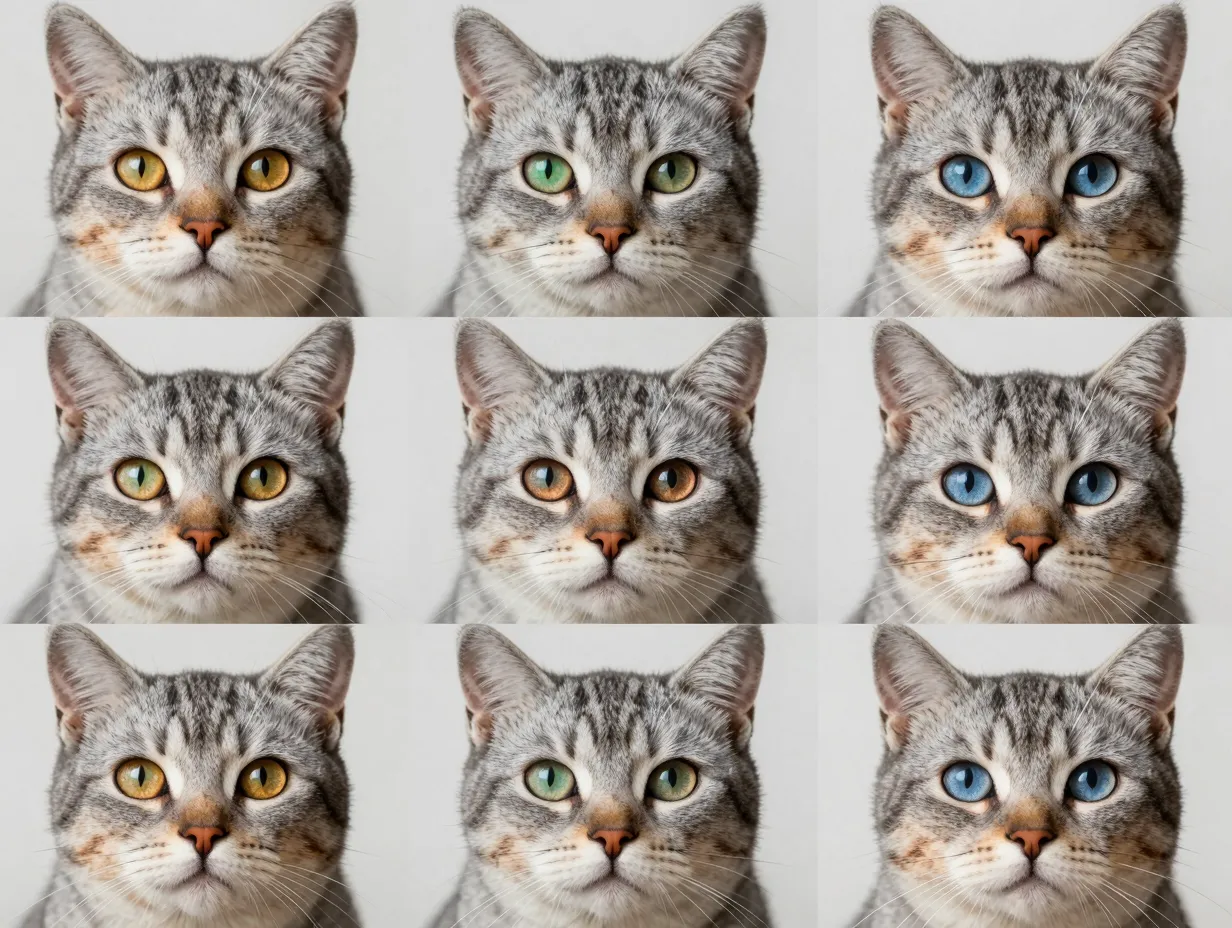
When most people think of gray tabby cats, they picture green or yellow eyes. While those are certainly common, the reality is far more varied. Gray tabbies can display yellow, green, copper, hazel, and even blue eyes, depending on their breed [1].
Here is a quick breakdown:
| Eye Color | Common In |
|---|---|
| 🟡 Yellow / Gold | Domestic shorthairs, British Shorthairs |
| 🟢 Green | American Shorthairs, mixed breeds |
| 🟠 Copper | British Shorthairs, Persian mixes |
| 🟤 Hazel | Various mixed breeds |
| 🔵 Blue | Certain purebred lines, younger cats |
Eye color in cats is determined by the amount and distribution of melanin in the iris — the same pigment responsible for coat color. Since gray tabby is a coat pattern that spans many breeds, and each breed has its own typical eye color range, the variation is wide.
Blue eyes in adult cats are relatively rare unless linked to specific genetic traits (such as those associated with white coat genes). When you do see a blue-eyed gray tabby, it is usually a purebred or a cat with partial white spotting genes in its background.
8. A Gray Tabby Inspired One of America’s First Mass-Produced Stuffed Toys
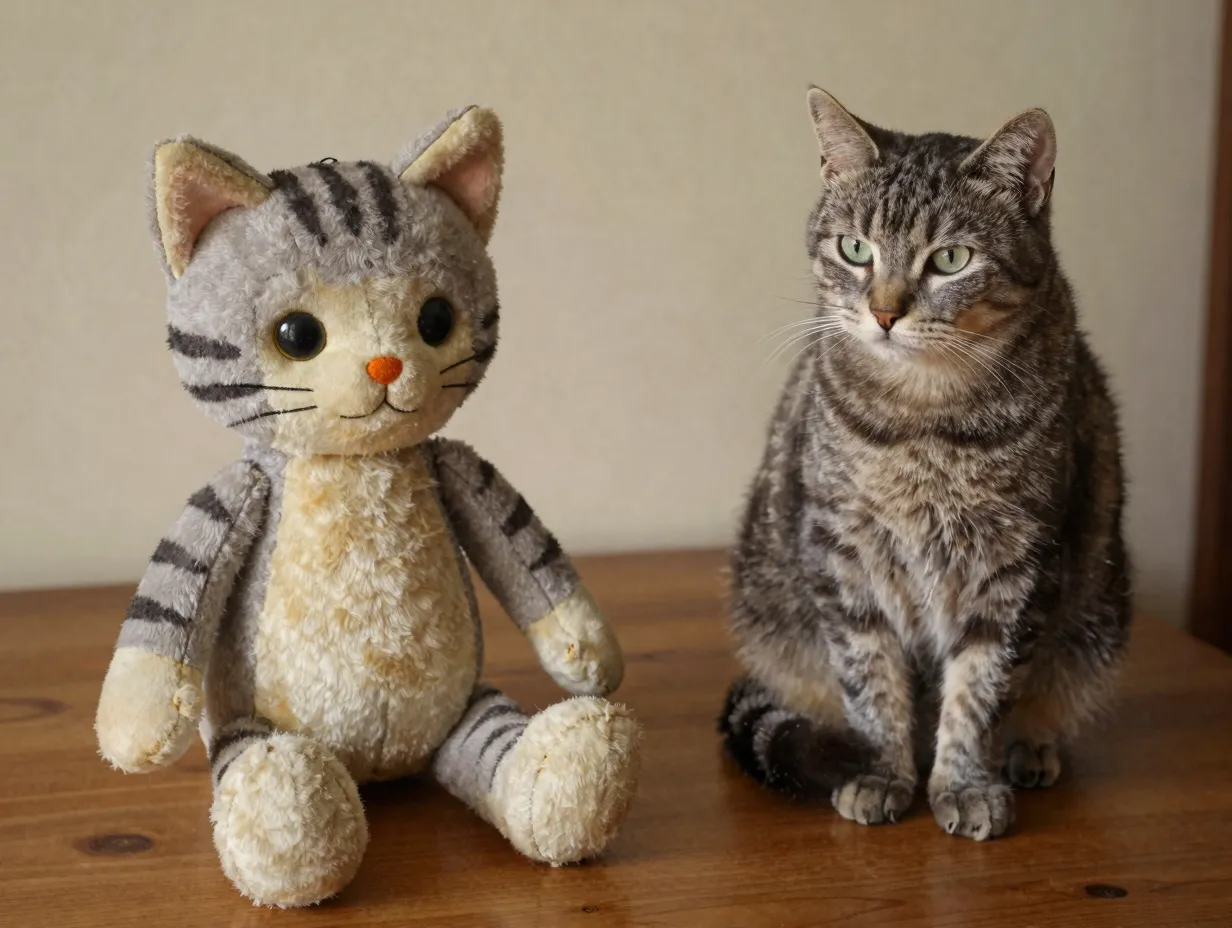
Here is a piece of history that most cat lovers have never heard. A real gray tabby cat named Caesar Grimalkin directly inspired the creation of the Ithaca Kitty — one of the first commercially mass-produced stuffed animal toys in American history [1].
The Ithaca Kitty was produced between 1892 and 1918 by the Ithaca Kitty Manufacturing Company in Ithaca, New York. The toy was modeled after Caesar Grimalkin, a beloved gray tabby who lived in the area. At its peak, the company was selling thousands of these stuffed cats across the country, making it a genuine piece of early American toy manufacturing history.
💡 Pull Quote: “Long before stuffed animals became a billion-dollar industry, a gray tabby named Caesar Grimalkin helped start it all.”
This fact places gray tabbies not just in the history of cats, but in the broader history of American commerce and childhood. The next time you see a stuffed animal cat in a toy store, you have a gray tabby to thank for helping pioneer that entire product category.
9. Gray Tabbies Are Among the Most Genetically Diverse Cats
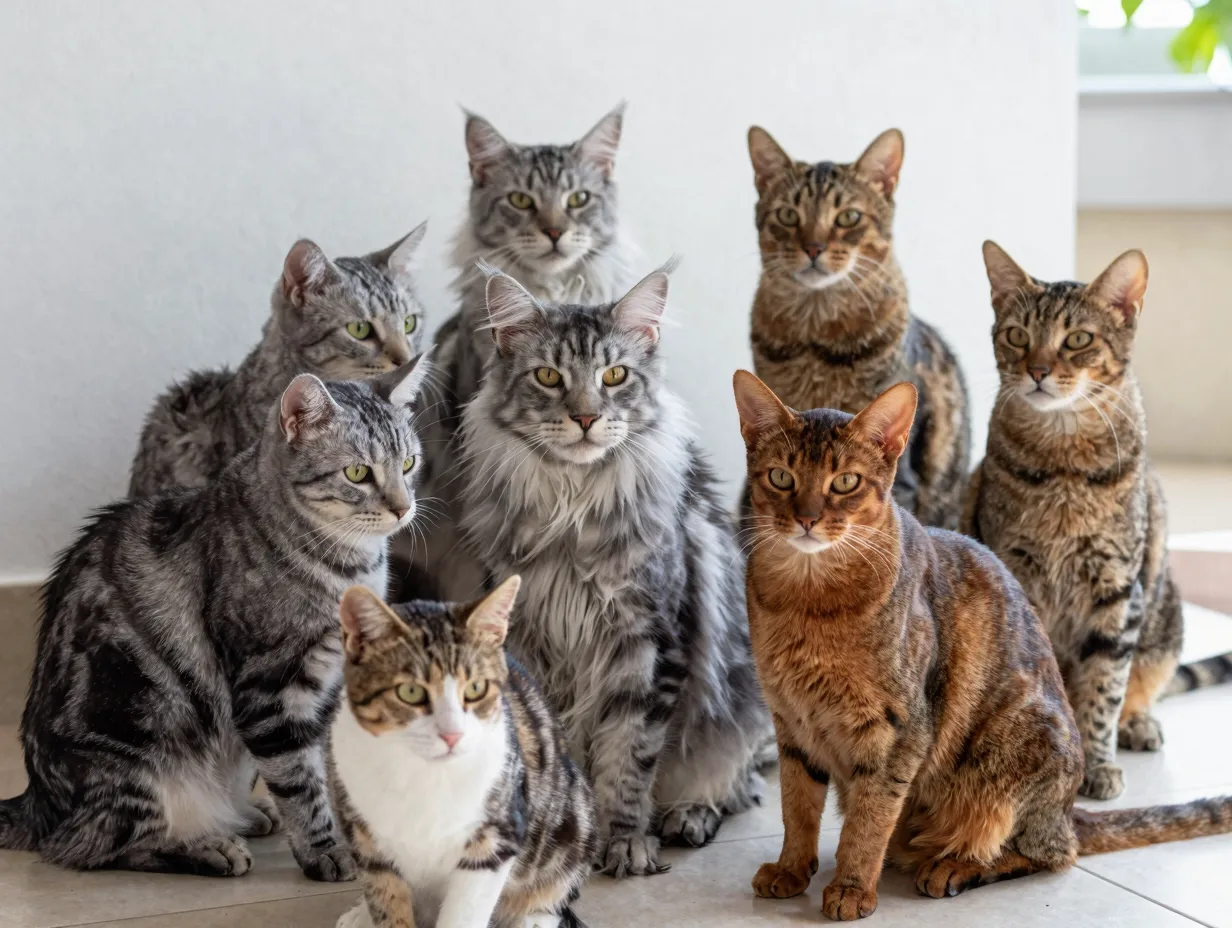
Because gray tabby is a pattern rather than a breed, gray tabbies as a group represent an enormous range of genetic diversity. A gray tabby Maine Coon and a gray tabby Abyssinian share their coat pattern but almost nothing else — different body types, different temperaments, different health profiles, and different lifespans.
This genetic diversity has a practical upside: mixed-breed gray tabbies (the kind most commonly found in shelters) tend to benefit from what geneticists call hybrid vigor — the tendency for genetically diverse individuals to be healthier and more resilient than highly inbred purebred lines.
What this means for prospective owners:
- A shelter gray tabby is often a hardy, adaptable companion.
- Health issues tied to specific breeds (flat faces, joint problems, heart conditions) are less likely in mixed-breed gray tabbies.
- Their personality is shaped more by early socialization and environment than by breed-specific temperament traits.
This does not mean purebred gray tabbies are inferior — far from it. It simply means that the gray tabby “category” is one of the most genetically varied groupings in the domestic cat world, which is itself a fascinating biological fact.
More Surprising Gray Tabby Facts Worth Knowing
Beyond the core 9 fascinating facts about gray tabby cats you probably didn’t know, a few additional details round out the picture:
- 🐾 The word “tabby” may trace back to 14th-century Baghdad, where striped silk fabric from the Attabiyah district inspired the term.
- 🐾 Gray tabbies are not associated with any single personality type — temperament varies by breed and individual history.
- 🐾 The ticked tabby pattern is the hardest to identify because there are no obvious body stripes — only the facial markings and banded hairs give it away.
- 🐾 Tabby markings are always symmetrical on both sides of the body, a result of the precise genetic patterning process during fetal development.
Frequently Asked Questions About Gray Tabby Cats
Are gray tabbies rare?
No. Gray tabbies are one of the most common coat patterns in domestic cats. Their prevalence is partly because the agouti gene responsible for tabby markings is dominant.
Do gray tabbies have a specific personality?
Coat color and pattern do not determine personality. A gray tabby’s temperament depends on its breed, upbringing, and individual history — not its coat.
What breeds commonly produce gray tabbies?
American Shorthairs, British Shorthairs, Maine Coons, Norwegian Forest Cats, Abyssinians, and many mixed-breed domestic cats can all display gray tabby patterning [1].
Can two non-tabby cats produce a tabby kitten?
Yes, if both parents carry recessive tabby genes. The agouti gene can be carried silently and expressed in offspring even when neither parent visibly displays tabby markings.
Is a “blue tabby” the same as a gray tabby?
In cat fancy terminology, “blue” refers to a dilute gray color. So yes — a “blue tabby” in breed show language is essentially what most people call a gray tabby.
Conclusion: Why Gray Tabbies Deserve a Second Look
The 9 fascinating facts about gray tabby cats you probably didn’t know reveal something important: familiarity breeds underestimation. Gray tabbies are so common that it is easy to overlook just how remarkable they are — genetically, historically, and biologically.
From their direct link to wild cat ancestors and the ancient agouti gene, to the legendary “M” marking on every tabby forehead, to a gray tabby that helped launch America’s stuffed animal industry, these cats carry layers of history in every stripe.
Actionable next steps for cat lovers in 2026:
- If you have a gray tabby, take a close look at its forehead for the “M” marking and try to identify which of the five coat patterns it displays.
- If you are adopting, consider a shelter gray tabby — their genetic diversity often makes them resilient, adaptable companions.
- If you want to learn more, explore the breed behind your cat’s coat pattern to better understand its specific health and temperament needs.
- Share these facts — most cat owners have no idea that their solid-colored cat carries hidden tabby genes or that every tabby shares a wild ancestor.
Gray tabbies are not just common cats. They are a living connection to wild nature, ancient legend, and the deep history of humans and cats living side by side. That is worth appreciating every single day. 🐾
References
[1] Grey Tabby Cat Facts – https://www.catster.com/cat-breeds/grey-tabby-cat-facts/
[2] Tabby Cats – https://cats.com/tabby-cats
[4] The Purrfect 10 Fascinating Facts About – https://www.mochasmysteriesmeows.com/2019/04/the-purrfect-10-fascinating-facts-about.html