
9 Essential Tips for Your New Labrador Retriever Dog Puppy
Bringing home a Labrador Retriever puppy is one of the most exciting moments of your life — but within the first 48 hours, many new owners realize they were not as prepared as they thought. The chewing, the midnight whimpering, the boundless energy — it can feel overwhelming fast. That is exactly why I put together these 9 Essential Tips for Your New Labrador Retriever Dog Puppy to help you start strong, avoid common mistakes, and build a lifelong bond with your new best friend. Whether you are a first-time dog owner or a seasoned Lab lover, these tips will give you a clear, confident roadmap for the weeks and months ahead in 2026.

Key Takeaways 🐾
- Puppy-proof your home before your Lab arrives — Labs are curious and mouthy, making hazard removal a top priority.
- Sleep, nutrition, and routine are the foundation of a healthy, well-adjusted Labrador puppy.
- Short, positive training sessions (5–10 minutes) are far more effective than long, exhausting ones.
- The socialization window between 3 and 16 weeks is critical — missing it can lead to lifelong anxiety or fear.
- Protect your puppy’s growth plates by limiting stair climbing and extended walks until the right developmental milestones are reached.
Why These 9 Essential Tips Matter for Your Labrador Retriever Puppy
Labrador Retrievers are consistently ranked among the most popular dog breeds in the world — and for good reason. They are loyal, intelligent, energetic, and deeply affectionate. But that same intelligence and energy means they need structure, guidance, and proper care from day one.
Without the right foundation, a Lab puppy can develop destructive habits, anxiety, or health problems that are difficult to reverse later. The good news? With the right approach, raising a Labrador puppy is one of the most rewarding experiences imaginable.
Let’s dive into the 9 Essential Tips for Your New Labrador Retriever Dog Puppy that every owner needs to know.
1. Puppy-Proof Your Home Before Arrival
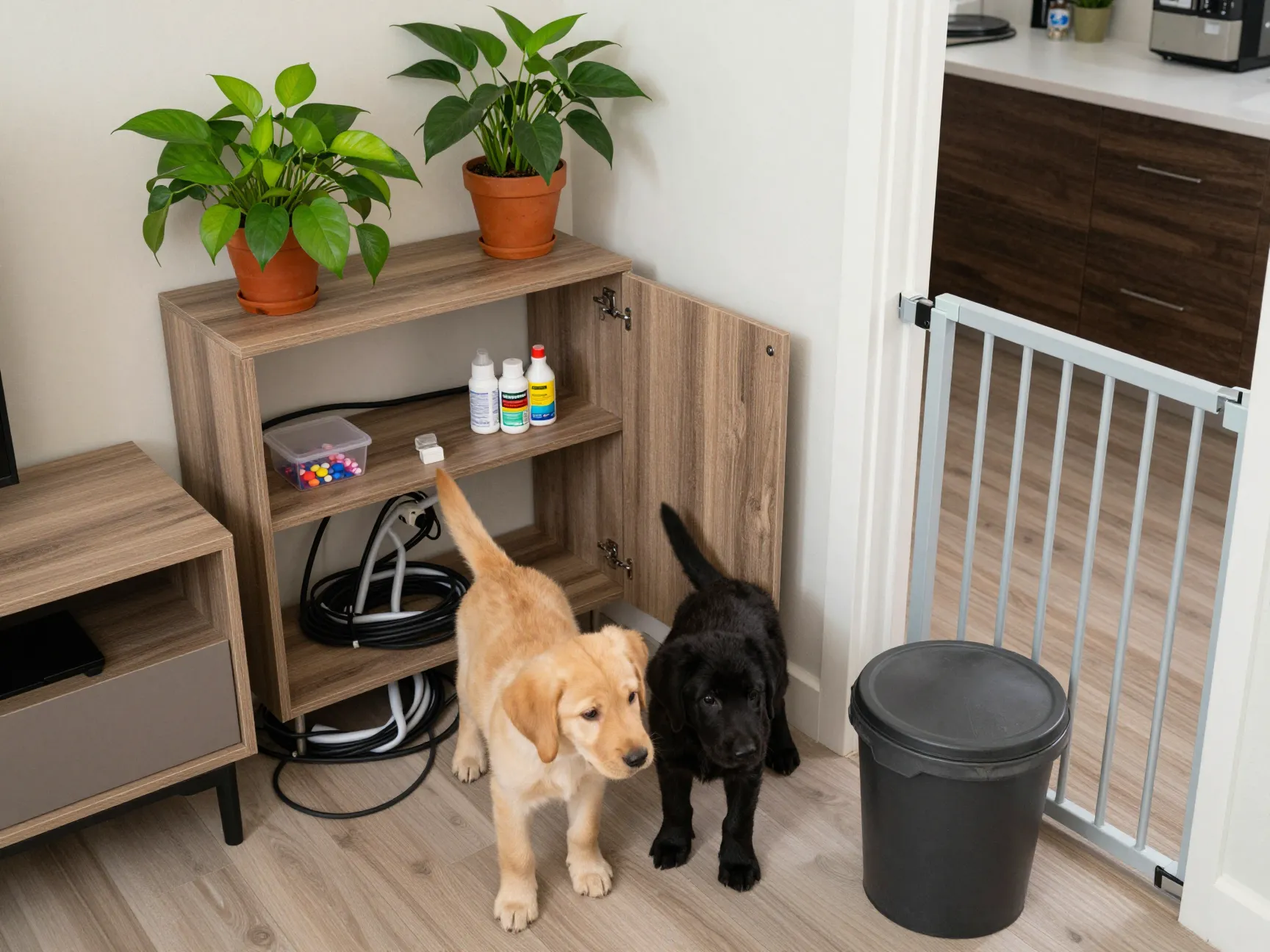
💡 “A safe home is the first gift you can give your new puppy.”
Before your Lab puppy sets a single paw inside your house, do a thorough safety sweep. Labrador puppies are famously curious and will chew, sniff, and explore everything within reach.
Here is what to secure or remove:
- 🔌 Electrical cables and cords — tuck them behind furniture or use cable covers
- 🌿 Toxic houseplants — common offenders include pothos, lilies, and philodendrons
- 💊 Medications and cleaning products — store these in locked cabinets
- 🧸 Small objects — coins, buttons, rubber bands, and children’s toys can be swallowed
- 🗑️ Trash cans — use bins with secure lids or store them behind closed doors
Consider using baby gates to limit your puppy’s access to certain rooms while they are learning the rules of the house. A confined, safe space helps your puppy feel secure and prevents accidents [1].
2. Gather All Essential Supplies in Advance
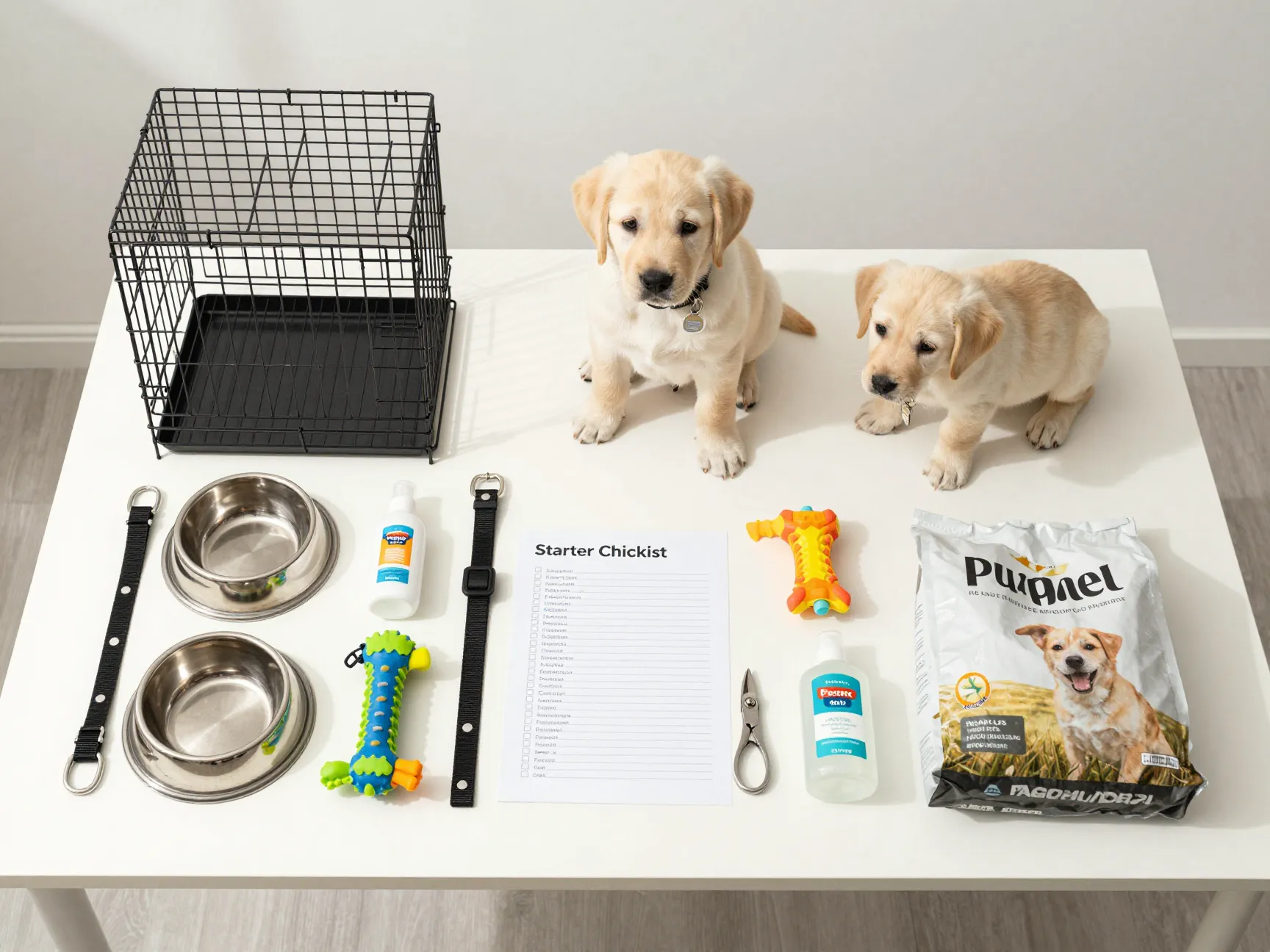
Walking into a pet store with a new puppy in tow is a recipe for stress and overspending. Instead, shop ahead and have everything ready on day one.
Your Labrador Puppy Starter Checklist:
| Supply | Purpose |
|---|---|
| Crate (wire or plastic) | Safe sleeping space; aids housetraining |
| Collar + ID tag | Identification and safety |
| Leash (4–6 ft) | Walks and training |
| Food & water bowls | Stainless steel is easiest to clean |
| Puppy-safe chew toys | Redirects chewing behavior |
| Puppy shampoo | Gentle formula for sensitive skin |
| Nail clippers | Regular grooming from an early age |
| Enzymatic cleaner | Removes odor from accidents |
| Puppy food | Breed-appropriate, large-breed formula |
Starting with the right tools makes every other tip on this list easier to implement [1][3].
3. Establish Veterinary Care Right Away
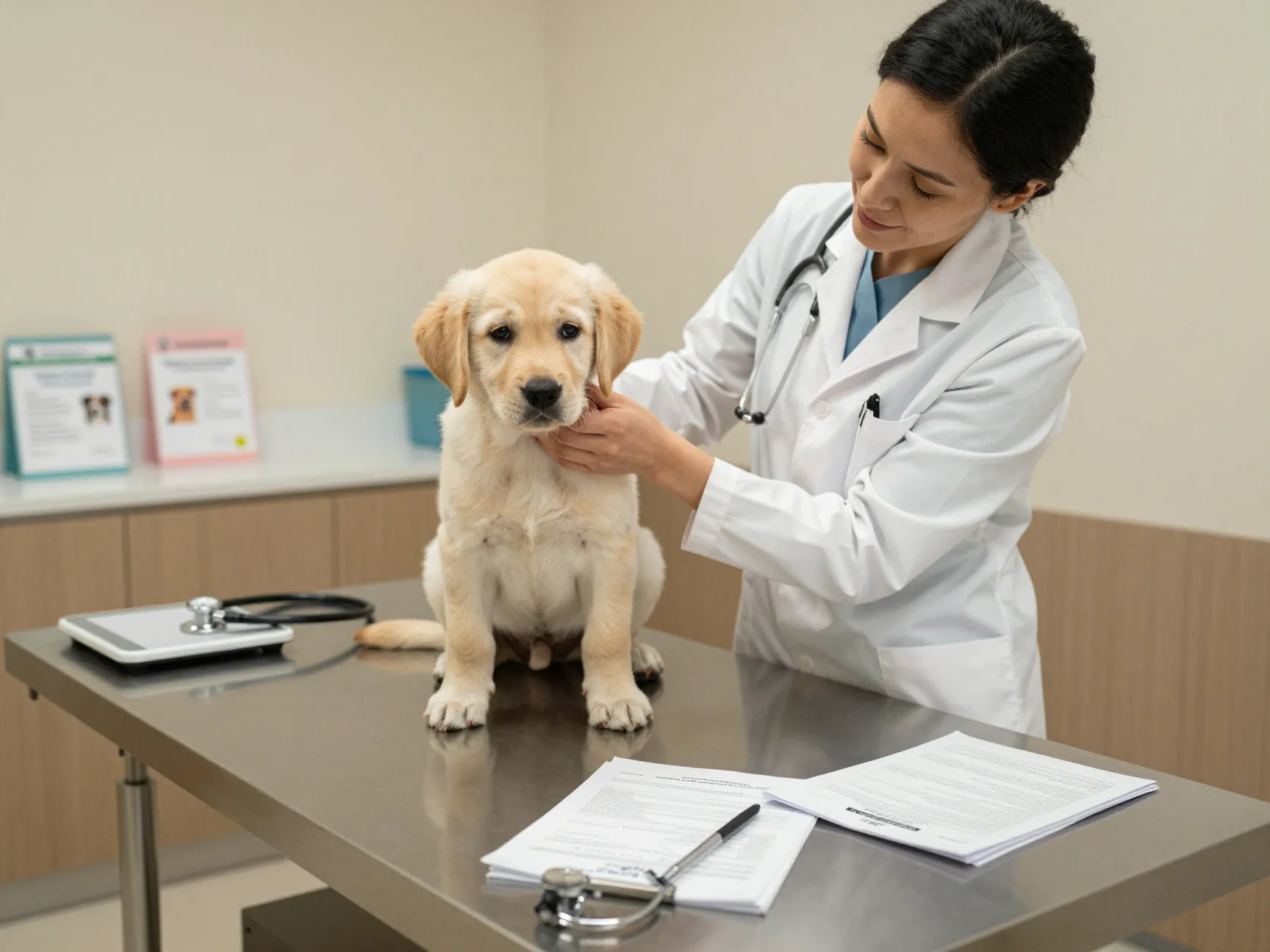
One of the most important steps you can take in the first week is finding a trusted veterinarian and scheduling your puppy’s first wellness visit.
What to expect at the first vet visit:
- A full physical examination
- Review of vaccination history from the breeder or rescue
- Discussion of a deworming and flea/tick prevention schedule
- Spay/neuter timing recommendations
- Nutrition and feeding guidance
Do not wait until something is wrong to find a vet. Building a relationship with a veterinary practice early means you will have a trusted resource for every question and concern that comes up — and with a Lab puppy, there will be plenty [1].
Pro tip: Ask your vet about pet insurance at this first visit. Labradors are prone to hip dysplasia, obesity, and ear infections, so coverage can save you significant money down the road.
4. Prioritize Sleep — Your Puppy Needs a Lot of It
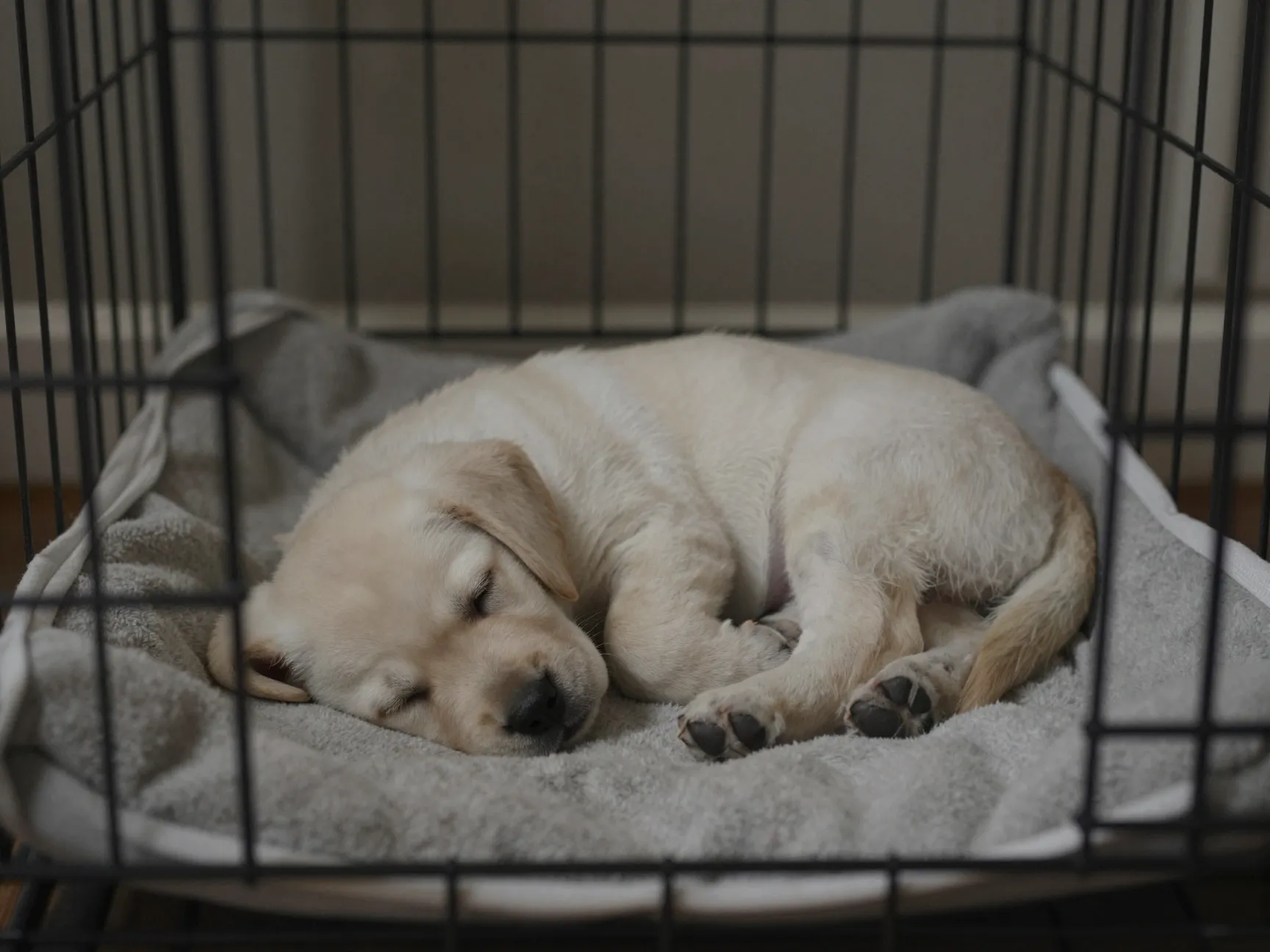
This one surprises many new owners: Labrador puppies sleep between 18 and 20 hours per day. That is not laziness — it is biology. Sleep is when puppies grow, develop their brains, and consolidate what they have learned [4].
Why sleep matters so much:
- 🧠 Brain development — neural pathways form during deep sleep
- 💪 Physical growth — muscles, bones, and organs develop during rest
- 📚 Learning consolidation — training lessons “stick” better after sleep
- 😌 Emotional regulation — an overtired puppy is a cranky, reactive puppy
How to support healthy sleep:
- Place the crate in a quiet, low-traffic area
- Use a crate cover or blanket to block out light
- Avoid overstimulating your puppy with play right before rest time
- Never wake a sleeping puppy unless necessary
Resist the urge to constantly interact with your new puppy. Rest periods are not wasted time — they are essential investment in your puppy’s development [4].
5. Feed the Right Amount, the Right Way
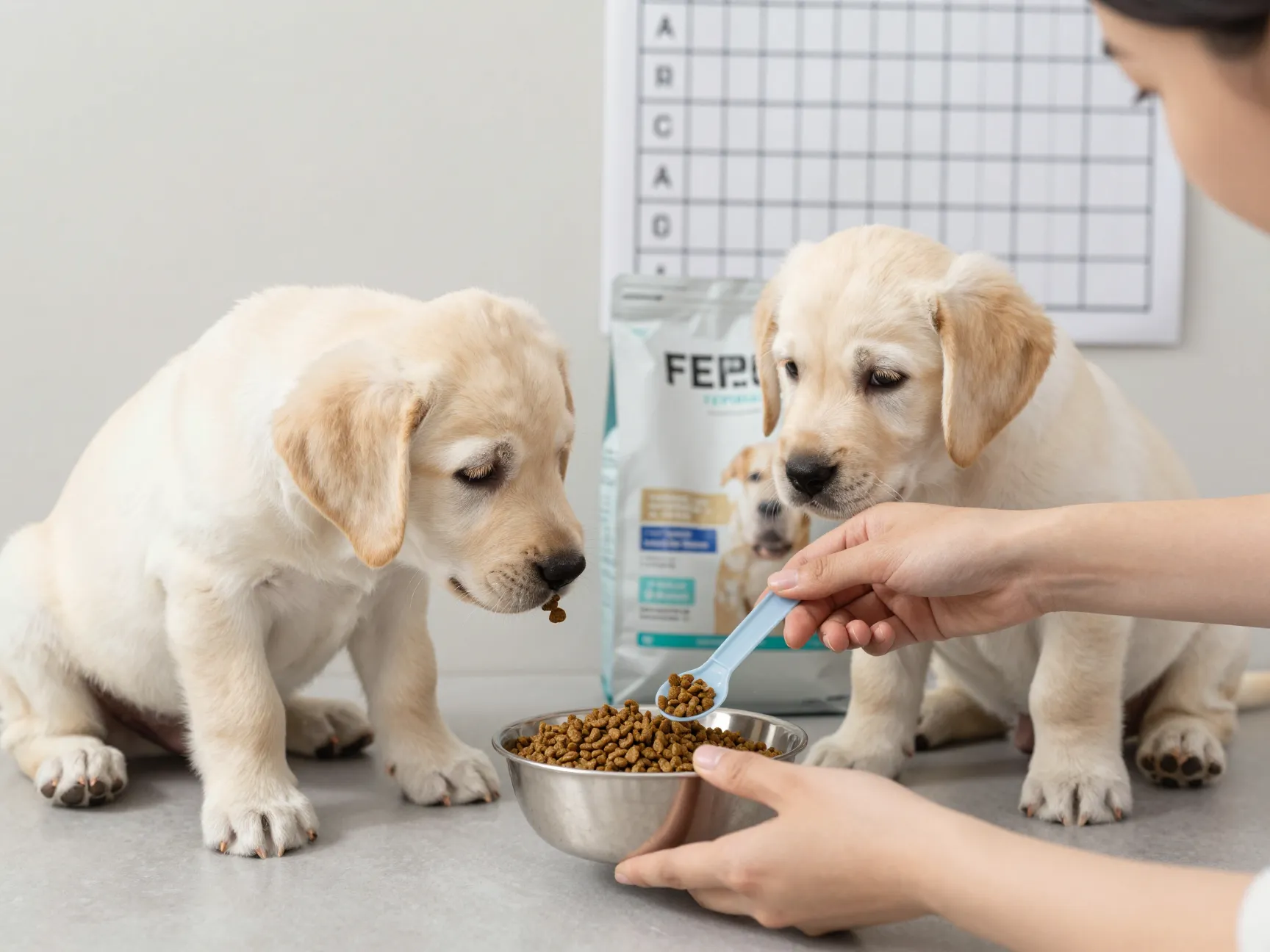
Labradors have a well-earned reputation for being food-obsessed. They will eat until they are sick if given the chance, which makes proper feeding habits one of the most critical things you can establish early.
Recommended feeding schedule for Lab puppies:
| Age | Meals Per Day |
|---|---|
| 8–12 weeks | 4 meals per day |
| 3–6 months | 3 meals per day |
| 6–12 months | 2–3 meals per day |
| 12+ months | 2 meals per day |
Key feeding principles:
- Always measure portions using the guidelines on your puppy food packaging (adjusted for your vet’s recommendations)
- Choose a large-breed puppy formula — these are specifically designed to support controlled bone growth
- Avoid free-feeding (leaving food out all day), which makes it nearly impossible to monitor intake
- Use mealtimes as training opportunities by asking your puppy to sit before placing the bowl down [4]
⚠️ Overfeeding a Lab puppy does not just cause weight gain — it can accelerate bone growth in ways that damage developing joints.
6. Start Training Early With Short, Positive Sessions

The best time to start training your Labrador Retriever puppy is the day they come home. Labs are highly intelligent and eager to please, which makes them excellent students — but only when training is done right.
The golden rules of Lab puppy training:
- Keep sessions short — 5 to 10 minutes, multiple times per day [2][4]
- Use positive reinforcement — reward desired behavior with treats, praise, or play
- Be consistent — use the same commands every time (sit, stay, come, leave it)
- End on a win — always finish a session with something your puppy does well
- Never punish — Labs respond poorly to harsh corrections; it damages trust
Start with these foundational commands:
- Sit — the gateway to all other commands
- Stay — builds impulse control
- Come (recall) — could save your dog’s life one day
- Leave it — essential for a breed that puts everything in its mouth
- Down — promotes calm, settled behavior
Consistency is everything. If one family member says “off” and another says “down” for the same behavior, your puppy will be confused. Agree on commands as a household and stick to them [2].
7. Socialize Your Puppy During the Critical Window
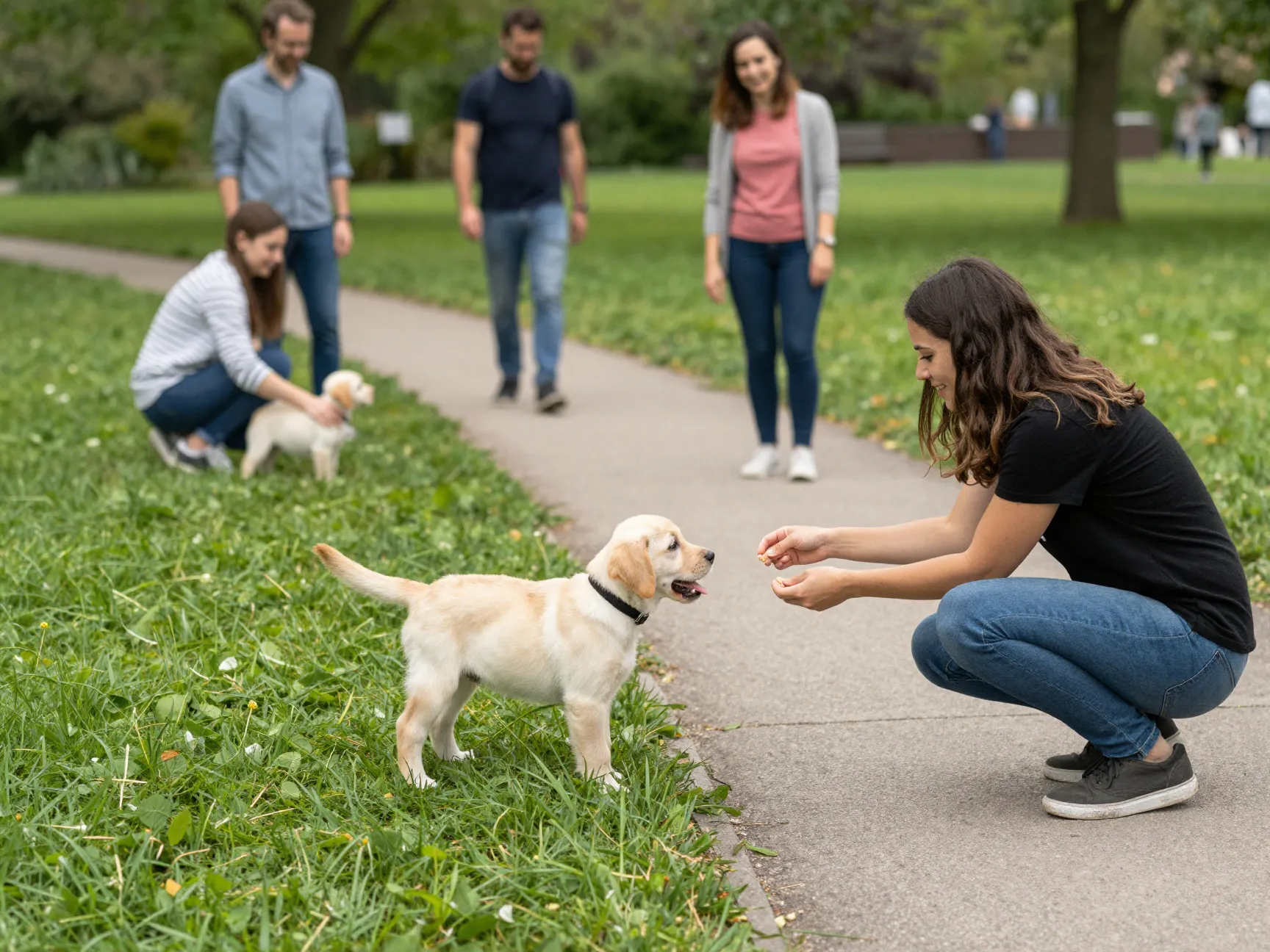
🌟 “The experiences your puppy has between 3 and 16 weeks old will shape their personality for life.”
The socialization window is one of the most important concepts in puppy development. Between 3 and 16 weeks of age, puppies are neurologically primed to accept new experiences as normal. After this window closes, new things become increasingly frightening rather than interesting [4].
What good socialization looks like:
- Exposing your puppy to different people — men, women, children, people wearing hats or uniforms
- Introducing different environments — sidewalks, grass, gravel, stairs, elevators
- Familiarizing them with sounds — traffic, vacuum cleaners, thunderstorms (use recordings safely)
- Positive encounters with other animals — well-vaccinated, friendly dogs are ideal
- Handling exercises — touching paws, ears, mouth, and tail so vet visits feel normal
Important note: Balance socialization with vaccination status. Talk to your vet about safe ways to socialize before your puppy is fully vaccinated — puppy classes held in clean indoor environments are often considered acceptable [4].
Socialization Do’s and Don’ts:
| ✅ Do | ❌ Don’t |
|---|---|
| Keep experiences positive | Force your puppy into scary situations |
| Reward calm, curious behavior | Overwhelm with too many stimuli at once |
| Go at your puppy’s pace | Skip socialization due to fear of germs |
| Use high-value treats | Use punishment if puppy seems nervous |
8. Introduce Leash Walking Gradually and Safely
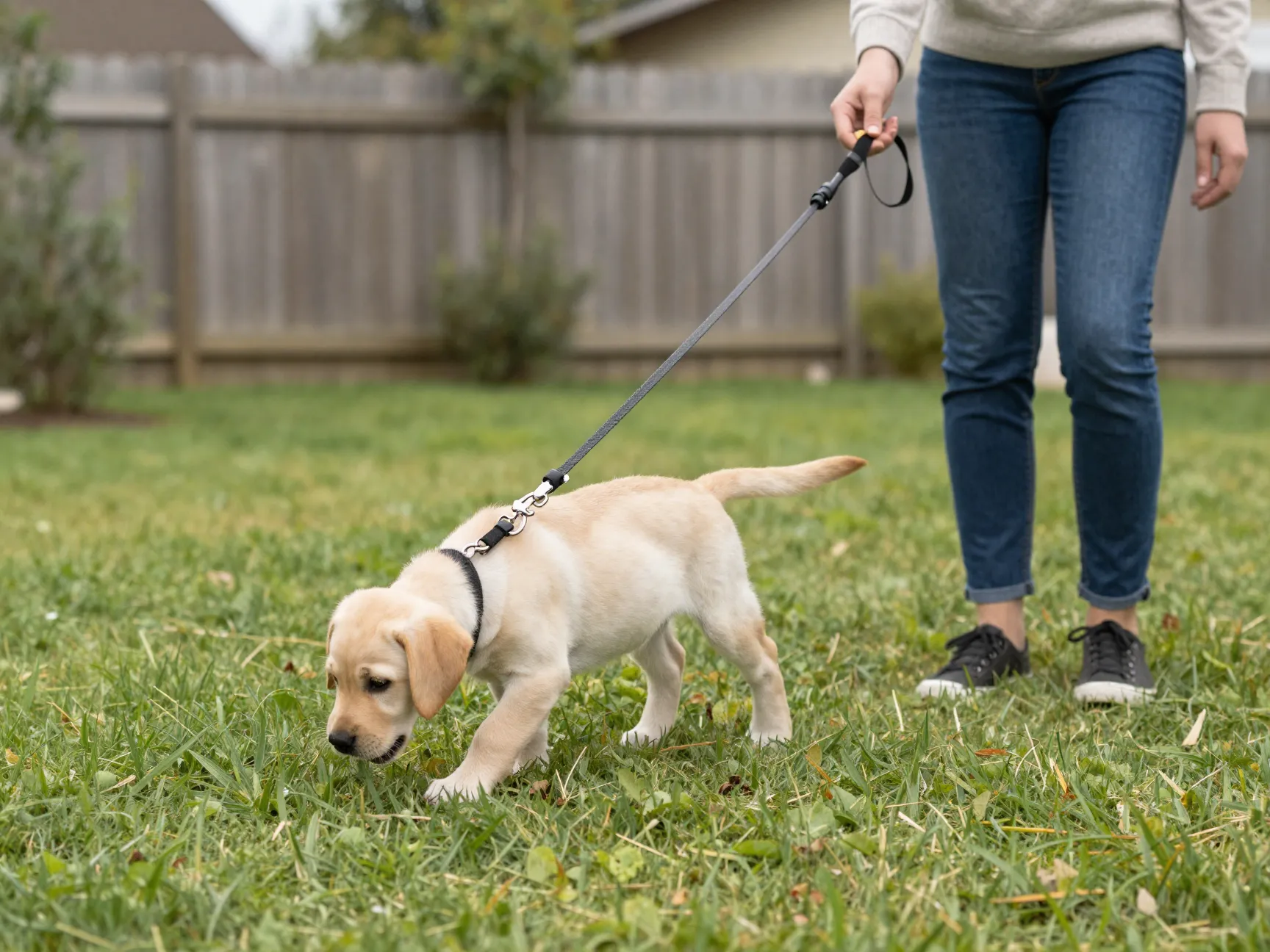
Leash training is not just about manners — it is also about protecting your puppy’s physical health. Labrador Retriever puppies have developing growth plates that are vulnerable to injury from excessive exercise.
The safe approach to leash training:
- Begin in quiet, low-distraction areas like your backyard or a calm street [6]
- Keep early walks to 5–10 minutes — short and sweet
- Let your puppy sniff and explore; do not rush the pace
- Reward loose-leash walking with treats and praise
- Avoid extended walks until your puppy is at least 14 months old — their joints and growth plates are still forming [6]
The “5-minute rule” is a helpful guideline:
Many veterinarians and breeders recommend no more than 5 minutes of exercise per month of age, twice daily. So a 3-month-old puppy should get no more than 15 minutes of structured walking at a time.
Additional physical safety tips:
- Avoid prolonged stair climbing until 8 months of age to protect growth plates [6]
- Do not allow jumping on and off furniture repeatedly
- Skip high-impact activities like fetch on hard surfaces until your Lab is fully grown
9. Establish a Consistent Daily Routine
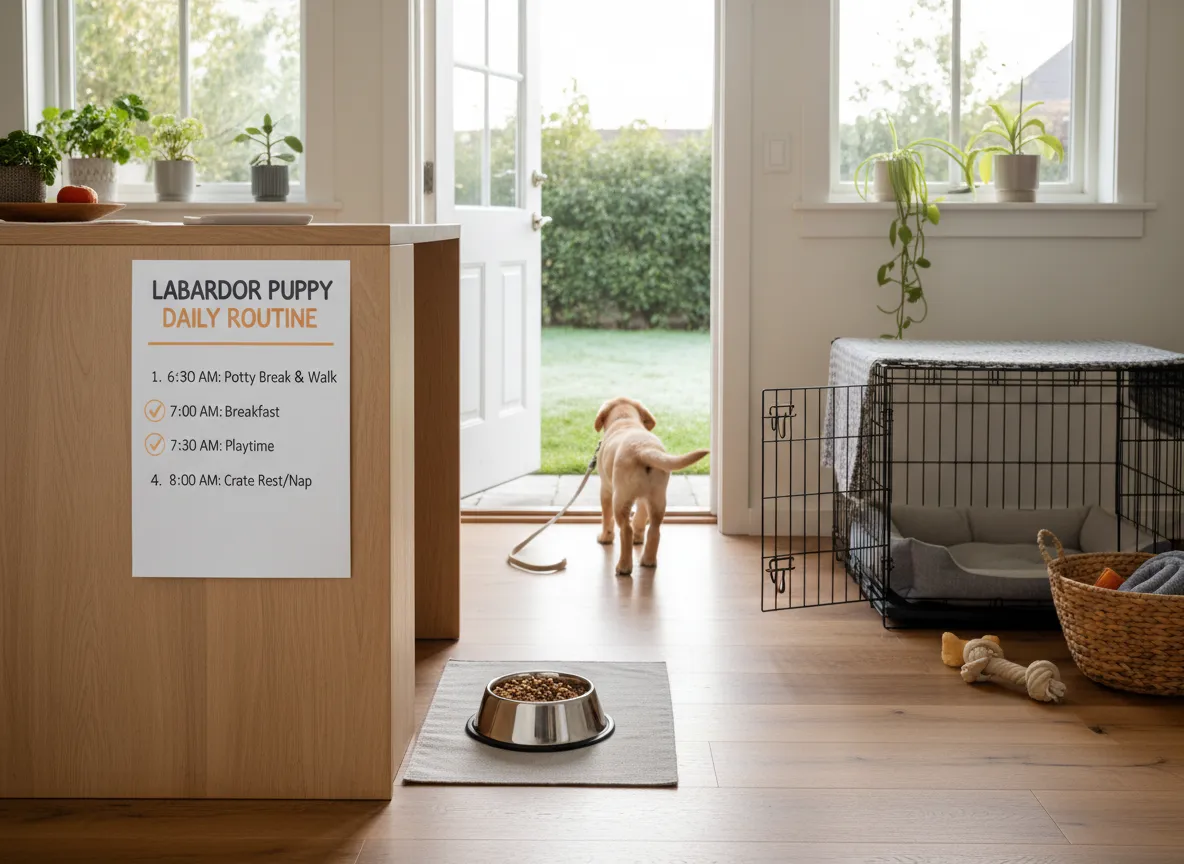
Dogs are creatures of habit, and Labrador Retrievers thrive on predictability. A consistent daily routine reduces anxiety, speeds up housetraining, and makes your puppy feel secure in their new home.
A sample daily routine for a Lab puppy:
| Time | Activity |
|---|---|
| 7:00 AM | Wake up, immediate outdoor potty break |
| 7:15 AM | Breakfast (measured portion) |
| 7:30 AM | Short play session or training (5–10 min) |
| 8:00 AM | Crate rest / nap |
| 12:00 PM | Lunch + outdoor potty break |
| 12:30 PM | Short walk or socialization activity |
| 1:00 PM | Crate rest / nap |
| 5:00 PM | Dinner + outdoor potty break |
| 5:30 PM | Training session + family interaction |
| 8:00 PM | Last potty break |
| 8:30 PM | Settle in crate for the night |
Why routine works:
- Your puppy learns when to expect food, play, and rest — reducing demand behaviors like whining or barking
- Potty training becomes faster because your puppy’s body clock syncs with the schedule
- Stress levels drop because the puppy knows what comes next [2]
Stick to your routine even on weekends. The more consistent you are in the first few months, the faster your Lab puppy will settle into being a calm, well-behaved companion.
Applying All 9 Essential Tips for Your New Labrador Retriever Dog Puppy Together
The real magic happens when you apply all 9 Essential Tips for Your New Labrador Retriever Dog Puppy as a unified system rather than isolated actions. Each tip reinforces the others:
- A safe, well-stocked home (Tips 1 & 2) gives your puppy the right environment to learn.
- Veterinary care and proper nutrition (Tips 3 & 5) build the physical foundation.
- Sleep and routine (Tips 4 & 9) provide the mental and emotional stability your puppy needs to absorb training.
- Training, socialization, and leash work (Tips 6, 7 & 8) build the skills and confidence that make your Lab a joy to live with.
Think of these tips as the legs of a table — remove one and the whole thing wobbles.
Conclusion: Your Labrador Retriever Puppy Journey Starts Now 🐕
Raising a Labrador Retriever puppy is a commitment, but it is one of the most rewarding things you will ever do. By following these 9 Essential Tips for Your New Labrador Retriever Dog Puppy, you are setting yourself and your Lab up for a lifetime of health, happiness, and deep connection.
Your actionable next steps for this week:
- Walk through your home today and complete a puppy-proofing sweep.
- Order or purchase your essential supplies before your puppy arrives.
- Book a vet appointment within the first week of bringing your puppy home.
- Write out a daily routine and share it with everyone in your household.
- Start one 5-minute training session on day one — even just teaching your puppy their name.
The effort you put in during these first few months will pay dividends for the next 10 to 15 years. Your Lab is counting on you — and with these tips in hand, you are more than ready. 🐾
References
[1] Labrador Puppies 101: A Comprehensive Guide To Welcoming A Lab Into Your Home – https://www.doggieduderanchia.com/blog/1108680-labrador-puppies-101-a-comprehensive-guide-to-welcoming-a-lab-into-your-home
[2] Training Tips For Your New Labrador Puppy – https://berrycreeklabs.com/training-tips-for-your-new-labrador-puppy/
[3] Everything You Need For Your Labrador Retriever Puppy – https://lordsandlabradors.com/blogs/news/p-everything-you-need-for-your-labrador-retriever-puppy
[4] Your New Labrador Puppy: The Essentials – https://www.joiipetcare.com/blogs/advice/your-new-labrador-puppy-the-essentials
[5] How To Train A Labrador Retriever – https://andreaarden.com/dog-training/how-to-train-a-labrador-retriever/
[6] New Puppy Guide – https://www.pawlinglabs.com/new-blog/zrpg4cpykrwlhm5pg696habaay5aey