8 Ways to Preserve the Precious Footprint of a Dog (Without Harming the Planet)
There is something deeply moving about a dog’s paw print pressed into soft earth — a small, perfect mark left behind by a creature who loves you unconditionally. But there is another kind of footprint your dog leaves behind, one that is invisible yet far-reaching: their environmental footprint. If you have ever wondered how your furry best friend fits into the bigger picture of planetary health, you are not alone. In 2026, more pet owners than ever are asking this question — and the answers are both surprising and empowering.
The good news? Exploring the 8 ways to preserve the precious footprint of a dog does not mean loving your pet any less. It means loving the world they live in just as much. This guide walks you through practical, science-backed strategies to reduce your dog’s environmental impact while keeping their tail wagging every single day.
Key Takeaways 🐾
- Dog ownership has a measurable environmental cost — from food production to waste disposal — but every owner can take meaningful steps to reduce it.
- Diet is the single biggest lever: switching to sustainable, locally sourced, or novel-protein dog food can dramatically cut your dog’s carbon pawprint.
- Waste management matters more than most people think — not all “biodegradable” bags are created equal, and composting is a powerful alternative.
- Small swaps add up: eco-friendly grooming products, natural cleaners, and DIY toys collectively make a real difference.
- Spaying or neutering your dog is one of the most impactful long-term steps you can take for both animal welfare and resource conservation.
Why Your Dog’s Environmental Footprint Deserves Attention
Before diving into the 8 ways to preserve the precious footprint of a dog, it helps to understand the scale of the issue. Research shows that dry pet food alone accounts for roughly 2.9% of annual U.S. carbon dioxide equivalent emissions and uses about 1.2% of agricultural land. When you zoom out further, dogs and cats collectively produce about 30% as much feces, by mass, as all Americans combined, and their diets account for an estimated 25–30% of the environmental impacts from animal production — including land use, water consumption, fossil fuel use, and more.
These numbers are not meant to make you feel guilty. They are meant to show you that your choices as a pet owner genuinely matter. The strategies below are practical, affordable, and — most importantly — they work.
💬 “Being a responsible dog owner in 2026 means thinking beyond the leash. It means thinking about the legacy we leave behind — for our dogs, and for the planet they share with us.”
The 8 Ways to Preserve the Precious Footprint of a Dog
1. Rethink What Goes Into Your Dog’s Bowl
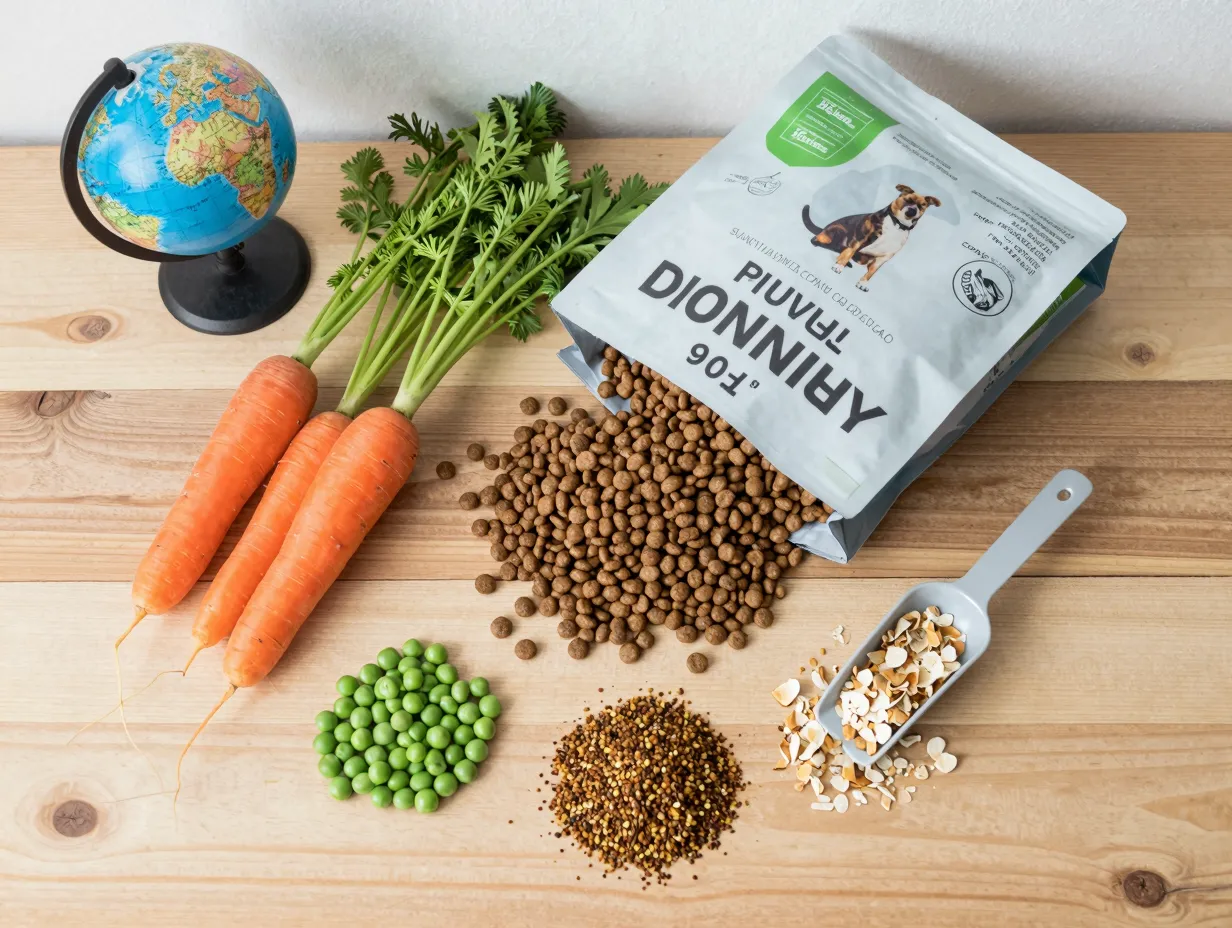
Food is the foundation of your dog’s environmental impact, and it is the area where you can make the biggest difference fastest.
Conventional dog food often relies on meat from factory-farmed animals, which is resource-intensive to produce. Here is what to look for instead:
| Food Choice | Environmental Benefit |
|---|---|
| Locally sourced ingredients | Reduces transportation emissions |
| Sustainably sourced fish | Protects marine ecosystems |
| Ethically raised meats | Lower land and water use |
| Novel proteins (insect, plant-based) | Dramatically lower carbon output |
| Certified sustainable brands | Verified environmental standards |
The science is encouraging: dogs are biologically capable of obtaining the amino acids they need without relying exclusively on conventional meat. The canine body can actually convert certain amino acids into others, which means plant-based or novel protein diets — when properly formulated by a veterinary nutritionist — can be both nutritionally complete and far gentler on the planet.
Practical tip: Look for dog food brands that use 100% renewable energy in their manufacturing process. Some companies now power their entire kibble production with renewable electricity, which cuts the carbon cost of every bag you buy.
2. Buy Dog Food in Bulk to Cut Packaging Waste
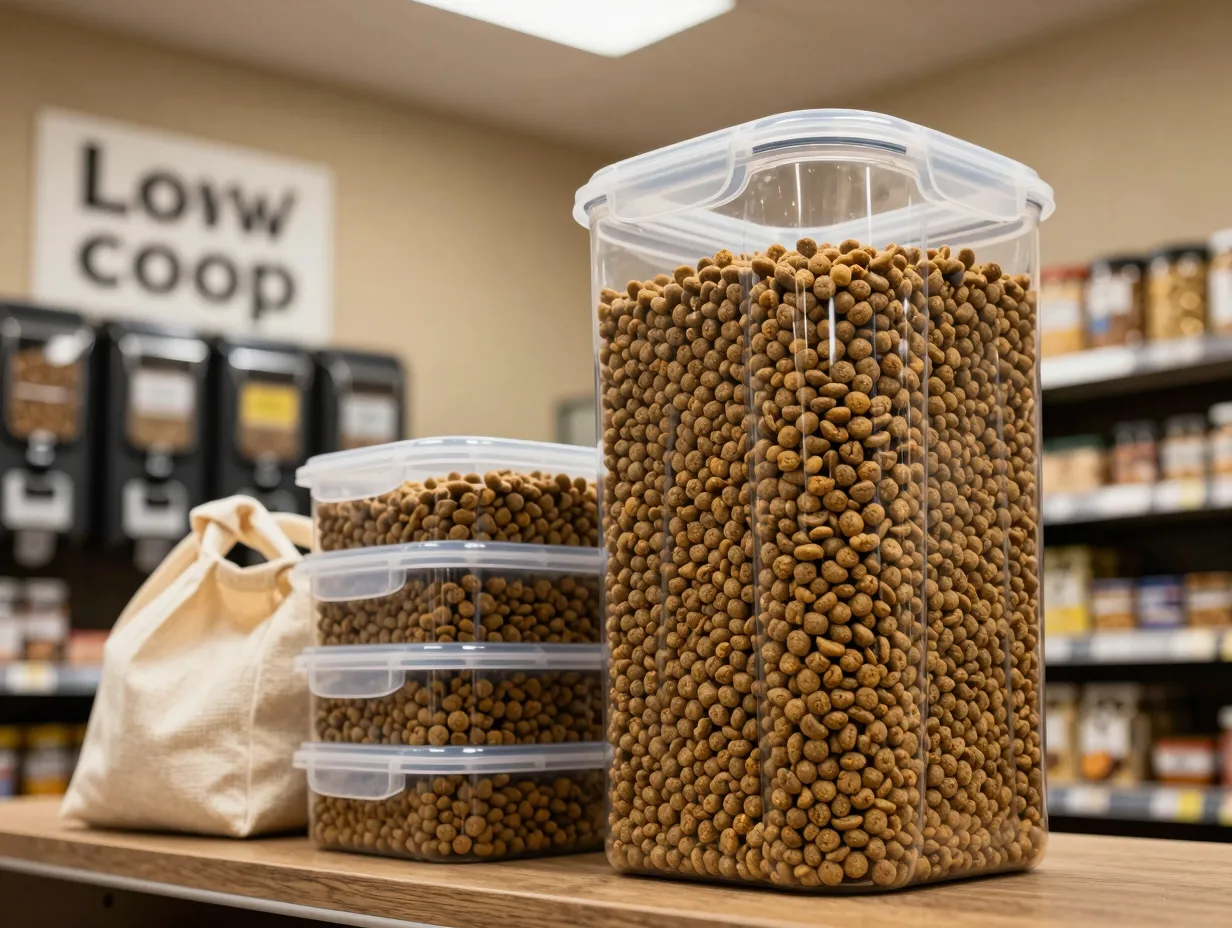
Once you have found a sustainable food brand your dog loves, buy it in bulk. This one habit tackles two environmental problems at once:
- It reduces packaging waste — fewer bags, fewer boxes, less plastic in landfills.
- It cuts transportation emissions — fewer deliveries mean fewer trucks on the road.
Purchasing locally whenever possible amplifies both benefits. A large bag bought at a local pet supply store or co-op has a far smaller footprint than a series of small bags shipped individually to your door.
Storage tip: Invest in a quality airtight food storage container to keep bulk kibble fresh. Look for containers made from recycled or BPA-free materials to stay consistent with your eco goals. 🐶
3. Switch to Truly Biodegradable Waste Bags
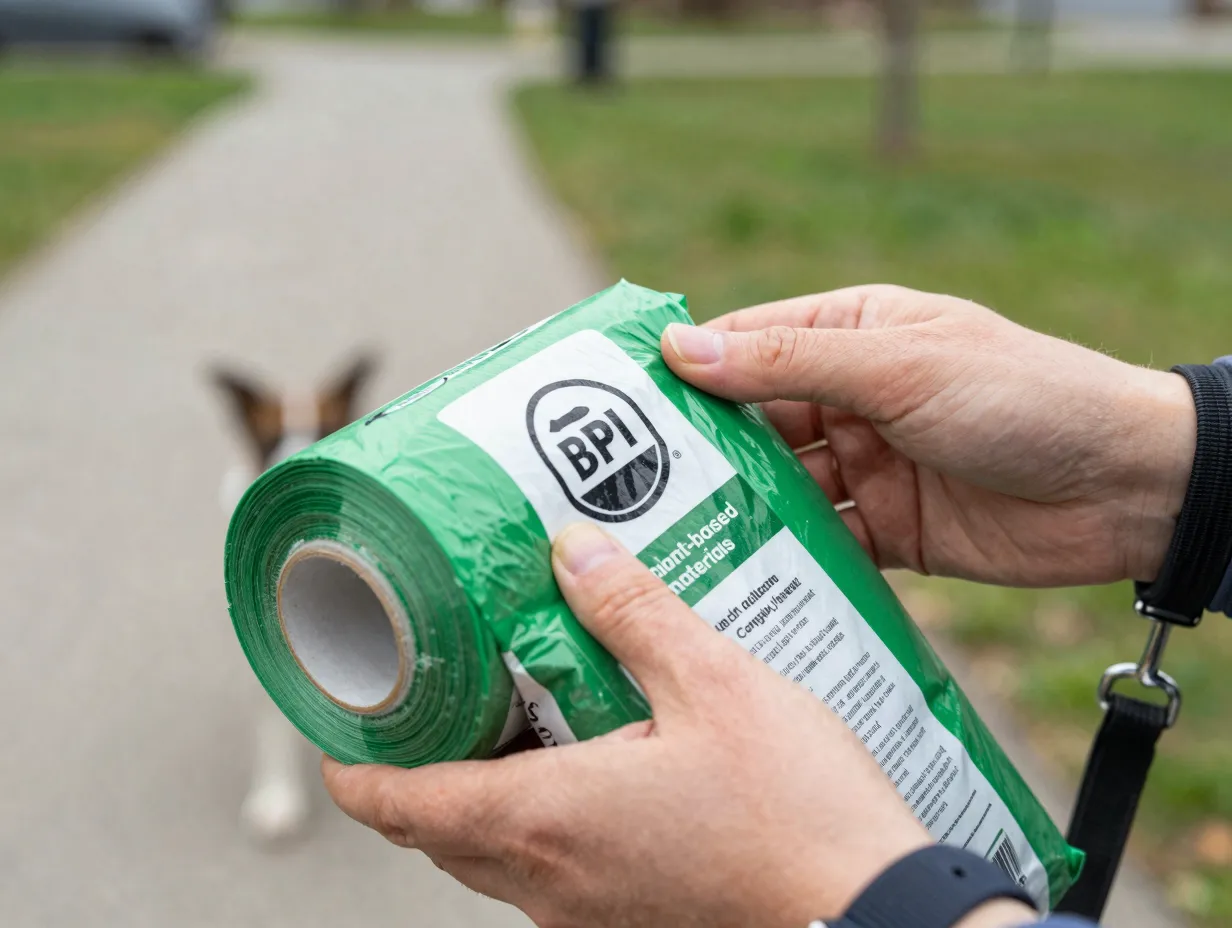
Here is something that might surprise you: most bags marketed as “biodegradable” are not actually biodegradable in any meaningful timeframe. Many are made from bioplastics that take just as long to break down as conventional plastic — sometimes centuries.
The key is to look for bags certified by the Biodegradable Products Institute (BPI). The BPI logo on a bag means it has been independently tested and verified to break down properly in a composting environment. Without that certification, you are likely just buying greenwashed plastic.
💡 Quick checklist when buying waste bags:
- ✅ BPI-certified logo present
- ✅ Made from plant-based materials (cornstarch, vegetable oils)
- ✅ No misleading “eco” language without third-party verification
- ❌ Avoid bags labeled only as “degradable” without certification
This is a small swap — a few extra seconds of label-reading — that makes a genuine difference over the thousands of bags you will use across your dog’s lifetime.
4. Compost Your Dog’s Waste the Right Way
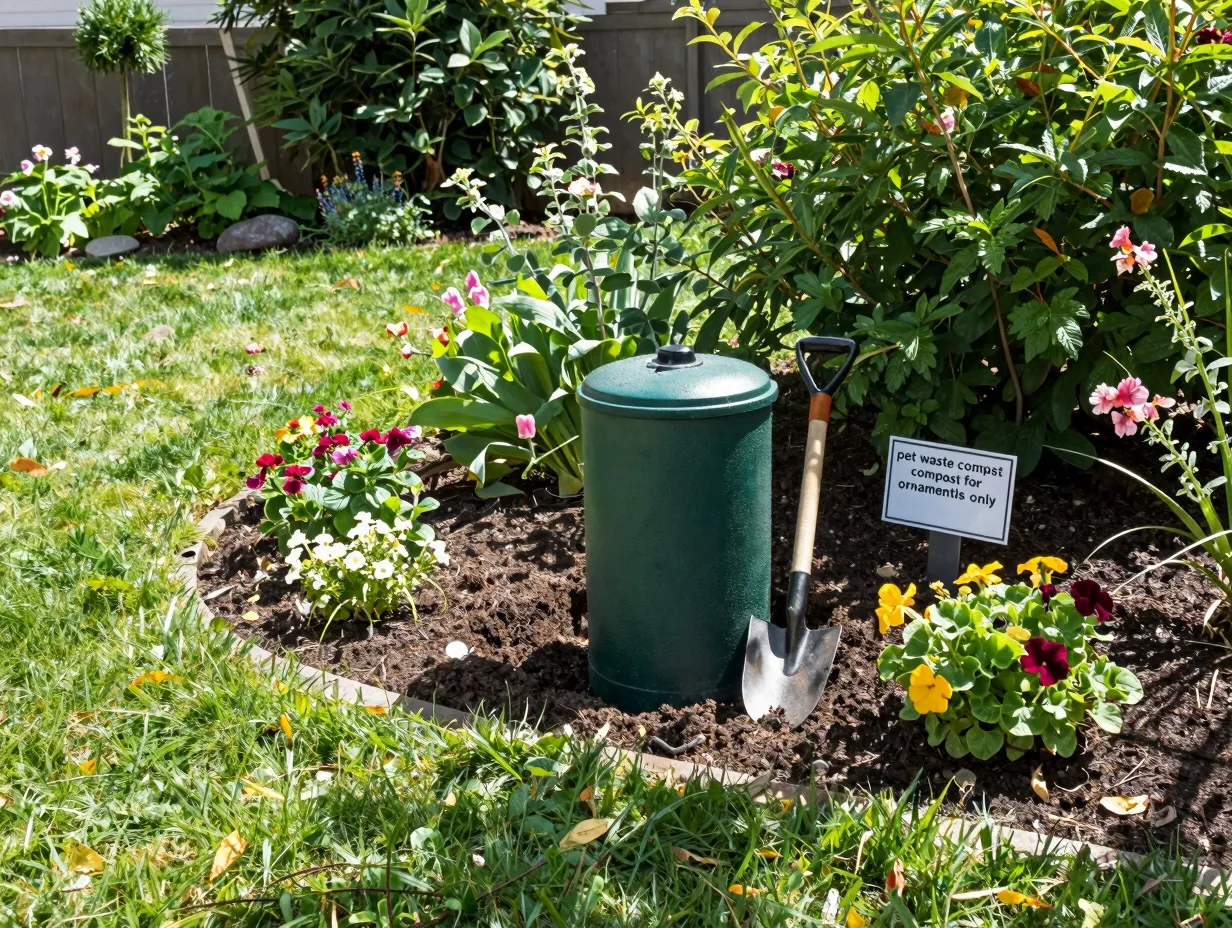
Taking waste management one step further, composting dog waste is one of the most effective ways to keep it out of landfills entirely. When dog waste goes into a regular trash bag and then a landfill, it produces methane — a greenhouse gas far more potent than carbon dioxide — as it breaks down without oxygen.
Systems like the Doggie Dooley work like a miniature septic system buried in your yard. Waste breaks down naturally using enzymes and water, returning safely to the soil without the methane problem.
Important safety note: The compost produced from dog waste should never be used on vegetable gardens or edible plants, as it can contain pathogens. Use it only on ornamental plants, lawns, or dispose of it through your local municipal composting program if they accept pet waste.
| Waste Disposal Method | Environmental Impact |
|---|---|
| Landfill (plastic bag) | High — methane production, plastic waste |
| Certified biodegradable bag | Medium — breaks down faster, still landfill |
| Doggie Dooley / in-ground composter | Low — returns nutrients to soil naturally |
| Municipal pet waste composting | Low — professionally managed breakdown |
5. Choose Eco-Friendly Grooming Products

Every time you bathe your dog, the water that runs down the drain carries with it whatever was in your shampoo. Many conventional pet grooming products contain harsh synthetic chemicals that are not only potentially irritating to your dog’s skin but also pollute local waterways when they wash away.
In 2026, the market for natural, biodegradable pet grooming products has never been better. Here is what to look for on the label:
- Cruelty-free certification (no animal testing)
- Biodegradable formula (breaks down safely in water systems)
- Free from parabens, sulfates, and artificial fragrances
- Plant-based active ingredients (aloe vera, oatmeal, coconut oil)
Beyond shampoo, consider eco-friendly grooming tools as well — bamboo brushes, compostable grooming wipes, and refillable product containers all contribute to a lower footprint. Your dog gets a spa day; the planet gets a break. 🛁
6. Replace Chemical Cleaners with Natural Alternatives
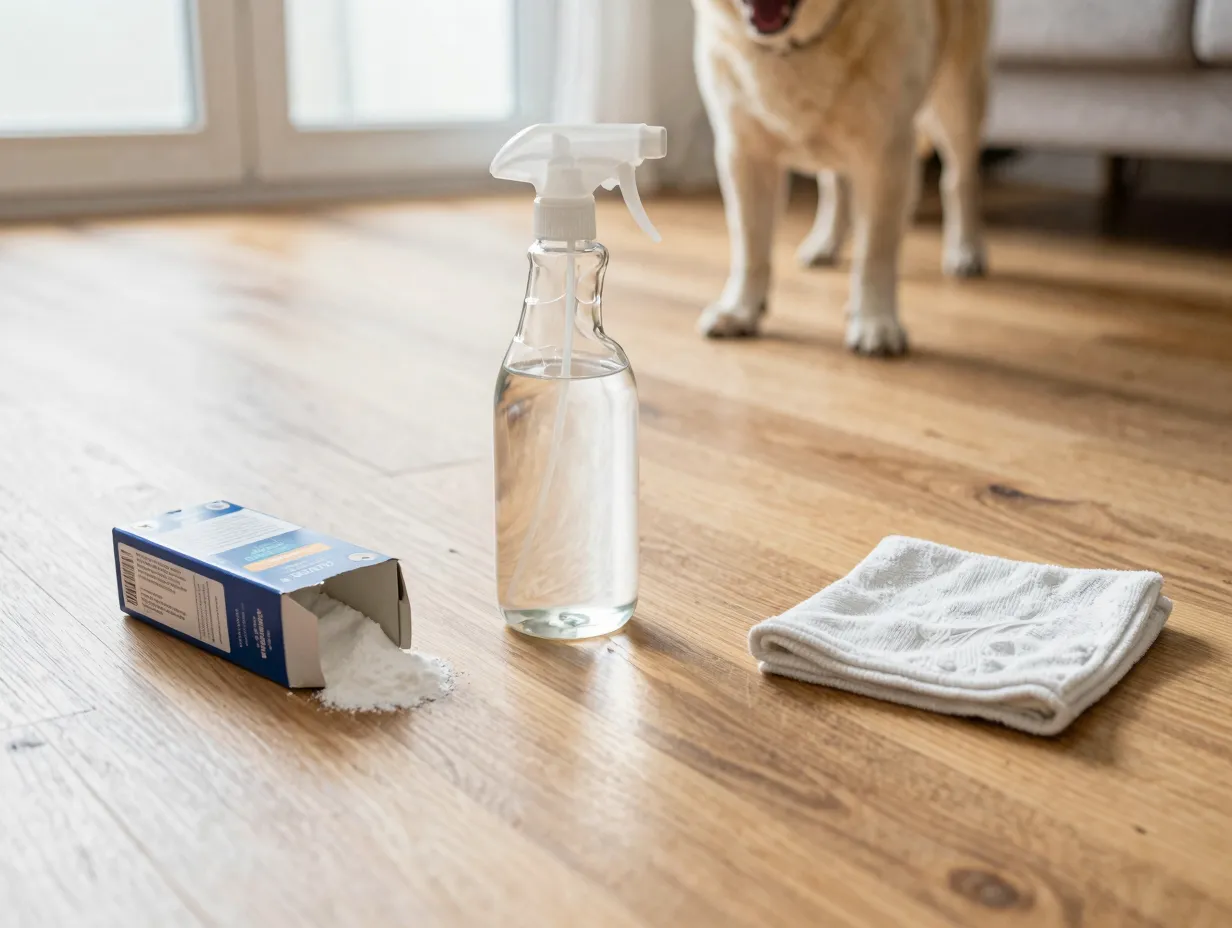
Your dog tracks the outside world inside every day — and keeping your home clean is a constant reality of dog ownership. The problem is that many commercial cleaning products contain harsh chemicals that pollute waterways and degrade indoor air quality, affecting both your dog’s health and the broader environment.
Dogs are particularly vulnerable to chemical exposure because they spend so much time on floors and frequently groom themselves by licking their paws. What is on your floor ends up in your dog.
Natural alternatives that actually work:
- White vinegar and water — excellent for hard floor disinfection and odor neutralization.
- Baking soda — absorbs odors from carpets and upholstery naturally.
- Castile soap — plant-based, biodegradable, effective on most surfaces.
- Enzyme-based pet stain cleaners — specifically designed to break down pet waste organically, without synthetic chemicals.
When shopping for commercial cleaners, look for products certified by EPA Safer Choice or equivalent environmental standards. These products have been verified to use ingredients that are safer for people, pets, and the planet.
7. Spay or Neuter Your Dog
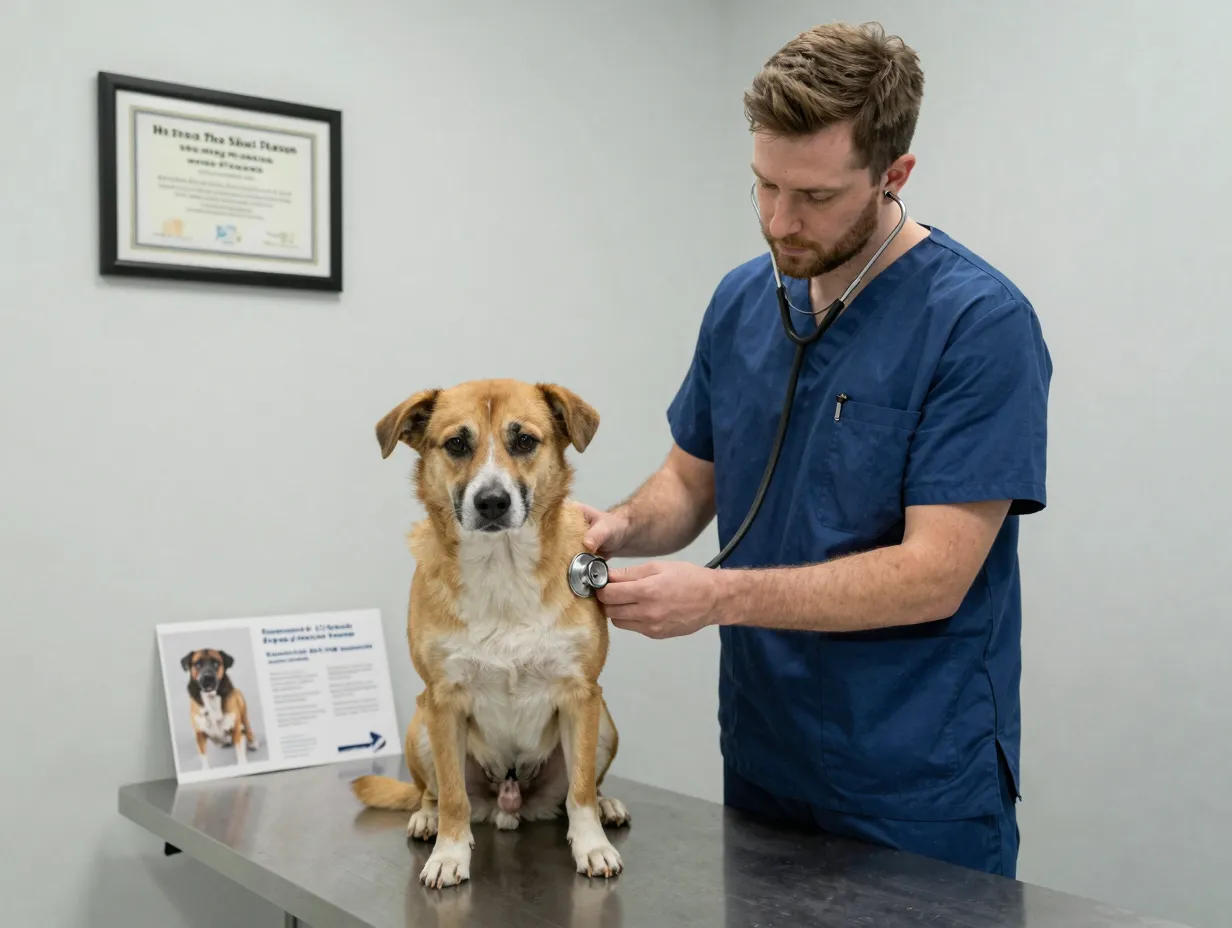
This one might feel like a departure from the others, but it is arguably one of the most impactful long-term environmental choices a dog owner can make.
Here is the logic: every unplanned litter of puppies means more dogs in the world, more dogs potentially entering shelters, and more resources consumed — food, water, energy, fuel for transport, and the production of all the products those animals need. Animal shelters themselves consume significant resources to operate.
By spaying or neutering your dog, you help:
- Reduce the shelter population and the resources required to house and care for animals.
- Lower the demand for intensive animal production associated with pet food.
- Decrease the environmental burden of transporting, feeding, and caring for unwanted animals.
Beyond the environmental angle, spaying and neutering also has well-documented health benefits for individual dogs, including reduced risks of certain cancers and infections. It is a win on multiple levels. 🐕
💬 “One of the most sustainable choices you can make for your dog is also one of the most responsible ones for your community.”
8. DIY Enrichment and Sustainable Toy Choices
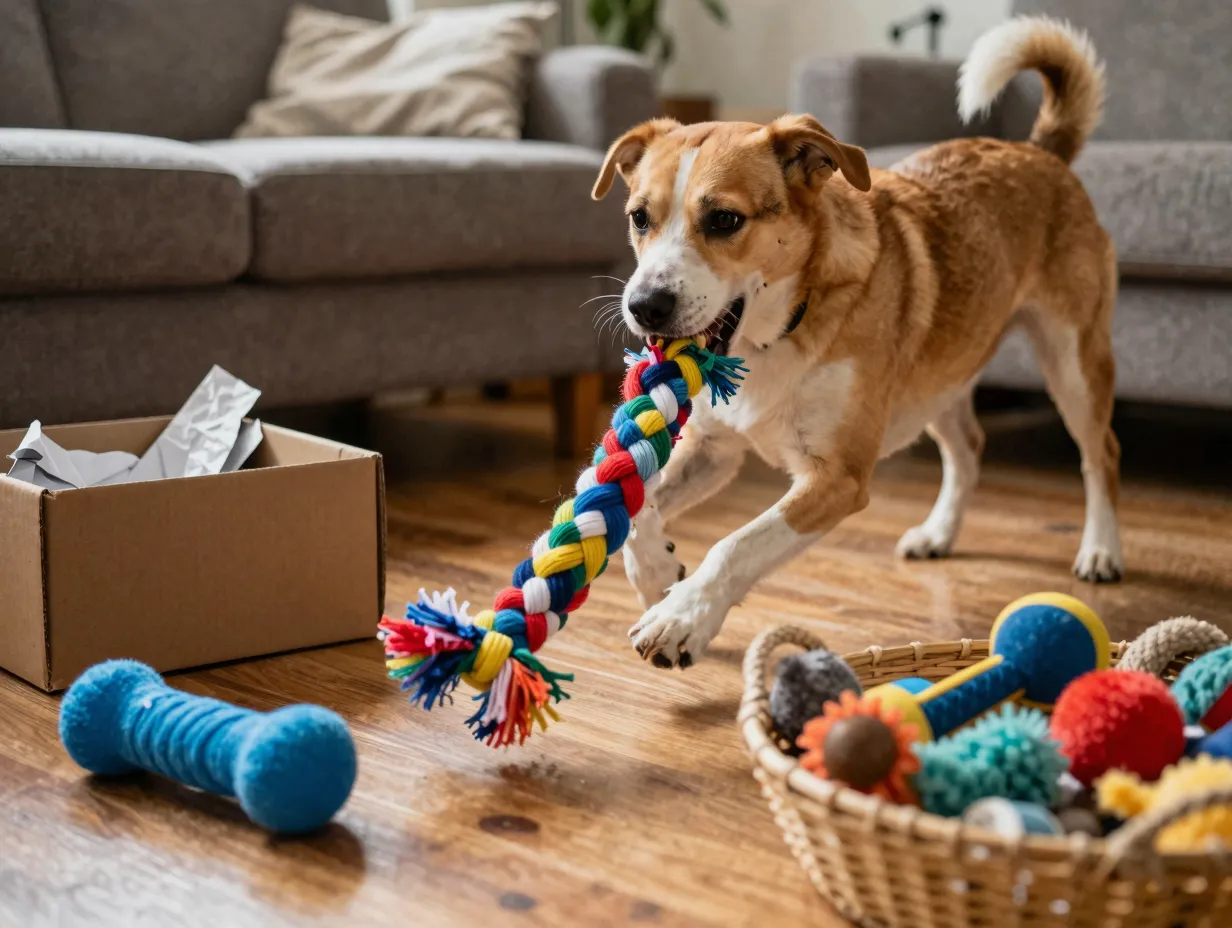
The pet toy industry generates enormous amounts of plastic waste every year. Dogs — especially puppies and high-energy breeds — can go through toys at a startling rate, and most of those toys end up in landfills.
The good news is that dogs do not care about packaging. They care about novelty, texture, and the engagement they get from play. This makes DIY enrichment one of the easiest sustainable swaps you can make.
Ideas for DIY dog enrichment using household items:
- Old t-shirts braided into tug toys
- Cardboard boxes filled with crinkled paper for sniff-and-seek games
- Muffin tins with tennis balls covering hidden treats (a classic puzzle feeder)
- Frozen Kongs filled with plain yogurt, banana, or peanut butter
- Empty plastic bottles (supervised only) for batting and rolling games
When you do buy toys, look for options made from natural rubber, organic cotton, recycled materials, or sustainably harvested wood. Several small companies now specialize in zero-waste pet toys, and supporting them sends a market signal that sustainability matters to consumers.
Bonus tip: Rotate toys in and out of storage rather than leaving them all available at once. Dogs experience “new” toys more intensely when they have not seen them in a while — meaning you buy less and your dog stays more engaged. 🎾
A Summary: The 8 Ways to Preserve the Precious Footprint of a Dog
Here is a quick reference to all eight strategies covered in this guide:
| # | Strategy | Primary Benefit |
|---|---|---|
| 1 | Switch to sustainable dog food | Reduces carbon emissions from food production |
| 2 | Buy food in bulk | Cuts packaging and transportation waste |
| 3 | Use BPI-certified biodegradable bags | Prevents plastic pollution |
| 4 | Compost dog waste | Eliminates methane from landfills |
| 5 | Choose eco-friendly grooming products | Protects waterways and your dog’s skin |
| 6 | Replace chemical cleaners with natural options | Improves air quality and ecosystem health |
| 7 | Spay or neuter your dog | Reduces shelter population and resource demand |
| 8 | DIY enrichment and sustainable toys | Cuts plastic toy waste |
Conclusion: Leave the Right Kind of Paw Print
The 8 ways to preserve the precious footprint of a dog outlined in this guide are not about perfection. They are about progress. You do not need to overhaul everything overnight. Start with one change — maybe switching to BPI-certified waste bags this week, or buying your next bag of food in bulk — and build from there.
Every small action compounds. Over the lifetime of a dog, the choices you make about their food, their waste, their grooming, and their toys add up to something genuinely meaningful. You are not just reducing emissions or cutting plastic waste. You are modeling a way of living that honors both the animals we love and the world we all share.
Your actionable next steps for this week:
- Check the label on your current waste bags — do they carry BPI certification?
- Research one sustainable dog food brand available in your area.
- Try one DIY enrichment activity using something already in your home.
- Replace one chemical cleaner with a natural alternative.
- If your dog is not yet spayed or neutered, schedule a conversation with your vet.
The paw print your dog leaves in the mud after a rainy walk is precious. Make sure the one they leave on the planet is something you are proud of, too. 🐾