
8 Vital Insights on a Labrador Retriever Mixed With Pitbull
Imagine a dog that greets every stranger like a long-lost friend, follows you from room to room like a loyal shadow, and still has enough energy to outrun you at the park — twice. That’s the magic of a Labrador Retriever mixed with Pitbull, also known as the Labrabull or Pitador. In 2026, this hybrid breed continues to win hearts across households, yet many prospective owners don’t fully understand what they’re signing up for. These 8 vital insights on a Labrador Retriever mixed with Pitbull will give you the full picture — from their impressive lifespan to their surprising training ability — so you can decide if this powerhouse pup belongs in your home.

Key Takeaways 🐾
- The Labrabull typically lives 10–15 years, often benefiting from hybrid vigor compared to purebred parents [1]
- These dogs weigh 40–90 pounds and need experienced, active owners — not recommended for first-time dog parents [4]
- They are highly trainable and deeply social, combining the best traits of both parent breeds [1][2]
- Obesity and joint issues are the top health concerns to monitor throughout their lives [3]
- Early socialization and consistent training are non-negotiable for a well-adjusted Labrabull [4]
Understanding the 8 Vital Insights on a Labrador Retriever Mixed With Pitbull
Before diving into each insight, it helps to understand where this hybrid comes from. The Labrador Retriever is America’s most popular dog breed — friendly, eager to please, and food-motivated. The American Pit Bull Terrier (or American Staffordshire Terrier) brings loyalty, muscle, and determination to the mix. Together, they create a dog that is greater than the sum of its parts — but also one that demands respect, commitment, and knowledge from its owner.
Let’s break down the 8 most important things every potential Labrabull owner should know.
1. Lifespan and Hybrid Vigor Give This Mix a Longevity Edge

One of the most encouraging facts about the Labrabull is its lifespan of 10–15 years — slightly longer than the purebred Labrador Retriever’s typical 10–14 years [1]. This edge comes from a biological phenomenon called hybrid vigor (also known as heterosis), where mixed-breed dogs tend to have fewer genetic health problems than their purebred counterparts.
💡 “Mixed breeds generally experience fewer inherited conditions, giving them a statistical health advantage over purebreds.” [1]
This doesn’t mean your Labrabull is invincible. It simply means that genetic diversity can reduce the likelihood of breed-specific inherited diseases. Regular vet checkups, a balanced diet, and consistent exercise remain essential to reaching that upper end of the lifespan range.
What this means for you:
- Plan for a long-term commitment of 10–15 years
- Budget for routine veterinary care throughout the dog’s life
- Understand that healthy habits early on directly impact longevity
2. Physical Size and Build: A Muscular, Athletic Companion

The Labrabull is no small dog. These dogs typically weigh 40–90 pounds and stand 20–25 inches tall, making them a medium-to-large breed [1][6][7]. Their build is noticeably athletic — expect a broad, strong chest inherited from the Pit Bull side, combined with the Labrador’s sturdy, well-proportioned frame.
| Feature | Typical Range |
|---|---|
| Weight | 40–90 lbs |
| Height | 20–25 inches |
| Body Type | Muscular, athletic |
| Coat Length | Short, dense |
| Coat Texture | Smooth to coarse |
Because of this size and strength, a Labrabull on a leash can be a handful — literally. Leash training should begin early. Their physical power means that even playful jumping or pulling can knock over a child or elderly person. This is not a dog that “grows out of” its strength; it needs to be trained to manage it.
3. Temperament: The Best of Both Worlds

The temperament of a Labrador Retriever mixed with Pitbull is one of its most celebrated features. You get the high energy and friendliness of the Labrador combined with the loyalty and strength of the Pit Bull — resulting in a dog that is energetic, intelligent, and deeply devoted to its family [1][2][4].
These dogs are often described as:
- 🐕 Affectionate with family members, including children
- 🤝 Friendly toward strangers when properly socialized
- 🧠 Intelligent and quick to pick up on cues
- 💪 Confident without being aggressive
- 🏃 High-energy and always ready for activity
That said, temperament is never 100% predictable in mixed breeds. A Labrabull may lean more toward one parent’s personality depending on genetics. Early socialization — exposing puppies to different people, animals, and environments — plays a huge role in shaping a well-rounded adult dog [4].
4. Superior Trainability Makes the Labrabull a Joy to Work With

Ask any experienced dog trainer about the Labrabull, and they’ll likely smile. This hybrid is considered “super easy to train” — combining the Labrador’s famous eagerness to please with the Pit Bull’s focused determination [1][5][6].
Why are they so trainable?
- Food motivation: Both parent breeds are highly food-driven, making treat-based training highly effective
- Intelligence: They learn commands quickly and retain them well
- People-pleasing instinct: Labradors especially are wired to make their owners happy
- Focus: The Pit Bull’s determination means they can stay on task
🏆 “The Labrabull’s combination of intelligence and desire to please makes it one of the more trainable hybrid breeds available today.” [6]
Best training approaches:
- Start training at 8–12 weeks old
- Use positive reinforcement (treats, praise, play)
- Keep sessions short (10–15 minutes) but consistent
- Enroll in a puppy obedience class for structured learning
- Practice commands in different environments to build reliability
Avoid harsh corrections or punishment-based methods. These dogs are sensitive and respond far better to encouragement than intimidation.
5. Exceptional Sociability: The Social Butterfly of the Dog World

If you want a dog that loves everyone and everything, the Labrabull might be your match. These dogs are described as “the most social butterfly of the dog world” — inheriting both parent breeds’ love of companionship [1][2].
They tend to:
- Follow their owners everywhere (yes, even to the bathroom 🚽)
- Thrive on human interaction and become distressed when left alone for long periods
- Greet strangers with enthusiasm rather than suspicion
- Enjoy playing with other dogs when properly introduced
⚠️ Important caveat: Sociability is not automatic. It is the result of early and consistent socialization. A Labrabull that is isolated or poorly socialized can develop anxiety, fear-based behaviors, or reactivity. The social potential is there — but owners must nurture it.
This breed is also prone to separation anxiety due to its strong attachment to people. If you work long hours away from home, this may not be the right breed for your lifestyle unless you can arrange for dog walkers, daycare, or a companion animal.
6. Bite Force and Safety: An Important Reality Check

This is one of the most important — and often overlooked — insights in our list of 8 vital insights on a Labrador Retriever mixed with Pitbull. While Labrabulls are not inherently aggressive, there is a critical safety consideration every owner must understand.
A Labrabull is not necessarily more likely to bite than an average dog. However, if a bite does occur, the consequences can be more serious due to the Pit Bull’s physical structure, jaw strength, and bite mechanics [3].
⚠️ “The physical structure of the Pit Bull parent — including jaw strength and bite mechanics — means that any bite incident carries greater potential for injury, regardless of intent.” [3]
What this means practically:
- Never leave young children unsupervised with any large, powerful dog — including a Labrabull
- Teach children how to interact respectfully with dogs
- Monitor the dog’s body language for signs of stress or discomfort
- Ensure the dog receives proper socialization and training from day one
- Be aware of local breed-specific legislation (BSL) — some areas restrict or regulate Pit Bull mixes
This isn’t meant to frighten you. It’s meant to ensure you’re a responsible, informed owner who takes appropriate precautions.
7. Health Concerns: What to Watch For Over a Lifetime

Both Labrador Retrievers and Pit Bulls carry certain genetic health risks, and the Labrabull can inherit any of them. The most common concerns include [3]:
Joint Issues:
- Hip dysplasia — abnormal hip joint development leading to arthritis and pain
- Elbow dysplasia — similar condition affecting the elbows
Eye and Neurological Issues:
- Progressive Retinal Atrophy (PRA) — gradual vision loss
- Hereditary cataracts — clouding of the lens
Other Health Risks:
- Exercise Induced Collapse (EIC) — a condition where intense exercise leads to muscle weakness or collapse
- Thyroid dysfunction — can affect metabolism and energy levels
- Cardiac issues — heart conditions that may be inherited
| Health Condition | Risk Level | Recommended Test |
|---|---|---|
| Hip Dysplasia | High | OFA Hip Evaluation |
| Elbow Dysplasia | High | OFA Elbow Evaluation |
| Progressive Retinal Atrophy | Moderate | DNA Test |
| Exercise Induced Collapse | Moderate | DNA Test |
| Hereditary Cataracts | Moderate | Ophthalmologist Exam |
| Thyroid Issues | Moderate | Thyroid Panel |
| Cardiac Issues | Moderate | Cardiac Exam |
If buying from a breeder, always ask for health clearances on both parent dogs. Reputable breeders will test for all of the above before breeding [3]. If adopting from a rescue, ask for any available health history and schedule a full veterinary examination promptly.
8. Weight Management and Feeding: A Surprisingly Tricky Balance
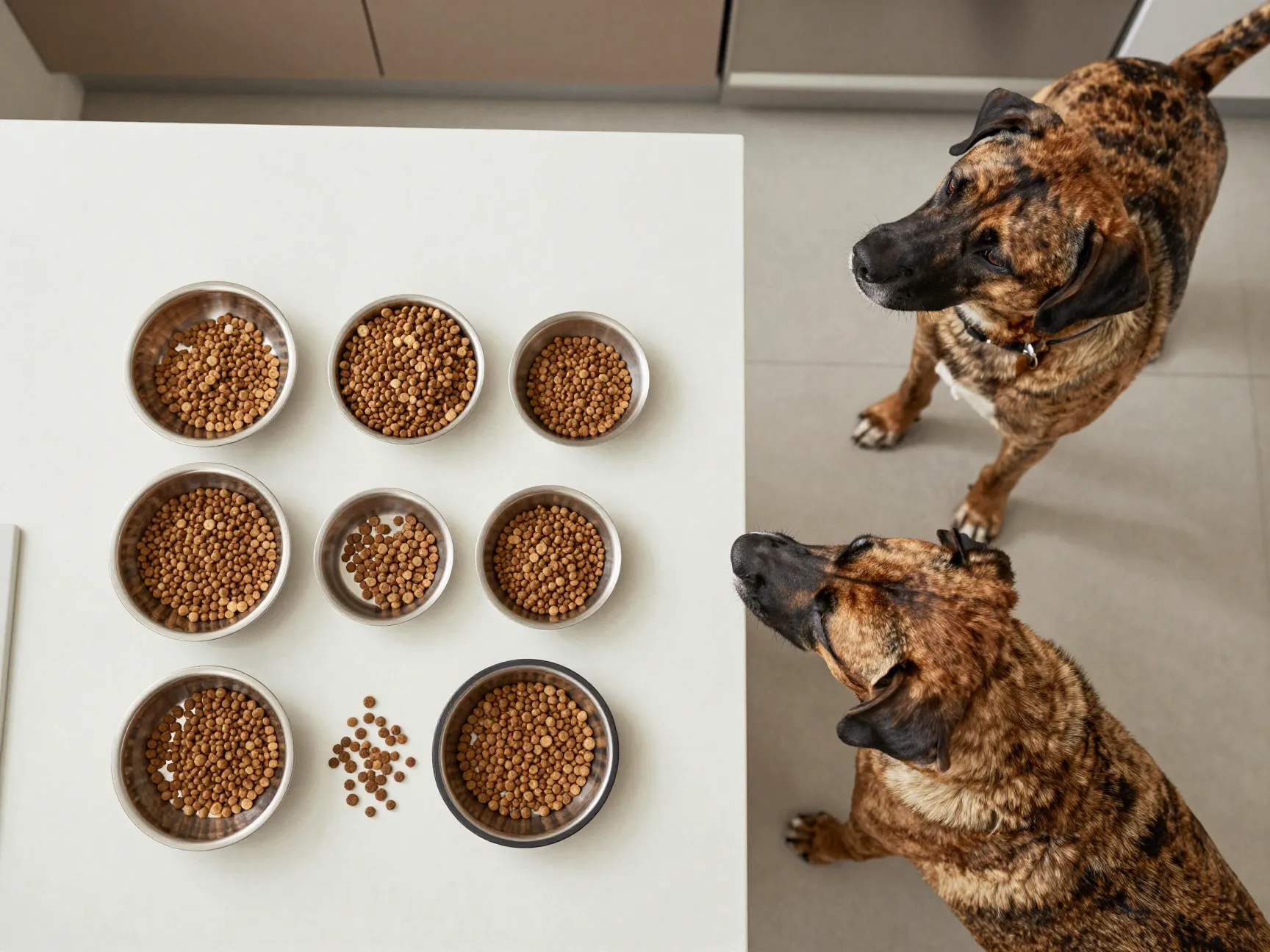
The final insight in our exploration of 8 vital insights on a Labrador Retriever mixed with Pitbull is one that catches many owners off guard: weight management is a real challenge with this breed [1].
Here’s why it’s complicated:
- Labradors are notorious overeaters — they seem to have no “full” signal and will eat as much as you give them
- Pit Bulls have a muscular build that requires different caloric needs than a leaner dog
- The Labrabull inherits both the food obsession and the muscle mass, creating a dog that can gain weight quickly if not carefully managed
Signs your Labrabull may be overweight:
- Ribs are hard to feel under fat padding
- No visible waist when viewed from above
- Lethargy or reluctance to exercise
- Difficulty breathing during moderate activity
Feeding guidelines for a healthy Labrabull:
- Feed 2–3 measured meals per day — never free-feed
- Choose a high-quality kibble appropriate for medium-to-large active breeds
- Account for treats in daily caloric intake (treats should not exceed 10% of daily calories)
- Adjust portions based on activity level — a working or highly active dog needs more calories
- Consult your vet for personalized feeding recommendations based on your dog’s specific weight and health status
Obesity in dogs leads directly to worsened joint problems (especially in a breed already prone to hip and elbow dysplasia), reduced lifespan, and decreased quality of life. Keeping your Labrabull lean is one of the most impactful things you can do for their long-term health.
Is the Labrabull the Right Dog for You?
Before bringing a Labrador Retriever Pitbull mix into your home, do an honest self-assessment. This breed is not recommended for novice dog owners [4]. They are powerful, energetic, and need consistent leadership.
You might be a great Labrabull owner if you:
- ✅ Have experience owning and training medium-to-large dogs
- ✅ Lead an active lifestyle with time for daily exercise (60–90 minutes minimum)
- ✅ Have a securely fenced yard
- ✅ Can commit to early socialization and obedience training
- ✅ Are home frequently or can arrange care during long absences
- ✅ Have the financial resources for quality food, vet care, and training
This breed may NOT be right for you if you:
- ❌ Are a first-time dog owner with no training experience
- ❌ Live in an apartment with no outdoor access
- ❌ Work long hours away from home every day
- ❌ Live in an area with strict breed-specific legislation
- ❌ Cannot commit to daily vigorous exercise
Coat, Appearance, and What to Expect Visually
The Labrabull’s appearance can vary quite a bit — one of the fun (and unpredictable) aspects of hybrid dogs. They have a short, dense coat that ranges from smooth to slightly coarse in texture [7]. Colors include:
- ⬛ Black
- 🟫 Brown / Chocolate
- 🟡 Yellow / Tan
- 🤍 White
- 🎨 Brindle or mixed markings
Ears can be floppy like a Labrador’s or semi-erect like a Pit Bull’s — or anywhere in between. Markings are largely unpredictable and part of what makes each Labrabull unique.
Grooming needs are relatively low:
- Weekly brushing to manage shedding
- Bathing every 4–6 weeks (or as needed)
- Regular nail trims, ear cleaning, and dental care
Conclusion: Your Roadmap to Labrabull Ownership in 2026
These 8 vital insights on a Labrador Retriever mixed with Pitbull paint a clear picture: the Labrabull is a remarkable, loving, and capable companion — but one that requires an equally committed and experienced owner.
Here are your actionable next steps:
- Assess your lifestyle honestly — do you have the time, space, and experience this breed needs?
- Research local breed-specific legislation before adopting or purchasing
- Find a reputable breeder or rescue that provides health clearances and socialization history
- Schedule a vet appointment within the first week of bringing your dog home
- Enroll in obedience training immediately — don’t wait until problems arise
- Create a feeding and exercise routine from day one to prevent obesity and behavioral issues
- Invest in socialization — puppy classes, dog parks, and regular exposure to new environments
The Labrabull is not a dog for everyone. But for the right owner, this hybrid offers a decade or more of unwavering loyalty, joyful energy, and genuine companionship. Do your homework, prepare your home, and you’ll have one of the most rewarding canine partnerships imaginable. 🐾
References
[1] Pitbull Lab Mix – https://www.innovetpet.com/blogs/training/pitbull-lab-mix
[2] Pit Lab Mix Behavior Energy 12294 – https://www.dialavet.com/vet-answers/pit-lab-mix-behavior-energy-12294
[3] Pitbull Lab Mix – https://www.thelabradorsite.com/pitbull-lab-mix/
[4] Labrabull – https://www.dogster.com/dog-breeds/labrabull
[5] Watch – https://www.youtube.com/watch?v=Siv5euP5OIU
[6] Lab Pit Mix – https://dogacademy.org/breeds/lab-pit-mix
[7] Things To Know About Labrabull – https://a-z-animals.com/animals/pit-bull/pit-bull-facts/things-to-know-about-labrabull/